director
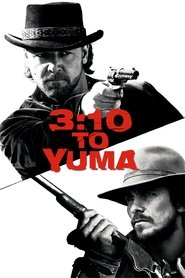
3.10 to Yuma (2007)
Mangold explains how he adapted Elmore Leonard's story around the relationship between a struggling rancher and a charismatic criminal. He discusses short winter shooting days, weather-dependent locations, the actors' physical preparation, and a score that draws on both American and Italian Westerns.
- Duration
- 1h 57m
- Talk coverage
- 92%
- Words
- 17,689
- Speaker
- 1
Commentary density
Highlights
Topics
People mentioned
The film
- Director
- James Mangold
- Cinematographer
- Phedon Papamichael
- Writer
- Michael Brandt , Derek Haas , Halsted Welles
- Editor
- Michael McCusker
- Runtime
- 122 min
- Also on
- OneSheet ↗
- External
- IMDb ↗ TMDB ↗ Find on Amazon ↗
Transcript
17,689 words
Hi, my name is Jim Mangold and I'm the director of 310 Iyuma. And for the next two hours or so, I'm going to be talking about making this film and how we came to make it, cast it, shoot it and edit it and deliver it in the state it's in right now as you're watching the opening logos here. It seems to me the first question anyone would have about this film is why did you make it? And particularly because it's a remake of a film a 1950s film that already exists, also called 310 to Yuma, directed by the great Delmer Daves and starring Glenn Ford and Van Heflin. And I'd have to tell you that the reason I was really inspired to do it was simply because that original film had had such power on me ever since I saw it when I was 17 years old. And I felt that the story could have power again in a very relevant way now. A lot of times I think remakes are made
for very greedy reasons, if you will. There's a kind of brand, a known property has a brand and a built-in audience, and studios decide to do another one simply because they know, wow, a lot of people are going to want to go see, you know, Mod Squad the movie or Starsky and Hutch the movie or any, you know, Mission Impossible the movie. In this case, very few people except film buffs know of the original 310 Iyuma, so we weren't really motivated by greed as much as we were the power of the story. And I always look at it more like a revival, like they'd make on Broadway, where you do another production of, you know, Death of a Salesman with great esteem for the original, but trying to remount the story and see how it plays. with some of our styles and storytelling styles of today, as opposed to just kind of a remake in which it's just trying to do it in color and stereo and new actors. One of the things that I thought was really important that I loved about old Westerns and loved about older Hollywood-style storytelling and always do is that those movies tend to really start fast.
And one of my first goals here in this film was to create a sequence that grabbed you and pulled you into the film very quickly, and that we didn't indulge in a kind of extended opening credit sequence, that we just plunged you right into action and into the world of Dan Evans, played by Christian Bale and his family, out here in Bisbee, Arizona. God damn it, William! William! God damn it, put that down! Come here! Let go! One of the first tasks in terms of adapting and updating this story by Elmore Leonard was figuring out what we wanted and what we didn't in terms of how we were going to attack it and what story elements we were going to emphasize differently than the original film and what we thought they really got 100% right in the original film. One of the reasons that Halstead Wells is the first credited writer on the screenplay of this film
is because we felt an awful lot that Halstead did in his screenplay in 1957 for the original 310 in Yuma was really right, was dead on right, and there's some great writing in that film that, out of ego, I wasn't gonna just dispose with. I thought these actors, Russell, Christian, Ben Foster, Gretchen Moll, et cetera, would have a great time doing this stuff and playing these words anew.
One of the biggest changes we made from the original film, as you'll see as we go on, was trying to kind of set up Dan Evans' story a little clearer. Dan Evans is the gentleman here played by Christian Bale. Meaning, why does he go on this journey in taking Ben Wade to justice? Why does he risk everything? And trying to answer those questions a little differently. In the original film, I think they play it a little bit like Van Heflin is a bit of a kind of built-in coward. or a nervous fellow. I felt that that's a little too easy for us, and I didn't think that would play as well for audiences today. I felt that we needed to do something to explain how a man who very well might be strong and might be courageous has become hesitant or nervous about taking action. And so the ideas that we came up with between Branton Haas and Stuart Beatty and myself were, one, that he might be a veteran
who was in some ways scarred by the war. Very literally, in our case, one of the things we did was we gave him a missing foot, partly because we thought that was very relevant even with what was happening today in our country, and partly because we felt also that a climax in which Dan Evans is literally walking a super criminal to justice would be all the more exciting The very act of marching him to that train was a struggle. Boys, we're going to round up the herd, and then I'm going into town. What are you going to do in town? The other aspect that I think we really wanted to accentuate in our script for this film was Dan's relationship with his children. Maybe we should just shoot him like Will says. One of the things that I felt would motivate any man to do almost the irrational and the impossible is sensing that his own family has stopped believing in him.
And nothing cuts quicker to a man than feeling his own sons don't look up to him. And in fact, maybe looking up more to a figure like Ben Wade, played by Russell Crowe. I also feel like that's a timeless theme, not just situated in the Western, in which, in many ways, we as parents are always fighting the lure of bad guys, rebels, as we're trying to teach our children how to live a decent life. And while the Western takes it onto a whole other plane, almost an exaggerated plane of what you're fighting for, I think it's still a very common and very identifiable struggle, is how do you teach your children the right way? When people who take what they want and get what they want and have power are so much more alluring.
On the other side, one of the things we wanted very much to develop with Ben Wade's character, played here by Russell Crowe, obviously, is setting up what is a real topic of discussion with this movie, I noticed among audiences, which is the end of the film. And one of the most important aspects I thought that was present, but very subtly present in the original, and I wanted to bring out even more, was Ben Wade's ambivalence about his own career. as a Western gangster. So you'll notice, and I think if you watch Russell's performance, it's beautifully shaded, he is kind of a bored king, if you will, a man with a pack of Rottweilers who watches and guides them, but at the same time seems oddly alienated from the act of robbing. Which is why when I staged this sequence coming up, one of the key things that I did was I let Russell almost stay outside this first sequence watching it until his gang gets in trouble and can't stop the coach and then he of course intervenes. The idea being that from the very beginning we want to set Russell's character up as someone who's of course lethal and ruthless, but is also oddly
as I said, ambivalent about the task of robbing these coaches. In a way, it's become too easy. And in a way, the savagery of his gang is something he's complacent about. This sequence you're about to watch took us about two weeks to film in Diablo Canyon in New Mexico and was an incredible effort by the entire crew. Many of the locations in this canyon, which is national park land that we worked at, we had to get to them by mule. At that point you were just seeing the sniper campos firing from up on a hill. There's only one way to get there, and that's to climb. One of my requirements for the gang was that anyone even thinking about playing and coming in and reading for the parts of Ben Wade's gang had to be extremely proficient riders, if not stuntmen themselves. I felt that the only way to do this kind of sequence would not be to have a kind of, how would you put it, a bunch of Malibu actors who normally do day work on the OC coming in and looking cute on a bunch of horses and at the same time completely incapable of riding or firing in any credible way.
What I like to believe makes this sequence stand out is that these men look so completely comfortable with the weapons, on their horses, et cetera. And one of the ways I was really lucky in putting this film together with Kathy Conrad, my producer and partner, was that when we cast the film with Russell and Christian, what we got were more than just two of the best male actors in the world today, we also got extremely physical actors, men who are very, very comfortable on horses and with weapons and didn't necessarily need, you know, the three-month, quote, boot camp. While we did do that for many members of the cast, I think Russell, who owns a thousand-acre ranch in Australia, and Christian, who has done a slew of action pictures, both very well know how to stay on a horse how to look comfortable on a horse. And that goes for Peter Fonda as well, who, as you well know and can recognize, has a lifetime of experience in the West and on horseback. Knock on him, Matty. Knock on him. Keep going. That's Russell rounding up the cattle, something he often does on his ranch. Pull up.
We had about five different stagecoaches built for this sequence. One was the one we hurled in the air and flipped that you just saw. One was one that actually rode getting pulled by a little diesel vehicle, an all-terrain vehicle, so that when we didn't need the horses, we couldn't just wear them out when they weren't on camera. We didn't need them. One was actually the one that the horses pulled. And another was built when we shot interiors of the coach. This is Ben Foster's scene to first assert himself. as Charlie Prince, Ben Wade's chief henchman. Charlie Prince was a role that a lot of young guys in Hollywood wanted. When the movie was already cast with Russell Crowe and Christian Bale and Peter Fonda, and we were making a Western, you can only imagine how many young guys would want to be a part of this. And we saw a lot of them, and they came in and read for this role.
Byron McElroy. What was so impressive to me about Ben Foster was that his take and his natural inclination in the role was relaxed. His intensity came out of a kind of calm, a deadly calm. So many actors, I think so often, you'll find that when they're playing someone intense or someone, quote, evil, they will... They'll chew up the scenery. They'll expend so much energy smashing things and crashing things that, in a way, they don't look like someone evil or dangerous. They actually resemble someone more defensive and self-conscious and unconfident. That what you really want for someone menacing and someone lethal, as Russell typifies even in this close-up, is utter comfort in their position of power.
Russell and Ben, I think, got on really famously making the movie, Ben Foster. And Russell, in a way, took Ben under his wing, and they'd go riding together and worked on stuff together. Ben had never ridden. He'd grown up in the Midwest on a farm, but had never really ridden or used guns in the level that he was here. But he is another incredibly physical actor who took really quickly to it.
One of the struggles you have when you're making a film that is 95% outdoors is just the weather, the sun. We shot this in the winter. We started in October, so the days were extremely short. And on one side, it made the lighting really beautiful because the sun is always very long and casting long shadows. But on another side makes it extremely challenging because I only had about six hours a day that I could actually shoot. And on top of that, you know, an hour in the middle of that is lunch. And every day is changing. Different clouds, different kind of sun, different wind, different temperature. Up to this point in the film, except for maybe 20 seconds of stuff at night that opens the film in the Evans ranch house, it's all been outside. He's fast. Again, in terms of setting up the end of the picture, what we were very conscious of doing here with Russell was showing that while he's complacent and almost bored, and even is kind of playing that right here, delivering a kind of rote speech, he could well be a manager of McDonald's, explaining to an employee how you can't leave the fryer on. But at the same time,
He's lethal, and he makes a judgment about life and death in a moment based on his own morality. Mark, look at me. Keep looking at me. Back up quietly. Back up. William. William, look at me. Back up. William, look at me. One of the things that was really important to me about making a Western is Westerns in the last 20 years with the exception of obviously Unforgiven by Clint Eastwood and a couple others, have generally misfired. And I certainly didn't want, with the Western being in trouble as it is as a genre, it was very hard to get this movie made. I'll talk about that a little later, but you certainly don't want to make another bad one because you'll be putting a tombstone, if you will, on the genre. And being a Western lover, the last thing I wanted to do was somehow make it harder even yet to get the main.
And to me, that meant thinking deeply about what it was that made the ones that work work and the ones that don't fail. And first thing I thought about was how I think too often the director comes on the movie and is so excited to be making a Western that in a way they don't make the movie the way they would if they were making a contemporary film or a film that they felt more of an immediate kind of identification with. They suddenly start making a movie about other movies. you start carrying your DVD collection around, you start making a movie with a lot of shots from famous Westerns you've seen, and a lot of tributes to other movies, but in a way, you're not making a film about the characters right on the screen, you're making a movie about a genre. And inevitably then suddenly the whole thing becomes a kind of, I don't know, what I imagine a painting in Ross Perot's office looks like, some kind of dreary, Wheatfield cliche with strings playing and...
bad men and good men, and none of them seem real to us. The other thing that was really true to me of the Great Westerns is that that aspect of bad men and good men is a cliche that doesn't really exist in the Good Westerns. What do I mean? I mean that no one should be playing a villain. Everyone should be playing a fully realized person. Sometimes when I hear people talk about this movie and they either get it or don't get the film, one of the things that I think can set the people who don't get the film can be caught up thinking of Russell as a villain. And I don't think he is. In the sense that when you make a movie and you look at the kind of architecture of movies, there's a protagonist, to use the ancient Greek structural terms, Aristotelian terms, and there's an antagonist, and the antagonist opposes the efforts and forward motion of the protagonist. Russell is not the antagonist of this film. In that sense, it's kind of, if you took away all the Western attributes and looked at its structure, it's kind of a buddy film with a struggling rancher and a super criminal somehow tied together on a journey.
on a very impossible journey. And the actual forces trying to stop them are not essentially at Crow's... Crow doesn't have an ability to stop them any more than Dan Evans. He's just more capable in terms of physical action and bravery. I hope that makes sense, but what that means, unlike in films, for instance, outside the Western genre, I thought about making this movie were Silence of the Lambs, for instance, where you could say Hannibal Lecter is a villain or a bad guy. But the real truth is he's not the antagonist of that film. He's, in a sense, the associate of the protagonist, trying to help them solve the murders. And that if you frame the movie and you look at the film as simply as seeing as Russell as a bad guy, then I think it's really tough to swallow the journey of the film from that moment on. And I think if you view the film where you understand and see the humanity in Russell's portrayal and that he isn't just a twizzling mustache and evil, then suddenly the film makes tremendous sense to you. Playing Butterfield here is Dallas Roberts, who you might recognize if you saw my last film, Walk the Line. He played Sam Phillips, Johnny Cash's...
obviously first producer and the great creator of Sun Records in that film and did an amazing work in that film. And Kathy and I were thrilled to have him back on this movie in the role of Butterfield. Where are you from, anyway? Tom Conrad, about a thousand head in Mexico, hired us to drive him in. Let's go. Come on, boy. Struggling as I do to try and find amazing moments with your actors. One of the chief goals, there's three things that are really important to me. One is you have to have the right people there, meaning you have to have great actors. There's only so much a director can do, even if the script is excellent, with actors who aren't living in the moment and aren't relaxed in their roles and aren't comfortable playing their roles.
And that really involves coming off of talking about Dallas Roberts or looking at Ben Foster. It involves building a world, not just two movie stars, but a world of great actors in which every way the camera turns, there's a great face and a great feeling and a feeling of authenticity. And authenticity comes as much from historical accuracy as it comes from a feeling from the feet up in that actor that they're comfortable in this role and playing this character. And I think what you see here among these men is a tremendous sense of confidence and comfort in this wardrobe and in this world. The other thing that I think is important with actors is that, and this stems from what I was talking about a moment ago, good guys and bad guys, villains and heroes, no one, no person in the world, including Hitler or Osama bin Laden, walks around believing they're a bad guy.
Therefore, when you play someone reviled, you can't play evil, because they don't live evil. Those people I mentioned don't wake up in the morning and go, what evil can I do today? They think about what they can do today to further their cause, and they see other people as evil. Along those lines, if someone like Russell or Ben Foster is playing what you or I might call a villain, the key for them... I think to really do something great with the role is to not see themselves as evil, but instead see themselves as someone on a very unique journey, profoundly misunderstood by a world gone awry. Part of what I think is so magnetic about Russell in this film and the writing of this character and just the general way he comes off is that is that he seems to me to be someone with a kind of admirable and unique value structure. Everywhere you turn in the world that we created for the movie is compromise and evil in more masked forms. The railroad, the men who hold the lien on the Evans Ranch, the people enslaving the Chinese to build the tunnels.
the Pinkertons, who are essentially, not unlike today, mercenaries for hire in a war against the Native Americans and squatters. The world of the West, when looked with the unjaundiced eye of a modern storyteller, is not a world where there's just a simple bad guy. It's a world not unlike today, where there's tremendous economic forces at work pressing down. And people like Ben Wade were, in a sense, the last fighters against a new order that was coming in with the railroad the new corporate order what arrived with the railroad and with the discovery of oil and the invention of the automobile in another 30 years was the modern industrial world controlled by multinational corporations and i sound like some kind of fruitcake saying that but the truth is what what became Exxon was Standard Oil, and what became many of our biggest companies even today was the railroads, which united the west and east coasts of the country and became the vital transport and monopoly on transport of all goods and services in the country. And what that put an immediate end to were mavericks like Wade, or any man like him, who was trying to do something his own way. Her name was Velvet. And thus what Wade becomes is a kind of...
a rebellious figure against a kind of change, an inexorable change that is coming. All these things, I mean, I hope you see, we're really, we were very conscious of in assembling the journey of this movie. We wanted every one of these forces represented very clearly so that people might see, in a sense, our current world through the prism of this world.
You got green eyes. I always loved the scene. The actress here is Vanessa Shaw. Again, a director is really lucky when wonderful actors come in. You know, Vanessa worked all of a week on this movie, but... That's all right. She does remarkable work, and it's a very, very small role, and that reality sometimes will scare a really good actor away because they don't want to play a, quote, small role. What I found over and over again, though, is that when actors are brave enough to take on a supporting role in a movie, sometimes there might not be much there on the page. But if they attack it and the director is with them, the role seems huge. I'll take him into town on my own. You boys go ran up the herd. Don't push him too hard. I can't afford any more dropping. Mister, we're going to have to lift you up to get you on top of that horse.
One of the real challenges for Christian Bale in this movie is to find a kind of tone for his performance of Dan Evans, which is neither pitiable nor heroic, but a man riding the fence between those two places. He could go either way and his life could go either way. But what I admire so much about what Christian did is at the same time, he's a guy who hasn't lost his own pride or his own belief that somehow the world can be better for him or his family. Again, this scene was another attempt by us, I think, to set up Ben Wade and the ending of the picture and where his own character is headed. If you see Wade simply as a villain, then you'd go, why is he here? Why isn't he just off marauding and stealing again? But if you see Wade as a human being who gets bored with his gang of savages and would much rather, as would any of us, be in the company of someone like Vanessa Shaw, well, then you begin to understand again that he is someone longing to get out of what he's in. And we made it quite crystalline here. There's a little town just south
where he literally asks Vanessa to run away with him out a back window. Folks would pay good money to hear a white woman sing. If she had said yes, then none of the action in this movie would ever have taken place. Imagine me shitting on down to Mexico with Ben Wade on my arm. And the entire gang would have been disbanded without a piece of drop of blood being shed. Moments like that are really interesting to me. Jump out that back window.
And if you see on Russell's face as that scene ends, it's buried, but there's more invested in that question he asks Vanessa than just screwing around with a girl. It's literally getting away from a life that is no longer interesting to him. He's a bounty hunter under contract with the Pinkertons. And here we introduce Alan Tudyk, as our bumbling veterinarian and town doctor. You've lost a lot of blood, Mr. McElroy. Again, this is another example where an actor comes in and, you know, you could probably count Alan's lines. There's probably 22 lines he has in the picture. But the truth is that his presence, his personality, and the energy he brings to this role is a huge light in the movie. Yeah, what I'm about to do is gonna hurt like a son of a bitch. Ain't the first time I've been shot. Hold him, please. Don't touch me. I remember when we were shooting the close-ups of Peter on the table for this scene, there was something I was struck with over and over again, which was just... first of all, how you could see his father, Henry Fonda, so clearly in his face. But also,
As we get to one of the really tight close-ups coming up, he has the most amazing eyes. And, I mean, obviously genetically handed down from his dad, but also really quite powerful when he takes these looks here. Peter was really brave in letting me make him as leathery and dirty as I possibly could in this role. What the fuck kind of doctor are you anyway? It's nice to have a conversation with a patient for a change. One of your struggles as a director is always with actors, obviously they have careers and their careers in some ways are predicated on always being the most attractive people they can possibly be. So that we all read about them in magazines and admire them and talk about them. But sometimes in a role, you need them to throw away some of that glamour and really get down and dirty and what that means.
in terms of maintaining a realism for the audience is sometimes more than necessarily as good for their career or good for them. And you have to take your hat off to any actor, and they all did it in this film, who really allow themselves to look as they would in the day. I want to talk, Mr. Hollander. Ben, Wade, and Bisbee. Shit. We're moving up. Mr. Hollander? Tucker, go on to the saloon. You got no right to do what you done. You hear me? That's my land. Come next week, it's not, Evans. One of the other things I wanted to do in shooting this film, and I think you notice it, is that there was a very conscious effort to let the landscape and the world of the Western reveal itself in the shots of the actors, as opposed to always doing huge wide shots, setting up the kind of landscape very self-consciously on its own. That was very intentional because I felt, again, speaking to Westerns that I thought had failed, that in a way,
My goal was to somehow get you inside these people's skins and to not be just kind of emphasizing the genre for its own sake out of landscape, but to be finding the landscape of the genre in people's eyes. As I hear Marco Beltrami's music playing here, It's also a good place to talk about that, which again, we very much wanted to reach into the references to the Spaghetti Western and the Great Italian Westerns as much as the American ones for the kind of score we were doing on the film. I didn't want the film musically to feel overblown. In a way, every Western made for the last 20 years always feels like it's very, quote, important. And sometimes the Westerns we really love, when you think of them, they are important cinematically, looking back in history, but they didn't act important. They told their story and the music didn't announce their importance. It really followed the lines of the character story and the flow and the jazz between the characters. Marco's score really captures that, I think, and is a real tip of the hat to the great scores by Ennio Morricone, as well as others, without mimicking them.
Them beeves of yours, they wouldn't even fed a hungry dog. I tell you what, that should cover it. Watching TV this fall, I realized that the entire town of Bisbee that we shot on in New Mexico has become the set for the reality show Kid Nation, which is slightly alarming to watch all these feuding children. living out their angst in Art's saloon. But I guess they had a lot of free sets, so why not? You're right. I did. In a scene like this between Christian and Russell, their first really profound scene together, one of the things, again, you see is hopefully the work that we've done setting up each of these men coming to fruition in this relationship. And what's that for? Understanding Russell's character as a man just looking for a thrill, looking for something that wakes him up. And that makes him susceptible to Christian and renders him vulnerable in this moment where he's caught. Because he finds something about Christian's character fascinating. On the converse, like in a love story, he couldn't possibly be finding something fascinating.
about Christian's character if Christian wasn't offering something magnetic and interesting to a man as bored and disinterested as Wade that he might lock onto. This is my third film with director of photography Faden Papamichael. And he's a great friend of mine and we really enjoy making movies together. And I think he did incredible work here. And one of the things that I think is most important when working with a director of photography is that you are on the same page about how the film's going to look. And it doesn't mean that every shot is planned or storyboarded. Much more importantly, it means that you both understand what you're doing with the camera and the actors in this film. And we thought a lot about the Spaghetti Westerns, which featured many close-ups and did not emphasize the landscape as much as they did the eyes.
And that was something we were very, very conscious about. Also, we were very conscious about using handheld camera, keeping the thing alive, and also trying to lose some of that musty, kind of formalized feeling that recent westerns had. Very often you'll think about sequences like that opening stagecoach as the toughest that a director will face, and certainly that's a real challenge. But I'll tell you, a scene like this with this many characters, in a room, all engaged with a kind of electric importance to the plot and story. And the number of shots and compositions you have to find that are gripping and hold all these faces in great compositions, it's a real challenge. And you really end up valuing your geometry classes from high school. One thing Faden and I, when we landed upon making the film Identity, I have never let go of the widescreen format. Thank me when it's done.
and I very much wanted to use it here. And I think one of the things, interestingly, that's misunderstood about the widescreen is while it's brilliant at capturing landscape and broad vistas, one of the other things it's really great at is close-ups, and particularly two shots where you might have an actor in a close-up on the left or right of screen and another element on the other side, asymmetrical kind of compositions that are really beautiful. Also with action, it allows you to tie things together, the shooter and what they're firing at. One thing I tend to take a lot of time with in all my films is what you'd call the first act or the introduction of all the characters. And by structural definitions, we're pretty far in the movie, but in a way, it's only really just beginning. And while that might be perhaps for some viewers a struggle, I think the effort we go to to set everyone up in this first act
really pays off because not only do we have an action film that hopefully provides some excitement but when you sit down and have you know a five minute dinner scene like we're about to in a few minutes you're invested in these characters and you know where each of them has come from and arrived you need to mount up now head for evans ranch i'll meet you there with the coach
As I was talking about when we first started the film, this movie and this story by Elmore Leonard and the film by Delmer Daves has been with me a long time since the early 80s when I first saw it. That was when I was working for a great director, Alexander McKendrick, as his teaching assistant at the California Institute of the Arts. Sandy, as we all called him, is long past, but he was a great director of such films as Sweet Smell of Success or The Man in the White Suit or The Lady Killers, many others. And this was a film, the original, that he had me breaking down for structure, shot structures, just learning about how the thing was put together. Again, one of the things you really do when you're trying to learn about how to make films is understanding all the pieces, structural pieces inside them. I'll use terms of architecture a lot because I think it's a really relevant metaphor for how movies come together and all the pieces and whether they fit together tightly and form, in a sense, a whole.
And the story and the film stayed with me, partly because I think it was one of the few westerns that really moved me. While I thought it got a little cornball in the third act, I always felt really moved by the journey of Van Heflin's character, finding himself and his voice. And I think what you see with what we did here with Christian Bale, I think that in a strange way, even though he gets in more and more trouble and more and more jeopardy as the film progresses, One of the beautiful things about Christian's performance, and we'll note this later by the time we end up in that hotel room in contention, is that in a strange way, he may be very frightened and overwhelmed with what he's taken on, but there's also an ease and a confidence about Christian's character by the end of the film that was not there at this early juncture. It's a beautiful piece of acting.
As I went on from CalArts and started my career as a filmmaker, my second movie was a film called Copland with Sylvester Stallone and Robert De Niro and Harvey Keitel and Ray Liotta and a bunch of other wonderful people. And when I wrote that film, I was very conscious of trying to make a Western with all the architecture, if you will, of a Western, but setting it within the context of the suburban tri-state area, New York, New Jersey area. how you could do that using a world I grew up in, which was the disaffected white flight from New York City in the 70s, cops and firemen who had gotten out of New York City and in a way were trying to set up homestead, safe places for themselves and their families. And what I felt like I grew up in, given that it was a world of off-duty cops, was a man who were very comfortable with weapons and violence and who lived with it every day across the river in the city.
but at the same time had a dream for their families to start something clean and new. And that their views and fears, some of them racist about what had happened to New York City, were not dissimilar to the way I thought frontier men might have looked at the Native Americans in their own quest to find a safe place to raise their children, free from quote, savagery. I hope you're proud of yourself So when I wrote Copland, one of the structures that I went back to was the structure of 310 to Yuma. And I even extended a kind of nod toward Yuma in the sense that Stallone's character, if you know that film, is actually named Freddy Heflin. And I named him after Van Heflin, the actor who played Dan Evans in the original.
You flash forward to six or seven years later, and Kathy and I are making a film called Identity with John Cusack at Sony. And I was thinking about what films I wanted to make next, and it occurred to me that Sony, a. k. a. Columbia Pictures, owned the rights to the original 310 Iuma, which meant they owned all the underlying material, Elmore Leonard's story, the original script, et cetera. And Kathy and I brought it up to the people who ran Sony whether we could do a remake of the film. And they were open to it and had been approached in the past about people trying to make modernized versions of 310 Iyuma. Well, I had already done that. I wanted to make a real Western. I wanted to make a movie that wasn't trying to be, as with Copland, both a Western and something else. I wanted to, in a way, embrace a genre that I thought had been allowed to languish. Not my opinion. And you might want to ask, then, why?
Well, I had the Western languished besides the fact that, oh, some of them hadn't been very good in a few years. And I think it's because a couple of things became misunderstood about the Western generally, even for audiences. One is that I think audiences came to look at the Western as an historical drama, which is kind of a turnoff for a lot of people. People don't want to see sometimes, you know, educational films or movies that spend all their time teaching you about history with dates coming up on the screen as you move from one scene to another. And when I look back at the Westerns that really inspired me, none of them were that way. And somehow the Western had turned into and gotten perceived as a kind of historical drama, like Age of Innocence, where nothing against Age of Innocence, but that's a different genre. I feel that the Western is, in many ways, a kind of fever dream more than historical drama.
depiction of America at a certain crossroads. It is a kind of fever dream of America, a kind of landscape in which all the forces that have come to assemble our nation are present. Corporate culture, outlaw culture, the yearning for freedom, religious freedom, entrepreneurialism, the quest for spaces, a space to be yourself, to be an eccentric, to find out who you are. All these essentially American themes exist and thrive in the Western. And much more than it being a kind of depiction of a specific battle or a specific, you know, gold rush, I think that more than anything, the Western, when it's flourished as a genre and one of our country's great contributions to cinema, it's flourished as a kind of landscape in which our greater concerns and fears can be looked at allegorically. Um, and I think a lot of Westerns you can look at and see how, um, the Western might have been made in the 1950s, about the 1880s, but you can see the issues of the 50s being examined in a really interesting way in that setting. And likewise, I hope that when you see this film, you can see issues of contemporary America in 2007 being examined through the prism of this unique world of the Old West.
Any Western historian will tell you that the actual moment of the arrival of the steam engine, the outlaws, after the end of the Civil War, but before the railroads completed their journey across the country, it was a sliver of history. It was about 20 years when all this stuff could happen. But the reason, and this gets to the point again I was making, is the reason this period is so examined isn't because it's so historically important only. but actually because it's so imaginatively fruitful a place to drop stories into because it's such a moment of transition. And that when you're making a film like this, this landscape has as much in common with science fiction or fantasy epics like The Hobbit or The Lord of the Rings as it does more than it does with aspects of historical filmmaking in which you're telling the true story of, you know, the Battle of the Alamo.
I always feel bad when something like the Alamo is called a Western because I don't think it is. I think it becomes a kind of an historical recreation of an important battle in history. But here we're not hemmed and held in by telling a true story. Ben Wade never existed. This is a story. This is a kind of myth, an American myth, taking place in the landscape of American myth. And in that sense, you know, when you look at it, European stories and European mythology very often either takes place in the land of the gods and the Greeks or in the great castles of royalty. Well, the truth is there are a lot of other places you could set stories in European history, but the reason so often it takes place in those places is that the troubles of the common man, the troubles of the average guy, can be so much more interestingly examined in a castle in Denmark.
or in the very mortal ground beneath Mount Olympus than it can be sometimes just telling a realistic story about one man's struggle in the actual world he lived in. Our problems become much more interesting to look at when transposed into a world that is slightly dreamlike and slightly fantastical with rules that might no longer apply to our lives. And in a way, the issues of our lives become less exhausting to look at. Sorry, Dan. McElroy says five minutes. This scene was a nightmare for our focus puller. There was really hardly any light beyond what was coming from those little lamps. You think it's too much for me? One half inch off for the man pulling our focus and the scene would be completely soft. his name is bob hall by the way and i think he's one of the very best he's working on batman right now in fact but um he is also like phaedon done three pictures with me what are you thinking i'm not out there alone you don't have a little faith in me and then wade has a gang and they're out there tonight somewhere if i don't go
One of the things that was really important to me in this film, as many others, is always to try and find moments where I find too often in modern films that the special effects are the special effects. And what do I mean by that? I mean that the reason you go see the film is for the incredible stuff that they do with a green screen and flipping people around and twirling them and smashing helicopters into buildings. But the fact is that sometimes every movie needs a special effect of some kind, some reason where you go and you watch and you go, how did they do that? How did that happen? My goal when I make a film is to try to make the special effect the intimacy between the actors.
the sense you have that how could a camera even be present for some of these moments. That scene between Christian and Gretchen is something I'm very proud of and I think is some really beautiful work between them. And you know, a lot of times when you're making a film, your sound guy will say, can they talk up a little bit? And very often I'll say, no, they can't. We are a recorded medium. We're a medium with the best microphones money can buy, the best technicians you can find. As I said, the best camera operators, focus pullers, My goal is to create something where it is a miracle, a special effect of our abilities, that we could capture this, where it feels like something so intimate and so private that it wasn't, quote, performed for a camera, but it was captured, and we were lucky to capture it, and that it was a secret between two characters, and a camera just happened to be there. Putting in a 310 to Yuma, day after tomorrow.
To me, that's a goal or a strategy that I bring to every film I make. And whether it's a broader action piece with a morality tale like this, or whether it's a more straight drama like Girl Interrupted or Walk the Line, the fact is that nonetheless, I think your film is always somehow improved by feeling the integrity of your characters. And the stakes of the action become twice as high because you have affection for them.
Gretchen Maul also came in for about a week on the film, and that was really grueling work at that ranch house. And I think she does a beautiful job. What Ben Wade made about sending Paul back, all right? She looks both real and also incredibly beautiful, and is, of course, an effortless actress. Your father can take care of himself. And when I make a film like this, they're the people I'm most grateful to, again, because it means that everywhere my camera goes in the world, it finds something real and interesting. Not only on my stars, but everywhere. And this gives me a chance to talk about Logan Lerman, who I think gives a really wonderful performance in the film. And I'm playing Will Evans, Dan's son. Finding Logan was really hard because I was looking for somebody
who was right between childhood and manhood in that moment of transition that any person exists only for a year or so. So suddenly you're looking for an amazing actor who's 13, 14 years old, who can handle the company of Russell Crowe and Christian Bale and Peter Fonda, et cetera, and can keep up his own side of it, and at the same time is physically neither a child nor a man. And almost everyone who came in to read for the role was either too young or too old. Whether they were good or not, they were even not qualified because they were either 11, and it was just ridiculous, or they were 16, and they were trying to talk like a kid, but you felt it. You know, there's this moment when someone gets a little older, and suddenly their aw shucks, you know, come on, Dad, they're trying to sound like a kid, but it's gone. They're a young man now, and it's gone forever.
And Logan was in a very special moment in his own life, and he's a very gifted young actor, and we were really lucky to find that combination. Maybe I don't like the idea of men like you on the loose. It's man's nature to take what he wants, Ted. That's how we were born. Well, I make an honest living. Might be honest, but I don't think it's much of a living. You must be hurting bad for money to take this job. I love this dialogue between Russell and Christian. A lot of this is from the original script by Halstead Wells. We moved it to this situation in the campfire. I imagine that puts a lot of pressure on a marriage. You imagine? And I think it also illustrates the kind of intimacy that's growing between these two guys. And again, per that bad guy, good guy issue I was talking about earlier, Russell makes a lot of sense here, as does Christian.
And that's the vortex I'm hoping to catch the audience in. That both the, quote, bad guy and, quote, good guy, both have flaws, and both have places where you think they're dead right. Shut up about my wife. You shut up about her. You say one more word, and I'll cut you down right here. Right here. I like this side of you, Dan. Mr. Evans. Okay.
Here comes Kevin Durant, who plays Tucker's chance to bite the bullet. He's also a wonderful actor. He was a friend of Russell's, actually, as Russell introduced me to Kevin, who plays Tucker here, a guy who's going to be singing in a second, and then die via fork. And Kevin is another person who really creates a unique type, an obnoxious sort of guy who you can't wait to see go, but at the same time is quite real.
You're gonna hang me in the mornin' Before the night is done You're gonna hang me in the mornin' I'll never see the sun I suppose it's too much to ask for a little quiet. This song, which ends up threading throughout the movie, is actually some lyrics, poetry that Stuart Beatty found when he was doing a draft on the script. And then Russell and I and Kevin made up a kind of melody to it. So it became a kind of creation of ours. And threads throughout the film when Russell actually picks up singing it later.
One of the wonderful qualities for making this film for me was that I had final cut on this film and that it was a unique experience and that it was Completely independent of any studio. We made it including the studio that distributes at Lionsgate They came on right before we started shooting the film but this film was put together with completely independent financing separate from any studio at all and That was a shocking thing to Kathy and me in the sense that we thought after we made a hit film with Walk the Line that people would want to make a film like this that also has a lot of traditional values and reaches back toward a kind of wonderful line of filmmaking that I hope to emulate as with Walk the Line. But we were surprised that even after the phenomenal success of our previous film, no one, and I mean no one, wanted to make this movie. And it was a mid-priced film.
um, $50 million, and it was, um, a film with these actors attached, Russell and Christian, and every single studio in Hollywood passed, which only gives you a sense of just how incredibly dismal the reputation of the Western is right now as a business proposition for most studios. All you have to do is get on the computer and look at all the movies they've made that cost less than $50 or $60 million, some of them so inanely stupid you can't even begin to figure out how they had the pride to pull the lever on them. And yet at the same time, film like this, whether you like it or you don't, I imagine you have to see that we made it trying to do our very best. It is an incredible struggle to get made.
In fact, Kathy and I were remembering the other day that most of pre-production on this film was paid for out of our pocket. And a lot of times when I'll go do, you know, talks at a school or something or a Q&A with some organization about one of my movies, a lot of times you'll meet filmmakers who are like, how do you get your movies made? You know, I have this script and I think it's really good and how do I get it made? And half the time I'm like, dude, I don't know. Because my last two movies, both Walk the Line and 310 Iyuma, We begged and borrowed the entire way to get the pictures made. In Walk the Line's case, that was with Reese Witherspoon and Joaquin Phoenix both working for relative pittance and a budget of $25 million. And there wasn't a single studio except 20th Century Fox willing to make it. And the materials went to every single financing entity in Hollywood. Same, of course, as I said, is true here.
And in some ways it was a blessing, because when we set off to make this film, we were suddenly allowed to make it exactly as we wanted to make it, with the only restriction being that we didn't have a lot of money for the level of action and gunplay and animals that were in the film. But that was something we were willing to work under, a limit we were willing to work under, because we were afforded such freedom. You better tell me where they took him. And so many of the worries that Hollywood executives have about the Western I think are misplaced, meaning that we would have been under a great deal of pressure not to make it look too dirty, not to make it too Western, not to make the music too quote Western, because in a sense they're so frightened of the genre to begin with that they would have been making a film in a way apologizing for it from the very beginning. And the thing about my own sense of style and my own interest is that the last thing I wanted to do was make a movie apologizing for what it is.
If anything, I wanted to make a movie running straight at what it is. I wanted to make a Western that wasn't trying to be anything else but a Western. He made a mistake. You think he could do a better job leading this group? Maybe. You forgot what he'd done for us. Again, continuing the metaphor of the kind of band of Rottweilers that Ben Wade has assembled. When Ben Foster says that line about, you've forgotten what he's done for us, without ever really going into a lot of detail about the relationship between Charlie Prince, Ben Foster's character, and Russell Crowe's character, Ben Wade, one of the things that we really wanted to sense was this intense loyalty, particularly by Charlie Prince toward Ben Wade, that almost seemed to come from a level of being found or rescued by Wade at some point. Did you say something before? That's Apache country.
I thought the government gave them land. These are the ones refused to go. I wouldn't take that pass. Oh, you'd like us to take the long way? That's right. And let your boys catch us? Mr. Butterfield, the Apache that live in that pass are the ones that stayed to fight. They enjoy killing. You ain't gonna make it. And one of the things we tried to accentuate, as I discussed earlier, was the relationship of William... Dan Evans' son to his father. And one of the points of attack for that in the script was also to accentuate the relationship with Charlie Prince to his de facto, quote, father figure, Ben Wade. And I think Charlie Prince, as portrayed by Ben Foster, also possesses almost a maniacal kind of love for Ben Wade, perhaps even bordering on something far beyond paternal and son. But that kind of loyalty is a beautiful mirror to the relationship between
Dan Evans and William, where William can hardly stand to look at his father and where Charlie Prince can hardly stand to be out of the orbit of his leader or dad or whatever it is that Ben Wade is to him. Therefore, and I'm about to spoil the end of the film, so if you're somehow crazy enough to be watching the commentary before watching the film, first of all, don't do that, but second of all, I'm going to talk about the ending. Therefore, in the end of the film, here it goes, where Ben Wade shoots Charlie Prince and his entire gang, there's a kind of very clean exchange going on, which is one boy gets to live and one boy must die, as one father had to die and one father continues to live. And in a way, it's one from each side goes down. Those kind of mythic symmetries were really important to me. You ever read another book in your life, Byron, besides the Bible? No need.
Byron Axe Pius, a few years ago, when he was under contract with Central, I seen him and a bunch of other pinks mow down 32 Apache women and children. Renegades gunning down railroad men and their families, picking them off the road one by one. Similarities in this dialogue to our current circumstances are not coincidental. As I did research and did some writing myself on the dialogue and structure of the script, one of the things that entranced me, as it did Branton Haas and Stuart, and I'm sure Halstead Wells, but he wasn't living in the year 2007, was how the West was such a perfect metaphor in so many ways, with the Pinkertons, the hired mercenaries, working for a kind of corporate culture that was trying to settle a landscape which held many resources that the growing country needed, and how men like Wade were created as villains and written about and
almost turned into targets with bounty hunters seeking them out. Whereas the perpetrators of real violence against most of the population were hardly these gangsters who were busy holding up trains or stagecoaches. The perpetrators of the greatest violence were actually our own soldiers, the Civil War itself, the marauders that followed, and the atrocities committed against the Native American in the name of progress and expansion the near-slave conditions of the railroad, even after the Civil War, in which the Asians and African Americans were used at wages that could be laughable if converted to today's currency. I always liked you, Byron. But you never knew when to shut up. Even bad men love their mamas. One thing I was very conscious of staging Wade as a character that you saw as both a villain but one you adored was that he only kills people who I hoped the audience would find annoying. Including Peter at this point seems pretty preachy. And I figured we'd be glad to see him thrown off a cliff. You think you can keep your gun on him, will ya? Peter's character of McElroy wasn't in the original film and was something I decided to include
because I felt we were missing, as we increased the journey, which is something that is not in the original film. The original film, very much the action starts in Bisbee, they catch Wade, they exit frame right, and they enter frame left in contention, and the whole journey to get to contention isn't there. And one of my goals when I started out working on the material back in 2002 was to somehow create the journey so that the claustrophobia you'd feel in that hotel room in the end would even be more, in my mind, acute because you had felt what a large expanse they had crossed to get to this nine by 12 room to wait for this train. You ever been to Dodge City? One of the ideas that occurred to me in a film I've always loved and stolen from and been inspired by is Jaws. And one of the beautiful things in that film is
Quint, the character of the old fisherman and shark hunter who is on that boat with Roy Scheider and Richard Dreyfuss. And in many ways, again, you can see a kind of similarity here, which is that I've got two characters, one in Ben Wade and one in Dan Evans, played by Christian Bale, who are tied together. But in a way, I wanted someone to accompany them two-thirds through that journey who would be more of the authority figure through that journey. And when he dropped away... At that point, the leadership role would fall upon Dan Evans, but that it wasn't necessarily his job to lead this posse the entire way, but it falls on him after McElroy's death. And he rises to it, which I thought allowed the narrative one more step and his character one more evolution. I got there on my own as a boy, not much bigger than you. How many men you killed since then, Wade?
How many families you destroyed? Quite a few. Is it true that you dynamited a wagon full of prospectors in the western territories last spring? This scene is another nice example of compositions on the left and right of screen. I keep giving Russell his own close-up, but when you go to these shots between Dan Evans and his boy, you again see these shots I love where the focus pulls between a foreground element and a background. I got to take a piss. You know, I thought he was going to shoot me back into the thing. I really thought he was going to do it. You know, there's a wildness in his eyes. It reminds me... He's going to be nothing like you, Wade. Now, you can see at this point, their relationship has developed to a point where Wade... no longer views Dan even as a threat, but more as a man who he likes to talk to and finds somehow fascinating. You do one good deed for somebody, imagine it's habit forming. Something decent. See that grateful look in their eyes. Really great actors can do multitasking acting. For instance, Russell is saying a line that many actors would just try and milk.
But he's doing that while he's noticing something's going wrong in the brush. And the two together make the dialogue twice as powerful and the moment twice as real.
Here you have even Wade helping Dan Evans back to the cave. One incidental piece of information that might find interesting is this cave that they're having this campfire in is actually here in Los Angeles. And it's the actual cave that they shot the TV series Batman and the Batmobile coming out of. In the final week of production, it had gotten so cold in Santa Fe that we came back to Los Angeles for one week shooting. and we did this sequence. And we literally shot it right under the Hollywood sign in the Hollywood Hills in front of the cave where Bruce Wayne used to race his Batmobile. With the present day Batman lying shot and bloodied right before it.
Again, the difference between a historical drama where you're telling a historical tale with some level of accuracy and a movie like this, which is more myth-making, is that you want a character, like there are in great myths, to be incredibly powerful. And Russell plays Ben Wade that way. It's not important to me how many shots are fired and how many seem to miss him. What's important to me is that he seems impervious. Because I don't judge the film by those kind of normal standards I would if it were a kind of realistic contemporary film. I judge it as a kind of mythology about supermen and regular men, mortal men trying to rise.
And in a way, if you can trace it, the relationship between Bale and Crow in this film has this kind of yin and yang, in and out. They're chummy, and then one is pissed at the other. Chummy, talking, and then one is pissed at the other. And it is a kind of friendship that you see developing throughout the entire film and culminating in that hotel room in a short while. You're looking for help? Get those cuffs off. We're going after him. There ain't no reward for getting them halfway to that terrain, is there? As we got deeper and deeper into the winter shooting, we actually had snowfall starting to arrive as we were shooting, which, thank God, ended up playing very much into the idea that as they moved into the mountains and to the city of contention, they were moving into colder territory with snow.
Some press has been made out of the fact that when they finally get to Contention, the city where they end up, we were socked in with three feet of snow at one point making the film there. And we shot in the hotel room while our loyal crew was kicking ass trying to dig our city out from under the largest snowfall in 75 years in Santa Fe. It literally was so deep you couldn't walk. You could only use snowshoes or snowmobiles. And even snowmobiles, it was so deep they got stuck without it being padded down. We took a week off and just hired monstrous crew of men to just dig us out. I'll be honest with y'all, I like some of their food. Luke Wilson's roommate was one of our armorers, which is the crew name for the fellows who help handle and prepare all the guns for use in the film. And Luke sent word to Kathy and myself that he'd love to just do anything and come visit for a couple of days and was free. And I actually had this role still open and couldn't find anyone locally to play it. And well, I was thrilled to have him come. That's actually the armorer right there. Holy Christ.
Who's that? That's him. I think this scene is as good as any to talk about the contributions of our costume designer, Arianne Phillips, who I think has been someone who's worked with Kathy and myself since Girl Interrupted, which is in 1998. does amazing work, and I think part of what makes her work so amazing is it's not selfish, meaning it's not show-offy only for herself, but that she has a real partnership with the actors and myself and Kathy, finding answers that work for the actors. I think that very often people don't understand what an incredibly critical role costume design is in the development of character for actors. Part of it has to do with the chronology of how a movie happens. Meaning that when an actor first comes on board a film in the period where they're first starting to rehearse, the other thing that's happening so that the costumes are ready when the movie begins is that they're being fitted and trying things on. It obviously happens weeks and weeks before the first frames get shot on the film. So what that does and what that means is that those first fittings are incredibly transformative for the actor. They become a chance for them to walk
literally in their character's shoes for the first time. And you see the physical affectations, the walk, the movement, the style of their performance beginning to assemble itself. So it's not only important that the costume designer have a sense of how to articulate character and to make beautiful choices available to the actors, but that at the same time, the process of finding these garments and shoes and ties and spats and pants and belts and holsters, et cetera, becomes a process that's really fruitful for the actor. It was Russell's idea that he wanted to wear black and wanted to play, in a sense, into the cliche of the movie villain and move right through it. And I think it was a brilliant idea because I think in so many ways you end up liking his character so much that he confounds us between what the symbol on the outside says and the man on the inside is telling us. We shot this sequence at an area that used to have a scale railroad for mining in the hills not far from Albuquerque.
It was Native American land, and these tunnels were not really quite big enough yet for forever for a full-size train to move through, but that almost made them look more appropriate in scale to what they were first drilling and building. As long as you ride away, mister. But it was an incredibly arduous journey to get to this place every day, and we were at the very edge of a cliff, and the only area that the crew could traverse was the same area that we were performing in, which was just this lip of land that led to each tunnel. But I always felt it would be very exciting to stage the horses and the gunfire and the race through these tunnels.
thing and I thought it was something I wanted to bring to light when we were staging the film to imagine what it was to build this railroad through from one end of our country to the other at a time with no power equipment no bulldozers no backhoes no trucks how they actually carved their way through these mountains I think speaks a lot toward the determination and of the designers and architects of this railroad, and also the blood, sweat, and tears of a lot of labor and lives that were lost performing these tasks. Goddammit!
Again, what a beautiful thing for Alan Tudyk. I mean, I think everyone watching the film feels the loss of his character here. But it's not like he had a million scenes to pull this off with. I mean, I think on the head of a pin, he did some amazing work and made a character that we're really sad to lose.
And here begins the last chapter of the film in contention, where they're going to be waiting for the train. Keep him out of sight till the train comes. We built this entire town. There was about maybe one, two buildings standing when we first found this plot of land. Obviously, the most critical element in building this town was the hotel. and the room that they're going to be staying in. And Andrew Menzies, the production designer, and I had many, many discussions about what this room was going to be like and how the view out the windows was going to work in relation to the layout of the town. One of my only regrets in this town was because we got hit with so much snow, it was impossible for me to shoot any kind of geographical shots of the landscape. because we were literally digging ourselves out one street at a time. So as they were shooting their way, as they will later, down one street and another, I literally couldn't look around the corner or else I'd be looking at more snow than you'd see in Buffalo, New York in December. So that one of the frustrations was how to shoot it in a way
that you never felt or missed that. And I still miss a little a geographical sense of how close or far they are from the train, but I really love the kind of immediate sense, almost, we use Saving Private Ryan, Faye and Papa Michael and I, as a kind of example of how we wanted it to feel in the trenches, that opening war scene, storming the beaches in Normandy in Saving Private Ryan, that you were just in the middle of this hail of gunfire and chaos. Mr. Evans, you continue to give me great confidence. 9310, yeah. I'm gonna go see about the marshal. To revisit the issue of costume one more time, I think it's amazing to see how much and how incredibly Ben Foster's costume as Charlie Prince speaks toward the kind of panache and uniqueness of his character. We're looking for a group escorting an outlaw by the name of Benway. That leather jacket of his not only has become the subject of many discussions in writings about the film, but was also hugely featured even in our poster campaign. And it's both unique and not something you've seen on a character like this before, but comes totally from research that we do. Many of the outlaws of the West in this period
were uniquely aware of their place in history and their celebrity, if you will, in the dime novels and the history of the day. And they created looks for themselves, not unlike today's pop stars and actors, so that they would have a following. And when you look at pictures of the great villains of the day and outlaws of the day, there was great pride, and they spent a lot of money on their tailoring. What are you going to do with your $200 now, Dan, now that the rains are coming? People money weighed. That drought left me in the hole. Well, what do you think about double that amount? This is the first scene these two men have alone together since that saloon when they met. Build a new barn. And one of the measures I have as a film director and writer, whether I'm doing my job appropriately, is have things changed? Are we in a new place? Has this movie evolved these relationships?
And what's interesting to me is an answer is whether the whole movie's working or not, I can never speak to because I'm so far and so deep in it. I only know what my gut tells me, but I can see that these actors have evolved these relationships to a much different place than they were when they met. Santa's, uh, you're so sure that, uh, your crew's coming to get you? They're coming down. Sure as God's vengeance, they're coming.
But I just like to do things easy. Imagine what you could do with $1,000, Dan. You could hire a couple of ranch hands. You boys could go to school, grow up smart. What about Alice? She would be the proud wife of a bona fide Arizona rancher. A lot of times in commentary tracks and certainly in discussions, people like to talk about the most action-packed scenes. But one of the things that is... takes an incredible amount of attention to detail from all members of the crew, including myself, are, as I said before, intimate scenes like these, where every horse whinny outside that window, every bird call, every cut has to be perfect because the scene is existing so economically that there isn't the cover of chaos for a bad move. I tell people when I spend it that, uh, that you got the jump on me, you escaped, and somehow I got a fortune. Hmm? No. How dumb do you think people are? Nobody needs to know. You know what? Would you do me a favor? Don't talk to me for a while. You mean we're still not friends? No.
We're not. But of course they are becoming friends or something. They're becoming something. Men tied together in some way with a unique understanding of each other. And in some ways a kind of admiration of each other. They're gonna hang me in the morning before the night is done. They're gonna hang me in the morning i'll never see the sun i think that one of the things that audiences have been surprised about with this film is and i think particularly women who have generally learned to avoid the western as it kind of is somehow a turnoff for them or at least that's what the market research of studios would tell you is that um the characters are so deep and you feel so much for these men in this movie that that uh that in many ways you stop thinking about the genre and its cliches and you become so involved in these people's lives that something more transcendent begins to happen. Dan, this is Marshal Will Doan. Marshal. Mr. Evans. You're my finest man on the NFL.
I'm sorry about all that, Marshal. I really am grateful for the help. Don't mention it. So you fellows really gonna help put me on this train? It may not seem like it, Mr. Wade, but we got law and order in this town. This is Sean Hannigan playing the Marshal. He's an actor I found on tape. He came out of Colorado, I believe Denver. I'm not sure. But he flew in. I just saw a tape of him. We hadn't cast the Marshal yet. And I think he's incredible. Every step of the way. You have my word on that, Dan? There was five of us. Five is good. It ain't enough. It ain't nearly enough. And here begins a sequence of Wade's gang arriving that I've always found really fun to watch and is, I think, really wonderfully set up in the narrative. from the moment they arrive, how, like, lasers they find where their boss is. Again, like dogs who can smell him almost. Paul! That's my boy. They're coming. They're coming this way. I've seen them. Where? About a mile out, same way we come. How many are they? Seven, eight. Which is it, boys? Seven or eight?
Those tracks you see in the distance extending out of the town are nothing more than two by fours stacked one after another in a row. All that cutting off in the distance onto the hills. We literally just took black two by fours and put them crossways and painted silver two by fours and made them the other way. We couldn't afford to build any more than about a half, not even a half mile, a quarter mile I guess of track, actual track, which we built for the steam train to run on. Just enough for it to pull into town and just enough to pull out of town. The rest was just a bunch of sticks in the grass. One of the challenges when you're making sequences like this is how many different performance bays the action takes place in. Downstairs, upstairs, at the window, at the bed, Russell on the bed. Charlie Prince down in the street, the townspeople. Obviously, you can't be shooting, you know, a close-up on Russell up in the bedroom while you've got everyone waiting and standing around downstairs, so it requires some measure of planning and understanding how to shoot your day's workout. Boss? Boss? Boss, are you in there?
What do you want me to tell him? One example of how comfortable an actor can get on a horse, and certainly Ben Foster's example is supreme because he had never ridden a horse before he started this picture, is this sequence here, where Ben actually delivers a kind of monologue on horseback, spinning his horse, moving it up to camera, hitting a mark and turning around in the moments just to come here. And that's just a result. I mean, look, a lot of times things in movies you can talk about experts and trainers and stuntmen and all this stuff. Sometimes it just gets back to hard, hard work by an actor busting his ass till he is black and blue to learn something. And that's what Ben Foster did here is he came in and he just became it. Thank you, Charlie. Boys.
This was an idea that occurred to us in pre-production and working on the picture, how this hat would end up travel this entire distance. When one of the deputies dresses up as Wade, they put the hat on the deputy, they end up killing the deputy, and Charlie Foster ends up bringing the proper hat back to Ben Wade. That's Ben Wade they have up there! Ben Wade! Now, The railroad intends to put him on the 310 to Yuma and hang him. There's nothing like watching a guy on a horse and there's nothing like shooting a guy on a horse in the sense that the movements are so different and huge and lurching. Even if you're in a really tight close-up, you feel it. If he was just sitting on a ladder, you'd feel it. There's something fluid. He shoots any one of his captors. Almost like he's on a bobbing boat.
200 cash dollars guaranteed. But it raises all sorts of interesting problems. For instance, to get back to simple levels of focus, if you're pulling focus, which means you're the guy who's literally turning the crank on the camera that holds the key actor in focus, usually you know an actor's going to hit a mark. You can put a sandbag on the ground, you can draw an X and have them hit this spot. What happens when they're on top of a horse. The horse is not going to hit a mark down to the half inch. So, and on top of that, after they hit the mark, the horse might shuffle to the left, move to the right, sneeze, cough, move, eat, piss, shit. All those things are going to affect everything and that the crew has to be incredibly alive to pull it off. Sorry, mister, but I'm not going to die here today. And neither am I, man.
The day I was shooting this sequence where the marshal walks out, I literally went downstairs and we were shooting their surrender, where they put down their guns, which is going to happen in a moment. And I watched them putting down their guns and stepping outside, and Faden Papamichael turned to me, he's the director of photography, and he said, don't you think this looks stupid? And I said, yeah, it does. They should kill him. And we decided there and then, on the set that day we shot it, that the marshal would get shot out in front. In the script, he had just walked out. And part of it had come from the assistant director, Nick Massandrea, had come up to me and asked me, well, should the marshal be around for the gunfight back at the train at the very end? And I was thinking, oh, what are we going to do with him then? Why wouldn't he stop everything or come in and fire? And I said, we have to get rid of him. And so then it just became clear. And we called Ben Foster out from his trailer over the hill. And...
It took 15 minutes to load up the gang's guns, and we shot him. And now I think it's one of the best decisions we made on the film, because it demonstrates in a way that I never anticipated until that day of shooting how cruel and lethal these Rottweilers who were Ben Wade's gang are. And even when a man has disarmed himself, they just assume kill you.
Which only furthers the point that Russell's about to make in the dialogue now when he turns to Dan and his son. Almost. Your move, General. Literally, as we were planning the picture, Andrew Menzies would take me up, it was nothing but a plywood ramshackle structure at that point, and show me how this window was going to work and what we'd be seeing out the window. What's the matter? You don't want to see? Very often when you're working in pre-production on a movie, everyone will do these sketches of what your different sets will look like as seen by, you know, as the crow flies or from a god's point of view. And that's very interesting, but I kind of think that the most interesting way to see the sets, even in the planning stage, is how they'll look from the actor's point of view. Meaning, what does this town look like out the window of the hotel room? What does it look like from the train station?
Because these are the places I'll be living. I won't be living from some God's-eye point of view. The movie will be shot and live from the shoes and feet and eyes of Christian Bale and Russell Crowe's characters. You saved us from those Indians. I saved myself. You got us through the tunnels. You helped us get away. If I'd had a gun in them tunnels, I would have used it on you. I don't believe you. Again... This is a key scene where we're playing out the boy being torn between these two authority figures, one being his compromised father and the other being the exalted Ben Wayne. And here is the other son waiting for daddy, ready to rescue him.
Again, I didn't want Butterfield, as played by Dallas Roberts, to be a contemptible figure. We wanted him to be someone you understand. He's actually doing something any sane man would do right now, which is to quit, because it's sure death. You do not. I am releasing you. It's just you left, Dan. Just you and your boy. Maybe he's right, Pa. Maybe we should go home. I love this pause, where all the balance of the film hangs, waiting to hear what Dan Evans is gonna say. Well, what did Doc Potter give his life for, William? Uncle Roy, little red ants on a hill. I'll pay the 200, Dan, right now, and you can walk away. You know, this whole riot, it's been nagging on me. That's what the government gave me for my leg. $198. 36, and the funny thing is that when you think about it, which I have been lately, is they weren't paying me to walk away. They were paying me so they could walk away. This dialogue which I came up with mainly just about a week or so before we shot this sequence becomes a kind of
It was before the incidents of the veterans' hospitals that have come out in recent history with the Iraqi war vets. But these things tend to remain true in all periods of history, which is the soldiers who come back from skirmishes that our country would rather forget. The soldiers themselves tend to be forgotten or cast aside once they've come home. But it is amazing. how in a contemporary sense and in the past, we repeat the same mistakes over and over again and how we never learn from history. I can deliver that. Just get him on the train. I think it has to do with somehow not only in the world I deal with, which is the stories we tell, but that we also live our own mythologies in our hearts. And I think we're always hoping this time will be different. This war will be different.
This time will be different to our soldiers. Always right. But human nature always takes over, and I think it's inexorable. Paul. I can't. I can't just leave you. And again, look how far this relationship has come at this point in the picture. Unless something happens, and if it does, I need a man at the ranch to run things, protect our family, and I know that you can do that because you've become a fine man, William. You've become a fine man. You've got all the best parts of me. Well, a few there are. And you just remember that your old man walked Ben Wade to that station when nobody else would. I want to make a mention of a gentleman by the name of David Lukenbach, who is our key camera operator and has been literally working with me since Girl Interrupted as well.
Three quarters of this film is handheld, and it's very hard to hold a widescreen frame, especially as close as we are sometimes, and keep these compositions with the kind of integrity that they have. Also, the kind of handheld work that I prefer isn't so shaky that it's kind of in your face or reminding you all the time that it's handheld. It just has a kind of intimacy to it. You feel the camera is right in there with the actors instead of locked down on something. Anyway, Dave is a remarkable talent. And very often, you're only as good as your crew. And in these cases, he is an absolute extension of mine and Faden's eyes and hands. And he makes these things happen. Don't get so scared. You might back a bad move.
What's coming up is a monologue that Stuart Beatty wrote. You ever read the Bible, Dan? I read it one time. I was eight years old. My daddy just got himself killed over a shot of whiskey. My mama said, we're going back east to start over. So she gave me a Bible. She sat me down at the train station, told me to read it. She was going to get our tickets. Well, I did what you said. I read that Bible from cover to cover. Took me three days. She never came back. Now, two things I want to say about this piece of Russell's here. One was when I rehearsed it with him and he was sketching in this book, what I thought was so powerful was the way
A lesser actor would be fighting to have his face and his eyes on camera the entire time he was telling this story. Russell Crowe is so wise in the way that he conserves the different elements of his performance. He delivered the entire thing looking askance, looking downward into a notebook. And so then the dance that develops between me and him as the camera becomes this movement creeping in on him and underneath so that by the very end we've come up and under and we're almost looking right under that notebook to where we finally feel him. And at that moment, that's when he comes up with his eyes and connects to Dan Evans for the first time. Now, to speak for a moment to the content of that, it's so much about God as well as abandonment. And I think a lot of what we've been playing with in this material, whether it's the late edition that Russell and I put in of the hand of God, his weapon actually being called the hand of God and having a crucifix on the handle, or all the other themes of God.
God being used to defend violence by people like Peter Fonda's character, God being used to defend lawlessness by people like Ben Wade. Part of what makes an interesting morality tale is that every side thinks they have God on their side. Lucky. Damn. That gentleman who gets shot there That's about the fourth time he's gotten shot in the film. He's one of our band of stuntmen who we carry with us to every town, and he's literally been shot three previous times, and he'll get killed one more time in sequence shortly, as I'll point it out. When you're a low-budget film, you can't carry so many stuntmen and fly them in that you can each afford to kill them once and then bring a new guy in.
What is amazing to me still after all these years making movies is you do get away with this stuff. Part of the reason you see all those huge pieces of laundry and blankets hanging up is that there's so much snow on the other side of them that it would be a huge break in continuity with the film. So we're doing anything we can in whatever homespun way we can to keep it from being too visible. Charlie! This guy about to get shot. Same guy who got shot earlier in the alleyway. Boss! Boss! That moment with Charlie yelling, Boss, is a beautiful synchronicity between Dave Lukenbach, our camera operator, and Ben Foster. Literally, I remember when we were shooting that shot where his shells spray, Ben actually asked him to move back, go back to position one again, because he really wanted to get the spray of the shells past the lens.
This sequence in the mining supply shop here was shot in the dead of night on the very last day we were allowed to be by our budget in Santa Fe. I ain't doing this no more, Dan. We had literally just spent the day killing Dan Evans by the train and shooting the very final beats outdoors and then came in. Ain't nobody watching no more. And we shot till 3 in the morning. You got that one good leg. Why don't you use it to get on home? And if you wonder the kind of problems that directors of photography get thrown and thrown at them, look at this. This is a structure with slits and cracks in every piece of wood, and somehow he's got to put every lighting element he's got around it to make it look like daylight is pouring in from every angle. Out that door where you see that ladder, it's literally pitch black night.
The other thing it is, and you can see it from the breath in their mouths, it's about four degrees. Many, many times everyone imagines, and maybe it's true on someone else's movie sets, but it's never been true on mine, which is that people imagine the utter comfort and luxury that these movie stars and the directors and everyone lives in making these pictures. I can tell you this is really hard work. and these guys are freezing their asses off. And by the way, they're not in, you know, thermal Patagonia outerwear. They're in rags, their costumes, in six-degree weather at 3 o'clock in the morning. It takes incredible fortitude and incredible dedication and passion. Okay, Dan.
We literally had so little money that when we did these sequences like Ben Foster shooting at them on the roofs, we only had one set of squibs that we could blow off as they ran. If I didn't get it, and our cameramen didn't get it, and the actors didn't do the right things, there was gonna be no second time because They cost a lot of money, those squibs, and we couldn't afford to shoot them off for more than one and a half takes. Squibs, for those who don't know, are those little explosive devices that simulate the impact, like there, where the wood splinters and explodes with the impact of a bullet.
One of the things you try and do with sound in a movie is decide when you wanna do, I think, make a really good sounding film, is you have to decide whose turn it is to sing, if you will. And this is one of the moments where we decided that sound effects were gonna become less important, and we were gonna let Marco Beltrami's score really come front and center. In the previous parts of the gunfight, we had had hardly any music, and he had played a secondary role to the sound effects. But here it's his turn.
Starting with this interior of the train station, all these shots of Russell and Christian are done at night. We got hit with an incredible storm, a hail storm. And we were doing the chase, but we had to keep shooting because we had very little time left to finish the film. The film was shot, by the way, in 53 days. And when we got inside, we just crammed ourselves down below window level and shot all the close-ups of this sequence. of Russell and Christian and the train ticket master all below the level of the windows so that we can get a lot of the work done without having to see the world outside. Obviously, this is done in the day. This is the stuff I'm talking about that's shot at night with lights pouring in the windows. It ain't stubborn. Excuse me. He said I was stubborn for keeping my family on a dying ranch. That's my son, Mark, the young one. He got tuberculosis when he was two. The only scene I cut from this film of real substance was the one in which actually Russell's character tells him he's stubborn. We added the line in to another scene later, but it kind of gets obliterated in the action.
but actually there's a scene, I'm sure it'll be on the extra scenes of this DVD, in which they're riding early in the journey, and Russell indicates to Christian's character that he thinks he's a stubborn fool for staying on that ranch. Very often when scenes like that either stay or go, the decision is very much based upon, do I need it? You know, you're very conscious that you're gonna be asking millions of people to take two hours or more of their life and sit riveted and still in your film. And it isn't only your own indulgence of is the scene good or does it look pretty, but it's do I need it? Meaning, do I have a right to hold you five minutes more or can I pull this off tighter, sooner? And again, trying to defeat the kind of pretentious reputation of the Western and the kind of three-hour running time that had become a kind of de rigueur standard for the Western in the last few years, I really felt a priority to try and deliver something tight, something that would be a real ride from the very moment it began. This is a genuine steam train.
that we actually carted by truck from the south, I think it was Alabama, all the way here to Santa Fe, New Mexico, in the middle of an intense snowstorm. Part of why I think it looks so great in our film is that it's so damn cold outside, literally five, six degrees, that the steam getting released by this thing makes insane clouds that you wouldn't get on a day that was 50 60 or nonetheless 80 or 90 degrees outside because the steam just like breath out of a man's mouth is condensing like wildfire it also speaks or spoke to me at least when we were on the set of the brilliance of that technology because these days were cold enough that our production vehicles our trucks our modern battery-powered diesel trucks and cars that ran our movie, 2006 models, Dodge, Chrysler and Ford, were having a hard time starting. But this piece of turn-of-the-century technology, they got it going and riding and pulling tons on these tracks on days when hardly anything could move.
This is an actual controlled stampede, if you will, that we did staging the cows out of that corral that we built and driving them literally at high speed out. And of course, it's a kind of mirror or bookend to the stampede that Russell starts in the stagecoach sequence at the very beginning. No!
There's a lot of discussion about the final minutes of this film, and I find it really rewarding because people are so opinionated one way or another or so moved to talk about it all and what transpires in this sequence. I think for me, and this is one of the places where we differ radically from the original film, in the original film, Dan Evans puts Ben Wade and himself on the train and they go riding off together, is that I didn't buy it. for a film now, I didn't think that the audiences would buy it. It may have been rewarding or a nice pat on the fanny and make you feel good in one way, but I don't think anyone feels good when they're told something nice and they know it's not true. And there was something about the day and age we live in and the realism of these actors and this depiction that I think, I don't think it was ever gonna feel right that it's just that he gets them on the train and they ride off
bring on the pop music and celebrate. I think that in some way this film was always going, moving inexorably toward a kind of conflict in which the clarity of happy and sad was never gonna be there. But hopefully a kind of thought-provoking reality was. Again, as I was speaking 10 minutes ago about A kind of biblical quality was what I was hoping for in the end. A kind of washing clean of the earth. Of both the tragedy that had been Dan Evans' life and finding something redemptive in it. And the misguided venture that had been Ben Wade's life. And trying to find a new chapter in that as well. You done it. You got him on the train.
I've received a good amount of comments from friends and people I've met when we're screening the film about the almost heartbeat-like chug of this steam engine under this scene. And I have to admit, I'd love to just take credit for it and tell you that I put a rag on my head and dreamed it all up, but the reality was that when I was standing there on that ice-cold day shooting this sequence, on the last day of production, with the sun fading behind the hills, The train had to be kept running as we were shooting because it would freeze if it didn't. And because of that, every one of these scenes had this sound underneath it. And the sound standing there was so powerful, literally the chugging of that steam engine and that piston turning over every three or four seconds shook the earth. And we were all standing there shooting the sequence and we're so moved. We had tears in our eyes watching the actors play out these moments to this incredible throbbing chug and no other sound. And so for about three minutes, it's all you hear.
I like to imagine where Ben Wade is going from this point out. And I don't think it's simple. I don't think he's necessarily just going to find eight new guys and start robbing. I also don't think he's going to start church work. But I do think it's a real open-ended question where this young man goes from this point out and where Ben Wade goes. None of them will ever be the same. And I think that's what you always look forward in telling a story. like this is that somehow your two hours of life with these characters leave them all in radically different places moving toward different futures than they ever started with.
Anyway, if you've made it to this point in this commentary, you deserve some kind of special award. I'm frightened that I haven't brought one and don't have one, but your intrepid listening is very much appreciated. We took a great deal of effort to make this film against a lot of odds, and it's something everyone who worked on it, the entire crew, is very, very proud of. You're seeing all their names right before you right now, and really gave a lot of their time. Mike McCusker, who edited it and also edited Walk the Line, is a really incredible collaborator with me, and I think found some amazing rhythms in this film. There's many more people I could go down a list and mention, but I just say that thank you for listening, and thank you, hopefully you enjoyed the film, and I appreciate that, if you did.
Keep exploring
Other commentaries on related filmmaking topics
-
8 shared topics
The Lord of the Rings The Fellowship of the Ring (2001)
Peter Jackson, Fran Walsh, Philippa Boyens
-
8 shared topics
The Lord of the Rings The Return of the King (2003)
Peter Jackson, Fran Walsh, Philippa Boyens
-
8 shared topics
The Godfather (1972)
Francis Ford Coppola
-
8 shared topics
The Lord of the Rings The Two Towers (2002)
Peter Jackson, Fran Walsh, Philippa Boyens
-
8 shared topics
The Godfather Part II (1974)
Francis Ford Coppola
-
8 shared topics
Les Misérables (2012)
Tom Hooper