Topics / Production
Weather problems
136 commentaries in the archive discuss this, with 697 total mentions and 43 sampled passages on this page.
Filter commentaries
Filter this topic by the film's decade or the type of commentary.
By decade
Across the archive
ranked by mentions · click any passage for the moment in the transcript
-
director · 1h 30m 2 mentions
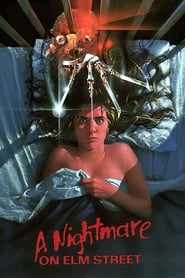
A Nightmare on Elm Street (1984)
Wes Craven, Heather Langenkamp, John Saxon, Jacques Haitkin
-
How the hell am I? You think so, huh? It still works ten years later. This is leading up to a fire burn, which actually was at least three or four fire burns, if I'm not mistaken. The first one here was initially ignited, which was a very dangerous one because it wasn't moving much. And the heat builds up very, very strongly.
1:22:49 · jump to transcript →
-
And Tony is famous for his fire. Yeah. This is a very long burn. It's all the way to the top of the stairs and then gets hit by the door. And I think they put him out there and then did a second burn where he falls backwards on fire, which has never been done in the film. Falling backwards on fire? Mm-hmm. Well, anytime. Yeah, it was a very, very... And remember, just on the set, the heat was so incredible. You just don't...
1:23:19 · jump to transcript →
-
-
director · 1h 31m 2 mentions
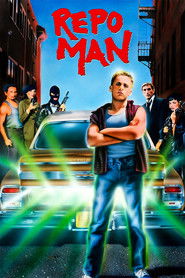
Alex Cox, Michael Nesmith, Victoria Thomas, Sy Richardson + 2
-
This is Tracy Walter. The magic Tracy. Who Michael had used previously in Timerider along with Miguel Sandoval. Right. And what Tracy's telling Otto here is that these little Christmas trees show up in every car that gets repossessed, which according to repo men, they really do. And there's one on the windshield, the wind visor. There's one on Barnum's. Now, who was playing Plechner?
14:20 · jump to transcript →
-
And I remember he was even telling Peter, look at the shit I gotta go through. But what he didn't know was that Robby Müller had come to me after the first take and said, listen, Alex, on that last take, I felt the wind of a real baseball bat going past my face. And I'm not gonna shoot this scene anymore if they have real baseball bats. So I had to sort of get into it with Harry Dean just to get the bat kind of switched. Well, it was strange the way the whole thing happened. The way the whole thing happened, though, was that it was an impasse.
1:02:40 · jump to transcript →
-
-
cast · 1h 36m 2 mentions
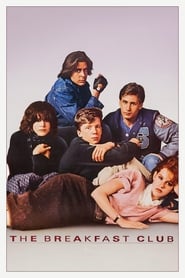
Anthony Michael Hall, Judd Nelson, Jason Hillhouse
-
Judd Nelson
There's Judd. Right on. I told the story when we did the interview before with Jason, that you came to the audition just so ready, man. You were just there. You were already there. That's a long time in high school. - Yeah. All seven years of high school really paid off, and you got a great role. Judd, you were great. I remember from the day you came in for the audition, you just came in, like, "What movie? Can we start, or what?" Even these rehearsals, 'cause, John, if you remember, man, we did rehearsals in this space 'cause this art department had constructed this. And it was inside a gymnasium, so we had the benefit of working as if it were a stage, and it was already there, ready for us. It was cool, 'cause the studio took over the school, in a way. So, we could turn their gymnasium into this library. However, at the time, there was a USFL football team, the Chicago Blitz, they were practicing and using the school as their home base. So, they practiced in the big gymnasium. Not anymore, it became the library, and they went to the old, small gym, or had to go outside. And it was Chicago, and it was really cold, and they hated us. These hulking dudes would be like, "Get out of the way." I miss Paul, man. Paul was great. - Yeah, he was a cool guy.
4:49 · jump to transcript →
-
Judd Nelson
Great use of music and sound in this movie. Yeah. I love how the door just slams, hard. That right there, Judd, I told you this before, but that is, in my opinion, the greatest "Fuck you" in cinema history. That's a great "Fuck you." - I like that. Yeah. I know that they went back and did a little audio stuff with it. That's a great "Fuck you," if I may say. Judd was a master of Tourette's early. Definitely. - You just feel it all, though. That whole scene gets built up, and it all comes out right there in that. Throws his head back and just roars. - Yeah. How did you wind up setting your shoe on fire? Was that your thing? Was that you? - I think so. Yeah. It's like anything you could come up with, I think, was encouraged. This kind of stuff, too, we ad-libbed and then we'd shoot it. Yeah, any little behavioral stuff. 'Cause if I remember what I thought John wanted at this point was just how we would all entertain ourselves, which is what it became. - Yeah. What would we be doing in that first hour, where we're just driving ourselves nuts and yet, not engaging each other.
20:57 · jump to transcript →
-
-
-
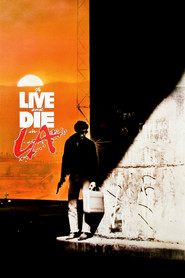
William Friedkin
whose name is Waxman in the film, Max Waxman, and a church right across the street from Waxman's office. I chose those locations because I wanted an office that had a church across the street. And so that location is out in Pasadena. And we made the rain for that scene. We manufactured the rain because I just felt the location was pretty dull otherwise. But I wanted...
35:08 · jump to transcript →
-
William Friedkin
The character Masters is certainly inspired by the character in Jerry Petievich's novel. I think I went a lot farther in making him kinkier than Petievich intended. Petievich had written him as kind of a, just a cold criminal. But I was looking for the feminine inside that. To me, once I had cast Willem Dafoe...
1:38:58 · jump to transcript →
-
-
-
You know, unlike Network, a film that I admire so much, and one of the two times Paddy Chayefsky's Stone Cold saw the future, this was a movie very much of its time, but it was a pivotal time where we made it, and it was where everything was changing, where it was that moment of layoffs, the last moment where wholesale layoffs were scandalous.
19:29 · jump to transcript →
-
which makes him more sympathetic. The House Armed Services Committee has a secret report which says that the Allen fighting vehicle the Army poured a fortune into, plane won't work. I've got it cold, confirmed. They have $5 million in this thing already. Billion. Right, billion, okay. Of course. They said I could have... And somehow that makes him more sympathetic. And I want you.
33:35 · jump to transcript →
-
-
-
I remember the reason you liked Dallas so much is it had this big building that was outlined completely in green neon. So you wanted to shoot the picture there, and when we got there, it was broken. As long as we shot. Yes, when we left, they fixed it. You can't stand the heat. You better stay out of the kitchen.
2:19 · jump to transcript →
-
And this is the only time where I think I kind of worked the wrong way with an actor. Because he just wanted to say the toughest, toughest lines he could. And I wrote this line that's coming up here. It's so bad. I'm going to shove so much of this factory so far up your whop ass you're going to shit snow till something or other. Which is a terrible line and I'm sorry about it. And yet he did come up with some really good stuff himself here. Like the guns, guns, guns line was something he did on the day of on the set. Well, Clarence Boddicker, the character...
1:02:30 · jump to transcript →
-
-
cast · 1h 36m 2 mentions
The Garbage Pail Kids Movie (1987)
Mackenzie Astin, Katie Barberi, William Morris
-
So this was the genesis of animatronics for our little dudes. It was unbelievable. I called myself the Snow White of the 80s because I was with the Garbage Pail Kids, and they were all played by the most extraordinary little people actors. Yeah, the other MVPs of the film. The MVPs. Those guys endured. It's just unbelievable what they put themselves through in order to play these characters.
4:07 · jump to transcript →
-
Those poor souls, those are the ones that we're about to see experiencing very, very insane things. That, again, nobody bothered to tell them why it was happening. Like, no bother. There's a wind machine, and you're going to act like something smells very, very bad. And that's about it. We're not going to do any more. Why should we? You didn't sign an NDA. It's none of your business.
1:19:47 · jump to transcript →
-
-
-
I don't know what I worked so hard for. Was it terrifying? I remember, yeah. Doing this speech. Actually finally doing the speech. I had a really bad cold, which distracted me, but not really because, what's the actor's name who just sang the greatest? Lauren Dean. Lauren Dean. I just remember thinking that would be harder to have to, like at that point in my life, I was still an insecure teenager. So I was thinking, well, at least I don't have to do that. I just remember during this. But I got into this. I remember Laszlo was mad at me that day. Really? Uh-huh.
4:51 · jump to transcript →
-
The new, the power loin, all that stuff. Yeah, yeah, yeah. The rain on my car is a baptism. Yeah. Look, why don't you just... I love this. I left him driving around by himself, you know? And this replacement song killed me. Just... Brilliant. You have to understand, her family is being ripped apart. Like you and she were ripped apart. Ripped apart. Like Joe and I were ripped apart. Johnny and the fishbone T-shirt. Visitor at the home. I'm not going back there.
1:12:15 · jump to transcript →
-
-
-
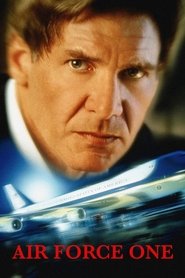
But, I mean, the length, the full length of this main cabin here was all built in one piece. So Harrison's actually coming out of a hole. Yeah, but we had it built up a little bit, so he came out of a little bit of a hole, yes. The colors almost seem to match. You know, the hold is dark and cold and blue, and the upstairs is more warm. Right, right. This is a different set here, though. Right, right, right. And this is different again. So...
40:30 · jump to transcript →
-
Yeah, this is good, though, because Dao, that shot, it gets the green screen again on stage. So in reality, on the stage, it's all green. And then later on, you know, boss film or Cinecide, in this case, put the background in the clouds. And we had wind machines going here. So you have to dub all the dialogue later on one more time because you couldn't understand a word because of all the wind machines making all that noise to create that wind. Do you direct your own ADR?
1:38:10 · jump to transcript →
-
-
director · 1h 31m 2 mentions
David Steinberg, Dave Foley, David Higgins, Jay Kogen
-
we want to do this gag, Martin gives it. Is it worth it? Yes. Is this gag really worth it? Yes. Is this joke worth it? Oh, yeah. Over and over again. Yes. The train had kind of a big wind to it. It was difficult. Yeah, yeah. If you watch the film, he's Dave Foley there. He's not Nelson Hibbert. It's Dave with this giant train driving by him. Trying not to fall off that box.
34:25 · jump to transcript →
-
because they didn't want it to be too cold for me. And then we found the worst miniature golf course of all time. Yes, we did. But the best one in Canada. Yeah, but we couldn't... All unique holes. They had no unique holes. It was just like... No, so we had to then make these unique holes. It was just greens and a hole. There was no, like, art direction. This was one of my... I love this gag. It was the idea, but it was supposed to be like...
1:18:14 · jump to transcript →
-
-
-
Alexander Payne
It's always nice to capture weather on film. I like it when I see it. And a nice thing about getting out of L.A. to shoot a film is you get things like wind and cold and overcast skies. And anyone from the Midwest or other places, too, but since I'm from the Midwest, I think of the Midwest, knows that day, exactly that day, and it just gives another texture. Of course, the...
17:00 · jump to transcript →
-
Alexander Payne
We just put Immaculate Heart on their sign. It was so cold that day and those girls were freezing.
43:40 · jump to transcript →
-
-
-
Must be cold in there. I know I'm going to get whacked now. Yeah. Now, Jimmy. We should go back. Jimmy in this script appears on screen much, much earlier. Yeah. In the film. And I re-edited this and unfortunately didn't tell Jimmy. So he was kind of surprised when he sat down to see the film for the first time. This scene also had that monologue at the beginning between.
38:28 · jump to transcript →
-
that I realized had been missing the whole time. Every time I see this shot, I just wonder what your relationship with your father's like. It's a great relationship, I assure you. A lot of nosebleeds. Yeah. And I love this look that Dylan brings. Well, this was a scene where I fought with you about the music. I didn't want to go so up here. I thought it should be really creepy and cold, and you really convinced me not to do that.
1:54:14 · jump to transcript →
-
-
-
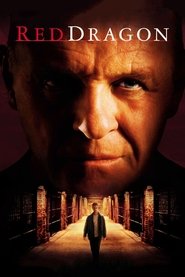
I went to New York with Dino, and I was very nervous. This was Tony, Anthony Hopkins. The thing I did know and what I was confident about was the type of movie I wanted to make. Like I said, I went in there knowing the tone of the movie, my approach to the movie, how I wanted to not show any of the gore. I didn't want to make a horror film. I wanted to make a film that was psychological, emotional, and smart. That was what was on the page. And the only scene that Tony had a concern with when I sat with him was this scene right here. Tony was concerned that as originally written, his attack on Graham here was too graphic. By the way, it's an interpretation because 10 directors would direct a scene in 10 different ways and show various degrees of violence. It's about showing the details of the guts falling out of his stomach, or the blood, how much blood to show. And I chose to play it mostly on their faces. Once the attack happens... Here's my little homage to Silence. You see the... - I see the bug. You like that. So I chose to play the violence part of this scene on their faces. I love this book. This is an original. My prop guy, Brad, found this original book from France, Larousse... When I read it, I had no idea what the hell it was. It's the bible of cookbooks. - Yes, I learned that quickly. He found this real old French cookbook. There was a lot of dialogue about how do we sell his moment? It's really just a subliminal thing. It wasn't really supposed to be so pointed where it was like, "Oh, sweetbreads." I thought sweetbreads was brains but it's not. It's actually... Thyroid. -... thymus. I learned so much about anatomy on this film. If you work on a Lecter movie, you learn a lot about cooking. I thought Edward was fantastic. There is a tremendous intensity of performances in this movie. And really a dream cast as Brett already said. If you could have anybody in the world for these parts and be lucky enough to get them. It's pretty much what happened to us. Great actors want to play good characters. They want to play great characters and all of these characters, down to Freddy Lounds, and other smaller roles, were just written so well. They were interesting and dynamic. And these actors were interested in playing this. To convince these actors to do a third in the series, all that went out the window when they read the script. Certainly once they started working. There's our cold opening. I'm very proud of this title sequence because it was actually done two days before we had to lock picture. My editor, Mark Helfrich actually was the brainchild behind this because... You re-shot the journal here in a very interesting way. Initially, this was done in a much more straightforward way with the images very flat against the screen. Yes, a lot of times. Mark is kind of... Everybody on my team, from my AD to my production designer, are filmmakers. Mark is a filmmaker in his own right and he just understands the visuals and storytelling. I love how, you know... But this was written. - Yes, it was. But the way that the camera roams over these pages and when we go in very close and it gets grainy, the camera movement left to right, up and down, is all not scripted, of course. This is something I don't really have the patience for. Mark kind of took this book that he was fascinated by. I think he has a copy of it in his closet at home. He just knew every page, every frame and went with Dante and literally just shot. This is a wonderful opportunity. This kind of title sequence is sort of old-fashioned in a way. But it's a wonderful opportunity for a screenwriter to get information in quickly to cover a lot of ground between the arrest of Lecter and where we are when the movie is going to start. Covering a period of several years, you are doing that without any dialogue just by these images. It's a very useful shorthand. Danny did the same thing that Ted did with the script in this sequence that Mark did with the visuals in this sequence. Danny did the same thing with the music. I think the music here is so fantastic. It's very much like a Bernard Hermann score, which I knew was a big inspiration for Danny. Danny is a big fan of Bernard, and this was his chance. He's done darker scores, but they've had a kind of lightness, or comedic darkness to it. Danny did something here that kind of made people's skin crawl in the theater, like, "You're in for it. "If you're gonna sit through this movie, you'll experience some stuff. "Shit's gonna go down."
6:02 · jump to transcript →
-
This next sequence, with this thing on fire... Ken Pepiot was our special effects coordinator and... These are real flames. This is real fire. I couldn't even walk into this room. You could only shoot for 10 seconds. Ten seconds and then the actors' clothes would start smoking. Then the technicians would have to rush in with fire extinguishers and shut everything down. The flames are gas, they're controlled. They're controlled, but it's hot. - They're real flames and smoke. Take me with you. And, actually, quite dangerous to shoot. Take you with me? This was probably the hardest stuff for the actors in the movie, especially with the fire, once we're in it. And they've got to stay in character. It's kind of like the scene with the live tiger. You've got to stay in character while everything's going crazy around you with flames and smoke and technicians and fire marshals. And she's blind. She's blind so she's not supposed to be able to see the flames. He lights it. She knows there's a gun being pointed at her face. She sees the gun being pointed at her, which is hard enough. She feels the heat. She has to be in a highly emotional state. And she could only shoot 10 seconds at a time before they cleared the set again. And she can't blink... - Right, she can't blink. ...when the gunshot goes off because she can't anticipate it. She wouldn't see it coming, So... If you know a gun will be shot in front of you, you'll blink. She can't blink even though she'll be splattered in the face. In the face with blood, which is right below the frame line. When she did this, it was mind-blowing. I think it was one take. I think she did it in one take. And when she did this, and had to scream at such a feverish pitch... It's incredibly hard to do that just... And you couldn't imagine how hot it was, because the fire was 360 degrees, you know, around. We had multiple cameras because we didn't want to shoot... We had another camera shooting the reverse. It was...
1:47:30 · jump to transcript →
-
-
-
Every time something moves in front of the camera, that's just guidance with straps. I like to see when the wind's blowing up and I step down to slam it back down. I know, I know. That was fun. This scene was the visual effects looking down into the... into the opening were done by Kevin Blank, who does all the visual effects. Now, that is violent. Yeah, that was... Throwing back was quite violent. Yeah, it was. That was pretty intense.
1:00:34 · jump to transcript →
-
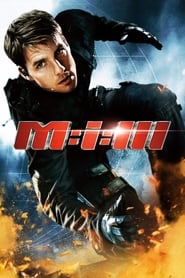
The location of that number is Shanghai. There, I just told you, Shanghai. I've just aided and abetted an enemy of the state. That makes me laugh. Now, we shot all of these sequences with you before we ever went to China. Of course, knowing our locations, but never entirely sure what the weather was going to be like and if things would match. I knew we were going to go to a window. So what I love is this is interior LA going up, up, up to this. This is one of my favorite shots.
1:43:58 · jump to transcript →
-
-
director · 1h 37m 2 mentions
John Cameron Mitchell, Justin Vivian Bond, Sook-Yin Lee, Paul Dawson + 1
-
in this film. That's Staten Island. And the lamppost, John, where did that, like, come from? It came out of desperation. Remember Howard? We didn't have it, like, six hours before we were shooting. Oh, this was a difficult day, too, because we wanted that to be a crane shot, and the crane operator got wind of what the film was about and didn't show up because he was a Christian fundamentalist and took exception to what we were doing. We had to get another...
1:21:27 · jump to transcript →
-
I remember the heat was on and it was really hot. I like it hot. Some like it hot. Such a good kiss. That moment always made me cry. Because I was like, if only it could just be like that. Yeah. It can be just like that. It's just like that. Well, it is in this movie. It was just like that that night. It is in, you know...
1:26:12 · jump to transcript →
-
-
-
Here, the use of a helicopter... - The flying cam. A mini helicopter. It's a mini helicopter because it wasn't possible to shoot with a normal one, having in mind that the environment doesn't allow that. And we used this mini helicopter to shoot, especially because we wanted to shoot really close to Robert Carlyle and to see how this man is feeling the guilt of abandoning his wife in the cottage. We used this tool previously in Intacto, our first movie, and, uh... I think it's very effective. Even if there is only four or five shots, they are very, very effective. This is another sequence that Danny Boyle helped us to shoot, especially this stuff in the boat when Don is trying to escape and he is surrounded by the infected. And Jacob tries to reach the boat, but it's not possible because the infected are really fast and they attack before he can reach the boat. That was great work from the stunts. This sequence was shot in November in England, so imagine how cold was the water.
9:12 · jump to transcript →
-
It's driving them crazy, because, you know, it's so difficult to see who is infected and who is not infected. And, again, a character taking a difficult decision, which is one of the leitmotifs in the movies... in the movie. A right decision or a wrong decision? But always it's a decision that implies destruction. Yeah, and all these decisions have been taken from the fear. The fear is... Everything is around the fear here. Everybody takes a decision in this... in the presence of the fear, which is moving everything forward. When you're watching the movie you understand why people take these decisions, because I think when we feel this fear in the real life, you're in trouble. It's not a cold decision, it's not a decision taken from a quiet moment. It's... when you're surrounded by something really powerful as the infection. This tune, this theme, was taken - musically - was taken from the first movie. This is a tune we always loved from the first movie, from John Murphy's soundtrack. And we had no time for John's... He had only two weeks to compose the music of the film. This is absolutely amazing to say that, but it's the truth. And we decided to bring this theme again back here in this sequel, and to work it in different ways. For me, it's hypnotical. I... I like the way we use it here. I like the way that John orchestrated and arranged absolutely in a different... It's different from the first one. We are going to hear this tune four times in the movie, in key moments. This is one of them. And that... this sound, this music, reminds that the infection is a building process. The infection is spreading. That's why the music is building up and, you know, getting this kind of big, intense moment with the guitars, which is the best combination with the infection around. On the other hand, the music has a kind of heart, emotional heart, which is telling that this movie is about character, it's about people... who try to survive. Now there's the moment of Doyle's dilemma. Another decision to take, another difficult decision to take, which is to put out of his misery his colleague.
54:07 · jump to transcript →
-
-
director · 1h 34m 2 mentions
Scott Stewart, Jason Blum, Brian Kavanaugh-Jones, Peter Gvozdas
-
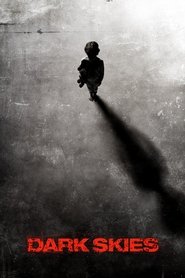
up to that point. He was, you know, just a little rain man. He knew the script by heart. Literally on our first day of rehearsal, you know, Josh and Carrie, you know, years have been acting since they were his age. And they were laughing when, you know, I would say, let's work on this particular scene. And Caden would already say the first line and they would flip through their scripts going, what scene is that? I don't even know my lines yet for this. And there is our six-year-old who already knows all of his lines by heart. But it was really important not to make him
7:25 · jump to transcript →
-
the guy conducting the interview just to make it really cold and unwelcoming. It's almost like a Snoopy parent, you know? One of the things that is always challenging in these movies is that when you come out of your hero location or your main location to little scenes like that, they're very hard to make them play real. I don't know why, but we always struggle with that. And the choice that...
9:36 · jump to transcript →
-
-
-
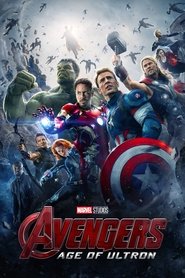
Joss Whedon
One of the most difficult things about animating the Hulk is trying to figure out what he's pissed about now. 'Cause when he's there for a long time, he has to keep this very specific energy. That shot in particular, the doggy cam or dinner tray, where you sort of attach the camera to someone, I first saw it in Mean Streets, when Harvey Keitel's super drunk. And fought very hard to keep that, and they had to create it stitched from bits of what we had from the day. But it really does give you a good sense that the Hulk's not in his right mind, even for the Hulk. And the question of what's making him angry became, um, easier and harder to answer, because, um, the answer is everything. So we knew we had all the energy we needed, but you still have to figure out where he's looking, what he thinks the problem is. Here, for example, he's flailing, but then when he turns around, you can see he actually does get shot in the face. This shot, which is among my favourites, is also among the most difficult, because the Hulkbuster armour is... It's known from the comics, it's actually from after my time, because I'm super old. But even I knew you absolutely have to have Hulkbuster because nobody is capable of fighting the Hulk except Tony, and the idea that Banner himself had, had a hand in devising this made perfect emotional sense, and also made for what would be an exciting sequence. The reason that, that shot that I mentioned was difficult and not just delightful is that Iron Man is inside the torso of this thing, and that's a very difficult thing to convey, to convey the size. I look back and wonder if I should've had him appear behind the Hulk. I wanted to do the Western standoff, but it's very difficult, even with people around him, to realise this guy's 15-feet tall. He's not quite twice the size of the Hulk, but he's up there, and when they are all completely isolated for most of the fight, it's very difficult to really get the sense of that. We're coming to something that never fails to get a laugh, which for a long time was a real problem for me because I didn't mean it as a joke. I thought it would be cool and obviously comic book-y, but I didn't think of it as a laugh moment. And, by God, it is. And I look at it now and I'm like, "Well, it has a Warner Bros. cartoon element to it." But I love it when I actually don't get the emotional gauge of what I'm doing, because I feel like if I'm getting more than I expected from something, or even something completely unexpected, it makes it more than just efficient storytelling. It makes it something that's alive. There's the elevator gag. Federico, one of the storyboard guys, had worked that out, and then we changed the space we were in, but we couldn't not have the elevator gag because it felt so good. Now the Hulk is pretty much invulnerable, so having him spit out a tooth was a big deal, and getting the emotional register of that thing was a big deal, too, because the instinct was, for everyone, for him to be twitchy and monstrous and all the things that he had been in the scene, and this was one of those things where, "No, you need to take licence." When he turns around, he needs to be very quietly, like the kind of "calm before the storm" pissed. I was like, "More Robert Mitchum, more Robert Mitchum." That's what I kept saying, and people were like, "We have no idea what you mean by that." But that kind of cool, which may be a bit of a cheat? Now this was quite a showpiece. Delicate. I know, "delicate" is a weird word to use right now. Delicate for us, um, because even now, many years later, the last thing we wanna do is egregiously evoke the spectre of 9/11.
53:37 · jump to transcript →
-
Joss Whedon
The camera is moving here, he's looking there. It's very precise. And that's an interesting thing with Mark, because I think he's probably the best actor of his generation. But that precision is not natural to him. I have to sort of go, "I need you to do this thing." And because what makes him so great is he's so honest in his stuff, it doesn't come from, "And we land here," which is a very sort of comic book vernacular and very much the way I've always created that sort of, "Everything is precise and musical and it goes..." And then it goes to the next thing. He's not that, because everything he says sounds like it just came from him. He doesn't play characters. He just becomes them. He just exists. So it was interesting to work that out. We pulled out some of the rail for this shot because I was like, "I'm going Gone with the Wind, guys." I'm going full-out.
1:14:40 · jump to transcript →
-
-
-
Yeah, of course. Yeah, but it's in a way, like, I don't know, the way it's played over there, like, it's so much more about what she wants to do against what he wants to do at some point. That was... Why did you go outside there? Why were we on that floor? Oh, because he said... I love this one. He says out loud that that's the way out, and he says the storm door seller, and just to remind... It's a brief reminder to the audience that what was that door? I think it really helps to...
36:39 · jump to transcript →
-
I love this speech. It used to be longer. They wind up going a little bit down. And I think on the deleted scenes, you hear more about it. Which it was, of course, not because it wasn't great. I think it was amazing. But it was one of the things that less was more...
1:04:55 · jump to transcript →
-
-
-
multi · 1h 59m 1 mention
David Naylor, Guy Hamilton, Tom Mankiewicz, John Barry + 14
-
-
-

Related topics
Other topics that frequently come up in the same commentaries.