Topics / Creative decisions
Reshoots & pickups
57 commentaries in the archive discuss this, with 124 total mentions and 21 sampled passages on this page.
Filter commentaries
Filter this topic by the film's decade or the type of commentary.
Showing 13 of 57 commentaries
Clear filtersBy decade
Across the archive
ranked by mentions · click any passage for the moment in the transcript
-
-
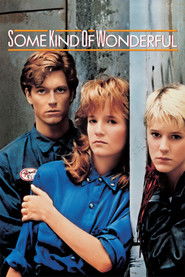
This is the first scene I remember where we got up to about 25 takes. Something went wrong. And also reminds me that Eric's hair was shoulder-length when we first shot this scene. We had to go back and reshoot it because Ned Tanen decided after he saw it, rightfully, that he didn't like his hair that long. And I hadn't told anybody that his hair was that long because this was only my second movie and I didn't really know everybody had to know that his hair was that long. I mean, nobody had seen Polaroids of him because I came back to the movie after another director had been replaced by me. So, a lot of things that are normally checked and double-checked weren't happening, and as a result, we had to kind of reshoot about two days after we gave him his haircut, and he wasn't happy about his haircut. You know, you got to remember Eric Stoltz did a movie called Mask where his whole face was covered up, and had a great time doing that. So, here I cut his shoulder-length hair off, which was, you know, a little bit like Samson, I think, to him, and he felt a little naked, understandably. So we got off to a rocky start. Look how it doesn't even match from those two shots. It's a completely different hairdo.
3:51 · jump to transcript →
-
Actually, now that I remember, that's the scene that we had to reshoot where Eric's hair was to his shoulders and we had to cut it, and redo this. This was the first scene I shot.
55:57 · jump to transcript →
-
This was an additional shot we did. I kind of remember we didn't... We wanted just to emphasize and punctuate how important the earrings were. Oh, this is afterwards? Yeah, 'cause his hair changed. We did the party, too, remember? We reshot part of the party. Yeah, but I mean, this shot of the earrings was something we did later, when we realized we wanted to emphasize that he picked them out. He went on a trip and picked them out with Mary Stuart.
56:41 · jump to transcript →
-
-
-
Right. Sweet. It's wrong. It's like it should be sexy and he should wind up awkwardly twisted up with her and so I was sick and Art did a reshoot and do you remember this? Yes. Where they like, I don't even remember what happened. They were making out and some sort of physical comedy but it just was really awkward and
42:06 · jump to transcript →
-
pulled me in and they said, you know, you don't know about football. And I go, no, I don't. And so they planned to reshoot and got the stunt guys and Art and everybody all together and they added a lot of this footage. Flying through the air. Flying and... Although I do love that guy by the sidelines, the blonde guy with the crew cut that goes... Oh, the...
47:49 · jump to transcript →
-
-
-
So this was an extremely complicated scene to shoot. Here, we're on the stage doing the actors... ...against rear projection. And now these images here, there was-- It had to be done in a very low-tech way. All the actors were put in white suits and had white makeup on. So we shot them in this room, doing all of this action... ...in their normal wardrobe. And once we had finished shooting the scene, we sent them off... ...where they put on the white suits and the white makeup. They came back and we reshot it... ...on a black stage that duplicated the same office. And now you had these weird images... ...that were run through all kinds of video process... ...to make them look like the way they are... ...reflecting, supposedly, the heat of the bodies. This is in kind of a pre-digital era, too, when we're doing this. We had television effects, but we really didn't have digital technology for film. If I remember right, this was done at Warner Bros... ...in one of their little video studios that the man built... ...who kind of invented 24-frame video for movies.
1:02:38 · jump to transcript →
-
And you didn't have a camera ship in here? In that parking lot? - Yes, here are the pictures. Well, we had it down the street, and then we're-- Now we've got a helicopter following the other helicopter. This is amazing stuff. - It is amazing. This was a kick to edit, trying to figure out which was the best... ...because I had at least six angles on every shot... ...and they were all terrific. Well, we wanted to cover everything. The close-ups that you see here of Malcolm McDowell... ...he was scared to death. We were actually flying up in the air through these traffic patterns... ...and, I mean, it's very scary when you come close to those buildings. And his eyes were wide as saucers. We had to actually go back and reshoot his close-ups for this... ...because he looked so terrified in the first version we did. That's beautiful right there. Gosh. They just did a great job.
1:40:28 · jump to transcript →
-
-
multi · 2h 34m 2 mentions
James Cameron, Gale Anne Hurd, Stan Winston, Robert Skotak + 8
-
Bill Paxton
Another technique that's not used any more to create the size of that set. A hanging miniature that was the previous shot, where you saw the expanse of the inside of this alien virtual universe, which is what you're seeing here, setwise, the cocoon aspect of what these aliens do. A hanging miniature, which is a technique, is a small set piece that hangs in front of the camera and then the full-size set is behind it and the actors are behind it. The illusion is that the set is huge and expanding up and over everyone, when, in fact, the foreground of the set piece is a miniature, the background of the set piece and all the actors is normal size. It's basically a forced-perspective shot. This is my first on-camera line coming up. This was the first day. We started at Acton. We started here. I thought you guys had already been shooting. They had to reshoot. We went back and picked up here. I see. And Dick Bush, the cinematographer, was replaced by Adrian Biddle somewhere in this area at the same time. A few changes were made in the lineup about two weeks in.
1:07:05 · jump to transcript →
-
Bill Paxton
I heard that some of the studio execs were screening footage back in the States, and they were a little perturbed and asking "Where's the effects shot?" Gale Hurd said "You just saw an effects shot." She was referring to that perspective shot. They were completely fooled by it. They thought nothing had been shot. They thought they were spending huge amounts of money on these sets. They said "You spent so much and there's no miniature." She said "No, that is the miniature." It was a smart move on Cameron's part, to do it that way very quickly in the film, so the studio wasn't worried quite as much about what was going on 5,000 miles away in London. It does make it a bit tricky to shoot, though. If anything goes wrong, you're stuck with it or you have to fix it later but with a reshoot. You can't really fix it later. So that worked out quite well, but with actors and everything there's a lot on the line. Something we've lost sight of over the years is that with this era of filmmaking, not only for live-action but for miniatures, there wasn't much ability to go back and fix something. Now, digitally, you can change an actor's face, you can get rid of wires, do all kinds of tricks, split-screen, take elements and change shots. But at that time you had to plan these things and make it work within a narrow tolerance, otherwise that was it, that's what wound up in the film. IIt reminds me of a stage play. You're doing it live, in a sense. What was on film was it. There was no going back. You could only do it so many times. There was a limited budget to work with and it had to work on film, no matter what.
1:08:47 · jump to transcript →
-
-
-
Gary Goddard
and they didn't want to do a second unit. So when you see shots that would normally be a pickup shot, like that one of the grappler hook grabbing that bucket chicken, I shot that. I mean, every single shot. Normally those would be done by a second unit, be done as pickups later. Sure you were. Taylor? Mmm, good food. Yes, I've never tasted anything like it.
23:42 · jump to transcript →
-
Gary Goddard
Cannon and I said, look, there's no end to this movie. These guys are battling, and he breaks the staff, and that's as far as we got right there. Okay, now that was actually a pickup shot later, but the last shot, I'm coming down. This we shot, all the follow-up, everything except that insert of the staff breaking. We shot this, we got this. All of this. But now, from about the next shot on, this was shot about two months later. Skeletor.
1:35:26 · jump to transcript →
-
-
-
Barry Levinson
Eleanor Babbitt. This scene was one of the few scenes we reshot.
19:37 · jump to transcript →
-
Barry Levinson
We went back to Cincinnati at the conclusion of principal photography and spent a day picking up a couple of scenes. This was one of the scenes that we can improve upon from the original version. Dustin always said that we reshot the first three weeks of the movie. I kept telling him, actually, we only reshot about, all told, probably about two days.
19:42 · jump to transcript →
-
-
-
And he was a little bit in love with them. That's great. The very beautiful Ione with Mortarboard. And John Mahoney, who we've just got to talk about. Such an amazing actor for a first-time guy to be able to work with. Now, that was a reshoot. It was indeed. Right? I came back from there. I remember that was one thing.
1:33 · jump to transcript →
-
Right? Didn't we reshoot this? We shot this. We believe that your father operates from a large pool of cash that comes from phony billing, phony patients. We've been investigating him for five years. I loved in the boombox scene, which we can talk about later, I loved that everything...
1:18:36 · jump to transcript →
-
-
-
director · 1h 30m 1 mention
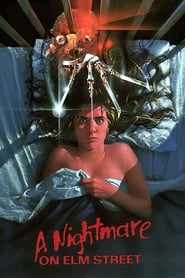
A Nightmare on Elm Street (1984)
Wes Craven, Heather Langenkamp, John Saxon, Jacques Haitkin
-
-
-
-
director · 1h 24m 1 mention
The Naked Gun: From the Files of Police Squad! (1988)
David Zucker, Robert K. Weiss, Peter Tilden
Related topics
Other topics that frequently come up in the same commentaries.