Topics / Cinematography & lighting
The long take
54 commentaries in the archive discuss this, with 91 total mentions and 24 sampled passages on this page.
Filter commentaries
Filter this topic by the film's decade or the type of commentary.
Showing 17 of 54 commentaries
Clear filtersBy decade
Across the archive
ranked by mentions · click any passage for the moment in the transcript
-
director · 1h 42m 4 mentions
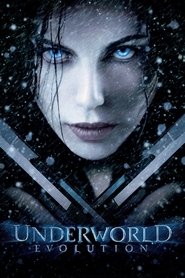
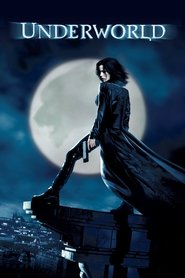
Len Wiseman, Patrick Tatopoulos, Brad Martin, Nicolas de Toth
-
Yeah, this was a second unit. How many goes did you guys have on that? You just do one take of that? We did a couple, but just different run-ups. Yeah, of the fence breaking, we did one, and then a couple different run-ups, POVs, towards the warehouse and all that. This was fun to shoot, this truck coming through the warehouse. It's always fun to do something like that. Everybody gets amped up, and everybody hiding behind boxes in Video Village, and, you know, how far is this truck going to come, and are we going to get wiped out? That's always fun. Speedman had some, like, whitey-tidey
34:44 · jump to transcript →
-
What is that made of? It's just a plastic and it's cold. It's ready to explode. It's steel. Speedman is a stud, dude. He just ripped that thing apart. He worked out for months to do that one take. Dude, there's nothing fake. It's all real. Isn't it a really soft lead? Yeah. Soft plastic, right? For the piece. For the rings that break. The ring that breaks, it's a lead. So it bends and it opens up. Yeah. This is cool right here. I like this. This bathroom is a set, I need to say.
36:10 · jump to transcript →
-
And we did one take and slid right into camera right there. Boom, sticks. Sticks. And Schneider said he saved the movie. I didn't know that was Todd's idea. I'm calling it Todd Schneider's underworld evolution. That's nice. Just for him. I got to say, because when I'm on first unit, I'm watching the takes, and that thing is just, it was bouncing everywhere. It's hitting camera, it's going over to craft service, my unit, everywhere. It's going everywhere. So that was like take 17? It was somewhere around there, yeah. Wow.
40:45 · jump to transcript →
-
-
-
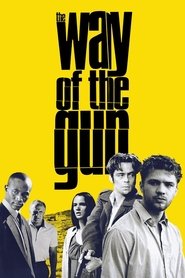
But you see earlier in the scene, it cuts back and forth quite a few times. Benicio, by the way, king of the inserts. Did you see the way he dropped that in there and it just landed? Every insert that we ever shot, and most of which we didn't use. One take. But they would all, like, he'd pull a ton of crap out of his pocket and put it on the counter, and Dr. Painter's card would be folded and facing the camera so that you could perfectly read his business card. That's awesome. So anyway.
32:20 · jump to transcript →
-
Wherever you stood, you got a composition where no one was blocked. Oh, cool. How long did that take? About an hour. But then I brought the actors back, we rehearsed it, and when you see them all walk into position and nail the scene in that master, they nailed the entire scene in one take with no rehearsal. That was a shot in longer cuts.
1:21:33 · jump to transcript →
-
-
-
Simon West
And we attached the ropes to it and then got 200 or 300 local Cambodian extras to tug on those ropes. And it was going to be a one-take thing. It took days to put those blocks in. And I was leaving the following day. So we had one chance to pull this thing down. And we rehearsed them and rehearsed them. And I had four or five cameras on it and one Steadicam.
41:53 · jump to transcript →
-
Simon West
operator David Emmerichs flying so the shot looking between the guys is all I had of the rocks falling towards us and the frame later all you see is the camera hitting the ground and then clouds and sky so I think David was very upset that he didn't manage to get the great shot from the front and I had one take at it but that's why you have three or four cameras because I had the side angles and they work perfectly as you see so that's what ended up in the film.
42:46 · jump to transcript →
-
-
-
Tom Tykwer
one take and the next take where you shouldn't say too much, but you should also not say nothing. You should give an actor an idea where the next step is going to. Why are we doing another take? Apart from the fact that probably you feel it has to happen, you always have to express something, and of course you express it usually in language. And I actually needed a couple of movies to...
31:38 · jump to transcript →
-
Tom Tykwer
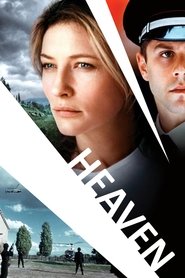
And it was not really a discussion. It's just that the moment you do it, when you see the scene in the film, the one we've just seen, it was, of course, there's only one take because you can't redo that. So we put on two cameras and we hoped that it all would work out. And also in a way you wanted to have a specific look that you dream of. And you can never have a pre-look at this
1:12:44 · jump to transcript →
-
-
-
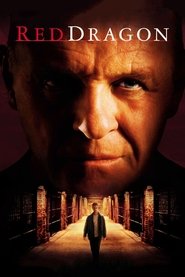
I've always tried to hang on to what that cougar looked like. But by now, to tell the truth... This was made-up stuff that was not in the book. But I knew that they were going to have that scene later with the tiger, the sedated tiger, and I wanted to set up some deeper meaning to that scene for her. So I added this little section. You don't say much, do you? There was actually a scene that was left out. That was his arrival, but Mark thought it was unnecessary and Nis... - When they first arrived and walked into the apartment for the first time here. One of the things that amazes me about Ralph is that he... The script so often gives him so little to work with. The character is painfully shy, he speaks in monosyllables. This was a scene that I used to test the actors. - I remember seeing the test at the auditions. This is the scene that helped me decide that the actors that we tested werent right for the role because they can get the Dolarhyde torturing Freddy Lounds scene, but to have a vulnerability here... But you still have to fear this guy. It's a tremendous feat of acting to accomplish as much as he does with so little to say. My biggest worry going into production was that we would not be able to find an actor who could do everything that this part needed. This is a part where the actor has to bring so much, and the script doesn't help him as much as it does other actors. This is really where you see his imperfection, which is his cleft lip, which Matthew Mungle, who is a brilliant make-up artist and effects make-up artist did such a realistic job of. I tend to do a Iot of tests for hair and make-up and the tattoo. We spend a Iot of time. When you work with Dino and Martha, do they want input into those kind of choices or is that left mostly to you? I love working with Dino. Not only is the guy a legendary producer, but it's great working with Dino and Martha together because... It's a whole other energy. - Each one has their own opinion of things. Right. They are a great producing team. -/ never work with a producing team. - They are very shrewd about script. You did a lot of work with Dino and Martha before I even came on board and you delivered a first draft, basically, that was shootable. - The first draft was green-lit by the studio and it had a lot to do with Dino and Martha's notes because they are very shrewd about what the audience needs to know, and when they need to know it. The sense of the rhythms of the story, and the rhythms of the acts, they have a really good grasp. This is my favorite section of the film. This is where the pace really... It seems like it really takes off here. This is Run from Run-D.W.C. who unfortunately, I cut out of the film, not completely, but... That was him. - That was the top of his head? That was a wonderful appearance. The story really takes off here. The pacing of this section, to me, is very exciting. The music and the editing. This is where I was telling Harvey, "Can you do it twice as fast?" Harvey tends to pause in the strangest places. But it always comes out very natural. He's a brilliant actor. You had always wanted to work with him? - Always, yeah. You had always wanted to work with Harvey. Ever since I was a kid, I was just... I grew up on him. ... possibly from the Tooth Fairy. This was a Dante shot. - It's a spin. "Let's go around him." I said, "I don't want to get dizzy." He said, "No, it's an urgent scene." It does create the urgency of what's going on here, that events were spinning out of control as suggested by that. Because of 9/11 we couldn't fly a helicopter through the Washington skyline. So that was one of our few CGI shots. It's really called a composite, because we shot a plate and then we took a shot of a real helicopter. This was done on the set. Ralph read this on the set. - Standing next to them? Not when we were doing the scene, but he just read it once and this was the take we ended up using. This is a one-take performance. He was just so in the mode. He reads this letter very well. I love all this sort of hi-tech, FBI forensic stuff, and it's something that we couldn't get a whole lot of into the script because of just sheer space considerations. So where we could do these kinds of things, it was really fun. I love that shot, and that shot... All the shots of Lecter in this... Brett, you love all your shots. - I know, not all of them, but those specific ones. I like all the lighting changes through this. This is Tony Hopkins' stand-in. This is the only... I wondered why he had a British accent. I wondered why the superintendent of a hospital in Baltimore had a British accent. He migrated. This is Ken Leung who's been in three of my other movies. On the right? He's a great stage actor from Broadway, and he was the villain in the first Rush Hour, and he was in Family Man. He's just a... He's very good with this part. - He's excellent. He's really very real. ...are transparent to infrared. These could be the tips of "T's" here... This whole sequence is quite close to the book. Tom Harris is very well-grounded in all of these procedures. It's just a real gift to the screenwriter to have an author have done so much research, and be so on top of these things. ...they made that up. Three "T's" and an "R" in "Tattler." How do you communicate through a tabloid? You got what? News stories. This scene was much longer really, but we realized in the playing of this scene that the audience... This is an example where the audience was ahead of everybody. We shortened it because the characters just seemed like they were... The audience already knows who Dolarhyde is at this point. We held him back for as long as we could, but once we've shown him, the audience is just getting ahead of you. - That's my favorite shot!
55:10 · jump to transcript →
-
This next sequence, with this thing on fire... Ken Pepiot was our special effects coordinator and... These are real flames. This is real fire. I couldn't even walk into this room. You could only shoot for 10 seconds. Ten seconds and then the actors' clothes would start smoking. Then the technicians would have to rush in with fire extinguishers and shut everything down. The flames are gas, they're controlled. They're controlled, but it's hot. - They're real flames and smoke. Take me with you. And, actually, quite dangerous to shoot. Take you with me? This was probably the hardest stuff for the actors in the movie, especially with the fire, once we're in it. And they've got to stay in character. It's kind of like the scene with the live tiger. You've got to stay in character while everything's going crazy around you with flames and smoke and technicians and fire marshals. And she's blind. She's blind so she's not supposed to be able to see the flames. He lights it. She knows there's a gun being pointed at her face. She sees the gun being pointed at her, which is hard enough. She feels the heat. She has to be in a highly emotional state. And she could only shoot 10 seconds at a time before they cleared the set again. And she can't blink... - Right, she can't blink. ...when the gunshot goes off because she can't anticipate it. She wouldn't see it coming, So... If you know a gun will be shot in front of you, you'll blink. She can't blink even though she'll be splattered in the face. In the face with blood, which is right below the frame line. When she did this, it was mind-blowing. I think it was one take. I think she did it in one take. And when she did this, and had to scream at such a feverish pitch... It's incredibly hard to do that just... And you couldn't imagine how hot it was, because the fire was 360 degrees, you know, around. We had multiple cameras because we didn't want to shoot... We had another camera shooting the reverse. It was...
1:47:30 · jump to transcript →
-
-
director · 3h 43m 2 mentions
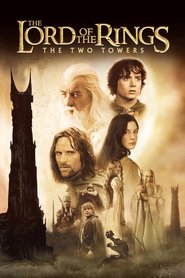
The Lord of the Rings The Two Towers (2002)
Peter Jackson, Fran Walsh, Philippa Boyens
-
horse trainer that we brought to New Zealand especially to work with Shadowfax and it's called liberty training in which the horse doesn't have any bridles or reins and it responds to voice commands and this is done in one shot there is no visual effects here Shadowfax or Damero was way over the hill and then Don called him and he galloped right up to Ian McKellen here and I couldn't believe it when I saw the cameras rolling on the shot goes right up to Ian in one take it was fantastic
57:31 · jump to transcript →
-
And it was just a very technically long, but it was all done as one continuous shot with no cuts. It was kind of audacious, but I just thought it would be a nice way to end the film. It certainly helped make him feel more real that you do something like this. Yeah, well, I just think if you're dealing with something artificial like Gollum, if you can do then...
3:33:47 · jump to transcript →
-
-
-
director · 4h 13m 1 mention
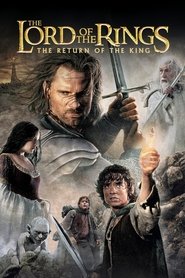
The Lord of the Rings The Return of the King (2003)
Peter Jackson, Fran Walsh, Philippa Boyens
-
-
director · 1h 45m 1 mention
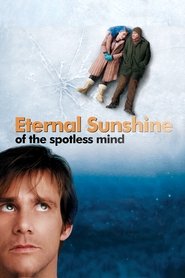
Eternal Sunshine of the Spotless Mind (2004)
Michel Gondry, Charlie Kaufman
-
-
-
-
-
director · 1h 36m 1 mention
Aliens vs. Predator - Requiem (2007)
Colin Strause, Greg Strause, John Davis
-
-



Related topics
Other topics that frequently come up in the same commentaries.