scholar
The Night Porter (1974)
Release Der Nachtportier 4K UHD + Blu-ray + DVD Limited Mediabook (Wicked Vision)
Naumann and Sommer approach Cavani's film through complementary expertise in media history and the history of sexualized violence under National Socialism, asking how a work can confront trauma without turning fascist iconography, naked bodies, and victimization into spectacle. They distinguish documented camp realities from the film's deliberately impossible victim-perpetrator relationship, trace the black uniform and sexualized Nazi image into later exploitation and pop culture, and repeatedly test the film's claims against research on forced prostitution, postwar impunity, memory, and representation. Their close reading also attends to form: the elegant tracking shots of the Vienna hotel clash with handheld camp images, architecture makes social power visible, and the final movement from opulence to confinement and starvation turns the lovers' reenactment into a nihilistic tragedy whose romantic surface remains ethically disturbing.
- Duration
- 1h 56m
- Talk coverage
- 81%
- Words
- 16,836
- Speakers
- 2
Commentary density
Highlights
Topics
People mentioned
The film
- Director
- Liliana Cavani
- Cinematographer
- Alfio Contini
- Writer
- Liliana Cavani , Barbara Alberti , Italo Moscati
- Editor
- Franco Arcalli
- Runtime
- 118 min
- Also on
- OneSheet ↗
- External
- IMDb ↗ TMDB ↗ Find on Amazon ↗
Transcript
16,836 words
Welcome, dear viewers, listeners, to this special edition of the film THE NIGHT PORTER. It is a work that takes a particularly exposed position in a long series of film scandals, because it deals with a topic that is just predestined for scandalization of all kinds, the escalation, chaining of violence, sex, sexualized violence and Nazism. THE NIGHT PORTER is a film that still disturbs today. We will certainly talk about this in more detail in the studio. We are Robert Sommer.
Hello.
And I am Gerhard Naumann. Robert, you are a historian and cultural scientist.
Exactly.
And you have also researched the topic that we will discuss in detail here.
Exactly, I have researched the topic. My topic is, so to speak, sexualized violence in National Socialism, with a very special focus on the Holocaust. This is a topic that has been under-reported for years. I have also dealt with prostitution, forced prostitution in concentration camps, which is of course also a topic that has only been emphasized or investigated in recent years. I wrote my doctoral thesis on this. And, of course, I have been interested in the representation of sexuality and National Socialism for many years. Yes, people used to think that the Nazis were sexist. That was also a myth, so to speak. And only in recent years, through scientists like Dagmar Herzog, it has been shown again and again that this was not the case. Sexuality played an important role in National Socialism and also in Italian fascism. And that is why it is not surprising that the topic was implemented in a filmic way. I think what is a bit surprising is the question of the degeneration, as you yourself said, of sexual violence and National Socialism. Or, as in this case, it is actually a love story, if you will.
In fact, it is not about sexual violence, but about a love relationship between a victim and a perpetrator, which turns around and, of course, then repeats. And I think that's what's disturbing. I think that this film probably could not have been made in Germany. That Liliana Cavani, of course, as an Italian woman, may also have a different approach to it, as an Italian woman. Because sexuality also plays a completely different role in Italy. Also the films that were shot in advance, sexuality always plays an important role. Pasolini, Visconti, it is always part of the Italian history. One must not forget that sexuality was already very, very important in fascism. So Mussolini as the macho, standing like on a tractor and, of course, full of masculinity, overwhelmed. But even the whole story with the attempt to take in Eritrea and Ethiopia. For Italians it was extremely important to put this in a sexualized context. So the Italian soldiers went to war in Eritrea with the hope of bringing a colorful woman, an Eritrean woman, home. And there are even postcards. And there is also the most important letter of the Italian fascists, namely Facetta Nera, is from an Ethiopian girl. So you can't really imagine that. That's why sexuality was always important.
And as you also said, the disturbing thing is, I think, the degeneration of sexuality in the Holocaust. And in an almost positive meaning.
Let's get to the basic information. Anyone who sees this film or this comment will certainly know what it is about. I'll summarize it again briefly. It is an Italian film, Robert, from 1974. It takes place almost 12 years after the end of the war. The location is Vienna. So still with the old Vienna, the decadent, the rusted, saturated, where the gold brocade slowly crumbles away from the decorations of the coffee houses. We have here in the form of the former SS officer, an icon of European cinema, Dirk Bogart, who was much more successful at the time than George Clooney today, for example. The women of the world adored him. He was a sex symbol. He was actually the sex symbol of the time, in addition to Cary Grant and maybe two or three others. And this Dirk Bogart now plays a former SS officer. A, you could say, morally absolutely perfect subject. He now works as a porter in a hotel and does everything to leave his past behind, to forget his past. Then we have in the form of this young lady, Charlotte Rampling, a former victim of him. She was, so to speak, under his... how do you say that? She was under his wreath.
Exactly, so he was, so to speak, part of the guard staff, probably a concentration camp. It's not that clear in the film. She was a Jewish woman who was deported. And he was in fact the SS man under whose wreath, as you say, under whose wreath or surveillance he lived. She was. There is not much information about it. We will see later this famous scene from the camp time. And there is also the scene of the deportation. I also find it interesting with Dirk Bogart that this sex symbol, which you just said, also embodies a bit. He is a positive person in this film. So first we see him, so he is actually a sympathizer. And that is probably also very disturbing, because only later do we notice his brutality, so to speak. It only comes when he, for example, greets Hitler or when he, so to speak, commits this murder. I think that is also very consciously sought after, of course. And above all, also because if you look at the history of Dirk Bogart, he himself liberated Bergen-Belsen with it. He was in the British army. He was one of the first to have seen the atrocities. And now you have to imagine, Bergen-Belsen, what was that?
That was a camp where people were starving to death. Corpses were everywhere. So he had seen the biggest horrors, so to speak. And I find it, to be honest, remarkable that he, so to speak, takes on a role. And I mean, he is, as you said, very successful at this point. I think he has already made 20 films. Also with Visconti. And that's why I find it interesting that he is in this role, so to speak. The story that is told, of course, is a classic Holocaust story, so to speak. And I also find that the setting in Vienna has to be emphasized again and again. Because Vienna is now a city, so to speak, which is seen very divided in the war, of course. Because on the one hand, of course, it is smoggy, as you said yourself. Vienna is actually a gray and smoggy city. So these coffee houses, coffee sounds nice, the Viennese Melange, but it's always smoggy. And that has something very, very decadent in itself. But now Vienna is also a city. It's not Berlin. Berlin was destroyed at that time, of course. You probably couldn't shoot that much. And Vienna also has the history of annexation or the contribution. So it's difficult.
Because on the one hand, of course, Hitler is an Austrian. On the other hand, the Austrians always like to play the role of the victim. And that's why you have this very two-edged sword here, so to speak. Yes, this scene that we just saw was a classic deportation scene. What I find a bit bizarre is, so to speak, the use of the camera. So he's filming this scene.
In my opinion, this is based on a biography. If you go through the vita by Liliane Cavani, she comes from the documentary field. She studied classical literature, linguistics, did her PhD there. And during her time at the University of Bologna, she was also active in a film club. I think she even guided him, if I remember correctly. Exactly. And so she was pretty firm in the classics. You just showed Bergmann about Robert Brisson, all sorts of things. And her first film attempts were not only short films, which, among other things, also dealt with the friendship between black and white, but also documentary films for the Rei. And there she was actually one of the first to have access to the documentary material about the concentration camp. And dealing with this terrible material shaped her in such a way that she did not let go of the time of her life. The camp theme, the concentration camp theme, the war is the ongoing topic with her. That comes up again and again. She has also said that in various interviews. So she does not let go of these concentration camp images for the rest of her life.
But now it is also the case that she is also a bit associated with her socialization. In her parents' home, of course, from the father's side, from the mother's side.
And above all, she was born in 1933.
Exactly, in Modena. But Modena, i. e. Capi, is of course also a city where the left or the socialist movement was very strong. I think her grandfather was a Syndicalist. And she also got a socialization from the left side, from the working class. So also very anti-fascist. And of course that also plays into it. I find it so interesting that her main character, the SS man himself, takes the camera in his hand and shows it. Maybe also a reference to Leni Riefenstahl. The meaning of the camera in National Socialism. Because the National Socialists, of course, through the flood of images, the self-portrait through images, of course, have strongly shaped her image.
You are right. So the National Socialist iconography that you are referring to is not so pronounced in this film.
That's right, yes. And I think she's a lot stronger Italian. So I mean, she comes from the background, of course, with Italian fascism. And as I said, the access to the subject matter is a little different.
What I find very interesting about this film, for example. We have this very elegant staging of the Vienna Hotel. And then really with elegant camera movement. And then, in stark contradiction, filmed with a handheld camera, are those pictures of the daily life of the camp, the deportation, the show of the naked prisoners. These are contrasts from which this film also draws the inner force. These are scenes that work. In the background there are, again, some scenes that we will certainly talk about, which one day do not work so well. But this is, of course, you can say, this is exploitative.
Yes, that is definitely exploitative. Especially the scene we just saw. The blatant contrast between the black uniform, the uniformed Nazis. Then also with the camera as a weapon, in fact, in the hand. And, so to speak, the naked bodies. What we must not forget today is the charm. At that time, people basically never saw themselves naked. For us today, we have a generation that went through free-body culture. For us, naked bodies are no longer so dramatic. But back then that was a huge problem. And you can see, of course, how they try to cover themselves. Or mainly the people. But I think what you also say is this exploitative character. This is, of course, a scene that comes back a lot later in all the Zadikon Nazi films. Again and again the contrast between the nakedness versus this uniform. And what you have to say about the uniform is actually a very exciting thing. This black SS uniform is really one of the most important utensils in such films. But that didn't exist. So again and again, for example, Mengele is described in Auschwitz as this elegant man in this black SS uniform. Which Hugo Boss also manufactured at the time.
But the black SS uniform was actually no longer in use at the beginning of the war. That means in the concentration camp, concentration camp guards or SS men basically no longer wore black uniforms. But now it is in the collective memory that this black uniform was always worn. And even survivors of Auschwitz report that Mengele was there in a black uniform. And he couldn't do that. And I find it very interesting that this picture is reproduced over and over again. What was also interesting about this scene was this naked body in a white tone. The first is the black tone of the uniform. So to speak, the black-white picture.
Interesting that you address the point of memory. Because that is definitely covered with a lot of reports from survivors. One point that you have written a lot about yourself is the fact that there is always talk of the Nazi himself exercising sexual violence. But you have proven yourself, or at least you have written about it, that this was not the case at all. At least not so often that the Nazis in the camp themselves were not so much the exercisers of sexual violence. But that they had institutionalized brothels for the concentration camp prisoners. Because they thought that it motivated them or drove them to work. The execution of the sexual labor was then also quite German structured. Everyone had his 15 minutes and had to carry out the act under supervision. There was the forced prostitution. Women were brought there under promises to prostitute themselves and so on. But survivors then report in part that these sexual assaults were also caused by the Nazis.
Sexual violence was of course part of the war. One must not forget that. Sexual violence is always part of the war. But now you have to make a small distinction between the crimes of the Nazis in the Holocaust, also in the East. The mass shootings and these ecstatic acts of violence. Where, of course, sexual violence is always part of it. But the concentration camp itself, as a camp and especially the concentration camp in the German Reich area, was a very, very organized cosmos. The violence was not really visible. And the Nazis couldn't just grab a beautiful woman if they wanted to and rape her. Because there were just far too many eyes watching. And that was punishable. One must not forget that. Even what was shown here, this love story or this sexual relationship between a Jew and a German SS man was punishable. That was the death penalty. Such acts of violence, i. e. rape of Jewish women, for example in Ukraine. In the occupied Soviet Union. That was all there was. We know that there was. And the Wehrmacht also looked away from it. But in such a cosmopolitan concentration camp it was practically impossible.
And you wrote about it that, for me, surprisingly, the women who had to work in these concentration camp models were surprisingly not Jews.
That's right. Exactly, that's right. The concentration camp models you just mentioned were built in the concentration camp to increase the productivity. And you have to understand that in the camps, the camps for the Nazis were not only a place of destruction, but also a place of production. And that was very important for the SS. The SS needed the productivity of the prisoners to fill their own pockets, to finance projects and to make a profit at all. And since we of course know how the situation was in the camps, we think of the exhausted prisoners and the permanent violence, the terrible hygienic conditions. We also know that working in the camp meant that the energy budget was not covered. So you work and work practically to death because you just don't get enough to eat. And that's why Heinrich Himmler had the idea to build models for prisoners. And of course that's a completely absurd story. In view of the situation of the prisoners. And such models were built in the largest camps. And they were built for prisoners. And the SS was forbidden to go there. There is a small exception. There are models that were set up for Ukrainian guards. That means that the racial laws also applied to the camp models.
That's why it was completely correct. There were no Jewish women in the camp models because Jewish men were not allowed in. That's why it didn't work. But for guardsmen who were not German, for example Ukrainians, who also worked in the concentration camp, who were sent to the guard service. Models were set up for them because they didn't have a sexual relationship with German women. The situation here in the film is completely different. We have a Jewish woman who has a sexual relationship with an SS man. Of course it is relatively one-sided. We see that it's about sexual violence. Lucia is always, as we have just seen in the pictures, accused of rape, acts of humiliation, plays a very important role in this. And that is a completely different caliber.
We'll come back to that in a moment. Maybe once again in summary to the scandal story of this film and why it was scandalous. When the film was shot, it was shot in Vienna and Rome. I think shooting was completed in early 1974 and in April 1974 the film was released in Italian cinemas. And the Italian prosecutor had big problems with this film. It was considered immoral. It was banned and the copies were withdrawn, confiscated. Then there was a big initiative, I think a one-day strike by Italian filmmakers. Among other things, Visconti was also involved. I think he shot the Death in Venice. And then this film was released again and without censorship. That's the special thing, because it was considered a work of art. What remained is this scandalous impetus. Accusation of Nazis and sex. What we have here is also surprisingly a recourse to the fascism called homosexuality. This is not a public place. You know that high-ranking Nazis themselves were homosexual. An example was Ernst Röhm, right?
Exactly, Ernst Röhm. But that was also a reason to murder him. Homosexuality is of course always a topic in men's films. And especially with the SS, with this strong masculinity, of course that played a role. But Heinrich Himmel, in contrast to Röhm, who was the head of the SS, was the head of the SS, the Reichsführer SS. And he fought homosexuality. And that's also quite massive. And there were high penalties and there were also several speeches about it. That's why it's amazing, as you said, that homosexuality plays such a role in this film. But maybe it's also a bit justified in the situation that we have an Italian view on the subject. I mean, think of Pasolini. Pasolini with his own homosexuality was of course also someone who transported homosexuality into his films. And the topic of Nazism also played a role. Of course, I think it's very important that we shouldn't forget one thing. Cavani is of course... the film was scandalous, but of course she also made a film history of scandalous films. I think it was Galilei, the film that wasn't even allowed to appear, wasn't shown. Because she, so to speak, got involved with the church. Her films were of course... That was the sequel to her first Assisi film.
Exactly, to the Assisi film by Francisco Assisi. And of course this film fits in quite well in this series. Of course, it is also the case that she touches on a topic that is international. I mean, it's about National Socialism. And plays in Vienna. Of course, it was also her first international success. We shouldn't forget that either. Of course, what you said about the scandalousness of the film. I think, and we'll see that later. On the one hand, this really open representation of violence. So sexualized violence, through nudity, for example. I don't even know where that was seen in German cinemas until now. Also the question of nudity in a film. And I also think that the stigmatization of the film, partly as pornographic, actually touches on these few scenes where it's about nudity. I mean, there are hardly any sex scenes in the film. There is actually one implied sex scene, if I'm not mistaken. Or some others. But actually, it's more about nudity. And I don't think you should forget that either. This aspect of nudity.
That's very interesting, what you say. Cavani, among other things, filmed the lapel, the skin. Nudity is a continuous theme in the symbolic sense. In the skin, it's like this. I think the film was made in 1981. Lankester and Mastroianni are highly occupied. We meet again in Naples in the transition period of the occupation. I think it's 1943. The Germans have withdrawn and the Americans are coming. And basically nothing has changed for the femininity of women. They have to prostitute themselves to survive. And the American soldiers are nothing more than moral integers. That means, this self-dissolution, the sale of one's own body, continues in Cavani's symbolic sense.
I think that's a very strong Italian theme. I mean, I also know novels. Malatesta, the whole question of prostitution to survive. That's, I mean, especially in the occupation period. Naples, what you mentioned yourself. I mean, all the mafioso structures were actually only created at that time. In the occupation period. And because the great poverty prevailed. And there was nothing else to give than your own body. Or actually, so to speak, sexual service. But I think it's also very important, that we must not forget. Especially in the context of the Holocaust, you could actually only survive, if you, so to speak, made a complete cut with your previous life. That means, moral concerns completely threw over the heap. To give everything you have to survive. That means, the complete psyche is designed for survival. And that means, you can sell everything you have. And if you are a woman, who has the opportunity to offer sexual service, because she is still attractive, because she is still recognizable as a woman, then you do that. I once talked to a prisoner many years ago. He has already died there. He said, Robert, if you were in the camp. He was in Auschwitz.
If you were in the camp and someone said to you, cut your hand off today, so that you are free tomorrow. If you had done that without thinking about it. Survival was the most important thing ever. And that's why it's just a phenomenon. We must not forget that. In ghettos, for example. It was very well known in Theresienstadt. But also in various camps. In Auschwitz, for example. Where women were able to get in touch with men. So to speak, prisoners' wives with higher-ranking prisoners, such as kapos, for example. To engage in such a sexual exchange, so to speak. To exchange sexual services for bread. Was something completely normal. Because that served survival. And I think that's also a point that we must not forget in this film. So the way she actually... I think the rating of this trans scene, which we will see in a moment. Where she sings Lucia, so to speak, Marlene Dietrich. And, so to speak, performs with a blistered upper body and the SS hat, so to speak. That's also a thing. I think that was one of the big scandals. To show that a Jewish victim is part of all this entertainment scenery. And amuses the Nazis, so to speak.
On the other hand, there was always the question of guilt among Jewish survivors. The guilt of survival. Is what I did to survive? Can I morally answer that? I think that's a question you have to ask yourself in this film. The question is, what is the price of survival? And what am I willing to do to survive?
But 12 years after the end of the war, there is de facto no longer a necessary necessity for the character of Frau Rempling. She has a relatively wealthy, high-ranking man. She escaped hell. And yet she gets back into the clutches of her former partner.
I think that's a very interesting aspect. Because that's also the core of the film. Why is she doing that? And I think that... Maybe that's also one of the reasons why this film went through the censorship as an art film. Or was not touched by the censorship. That this question... This very central question in the film... It's also about the question of trauma. I think it's much more about trauma than about sexuality in the film. The question is... We will see it later with this scene where it's not clear who is the victim, who is the perpetrator. Where love and violence come together. Sexuality and violence. It's sadomasochistic and it's not clear who plays which part. But there is also the question of how do I deal with my own trauma? And we know that from survivors. We know that from Holocaust survivors. The trauma is in here for a lifetime. And many try to completely ignore the trauma in the first decades. And I think that's the message in this film. 1954 is the year of the film. And ten years after the war, the Jewish survivor tries to forget what she experienced in the camp. And now she is brought back into this scene by Max.
Brought back into her old life before the war. And in fact she had given up her life before that. So her life, her existence... In fact, it's all about surviving in Auschwitz. It's not shown in the film, but she probably wakes up traumatized with nightmares every morning. She probably can't let go of this scene. And what is shown in the film as a subtext is also what happens to the other victims. I mean, she managed to survive, but what about the others? The other bodies that we saw at the selection. What happens to these people? And there are so many things that play a role in this and they are not shown.
What is also highly interesting, she did it. She rose up socially. Max has de facto abdicated. He became a poitier, a post-poitier. Although he is culturally interested, we also see it in this scene. He is still committed to the beautiful arts. He also seems to be very affected. He is an artist in the truest sense of the word. He can recognize these interludes. He is sensitive to the indications that come from her. He goes to the music theater, to the opera. These are all things that you would not expect from a former SS officer.
Well, I mean, of course, I think so. I mean, he is part of the cultural people. He is a cultivated German and that also plays a very important role in the SS. Also the behavior was very important in the SS. So while the SA were battle troops that tyrannized people on the street. For an SS man, that just wasn't possible. He was very organized and very German and very reserved. But I think what you say about this... I would like to contradict you. The topic of ascending and descending is not that. She didn't ascend. She is in a situation where she is the wife of a composer. Or a conductor. So socially ascended. But not herself. In fact, she is only the follower of him. And I think that he himself as a night guard in a hotel. In such a haunted hotel. And she as a follower of a socially high-ranking man. Is not really a real ascent. And I think that both are in a very similar situation. And I also think that this similarity in the situation leads to the fact that their lives overlap again.
I see what you mean. She defines herself by her role as a wife. And not as a self-employed individual.
This scene that we see now is of course an iconic scene. But such a thing can of course be seen as an art scene. And I mean, of course, it has nothing to do with reality. Already here again the black SS hat. And the cap, so to speak, which suggests that he was actually a doctor. Which he actually wasn't. Also the black gloves. And we know from concentration camps that the SS tried to have relatively little to do with the prisoners. So that had very different reasons. A very important reason were diseases. Prisoners were, so to speak, those who were paralyzed. They had typhus, fever, etc. The SS had to keep away from them, so to speak. And I think that's one of the reasons why a scene like this wouldn't happen in a normal concentration camp. But there are exceptions. There are fewer exceptions. For example, I know from the story of a former prisoner. A survivor of Auschwitz. He told me that the camp leader Hössler... Hössler was later executed by the British in the Bergen-Belsen trial. Because he was the first camp leader of Auschwitz. Then he was from, I think, central Bordura. And then later from Bergen-Belsen. Hössler was also, so to speak, from the British army.
And possibly Borgard saw him personally. Possibly he had seen him too. He later had to throw the corpses on the carts, etc. And he had fallen in love with a woman from the camp leader in Auschwitz. It's a story that's not very well known. I know it because a prisoner told me about it, who had a relationship with this woman himself. So a personal love affair with a woman from a camp leader. And he told me that shortly before the end of the war, Hössler told the prisoner's wife, let's disappear together here. Let's hope to build an existence. Which of course is completely absurd. But of course there was also the desire for feelings from the SS. Emotionality. And I think it was really less about sexuality. But really about emotionality. Because you must not forget that the dividing line between good and evil in the camp, in the Holocaust, was not always necessarily between the SS and the victims. But it went partly across society. There were SS men who also helped prisoners' wives. As there were also prisoners who murdered other prisoners. You must not forget that.
Let's talk again about the representation of everyday life in the camp and sexualization. In a way, the film is one of two or three, which, if you will, represent a sin case. We have the neighbor, we have Salo from Pasolini. And then, if you will, Salon Kitty from Tintobras. In which he really has a much more explicit desire for satisfaction in the national-socialist context. These are the three films that are always mentioned when it comes to this subject. And then there was a real armada of, preferably Italian films, which took on this topic. And then really exploitatively actually to the satisfaction of the lowest instincts. Which let loose on the canvas. For example, I can think of a film, Deported Women of the SS Special Section. Which is really one of the qualitatively better. We have this controversial film by Cesare Cannavari.
Sergio Garone, Mattei, I mean, these are the big names. We have Lovecam 7, which was the first of these films, which refers to these sadicon-narcissists, or the Nazi exploitation films. I think it all started with this... You have to go back a bit, I think, with the whole story. So we have this whole mass of these films, which are really partly unsightly. Even for hardcore fans. There are partly original recordings of the interrogation of KZ, mixed with human experiments. Women's bodies are shown naked. There are relatively few sex scenes. One of the most important films is of course Ilsa, The She-Wolf of the SS. So Ilsa, The She-Wolf of the SS. I don't know if it ever existed in German. With Daniel Thorne. Yes, exactly, with Daniel Thorne. And it was released in 1974, the same year as the film by Cavani was released. So you can see that the story, the representation of sexuality in nationalism, goes in two directions. The exploitative direction, of course. And then, of course, the artistic, the first demanding direction of Cavani. There is a backstory. And the backstory is actually that already in the war, the opponents are always represented as sexual rapists. So that's what the Americans did. They represented the Nazis as rapists.
The Nazis represented the Jews as rapists. The Japanese were also represented by the Americans as rapists. And the Italian fascists represented the English soldiers as rapists. And after the war there was this whole Groschen novel, this Men's Adventure book, where the topic was brought up again. Especially in the 60s, where there was already initial information about all the cruelties of the Nazis. That didn't really exist before that. That's where it's all intertwined. Then there are the books, the Groschen novels. There you have the painter with a whip and a big swastika on his arm, who, so to speak, tortured women. And this picture has also been implemented in the film, so to speak. And of course there is also a very important book about it. Namely that of Katsetnik. The House of Dolls. Also known as Joy Division, the band. Yes, that's what the name came from. And it's about the story of a woman who was in a brothel in Auschwitz. A Jew. The brothel existed, but there were no Jewish women in this brothel. And the brothel was in this book for the SS men, so to speak. And this book was so popular and is still a bestseller to this day. And was always shown as a true book.
Even the New York Times wrote a true story at the time, which is not true at all. And it was always recited. The picture is always reproduced. And there we have the SS man as the rapist. As pictures from the propaganda machinery. And in the film, of course, it sells well. We must not forget that if we want to have the evil in itself, a person who is evil, then it is a Nazi. You just don't question the picture anymore. The man in uniform, the embarrasser, the mass murderer, that's the Nazi. And you have already personalized the evil in itself. That's why it makes sense. And these films you told us about... Exactly, there was Serge Garonne, Mattei, and there were an incredible number of films after the Nachbortier. Alex, I have to say, in contrast to the Nachbortier, they were all absolute flops. So to speak, they were sold in Bahnhof cinemas, but they were not a commercial success. And that is also one of the big differences. And I would also deliberately not classify this film in this context. Unfortunately, it is done again and again that the Nachbortier is one of these Salicorn Nazi films.
It is actually in line with films like Die Verdammten.
Exactly. So to speak, the Italian films, Die Verdammten, Pasolini of course, the 120 days of Sauron, very important. I think it even came out later, which of course shows the topic of fascism and sexual violence again very explicitly.
Was the Nachbortier actually a commercial success or rather an artistic success?
I think it was also a commercial success, if I'm not mistaken. In any case, Cavani has become internationally known for this. And I have read again and again that it was a hit. Now I don't know where it was a hit. So possibly also, so to speak, in Italy, maybe also in America. I mean, it was produced in English, not in Italian. I don't know anything about Germany. That is, so to speak, still for me.
By the way, I also tried to research that. I haven't found any valid numbers yet. But what I do know is that the film only ran for a short year after the Italian start with us. With a Berlin synchronization. I don't know about the audience approval itself. I can only say that the German reception was of course very harsh with the film. I think in one review it also said that, of course, that it can be felt again and again that Cavani shot this scene alone from commercial culture.
Yes, you have to say that. Especially scenes, so to speak, where it is about intimacy, where it is about nudity, where it is, so to speak, the scene that we are seeing right now. This medical scene where he spreads his legs. And also in contrast to that, so to speak, the prison women. And that's what I said again. The prison women, dirty, dying, thinned out. And in contrast to that, she managed to survive here as a medical trial object. And that's also interesting. There are also survivors who, so to speak, were victims of medical trials. Had a higher chance of survival. That's absurd. You always think that's the worst thing that could happen. But for example, Jewish boys survived because they, so to speak, from the SS, so to speak, because they were infected with measles fever. And then there was a drug against it that worked. And that's why they survived. And I mean, that's just the question of the price of living. What do I do to survive? And I think this contrast that she also showed in the scene. I think that's very, very important. And what you just mentioned with Germany, of course. So we have a completely different point of view, of course. We also have the denazification behind us.
The Allies have made it very massive, so to speak, to try to drive out of Germany, so to speak, the national socialist consciousness. The whole sign language was banned. And that's why, of course, it's also impossible, so to speak, to deal with insignia like SS symbols, as it was done in the movie.
Do you know that I find it very difficult to see something like a rough line in the creation of Liliana Carvani? I have to catch up a bit. You can interrupt me at any time. Of course, she has been very politically engaged in her lifetime. You can say strictly left. She still sees the Germans in debt to this day. And she also sees a kind of hereditary guilt, she said in repeated interviews. That is understandable in this generation. That is out of the question. Her first big movie is Francesco D'Assisi. Yes, exactly. The first hippie in history, in fact. She shot it, so to speak, because she said it was the first hippie in history. She has come back to this topic three times in her life. I think the last movie is from 2014. I think in 1989 Mickey Rourke, the beautiful Mickey Rourke, played Assisi. It's amazing that she comes back to this subject three times. Then in between excursions to illegal crime fields. One of her last big films was Ripley's Game. Yes, exactly. To Highsmith, which, on the other hand, is also completely out of the question when you look at her other topics. She comes back to films in the historical background of the 1930s, 1940s, 1950s.
I would like to quote once again Die Haut. We are in the 1940s in Italy. Then we have, for example, the film Passions. An Italian-German production from 1985. And that's very interesting in turn. In this film, just like the next Poitier, a special couple relationship is also thematized. It is the relationship between the wife of a German diplomat, the wife of a published man of public life, and the daughter of a Japanese ambassador. So today we call it an international relationship. Interrational, I think that's what it's called these days. Exactly, international, intersexual. Exactly, that's terminus technicus, interracial, let's call it that. And that's very exciting, because this story between German and Japanese takes place in 1938. So also at a time when that was quite unusual. Now less the fact that we have a relationship between two women. Which again causes scandal. And it is tried to kill the two, one survives. It is much more the fact that we have an openly lived lesbian relationship here. Which, of course, is an absolute scandal in the 1930s. And that causes the dramatic violent consequences. And that's just as dysfunctional a couple relationship as we have it in the next Poitier.
That's absolutely right. And I think that a dysfunctional relationship is possibly a red thread that runs through the films of Cavani. Of course, she is always positioned as an Italian woman in front of the Catholic Church. And that's why she probably got so involved with her. Self-socialized, left-socialized, left-still-believing. And also active. And of course, you have to deal with the Catholic Church and these old moral principles. And she did that. Partly successful, partly unsuccessful. And I think maybe you can see that as an element that shows up again and again in her films. And I think what she does with the offspring here is that she goes another step further. So it's not just these forbidden relationships. It's also a relationship that you can't actually understand. So it's hard to understand. A love relationship between two women in the 30s, 38, so to speak. Yes, you can understand. It's an emotional thing. But I think that's what's so difficult about this film. That you have a couple relationship that shouldn't exist. It can't be. You can't understand it. And I think you really have to be able to go deep into the context of the situation. You have to be able to go deep into the background story.
And the question, what does surviving mean to understand that? And above all, the resurrection of the trauma. So to speak, it's only been ten years. We must not forget. And Lucia has also survived in this film. Through this relationship. And that she wants to experience her own survival again.
It's hard to understand. But there are prisoners or survivors of the Holocaust, who go through this all their lives. They have managed to talk about it until their death. In fact, about this topic. The topic never lets them go again. What always reminds you of it is the tattooed number. Exactly. The tattooed number, for example. That was only in Auschwitz. It wasn't like that in other camps. But the number is very important. It's always the reference to this number. But we must not forget one thing. I think, psychologically, for many people, after the war, a kind of meaninglessness happened. After they have managed to survive that, they are suddenly in a world that is completely normal. And I think, possibly, that's one of the reasons for this film. That we have to remember that it is she who brings this trauma back to life. Because that was the most important event in her life.
For the young lady. For Lucia, exactly. For the young lady, the camp life is her own normality.
But also for Max. Max was in the camp. And is now a night protégé. And she has survived. Or maybe as his lover. I want to be careful with the word. But as his sexual play. As a victim of sexual violence. And that was such an intense experience for both of them. Possibly, that's the key to understand why it comes back to this relationship.
I understand what you mean. Let's talk briefly about the genesis. How did it come about, that this film was shot? We had... or you had already mentioned the film I Cannibali. Exactly, I Cannibali. From 1970. Which had problems to be shown.
It had problems to be shown. I think, Galileo wasn't shown later. I think, it was produced for television. But it was later used as a play. With the Cannibals, I think, it was... That's also a story of resistance. And that is... I think, that... If I'm not mistaken, this film was quite successful in Italy. At least in the critics. It got very good marks for it. And I think, the word... Cannibals, because it's not about cannibalism. It's about resistance. Against authorities. And totalitarianism. That's of course... Possibly a blind link. That's a development of Cavani. Which led to this film. What I also find very exciting, is that there is no real book about this film. I mean, there are films, which are based on books and screenplays. But Cavani seems to have made this story up.
Let's get to it. The Cannibals was the first collaboration between Cavani and the author Italo Moscatti. We should keep that in mind. Moscatti was a journalist, a film journalist, who wrote a lot of texts and essays about Cavani. And she became aware of him and said to him, come here, I want to write a screenplay. And Moscatti said, I've never done that before. But then they entered this vagueness. And the Cannibal was the first, again a couple, the first collaboration between the left and Moscatti. And when his Cannibal was finished, I think it was a free editing after Antigone.
Yes, Antigone was very important. The central element.
So Antigone in the time in which this film takes place, in the 60s, end of the 60s, then the desire arose to edit this topic. And the concept came according to Moscatti from Cavani. And the screenplay for it, so there must have been some kind of script, both worked together.
Yes, exactly. But there are, as you said, the two of them wrote it. And I mean, she actually contributed to all the important elements of the film. So to speak, from the script to the direction, so basically everything she did. I still find it super exciting that an Italian woman dared to do such a thing. And probably it was also the time, the end of the 60s, so to speak, and then 1974, a little time passed in between, but of course the world is in turmoil. And there it is also possible, so to speak, to talk differently about fascism than before. However, of course, the question of sexuality at this time is also much more important and much more open in society.
You know, I have to, while we watch the film, I always have another film as an association in my mind where I feel a great closeness and harmony. It was Carlo Lizzani's Kleinhof Hotel, which you probably also know. Was it Florinda Bolk?
I don't remember exactly.
Anyway, she plays a young woman in the so-called Kleinhof Hotel, who happens to notice that there is a room next to her of a political terrorist. And between the two a very hot liaison emerges. And then she ends up being all alone in the end. A very sad, melancholic, gloomy film of an incredible beauty. I remember that we even had a very heavy saxophone solo. And of course that was much more strongly influenced by the last Tango by Bertolucci than by Nachbottier. But I think these two films are two sides of the same coin. This is on the one hand the Nachbottier, of course in front of the national-socialist context and then we have the political terrorists. Then Lizzani suddenly brings the topic into the present. So this has not only to do with Nazis and sex and oppression. Lust is also felt in every generation. And I don't even know if you can compare that at all. National-socialist and left-wing terrorism. I think the comparison is definitely forbidden. But you know what I mean.
I know what you mean. The situation of evil and good together. I don't know if you can say that. Or the disappearance of the victim and the perpetrator. The victim-perpetrator-relationship. But there are other examples for that. I mean, the beautiful and the beast. That's a classic element that always comes up. And of course that's very important for films. Because the problem is that you fall in love with the wrong one. A sexual relationship with the wrong person. Which shouldn't have been. It destroys the whole society. I mean, that's one of the main topics.
The big film about everything is of course Bertolucci's The Last Tango.
The Last Tango, exactly. But I also think about the pre-reader. I mean, that's a German story. But the question is, who is allowed to... I mean, with the pre-reader we still have the situation that we have the older lady with the boy. We still have this big age difference. So all stories or... I mean, there are many examples in film history. I just think that the scandalous one is because the Nazis, as I said before, are the personified evil. And with them you are done. The chapter of National Socialism and Fascism in Italy is over. Fascism in Italy is a bit difficult because it wasn't completely over. But that's why I think it's another caliber. And especially because in the 60s, like in the beginning the societies in Europe, Israel, for the first time started to talk about the Holocaust according to the Eichmann-procedure. The topic comes to the public for the first time.
Just like in Israel. Wasn't Israel the country where the first novels or horror novels were published in which the Nazis were the perpetrators?
That's very interesting what you just said. Because it's true that especially in Israel these so-called Stalagim, these were horror novels that were pornographic. The story was almost always the same. It was about American pilots being shot over France and then come to an SS camp where they were sexually abused by masochistic women, by sadistic supervisors and in the end they free themselves and kill the women and then they are free. That's the short story. And interestingly this is a huge sales hit in Israel. Also a horror novel that a whole generation grew up with. And that's since 1961. The Eichmann trial was exactly at the same time. And in parallel to the trial and the media processing of the Holocaust in Israel until then nobody knew about it. And above all, one must not forget that the survivors of the Holocaust in Israel, the Shoah, had no voice until then. Because the Zionists overestimated it and said you know what? What are you talking about? You said, come here and you didn't come. You lived in Europe. Your own fault. And so to say, also to blame. Again and again. And the Holocaust victims for the first time in the trial against Eichmann, in the trial, had the possibility to speak about their own experiences.
That didn't exist until then. And the newspapers all reported about it. And now we have the phenomenon that on the one hand there was the trial report and all the horror stories finally came to the public. On the other hand, it was so to say exploited. Exploited. So to say, the big novels sold out. That was a huge success. And above all, there was no pornography in Israel until then. That was forbidden. Israel was a very conservative country. And that was interesting, that in a society where you have the trauma of the Holocaust and at the same time a pornographic processing. And interestingly, the chapter stopped exactly when Eichmann was executed. Then it was over. Then the topic was out of the public. And then there were 2-3 more novels in these start-up magazines. And that was over.
You said, interestingly, what I also find very interesting is that it was the time when they started to perceive National Socialism or the Nazis as icons. With their black suits. Of course, Bogart also has a dark I think black portier suit. So his uniform is not grown. And that has found its way into pop culture to this day. We see some fake trailers at Death Proof or Planet Terror, which also play with these motifs. And that is a very questionable development. If you want to morally evaluate it, the Nazis did not deserve to be harmed in this way. They did not have to go to hell for all time.
That's right. I agree. But we also have a very German access to it. For example, it was Prince Henry or Harry, who went to a party with a SS uniform years ago. And there was a huge scandal in England. SS uniforms or Nazi symbols are not illegal in England. You can wear a T-shirt with a swastika without going to jail. That's how it is in Germany. In other countries, the swastika is also legal. You can see it in all these sadiconazista movies. It's everywhere. It's always a big swastika. You can't do that in Germany. And you can also see that this use of insignia of the National Socialism is always bad. You don't have to talk about it. That's why it's so easy to reproduce. The red star is not as dramatic as the swastika. But with the swastika, everyone knows what it's about.
The basic work on this topic was done by Markus Stickler in Germany. The term Nazi Schick is not only criticizable. But he describes the right thing. Nazi Schick is a term that describes a morally extremely questionable development. And as I just said, the perpetrator becomes an identification figure. And we should talk about it briefly. We have these sexual games, sadomasochism, lacon leather. How much does that have to do with the iconization, with the icon-ness of the National Socialists.
I think that these elements, these sadomasochistic practices, the whippersnappers, like the SS or the uniform, are of course very important elements for sexual games. The problem, as you said yourself, is that it is extremely morally charged. And that we could promote a possible harmlessness of the Nazis. But now, we have to go out and say that we are talking about sadomasochism. Sadomasochism is a sexual practice. Politics has nothing to do with it.
Well, the actual sadomasochism goes back to Leopold von Sochermasov. Venus and the fur. You know the story of the young, sensitive artist who feels an indelible love or a great sexual desire for the countess and surrenders to her as her slave. And that's what it goes back to. Then we also have films, I can think of one right now, Mario Bava's The Whip and the Cord, the young woman and the whip, where this is also thematized. But that's relatively harmless if I thematize the exploitation in the historical context of this sexual desire.
Then I process it differently as a viewer or as a literary recipient. I have a certain distance. But if I now talk about national socialism or other war crimes in a sexualized context, then I feel it as unpleasant and inappropriate.
Yes, you're right. And I agree with you completely. That is of course a question that you must never forget the moral element. I think it is also our duty as historians, as Germans, as intellectuals to pass it on to the next generation and to talk about the crimes. That's why we, scientists, especially the topic of sexuality in the Holocaust is so important. Because part of the process of destruction was the destruction of sexuality. The rape of women was part of the killing. And that's why it is so disturbing. But I think sometimes you have to ask yourself we have to look into the future. The image language is changing. We have a new generation. Memorials post things on Instagram. Things that are actually disturbing for us. Because memorials should try to reach people in other ways. But now it is also the case that we, and therefore also this Nazi schick, that this tank of time from generation to generation is getting bigger and bigger. And that this moral impetus or the questionability is disappearing in the background. Because it is so far away.
You say questionability. That's a good topic. Right now we are celebrating the 100th birthday of Sophie Scholl. And there is a project of the public law that an actress Sophie Scholl is allowed to reenact and she is allowed to record imaginary Instagram posts. As if Sophie Scholl would live today and post her last days on Instagram. That is quite questionable. Because on the one hand you get this figure out of her time, make her even more of an icon, neglecting her brother. She used to be called the sister Scholl. Today we focus a lot on Sophie Scholl. With that you marginalize the suffering that the sisters and Sophie Scholl experienced and make her a kind of Instagram icon. You may understand why that happens. But to put it clearly, you realize the intention and you are determined.
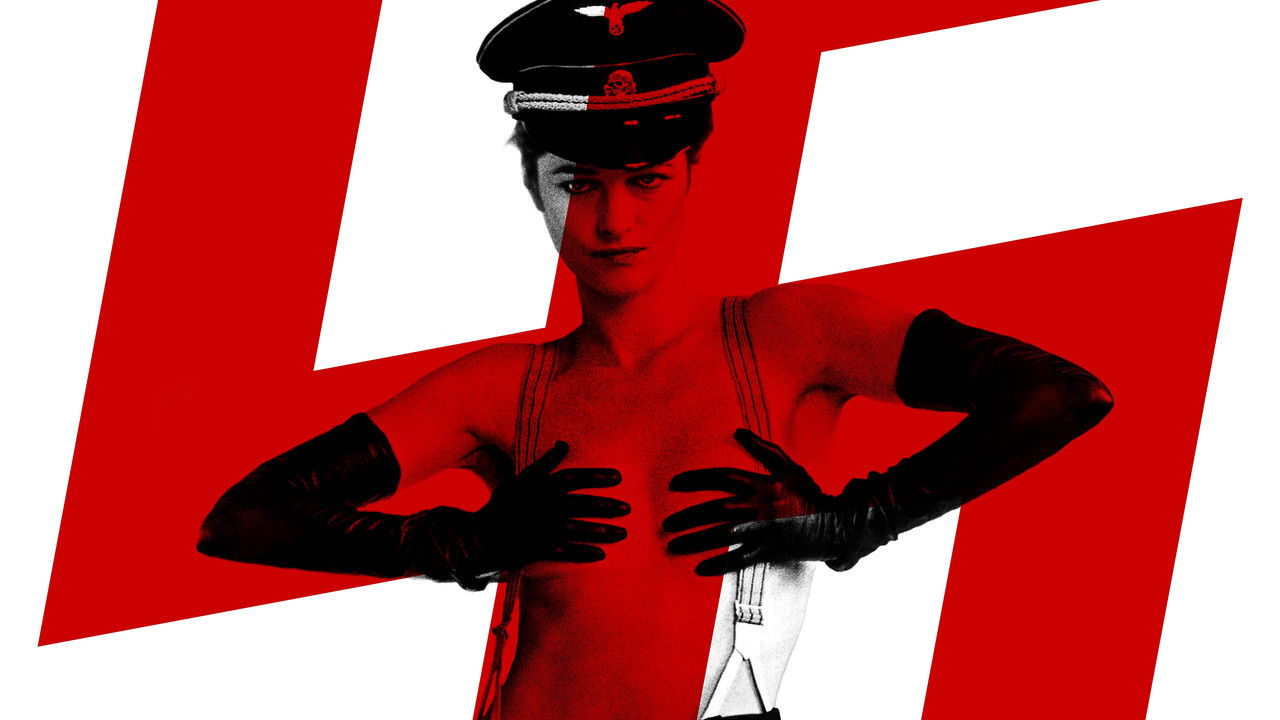
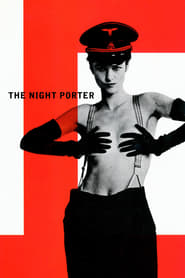
Yes, I completely agree with that. I also find it extremely disturbing to see it that way. I just ask myself again and again because I also do exhibitions. For me the representation of the Holocaust is also very important. I have to say, a few years ago I did an exhibition with the memorial Rabensbrück, the former women's concentration camp where women were also selected for sex forced labor. I did an exhibition on the topic of sex forced labor. At that time we said we wanted to have an exhibition or we decided to make an exhibition without pictures. That is of course difficult. A topic that is completely overloaded with pictures. You close your eyes and immediately have pictures in front of you. When you say prostitution, you immediately know what a prostitute looks like. Or through these films. But I say, for example, through the Nachtportier, through other films, there is always the image of sexual violence. There is an icon. For example here, Charlotte Rampling is of course an icon of sexual violence. The cover of the film, if you will.
You mean the German poster motif.
Where she is seen with a blistered torso and hat. That is an iconic representation. And this picture has of course caught fire. And that is of course problematic. Especially when you are dealing with a topic like sexual violence in the National Socialism in the concentration camp. Then of course the question is, how do you get away from this iconography? How do you manage to delete this icon? And that is very, very difficult. And we said at the time, we don't want any pictures of women. We have pictures of women, we don't show them. We don't want to create an icon here. But now the times are changing. And the image language is changing. And even from Facebook the new generation is now gone. Because Facebook is too much writing. Now let's say Instagram, because Instagram is an image language. So these pictures would be much, much more important today. And I think that what you just said with the story of Sophie Scholl about Instagram to depict them, that is totally disturbing. The question is, does my daughter also find it disturbing when she is 15? And it is... it is always... it is always developing. The image language.
The willingness to read decreases. And the willingness to political education decreases. And documentation or the preparation of the horrors of the Second World War and of the broken biographies is not only communicated or cannot be communicated by iconic pictures. You have to think a little bit more about it. The problem is that this iconicity of the pictures or the little video snippet conveys authenticity and suggests that this is the truth. It is completely forgotten that you have to deal with it. I remember that in the past from the former GDR fascism was always a topic and the Scholl siblings were icons for us. They were... the good Germans. And that was not out of the question. Because they have shown courage and paid for it with their lives. And today we are concentrating on abstract pictures. We see an actress embodying Sophie Scholl. In my opinion, it would be enough to let the original Sophie Scholl come to the fore in words and pictures, with original quotes. Some historically founded relational preparation. And no one can tell me that the young recipients of today would not understand it.
There is still an educational work in the KZ that is classic. It is always difficult especially for a generation that can't get by without a cell phone. To take it away and talk about what happened in the KZ. It is indeed a challenge. We have to face it. And I agree. The iconography and the image of Sophie Scholl as an Instagram post I think the next generation will ask themselves why didn't she take a selfie and post it on the internet? Because it didn't exist yet. And this is a problem. I agree.
Even a neighbors have problematic images. When Charlotte Rampling is seen in the KZ with short hair you are reluctant, as someone who knows a bit about film history, to associate Jean Scheeberg the self-confident young lady with short hair. These images are ingrained and you are reluctant to think about it. And maybe this was intended.
I don't know if this is true. I would say as a historian who deals with HNS history we have the short hair which is a classic reference to the shabby hair in concentration camps. And the other women in concentration camps didn't have the same hair. Not only shabby, but this is what women looked like after a few months in a concentration camp. Because the hair grew again until the next year. And that's why I see the KZ woman as a violent woman. And I think that she was played with the contrast. The long hair, which represents the civil life. And here in the concentration camp she is with short hair. What is interesting is that women who were in the concentration camp could grow their hair long again. This is a big difference to the women who are starving in Auschwitz-Birkenau because they had nothing to eat and had to work outside and build roads. While a few women who were selected to survive with the help of sexual services could grow their hair again. The hair cut represents
life. Long hair means life. Short hair is the reference to death. Very interesting. I understand.
I can understand. One aspect we can talk about because it is in the air in the 60s and 70s. The conflict of representatives. Ludwig Bogart as Max is clearly a representative of a generation of perpetrators. A group of perpetrators who denies their own guilt. The concept of representative has been burdened since Rolf Huchhut. You know him as the representative.
A work that is based on the responsibility of the Catholic Church for the national-socialist grudge or its own position against the grudge. I think the representative moment is also immanent here. He is still a third-legged man. He is also a representative of a certain cultural continent. He certainly had this role in the pre-war years.
With his biographical break in the war years as a barbarian. As a cultural barbarian. And relatively easily finds his way back in the post-war years. But you also notice that he suffers under this role of representative. It breaks up more and more. You notice this in Bogart's little gestures. He tries to cover up his wounds. He doesn't try to let them out. But the sexual desire for Charlotte Rampling makes it impossible for him. These wounds break up. These are also his soulful wounds. He certainly feels an inner conflict.
That's true. But I wonder if this is really about a sexual desire. I always have to ask myself that. I mean, the scenes are sexual. Of course. But the question is... For example, sex scenes are rarely shown in the film. It is only hinted at. The question is, is it really about a sexual act? Or is it about something else? Is it about the recourse to a life in meaning? Now he has slipped into meaninglessness. In the past, as an SS man, he had someone with power on the one hand and on the other hand also meaning.
He is basically like Emi Jannings in The Last Man.
Yes, exactly. He remembers with all the dangers that are in it. For him it is practically the end. He remembers the time when he was still someone, while he now has to flee himself, denies his crimes. Where he is also an example of forgetting. While his old SS friends or Nazi friends or colleagues push him to openly to deal with it. To confess to it. He just wants to forget. But it is not that easy, because he was someone, while now he is practically nobody. I also find interesting the two keys. Isn't that the symbol of the sommelier? Isn't that the symbol of the sommelier? Which of course is also a sommelier is someone with a higher education. To know yourself about food and wine is a training. Which is a certain evaluation of him. He is not just a neighbor. He is more than that. He has an education. You can see that by the fact that he goes to the opera and also in his way of dealing how he moves. But also that he has the knowledge, this elegance that he carries with him. There is a certain continuity to see.
We talked earlier about Cavani's film cultural education. Yes.
I know that she is a great admirer of Ingmar Bergmann. But there are parallels for example to a work like Bergmann's Schande. In which an artist couple on a fictional island experiences the beginning of the war. And to survive has to cross borders himself. Has to adjust his own moral compass again and again. Yes. And this is very exciting.
Yes, I agree. Especially the crossing of borders is a very important topic. Especially the scene which is very difficult. The artist is one of the most challenging scenes. There are so many elements to see. The building lamps which are also the KZ lamps. Then you have the mask which the accordion player wears. And of course she has a free upper body. A scene which... I don't know... I can already see what she wants to say with it. But this scene is very disturbing. Very disturbing. I think it is the central scene in the movie. And of course the most disturbing scene is the image on the cover. Which is transported through the movie again and again. Which is reproduced again and again. What is the image you have in front of your eyes when you look at the nightgown. Exactly, exactly. And of course it is interesting as a very skinny woman to have this prisoner's discourse again and again.
You mentioned Marlene Dietrich before. I would put the term androgyne into play. Because of her slimness she is male enough to be comparable with the dancing male colleague from the beginning of the movie.
Do you really think so? I really don't think so. I think her femininity has been exposed. It is very clear to see that she is a woman. Because of the very expedited showing of the breasts. Even if her body is very slim. But this is an extreme female scene. Of course also played as the dominant woman. The femme fatale. As the woman who takes something. The woman who dominates the men. The victim-prisoner-relationship is completely reversed here. But there is also the question of the guilt of survival. We talked about that at the beginning. What do I do to survive? And if that ensures my survival, why shouldn't I do it?
It is a very extreme scene. It has almost a Shakespearean character.
And then Marlene Dietrich.
And it is staged like a still life of Rembrandt.
Yes, yes, yes. Also the blue mask. And then of course the scene falls through this reference to Salome.
Salome's dance.
And I mean, Max, when he tells about this scene to the older woman, the name I just forgot, this is of course a very important element where he now composes biblical lines. And of course it is also part of the Jewish history. I mean, there you have a reversal of the Jewish victim. But
I have to say, I think she played it insanely well. The way she stoned her face. A smile shock.
I think this is a super strong scene. And I think this is an absolute brilliance of her.
This is a scene that works very well.
There are some scenes where I say, okay, what's next?
It keeps falling. You can't really define the face. Her facial expressions. Is it grief? Is it shock? Is it joy? What is it actually? And the way everything comes together in this facial expression. But that's exactly the question. This happens again and again. Also in these sex scenes or in these love scenes that they both have. Again and again it is not quite clear. Who is the victim? Who is the perpetrator? And it is always played around. So the sadomasochism is replaced by roles.
Well, the neighborhood is a strange, sparse work. Maybe you can help me with that. We have scenes like these that we have just seen, which are of course visually and visually overwhelming from the music dramaturgy. And then we have scenes that come with a lot of weight. They are a bit around the actual core. This is also a bit representative for the directing style of Cavani. Because I think she is a thesis director. Her statement is about the filmic convention. So it's not about talking, but conveying an idea or a complaint. And the essential moment of her filmic work is actually the complaint.
Yes.
Complaints point to something.
And just as little as our good Max is being accused of his crimes, we have to put ourselves on the test bench again and again.
Exactly. In this scene there is this reversal of the role of the victim. Where she is explicitly called the perpetrator. The blood plays a very important role. His blood, not hers. And she has something I would say... I think she reminds me a bit of Judy Foster in her early works. Childish but also dominant. Strong character. I find that striking. I don't know if it was intended. But I see her in that.
I understand that. But Judy Foster was a bit younger. She started at Disney and was filmed as a taxi driver. She wasn't a teenager then.
But I think Lucia is very young here. Maybe that's the similarity. Maybe it's the blue eyes.
What happens now? She takes his foot.
It looks like she wants to stab the glass in his foot to torture him. But he reacts immediately and gives the pain back. He becomes the perpetrator again. And now the cut comes back. And we have a similar situation. Suddenly she is not the victim anymore. She lies on him and kisses the chest.
That has something cannibalistic.
Especially the look she has. It's a lustful look. I want something. And it's not clear what she wants. And it's interesting, because you're talking about cannibals. She has this white skin almost zombie-like.
There is this camp movie. Epigone. A house without men. It's driven to the top. Where the perfidious camp leader is eaten. By the inmates.
Cannibalism is always a topic, which is rare, but there are reports about it. I remember when I read a report about a French survivor in a very bad camp. The V2-archives were made during the day. It was an outdoor camp of Buchenwald. He described it. One day he went around the corner and saw corpses. They were eaten. No mice or rats. That's why the myth of cannibalism existed in the camp. There is no serious research about it. I don't know what it's about, but it's definitely interesting.
We see the character of Philippe Delorat again. Is this a conscious iconography of Fritz Lang?
It could be. We have someone here who looks like a Gestapo man. In his outfit. I think the monocle is Fritz Lang, who is supposed to be reproduced. That was also with Godard. I had to think about it. But that was later, I think.
You mean Lepre? He used to be the neighbor, of course, but he may have influenced her. Here we have the chain. That's the absolute symbol. The fastening, the chain, the fastening, the defenselessness.
But the reason he is here is that he wants to protect her. He wants to protect her through the chain, which is completely absurd. I also find it interesting that false information was a completely classic moment for the Nazis to say, you are going to an asylum, which means death. So always to conceal the truth. I think that's a moment that also plays in here. And I also find it interesting that she laughs about it.
Suddenly she finds it funny. But it's not an honest or funny laugh, but rather a sadonic laugh. Whether she either loses her mind or becomes transparent here that she is playing with him.
I think that's what I said earlier. The question of how a trauma is being lived through here. Possibly plays a very important role here. It's not really clear what it is and maybe it's not clear to her either. That she tries to relive this old trauma and thereby free herself from the trauma.
She is still chained. Can't come. And now she hears this key. What does she plan to do now?
I think she wants to hide. She doesn't want to be captured by the intruder. Because that's also the reason why she is chained. She shouldn't be taken away. That's also the reason why she is chained. Very symbolic, of course. To be chained to the memory.
Where is her husband?
Her husband is on tour now. And she broke up with him. At least she told him that she will go back to Berlin or at least won't come back to Berlin. Where he is right now. That means she broke up with her old life. With her new life. To dive back into this old life she had before. Into this trauma of survival.
Probably her husband doesn't question that. He is the artist. Lives in a different world and is gone.
I don't think there is any real communication anymore. It's all about telegrams. The phone calls were interrupted.
A classic scene. We have the man who is sitting or standing in a suit and she is on the floor. Like the animal. Like the suffering person on the floor.
She plays it very well. You notice that she is busy. That she is working. That she is distancing herself.
It's a bit like... She is hiding from something. She is hiding from being taken out of this life. She has her new life given up. The only thing she has left is the memory of the life in the camp. Which she is playing again. I think we are at a point where there is no way out. She can't return to the civil life. I find that very exciting. Because in principle it's not about her being freed from this... because death is waiting for her. They don't want to free her. Because the only way out would be to go to the police. But that's out of the question.
The movie doesn't offer any other solution. It's basically without an alternative. She has to leave her life so that the men can continue their lives.
Yes, I think it's a kind of hopelessness. It's not necessarily that she leaves her life for her husband. Because in the end it's tragic for both. It's a situation where she as a victim has forgotten what she started to do. To forget her old life in the camp. To forget to start a new life as a wife of a conductor. And to forget the time in which she was in the camp.
She tried to suppress the memory. And she succeeded until she met her enemy again. And Max, her enemy, didn't have to suppress anything. He lives all the time in the past. For him it's still reality. Even if he gives him the portrait. In him it's less obvious than that this behavior is intensified. The way they feel drawn to each other. The exercise of violence. Dominance over someone. Who really exercises violence or dominance over the other is questionable here. This is a game that is played on both sides.
But now it's like this. She is in his apartment. He holds her in captivity. In an apartment. With a chain. And that's why it's clear that he wants to have his victim as the victim. And can't live without the victim. As if he can only exist as a victim. And as a victim he needs someone to hurt. He needs the victim.
If we continue, it would mean that he, as SS officer, only exercised this work. Because he could live out dominance.
Or at least he gave up on it. This life is partly like this. People weren't born as monsters. People change. Through work in a concentration camp or through the activity there. That changes a lot in people. And also the life in this excess or the life in this meaningful time is of course what we have already discussed before. I think I wouldn't go along with that.
I understand what you mean. I mean, maybe it's more like well, you're right. He didn't take this job because he wanted to. But it may have triggered something in him that he may have suspected. But that he couldn't admit it until now. And this special situation, this extreme situation between the two people of course triggers something in both of them that must have been present in them in some way.
Yes. It's a very unhealthy relationship. Yes, you can call it that. It's also the case that she can't get rid of this violence. I think she doesn't have this way out anymore. She consciously left the new life behind to return to the old life. And there's no way out of that. That's why I say now it's clear where this will end. The death of the two.
And that's amazingly nihilistic. If you look at it. Because it doesn't offer any scenes or any clues that lead to a peaceful solution of the conflict. But you know how it will end. Like in a Greek tragedy.
And if the role of the victim is exchanged in this way and such a love relationship exists or a sexual relationship exists between two people who can't belong together because they were victims and perpetrators. I think there's no way out of that. Maybe Carvani used this to dig his own grave. Now he can't get out of the situation. Maybe the story could have taken another turn. Maybe she would have freed herself. I think she would have been the person who should have freed herself from this relationship. Because she has to give up the role of victim and perpetrator to be able to give up in this new life. To be able to forget this new life.
Do you think she would have had to survive such a classic dramaturgy? Exactly.
Then she would have been the perpetrator who is going to die. But she didn't want to. And that's the
confusing element in this movie. And this scene I find it very interesting. Above the roofs of the state. I also find it interesting how the dancer, the homosexual figure, is in here. It reminds me a little bit of Mephisto.
Mhm, Gründgens. That's clearly the Gründgens figure.
And I also find it interesting how Max, who is still a bit of a sympathizer. Because he has this very soft smile.
The typical smile of a woman who has a heart to melt.
But then he greets Hitler. And it's clear what he is. He's just a Nazi.
Surprisingly, five old Nazis are standing above the roofs of a city in the 50s. Completely indignant, unpunished.
That only works in Austria. Of course, it's not that bad. If it was correct. Because of course, Austria was able to clarify the question of guilt from the beginning. Austria was the victim. And that's why people who were, so to speak, national socialists, were also subjugated. Especially since we also have Vienna as the cursed city, as we said earlier. But of course that also existed in Germany. Especially in the western occupation zone, where, so to speak, in the 60s, 70s, of course, all these alliances existed again. And Nazis had the opportunity to follow their ideology again.
Yes, and now it's about food. Now it's about surviving because they can't get out of this house. Which I also find interesting. The apartment, and that was shown earlier, is located in Karl Marxhof. And Karl Marxhof is a settlement project from Vienna. I think it was opened in 1930. One of the leading projects of social democracy in Vienna. Vienna was of course a city where the left was always very strong and the social democracy very special. And the settlement and the housing was very important. And this Karl Marxhof was a foreshadow project. Which of course was also a bulwark against the rights in Austria. And interestingly he has now, so to speak, in this left or socialist settlement project, suddenly found his own apartment. I think that's a very, very interesting situation. What we also saw earlier is the entrance to this Karl Marxhof. These very monumental entrance buildings, very pointed pointing upwards. It's almost a kind of fortress architecture. Which on the other hand again of course also shows that he is now walling up. So he is now trapped on this fortress. Doesn't want to get out of there either. But is also, so to speak, behind thick walls safe at first.
And she seems all the time as if she had the situation under control. Because she could make herself understood at any time. Despite chains she could scream, she could knock. And someone would help her. There are enough possibilities for her to escape the situation.
I sometimes have the feeling that this is a kind of lethargy, which many prisoners also had themselves or surviving concentration camps or in the camps. That at some point one has actually finished with life and becomes lethargic. And I think this kind of lethargy, that's what she's going through right now, I think.
Or she's assuming that the situation is escalating. Knowing that this has to end with the separation of the two. She seems very thoughtful here with her pipe.
It's interesting that she has a pipe right now.
The symbol for masculinity.
Yes, exactly.
Bogart doesn't even seem so self-confident anymore. As if he were aware that the situation seems to be gradually fading away. That he himself has no way out.
But from now on, what the movie shows is about daily survival. From now on, the food intake is the most important thing at all. And in fact, in this part of the movie it is told how two bodies are starving. Which, interestingly, sounds like time in a concentration camp. Because the life of a prisoner is completely dominated by hunger. And the loss of the body. Here you can see the part of Karl Marxhof, with these monumental entrances and these huge portals. It looks a lot like a fortress architecture.
She doesn't know this situation. But Max doesn't. He only knows it from the perspective of the perpetrator.
That's true. And maybe it gives her a certain sense of security, that she can deal with this feeling. And he knows that he can't. You can also see these small entrances, these small windows and these huge arches, which sometimes underline the monumentality. It's interesting, because Karl Marxhof looks completely different on the other side. You have this entrance portal, which looks very monumental. And on the other side you have classic, modern, modernist architecture.
The socialist apartment building in the broadest sense has such and such results. Exactly, exactly. You know yourself, here in Germany there is Eisenhüttenstadt.
Yes.
There we also have examples of the so-called Stadienbau.
Exactly, the Stadienbauten in Eisenhüttenstadt. I mean, in Berlin it's very clear. You can also see the Stadienallee, former Stadienallee, now Frankfurt Allee. And of course the modernist buildings, which of course end up in the Stadienbauten. All the Stadienbauten in the GDR originally came from this modernist idea.
And of course in the Stadienallee not only loyal communists lived, but also former Nazis. I
find it interesting, by the way, his sweater, which has a hole at the top. I don't know. He is so very dressed up. Almost a bit like Henry Bogart, I would say. But then the hole at the top, which of course shows the decadence in this case.
The lacquer is gone. Under the adriatic surface it is very broken.
This sad everyday life in the apartment together is really in complete contradiction to the very opulent beginning, to the mundane hotel.
And here you can also see through the shots how they are stored. And it is also clear that this hopelessness, in which they are right now, doesn't come out anymore. And now it's really about the lacquer, the survival.
Why
didn't he kill her before? He could have freed himself from the situation. Why didn't he do that?
I don't think he wanted to. Especially in this relationship, especially in these initial sequences, you can see that he hesitates. He uses violence. Then he missed her again. So it's a very ambivalent scene. Or scenes in general. And I think that he maybe it's too high to say, but I don't think he can live without her. And I think that's the absurd thing in this situation, that the perpetrator can't live without his victim.
Because of such a toxic relationship, that one can't live without the other. And you rub against each other and need each other.
Yes, and also interesting how he is
violent. It's a desperate act now. You can see how much despair comes out of him. But also herself. Her dominant appearance disappears more and more. Now there is also a kind of madness in her face.
Now the film becomes unpleasant.
Yes, and I think it's interesting how the cat is still built up. On the one hand, of course, as the lovely kitten. But on the other hand, the animal that has claws.
The only way out of the situation for him would actually be to call the police. But of course that doesn't work either.
No.
She's in bed and it's basically the passive.
And there is also the scene where she was lying in bed in the barracks.
Yes.
There was already such a bed scene between the two.
Yes, definitely. But in contrast to that, he is no longer in the position to get her out of the camp through the dominance, but he is now the one who is in the defensive.
Exactly. And I think it's also because of the fact that he now has the power to eat. He could give her food and now he can't do that anymore. He loses the last foundation of his power.
She is no longer obedient to him. She looks at the jam. She has the feeling of hunger.
A classic feeling of hunger. Like an animal. She would eat everything now. And of course it is also a scene that plays on the everyday life of the camp. They do everything for food. Even with the shards in the jam. It doesn't matter. How she moves on the floor like an animal. Like a starving animal.
It has something cannibalistic again. It's not the jam. It could also be raw meat. Yes, that's right.
The red color of the jam as if it were blood.
The shards on the lip.
That would be a scene where you could almost end the film. This dramatic scene if it would end in death would give the film a very dramatic end. As we will see later the end is a very un-dramatic end.
He tries to eat something of the jam for himself.
Although the scene slides into the erotic. This is also a repetition of the scenes from the camp. Where the erotic, the desire and the hate come together.
To sum up. If I understood you correctly you think that the scandalous part of the film is not about the erotic but about the fact that we have a conflict between violence and nazism?
Not only that. I think the scandalous part is the exchange of roles. That the victim becomes the perpetrator. And this is a thing that is very difficult to understand And for us as people who deal with this topic in Germany it is very special. Because suddenly the perpetrator becomes the victim. And this is a thing that we are trying to prove until today. That this is not possible. The perpetrators are perpetrators. And this can break. But usually people have to be punished if they commit such acts of violence and kill people. And I think that is the difficult thing about this film. That we suddenly have the victim who becomes the perpetrator. And I think what I find very difficult about this film is that in Italy and also in Israel there were women who survived the Holocaust. In Italy, but also in Israel it was always said that they would have done this because they managed due to sexual services.
The survival was sexualized. And of course in conservative societies this is extremely difficult. To portray a woman as the survivor. And this has in Italy until today a difficulty for surviving women from for example Ravensbrück. That they were always told that they would have survived because they had sex. And this is an element that plays a role here. And I think that this should not be underestimated. I am sometimes not sure if this also has something to do with this film in Italy. That the image that is given here of the surviving Jewish woman who was deported to the camp and survives because she is sexually abused or even feels pleasure at this sex game in the camp. That this may have influenced such a collective. I'm not sure. I do not know what was first. Whether the chicken or the egg. But this is definitely a very, very difficult element.
What remains of the Nachtportier? What film historical influence would you now, regardless of the camp and concentration camp films?
This is definitely one of the most important films ever. Which addresses this topic. You really just have to say. In film history, this is a film that is incredibly difficult, but for the first time it is so explicitly thematized. And not in an exploitative form. Not like the Zister films. This is a completely different approach. And I would still say that the question of trauma is really important. The trauma management as a central element in this film. The replaying of the old traumata to overcome them. But of course it is difficult. This sexual element, which plays along again and again. The sexualization of all these scenes. And I still think it is just more meaningful because of that. And of course also because of the acting performance. We must not forget that.
It is incredibly brave what the two do.
I mean, how does Charlotte Rampling see it today? I would like to know what she thinks about her role today. But I think it's a great performance that she brings to the film.
And
Olaf Halsam, let's get to the end. That, as you say, is amazingly banal.
Yes, absolutely. I mean, I do not know what's next. The two die. They do not die dramatically. There is only the shot from behind. On the bridge in Vienna at dawn. And I think that's just too little for such a film. Which is so dramatic and so contradictory and builds up so many emotions. Is that an end? That's just too banal.
They die more or less arm in arm. And they die the way they could not be in life. Together. Maybe that's the message. That the two then somehow belong together. They are not married, but until death do them part.
Exactly, but that's what we don't want to see. Because, how can the perpetrator and the victim be together? It must not be. And I think that's just so incredibly disturbing in this film. That you almost have a kitschy end. A kitschy, romantic end.
And that's interesting. Especially the way he stands there with his hair in his face. That's also, for example, if you look at one of the last pictures of camp leader Hössler, how he was in prison. It looks something like that. His hair is all messed up. When he was already in British captivity. That's an interesting allusion.
And now the violence breaks here. Or the despair.
He can no longer get to Essen. Because the last hope now dies because it's the neighbor's wife.
Who was always there for him.
Yes, from the boy. And
that's already a scene of death. She actually gave up.
You also mean Rembrandt. It could be a still life or a painting.
It is surprisingly consistent. There is no way out.
And here they are not arm and arm, but actually in two different corners of the apartment. There is no way out anymore.
She could report to the neighbor at any time. She would be helped. But she doesn't.
Can't she go either? That's the man who wants to shoot her.
She could find refuge there. And the police could help her.
Do you understand? Yes, but I don't know if that's still possible. They are completely surrounded. And the other Nazis want her dead. They don't want to let her go to the police. That's the last thing they want. The project of innocence raises questions. She is looking for something to eat.
Why do you think they don't give him a chance anymore?
I don't think so. He doesn't deserve a chance anymore. Because he is a scoundrel. Even if he was a sympathizer here and then. But it's just the way it is. It's just the way it is. I mean, the Hitler greeting shows. These are the little elements how he beats her. He didn't lose anything from this monstrosity. He hides behind his thick appearance and his uniform as a porter. But in the end he is still the monster. And when the light goes out, the electricity is gone, the heat is gone. We have seen that it is autumn or a colder season. And it is clear that not only the stomach is empty, but also the body heat will disappear.
The only thing left is the water. That doesn't help either.
In fact, you can see that she gave up.
One might accuse Cavani of this that in such clarity she makes him a kind of scapegoat. That the game is reversed and that it is absolutely disturbing that she has to suffer the same fate twice. That she then, so to speak, goes into this strudel and gives her life. Although she is still more of a victim than a perpetrator.
Yes, that is absolutely correct.
So she is pretty merciless with her own characters.
And I meant that Cavani digs her filmic grave through it, so to speak. She does not continue with the story. So it has to be so intertwined. This victim-perpetrator role so strongly alternating with each other that there is actually no way out anymore. And that's why I think maybe such a very dramatic way out with the glass shard would have helped to bring the drama to an end. But what follows now is the anticlimax. Exactly, the anticlimax. Actually, the film would not have deserved it. Do you think so? Yes, I definitely think so. What happens now, of course, is that they take on their old roles again. He puts on the SS uniform again and you see the dress and that's how they show themselves in public.
It repeats itself, right? The story here.
Yes, exactly.
But it is also the moment when both confess color and stand for it. And he himself also stops wanting to forget that. He stands for his actions by putting on the uniform. And basically she also won. So she presented him as a Nazi, as a perpetrator.
What is the price of it?
The price of her own life.
And here it is also completely clear, I mean, this old role relationship is very obvious again. She is the victim, she is the little girl. He always called her his little one. And now he's walking down the street with her. But it's very clear, so to speak, he supports her too. And she is actually his victim. It's a bit like he's showing his victim openly. So he shows, this is my victim, I have her. I have total power over this woman. And just make it public. And of course with her SS-uniform and the swastika tie on the side.
And it's amazing that he still has the uniform.
Yes, she had it, we remember the scene where she looks in the closet and still sees this uniform. And I find that really interesting, because of course he always claimed that he would want to forget that. He would want to live on as a normal person. But he doesn't do that. And I think that's possibly the connecting element that brings him back to his old, why he lets this relationship come to life again. Because the old is not forgotten, it's still there. He can't forget. He can't forget, no. Possibly it's not just the ability, but also the unwillingness. Where we are again in the aspect that he was someone. And now he's practically lost in the meaninglessness. And for that he also takes a stand that in the end he just dies. But he dies as someone. He dies in a uniform. You can't forget that either.
Now we have the famous last setting. And it's amazingly quiet.
Morning. We have the morning sun. There are still clouds. And then the Stephansdom back there, if I'm not mistaken.
It looks like a personal conclusion.
But it's not. The street doesn't lead anywhere. It's a bridge, but it's water. And in the end it's nothing. As I said, you
don't even see a gun. You don't see who it was. It's clear who it was. But it doesn't have to be shown. But I think that for a film that has such a high claim and is also so complex it's actually rather sobering. Almost a bit of a shame.
But it still says it all.
That's true. And above all, they still walked arm in arm, but now they are lying completely separate from each other as two bodies.
Right. And although they walked arm in arm into death, they are separated in death. And there is no reconciliation. There is not even a real confession for them. Both die with their lives and are buried in history. What remains is the guilt. That's right. I have to agree to that. I thank you.
It was my pleasure.
And we hope that you, dear listeners, could take some interesting thoughts or information with you.
Keep exploring
Other tracks with shared craft concerns
-
8 shared topics
Congo (1995)
Kelly Goodner, Jim Hemphill
-
8 shared topics
Alien ³ The Legacy Cut (1992)
Oliver Harper, Rob Hill
-
8 shared topics
The Silence of the Lambs (1991)
Elizabeth Purchell, Caden Mark Gardner
-
5 shared topics
Broadcast News (1987)
James L. Brooks, Richard Marks
-
6 shared topics
I Am Legend (2007)
Francis Lawrence, Akiva Goldsman
-
6 shared topics
The Godfather Part II (1974)
Francis Ford Coppola