director
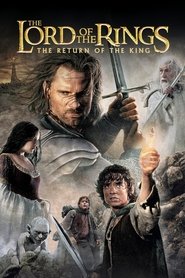
The Lord of the Rings The Return of the King (2003)
Jackson, Walsh, and Boyens discuss intercutting the climaxes, maintaining attention to Frodo and Sam, and removing scenes that delayed Mount Doom. They explain on-set motion capture, reused sets and miniatures, pickups, and redesigned creatures. They also describe replacing the filmed Aragorn-Sauron duel to keep the climax focused on the Ring.
- Duration
- 4h 13m
- Talk coverage
- 96%
- Words
- 47,397
- Speakers
- 3
Guided collection
The Lord of the Rings director commentaries
Peter Jackson, Fran Walsh, and Philippa Boyens discuss adaptation, production, and editing across the trilogy's extended editions. Read the tracks from The Fellowship of the Ring through The Return of the King.
Part 3 of 3
- 01 The Fellowship of the Ring 2001
- 02 The Two Towers 2002
- 03 The Return of the King Now reading
Commentary density
Highlights
Topics
People mentioned
The film
- Director
- Peter Jackson
- Cinematographer
- Andrew Lesnie
- Writer
- Peter Jackson , Fran Walsh , Philippa Boyens
- Editor
- Jamie Selkirk
- Runtime
- 201 min
- Also on
- OneSheet ↗ OverBlack ↗
- External
- IMDb ↗ TMDB ↗ Find on Amazon ↗
Transcript
47,397 words
Hi, this is Peter Jackson, the director. Hi, I'm Fran Walsh, writer. Hi, I'm Philippa Burns, one of the other writers. And this is the director's and writer's commentary, I guess, isn't it? The final. Final one. Four hours and ten minutes long, this movie is. That's without the credits, isn't it? Yeah. There will be a test. So the credits are pretty much the same as they have been on the previous films. In fact, I think this is the Fellowship of the Ring title that we've just rehashed. twice before, which is good. It's a very cost-effective way to make films to use the same title three times. This scene was directed by Fran. Yeah. We had a choice. We could have opened on a wide shot of the river. We could have opened on a fishing line going into the water. But that shot that you guys did of the worm that pulls focus to Andy's face, I just think that's a great way to open the movie on a wriggling worm. I really like that as a start. Well, that's actually a literary allusion to Paradise Lost, Pete. Oh, is it? Worms, apples.
The fall. The fall gardens. She's lying. Can you believe me? This is Tom Robbins, who played Colin McKenzie in a film we did called Forgotten Silver. We asked Tom if he'd like to just do this very small cameo. This sequence was shot at Fernside. It stood in for a river, but it's actually not a river, it's a very small lake, which is useful for when you're making a film. You know, you're not in danger of boats and crew members floating off down the river. Andy wasn't originally going to be Smeagol, was he? We sort of cast Andy for the voice way back at the beginning, and we had ideas for other actors, didn't we, for Smeagol? Sort of, it's amazing because it seems so obvious now, doesn't it? It took us a while to get to the point where we thought, well, obviously we should have Andy. This sequence always felt like a good place to start the movie because it's like an origin of the Ring story, and if you start with that and you end with it going into the crack of doom, it had a kind of nice unity to it.
It's probably important for this film because The Ring kind of dropped out of The Two Towers, didn't it? Because The Two Towers was about other things, but not really about The Ring. And yet this movie, we had to bring The Ring right back up into the forefront of the story again. How were we going to start Return of the King if it wasn't... Because this was supposed to be in The Two Towers. We actually shot one idea we had, and it was always a placeholder. That's right. I remember. Didn't we suck out of the tunnel of the paths that are dead? We go rushing across the plains of Edoras. I remember we did a sped-up helicopter shot. and we crash into the Golden Hall and he wakes up at a nightmare. And that was actually supposed to be the beginning, wasn't it? Yes, it was. And what ended up happening is we inherited two scenes from the Two Towers. If you remember in the Two Towers, in the Dead Marshes, there's a scene where Frodo goes over to Gollum. He calls him Schmeagol.
and Gollum goes into this slight reverie, this moment, and that was the cue for the flashback. And for length reasons, we didn't put it in the theatrical The Two Towers, and then we thought, by the time we were cutting the extended edition of The Two Towers, we had got the idea at that stage to maybe save it for this movie. We'd done the big James Bond kind of pre-credit sequence thing on The Two Towers with a big fight, and I didn't want to have to sit and dream up another big slam-bang action scene for this film, because it felt like we'd been falling into a pattern. for a franchise pattern, as it were. When we realised that we had available to us this Schmeagle Deagle scene, it seemed like a counter to how the two towers opened. I know that Andy was really disappointed that it was cut out of the two towers, because he was aware it was his moment to have his real face seen on the screen. And then we cut him out, and I think he was never quite believing that we were actually going to use the scene at all. No, probably not.
I didn't shoot any of this scene. I was busy on another set and we had no other directors. And so we said to Andy, listen, do you mind if you direct yourself today? Because there's no one else that we can find to do it. Yeah, I love the sound design in this scene. We opted to drop out the music and just let the kind of intensity of the moment really take over. And at one point we cut the effects back and it wasn't half as scary. We actually have a few more seconds of strangling in the extended cut because remember the MPAA asked us to reduce the intensity and we shortened one of the strangling shots and then we put it back at its original length here. So this is a complete full strangulation, never seen before, here exclusively on DVD. In this shot here, old Tom, who's trying his hardest to be dead, actually blinked right in the middle of the shot, but Andy's performance was so great on this particular take
that we wanted to use the blinking one, so we had Weta, the CG guys at Weta freeze his eyes, so we removed the blink from his eyes. This was a sequence that Freya directed. We built the set very quickly, because it was an idea that you had that wasn't really part of the script to show this deterioration. We put a guerrilla crew together so that you could film it with Andy. We were trying to figure out all the different ways we could use the set, which was really a little gully, a rock gully. So we drowned it in rain, we dried it out and drowned it in light, threw some greenery in. We just tried to give it variation and also to show, obviously, passage of time. That was a huge make-up, wasn't it? It was enormous. He was in there for how long? I couldn't tell you. Hours and hours and hours.
Forever. I love this stuff here with the fish. Weren't Andy's legs too muscular, Pete? Yeah, the shot of him on the rocks before he goes in the cave, he had these very chunky, muscly legs. And so we had the CG department thin them down on the computer to make them look more emaciated. And this shot here, he has an eye enlargement where we use the computer to make his eyes bigger. so that he would start to look a little bit more like Gollum. We also morphed some of the CG Gollum's face with Andy's. We kind of mixed the two faces together because we wanted him to look like he was almost on the verge of becoming the full version of Gollum, the CG creature. We wanted to get a little bit more of that feeling into Andy's face. This was a sequence that was shot
on a day that it snowed. Now, you don't see the snow here, but we were at a place called Ruapehu, which is a volcano, and it was late summer, and it was absolutely not supposed to snow, but it was one of our days that we had several during our lengthy shoot where there was unseasonal weather, and it was like, oh, this is the first time it's snowed here for 65 years. It was like, oh yeah, sure, well, great. I remember you were standing out in the middle of, you know, the snow was sort of raining down on everybody, and you were saying, Snow, this isn't snow, it's volcanic ash. I was trying to be optimistic. And this was a big culvert. This is a set that we built and we took up to Ruapehu and you're looking at shots here that were done in the year 2000. And then we had Elijah and Sean come back to do some closeups. Now, when you look at them and they're talking and they're just the wall of the culvert behind them, there's four years between some of these shots.
That's original, that shot there. But the reason we did the pickups was, one of the reasons was we wanted to set up Sam's belief in the journey home and the possibility of a journey home that we were going to take away from him on the slopes of Mount Doom to help reinforce the water bottle scene. which was one of the reasons for the pickups. And we also felt we hadn't truly established the Lembas bread properly and the importance of it. Well, we'd established it in the previous movie, but of course people forget about it because the Lembas obviously is a catalyst for turning Sam and Frodo against each other. So we wanted to reestablish it. The Lembas bread was just a bit of bloody old pastry that wasn't really tasty.
A little peckish. Just when you're waiting for the lunch break to happen and you look around and see if there's any nibbles and the craft services table's a bit far away, but there's always a lambus bread lying there in the prop department. Pete, that's desperate. Yeah, no, that's where it all went when the props people were complaining that somebody was stealing it. It was me. It wasn't Gollum after all. There should be enough. So these are the pick-ups. This stuff here that we're looking at, these close-ups, were done four years after the original shots. The journey home.
We were lucky here because this landscape on the slopes of Ruapehu actually had a fire, a forest fire. About six months before we were due to shoot there, it had all been burnt through with a blaze. And so we had this great landscape that was sort of ashy and volcanic looking, but it was actually the result of a fire had swept through and killed all the undergrowth. It's a great location for a World War I film, burnt trees and scorched land and yeah.
I always thought this was a dodgy scene because we shot it in our Fangorn set in the studio, which was a tiny studio and you can basically look at a painted cyclorama in the background. And it's one of the reasons why we shot it so much out of focus is to try to disguise the fact that it was just a painted backdrop. And that shot there in particular.
This is a big miniature that was shot out the back of the parking lot. That circle of Isengard with the tower, I mean the tower itself is about 14 feet tall and the circle was, I don't know, 50 feet in diameter. This was a fun scene. We actually ended up picking quite conservative takes because they shot five or six takes of this particular sequence. And Billy and Dom gave us a lot of variations in just how stoned they were. And there were some actually quite funny ones where they were incredibly stoned. And I ended up using ones that were a little bit more conservative. But there are some very funny outtakes. This plays particularly well if you've seen the extended cut of Two Towers, of course, and seen them find Saruman's hoard. All shot in a tiny little studio and we used a blue screen behind Billy and Dom but we just had this little bit of trees and a piece of the wall and it was very cramped and very claustrophobic and you're sort of lucky that in the movie people don't think about that too much. That's why we use those big miniature shots to try to bust it open a bit to give a sense of scale when no scale actually exists.
on a field of victory, enjoying... The whole Isengard sequence was supposed to be at the end of Two Towers, and we just felt that by the time we got through the Battle of Helm's Deep, that that film really needed to wind down and be over and done with. And, you know, if you were returning to Isengard at the end of the Two Towers, then you obviously had to have the scene in its entirety, which was upwards of 10 minutes long. And it was just a very anticlimactic way to end that movie after you've had the huge battle. And so I think we did the right thing in relationship to The Two Towers because we were looking after that film last year and that was where our attention and focus was. And then this year we had what we ultimately felt was a problem because we had to have the scene.
Because of the Palantir, that was really the main reason why our characters had to go back to Isengard. It wasn't to deal to Saruman. We felt, and that's obviously why Saruman was deleted out of the theatrical version of Return of the King, generally because we felt it was about Sauron as the villain of this film. And when we were thinking about the opening and the overall length of Return of the King, this was a sequence we were just always worried about. And for a long time, the thinking was, well, is there a way that we don't have them return to Isengard? Can they pick up the Palantir somewhere else? And then we couldn't figure out a way to do that. And so then the idea came, well, they could go to Isengard, but they don't encounter Saruman, which was the second plan. And that was a tough decision to make, obviously, from the point of view of not having Christopher in the film, but still having Isengard. It was a little easier in a way if we just didn't go to Isengard at all. We wouldn't have actually had to face that problem. But we ended up just doing what we could to push the theatrical version of the film along at a speedy pace.
It is very much going backwards in terms of the storytelling, and we were so conscious of that. It needed to be providing fresh information. It needed to be moving the story onwards. So we attempted to do that within the pickups. Really, what we were trying to do was pin the tension on the possibility that Saruman knows something that Gandalf needs to know. That thing that he knew was Denethor, and that Denethor was a grave danger to Minas Tirith, and that Minas Tirith would fall, and that he knows exactly what Sauron's plans were. But in the greater scheme of things, that was just us desperately trying to make a scene work that really was still going backwards and wasn't really driving the story forward. But you could save them, Saruman. You were deep in the enemy's counsel.
It was very windy that day. It was very windy and the wind kind of dictated the look of the scene to some degree. You know, it was creating problems for Christopher. His hair was blowing into his mouth while he was talking and his beard and robes were blowing around. But I kind of like the look of it. It has an organic kind of reality to it. And it was interesting because the original shooting of that scene back in 2000 was done with the wind and the look and the feel. And when we wrote some extra lines for him to do last year... We did those pickups three years after the original shoot in a studio this time. We weren't out in the parking lot. So we had enormous trouble getting all these wind machines in and we had to blow his hair to the same degree because it had to match perfectly. And so Christopher was now in the studio delivering lines, battling against this enormous wind machine that we had blowing into his face.
This sequence was shot in the wet set. We call it the wet set because it's wet, I guess. It has water, but it's basically a pile of sandbags shaped like a big swimming pool, and it was on a parking lot. So we were standing on the asphalt of a parking lot. We flooded it. This was where we shot the outside the mines of Moria with that lake where the monster attacks them outside the entrance of the mine. We used it for the dead marshes in the two towers, and it also served as flooded Isengard, so it was a really worthwhile bit of set to build. Some of the great lines that we've struggled so hard to keep in the movie because they're so Tolkien-esque and delivered so brilliantly by the actors. What is the house of Rohan but a thatched barn, all of that sort of thing. Just want to keep that incredible language, but really, unless it works dramatically in the end.
It's hard to justify. I think you can feel it though in the seven minutes of watching this scene that it lacks the dramatic shape. I can feel it. It's only because to me if we had written this scene as the beginning of the movie and Peter had been able to shoot it knowing this was gonna kick off The Return of the King, we would have made so many different choices. It's OK being in the extended cut because, in a sense, the existence of the extended cut completes what's effectively a box set. It's three movies. The end of one film and the beginning of the next becomes less relevant. You haven't got a year gap between the rest of these films anymore. You've now got them sitting on your shelf as one complete set.
The placement of these scenes is actually less important now that the whole thing's together in one set. But certainly when we were looking at these films being a year apart and what was last year and what's this year, they were tough decisions to make. This deep does not belong to you, Theoden Horsemaster. Of course, Saruman's death is also a variation, and we wanted to acknowledge that here. Even though we were resetting what happens in the Shire to Isengard in terms of changing the book, we wanted to somehow have the dynamic the same. Be free of him. When I was shooting the stabbing shot with Christopher, as a director would, I was explaining to him what he should do when Wormtongue stabs him in the back, like sort of the air's escaping out of you. And he says, Peter, have you ever heard the sound a man makes when he's stabbed in the back? And I said, no. And he says, well, I have. I know what to do. And of course, when you question him for more information, you find out that he's still under the Official Information Act, the Secrecy Act, because he was a commando in World War II.
and there were things happening with Christopher that he's never talked about and he's not allowed to talk about. He knew the sound of the air escaping and the groan, the type of groan that is emitted. And that's what you're actually getting in this film, the authentic recreation. You know, the great thing with DVDs is that Christopher wasn't in the film for a few months and now with the release of this, DVD he's back in there again and I mean these will be ultimately seen as the more definitive versions of the film I'm so I'm sure
We do have an alternative version of the scene. We have stuff in the scene that we still haven't used. Again, it was about giving the scene some tension. In this case, it was the tension of revealing the truth behind the death of Thadred to Thad. And this is when the whole sequence was, that was your idea, wasn't it, Fanny? When the sequence was closing out film two, and we wanted it to have some of that tension and drama of a final denouement. But the problem with that was that that never really worked because we didn't ultimately... care about Theodred or need to know who or what had killed him. And by that stage, we'd been away from Grima too much to really care too much about him either. As I keep saying to people, we're saving it for the 25th anniversary edition. Mind you, by then I'd be so old that I would have forgotten that we ever shot these movies and have no idea what we have left over. But the basis of this scene was the...
Scouring of the Shire, wasn't it? Yes. Sharky and the hobbits encountering him. This was the basis of the scene. This was a shot that was one of the star shots in the reel that we sent to the Cannes Film Festival. Well, we ran it backwards. We did, actually. And we had to paint out the soldiers walking backwards. That's right. Because the original shot pulls out, doesn't it? Yep. But when we put it in the movie where it was, we thought it had to push in, otherwise it wasn't really working properly. To take you into the hall. She was watching them leave in one and then watching them arrive in this film. This was actually a rebuilt Edoras because this entire party, or the banquet scene as we call it, didn't actually exist in our original script and we'd never shot it. And we had this giant big set of this golden hall that we'd built. Fortunately, when we were done with shooting, we put it in storage.
just in case. We didn't throw it away, which was lucky because three years later we kind of came up with the idea of this banquet and we were able to drag this bloody big set out and stick it in the warehouse again and we had it back for filming. The drinking game was meant to be a bit of leaven really, wasn't it? Just to lighten the front of this film that it's not all doom and gloom. Pete came up with the idea of a drinking game. Yeah, drinking competitions are a national sport in New Zealand. I mean, if New Zealand was running the Olympic Games, it would be one of the main events. It's primarily an excuse for putting Howard and Michael Somanik in the back of shot, isn't it? If you look behind Orlando, that is Howard Shaw, and then Mike Somanik, one of our sound mixers, is next to Howard Shaw, and we put wigs on them. We put them in there, we made them sit around for hours, we shot them, and then we cut them out of the film.
So it was a very sort of typical experience as a movie extra. I hit the cutting room floor. Yes, anyway, everybody's back now. Everyone's got their cameos back in this DVD. The banquet sequence is really a series of setups, isn't it, for later things. The only thing that isn't a setup was the frivolous drinking game. When the old tough choices came... about what to include in the movie, that was the piece of the scene that was expendable in the sense of the narrative, because we wanted to obviously establish the relationship between Eowyn and Aragorn. We wanted to hint at Theoden's lack of confidence about his abilities. We wanted to establish even the little glimpse of Pippin being distracted by the Palantir and Gandalf thinking that something might be up. And we wanted to obviously have Gandalf and Aragorn having the conversation about Frodo and what's happened to him. So we were able to establish a whole lot of little story threads.
in one sequence that we had already shot the later stages of those storylines, but we hadn't really felt that we'd begun them that cleanly. Actually, what we were doing too was trying to earn another scene that was not put in the original, which is the scene between Eowyn and Aragorn. The dwarves that go swimming with little hairy women. John just went kind of crazy there. You know, a lot of that's improvisation, which John does so brilliantly well, and that line, God knows where that line, where it came from. Oh, I can tell you. You don't want to know where it comes from. Tell me. It comes from Jaws, and it comes from Captain Quentin, who says, here's to men who go swimming with bow-legged women. Oh, OK. Oh, that's where it came from. In drinking scenes in movies, people often wonder what the...
you use for beer because obviously you can't use real beer because otherwise you'd have actors rolling around on the floor. And sometimes you do have actors rolling around on the floor anyway. In the movies we use a low alcohol beer. It's real beer, it's brewed with hops and it tastes pretty much like beer but it's very low alcoholic. We had a brewery in Nelson actually create a special low alcohol Hobbit beer for us to use in the film. Well that's why our budget went through the roof. So where did that drinking song come from? Phil wrote it.
the bad stuff. I always write the drinking songs and Plan 9 did the music. Hopefully people aren't concentrating but if you look at this very quiet conversation between these two characters you find out that you'll hear that the sound of the party has suddenly died right down and it's one of those weird things that that happens when you're mixing the film that you can have this loud outrageous party with everybody laughing and drinking and food and all the noises and then when you have this quiet conversation you obviously just can't play those sorts of sounds and so you just push it all back and it's sort of very artificial but there's no other way around it and you just hope that in the flow of the film people aren't thinking about it. This sequence is like a sister.
to the scene in The Two Towers where Gollum talks to himself. The irony is that this one was shot first. It was shot during our principal photography and it was shot for Return of the King, actually directed by Geoff Murphy. You were there too, weren't you, Fran? Yeah. And we liked the scene a lot, but in The Two Towers, we thought we needed an equivalent scene that did a very similar thing. So the scene in The Two Towers was something that Fran wrote and directed as a set-up for what ultimately, this was like the second beat in his... deterioration, wasn't it? Yeah, although we did have the two monologues in Two Towers. We had the one right at the end, the two-minute shot. Yeah, in the forest. So this is really the third one. The image of Gollum in the water was going to be one of the very first sort of splittings of the two characters originally, which of course would have come too late, as we realised when we were doing pick-ups on Two Towers. But I have always loved the conceit.
that you came up with, Pete, didn't you, when we were at the very beginning of the image in the water? Yeah, it's a little bit clichéd. It's a little bit unimaginative. I actually like the one in the two towers a lot better, where you're simply just cutting from different camera angles. Having the old reflection, talking to yourself, has been done before, hasn't it? To the rising star. Yes, the stars. It's worth just mentioning, too, that this is an improved Gollum over the one that was in... Two Towers. After Two Towers was finished, the wetter CG artist did a lot of work on his face and they re-engineered some of the muscles and allowed him to actually pull more subtle expressions, especially around his eyes. And I think that Gollum's performance in Return of the King is actually better than the Two Towers just because they were able to capture what Andy was doing with much more accuracy. We didn't really want to make this just a
a copy of what people had seen in the two towers earlier. But I think it's nice because it has a few little interesting twists on it. It really does play up the argument between himself, doesn't it? It's like, and Gollum warning Schmeagol not to get too excited and it's kind of fun. We worked a lot of this dialogue up on the motion capture stage with Andy in the suit. Right, so it wasn't actually even there on the day that you shot it, because you ended up just shooting a pool, didn't you, really, and Gollum was put in much later. Yes. One of the things we had to be a bit careful of in this film was that the relationship between Schmeagol and Frodo and Sam can get one note very quickly, can't it, that you basically got Sam saying, but he's out to kill us, he's out to kill us, and Frodo saying, but he has to show us the way, and...
Gollum doing his own thing, and we were sort of worried that we were just going to end up with too many scenes that were basically playing that same story beat. Well, we did, actually. We ended up with too many that did that. And that's why I think the foot of the stairs didn't go in, did it? For that reason, I think. No, but it's in the extended cut. I can't do it, Mr Frodo. I won't wait around for him to kill us. That Schmieger was a little bit more devious than even Gollum understands or knows. Schmieger wasn't the simpleton that... he comes across that he had his own little agenda to even try to outsmart his alter ego. Yeah, which is a kind of nice idea to build that complexity into it. And that ultimately is in the line, Smeagol promised, Smeagol lied. That actually he was a pretty dark character and wasn't the cute character that everyone had fallen in love with. I love the look that Gollum gives here. It's a beautiful expression.
Really, the villainy of Return of the King commences with Pippin having his encounter with the Palantir in the Edoras sleeping quarters. That's Sauron's emergence in this film as the villain, and we felt that's really where the force of evil starts in this film. The film is going to start with the camera rushing across. from the paths of the dead and crashing into Aragorn who wakes up out of a nightmare and then he steps out of the room and this is literally the first sort of scene in the movie how it was going to open. Of course the irony was that it didn't end up in the movie at all. Yeah. But it's a beautiful scene. This is about a woman who's never been able to really fight for what she believes in and that her powerlessness, that she actually says, stood on the brink, but she was powerless to do something. And she's looking. What I like about what Miranda does in here is she's looking to him for an answer, but actually he can't give it to her. I dreamed I saw a great wave. It was a real dream, wasn't it, of Tolkien's? Yes, that's right. Yes, and that's where his idea for Numenor came from. That's right.
being consumed by the sea. That's right. Like an Atlantis dream. It was. It's from her. The dream? No, it's Faramir's dream. Professor Tolkien had shared many things with Faramir. In fact, he thought Faramir may, in fact, have been himself when he entered into the story. And one of the things he gave to Faramir was his dream of Numenor. I'm not a dream person, but to me it means a sense of powerlessness. And certainly looking at his childhood, you can understand where that would have come from. Always we wanted to establish the intimacy between Aragorn and Eowyn, and you don't have much time in the film to do it. We wanted to build to the moment where she takes her own destiny in her hands and says, I'm going to fight. The little moment that happens here between Legolas and Aragorn was another one of those slightly awkward situations where it was a pickup, but we didn't have Viggo and Orlando in the country at the same time. The stars have veiled. Orlando was shot first.
with nobody, and then Viggo was shot against a blue screen and superimposed over the top of the shot. So when they're looking at each other there, they're just looking at marks on the wall. They were shot about three or four months apart. And can I point out that the line, the stars are veiled, there's still stars in the sky? Oh, well, maybe some stars are veiled, the ones that really count. Mightn't have been a literal line? Would that not occur to you, that we write figuratively as well as literally? So he's saying, metaphorically, the stars are veiled.
There was a tiny reference that Tolkien did to Gandalf sleeping with his eyes open, which I always loved in the book. And so I really wanted to see that in the movie. And we had our opportunity here with this scene. I just think it's so wonderfully bizarre and weird that he's kind of sleeping there. I think people think he's dead the first time they see him. Where did you shoot this, Pete? Sea stage. Yeah, it was. Yeah, a long time ago. For some reason I thought we shot it in Queenstown. I thought you shot it in Medfin. I think we built the set for it down south but we never used it because it was a wet weather set so we only went inside if it was raining and it didn't rain. So we ended up shooting it up in Stone Street Studios I remember the day we shot it actually. Kind of an awkward little scene to shoot because the set's kind of small.
We also had real issues with the scale. It's not so much early on, but once everybody wakes up and starts running around, you've got these two hobbits and the big people in the room. I remember with us, there's all sorts of little cheats happen. This was an important moment for us because it is our sort of opportunity to establish Sauron. as the villain of this film, the way that he's now present with the Plantea. We had a whole idea of going into Pippin's head while he's holding the Plantea and seeing him inside some sort of a cage, didn't we, in Sauron's, some sort of metaphysical representation of what he's seeing, but at the end of the day, it was just too tricky to kind of try to dramatize that, so we sort of stayed outside of it, as it were, and just sort of saw what was happening to Pippin.
I was very interested to see what Gandalf wore to bed. What is he wearing? Is it like a sort of underrobe or something? He doesn't have pyjamas, does he? No, it's just his underclothes. It's kind of quite Chinese-y. It's got trousers and a sort of smoky thing. Well, he's a groovy dude, isn't he? That's right. You don't actually associate Gandalf with lying in bed, do you? In his jammies. But here we are. What did you see? This was all kind of tricky. The shots like this we did with Big Paul's, where you're looking at Billy Boyd, and we had to have these big hands, because obviously Gandalf's hands are... So we found the biggest hands that we possibly could, which were Big Paul's hands, this big seven and a half foot tall guy. And so Ian would give him instruction of how he wanted his fingers to move, and would actually often have the actors direct...
their doubles because they sort of knew what they wanted to do better than I did. We just inserted a little pick up in here which was the white tree which tells Gandalf exactly where Sauron is going to strike. Yeah we tried to establish a mystery of what's going to happen, where is he going to strike and obviously the answer is Minas Tirith but we didn't want Gandalf to have that knowledge straight away because otherwise there's basically no drama at the beginning of the film. So we sort of back engineered a mystery which was where is he going to strike. We tried to engineer that with Sauron. And then this is another beat, isn't it? And then we actually did a bit of dialogue in this scene as well. Yep. But an honest fool, he remains. This was originally two scenes. In the movie that we shot three or four years ago, we opened on this scene that you're seeing now. Then we went halfway through it, they were talking about Freddo and Sam, and we went to the scene in the culvert.
where they're lying in the culvert and the earthquake happens in Gollum. And then we come back to the conclusion of the scene. But the editing of this movie, you inevitably, all these little connections and plans that you have get thrown out once you start cutting it together. And we ended up collapsing the scene to one. And we actually had to flip shots around. Guys were looking in the wrong direction at the wrong time. And we had to flip shots left to right so that they get their eye line right. We even actually played one of Ian McKellen's shots backwards. because we had a shot where he was walking towards Aragorn. We wanted to have him walking away from Aragorn, and the only way we could figure it was to play it in reverse and hope that people wouldn't notice that it was being played backwards. It was a tricky little scene. It shouldn't be tricky, and it doesn't look tricky, but it was a really nightmare to put it together. What do we owe Gondor? I will go. No. They must be warned. They will be.
Our biggest problem here was that Pippin had looked into the Palantir. We didn't want to make Gandalf taking him to Minas Tirith the big issue. Gandalf has to get Pippin out of there because really the story's not about that by now. It's about warning the people of Minas Tirith. But we also had to get Pippin with Gandalf. It was always a sticky, sticky thing to get through. I ride for Minas Tirith. And I won't be going alone. I was always amused at the dog that crossed twice in the background and the wide shots. Well, Rohan have a whole dog trainer programme going on. They're one of the few places in Middle Earth that really have instigated that particular programme. Yeah. An MP from Parliament came on the day we shot this. We built Edoras in conservation land. It was built on a very protected area of New Zealand and we had to be very careful with the impact on the environment and things.
You know, it was good to have members of Parliament coming along and being able to show them that we were trying to be as careful as we possibly could. The idea behind this was that for once you actually see an argument between these two and that Mary's frustration and anxiousness, because he understands and knows, of course, that Pippin is going to be taken from him. And we actually wanted them to not part on good terms. It's just basic drama, isn't it? Yeah. That if they're separating... You want a certain degree of tension with the separation, not have it just be, oh, bye-bye, I'll see you later, you know, good luck sort of thing. We wanted it to actually have a more emotional separation than that. And that's the look between Gandalf and Mary. This is part of Pippin's story was to grow up. He's still at the beginning of this story acting as the curious, careless young hobbit. And part of his journey, of course, is to maturity.
That guard that they've rushed past there was Big Paul. I think it's the only time in the movies that Big Paul gets his face actually seen. This shot's a little tricky because you're seeing the small version of Mary running who's the four foot high scale double and then we had Dominic Monaghan on his knees waiting for the scale double to get around the corner and then without cutting the camera we had Dom popping up in the foreground. And this scene was really also about the fact that Mary has always taken responsibility for Pippin. and now he's actually powerless to do anything. Now he's gone. So you never put in Legolas' poem? No. We put his poem back in for the Paths of the Dead. Yeah, to Treebeard. But we didn't put it back in here. No, no. No, because it wasn't linked into the scene. There's another little deleted moment where Legolas and Treebeard have a conversation about the elves leaving, which we shot, but we never used it because it was originally going to cut directly from that conversation to Liv.
and the elves on their way through the forest. But because in the editing of the film, the two moments from Isengard to here got separated by all of the inner sequence, it was no longer a very useful thing to do. We also wanted to signal the fact that this world was going to end one way or another in this movie. And that's the knowledge of Treebeard and Legolas, that there's not going to be room in the world for these creatures anymore. Great moment for the 25th anniversary edition, if I can remember. OK. to put it in, can you remind me? Just remind me of in about 20 years so that I can start thinking about it again. This was originally, again, a possibility of being in the two towers. One of the things that we came to with Arwen's story is that we had written the fact that she was leaving, that she was going to leave and forsake Aragorn, and we'd written ourselves to the point of why would she stay? I remember Fran and I one morning trying to figure out why the hell does she stay?
And we came up with the idea that she stayed for the child because we know she does have a child, that this was her one chance to be a mother. That was beautiful. That little boy is called, his name is Sadwin Brophy. He's a wonderful, wonderful actor. Five years old and such fantastic focus. He's the son of Jed who has taken various roles in the three films. So it was lovely to have him. Lady Alwyn. That was Fidwick, isn't it? Was his name Fidwick? No, Figwit. Figwit, yeah. And that was actually put in just for fun, for the fans, because we didn't even know about this character. I can't even pronounce his name. And yet this guy was created by the fans, really. He was an extra. the Council of Elrond scene in Fellowship, and so much fuss had been made about him over the last couple of years that we had this moment where we wanted Arwen to have this brief moment with an anonymous elf. But we thought, well, rather than make him anonymous, let's make him fig-wet. Fig-wet? What? Frodo is great, who is that? There is also life. You saw there was a child. Conflict here is that...
Her father knew about this child, and yet he was still, to save her life, he was still prepared to sacrifice the possibility of there being a child born of Arwen and Aragorn. These two scenes of her in the forest and then coming back to Elrond, they were shot for the two towers, weren't they? And they were going to be in the two towers, but we felt it was better to leave. the storyline unresolved in that film and actually resolve it in this one. God, this movie inherited a hell of a lot of Two Towers stuff, didn't it? Yeah, we did. It could be called The Two Towers Part Two. But it's better. I mean, it's one of those great... I love that organic process of, you know, making films, especially when you're dealing with... Well, no, you're dealing with 11... Is that what we're calling it now? The organic process of filmmaking where we... The chaotic and cataclysmic process. It's organised confusion, basically. Right.
where you kind of have a plan, it falls apart, and it morphs itself into another plan. And somewhere you just hope that one of these plans is good. It's called desperation. Not necessarily always, but sometimes you get lucky. We sort of cut this together as a much tighter sequence, which allowed us the opportunity just to tell the story through several scenes. So we did trim some of these scenes slightly. I love those tiles. We should use those tiles. Great tiling. The elves have good taste. They're just a bit of old custom wood. Are they? Yeah. I like that design. Hey, where's the library gone? The library? No, I didn't put the library in here. It's going to be in the 25th anniversary. There's a mythic library. Now the fans can talk about the mythic library thing. We won't say anything more. We'll just hint at it and not tell them what actually happens in the library. They can find out. It's in honour of Fran. You've got to put it there. That's her hitting the internet. Shh, shh, shh.
Don't say a thing about the library scene. No. Okay, nobody mention the library. What we really need to do is orchestrate some lost footage. It needs to go missing, and then it can be found. Oh, you mean like the spider scene from Kong? Yeah. Yeah, well, maybe I could lose something tomorrow. Okay. And then we could find it again in about 20 years. The shots of Hugo... staring here, he was actually looking at the painting of the last alliance when we shot it but we decided to make it look like he was looking at the forging of the sword. It was a nice intense close-up of him that we had and we thought it was more useful to us at this particular moment. In the book Aragorn actually is given the sword quite early on but we felt that was very undramatic. We probably spoke about this in the commentary two years ago, I have no recollection of it but our fans of these commentaries will probably have heard all that before, Philippa. Right.
Don't repeat yourself, is that what you're saying? Well, you can repeat yourself and you always do repeat yourself. But, you know, you don't necessarily have to put... These people are listening to 11 and a half hours of commentary and they don't need to hear the same thing twice. OK. The ride of Gandalf to Minas Tirith is one of those great... icons of the book isn't it? I remember John Howard did a beautiful painting of it and John Mahaffey directed most of those galloping shots which are very, they're beautiful and it was nice and I love this sequence too of Gandalf thundering up the streets of Minas Tirith. You know I wanted it to be a musical crescendo moment, a moment for Howard to just let rip.
And also to show the size of the city, because the design of the city is just one of those wonderful winding streets that go higher and higher up the hill. And it was a chance, because in a movie, once you get locked into dialogue and people are talking and the plot's unfolding, you are just pushing along and you don't have a chance to really, to indulge in this sort of thing. But early in the movie, I just wanted to say, let's have a scene that's about the city, that's not about the story. It's just about this great locale. So I was really pleased that we were able to do that.
a bloody old white tree. That was a difficult one to get in. The white tree and what it stood for. Yeah. We never really quite nailed it in the movie. We never quite did it properly. But it's there and it should be there and we just balls it up a little bit. We did it as best we could. Yeah. It was one of those details where ultimately the film can't sustain all of that information that Tolkien put into the books. You can't explain everything and And we just never really found a way to, we tried and failed, but we never really figured out how the white tree is important to the movie, because in a way it's not important in our movie. In fact, it's better if you don't speak at all. This was one of the biggest sets that we built, and it was actually built in a tin shed.
down on the docks, and all of the original soundtrack, because what you're listening to here is not original, it's all added, the dialogue's added later, but the original soundtrack, you can actually hear the sound of trains, because right outside there was a big container wharf, and there were these trains that were running backwards and forwards with containers, loading them on and off, and shunting engines, and it was as noisy as all hell, but it was actually, it was the biggest... warehouse we could find in the Wellington area and it's the only place we could actually fit this set into because it was a fairly huge build. And it was also one of the last things that we ever shot. I remember these days that we were filming Denethor was our last, probably the last four or five weeks of principal photography in December 2000. So I always look at this stuff and I just remember how exhausted I was.
I was almost falling over with tiredness when this stuff was being done. Sean's fantastic. It's so compelling. We could have kept using him. All the women who lusted after Sean Bean were called Beanstalkers. Yes, that's right. There were a few of them on our crew. Yes. Philippa possibly being the queen of the Beanstalkers. No, I wasn't. I was restrained. Yeah. John Noble's a really interesting actor. He's someone that is not very well known, just from the mere fact he hasn't made many films, but he's a very experienced stage actor in Australia. And Denethor's a very Shakespearean character, and John's done a lot of Shakespeare. And when we auditioned him, he was making the lines come to life and giving them meaning in a way that I'd never heard before. The archaic language was suddenly making sense to me because he was putting
all the emphasis on the right words and delivering it in such a wonderful way. And that's one of the reasons why I wanted to cast him, was I just loved his interpretation of that language. But it is not now. We also didn't want to put a beard on him, because I think when you read the book, he's even described as having a beard in the book, but we just ended up with so many... People with beards, so many old guys in positions of authority having long beards that we actually made a conscious decision to have Denethor clean-shaven just to separate him from Gandalf, from Saruman, from Théoden. And of course he's not sitting on the throne, he's sitting at the foot of the throne.
in the chair of the steward. Yeah, I've always loved the steward idea. The idea of the steward was a tough one to get across too. That's what you face when you're making movies is just these little things which you take for granted in a book, but how do you describe, without stopping the story dead in its tracks, how do you describe the concept of what a steward is as opposed to a king? And there's little challenges like that that were ultimately, some of those were the most annoying things, weren't they, when we were writing it? It was just trying to not, grind the story to a halt to get some of these fundamental ideas across. A lot of this scene was done with Ian McKellen by himself of course and we shot Billy Boyd against a blue screen much later and
composited him in, so Ian had to be looking down at invisible Pippin whenever he was reacting to Pippin. The history of Gondor was something that I'm actually quite fascinated about, and I think it's an interesting part of the backstory, but very difficult to use in the movie, and we did shoot this lecture that Gandalf gives to Pippin, didn't really use much of it in the theatrical cut, but, you know, and it's not hugely relevant to the story, but I do love the language that Tolkien used. The old wisdom born out of the West was forsaken. Kings made tombs more splendid than the houses of the living. This shot here is possibly one of my favourite shots in the movie, which never made it in the theatrical cut, and hardly any of this really existed. I just think it's ended up being so majestic, and I'm thrilled to actually see this shot, to tell you the truth, finished at last, after about four years of being in development. It's lovely. And then you think, oh, good, I'm going to get to see this side, travelling around, and... It's all right? No. What's wrong with that? No.
Just needed eight more frames. We're back with our actors. Well, Sir Ian is so compelling that we didn't want to stay wide on him. I could have travelled a bit further down the other side. It's all to do with travelling down the other side. Getting to the other side. I'm glad this is back in, though. I quite like it. Yes, there it lies. I was always intrigued in the book, the proximity of Minas Tirith to Mordor. I always liked the idea that Mordor seemed to be this place that was so far away that everyone was trying to get to, and yet this city is kind of just like right in front of it. And I was always looking forward to Return of the King to actually visualize that because it's right on the front lines.
And there's just this creepy mountain ridge and everything that was happening to Frodo and Sam is happening just over there. And that's one of the good things with this movie is that even though Frodo and Sam don't get to physically interact with our other characters till the very end, you have a proximity between characters that we haven't had in the earlier movies. And so you have Ganalf and Pippin talking about Frodo and Sam and you know that they are over there somewhere in those mountains that they're looking at. And that was always, I thought, a useful thing for our story. It was also the tension of, will the Rohirrim arrive? Will they come? Must be getting near tea time. At least ways it would be in decent places where there is still tea time. We're not in decent places. This was a little scene that Fran directed, this scene, during pickups. Yes. Yes, it was a cold day. And we were chasing the sun. It was horrible.
It's just a feeling. I always looked on the scene as being a mirror of the one in Fellowship of the Ring in the cornfield where Sam says, if I take one more step, I will go further from home than I've ever gone before. Yeah. And Frodo encourages him. And here in the third movie, the roles are reversed and it's Frodo that can't make that step forward and Sam has to support him. And that was really the way that the scene was deliberately designed to mirror the earlier one.
The day that we shot this statue was a different day. This is back in our original shoot now, four years ago. And Sir Edmund Hillary, the Everest mountaineer, the man who conquered Everest in 1953, he came on set and we were shooting this scene with Sir Edmund watching us. Oh, he came to visit me as well. Yeah. We had Howard. It was Howard's first visit. Yep, Howard Shaw was there as well. Yeah. And Howard was with us and Sir Edmund came by. I was shooting with Liv that day.
Sean Astin and Elijah Wood were incredibly impressed with Ed Hilary just because he is one of the most famous explorers. You know, he's achieved something that is obviously so historic. And his face appears on our $5 note, the New Zealand $5 note. So I remember scrambling around in my wallet to give Elijah and Sean $5 so they could get Ed to sign the note for them. Oh, that's cool. Fortunately, I did have some $5 notes on me. So I remember giving it to them so they could get his autograph. But that's illegal. What, to deface money? They can sue them, arrest them. Yeah, well, it's Freddo and Sam. What did it? Nothing to do with you. I was only the supplier of the cash. I imagine this is just a ceremonial position. I mean... This was always an important scene for me because it was an opportunity to connect Frodo and Sam directly with other characters, in this case obviously Pippin and Gandalf. And I love the way that the conversation is about where Frodo and Sam are and we intercut between the two. And somehow there's a feeling that Gandalf knows he can feel where they are. Yeah, no, no, no, I agree.
Shots like this one were just done with Ian McKellen standing on a box a couple of feet higher than normal and we had the camera over his shoulder looking down at Billy Boyd and Billy was just walking on the ground and Ian was on a box and it's amazing what you can get away with. We figured out so many simple tricks to cheat the scale. Like this shot here has Billy Boyd on his knees. He's simply kneeling. with his elbows up on the railing and Ian standing behind him. There's no special effect here. It's just the two actors shot at the same time. And we just said to Billy, just kneel down. And suddenly you've become a hobbit height. Waiting on the edge of one I can't escape is even worse. We started to focus the storytelling around this as a catalyst moment for...
the beginning of war, and to us it was very important to get to this moment reasonably quickly. It had been set up, discussed, the story was moving towards it, and we knew that we needed to actually begin it, and that we could spark it off the balcony scene, the march out, so that in fact the mechanics of the story were actually starting to kind of get into motion, because otherwise there was a danger of endless sort of dithering about, but nothing actually beginning. mercenaries from the coast oh who's that handsome fellow in the middle with the rather authoritarian looking corsair it's captain backwards oh that's terrible oh dear oh dear there's no respect however you wait till you see the real scene that's coming up later in this extended edition it's like back to its full glory but we have the white wizard that's got to count for something
It was really something we didn't pick up, so we really built the Witch King up in a way. We always had the scene where Eowyn kills him on the battlefield, which happens much later, obviously, but we never really had much early stuff with the Witch King preparing for the attack on Minas Tirith, and so all of these sequences with him were ones that we added during post-production. The Witch King was identified really by us as one of our principal villains of this film because again we have the same old bloody problem with Sauron is that he's a flaming eye and he can't make any sort of physical appearance.
And it was always a problem. And we obviously did at some point think about having Sauron appear on the battlefield, but we ultimately abandoned that idea. And we really felt that the Witch King was going to have to substitute as the chief villain for quite a lot of the movie until we actually enter Mordor itself. It is a puzzle. It was a puzzle. It's where does the Witch King go? We've got to set him up as a villain. How do you do that? Where's the best place to do that? Oh my God, of course. We have our main characters moving towards his lair. So somehow we have to work it into this thing that they Gandalf is saying. So it is about tension. It's also about getting through exposition in a way that is not deadening. We had so many different versions of this. I mean, it died in the first hour. You just wanted to run out of the theatre. Screaming. Yeah, there was nothing. There was no engine driving the story. It was without dramatic tension. And so for us, it was about retrieving that and finding that and doing whatever we had to do to bring back some story dynamics.
John Howe was responsible for designing Minas Morgul. Minas Morgul's actually interesting because there was so much Tolkien artwork existing before we started making the movie. You know, Minas Tirith and Helm's Deep and... Rivendell and Hobbiton had all been drawn and painted on various books and calendars over the years. But I don't think anyone had ever illustrated Minas Morgul. It was a blank. It was like something that no one ever did. And I remember saying to them, to Alan Lee and John Howe when they arrived in New Zealand at the very beginning and saying, you know what? I don't know what Minas Morgul looks like. I've never seen a picture, but I can kind of imagine it from the book. But it's going to be interesting. And John was the person that drove the design. And he sat down and came up with this sort of fortress. Because Minas...
Morgul is a sister city to Minas Tirith, that they used to both be Mumenorean cities. I mean, this used to be a good guy city, but it was subsequently in a war of a bygone age, it was overrun by orcs, and the orcs have basically commandeered it. And so we wanted a city to have an old beauty, a place of wisdom and sort of elegance, but it's been bastardized so that it has this, you know, this commandeered kind of decaying look. A great piece of sound design where the sound sort of sucks the silence just before that lightning bolt goes up. I thought the guys did a great job. And I never thought that was going to work, but it just looks incredible. It's just such a connection too. I mean, I love Gandalf and Pippin looking at this event taking place in the mountains and Frodo and Sam are right underneath it. And it's just so valuable. I just, you know, you just love it.
the way that we can finally get some connection between these different storylines. The helmet of the Witch King was redesigned during our pickups. We had an earlier Witch King helmet design that we thought we were gonna use, and we actually shot some footage of that design back in principal photography, but we ultimately felt he looked too much like Sauron, that Sauron's look as appearance in the prologue of the Fellowship of the Ring. was quite evoked the feeling of the Witch King. And we thought that people would get the two mixed up and they'd think that Sauron was on the back of the Nazgul. So we had Weta do a radical redesign on the Witch King's helmet. And I just said, listen, whatever you do, make it look completely different to Sauron's helmet. There can be no confusion. And Christian Rivers drove the design and we ended up coming up with this very iconic Witch King helmet, which does set him apart from any other character. So that was a valuable thing to do at the last minute.
I remember the original footage of the scene with them walking out. There's a lot of takes are just ruined by the way that the orcs are moving and we ended up picking the very best bits and pieces that we could for the cut. They end up looking like those creatures out of Wizard of Oz. Yeah. The orcs should have been relatively easy, but they were always a problem. And partly it was the performance of the orcs that we ended up, and it wasn't anybody's fault, it's just almost by osmosis, we ended up with sort of waddling, bent over, sort of duck-walking orcs. Everyone who was an orc felt you had to walk like a monkey with a nappy, with a diaper that was full. You know, it was interesting, but it too often evoked a sort of witchy-poo from H. R. Puffensnuff kind of look, where we had hook noses and big chins, and the orcs, whatever way you looked at them, they were ultimately just not scary.
Not in the way that the Uruk-hai were. The Uruk-hai, we managed to get a lot of menace out of them in the Helm's Deep scenes and stuff, but we actually set aside some time during pickups, and we had Richard Taylor and his guys redesign the prosthetics of the orcs, redesign the costumes, and what you see in the finished Return of the King now is a combination of some of our old orcs, but a lot of the close-ups and featured characters are the new orcs that we reshot on pickups just to make them look a little bit more scary. This was a scene that we did on set motion capture. All the motion capture that Andy Serkis was doing was done live as we were filming Elijah and Sean on set at the same time. Usually it's done later in a studio in post-production. The Minas Tirith, you know, we built a big set in the quarry where Helms Deep was and we actually used the Helms Deep as part of the Minas Tirith set. We just painted it white and I noticed in the back of the shot just then there was a...
big curved wall, which was actually the Helms Deep wall. There's the curved wall on the left-hand side. But Minas Tirith was a lot bigger and it's more expansive than Helms Deep. Osgiliath was mostly a miniature for the wide shots and then the close-up stuff was done. The original shooting was done out in the parking lot in the Hutt Valley near a railway station. And then in the pickups, and we're looking at pickup footage here where Faramir is walking through the city, they were done in a studio. During our pickups, we rebuilt the scene. In addition to the Witch King, we wanted to create another orc character who was like the general on the battlefield because we felt that our orcs were so anonymous that we wanted to actually personify one or two of them just to give our villainy a focus.
The character that we're being introduced to here, just very briefly, is Gothmog. We have a teasing shot of his deformed hand here, and I had the Wettergeist come up with the idea of Gothmog as a sort of elephant man-style orc, an orc who's been stricken by some elephant titus-type disease and deformity, just because I wanted to create a very distinctive character. The name Gothmog is used by Tolkien, but the... Physical description and characteristics are sort of something that we came up with. He was the lieutenant, probably one of the Nazgul, actually, but he was one of the lieutenants who captained the army's palanau. The shot that we're looking at now of the guards was our very last bit of shooting on Lord of the Rings. That's Kirk, our stunt coordinator, who usually just coordinates. He's not on screen. He just usually controls the stunt guys. But I said, why don't you just put the suit on and have the honour of doing the last shot? And so we filmed Kirk rolling down the stairs.
He crashed, we did it three or four times and then we wrapped and we had our big party. And that was the end of our Lord of the Rings filming. Here, that chap there who's giving everyone spears is actually Royd Tolkien, J. R. R. Tolkien's great-grandson. The Tolkien family have had a fairly hands-off relationship with us. Royd had seen Fellowship of the Ring and he'd seen the two towers and he obviously realised that what we were doing was okay. So he wrote to us and said, listen, I'd love to come to New Zealand and visit. And we said, do you want to be an extra? Do you want to be a soldier? And he was very happy to.
This sequence is a rather elaborate combination of a sequence we originally shot, which you're looking at now with the water, which is again our wet set, what we call it. It's the same water that the guys went on their horses outside Isengard. It's a dead marsh as it's outside Moria. We used a multi-purpose little puddle of water that we created. John Mahaffey directed a lot of this scene of the orcs coming off their boats, and then I directed the stuff with David Wenham. So this is a really tricky little intercut between new footage and old footage. We had no water when I was shooting, we just had David and the rocks. So that's an old shot. And then this shot here is an old. These splashes are all old. There's stuff that John Mahaffey shot. But whenever you see David fighting with a sword, it's the new stuff that we did in the studio. Because we never really had Faramir as part of this battle, and obviously he's there, he's commanding.
and we wanted to give him some decent fight footage just to help strengthen his character and his commitment to defending Minas Tirith. The beacon sequence is one of my favorite scenes in the film, and it's one of those scenes that Tolkien wrote about, but he didn't make a sort of big deal of it. I loved getting Alan Lee to come up with some ideas for what it would look like and what would it actually be. So Alan designed basically what you're seeing here. And Barry Osborn did most of the directing of the sequence. It was a day that I was shooting something else. And so he had Billy Boyd and this beacon was built in the same quarry as Minas Tirith. And Barry pretty much directed all of the sequence where Pippin lights the beacon.
What I love about the beacons is the concept of who actually are the guys who have to sit up there all day long with some matches or a flint waiting to set light to them. And I imagine that it's been hundreds of years and these things have never been lit. It's a job that gets passed down from father to son. And some old man hands his young son the matches and says, now it's your turn, my boy. I never got the order to light, but maybe some point in your lifetime you'll have to light it. Make sure these matches stay dry. And they must have a very lonely, solitary lifestyle living up there by these beacons. This is what you were thinking about? Yeah, this is what I was thinking. I was thinking there might be a TV series in the beacon people. You might get put on beacon duty. You might have to do three years on the beacons. You reckon it's like a sort of national service in the army, that there's something that all young people
people have to do before they get a real career. When Pippin and Gandalf were writing to Minas Tirith the beacons were already lit so we obviously changed the position in the story for our beacon sequence. A lot of the flames that we see in the distance are little CG flames that we added in post-production. The beacon that you're looking at here was actually built on the mountains and we helicoptered the beacon in and the little hut that these guys live in and we We flew around in the helicopter and shot it being set on fire. But what you see here is real. None of this is a special effect apart from the distant beacon that lights at the very end. But the hills are real. Those beautiful clouds that are in the valley were all real. It was all just absolutely the way it was in the morning that we shot it. And then we just added in those distant flames. This is a helicopter sequence that David Knoll, wonderful aerial DP, shot for us. Obviously, none of these fires are actually there. We added the flames in later on the computer.
I just love the majestic size of the sequence and how it does a beautiful musical track through here. Ah, stunning score. And finally, Aragorn is back in the story. That was one of our... Our concerns, wasn't it, about this film is that for a while Aragorn sort of actually just sits and waits for something to happen. And I think we got away with it, but it was always our worry because we wanted, obviously, his character too. No, if you had a choice, you would never do it that way. No, but it's the way that Tolkien devised it in the book. And it was important to get to this moment as quickly as possible because it basically energises and brings Aragorn back into our narrative now. It was about... sort of trying to create a mystery as to what he actually was meant to do, and that his path lay in another direction, and that eventually he would have to go and become who he was born to be, as Elrond says, and raise the army of the dead. We tried to foreshadow that without giving it away too much. This was difficult again, because you have
And we're having to go somewhere else, not to Gondor, which you would normally do in a film. You'd have them all set off for Gondor. But in actual fact, we needed them to go to Dunharrow, which again took quite a bit of sleight of hand. And that's how you explain that to an audience, to say, well, they're rushing off. They've got the emergency beacons have been lit now, and they've got to rush off to help the Gondor. But no, they're actually just going to pop off to a place called Dunharrow that we don't know nothing about and wait for a while instead of rushing. It was these little obstacles that Tolkien's book kind of presented in terms of, as you say, if you were doing this as an original screenplay, some of these things you would actually not do. You'd change the storyline. But Dunharrow was something that we needed because it's the entrance to the Path of the Dead and that's ultimately why we had to go there.
A nice little sequence with Mary, who's Dom's on his knees, and that's Kieran, our scale double, kneeling down there. This was filmed, obviously, on our Everest location down in the South Island that we built and part of the original photography. It was a nod to the lovely relationship Ferdinand has with Mary in the book that we could never really develop properly because we didn't have time. This was another little pickup we did. Orlando and John Rhys-Davies were in New Zealand at different times and so we shot the Orlando piece with Brett, John's double on the back of the horse and then we shot the close-ups of John and we just shot them in front of a blue screen and we found an old shot from the South Island location that we'd done about three years earlier that served as a background plate for the shot with Orlando. It was actually filmed in the Wellington parking lot.
The thing that's really happening in Return of the King, which we did flirt with the idea of originally in our script writing, is that there is a broad assault happening on Middle Earth at this point in time, that there's actually Lothlorien, where Galadriel comes from, is being attacked, and Lothlorien is on fire, and there's fighting between elves and orcs in Lothlorien, that the northern mountains where the dwarves are based is being attacked. And so there's a war that's broken out that Sauron has attacked on multiple fronts. And whilst that's spectacular and it would have been kind of exciting, and, you know, believe me, I would have loved to have shown that, it's difficult because the film is much better served by focusing it on one central battlefront, which is Minas Tirith. And, you know, you have a problem of Minas Tirith being attacked and you have to solve the problem of how they defend it and ultimately what that leads to. And once you have these battles breaking out in other places, you've got to follow up on those and, you know, who wins the Lothlorien battle? I mean, how does that suddenly resolve itself? She did as a pick-up for the 25th edition.
25th anniversary? You mean we should shoot all that and put it in there? Get Haldir out of retirement. Well, the elves are immortal. They won't age. At least the elvish actors will stay as young as they are today. Faramir's duty, obviously, is to hold Osgiliath, which is really on the outskirts of Minas Tirith, the real target of the orcs. But to get there, they have to take over this ruined city. And Faramir is fighting as desperately as he possibly can. And it was important that there was nothing about what Faramir did that was a failure, that he was ultimately overwhelmed by the numbers of orcs. He just could do nothing about it. The size of his force was dwarfed by the enemy that they were against. We wanted to show Faramir's determination and his heroism at trying to do his duty as best he could. But ultimately, you know, once you're being overrun and the battle is lost, your then responsibility is to save the lives of your men, which is why he orders the retreat, that it's just hopeless and he has to try to get back to Minas Tirith because that's where his men can be best used.
That was a funny shot because we had Faramir on one of the takes. He was screaming, Nazgul. And the camera then sort of pans off to the sky so that you can see it. And there was a big Air New Zealand jet. Was there? I don't remember that. It was very funny. I remember this day because we did a press conference after we shot this actual footage of these guys under the Nazgul attack. We then wrapped early that day and we went and we did our very first press conference in front of the media. It was towards the end of the year 2000.
Now, Gothmog is played by Laurence McCrory, who played Lurtz. When we decided to add an Orc character to Return of the King, we just thought, let's give it to Laurence. Let's get Laurence to do it again. And the wonderful thing with prosthetics is that if you have a great actor like Laurence, who is just so brilliant at pushing energy through that rubber mask, you can then create a completely different character for the same actor to play.
This was a sequence that we had a little bit of trouble because we've put it in a completely different place to where it was shot. If you remember when Gandalf and Pippin arrive at Minas Tirith for the very first time and they get to the brow of the hill and stop and they look at the city, what was going to happen was that they were going to see this retreat and then they were going to go and intervene before they even had gone into the city. But we've now put the sequence much later and we've had Gandalf actually leaving from the gates of the city itself.
I love this shot. I love the way we're on a tracking vehicle and suddenly the camera whips around and there's Minas Tirith, which gives it such a reality because you're on this bumpy vehicle and it's a shot that you don't expect suddenly gonna become a special effect shot, but boom, there it is. But that just shows you what you can do these days with the tracking and putting miniatures into shots that are rough and bumpy. In the old days, everything had to be so smooth and like motion control cameras had to be used if you were gonna put miniatures into things. But now there's such a degree of freedom and flexibility. They broke their defences. They've taken the bridge and the West Bank. This was a wonderful set that Grant Major designed for us in the quarry. And Minas Tirith was really just one huge set, and the big gateway into this courtyard was the central focus. And then up the hill...
was all the little streets and the alleyways, which you see in all the other sequences that we used for Minas Tirith. It was actually quite extensive, and it was a complex network of streets that enabled us to shoot different scenes in different places, and looking up the street one scene, down the street the next, and this alleyway, that alleyway, and we kept making the city look different. which was the beauty of the set that got built. We were able to do that. And occasionally we would make the set look a lot taller by adding miniature buildings to the top of it. But a lot of what you see in these scenes is the actual set that was built because it was pretty enormous. Tell me everything. Tell me all you know. This is how you would serve your city.
Now this is a scene that I'm glad is back in. Yeah, it's one of my favourite scenes between the two of them picking up on the tension between the father and the son. I mean, it's one of the problems with the film when you're under time pressure and without being rude to either David Wenham or John Noble, because, you know, they both do superb work in this scene, but they're secondary characters. It's just one of those real difficulties that you have so much in the film, it's too long. it's too much going on, and it's the secondary characters that are the ones that ultimately are expendable, and it's a horrible term to use, but there's nothing wrong with a scene, and thank God it can actually be put into a DVD, because it's important for these two characters, but then...
You can feel it interrupting the flow of the cut to Frodo and Sam, which is actually the better cut. It's where it needed to go. It needed to go. And, you know, you've just heard this, you know, Gandalf has got a real bad feeling about Carith Ungol, and that's where you need to go. And yet this was the only place for it, because you can't come back to this moment. You needed to play it now, and so that's why I understand that it can't be in there. But it's great that it is in this version. You know nothing of this matter. He would have kept it for his own. When he returned, you would not have known your son. It's interesting, I remember the Sean Bean moment. We were in... Yeah, we were in that Manapuri community hall and we were shooting the Black Gates and the Two Towers when Frodo and Sam were crawling on the rocks and Sean was going home. Yeah. That's right, Sean was out there, he was filming some other stuff and he was heading home to England.
And we were thinking, do we need any more shots of Boromir? And we came up with the idea of putting him in this scene. But it was this image that he sees Boromir and not Faramir. Just to explain to people, the scene between Denethor and Faramir in the hall was a scene that we were going to be shooting about a year later. Yeah. Like, it was on our schedule, and it was actually... All the Faramir-Denethor scenes were the last thing that we were shooting in December 2000, and we were, like, with Sean Bean in 1999 in the South Island, looking ahead, a year ahead, and thinking, well, if we want to... We could put him in the scene with Denethor, but we're going to have to shoot it now. We got no idea what... really what that scene was gonna end up like, but we just shot Sean against some blacks that we hung on the stage of this little hall right in the corner and just getting him to walk forward, smiling and getting some alternative performance.
These scenes that we're looking at now, if you can imagine, that at the beginning of the shoot, we started to film the Fellowship of the Ring, and we filmed the Hobbits arriving at Bree, we filmed the Hobbits leaving Hobbiton, the Black Rider scene on the road, all the scenes from Fellowship. We went down to Queenstown, having only filmed the Fellowship of the Ring, and we were gonna continue on filming Fellowship in Queenstown, except it was raining, and we couldn't go outside, which is where we were supposed to shoot, and so we found the only studio space we could in Queenstown, which was a very small squash court in the back of a hotel. We could only think of one set that we could build in this tiny room, which was the ledge of Kirithangol, because it was a very small set. It was just this little piece of rock. So we built it, and we had to go in as soon as it started raining.
I said to Sean and Elijah, guys, I'm sorry to do this to you, and I hate doing it, but we've got to go and we've got to shoot the scenes on the ledge from Return of the King. And I remember the utter horror on their faces of like, because they'd only just been doing that early stuff in a fellowship. There was about six weeks into the beginning of filming of a year and a half, and they had to start doing these incredibly key, important sequences from Return of the King. So suddenly we had to take our mind from leaving Hobbiton to... the ledge and what would they be like? How dirty would their clothing be looked like? How much dirt and grime would be on their faces? What would their hair be like after this journey? And we hadn't filmed anything else of them on the journey. And we had to try to imagine what they would look like. And so what you're looking at here with these scenes is us in this panicky kind of mode trying to put ourselves into a completely different movie and a very key moment of a different movie.
And we didn't have Andy either. No, Andy Serkis hadn't joined us at that point in time, so we had other people playing Gollum instead of Andy, and Andy eventually got to do the mocap for it and the voice, obviously. But he did that about three years after the scenes themselves were shot. And that's Lawrence Mahore, isn't it? Who also plays Gothmog, who also plays Lurtz. Yep. It was actually a key scene for us because it was two of our new characters that we created for the villainy, the Witch King, who did exist earlier, but this is a new scene of him and Gothmog, our new character, interacting and talking about the attack. And this was really the reason that we created these characters, because we wanted the villains to have a voice on the battlefield. It couldn't just be Sauron stuck in his tower. We wanted them to have their general just as Gandalf is the general of the good army.
This was the last scene we wrote during the original shoot. It was just before we were about to wrap, finally. It was literally the last thing written. It was written because we had an instinct that at that time we felt that if Pippin was going to be invested in saving Faramir and that he had this connection, that it might be a good idea. to have a scene between the two of them. Well, Pippin reacts to Faramir in a couple of ways, doesn't he? Because when Faramir rides out and Pippin's singing the song, he's obviously touched with the grief. And then later on, he's motivated to try to save Faramir off the pyre. And we realise that we just didn't have any connection between Faramir and Pippin. Why would Pippin be caring if he didn't know the guy? This was yours? Yes, it was mine. My father had it made for me.
You were both on sets filming madly, trying to get things finished. And I remember we had this discussion and I had to write something and I remember at 11 o'clock at night trying to wake you both up. You were both caught up on sofas and I was trying to read you stuff and you were both asleep. And Jan and I actually sent it out regardless. I was so tired in those days. Those last days of shooting. I was trying to show you stuff. I remember it. I literally, I think I managed to wake up Frank. And we had to figure out a way to squeeze into the schedule because we're rushing to finish before Christmas. We have to wrap and suddenly there's a new scene to shoot. And I remember it caused everybody a lot of anxiety. But, you know, we managed to squeeze it. And I shot it very simply. I shot it basically in like two shots really. And the guys just did a few takes for us. And we did it in a couple of hours, you know. We shot it and squeezed it in.
evokes to some degree the Beregron relationship in the book. Which is what I actually, it's a part of the book I really like and I do regret that we never were able to put that in the movie where Pippin, for people that haven't read the book, it's when Pippin befriends a Gondorian soldier called Beregron. Beregron actually takes Pippin under his wing, more so than Gandalf, and he takes Pippin around the city and talks about the city and it's a relationship which, it doesn't ultimately particularly go anywhere. But it's quite sweet. And this always reminds me of the Béregron stuff, although, you know, we're using Faramir. Well, we use some of it, the humor from it. But we also wanted to show here why Faramir was about to do what he was about to do, which is his own personal sense of failure. We found out that Pippin is the only son. We imagined that he probably had a lot of pressure on him from his father and had been maybe a disappointment to his dad in some ways. I remember Billy thinking about that, that instead of settling down and...
Thinking about becoming the thane of the Shire, Peregrine was running around the woods with his mate Mary all the time and getting into trouble. And so there was this connection between the two of them. And that's why we wanted him to be wearing, which is not from the book, Faramir's armour. Because Pippin is wearing Faramir's childhood armour, we couldn't do Theoden's childhood armour with Mary, could we? Because in the book, Mary gets given Theoden's childhood armour, doesn't he? Yeah. I love the way that John's playing the scene with his disinterest, or he seemingly is disinterested in the fate of Faramir, and he's doing it beautifully, the way that he's manipulating the situation. And Pippin's almost realising the manipulation that's occurring, isn't he? But Faramir, who's had it, you feel, all his life is just giving into it. It was also the reason to understand why Faramir would do this. He understands in this moment when his father says, yes, I wish that, that it doesn't really matter what he does now.
He cannot ever and will not ever earn his father's love. So it kind of doesn't matter. It puts him in that very dark place. Well, I've always felt that there was an inherent threat to Pippin in this scene because he says, is there a captain here who will do his lord's will? And if Faramir doesn't at that point step in and say, I will do it, then there was a sense that maybe Pippin would be all about it. But that's what Denethor wants to achieve is he wants Faramir to step in. So if it's not one, it's the other. Yes, yeah.
This is Sean's last shot in the film. We shot this on the very last day of pickups. And it's Andy's last shot. Well, it's actually not, because we shot one of him at Fulmar when we were in post, but Andy's second to last shot. It was just a little coda we put on the front of the scene, wasn't it? We wanted, we felt that you needed to see Sam trying not to fall asleep. So this is obviously a big departure from the book. Yes, it is. And one of the things that happened very, very early on, and this is going back to 97, 98, when we were writing Return of the King, and this actually didn't change. These are probably grey pages that were shot as they were. The original pages that were never revised. Not really revised. I think, Fran, you did some revision during ADR and stuff, eh, on some of the lines. But the actual concept of Frodo sending Sam away came because we felt
We really felt the lack of dramatic development in this situation. There was a number of reasons. One was to provide conflict and to continue the conflict and to have this sort of journey up the stairs where all it's about really is how tired they are and how cold they are and how hungry they are is actually not that interesting in terms of film. We also felt that the scheming of Gollum needed to have a payoff, that he's been scheming against Sam We needed to pay it off. He needed to win. And we also felt very strongly that we wanted, I remember Fran sort of instinctively knowing this, that Frodo had to enter that cave alone, that he had to go in there alone. And because as it plays in the book, they go in together, there's a kind of them getting separated that is, again, inherently not that dramatic as it plays out. And we wanted that for Sam, just again, to prove that he's never going to leave
Frodo and to turn up, which gives you that great gunslinger shot that Pete put in when Sam does turn up and Frodo's about to be put away for food by Shelob. But yeah, that's the rationale about why we made this quite significant diversion from the actual book. It's building up tension. It's just, it's creating, it's pushing. It's doing what was sort of threatened, which is that Gollum could break up Frodo and Sam's friendship. It's threatened in the book and we actually wanted to go beyond the threat and make it a reality because that's just, you know, making it ultimately more dramatic for a movie. You're a lying rat! What did you do with it? And also, I can't remember what happens in the book. It's terrible, isn't it? I just forget the book, the movie, the book, everything gets kind of muddled up. Yeah.
So in the book, Frodo and Sam both go into Shelob's Tunnel, don't they? Yes, they do. And we wanted in the movie, we thought it would be so much more scary for Frodo to be in there alone. And the only way we could do that was to get Sam. So it fulfilled several purposes, really, to us. It gave us this great ability to then have a period of time where Frodo was all by himself. I remember looking at an early cut, and the way that I shot the scene originally is that Elijah was playing very fierce and a lot of hatred, wasn't he? A lot of anger, and we just thought that wasn't working, eh, Fran? It didn't feel true to what the character that we'd come to know through the writing of the script and shooting the film, so it felt like we needed to pull it back from being a kind of quivering rage to a more conflicted...
moment for him. It was one of those things that you always wanted to fix and we always had in the back of our mind and there was a moment where we had Elijah free and we had a camera free and you grabbed him and just popped him sort of against the green screen didn't you actually? I remember it was against green it wasn't on the set at all. Well there are things that are preying on him here and one thing is paranoia which is it's the fulfillment of of Gollum's promise which is you know he will try to take it so it's ring having a powerful effect on how Frodo's perceiving Sam but it's also a sense of Sam's actively jeopardizing the mission now too. The infighting with him and Gollum has got to the point where Sam is threatening their ability to move forward and he sees that as something that has to be protected at all costs so he doesn't see many options for himself but to send Sam away.
Ultimately, he pays the price for that by having to face Shelob. So that is the price for not believing in your friends. It seemed to have a degree of logic to it. It feels more truthful that way, too. I remember you thinking, Fran, he's got to process this moment when he says, no, Sam, it's you, that Sam is holding him back. So all of these things, Gollum has succeeded in planting, and the ring has succeeded in planting. Actually, the other thing that this scene does, ironically, is it shocks all the fans of the book. All the people who know the end of this story are now on the edge of the seat, because if we can do that, what the hell else are we about to do? This was originally edited to be continuous after Faramir leaves the hall. So he talks to Denethor, and then we go straight into this. But in rearranging the structure, we put a little bit of a time gap and went to Frodo and Sam on the ledge.
We were very careful to pick extras that we felt had the right sort of face because we tried to hand pick our extras as much as possible to give the best character faces and obviously find people that could actually show a degree of sadness and despair. It's not that easy to do, it's something quite difficult. Everything was shot at 48 frames a second. apart from this dialogue scene. It's quite difficult to actually get the horses to walk down the hill, because I remember that being very slippery, that there were cobblestones on this minister of set, which was a quarry, and we had to put new horseshoes on the horses, because normally they have steel horseshoes, but we had to put rubber shoes on their feet, which meant that all the horses had to be re...
whatever you call it, reshoed. Shot. Shot. Otherwise, they were slipping on the cobblestones, and so it was quite a big deal at the time. And at the quarry here, the doors open, and you just saw the back stone cliff of the quarry. But I think we had a big blue screen out there, and we managed to actually make it look like it was Goliath in the distance. Geoff Murphy shot some of the horse action on Pelennor Fields. which I think he did a really good job. I remember we had to reshoot some of this because I wanted the horse charge to be just with the armour plated Gondorians and that word hadn't got through to second unit so they shot, they mixed it up with some rangers like Faramir's rangers in the green and brown costumes and it just didn't look so I actually had them.
shoot it all over again and just put the silver-suited guys there. You occasionally see some of the others in the background just to make up the numbers, but I just wanted the knights, the shining suits of the knights. I always loved that line, sing me a song, Master Hobbit. And I remember saying to you, why don't we have him sing over the charger? Oh, so the line's in the book, but does he sing in the book? It came off that line, but I'd also gone out to a karaoke evening with Billy and Dom and Orlando and Elijah and... live, and I heard Billy sing. I remember coming back to you, Friendly, and saying, God, Billy Boyd has got the most amazing voice. We've got to use it. And then we remembered this line, give us a song, Master Hobbit. So if you hadn't gone to that karaoke night, this scene may never have existed. Well, no, I mean, that's interesting is how those little connections happen and how you get the ideas for things. I gave Billy some lyrics and just found something from the book. And he had like a day or two to come up with some
music, and he did. So Billy actually composed the tune itself. He did, actually. Yeah, that's beautiful. I remember we came up with the idea of the eating during this, too, because there's something very nasty about eating and violence, you know, and a sense of violence and a sense of killing his own son whilst shoving strawberries and tomatoes into his mouth, and it's just... I don't know, it's something that's... Well, it's cracking and spurting and... Yeah, the tomatoes. It's the... It's so... It's very venal. Yeah. It is. But it's uncomfortable. I think, you know, it makes the audience more uncomfortable, the fact that he's stuffing things into his mouth, than it would be if he was just sitting in a chair doing exactly the same dialogue. It's sort of... The fact that he's sort of enjoying, because usually in situations like this when there's life and death situations and it's war and it's, you know, huge threat, you would lose your appetite. And the fact that he's sitting there kind of eating, even that helps sort of show his, how deranged he is and how sort of disconnected from it all he is. This shot here, we did during pickups and we didn't really have anything from the original shoot that showed Gandalf's reaction to
the loss of Faramir and his men. And so we came up with something very simple and just to sort of give us the mood. This was shot in the South Island near Queenstown. It's one of my favorite locations actually. I don't know why, but I just love the fields and the trees and the mountains and wonderful, huge, big army camp. Lots of extras. One of our biggest extra days, this would have been at least 300. soldiers and about a hundred horses probably. It was a difficult bit of the story as we've talked about earlier just having to somehow justify why in this urgent rush to get to Minas Tirith they have the luxury of sort of stopping and waiting and camping for a while but the scene between Aragorn and Theoden here is designed to somehow account for that. Finally figured out that they have an expectation of a certain number of men turning up that there is
Yeah, that Theoden's wanting to get the biggest possible army together, and they're mustering, they're all gathering at this meeting place, but it's... It's all driving, hopefully. Takes away the urgency of the story a little bit, that's the problem. I know, but we were trying to drive narratively towards this decision that Aragorn must make, because he knows they don't have enough men, he knows time is against them, so that when he is confronted with Elrond saying, you need more men... It was a sort of a dodgy bit of the story too, because it just... So it happens that the camp that they're all waiting for, for the soldiers to arrive, is the pathway to the Paths of the Dead. It's just, it's one of those weird geographical things that, I don't know, I just found it all a bit eggy around here. Of course, this doesn't actually happen this way in the book. It is something that we changed. Yeah, but the pathways to the Paths of the Dead are still here, though, isn't it? The book Dunharrow is the way that you go towards the Paths of the Dead. Yes, but he died and arrived after he had already...
Taking that path, I believe. Yeah. The ghost was so subtle in the theatrical version that we've done a thing on the DVD to make him a bit more obvious. I think he was, I missed him every time. No, but you won't in this DVD that we're talking about right now because we've changed the shot to make the ghost a bit more obvious and clear. There was one point in an earlier draft that we had Aragorn looking at a vision of Arwen, because we were always thinking of ways in which to connect the two characters. And at one point, he looks up the path. He doesn't see the King of the Dead as he does now. He sees Arwen, who talks about his fate. But we felt that we had to substitute that for the King of the Dead. And instead, we put Arwen into Aragorn's dream. She is the one in the book that remind him of the Paths of the Dead, or is she? At this moment, Phillip is thumbing through the book.
looking for the appropriate moment. The days are short. If thou have haste, remember the paths of the dead. Yeah. This was to really earn the moment between Mary and Eowyn on the battlefield, that we wanted to be some sense of camaraderie between these two. They were two characters that had really had nothing much to do with each other in the story up until now, and so we wanted a connection to start the form. And it, again, is a nod towards the book. She does find him his helmet and suit him up. It's Theoden's childhood armour in the book, but of course we couldn't really use that as such because we've already used Faramir's childhood armour. To the smithy, go! This was all shot in a studio, very, very tiny studio, and we just put a few little dead pine trees around and some wind through their hair, but it was done as a fairly minimal...
circumstances during pickups where because you're just shooting some extra scenes you can't really afford to build big sets or anything so we improvised and just in this little tin shed put a few tents and some trees around and sort of get away with it it doesn't look too bad you know as little of war as that hobbit when the fear takes him There was a little bit of an extension there where we just put the end of the scene in that we originally shot where Eomir is really trying to dissuade Eowyn from the idea of going to battle. He sort of knows what she's thinking. He has his suspicions that she's going to try to do something. He's trying to warn her off. It's a bond between a brother and a sister where each of them really knows what the other is thinking. It was also we wanted to set up her heroism because he predicts that he would flee or she would flee. Their courage would fail. And what we love about her in that moment all alone is that it doesn't fail.
The set at Dunharrow ended up being filmed in four different locations. The horse riding up the zigzag track is at the quarry that we shot Helms Deep and everything in. Inside the tent is obviously in a studio. We also filmed around near Island Bay some of the tent scenes where Aragorn goes out into Theoden's tent. We filmed some near Mount Victoria, which was the scenes where they're departing, and then we built a piece of Dunharrow plateau in the back lot on Stone Street for pick-ups. It's an amalgam of four or five different locations sets or different locations which is kind of weird because it's such a simple little sequence in a contained area that you'd think we could have just done it all in one place but it didn't work out that way at all. It was actually quite a weird difficult little sequence to film. One of the things that we always wanted to do or one of the things that we were working towards with Arwen's story is that she
in giving up her immortality, sort of symbolized really by the Evenstar, which is a device that we came up, a visual device which we came up with, that she would begin to become vulnerable to the evil of the world as it was growing, the evil of Sauron as he grew stronger. And that was part of her protection. She was one of the last born of her people and so was more vulnerable in a way. And so we wanted to sort of have this about her, that this is a conscious decision that she makes and that the longer she stays in this world, the more vulnerable she is. And we push it to a point where she literally is becoming mortal and that any grace that was conferred on her by being one of the Eldar, she has forsaken, she has given away. And so she is dying, literally dying. And we wanted to push it to the ultimate point of Aragorn needing to destroy Sauron. The failure of Frodo or Aragorn to confront Sauron or to destroy the ring would mean the death of Arwen. And this is something that she's facing.
The presence of Elrond is a result of us totally changing the broken sword story that, as we talked about in earlier commentaries, Aragorn carries the broken sword with him almost from the very beginning of The Fellowship of the Ring and in the book. And in the film, we didn't want that to happen. We wanted the moment of the reforging of the sword to have a significance and to mark a particular point in the story where the importance of that can be felt. And so we had the broken sword at Rivendell. We had it obviously being reforged at this particular point in time. And then the question became, how does Aragorn actually get it? And we really just needed a courier to deliver the sword. And I know that we debated whether it should be Arwen a long time ago. We ended up with Elrond really feeling like the right person to deliver the sword and to basically lay out to Aragorn what he has to do.
Gondor. In the book, really, Elrond sends his sons to Aragorn, so textually, in a way... But not with the Reforged Sword, is it? No, no, he doesn't, because he already has it. But he does, in terms of the Paths of the Dead, send his sons with the message to remember the Paths of the Dead. So, you know, textually, I think it's OK. It's also, it's just the whole rules of storytelling, which says you can't introduce a new character here, or perhaps a character that you really don't care about. because you're missing this opportunity for the personal investment that Elrond has in Aragorn taking up that sword. The sword was so long. I remember Viggo when he first came across the sword, he really had worries about fighting with it because he was used to fighting with the shorter,
sword and it was also so long that you couldn't actually put the scabbard around your waist you know on your belt and walk around with the sword and the scabbard because it was just dragging behind you and your arms weren't long enough to actually pull the sword out from a scabbard that was around your waist so therefore we never had the scabbard once Aragorn pulls it out of the scabbard here which he's able to do because he was just holding the scabbard rather than having it strapped on We'd never bothered with the scabbard anymore, that he only just carries a sword around with him the whole time because it was just, the thing was so huge that it was actually, physically it was too long to be able to do anything with. He straps it to his horse. He doesn't put it around on his belt. We just carry the sword into the paths of the dead as a naked sword. You cannot abandon the men. With our tiny set that we have here, and this was particularly memorable this day because it was in the middle of a storm.
and I have a lot of admiration for Viggo and Miranda's concentration here because what you're listening to is dialogue that's recorded later in ADR. It's added in, you know, after we finish shooting. But the original dialogue was them talking with the sound of this tin shed crashing and rattling in the wind and the rain and it was just, it was a huge storm and it was so loud that it was actually quite hard to concentrate and yet, you know, look at the two actors there, absolutely in the moment and ignoring everything else.
I have wished you joy since first I saw you. Did you put in, I have wished you joy? Well, I like the line too, and I just thought, well, we may as well put it in. Something nice about it. Yeah, something he actually does say to her.
We wanted to shift her from a state of sort of despair over Aragorn leaving her, which Fran and I always felt made her slightly weakened her, that she was slightly suicidal because some guy has ridden off and left her, to actually being left by everybody and everything that she loves. Was that what we were doing? Well, yeah, that's why we put that line in. Why can he not fight for those he loves? Yes. That is a pick-up scene. Yes, that's right. We didn't want to victimise her in that scene. first time we shot it, we felt that she was too overwhelmed by being rejected. Yes. We didn't want to overplay that thought. I like the idea that the three...
friends are the ones going up the paths of the dead, that they don't have Elrond's sons tagging along. I think it's kind of... And the rest of the Dúnedain. And the Dúnedain, yeah, because that's right, because all the Dúnedain rangers all show up, don't they, to be with Aragorn as well? I think it's better that it's just our principles, our three guys, that sort of just focuses a bit more. It just becomes very difficult to introduce new people into the story. This was a sort of interesting story thing that we actually wrote about it here, because we thought, my God, we've got Aragorn, who's one of our heroes, is now leaving the guys and they all feel that he is riding with them and obviously riding to Minas Tirith and yet he's suddenly deviating off onto another path, which doesn't really happen quite like this in the book. And so we actually wrote this scene to talk about exactly that, that they felt that he was abandoning them. Rather than have the audience feel it and us not to address it, we actually addressed it, didn't we? Sort of head on and made it part of the story.
instruction he knows now he knows what he must do he knows that he is going to his death and he's not doing it for vainglorious reasons but to do what he should have done in the beginning which is to leave a better world for or to at least give the young people the hope of a better world to leave behind that's why he's saying you shall live to see these days renewed which is a particularly beautiful sentiment, which we always loved. This is a beautiful little scene. Was this directed by you, Fran, and John Mahaffey? Yeah, we did this on the last day, actually. Oh, principal photography? Yeah, I think this is one of my favourite little scenes. Not grieve for those whose time has come. It's quiet and it's kind of dignified. It's vulnerable, but it's not... hysterical or over the top. No more despair. This location is a place called the Pinnacles, which is in the Wairarapa, a lower North Island in New Zealand. And it's a great distinctive location that I have used in the past. I shot at the opening scene in a film called Braindead here. It was Skull Island. And then when we were making King Kong and
1996, a version of Kong that ultimately didn't happen. We had a big set piece action scene that we were going to shoot on location here. And since Kong was canned in those days, I still had the idea for the location going into Lord of the Rings and thinking it would be a great entrance to the Paths of the Dead. What were you going to shoot Kong in? What was the scene? It was going to be a scene with a brontosaurus stampede. But we won't do it now. the version of Kong we're making now, we won't be able to use this location a third time. I think we've done it. We've popped our cookies in terms of using the Pinnacles. But it's an amazing place. It's a great place to actually be part of. It's a hell of a helicopter ride. Even if it's only 12 or 15 minutes, that was one of the worst chopper rides we ever took, eh, Fran? Yeah. It was so bumpy.
It was good on the day I was there, because I shot the aerials for it, and it was a nice calm day, and it was really nice. But yeah, no, helicopters aren't good if it's a stormy condition. Oh, that's dodgy. And we go into this little studio set. I quite like this set, actually. It was quite bizarre. I had the idea of having this little entranceway, but then having these pine trees, these dead pine trees overhanging, so it was almost like a tunnel under the pine branches. It was made by those who are dead, and the dead keep it. The way is shown. Of course, this was just a little bloody tin shed, wasn't it, near the airport. It's always difficult to make studio sets look like they're really exteriors. It's always to do with the lighting, because you can't actually get the huge degree of light that you have from the sun. And the lights of the studio are too close. They're not as far away as the sun, so the angle of the light feels all wrong, and the coverage of the light, and it just, they always look a bit fake. But, you know, we did our best here. We've put a lot of smoke into it,
You try to fiddle around with it and the grading as well to colour timing to make it look as realistic as possible. I think coming off those other shots of that grey landscape, you get away with it. It has just proceeded, you know, the pinnacles. Segways, I think it does. Ideally, you'd want a studio with big skylights, wouldn't you? Well, the taller the roof, the better. You know, if you have a high ceiling in a stage, you can get some big lights up top and shine them down. Yeah. And everything's energised back at the camp. The bit of Dunharrow that was built up by Mount Victoria in an old quarry, very close to where we shot the hobbits hiding under the tree on our very first day of shooting for the beginning of Fellowship of the Ring. A little bit different to the book, isn't it, the way that Mary gets told to stay behind? Well, sort of similar, but obviously the whole Durnhelm thing, which is coming up, I mean, I don't ever believe that...
I mean, Mary must be the stupidest hobbit on earth if he doesn't realise that the guy that he's riding with is actually Eowyn. Because in the book, he believes that it's Dirnhelm, doesn't he? And we just didn't want to do that. I mean, it would make Mary look terribly, terribly dumb, not able to recognise Miranda under the helmet. So we changed it all to make it obvious from the very beginning. And we didn't do the Dirnhelm thing at all. It was just one of those story things which doesn't work in the movies. No. The original chopper shot that you're looking at now with all the CG horses in it, that was a chopper shot of Gandalf's cart heading towards Hobbiton. I looked at everything we'd shot and the best aerial shot I could think of where we had enough flat ground to put all these hundreds and thousands of horses was a shot that we'd done and we hadn't actually used it in the movie where it was an aerial shot of Gandalf's cart for the beginning of the Fellowship of the Ring. So I...
got wetter to paint out Gandalf's cart and to put in all the CG horses. There's no real horses there at all. They're just completely digital. So we've extended the beginning of this scene a little bit. But there was a little bit that we didn't put in, which is them finding a skeleton with a torch. And Viggo did a little thing with a flint and got the torch going. But even when I was doing the extended cut, I thought that was extending it just a wee bit unnecessarily too fast. We have obviously this famous speech of Legolas's, which is very evocative, and Oleana did a nice job. I didn't want to show any of what he's talking about because I wanted it to be more from Aragorn and Gimli's point of view. And of course, Legolas is seeing things that they are not. The dead are following. They have been summoned.
Didn't have any close-ups of John for the scene originally, but we shot all this stuff against blue screen in actual fact. If you can imagine looking at it that he's just, I was on a stage, we didn't have any set because it was in pickups and we literally didn't have a set finished or any caves or tunnels or anything. So we just shot against blue and Weta put the set in afterwards. It was like, it is really like what filmmaking is today where you can shoot actors against blue screen and add everything in later on. I found this ghost stuff quite tricky because you don't quite know what to do. It's... You don't want to get too haunted, mansion-y, kind of, you know, generic ghost stuff, and yet you have to have something. We sort of avoided it in the theatrical cut to some degree because I never quite knew what these smoky tendrils and hands would be like. We played it more for comedy, played it through Gimli's point of view, which I think is, if in doubt, have a laugh with Gimli. That's the motto. John Rhys-Dovey's Variety Hour. Yeah. He was good though, John. Yeah.
He brings the stuff to life so well. Good set up on the skulls. The skulls, yeah. His helmet looks too low. It looks like it's crashing into the bridge of his nose. Oh yeah, probably is. He's a lot smaller, that's probably what it was. Yeah, it might be.
So this is where the theatrical version obviously kicked in. We just came in a bit later. But it's difficult with ghosts. I find, you know, I know that we were designing these ghosts for ages and we never quite knew what to do with them. And then we had this idea of having a skull underneath the fleshy sort of zombie makeup so that you morph between the two. And then we were in the middle of doing that and Pirates of the Caribbean came out. And so we all rushed to look at that. And of course they did a sort of similar thing, but not quite the same as us, but We thought, oh, my God, just in the year that we're trying to do these ghost things and come up with something different, you know, Pirates has got some really nice-looking stuff. So we didn't really change what we were doing, but, you know, the ghosts were always the bane of my life. I just think they're a problem story-wise because once you've got a ghost army, you've basically got an unstoppable force. You've got, you know, an immortal army that can't be killed. And I just thought, well, there's no dramatic tension. There's no real...
sense of will aragorn triumph or not if you have ghosts and so what we tried to do in the original scene here is to have the ghost but to not have any sense of whether or not aragorn has actually managed to to wrangle them or not to sort of how we cut the theatrical version there's a little bit more on the tail of this extended cut yeah i like the idea of the ghostly city though that was i thought that was kind of neat where you're in a big rock cabin but then not only are the ghosts visible, but the city that they live in is sort of visible in a ghostly kind of way. The buildings are almost ghosts of buildings rather than just ghosts of people, which I kind of quite like that idea, but there's a few things in here that were quite good, but I don't know. I just, I felt particularly uninspired, I have to say, just in how you deal with the ghosts in terms of the narrative of the story. Yeah, in a film that is, it starts to push you into the fantastical realm
of sort of slightly the 12 tasks of... We've got Dungeons and Dragons and stuff, isn't it? Because they use a lot of ghost armies and all that sort of stuff, don't they? And those role-playing games, and it does get... I mean, obviously Tolkien invented it, so you can't blame him for ripping off Dungeons and Dragons, but it is just one step removed from where we've been in the movies. Yep. It's, yeah. So in the end, yeah, as you said, the tension of this scene ended up... We wanted it to revolve around with Aragorn... fails or not and to reveal at the end at the last minute that he doesn't but again when it came to the theatrical it really was a case of getting through this stuff as quickly as possible because it didn't really add too much to the story did it? No and we don't in the book the army of the dead don't actually come to Minas Tirith do they? Is it just Aragorn and the corsair ships sailing Arwen's banner which Gilron's sons have given him and
It's just a little different. They do destroy the corsairs. Yeah, they destroy the corsairs, but then they actually don't travel up the river in the ships. But then we needed a strong enough force to defeat the orcs who were at Minas Tirith, so we decided to use the ghosts in that way, didn't we? Yep. What's interesting is that this whole army got entombed in the mountain, didn't they, by Isildur many hundreds of years earlier.
The shot of the skulls rolling across the floor was the last thing ever shot for The Lord of the Rings, which I actually shot about three weeks ago. I shot the shot of the skulls after we won the Academy Award for Best Film. I said to the guys, it's probably the only time in history that you've finished shooting the last shot after you've won the Oscar, which is kind of one of the weird things. There's probably rules about that, Pete. You probably shouldn't mention it. No.
So I kind of like the idea that somehow you're evoking the fact that the mountain's full of corpses. These guys would have died, they would have starved to death or whatever, and died within the mountain, and it's their ghosts that are continuing to live on. But where are their arms and legs? Ah, that's a very good question. And their ribs and their... I think somebody stacked them. Well, maybe it was just one of those stackings, one of those terms where somebody went along afterwards and stacked all their skulls in a big pile and it's that that's given away. The head room, the head cave collapsed rather than the arm cave and the leg cave, which wouldn't be as interesting looking. This was always a good scene, you know. It was just an easier cut to make, wasn't it, to go straight from? Well, it's one of those situations where, you know, I quite like what happened in the theatrical version because you never know whether or not, you know, he got...
Aragorn and the guys took the ships over, but here you're setting up the ships, and of course later on we also show them being taken over by the corsairs. So you're leaving nothing to anybody's imagination. It's all being kind of shown one beat at a time, but interesting enough scenes. If we'd been more obedient to what the book had done, we would have suffered a terrible loss of story tension because... Well, the book, in the case of the corsair ships, the book has the corsair ships arriving at Minas Tirith, and you don't know who's on them, do you? You get it told in recounting that Aragorn took over the ships with the army of the dead and things. So it's all a bit sort of ass about face in the book. Yeah. I remember it being quite a big deal to drag David behind this horse. It was everyone was very worried that if the horse bolted, he could get dragged along. And he had a sort of a quick release thing that actually in David's hand, he had a little string.
that was attached to a little mechanism on the stirrup. And if the horse started to panic and take off dragging him, he could pull the string, and in theory, it would release his foot. I mean, fortunately, we never had to find out if it was going to work or not. Like we revamped Gollum after Two Towers, we revamped the wags. We thought we'd be using them more than we did, but they're actually a hell of a lot better than the Two Towers wags. They make you want to go back and redo all the stuff on the Two Towers again. That's a new wag shot. That's fantastic. We didn't put it in the theatrical, but I always quite liked it. That was great. What's going on between the two orcs? What are they saying? It's just him trying to be a super cool guy getting off, and he stumbles a bit. He makes it look clumsy. He's like, his sort of pride is damaged by trying to make a sexy dismount off his horse. That's fantastic. None survived. Fear. Now, the mayor...
of Wellington, who at the time was Mark Blumsky. The mayor of Wellington was actually throwing these heads that he came out to visit the set on the day we were shooting this. And I thought, oh, what if he's here to visit, he may as well make himself helpful. So we put him up on the wall with buckets of rubber heads and had him toss them down. He was a severed head chucker. A head tosser. A head tosser. I like John's reaction. John did that really well. The thing with the character of Denethor is that John was always juggling of what's too much, what's too little, and it was difficult. He did give us lots of variations in the cut that he did much smaller performances, he did big ones, and it was always a bit Shakespearean, I felt, the character of Denethor, and I wanted to choose the moments that had a slightly Shakespearean quality to them.
We took a lead off our Helms Deep experience from the two towers and trying to have the civilians under attack as much as the soldiers because you feel more emotion once you see civilians running and panicking than you do if soldiers are getting hurt. That's the old women and children question. The women and children question, yeah. The orcs have got catapults. The orcs have got catapults, and the things that are used in Minas Tirith are actually called trebuchets, and they're immensely powerful counterweight weapons. We used it in Minas Tirith to best effect because I like the idea that the boulders that Minas Tirith fires are huge. I wanted them to be about the size of a house. I mean, at the end of the day, they're not. They're about the size of a small car.
I was always worried about Gandalf smashing that. Oh, I love it. It's a cheering moment. I know. Well, I was always worried about it. I thought, oh, God, people are going to hate it. It's not Tolkien. It's not very Tolkien at all. No, it is very Peter Jackson. Well, it's cheap and tacky. That's right. No, no, no, no, no. It was great, and I always worried about it. And then the first time I saw the film screened, so many people cheered that I... Yeah. It's a total film moment. Yeah, it is. Basil, our stunt rider, did a great job riding Shadowfax up onto the stairs, which he did right up the staircase. I love the shot of the big boulder landing in amongst the orcs. I really wanted people to feel the weight and feel the destructive power of these rocks. This shot here is what I call the Pearl Harbor shot. We actually did a previs on this shot about two years before Pearl Harbor came out. And then I saw the shot in Pearl Harbor with the bomb.
coming out of the plane and going down towards Arizona. And I thought, oh, God, that's our boulder shot. But I thought, oh, well, I can't be too worried about that sort of thing. And I like the fact that they have no sort of ammunition as such, so they're ripping bits of the city off, which is why we used architectural elements of the city to be flung into the air. It's as if the only thing they can fire at the orcs is bits of their own city. which I thought was a nice idea. I just like the way that the brutality of all these huge, big lumps of masonry, because you don't normally think in movies when people fire things from catapults, it doesn't really have much impact, but I wanted to make the impact of each of these things quite substantial.
And then the battle moves along in phases because they initially have this catapult and trebuchet kind of exchange and then the Nazguls come in. These things, you know, are really like Stukas, aren't they? Like Stuka dive bombers in flying down. And this was another difficult thing to portray, not the Nazgul themselves, but the fact that they're supposed to be spreading fear through the city because, you know, what can these things do? What damage can they do? I mean, they can obviously pluck people with their claws or mouths or whatever, but that's not going to make a significant impact on the battle. But what they're supposed to do is be spreading fear and a loss of morale and a loss of confidence through the defenders, which is the idea of the Nazguls. But it's, again, a very hard thing to show on film. You know, how do these things make people scared? And I don't know. I mean, we didn't really...
do that fantastically well, apart from a few shots. But I love these sorts of, I just wanted this stuff, this battle to be as dynamic as possible. I wanted it to feel very different from Helm's Deep because I remember one of the big problems we thought we were going into here was the fact that we saw a battle of Helm's Deep, now what can we do differently? So we tried to stay away from the iconography of Helm's Deep with the ladders and the archers. There's very little arrow firing happens here. There's a wee bit, but not much because arrow firing was a signature of Helm's Deep. We tried to do things differently. Yeah. I also like the fact that the attack's in daylight for the most part. I mean, there's a bit of nighttime stuff later, but, you know, it's good that it's not sort of disguised in the shroud of darkness, that it's broad, you know, open daylight. Oh, cool, you've got the attack on the gate.
Well, yeah, this was something we didn't use in the theatrical cut, explaining why they bring Grond up. Now, obviously, you don't have to explain why they bring Grond up, because Minas Tirith's got a big gate and they need a big battering ram, so this was a little bit redundant in the sense that you don't have to show them failing to justify the appearance of Grond. Really, to give Gandalf the role of a general and a commander and make him very hands-on... We wanted the focus of the battle to be Gandalf trying to out-strategize the orcs... ... and to give him a real hands-on feeling. And we wanted him to get his hands dirty, as they say... ... rather than just be shouting out commands... ... to actually be doing some, fighting himself. This is no place for a hobbit! Suffice to say that this is a mixture of Ian plus a stuntman... ... who is also doing some of the fighting.
Although Ian was a really good sort in terms of throwing himself into this, he would, you know, he'd really give it a go. He's pretty good with a sword. Battle draw is much more interesting if you see them through the eyes of characters. And obviously we wanted to do some of it through Pippin, not just about Gandalf, but also have Pippin's experience of war. I know Fran actually shot some of the images of Pippin panicking and people running past him and being knocked over. And just to try to... that we were seeing something from a hobbit's point of view. The thing about Mordor is that you have to admire their tenacity, don't you? Well, they just keep on attacking. They keep on coming. Yeah, I mean, they have great kind of... They sort of channel that hatred as best they can. Yeah, they're very goal-focused. They probably go to psychiatrists who tell them to be more hateful and to channel that hatred so they can sort of work themselves up, sort of anti-psychiatrists. I admire their relentlessness. Are you relating to the orcs only?
I'm afraid I am. Has it come to this? Yes. Well, with Grand, we wanted it to be towed by some creatures that we ended up calling them the Great Beasts because no one else knew what... Actually, Tolkien talks about Great Beasts. He says that Great Beasts are pulling Grand. So he did have something in the book, but nothing to give you any clue as to what these Great Beasts were. So Weta went to considerable lengths to actually sculpt and design a marquette and scan it and build these things, which only ended up being in... One or two shots. So here we are at the beginning of the second disc. We're only halfway through. And I can't believe that some of you are still listening to this. Shouldn't you get some sleep or something and maybe come back tomorrow? This was the cameo scene, wasn't it? Where everybody thought it would be fun to dress up as a pirate for the day. We've got Andrew Lesney, our DP, Rick Porius, co-producer. Richard Taylor and Gino from Winter Workshop are there.
You don't really need the scene at all, but... No, not at all. I think painfuls are good in that description. Now, I gotta say that I took this arrow and I shot about six or seven takes and I had no padding. Look, I did a big fall onto the deck, a big stunt fall, and I refused to have any knee pads or elbow pads and I just hit the deck each time. It hurt like hell. But we didn't even see it. Well, no. No. What's the point in suffering for your art if we don't get to see it? Well, you get to hear a loud clunk. The body fall was quite loud. What? No, that's the moment at which the film passed from being, you know, a fantasy movie into a Monty Python moment. What the hell? Was that the most motley crew? There's nothing wrong with Monty Python, though. I just want to say that while this was going on, what were we doing, Fran? We were trying to save the film. From the clutches of the pirates.
It's the only way. This little sequence outside here is my favorite Gollum. I'm most proud of the way that he acts, if you like, if you can call it acting, which he obviously is. The subtleties and beautiful animation. Beautiful animation. And obviously Andy Serkis gave us the reference. It's one of the last Gollum scenes that we did, too. It's sort of the culmination of Gollum. It's as good as Gollum ever got. One of the pieces of design that I wanted to do with Shelob's Tunnel was to make the ground undulating so that you walk uphill and downhill as you're making your way through the tunnel. Because often in studios, you know, people think about the round caves, but they sort of end up being quite flat on the floor of a studio. So I deliberately wanted to make it, which sort of comes across here, the way that you go around. And the cobwebs are quite difficult. They were made of some weird epoxy rubbery stuff. I like the bony kind of debris on the floor too, little hints and clues. It's sticky. What is it? And a lot of this stuff is supposed to be us seeing things before Frodo does, so we start to see skeletons.
and bits of remains before Frodo realizes quite where he is. See this here, now who is that? Pete, is that Gollum? Is that a Gollum POV or is that a, is that a Shelob one? I've always imagined it a Shelob POV in actual fact, yeah. Yeah, I kind of, could be anything of course. I remember one of the character things. we were worried about with this sequence was just to redeem Frodo in some respects. Because the previous scenes we've seen of him, he's sort of sent Sam home, he's acted like a real bastard, and now we wanted to suddenly get sympathy back for him. So we just had to sort of fine-tune it. Yeah, we've always seen Shelob as Tolkien's non-idealised view of womanhood. Yeah, and we related to her. She's a little bit overweight. She's got hairy legs. She hasn't shaved her legs for a while. Men flee from her.
and she's having a bit of trouble squeezing through places she could get through before. So we had some sympathy for her. And she has an unappeasable appetite. A little bit of storytelling that we're obviously departing from Tolkien here because this never happened in the books. We didn't want to feel like Sam was coming to the rescue as such because otherwise it would take a lot of the tension away from what was happening to Frodo.
If anyone looking at this movie still has doubts that, you know, Shelob should have been at the end of The Two Towers, I just say, well, look at what happens from this point on till the end for Frodo and Sam, and imagine that being their entire story in Return of the King. You actually, if you stopped and think about it, you just couldn't do it. You couldn't actually, you'd end up having half of Return of the King in Two Towers if that's what you wanted to do. It was a decision made early and not one that we ever really regretted.
I tried to get the webs to feel like they were... It's like that nightmare where you're trying to run and you're running in some syrup and you can't get away. It's like one of those nightmarish situations where it's just pulling you down and dragging you down. It is so creepy. Yeah. I do think that this little sequence ended up being a lot of fun to shoot because it's where you can have fun as a filmmaker because you can indulge in all your own fears and all your own anxieties and... And I'm terrified of spiders. I hate cobwebs. I hate all that stuff. And I kind of had a lot of fun trying to just make a scene that was scary for me. And we finally get the galadriel file, the starlight paid off after setting it up all that time ago. The first image of Shulab I wanted to do was something I'd seen in National Geographic documentaries, which was looking down a little spider hole and just seeing a group of legs bunched.
in the darkness, sort of just legs. I wanted that to be the first image and then have her sort of coming out of the hole and see her full size. The spider was based on a New Zealand tunnel web spider. There's this horrible spider we have in our gardens in New Zealand. So it's quite small, it's about an inch long and it's a sort of tunnel web. And when I was a kid, at Pukaroa Bay, I used to find these things in the garden and I used to be digging around the garden a lot because I used to dig trenches to do World War I battle films and Super 8. As you do. And dig little roads and tunnels for my Matchbox toys and stuff and these bloody tunnel webs, they live in holes and I'd always find them and I'd run screaming away and run for Dad.
because he wasn't scared of spiders and he could get rid of them. I thought they were funnel webs. No, funnel webs are a different type of spider, but a tunnel web is that little thing with the orange body with the fat legs. It's really fat tummy, yeah. So I talked to Weta about the spider and I said it should look like a tunnel web and all the Americans that work at Weta obviously didn't know what I was talking about, but Christian Rivers... went home and he dug around in his garden and he bought one to work in a glass jar. The following day he'd found, he got one out of his garden and he's terrified of spiders too so it was a really brave thing that Christian did and we had that at Weta as the model for Shelob. That's so Tolkienist though. Elijah's suspended on bungee cords and this, he's got bungees around his arms and ankles and he's, we kind of,
I don't even know what the cobwebs were made of, but they're made of this stringy, almost like hot melt glue. And we used to have sheets of the cobwebs that every time we did a take, we'd have to reapply cobwebs. And all the stretchiness of the cobwebs was there. That was what this stuff was really like. It was super stretchy, a bit like Super Bowl-type material. Not this time. Not this time. We were always wanting to use Andy Serkis as reference, and so we... We shot this scene very late. It was almost one of the last scenes that we shot for Return of the King. And then we went to London to do scoring with Howard Shore and Weta was animating the scene. And so we didn't really have the proper reference we needed from Andy, the closeups. So we had Andy come to the house in London that we were staying in and I just got my handy cam camera, my video camera, and we videoed Andy lying on the floor.
in the hallway of this house in London and videoed his performance of the shots that you're seeing now, these close-ups of Gollum looking up at Frodo. And we then cut those into the Avid and we sent those back to Weta as the guide for the animators. I have to destroy it, Sméagol. Gollum always knows the ring is going to be destroyed, doesn't he? And he just wants to sort of change his mind. Does he not realize? No, not really. No, but we felt that was important because we have a lot of No, Frodo tells him. At what point does he tell him? When they're at the Black Gates. He says, you will never have it and I'm going to destroy it. But we felt in the movie that having Frodo tell Gollum so early, it sort of just is a bit weird because Gollum would be so against destroying it that Gollum's not sure why they want to go to Mordor and he's just leading them there. But obviously, just with the hope at some point he's going to snatch the ring, but he's...
He's not entirely sure on why they want to go, and he doesn't ask, or they don't tell him. But there has to be that moment where he realizes what Frodo's gonna do, and he realizes that the ring, the actual existence of the ring, not just for himself, but the existence is in jeopardy, is in danger, because Frodo's now bent on destroying it. I always liked this moment, and we didn't actually have Cate Blanchett with us at the time that we shot Elijah on a forest. That's a real forest in the South Island, and we did it as a pickup. So we used one of our focus pullers, Jack Fitzgerald, to put on Galadriel's costume, and it's her that's standing here. And this is obviously a shot of Cate Blanchett we did a long time earlier, but we used Jack for the person who actually reaches down and offers her hand.
We felt it was important to remind people that Gladriel wasn't trusting this mission to Frodo. And it was just a way of re-motivating Frodo, wasn't it? To take him from the point of despair into re-energising him back on his mission again. Well, I mean, actually, he can't even die. He can't even find peace or rest in that. He has to keep going. And she's kind of saying to him, you can't do this. You have to keep going.
Now this is a nice little scene that I'm really glad is back in the extended cut. It's just a moment that further develops the friendship between Eowyn and Merry and tells us something about what these characters are feeling on the eve of their own battle that they're heading towards. It's a lovely scene. I really like it. I like their performances. It's just unfortunate that In terms of the narrative momentum, it sort of slowed things down at a time when we couldn't afford to have it in the theatrical. No. It's really nice. Yeah, it was great. And it was written again to get that bond between her and Mary. Yeah. It's also when she says, courage, Mary, for our friends before she rides into battle, she's actually referencing this moment.
I like that scene, too, because the look in there that what Dominic does with that performance earns that great line that Viadin says. He's terrified, but he's going into battle nonetheless. And they realize that this little hobbit is absolutely terrified, but that he's going to go and fight anyway. And I think that's what that moment is about as well. This location's Deer Park Heights, the foothills of the White Mountains, which we used a lot in the movie. Hopefully it doesn't look like we did, but it was used extensively in Two Towers, obviously, for all the Rohan, the Waag battle and the refugees moving across the mountains. A great location. It's out of Queenstown in New Zealand. So returning to our medieval history, these are now catapults, as opposed to trebuchets. And, uh...
Jeff Murphy shot a lot of this fireball stuff, didn't he? The fireballs landing in the city. Yes, it was. Done in our set. Is that all CGI then? That's all CGI? That's all CGI, yeah. Even I think Minas Tirith itself is CGI. We often shot the miniature of Minas Tirith and then we projected the miniature footage onto a computer model of the city so we could get some different angles and slightly different camera moves if we had to. Grond is a big miniature. It was about eight, nine foot long and this this set which was uh the court of the kings was actually right next to a railway station it was built basically in the same um parking lot as the osgiliath ruins and our wet set was built at the hut valley wingate now we're finally uh getting to put faramir's life in jeopardy again
Oh, this is a new shot, the tree. We never quite figured out how to use the tree in the movie, but that shot of the bloom was supposed to be just a clue, wasn't it, that the king was returning. And no matter what Denethor was doing or thought he was doing, there was no way he could stop the inevitability of the fate of the fact that Aragorn was now heading back there. It's almost like Aragorn commands the ghost army, he's heading towards Minas Tirith, and so the tree just pops out one little flower. It's like... And more to come. Seems a bit premature to me. Yeah. Well, the trees... It's a beautiful moment. I like it. It's an optimistic tree. It is. It's thinking, oh, well, Aragorn's coming, so I might just have one little flower come out. But we never quite figured out. I don't know quite what the rules of the tree are and aren't, and it doesn't really matter, does it? No, we were making them up for it to serve our own purposes, yeah. The Tomb of the Steward's
where Faramir's being carried to is at the back of Minas Tirith. That only designed Minas Tirith in such a way that you had to cross this viaduct, this bridge, to go to what was essentially the cemetery, which was on the mountainside at the back of the city. And something just wonderful about the tombs and graveyards. I mean, I remember in the Fellowship of the Ring, we had the dwarf graveyard in Moria, and you have this old tombs. In fact, in Kong, we're planning on having a big graveyard cemetery in Skull Island that we're going to come across. There's something evocative and spooky about this.
The wags are quite subtle. You don't really see them that much. They're in a few shots, but the trolls obviously are a bit more noticeable. So these shots were done very quickly. They were done in like the last two, three, four weeks of post-production on the film. We had some plates, and some of the plates were not shot with the idea of putting trolls into them, but we managed to squeeze trolls in nonetheless and just make it seem like all the forces of Mordor were just rampaging into the city. make it as desperate as possible. It was one of those sequences where we didn't have, we didn't really shoot it in an incredibly planned kind of way, but we managed to take the shots and put it together in a reasonably good sequence. I wanted Shelob to be very old. I wanted her to be ancient. That was the idea with all the growths and the sort of little tumoury kind of things on her face. Just to make her feel like she's been around for God knows how long. That's my favourite Shelob shot, when she creeps out.
This is one of my favorite shots, the creeping down one, which was an idea that we had on the set. We were playing around with the wide-angle lens and the camera on a crane, and we were just looking for interesting angles. And we came up with this angle, and then we decided to make it to really feature it as a shot. This is an image that's off one of Alan Lee's paintings, isn't it, on the Two Towers cover, looking up the staircase. I like the fact that the spider's being really creepy and sneaky. spooky and this is this is the one that gets a great gasp and elijah was great they gave him some alka-seltzer tablets which he had in his mouth which is what creates the foam that he put two of these big tablets in his mouth and just worked up all the foam and just squeezed out this the um the saliva at the right time and uh frodo's become a digital double here a cg version of frodo
Now, the hand that comes in here when Sam appears is actually not Sean Astin's hand. We won't talk about whose hand it is, but I guess if you watch the documentary material, you might find out. This was tough for Sean because, obviously, like any of these monster fights, you know, you're reacting to nothing. And this fight was shot back in principal photography, and we really didn't know what Shelob was going to look like. In fact, Shelob was designed at the very end. I mean, all the way through... The shooting, we never had Shelob, even a drawing of Shelob particularly, and we only really worked on her design this last 12 months. Sean was literally just going for it and not having a clue what he was really reacting to or acting against. But those mandibles were real, weren't they? No, the mandibles, they were just a couple of black sticks that he grabbed hold of so we could see his hands grabbing something, but they weren't mandibles. This was later. A couple of these shots were later, yeah. And that's a transfer from a digital double to Sean Astin, where it's a digital double rolling off the back, and then when he lands, we do a little morph into the real actor.
I thought the animators did a great job with this after the stabbing. I mean, that looks like a real wounded spider. Not that I've ever seen a spider wounded like that. Did you have a little Shelob team? Did you have some people just dedicated to that job? Yeah, I think we had three or four animators who were concentrating on Shelob. But really managed to capture a good spider. I just wanted it to feel like a real spider too, that it wasn't one of those kind of... movie robotic things. I wanted it to scuttle and move. It moves fast, it moves slow, it does, you know, it's totally motivated by what it's, by what she's trying to achieve. She comes from a long line of spiders for him. Now is she related, Shelob's related to the spiders and the hobbit, is she? Uh...
Sort of. They're related to her. They all descended off the same... Ungoliant. Ungoliant, who was a Shelob. I don't even know how to say it. Is that the Silmarillion? Mm-hmm. Like a sort of... That was the... She's a Maya. That was a god... Like the Balrog. A god-like spider, and all these other spiders are sort of descended off of her. She's a descendant. Yeah, so Shelob's a descendant, and the ones in the Hobbit are descendants. I don't believe she's a Maya spirit. Shelob, she's more, you know, of this world. Mr Frodo! Mr Frodo! Elijah had to get wrapped up in this stuff and he had to spend like all day in it. I don't know how he went to the toilet, but he couldn't go to the toilet. From what I was aware of, he was literally wrapped up in this stuff in the morning and had to just sort of, because it took so long and we couldn't sort of slip him in and out of it, he was just bundled up like this for a long, long time.
Couldn't even scratch his nose. So was this Sean Astin's audition scene, wasn't it? Yeah, it was. We did about three scenes for Samwise and actually Sean struggled. I was a bit dubious. I remember how he would handle the English stuff. Actually, what was funny was a lot of the English actors who were auditioning found this scene really hard. Sean Astin just nailed it. It was really moving.
Gorebag and Shadrack are played by Peter Tate and Stephen Ewer. Stephen has played orcs before for us. He did a couple of orcs in The Two Towers. And Peter Tate is actually the corsair captain, the guy sitting on the bridge of the corsair ship. And he did this other role for us, obviously, in make-up as the Uruk-hai. This fellow ain't dead. Not dead. She chaps him with her stinger. and he goes as limp as a boned fish. Always difficult to make these orcs feel real, but I really like what Stephen does. And this is pretty much the moment that the Two Towers novel actually ends, isn't it? With Frodo being carried away. Yes. So if you were being strictly accurate to the book, that would have been the end of the Two Towers. Yes. Frodo was alive and taken by the enemy. That's right. The choices of Master Samwise.
I remember we had so much footage to have to shoot with David lying on the top of the pyre that we thought to save him having to spend literally days and days just lying on top of a pyre. And, of course, there was situations where there were going to be flames as well that we built a dummy. And a lot of the shots that you're seeing are actually the silicon dummy. They're very big close-ups of his face that the real David went in. But anything that's not the big close-up is this incredibly realistic dummy that we just used to save him the trouble of having to lie there. No! No! I love that shot of Billy when he's thrown out. Yeah, well, that's a little in-camera cheat. That's really clever. We had Kieran, our scale double, being thrown out, and we had Billy lying on the floor already in position so he could just pop up at the right time. Actually, it was Fon. It was Fon that got... Another one of our scale doubles that actually got thrown out. She always did Pippin, didn't she? Yeah. Yeah, Fon played Pippin. So all of the shots of Pippin running around in the streets amongst the big people is usually Fon. Mm.
And Kieran did Frodo pretty much, didn't he? Billy worked very closely with Fawn, who was a female, a lady. And Billy really got on well with her and instructed her how to walk like him and perform like him. And she was very, very good. Some of these shots of Gandalf were little pickups that we did because we had all these wonderful big wide shots, great vistas, but we didn't really have much coverage of Ian himself. We set up a little shoot and did some closeups of him giving orders and instructions. Then we shot some of these big miniature shots, which were again to break the picture open. This little sequence here was one where we added trolls. They were all shots that were done, never intending for trolls to be in them, but I gave them to Weta and I said, can you just sneak me in a troll here and there? And you'll see a few shots coming through here where we do,
We do just sneak in an occasional CG monster. It was important in the story to try to build the despair, to try to really make it seem like this battle was turning into a defeat, that they were on the back foot, the Gondorians and Gandalf, and that it was fairly hopeless because it gives a value, obviously, to the arrival of Theoden. Well, now we've changed the story, haven't we? We've actually changed the story now with the extended cut. The extended cut changes the story. It does a little bit, yeah. We always thought Gandalf would react to this showdown with the Witch King, that the Rohirrim would turn up at that moment. This is like putting it back to the way it used to be in the script, and we altered it for the theatrical version.
You know, the confrontation with the Witch King was something... I can't remember why we didn't put it in the theatrical version. Because it didn't ever work. It didn't have as big a value for theatre in arriving, did it? In the book, it works on a different level. There's something sort of disempowering about a character who arrives, threatens to do something, and then flies away again, having not actually... Well, he broke Gandalf's staff, but there was just this sense... It made him less frightening and less potent as a character. It was like an event that threatened to happen, but then didn't. And we really felt it in the pacing of the film. I mean, we just tried to make it a bit more cinematic and more kind of exciting. I'm off. I won't tell you, even though I've disowned you. I'll come back to you. Probably my favourite scene in this movie. I mean, I like the stuff on Mount Doom with Frodo and Sam, but for some reason, this scene, I feel most proud of this scene.
It's weird where things happen because, you know, this is obviously in the book and it's something that we were working on. I remember when we were working on the script for this, when we were writing the script for Miramax, and it would have been about 1997, I remember on a Sunday afternoon, we took our kids out to, their grandparents, out to my mother and father's house, and I remember going for a quiet walk in their garden by myself, and this scene, which I guess we must have just been writing it at that time, this scene just... played itself out in my head and I suddenly got the idea for all the different shots and all the angles and all the moments. Just sort of the whole scene came together in that garden and I just hung on to that memory. I didn't write it down, I just had it ingrained in my head. It was about four years later that I was actually in Twizel in the South Island shooting the scene and then another
three years after I shot it, before it was actually released in the movie. I just have this particular scene has this long gestation. For that reason, I'm very fond of it. It was Bernard's idea, Bernard Hill's idea, who's playing Theoden, to do this rattle along the spears. This was an idea that came late and it happened virtually, you know, for me, it was something Bernard suggested just before we were due to shoot it. He'd come up with the idea of riding along and dragging the sword along the spears. He thought it was almost like something that Theoden does to raise the morale of his troops. It was a really neat idea. It was hard for Bernard to do because he's left-handed, and yet I wanted him to ride towards the camera. So I remember the look on his face because he'd rehearsed it with the horses holding the sword in his left hand. And I said, well, hang on, Bernard. The camera's here. The horses are here. And if you use your left hand, you're going to have to be riding away from us.
but I want you riding towards us because that's how it's going to look the best. And so suddenly he had to have the sword in the hand. He's not used to holding it in, which really threw him, but he managed to make it work very well. It also shows, I mean, from a purely cinematic point of view, it shows the scale of these horse charges. This is 6,000 horses, which is exactly what Tolkien describes in the book. And interestingly, you know, you see 6,000 horses in those one or two big wide shots that we have here. And interestingly enough, in Napoleonic battles, the Battle of Waterloo, the French heavy cavalry that charged the English were 6,000 horses, exactly the same size. So this is historically what these battles used to be like. I mean, unbelievable seeing 6,000 horses in one spot. I think this is some of Howard's most beautiful music in the film. Yeah. It works so beautifully with the spirit of the charge. Yeah.
The horse charge itself, I shot all the stuff with Theoden up on the hill, and then from the time the horses start charging, Geoff Murphy did a lot of the shooting of the actual horse charge, which were obviously tracking vehicles with cameras on the back of the vehicles, driving at high speed. We had to prepare a whole big field in Twizel for the horses to gallop on, because one of the most dangerous things in scenes like this, and it's going to sound silly, but you just have to think about it for a moment, are actually rabbit holes. that if you're out in the South Island of New Zealand, there is a plague of rabbits and there are just rabbit holes everywhere. And you have horses galloping at high speed. One horse puts a foot down the rabbit hole. One, you're gonna injure that horse terrifically. But if you're in the middle of a charge, you're also gonna have all the other horses piling up. And so we had to be incredibly vigilant and we had to go over and over and over this field with a fine tooth comb to make sure that all the rabbit holes were filled in. We had to fill them in with dirt.
and prepare it, and it's dangerous. It's very dangerous to be galloping at high speed like this. Here's John back in his Shakespearean mode. He did very, very well in just managing to get the fine balance, I think, between a fully Shakespearean-sized performance and keeping some element of reality to it. It was a real tough role to play. That was a one-shot shot, too, because he was pouring oil over a very expensive wig. Well, that's right, and we didn't have time to have him go back and change and dry his wig and do all that, so we got it in one take, yeah. I actually think it ruined the wig, too, didn't it? Oh, it probably did. And this scene is put together with very careful cutting.
that none of this really is happening in quite the way that you see it. But if you look at the shot by shot, we just edit together little tiny pieces because it was dangerous and there was fire and there were scale doubles and there were, you know, there was all sorts of reasons why this was real tough to actually stage. And so we never staged it as a complete sequence. We just did tiny pieces of it and cut them together, which is all that you have to do, obviously. We added a few CG flames in here and there, but most of the flames were actually real. I always felt that Faramir is the moral compass for his father. His father can look into the eyes of that son and see his own failure. And that for a parent like Denethor, it's like looking into a mirror and receiving back the bad version of yourself. Yeah. Shadowflax knocking him back was a split screen where we had the horse rearing up, kicking its hooves with nobody there.
And then as a separate pass, we shot the stuntman being jerked back onto the pyre, and we combined the two elements. And this was just another image that I had in my head way back at the very beginning, as I just wanted the flaming Denethor to jump off the prow of the city and plummet. And now, it could never happen in real life because the distance between where the tomb is and where the prow is is so far. He'd have to be running about a mile to get there. Poetic license. I just like the image of him plummeting.
It was very hard from a stunt point of view to actually shoot really good fighting between horsemen and orcs, because it's just tough. The horses shy away from actually getting close to people. And once you're waving spears and swords around, it was always just had to be something we had to do with just cutting it very sharp and tight, because none of the actual fighting we filmed was really that great. And we just had to fake it a wee bit.
Yeah, this was the scene that I was really looking forward to doing. I've got to admit that if there was one visual effects sequence in the entire Lord of the Rings that I've been waiting to do for years and years and years, it was the mummicle was this scene. Because I, you know, right at the beginning when we first came up with the idea of doing Lord of the Rings, I just was waiting to do this. And I had to wait till the very end because we didn't really put the scene together properly until the beginning of 2003 when we were in our post-production. I wanted the tusks of the Mamakil to be more than just sort of tusks. I wanted them to have big, like, maces swinging off chains and to be, you know, to have all sorts of supplementary weapons on their tusks, like big iron spikes that they've sort of put on there as well. We were looking at various cuts of that sequence and in one of the earlier versions, there were so many shots of
Mimico taking arrows, the audience sympathy was really with them. I mean, you were really hating the Rohirrim for wounding these animals. When they would rear up and they'd wave their paws around and there was just this sense of... Mimico don't have paws. No, I know what you mean. We actually didn't use those shots in the extended cut either. There were a few shots that made you look like the Mimico were really distressed. And they were like circus elephants. I think it's because we used to... We were sort of programmed to be... a bit disgusted by the way circus elephants are abused and they're whipped and they're made to perform these silly tricks and things. It was feeling a bit like a trained circus elephant in some form of distress, wasn't it? It was pressing those buttons. It was making you feel a bit sorry for them. There was another shot where an arrow went into a man's eye, which was horrible. But that one didn't survive either.
Well, yeah, I mean, the more abuse we were given to the mummicles, we had to keep them stomping on horses in order to try to swing the sympathy the other way. It's a curious sort of exercise in audience sympathy, because when you remove those shots, it was fine. I thought Shane was fantastic. The driver. Yeah, the driver. Shane is one of our stunt boys, and he's been doing stunts with us since the very beginning. This was just about the only time you see him actually without an orc mask on. He's usually an uruk-eye or an orc, but he has such a great presence to play the driver, and we thought Shane's actually got the perfect face.
Oh, that's a great pile-up, isn't it, that one? Yeah. We literally were just following Miranda or Miranda's stunt double on a horse and we put all the battle action in afterwards. We shot a lot of elements of background horses galloping left and right and we were able to take those and put them into all sorts of different shots and build the battlefield up, add a lot of CG horses, make it seem a lot busier. If you look at these original plates, the documentary on the green screen, they're so much less spectacular than what you're seeing here. It's amazing what you can do. I just get excited by this stuff because it opens up so many possibilities for filmmakers, you know, that anything is possible now. Once the mummicle hits the ground here, it becomes a huge polystyrene model that Richard Taylor made, which I think if you ask Richard, it's probably about as proud as creation. And the entire experience of doing Lord of the Rings was the full-size mummicle, which he made for principal photography, and we put it up in Queen Elizabeth Park. And it's enormous, and then we...
There was talk about destroying it, and I said to them, oh, I think we should just store it. And they said, store it for what? You know, we've finished it, we've filmed it. And I said, oh, you never know if we're going to need it again. And then, sure enough, we dragged it out and we put it on our field in the parking lot at Stone Street for doing pickups. And we did a lot of pickups with that mummicle lying there, didn't we? Yeah. The entire Witch King fight was shot there and all the stuff with Eowyn fighting. And now we've kept it, because they said after that, I said, oh... we should destroy it now, shouldn't we? And I said, no, no, no, I might want to put it in my garden one day. But what's the advantage of having something like that as opposed to painting it in later? Well, it's just, you have it there and you're filming it and it avoids having to add it to every single shot. And it's also something that people can jump around, they can move around and it becomes just part of a set. Otherwise, you may as well create everything in the computer, but you don't, you still build rooms.
You still build pieces of set for things to happen, and it just became part of the set. Now, this is an important scene that was written as a pickup. Oh, it's a beautiful piece in the book. It's my favorite part of the book. It's right at the end of The Return of the King when Tolkien describes what Frodo sees when he's on the boat sailing out. I always was very moved by it, that it was completely pertinent to have it in the story, not have it just at the end, to give it a value to the characters as the story was unfolding and things were increasingly grim. This scene tells you about Frodo's destiny, so it has a good function in terms of the storytelling, because when Frodo does leave, you have a sense of where he's going. It's also quite nice to get some relief from the battle and break away from the fighting and come to look at
the other side of it. I know that when we looked at the first edit of Return of the King at the beginning of the year before we shot any pickups, there was a sense that you last saw Gandalf and Pippin saving Faramir from the funeral pyre, and then you have this whole sequence with the Rohirrim arrive, they basically do what they're doing, Aragorn arrives with the army of the dead, and yet there's no... There's no reactions of Ganalf or Pippin. They sort of disappear. Somehow we wanted to see something of their reaction to what was happening. But this is great because it's not just, it's not a literal reaction to the events outside the city. It's actually a continuation of what they're experiencing within the city. It's their darkest hour. It is their darkest hour. We did want that, but we also want it to be a scene where Pippin changes at the end of the scene. Yeah.
Miranda was great. She was fighting with that heavy sword and that heavy costume on and she would literally shoot these takes until she could not stand up anymore because she's not strong. I mean, she was fit and she was great with the sword but she's obviously not a tough stunt person. So we had these long fight routines and she'd literally get towards the end and collapse. You could almost see Miranda's batteries winding down as her energy was sapping away, swinging and she ended up in tears at the end of some of it. She was just... fighting so intensely that she'd bring herself to tears and we'd have you know we'd stop and we'd reset and she'd go again and she was just really brave she she was castle the bruises she was black and blue she looked like she'd been beaten to a pulp we actually had miranda doing a fight scene with the witch king in his old helmet back in the days of the principal photography and we made that decision to redesign the helmet and that meant that we had to basically reshoot the fight and we also changed the weapon too because we
We felt that the fight wasn't that interesting. Keith, they had made the mace and they thought they'd make it 50% bigger because they knew you'd like it bigger and then when you saw it you wanted it 50% bigger again. Yeah, I wanted it huge. I wanted it so big that it looked like it could just take off her head with one hit. A lot of this stuff was just swinging with a stick. He was holding a stick in the chain and the mace was added in the computer later on. It's always difficult to imagine the relationship between the river and the docks and the city. It was just one of those things that you don't really think about, but obviously it became important to us to have to stage this stuff. Yeah. Yeah, the orc with the skull on his helm. Joel Tobeck plays him. We used to nickname him George, didn't we? And we used to imagine that that was possibly his mother's skull. That he was a mother's boy, and since her death, he didn't want to be separated. She went everywhere with him. Yeah.
So now there's no doubt of who's on these ships based on the footage that's in the extended cut. It's one of the weird things with these extended cuts, isn't it? You sometimes wonder whether you're taking a backwards step. Well, I think we've seen this moment before. Well, we have. We've seen almost the same image, which is why we took it out of the version. We saved it for here. Meanwhile, back on Palinor Field.
This is a lot of people's favourite moments in the book and a lot of people's favourite moments in the movie. Miranda really pulled off the delivery of the lion too. This gets a huge cheer. I am no man. Sometimes when you see a movie for the first time with an audience you really just... don't know what's going to happen at certain moments. And we were always worried that we didn't think this was necessarily as powerful as it should be. But the cheering that I heard in the cinema, it makes you feel good. You think, oh, OK, it works. There's a huge sense of relief. Vigo, in this fight scene here, it's the moment's past. But the first orc that Vigo kills is actually his son, Henry. Henry. That Henry played a young boy at Helm's Deep three or four years ago. And here in pickups, he was this. He came back. to New Zealand and he was like this young man. He's taller than his dad. Yeah, and so Viggo wanted to use him in the movie and we stuck him in an orc suit and he was actually part of the stunt team and he was, he took the first, was the first orc that Aragorn kills on Pelnor Fields.
This is a sequence that we obviously didn't use in the theatrical cut, but it was really just to finish Gothmog off that we felt we'd established this character and we wanted to give him a death and make it meaningful to, you know, Eowyn, who Gothmog's been attacking. We wanted Aragorn to save someone. I like the irony. Through no part of this does he realise it's Eowyn who's actually there. He doesn't know, obviously, that Eowyn's part of the battle. Now, this was a scene that was created just because... of the fact that Legolas' stunts in Fellowship and Two Towers have gone down so well with audiences, and we actually didn't have anything in Return of the King for him. You know, we'd had the skateboarding down the Helm's Deep steps and the jumping on the horse and the cave troll stuff in Fellowship, and we didn't have anything for Legolas. So seeing how well the other scenes played, I thought, okay, well, we've got to design something for him to do. And the only thing I could think of
in terms of where he is in the story, was to give him something with a mummicle. And so we invented this whole sequence. The wetter animation department actually did a sort of animatic for me before Orlando arrived in New Zealand of what he could do. So I was able to show Orlando, because most of it's a computer Orlando. There's obviously a few shots of the real Orly. That's real Orly. And we shot this whole sequence with Orly in one day. We only had a day. because he was only in New Zealand. He was shooting Ned Kelly in Australia, I think it was, wasn't it? Or was he about to head off to Troy or somewhere? I can't remember. He was only able to be with us for three days, and so we did a drinking competition on one day, we did something else another day, and we had one day to shoot all of this entire sequence with him, which we did by planning it very carefully.
And this shot we did deliberately to try to actually explain the sort of dynamics that the ghosts are moving through, killing all the orcs, because you end up with a situation where you've got so many orcs everywhere, all the way through the city, right the way to the very top, that we just had to somehow explain why they suddenly all disappeared, and the fact that the ghosts had gone through and dealt with them all. And this is a sequence that Fran directed. pretty much, didn't you? I love this scene. In fact, you re-shot it. We shot it once in the principal photography out at Queen Elizabeth Park, and then we shot it again with revised dialogue, didn't we? Yeah, we didn't like the shape of the scene, the way we had written it. Particularly, it ended, actually, as it does in the book, with him saying, I wish I could have seen Amir one last time. And we felt that was so wrong, didn't we? Yes, it was, yes. But it was also...
which I really like, which was the take Fran had on it, which is that in the very first go round, she was a lot more weepy, a lot more distraught, but this feels a lot more real. And we shot it after Bernard Hill had left, because I remember he finished his last day on pickups of Return of the King, and we gave him his farewell, you know, and we presented him a sword, and we gave him a big speech in the party, and then we decided that we wanted to reshoot this after he'd already left. But fortunately he was on holiday down the South Island and hadn't actually left New Zealand yet. And so we called him up and said, look, we gave you a farewell party the other day, but would you mind coming back for just one more day of shooting? Because we'd like to do this extra scene. But we knew that they were both up for it. We knew that they were both up for it and that's why you went there, which I thought was such a cool thing to do. It's appropriate because it's his last scene that he ever shot for Lord of the Rings.
It was great of them both to come back and do that again. It was really about the bravery of her character and that she only cries after he's gone. She wouldn't do that, you know, as he was dying. So it didn't feel right. The earlier scene we'd shot, she was quite tearful all the way through. In a way, it sort of wore itself out, didn't it? And also that, yes, exactly, and that she believes she has saved him. That's what she tried to do. She tried to save him.
Release us. Finally, we get to say goodbye to the ghosts. This scene was partially written as a way of justifying the obvious question. I mean, if I was an audience member watching this, I'd be saying, well, they've got to go and attack Mordor, right? Because they haven't killed Sauron, so why don't they just keep all these ghosts with them? Because, like, the ghosts can't be killed, and they can go and they can beat any bad guy in the world if they've got this ghost army. It's invincible. And so we had to actually get rid of the ghosts, and we had to... have Gimli ask the audience question, well, hang on Aragorn, I think these guys are pretty useful, why don't we just hang on to them? But Aragorn has made a vow to release them if they help him, and then the king's such a bastard, the king of the dead's such a difficult guy, he doesn't want to do anything for a noble reason, he just wants Aragorn to fulfil his vow, and he sort of puts it on Aragorn to actually do the honourable thing, which Aragorn promised he would, and he does.
We wrote this as a way of justifying what we thought was a tricky little kind of story logic problem. Well, it's not as tricky as the eagles flying Frodo and the ring to Mount Doom. The old Middle-earth taxi. Yeah, as many people have said. But they would have been, no, but you see, they would have been taken out by the Nazgul, the eagles. They couldn't have done it. When Frodo decided, or when they decided that Rivendell to destroy the ring, why they didn't just summon up Gwaha, the eagle, and fly to Mount Doom and drop it in? Yeah, but that's because of the Nazgul. Yeah, no, I thought I knew that. You knew that. I knew that. So another sequence, it was deleted from the theatrical version, The Houses of Healing, which again was only taken out purely for pacing reasons, that we just felt that we were sort of panicking a wee bit, I guess, not really knowing...
how the film was gonna play, and we just wanted to push forward to the climax of the movie on Mount Doom as quickly as we possibly could. The one thing that these wonderful scenes, these beautiful scenes did was emotionally drain you so that by the time you got to the end, you kind of were all emotioned out, weren't you? And the weight of the front of the movie started to crush the end. Well, hopefully, most people that are watching this extended cut will be watching it over two nights, I would hope, and this is like the second night. Yeah. It's Liv's song. The music was by Howard and the lyrics by Fran. And the singing by Liv. And the singing by Liv. I like it wasn't her character sort of singing to images of herself. Yes. I like it because if you want to see it, Arwen singing to Eowyn, that it's a shared understanding of how painful it can be to love someone. Yes. I should say it's a really...
hard song she's adding notes there that are really really difficult she's got a beautiful voice live and that was one of the things we wanted to do was to was to hear her sing the scene in the theatrical version is a daytime scene And then in the extended cut, we've got exactly the same scene. It hasn't changed, but it's now nighttime, which is what you can do with film. You can fiddle with little buttons, turn the knobs, and either make it day or night now. With computer-controlled color timing, it's a bit less important to know what time of the day it is when you're actually shooting it originally.
day to night to day to night, didn't it, during the edit? Yeah, we couldn't quite figure out where to put it. And it was dependent, really, on whether the Houses of Healing was in or out as to what time of the day it was. It works better as a nighttime scene because it's much more poignant. You can imagine that Pippin has been searching for hours for Mary. He knows he's there, and he just can't find her because there's thousands of bodies on the battlefield. So it has that poignancy, which is nice. This was the shaping moment we were aiming for in Pippin's story. This is the moment where we see that Pippin has grown up. Yeah. Cirith Ungol was another one of those interesting bits of architecture that... I was always fascinated by the way that Tolkien would describe these particular structures as having been built by the Numenoreans. You know, they were good guy towers. Both Minas Morgul and Cirith Ungol were forts, fortresses that were built by the Gondoreans, essentially, in the old days, and they'd been taken over by the Orcs. So I always liked the idea. It gave us a lot of fun with the design of the...
to make it seem like they'd been occupied by orcs who have put some of their own architectural style into the buildings, whacking on bits of iron and rusty spikes on all the parapets. The bit coming up here is where the shorter orc's wig falls off. Is it? Yeah. For people who's DVD player, they can freeze frame it. Does his wig really fall off? Yeah, it does. Is it in the cut? Yeah, it's in the cut, yeah. Whereabouts? There. Is it? Yes, it's in that toss across. Oh, is it? Yeah. Oh, well, people will have to stop listening to the commentary, go back and check it out right now. The fight scene here, we've extended this a little bit. This was trimmed down in a theatrical version, because it's gratuitous and it's kind of a little bit silly. How can you say that? Probably more than a little bit silly, but I always quite liked it. We had a lot of fun shooting it, just these guys...
bashing the hell out of each other. So I put a little bit more of it back in the extended version. And it does happen in the book that they slaughter each other. Which is a little bit silly in the book as well. It's slightly unbelievable. And it's very convenient because it means that all the baddies are dead by the time Sam has to go in and find Frodo. Otherwise it was almost like Tolkien figuring out a way of how on earth do I get Sam into the tower? And he had to invent a rationale which would... create the place to, you know, mean the place was empty, but... He did. The problem with a scene like this is that once you have your bad guys beating the hell out of each other, they stop becoming a potent force. Well, they never win. They don't ever win. Like the stormtroopers in Star Wars. Yeah. They never hit anything. Thousands of them get killed, and they're sort of threatening, but they never actually deliver the goods. Mm. We did have a bit with Sam going past the Watchers, too.
the watchers of those statues at the gate who emit a sort of a weird kind of a psychic barrier that he has to break through. Which I thought about putting in the extended cut and I ultimately didn't because it does slow the pace down a wee bit. But maybe one day for the 25th anniversary edition we can put that in. We'll keep that one up our sleeve. I always quite like this moment. It's another slightly silly. There's a bit of silliness around Kirith Ungol, but, you know, these guys thinking that some huge, big, muscular superhero is coming up the stairs, and then they find out that it's just little Sam. This was just about the only time that Sean ever got to actually do any fighting with a sword. You know, he was in three movies, and he did sword training, and he was so into wanting to be the hero, and, like, this little fight was about it, and most of it was done by Kirin, little scale double.
I mean, Sean got to do Swing a Sword Round about three times in close-ups. The Mithril Vest shot is another little addition that we did because obviously we were adding in a subplot that we took out of the theatrical version, which is about the Mithril Vest. It pays off with the mouth of Sauron as a character you'll see coming up shortly. Tirith Ungol was a miniature about 12 foot tall. I really like the miniature. We've hung on to that one because it's a beautiful big model. You just have to build a big enough room to put it in. Stephen Ewer is a really great orc. He was one of our favorite orcs. And as I said earlier, he's sort of, he's appeared as several orcs over the trilogy. And he's from Auckland. He's from Auckland.
I remember on this particular day we were still in principal photography almost two years before the film was going to come out and Empire magazine had just put a picture of Frodo on the front cover and it was the first time Lord of the Rings had ever had a cover photo on any magazine. This was the day we were shooting the scene and everyone crowded around and we were so excited that there was an image from the movie that we were still in the middle of shooting. was how it had actually started to pop up on a magazine cover. Those things give you a bit of a morale boost, especially when you're a year into shooting a difficult movie. In the book, Sam puts the ring on, doesn't he, at one stage, just earlier than this, which is something we avoided that, didn't we? Yeah, it was a difficult moment here. Actually, the thought was very late in coming to us and how to shape the scene, wasn't it? And in the end, it was a bit of a salvage in ADR.
But at this stage, we were playing Frodo... First off, we were playing Frodo's relief and intense need, almost a junkie's need to get the ring back. But we pulled back on that because we also realised the scene needed to show actually the opposite. It needed to show that Sam... could so easily and so quickly go there. And that by taking it back, Frodo was helping him. Yeah. So rather than Frodo being just a junkie snatching it back, he was actually doing it to save Sam and to help Sam. We'd seen the junkie. So it gave Frodo a heroic kind of moment. And that was only done with the way that we cut it together. Like, it wasn't shot that way. No. We just kept cutting back to more shots of Sam waiting, which were from all different takes. Because he wasn't waiting for so long in the original take, but we took a...
a bit of waiting from take two, a bit of waiting from take three, a bit of waiting from take four, stitch them all together so that we were able to create this feeling that he wasn't handing the ring over. Because in the original performance, he just says, give me the ring, and Sam just hands it to him. It was like there was no tension at all in it. And the hesitation was actually concern at Frodo's state, not actual his own desire to keep the ring, which actually you've managed to construct really well there, so it was a good safety. Because originally, I think we, it was one of those things where we actually realized we'd played the junkie beat through in Two Towers, hadn't we? By the time we got to the Two Towers pickups, we'd done that. And at this stage, Frodo's fully aware of the evil of the ring and he also knows it's gonna kill Sam. It's also important for Frodo to show some sort of depth of understanding because he turned away from Sam when he should not have. But he's learned from that.
and knows what Sam must now turn away from. Yes, he does. There's only one way forward now, and that's for him to carry that thing. It's a redeeming moment for him. It is. I wish we'd had that thought, though, because I think we could have written it better. I know, we could have shot it better, too. Yeah. But we did okay in the end. We got through it. This was the last day of shooting, wasn't it? Yeah. This was the last day of shooting. This was done in the morning. on our very last day of principal photography. Yeah, and your very last thing in the afternoon was him putting on the coat, wasn't it? The sword, which I never put in the movie. Yeah, the last thing that I shot in the movie. It never appeared. It doesn't appear in the extended cut either. This sequence replaces the one in the tent, because that was another thing that was in the book that didn't quite work, we felt, in the film, is that we're...
Establishing, you know, we've spent so long with Aragorn making his way to Minas Tirith that in the book, of course, he gets there and he says, well, I can't enter the city because I'm not king yet. Is that right? He wants the people to ask him. Right, he's got to live outside in a tent. And it all seemed too complicated and too difficult for us to get into in the film. So this council of war happens in the book, but it happens on a tent on the remains of the battlefield. We can give him that. Prince Imrahil we all love and adore, and the ride of the knights of Dol Amroth is a great moment in the book, but we just could not bring a new character in at this moment into the story. It could have been a cameo for Arnold. Arnold's a sort of Arnold Schwarzenegger. I am Prince Imrahil of Dol Amroth. I've come to help you with my knights. What are you doing? This is what we have to deal with. I am Prince Imrahil of Dol Amroth. He's got a great name.
It's a shame. That was one of the cool things in the book, is that a few people turn up from different outlying counties, don't they, to come to minister with their help in the battle and to bolster up the armies. That was in one of our earlier scripts. Prince Imrahil was in our Miramax draft, if I remember rightly. He was there for a while. He made his appearance. Yep. This was a scene that we didn't use in the movie. It's kind of cool. We just liked the idea because, of course, we were in our time-crunching mode. We thought it was a great cut to go from Gimli saying his little line about, what are we waiting for, which was a John Rhys-Davies ad-lib, then cut straight to Viggo with the crown on his chest, marching out to war. And that was just a real tempting jump cut to make that pushed the movie along and got you really going. But this is how we originally conceived the sequence, which was to be challenging
Sauron, which is obviously, it's a relevant, it's more relevant to some degree in the fact that when we shot this, we had already filmed Aragorn and Sauron actually fighting outside the Black Gate. So this was the personal challenge that was gonna bring Sauron to the gate. And it still works in the context of the film because he's basically challenging Sauron's armies to come out to meet them, which is fine. And there's the dream. Yeah. So it's there. It gives it a different momentum to this part of the film now. A different motivation, actually, for Sauron.
it's good to have this stuff back in too. It's one of those difficult situations where you're taking two characters and having them fall in love very quickly. And we did shoot these scenes, but I guess we just decided in the theatrical cut of, you know, we had to just stick with our main central characters, which at this point in time were really Aragorn and his gang and Frodo and Sam, and we had to... just exclude other plot lines because we felt we wanted to concentrate and tighten up the climax. But this is nice, and this does certainly earn you the moment of them being together at the coronation. It is in the book that their hands meet and hold like that. I think it's fantastic. I think it's really great that Erwin and Faramir, who are two troubled men, Pretty damaged. Characters get together, and that's great. We never really were able to celebrate that in the theatrical version, but this poignancy is here. I like that you can feel that the death of his father has lifted something off him. He's kind of more fragile. Yeah. They're moving off. You see, Mr. Farrell, some luck at last. This sequence, it's one of my favourite sequences. Not that it's...
You know, amazing, but I just love the idea of these orcs and Frodo and Sam being caught out. And I love it in the book. So I enjoyed shooting it and I was quite sad to actually see it leave the theatrical version. Again, it was just a pacing thing. But I know that there was a lot of people that I think quite rightly commented in the reviews and things that Frodo and Sam sort of reach Mordor and appear to go quite unmolested you know, towards the volcano in the theatrical version. So this does certainly make it seem a lot harder for them to actually get there, which is great. This was filmed on a real volcano, Ruapehu, in the middle of the North Island of New Zealand. It was one of those great days. We shot it over, I think, a couple of days, and it was fun. We had the orcs of the New Zealand Army in these scenes.
They're all soldiers from a nearby army camp because this area of New Zealand is a very military, sort of as a training zone for the army. So we were able to pull in a bunch of soldiers and put them in the orc gear. Another thought that was late in coming to us was the 10,000 orcs now lie between Frodo and Sam. Remember the emptying of the lands, giving it that physical thing about why the orcs were on the move, tying it in to Frodo and Sam. suddenly stumbling across these orcs who are on their way to the front. We know exactly why they... It's also got great irony, too, because Aragorn's marching to the gates to try to draw the orcs away from Freddo and Sam, and here they are. They're actually in the army, marching towards Aragorn. I know, I know. Which I kind of... I think is a neat little twist. Inspection! Sam. Help me. This is one of my favourite prosthetics. This guy here, who is, um...
A guy called Phil Grieve who's played another two or three orcs for us in other scenes in Two Towers. He was an orc and this makeup just works so well. It's like some prosthetic makeup looks a bit silly and cheesy and other makeup just seems to fit. And this one is great. I love his white eye and his eaten away nose. He's had like some moths or some insects have had a bit of a nibble at his nose. Sort of rotted away. This is potentially a bit confusing. It was quite hard to edit this to try to make sense because it was quite busy. They escape in a different way in the book, don't they? Something to do with a bridge. Don't they end up hanging under a bridge or something? The movie is so vividly etched into your mind. I get to the point where I can't remember the differences between the book and the film.
I can't remember if something was in the book or if it was an early idea for a scene that we dropped. My memory is just so muddy about all this stuff because I haven't obviously picked up the book and actually read the book for years. I read little bits and pieces of it. We were like continually reading it. But not reading it. You're reading it, but not reading it. You're just reading sections of it and then you're putting it down and then you're reading a completely different section. you lose the experience of the book as a whole. And I now, my mind is so muddled up as to which is what. I know. This was a real location. It was called the Boulder Field, which is like a field of large rocks that have been deposited during some volcanic eruption or a lava flow or a mud flow. And it's quite amazing to be there. It's just endless sea of boulders for miles and miles.
It was a great place to do Mordor. Obviously, the volcano is not quite that in shape. This is more establishing the difficulty for Frodo. The intention was to have much more of the effort to cross the plains of Gorgoroth, wasn't it? Yeah. And the climb. Yeah, well, I put in most of the stuff that we shot. Most of it's here, and this little scene leads up to them throwing away the armor. I wish we'd made a little bit more of Sam throwing the pots and pans away, because it's such a lovely moment in the book, and we have it here, but it's not. I just wish, it was one of those things that was just done as a hurry. I remember when this was shot, we were rushing to get scenes finished, and we were behind schedule, and we couldn't sort of dwell on it. But it needed that extra close up of Sam just saying goodbye to his trusty pots and pans, and we never had that.
Mr. Frodo. I love that scene. This is a little scene that Fran directed. I didn't know that I was to do any directing at all, and I only found out when I saw my name on the call sheet. Peter had neglected to tell me. And then I was horrified because I didn't know what to do. We did shoot this scene twice. We had another run at it, but we shot this out on the Ruapehu stony plain with this big expanse of ground. at the foot of one of our active volcanoes. It's an extraordinary landscape. It is not that I hasten to wear that landscape as a model. This is a New Zealand army who I think actually did a really good job. It's interesting because
As far as extras go, it's a very important fact that if you're going to have people portraying the army, then the very best people to use are the army. And they do bring reality to the fact that they're soldiers, which you wouldn't get from normal extras. This was shot the day after we did the scene at the beginning of the two towers, where they climb up and they talk about lembas bread, and they sit down and take the lembas bread out of their pack. Then the next day, we were in the same location. It was about 10 feet away from where we did that two-tower scene.
we did this bit for Return of the King. It was the first time that the guys had ever worn this makeup with all the patched lips and the cracked skin and things, and I really like it. We had to replace the sky in a lot of these scenes, because any time we were shooting Mordor, we had to have clouds in the sky because of the big cloud, and I remember a lot of the Mordor stuff was in blue skies and sun, so we had to have Weta do a major sky replacement for a lot of the Mordor scenes to get clouds there, which is sometimes not that easy, to pull a mat off the edge of people's hair and replace the sky above them, especially because sometimes the sky tends to burn out and you lose your edges around the hairline and it gets a bit tricky. This was inspired by a scene in the book of Frodo swatting invisible flies, walking along, which I always remember that passage and wanted to portray it in the movie. This particular scene is Sean Astin's last scene that we ever shot.
of him as Sam. It was his last day on Return of the King pickups. Finished the scene and then we had a party for him straight afterwards. We did develop the eyeball in this film. It looks sort of the same, but we actually had it moving around, which I don't think we did in the earlier films, did we? We realized in this one that we had to have the eye actually physically searching for Frodo and Sam. In the book, it's more internal. Yeah, it is. And the eye is actually only seen by certain people, too. And it's more powerful. But it's easier to write it than to show it, I think. Yeah. This location was interesting because it was actually... That's the only bit of...
wide, flat desert land in New Zealand that we could find. And it was near Ruapehu on the army munitions training ground. And this particular landscape had about 40 years of bombs dropped on it. Hand grenades, mortars, bombs from aircraft. And this was a sort of a no-go area. It was an area that nobody ever goes because there's so much unexploded ammo there. And we said to the army, listen, you've got to help us. This is the only place we can film. We need a flat desert landscape. And this is the only place in New Zealand we can find this landscape. The army guys sort of
rolled their heads looking like, oh my God. And I think if it was up to some of those junior officers, they would have told us just to get stuff. But fortunately, the government said to them, listen, you've got to help the Lord of the Rings people. So the army had to go through a bomb disposal exercise. They had to have their bomb disposal people clear decades worth of unexploded munitions. They had to clear it from this huge area. And on the day that we arrived to do the shooting here, we had a big lecture from the army officer who basically had it laid out on a table about 10 different types of bombs and hand grenades and
and said, listen, this is what you might find if you see any one of these objects lying on the ground. You ought to stay still, put up your hand, and a bomb disposal person will come over straight away. And so we had bomb disposal people surrounding us while we were shooting, ready to jump in if any one of us kicked something with our toe and looked down and found it was a bomb on the ground. Quite a tense time. But didn't they say, if you stray from the designated paths and you lose limbs, we're not responsible? Yeah, yeah, no, it was all very strict and very kind of controlled, yeah. So The Mouth of Sauron is played by Bruce Spence. You'd certainly remember him if you'd seen Mad Max 2, which is The Road Warrior, I think it's called, and he plays the auto gyro, the little helicopter pilot. And he's along with Christopher Lee and Brad Dorff. He's the other actor that actually was cut out completely out of Return of the King. Yeah. So it's great to have him back in again. And he's described as The Mouth of Sauron, and so I wanted Weta to design a helmet that just featured his mouth. Helmet Tolkien.
And so they did something that deliberately sort of, it just didn't feature eyes. It was just, and the design of it was, everything was emphasizing where the mouth was. And we shot Bruce and did the stuff and he has a little prosthetic on around his lips. And then when we were in post, I just felt that the mouth of Saren wasn't distinctive enough and it wasn't sort of memorable enough. And so what we ended up doing, which I think worked really well and I'm really quite pleased with it, is we took Bruce Spence's original prosthetic mouth And we simply cut it out and we enlarged it and we pasted it back on again so that the mouth that you're seeing here was exactly what we shot at the time, except about 50% bigger than his real mouth. And it's a disturbing effect because you don't quite know what's wrong with it, but it looks weird. It looks sort of unnatural. And who is this? Isildur's head.
It takes more to make a king than a broken elvish plague. Another Aragorn beheading. It's great. Heads getting chopped off tends to pop up in these extended cuts. Something I'm quite grateful for, I have to say. I do not believe it. One of the main problems was that all the characters are engaging in the possible death of Frodo at a time that, because the film's back in chronological order, we know that Frodo's alive and well. And so suddenly your characters are playing things that we are not buying into. Because in the book, it's played in a way that you, the reader of the book, could possibly think that Frodo's dead at this stage. You actually are believing what the mouth of Sauron's saying. When we restructured the film to be more chronological, it just didn't work anymore in that way. We couldn't make it work anymore. It's gone, Mr. Frodo. This was a very small studio set surrounded by green screen. The rocks were made of a spongy sort of stuff. They looked like very sharp jagged rocks. It would have been dangerous to have the actors falling on them and tumbling. So we made the rocks out of a sponge and they were actually like soft rubber. Galloping back over the minefield again.
That had a certain degree of tension to the days we were shooting here. And the army guys were looking at how far away they were galloping, and I think they were thinking, God, they're going into a bit that we haven't cleared, because they were going a long way away, and I was getting a bit nervous about it. Vigo did the speech really well. He did it just as you see it. He did about six or seven takes. He was shouting so much, his voice was getting hoarser and hoarser as the takes were going through. Is that a word, hoarser? It is now. Possibly not before. And again, that's the New Zealand Army that he's addressing. And it was good. It was a real sort of military moment because Vigo was throwing himself into it and the soldiers were responding really well and appropriately. It's the sort of thing I guess soldiers expect to hear from some general, don't they? Oh, I doubt they're generals. Are they inspiring? No, not the New Zealand Army, no. Oh, you don't know? No, we don't know. Hey, Gallipoli. Gallipoli. They all got killed in Gallipoli.
I know, but someone convince him to do it. This is more dangerous than it actually looks. I mean, I know it doesn't look that dangerous, but it was so dangerous that Sean and Elijah actually had safety wires on them when they were climbing up that bank. It was a lot steeper than it ended up looking on film, and we had to paint the wires out because you can see them trailing on behind them. It was on the side of a real volcano. I think this is my favourite bit of Howard Shore music. The flute that he plays. I think this is probably, if I had to name my favourite track of music. The whistle? Yeah, the whistle, rather. The whistle. It's beautiful. He's a genius. And I remember shooting this stuff. I remember this day. It was on the side of the volcano. We had big lights and these are all real rocks and this stuff isn't rubber.
They were clambering up and it was quite a steep slope and yeah, it was kind of dramatic stuff to film. I remember this day because this was the day you gave up smoking. I did, I gave up for a year. We had to stop writing to go to the pharmacy to get you some patches. Are you smoking now? Maybe. Oh God, that means you are. Mmm. This stuff was an amalgam of original footage and some pickups we did. We shot like this little exchange between Legolas and Gimli during pickups, separately, because they weren't in the country at the same time. We shot Orlando first and then John Rhys-Davies later, because we wanted to introduce a little bit more character stuff into this climax. Saying goodbye to each other, isn't it? And also wrapping out their little story that was in there. That's really sweet. And then this scene here, which is one of my favourite scenes personally.
This was shot in a hurry. It was done on the edge of a volcano and it was done at the late afternoon. It was the same day that we'd shot all the crawling up stuff and it was one of those situations where I hadn't planned the day too well because I'd spent like three quarters of the day shooting them crawling, shot after shot of them crawling and then this long dialogue scene got squashed into the last two or three hours. Sometimes you sit out in the day and you don't quite judge it properly and you end up realising when it's too late that you've emphasised you've spent most of your time on the wrong thing. And I realized, oh, god, I've got this incredibly important dialogue scene to shoot. And we were literally losing the light. The sun was going down fast. It was about 4 o'clock in the afternoon when we started. And so what we did is we just did it basically in two shots.
because that's all we had time for. We started by shooting the closeups of Sean and Elijah and we shot them together. So we had one camera, our A camera on Elijah and our B camera on Sean, which you don't normally do. Normally you shoot one actor and then you turn the cameras around and you shoot the other actor separately, but I didn't have time for that. So I actually did what they call cross coverage where you're shooting them both simultaneously. And we did three takes. is all that we had time for. And we literally couldn't do a fourth take because we were losing the light so fast. We had time to do one wide shot, which I also needed. And I did that with an A and B camera as well. So when it cuts to the wide shot of him picking him up and stuff, that's the other wider camera. And it was done as a rush, but they threw themselves into it. And Sean was amazing. Elijah was great. And what you see here is what we got in a hurry at the end of the day.
And that's Sean really picking up Elijah, yeah? Yep, that's Sean and that's Elijah and they did it for real, yeah. Isn't that cool? Remember we sent that fax? We saw that we were back here and we'd seen the rushes and we sent the boys a fax and we made it look really formal, like it was a memo. On the next page we put, you made us cry. This is a very hybrid experience. And it's sort of, it's one of our dreaded scenes. It was based around the idea that Sauron is coming out to face Aragorn. And what you're seeing here of Aragorn walking towards the eye, Viggo was actually walking towards Sauron on the day that we shot it, you know, four years ago on the desert. He was moving towards Annatar. Well, yeah. We're walking towards a vision, a vision which turns out to be Sauron.
We thought we wanted to have a showdown by the king of Gondor and Sauron, and we thought, well, he's just deniable, so it's going to have to be a kind of projected vision. And we also thought it would be interesting, because you didn't want the big 14-foot warrior to come out immediately, that you're waiting to see the most hideous being on the earth, an embodiment of evil, and in fact, he's beautiful. So we had this conceit for a long time that we just threw out there that actually Sauron would appear and he would be the most beautiful man you've ever seen, which is, of course, Annatar, the way in which he fooled the elves. Sauron the Fair. Yes, Sauron the Fair, yeah. If for no other reason, it just felt like we'd got to the end of this film and we were back to the beginning of the first one, not coming up with anything new or different. It was the same imagery that when Sauron's bashing the hell out of Isildur at the beginning. Mmm.
In the beginning, we were following storytelling rules, which have your showdown between your big hero and your villain. This sequence was a pickup that we did. We'd shot a version of the scene similar, similar but not as good in our original shoot. And it was, I think it was about the first time we ever filmed anything with Gollum and we didn't really know what we were doing. how it was all going to work. And I realised when I looked at the footage that we did the first time round that the fight was just not going to be very good because we hadn't shot it properly. We hadn't quite done it in the way that we subsequently got much more experience at doing Gollum scenes. This wasn't in the theatrical, was it? Sméagol lied. No, the dialogue, some of the dialogue wasn't.
And so we ended up just reshooting. I mean, we did write some new dialogue for it and changed it a bit, but it was basically redoing something that we had a crack at about three years earlier. Yeah, and we wanted in that little moment, Schmeagol promised Schmeagol lied, to show that actually everyone who'd been sucked in by how nice Schmeagol was had misunderstood the true nature of his character. This was great cutting here, Pete. Yeah, this was one of those situations where the editing is finally what's going to make the difference with these sorts of scenes, that you have any number of ways you can go. We've just shot lots of fighting. You always shoot too much, and then you just pick out the very best little bits and pieces, and there's so many ways you could cut it together, and you have to figure out how long are you going to stay with the Black Gates battle before you go back to Frodo and Sam, and where are Frodo and Sam going to be, and it's just a...
range of possibilities. And we got to use the moth again, yay! Yeah, well I thought if we're going to bring the eagles in we should bring the moth in to at least tie it back into the old fellowship imagery that we had. Because it is in the book of course that the eagles arrive at the end. It does make you wonder why they didn't summon an eagle at Rivendell and just have the eagle Fly to Mordor. The Nazgul would have taken them out. Yes, I know, we've already discussed it, haven't we? Everybody always says that, but... When we were editing The Return of the King last year, I remember at one stage thinking, you know what, if I keep going in chronological order, I'm going to run out of time and the last, you know, half an hour of the film is going to get rushed. And I knew that the editing of this was going to be something that had to be felt right, so I...
jumped out of cutting earlier material and I just started to edit. And I said, if I'm going to spend any time on something in this film in the editing room, it's got to be these last climactic sequences. And if I'm rushing things at the end, I'd rather rush other stuff. So I jumped onto this and I spent a lot of time with Jamie Selkirk editing the sequence and really trying to make it work. And we tried two or three different things and then eventually it just sort of clicked. We just got it and It worked and it never really changed. What did you rush? I can't remember now. I can't remember. All the rest of it. All the rest of it. Everything else. Crack of Doom was a tiny set. It was just a bit of stone wall, really. It was just about all it was with a little piece of rock and most of the wide shots were a miniature. We just put so much smoke in.
and coloured light in there that we got away with it. It was actually, I'm quite pleased with the way that it ended up, considering how simple it was. Who designed the Quake of Doom? I actually feel it was mainly John Howe at the beginning. I think that was one of the things that we got John to do. Quake of Doom is such a dodgy name now, but at the time it probably wasn't such a dodgy name. Why is it dodgy? Well, it just sounds like something out of Dungeons and Dragons or... you know, sort of B-grade fantasy. Don't you think, Greg, I'm doing? Sex industry. Hey, shush, shush, shush. This stuff's always hard to shoot. There's something freaky about shooting your climax, you know, because in one way or another, everything's leading up to it, and you just don't want it to be disappointing. It's tricky for the actors, it's tricky for everybody. Sean and Elijah are always just committed to it so deeply. That's an image I always wanted to see, which was Gollum on top of the invisible Frodo's shoulders. I thought that would look really cool.
Now, the interesting thing with this troll is that this is using the Sauron fight footage. We painted Sauron out and we put the troll in because we never shot anything of Aragorn fighting the troll. We shot a little bit of him at the end, actually, lying on the ground, but we decided that the best fight footage we could use was actually the original footage of him fighting Sauron. I didn't want to wimp out at showing the whole thing of Frodo's finger getting bitten off. I wanted that to be fairly graphic, just to be what it was with lots of blood, because I thought at this stage in the movie, you just can't afford to not go there, you know? It's a great shot. I love that shot. That's a shot that's only possible with computer, you see, because the ring is too small to obviously pass a film camera through, obviously, unless you have one of those cameras that they stick up your bottom. But we won't talk about that.
But in a computer, you can actually just pass through a tiny object like a ring and... Sorry. A laparoscopic camera passing through the ring. Well, yes, indeed. You're the one who's lowering the tone of this conversation. Andy was very determined to save a moment where Gollum stands on his two feet rather than all fours for this moment at the end. In fact, there was a couple of times earlier when I talked about Gollum lurching to his feet, and he just refused. Andy said, no, we've got to do that in the cricket room. We've got to save that. We've got to save that. I think he was probably thinking, how can I show the ring empowering my character? He really wanted to make something of the fact that the ring and standing up like a normal human being was a way that Andy felt he could actually show the ring doing that. Then we'd be the master. Yeah.
I never liked the idea of Gollum dancing with joy and then accidentally falling into the lava, which is basically what happens in the book. I just personally, I know why Tolkien did it and I know all the arguments for it, but I just never wanted to do that. I felt so strongly that Frodo had to be some part of it. Yes. We shot it three ways. We did. The first time we shot Frodo murdering him, basically just shoving him in. Then we shot the book, which was Gollum dancing around and tripping and falling in himself. Which didn't work either. Then we did this version, which was actually done right at the very end, wasn't it? It was done on just about Elijah's last day, I think. This is a shot that was the last shot that Weta delivered for the theatrical Return of the King. This was being worked on right up until it was too late, because it was a tough shot to do. How do you show this bloody ring finally being destroyed? Originally, this wasn't going to be the way it was cut. We were going to show the ring being destroyed, then we were going to show all of this...
saving sequence we're going to have the two separated but we ended up editing it like cross cutting it between the two events to make it seem like it was all happening at the same time yeah that was a late thought wasn't it looking at the whole sequence play out it felt quite kind of bloated and extended it felt like the climax of the film was dissipated over too great a period of time and and that was when we all talked about well you know what if what if we collapsed it all into one moment yes this was another kind of, it's one of those moments that you dread doing, and you actually dread it because you're just worried that it's not going to live up to expectations, and it was basically the destruction of Mordor. What happens when the ring gets destroyed? I mean, that's a big question, and it's not you know, it's not described in great detail by Tolkien in the book, but what happens to all the orcs? I mean, do they all drop down dead when the ring's destroyed? I mean, what happens? No, they do talk about it. You know, they sort of do a bit, but it's like
It's one of those things that's scary. It's just basically frightening to have to visualise it because you're worried that you're not going to do it justice. We decided early on that the destruction of the Black Tower was going to be a digital model, not a model that we would blast apart with pyrotechnics like often you see miniatures being destroyed with little explosions and film them with slow motion. So we had one of our CG artists, Gray Horsfield, spent literally months and months building and designing the destruction of Barad-Ur, and he ultimately delivered the goods. He did a great job, but it was a very complicated job for him to do it in the computer. And then I wanted some really biblical size. I always regarded this as being, this has got to be biblical in its, not just its size and scale, but also in the way you portray the events.
It's like the parting of the Red Sea, isn't it? It's like, it's just some apocalyptic vision. And I wanted it to have that scale because I think the film deserves it or the three movies deserve it. You get to this point, you've earned, you've earned your sort of, you've earned the moment where you can get to see this finally happen because you've been trying to get to this place in this moment in time for like, you know, 10 or 11 hours. It's deliberate. Yeah, it is.
Their reactions were also difficult to do, too. They were all done in pickups. We actually realized one of those things, because we thought that we'd shot the end of The Return of the King, you know, three or four years ago, in our original shoot, but when we came to edit this film together, we actually realized that one of the things we hadn't really shot was the reaction of everybody else to the destruction of the ring. We literally just hadn't done it, because I hadn't thought about it, really. I think I'd shot Gandalf reacting, but nobody else. so when each of our actors came out for pickups last year they each had their turn because they were in the country at different times they weren't all together so they each had their turn at reacting to the destruction of mordor and i'd put them in the costume and have a few extras behind them and explain what was going on and so you know vigo did it ian did it again orlando did it
Billy did it, Dom did it. They each had to do their bit and I wanted their reactions to be obviously appropriate to their character and to be different from each other. So we just went through a variety of different performances. It's a hard thing to react to because you're literally just staring at a piece of tape on the wall. And yet you've got to portray this cataclysmic emotional event. And I thought all of them did really well. There wasn't a bum note in their house, as they say.
The lava's all computer-generated. I think it's a combination, actually, computer-generated and sort of a milk and syrup mixture that they blast in the air. This scene wasn't so difficult to shoot, really. These scenes are sometimes a bit easier, because I had a fairly clear idea in my mind about what I wanted this scene to feel like and to look like. Some scenes you know the moment you write them or the moment you think about them, you know what you want them to be and they're ultimately easy. So for a couple of years later, you find yourself on the set shooting and it's not so bad. Other scenes like the destruction scenes or Frodo with the ring and the crack of doom, you dread some of these scenes because you type them into the script, you talk about them, but you really don't quite know what they have to be or what they should be like.
and you kind of dread the day when you have to shoot them and you just hope that when you arrive on that day you've actually got a good idea and sometimes you do and sometimes you don't. And usually the great thing I've discovered though is that if I don't have good ideas on the day often the actors do and sometimes you show up on set and you're just relying on the actors, you know, and if I don't have a good idea I might just say, okay boys, well let's just block the scene and run it through and show me what you think, you know, and I sort of let them come up with something. This was another moment which I always imagined too, which is just this fade to black. So I wanted a real feeling that it might've been the end and I wanted this long black patch. And then I just wanted this image. This was an image that was based or inspired by a painting that John Howe did. It was this moment, this exact moment. And I remember seeing the painting. It was while we were in pre-production on the film. We hadn't shot anything yet. And that painting just gave me
a sense of exactly what this moment should be. And then I wanted this too. I never had a problem with this. This is one of those sequences that I had ingrained in my mind about two or three years before we ever shot it. I sort of had this feeling of what I wanted to do with this fade to white and then to dissolve through Frodo in the bed, you know. It never changed. This is another difficult scene for actors to play. I mean, you've got to imagine, you know, what do, if you're one of our actors playing Frodo's friends, you know, the other members of the Fellowship, I mean, what do you do? What does your character do when they see Frodo alive? And I remember that discussion with Ian.
And I said to him, well, what would Gandalf do? And he thought, and he said, I think Gandalf would laugh. And so I said, okay, that sounds good. Let's laugh then. And that's what he did. And it's back where they were. Yeah. But also in the book it says that Gandalf's laughter talks about him laughing. Yeah. And his joy. And then everybody, this was a little bit like everyone having to react to the destruction of the ring that we just talked about. Now they're having to react to Frodo. seeing Frodo again, and so it's important moments for the characters. It's so important to get them all together again. Some people hate this stuff. It's really interesting. There was such a strong reaction amongst people who had seen the film, and there was some people that, for this, they sobbed at this moment. And then other people absolutely hated it.
I think it's fantastic. Well, it's horses for courses, but I think the characters deserve it. I mean, I know if I was watching the movie, I'd want to see this sort of scene. I mean, it's exactly what I'd want to see. I've been in movie theatres, so many movie theatres now, where at that moment, all you can hear is the sniffling. And it's like, it's working.
This is a great moment between these two. I'm really very happy with this. But we had a longer scene written, do you remember? We'd written a whole conversation and I remember on the day people turned up with those pages and you threw it all out. Probably threw it out because we were running out of time.
This was another image that I had from the beginning of this climb up the prow. Actually, I always imagined it with confetti streaming down. I always thought of it being like a rain of confetti sweeping past the camera as you rise up past the prow, and I think that's what was in our storyboards, but we never did that in the movie at the end of the day. Or petals, those sort of rose petals it was going to be, not confetti. This was a combination of original stuff that we shot with the crowd stuff, and the wide shots were originally shot, but we did... pick-ups of the close-ups of Gandalf and Aragorn, basically, where they were re-shot. Now come the days of the king. And that earlier shot of Gandalf when he says, now come the days of the king, may they be blessed, that was his last shot on the film. That was Ian's last shot ever as Gandalf, yeah.
Yep, that was his last day. It's interesting, you remember all those last shots, don't you? Well, I actually missed it, but I remember thinking I was going to get it. Being told about it. I was on the mo-cap stage with Andy and we rapped late and you rapped before us. I tried to get down there. That's right. In the original shoot, Viggo had a fake beard on because it was done at the time he was doing everything else in the film. He obviously didn't have a beard, so it was fake. But when he came out to New Zealand to do pickups, we said to him, listen, can you grow a beard and we'll reshoot all the close-ups of you with a real beard because the beard looked kind of fake. And that was one of the reasons that we wanted to reshoot the close-ups, actually. And so he grew this beard. It was the first thing that we shot, and then we had him shave it off and do the rest of his Aragorn stuff.
It was Viggo's idea to sing the song, which is in the book, isn't it, that Aragorn sings? No, he just says in Elvish that the... Oh, OK. Oh, OK. He said he... No. No. Oh. But, I mean, it's great. Well, it's interesting. It's sort of... It's one of those things that could work or might not work. Yeah. But, you know, I just think it's unexpected. I mean, to have him turn around and... then to start singing is unusual, it's unexpected. It feels like Tolkien and so therefore I think it's a good thing to do. I think just the mere fact that it's a surprise alone makes it sort of interesting and then I just think it's nice for his character. This is a lovely moment to live. Another one of those major events, something we've been waiting for for three movies to get these two finally together.
Just figuring out how to shoot this stuff is kind of tricky, because often shooting it just in a simple, elegant way is better than making it overly complex. When we redid some of the stuff in pickups, it was primarily for the beard, really, because the fake beard did look fake. And we changed the staging of it a wee bit, didn't we? You wanted Elrond to be there with Arwen. That's right, because in the original shooting, Elrond wasn't in here. She was in separate shots with an incredibly unusual hairstyle. Because we didn't like Elrond's hairstyle. It was very, very unusual. He looked like my favourite Martian. Oh, it was a shocker. We had Elrond's hairstyle that we didn't like. We had Viggo's fake beard that we didn't like. And then I wanted them to have a real good kiss, which we didn't have in the original shooting either, did we? I wanted them to just... I just felt like they needed to just... You know, because it was one of those... It's a bit like what we were saying with Gandalf, is what do you...
do when you see photos alive where you laugh and what would these two do when they come together and you think well of course what would they do they'd grab each other and have a hell of a great kiss you know and we just felt that's the most obvious thing to do and it also just breaks that formality you know all the pompous ceremony that's been going on just get them together This moment here is probably my favourite moment out of the entire trilogy, I would say. You bow to no one. This is a moment when there's always a huge sniffle in the audience with the film screen, and it's usually me. It's interesting with the ending because this whole sequence is copped, I guess, the most criticism of Return of the King. I wonder whether some of the criticism was due to the bladder factor. And I think a lot of people, they were getting to this point, they were just wanting the film to end so they could rush out to the toilet. So the fact that there was scene after scene after scene for another 20 minutes, that possibly accentuated the sort of the whole multiple ending thing for some people. Now, this is interesting, this stuff here, because we actually shot...
little epilogue bits for the other characters that we never used. And I'm not using it in the extended cut either because it just doesn't really need it. But we did a little bit of showing what happened to Legolas, to Gimli, to Faramir and Eowyn. You didn't use any of it? No, because I just didn't. I thought the film played fine. The scenes that have gone in are the scenes that I just thought would be fun to have in. And fun is actually the word, not... because they need to be in to make the film better, not because putting them in sometimes can make the film worse. But those are not the reasons why. The reasons why is that they're just fun to have in. And the scenes that I don't think are particularly fun to put in, I don't put in. That's actually fun is kind of the best way to describe it. I don't make any decisions any deeper than that, really.
This scene in the pub here is actually one that we shot in pickups. All of the rest of this last 20 minutes, most of it is original footage that we did in our principal photography, but this one sequence here, we didn't have. Oh, and Sam's wedding too, we didn't have those two sequences. But this was important to me because I felt that it actually was what Tolkien had in mind and I wanted to dramatize it because he had been a soldier in the First World War. And one of the things that just about all veterans of the First World War talk about is a sense of coming home to their families and their village where they left from. And they've been thoroughly changed by the experience. They've gone through horrors that they could never describe, and they literally couldn't talk to anyone about it. So therefore, nobody understood. And the only people that understood were those other friends that had been to war. And I wanted that feeling amongst those four guys that they were there, but no one else
knew how heroic they really were, and they didn't expect to be treated like heroes either. And I thought that was very true to what Tolkien would have experienced coming back from the First World War himself. And then we didn't have Sam's wedding originally shot either, and we thought that this was a pickup that we should do, it was worth doing.
Just to go back to your point about the multiple endings, I think that we should bear some responsibility for that in terms of the storytelling. Ultimately, if the point is about the destruction of Frodo, then the audience should be given that expectation, that they will know then that there is more to come, but we never actually made that point. And if we had, you know, had a bit more... time, dare I say, to shape the story. We probably would have got there in the end. We would have got there in the end. We would have found a way to do that, but we ran out of time to shape the end in the way that I think we probably could have alleviated some of that stuff. We were aware of it. I remember I had a line in there that was Frodo and Feo going Bilbo always told me that the great stories never end. And Fran was saying I wouldn't let her use it. You wouldn't let us put it in there.
because she was terrified that it would point up the fact that this story's never ending. It's too much of a comment on the film itself. It'd have taken hold. Backshot of Frodo is referencing the backshot on Bilbo. It was a sort of an interesting scene because we really wanted to start to have the effects of this journey because this is some two or three years after they've gotten home, isn't it? We did makeup on Elijah to make him seem pale and gaunt, like the colors never quite come back into his cheeks. And we wanted him to feel very, I mean, depressed is not quite the right word, but the way that we shot the scene was with colors that were sort of muted. Everything was in shades of brown. There wasn't any bright colors in the set. We made sure the costumes weren't bright. We did a lot of just subtle things to try to make the whole atmosphere seem...
He's sick and he knows he's not going to get better. I think we sort of failed to communicate that quite clearly enough. I know, because it was a thought late in coming to us yet again. But never mind, we got there in the end. There and back again. A Hobbit's Tale by Bilbo Baggins. And The Lord of the Rings by Frodo Baggins. You finished it. Is that Elijah's last shot, Pete? The line that he was saying to Sam was the very last shot. In fact, the bit at the end when he says, there's room for a little more, was the very last moment. Bilbo once told me. We had Elijah recording a lot more voiceover, but it just felt too much talking. I can't even remember now what we ended up using. Not a great deal, because a lot of this just played better with music. No, we used there some. Yeah, we used like a fraction of what we ended up writing, what we actually originally wrote and recorded. Yeah. Where are we going?
These were second unit shots done in Matamata on the same farm as where Hobbiton was built. It was just around the corner from Hobbiton, actually. And this was shot a long time ago. It was a long, long time ago when Ian Holm was out in New Zealand doing the stuff for Fellowship of the Ring. Of course, Bilbo didn't appear in the two towers at all, and he was just in this last sequence. Return of the King but it's a much older Bilbo and so Richard Taylor did this prosthetic makeup in Geno and I know that Ian Holm was really taken with the makeup. He loved standing in front of the mirror and looking at it and playing with it and I think he was very impressed with it. It's very nice. Old men makeup is a difficult thing to do and I think this works pretty well.
Grey Havens is another one of those places that hasn't really been illustrated a great deal. There's a couple of nice paintings that have been done with it. We let Alan Lee go crazy on it. I remember actually we were shooting in Hobbiton, the actual village of Hobbiton, when Alan came on set one day in a windy field and was showing me his first drawings of the Grey Havens. And the very first drawing that Alan ever showed me, I just said, yep, that's perfect. That's exactly what we want to do. And we never changed it, actually. We never changed the concept from that very first sketch of this incredible harbour with these buildings up the sides of the harbour and towers. And it was very elvish. Because I've never quite imagined what the Grey Havens looks like. No. And I think we never really got across. I know some people did not understand that this is meant to represent death.
or at least in our minds, whether or not that's what Professor Tolkien was signifying. It's what we wanted it to be. And the fact that if you're mortal and you get on that boat, it's basically saying that you are dying. And that's in fact what Frodo's doing. A lot of people pick up on it, but some people don't. Well, equally so, he's spiritually not... Not going to death. No, exactly. He's going to the other place. But he's not coming back. All of Cate Blanchett's scenes were shot at the same time when she came out. She was only in New Zealand for about two weeks. And she shot all of her scenes for The Fellowship of the Ring. And then all of her little bits and pieces appearing in The Two Towers and Return of the King were all shot at the same time. And we needed Cate...
to be here at the Grey Havens, but it wasn't when we were shooting the scene with the rest of the guys. So we shot her all by herself against blue screen, doing her little moments. And that was shot with her several months before we did the rest of the scene with everybody else. So we didn't even quite know what the scene was gonna be like when we shot her shots. I will not say I do not weep. Did Gandalf always have his ring on? That's only recently turned up, isn't it? Yeah. This is just solely for the Tolkien fans. It's one for them, and they will understand the meaning of it. Because we never really got into what the power of the three rings were, or in fact, who the three ring bearers of the elven rings were. But they are, in fact, Elrond, Galadriel, as she shows Frodo in Fellowship, and Gandalf. And you'll see here that he is wearing Naia, the Ring of Fire. Yeah.
We set out to save the Shire, Sam. This was a rather torturous scene to shoot, and I don't mean that in the sense of it being emotional, because that was okay, and the guys were doing an amazing job, but we shot the scene in one day. Very, very difficult, very emotional, lots of tears, because they're not pretending. They're doing this stuff for real to get themselves worked up into the emotion. And we looked at it the following day and most of the footage was out of focus. It was actually one of the most disastrous days shooting that we ever did, particularly because of what it was. It was like we could not believe it. It was out of focus, most of the footage. And we actually, I had to break the news to the guys. I remember walking on set and saying, you know that Greyhaven stuff? Yeah, yeah.
Well, I had a look at the dailies last night. Oh, yeah, yeah. And it was all out of focus. And I remember them looking at me and I remember them saying, you're joking, right? You're kidding. This is not serious. And I had to say, yeah, and we're going to have to reshoot it. And we actually had to go back and film it again. And, you know, it's one of those weird things where you never quite know whether it was as good the second time around. I mean, I think it was, and I certainly think they're doing an amazing job here. You know? I have to say that it wasn't Colin Dean, our wonderful focus follower. No, it was another focus follower. Buggered his scene up. No, no, it was somebody else. Colin had gone to Australia and shortly thereafter we begged him to return.
I love that moment where Frodo kisses Sam. It's from the book. And I just think it's beautiful. Yeah, it's very beautiful. I love this whole scene. You know what I always remember, too, when you talk about multiple endings, and I think people have to understand that we're not ending one film. As you said, Pete, we're ending three. And this scene in particular is doing that. But you're just watching one. That's the problem. It's not a problem. Anybody who doesn't engage in that scene, and, you know, the vast majority do, people who were never going to engage in these movies, or they engage in it to a certain... I think that's true. I think that's exactly right. I think some people like certain types of films and other people don't, and, you know, no one's going to buy into any of this stuff if they fundamentally don't like Lord of the Rings. No. I remember seeing it for the very first time in that rough assembly and seeing it with the guys, seeing it with Elijah and...
Billy and Dom and you. And it was phenomenal. It worked. But I think for the uninitiated, members of the audience who aren't familiar with the book, they really are in the dark here. When does this movie end exactly? I would have no idea. See, I don't agree. And I've had a lot of comments to the opposite. Because... films are fairly formulaic and you have the gigantic climactic sequence and you have a small wrap-out kind of coda which may be... There's only really one way of knowing... 20 minutes later we're still here. There's only one way of knowing who's really right and that's a jello wrestle where everybody that likes the endings goes on one side and everybody that doesn't goes on the other and they just wrestle it out in a big pit of jello and the ones that are left standing at the end are right and that's the only way to really figure it out.
It's true. I think he's right. And this is Ellie Astin. This is Sean's daughter. I've worked with Sean's dad, John Astin, and with Sean and now Ellie, so I've worked with three generations of Astins. This is kind of interesting. And I remember this day in particular, another one of those little memories. I was standing here with Sean as we were shooting this scene. And I said to him, because this was January 2000, and I remember saying to him, you know what, Sean, the scene that we're shooting at the moment, it's going to be nearly four years before anybody sees this. And we looked at each other, and it just seemed like an incredible thought at the time. And, you know, it's amazing. It's amazing to me now that four years has gone by and I'm looking at this and I remember that comment. And that's Sarah's. Sarah's. McLeod's baby. Yeah. Right. Oh, that was Sarah's baby as well. Yeah, of course it was. So, like, Sean and Sarah both had their kids there. Yeah. And I always had that in mind for the image. Right from our original storyboards, I always wanted to end on The Hobbit.
And we wanted to end on the line while I'm back. Yeah, that was obviously important, yeah. That at least after everything we'd done, we ended up on the same page at the very end. After all of the crimes committed against the book. That's right. We honoured the last line. And I like what we did with the credits here too because the first two movies, we'd never said the end. We just had the credits beginning and we kept the credits just very basic, which were just white letters on black letters. background and then because this is truly the last credits these are the genuine final credits I wanted them to feel like they're the end of the three films so that you could chop the credits off the first two almost and join it all together and these would become the final credits so I wanted them to look and feel different this is why we had Alan Lee do sketches Alan didn't actually do
many sketches for this. We just looked in his notebook, because he kept these amazing sketch pads or notebooks all the way through the six years he's worked on the films. And we went through and raided a lot of his little sketches and doodles to be in the background of these shots. And then we had Alan sketch the actors' faces, though. They were special sketches that he did just for this credit roll. I just wanted to do something that... And I loved the idea. It was actually something that I was talking about once with Ian McKellen. We were talking about how in the old movies it was a particular fad in the 60s from memory where you would sometimes have credits where there'd be little shots of actors when their names come up and sometimes they sort of wouldn't smile or acknowledge the camera and do a little nod of the head. And this is in fact a blend of photography and sketching. Yeah, we picked stills of the actors and then we had Alan sketch on them and then we sort of did a half mixture. They're not...
pure sketches you're seeing, they're sketches with a little mix of actors' skin tones and flesh tones just very subtly underneath. This song is fantastic, I love this song. I remember when we were having a meeting about who was going to do the vocals for the end song and actually we hadn't decided whether it was going to be male or female but then We decided that, who was it? The question was, who was the voice of this final song going to be? And we decided it was going to be Galadriel, really. And that led you back to a very, very early thought you had had a long time ago, one of your favourite singers, Annie Lennox, whose voice you've always loved. And when you said it, it was so... It was one of those thoughts that was so right that everybody in the room got it and understood it. And thank God she said yes. She did a phenomenal job. Yeah, she was a really great person to work with. And you never know, really, when you don't have any personal experience of someone, how it's going to be. But it just turned out to be really good. No, I mean, Howard hadn't worked with her or even met her, had he?
No, well he did obviously meet with her afterwards. But beforehand it was just this instinct, it was pure instinct that she would be the right person and she so was. Into the West was a song that was actually inspired by a young man called Cameron Duncan. Going into our last... year of shooting pickups to complete The Return of the King, we met Cameron, who's a young New Zealand filmmaker. He was 16 years old at the time. And he was a very gifted filmmaker. He was amazing. I mean, he was one of those, you know, you see a lot of work from young filmmakers, and this kid was the real thing. It was, like, stunning, actually, just how clever he was. Frightening at that age. Yeah. And he came and spent time with us on set when we were shooting the pickups and it was a great thrill for him to watch everything happening. But Cameron had had cancer the year before and during the early in 2003 he had a diagnosis of secondary.
a relapse, he had metastases that were found in his lungs and so it was throughout that year he also underwent various forms of chemotherapy and so his time with us was limited because it would be in between treatments, he'd be going away overseas to receive treatments and he was getting sicker. And when we were in England in August and writing, we were thinking about writing the song, Cameron was very much with us, certainly in spirit. He was actually getting chemo at that time in New Zealand. But he was calling us and emailing us. And he was making a little film? He was making a short film, another short film, which is called Strike Zone, which is a great testament to him and his abilities as a filmmaker and just who he is as a person. And it was during that time that it became more apparent to me that he wasn't probably gonna beat this thing, even though that wasn't something that you let yourself think about. It felt like he probably wasn't gonna beat the cancer. And so it was odd because the song is very much about Frodo's passing, but it personally, for me, was also about reconciling the conflicted feelings about Cameron.
and what he was facing. And... I remember you were struggling with the song because you were having to write this with Annie and it was one job on top of everything else that you were doing with the film at the time. You were doing ADR, you were helping me with the edit, trying to fix the problems of the film and you had these lyrics to write and you were struggling and I remember it was only when you sort of made a conscious decision to write the song about Cameron that it suddenly just went click, didn't it? Yeah. It was that sort of moment when you decided it was about something. Yeah. That you cared about. Yeah. Yeah. And it... Somebody. Yeah. Yeah. So... And Cameron, in fact, he... Philippa and I, on the day that we were done with editing the film, it was in November... of 2003, we, Philippa and I went out. We went, we were shopping and Cameron at that point, he had gone to Houston, to a hospital in Houston to have an experimental chemo to try and beat these fast growing tumors in his lungs. And we got home from our first day out. We'd been playing the song and we were talking about
what next and what if this doesn't work, this treatment doesn't work and we'd driven home from Eastbourne the whole way and I put the song on because I'd fallen in love with it and we were playing it but we were feeling like well there's maybe this and he can look at doing this and anyway we got home. We got home and Pete was home in the middle of the day which was very unusual to find him there. and he told us that Cameron had died a few hours earlier and it was odd because it was terribly shocking to me even though I knew that I should expect it, it was incredibly shocking and it kind of came right at the end of the film, it was like two things coming together. It was a great shame he never saw it in fact. No, that's the one thing. I know, he loved it. He would have loved to have seen the film. And his body was brought back on the, weirdly, on the Air New Zealand plane that had Frodo painted on the side. Which he would have loved. His family brought him back, Sharon and Rhys and Taryn and Chanel brought him home. Into the West had its first public...
performance at his funeral. I mean, that was the first time that anybody had ever heard the song outside of us, was we played it at his funeral. Yeah. So that, you know, the song has a connection for us with Cameron that is very profound. Yeah, we did. He was Alfredo. It's something, he was a special kid, that's all I can say. He really was. I know all kids are special, but he was extra special. And a lot of people felt it. We should say... What? To the fans out there, thank you. Especially the ones who have bothered to listen to us raving on. The ones that haven't gone to the toilet. And the ones that haven't gone to the toilet. Can we say thank you to them, because...
In the end, you did inspire us and you did keep us on our toes. Yeah, I agree with that. I agree with that. You were a big part of this movie. Yeah, completely. I mean, it's interesting how fans can influence you. And, you know, you get a lot of letters with people's ideas. You know, why don't you do this? Why don't you do that? And that's not really how fans influence you. But what it is is it's the realisation that there's such an expectation out there that you become terrified of... letting the fans down, and it's the fear factor, which is actually a valuable thing, because I think fear is a great motivating force, and you realize you have a responsibility to people who care so much about this book not to let them down, and I've really appreciated that. I've actually appreciated all of the fans, their enjoyment of these films, and the sense of responsibility that that's given us to have to deliver them the best possible film we could make, because that forces us to go
above where we might naturally have stopped in our standards, but we go further because there's other people that care so much about this, not just us. And that's actually a really valuable thing and I feel so grateful. I think it has had a significant impact on shaping these films. Yeah. Well, Philippa said it twice today, a bit like Frodo on the rock, it's over, it's done. Well, it never will in actual fact. I mean, that's the reality of this is that is that the concept of it being done is only just very minor in the sense of our own work. You know, okay, we don't have to go in and mix a film anymore, we don't have to look at visual effects shots anymore, but man, this is never done. This is gonna be part of our lives till the day we die. I mean, that's the reality of it is now that this is something that's so big that you can't walk away from it. So the concept, like a normal movie, and we've done it in the past with other films, where you can say, okay, that film's finished,
We're moving on to our next film. And you literally, the other films do fade away eventually. You know, especially some of the other early films we've made. And you literally, you know, hardly ever hear of them again. But this one isn't going to be like that. This one is going to be their big front and centre forevermore. Absolutely. So you're going to lose the footage where you push in through the door and you go through and you follow Sam. Oh, that got lost last Friday. Did it? Because that's amazing stuff. I thought that actually really was the end of the film. I think that when we lost that footage, we really lost the true wrap-out on the film. I know. I did like meeting all the other kids as well. The kids were incredible. Mary Ann Pippin. Frodo growing up. I know. That was amazing. That's great, that stuff. I miss seeing the scene that we shot where Sam goes to the post office to check his mail the following day.
The scene where he takes his dog to the vet was also a great one. So we just need to let these people get to bed, and we've got to go looking for this lost footage. I'm a bit disturbed about that. I know. You've lost a lot of it. Yeah. How much do you think that lost footage is valued at? I don't know. We've lost a lot today. I bet we'd better go looking. OK. So thank you. Thank you. Yes, thank you.
Keep exploring
Other commentaries on related filmmaking topics
-
8 shared topics
The Lord of the Rings The Two Towers (2002)
Peter Jackson, Fran Walsh, Philippa Boyens
-
8 shared topics
The Lord of the Rings The Fellowship of the Ring (2001)
Peter Jackson, Fran Walsh, Philippa Boyens
-
8 shared topics
Total Recall (2012)
Len Wiseman
-
7 shared topics
Underworld Evolution (2006)
Len Wiseman, Patrick Tatopoulos, Brad Martin
-
7 shared topics
Alien ³ The Legacy Cut (1992)
Oliver Harper, Rob Hill
-
8 shared topics
Underworld (2003)
Len Wiseman, Kate Beckinsale, Scott Speedman