director
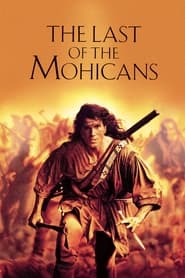
The Last of the Mohicans (1992)
Release The Last of the Mohicans Director's Definitive Cut Blu-ray (20th Century Fox)
Mann discusses historical research into British imperial rule, the French and Indian War, and Native peoples confronting European expansion. He connects that research to the characters and Daniel Day-Lewis's preparation. Production accounts cover period buildings, crops, costumes, weapons, wilderness locations, Dante Spinotti's photography, and the use of music and landscape in the final sequences.
- Duration
- 1h 48m
- Talk coverage
- 81%
- Words
- 12,201
- Speaker
- 1
Commentary density
Highlights
Topics
People mentioned
The film
- Director
- Michael Mann
- Cinematographer
- Dante Spinotti
- Writer
- Michael Mann , Christopher Crowe , Philip Dunne
- Editor
- Arthur Schmidt , Dov Hoenig
- Runtime
- 112 min
- Also on
- OneSheet ↗
- External
- IMDb ↗ TMDB ↗ Find on Amazon ↗
Transcript
12,201 words
The year is 1757, and it's in the middle of what in the United States we call the French and Indian Wars. The attraction of this material to me was precisely because it was pre-revolutionary. The frontier, when people talked about the frontier, was northwestern New York. When I was about three or four years old, right after the Second World War, there was a church about a block away from where we lived, and they had kind of a community center in the basement, and they would screen and one of the films that I saw at a very early and highly impressionable age was the original The Last of the Mohicans from 1936. When I think back on it, it was a black and white print, probably 16 millimeter, and it made a lasting impression on me and kind of occupied some space in very early memories about movement, certain kinds of images, things almost like dreams.
And in the late 80s, I thought, I've had awareness and imagery scenes from this film for as long as I can remember. And wouldn't it be great to see if any of it held up? Because if it did, it would be fascinating to immerse oneself in that world of 1757. The screenplay, which was written by Philip Dunne, was marvelous. It actually read like it was written, I don't know, five or six years before I was reading it in the late 80s, early 90s. These mountains that we use in the opening credits are interesting because off the right side of the car on the way to work was this view, you know, the mist and the valleys and the Blue Ridge Mountains. The film immediately puts us into three conflicts and it's not so much the film as it is if you insert yourself into august in 1757 you'd find yourself in these three conflicts the first is the english military when entering imperial policy towards all the colonial people who resided in new england and the population of new england in 1757 was about a million the colonists kind of contrary to what you learned in american history were not all english in fact it was a very polyglot
environment as many united nations there were scots irish from the borderlands who had been kicked off the land by the english and sent into the new world only to find that the best land had already been taken 200 years before they got there meaning the land that had rich soil and rich crops had easy access to rivers and harbors such as the carolinas and virginia so there were poor english there was scots irish there were dutch albany at that time was 92 dutch French Huguenots, Protestants who fled persecution in France and settled in the New World. Secondly, there's a war going on. France is at war with England. In the United States, we call those the French-Indian Wars from 1755 to 1759. We're right in the middle of it in 1757. And the third conflict is the conflict between indigenous peoples, Indians, and all Euro-Americans. The Indians faced It was tantamount to an invasion of immigration, thousands of people every year, particularly starting in the 1730s, 40s, and 50s. And they had a variety of different policies of how they were gonna deal with this misfortune. Later in the film, the sachem of the Huron will say that when the white man came, night entered our future with him. The American Indian tribes,
had different responses to what they encountered. The peoples who had the most successful strategies for dealing with their Euro-Americans were the cultures that were the most advanced, and that would be the Iroquois. The Iroquois-speaking people who are in the picture's actual characters would be Ongewizgoni and the Mohawks, who have allied themselves with the British. This is Cameron's cabin. The most fascinating about this set was that we built it in a place called Sawyer's Cove, and everything you're seeing was real. It's not a set. We built the cabin out of felled logs, all the set dressing, antiques that had been purchased. In deciding to build it, it became both cost-efficient, practical, and aesthetically much more rewarding to just go ahead and build a real cabin. Even the crops... were real, and we had a very short amount of time to plant the kind of native crops that the cabins would have planted. So we found some hybrid seeds that were developed for environs that have a very short growing season. There's another visitor at the cabin who was Jack Winthrop, and he's been charged out to raise a militia. Why is Uncas with you? You should have settled with a woman and started a family by now.
the British imposed compulsory militias among the colonials to fight in their war against the French. Hawkeye and Shingusko Kononkas are heading to a place called Kentucky, which is the original Indian pronunciation for Kentucky. The colonials, prior to the Revolution, such as the Cameron family here, are living on the frontier. The frontier is the equivalent of the Lower East Side of New York within the 1920s. It is the equivalent of the tenement slums for one major reason, and that it was highly risky. The mortality rate was about 50%. Those colonists who came to clear land in a wilderness area such as Kentucky, probably 50% of them didn't survive the winter. They weren't able to clear enough land to have adequate shelter and die during the winter, or because the very choice of real estate was in fact owned by somebody else, i. e. the Native Americans.
Too strong. Turn me old too fast. Oh, that's what he's doing to his mama. We understand the struggle of colonial people on the most fundamental basic level. Why the rebellion against England was popular, you have to really understand British colonial policy, and that policy taken out of the most fundamental human terms of a man, a woman, children, trying to envision a future that the individual can make for his family by virtue of his and their sacrifice, risk, the back-breaking work. Homestead hacked out of the wilderness with their own hands. If they were fortunate enough, which only about 50% or 60% were, of surviving that first winter, then the British military, because of policies or trade wars with France, or religious wars with France, may decide to billet troops. in that homestead and evict the family to the harshness of the wilderness. This is after a family traded seven years of indentured servitude, which was basically agreeing to be slaves for seven years in exchange for passage. You do what you want with your own scalp. Do not be telling us what we ought to do with ours. You call yourself a patriot and loyal subject to the crown? Do not call myself subject to much at all.
We hypothesized that Hawkeye or Poe's family were Scots-Irish, conforming to the immigration patterns of the period. His people were probably on the borderlands. Those were farmers who were settled there by the English to constitute a buffer zone against Scottish tribes raiding south into England. So they were given free land, but they didn't own the land. Consequently, after the union between English and Scotland, they weren't needed anymore, and so they were kicked off the land and off and sent to the New World. Where are you meeting? We'll go to Albany. What Hawkeye and Uncas are doing right now is they're joining in lacrosse. Lacrosse is originally an Iroquois game. And even today, the Six Nations of the Iroquois, which issues a passport that's recognized by 28 countries, still feels a world-class lacrosse team. This bridge is in Asheville, North Carolina, on the Biltmore Estate, which at its inception was 600,000 acres.
The coach is arriving in Albany, and this was a set in Asheville that was little more than the size of a shopping mall. And we managed to shoot in every conceivable direction at the same time to get the architecture, which was kind of mock colonial built in the 1920s. We speak for the men, not command them. They're not allowed leave to defend their farms and families. The French attack the settlements. The no-colonial militia has gone to the Fort William Henry. They will report or be pressed into service. Any of the boys worth having can disappear into the forest. They will be found. And where does that leave you then? Those men will be found arrested. I cannot imagine His Majesty and his benevolence would ever object to his loyal American subjects defending their hearth and home, their women and children. In this scene, one of the major conflicts of the picture is being set up, and that is that the colonials won't agree to serve as a militia if they're not allowed the right to defend their farms and their families if the French attack the settlements. General Webb makes that deal. Later in the film, Colonel Monroe will breach that deal because he fears that if the colonials leave, it'll...
to satiously affect the defense of Fort William Henry. General Webb was regarded as not a competent officer. Often in the Northeast, since the exports didn't amount to much, cash flow for more valuable exports came in the form of sugar cane from the Caribbean. The second-rate military officers were assigned, and General Webb was certainly one of those. He was replaced by General Wolfe, later in this war who defeated the French two years after these events in 1759 outside Quebec on the plains of Abraham. I'll be marching the 60th to Fort Edward. Explain to the Major he has little to fear from this General Marquis de Montcalm in the first place and therefore scant need of a colonial militia in the second because the French haven't the nature for war. Their latinate voluptuousness combines with their gallic laziness, and the result is they'd rather eat and make love with their faces than fight. Might I inquire if General Webb has heard from Colonel Munro's daughters? I was to run over with them in Albany and escort them to the fort, sir. You there, what is Munro calling? The Scotsman has sent you one of his...
mohawk allies to guide you. magua. the scotsman's daughters are at the patroon's house. a company of the 60th will accompany you and magua will show you the way. dawn at the encampment 6 a. m. sharp. see to it you're there.
The implicit discontent that Cora can't really put a name to is present at the poltroons. She's unsettled, agreeing to consider marrying Hayward, almost as if she's unsettled and doesn't know why she's unsettled. Ultimately, as many people did, Cora is going to discover in the new world, because she's thrown into violent conflict and contact with a broad spectrum of people. different kinds of people who think differently about life and how much of it you make as a manifestation of your will. She's going to go through a kind of a liberation. I truly wish they did. My feelings don't... don't go beyond friendship. Don't you see? One of the things I wanted to know, and Madeline, wanted to know in the preparation for the role was what were her attitudes towards courtship, towards marriage, towards what do I do with my life? To what extent am I influenced by what my father thinks or what is expected of me because of my station? And so when Hayward advises her that what her father thinks and what he thinks
might be best, and if she's not opposed to it, then maybe that is a solid basis for marriage. We see that that doesn't jive with what's inside of her. There's distress, and then you see somebody who doesn't have the concepts or the language. They don't have the words to express what they're feeling inside, but she's not compliant. And that's the core of what is in her, and it's the core of what's in Hawkeye. They're both alive the same way. It's almost like their hearts, their souls, are similar in the sense that they experience, they perceive a truth, they go after that truth, and they see life and they see existence for what it is, the tragedy of the Camerons. They're totally oppositional in that they come from cultures that are so radically different. And that made an interesting collision.
in Linville Falls, and that's near Burke County, North Carolina. And I did a search for where could I find old-growth forests, meaning forests that looked like the forests looked when Hawkeye would have been alive in 1757. And the answer that came back was rather grim, that basically there is no old-growth forest east of the Mississippi, except for two small patches. And one was about 2 or 3 miles long and about 100 yards wide. and that was in Linville. And so the initial march through the trees is in Linville, and that's the area that's old growth. Scout, we must stop soon. Women are tired. Now here, two leagues. The Iroquois was so different than Western Indians, because these are Northeastern Woodlands Indians, and as such, they had... probably come to the United States via an earlier wave of immigration across the Bering Straits, number one. And number two, they were the most advanced Native American culture north of Mexico in pre-Columbian times. In this period of 1757, they constituted the Six Nations of the Iroquois and had extensive commerce and relations with other Iroquois-speaking groups as far south as their linguistic cousins, the Cherokee and the Carolinas.
The reason the Iroquois are important is because much of the culture that Hawkeye was raised in, that then created the man he is as we encounter him, is based on Iroquois culture, not Mohican culture. Mohicans lived just east of the Housatonic River and were an Algonquin-speaking people, and there's almost nothing known about them. So we borrowed the forms of the Iroquois. By the forms, I mean the value system, their mores. about the material world, their cosmology. The youth of many of these colonials, particularly middle-class colonials, often was spent in contact with very sophisticated American Indian populations. The view towards life was quite different. In some cases, strikingly modern, such as among the Iroquois. Hawkeye's life among the Iroquois would have been something along the lines of this. Children weren't physically punished. They were ostracized, which was in big contrast to childhood and child-rearing ideas among Euro-American settlers. Secondly, regarding courtship, there was an open sexuality. Marriages were monogamous. There was kind of gender equivalence. If a married couple didn't get along, they would separate and... the property would be divided equally. Working with Daniel is unique. The experiences we had on Last of the Mohicans was a world was created in which Daniel lived, and he flourishes on the kind of extensive prep
delivers an actor with the commitment and the sheer artistic impulse of Daniel Day-Lewis into another life. And he's living that other life 24 hours a day and has that immersion. It's so much part of the artistry and the challenge, and it's not all pleasant. I rarely have worked with an actor who is as committed to that process as he is, and it's quite wonderful. To me, that's part of the adventure of making a film. I don't immerse into a character, but as a director, you immerse sometimes into the totality of the event of the movie. It's kind of immersing into a large piece of music. So it's the cultures, the values, and you kind of force yourself to be schizophrenic somewhat because part of your brain has to deal with the logistics. And then you try to hold on to the immersion, into the durational flow.
of the imaginary world you're creating. And so for the way I work, working with Daniel on this picture was just great because he's so committed to that process and so dedicated to making himself into another human being with all the things that other human beings would have experienced and felt, and with the value system that man would have had, the interconnectedness of all the aspects of life, which is no different than any other individual in their life. Their entire life is connected. The way they may approach a woman has to do with something that happened to them when they were 16 or is a function of a particularly adverse environment they may have lived in in their early 20s or some bad prehistory as a child. The way all these things are to connect inside all of us is of course true playing a Hawkeye. So it's only an artist like Daniel who immerses that totally in it that makes Hawkeye
in a way that has the potential of being mythic and enduring and standing the test of time. And I think Daniel's work as Hawkeye does stand the test of time, and it's not by accident. We became lifelong friends during the making of this picture and still are. He is one of the most pleasant and unique people and of a very high standard and a very high personal caliber and high integrity around.
To know something about Hawkeye's life and what it would have been like to have been raised in Mohican or Iroquois culture at the time, just to understand that he would have been brought up in a wooden, palisaded settlement like a fort. They were sedentary. They had a very advanced corn agriculture that was more sophisticated than corn agriculture at the time in Europe. They were affluent in terms of the material world. The game was plentiful, relatively free of disease. Europeans who first encountered them in the 16th and 17th century described them as being between 5'10 and 6 feet tall. They also, by 1757, had a parliamentary democracy that was bicameral and had been operating for 150 years by that point. Benjamin Franklin famously wrote an editorial in 1767 wondering why the Iroquois can govern themselves so well, and the colonial Congress was chaotic. The parliamentary democracy must have been torturous because it required unanimity for anything to pass, so a lot of hours were spent in smoky lodges.
It was called the DuPont Triple Falls, and there was some kind of a DuPont chemical plant at the top of this mountain, and there was a certain odor around this water that smelled like kind of film developers, so we were all a little suspect about getting too wet.
Hawkeye's noticed that Magua tried to kill Cora specifically in a premeditated murder that's beyond an assault on English troops, and he's asking Hayward about this here. And Hayward's self-confidence bordering on arrogance has him doubt or question Hawkeye's expertise and analysis of what he's just saying. He even doubts Hawkeye's observation that Magua is not a Mohawk but a Huron, and we understand the dependence of any authority that the British colonial rule might have over Hawkeye's actions, what he decides he's going to do, and responsibility, and also exercise of that liberty. Fort Edward, then. Heading west to Kentucky. There is a war on. How is it you are heading west? Well, we kind of face to the north and real sudden, like, turn left. I thought all our colonial scouts were in the militia. The militia is fighting the French in the north. I ain't your scout. You sure ain't in no damn militia. Going back to Cora, the frontier is going to present itself to her in circumstances such as this massacre that happened to the Camerons. And doing that is going to cause her to confront
issues in her own life of which she may have felt contradictory on a subconscious level, such as her inner doubt that she can't quite put a name to or get a handle on about Hayward's proposal to her in the earlier scene in the paltrons. In constructing her character and building a background for Madeleine Stowe, the notion was, what was her background? Where was she in 1755? What was her life in London? And we suppose that she lived in an upper middle class neighborhood in 1755, which would have been probably Portman Square. 1755, 1756, Handel was very popular and Messiah Chorus was being performed on barges on the Thames. That would have been the style of her life. Her expectations would have been that she probably would not have chosen her partner in marriage. The mores of the society she grew up in would have been rather rigid. That's selective because at the same time, intellectually in Europe, European intellectual thought is moving through the Age of Enlightenment. Rousseau, John Locke, and some of those ideas are strikingly similar to the cosmology and the politics, the political reality of life and how you as an individual might see yourself if you were born into
The Onondaga or Cayuga or the Mohawks were living within the six tribes of the Iroquois. Benjamin Franklin particularly made many observations along those lines.
As the American continent was relatively free of bacteria and viruses that swept the Euro-Asian continent initially, it was a healthier place. When you were caught, you didn't automatically get an infection. With clean water, plentiful game, etc. Consequently, when significant European immigration introduced diseases, there was no resistance among the American Indians and the The fatality rate among American Indian populations because of disease was decimating. Consequently, many American Indian peoples across the whole continent had a policy of adoption so that the children of conquered people were taken in and then raised as fully-fledged Iroquois or raised as fully-fledged Mohicans, one case in. that was rather famous happened about a century later in northern Texas, where Cynthia Ann Parker's parents were killed, and she was a young girl of 10 or 11, and she was adopted into the Comanches and then grew to adulthood and was quite happily married to a Comanche chief. And her son became the famous Comanche warchief, Quanah Parker, who became a prominent, successful political figure until his death in 1913. The adoption by Chingachgook of Hawkeye would have been, and we portray it as being, total. Chingachgook is Hawkeye's father. Hawkeye is not acculturated. Hawkeye was raised as a Mohican. Uncas is his brother as inseparably as if they were blood.
Why didn't you bury those people? Anyone looking for our trail would see it as a sign we passed that way. Cora knows Hawkeye's decision was based on something other than indifference, or suspects it, and comes to him and asks him about it. And he explains that the cameras were not strangers. And he fully expects that Cora is foreign in every way. and is of a world apart, when in fact what's going on deeply within Cora makes her alive to the experiences of people's lives and what they're building for themselves in the freedom of the kind of the twilight zone that is the frontier.
The frontier is defined as when the past collides with the future. Characterized here amongst the Abenaki, who had a very, very specific look. They would shave their heads back high on the head and had integrated Christian iconography into all the tattoo and fabric designs. Amongst them are men called coureurs de bois. rather famous French trappers. New France had a population of about 50,000, and their mode of transportation was along the waterways, along all the great rivers, which is why place names in Illinois and Missouri today are still French. They were, of course, recruited with the French military to be advanced scouts, working with the Indians who they had traded with. The French foreign policy was quite different from England. They didn't expect indigenous people and colonials to conform to French mores, values, and politics. Quite the opposite. They integrated themselves within the indigenous people, and they modified their lifestyle to the indigenous people. And consequently, they had a very successful foreign policy, and the French military did amazingly well fielding
armies that had as many as 30 different Indian tribes allied to them. And the key, the kind of advanced team that always had all the contact with the American Indians were the coureurs de bois. And they were quite famous because they canoed vast, vast distances across the Great Lakes into Wisconsin, down into Illinois. There was a study that was done on their diets, and they could propel a canoe for 12, 14, 16 hours at a time, and it was estimated that they burned about 9,000 calories a day, so they had a diet of basically animal fat. My name is Cameron. John Alexander Cameron.
To understand the existential crisis that the American Indians found themselves in is to imagine that you're living in a community like any other community. There's commerce, there's bad seasons, there's good growing seasons, the crops and games are pretty plentiful. There are commercial alliances you may have with other communities that are close to you, other communities that are very distant from you but share the same language like the Cherokee and the Carolinas and Georgia speak a dialect of Iroquois. having commerce along established trade routes with, say, the Mohawks or the Onondaga or the Seneca, who were all members of the six tribes of Iroquois. And then there are other communities or other tribes with whom you have hostile relations, the neighbors across the Housatonic River, the Algonquin-speaking people. At times there's conflict, at times there isn't. And life is moving along. And all of a sudden, whatever the status quo is, whatever you think existence is, suddenly is assaulted by wave after wave of hundreds of thousands of aliens, hundreds of thousands of new European immigrants landing on your shores and moving across your landscape who have some superior technology and carry with them some diseases which may deplete your populations and are changing your life
and changing everything utterly and totally. And that it seems to be absolutely irreversible. Wave after wave is flooding upon your shores and moving in your lands. And that's the crisis that all the Northeastern Woodlands Indian peoples were facing in the 1750s.
Throughout Europe, there were naive accounts of the Americas. It was as if we had sent the first spaceship to another solar system and found a habitated planet with a civilization on it, and that amount of curiosity we would have about those people and that place is about as equivalent to what stirred the European imagination about the people, life, and the flora and fauna of the Americas. So there was a lot of romance and imagining about what it must have been like, but nothing could approach the horror of what the massacre of the Cameron family actually would have been like and the struggle of these people in being ground down by risk and deprivation. for something quite attainable and beautiful right in their midst, which is a better material life for them and their children. This is the fort battle. The shot that we're looking at is actually one continuous crane shot going from the first French battery across the field to an entire second French battery.
each one with seven or eight cannon. And these cannons, in real life, weighed about 20,000 to 30,000 pounds, and they were 32-pounders. And they had a range of about 500 to 600 yards. And there's a specific strategy. These are called gambions, the wicker devices that hold the earthworks.
The specific strategy is that the French besieging a fort can take the fort in only one of two ways. One is that they use their artillery to keep the defenders of the fort under constant attack to keep their heads down while their infantry digs a trench. And the idea of the trench is that they will fortify that trench and move in mortars, the short squat. artillery pieces that the oxen are dragging. The mortars fire explosive rounds, but they only have a range of about 200 yards, so they have to be much closer. And that's what these trenches are doing. The British artillery commander's job is to defeat this. And then there's various other battles with skirmishers, because there's a second way to take a fort. And these are like the ways forts were taken in the world. dig a tunnel under it, load it up with a garage-sized load of gunpowder, and just blow the fort up from the inside out. The French design is to use their cannon to cover while the trench is being built, and when the trench is complete, they'll move the mortars in and then fire explosive rounds, bob explosive mortar rounds over the fort and blow it up.
The fort's interesting because we had many different ideas about how to build it, and ultimately what we did was we found a 40-acre piece of land near Lake James in North Carolina and took down 40 acres of trees which were 20 or 30 years old. I mean, it was hardly first growth. These were probably sixth or seventh growth. This area had been clear-cut many, many times. and built the fort partially out of some of that lumber. So the fort was built as a real place on three sides, interior and exterior. All the work on built the set for something under a million dollars, they had the benefit of being real and practical. So when they enter through a sally port, as they're doing right here, into the interior, we really are walking into the interior of the real fort. The verisimilitude in what this does for actors and extras and how they're imbued in every moment of their performance and all the work that they're doing in a place, when you build a place for real, is quite extraordinary. This set, the condors, the height of the condors, we had to import them because some of the condors were about 250 feet high. The scale of the...
The battlefield, all 40 acres of it, was immense. We didn't have one base camp, we had three base camps. To get a wilderness fort, you, of course, had to see no roads, you had to see no vacation homes, you had to see no boats, and you had to see no contrails for airplanes. We were able to actually change the routing of a couple of different flight paths and close about 26 miles of state highway when we shot these things. Extras that came to work for the big scenes, if they were daytime scenes, we anticipate starting to shoot about 9. 30 in the morning, had a report about 2 a. m. to go through the hair and makeup and tattoos. Obviously, it was quite complicated to take about anywhere from 1,200 to 2,000 extras and then ready for shooting.
On the George Road. Attacked. We're fine. Are you all right? Yes. What will happen here, Papa? It'll be all right, Gil. This magua led us into it. Eighteen killed. These men came to our aid. They guided us here. Thank you. Do you need anything? Help ourselves to a few horns from your powder stores. Some food. Indebted to you.
Miss Cora, how are you? Hello, Mr. Phelps. Mrs. McCann will get some dry clothes for you. Thank you. Go with your sister, Alice. It'll be all right, girl. It'll be all right.
The explanation of what the French strategy is is made clear here by Colin Munro. Might I inquire after the situation, sir, given that I've seen the French engineering from the ridge above? The situation is his guns are bigger than mine and he has more of them. They keep our heads down while his troops dig 30 yards of trench a day. When those trenches are 200 yards from the fort and within range, you'll bring in these 15-inch mortars, lob explosive rounds over our walls and pound us to dust. They look to be 300 yards out. If they're digging 30 yards a day, you'll have three days. Damn. Damn. A man here can make a run straight through to Webb. Three days is not enough time to get to Albany and back with reinforcements. Webb's not in Albany. He marched the 60th to Fort Edward two days ago. Webb is at Edward? Yes, sir. That's only 12 miles away. He could have reinforcements here the day after tomorrow. You, sir, pick your man.
Major Hayward will provide a diversion. I'll draft out a dispatch. Captain Beams will seek you out and give it to you later. Now it becomes apparent that the wily deception of Magua is rather total. He had killed Colonel Monroe's couriers, and consequently, General Webb was unaware that Fort William Henry is under attack. which means that General Webb's army of reinforcements are only 12 miles away at Fort Edward. However, now Hawkeye notes that the raid on Cameron's cabin was not about theft. It was a war party because none of the objects that would have been taken if it was a raid for theft were in fact taken. Under the colonial militia's deal with General Webb, they ought to be released from the fort and they ought to be... able to go home and defend their farms and families. Colonel Munro is having none of it. The imperative for him is British imperial interests, and he's loyal to that imperative. Later, this is going to be termed absolutism and tyranny by Jack in a later scene.
There's a completely different relationship between Native peoples and the French, which is being characterized here. One of the frustrations of the film is came to know so much about this man in particular, General Montcalm, what an extraordinary figure he was. And one wanted to put more and more into the film, but the rigors of narrative discipline to force me to limit it to what you're seeing here. He was described as sometimes spending seven, eight hours a day or most of the night going from campfire to campfire to sit amongst each of the tribes allied to him. If he placed one Indian tribe too close to his headquarters. Another Indian tribe might take offense and decide in the middle of the night just to split. So the maintenance of these alliances was almost a full-time job for Montcalm. But he was quite successful. He's promised to be at the campfire of an Abenaki chief when Magua enters. And Magua is clearly a powerful figure and is one of his most important allies.
We know a lot about Montcalm because there was a diary written by a comte de Bougainville, who later in life went to Tahiti and brought Bougainville back to the Americas, and was, at 24, aide-de-camp to Montcalm and wrote a diary that detailed every single day of August of 1757 and every single event. that's in this film from the French point of view, including the massacre, the work that Montcalm had to do to maintain these alliances, their attitude about the English. So it's quite fascinating. It's very modern. Some of it's very dry and witty and tongue-in-cheek. And it's an amazing read. He had been honored by the Academy of Sciences in England, even though France was hostile with England. before 1755 because of his work on calculus when I believe he was somewhere around 19 to 20. He was quite a brilliant guy. However, Montcalm's situation is dire. Montcalm is probably, in this moment in time in August, is probably about five or six weeks behind schedule. The significance is, if one looks at a map, is that what he's trying to do is take Fort William Henry, then take Fort Edward. And if he takes those forts, he will be able to control the whole St. Lawrence Seaway and basically isolate Montcalm
one whole section of New England. What are you looking at, sir? Well, I'm looking at you, miss. His base is Fort Carillon, which we renamed after this war Fort Ticonderoga at upstate New York. And because he is dependent on Indian armies, and even though their policy was so successful, nevertheless, the logistics involved were so complex that he's about five or six weeks late. The significance of that is that he's going to run out of weather, i. e. the summer and early fall, during which it's possible to wage a war. You can't wage a war in the winter. So there's a fighting season, and he needs to accelerate towards Fort Edward. I refuse to believe what happened. He does not even want to hear it. That's going to motivate him later to a fast surrender of the British, at Fort William Henry because that's faster than defeating them and enable them to move quicker onto Fort Edward. Until another 40 yards.
Hawkeye and Uncas are firing their long rifles as James Fenimore Cooper somewhat incorrectly termed them. They're snipers and they're hunters. These weapons and the one that Daniel Day-Lewis is firing, both Dan and I were able to hit the center part of a target a couple hundred yards, were quite incredible. They were very accurate, but to get the accuracy It required a good gas seal, meaning that gunpowder is just rapidly expanding gases. Because the metallurgy of the period was crude, it was very difficult to maintain a constant diameter of the interior of the bore of the rifle from the front to the back. Hence the patches and more so the soft lead, which meant that it was very hard to load the rifle. So it probably took, it would take me two or three minutes to load a rifle. It would take a really experienced
Rifleman, probably a minute to load a rifle. Comparatively, a musket, which is very imprecise, more like a shotgun, just a simple tube, could be reloaded in 15 seconds by seasoned infantry. You had to be quite expert to reload a rifle in a minute or under. Daniel got to the point where he could do that, and he could do it on the run. Muskets were accurate probably to about 20 to 25 yards. You might hit what you kind of pointed it at, so it was... more of a massed infantry weapon. British promises are honored... ... and the militia will not be released... ... because I need more definite proof than this man's word. Nathaniel's word's been good on this front here a long time before you got here. This meeting is over. The militia stays. Does the rule of English law no longer govern? James Monroe Cooper called him... ... and has the French call him a long carabine... ... meaning the long rifle. In fact...
The style of rifle-making in this period was not to have long rifles, but what was in fashion came from the best rifle makers, which were mostly German and in Pennsylvania, and it was called the Jaeger, J-A-E-G-E-R, which is actually shorter than what Hawkeye's using. So it was one of the few times we kind of surrendered to legend and fiction because I couldn't really imagine calling them Hawkeye short rifle, so... That's La Petite Caribbean. I wanted to talk to you. Talk to Duncan, Cora. I must manage. I cannot be an invalid schoolgirl. Alice. I'll see if Mr. Phelps needs anything. I'm sorry, I can't. Here, Cora has witnessed Hayward's misrepresentation of But this set right here is really interesting because we're in the bowels of the fort that we built. Duncan, I promised you an answer. You've complimented me with your persistence and patience, but the decision I have come to is that I'd rather make the gravest of mistakes than to surrender my own judgment. Please take this as my final answer. It must be no. I see.
Right here, there's a father shamelessly putting his daughter, who's in the light blue dress in the background, in the film. She was 12 at the time we made the film and went to work with me every day and worked in wardrobe, getting extras ready with makeup and put in the same 16- and 17-hour days that everybody else did. And then she and many other people became extras.
This is a colonial conference in reaction to the breaching of the British deal by Monroe, and Jack's reaction is very important. The kind of terms he uses may seem somewhat archaic and stagey, but it was common language and common thought among many people of the period. And these were the thoughts that were on everybody's mind about living under tyranny, having the most basic decision-making that you might do and how to live your life and what you decide to do for you and your family. Arbitrarily set aside or or having imposed upon you the will of a self-serving, authoritarian military regime. The absence of basic freedom that constitutes bi-absolutism and what it means to live under the heel of tyranny, these were real concrete issues because it meant life and death as survival. because also the appropriation of whatever material wealth you had put together. And we're not talking about bank accounts or stocks and bonds here. We're talking about food to survive a winter for you and your family. Not too many to die, but we've given our word to our English fathers.
Dante Spinotti's lighting in all of these scenes is something I haven't talked about, but it's quite extraordinary. It's incredibly difficult to get enough illumination to expose film and have it appear as the very diminished and very kind of saucy light of fires and flame, as well as the warmth. And he did a that, in my estimation, is absolutely masterful. This beautiful piece of music is called the Gael, G-A-E-L, done by a man named Dougie MacLean. And it's a piece of contemporary Irish folk music that was heard on the radio. by my wife, who said, I just heard something on KCRW in Los Angeles, and you have to get it. And I did. And this is it. The harmony of this became the main theme of the movie, and this became the love theme.
The essence of the scene is a deep feeling between Cora and Hawkeye. But it is indivisible with the deep feeling between Daniel Day-Lewis and Madeleine Stowe for the characters, for the place. It's where everything the film's about, everything, the lives that the characters have lived, all has become one, and it is indivisible. And when you... shoot a scene like this you clearly have as few other people around as possible and when two actors are just deeply invested emotionally in every way possible and um romantically and what's happening uh what you're seeing experiencing here then you truly feel gifted as a you know as a director there's no craft to the Execution of a scene like that by the actors or the directors, as far as that goes, is beyond performance. It just is either really truly there or people are performing, and clearly this is not performance.
He saved us. In this next scene, Madeleine Stowe is quite extraordinary, and her character has moved massively in her own personal understanding of life around her, the issues, life and death issues, life and blood fundamentals. And she's declaring her solidarity with not just Hawkeye, but Hawkeye and mode of living that she has come to deeply understand. You falsely spoke of what you saw. What happened at the farm was, as Nathaniel said, not with enough certainty to outweigh British interests in this fort. And who empowered these colonials to pass judgment on England's policies in her own possessions and to come and go without so much as a by your leave? They do not live their lives by your leave. They hack it out of the wilderness with their own two hands, burying their children along the way. You are defending him because you've become infatuated with him. And this is happening in a moment in time in which these crises are real. in which how you believe is critical because it determines what you're going to do. And what you do is not elective because there's no exit. There's no extracting yourself away from the compression of options and determining your fate.
You do not know what you're saying. Yes, I do. I know exactly what I'm saying. And if it's a sedition, then I am guilty of sedition, too.
will arrive or not. If they do not arrive, the fort will fall to the French. If that happens, stay close to your father. Stay close to him. The French officers will try to protect the officers among the English. No. I will find you. Do not.
Unless something occurs, the people in this fort will be slaughtered with edge weapons. That's the fact of life. Hawkeye, he knows the fort's going to fall, and he advises her to be with the officer, because the officers among the French will protect the officer class among the English. What happens to everybody else is not pretty picture. This is the mortar assault. The French have now moved their mortars within range, and they fire these four mortars and basically destroy Fort William Henry. I actually shot some shots where you could see the mortar rounds flying through the air, and what we did is we pneumatically propelled basketballs painted black and fired them into the fort. One thing important to note here is that there is no CGI in any of this. There's no digital duplication of extras. Everybody you're seeing is a real human being. It's a real extra. It's a really built physical fort. Today, you'd be hard-pressed to make an argument to actually build the fort and live within the fort. 90% of the fort would be digital construction, which has its own art, which achieves tremendous, tremendous heights.
which is incredible in the hands of James Cameron and Avatar, but that's quite different. That is using digital at its best, which is to render the impossible. But unfortunately, if this picture's being made today, you'd be hard-pressed to justify not having a digital fort. There's nothing digital here, not the effects, not the canon, not the fort, not the people. Stay close to your father.
Something very interesting is about to occur here, and if you watch how General Montcalm bows, it's very elaborate. And we actually abbreviate it a little bit because it went on. There was French fashion in the 1740s, 50s, and 60s. was determined by what kind of bow was in vogue. And the kinds of bows that aristocrats did changed every couple of years. And they would redesign the coats and put weights in the hems so that the sides of the coat would furl out in certain ways as to amplify the bow. This is quite specific. There's also a brilliant piece of costume design here. And if you look at the braid on General Montcalm's coat, they have woven in shadow as if the braid, in fact, three-dimensional and cast a shadow on it. This is also highly accurate and elaborate, but it's not the kind of thing you could just rent from a costume house. You have to do it yourself, which we did. And it was, again, one of those fortuitous circumstances, such as the fort, where either the real uniforms didn't exist
and we had to make them ourselves, but they came out much better than if they had existed and we rented them, or it was actually both cost-effective and vastly superior to simply do it ourselves. So we had an entire factory in Asheville, North Carolina. The wool of the red coats uniforms was dyed in North Carolina because we discovered that the color of light was so different in California that it would look like the correct red in California didn't look like the correct red in the sun in North Carolina. So the full splendor of the costume design of these uniforms is apparent in this particular scene. That's the credit of Jim Acheson. Very early on, I learned when you work with brilliant heads of department, such as Jim Acheson, it becomes an education. And initially, I thought that the way the British uniforms fit Hayward, for example, was very unappealing. made men's shoulders seem small, the coats were too short. And Acheson explained that if he held himself, British officers held themselves in the correct posture, which would have been the posture that they would have held themselves in in 1757, which had a lot to do with equestrian training, they would look right. And I trusted him on this. He was absolutely correct.
So the cut, the design, the shoulders, everything about the pattern of the uniforms is dead accurate, and the actors trained to hold themselves and carry themselves as they would have. And the net effect is that there's a verisimilitude, and you believe these characters. And when your eye... takes in things and your brain processes them and they have a certain kind of an unconscious truth-telling style, to me it opens a channel and I'm drawn deeper into the emotions that are there. I am deeply touched by such unusual and unexpected generosity. My fault is yours under the condition that I be given till dawn to bury my dead, to prepare my men and women for the long journey ahead, and to hand my wounded over to your surgeons. Granted, Monsieur.
This is another wonderful piece of lighting by Dante Spinotti. It's moonlight over the water, and it seems to be generating enough illumination to shoot film by, and yet it feels totally natural. It's extremely hard to do. And I have been ordered to drive off the English squatters. They have consented to go. So now I call them enemies no longer. Magua took the hatchet to color with blood. Simon Schama, the British historian, wrote a... book called Dead Certainties. It's about the death of a wolf. It's portrayed in a painting by Benjamin West, which is very important to us because there is the detail of that painting of the Iroquois people in the painting is extraordinarily accurate down to all of the tattoo patterns. And the pattern along the side of the skull of Magua is lifted right out of Benjamin West's painting. His painting was spectacularly large size and lined people up around the National Gallery for about two years. It made his career. He got, I think, 65 commissions after that and became a very successful painter. Wolfe, who dies on the Plains of Abraham at the British assault of Quebec two years after the events of this film, is the...
English general who replaces the incompetent General Webb we see at the beginning of the film. Wolfe was quite the opposite. He was very aesthetic and he was very, very good. He was every bit Montcalm's equal. And Montcalm died in that battle as well. With that battle, there was no longer a new France and England controlled the Canadas as well as North America. The second part of this book, Dead Certainties by Shama, is about the murder of a man named George Parkman. who is the relative of a famous American historian named Francis Parkman. Francis Parkman is very, very significant to this film. He lived from 1823 to 1893. He was a historian and a horticulturist at Harvard. He's better known for the Oregon Trail. But he wrote a six-volume piece called The French and English in North America. And it was an incredible piece of history because... It's like late 20th century oral history. He walked the journey that the French took from Fort Ticonderoga down along the side of Lake George to the site of Fort William Henry. And while he was on this long hike, he was speaking with people in probably the 1840s or 1850s, I don't recall exactly when he wrote the book, who were old people.
who as children had heard tales from their grandparents, who had been alive as children during the events of 1757. So it was secondhand and thirdhand recountings of the events of August of 1757. It's quite extraordinary. The past is a lot closer than we think. Eight or nine generations are all there are between when I made the film in 1990 and when these events occurred in 1757. And in particular, he did a significant amount of almost oral history or one or two generation removed, one or two person removed oral history, particularly on the massacre that is about to occur. And there was much speculation when he wrote his account and thereafter about how complicit the French were in allowing allied Indian tribes to massacre the retreating English troops and the retreating colonials. The speculation and the real politic motivations of General Montcalm were that he didn't want to fight these troops again and he needed to surrender because there was a faster way to secure and destroy Fort William Henry.
and move on to Fort Edward before the summer was up, and so too with it, the time within which he had to wage war. After that, all the Indian tribes would go back to their native lands, and they would just leave and return again the following spring.
Much of the war paint that you're seeing among the Huron was inspired by the artwork of Catlin, that's C-A-T-L-I-N, who moved throughout the plains, I believe, around the 1820s.
Our name for this location was Massacre Valley, and we call it that for obvious reasons. And it was on the Marion Good Farm on Woodlawn, North Carolina. And it was a hollow that was fairly flat. It was also flooded and filled with snakes. And so we had to drain the fields, plant some of this grass, and have a constant vigil. of our men the days before we got here with our crew and extras, and get rid of quite a few snakes, particularly water moccasins. One thing I would note in this fight in which there's our trained core group of American Indians who, and the core of that group, by the way, was the current Iroquois lacrosse team, current Mohawk lacrosse team. who played Mohawks, they played Hurons, they played everything. And also our core group of colonials and our core group of military. Those core groups were probably around 250 to 300 people who were with us all the time. And then we added a second layer of extras who had not as much training as the core group did. The core group trained for two or three months. Then we had a second layer of extras who probably had about three or four weeks of training.
And those were all the folks that I would always keep close to camera. I would note here that in this scene, and in the assault on a fort, and then in the end battle in which we spent weeks on a ledge in Chimney Rock, North Carolina, for the end of the film, that nobody on this motion picture was injured. There was an extra woman, I think, who fell over in a golf cart and had a sprained ankle or something, and the safety precautions on this picture were rigid. In the accompanying documentary, you'll see some of the background scenes about the training of Daniel for battles such as these. There was a very interesting puzzle or mystery that we had. These moves in hand-to-hand combat with edged weapons are both elaborately choreographed and very accurate. and based on historical record, but there was a mystery at the heart of it, and that was the following, that we knew that among the uniformed, regular British military, that everybody up through regimental sergeant majors abandoned their issued swords. They were issued short swords, abandoned in favor of the tomahawk. And so the tomahawk was used extensively.
But nobody knows how anybody fought with a tomahawk. The significance of this is that after one or two volleys with firearms, all warfare then became life and death struggles with edged weapons. So that is how combat was fought. But nobody knows how people fought with tomahawks. And we surmise that the movements with a tomahawk are very similar to saber movements. If you view the tomahawk as like a section of a saber, we'll say an added weight behind the cutting edge. Athletically, how one would move would be the same as if he was fighting with a saber. So we got 18th century saber fighting manuals, and from that we derived a number of parries and blows. Daniel mastered maybe 12 or 14 blows and eight or nine parries, and that's how we trained. We trained people, and of course, it was a tomahawk in one hand and a knife in the other. Sounds brutal, but from experience in hunting and combat and battle, these people knew how game over humans died. And so the targets of these strikes with the tomahawk or the knife were quite specific.
The design of these canoes were by the illustrations by N. C. Wyeth, which were created for the early 20th century edition of The Last of the Mohicans. And they're just beautiful. I remember seeing those illustrations when I was a kid, and you would just stare at the magic world that they seemed to evoke for what seemed like an eternity. I mean, I couldn't get enough of those illustrations. The design on these canoes is an homage to Wyeth. It's lifted right out of his work. When you fall into British hands again,
The canoes were built by Wolf Kroeger. Wolf did a fantastic job building the fort and every other structure in this piece, as well as constructing the cave behind the waterfall. I mean, he was just a great, great production designer. Nothing is too intimidating for him. He'll take on anything and just relish the challenge. The detail he afforded me at the poltroons was quite amazing. that the Dutch used that the English wouldn't have used on farms in the 18th century. The whole idea of the apple press, the crop, everything about the world of being a wealthy Dutch farmer in 1757 was researched and collected by Wolff.
It's very, very difficult to render an interior set that's stone that looks real. It's nearly impossible. When they first come under the waterfall, that is a real waterfall. And when we're in the set here in this cave, right now you're seeing Uncas is actually looking at what is a real waterfall. And when the dialogue is occurring and where Uncas would be with Alice, That's our set, and there's massive pumps moving water from a pool above the set across the waterfall as if they're on it. This is an actual place, by the way. I forget exactly where it is, but it's not far from Albany. And it's still there, the cave behind this particular waterfall.
It's a very tough, very unsentimental, and yet very, I think, poetic and heroic message that Hawkeye is going to give Cora. It's not a message. It's almost an admonishment. He's going to tell her whatever happens to her, live through it. She may be brutalized. She may be raped. She may be given to somebody as a wife. She may become impregnated. Whatever happens, he's telling her, submit because, you know, believe in your heart of hearts that one way or another, sooner or later, I will find you. And that is a more harsh message than is imagined because certainly among those young women who were taken as young girls or wives or hostages, And all the subsequent conflicts with Native peoples, they were either sometimes absorbed in the tribe, sometimes not, sometimes they rejoined white societies, sometimes they didn't want to rejoin Euro-American culture. But regardless, they were then forever outcasts and considered as such and ostracized. So there's some very
have brutal and ugly stories about what happened to some of the women in the Great Plains, particularly in Texas. If the worst happens, you stay alive. If they don't kill you, they'll take you north up to your own land. You submit, you're here. You strive to survive. You stay alive no matter what occurs. I will find you. No matter how long it takes, no matter how far. I will find you.
Here's another shot in which there's nothing digital as well. This is a man jumping through a waterfall.
Some of the other artwork from the 18th and 19th century, early 19th century, this is a portrait by Catlin. The physiognomy of the Northeast Woodlands Indians is of a specific type. And when I saw some of the men from the Iroquois lacrosse team, who we recruited en masse to portray the Indians, the features were as if they had walked out of the paintings. They were identical to this gentleman on the left. It's quite different than the physical appearance of, say, many of the Plains Indians. Also among the present day Iroquois, relatively speaking, their culture is relatively intact. There's a tremendous, tremendous irony between the portrayal of magua and the reality of some of American Indian life today, and that is this. Faced with the conflict, and one of the three basic conflicts that drives through this motion picture, which is the one between the Euro-Americans and the American Indians as a whole, beginning with the very existential question that we're going to hear soon from the sachem of the Hurons, which is that when the white men landed in America, night fell across the Indians' future, red man's future.
He goes on to say that, since I was a boy, the consul has asked the question, what are the Huron to do? And the implication is there is no answer. They don't have the answer. But there were numerous different attempts among the Indian people faced with this crisis. Some of the most astute, like the Iroquois, particularly Mohawk, particularly Chief Joseph Brant among the Iroquois, were able to contend for a period of time with the Euro-Americans because of their military power. because the Indians constituted a military power, number one, and also because of control over the only export that had any significance in New England, which was the fur trade. There was no manufacturing here. So they had economic power for a time. When the Iroquois allied themselves with the British or maintained their alliance with the British during the Revolutionary War, of course they lost out and they were moved off their lands into Canada. The others, the Abenaki, the Huron, embraced the French and converted and lost something of the integrity of their native culture and lost political control over their destiny, which the Iroquois were smart enough not to do. Magua's policy is to assimilate, not culturally, but assimilate into the politics, the political economics of
the Euro-Americans do as they do, become mercantile, appropriate land, trade furs, to become as opportunistic, as exploitative, using exactly the same mercantile tactics as the Euro-American traders, meaning trading relatively meaningless pieces of manufactured goods from an industrialized Europe, mirrors, three-legged pots, anything metallic and reflective for vastly more valuable furs to the point that probably by the 1760s or 1770s, most of the fur-bearing animals are depopulated to a disastrous extent throughout the northeastern woodlands and the Great Lakes regions. We see in the records of the Hudson Bay Trading Company how the number of skins starts to decrease because the animal population is so depleted. So the irony is that with Indian gaming and gambling on Indian reservation lands, in a strange way, it's taken 200 years or 250 years, but it's almost come full circle into an Indian embrace of a Euro-American business model quite successfully.
Nevertheless, there is a division. Some of the people who were very close to me in the making of this film, Leon Shenandoah, and particularly the great historian and spiritual figure Oren Lyons, are traditionalists, are not in favor of Indian gambling because they see it as a surrender of their native culture, the age systems and mores. But the real politic of Magua is absolutely a valid position, and that's what makes him such a fascinating character, because he is at one and the same time the villain of the piece, and at the same time, he is also the most modern thinker among the indigenous people, the most modern thinker among the Indians.
We tried to be faithful to the real dramatic conflicts that occurred in August of 1757. As we discovered them, the deeper we got into the material. And James Fenimore Cooper was not terribly accurate, not terribly faithful to it. His biggest critic was Mark Twain, who said of 116 errors and potential errors in fiction, James Fenimore Cooper had committed 114 or something. But the book isn't that accurate. is a gross oversimplification and almost a childish idea of noble savages and Indians who aren't competent stewards of their land. The reality, which we discovered in the film, is a lot different. I'm sure if we credit James Fenimore Cooper with being completely honest and filled with integrity, and let's just say that he inherited the notion that Indians weren't qualified stewards of the lands, because they're noble savages, and therefore, it's much better that Euro-Americans own all of their lands. I'm very happy to never have to fight against the same Yankees. What do you hope? What do you hope? Long blind. Right here is where the sachem says what I think is probably the most important dialogue about the conditions that all the people in this film face, which is, what do you do when there is no future?
Would Magua use the ways of les Français and the Yankees? Would you? Yes! Right here, Magua's English, yes, is strong for a reason. Would Huron have greed for more land than a man can use? Hawkeye only speaks English, and he speaks probably an Algonquin dialect, which is what the Mohicans would have spoken. Magua, of course, is trilingual. He speaks English, he speaks French, and he speaks Huron. So he declaims his position in... except when he breaks into English to affirm what Hawkeye is accusing him of, and not just affirm it, but he replies and he affirms and embraces it. Hawkeye, adopted son of Chingachgook of the Mohican people, let the children of the dead Monroe and the Yankees officer go free. This belt, which is a record of the days of my father's people, speaks for my truth. The belt Hawkeye raises is a mnemonic code. The central object in Iroquois thought is the belt of Hiawatha. The Huronia, as we called the Huron village, was again, it made no sense to build it any other way. It made no sense to fabricate it artificially. The construction of the actual place was both the most practical and the most beautiful and the most inspiring.
In the northeastern woodlands, the building material of choice is what was plentiful, which was wood. The Huron village was constructed like a typical Huron village out of tree bark and wood. On the plains, the quite brilliant portable housing of the tipi was used. Of course, there are no tipis in the northeastern woodlands. We had many extras. most of whom came from New England, to be here. And there were some Onondagas from Seneca, many, many Mohawks, and a couple of people in particular. There was an older woman who had, of course, been raised within her Mohawk culture her entire life, but had never been in a place in which if she stood in the center and looked around, there was and was only the world of her ancestors, the world of her culture. It was as if someone had recreated it out of a dream. And that's what the experience was if you were standing in the middle of this village. There was no artifact other than the camera equipment that wasn't right out of the world of a Huron village or a Northeastern Woodlands village would have been. in the past, and for some of these folks, it was a very emotional experience to find themselves there.
is quite a fantastic composer and did brilliant, brilliant work. There's a composition by Arvo Pärt called Perpetua Mobili, in which it perpetually kind of moves up a scale, but the melodic line never resolves into the tonic, and he embraced that concept, and that's yielded musically this intense expectation or anticipation, and it never really quite gets to where you're going until Hawkeye manages to save Cora, and then it resolves suddenly into the major statement of the main theme. This is Chimney Rock, North Carolina, and this is this great cliff trail to the top of the falls. It's a fantastic sight during the location scouting for this picture. It was like the whole entire crew had gone to Marine Corps boot camp or something. We were on this rock ledge for I think about three weeks. This is, of course, the culmination of the film.
where all conflicts are resolved, is the sense of distant wilderness. And that's what I particularly loved about this location when we found it.
Running in is Shingachgook. Shingachgook, played by Russell Means. It was an idea early on in the casting. I never forgot an image I'd seen in the early 70s of the two leaders of the American Indian movement in a standoff against the FBI at the Wounded Knee Reservation. Two leaders were Russell Means and Dennis Banks. I thought it would be... very difficult, but quite extraordinary if either or both men agreed to be in Last of the Mohicans. And of course, both did. And Russell Means plays Chingachgook. And he was about 55 at the time. And like any other 55-year-old man, somewhat out of shape. But in about three weeks, he just knocked himself into this incredible physical condition. able to run up the mountains and everything else, do all the other physical work that we do in this picture. Dennis Banks plays Unge Wuzgone, who we see at the fort during the colonial conference when they decided to leave, and then also at Cameron's cabin.
This is the incredible Jody May, and there's nothing to be said about a moment like this in a film. You know, when an actress is so, and Wes Studi's moment in Magua, there's some inner part of who he always was that had become kind of buried within him by historical forces of his life and the brutality of what had occurred to him, emerges as he beckons her to come back from the edge of the rock. Something you can't quite put into words. We know why Alice won't. And why, with Uncas's death and her own fragility, her life is over. And that's what she elects as her most definitive act and choice in the movie.
The last of the Mohicans faces Magua, and it's like a lethal feud between cousins.
The proximity in the Cliff Trail location of what's on the opposite side was one of the great benefits, as well as the larger-than-human scale of the stone and nature, in which people are small and nature is massive.
across from the trail is seemingly endless mountain range. They seem like wilderness. They seem to me to say frontier, something moving west where these people hadn't been, where time hasn't evolved yet, and these conditions and circumstances that they're living within haven't occurred yet. It feels like kind of future. Perhaps the future that they as individuals living their own lives, the future of what those lives, their lives might be, might not be. That's what those mountains across the way seemed to say to me and why it was so important for us to shoot exactly here. He is Uncas, my son. Tell him to be patient and ask death for speed, for they are all there. But one, I, Chingachgook, last of the Mohicans. There was a sense to me, just trying to convey that the, She actually gives less to Mohicans. There will be no more Mohicans. And Hawkeye and Cora may go west.
with all the frontiersmen, eventually there'll be another frontier and people like Hawkeye and Cora will be no more and other people will come after them and will engage in their struggles. And that's the nature of it.
Keep exploring
Other commentaries on related filmmaking topics
-
8 shared topics
The Lord of the Rings The Return of the King (2003)
Peter Jackson, Fran Walsh, Philippa Boyens
-
8 shared topics
The Lord of the Rings The Two Towers (2002)
Peter Jackson, Fran Walsh, Philippa Boyens
-
8 shared topics
Les Misérables (2012)
Tom Hooper
-
8 shared topics
The Life Aquatic with Steve Zissou (2004)
Wes Anderson, Noah Baumbach
-
8 shared topics
The Lord of the Rings The Fellowship of the Ring (2001)
Peter Jackson, Fran Walsh, Philippa Boyens
-
8 shared topics
Red Dragon (2002)
Brett Ratner, Ted Tally