director
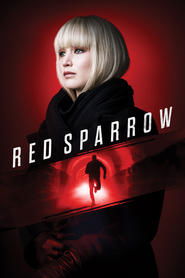
Red Sparrow (2018)
Lawrence explains adapting Jason Matthews's novel and filming in Budapest, Bratislava, Vienna, and London instead of Russia. He discusses using Budapest without disguising it for scenes set in Helsinki, Jennifer Lawrence's preparation and performance, and Denise Chamian's supporting cast recommendations. Location choices are a recurring subject throughout the track.
- Duration
- 2h 13m
- Talk coverage
- 91%
- Words
- 21,737
- Speaker
- 1
Commentary density
Highlights
Featured in
Topics
People mentioned
The film
- Director
- Francis Lawrence
- Cinematographer
- Jo Willems
- Writer
- Justin Haythe
- Editor
- Alan Edward Bell
- Runtime
- 140 min
- Also on
- OneSheet ↗ OverBlack ↗
- External
- IMDb ↗ TMDB ↗ Find on Amazon ↗
Transcript
21,737 words
Hey, I'm Francis Lawrence, and I'm the director of Red Sparrow.
Red Sparrow was a novel by Jason Matthews, and it was sent to me by Fox as I was finishing working on the Hunger Games movies. I think we were actually in post-production on the final Mockingjay, and had actually started to promote the final Mockingjay film when the book landed on my desk. I took a look at it and immediately fell in love with it. I've always loved spy movies. And this spy story I thought was quite unique. It's by far I think the most genre-specific story that I've ever done. But I just found the character of Dominika, as you can see here, played by Jen Lawrence, to be quite a unique and unlikely hero, and a really unique way in to a spy Story. It becomes a much more personal spy story with her in the lead. I actually, even while reading the book, Started to think of Jen immediately for the part. You know, she and I had done three Hunger Games films together over the course of five years. I thought she was a fantastic actress, and we had a great time working together. So I thought it would be fun to find something new to do together. And specifically, because we had done this...
We'd been working together with the same character over the course of five years it would be really fun to do something totally different, use different muscles. And I thought she could also look Russian, but thought it would be fun for her to look different and speak differently and move differently, and push herself into new territory. So when I had read the book, and I was gonna go pitch the studio, I actually called her first, and said, "Hey, hypothetically, would you be into doing a Story like this?" And she said yes, and, you know, I just pitched it very briefly. And then made my pitch to Fox about my approach in the story, which was to make Dominika the kind of heart and soul of the story, and to follow her story, and I had a couple of tweaks that I wanted to do to the last act of the book. And also spoke a lot about the tone, and the kind of hard-R quality that the movie... I thought the movie was gonna need. And everybody agreed. We got cracking, and I went to work with Justin Haythe, who is a writer that I've known for a long time, and we had developed something together before that had never been made.
But we had a great time working together. And he also saw eye to eye with me in terms of the tone and the point of view of the story. And so we got working and it came together really quickly. So that by the time we had finished and released the final Mockingjay film in the Hunger Games series, we were pretty ready to go, and we were almost ready to start prepping this. We ended up bringing a bunch of people from the Hunger Games film with us. Jo Willems, the cinematographer that did my three films came with us, and our camera operator, who's worked with me since I Am Legend, and has also done numerous other films with Jen, 'cause he does the David O. Russell movies, came with us, and Trish Summerville, who did costumes. The new big addition for me, in terms of crew here, is Maria Djurkovic, the production designer. She had done Tinker Tailor and many other great films, and I just really enjoyed her work. And we really bonded over the references that we had found, and the kind of color palette that we both thought that the movie should follow. And she joined us, and we shot the film in Budapest. And primarily all practical locations.
Some little set builds within locations, but primarily all practical locations.
Tonight, you are the pride of Russia. May I present my niece, Dominika Egorova? And Dmitri Ustinov, a valued friend to the arts. If there is ever anything I can do for you, don't hesitate to ask. May we have a photo? Yes.
This sequence was probably one of the more complicated sequences in the movie. This intercut between Joel and Jen's introductions here... The big intro into the movie. I think there were 60 scenes alone in this first eight or nine minutes of the film. So it took quite a long time to complete. And this ballet sequence here, that we're about to get into, was probably our most difficult visual effects sequence. I had done a bunch of research in terms of ballet and found a great choreographer named Justin Peck from the New York City Ballet. And he brought in Isabella Boylston, who's one of the principal ballerinas at the ABT, also in New York. And so she doubled Jen. And Jen went through pretty rigorous training, doing about, I don't know, four or five hours a day for three months to learn how to dance, and learn the choreography that Justin had put together. So every shot you see here, we actually shot with both Jen and with Isabella, and then, using a variety of methods, put it together so it really seamlessly looks like Jen doing all of the dancing.
But she put a lot of hard work into it, not just for this dance sequence, but also just to be able to carry herself like a ballerina. But I'm really happy with the way the sequence turned out.
We also got very lucky too, to bring in Sergei, who was introduced just a moment earlier. Sergei Polunin, who's probably one of the best male ballet dancers of all time. And he's also just gotten into acting recently. He was just in Murder on the Orient Express, and I think doing various other things. And he still dances and models. He was fantastic to work with, great to work with Jen, and really supportive. And really just looked perfect.
One of the fun things for me about this whole sequence is the intercut. I just thought that it could be a great introduction to the two characters and to the two worlds. And one of the things that I played with throughout the sequence is screen direction. So if you notice even from the very beginning, I typically have Jennifer facing left to right, and Joel facing right to left, as you can see here. It was a trick that I learned. I remember watching old Hitchcock movies, and watching Strangers on a Train, and there's... In the opening sequence, you see the two men who are moving toward one another, and eventually gonna meet. And it's something that I've employed a lot, I think, that screen direction is actually a huge benefit in storytelling. But especially in a sequence like this where you feel like these two characters are gonna end up on a collision course with one another, that narratively, you know that at some point, that they're gonna come together. American! Most of this ballet sequence here was shot in the Budapest opera house. And we had support of the Budapest opera, and the Budapest ballet company.
And most of the other dancers there are all dancers with the Budapest company, and from a variety of places. There's some Americans, actually, and some Hungarians. Great group of people. And there was our nice leg break, one of the first specific, kind of, tonal hits in the movie. It was something I wanted to do with the movie, was to not hold back too much in terms of some of the shock, and audacity of some of the moments that take place within the story. And so to see the real damage done to her leg there... I just remember seeing, you know, there's been sports injuries over the years. And not too long before we shot this, there was a French athlete in some, I want to say some Olympic games or something, who had done some vaulting, and just kind of landed slightly wrong and bent his leg at this really horrible angle. And it was really difficult to look at, but we basically modeled the bend in her leg based on the images of this French Olympian. Word is they were vice cops, looking for Chechen dealers... or some family guy getting a blow job in the bushes. They weren't there for Marble. They just got lucky.
Chances are they would have questioned you, and let you go. You can see here, one of our really cool locations. Maria, my production designer, was just really fantastic at looking for locations and scouting. And I think she had gone out to Budapest a few months before me. And we had also hired Klaus, who was our location manager for the Berlin portion of the Hunger Games films, and we liked him a lot. And he was nearby, and so he came down to Budapest and they worked together, and they found these fantastic places. These old abandoned hospitals, where the surgery Is, and where she's about to wake up, was this old, abandoned maternity hospital. And this fantastic space is part of a library in the seventh district of Budapest. Undercover narcotics agents saw what they thought... was a drug deal in process. You can see outside of Jen, too, that we really put together a fantastic cast for this movie. Jeremy Irons, who's an icon and a fantastic guy, and I think one of the best actors to have ever existed, was my first choice to play Korchnoi. And luckily he said yes. And Matthias, we brought in. I'd been a fan of his since seeing him in Bullhead and Rust and Bone and things like that.
And he's so versatile. But he became a choice when we actually decided to skew the age of Dominika's uncle down a little bit. I wanted to add a little bit of creepiness to their relationship. And so the idea that, you know, maybe her father had a much younger brother, so that, as she was growing up, there was this, you know, charming, handsome, much younger uncle, you know, somebody that she might have even been attracted to, and he might have been attracted to her, was something that I wanted to play with in the course of this. And I thought he was just perfect for it. He's such a fantastic actor.
And so this now brings us to the end of our introductory sequence, seeing her with her broken leg, knowing that her career is over, and we get our title sequence.
This is actually something that Justin and I, Justin, the writer, Justin Haythe and I debated quite a bit. We spent a lot of time thinking about Dominika"s living conditions. And part of it was from research that even though it seems like quite a glamorous job to be a principal ballerina with, you know, a real high-end ballet company in Moscow, that the living conditions would be quite modest. And I also thought it was important that they remain modest, because as she's fighting for survival, when she needs help from her uncle to survive, it's not about material things. It's not about getting a nicer place to live in, or keeping a nice place to live in, or keeping a nice car or anything like that. It's just keeping things as they are, in terms of the simple life that she actually has with her mother. And her mother is played by the great Joely Richardson, who was I think one of the last people we cast for no real reason. I think it was the last role that we got to.
But she came in, and it was a bit tricky for her, and she was a trooper, because I think we cast her maybe 10 days or so before she started shooting, and she had a lot to do, you know? We had decided that her character, although you never hear it, had MS, and so we wanted her to meet with experts about MS, so she would know how to move, and how to make it look like she had trouble using her hands and trouble getting up. And she had to learn the subtle Russian accent that everybody had been training for, and she also had to learn how to play the violin. It's now a scene. I'm sure she's not happy about it, but we ended up cutting it 'cause she spent a bunch of time learning a song on the violin while giving a speech to Dominika. But she was a real trooper. She also did something interesting that I had never seen an actor do before, which was that she was really curious about the tone of the movie as she came in, and wanted to immerse herself in it.
And so she came to Budapest a few weeks early, and she would come to set on days we were shooting other things, and she would just, kind of, watch and see what other people were doing, and see what I was doing, to get into the tone of the world a little bit. And I think it's honestly gonna be something that I carry into other movies that I do now, and inviting actors as they come in, so that nobody really starts completely cold again. Sonya? Hey. How are you? What is it? /'m scared. I went to see her at the hospital. The way she looked at me, she knows. She doesn't know. What we have done is a sin. They've always favored her. No one else ever got a chance. Is that fair? This was a fun sequence. This is another one of the dynamic sequences in the movie that really sets up the tone, and really specifically sets up how Dominika is truly an unlikely hero. I think without this, and this is something that we, you know, the producers and the studio and the writer and I debated about a fair amount, just in terms of how violent this sequence gets. Really sets up what Dominika's capable of.
We shot this in a basement of an art school in Budapest, and Maria brilliantly changed this empty basement room, series of rooms, into a steam room, and locker room, as if it was at the bottom of a ballet company. And I think it looks really beautiful.
This sequence also was day one of shooting for us, which ended up being quite interesting, because I think it set up the mood and the tone of the movie instantly from the first day, but ended up being really beneficial for Jen. You know, she had never really pushed herself into doing content like this movie has before in her career. And I know she was very nervous about it and it was something that we talked at great length about, leading up to the beginning of shooting. But to come in and shoot a sequence like this on day one, with Sergei, and Nicole, who's playing Sonya here, she could see the process of how you shoot a sequence like this, and how comfortable the actors were with nudity. How we were all very respectful about everything, how private we kept everything, how we tented off the video monitors. And so it was a way of easing Jen into the process a little bit. And she could see the comfort level that was gonna exist on Set.
This moment here was also another piece that we kind of debated, this phone call. This is something that's quite easily lifted, and she could just go home after having seen the blood on her hands. But this idea that she could do something so violent in the steam room, but then have this moment of conscience and call the action in was very important. And then we have this moment here of finding her mother, which was the moment where she knows that the ballet company that's been supporting her has kind of pulled the plug on any money and any help for her mother, and she is gonna have to go and find help from her uncle. I'm going to take care of us. So one of the fun things about this job and in terms of the world-building, was finding all the various kinds of architecture that exist in this world. And this place here was actually in Bratislava. So we went on a search. We shot primarily in Budapest, but we also shot in Bratislava, which is in Slovakia, and Vienna, and London. And we went on a big search for buildings and sites that could feel like Moscow or places near Moscow.
And Maria, the production designer, had found these great Brutalist buildings in Bratislava, including this one, which we decided would be perfect for Matthias's character's office building. Just a big monolithic, very Stark, stark building. The problem here was actually... We shot this scene very, very quickly, even though there's a lot of dialogue, because it gets front-lit quite quickly after about 7:00, 7:30 in the morning. This is near the end of our schedule on the movie. And so we Set this up at sunrise and dawn, with multiple cameras, and shot the whole scene within about 45 minutes, I think, 'cause otherwise, if the sun came up, it was gonna be really unflattering, and it wasn't gonna feel as bitingly cold as we wanted it to. Do this for your mother, Dominika. He has dinner at the Hotel Andarja every Friday at 9:00. A car will arrive at your apartment to bring you to the hotel. Now, you carry nothing with you. We will arrange a room and something for you to wear. This is back in Budapest, shooting in a hotel in downtown Budapest. We were originally modeling the idea of this hotel in Moscow, with the Metropole. Which is a classic, really upscale hotel that's been around fora really long time in Moscow.
And then we, kind of, ended up going in our own direction. We searched, you know, in London for hotels, searched all over Budapest for hotels, and we pieced together various things, and we used the exterior of a hotel in Budapest, and we ended up using a room... This room is part of an abandoned building in Budapest. And Maria built that bathroom attached to the room in that abandoned building, and just did a great job. She brought in these great Italian scenics to create all that fake marble. It's actually just wood that's been painted, but just looks unbelievable.
Here's a little cameo. This is one of Jen's best friends, Laura, who also acted as her assistant on the movie. What a pleasure. May I join you? There's a fair amount of cameos in this movie, probably more than I've ever done in terms of people who work on the movie. And friends, and things like that. If you notice the policeman in the beginning of the film that's on the subway train with Joel, in the furry hat, is actually Chris Surgent, my first assistant director, who I've worked with since I Am Legend. I actually met him on I Am Legend. He was the first assistant director of the second unit, and did all the big New York City lockdown sequences for us, for the opening, and I was really impressed with him. And we've become good friends, and work together all the time now. Tell me the real reason you are here. This was actually a really, really beautiful location in downtown Budapest. It's the New York Cafe, which is attached to the hotel that we used for the exterior. And it's become a very popular tourist attraction, and a place to go eat because of its opulence.
But I just thought it would be a fantastic spot for this character, for Ustinov's character to hang out. One of the things that I wanted to do, and also Maria, the production designer, was to show different facets of Russian architecture, right? The kind of classic, opulent stuff like places like this, or the ballet, the kind of socialist, Brutalist structures like her uncle's office. Some of the government housing-type environments like where she lives with her mother. But one of the things that really excited me that we got into was the idea of color. I think, honestly, people tend to expect in movies like this for it to be very gray, you know, just bleak. And what Maria and I found in our research was that there is plenty of color throughout the environments. And we had decided to really try and utilize that, and she pulled, I don't know, hundreds and hundreds and hundreds of photos that we used, that gave us a real sense of color palette and a sense of mood and a sense of light. And we ended up using that also for Jo, the cinematographer and I, in terms of how the movie kind of looks in terms of lighting styles as well.
And that led us into a direction of, you know, post-World War I/ Russian art, and found that a lot of the, kind of, colors that are in that art were also found in a lot of these environments that we were finding in Central and Eastern Europe. And we ended up really trying to utilize those. And it was something really exciting for me, because to discover that this movie could be quite colorful was a lot of fun.
This was one of the tougher sequences to shoot. You know, leading up to this movie, quite honestly, I was afraid, even though I wanted Jen to do it, I was really afraid she wasn't going to want to do it. Because she really just had never done anything that had this kind of content before. So, before she had read the script, I started... We were going on a lot of press tours, and spending a fair amount of time together, promoting the Hunger Games, the last Hunger Games film. And so I would dole out information bit by bit. But really, she didn't know the full extent of what was gonna be in the movie, content-wise, until she read the script. And she read the script, and she thought about it for a little while, and then she said that she was ready to do it, and she wanted to do it. And we Started to have really lengthy conversations because I wanted to make sure that we got all these moments really tonally correct. And that she was prepared for what it was gonna be like to shoot these kinds of days.
And I would talk a lot about how we would handle the days, and handle the content, both practically on the day, but also in the movie. I wanted to make sure that it was always really narratively important. The idea was never for the movie to be erotic in any way. But that it would become part of her survival story, and that there was always something tough about it. There was always a very specific emotional value to it. The scenes were always moving the story forward, and it was part of her struggle to survive. This idea of getting pulled into this horrible world of espionage from her uncle, and she was gonna have to do things that she didn't want to do to survive. One of the things that she and I spoke about was that I promised her that she would be the first person to see the movie. That Alan Bell, the editor, and I, and I think two of his assistants that were obviously gonna have to handle the footage and help organize things were gonna be the only ones to see all of the footage.
So, you know, dailies like this scene were always held back from the producers and even from the studio, so that when we came up with our cut, which I think was about six weeks after we had wrapped production, I went to New York and I showed Jen the movie first, so that she had the first chance to Say, "Yes, this can be in," or "No, I want that to be out." So that she had the power to make those decisions before anybody saw anything. And she saw the movie, and she loved the movie. I think it was a fair amount longer than it is now. I think it was two hours and 35 minutes or something. But that's kind of the way we worked.
Hey! Hey, you!
So this motorcycle sequence is actually one of the few... There's a few little things that we did as second unit. I'm not usually a huge fan of second unit, but this stuff we did, but we mapped it out very specifically. I worked with Chris O'Hara, a stunt coordinator, and Cam, who used to be my assistant, and also is now an associate producer on the movie. You know, both kind of worked really closely with me in storyboarding, and we would go out to locations and do little video-vis things. So we were really specific about the kind of moments we would need. You know, it was just always a bit tricky to schedule all those little pieces of them traveling down the street. And we used Jen's double, Renae Moneymaker, on the back of a motorcycle. Over the course of various nights over the schedule, Chris O'Hara and Cam sometimes would go out with the motorcycle and shoot these various elements that we put together. Ustinov dismissed his security, so I saw an opportunity, and I took it. Why would he do that? She asked him to.
She could be useful. She's a witness. Get rid of her. I trust her discretion. If I were you, I would be very sure. Who is she? This is actually an interesting thing we were shooting. And this is another one of our great abandoned buildings in Budapest. And originally, this was supposed to be in, you know, a warehouse or something. And I ended up thinking that the warehouse idea just felt like it had been done before. You get taken into some big, empty warehouse, and what I really liked was in Budapest, they have this torture museum. And it's set up in a building that was used at a specific time, you know, before the wall came down, to torture people. And what I found really interesting about it was it was just a building that's in the middle of the city. So you pull into one of these gateways, and you get pulled into, you know, a courtyard of a building. But it's in plain sight. It's not out in the middle of nowhere, it's not a big empty warehouse or something, but it's just a building in plain sight, and that it's used for interrogations and torture and things like that.
And we ended up scouting this abandoned building, which we loved, and found this area that I think was maybe a kitchen or something at some point.
And off to the side, in some side room, was this broken down bathroom that had this really strange tile. And you can see the tile here. We duplicated it. But it's based on a tile that was actually used in a bathroom. And it was this green, splotchy tile. And if you were to see the detail of it it actually looks wet, which I thought was really strange, because it basically makes it look like the bathroom is wet and moldy. And Maria and I really fell in love with it. And she did a mock-up of it. And at first, this is the only set that she and I went back and forth on a little bit. The rest we were in complete agreement right away. But this one, for a while, I was worried was too striped. It wasn't the color that bothered me, and it wasn't the tile specifically, but it was once you put all the tile together, it felt a little too designed for me. And what we ended up doing, and Maria ended up doing, was working on the contrast between the dark green stripes and the lighter stripes in the middle, so that it didn't become sort of too hypnotizing. It was almost gonna be too distracting before.
I'll be able to take care of us now. You don't have to do this. Sparrow School. It was so well-described in Jason's book as being this place out in the middle of nowhere. And I think in the book, you actually have to take a hydrofoil over some sort of water to get there. But here we didn't do that. We just had that big snowy landscape with that drone shot of the car driving. But we found this place about an hour and a half away from central Budapest called Castle Dég that was a private estate at one point. And then I think, post-war, it became an orphanage. And oddly, I think an orphanage for Greek boys or something, which was really strange. But now it's, kind of, a museum and empty, and they really let us use it a bunch. And this was toward the beginning of our schedule. It was quite cold, and everybody was really sick. Pretty much people were sick from the first day we started shooting, but by the time we got here, which was about three weeks in, it had really spread like wildfire, and everybody was really sick. Which of course had to marry up with primarily shooting outside in sub-zero temperatures, which was pretty brutal.
But I loved this location. And of course, this was the beginning of our work with Charlotte. I'm a huge fan of Charlotte's work, always have been. Loved her movies, think she's a fantastic actress. But the idea to cast her as Matron came when Justin Haythe and I were working on the script, and he had seen 45 Years, which had come out recently, and suggested I see it. And I did, and just fell in love with it, and just started to think about her. I mean, it's completely a different character, but just started to think about her for this role. And so we sent her the script, and at first she was interested and she was intrigued, but she thought that her character was a little thin. And Justin and I had some ideas, and so we ended up flying out to Paris where she lives and meeting her in an apartment that she uses to paint in. And we had a great little meeting. And I think sat with her for maybe an hour, hour and a half, and pitched her the take that we had on her, and some of the secrets that I have about her.
So that if we get to make another one of these, that we can carry on into new stories. And then she said yes. And we got very lucky. And it ended up being really good for Jen, because she was there for one of Jen's, probably Jen's hardest scene to shoot in this movie, which was something that's coming up in, I don't know, 15 minutes or so. But it was great for Charlotte to be there for Jen.
Here, we deal in psychological manipulation. You'll be trained to determine a target's weakness... Sparrow School was always one of the aspects of Jason's book that really intrigued me. It was one of the really, truly unique pieces of the story. And I always thought that it was gonna be a standout segment in the movie. But it was something that Justin and I had to really, kind of, develop out specifically. And it was fun to try and figure out what makes it hard for her, the kinds of horrible things you have to learn to do, but what specifically they would teach you that's not the obvious, right? Not just how do you put makeup on, how do you look sexy, how do you act sexy and, you know, walk in heels or something like that. It was the idea of having to get past what you might find disgusting to try and foo! somebody. But more importantly, to figure out the human puzzle, right? There's a great line that Justin came up with that every human being iS a puzzle of need. Find the missing piece, and they'll give you what you want.
So that idea of really learning how to figure out the target, figure out what they need, and become what they need was really interesting, because that actually becomes the sort of, the objective for her later, as She Starts to target Joel. She has to really be smart, because she's not dealing with an amateur when she's dealing with Joel. Simon... I've been with this guy for three years. He is not going to deal with anybody... You can see here Joe! now. He's such a fantastic actor, I mean... He was my first choice for this role. I think he's probably one of the best working actors of his age right now. I've been a fan for a really long time. I mean, all the way back from Animal Kingdom. And he was in my friend Scott Cooper's movie, Black Mass. But what I always really like about him is that he feels really honorable and feels really honest, and I wanted those elements to the character. And I think he brought that in a big way. And it was really fun to work with him, too. He's just a good guy, and kind of gelled in with the group. Worn on the hands, after intimate contact... the subject will be traceable for up to six weeks.
One of the things that I wanted to do... There used to be a little more footage of Joel, kind of back home when he got suspended, and you can see compared to the, kind of, the color and the textures and things in the environments we have here, it's actually quite bland. We shot everything in pretty much white environments, made it as bland as possible, so that you get this feeling that it's just not the kind of life that he wants. That he likes living internationally, and he likes working, and he likes the mystery, and he likes the intrigue, and he likes the work. The last thing he wants to do is be at home and be in an office. And so we made it as drab, and as lonely as possible. He wants a daughter... someone to take care of, and he'll pay for it. So here you see some of the work I was talking about in terms of the development of Sparrow School. This idea of figuring out what people need. But you can see in a moment here, it's actually gonna lead into a bit of a harsh lesson from Matron about having to get over what disgusts you.
To make people believe that you're attracted to them, or that you're willing to do specific things for them. Yes. - Correct. Though, we mustn't be so judgmental. We all have our passions. His happen to be rather young. Anya, come here for a moment. This is Sasha Frolova. She was actually one of the first people other than Jen that we cast in the movie. It was something. Denise Chamian, my casting director, instantly sent her over for the role of Anya, which was actually expanded a little bit originally in the script. Give him what he wants. And I liked the idea of seeing what a school like this could do to somebody that's fragile. And so, she slowly falls apart. You used to see in some of the scenes that I think we have in deleted scenes, you used to see Dominika helping her out, and seeing some of Dominika's humanity in helping Anya out. Part of what I really like about this sequence here is that Matron knows that Anya's never going to be able to do this.
Really, what the whole point of this is for her to crumble so she can make a point to the class about how part of the training here at Sparrow School is to get over the things that might disgust you, and that you're gonna have to learn the tricks of the trade to be able to do the horrible things you're gonna have to do in this job. And that also thematically was important for me because it needed to be horrible. This is not a glamorous world. I didn't want it to be a glamorous world, and I didn't want Dominika to think it was a glamorous world. I wanted Dominika to hate it and to hate her uncle for dragging her into this world, so that she would want nothing more than to get out of the world. ... brings blood to the groin. Manipulation of the nipple... I remember on the day watching this sequence and I still do, and I just think it's a real original. I've just never seen anything like it. With Charlotte and weeping Sasha. Yeah, I'm really proud of the sequences that we did here, at Sparrow School. You must learn to love on command.
One of the things that we also did was we cast out all the Sparrows. We knew that we were gonna have a class. I think it was about 24 of them. So, we cast them, and they were, you know, not really background extras, but sort of halfway between background extras and cast. They didn't really have any speaking roles. But they were gonna have to do some things and they were gonna have to be there every day, and be recognizable. And it's kind of fun, 'cause you sort of put this group together that ends up existing and doing things together and braving the cold outside on the runs. Fifteen-foot jump shot from the left wing... Too strong off the back iron. Rebound, fought for and controlled there by Sellers... The big man, ninth year out of Colorado State... When did you first notice the tail? Week ago. And what do you make of that? If the Russians are still following me, it means they're looking for him. Here we are, back with Joel.
He's been suspended, and he's just caught on that he's being followed, which has tipped him off to the fact that his guy Marble, who he knows he sort of jeopardized the security of, back at the park in the beginning of the film. He could still be out there, and he's probably not caught if they're following him. Great cast here. We've got Sakina, Bill Camp, two great actors that carry through the rest of the movie with Joel, and end up going to Budapest with him. That'd be me. We'll be coming with you. Bill, a big fan, I've seen him a bunch of times. He's worked, I think, four or five times with Joel, too. But he was a blast to work with. I think he's a great actor.
This was something that was talked a little bit about in the book, and then I got the idea for this scene here in the room from some photos that I'd seen of some sort of children's military academies, and they would have these balls, and you'd see this sort of boys in uniforms at one end, and these girls in dresses at the other end. I just thought there would be something really creepy about showing up one night, and you've gotten dressed up, and you see these soldiers standing there with weird Russian pop music playing. And they're all standing around drinking and smoking cigarettes and waiting for you to show up.
One of the things that I love about this room too are the little cherries. This is something that Maria was really good about, is the kind of imprinted cherries on the walls. And this guy was great, Tom, who played the part of Pyotr here, this soldier. I think it might have been one of his first jobs, but he did a great job, and was a real sport.
One of the things that we did for Sparrow School! too, was Sparrow School was sort of split between two locations. This spot here with the classroom in the theater was actually a community center. It's called a social club, I think, that was part of a factory that was also about an hour and a half outside of Budapest. And the castle. So the interiors we did at both the castle and at this social club. This was actually the showers down in the basement of Castle Dég, and we recreated a shower room.
This was also a big important scene here, that she just beats the crap out of this guy.
One of my favorite locations, this was part of a sort of a convention center that we found. And again, one of the great uses of color that we found with these chartreuse seats. It was kind of a burgundy-wine-colored carpet. I mean, just an interesting sort of palette with these wood walls. You can see the wood walls are actually the same. Maria would probably hate me for pointing this out, but they're the same wood walls that you see in that opening sequence with Joel and Bill Camp and Sakina, after he's been arrested at the embassy in that opening sequence. And it's because these rooms, this theater and that room are actually right next door. Supposed to be in completely different places, but right next door.
This is kind of the beginning of a sequence where we establish some of the animosity that exists between Matthias's character and Jeremy Irons's character.
This is actually an outlier in terms of locations for Sparrow School. We ended up shooting this in an abandoned beer factory in Budapest. And it was just because we needed to work around Jeremy's schedule a little bit. And it didn't line up with us actually shooting out at Sparrow School, so we shot this much later in our schedule. And this was actually a time when Jason Matthews and his wife, who used to also be CIA... For those who don't know, but Jason Matthews used to be in the CIA, as was his wife. But they came out to Budapest for a few days to have dinner with us and watch us shoot a couple of scenes and meet some of the cast, and this was one of the days. The author is actually sitting just off-screen there on the right in another room, watching us shoot this scene. You were told what would happen to you, if you fail here? Yes. - So why not let him have you? I serve the state. I serve our president. This was a fun one with Jeremy. He has just such great taste, and such an eye for things, and it was his eye.
He decided that he wanted to wear these slightly tinted glasses, which I just loved, because it creates a veil of a sort in front of him. That was a different life. There are so many. Don't you find?
An important scene here where he's kind of testing her.
Once you know the end of the movie and you know some of the reveals, it's interesting to watch the movie again and look at scenes like this, and see what he's saying, and see the hints that he's dropping. Selfishness. Now, this ended up being probably one of the hardest scenes in the movie to shoot. I think it was probably the one that Jen was dreading the most as we were starting production. But, again, great to have Charlotte here. And it was one that Justin and Jen and I really worked really hard on, to get the tone just right, because the idea is that she's really in control, and that it's quite empowering. The tough thing is that when you do a scene like this, you end up spending most of the day getting the coverage that you need, and as you can see in a moment here when she starts to get undressed, that you're gonna spend most of the day completely disrobing in front of an entire classroom of people.
So we were just as cautious as possible to move through as quickly as we could, making sure that we got it right, of course. But to make sure that we moved as quickly as we could, and to only have the students there when we really needed the students there, and to keep it as private as possible when we could keep it private. But I think Jen just knocked this scene out of the park. And I think it's probably my favorite scene in the movie. I think one of the most unique scenes that I've ever shot. And I think just kind of hits the thematics of this movie on the head.
Well?
And this guy, Makar, who's playing the cadet here, was always a bit in character, so he sort of existed in all these Sparrow scenes. It's a bit pompous. Outside of school, he was kind of a different character, but in school he liked to kind of Stay in character, and he's a bit tough. But it sort of made it easier for Jen to be tough right back. Bitch.
Power. That's what he wants. Get dressed.
This scene, also shot at the beer factory, went through a few different states. And we ended up cutting it down a little bit, but trying to figure out the transition back to Moscow. And it was something we played with, this idea, because Dominika had been threatened early on that if she failed, that she was gonna be killed. So it was kind of trying to modulate the amount of fear that Dominika might have when you hear that there's a car. "What does that mean? Does it mean that I'm moving on to different things? "Does it mean that they've let me go? "Does it mean they're gonna take me out and shoot me in the head in the woods?" But to be a bit uncertain was important, so that we didn't kind of let all the gas out of the tank at this point.
One of the things that Justin and I also talked a lot about as we were going through the script was that the mother became kind of an emotional anchor for the movie. I mean, a lot of what Dominika's doing, she's doing for her mother, right? This is the one person that she has in her life. It's somebody that needs proper medical attention, and needs a roof over her head. And when that is threatened to be taken away, she's willing to do quite a lot to try and protect her mother. And that's what gets her in to this mess in the first place. But I thought that it was quite important to keep coming back to her now and then, so that we didn't forget the reason why she was doing what she was doing. Have a seat. What can I get you? - I'm not hungry. This scene here was actually, I think, day four or five or something in our schedule. And it is a coffee shop that I think may now be closed, but a coffee shop that was sort of at the top level of a pretty mundane looking bookstore. But it was an incredible-looking coffee shop.
One of the ideas that I had had in the script phase was that he wanted to meet her at a place where he used to take her when she was a little girl. And he would buy her pastries, and obviously, sort of started their creepy relationship. Bringing her back here now obviously has a very different feel. You understand? This was our first scene that we had shot with Matthias, and it was a very long scene. I think it was probably, I don't know, three times as long as it is now. Might have been four, four and a half pages of dialogue or something that we trimmed down, and definitely needed to trim down. But it was a fun one. And a fun one to see just the beginnings of their dynamics. And you may also notice that he sort of looks similar to somebody, which was not done on purpose, and I won't even say who It is, but some of you probably can guess. It was not done on purpose, and this was the first day we had shot. And originally when Matthias had shown up, he was sort of scruffy and wanted to leave a little bit of rough beard, and things like that.
And I said "No, no, no, I think Vanya needs to be clean-shaven." So he finally agreed, and then when he came out with his hair done like that, and clean-shaven, and the clothing that Trish had put him in, it was a little odd. We were all a little thrown. But it was definitely not on purpose. I think it was all coincidence.
And now we go to Budapest. This is an abandoned wing of the actual Budapest airport, which is pretty fantastic. It's something you never find, which is a Sparkling clean, perfectly empty abandoned wing of an airport that you can shoot in. I think it's just So, So rare.
In the book, this portion of the story took place in Helsinki, but since we ended up shooting in Budapest, we just decided, "Why cheat Budapest for Moscow and Helsinki, "and why not just have the Helsinki part take place in Budapest?" So we decided to use Budapest for Budapest, which was nice and really fun. And this is Thekla, who's a Dutch actress, who read for the part of Marta and is playing Marta, obviously. But I remember seeing her reading for the part of Marta, and she was quite good, but Marta was described as being a little rough. And Thekla, to me... She is a very, very beautiful woman, and there's something very sophisticated about her, in a weird way. I don't even think I ever told her this, but there's something about her. When you see her in person, she feels like she could be part of a royal family or something. There's just something about her. So I actually asked her to read again. And she wasn't wearing a ton of makeup.
But I just wanted her to sort of try and tone down whatever she had done in terms of, like, nice lighting and the hair and all this kind of stuff, and to do it again, because she couldn't be quite as beautiful as she really is. And then it was perfect. She sent me a new tape that was not quite as glamorous as the original. Usually two men on a girl. No relationships to speak of. That woman right there that we just tipped up from is Valentina, one of the costumers who has worked with us many, many times on all the Hunger Games movies. Again, another one of the cameos. And this is Douglas Hodge, who my casting director brought in. I think, yeah, Denise brought him in to play this role, and he just, I think, did a fantastic job playing Volontov.
We ended up having a little drama with the pool situations in Budapest. There was a beautiful, beautiful pool that was in downtown Budapest, not far from where our production offices were, that we loved, loved, loved. But we then soon discovered that there were gonna be these championships that were gonna be held in Budapest, and that they had received a bunch of funding and were gonna Start rebuilding. And they were gonna tear down this beautiful old pool that we wanted to shoot in. And we ended up having to go about an hour out the city and shoot in this pool. And it worked great, and I'm really happy with the look of it, but it was a real disappointment. It was the one moment, location moment, that was a real loss for me and for Maria.
Learn how to be the missing piece, and they will give you everything. This is a scene that I've always loved. It's kind of a nice, quiet scene, but to get the sense of other Sparrows that have been through the program, that have lived the life a little bit, that are sort of tired, that are a bit desperate. I always found this scene interesting, and it was something we debated about cutting, and we decided to keep in to help establish a little bit of a bond between the two women, and a little bit of the history of Sparrows. Funny enough, this scene was actually lost the first time we shot it. And we thought we might be able to save the data, and we sent it, I think, somewhere in London or something to have the data saved, and it could not be retrieved. And we ended up having to reshoot that scene again. Which is always a bit of a drag, when you feel like you've already done something and you've already done it well, and to have to go back and take another shot at it. You get your card back when you return the key. Any questions? No.
For any of you that have read the book, this sequence used to have them swimming next to each other, and even starting to race and things like that. But the sort of last remnant of that is this, where he says something to her in Russian, which is that you're a good swimmer. But there used to be a race, and then I realized it would be a lot of shooting time, using underwater cameras and things like that, for something that would probably end up getting cut from the movie. Do you miss it? You know, food, people. So what do you do in Budapest? In terms of the development of the screenplay, there are always these kind of tent pole moments. And the tent pole moments in the relationship between Dominika and Nate here, this is one of the first big, big moments because he's initiating contact, right? She's made the pass-by. So she was just, in the most subtle of ways, starting to bait him at the pool, but he's clearly already onto her and sort of insinuating that he knows that she's followed. Would you like to get something to eat with me? I know a Turkish place at the station.
What's always been really interesting to me is this idea of, is she really bad at it because she's new, and he's really good at it? Or is she purposely allowing him to know that she's following him? So, we would actually shoot various things so that we could modulate how strong those feelings might be. So you can see this close-up here. You can see here she's actually sort of excited by the moment between the two of them, and she smiles a little bit. But we had one where we shot more concern. So if we ever felt in the edit that it was leaning too much toward the kind of obvious sense that she was purposely letting him know, we could then use a moment there where she seemed a little more nervous. Your ID is missing. But you can see here that her plan is starting to work, right? That she's swapped the name. She's not using her fake name or her alias, and instead has used her real name on the card. Take your time. She came in under the name Katerina Zubkova. Registered as a translator for the Embassy. This location here, I think we were shooting in another one of these universities.
It was kind of interesting that Budapest has these various buildings around town that are very specific kinds of universities. And I don't remember what kind this was, but this was one of the universities that we shot in and we used as the U. S. Embassy, CIA headquarters within the embassy for this scene. And, again, you get these great wood walls, and this socialist architecture, and odd green marble everywhere. So just another wonderful find from Maria. Deputy director of the SVR? I have nieces. And fun stuff here. There's not much levity in this movie, but some of it, almost all of it in fact, brought by Bill Camp's character. So, some fun moments and some good laughs in this scene. Okay. See what you can find out. Thanks. - Just go slow, all right? All right. Nate? - Mmm-hmm? If she does let you fuck her, she's definitely SVR... because she's way out of your league.
This location here, which you saw earlier, the exterior of, that sort of looked like the upside down pyramid, is a radio station in Bratislava, another great find from Maria. But we used the exterior and the interior for the offices. And so this room used to be used to store audio tapes. They still had racks and racks and racks of storage of quarter-inch audio tapes. We emptied it all out, but there's just this fantastic void within this upside-down pyramid. And then these kind of floating offices in the middle, and these strange walkways, and it's a little labyrinth-like, but I just really love this environment. Just a bit of fun. But the offer stands. If you need help, don't hesitate to ask. And another great Douglas Hodge scene. He was so good at being so greasy. ... Will be critical for securing Hungary's economic ties with its neighbors. Another one of my favorite locations. This was another one of these universities. A medical university, actually. My idea for this sequence, this embassy party that she wants to go to so she can sort of track Joel's character down, was to do the opposite of what you might find in, let's say, a Bond or a Mission Impossible, right?
These kind of party scenes would usually be at the opera or something like that, or at the embassy, but they'd be really high end, with exotic cars, and people in tuxes and gowns and everybody looking so beautiful. And you can see here instead, people are in pretty drab suits with name tags and things. So I wanted to be much more realistic, with a senator talking about medical supply trade. Kind of, pretty boring stuff. But again, you get another tent pole scene between the two of them, where they start to push it. He now has permission to pursue her. She's clearly pursuing him. But trying to figure out exactly how she's pursuing him is part of the fun of the movie. Because I think one would expect with a movie like this that she would just be some sort of a honey pot, right? And she would just try and look sexy, act sexy, flirt, things like that. But instead, she's actually doing something quite different. And she starts dropping hints that you can see here, even just starting to talk about her uncle. And men being in power, and giving the implication that she's not really in power. And really what she's kind of doing, subtextually, right, is playing somebody who wants to be recruited.
But there's many, many things going on. It was quite a complex story to put together in terms of the screenplay, because if you see and have seen the movie, and you see how the movie ends, you know that there was another sort of plan going along at the same time. So she's sort of operating on multiple lines all at the same time. Also, by the way, one of the few moments that Jen smiles in the movie. It happens very, very infrequently, but it was kind of one of the goals for Justin and I in this scene, was for there to be some actual attraction, on top of all the kind of maneuvering that they're doing, to have some attraction, for him to be able to charm her. Okay.
I was always really happy with the way the use of the dog turned out. You can just hear the dog barking, and it was set up when she first walks into the apartment earlier on. I just like the payoff here, that when she's finally broken into Marta's room to search it, 'cause Marta's been dropping hints about keeping her door locked, and you better find something... That she might find something useful in here. But when she hears the dog barking, she knows that Marta could possibly be coming home. And you get the race to get out of there.
This was kind of a fun thing to try and figure out, too. I'm a big fan of all these documentaries about prisons and things like that. I've always been really fascinated by the way people hide things in prison. Under toilet seats and somewhere in their bunks, and I mean really elaborate things and places where they hide weapons and contraband in prisons. When we found this location, which was up on the fifth or sixth floor of this abandoned building, and we transformed it into the apartment, and we had chosen this nice round corner room for Marta's room. Since she was the first in the apartment, she gets the nicer room to sort of snoop around and really try and find a great spot. And there was this perfect spot. You know, it's an old building, and there was a window pane, and there was a little slot behind the window pane, and you could sort of reach in and this envelope just kind of fit perfectly there, and didn't get lost. So it was actually something that didn't have to be created. It just kind of existed, and we found it, which was kind of a fun thing.
These kind of moments are always sort of fun to me, too, with playing around with editing. When you can sort of play with time a little bit, and make it feel like she might still be in the room as Marta's coming upstairs. But really she's been long gone and quite safe. That was him at the Embassy. It was. Playing hard to get, are you? No substitute for a good old-fashioned blow job in my experience. He's not like that. One of the things I often thought about with this movie, and I think I talked about it a little bit in the beginning, in terms of the screen direction thing, was Hitchcock, right? That this was not an action film. It's a mystery and suspense thriller. So to sort of play around with tension was really fun. You can even hear the Hitchcock reference a little bit in some of the music that James Newton Howard composed for the film. And not particularly in the beginning and the very end, in terms of the big, operatic ballet pieces, but in the more thematic material that's in the body of the movie, you can hear that influence, the Bernard Herrmann influence to the music. This is, I would say, I think it's my sixth movie with James.
He started working with me on I Am Legend, and we haven't stopped since, in terms of movies. So he did all the Hunger Games movies with me, and Water for Elephants. And I wanted to bring him on here. He had quite a job. I mean, there's a fair amount of music to it, but it was also just really a unique opportunity for music. If you just look at the opening and the end sequences, the music there is really tricky. We had basically choreographed those ballet pieces, to pieces of The Firebird. But we knew we were never gonna do The Firebird. We were not specifically doing The Firebird. It was just inspired by The Firebird. So we maintained a very specific beats per minute, but the idea was for him to create a solid piece of music for those first I don't know, 10 minutes of the movie, that were gonna carry us through, that were gonna work for the Dominika sections, that were gonna work for the Joel sections, that were gonna have some sort of tension.
It's also gonna feel like a ballet, because I wanted it to feel like a dance, and then it was then gonna lead into a ballet that was gonna truly work for both, the dance and also for the pieces of Joel running. And then we sort of do something at the end, and I'll get into that at the end. But the idea that there's almost a mirrored, book-ended dance sequence when she sets her plan into motion at the end, a new kind of ballet score comes up and plays to the end of the movie.
That's actually a location. That's sort of on the outskirts of Budapest, where we decided to shoot Joel's apartment. That's really the exterior of this apartment. But Maria, our production designer, had actually shot part of Tinker Tailor Soldier Spy in Budapest, and there's a sequence, I think, with Benedict Cumberbatch walking down the street. Or maybe it was Benedict. I don't remember which character it was, walking down the street past those low roofs that are out there. So we ended up in a similar neighborhood to shoot this sequence in Joel's apartment. Vienna.
And this is always kind of a fun one, you know? He's been sort of desperate to get back in contact with Marble. And, of course, just when he gets the call and he's supposed to go meet Marble somewhere, Dominika shows up at his apartment. Uh, come on up.
Also, what I really like here is you sort of get to see the actress playing the actress here. So that when you see she's followed him to his place, and she's got the black eye that she's gotten at the strip club with Volontov. And she can now use the black eye, and she can drop some more information in this scene. And tell Nate who she works for. But you can see her work herself up before she goes up to his apartment. My pig boss is insulted I don't want to sleep with him. What's his name? Maxim Volontov. And I've always loved this scene, because she's really starting to play sort of desperate, and play a little sloppy, in a way that would make him think that she would be easy to target for recruitment.
And you think they're really gonna kiss here, but they actually don't. He pulls away. That happens much later in the film. But these glasses that they're drinking from become very, very important. Because I knew what they would do to him. So do you.
One of the reasons that I wanted to cast Joel was that I was just excited to see the two of them on screen together. I thought they'd be really good together and I thought they'd have good chemistry together, and I was really happy to see the way the two of them play together on film. They also got along very well, too.
So here you can see her set the glass down. Which is hers, and he clearly, before he leaves, will set his down at a certain point. So, it's just another one of these moments. This was something that was not in the cut for a while. But now I think you can see she has a little more concern about how she played that last moment. Something seemed off with him and now she's outside the pool. And by the way, this is actually the exterior of the pool that I wanted to shoot in, so we could shoot in this one little corner. Great street with a train line.
So, she now goes to his apartment 'cause he hasn't shown up at the pool.
One of the things that Trish and I worked on, Trish Summerville, the costume designer, and I was, the different kinds of looks for Jennifer. Because when you think about a character like this, right, she's actually playing two completely different people, right. You've got Jennifer the dancer in the beginning, right. And so dancers have their own culture and sense of style and how they dress when they're not at work and how they dress in rehearsals or how they dress on stage and things like that. But that's the real Dominika. And then you've got the Sparrow, right, in the uniform, and that's a bit utilitarian. And then you've got the young woman who's sent to Budapest that's playing a part, right. And so she's not supposed to be a dancer, she's actually supposed to be somebody else. So, the decision of how do you dress and how do you present yourself to the world when you're supposed to be a young woman from Moscow who's a translator at the Hungarian embassy. It's really interesting to dive in to doing different kinds of things. And also thinking about the seasons, because, you know, we Started in just before the dead of winter and then Sparrow School!
took us through the dead of winter and then we decided that Budapest, it was the end of winter, and into spring. We never really wanted to see leaves on the trees at all, but we wanted to sort of get in at a slightly nicer, I would say maybe sort of damp weather, as opposed to icy weather as the story progressed. He told me about what happened at the park after I established trust. Hmm.
So how was he? - Unmemorable. This was a bit of a tricky scene, too. This is an important one. It was important to feel the pressure of Moscow on her, here in Budapest. And to make sure that we were reminded of the stakes and reminded that he has control over her and that there's other people that also have control over her back at home and that they still want the information and just important to keep the pressure up on her. Which is why she then leaks the information of Swan, the Boucher character that she's discovered that Marta's carrying. And she's about to throw Marta under the bus here... To get what she wants. She's compromised. She has no choice. When do you see her again? - In London. In a week's time. But we need more money. What's always kind of interesting and we always tried to balance, was the need for survival that Dominika has, and also some of the humanity. Which we've been trying to balance since the beginning of the movie. You know, she steals Marta's idea here, but I think that she truly would share it with Marta. But Marta wasn't gonna have it, and did sell Dominika out to Volontov. I'll get it.
So this shot here of Dominika looking at the passport, for anybody that knows the end of the movie, this used to be, for a long time, in the cut of the movie, used to only be used in the flashback at the end of the story. But it's a very important beat in the putting together of the plan for the kind of turn at the end of the movie. But as we kind of progressed through, it became important to understand that you needed to start picking up clues that she was working different tracks. Even if you didn't quite understand what exactly she was doing, you understood that she was really up to something. And so that you were paying attention and ideally that math would add up correctly at the end and pay off in a really big way. What did you see? You don't get Swan for free. One of the things that we found, and there's a moment coming up, that was a repurposed scene, but there's a moment here where you're about to see Jen standing by a window smoking a cigarette and thinking. And this was actually a different part of the movie.
But what we decided was that you needed to sit with her and think that we're watching her think and plan before heading off to do something. So, she's had this meeting with her uncle, and she's now told Marta that she's gonna be in on Swan with her, and then she goes to Vienna, the place that she said her uncle was going to. But you needed to see her think so that you knew that you were with her, as opposed to being thrown into, just suddenly, you're on a train. People would get confused.
We shot one day in Vienna, which is actually where I was born. And it was fun to be able to go back there for some of the scouts and things like that, and to shoot this one day. And we shot in a beautiful square there, and sort of transformed a cafe into a bank. And then also shot by the opera for a piece of flashback. Here you can see Marta selling her out. What do you want? Oh, am I too late? And this was kind of a fun thing to figure out, too. I like this idea. I mean, this is also a huge part of the plan at the end. But the idea of kind of finding, another sort of innocent, not too dissimilar from the character of Pyotr in Sparrow School, but somebody who feels a bit like an innocent who might fall prey to just kind of flirtatious behavior. But also I love the idea that she was gonna open this account without ever stepping into the bank. So that she wouldn't necessarily have been filmed and things like that, so that, when you get to the end, and you realize that this account's been opened up in a different name, there'd be no record of her having been in that bank.
And you'll also notice in that flashback that that bank manager is the one who's filling out the account, so it wouldn't even be in her writing.
Marta?
This was kind of a fun sequence. The tension here. Finding Marta, having been tortured and dead in the bathtub. We ended up creating... I've had great success with this kind of thing before, where you create very lifelike dummies so the person doesn't have to act dead, and they don't have to lay around in a bathtub all day. But this great practical creature effects company built this very, very lifelike dummy of Thekla that was molded to sort of lay in the tub, and it was interesting. The plastic bag was something that was just there to protect the dummy at one point, and so it was placed there, but I just liked the look of it. I thought it actually added a whole other layer of creepiness that the clear plastic bag was left draped over her head. And you can see, too, that sort of rectangular mark on the leg, which is a bit of foreshadowing for a sequence that's gonna come up later in the movie, in terms of a too! that Matorin, our assassin there, that just sort of shoved Jen's face down into the tub. There's a tool that he uses later in the movie, that that nods to. Close your door.
So, Marble surfaced. Jesus Christ. Here? Vienna. You don't say anything? And this was kind of a fun little bit, too. This idea that, for a while, in the creation of the script, we sort of debated about, okay, well, he's gone to meet his mole. And the information that he gets is the fact that Jen's character is a Sparrow, that it's a warning. And you came home to find her like this? Yes. This is a really interesting location, one of my favorite locations that we found. But it's a building in Budapest that is actually, was primarily used for stamp collectors. So, every floor, which boggles my mind, but every floor of that building was used for stamp collectors. And there's a large room that we use later where Jen's character's meeting with the Russian ambassador, with all these rows of tables you can see. It sort of looks like a visitation room when we use it, but really it was for stamp collectors to be doing their thing. But this whole building was dedicated to it. And we used it also for Nate's Russian apartment and the opening, when he's sitting on the counter waiting for the phone call in the beginning. So we used it for numerous things.
For the police station, and the visitation room, and this is also it, the exterior. But it was a very cool building, and a fun one to shoot. You must be pretty scared. For yourself. When I was in Moscow, they talked about a program that Khrushchev had set up. This is back in Nate's apartment here, and it was a very cramped apartment with a very, very narrow hallway. And, so, basically, we had to build a platform in the courtyard of the building outside, where we would set up all our video monitors. And so we were all outside, and the two of them would be in here. But again, this is another one of those tent-pole scenes between the two of them. And I always just called it the confession scene. And one of the things that I always really liked about it is that she's kind of telling the truth. You know, I still believe that she's manipulating him, and that she's confessing with an objective of still becoming recruitable for him. But she's not lying. And that was always really fascinating to me, that she could be both telling the truth and still carrying out her objective.
And I think that's part of what adds to the mystery of the scene, because you sit there and you wonder, wow, Is she really confessing? Is she really turning over to him? Is she really copying? Is she gonna start working with the Americans, or is she still working him? And that's, you know, really the fun of the middle of the movie here. And it's interesting, because this movie, more than any other movie that I've worked on, I needed to show people with no prior knowledge of the story, or the screenplay, or having worked on the movie. Because knowing the outcome, and knowing what all the layers are for each of these performances, and what each of the characters are really doing, and what they really want, I needed to make sure that other people, that civilians, who knew nothing about the story, were leaning in and wondering what was going on and wondering what the play was. And for clarity. But mostly, it was really just making sure that the intrigue worked, that it was interesting, and you were really questioning what her motives are. But I also found this really interesting, is that some people, I think most people, you know, clearly got it.
But some people don't want to question somebody's motives, especially the hero. Some people really want to know what the person's goals are, and they want to see obstacles thrown in front of them, but they want to know exactly what they're doing all the time. And that's just not what this movie is. This movie is constantly supposed to keep you guessing as to whether or not she's slowly moving onto the American side, or if she's on the Russian side, or if she's on her own side.
You know, you asked me why I fired the gun in Moscow? Well, the man I was protecting had everything to lose. He was benefiting from the system... but when he saw what was happening in his name... he didn't just say that he didn't know. He risked his life. He risked everything. He didn't deserve to die in a cellar somewhere. If you do this... I'll do everything in my power to protect you. And here you see one of the classic moments for Nate's honorability.
And so this was also one of these scenes that we spoke a lot about. You know, it's interesting when you think about sex scenes in movies. Oftentimes, I think in, let's say, an erotic film, right sex is almost a break. Like, you're taking a break from story to show sex and body parts and things like that. And that was something that I never wanted to do. I always wanted to really keep the story going, and keep the story guessing. And so the idea here was to still keep people guessing. And so what you have here is him not knowing whether or not he's being played, but he is starting to fall for her. And then you also see that she finishes, but he doesnt. And so you're left wondering whether or not it was a play, or if it was something that she really just wanted and maybe just needed because of all the things that she's been going through. The other thing you might notice here is that there is no nudity in this sequence, and that was something that Jen and I really talked about, was that something that actually could be sexy, we would not use nudity for.
And then we get to one of my favorite scenes in the movie.
So I love this scene. I think Jen's great in it, I think Joel's great in it I love the way it looks, love the music that we chose, the Grieg that we chose playing through the wall. And one of the other things that I really like is that there was a big element to the book of this synesthesia that the character had. So, in the book, Dominika could see colored auras around people, so she had a real sense of whether or not people were honest or vile, based on these kind of auras that she could see around them. And clearly, we weren't gonna do that in the movie. I mean, that would definitely take it into a fantastical direction in terms of tone. But also, it'd be too easy to start to get the language of who's good and who's bad, and I think that that needed to be more gray. But we do have a nod here where she talks about painting colors when she was younger, and she was nervous to dance, and painting colors over the audience. And so that's our nod to the synesthesia. But I really like this. The first time they really kind of connect, and he holds her hand.
But again, you're still left wondering whether or not she's really this vulnerable in giving herself over to him, or if it's all still part of a plan. Okay. Well, listen.
This is what I want you to do. One of the things that I like here, too, that we did, that I tried to do a fair amount, and we did a fair amount... I mean, when you sort of look at the kind of intercutting of the opening sequence, and you look at a sequence like this, and some Stuff later on, was this idea for a bit of pace and momentum to do these intercuts, where you might have a little bit of voiceover that sort of takes us over a series of relatively quick images that allow for a faster passage of time. Then just wait for my signal. This is originally where that scene was, where she was smoking a cigarette. We've repurposed it earlier, and then used a different angle here to hear the music. And that music, interestingly enough, we knew that we were going to be playing music in that apartment, for that scene where she's talking about painting colors. But that was actually Joel Edgerton's idea, to use it as the signal, which I thought was just fantastic, so that you would know it sort of helps link them romantically, because of the scene, the previous scene, it's a very Clear signal that she could hear.
But you can see that that obviously comes back at the end, and is very meaningful and very specific. And so for a sound and a piece of music to have so much meaning was really great. And very thankful for Joel coming up with that idea. In one of our initial meetings, when I hired him, he came onto the project, and we had a few conversations, and I think we facetimed a little bit, and went back and forth on some emails about the character. And then we had a little time to sit down before I went off to Budapest, and we Sat in an office for a couple of hours and went through the script, and it was in that that we came up with the idea for the music. Please answer the question. We'd need to know if you're emotionally involved. The answer is no.
So, are you Satisfied? This was an interesting day. So we were actually shooting in the Gellert Hotel, which is a famous old hotel in Budapest. It also has some of the most famous baths and pools in Budapest. Budapest is very famous for its thermal baths and things. It was a relatively straightforward scene. Always kind of fun to do the research on the polygraph tests and see what kind of guinea pig is actually gonna sit and get polygraphed in front of a bunch of people. As we all learn how to operate the machine and how to do it. But it was a night that Jen had not slept for whatever reason. This really rarely happened, but she had not slept at all, and was, you know, had a fair amount of dialogue, even more so than is in the scene now. And it was just driving her crazy, because her mind just wasn't working. I mean, she's usually really, really, really good with dialogue, and doesn't forget anything. but she was getting really frustrated. And surprisingly, that day, for being so tired, the accent really stuck. and that was something that we worked on with everybody. I mean, it was interesting with Jen...
My idea for the accent in general was to do a very, very light Russian accent for everybody. So what I did was I first started with my casting director, and we went out and cast some young women who were Russians, but had lived in America for a long time, so who had light accents, and we recorded them speaking. And we got Tim Monich, a dialect coach, involved, and he had some recordings. And we combined all those things and handed them off to Jen, and also hired some men to hand off to the men, and so they had voices that they could listen to. And then Joan Washington was the dialect coach that we used on set. But there was a fair amount of training and reference that we had for everybody in terms of the accents.
Go upstairs, room 624. I'll call you if I need you. Go.
So now we're in London, which was our last location of the shoot. This is where we finished off, primarily at the Corinthia Hotel. We also shot at Heathrow. I was amazed and very thankful that the people at Heathrow allowed us to shoot there. But we shot here at the Corinthia, which, funny enough, was the hotel that we would always stay at whenever we would go to London for the Hunger Games press junkets, so it was a hotel that we were all very familiar with. And also, funny enough, that the room that we shot in for the meetings, the hotel room we shot in, any time that we would go there to scout it, we had to rent the room out, and it ended up somehow, lining up with a school vacation or something. And so my kids would come out, and my wife would come out, and we would end up Staying in that room since it was rented anyway. So we would stay in that room, and then, you know, my family would leave and the whole crew would pile in, and we would do a tech scout... Of my hotel room. It was very strange. I'll just be leaving. I love this bar, too, and I love the way this bar looks.
I will say, too, that Mary-Louise Parker was really fun to work with. I thought she did a great, great job. It's always weird. I mean, we shot for 85 days, and I mean, she had, I think, one evening of shooting with us kind of in the middle, when we did that embassy sequence in Budapest, but really, all of her work was at the very, very end of the schedule. And you can imagine that, you know, a crew who's been in three, four countries already is, you know, quite bonded, and she's done long-running television shows, and plenty of movies and things like that, so I think she quite understood. She kept saying that we were a cult by the time she got there. I think she was right, But she was great, and also brought in a great deal of levity, sort of a nice, little needed tonal shift for this portion of the movie. And it was fun working with Mary-Louise here, just in terms of the sort of drunkenness of it all. You know, we did many layers of it in terms of how paranoid she might be, how sloppy drunk she might be, and it was really fun to just kind of let her go and let her try different things.
We ended up cutting a decent amount of dialogue out here, but there was some fun stuff. It went on for too long, but there was some fun stuff about why she's doing it, why she's selling the secrets, and, you know, there's some pretty basic ideas of why people do these things, why people become recruitable. Might be ideology, might be they've become disillusioned, and might be a different kind of patriotism. It could just be plain old greed. And I'm sure that if you are as important as you Say you are... then you don't want to waste any time. So, do you have anything to sell? I have the first set of discs with me. Today. I just want to be clear that I'm not doing this... 'cause I'm an ideologue or pacifist or something, you know. Where are the discs, Stephanie? Where's my money? What we always liked was this idea that she'd really sort of turned on her boss, that she always felt that she was much more deserving of the job, and smarter than her own boss, and had become really cynical about it. But I like that there's this sort of paranoia underneath all of it, too, this kind of nervousness about all of this that leads her to drink so much.
And that was all Mary-Louise. Some fun stuff. I just need to authenticate them.
I'd say one of the most frequent questions I get about the movie from people who've seen it is that, you know, people wondering about the era, and mostly because they get here and they see the floppy discs, and they think, "Oh, well, it must be in the past." And in our research, and talking to people like Jason Matthews, we discovered that, you know, the CIA, and not just the CIA, but Department of Defense, places still store information, especially important information on kind of larger items. They dontt really want things on, you know, microchips and thumb drives and things that are easy to get in and out of buildings. They want things that are, sort of, tougher to transport.
This was a nice little gag piece of furniture that Maria and her propmaker made. It's a little tough to light to see the black discs in the black drawer underneath. So, they gave Jo Willems quite a challenge. But worked out really well. You know, Jo and I have worked together for a really long time as well. I mean, we go back to the music video days, I think, you know, pre-2000, doing music videos and commercials. And then I went off to do movies, and he went off to do some movies, and so we went kinda separate ways for a while. And then started working together again on a couple of pilots. We did a couple of pilots together, and then I brought him in for the Hunger Games movies, and we really haven't stopped working together since. But we decided to do, really, a completely different approach to the movie, visually, this time. Again, we had done three Hunger Games movies over the course of five years, and there was sort of a similar feel to all of that.
I mean, one of the things that I wanted to do was handheld, to sort of maintain some of the naturalism that was in the first one, but sort of more along the kind of style that I had done in something like I Am Legend where there's a hint of immediacy and naturalism, but it was actually still rather formal in terms of shot selection. The other thing that we did was use a lot of kind of medium-wide lenses up close on people, so we felt very intimate with people, but still maintained a little sense of geography in those movies. But a lot of those movies played in medium and close-up shots, or very wide, but a lot up close. And we wanted to be completely different with this movie. I mean, I wanted, quite honestly, for it to have a bit of a colder approach, a much more formal approach. I mean, the color palette was certainly gonna be different. The landscapes, and costumes, and characters were all gonna be completely different and much more grounded. But I wanted the cameras to be much more formal, too. So, locked down. So, either on dollies or Steadicam, or cranes, or Sticks. No handheld. But also to let things play a lot wider.
I went in close much more rarely and let things play in wider shots for a lot longer. It was something that I'd wanted to do for a long time, but it was not an aesthetic that I had kicked off on the Hunger Games, and so I didn't want to kind of change that partway through. But it was an opportunity that I wanted to take advantage of here, and I'm really happy about it. You see it quite a lot in places like Sparrow School, and at the ballet, and things like that, that I really stay back and let things kind of play out in a much wider way. And also try not to cut quite as quickly as we may have. I wanted there to be, you know, an aspect of a slow burn to this movie. I wanted it to take its time a little bit, and not play just to the people who have attention deficit disorder.
This was an interesting thing with Mary-Louise, this always comes as a shock to people, but I remember in our early conversations about doing the movie together, it was something she was concerned about. I think she was quite nervous about what it might take to do that moment for her, and that she might actually be in danger. And I explained that we would never actually have any moving car right near her at all. Which she then understood, even if she didn't understand exactly how the effects side of it worked. So, that was okay, but then I know she was, you know, just wanted to make sure that it wasn't gonna be too gory. She didn't want that sort of imagery of her kind of being out there, which I totally understood as well. But that was also something I didn't want to do, was I never really wanted to get too gory. I think the goriest thing in the movie is probably the Marta dummy that's in the tub. And even that's not too bloody. I think it's a bit shocking, but it's not too bloody and too gory. But I never wanted to be gratuitous with the gore whatsoever.
Yeah? Boucher is dead. This sequence that we're about to get to ended up being pretty logistically difficult, right? To shoot the sequence of Joel kind of chasing down Dominika's car, headed to Heathrow, and then a Heathrow sequence. There was a lot of planning, and really a lot of figuring out how we're gonna get the kind of control we need on certain streets and motorways going out to Heathrow. And one of the complicating factors was that we weren't gonna be in London until May. And we needed winter in London, and obviously it was gonna be spring in London. And so, Cameron, one of the associate producers who works closely with me, and one of the stunt coordinators, went to London basically with very specific video-vis and storyboards, and, like, really specific on the location scouts, went out and shot all the plates, and so all the driving for Joel and for Jen was all done on a tarmac on the outskirts of Budapest. And then we sort of laid in all the plates of the wintery London streets so that would work.
And it was also just kind of a logistical nightmare to move from one spot to the other, 'cause we were, you know, using certain overpasses, driving, here as you can see, through Heathrow airport. And then one of the great bonuses, and I just never would have expected it, and I thought we were gonna have to, you know, shoot in some large convention center or something. But the people at Heathrow let us shoot there. And we got to shoot at one of their great brand-new terminals, the Queen's Terminal, and build our own little security line here. This is actually just outside one of the terminals, but walk our characters through the terminal to shoot the sequence where Joel, you know, narrowly misses Dominika here. She goes through security and waves him off.
Passport? I always like this thing with the girls behind Jen there. I remember when we were scouting Heathrow at one point, there was some traveling group of these kind of young teenage girls, and you just see them kind of laughing and having fun and all that, and I thought it'd be a nice contrast to the tension of her getting pulled back to Russia, to see this kind of girls going off on some sort of school trip or something behind them and laughing and giggling. Fuck!
And now you get Dominika being brought back into the interrogation room. And one of the benefits of what I was talking about before, in terms of that strange tile, is you sort of instantly recognize the room that you're in because it's so specific. And you know the kinds of things that happen in those rooms, as soon as she's back. Give me the discs. Please. Of course. Thank you. Take him away. This was a fun sequence to kind of figure out. Got very specific tropes in terms of interrogations and torture and things like that, trying to kind of figure out how we're gonna do that, and do it in a new way, is always really, really interesting. And so there was a fair amount of research that I had done in terms of the kinds of things that people do. And so you can see, first here, she starts to have her clothes peeled away, and, of course, the uncle is sort of enjoying, sipping coffee and enjoying watching his niece's clothes being ripped off, which is pretty horrible.
I'd read a lot about these stress positions, and so had come up with this idea of people that are sort of strapped and bent over in these horrible positions with your arms up behind your back, and kind of mixed that with the idea of being in a frigid room with cold water and horribly loud music, and sort of feeling like you're cold and constantly being sprayed with this cold water and blasted with music, and unable to sleep, and in this horrible, uncomfortable position.
Let's start again. Did you give Boucher to the Americans? And then in this sequence, I had read a lot about hitting people, and either using telephone books or using towels to disperse the energy, so it was very painful, but would do actual less damage and leave less obvious damage as well because it sort of dissipates the energy.
What he's hitting her with is actually just, like, it's this very hollowed-out, plastic tube. And I remember showing Jen that it didn't hurt. So, I sat in that chair first, and had the stunt man do it. And when I went to go do this move, the guy actually punched me in the face by accident. So, he totally missed me with the baton and punched me in the face. I guess it's what I get for putting people through these kinds of things.
You gave Boucher to the Americans. And this woman was fantastic. I was really, really happy with her. She did such a great job as the interrogator. Or for the handsome American? No. I remember very early on having this idea of this drain, and seeing the drain, and Jen seen with the blood dripping out of her mouth, just seeing her own blood hitting this weird drain in the floor by her bare feet and just kind of being creeped out by it, and so it was something really specific that I wanted to get.
One of the things that we did a Iot, which is kind of interesting, and this is something that Alan Bell, my editor, is really good at, is he does a lot of tricks often in scenes like this where, you know, to maybe speed things up or pace things up he might do split screens and speed ramp either side, SO you can speed conversations up and things like that. What we ended up doing a lot here that he's also very good at is makeup augmentation. So, Jen's makeup artist did a great job, but we had decided sort of after the fact when you see the cut come together that she should have a little more bruising and a little more damage to her lip than she had on the day. And so we did a lot of digital wound work. And even this, that vomit there, that vomit is actually digital as well. That she kind of dry-heaved. But we decided that because she dry-heaved in the beginning in the movie that maybe she should actually vomit here. But we added that all in later. This now becomes another one of the tent pole moments in terms of Dominika's trajectory and what her objectives are.
When the uncle comes in, and she corners the uncle in a way. And it's one of those moments where you really wonder what side she's working on. Jen just did a great job in this scene.
It's not your fault. But you have to tell them what they want to know. Please. One of the things that we did digitally as well is the bloody, the kind of hemorrhagic eye itself. Often you can put stuff in the eye. There's drops you can put in, but they go away very quickly. You can also use contact lenses that affects the whites of the eye and make it look like you've been, you know, as if you've had hemorrhages in the eyes and things like that. But Jen has turned against contacts over the years. She's worn them occasionally for certain things and doesn't really want to wear them. So we agreed to, kind of, do all that work digitally. I think it worked really well. So any time you see her eyes kind of super red and hemorrhagic like that it was all done digitally. Didn't I do well, Uncle? This movie was really light on visual effects for me, actually. I mean that, you know, the Hunger Games movies, all had, I don't know, thousands of effects shots each, and very, very complicated sequences with creatures and liquid, you know, effects and all kinds of crazy things. And this one was very light.
I think the dance sequence and the face replacements that we did in the beginning were probably the most complex. We had a few digital matte paintings. We had a lot of makeup fixes and things like that. But primarily all the effects that you see in the movie are invisible things that Alan, my editor, would do in terms of split screens that you can't see and speed changes and things like that.
So that violin sequence that I was talking about used to take place right here. She used to come in here while Dominika was in the bathtub and tell her a story while she played the violin to cover up the sound. But we realized that we didn't need it. The president is furious about the loss of Boucher. Ciaran was also another great one to cast in this. I've been a fan of his for so, so long. And we were trying to get him for a long time and I think there was something with availability, and it wasn't looking good for a while. And then, finally, it worked out, and it was great. And he was kind of in and out a couple times. He didn't have too many shoot days with us, but he's such a fantastic guy and such a great actor. Have Matorin shadow her. If she is compromised, he will find out. The Americans will respond. Nothing we can't weather. And what of Dominika? I leave that decision to her uncle. Shall we tell the president you prioritized... the safety of your niece over the mission? So another one of the fun finds in terms of locations is this Vanya apartment.
That blue stairwell that you saw earlier was actually the stairwell of that building. And the woman who exits the building as she enters was Maria, our production designer, another one of the small cameos in the movie. We used, I think, an apartment that had been turned into an office or something. and we brought it back into an apartment. But it had this great, really ornate, almost stained-glass lamp that was over a conference table that's up on the ceiling that makes it instantly recognizable, this place. It just seemed right for him. Again when you contrast how he lives versus how she lives with her mother, you can see they lead very different lifestyles.
Oddly enough now, it's like sometimes I watch these movies... Oh, see, I love this scene. It's just SO gross and So creepy. But now when I watch it I think about the food that I ate that day. And it was a day that we, uh... There was a lot of these pho restaurants in Budapest that were so great, and there was a fantastic one right around the corner from this apartment. I remember we all had amazing, amazing pho shooting this sequence.
Now we come back to Budapest. This exterior actually was shot from the balcony of that apartment from the scene with Vanya and Dominika when they're kissing.
So this brings us basically, into our last act. Oh, thank God.
Another big marker scene here for the two of them. You know, she's obviously been taken away. She's obviously been tortured. They let her go. This becomes very suspicious for him. And she plays that she just wants to go to America. Which is really never the case. The case is what she really needs is she needs the 250,000 that she's gonna ask him for. Put in this account that she set up that we now think is for her and her mother. But really has a different purpose. But that's the real reason she's come back. But there's about to be a complication. And the money that I was promised? You'll get it. $30,000 in a bank in Vienna. We couldn't release payment while you were in custody. So what's interesting, again, in terms of the content of the movie and thinking about sex scenes and things like that, there's a moment here where she asks what he would have done if she hadn't waved him off. And he says, "I would have killed him for you at the airport." And they start to kiss, and he puts her up on the counter and you know... Some movies may have gone into the sex scene, but again, I cut away.
And we didn't shoot anything because I knew that going into that, that wasn't what was gonna be important. Actually, what was gonna be important was this. That this is the first real time that they kiss. That you sort of feel the love between the two of them and you feel the romance between the two of them even though there's still some sort of questionable motives between the two of them as well. But this was what was important, not the sex, which is why I cut away from it.
And now we're starting another one of our pretty tricky sequences in the movie, just in terms of figuring out how to pull it off in terms of some minor visual effects. The continuity of certain elements and things. We have a big knife fight. There's a torture sequence here and a big knife fight that's coming up. And so it's something that we spent a lot of time talking about, and I spent a lot of time talking about it with Justin, the writer, and also Chris O'Hara, the stunt coordinator. And so we would set mock-ups before we had the set mock-ups of a room and so we could plan out what the blocking of all of this would be in terms of the beginning of the torture and the tying him down and the torture, and then the knife fight itself.
What's really interesting about the sequence to me is how she kind of wordlessly goes in and starts to help. And kind of silently and coldly watches as Joel gets tortured. Once again making you question where her motives lie.
This is one of those things. Again we've seen interrogation scenes, torture scenes before. I'd looked at a bunch, in terms of reference, leading up to this and, of course, I didn't wanna do it like anybody else. And I remember having seen a documentary about a burn victim, and seeing the skin grafting tool being used and just remembering how horrific that sounded to have skin grafts done. And so we actually got a real skin grafting tool. That's a real tool. They're usually powered, and so there's a cable and they're not usually battery operated. We cheated that a little bit so we didn't have to have a big bulky cable hanging from it. But I just liked the idea. And it's now become one of these sequences that people talk about when they see the movie. That it makes people very squeamish. And what's always interesting to me is I always find it a little silly. Because when you're there on the day and basically, Sebastian Hulk there, who's playing Matorin, he's just fantastic. He's got this kind of rubberized version of a skin grafting tool. And he's just slowly sliding along Joel's back and Joel's just, you know, pretending to scream and squirm and all that. And, on the day you're wondering...
I'm like, "Is this gonna work? Is it gonna creep people out? "Is it gonna be tense?" And it's definitely one of the sequences that people talk about. But I think what really makes it work is just the coldness with which she watches it all. And it just makes you sort of suspect what her motives are. You want more? No. Please. The knife fight that's coming up was pretty tricky. And we ended up going a more kind of visual-effect route. So, what we did was we mapped out what the wounds would be like as we progressed. And we tried to shoot in order, so we could apply wounds. But we ended up not having a lot of blood, actual practical blood, on the floor, so we could get through the sequence sooner and we weren't messing up the actors and messing up their makeup, and messing up the clothes and messing up the set with blood that was never gonna match from moment to moment. And so what we decided to do was do a lot of wound reveals using visual effects. And then, also, added all of the blood that you see in the sequence, we added in post.
The other thing I kind of liked was that, you know, Joel was just in his underwear, and she's just in a sweater, that they feel very vulnerable once the knives start swinging. And I also wanted the action to be very fast. This is not an action film. And I really like the idea that there's, like, a big long... The torture sequence is kind of the big build up to the fighting. But then, the fighting is fast and explosive, but doesn't last very long.
The other thing that I wanted to do was not see or focus that much on actual wounds and things, but have it just feel like, kind of, feel them collecting slowly over the course of the sequence.
And so you can see now here as he starts to get up there's a little bit of blood dragging by his foot, and there's some blood pooling around her and smearing on her leg. The visual effects company, D-Neg, just did a great job with all that blood and the way it's dripping. and gathering, and we were just able to make it match really well. And it got the great kind of shine, but that's all added in post. None of that was there including all the stuff that's pooling out. And if you watch here when she spins around you can see it even kind of dripping down her legs. I just think it's really, really effective coming out from the slash under her sweater.
Another one of my favorite locations. I had a lot of favorite locations here, but this was a real hospital that we found in Budapest. And it's a therapeutic wing of a real hospital, but I just thought really interesting. Also, what's kind of interesting is as I shoot scenes like this I realize how many times I've had Jen waking up in hospital beds over the course of the last seven years. I mean, I think it's like at least two or three times per movie I've done... She's coming to in hospital beds. If I ever work with her again I'll have to avoid that. And this is also part of that same hospital. I love this. There's this kind of abandoned, dried out hydrotherapy room which we found, and we found it scouting. And the scene wasn't actually written to take place in that room. I'm trying to think... I think originally the scene was that she woke up, and he was just kind of sitting by her bedside. But there was two things. I sort of feel like I've seen that kind of scene a lot where somebody wakes up, and somebody is sort of sitting there looking at you.
But I just found this great room, and I loved this idea that she was smoking a cigarette and he comes in and he finds her. And it gives them a little more space, too. Those hospital rooms are pretty claustrophobic. And it would have all played in tight close-ups, and I was feeling like it was gonna get just a little too tight. This had a little more air, and I thought was a little more interesting and... It's a very graphic, graphic space. I was born three days after Stalin was laid in state. My father fought for him during the war. He was a party member, we were privileged. Unfortunately, we had the window open here, and there's a fairly busy road right outside. So it was a little annoying for sound. But luckily, Jeremy's a pro at ADR. Man, he would knock that stuff out like nobody's business, so we could loop his dialog. So I had to decide. This was a really fun scene to shoot as she discovers and we reveal who the mole is, and the kind of options that she has. This was always an interesting moment story-wise for me, so that once she knows who the mole is what does she do with that information, right?
Where does her morality now lie now that she has that information? So she could easily survive and go back, but what does she do with that and does she take somebody that's actually quite good and throw them away? And is she willing to do that to survive? And so the questions of the movie sort of change at this point in a really interesting way for me. They'll kill you. Something will slay us all. You have the power to decide whether or not I die in vain.
One of the fun things that we did here, too, that I wanted to do was you can see as he turns away he's wearing a coat, but he puts on his hat. And so he recreates the silhouette that we saw of the man in the park from the beginning of the movie. So you haven't seen anybody wear that hat since the beginning of the movie when he was just a silhouette, but you see there now, you see him become the guy from the park again, momentarily. And again, another one of these moments created where quietly, we sit with her while she thinks and processes before she says goodbye to Nate.
And, by the way, what's interesting about that moment is it's one of the only truly, truly, truly honest moments between the two of them. Because she's killed Matorin. And so the Russians know where she lies. And she knows who the mole is. And so she's putting her plan into action and Joel's not even awake, but she goes, and she grabs his hand. Hello?
I also really love this moment where she calls her mom. I think it just kind of tees up this sequence at the end in a really nice way, because the silence and the tear, you don't know if she's saying goodbye to her mom because she thinks that what she's doing is dangerous, or if it's some sort of suicide mission that she's about to go on. But she comes back to her apartment building, gets herself arrested, and Starts to put her plan into play. Face the wall. And so it's in this next sequence, where we're back at the stamp collectors' building... where she's meeting with the Russian ambassador that the companion piece to the beginning musical opening kicks in. Which is this new ballet. On set, we were using Mozart's Requiem as kind of reference through this end sequence that we would keep playing. But James did his own version of another ballet, which I think is still 3/3 tempo, this kind of a waltz which has sort of a dance vibe to it, which I thought worked really well, that you can hear starting to come up now and pretty much plays solidly through the end of the movie. Do this right, Mr. Ambassador, and I might even tell them it was your idea.
One of the Iast little changes that made a big impact here was this idea that she wanted to call Zyuganov and tell him personally. He is then hearing her voice on that phone. It's a simple thing. We used to just hear Zyuganov hang up. And there's Cameron MacConomy, my old assistant, now associate producer in his big cameo and his line. Let's hear it. There we go. Yeah, he had a pretty plush job, I have to say. He basically got to sit in on all these scenes with Ciaran Hinds and Jeremy Irons and got a line. Oh, and if you look at the picture, the idea is that that was Korchnoi's wife. So there's a glimpse of a woman in a frame that we pan off of before he comes in and it's actually the mother of my local Budapest assistant. Daniel's mother.
I love this idea too with music. That you hear this music that's this kind of dance that is playing into the dance that she's doing, and her plan. But it also kind of works almost as source and not just a score. So when you see the record playing it's like as if he's also listening to the music as well. And I just love that moment of him leaving his door open expecting to be arrested at any moment. And, you know, us getting to play with the expectations of the audience there.
This was also quite a complicated sequence to shoot. We had two nights. Originally in the book, this takes place on a bridge. But, unfortunately for us, not long before our movie was made, Bridge of Spies came out. And you know, there's a bridge, I forget the name of it off the top of my head now, but there's a famous bridge outside of Berlin where spies used to be swapped. And they did that idea there. And so we clearly didn't wanna use a bridge, and have it feel at all like Bridge of Spies for this spy swap at the end. So we thought about different kinds of locations and ended up coming up with a tarmac. And so this is this airport that had a runway that was closed about 45 minutes outside of Budapest. And we shot there over a couple of cold nights not long before we moved out of Budapest and went off to Bratislava. But just tricky in terms of the vehicles, the lighting of it, this helicopter that was coming in and landing, there was just a lot to do over a large span of geography over the course of two nights. And also quite cold. We won't hesitate, you understand? All right, Nate, it's time.
Thinking just about, in terms of story, the logistics of this was also tricky. I mean, one of the reasons that we keep this Russian ambassador there is so that she and Joel can't be honest with one another. If nobody else was there they could, you know, she could be saying, "Hey, don't worry, I didn't turn your guy in." But she can't do it with somebody else there. They think it's me. I guess that was the play all along, huh? Coming up with this ending was something that I wanted to do from the beginning. I mean, this was one of the big changes from the book. And I won't give away what happens in the book from anybody who wants to read that and be surprised how that ends, but I wanted to keep Dominika much more active at the end of this. And I wanted it to be, I think, a little more empowering in terms of the finish. In terms of its finish. And so, it was something that Justin and I really kind of worked on. We knew what the ending was gonna be, and then we've kind of had to back engineer a lot of the stories and the planning to make sure that it all worked.
And that that math added up right. So it would be satisfying. But I'm really pleased with the turn that takes place here on this tarmac. What the hell is going on? What is the delay? Confirm the identity of your agent! Yes! That's our man! She fucked them. Goodbye, Nate. There was definitely a lot of noodling with this sequence in the edit in terms of the best way of revealing the things we needed to reveal. Good morning. And one of the last additions to the movie is this final, final flashback of this sequence here. So for quite a long time we saw this and we saw the glass and hear about the metka, the spy dust that's all over the apartment. And seeing the glasses and hearing about the bank accounts and hearing about the discs. But there was an idea that actually came from the creative exec at the studio, Kira Goldberg, had had about the café sequence early on in the movie, where Vanya says to her that, "You always stay one step ahead." It's why he thinks that she's gonna be good at her job.
And so, to finish the sequence with him thinking for a beat after putting together all the pieces that have made him look like he's the mole is to think back to that moment when he gave her the mission. And she gives him the evil eye where she's made the decision of what it is that she has to do exactly. And you're hearing him Say, "You always manage to stay one step ahead." It was a really nice idea that Kira had to put that line in in the beginning, and it was something that we just added in at the very end that kind of tied it all back together and reminded you of how long her plan has been in play. The encryption signature suggests it was written in Langley. It's a fake. You are special. You have a gift. Like me. You see through people. You see them for what they really are. And you always stay one step ahead. Great family I have.
So we had some variations in dialog here, and we did one little pick up evening on this movie. She had said this line, "Didn't I do well, Uncle?" That was originally in the script. And then on the evening where we shot this, we decided that it didn't feel right. We were on a different kind of emotional trajectory and it felt, at the time, to be a little too cold. Even though she clearly has issues with her uncle. It felt a little too cold. But as we started to piece the movie together again we realized that that's exactly what we needed. And so we put a teeny little shoot together, back in Los Angeles and just shot a close up of Jen saying "Didn't I do well, Uncle?" And kind of married it back into the environment.
So now the helicopter flies off. There used to be a sequence of Jen falling apart and crying in the helicopter as it flew away. But we ended up pulling it because it made the ending feel a little less victorious.
And this is shot in that same library sequence where the other Kremlin sequences were shot. We get a reprise of our characters. Korchnoi's still alive, Matron, and back with her mother where she wanted to be. What's interesting about this set, by the way, was it is actually offices in a factory about 40 minutes outside Budapest. But Maria just saw the layout and ended up decorating it in such a great way. And this is Isabella, as herself now, doing the dancing. So she was Jen's double in the opening sequence, but we used her for this sequence doing a bit of Sleeping Beauty. And one of my favorite shots in the movie, this stairwell shot, was actually an addition, that was not scripted. But I just remember wanting to use that shot and having this image in my head of her walking by herself down the stairs. And so I just decided on that last day when we were shooting the other ballet that she would get up, that she didn't wanna Stay to the end. That she was giving up ballet. And she would walk down that stairway by herself.
And part of what I'm always attracted to in movies are super lonely, isolated characters, and this story, specifically, Dominika's story, is that of a very lonely character going on a very isolated journey and a journey of survival. And so, to be able to basically end on a piece alone like that was really powerful for me.
Thank you for joining. I hope you enjoyed the commentary. Thanks for watching.
Keep exploring
Other commentaries on related filmmaking topics
-
8 shared topics
The Lord of the Rings The Two Towers (2002)
Peter Jackson, Fran Walsh, Philippa Boyens
-
8 shared topics
The Lord of the Rings The Fellowship of the Ring (2001)
Peter Jackson, Fran Walsh, Philippa Boyens
-
8 shared topics
Aliens vs. Predator - Requiem (2007)
Colin Strause, Greg Strause, John Davis
-
8 shared topics
Diamonds Are Forever (1971)
David Naylor, Guy Hamilton, Tom Mankiewicz
-
8 shared topics
Red Dragon (2002)
Brett Ratner, Ted Tally
-
7 shared topics
The Lord of the Rings The Return of the King (2003)
Peter Jackson, Fran Walsh, Philippa Boyens