director
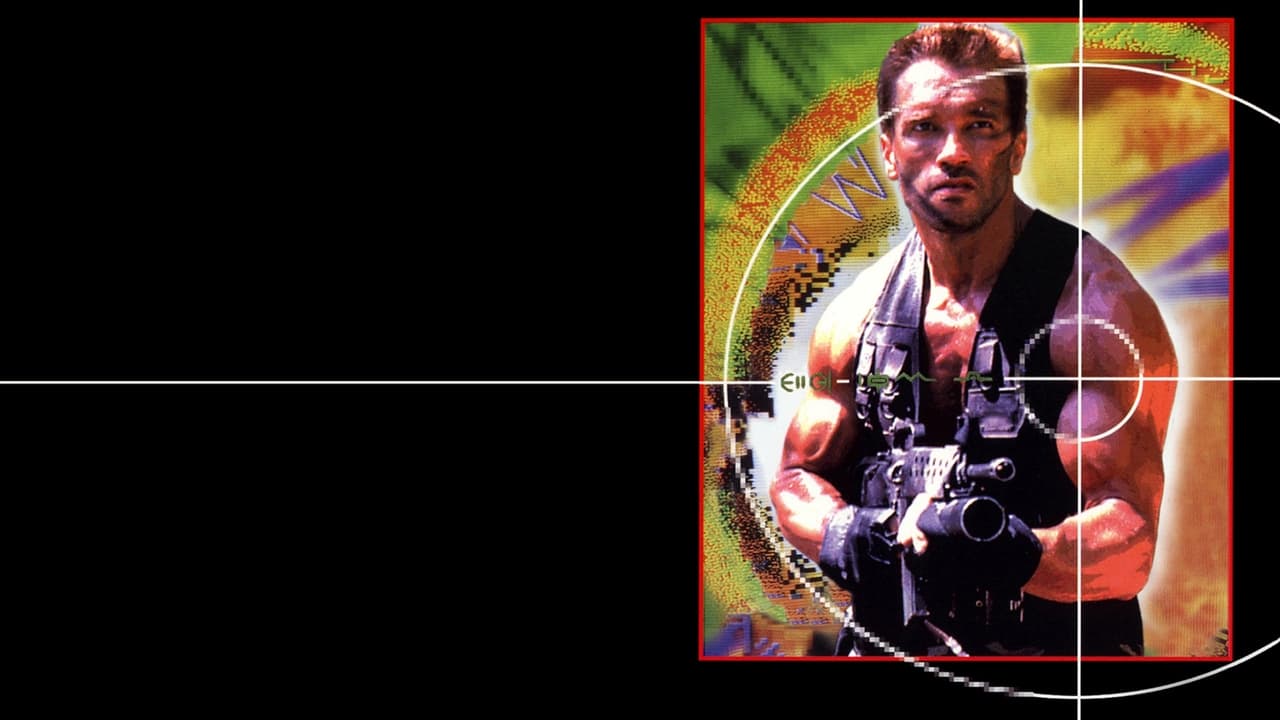
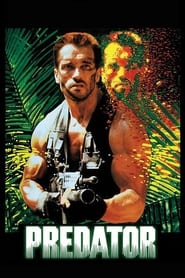
Predator (1987)
Release Predator 4K UHD Blu-ray (20th Century Fox)
McTiernan discusses his first studio feature, including the Mexican crew's help during the first week and the move from Puerto Vallarta to Palenque. He explains developing the thermal point-of-view images in video postproduction after optical effects became too expensive. He also recalls casting Carl Weathers despite studio objections and replacing the original creature with Stan Winston's design.
- Duration
- 1h 45m
- Talk coverage
- 67%
- Words
- 10,605
- Speaker
- 1
Commentary density
Highlights
Featured in
Topics
People mentioned
The film
- Director
- John McTiernan
- Cinematographer
- Donald McAlpine
- Writer
- Jim Thomas , John Thomas
- Editor
- Mark Helfrich , John F. Link
- Runtime
- 107 min
- Also on
- OneSheet ↗ OverBlack ↗
- External
- IMDb ↗ TMDB ↗ Find on Amazon ↗
Transcript
10,605 words · 49 flagged as film dialogue
You notice the Fox logo is stretched, they wouldn't let me use anamorphic on this, 'cause of the opticals. So I put the... Fox anamorphic logo and then...
John Davis had developed this script,
it was sort of that greatest, human, sort of, Rocky meets Alien I guess, was their notion. And I thought, I don't know, I liked the feeling that it was not that far from King Kong or something like that, it was a pretty simple, straightforward... You know, bunch of guys go to an island and go deeper and deeper in, and shazam the thing they're, they're chasing after turns out to be a lot bigger than they thought, and they have to turn around and run away!
Wow, I haven't seen this movie in a long time. I've forgotten about this stuff at the front end.
They shot in the, in the front... The spaceship arriving wasn't post-production but it was just one of those things that's always in the script but never showed up until about an hour before the movie was opened. All right, here we are. This is a sort of credit sequence that we made up in Puerto Vallarta.
This film was, was quite a long time... It was the beginning of my career. It's my first studio film.
Terrifying in a lot of ways.
And a learning experience in a lot of other ways.
It's funny, we had to do... It was one of the first early computer opticals we had to... Arnold's cigar wasn't really lit in that early shot. It wouldn't start or something, but... So we had to have the glow enhanced. I remember.
And this is... Alan Silvestri's music, it's very good, it's very effective for this stuff. It's funny, I have to go back and call Alan. Camera man was Don McAlpine who was... This is his first American feature. He is an Australian. I'd seen him do Breaker Morant, and I loved his naturalistic style. He is wonderful for me because he was... He treated me like, you know, a young second lieutenant and he was the old sergeant who was protecting him.
It was wonderful the way he kind of, took care of me and guided me in someways through this. Eighteen hours ago, we lost a chopper, carrying a cabinet minister and his aide... Here we have old R. G. Armstrong.
He is a wonderful actor, he is clearly too old for this part. But, we put an outrageous amount of tan makeup on him,
and we got away with it, but word, the man was probably in his 70s then. Some damn fool accused you of being the best.
Carl Weathers got involved. I went looking for somebody to work with Arnold, to have an actor for him to work with because he... Particularly for an actor who's starting, the way Arnold was at that time. What... The best thing you can get him, is a good actor to work against. It will improve their performance enormously. So right from the beginning, I was campaigning to get, to get a real pro, in this, in Carl Weathers part. I finally, talked him into Carl, it was a budget consideration, they didn't really wanna do it, but I pushed.
Now, what we gotta do? That cabinet minister is important to our...
It was great for Arnold, not just, so that he had somebody to play against but also he had, he had a guy who was strong and athletic and straight
and somebody he respected who also was a damn good actor. So, you know, Arnold watched him like crazy, learned a lot from him. I think he liked working with him.
My team always works alone. You know that. I am afraid we all have our orders, Major. Once you reach your objective, Dillon will evaluate the situation and take charge.
We shipped a bunch of helicopters down. By bunch, three of them, from the U. S. down to Puerto Vallarta.
This stuff was originally planned, this whole in red sequence is originally planned as some sort of
blue screen arrangement.
And in fact, I think we even shot it that way, but it's so stiff when you work with blue screen, it's just the technicians and it drives the actors crazy and you get completely a dead sequence. So I said, "Come on, to hell with it, let's just close the doors."
And, you know, and then they could actually play the scene.
I suppose it was also budget consideration, I think, they were quite happy when I said, "Well, all right, let's do away with that dozen opticals." I mean, it was a consideration all the way through this movie about how we do the optical effects.
Hey, Billy. Billy! The other day, I went up to my girlfriend. I said, "You know, I'd like a little pussy." She said, "Me too. Mine's as big as a house!"
This is Shane Black, he is a writer. I cast him because I wanted a writer on the set. And I just, I loved his work. And he's got a great wise-ass manner.
Get that stinkin' shit out of my face. A bunch of slack-jawed faggots around here!
Jesse Ventura. I had no idea. I mean, I found out that the guy was a lot brighter than he pretended to be. And a lot more of a professional. But I was truly astonished... To find out that, you know, that he'd been nominated for governor of, what is it, Minnesota? Minnesota. I think this was his first feature, maybe his only feature, I don't know. You wanna know how I really got hired? You wanna know the real truth about how this happens? My agent said, "Look, "you want this job. "I think you need to sign up "with this particular lawyer." It's Jake Bloom's law firm. Jake Bloom is a business lawyer, he looks like, he looks like Pancho Villa. He has a wonderfully phlegmatic manner and he looks, he looks like an old hippie. He's very bright. But his law firm also represented Arnold at the time. My agent was very astute. That 5% was what got me the job.
This stuff is day for night and the shots of the people in the helicopter are blue screen
and it's troublesome. It's a lot easier to do this sort of stuff now but at the time you would just be overwhelmed with the technicians.
And the technicians would overwhelm the actors.
The whole movie was shot in Mexico. Two places, actually all this stuff is down in Palenque the second time we went down. All this stuff here that actually looks like that's in a jungle.
Now we are in Puerto Vallarta, you can tell by all the brown leaves. They weren't able to hide the fact that the leaves turned brown, I just had to go and re-shoot most of it in Palenque.
The movie started with a big discussion at the beginning, about the location. And McAlpine and I pleaded to shoot it where there was some real jungle. This stuff is all real jungle and it was done in Palenque. And all this stuff, McAlpine and I pleaded to shoot it there. _ There was somebody involved in the production who had turned out later for corrupt reasons.
Insisted that we do it in Puerto Vallarta. Said that, it would just be wonderful there and he would make it green and wonderful and blah-blah-blah.
And because it was my first feature, I didn't have credibility enough to say...
To tell him to go to hell. I had never let somebody choose a location for me since.
The production designer hadn't done any research about, had no idea that the trees lost their leaves, that the west coast of Central America's deciduous. And I didn't know at the time to check stuff like that. And then I since learned a whole lot about how much research we got to do on the location and weather and that sort of thing. But he didn't know anything about it, so. Two weeks in or something, the leaves started dropping off the trees and he stood there like wondering, "What the hell happened."
Pick up the trail yet? Billy's on it. Heat seeker, Dillon. That's pretty sophisticated for a bunch of half-assed mountain boys. Major! - I guess they're getting better equipped every day. There were 12 guerrillas.
In fact, the review in The New York Times talks about how it was, "Schwarzenegger is walking around in a jungle "that looks like the woods in New Hampshire in November."
Mean anything to you? Probably just another rebel patrol. They operate in here all the time.
So all these things we had to build, like crazy, I mean, we just, was constantly sticking leaves and branches and vines in front of the camera to give the impression that there was a jungle all over. Most of the time, we got away with it actually. But we keep inter-cutting like that, we're inter-cutting stuff that are shot in Palenque.
Where there were real trees, this is real jungle stuff. All this is real.
Guerrillas hauling two guys from the chopper followed by men with American equipment. Do you remember Afghanistan?
It was very difficult to maneuver in the jungle at all. We just didn't know how. We started with... First day of shooting was the worst nightmare I've ever seen. They had 300 Mexican crew members from Mexico City. Just crowds and crowds of people, and most of them had nothing to do when we didn't have any way of truly organizing, or communicating, in what we were trying to do. So for the first week or so, there were about six of us who were making the movie. And what we did was we negotiated with the, it's called the Cyndicado, the old union down there. It just got much better since, but at the time it was filled with these old lifers, guys who had movies in the '30s, and they're old. And we got the union to send half of them home. We had to pay them but we sent them home. So we got it down to a reasonable number of people, I think we had about 100 crew people.
Anyway, we got them to send most of these people away, and then we shipped in a bunch of Australians. And seated them through the crew. As sort of like the noncoms in a military unit. And it worked, it got it, so that there was no Mexican crew member who was more than two people away
from somebody who worked for Don McAlpine, the cameraman. And that became the thread through the center of the movie that communicated information gradually, one by one. The Mexican crew started joining the movie and they'd like, you know, they get a real job as part of the movie, and like, be necessary, and they... There was some resentment from some of the old lifers who were still, still there, and we hadn't gotten rid of. But they like, gradually get proud of the fact that they were now part of the movie. And eventually we won them all over. This was my first time actually dealing with, well, particularly it was my first time dealing with a real old time union. And as I said that, the Mexican unions since have got much better but at the time it was just, ooh, what a nightmare. I can't believe that Jim Hopper walked into an ambush.
Here is Sonny Landham. In order to cast him, insurance company insisted we have a bodyguard. Not to protect Sonny, but to protect other people from Sonny. This giant huge man, six feet six inches tall, not Sonny, the bodyguard, who was assigned to follow Sonny, 24-hours a day, and always know where he was. To keep Sonny from getting in a fight or hurting somebody.
Ah, there is Painless! One of the trips at the beginning of this, when they hired me they sent me to the armorer, and I was looking around, and like, "How can I find some toys that are neat?" And I saw this thing, this gun that was supposed to be mounted on helicopters... In order to make that thing move, work in the movie, we had to slow it down, because the barrel went so fast, you couldn't even see it. You couldn't photograph it as it spun. What we didn't know was there was 100 pounds of battery standing behind the man when he ran and all the ammunition he could carry amounted to six seconds worth of firing, even at quarter speed shots. It would bury you up to your ankles in copper shells or brass shells, in the five-second burst that a man could carry enough ammunition for. 'Cause that was the whole issue about how much ammunition can the man carry on his back. How many bullets can he carry? And it turned out, it was really only a five-second burst, which is ludicrous. What the fuck would he carry anything like that for? It's nonsense. But it's a movie, who knows. Who knows, that he got reloaded.
It was just the practical part was that, I am not sure how we mounted it the first time. 'Cause we were afraid that, they would buck loose on him. And I think we mounted it, hung it overhead, from a chain. With some safety lines on it. 'Cause what we were afraid of, was that it would spin back at him. And it could blind him easily. I mean, even with safety glasses and everything, it just cut the hell out of him. And then like, you know, who was it, who just got killed just from a single blank going off. Well, this thing, if you got too close to the front of it, 'cause they were big shells, they were 30-odd thick shells or whatever that is, or whatever that size Is, it's bigger than a . 22. I got in a lot of trouble for this shot. And it was with a crane and a remote camera.
And studio was all pissed off. Because it, it took like three hours to get the damn shot. lt was very hard to do those things in a jungle location.
Aaagh!
The attack on the compound was, again as I said this was my first studio feature.
So the movie had been planned with a second unit, to shoot the attack. And this stuff was all shot, sort of, stuntman style,
with static cameras, yeah, this is that same shot set up with setting up with the crane. This stuff is all, the second unit, I don't know, work maybe, two-three weeks.
And shooting explosions and guys falling into pads and that sort of thing. I think the guy had done, done a lot of the A-team or something, and I was probably not a good sport, I didn't really like this stuff.
The style of it was just, you know, it's just different sort of cinema. And you will see... Most of the stuff that I was shooting would, it's more than one shot hooked together, or the camera moves somewhere or with one image leading to another image.
And a kind of traditional stunt style of shooting is just... Static cameras, you know, like this, what you just saw, you watch the guys get thrown out in the background and you rack focus to Dillon in the foreground, here you... Somebody signals Arnold and the rack focus to Arnold. Now, this is second unit.
And you see,
it's sort of,
I am reluctant to say it, yes, it's static shot after static shot.
I made up this thing about the generator going across... You should be careful, I am sure loads of people will claim they did it. But in order to break up... It used to be... In the script, it was, I don't know, they just charge in and attack, or something like that.
Somewhere I saw this, truck used as a generator.
Showtime, kid.
Now, the statics here, these things were all second unit, all the explosions and stuff. They're all part of the second unit.
This was all shot in the first two weeks.
And no one was hurt on the film. One stunt double for Arnold later on... Ah, there is Painless firing.
One stunt double for Arnold, he had hurt his knee. I think we were pretty lucky, we didn't...
Didn't hurt anybody in the sequence.
We built the 40 millimeter grenade launcher, the six-gun arrangement. To some extent it was a notion that you could develop character, label, the guys, or the audience would start to know who they were, if some of them had distinctive weapons. But the weapons themselves were unique to the man.
Sven who's a... An old friend of Arnold's, I worked with him several times. I put him in Red October, Iater on. He was in there a minute ago, he was the bad Russian who shot the prisoner.
Get that mother!
Eventually, Jesse was able to aim but it took a... It takes a man as big as him just to pick it up. Which is why I never fired the thing because Jesse outweighs me by 75 or 100 pounds. He eventually got pretty good with it. He could sling it around and pretend that he was blasting, whatever. I mean, he could pretend like, it was a six-gun or something like, but it took a while for him to get there. Now, we get into the stuff I shot and it's the first time they let me do anything that had to do with guns. To do... To do, a shot with old Painless, at least to show the aftermath of old Painless takes hours and hours. And hundreds of, setting up hundreds of screw-heads and things. It's just not something one wants to do multiple takes on. It's really, you do a take, and if you ask him how long did it take two, he says, "Tomorrow."
There was certainly a lot of kidding around about, you know, finding signature lines for Arnold and stuff. The "Knock knock" is, obviously, out of one of the old cartoons, it's out of, Road Runner cartoon or something. The "Stick around" that happens just before that came from, there was somebody in the...
Trying to sell stuff to the studio, he is a knife maker. He had a special knife that blah-blah-blah. And I wasn't real impressed with that but I said, "Could you make us a machete?" Which has to do with the jungle. So he made this thing that basically looks like a Thracian short sword but, what the hell. It's Arnold's... Arnold's machete. He gave it to me at the end, I've still got it. And the one liner came from that. The "Stick around" came from, came out of looking at the machete.
It was also a way that let him get rid of it. Because otherwise, you'd have to carry the damn thing for the whole movie. And it weighed about 20 pounds, it was not a very effective thing as a machete. Goddamn beautiful.
Goddamn jackpot. This is more than we ever thought we'd get. Man, we got those bastards. We got 'em. I think this is what you're looking for. You set us up! It's all bullshit, all of it, the cabinet minister, the whole business. You got us in here to do your dirty work.
Look!
We stopped a major invasion. In three days, they'd have been across the border with this stuff. Why us? Because nobody else could've pulled it off.
Now, this sequence was really what Carl was for. I've known it.
My men were in that chopper when it got hit!
Carl's strength is what allows Arnold to be plausible here. He'd never done a face-to-face shouting match with somebody else, where you actually believed him, where, you didn't say, "Oh, you know, "he is a bodybuilder "with a great charming manner," but he actually said, "He is the character in the movie." And Carl had a lot to do with it. Also part of what I was trying to do here, Carl was doing it too.
But I didn't want Carl... Carl was written as the bad guy. Completely, just bad, bad, bad guy, in the script and I wanted to turn him around and just say, he was a good guy who had a different agenda and it turns out his agenda was wrong. So that he'd made a mistake. And he felt bad about it. I wanted to put in redemption for him. So they could still fight, but in the end, they respected each other.
She's your baggage. You fall behind, and you're on your own.
This place is too hot for a pickup. They won't touch us till we get over the border. Hey, Billy, give me a way out of this hole. The aerial says we are cut off. The only way outta here, is that valley that leads to the east. I wouldn't waste that on a broke-dick dog. Not much choice.
That shot was a dolly with 180 degree pan in it, which you couldn't at the time get an American cameraman to do. And it's just terrible trouble. Because Don McAlpine was Australian and they had a much looser style. I could get him to do a Iot. And he loved doing it. You know, like, this is another dolly move, watch this one.
It's a dolly in a sync in two. That was two dolly moves. One from each direction. Turn around. - Why?
Yes, it was a real scorpion. lt was a creature which was indeed hurt for this production. But there was only one. Billy! Billy! The other day, I was going down on my girlfriend, and I said to her, "Jeez, you got a big pussy."
This joke, is Shane's joke. It's entirely Shane's joke. Shane didn't write in an official way but he wrote in an unofficial way like the joke, the pussy joke. He was just there, and he would come up with stuff. Now, the heat vision here, when we first did the heat vision, they had a real heat vision. From the folks in New York City that did the effects stuff. And it was this enormous thing with the umbilical that was six-inches thick and it would, could only get maybe four-feet from the truck. And it really would see someone based on temperature. But there was this little tiny problem, which was the ambient temperature in Mexico was in the 90s. Consequently... People were the same temperatures as the background and they were perfectly camouflaged. So in order to deal with that, the splendid folks in the special effects field said, "Well, it's no problem. "We will put ice water on the jungle. "And we will have the actors stand next to a fire just before their, "the shot," So, they literally were doing that, and they spent about, I don't know, a week getting one shot, maybe two shots. It was just a nightmare, it cost a... Every shot cost a fortune.
So, finally, I went off to a video special effects house. They did commercials and things. And I sat down for about three hours, we had to do this in secret. One of the studio...
Studio post-production guys set it up for me. And we did it behind the back of all the executives and stuff. And the producers.
This right here, was the first shot I shot in the movie.
Big long dolly shot, it took forever, so we... But it's spooky looking. We had to build every bloody leaf.
In any case, I went off to a video post-production house that did, normally did commercials. And I took the film and I had them, the regular film, and I had them turn it into a negative and then they made it all blue and then isolate certain areas and attach false color to it. And we created most of the special effects. Most of the heat-effect shots that way.
It was a budget issue but it was also just, it was nearly impossible to get that, the real, heat vision shots.
At the beginning of the movie, in order to create some sense of, well, how you walk around like you're actually in the military, or know what you're doing.
But also to create some sense of a unit, or a group, like they knew each other, when they looked at each other, they had some history. I had this military adviser guy, again, in some studio deal. And instead of standing around advising me, what military stuff was about, instead, I had him run bootcamp for the actors.
And do these, you know, marches over the hunk of Mexican back country. You know, take them out on these four-hours hike and things. And it did a lot of good. They actually started behaving as if they knew each other, as if they might've been from the unit.
Elpidia Carrillo, I think came in after. I am not sure if she was in the... We didn't send her to bootcamp.
Try it again... Please.
There was a certain amount of friendly competition between the actors. Arnold tends to create that. Create a boys' club and a boys' gym sort of feeling... See these maneuvers were what they, they learned to do. From the, the military adviser. So, yeah, the guys were going to the gym like crazy.
They were competing about everything. They were competing about how many cigars they can smoke, they were just competing. In a odd way, you know, Carl had his own way of competing because he was the most professional of the actors, the most experienced. Arnold would come around at times and just watch, you know, when Carl was working when Arnold wasn't. But Arnold was quietly, you know, watching and learning. Obviously Arnold in this, looks a little like the cartoon character, Sgt. Rock. And it was something he was talking about doing at the time, and sort of, got this, in the end of the movie we did a joke with Shane Black reading a Sgt. Rock uh, comic book. Yeah, of course, look at him. He looks like Sgt. Rock. In the in-effect rehearsals we had, the military to the bootcamp we had, helped... It helped not just on-camera, probably helped off-camera too. 'Cause it did make them friends, it did make them feel like they were part of a unit and we probably had far fewer morale problems than... When you get a bunch of actors together, like Sonny Landham in particular, you can have a crazy time and we actually had a very easy time.
Do you see anything? Up there. Nothing. What do you think?
I guess it's nothing, Major.
Please! Please!
These shots with the predator were... Our shoot was divided into
Puerto Vallarta and then later in Palenque because the first predator arrived in Puerto Vallarta and it was ludicrous looking. And we had,
kind of regroup and it also gave me the chance to go move the production to some place where I could get some actual jungle. But the shots were,
these early shots of the predator, I am not sure where we did them, actually I think they were done in Los Angeles. We had, in order to get the predator, we had to, in effect make a hole in the jungle, a hole in the background. And so what they did is they dressed a man in a red suit, and I was desperate to try to get him to swing through the trees or do something that didn't just look like James Arness in The Thing, stalking around, stiff legged. And I got some stuff, I had them build this enormous bungee rig, which actually we got a couple of shots out of. I did some other things to get the guy looking semi-mobile in the trees. What I really wanted was a monkey. So I had them make a red suit for a poor monkey. And the problem was the monkey, once we got the red suit on him, that would separate him from the background and then I could make the effect out of. The problem was, the monkey was so embarrassed by the red suit that he hid! He'd go up in a tree, and he'd cower, and he wouldn't do what monkeys do.
He wouldn't go from tree to tree or do anything, 'cause he's too damn embarrassed by the red suit.
That was one of the back to the drawing board parts. The only image of an alien life form that had captured the imagination or looked halfway plausible, or functional was this stuff that came from H. R. Giger. Illustrations that became Alien. You know, one of those images of the ultimately terrifying other life, only shows up once in a generation or more. You're not just gonna, you know, hire some cartoonist and say, "Come up with a next H. R. Giger." 'Cause H. R. Giger only comes along as I said, once in a generation. And I didn't see how you could do anything associated with it without just being that derivative also-ran. And, frankly, having seen what they did in the sequel, that's exactly what I thought. I thought it was, it was best that they didn't shoot it. Here you see Jesse actually carrying Painless. He had no ammunition at this point, that's why he could carry it. And there's obviously no battery connection and it wasn't operable that way. We shot this in Palenque, where we could get a real snake. The worry was that Painless would buck and get away from him, and spin.
Even if you had everybody clear out in front for 50 feet, that the man firing it might not be able to control it. And that he could wind up in the way of all this wading and bits of brass and stuff that was flying out of the front end of it. So the first time, they fired it, they did a Iot of... They anchored it. And yet tried to give him a chance to figure out if he can control it, so it was like bungee cords and things. So that if it started to get out of control, they could yank it in and protect him. But to let him see, you know, what other... You know, what other concussive forces... You know, what happens when the thing starts spinning. We learned that there was enough gyroscopic force in the spinning of the cylinder, that it kept it online. That actually was very difficult to move it around or aim it, and in an odd way, it was very safe. You couldn't have it wind up aiming where you didn't want it, 'cause it wouldn't move.
Because of all the gyroscopic force and the spin, but it took us a while of experimenting with it, and I think he first tried it out over, with the second unit. And it was like half a day, you know, we kept hearing reports of, "They're gonna fire Painless, "in 45 minutes. "Well, no..." It's like a count down to the moon launch or something, "They're gonna fire Painless." And I think later that afternoon it fired, and we were about a mile up the valley. I could hear tt. It sounds like, it's the loudest buzz-saw in the world. Some people, I guess, were concerned about how impractical it was, but the notion was that, Painless was... Look, it's a movie prop. You know, we never would've used it, but it's a lot of fun to watch. Here we got Bill Duke to fire Painless. You notice he is not walking while he does this. Now, this particular sequence, I made when I first went to work on this project, I had the feeling that people had a sort of perverse fascination with pictures of guns firing, literally almost a pornographic desire.
And I said to myself, "Okay, if you want pictures of guns firing, 'Til give you pictures of guns firing." So I created this sequence where they take all of their guns and they blaze away continually for five minutes flat, and they flatten the jungle, and they mow down everything. And what I was really doing, was sort of, the Australian phrase is, "Just take the piss out of or two." To quietly ridicule the desire to see pictures of guns firing.
And that part of, I mean, all this... Sort of a moral separate peace here, in order to do it, I set up a circumstance where there were no human beings in front of the guns. We're... In fact, the point of all the firing was, as the man says, as soon as they stop shooting, "We hit nothing." The whole point was the impotence of all the guns. Which was just exactly the opposite of what I believed I was being hired to sell.
Studios really are a bit disingenuous in their...
This movie and some of the ones that followed it, really were...
Did carry a pornographic desire to market images of gunfire. It was in the corporate purpose and this was, I wanted the job. So this was my compromise for that.
I gave them all the gunfire they could possibly desire. And at the same time, I didn't really advertise to little kids how wonderful guns are. Or at least I thought I wasn't.
Now, I did the same thing in the next movie. I created a scene in Die Hard where they blaze away, and you get five-minutes of guns firing, and all they're doing is shooting at glass. Again, the point was, they're not shooting at people. Now, some of the people involved in this movie, have since put that same sequence in just about every movie they make. Every movie they're involved in. With subtle differences. They sort of forget to take the people out of, in front of the guns. So you get a sequence where they blaze away for five minutes. Killing people or images of people.
And then, you know, completely act
utterly innocent and puzzled, when something like Columbine happens.
While I was temp-tracking the movie, we used some Aaron Copland. I guess I have since learned the name of the pieces, Fanfare for the Common Man. It just, it just got introduced there. And Alan Silvestri later on parodied it beautifully. And we... It's playing in the background here. In the cutting room we call it Fanfare for the Common Mercenary.
Goodbye, bro.
The concept of the blood I think was originally orange so that it would show up in the jungle, so it'd stick out, against the green. But it turned out to be very hard to get to do, and one of the effects guys came up with this, glowing liquid, you know, tubes of... Glow tubes. And we would just cut them open and pour them out on things and they... It looked weird and it glowed. And it took much less optical work. So, that's how the stuff wound up, you know. It's a common children's toy. And that's why the predator's blood is green instead of orange. The tools that the predator used there, are actually pretty common. They are veterinary medical tools. We made up a little medical kit. One of the whole hard problems was to have things that appeared to be alien, and yet you could sort of tell what they were about, without having them look, like, they were out of, you know, Star Trek television show or something.
Sergeant? Sergeant! Sergeant! Who hit us today?
I don't know. Bill Duke is a fabulous actor. I love working with him. And I believe he had done, he went to AFI, about two years after I did. And then he did American Gigolo. I thought it was just an incredible performance. Hair raising performance and that's how I got him in this. Bill in particular is good about developing a scene because particularly when it's basically mechanics or something, it's...
I often try to leave, leave actors the room, to develop characters on their own, to be able to shape it and actually give the character a personality which means you have to give them some, some verbal license. You can't make them exactly say what the words are in the screenplay. Screenplay becomes a blueprint and if the actors are good they will take the blueprint and play with it, and improve on itt. And people like Bill are just wonderful for that.
I seem to always get caught with this stuff where I've got people speaking another language back and forth, but it's odd, I think actually where it came from was, spending so much time watching foreign movies. And I would never read the subtitles. And I really didn't care what people said. And I still don't, I get myself in so much trouble with it, because I don't pay attention to what people say. I don't pay attention to what they say onscreen. I pay attention to what they look like when they say it, and how it sounds.
It's, you know, sort of, part of this notion I've got that movies are really music. They are not plays, they are not photographs, plays, it's completely separate idea and then it's much closer to music than it is to the theater.
So I guess that's why I often have people speaking in a foreign language is because, if, then the audience just hears how they say something instead of what they say.
Where the hell is it?
- Mac!
This way! Where the hell are you? - Where are you?
Mac! Mac! - Where are you! Don't fuck with me! - Mac! Mac, where are you?
Jesus.
I got you, motherfucker. I killed you, you fuck. Jesus. You killed a pig.
What the... This was not incidental, even though there was a real scorpion earlier, that pig was so unreal, are you kidding.
Where's the girl?
Ah, shit!
Why wasn't anybody watching her?
Why didn't she try to get away? Look at her. She's scared out of her mind. Major, you'd better take a look at this.
Blain's body, it's gone. It came in through the tripwires. Took it right out from under our noses.
A Iot of folks, this was the first time I'd worked in Mexico, obviously. And a lot of the people in the film got sick. I didn't get sick, but I also, in an effort not to get sick, just didn't eat. I lost 25 pounds on the movie. The line producer lost nearly 40. He did get sick, he had a real tough time.
Arnold got sick, one of the bad stuff was when we were in Puerto Vallarta and you know, they go into town and eat street food. Arnold went to some restaurant that we hadn't checked out. And he wound up playing a scene with an IV bottle in his arm once. He was so dehydrated from the diarrhea. It was some stuff early in the movie. Although, you'll notice as the movie goes on, that Arnold loses weight. He gets noticeably drawn in the face. It's not from being sick, it's ultimately from precautions from not being sick. See, like this shot right here, he is very slender.
It came from precautions from not being sick, so he'd wind up not eating. And I've since worked in Mexico again and learned how to do it, you just have to take over a restaurant and...
Middle class Mexicans don't get sick there. Montezuma's revenge is nonsense, it's just,
it's just restaurants that cater to tourists, is in a way, a revenge.
There's a movie with, John, called The Horse Soldiers, John Ford movie, with John Wayne and William Holden. And they hate each other, all through the movie. Holden calls Wayne Section Hand, and Wayne calls, calls Holden what, Bonecutter or something. And they just insult each other constantly. Fight all through the movie and at the climax of the movie, one of them says to the other, "Strip your blouse," meaning, let's go outside and have a punch up. And they do, they have a fist fight. All right, at the climax of the movie, it's wonderful. In the end, obviously, they respected each other, they actually respect each other. And there was a wonderful sort of redemption feeling at the end of the movie or the end of the climax after they start to have this fistfight. They get interrupted, obviously, in the fistfight, it never gets resolved, can ever have that. That fistfight resolved, it got interrupted by the confederate army attacking.
But, anyway, I was looking for that sort of relationship which is why I turned Carl's character around and instead of just making him the bad, bad, bad CIA guy, instead, made him, a good guy who had a different set of instructions, that turned out to be wrong, and as a consequence got a lot of people hurt. And he was, he was more upset about it than anybody. So that, he and Arnold could fight, the way they do there. But alternately, they could, respect each other.
This shaving scene, we were talking about Bill Duke, and how he is good with improvisation. He asked to use the razor as a part of something that had to do with his character, and I said, "Sure, of course." And I think, somehow out of the discussion, whether he came up with it, or I came up with it, the notion would be that he, he is gotta cut himself and break the razor.
When I was little, we found a man.
He looked like, like, butchered.
The old women in the village crossed themselves and whispered crazy things, said strange things. EI diablo, cazador de hombres. Only in the hottest years this happens.
And this year, it grows hot. We begin finding our men. We found them sometimes without their skin, and sometimes much, much worse.
"El que hace trofeos de los hombres" means the demon who makes trophies of man.
Down in Palenque, the second time we went down, we didn't need to make up the jungle, so we didn't have an art department, you know, we worked with local,
local materials, and actually, most of the work was done by local people. We built this giant tree that's at the end of the movie. And it's built with, built out of local materials, it's actually, it's built out of concrete.
There are probably more time spent in Puerto Vallarta, in terms of overall shooting days, but in terms of what's in the movie, it's probably half-and-half.
This is the sequence, you notice Arnold's skin is a little green here. This is the sequence that, that really looked like the New Hampshire woods in November. We twisted it, like, crazy in the painting, trying to make it look green.
Shit!
Yeah, now these shots of the predator, the actual movement of the predator, I did much later.
In order to get it, make it look like he was mobile in the trees. I told you, I had a wild bungee rig made, in order to get an athletic, a predator that I thought could move.
Get your people the hell outta here. You can't win this, Dillon. Maybe, I can get even. Dillon.
Just hold onto that damn chopper.
He's busted up pretty bad, Major. I can make it. I can make it. Get the radio. Forget the rest.
- Right.
Come on, Poncho. Come on, Poncho.
Come on.
Long tall Sally She's built sweet She got everything that Uncle John need
Oh, baby Baby
I'm gonna have me some fun
Turn around.
Over here.
Over here.
Mac?
Shh. Out there. Past them trees.
You see it?
Bill's great in this stuff, he's just so spooky, he has such a spooky concentration. And of course, these poor guys were working against nothing. It was just nothing there. There was no predator. In fact, the pieces of... By about now, they had seen the predator come out of the box. And they knew it was ridiculous looking, and we had, we were just saying, well, we are gonna fix it, so, they were completely working on air. We described all sorts of stuff, but it was all talk, because we weren't really sure what we were gonna do.
The first several attempts to do it, the camouflage effect, just didn't work at all until you realize they needed to make flaws in it, they needed to have it repeat itself when they created it, that's sort of illusion of a three dimensionality, around this by having it repeat itself.
In terms of the rating, I think we had the normal sort of negotiating from the MPAA about, take a few frames off this and a few frames off that.
We didn't kill, we didn't have like the Bill Duke's death until the very end, we had the shots leading up to it, but we didn't actually have the big splat until quite late. No sport.
There are a number of scenes in the sequel that were things I campaigned like crazy not to have in this movie, like the journey inside the spaceship to see the various preserved bits of stuffed humans and things which was just yorkie. I tried to throw all sorts of handicaps in the way, because I thought it was just a yucky notion. I didn't think one could ever do it successfully, that it would be silly-looking and repulsive. Because this was my first studio feature, I had a limited amount of, a short leash on how much I could change the screenplay, but the... I wrote this sequence, which they used later. Arnold remembered and used later on. I wrote this sequence where I wanted them to, instead of going in by helicopter, I wanted them to go in in a halo jump, which is, to go in an airplane that, where the back end opens up, and they jump out.
And I found out a small version of C130 that could possibly land and take off from an aircraft carrier. In a notion was that they, went in over the Andes and got jumped by a Peruvian MiG, and the pilot wanted to scrub the mission because they were lost and Arnold instead held the gun on the pilot and said, "No, we are going ahead with it, now open the goddamn back door." And so the pilot does, he opens the back door, and the team all jumps out. And Arnold who doesn't have a parachute on, says, "See you," to the pilot, and starts running the length of the airplane. And as he goes down the length of the airplane, he grabs a parachute off the wall, and keeps running straight off the back ramp of the airplane, and dives off, you know, the plane's flying at 200 feet or something, and he's got the parachute in his hand. Now, it turned out they used it later, it's in Eraser, but I wrote it for Predator, and they wouldn't let me shoot it. So that relates to why there was a big worry about the budget and the spaceship.
'Cause I couldn't simply say, "Get the fucking spaceship out of the movie," I instead had to work on budget and misdirection and stuff like that. It's unfortunate when we have to do that stuff. There is another one of those. Goofy machetes.
No! When we had the new suit, the new predator, from Stan Winston, he brought in a kid named Kevin Peter Hall. He is dead now. Go!
Get to the chopper!
We knew we had to rework things the moment the original predator came out of the box. It was clearly ridiculous.
Oh, shit!
Here's the only shot where anybody got hurt in the movie. That shot, right there. The guy threw his knee out.
It turned out after the fact, I mean, I found out after I got back to the States, that I had broken my wrist and I had just worked through it. I fell out of a tree. I was too embarrassed to admit I was hurt.
Here is the giant tree which we built, in the gorge.
This sequence here in the dusk, we shot over the course of a week. In order to... To get enough shot in actual dusk.
Arnold was a trooper throughout the mud. The mud was disgusting. After the first day of working, it stank. Something terrible. He was great about it.
It was like every day for a week, at about 4:30 we would break and start doing this scene. You wanted to get it in the right light. Because It's actually all outside and it's really next to this waterfall and pond.
Arnold loves physical difficulties and so he bellied right up fo it. And went for it, but it was, it was clearly not fun. He... See, what you don't know is that the mud is continually evaporating, so it's cold. And he'd wind up just chilled. And he'd have to spend hours that way.
Here is my bungee rig! He actually is running. It's more of a shot there, but we actually because the suit weighed 200 pounds or more. And the man was seven feet six inches tall, he wasnt...
He could barely move on his own, let alone put the 200 pounds of suit on him. He really did look like, when he moved he looked like the Michelin Man. So we had, we had to do a lot of work to try to create an impression of how he looked. How he might move, and that one shot of him running. He has this enormous, it's like four... Four hundred foot long strands of bungee cord on him. Lifting the weight of the suit, so that he can jump from rock to rock.
Now this sequence was not in the original script.
We made it up after we went back to Los Angeles and edited the rest of the movie.
That version of Sonny Landham being turned into a trophy was the closest I could get to the trip on to the spaceship where he looks at all the stuffed team-members, which I just thought was so yucky.
And so I made up that. In an attempt to do it by suggestion. Literally seeing things.
I cut the movie and then filled in... Got a bunch of storyboards done for the pieces that were missing. And we showed
Leonard Goldberg who was the new head of the studio.
We showed him the movie and he liked it.
And he said, "Okay, let's do this." He was quite supportive about it.
I never use storyboards. I mean, they had storyboards out the kazoo, for the original monster. Didn't do them any good.
You storyboard scenes that have to be special effect opticals.
None of these were storyboarded. This was made up out of the location.
The reason you have to storyboard opticals is that optical companies always raised the price after you're in the middle. So you have all these famous cost overruns
where, you know, movie starts out to cost $40 million and before it is finished crosses a 120 or some nightmare like that. So that you storyboard the, the effects shots.
And even then, you very seldom actually use them.
It is a matter of documenting what is it that the effects company is supposed to do.
The storyboards, I, I did some storyboards on the ending of the movie, part of the movie that wasn't shot. None of this stuff was, this is all Palenque later. Wasn't even written actually.
The, I storyboarded these things, and storyboarded the various things that were missing all the way through. There now, that is a gymnast actually swinging in a gymnasium in Los Angeles, in a red suit, and then placed into, placed into a shot of the jungle.
Joe/ Hynek was the one who is really responsible for the camouflage effect. And the main thing he had to do was come up with the repeating image within an image, until they discover that the color camouflage effect looked dreadful, look like a silly cut out in the film. Didn't work at all.
Joel was really, Joel Hynek was really splendid. I've worked with him several times since he did the effects in Matrix. He came up with the slow-motion jumping through the air stuff.
When we hired Stan Winston, the first thing he did was looked at all the pieces we had, and all the drawings we had and then he went to work for a week or two. Drawing on his own. There is our concrete tree. Done by a crew about 50 peonies over the two-week course.
Stan went to work on his own and came up with a whole Rastafarian hairdo.
And the external set of jaws that the creature has, I did not want him, would not have countenance to a racial suggestion as to what the predator look like.
Yes, those are sort of dreadlocks but there was no notion that people should somehow think he seems African. I mean, everything that Stan came up with, the producers were thrilled. Because it looks so much better than anything else we've had up to that point.
Larry Gordon was running Fox at the time, and I had this long sort of presentation meeting where he had to go sniff me out and decide whether he wanted to trust me or something. Scared the hell out of me. I'd never been through that sort of experience. In fact, he was probably I think at the time was the first studio head I had ever met. I mean, I've since learned that he is a goddamn sweetheart. But I didn't know that at the time. Boy, he scared me. He also had a production company. He had, at the time he started the movie, he got promoted to head of Fox. And so he was kinda in two hats. While we were doing Die Hard the following year, sort of the reverse happened. He got replaced as the head of Fox. But he was still the producer of the movie that we were working on, so he'd like, Larry kept moving offices, you never know where to find Larry, because he started a production company. And then he wound up in head of the administrative offices, and before you knew it, he was sent back down to his old office.
I've been asked if there's a conflict of interest between them, you know, producer becoming the head of the studio... Actually, lord, no. I mean, now that I know what it is like for the head of a studio. They're desperate to get movies. Desperate to get movies that work. And it is hard to believe really that some guys were too bad, but most of them, they want a movie that works, they are far more concerned about that than, you know, can they feed their own deal into something, it's just... Larry isn't like that. Larry Gordon is actually one of Hollywood's good guys. And he doesn't cheat that way. He doesn't need to, he's got real stuff, and he's got... Does real work. Maybe I should put it another way. Larry Gordon is one of the few people in Hollywood where who could wear both hats, both be the producer and be the head of the studio. And you'd actually believe that his head of the studio hat would give his producer hat a hard time. Larry is straight enough that he would fire himself probably.
It took me a while to get this cut so that, it simply sustained and It's relatively simple. And shots that sustained for quite a while, rather than constantly jumping back and forth, part of what...
My personal desire maybe is just that they actually have a geography and that they be time continuous and they have some sense of reality and in order to do that, you can't constantly jump around and cut. Sometimes you have to leave it alone. Sometimes you have to not call attention to the editing because Calling attention to the editing does by definition separate the audience.
They put this space helmet on him so that... The suggestion that you need to breathe something else, in order to not have to operate the external jaws and all the stuff of the face because operating the face took eight or ten technicians. It's like this whole row of kids with model airplane controllers, you know, and each one had one eyebrow muscle or something. lt was enormously complicated little piece of machinery. A big piece of machinery.
You're one ugly motherfucker.
Now, you see all this stuff with the fangs and things that was an enormous operation to make his mouth do all of that stuff.
Bad idea.
Stan had a whole raft of his merry men, as I said, all with model airplane controllers. Each one of them had one of the jaw.
That was a funny little gimmick. I think Stan came up with it... The notion that, "What is this? Boxing?"
Now, most of this sequence we didn't really shoot. This is made up on a stage in Los Angeles. Most of it's in predator vision, because you cant tell where it is.
Now, this shot is actually back in Palenque. And it is real jungle, and it's real stuff, we didn't have to make it up. Don McAlpine just put a wonderful great big light out in the backside of it, and you can see the whole thing. Looks enormous.
The monster suit was physically really difficult and I think they found
this race car suit cooling systems. Race car driver cooling systems. It's a vest with cold water that runs through it.
And with that he could stay in the suit for maybe two hours or so. But it probably took four or five hours to get him into it. He could survive in it for two hours and then it would take four, five hours to get him out of it. So he would go through an exhausting day that was almost all of it was, just getting put together.
Which is why we had to make him, I had to make him my helicopter pilot, in the end. So he had a chance to show up in the movie on his own.
What the hell are you?
What the hell are you?
We had no difficulty ever having the audience understand that he had set off a nuclear bomb. It was, it was just no problem. And it's a fairly complex idea when you think about tt. And they got it instantly. This was all supposed to be in the spaceship. And I transposed it to here. This came from the dream I had when I was like in high school or something. I had this dream of working in Los Alamos in the spring of 1945, and they had this new bomb, and it was up on the tower and it didn't go off, so we got it down off the thing and took it into the lab and started taking it apart. I remember all the people from there, have pictures of Teller and people from there. There is Kevin Peter Hall, right there. And they were disassembling the bomb and then one of them said, "Uh-oh." And they all looked at each other like, "Well, goodbye." And in my dream, I started to run. As I started out the door, Edward Teller, spoke up to me, and he said, "John!" I said, "Yeah." He said, "Y'all run real good now."
And I started running and in the whole dream I was just trying to outrun an atom bomb that was supposed to go off I don't know, some, number of seconds or minutes. And in the dream, I lived through it. That's where I stuck this in... I stuck it in here. Here we have the Fanfare for the Common Mercenary.
We didn't burn a hole in anything. Now, we went and found a location that had been burned. Probably two years before. Three years before, something like that. And we cleaned out a few little bushes. And just use it as it was, and we did a lot of, we spray painted a lot of things black. The local folks burned holes in everything much faster and they don't need us to do it.
It's a 1950s kind of thing of doing... A curtain call of letting them all be, because it is such a downer, with Arnold going off on his own. I wanted to get the bunch back alive, and, you know, like The Dirty Dozen and things. Always have the guys show up, you know, superimposed on the sky or something as giant ghosts. And instead, I just said, "Look, let's do it" 'cause I came out of theater so I just said, "Look, can I do a curtain call? "We just have the guys..." You know where I stole this? From Robert Altman, it's in a movie called Brewster McCloud. And I just borrowed the same idea. It's a great gimmick. Having all the fallen heroes show up on the sky just seemed, hmm, I don't know, too fascist somehow. Too militaristically nonsensical. And instead, it just lightened the whole thing up and have people smiling. Say hi into the camera felt... 'Cause what I was trying to do was just sort of leave a sense of a movie that, you know, we all had a good time making this, we hope you had a good time watching it. It's been remembered, well since it did fine...
It didn't, for instance, take the opening weekend or anything like that, it wasn't an instant overwhelming success or anything. No one thought this was Jaws. And it's nice that some people that it is remembered since, but it wasn't at the time a sensation, or anything like that. It's got some nice stuff in it. Some stuff I like, um...
It has... lt has a wonderful sort of childish suspension of disbelief. It just goes for it. And that's a lot of fun. I like that. I see the difference in the tone of the writing and the film making between the early stuff and the later stuff. Personally, I like the later stuff. It would've been nice to be able to do the early stuff that way, but, what the hell. You have to get a chance. And it was only because I got through the early stuff, well enough, that studio saw, you know, that I got the chance to make the rest of it.
Keep exploring
Other commentaries on related filmmaking topics
-
8 shared topics
The Lord of the Rings The Two Towers (2002)
Peter Jackson, Fran Walsh, Philippa Boyens
-
8 shared topics
The Godfather (1972)
Francis Ford Coppola
-
8 shared topics
Aliens (1986)
James Cameron, Gale Anne Hurd, Stan Winston
-
8 shared topics
The Godfather Part II (1974)
Francis Ford Coppola
-
8 shared topics
Leprechaun (1993)
Mark Jones, Gabe Bartalos
-
7 shared topics
Aliens vs. Predator - Requiem (2007)
Colin Strause, Greg Strause, John Davis