cast
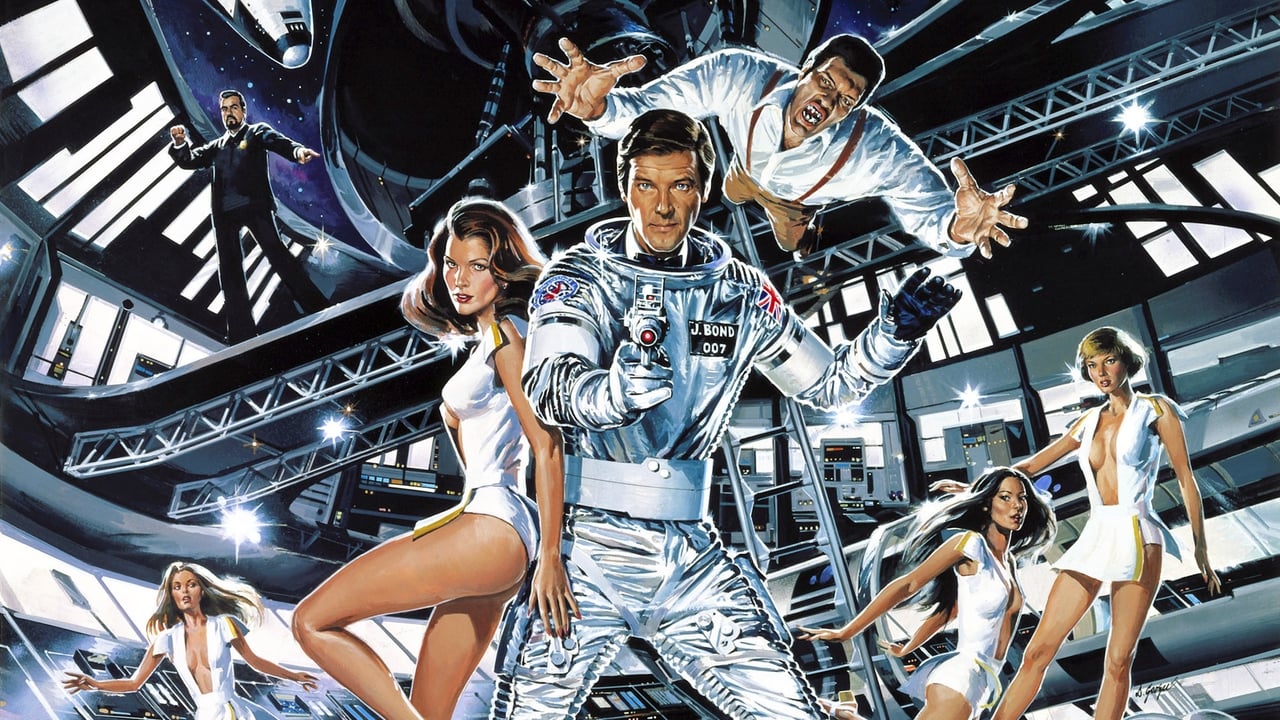
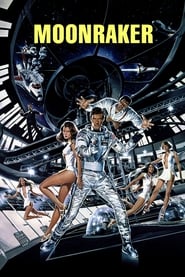
Moonraker (1979)
Release James Bond Ultimate Edition Volume 4 DVD (MGM Home Entertainment, 2006)
Moore treats Moonraker less as scene-by-scene analysis than an affectionate memory tour through the Bond machinery: the Paris base, Venice and Rio locations, daunting stunts, Ken Adam's enormous sets, and the practical ingenuity that sold a space-shuttle launch before one had happened. Moving easily between production stories and anecdotes about Lewis Gilbert, Cubby Broccoli, Richard Kiel, Bernard Lee, Frank Sinatra, and his own career, he explains the light touch he wanted for Bond while repeatedly crediting the crew for putting the budget on screen. His late reflections on watching his younger self make the track unusually personal, a record of an actor revisiting work he rarely watched after release.
- Duration
- 2h 3m
- Talk coverage
- 55%
- Words
- 8,994
- Speaker
- 1
Commentary density
Highlights
Topics
People mentioned
The film
- Director
- Lewis Gilbert
- Cinematographer
- Jean Tournier
- Writer
- Christopher Wood
- Editor
- John Glen
- Runtime
- 126 min
- Also on
- OneSheet ↗
- External
- IMDb ↗ TMDB ↗ Find on Amazon ↗
Transcript
8,994 words
Well, that's me, Roger Moore, as James Bond. A sort of-- A spaced-out James Bond, you might say, in Moonraker. This is not So much a commentary... ... but rather a discussion. It's not about... Really all about the film. Because quite honestly, some of the films... ... It's 20, 30 years ago that I made them. And so I'd like to share some memories... ... that I have of the making of that film, those that I can remember. But other things that happened around it and other films that I made... ... during that time and before.
This, I believe, is the first time the space shuttle was seen... ... on the screen. I do not know how Cubby got this all organized... ... and how cooperative they were with letting us have all the details. But everything seemed to be very accurate. Interiors and all, you know, the controls, et cetera, et cetera.
I believe that after The Spy Who Loved Me... ... which had been a big success at the box office... ... the budget was increased for this film. Which it had to be because it was... It really was larger. We moved from Pinewood to make Moonraker... ... and set up our headquarters in Paris.
I have a feeling it was something to do with tax relief for all of us. Taxation at the time we made this film... ... taxation in England, was at a very high rate. Something like 83 percent. And 98 percent on unearned income. And I know that Lewis and I were delighted... ... that Cubby agreed we should shoot out of England.
John Glen was second-unit director along with Ernie Day on this film. And John, of course, was responsible for this particular sequence. I remember he was very, very proud of it.
I remember John Glen, the director, and Cubby sitting me down... ... to look at all this stuff they had shot. I was absolutely amazed. And although one cuts in to me in close-up... ... this shot, for example... ... is the man doing it himself, not me. His name is Jake Lombard. And I defy anybody to say that wasn't me going down there... ... apart from me to say it.
This sort of stunt had not been seen on the screen before this as well. This was entirely new. We've had space shuttles and free fall.
The premiere in America of this... ... and also the spiral up and when the parachute opened... ... is sort of a gasp.
Audiences applauded through the whole sequence. Audiences applauded through the whole sequence. And also screams of laughter. Back into... Again, into Maurice Binder's wonderful titles.
Cubby complained that this title sequence cost more than Dr. No. Maurice probably volunteered... ... to take a couple of 0's off the 007 to make it cheaper.
I was told at one point, though... ... although Shirley Bassey did this title song... ... that they'd approached Frank Sinatra to do it. Frank had become... ... I'm delighted to say, quite a good friend.
I'd met him during the time I had been at Warner Bros. That was in the late '50s, you know, just to say hello. And then when he was married to Mia Farrow... ... she was in London filming... ... and he was there and she said, you know, that she and Frank... ... watch The Saint on television. And I had dinner one night at Annabel's with Frank, and he said: "You know, I get a lot of scripts across my table, kid. I'm gonna be looking out for one for you." Unfortunately, he never did come across one for me... ... but we did become good friends. I used to be able to spend... ... most Easters and Thanksgivings... ... at his house in Palm Springs with he and then Barbara Sinatra.
There were great weekends with... I hate to name-drop. Cary Grant and Barbara. And Greg and Vernie Peck. George and Jolene Schlatter. George was the man who produced Laugh-in. And occasionally Don Rickles. They were great, great holiday periods. And, of course, Frank was also a great friend of Cubby's.
Most of this set was brought over from London... ... where it was kept in store. And so we constructed it... ... reconstructed it, in the Paris studios. I liked working in Paris, in the Paris studios... ... because you'd start work at 12:00... ... and work through until 7:30 in the evening without a break. So Lewis would say, "Well, let's come in at 11... ... and I'll give Claude or Jean Tournier... ... a long set-up so we have a little longer for lunch." So then we would go to lunch. And lunch I particularly liked in French studios... ... Was boudin. Black pudding, blood sausage. Very delicious with apple sauce.
The inevitable gadgets from Q.
Desmond Llewelyn.
"Oh, thank you, Commander Bond." I don't think anybody could deliver that line as Bernie did. He was quite unique. I didn't know at the time, but sadly this was to be... ... Bernard Lee's last Bond.
This is Corinne Clery. She was a very, very beautiful French actress... ... who made her name in The Story of O. And, oh, I'm not surprised. She's beautiful. But there again, James has all the luck.
This script was written by Christopher Wood. It wasn't the first time he had been associated with Bond. He had also co-written the script for The Spy Who Loved Me. He was a good friend of Lewis. He had.... Of Lewis Gilbert, the director, and he had... ... made his-- Sort of first name was with Confessions of a Window Cleaner.
Which I suppose was why he did this. It's sort of confessions of an English secret agent. Where we're shooting is Chateau Vaux de Vicomte... ... which is one of the most beautiful chateaus in France. And the man who built it... ... Was actually... ... I think, minister of finance in France. And he was so pleased with this magnificent chateau... ... he'd built for himself... ... he invited the king amongst all the other dignitaries... ... for the opening party. And the king said, "Where did he get the money for this?" And he slapped him and his wife in jail for the rest of their lives.
Arthur Howard is the butler. Arthur Howard's brother, of course, was Leslie Howard. Leslie Howard of Gone With the Wind fame.
Michel Lonsdale, a very fine French actor.
I had seen Michel Lonsdale before in Day of the Jackal... ... Which was a film I really wanted to do. And John Woolf, the producer, was keen that I might do the film. But Freddy Zinnemann, the director, declined my services. And it went to Edward Fox. So this could have been the second time... ... I worked with Michel Lonsdale. But thanks to Freddy Zinnemann, it was the first time I worked with him.
I once had a little trick. I don't know when I started doing it. Maybe I did have one of the villains... ... whom I was playing with who had halitosis. But I found it was very effective anytime I was speaking to a villain... ... too close to him, I imagined that he did have halitosis. Which sort of... ... gave me an attitude of trying to pull my head back a little bit... ... and not breathe too deeply.
This is shot in the Pompidou Center in Paris. Which had just opened.
Now this is our first glimpse of Lois Chiles.
Lois from Texas.
Another one of those Bond movie names: "Goodhead." Whatever that may mean. I was never surprised at the names. You know, after Pussy Galore... ... you couldn't be surprised at any name... ... a girl was going to be given in Bond. I suppose today it's very politically incorrect... ... and sexist.
This is the centrifuge... ... and, of course, it's a Ken Adam set. When I saw the first sketches for this... ... I had no idea it was going to be so big... ... and quite so effective. But there again, with anything of Ken Adam... ... one should not be surprised. He was the biggest... ... or is the biggest and the best.
I think that Ken Adam was responsible... ... to a great extent, for the success of Bond. It was part of the team that Cubby and Harry had brought together. I was delighted when Ken was knighted.
Toshiro Suga... ... Who's playing the technician... ... was Michael Wilson's... Who now produces, with Barbara Broccoli, the Bonds. was his martial-arts teacher.
Now, you might look at this and say, "Well, it's a.... Yeah, it's just a set." But it works. And it is the real thing.
To get the G-force effect on my face... ... they played powerful air jets on my cheeks... ... up my nose, in my ears and everywhere. It's a wonder I had any hair left at the end of this scene.
When you're tearing around at about 3000 miles an hour, there is... I don't know, while you're simulating 40,000 miles an hour, whatever it is. It is... It's impossible to look cool.
Or sophisticated.
Two bottles of good French wine and you really don't have to act this scene.
Now, at this moment... ... If I was watching a Bond movie, not having been associated with Bond... ... but I had seen Bonds before, I would be saying to this girl: "No, no, no, don't. Don't let him seduce you... ... in the first reel. You're going to be killed."
But how could she resist Bond?
I think the reason I loved working... ... with Lewis Gilbert on Bond was that he had this... Really the same attitude as I did to the character. You know, it's.... It's fun, and let's not dig too deep. I remember when we were actually shooting this film... ... and I'd done an interview with this young lady from Time magazine... ... and she said, "Don't you ever want to make a serious movie?" And I said, "They're spending 35 million on it. I think that's fairly serious." She said, "Oh, you know what I mean." And I was talking with Lewis afterwards... ... about this remark from the girl, and he laughed. And he said, "Yes, they read all sorts of things... ... into things that really aren't there." I'd read reviews of things I'd done... ... saying, "Well, I don't remember doing that." Or there was that meaning behind it. People, it's rather like you give them a blank canvas... ... and a piece of charcoal and let them.... And you just say, you know, "A man is crying." And they'll see a man who's crying. And you don't have to do it.
Lewis Gilbert has a tremendous ability... ... to add comedy to a scene, and drama. He saw.... You know, he would never admit it himself. He sees through to the truth of everything... ... and has a slight sense of the ridiculous about it. Lewis is an extraordinary man, and I'm proud to Say is a... I'm delighted to say is a friend of mine. I hold him in great esteem and great affection. He was.... We once sat talking and I asked him how he started. He said that he was a child actor.
And his last film had been The Divorce of Lady X... ... with Laurence Olivier and Merle Oberon. And he was about 15 or 16 and Korda said to him: "You know, you're at an awkward age now. You can't play children, you can't play adults. You any idea what you want to do with yourself?" He said, "Yes, I'd like to be a director." He said, "You'll report to Shepperton on Monday... ... and you'll be the third assistant." And that's what Lewis did. The war came along. He served with.... Oddly enough, with the U. S. Air Force. And directed. And he came out and he did a wonderful film... ... Reach for the Sky, with Kenneth More. The story of Douglas Bader... ... the war-hero pilot who had lost his legs. ... the war-hero pilot who had lost his legs.
And Kenneth More wanted to make The Admirable Crichton. But the rights belonged to Korda. And so Korda was approached. Korda said, yes, he would produce the film with Kenny... ... and that Lewis would direct it. Well, one day he said to Lewis, rather as I had: "How did you start?" And Lewis said, "Well, I was a child actor." He said, "You were that boy?" And Lewis said, "Yes, and I'd like to say thank you." Two days later, Lewis had an appointment... ... a script conference, with Sir Alexander Korda. And he called the secretary just to confirm the time. He said, "I'd like to speak to Sir Alex." And she said, "I'm afraid you can't." He said, "But I'm supposed to be meeting him this morning." She said, "I'm afraid you won't be. He died last night." You know, "I was always glad that I could say thank you."
A man of great heart. And I remember... ... there was a slight tear in his eye when he told me that story.
This, of course, is a Sequence that I didn't particularly like. But I did like it because I was able to quote Wilde.
Although I've spent my life jumping around with guns in my hand... ... I personally loathe them and I hate hunting. Shooting.
You know that he's not gonna stay in that tree for long.
I'm in France. I shot it in France. I'm at the Vaux de Vicomte. To me it's France. Of course to the audience... ... they know that they're somewhere in America... ... in a desert. Wonderful irrigation they have in the desert.
Now she knows what it's like to be a fox.
It looks very picturesque, but I think it's rather cruel. Fox hunting.
Now we have Piazza San Marco.
This was not the first time I had been in Venice. I remember distinctly the first time I was in Venice... ... Was in 1961. And I had been offered by Lew Grade a series called The Saint... ... and had read the script out there. My agent came out to talk to me about it. And I said that I thought it was just a little long... ... for a half-hour series. I said, "It is a half-hour series?" He said, "Oh, yes." I said, "Well, let's find out." He checked back with an assistant... ... who no longer.... Who shortly after that was not an assistant. Because when it came to... All my contract was built on... Based on it being... ... a 30-minute series. And, in fact, it was an hour. Then I came out of the press conference... ... We did a little readjustment, Lew Grade and I. I remember Venice very well for that. But it is the most beautiful city. It has this extraordinary history. It's a wonderful place to work if you like boats. Not if you like swimming. And I went in the canal a couple of times... ... Which is not quite as bad as falling in the klongs in Bangkok.
But everywhere you point a camera in Venice... ... there's something fascinating to look at. Architecture.
Although Bond is... ... far busier looking at the lady than he is at the architecture.
You see how Lois is one of those people... ... that are very fortunate, are born with hair that waves and curls.
But for the screen, they wanted it straight. And she had to have it ironed before every shot.
The idea that I would be passing... That I would be getting into a gondola at that point... ... and be going down this particular canal... ... and the funeral... ... the hearse, the floating hearse, would come by.... Well, it is Bond. And it is ridiculous. Actually, when we were setting it up... ... and they had one area in front of the church where all the flowers were... ... and Props were busy picking up flowers, and a priest came up... ... and went absolutely berserk because he was taking real... The Props were taking a real funeral's flowers.
The corpse that came to life in the coffin, that threw the knife at me... ... was John Evans... ... I think, from the Special Effects Department.
It was fun to tear around Venice... ... in a powered gondola... ... and speedboats. It was really... Of course, we did have a lot of traffic control because... ... you know, there are other things coming from other directions.
Alfie Bass was a wonderful English actor, character actor, comedian. Big star in television. He also had been a great pal of Topol in Fiddler on the Roof. A great friend of Lewis'... ... and so he came out just to do that one little take.
Where the gondola becomes a hovercraft... ... and I'm able to drive across the Piazza San Marco. Now, it all takes place in a few seconds. But if you could imagine, that piazza was just full of hundreds... ... thousands of people, all standing around. Japanese tourists with Nikon cameras. This gondola was supposed to raise up out of the water. Well, it did, but it would tip sideways every time... ... and I went in... Five times, I went in. I, fortunately, had six suits. The last take, that would have been it. Otherwise there would have been no.... No more Bond until the next day when the suit dried out.
You know, Chunky Huse, who was a camera grip... ... Was the sailor at the table at Piazza San Marco. Practically every Bond film that I made has a man with a wine bottle... ... being absolutely amazed at what is happening, always doing a double take. And, of course, the man doing the painting was our DOP, Jean Tournier.
I've been back to this location many, many times. So as I think back to... ... this sequence.... To drive across the Piazza San Marco, which was full of tourists... They weren't paid extras... ... and I said, "I have no way of letting them know I'm coming. You've got to put a horn in this car." I think it was a Ford car... ... underneath this construction. Well, a Ford engine. I said, "I must have a horn to let people move out of the way to turn. They've gotta hear some noise of the approach."
It was hairy driving across there.
When I think-- Looking at this, and think back to the years before... ... when I did a television series... ... we'd had technical things like this... ... how amateur were the ones we had as compared to what Bond had. But, of course, there again, a lot of money was spent on Bond. And the one thing that I always say about the success of Bond is that... ... they never cheated the audience. When it came to spending the money... ... they put it up on the screen.
It really is quite absurd, you know. I mean, because it's quite funny... ... when you look at this enormous, expensive set... ... and these two fellows choking, overacting like mad. And, of course, I, as James, remain very serious.
Now, when you look at a set like this... ... you know that the glass is going to get broken. Purely because the stuntman and the stunt arranger... ... don't have to pay for it.
The Publicity Department said that this was the largest scene... ... that had ever been shot with breakaway glass.
Working with breakaway glass, it's sugar glass. You can't really cut yourself on it.
Why do audiences think it's funny, I wonder, to see... ... priceless objets d'art smashed to pieces before their eyes. I think it must be rather the same as the audience reaction... ... to a brand-new Cadillac, straight off... ... the production line in Detroit, is crushed... ... you know, by a car or a crusher into a little tiny box. Audiences love it. They love to see things smashed up. Or Bond audiences do.
That was a little touch of... ... Pink Panther. And talking of Pink Panther, Peter Sellers was a good friend of mine.
Here's a beautiful set Ken Adam has constructed here. Matching in comple-- Tying in completely with the real exterior.
And again, it's signalling a joke. You know what is going to happen.
I should have said, "Right place, wrong time." I should have said, "Right place, wrong time."
As I often say, you go... With a camera... ... you can't point it in any direction and go wrong... ... In Venice.
Jean Tournier, of course, was the director of photography, the DOP.
Looking at this, you say: "My goodness, the costumes are quite beautiful." It was back with Jacques Fonteray.
This was shot for real, on location... ... in a room of the Danieli Excelsior. Beautiful hotel. It was the first hotel I ever stayed when I went to Venice.
But I didn't stay there when I was making this. I was staying at the Gritti Palace. Which was about 400 yards upstream.
I saw Lois... ... a Couple of years ago, three or four years ago, in Dallas. And she came-- In Houston, rather... ... and she came to a fundraising evening... ... that Ricky and Sandra di Portanova gave for UNICEF at their house. The theme was: "Be a saint and buy a bond," or something. And she very kindly came along. She looks exactly the same. Beautiful as ever.
Of course Ricky di Portanova and Sandra... ... let Cubby have their house for Licence to Kill... ... that Timothy Dalton did after I left Bond. Beautiful house, arabesque, in Acapulco.
He was a larger-than-life character, Ricky di Portanova. He had wonderful voice. He would say: "I could never act, but I had a wonderful voice. I did voiceovers." And Sandra was a beautiful Texan lady. Sadly, they both died within a few weeks of one another. And not knowing that the other had died in the same house. Great tragedy.
Ricky was not born into wealth. He was a working actor. And as he said, you know, one who just did voiceovers. And then he came into an enormous amount of money. I'm not sure whether it was from his stepmother. But he was exceedingly wealthy and had two beautiful homes... ... and a home in Monaco. He was great fun to be with. He was also a friend of Cubby's... ... and a friend of Frank's.
This was to be one of the last scenes that I ever shot with Bernie.
Bernie was a very multitalented actor. You know, musically as well. He was great fun to be with. He did like to drink. It made him laugh a lot and made him slur a little. But he was a wonderful, wonderful character to work with. And it seemed that it was always Geoffrey Keen's job... ... on location to keep an eye on him.
Now, this sequence... ... I was called for 8:30 in the morning and this was the back... This was before the La Fenice theater burnt down... ... and this was shooting just across from the back of the theater. In fact, that's the stage door over behind us. And... ... I was ready at 8:30, and came on the set, and we were all standing there... ... ready to go, and there were adjustments being made... ... and, you know, I have a cup of coffee and this went on. And I finally said, "Lewis, why can't we get on with this? You know, we must do this shot." And he said, "Well, it's a little embarrassing." You see, it was the time of the high tide of the equinox... ... and the boat that had all the props on it... ... had been tied up with the tide very high... ... and then when the tide started to drop, one of those numerous poles... ... that are in the water in Venice was underneath the boat. And as the tide went down... ... the pole came up through the bottom of the boat. Then the boat went up again and the water rushed in... ... and the prop boat sank.
And on the prop boat, apart from all my wonderful Ferragamo luggage... ... that I was looking forward to stealing... ... Was a prop that was essential in this scene. ... Was a prop that was essential in this scene. And they had to get somebody to dive down and find it. Now, this shot of the Concorde landing... ... has a bit of a story for me. We had been ready to leave Paris to come to Rio... ... to shoot our sequences there. And Lewis Gilbert and Ken Adam and Letizia... ... and my then wife, Luisa, we were... ... at Charles de Gaulle Airport in Paris, all ready to leave. We got on to the Concorde, and then they said there was a slight problem... ... and we would have to disembark and wait in the lounge. They then said, well, there'd be a little time... ... so we could go into any one of the five restaurants in the terminal... ... and have lunch. So off we went. We had something. I wasn't feeling that good, and I sort of just picked at something. And then before we finished, I said, "Lewis, I really don't feel good at all. Would you come with me to the pharmacy? I think I'm beginning to have a Renal colic."
Meaning that-- Something that had happened to me... ... before with kidney stones. And they're extremely painful when they start on the move. And really pethidine or morphine... ... is necessary to stop you falling on the floor... ... with your knees underneath your chin and start screaming. So I went to the pharmacy in the airport, and they said: "No, I'm afraid we can't." And I said... They could tell that I was very ill and in great pain. But they did suggest that there was a doctor in the airport. You know, a surgery. So I went to see him. He took one look at me... ... and pulled a syringe out and started drawing off painkiller. Lewis never liked needles... ... and started shuffling sideways... ... With the "Lewis Gilbert shuffle," I call it. And he said, "Well, I think I'd better tell the others what is going on." And that was the last I saw of Lewis.
I was taken from there in an ambulance to an American hospital in Paris. Ken and Letizia said they were going to stay on with Luisa and I... ... to see that everything went all right. Lewis, of course, did have to go... ... and start getting production set up. What was going to happen-- Four days later I was out of the hospital... ... and able to travel. Got onto the Concorde. And then when we landed... ... I could see the crew on the side of the runway... ... photographing the shot we just saw of the Concorde landing. And then I had to get off, go to makeup... ... change my clothes, get back onto the Concorde... ... and walk down the ladder for my arrival... ... for James Bond's arrival in Rio de Janeiro. For the Carnival. Shooting the Carnival was great fun... ... but the second unit had been there the year before and shot... ... but the second unit had been there the year before and shot... ... many aspects of the Carnival. And then when we came to shoot with first unit... ... they'd picked out a couple of the bands... ... they really would like to photograph and use... ... because they'd already got the long shots of them.
And when you do musical scenes... ... you have it pre-recorded and you work to the playback.
Well, we'd stop, say, "Cut, no, it's not quite right. Let's go back at the beginning of this. Well, let's pick it up." The band could not pick it up. They had to start off with about 15 minutes of drumming... ... which was their usual way of starting. It took forever. And it was all night shooting. But it was all right. I like Rio.
United Artists were having... ... a convention of sorts in Rio. It's funny, they always seemed to pick the time... ... when Bond was in an exotic location to do this. They would all come down. And they would bring a lot of press with them.
Richard Kiel is... ... one of the most gentle people... ... you could possibly imagine. I always felt so sorry for him... ... with these terrible steel teeth in his mouth... ... because if you can imagine having a whole mouthful of metal... ... and trying not to gag on it, and that's what he had to do. He could hold them in for so many seconds... ... and then would start feeling very sick.
Of course, Richard is enormous. I think he's 7'2"... ... but is very heavy. And it is very difficult sometimes when he has to get up quickly. And he's suffered a great deal. He also had-- It always amused me. He had to carry extra suitcases when he traveled... ... because beds were never long enough for him. They would have to put another bed at the bottom. And so therefore the sheets in the hotel were useless. So he carried a suitcase... ... full of giant, giant sheets for himself.
As in all Bond films... ... the locations are spectacular. But maybe none quite as spectacular as this... ... and one that worked so well with everything that we wanted to do. The cable car which is at the top of Sugarloaf... ... the location of the airport... ... being able to see the airplane pass by... ... with "Drax Air Freight" on it. Everything worked well. Except we'd been shooting for a number of days... ... and whoever it was that owned or was in charge of the cable car... ... decided the prices had to go up.
Cubby had to do a lot of renegotiating to get us out of that location. We did it.
As on most locations, you only ever... ... If you're lucky, get one day off in a week. And I don't remember too much what I did with my leisure time. I know at one point we went with Ken and Letizia on a boat. But otherwise, there wasn't much spare time.
That is a very nasty sensation. Being in the cable car when it stops and starts swinging. And I do not like heights.
Richard Kiel, it reminds me, looking at him now. That I remember once he said the question he really hates... ... and they always ask him, is: "How big were you when you were small?" And he said he's never played a small part.
The stunt work on this was done by Dickie Graydon... ... and by Martin Grace, my.... Who was then my stunt double, and then became the arranger... ... after this film. Dickie Graydon doubled me. And Martin Grace, who is just a fraction shorter than I am... ... doubled Richard Kiel. And it is attitude... ... that works. And Martin is a very, very good actor. In fact, he doubled in The Spy Who Loved Me. He doubled Richard Kiel on the top to the temple of Karnak.
It is always a terrible sensation... ... when you're watching somebody doubling you. You have the fear that they're going to hurt themselves. Not only for themselves they're hurting themselves... ... but the fact that it was for you. And you feel that you should have been doing it.
You see another little product placement, 7UP.
This girl is so lovely, Blanche Ravalec. And she was so tiny... ... and sort of with Richard, this one... It really is Romeo and Juliet, and it is madness. This is a villain, warm and compassionate.
You see, they could have.... He could have been arrested for disturbing a piece.
Badump-bum.
Another bit of good Lewis Gilbert silent comedy.
7UP again.
Seiko. Marlboro. It really is quite funny when you look at it. After all these years, you know, my goodness, me.
It's a good gag.
Good for British Airways. I have a very close association now with British Airways... ... because of the fundraising, Change for Good... ... where people flying on a plane... ... where people flying on a plane... ... are encouraged to put their spare change... ... that will end up in a drawer, into an envelope... ... which goes to work for children. And to date, 17 million pounds have been collected... ... just from people's small change on British Airways alone.
This interior we shot on one of the islands of Venice. I think it was on the Lido, at the monastery. And a working monastery. And the brothers don't wear a habit... ... except at prayers and meals. Otherwise they wear jeans. And I was sitting in the cloisters. Lewis and this one fellow... You know, he had but jeans. I had no idea he was a brother. He sort of said, will I come to lunch? I said, "Well, sorry... ... you know, we have a lot of United Artists people coming. I have to lunch with them." And he said, "Well, what about tomorrow?" There was really no way around how to do it. And it was absolutely fascinating because the Pope... ... who, as I said before, had been the cardinal of Venice... ... used to go there every Friday for lunch, to this monastery. And I sat in his seat at the lunch.
But lunch went on for a long time. And the brothers have wine... ... from the different areas that they come from. And the first assistant was trying to get me back on the set. I was having a very good time.
I think this was another of the locations where Lewis and I... ... kept suggesting... ... to Desmond, Q... ... that he should be wearing shorts.
I think we left Rio... ... and went to Florida to shoot this sequence.
Of course, I was back on boats again, which I love. After Live and Let Die, being able to tear around... ... on a nice boat is lovely. Especially with all these little toys to play with.
I remember the location very well because we arrived... ... and just across the road from the hotel... ... Burt Reynolds had his theater. Burt had been considered as a possible Bond by Guy Hamilton. I personally don't think it would have worked.
Bond has to be British.
This is the falls of Iguacu now. The magic of motion pictures. You know, we've dropped the quarter... ... In Moscow, and it's landed in London on the floor. We cut away, I'd been in Florida and turning around in a boat... ... and all of a sudden, I'm at Iguacu Falls. Brilliant. But shooting there was so uncomfortable.
But there was no way... ... there was no mechanical way, of getting our equipment to the site. And it meant carrying. And all of us carried bits of equipment down hundreds of feet... ... down the side of this canyon and along and then up again to the top.
The opening sequences of the film... ... were shot, at the beginning of the movie, in Paris. With this exterior where I follow....
What they use in the credits given as a "Blonde Beauty"... ... Was played by a girl called Irka Bochenko. And here we are shooting the scene in Brazil. And we cut to the exterior of Drax's headquarters... ... and we're actually in a studio in Paris.
Now, Irka is very, very beautiful... ... but has a slight cast. When we're in an interior... This is in the stage in Paris. But Irka has a slight cast in one eye. And when she looked around at me... ... the operator looking through couldn't tell... ... whether she was looking camera right or camera left. I said, "I think it's optional."
But very beautiful, as all the girls were in this.
While we were shooting this... ... Lewis had interviewed Carole Bouquet. I remember she had the most beautiful eyes. Which I don't have there. I think I'd been in the water a long time.
I think the interesting thing for me about this sequence... ... is that the underwater shots are thousands of miles away... ... in Silver Springs, Florida. And when we're above the water, we're in the studios in Paris.
People often say, "How can you sort of wrestle with the rattlesnake... ... and be sincere and look as though you are terrified... ... or you are in control of the situation?" The answer is that I'm going to the bank afterwards.
I also think that you're concentrating... I also think that you're concentrating... ... on trying to make it look as real as possible.
I would much rather wrestle with a rubber snake... ... than with a live one.
I would love a dollar for every still that I have signed... ... of Jaws picking me up.
I've worked with snakes on a number of occasions. I don't particularly like them. I remember one time, the director said: "Don't worry, it's not poisonous, the snake." This is as it's crawling up my leg. I said, "Yeah, but does the snake know that?" They can give you a nasty fang.
This, again, is the genius of Ken Adam... ... and all the team that worked with him... ... to get all these things that worked in the set... ... working at the same time. All those television screens.
The problem when you are wet in a scene... ... it may just be on the screen for a few minutes, or even a few seconds... ... but if there are a number of takes and a number of angles... ... you spend the day sopping wet. They keep sponging you down. And it's not always clean water. Or warm.
Wonderful technical accomplishment to build this set... ... make it all work.
This, I think, of the Bonds, was the longest shoot. So many locations and so many enormous sets. And special effects.
Now we're in the... Well, it was actually these... Talk about plaster of Paris, it comes from this location. It is tremendous.
You could almost believe Ken Adam built that.
One of the things that I was not very happy... ... With this whole sequence was the terrible hat.
It reminds me of the line of John Gielgud's... ... who did the musical remake of Lost Horizon with Peter Finch.
And the film was not a success. And John Gielgud said, "I knew it was the hats. It was the hats."
Derek Meddings, who I think started off... ... with Gerry Anderson on the Thunderbirds series... ... Was quite an incredible technician and designer. And to build these rockets... ... and models that worked... ... he was quite incredible. Sadly, the last time I saw him, he was...
suffering from terminal cancer. And he was working with Pierce Brosnan... ... on the first of Pierce Bond films... ... Which, of course, was called GoldenEye.
I'd never done science fiction, if you could call this science fiction... ... before making Moonraker. Although I did a two-part episode of The Saint... ... which was called "The Fiction Makers"... ... and there was a little bit of... ... sort of high-tech stuff in it. I Know that Leslie Charteris... ... disliked Bond intensely. He thought that Ian Fleming had stolen from him. Leslie Charteris, of course, wrote... Was the author of The Saint. Where James Bond works for a government organization... ... Simon Templar worked for himself. Because he was described in the flyleaf... ... Of all the Simon Templar books as a... He was a modern-day Robin Hood.
When you're doing all these scenes... ... where all sorts of technical things are happening around you... ... that aren't happening around you, because they're not there.... ... that aren't happening around you, because they're not there.... You have seen... Invariably seen a storyboard... ... and you know that the script says this is gonna-- And you have... I always had the greatest faith because I knew they worked. I had seen Bond films before I went into them. And you know that the technical aspects are going to be brilliant.
Having seen Star Wars and Close Encounters... ... and knowing, you know, the brilliance of Lucas and Spielberg... ... that we would not be let down with the technical aspects. Derek Meddings would get it right.
Because I bumped into Spielberg... ... a long time before this. A long time before he had enjoyed the really big success. And he was in Paris... ... and, oh, we had a chat. We were both staying at the Plaza Athénée. And he said he'd really like to direct a Bond movie. I mentioned it to Harry and Cubby.
I think the fact that all the directors have not been American on Bond... ... contributes a great deal to the "Britishness"... ... If I can use that word... ... of what is Bond, what comes onto the screen.
I think that when-- Lewis... ... had a different sense of humor, I think, to Guy.
Guy had a certainly crueller humor. He was actually more Bond. Guy was a war hero. Guy was really... Could have been James Bond. For example, I'm still embarrassed... ... ata scene, when I think about it, in Man with the Golden Gun... ... wWhen a little boy helps me, and then I knock him off the boat... ... when he asks for money. Which I thought was not very nice. But that-- And also it was... I twisted Maud Adams' arm. And I said, "I'll break it." She said, "You're hurting my arm." I said, "I'll break it if you don't tell me." Lewis wouldn't have had me do that.
I wasn't there during the writing. And I would... Particularly when Lewis started... ... and it seemed that we were ready to go on the floor... ... and the script really wasn't finished. And I'd say, you know: "Lewis, I'm a bit worried about this scene or that scene." He says, "Don't worry. We'll change the dialog." You see, it seemed important that the construction was there... ... because they knew that whoever was on the floor with it... ... would make it work. ... would make it work.
And in a sense... ... it made you more creative in working that way. Because I think Mike Leigh... ... who directs where he doesn't let the actors see the script... ... so they have no idea when they start playing the part where they're going. I think it's a very good way because it is creative. It's being given that sort of pound of clay... ... and not being told that you've got to make a man out Of it... ... but you're expected to make a woman and two children.
Elaine Schreyeck, who was the continuity script lady... ... I always called "The Duchess." She was very grand. She's very grand. She's still a friend of mine. In fact, my lady who was my secretary for many, many years, Doris Spriggs... ... and June Randall and Elaine Schreyeck... ... see one another quite regularly with my assistant, Gareth Owen, today.
Bob Simmons, who is a very, very good... ... fight arranger and stunt director... ... I've worked with him for many years as a stuntman. And I've worked with him.... Oh, I must have known Bob for 20, 30 years.
In 1950, we were in a production of Mister Roberts... ... with Tyrone Power and Jackie Cooper... ... at the Coliseum theater in London. People who know the play, they probably know the film. Mister Roberts was wonderful with Henry Fonda and James Cagney... ... and Jack Lemmon.
It takes place on a ship... ... a supply ship in the Pacific. And Mr. Roberts, the executive officer, doesn't want to be on that supply ship. He wants to be in the war. He wants to be on an action vessel. The crew are very unhappy with this maniacal captain.
And it is an intimate... Really an intimate story. The deck of the ship that we had at the Coliseum... ... was three times larger than the deck of a normal ship. So it lost the warmth and intimacy... ... and I think that was wrong... What was wrong with the London production. It was running for many, many years with great success in America. Always done in a small theater. But Bob Simmons and I... ... and about 28 or 30 other young Englishmen... ... some actors, some stuntmen... ... were all part of the crew... ... with the odd line here and there... ... and I was understudying a couple of people in it.
Today's producer of the Bonds... ... is there handing up the document, Michael Wilson.
And then you'll see a young man as the camera moves.
And he said, while in between takes one day: "You know, my mother likes you." I said, "Well, that's really nice." This fellow. He said, "My mother likes you." I said, "Well..." You know, I tried to be... Because a lot of people told me their mothers and grandmothers liked me... ... and their aunts and.... I said, "Why, thank you. That's very nice of you." He said, "She'd like you to have dinner one night." And I-- "Oh, dear." And the next day he said, "I don't think you know who my mother is. It's Michele Morgan." Wonderful, wonderful, beautiful, beauteous French actress. And I did have dinner with her. Most beautiful eyes. Colonel Scott is the character he played. His name is Michael Marshall. Father was George Marshall, a very well-known director. I think when we were shooting one of these sequences up the corridor... ... our prop man got dressed up as a creature from space... ... with antennae on his head, and came up outside the window. I think there's an outtake of it somewhere. In fact, in the documentary... ... that accompanies this DVD, there is that outtake.
Before this film was made... ... nobody had actually ever made a space-shuttle launch. And if you see the real one today... ... you see this was extraordinarily accurate. I don't think by chance it was accurate.
Lord, he is enormous, Richard Kiel.
I see Richard from time to time. In fact, we had... ... about a year ago, a tribute to Lewis Gilbert... ... for the Academy.
This is the sort of shots where you have very little dialog... ... and you just have to react and look at things. And I always called it my "lurking and smirking" looks.
The actors that I have admired have been... ... Naturally, Olivier. And Brando. Gregory Peck. I always thought Burt Lancaster was very interesting, and Bob Mitchum. Hell of a good actor. I was brought up watching Gary Cooper movies. He was terrific. So many good actors and lovely actresses.
And I have an enormous goal to get up and pretend to be one of them.
She's so pretty, little Blanche, isn't she?
I don't really like space movies, personally. But I think, of this genre, it's very well made... ... and I think that Lewis did a hell of a job... ... and the team, the Bond team around him... ... you know, in particular, Ken Adam. He served so well. I think it worked very well. I think it worked very well. Thank you, Cubby, for putting it all together.
I had worked on wires before doing this. It is not particularly... I don't find, particularly comfortable.
For the sequences that come up later... ... they had to make a body mold that I had to rest in. And your gravity is very uncomfortable on the edges of that body mold. You know, your legs hanging off and your arms... ... and you have to hold them up. Physically, it's exhausting. Flying is not a bad sensation.
I'm looking at this in wonderment. I'd forgotten all the harder technical things... ... that were going on in this. I don't know how many times I saw the film. I think maybe two, maximum. Saw the premiere. I suppose I saw a finished assembly... ... probably with shots missing. I don't find any particular enjoyment about sitting down... ... and sort of turning back the clock and seeing myself 20, 30 years ago. Or watching things I made 40, 50 years ago. At the time that I make them... You do go to dailies and rushes. --I can look at them. Here, I'm a piece of meat. It's not me. I'm just watching something. They say, "Yeah, that worked. That's all right. Sounded okay." In fact, I worked with a dialog director at Warner Bros... ... who was an extraordinary man, Jo Graham, who said: "Never look at rushes. Listen to them. If they sound right, you look right." Meaning if the thought is there, you will sound right. And if the thought is there, your expressions are gonna be right.
So now doing this... Because I'm doing this commentary and having to look at it again.
in a certain sense, I am somebody else looking at me.
And I can certainly laugh at the other me. I can also sort of... ... wonder how it really felt at the time. Because you remember. You remember things... ... but you can't remember all the sensations.
Ken would get very upset when he watched... ... one of his sets being blown to pieces. It's rather like you create a masterpiece... ... and you got some idiot come along and slash it with a knife... ... or set fire to it. He knows when he's building that they're going to be destroyed. In fact, the more beautiful and the bigger the set is... ... you know the bigger the explosions are going to be.
It is not surprising that one time we had a fire on this set... It is not surprising that one time we had a fire on this set... . If you think of all the electrics that are around... ... and fairly dangerous.
Some of them, of course, can be done with miniatures.
Now this is the end of Monsieur Lonsdale.
"A giant step for mankind."
One of the post-premiere parties, I remember... ... was at Regine's in New York. I think they probably had one too in Paris, a Regine's. And she also had... There was a Regine's nightclub in Rio when we were there. I think Regine, in a sense, is a Bond basket.
Regine started the first discotheque. She was very clever. She started the first discotheque in Paris. And, of course, discotheques after that... ... became very successful and very popular. But hers were the best.
It is impossible to count the number of interviews... ... did during the making of Bond and have since... ... and always questions about Bond, and you always have to sort of look... ... as though it's the first time you ever heard the question: "Who's your favorite Bond girl?" "Why is this Bond going to be different to the others?" "Who do you think the next Bond will be?" "Are you going to make another one?" "Would you like to play the villain in a Bond?" There are a number of questions that you hear time after time. You have to look surprised. You have to look as though... ... It's the first time you ever heard it. I once-- Well, I've done it a few times, actually. --interviewed.... Been an interviewer myself. I remember one case was... ... hosting the Johnny Carson show, here in America.
And Freddie De Cordova, who produced it, said: "You know, you really are going to appreciate the commercial breaks. Because in the commercial breaks, we'll give you the cards... ... for the next guest. So you have the card there and it's all very easy." And I was very well served when I... Because my guests... ... Included Vincent Price and Eydie Gormé. I knew them both, and they were just wonderful. Made everything so easy. And I think the trick... ... of doing interviews on television is you have to listen. The interviewer must listen. I've seen a lot of bad ones... ... who were not listening, just thinking about the next question to ask. And they really-- They've missed the subtlety of their guest... ... or they themselves want to be the star of the show... ... instead of making their guest a star. It is nerve-racking... ... to do a show like Carson, or today it would be Jay Leno... ... and I don't know whether Jay Leno has people sit in for him. But Johnny certainly did. And Burt Reynolds used to do it, and Joan Rivers... ... and did a very good job. The nerve-racking thing about it... ... of course, is that are you going to let Johnny down?
You know, he is so successful. He's got such a big audience. Are you going to get it right? I think that's where you have your nerves. Looking surprised at a question or a statement is.... When I was doing The Saint, it was always, "So where's your halo?" And I remember Barry Morse, who played the detective... ... In the series The Fugitive... ... he said: "You know, the problem for me... ... is I have to look surprised when people say, 'He went that way."
So when I finished this film, I went off to make a film with... Another film with Andrew McLaglen... ... Which is called ffolkes or North Sea Hijack... ... written by a great friend of mine, Jack Davies... ... who was the producer, writer and producer... ... Of Those Magnificent Men in Their Flying Machines.
I'm looking at this and I'm thinking: "I wonder where that actor or that actress is today... ... and how are they." I remember a line of David Niven's when we were... ... I think, making a film in Goa. And he said, "You know... ... making a movie is like going on a cruise for a month... ... two months. You have the same people at breakfast... ... at lunch and at dinner. You see them all through the day. And then when the ship docks, you might never see them again. Unless you get on another cruise that they happen to be on." And it's true. You know, I made a few films with Niv... ... and So we were very lucky, or I was very lucky. I got to get on the right cruises.
She does look good here, doesn't she?
This is Roger Moore. Thank you for watching and for listening. I hope you enjoyed it as much as I enjoyed being James Bond.
Keep exploring
Other tracks with shared craft concerns
-
8 shared topics
RoboCop 2 (1990)
Paul M. Sammon
-
8 shared topics
The Mummy Returns (2001)
Stephen Sommers, Bob Ducsay
-
8 shared topics
Underworld Evolution (2006)
Len Wiseman, Patrick Tatopoulos, Brad Martin
-
8 shared topics
The Lord of the Rings The Return of the King (2003)
Peter Jackson, Fran Walsh, Philippa Boyens
-
7 shared topics
Demolition Man (1993)
Marco Brambilla, Daniel Waters
-
8 shared topics
RoboCop (1987)
Paul Verhoeven, Jon Davison, Edward Neumeier