director
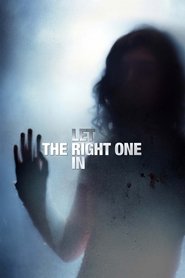
Let the Right One In (2008)
Release Let the Right One In Blu-ray (Momentum Pictures, 2009)
Director Tomas Alfredson and screenwriter-novelist John Ajvide Lindqvist treat adaptation as a change of medium, not a test of fidelity. They explain how a sprawling, autobiographical novel became a concentrated love story through omission, restrained violence, performance, hands, barriers, offscreen action, undirected winter light, and a soundscape that makes snow, breath, fabric, and silence tactile. Their recurring principle is that horror works best at the edge of attention: the mundane period world stays recognizable while Oskar's decisions and Eli's presence gradually transform it.
- Duration
- 1h 53m
- Talk coverage
- 94%
- Words
- 12,809
- Speakers
- 2
Commentary density
Highlights
Topics
People mentioned
The film
- Director
- Tomas Alfredson
- Cinematographer
- Hoyte van Hoytema
- Writer
- John Ajvide Lindqvist
- Editor
- Tomas Alfredson , Dino Jonsäter
- Runtime
- 115 min
- Also on
- OneSheet ↗
- External
- IMDb ↗ TMDB ↗ Find on Amazon ↗
Transcript
12,809 words · 1 flagged as film dialogue
Hello and welcome to this director and scriptwriter comment to Let the Right One In. My name is John Ajvide Lindqvist and I sound like this. My name is Tomas Alfredson and I'm the director. I sound like this. Hello, good evening, good afternoon, good morning. So, where do we begin? I think the film has started here, hasn't it? It is a very subtle start here. We tried to create the sound of snow falling here, which was quite complicated when you come to think of it, because snow hasn't got any sound if you listen when snow falls, but inside your head it has a sound. doesn't it? So this is a mixture if you listen if you turn up your receiver without the commentary so you will hear I think it was like small bubbles in mineral water which was recorded in a very high resolution and then we took the speed down to like 25% or something and it's also sugar falling onto a very hard surface, like if it was marble or a very stiff table, that mixture. And this snowfall wasn't planned to be included in the movie in the beginning, but you just saw this beautiful snowfall, filmed it and decided to include it. Yeah, yeah, yeah. And that is the...
wonderful thing with filmmaking that even if you're planning everything in detail nature comes in and gives you little surprises and gifts and this was a gift from nature I think. It was a beautiful shot. And here in the shot that comes after this I would like to mention that because this was like the starting point of the story for me, this with Oskar standing by his window. The feeling of being alone in the night in your bedroom, looking out at the yard in your apartment complexes and just waiting for something to happen, anything, for anyone to come through the darkness. I mean, maybe not to save you, but just that something would happen that would maybe change things. That feeling was a very important starting point in writing the story. I also think that this is a very typical feeling of the Swedish suburbia, or this particular suburb outside Stockholm called Blackeberg, even though it's not shot in the actual Blackeberg area.
But the feeling and the ambience and the tone is very typical, I think. And also I grew up in Blackeberg and I can assure you that this looks very much the same. As you say, it's got the same feeling even though the buildings are not built exactly the same way. And I also had this kind of, what do you call it, panorama tapestry. This thing with a forest around him. And I used to lie there and watch these patterns and see if I could find figures, trolls or goblins. And I would whisper to them when I was a child. I had also... But I think it was like a tropical sunset or something. And then I had this very popular poster, which I always remember when I think of my teens. It's this prick with sunglasses. Do you remember that? You could buy it on this very famous Swedish record store. It's very typical in the 1980s. Everybody got it. Except me. Except you. A prick with sunglasses and a cigarette. Okay. Another one of my big starting points for writing this story in the beginning was to portray Blackeberg, the place where I grew up,
And the only thing I knew when I started writing the book was that I was to portray Blackeberg and something horrible would come there. I didn't know where it was from the beginning. I didn't know it was going to be a vampire. But then as the story went on and I knew it was going to be a love story about young people, I came up with that a vampire would be the best horrible thing to come there. And this is also very typical 80s. The policeman coming to visit your class talking about drugs. and what not to get into. Yes, very typical. And I remember, I think I told you when we did the Swedish commentary, they had this strange show every year in Blackeberg, the police, where they showed off their dogs. And the star number was when the dog picked up an egg with his mouth without breaking it. And I always thought, in what situation could they have any use for this?
Totally boring. And we also had that in the suburb where I grew up and it was this sort of the stand-up comedian of the police force walking around in a uniform among children and tell them boring jokes. So that is a very, very typical Swedish thing. And here we get the first... Big hint on Oskar's predicament, what his life looks like. This hurts. And Oskar's hairdo is also very, very much 1982 or 83, around that time. I think you had that hairdo around that time, did you? What do you say, the mop? The golf mop. Yeah. the floor mop hairdo. And this I know is one of the things that has been suggested as merchandise for this movie, to be able to buy one of these kits. A murder kit. Yeah, Håkan's murder kit. When we were discussing these props, I said that I wanted it to be smelly. So when you see this stuff, you could really feel the smell of it. It's sort of rotten, rotten blood inside that. Yeah, and he doesn't clean it very properly either. It's very basic. It's not so hygienical. No, it's not the issue here. In the background, you hear the weather report.
which is very useful when you do the sound editing to have an everyday feeling to a situation. The weather report is very good. It makes you feel calm. And I was up there to visit when you recorded. I wasn't here that night that this was recorded, but it was extremely cold, wasn't it? The situation, yes. It's outside Luleå. It's a town in the very far north of Sweden because we really wanted the cold and the snow and the darkness so we could work daytime. And it was like 10 minutes we could do this shot where he meets the boy because it was typical twilight. So we had 10 minutes of twilight. So it was very stressful, this one. Well, here's one of those subtle sound effects that you hear this small change in his pocket falling down when he's turning upside down. It's one of those small touches that make the soundscape interesting. And here also you get the first hint of something that I know we discussed and you talked about.
this thing that in this movie horrible things happen, but it's always right in the corner of your eye. Somebody, if they just turned their head in the wrong or the right direction, they would have seen it. Somebody can always see what's happening, but nobody does. Yeah, it's very close. It's always close to others, the violence. And you could see the cars moving in the background too. It's very neat. Lighting here by Hoyte van Hoytema and the lighting crew. And Håkan was a character in the book that I had a lot of trouble with, because I didn't want him to be just a monster. It would have to be someone that you could feel empathy for. And I used a lot of space in the book to describe him in such a way that you could feel some sort of empathy. And amazingly enough, I think this goes through, even though he's only got a short role in the movie. Per Ragnar, who plays this character, does an amazing job, and It was his idea to have this very cheesy hat. I think he bought it in Russia or Soviet a long time ago when he was on tour. It's so uncool, this hat, so it makes you like him more.
And he drops the blood. Try to direct a poodle. If you go to director school. I like this when he looks into the camera here. It's like he's asking us, do you see this? Do you see what I'm seeing? The poodle guy had some poodle... Munchies. No, some... smell things from a poodle woman. Okay, so he would be attracted to the boy hanging upside down, thinking it was time for some boogie-woogie. This was the first night of shooting this scene, I remember. And we started off with a very complicated shot. This is made in one shot where Eli does the entrance in the film here outside frame. She's being helped up on this playground thing outside the frame. And I think this is maybe take 15 or something. Okay. It's also something that was, it's obvious in the film also, but it's more developed in the story. This with Oskar's violent fantasies, the thing that is creating almost like a fantasy world where he is a killer and a revenger, an avenger, who will do terrible things. And in this first meeting, of course, they were reluctant to have any contact.
Tell us about the frame, the playground thing that she's standing on. Yes, that is designed by Eva Norén, who is the set designer. And she has made a wonderful job to recreate the early 80s. And she designed this playground thing to match the format. It's made in CinemaScope, this film. And it's very hard to make the framing for that, so you have to have elements that fit into the CinemaScope format. Here you have a little example of what could happen when you make a film. The children step on their lines here. That wasn't the intention, but... The take on the whole was so good, so we kept that. You also kept it in the dubbing. We also kept it in the dubbing, yeah. But I think it's neat. It's like reality. An old Swedish subway train. Do you remember those? Yeah, I do. You found them. And here also we get, here's the first real hint, I think, of how dangerous Eli actually is, which is mainly done through just Eli's voice and the expression of his face. Per does a fantastic job here, the terror in his eyes, and that he's obeying her. Mm-hmm.
Here we also got this thing that you can go to the... I don't know what this is, the school psychologist or something. Always they discuss this in school. If something had happened in the world or in the nearby area, you could go to the school psychologist. And no one ever did. No. You wouldn't be seen dead inside that door. Hello. I want to talk about the killings. Oh. Who would? Who would? This was... re-edited the sequence because in the original in the book and in the script the tormentors come into the to the toilet and they bully him in there but we thought that when we had edited the film too much violence came too early so it sort of punctured the pressure so we wanted to wait a little
Yeah. When I wrote the book, this is the starting scene of the book. I'm more like, when I wrote the book, I wanted to kickstart the violence, the violent part of it. So that's actually the first scene in the book. And one of the things we discussed very early on and decided upon as transferring the book into a script was that we would concentrate completely on the love story between Oskar and Eli, and everything that didn't have anything to do with that story would go. And also... The book of course includes a lot of really, really horrific details and scenes which is more or less unfilmable if you want anyone to watch a movie. And here we are about to see another aspect of Oskar's troubled mind. Not only his revenge fantasies but also his collecting stories about murder and mutilation and people doing bad things to each other with chainsaws and so on. because it gives him some kind of pleasure just pondering these things. The body of Himmler. Is that what we see up there? Yeah, you see Himmler committed suicide when he was caught. And here in the background we also hear an original song by Per Gessle. You know, this is the singer and composer in the famous Swedish group
And Per wrote us a song originally for this film in the style of early 80s to create the right feeling without playing hit records because I didn't want hit records in the film. Well, except for the grand finale where... we have this Secret Service song, Flash in the Night. And here we introduce to the next big group of characters in the movie. The drunks hang around the local Chinese restaurant, which was constructed just for this purpose for the movie in Blackeberg. You shot there for two days, I think. You could smoke inside at that time. It feels like 100 years ago, but it was just two years ago or something. I loved writing about these people. In the book, they have a lot of space. Some people say too much space, but I really love these characters and their relationships towards each other, how they relate. And here also you can see very clearly the impossibility of Håkan with normal human contact, how we can't get into society. Yeah, you imagine this dull life going down to the local pizza hut or to the Chinese here because they never make any food at home. Maybe they don't even eat any food there. I mean, beer is almost food.
In the background here, you hear a famous Swedish musical quiz called The Notecrackers. The Notecrackers, yeah. In Swedish, and that would be in English. I love these little hints that lay down. Just the thing that Oskar touches his hair a little bit before going out. Yeah, he wants to be good-looking. Kåre, who plays the part of Oskar, he is very... peculiar young boy you cannot direct him to do those things because he wants to to do them himself and so all those small movements and ticks there they come from from Kåre himself here I just want to mention something this This cube, this Rubik's Cube, which is very 80s, is in fact, in my story, it was a sort of homage to Clive Barker and his film Hellraiser. I didn't know. No. Something called the Lament Configuration, a sort of box in the same size, which is used to come in contact with the Cenobites from the other side. And in this story, it's the very prosaic Rubik's Cube, which is used by Oskar to get in touch with the other side, with Eli.
I also think it reflects the fact that we later see that Eli is very interested in different kinds of puzzles and mazes and that a vampire must have enormous amounts of time to kill. So what do you do when you have a lot of time? You get into complicated puzzles. This was also the scene we used when we were casting. So I heard this text thousands and thousands of times and we've gone through it thoroughly. And it was very well balanced and a very good dialogue scene to use here for that purpose. And here's also, I'll go on about this, the first hint of what Oskar actually can give to Eli, which was a trouble for me in writing the story. What Eli can give Oskar in protection, strength and so on is obvious. But why would Eli be interested in Oskar? Because Oskar knows how to live in this society and he can be a child together with Eli. Eli can be a child for the first time in a very, very long time. And he has toys. And he can lend them to her.
Snowflakes in her hair, isn't it? Yes. This is made in a super cool studio. But it's very cold because we wanted to maintain the air coming out of when they're breathing. I don't know what you call it. Fumes? breathing in fumes, which is, I understand, very, very difficult to do digitally. Yeah, you cannot do it really with a good result, I think. As the old Swedish say, shit in, shit out. OK. They're quite cute here. Yeah, they are. This was an extremely complicated location to find. I think the location manager went crazy on me. He hated me for this location because I wanted a very typical 50s house, Blackeberg house in the background and to have the man upside, no, in this balcony. seeing the whole scenery and to have this road in the foreground. So we were looking at hundreds of locations. Here we also see Eli using her childlike or his childlike appearance to lure people into her fangs, which is really, I think this is very ambivalent. shot in that way because Eli pretends to be helpless and begs for people's mercy and goodness to help to be good people and that's what's killing them it's really the only scene where she is evil in that way or manipulating
I could say that. And also, I really love this shot, what happens in the end when Eli sinks down onto his back. It comes later anyway. But because Eli, in my original story, Eli doesn't really feel that kind of remorse. Eli is a more, not evil, but less light character in the written story. But still, when I saw this, because this isn't in the script, Eli sinking down afterwards, I really, really liked it, the way it was portrayed.
And this Eli does for the plague, the vampiric plague, not to reach the central nervous system. So there will be another vampire. Here we see it. I think she's really tired of this. She's really, really tired. Yeah. It's true. It's what she expresses with her body. Fatigue and remorse. Here we see also a thing that you and I discussed quite a lot when we were working with the script in the beginning. This thing about the barriers, separating them and doing that in different ways. The windows and walls and so on. the thin surface dividing us. But we are very close to each other, but we have thin surfaces dividing us in modern society. So, ooh. You could feel the smell, couldn't you? Yeah. And that was also a difficult shot, wasn't it? That was a composite shot. Yeah. The wallpapers. Yeah. It's a really good set design. Yeah. In Swedish we call that hat he's wearing a mink pussy. Just so that you know. I didn't mean to be rude.
It's just the thing that we're silent for a while, and then this thing comes, and then silence again. Really good commentary, this. Well, the difficulty to do a good period piece is that you have to not only find 1982 stuff that's very typical for this period of time, you have also to find the stuff that's... 1970s stuff and 1960s stuff because these people obviously have created their homes and bought their clothes before 1982, right? This shot when Håkan is dragging the body of Jocke we had a doll made in the proper weight and you really understand the idea why killers slice the corpses or the bodies, because it's really totally impossible to move it. And Per, who plays Håkan, he's a very fit and strong person, but he almost couldn't move the body. It's extremely heavy. I remember also in writing this scene from the beginning in the book, it was somehow to give an idea of the difficulty and the tediousness and all the work and the weight, so to speak, involved in killing and disposing of people when Eli has done her handiwork and tells Håkan he must take care of the body. It's a lot of work. It's not obvious how to do this.
I think this is the first time you see Oskar smile. And what a smile. Yeah. It's one of those smiles you can't help to start smiling yourself when you see it. No, it's beautiful. And together with this bird, I don't know what it's called, but it's a very typical winter sound. Here. It is a promise, that smile.
here we also got to get a feeling of this that you talked about before that you wanted this thing of the 80s with the unclean materials you can always feel these leggings on their legs which is itching a little bit the polyester and this is actual Blackeberg this is the actual Blackeberg and we had like one or two days planned for taking shots in the actual Blackeberg and for some reason it was a heavy snowfall before and after that the snow melted so we had some help from the gods. Both nature and the gods were with you. Kåre Hedebrant and Lina Leandersson plays the main parts here and they are one of the most interesting actors I have ever worked with. They're so intelligent and they're so... grown up, though they're so young. They are 12 as they are in the film. And we had a casting process that lasted over like 12 months and we met I think a thousand kids to find those two. But they really make this film a lot and
And they are the kind that didn't want these parts too much. They weren't so interested and they have a lot of integrity. And I really turn on that when people have a lot of integrity. And you could really see that in those two kids. Beautiful conversation this. It's one piece of dialogue I'm quite proud of, the thing about when he's asking about her age, and he tells his age exactly. Yeah. Yeah, it's very... It's one of the best dialogue scenes. It's beautifully balanced. I wish I could have written better dialogue explaining how to soul the cube, but unfortunately I don't know myself, really. Just very theoretically, I know. Yeah, you have to start with the corners. Right, you have to start with the corners. That's one method, apparently. I had one method when you just took a screwdriver and put into it and cracked it and then put it together. It's called cheating, Tomas. No, an alternative. Not where you grew up. Here's your reading from Bilbo.
Here we saw fit to plant something that was supposed to happen later. Yeah, Oskar was going to make a fire. But he never did, as it turned out. But I really liked the detail because it was so good. It was some kind of... Now let's have a very cozy time reading loud. So I will turn this little oil lamp on. That's very typical. Samuel Morse. Yes. The inventor of the Morse system. Alphabet. I really don't like Oskar's classroom. I wouldn't want to go to school there. It's made in a gym. Ah, okay. Here we also have this thing. The teacher on the left of the frame. She could have seen. She's very close to this. And then we introduce the tormentors there in the background. Which is very elegant, I think. Here is also a very... fantastic example of Hoyte van Hoytema, the director of cinematography. His very special way of lighting and the light comes from very high above to sort of recreate the feeling of moonlight. So there is almost
no shadows anywhere and you really cannot see any particular direction from the light so it's extremely soft lighting. Which also makes this scene even more effective. It's this sort of scene where you would have played with light and shadow to make it more dramatic. Yeah, that would be the most obvious way to do it. This makes it very mundane. I know that this is one of the things in the book that people think are more horrible than the scary bits, the horror bits. That this bullying scene is terrible. Which it is, of course. And I love his eyes here, the way he looks at his tormentor. Johan... The boy who plays the guy who starts crying here, that came spontaneously because he was so... He thought that this was so cruel, this scene, and he started crying as a private person. And I thought that was a very good and human reaction that even the tormentor starts crying. And it's very heartbreaking. And maybe that is what saves him in the end. Yeah. And Oskar's mother, she doesn't really want to know. It's very useful to depict hands, what the hands are doing, because it's very hard to lie with your hands. So...
For instance, if you have this situation where two young people are a little shy to express what they think and what they feel, you could always use their hands to communicate what they really think. And little children's hands, well... the age of any hand, really. It's very moving and touching, I think. And it's used in a scene later in the film where they... In the bed scene, which is very intimate. And this is the first time that they touch... With snowflakes on their fingers. Yeah, she wants to emphasize that they shouldn't do this to you. This is also exactly the same as in the book. This hit back scene. I mean, this is dubious as advice. Yes. But in this situation, it is the right advice. Of course. Eli being what Eli is and Oskar being what he is in this situation. And it's a very... Yeah, this guy. It's also a very hard... Eli doesn't really run like a child. It's a very hard advice to get to when you're very weak and afraid. And if somebody says, hit back, it's very...
I remember that when I was a kid and somebody said to me, you have to hit back. It's very scary to get that kind of advice, what to do with it. If that's the thing you really cannot. And then when Oskar says something to the result of it being difficult and Eli says, then I will help you. I mean, I think that's part of the attraction of this story. It is the dream of any young boy in this age, in this situation, meeting someone like Eli, who would say that to you, then I will help you. And you know that somehow she is capable of doing that. I had that dream. Yeah, who hadn't? Maybe you had the dream being a rock star too. No, magician. Great magician. He's a very typical 80s Swedish gym teacher. Yes. Cayetano Ruiz really comes from... I think you wanted him to be a Spaniard, but Cayetano Ruiz is Argentinian.
But he makes a beautiful portrait here. It's perfect. And he says, get lost or something here. Lito. Yeah, lito. Finished. That's it. Yeah, get out. And this is interesting. I don't know if you want to talk about this. Well, to have the cat to react this way, we had to have another cat exposed so it wasn't yelly. This is one of the big differences from the book, actually. That in the book, Eli simply says that she can't eat candy. But when we discussed this, I know you wanted something more visual. I remember we talked a lot about this. Why would Eli eat candy when Eli knows what's going to happen? And we talked about it as an act of sacrifice. We're showing Oskar something. And I think it worked out really well. There was one instance when I was a little bit against it from the beginning, I remember. You talked me into it.
Maria Strid, who is the designer of the clothes, she found these fantastic trousers to Eli. We gave them a name. We call them the Psycho Pants. That was the most complicated thing, I think, to find her appearance in the clothes. I think you have written it in the book that she finds clothes in the garbage and here and there, and she's not so... interested in fashion. No, she just takes what she can find. I think she's wearing Håkan's sweater later in the movie. Yeah, the red one. And this hug is beautiful. And it's also very, very obvious where you see both of them, this polarization between light and dark between them. And here Eli hints at a fact which isn't exactly clear. in the movie, which is left ambiguous, but I mean, it's not, a lot of people know this, so it's not that Eli is hinting, not only that Eli is a vampire, but also that Eli is a boy. Yeah, this is the first time she, he or she does that. Let's call Eli she, for the time being. Yeah, she does that twice. This is one of the,
The fantastic things with Eva Norén, the set designer, she suddenly comes when we were to take this scene, when he's looking out of the window, and she has found this little plastic toy, and she says, put this in, have him to play with this, and it's beautiful. It's very, very typical for a child in his... This scene where they hug in the beginning and also this, I mean this, it took me five or six times watching this movie before I didn't start crying because this is very much for me a portrayal between things between me and my father. Who's dead now? Anything you told me, this typical? 80s detail. Yeah, with the sweater inside your jeans. That's an 80s detail. Very good. And also that cardigan that's hanging there on the chair. It's from the book. And this thing with wearing your father's sweater. It's something special when you're a child. And the smell of it, it's like creeping inside your father's skin. From one home to another. Yes, I could say that. Oh, yes, this one. There is something vaguely...
comic about Håkan all the time. You can't help with the way he rubs his hands. Yeah. One of the worst killers in film history. He's very inept. And here is this acid introduced. And Lina or Eli really looks starving here. Mm-hmm. Mm. And also in my original story, here Håkan's demands for doing this thing are much harder, so to speak, than what he says in the movie. He only asks Eli not to meet that boy. In my original story, he wants bad things from Eli. And this is only a hint of what their relation actually is based on. I would say that is the biggest difference between the book and the film, that... the pedophilia theme. We took that out from the film because I thought it would really take too much space shadowing the love story. Yeah, I think it was like one of the first things we said when talking about how to do the script. This must go out. But for me it was necessary because my first version of Håkan when writing the book was a terrible Patrick Bateman American Psycho type of character doing it for money and power. And I had to...
throw everything out and rewrite it and think, what could make a person to do something like this, killing young people? And it would have to be some sort of obsession or love. And that he would be a pedophile. And it would be because of this that his being with Eli. Some people say that this is an old lover to Eli. That a long time ago when he was young, he was like Oskar. I think the film implies this, and that Oskar will become a new Håkan. And I think this is great for the film. It's not the original story I wrote, but the film implies it, and I think it's a good thing. But in my original story, it's more obvious that Håkan is someone he had picked up just like a year ago from the gutter when he was an alcoholic, while Oskar is a different matter. But here it works very well. Well, there is also the, I mean, the book is a stronger medium than film in that sense because you could really play on many strings at the same time and you could get deep into explanations and the people's inner thoughts that you really cannot do in a film. The film has much more limitations than a book.
So that was also one of the reasons that we really tried to concentrate on the love story, because that's how film works. But I think you don't have to compare them, really. They are autonomous pieces of art, and they stand on their own legs. And to my amazement, the first time I saw the movie in its completeness, in the movie, I saw that, well, this is basically the story. It's the same story as in the book. A lot has been removed, but it's basically the same story. Still. It is this thing with acid. It doesn't really burn very... Like that. It burns slowly. Through skin and bone. Or jackets. We had to invent this detail to show how dangerous the acid works. to have it spilling on the jacket. And then we didn't need to show how the face was destroyed. You just can feel it, what's going to happen, which is better. I think we discussed this for like an hour. I remember this. How can the acid seem dangerous? This whole sequence is...
extremely complicated and was also very complicated to find the right location so we had the right components in the right places and Magnus Johansson who was working together with me as a storyboard artist made a tremendous job in that sequence solving each and every frame to have it in the right way so I could really thank him a lot. It would have been impossible to improvise that or to solve it in any other way than designing it very thoroughly beforehand. This is a very cruel sequence too. Also quite typical. You probably do it all over the world with people like Oskar. That was one of the things that actually did happen to me. This story is quite autobiographical, but just things of a similar significance happened to me, not the actual things, but this thing I remember, yeah.
This is a very old school shot. It is, it is. Like an old school horror film. Here's one of the few details that says it is 1982. The radio announcer is talking about President Brezhnev. And here we come into my little contribution in this movie. yeah here's your voice inviting eli into the hospital outside of the frame yeah i think that was a little accident that we we didn't introduce the fact that she was she it was uh she has to be invited everywhere she goes and no Oops, she comes into the hospital without being invited. I even forgot it in the book. But I explained it to someone who asked me when the book was just out that this is a public area. It's not someone's private abode. That's a poor... Yeah, I know, because she needs an invitation to crush the windows in the swimming pool in the end, in the book. So obviously she would need an invitation here too, but I forgot it. But, you know, I think she is invited.
in the pool scene by somebody outside the frame, maybe the teacher or somebody else. I didn't think it was interesting enough to show that the scene is so intense and it would take the feeling out of the tension. This is a very delicate shot, I think. It takes time before it is going to happen. Yeah. There we go. Also one of the few things we actually see of Eli's superhuman abilities. She would be the ideal window cleaner. Yeah. She and George Formby. George Formby, why? The window cleaner, you know? The famous song. Fine. Ukulele song. Okay.
I think I went to great lengths in the book to describe this thing, which would be obvious effects in a movie, that Eli can actually transform his body into just thinking long nails, thinking claws, and the claws appear, thinking sharp teeth. Because I didn't want Eli to walk around with his typical vampire teeth. So Eli would, in every moment, she would have to think. parts of a body would transform into the thing that Eli needs at the moment. Or wings, either, even. Lina, who plays Eli, has teeth, vampire teeth. But they're extremely subtle on her corner teeth. But I really didn't want it to show too much. But there is actually a small, small shadow on her upper lip.
I remember when you were doing this before, I knew that you were going to do a very, very good movie out of this. I was very confident in that. But I didn't think it would be very bloody. But then when I saw the finished result, I was very satisfied in that aspect too. I think the blood is really there. There, for example. And this is lung-eye. Eye means ouch in Swedish. The last breath. Håkan. And you told me you can see the fumes coming out of the hole in his cheek. And here you imply the wings a little bit. The sound of flapping. In the script I think it's even described how El is on the roof naked and making these bubble wings. That was a nightmare for me to try to do that. And also the fact that she's moving very fast. It would be like, you know... Benny Hill, when people are moving fast on the screen. It's so complicated to do. Well, it gets very comical. Like in Forrest Gump, for instance, when he's running fast. Otherwise, you have to have people flying weightless like Superman or Spiderman. But when people are running fast, it gets comical. And now we come to
At least my favorite scene in the whole movie. I think that if everything I have done and will do in the movies would be destroyed and I could only say one thing that I was involved in, I think it would be this scene. It's also the dialogue that I'm most happy with. The acting is beautiful and also this is one of the the most intimate sound editing scenes, which is extremely complicated. Everything is overdubbed here. We wanted to have the extreme closeness to the characters. You even hear the heartbeats and you hear the breathing and the tongues moving in their mouths and the subtleness of skin. And the fabric and the sheets and yeah, everything is beautiful sound as it can work. And you can see on their eyes that the scene is made in extreme low light levels because of the pupils are so big. And you also can see that we almost didn't use any makeup because it's very hard to use makeup on small children.
Their skin is so subtle, so you would immediately see if you put the brush in their face. So it's only Eli that has slight makeup in certain scenes. From a storytelling perspective, I love this scene because it so clearly describes the essence of what you might call pure love, that when Oskar asks Eli if they can go steady... And Eli says, I'm not a girl. Do you want to go steady or not? He doesn't really care. And in the original story also, it comes to the point where he realizes, okay, Eli's a vampire. Eli's a boy. Still, I have to be with Eli. No matter what. It's beautiful. She stinks and she's bloody in her face. She's flying around. She also smells of gasoline. because she has burned someone. Yeah, he wants to hang around with her anyway. Anyway. And also I love this scene because it's very asexual, I feel. It's... The idea for me with the exact age of 12, not 11, not 13, would be that you would be on the verge of sexuality, but not yet there. It would still be possible to feel this innocent love, just he doesn't really think about sexual matters here.
It's not that thing. It's just someone being close to him. And here comes the hands again. It's also important, because this is also explained in the original story, but not here, that Eli forever freezed in the body, frozen in the ear on the 12-year-old, and also in Eli' mind, that Eli has to sleep for very long periods of time, and when he wakes up again, he has forgotten everything, he has learned. He has some memories, but he hasn't really grown. So basically, Eli isn't a 200-year-old inside the body of a 12-year-old. Eli is a 12-year-old who has lived for a very long time. A status quo character. Yeah. So Eli is not really cheating or tricking Oskar, being an older person, because Eli isn't. this was a very good proposal from dino who has the editor of the film he said that why don't we postpone the moment where we read the message on this little cardboard thing and it's a little secret that he carries for yet another 15 minutes or something what what the text is there and he's so
He gives us a little smile again. One of those. But it is in fact a quote from Romeo and Juliet. Well, it's just this one in the movie. Romeo and Juliet by August Strindberg, the Swedish author, you know. Yeah. The music is so beautiful here. Johan Söderqvist, the composer, has one of his highlights here. especially in the ending of the scene where he captures the triumph Oskar feels when he gets his revenge. And it's one of the few moments in the film where the music is really narrating the action rather than counteracting. Here are some wordplay which is untranslatable about holes in the ice and so on.
chewing air inside his mouth when he's when he's thinking yeah and here comes this location back which not everybody sees or thinks about but this is the location where obviously Håkan has put the corpse of Jocke And it's smoke that we see on the right of the frame. I know there's been some confusion about this. It's the sausage grill. Right. Which is a typical Swedish thing also to do when you're outside and you do the sausages. The friluftsdag. That means the day when you force the children to skate or... run around in the forests for no reason and just feeling uncomfortable. That's the idea behind it. And the stick that Oskar is holding here is the same stick that Håkan is using when sinking the body. And wherever you have a hole in the ice, you put small branches of pine or something to warn that there is a hole in the ice for you who don't live in a cold society. This is...
You can see this in Oskar's eyes later, after he hits Conny with a stick, that this is a sort of a fulfillment of the promise given to us as viewers when Oskar was being whipped and he gave this look after getting the... on his cheek. This is the fulfillment of that moment where he's basically doing the same thing, but worse. And... This is a very complicated scene too, I think, because you really feel that Oskar does the right thing here. And you could really feel the comfort he's feeling. And he knows that everybody's going to be very angry at him and they are going to call his parents and he's going to be punished in some way. But it doesn't matter. He has to do this. And you really feel his comfort here. Which is a bit problematic on the bigger scale. But I wouldn't really say that the thing he does is wrong. I wouldn't. Especially if you...
That's the thing. If this scene in the toilets would have been included, I think it's the right thing to leave it out. But then the balance would have shifted too much in Oskar's favor. That you would just only feel, yeah, yeah, yeah, go Oskar. Here it's still problematic. That he's lashing out like this. But it's included in the deleted scenes. Yeah. Then you can start working on your hatred. Yeah.
And his mother is really pissed here, but he doesn't mind. No. And here we get very clearly and subtly to see what the relationship between his mother and father actually is about. It's not very good. And I know when I've seen this in movie theaters with people, I think especially the first time when Oskar is bench pressing, people start laughing. Because the weights are so small. It's not Karate Kid, really. Okay, that's really the bullier's point of view. It is. Yeah. And here we had a lot of discussions around this scene because this was... This is very subtle that you imply that he is now changing sides. this character that is on Oskar's side. But here is the one who really is on Oskar's side and can't be because of the circumstance. It's a very moving shot here when she stands outside the swimming pool. She tries to impersonate a human being by wearing the same clothes as the other teenagers. It's very moving.
Yes, your favorite of yours, isn't it? This shot. Yeah, I like this. It's one of the few moments just before the actual vampiric thing strikes in where actually Oskar could see that something's wrong with Eli and the elliptical pupils are gone. We see them, but Oskar doesn't. And this is Agnetha Fältskog, former singer of ABBA, singing for us. Yeah, an own composition. She's a very good composer, Agnetha Fältskog. And this is recorded somewhere in 68 or 69, I think. It's a beautiful song. It's very typical Swedish Channel 3 radio sound. And she was apparently quite okay with the song being included here. Yeah. She was very happy because I think she's happy to be remembered as a composer too. And she's a lyricist too. And I remember writing the book. This is one of the scenes I was really happy with when I came up with. I had a problem here. How am I going to show to Oskar the Alisa vampire?
And the combination of this idea with him wanting to show his love for Eli, with bonding, mixing blood. I hate this. This is the worst shot for me. I never get used to it. Sorry. Okay. This, that I really, really want to be a friend. I want to mix blood. And this is, of course, the worst idea you could come up with with Eli. Yeah, it really works. It seems to be very obvious. or as a construction, but it really works. You really believe in why he wants to do this. And it's a very strong conflict, of course. Oskar's human nature conflicted with Eli's vampire traits. And that tongue.
Here you see Eli for a short glimpse how she maybe would have looked if she had been her proper age. I think she's well, the timelessness shows when she's in between human and in between being this monster. So there is this critical line where she maybe you could see a mixture. This is also a scene that normally would have been done very FX, where you would see Eli growing her nails and climbing up the tree, but instead it's just a shadow. And this is maybe the clearest shot of Eli's monster nature, so to speak. And the tree is still standing in the square of Blackeberg, where she's sitting. Try to climb it if you can. Here are the Nobel Prize Committee. They have their meetings before deciding the next. Yeah, I think they're going for Paul Auster maybe at this time. Finally. Finally. Yeah, at last. Ika is so beautiful. Ika Nord is her name who plays this character. She has this Paulette Goddard appearance, I think. She is so good-looking and so friendly and so... Lovable. Yeah, it's a good thing. And I was never included in the movie, in the shot, but there's my wife on the right side of the screen. Yeah. Wow, how she walks. Yes. How she walks.
I remember how I was impressed with your eye for detail. These two people in the Chinese laundromat, we had two Asian people who were inside the fumes there all the time, only for that small, small element of the picture. Yeah, yeah, yeah.
This was expensive, a very expensive camera crane here. And here's the thing that you added, which is not in the script, this suitcase that Lacke is carrying around all the time. It is explained eventually what's inside it, but it's not in the script. I thought that You know, very poor people or unemployed or drunk or addicts, they really think a lot about their pride to look as if they had money or if they were wanted. So that suitcase reflects that he wants to be... You know, somebody is wanted somewhere, but it's just air inside. Here's one of the things that I had great joyous writing about in the book. Thinking about what would it be like when someone actually started to turn into a vampire before you're a fully fledged vampire. with knowing how to do everything, when you started to feel this urge to see, so you can't eat regular food, all that, how it starts. And this was one of the greatest things describing in the book. Yeah, it's very itchy, isn't it? It's itching inside your veins. Yeah, yeah. And of course, you can't stand sunlight and so on.
This was a very good solution from the sound department here, how to reflect the sound, the subjective sound inside her head when she wakes up after this night. Like she was hungover and you have this construction sounds outside the window. Or she has more acute hearing. She almost likes to hear voices in the other apartments and so on, which she does in the book. She's got more animal senses. So here comes the scene where the American people think that the father is a homosexual, but just because his neighbor is coming to get some free drinks. I think it's actually, it's the look that the other guy gives Oskar's father there for a short moment, which is, I would call it seedy. But it's alcohol he's after, not anything else. This tells us it's a neighbor coming into his slippers. I hate this scene. I think it's a great scene. It also had me crying the first time because this is also from my own life, of course. And these people who came in and just destroyed everything. And it's so well reflected in his face. I saw some early cuts of this scene where there was a lot more action included. And also they started playing music and so on.
And in this case, as in many others, you decided on doing it more in silence, in the in-betweens. And it was so much better this way. It's your turn. Yes, but we have guests now. It's warm and nice when you have this. There was some at home, though. That's a very typical Swedish habit of just sitting, drinking raw liquor until the bottle is empty. Yeah. It's very cruel and not so funny. No. And this look that Oskar gives his father the next time. I remember this breaking my heart the first time I saw it. And the fourth and the fifth. Mm-hmm. And then we get to see the Strindberg quote. To flee is life and to linger death. This is a nice piece of cinematography. It is made with just the lights from the car. which you have to be kind of brave to do that. But Hoyte van Hoytema thought that, what the hell, let's do it. It works. It works fine. There's a bit removed there, I think. I don't know if you shot it, where he's wearing his father's sweater still while walking out the house. And before starting to hitchhike, he throws it in a ditch as a sign of separation.
Yeah, we took that away for some reason. Now it's very clear he makes his choice there to flee his life and to linger death. He has refused Eli after she's bleeding blood from the floor. But now he has. It's only Eli left. His father was an option, but isn't anymore. Yeah, I thought we were trying to emphasize the fact that he's not leaving his father alone. he is going to Eli, rather. And if you are planning to be a director in the future, I would strongly recommend you not to create situations where you have to direct cats they're not very good as actors even when computer generated they can cause problems but the small one is quite good it's doing a good job
the first time Oskar is going to come to Eli's home to see what it looks like there and I thought that she was should be very feel ashamed for her poverty and the sort of the poverty of her life and You could see Håkan's shoes there. The now dead Håkan. He thinks it's very empty and dull and it stinks in there. I remember, I don't know if this was in the script, Oskar is actually quite angry with Eli for not telling him, not being honest with him. So he teases Eli a lot before going in the door and saying, can I come in? Say that I can come in. But instead, that scene is more or less placed here. This spider web design that you were so happy with that someone had found. Well, yeah. Eva found it somewhere in some garbage container. Here's the only time that the V word is spelled out. It's quite cool that he asks straightforward if she's a vampire. The DOP, Hoyte van Hoytema and I, we tried to find...
a word for this very special kind of lighting. We call it spray light. It's as if you had canned light in a spray can that you just sprayed around in the room. It really hasn't got any direction. It doesn't come from any particular angle. It's just all around the apartment coming from nowhere. Yeah, this is Håkan's sweater. His red sweater. Why not use it? And she also wants to look a little better. Here are the different things that maybe tell something of Eli's earlier life. Some clues. And... This egg is, of course, a complicated thing to build. So it's not really built. Well, it's built in a computer. Pixels. And it's also a sort of hint. I actually would have liked to be falling into more pieces because it's a sort of a hint of how Eli spends her time. It must take, you know... days and weeks to put that together again. But I think you had something like that, but it didn't show clearly enough what it was. Dino Jonsäter, the editor was teasing me every time we came to this scene that Eli is coming with one...
bill of each value and he thought it was so cheesy one tenner one hundred one fifty and one thousand of the old of the old kronor bills of that time as we were to show you know we have fixed old money and
So here comes the deleted scene. If you have the possibility to see that after that scene, the deleted scene where the fight comes in this position in the film. It's also one scene I remember being quite proud of in the book. This thing where they're just rolling around each other and fighting very hard, but really trying hard not to hurt each other. It's just something I have to do. And also her ability of totally crashing him. Of course. She wants to break him. But she doesn't. Here I remember originally Virginia explicitly asking Lacke to put a stake through her heart. Mm-hmm. And, well, he doesn't want to, of course. It's also seen, it's done to show some sort of measurement of what Eli has gone through. But Eli hasn't answered the question in the way that Virginia does. She wants to die. She can't live like this. Eli has decided to live, no matter what the cost. Mm-hmm. I also see those two, Lacke and Virginia, as a reflection of Oskar and Eli. If they should have stayed, if they had taken the punches from the tormentors, if they did not choose to be themselves, they would have been turned into those two.
He really has a bad day, Lacke. Yeah. So many bad things happened to him. Everything is taken away from him by Eli, really. And I remember us also removing this whole police investigation bit around Håkan from the script because of... There would be two threats against Eli. It was enough just with Lacke. Because you can thoroughly understand his hatred towards this being who has torn his life apart. That's very aggressive fire. indoors. Yeah, you had to shoot it under very special circumstances, I remember, in some kind of laboratory almost. Yeah, it was made at the firefighters' school outside Stockholm. So here he is introduced, the older brother of Conny. And it's a double scene where you might think that Oskar has gained some power in school too. Like you said sometime that he's standing in a schoolyard like he's got a right to be there for the first time. There was a little joke He's eating a very strange Swedish food called blood pudding. Made from pig's blood. And this scene, John, I have to thank you for being so strong and keeping this in the script because I...
really had a hard time to imagine how to do this and to solve it. Yeah, but it was really from that I really, really wanted this scene to stay was because I know from a horror genre perspective, I know this is quite an original scene. The vampire not being able to enter a building without being invited, you've seen this, but you've never seen what actually happens if a vampire walks in anyway. And it really was a son of a bitch doing because it really didn't work for a very long time. And Per and I, Per Sundström, who is the mixer, we were mixing this in Norway and I think it didn't work. But finally, when we came home, we made some alterations and we took away a lot of it.
Who are you? Same as you. What?
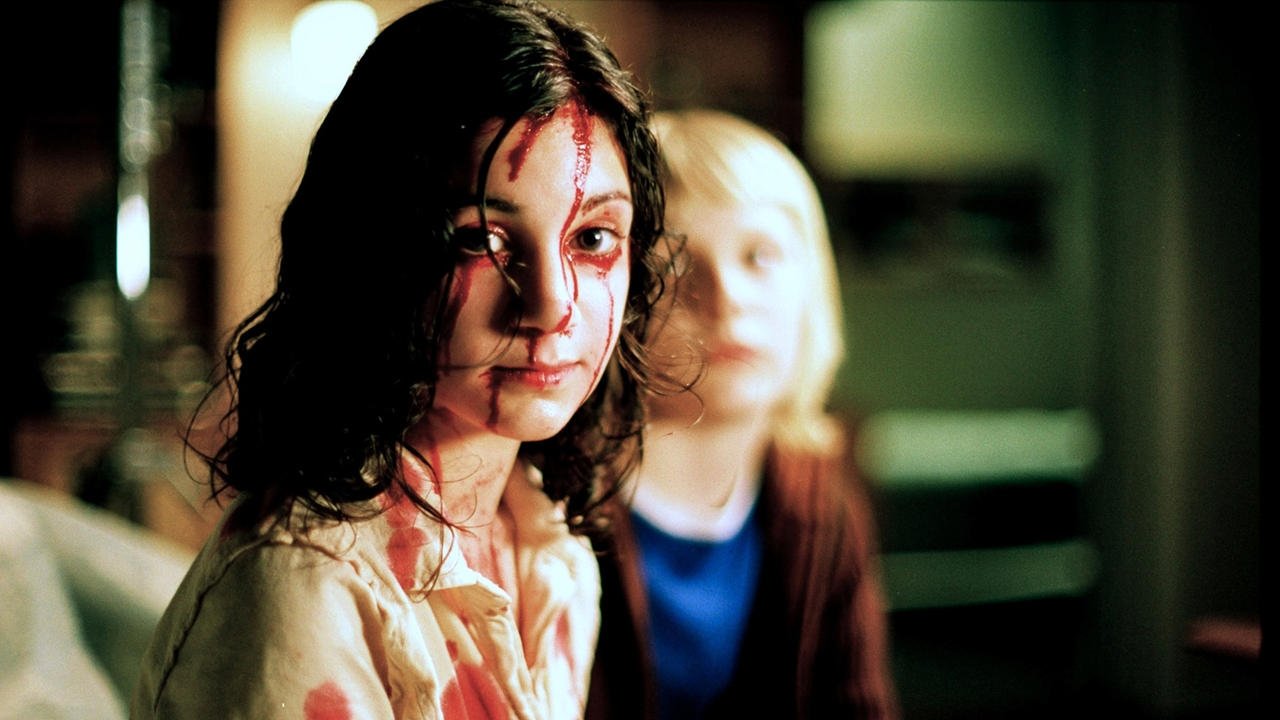
It's almost like an emblematic picture, this, with Eli with the blood running from her face. It's funny, when I think about it, the first scene of Eli's sacrificing, of Eli's sacrifice, you really wanted to keep there, when she's eating candy. And the second one, I really wanted to keep there, when she's walking in uninvited. In the book, this is the moment where Oskar gets a glimpse into Eli's mind and learns what her history is and learns also that Eli is a castrated boy originally. And this is just suggested now in the very short clip in a moment where you see the genitals, her genitals. But here it's also suggested that somehow, like watercolors on a paper, they glide into each other and become each other a little bit, which is exactly what Eli is asking for, be me a little. And how Oskar actually manages to be that, to merge with Eli. for a moment. Yeah, here comes this Per Gessle song. It's a very special thing this, playing your favorite music to somebody else. It's very private. And you get very nervous.
I remember in the former scene also, where he glimpsed into his past, it's also the first time they kiss in the book. And this wouldn't have been a good thing, because then the kiss in the end would have lost its power. And he's, of course, very interested in having a little glimpse here. As Motta. He's doing this very well. Yeah. A lot of people have reacted on this shot of Eli's genitals. I think it does its job because it tells you something about her history. It also suggests that she might have been a boy, that she has been castrated. And, of course, as anybody would understand, this is made artificially with a doll, this shot. I love this look on Oskar's face here, because, OK, you're a vampire, you can do those things. You can do anything. This is really cool, actually. I have a very cool friend. And this, I remember, the script was somehow put down...
in all thoroughness, the misery of Eli's existence, her loneliness. But it doesn't really turn out that way. It's sort of because you're... It's more an after reflection on her being together with Oskar, which is fine also. It's just a different interpretation. I think it's a little too gloomy for my taste. Yeah. Well, happy maybe isn't the word.
Here he leaves his mother. He sort of cuts all the threads one after one, with school, with his father, with his mother, to choose her. Poor Lacke. Yeah, he's got nothing now but his lousy jacket.
I think this is the result of some rearrangement in the editing this sequence, I remember. This came earlier, I think. It's a different timeline here. And in the original script. And I remember also in the original story, this is a big decision on Oskar's behalf. It's after the night where he's found out that Eli is in fact a boy. And he's writing this note. I like you so very much and so on. Would you like to see me tonight? And we don't know what Oskar is going to decide. And he eventually uses the other half of the paper just to write in big, big letters, yes. I don't care. I still want to see you. Mm-hmm. And here's the reason we put this poster in the window. It was to have something for Lacke to remember. In the beginning of the film, he's peeing outside their window and he looks up and sees Håkan putting up this poster. And because to give him something to remember that window with, we put that very typical poster.
A lot of people have asked me about that. Why that poster? Because that's a complication. Why Lacke finds this apartment and why he comes to this specific place. I remember it was, it's not in the book, but in the script, to try to describe this, because I know we discussed this a lot, I came up with the solution that his home at Virginia's place, just remembering her, and he sees that she has covered all the windows with blankets and so on to keep the light out. And then... He makes the connection when he sees Eli's covered windows. That's the kind of material you used during the war to put up in the windows to keep it dark. It's the actual stuff? Yeah, the actual stuff.
Yeah, this is a good... It's a very Hitchcockian way to design the structure of the scene. Now let's see.
Of course, and this is also something I consider a lot. I wouldn't want Eli to sleep in a coffin and so on when I wrote the book. So in the book Eli is sleeping in a bathtub full of blood. But even before we discussed it, I took this out of the movie because it would be too much in an image with a bathtub of blood, just a simple effect. In the book it works, but I don't think it would have in a movie.
Eli breathes blood, so to speak, while sleeping. Like a fish. Hitchcock uses this trick a lot in his films to have a bird's eye angle before something violent happens. So it's a warning sort of signal to have the bird's eye point of view. Eli looks so sweet and defenseless in that shot. I'm killing her with a little fruit knife. And here comes his knife, which was a promise in the beginning of the film. We were speaking about timing earlier. This is an example of good timing, how everything happens in that scene. Yeah, the silence before she jumps at him is very efficient. It's also in writing the story, this was also one of those moments of decision for Oskar. where he leaves that door half open and he goes to the front door and we think that he's going out, but he's not. He locks it from the inside and goes back into the apartment. So it's very much on one level a story of Oskar's decisions. And I think this was the most
A critical moment for the actors, Kåre and Lina, to kiss. Of course, everything else was nothing compared to this. But they do. And for me, this is the best film kiss ever. With blood. I love this. What did you think when you saw them first? Well, the first time I saw them together was you showed me this early casting thing. And they did this very first scene where he's stabbing into the tree and they meet. Well, it was the same sentiment as I've got all the time through this movie. It's perfect. They're perfect. Because I would suppose you have your own very clear images of how the people look in the film because this is... very autobiographical. Yeah, well, Oskar is, you know, to a certain extent, he's playing me, but still, it doesn't really matter. And still, when I think about this movie, if someone talks to me, oh, if someone talks to me about the book, I can't really help thinking of Eli and Oskar as they look in the movie, not as I imagined them when I wrote the book. These two children, Kåre and Lina, are Oskar and Eli for me, too, now. This is what you...
theater call a false final where the film is actually has come to an end this sequence is putting everything together and he doesn't need her anymore because he has learned how to to handle his situation now there's so many subtle things here saying that now the movie is over like this for example closing all the doors
Who killed the man in the ice. Maybe it's said in the translation. I don't know. And this also gives. The audience. A clue that maybe all this. Is. A fantasy. If it has come from that article. And. When he comes into the. Apartment beside. Maybe it's an empty apartment. But it. I wanted to give the. the audience that possibility that this might be just a fantasy. But it is not. Right. Good that you say it. It's usually me saying that. No, it's a good thing visually, I think, too. But it's... I'm not too keen on interpretations. This is actually what happens. It's like a boy meeting a vampire. But it's good if it also works on a psychological level. Of course. And here comes this very cruel telephone call. But this struck me when the first time I saw the finished movie as a very brave shot to do, to include this, this very, very, very long shot of his face crying. Yeah, it's too long. But on purpose, too long. It's a way to start again, to give us a blank page for a short time, isn't it?
And the freshness of the day and of the sunlight that a new chapter has started. This guy is really terrible. He's really the worst of them. Yeah. The one who calls Oskar. Yeah. He's the worst. Yeah. The Judas. Yeah. So to speak. And that's in the pool where he's saying hi to Oskar and so on. It's just he's trying to feel things out. Maybe Oskar is starting to gain power. It shouldn't be too bad to him. But now Oskar has lost power, so he's just playing along with the others. Old payphone. You could pay with coins. Do they exist anymore now? I don't think so. It's just credit cards. English-speaking audiences laugh here. Bad. means bath in Swedish. This is one of the most complicated track shots in the film. We had a lot of differences to avoid the reflections in the windows here. We had to rehearse it for like three hours before shooting it. And actually, this is, it's in the movie too, but actually Mr. Avila, the gym teacher here, he's actually the only good adult in the book.
the only person with a good mind, of the adults, who's not all wrapped up in himself. Yes, but he's also... He could have, in the film I mean, if he had tried a little harder, he could have seen this. But he doesn't try really hard, or he doesn't try enough.
This was, of course, this sequence was very complicated to do, to work underwater. And I think we made this in like two days, this sequence. And it contains a lot of complicated shots and a lot of rehearsals to... to get the proper timing in the most complicated shot of them all, the final shot sort of. I remember I was very happy writing the script with this because This final scene in the book, as well as in the movie, was sort of my reason for writing the book from the beginning, to be able to do this scene, where Eli comes to save Oskar and rips the head off the tormentors, or my tormentors, so to speak. But in the book I came to the conclusion that this scene cannot be included. There was too much violence preceding it. Here it's not. So I got the chance to actually, from an underwater perspective, but still... to describe what happens afterwards when Eli comes in. Here you have, for the first time in the film, a recognizable song. It's Flash in the Night with Secret Service, which I think was a hit record around this time. And for some reason I thought it was very suitable here. It has a sort of claustrophobic feeling to it.
which enriches the scene. And it almost feels like the singer Ola Håkansson is singing underwater, I think. This is a change that you made, I know, from the script. He's more obviously violent from the beginning, this guy. And I think he jumps into the pool and grabs Oskar. Yes. But you made a change that Oskar sort of accepts his fate when he makes this come here. Oskar does it. I think it had some... Well, it had some technical reason to it that I didn't want Jimmy in the water. Well, of course not, because in this scene where we just have Oskar in the foreground and see what's happening in the background, he can't be in there. But I remember the script, I just said... That we are to see it from an underwater perspective, but through Oskar's eyes. And we will see what happens on the surface through the water. But you made the inclusion that Oskar is to be in the frame, which is better.
Somebody came with the idea that Oskar dies in this scene. And the scene after this is his... He goes to heaven when he travels with the train. Okay. Well, once again, I wouldn't like that interpretation. It's not mine, but it's... It's possible. It's possible. There's one small thing I'm missing here. It's the shards of glass flying into the pool after Eli breaks the window. Yes. Um... it was impossible to do for real because it was too dangerous to have real glass. And it was too tough to do that digitally. So if we saw the kiss, film kiss of the year before, I think this is film smile of the year. Yeah. You even see her smile in her eyes. Yeah. That's what happens if you're bad to people. Yeah. Be good. Be nice. Yeah. Behave. That's the thing we want to leave you with. And that's another false ending. That's another false ending. Yeah, the second. The second. Yeah. Yeah.
So you could say that this snowfall here is like the equivalent of the close shot of Oskar's face. We clear the frame one more time for the last time. One more final thing to tell. So it gives you sort of the time to ponder, so what happened after that? And then you get to see it. So this would be heaven then? Or the way to heaven with the Swedish railway. Royal Swedish Railway. You see how royal it is. It's nice going with train. I see this as a very happy ending, a very positive ending. Me too. Him going out on life's big adventure. I remember that you wanted this song here. Yeah. And I think I also promised to give you that. Half promised. I promised to try. Yes, you promised to try. That was it. But it was too happy. It would be almost like you could... Ironic to put that song there. Yeah, it was a very bright and... Yeah, it would have pushed out people, sort of. Yeah.
Yes, and here comes Johan Söderqvist's beautiful music. We hadn't had the time to talk about the music, but in a very early stage, Johan Söderqvist and I discussed that the music should emphasize the romantic parts of the film rather than the scary parts. And here comes this very beautiful love theme with the full orchestra, with the Slovak National Symphony Orchestra. And it's also totally analog. There is no synthesizers. Everything is made by hand. And we have this really strange instrument called Waterphone. which is nearly indescribable, but you could look it up on the internet anyhow, and it gives you this very crispy, icy, cold sound. It comes a lot in the film. It plays beautifully. I also want to mention someone here, because someone who worked with me, which is Dennis Magnusson here, Since you talked about a lot of people who worked with you in the movie and Dennis Magnusson was the one who helped me out in the final versions of the script with the structure and so on and did that very well. So, Dennis Magnusson. He's not mentioned very often. Here is an idea we tried to... That's really one thing I'm not so happy about. The background turning red and then black again. I think it's too...
It would have been more self-confident to have it black all the way through. But sometimes you get a little too many ideas. Here we have, for example, these two ice divers. It's those people you never really see in the movie. The two people who are down in the hole taking on the doll that Håkan pushed into the water. You know, having... To work with people under the ice, it's really scary. What a job. And those guys are really heroes, working with saving people in accidents. You really feel like a wimp when you're beside them. Okay, so let's say goodbye with that sentiment. Yeah. And thank you for listening to us, if you have. And please see our next film coming up in 25 years. No, I don't know when it comes. No. Three or five or six or seven, maybe. Yeah. Something like it. And if you meet this Eli, keep her on distance. She's dangerous. Mm-hmm. Possibly. And also remember to be nice to people. They might get supernatural help and come after your head later.
Keep exploring
Other tracks with shared craft concerns
-
8 shared topics
The Lord of the Rings The Fellowship of the Ring (2001)
Peter Jackson, Fran Walsh, Philippa Boyens
-
8 shared topics
The Lord of the Rings The Return of the King (2003)
Peter Jackson, Fran Walsh, Philippa Boyens
-
8 shared topics
The Lord of the Rings The Two Towers (2002)
Peter Jackson, Fran Walsh, Philippa Boyens
-
8 shared topics
The Night of the Hunter (1955)
Terry Sanders, Robert Gitt, F. X. Feeney
-
7 shared topics
Les Misérables (2012)
Tom Hooper
-
8 shared topics
The Godfather (1972)
Francis Ford Coppola