director
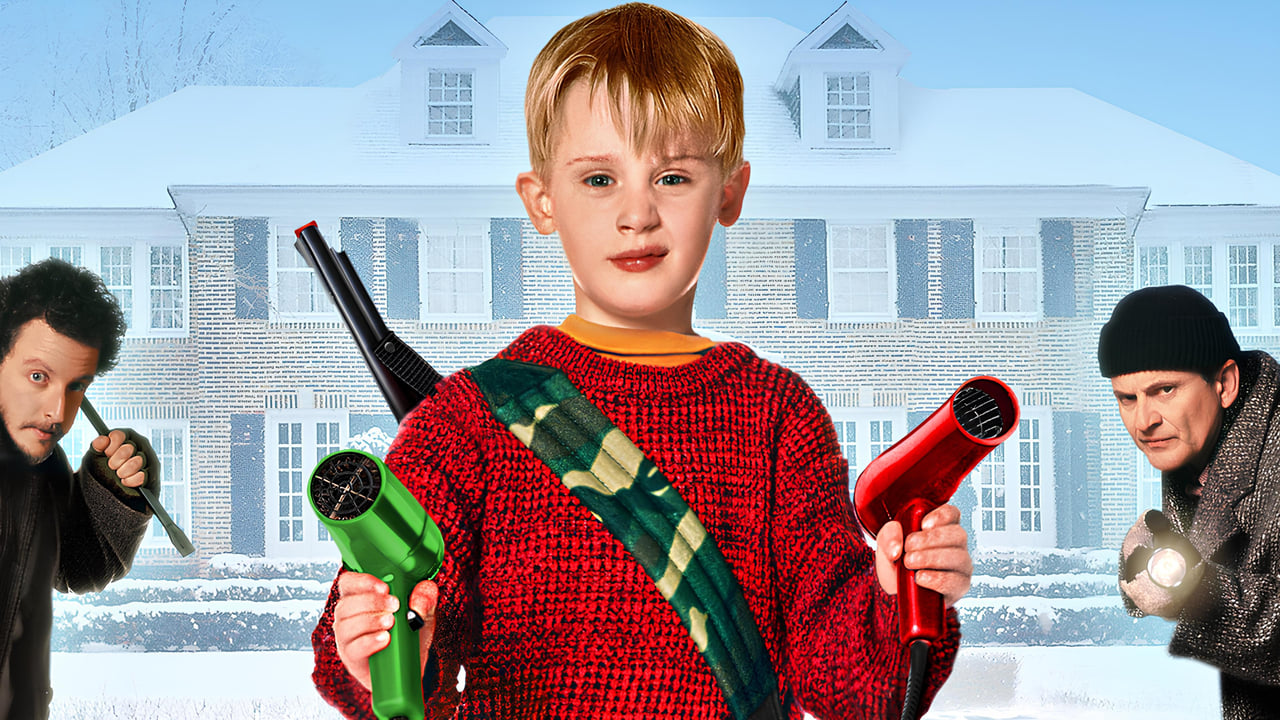
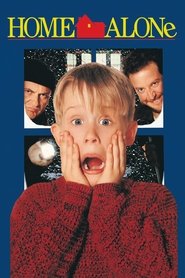
Home Alone (1990)
Release 25th Anniversary Edition Remastered Blu-ray (20th Century Fox)
Columbus and Culkin discuss child-work restrictions, sets built in a Chicago high school, practical snow, stunts, and replacing an expensive fantasy sequence with simple mechanical effects. They also cover casting, improvisation, John Williams's score, previews, and the film's theatrical reception. Their account explains the attention given to loneliness, the Marley scenes, and the family reunion alongside the physical comedy.
- Duration
- 1h 39m
- Talk coverage
- 90%
- Words
- 17,172
- Speakers
- 2
Commentary density
Highlights
Topics
People mentioned
The film
- Director
- Chris Columbus
- Cinematographer
- Julio Macat
- Writer
- John Hughes
- Editor
- Raja Gosnell
- Runtime
- 103 min
- Also on
- OneSheet ↗ OverBlack ↗
- External
- IMDb ↗ TMDB ↗ Find on Amazon ↗
Transcript
17,172 words · 54 flagged as film dialogue
Hi, this is Chris Columbus, the director of Home Alone, along with... I'm Macaulay Culkin, I'm the little boy in it. Ha, ha. You may notice a change in vocal range in Macaulay. Yeah, just the tone.
Hey, that's you. - That's me. So this was, uh-- I guess we... We could start about... Talking about the beginning of how this whole movie came about, really. I was in dire straits at the time, in terms of my career. I had just come off of a complete disaster, a big bomb. I didn't know if I was gonna direct again. I thought I'd have to go back to writing. So I was in Chicago staying at my in-laws' house... ... and my first daughter was just born... ... and John Hughes sent me, out of the kindness of his heart, two scripts. One was called Reach the Rock and the other was called Home Alone. One of them, it was rumored... I think it was this one. was written over a weekend... ... which some critics would probably jump on the bandwagon... ... and say, "Well, we always knew that." - Exactly. Ha, ha. So I read Home Alone and immediately responded to it. I thought it was just a great, great piece of material. And it talked about some of the things that I was interested in making a film about. Now, we had a meeting, I remember, in New York. I just-- It was-- You and my father were talking most of the time... ...
and I was just imitating everything you were doing. Everything I was doing. - Yeah. You'd drink your water, I drank my water. Like that. I think I did that... I think I way overdid it. I think I just kept doing it the whole, like, hour. Well, you know, the interesting thing is we... Again, it was the kind of situation where we looked at hundreds of kids, again. And I was like-- Even though I didn't know if I'd ever direct a film again... ... I was like, "Well, you know, Macaulay was in Uncle Buck... ... and I don't wanna just cast him based on John Hughes producing the movie... ... because then it looks like I'm gonna give in to John Hughes and be a wimp." And I met all these... I met hundreds of kids. And when I met Macaulay, there was just no one else who came close... ... to what we needed for this film. I mean, really, in terms of an actor... ... a Child actor, at the time, you were the most unique, original kid I'd ever seen. So that was pretty... - Oh, thank you. I mean, I totally agree with you, but thank you anyway. But it really is-- It's sort of, uh...
Because it was the fact that you, um... The camera loved you, obviously. You see the shots from the film. The camera loves you, but at the same time, uh... ... you were relatable to every kid in America... ... because you weren't an idealized version of a kid. Kids are used to-- Accustomed to seeing this ridiculously... Shirley Temple, and the curls and the whole thing, you know. And there was just something enormously real about you. That, and I could remember my lines and I had a lot of energy. That is true. You did have a lot of energy. Almost a sad amount of energy. It was, I mean.... Still do too. Uh, now, do you remem--? Like, this particular scene. We're starting from the beginning of the film. And I'm curious, because there were so many scenes in the film... We were talking before we started. where we would shoot your coverage first and then send you home... ... or I'd still be in jail. - Child labor laws. Yes, I'm still well-versed in the child labor laws. So there are obviously certain elements of the film-- Like this. Do you remember this being shot? - No. Because you weren't here. - I remember we did the whole... There was a whole sequence with, you know...
... people coming up the stairs, down. - Right. He's there, and the pizza guy's there. I remember that, and just like, you know, trying to coordinate that whole thing. But, no, in general, there's a lot of stuff... There's a lot of holes in it... In my memory. And this guy went on to do something on Nickelodeon. My kids know him. Yeah, Pete & Pete. - Yeah, Pete & Pete. Is it still on the air? - No, no. It lasted a couple years. It was actually a really kind of neat show. Yeah, my kids loved that show. But what was interesting about the whole look of this film... I guess we could talk about it a little bit. You'll even notice... Some people will think, "Well, this wasn't intentional." But we intended the film to feel like Christmas sort of. I wanted the house to feel very warm. You look at... - Greens, reds. Macaulay's wearing greens, a green and red shirt. There's a green and red jumper sweater on this guy back here. The wallpaper is all... - That's very clever. All conveying a warmth of Christmas and something that, uh... It just was interesting to us. So it wouldn't be over-the-top, but it'd feel warm.
I wanted the house to feel like a warm place. Joe Pesci. What do you remember about Joe Pesci? What is, like, your first--? My first-- Gosh, I don't even... I have-- I still show this. I have a scar on my finger. - Uh-huh. We'll get to that part near the end... - Ha-ha-ha. ... when, you Know, he says, you know: - Okay. "I'm gonna bite each one of your fingers off, one at a time." During rehearsal, he actually bit my finger a little harder than I think he thought. I still have a little scar on my finger. It's my little Joe Pesci tooth mark. I'm telling you something, I believe... And I know Joe would probably get a little upset with me about this... ... but there was a little professional jealousy from a lot of the actors on set... ... because you were the star. There's this little kid who was the star, who we were all paying attention to... ... who was carrying the film. And there was a lot of passive-aggressive stuff going on. And I don't think Joe meant to bite through your finger... But, heck, you know, you never know. He was not particularly happy during the course of making this film.
And I don't-- I think he would probably say the same thing. He had just come off of Goodfellas and Raging Bull, and he was... I don't know, did he win the Academy Award? He won for Goodfellas. His acceptance speech was, "Thanks," and that was it. Okay. Well, there you go, so, um.... And when he... I remember I was such a fan of his. Asking him to do the Goodfellas... The clown speech, you know. "Make me laugh," you know? "What do--? Am I funny to you like a clown?" And he would do that every day, and it was great. But at the same time, I could feel it from the actors. Because there's always a sense of rivalry between actors. There was this feeling of, you were the star of this movie, and that was un... That was not really common at the time. - Yeah, yeah. It created an interesting tension on the set, I have to say. Yeah, see, I never really felt that, but I was 9. Everyone around here knows he did it. It'll just be a matter of time... ... before he does it again. What's he doing? He walks up and down the streets every night... ... Salting the sidewalks. Maybe he's just trying to be nice. No way.
See that garbage can full of salt? That's where he keeps his victims. The salt turns the bodies... ... Into mummies. Wow. - Mummies!
Look out!
So this, uh.... What's interesting about a lot of this movie is we would always put fake snow down. The foam and stuff. - The foam, and that's really... We had a Wisconsin ski... A bunch of guys who worked for this ski resort in Wisconsin put down snow. But... - That poor statue. Yeah, the statue was a running gag, and this guy... A lot of this movie was made on an extremely small budget. At the time, the picture was at one studio... ... and that studio didn't wanna make the movie, because of a $2-million difference... ... and it went over to Twentieth Century Fox. And we still were... We still made the film for a little above $18 million... ... which at the time was still a small budget. So we had to make things stretch, which we'll talk about through the picture. One of the great things about working with Pesci, I have to say... . IS his improvisational skills were terrific. And it was because of his training with Scorsese that... ... even on a picture like Home Alone, really comes in handy. He's a very funny guy, Joe. - Yeah. And his comedic instincts were really something I'd never seen before. Little snippets in pictures like Raging Bull and Goodfellas.
But his ability to improvise was just phenomenal. And then John Heard. I cast John Heard because John Heard was someone I was always a big fan of. He was in this picture... It was called Cutter and Bone. Now it's called Cutter's Way. And his performance should've gotten an Academy Award. I've never seen it. It's Jeff Bridges and John Heard, and he is just amazing in that film. I was a huge fan, and it was always a dream to work with him. He also did this old film called Head Over Heels. And he was kind of a leading man back in his day. He's just a wonderful actor... ... and another guy who didn't really know why he was in this movie. At the time, he was sort of like, "Why am I doing this?" I remember feeling a certain amount of discomfort from him. He was like, "Why do I have to do this? Why am I in this kids' movie?" You know? "I'm a good a--" Understandable. No one really knew what this movie had the potential of becoming. We had always hoped it would be successful, but we never knew. Um.... Pfft. I always knew. You always had an idea. - I always knew. Now, this scene.
Do you remember coming in on a Saturday to rehearse this scene? Yeah. - We had to rehearse this because it was so... Which was so chaotic with everybody. We ate so much pizza. I didn't wanna eat lunch. And this is something that was interesting. We... You'll notice that there's a rare shot in the film where... There's your brother. - Yeah, there he is. How are you guys--? He's working now, right? He's doing very well. Oh, yeah. He's doing very good, very well for himself. Un, this is typical of the style of this movie. Not the vomiting, obviously... ... but the separation of actors in certain scenes. Because Macaulay's time was so valuable... ... we needed to shoot Macaulay separately... ... and sometimes other kids as well. So you'll always see... I tried to block sequences where I could sort of keep Macaulay off by himself... ... and keep the other actors in another space... ... so I could shoot people separately. Child labor laws again. - Child labor laws. And we're-- And Kieran had to reshoot the chair in the face, I remember. Oh, yeah. - Like, he had to come back later. He was upset he had to get his hair cut like Fuller again. Oh, he was? - Ha-ha-ha.
Well, he-- We made a special, very light rubber chair... ... so when it... - Yeah, that's... Yeah. That's-- I remember that. Catherine O'Hara was someone who I had, uh... ... Just loved her work on Second City TV. - Yeah. I mean, I was, uh... Aside from Saturday Night Live at the time in the '70Os... ... Second City Television was the-- Sort of the place where you learned about comedy. And for me it was... I was just such a huge fan... ... SO It was, again, a real honor... ... to be able to work with her on both of these films. Yeah, no, she's incredible. Even just the stuff she's doing now. She's still--? Oh, it's great. It's great stuff. Both of his kids are still going to school here. I guess he missed the family.... You got a pretty good cast. Yeah, it's kind of interesting for a film that... But we treated it... The weird thing about this film... ... and the reason I think the film has kind of stood the test of time for a lot of kids... ... IS because we always treated it with respect. We never felt that we were making a movie for kids. We were making a movie for the parents as well.
It had a lot of appeal. And you never-- You wanted to... You wanted the photography to have a certain elegance about it... ... and the camera to be moving. And it was really never... So many times today, people try to make kids' movies... ... and they always cheapen them. And we never-- I mean, certainly we got cheap with our jokes. Let's not pretend that we didn't. - Ha-ha-ha. Oh, yeah. No, I mean, it's Three Stooges, you know? - Anything for a laugh. I
don't want to sleep with Fuller. He wets the bed.
That's also the reason I got the part. I'm such a ham. You are such a ham. - I'm such a ham. But what's amazing is, at the time... ... I was only the father of an infant, really. My daughter... - It was Rory's age. They were both born same month. Yeah, and, uh.... So I was, uh.... I thought, "Well, he's-- This kid is really kind of over-the-top... ... In terms of the way he treats his family. He's kind of a brat." Little did I realize then, after four children later, that this is kind of par for the course. This is the way kids just treat their parents. John knew what he was talking about. - Oh, yeah. He had lived through it. John-- The meetings on this film... We would be in preproduction before we'd shoot... ... then I'd have to go to... John was a night owl, so I'd have to go to John with a... John Hughes' house from about 9 at night to 5 in the morning. I would get home and get in a half-hour's sleep and go back to the set. It was just insane, and he liked to work those hours, and we'd... That's how we basically worked on the script... ... and worked on the production design.
It was literally a 24-hour-a-day job. Now, oddly enough, you know, which is gonna sound odd to some people... . all of this sort of imagery... ... Was inspired by David Lean's Great Expectations. So I was-- Obviously, we didn't fully get to that point... ... but some of the black-and-white photography in that film... ... really inspired this sequence for me.
Branch was never one of my favorite shots. Always looked fake breaking off there. We could never get it right. We never had money. Shh! Movie magic. Shh! Don't say anything. Movie magic from 17 years ago. - Mm-hm. It's hard to believe. - It really is. Now, this guy was my driver. I have a nasty habit of casting my drivers in my films. A lot of these guys are Transpo. - Both of those two guys are Transpo. And that guy was Pete, who drove me every day to both Home Alone films.
Peter! We slept in!
This is a good place to bring up the score. John Williams was not the original composer. If you have one of the early posters of Home Alone in your attic somewhere... ... It says "Composer Bruce Broughton." And Bruce Broughton was the original composer... ... on a film that I wrote called Young Sherlock Holmes. And I loved his score for that film, so I met with him and hired him for this. He was not available to do this... ... and he essentially was doing The Rescuers Down Under. I think that's what it was. So we lost him. So we had no composer while we were shooting... ... the second half of this film. And we went to John Williams thinking, "He'll never do a film like this." But he saw the film, loved it and decided... Amazing what he did. - His score is unbelievable. The score is beautiful. No. - He doesn't miss. Well, the thing is, comedy's very difficult to score... ... because it can always sound stupid or goofy. And John never really let that happen. I think one of the great things about John Hughes' screenplay here... . IS that John really filled in every possible... ... logic hole here. - Yeah. Little loophole.
Any-- You know, in other words, by putting this kid into the back of the van... ... he took care of the fact that you would be counted... The head count worked. Also adding Buzz here, confusing her... ... Just added to the... I don't wanna say the reality... ... because the film has a heightened reality, but the reality of what's going on. Yeah, and how it all happened. - And the audience always bought it. They bought the fact-- Particularly, we were concerned about mothers... ... because mothers would say, "How can you leave your kid alone?"
There's no way we'll make this plane. It leaves in 45 minutes.
Think positive!
You be positive. I'll be realistic.
If only they could imagine plane travel... ... 17 years in the future. - I know, it's true. No fluids, no liquids. I Know, and this is... This predates cell phones as well. Yeah. - So, obviously... ... the whole picture would've been... It would've ended right here. Right here. The end. and a partridge in a pear tree.
We shot a lot of this film on location in Chicago. This was shot at O'Hare Airport, actually. That was just chaos because it was still a functioning airport... ... while we were running through it. And the key is, here, is we were shooting... When we were shooting this first picture... ... N0 one knew who Macaulay was. In contrast with shooting Home Alone 2... ... where there were busloads of people following you around. That was crazy. - You suddenly became... ... one of the Beatles, um... ... which was a whole different vibe in terms of... We wouldn't have been able to shoot the way, you know... The way-- On this budget, the way we did. Duck into any airport and, you know.... I
get a window seat!
Didn't you shoot at Midway? Yeah, we shot at Mid-- I think we shot... There is my daughter, Eleanor. And my mother-in-law, right there. Eleanor just started high school today, so there you go. Oh, wow. - Yeah, so.... I'm getting old. - Time has passed. And there's my wife, Monica, as the stewardess, so it's a family affair. You're in the second one with your daughter. I'm in the second one. - In the toy shop. Yes, having looked as if I'd eaten most of New York City at the time. Yeah, yeah. - I was enjoying myself. Uh.... - Welcome to my world. Uh, this was one of the funniest shots, I remember. When people first saw you open that door, and your hair was all sort of... Because usually in movies people don't think: "We're gonna mess up his hair to look like he had a night's sleep." People wake up and they look like... - The Lindas. Hair and Makeup. Scratch my butt. - That was in the script, actually. That was a John Hughes-ism. That was very-- John was very perceptive, and the script read wonderfully, you know? It was like... It was a movie on paper, essentially... ... and you realized that this had a lot of potential.
Someone I got to work with, Maureen O'Hara... ... on a picture right after this... - Mm-hm? ... SO... - I did a day on that. Yeah. We cut your big scene with John Candy. You cut all my lines out. - Yeah. It was kind of like we were trying to duplicate Uncle Buck. Yeah, yeah. - I remember that, and it was just kind of... Felt like we had been there, in a sense. Um.... More people saw this picture, so you're Okay. Yeah, no, I'm.... Thanks, Chris. Now, this... - Ha-ha-ha. Thank you. We resorted to stock footage for any shots you'll see of airlines... ... coming up, shots of Paris. We had no money to go shoot those things. And this was a set that already existed... ... that we put back together so we could actually shoot. The, uh-- This is first-class when you could actually have real silverware on the plane. Yeah. - Yeah. Most of our sets, incidentally, were in a... A lot of them were in a high school outside of Chicago. We shot Uncle Buck there too. - New Trier High School. Yeah, yeah. - And, um.... Some of the sets-- I'm trying to remember where the house set was. We were in some warehouse, weren't we?
Or was this New Trier as well? It was in the gymnasium. - Yeah. It was all in that school, the interiors. - Gymnasium. We also shot a lot at the house, at the real house. Oh, yeah. - The second one... ... [I think we spent half a day in the real house. Because they... The people who own the real house... ... wanted a little more money in the second one. Everybody wanted more in the second one, and rightly so. Me included.
Um.... This was, uh... You know, it was interesting, every time we'd preview the film... The film used to be much... Not much longer... ... but significantly, 10 minutes, which in a film like this... In a kids' movie, yeah. And it-- There was a lot of you looking around the house, looking for... And it just... We just needed to tighten it up. This was a sequence that was really harmed, really... I mean, not hurt, because it worked in the film... ... because it's really what the genesis of the film was about. But one of the things I wanted to do, was I wanted this furnace to come alive... ... to really chase you across the room. - Ha-ha-ha. And I wanted it to turn into, like, this CG furnace that got up on all fours... ... and chased you to the stairs. - Wow. And later I'll talk about it. There was a fantasy sequence that was gonna cost over a million dollars... ... that was cut from the film that I was always depressed about. But see, we ended up putting two guys with strings and a couple of lights... ... because we had no money. Again, it all comes back to your performance... ... because you're the guy who makes this all work... ...
because of your reactions... ... because people believe you're in this situation, you really... You make all of these things that were a little ropey at the time... ... to say the least, you make it work. Like this. Well, I'm glad I could help. - Thank you. Look at this expression. This is truly... I remember the audience when they saw that the first time. That was one of the times where they started to burst out laughing. And we'll talk about some of the screenings for this film later. It was unlike anything I'd ever seen. - Oh, really? When this film was first screened for an audience, it was incredible. I
made my family disappear.
You're completely helpless. You know, Kevin, you're what the French.... This, again, was a situation where we didn't have money to do... To make these people actually appear over your shoulder, so we were... We had a guy, who I'll talk about later, his name was Kevin Nordine... ... who literally lived in his mom's basement in Chicago... ... and he would do his visual effects in the basement. He had all this stuff set up, so he would do... We only had like $200 here, $500 here... ... and he would do these effects incredibly cheaply for us. Probably a billionaire now or something. - Yeah, I hope so. Or still living in his mom's basement. One or the other. Well, he did a-- Later in the film, I'll talk about an effect he did. This was... This must've been fun for you. This was great. - These are the sort of... Well, I had some people down on the ground there, ready to catch me if I fell. And they were just covered in popcorn by the end. Now, do you--? I mean, on the whole, did you have--? I mean, do you remember having fun shooting the film'? Yeah, I had a lot of fun doing this stuff.
Actually-- Any time we're just actually getting down to work and stuff like that... ... I always have a blast, and this was just so much fun. Basically it was just, you know, me being a bratty kid. Which was pretty easy for me to do. - Right. Just be very loud and big.
Buzz, I'm going through all your private stuff. You better come out and pound me!
This was something that, when I read this in the script, I was like: "How am I gonna take a photograph of a girl... ... and not make her feel bad for the rest of her life when this pops up?" Wasn't it a boy? - It was a guy. Yeah, I remember that. - I thought the only way to make... ... a really frightening-looking woman was to cast a guy. I remember he had two pictures. There was a skinnier one and a bigger one. They were both frightening.
Again, l've-- Because of this film, I... - There was a whole speech there. Yeah, I think that's in the... We've got outtakes on this DVD... ... SO I think that'll probably be there, but the... I've not let my children ever buy a BB gun because of this movie. I had one. It got taken away. Did you? - Oh, yeah. Was it an airsoft gun or a...? It was a-- You know, you pumped it... But, you know, you could shoot pellets out of that thing. Yeah, I don't have that anymore. - No. Well, that's good. There's a reason why. When we shot-- John had written this movie within a movie... ... called Angels With Filthy Souls. And we actually had to shoot a film that resembled a film from the '30s... ... which unfortunately, you don't see on TV anymore. And there's not a kid in America... ... who would pop in an old black-and-white movie in 2007. Yeah. Just-- You know, Macaulay was a pretty sophisticated guy. He's watching old movies back then. - I was very worldly. But kids would do it back then. And the interesting thing is we got two Chicago actors to do this film... ... and we just studied our old '30s and '40s film-noir gangster pictures... ...
and re-created them. And, you know, on this budget, it actually worked... ... because they were basically cardboard sets... ... and a few lights creating that old film-noir style. This is great. This stuff is classic. - Yeah.
Keep the change, you filthy animal.
Mom!
Now, this is the situation, John Heard was reading this book... ... and he said, "I'd like to be reading on-screen." We had no rights for the book, and we were... Of course, I got a call from Legal at Twentieth Century Fox the next day. We didn't clear the book, but luckily it was... It was okay. - It was all right.
This is a... You know, this is an interesting scene... ... because, again, the comedy... These two really worked well together. You believe them as a couple... ... and the comic timing is really pretty sweet, I have to say. I remember when I watched a lot of the dailies... ... they would always fool around whenever you... You wouldn't yell, "Cut," and they kind of just... They'd keep going a little bit and do some silly stuff. I think they really-- You know, again, it was a kind of... At times, it was tense being on the set... ... because these actors, who are so good, didn't know why they were there. And on the second one, that eased up completely. Because everyone felt that they had a responsibility... ... because they knew a lot of people would see this movie. Now, here's something I always felt pretty horrible about because... ... particularly once you have your own kids, this is the last thing you want them to do. This was a big worry, I remember. - Oh, yeah. Whether or not this was gonna stay or not. See, no one really ever understood when I'm lining up the sled... . that it doesn't exactly line up with the door.
There's people who watch it who actually giggle, I remember... ... saying, "That doesn't line up. How is he gonna do that?" Yeah. You would've smashed into the wall. Yeah. But that was Larry. I remember watching the dailies. That was hilarious. Larry, our stuntman. - Yeah. Stuntman, literally. - He was probably 20... No, maybe he was about 30 back then. - Yeah. And he was your size. - Yeah. He was built like me too. Now, he was amazing. He would do anything. There's one moment coming later when we'll talk about Larry. Where he falls? - Where he falls, and he froze that day. He didn't wanna do it, but Larry had... As most of the stuntmen did in this movie... I don't know if these types of stuntmen exist anymore. Yeah, I know. - Willing to kill themselves for... It's amazing. I have a lot of that, yeah.... ... a lot of memories of these guys doing all kinds of crazy stuff. Oh, yeah. - They were my favorite, the stunt guys. The stunt guys were great. - When you're 9... ... they can do all kinds of neat stuff. - That's true. Ha, ha. Oh, yeah. They were always my best friends.
We'll talk about-- A little later, we'll talk about Troy Brown and Leon Delaney... ... the two stuntmen for Joe Pesci and Daniel Stern, who were truly... Truly went above and beyond the call of duty. I haven't spoken to them in years... ... but they probably are still in a great deal of pain... ... because of some of this stuff. Daniel Stern is interesting... ... because Dan Stern was my first choice for this role... ... and the studio didn't wanna pay him at the time. We cast another actor, unfortunately-- This is the only time in my career this happened. and we did a screen test with the other actor and Joe Pesci. And the screen test was flat... ... and the other actor just couldn't really improvise with Joe... ... and you didn't believe him in the role. And I had the-- I had the horrible situation of actually telling the actor... ... I couldn't use him. Basically firing him. Oh, boy. And then the studio then understood. They saw the screen test, and they were willing to hire Danny... ... which was really an amazing working situation for me. He's one of the funniest guys I've met. And he truly was up for anything, as we'll see later in this commentary.
I still have that sled in my office.... In my office here in San Francisco. I just saw it before I came over here. Signed by everyone. Signed by everyone. That's really cool. - Yeah. And when I get a little older, and things start not working out in the career... ... 1 can sell it. - EBay. Yeah, eBay.
Uh, the key here was-- You know, which you'll see a lot of in the film... ... Was to go against the traditional concept that comedies have... ... to be shot in a bright way. Kept things dark, kept things a little scary, a little sinister... ... which you don't see in a lot of comedies. You still don't. There's this in... You know, this feeling that everything has to be bright and cheery. And that's why I think this film appealed to kids... ... because kids actually... - Yeah. They're sold on the danger. And the interesting thing is the, uh.... When I was a kid, one of the things that scared me were burglars. In Cold Blood was the most frightening movie I'd ever seen... ... So this was a movie I wanted to do because of that as well.
Now, these are situations where you were... ... probably home at this point watching television. Oh, yeah. All snug in my bed. Because, yeah, you only had five hours a day of real shooting time. Did you go to school as well? Yeah, yeah, I had tutors and all that stuff, so you got... Yeah, it's like 10 hours you get... ... and, like, three of those are for school, one of those is for lunch, and just like... I'm surprised you guys got anything.
Now, we are in another... We shot this in another area of... It's either-- This is-- I can't really remember. This is either Midway or Chicago's O'Hare.
We have to use the phone, please.
I guess by casting one real French person, it became... It's Paris. - We're back in Paris. I wonder how many times you actually hear the phrase in the film. "Home alone." - "Home alone." That might be the only time. Kristin, right? She went on to do... She was on ER for several seasons. - Who? Which one? The tall brunette. - Oh, yeah, yeah, yeah. And that was Angela Goethals on the right. - Angela Goethals. She's done-- She's still doing stage work. Yeah, she's back to work again and stuff. She went to college for a couple years. She played my older sister in my very, very first movie also. So that was kind of funny. What film was it? - It was called Rocket Gibraltar. Oh, right, I remember that. Yeah. - Yeah, Burt Lancaster and a bunch of people.
This is one of those nights... Again, I don't think we were able to shoot with you past 10:00, right? Something like that, yeah. Luckily, we were in the winter, so it was dark in Chicago around 4:30, but... I remember we had one of those days where it was... It got unseasonably warm. Like, it was like 80 degrees. And they were bringing in trucks of ice and foam and all that stuff. I just remember that day, where we just couldn't keep the snow on the ground. When the audience saw you scream like this, it was just-- It was a roar. They-- Because, for some reason, you just did... Your expression was just hilarious. And this, we just decided to do for the fun of it... ... and it actually worked. Why it worked, I have no idea. Again, there's-- There's-- We start... Stylistically, you looked into the camera a couple of times, and it seemed to work. It seemed like you could break the rules a few times. He was a good screamer, that Culkin kid, I swear. He could scream like nobody's business. Hold on. This was in the high school. Now, we had to b... In editing this scene... ... we had to build this entire scene... ...
around where this guy's doughnut fell on the phone. I mean, it sounds like a ridiculous way to edit a sequence... ... but because he was this-- Larry Hankin was such an improvisational actor... ... Wwho appeared in a bunch of John Hughes' films... ... we were sort of stuck following his cue for this entire scene. You'll see this... The doughnut thing drops on his receiver... ... and we had to cut back to him as it fell off, so these are the... These are the things that drove us crazy as we were editing this film. just to check on him? Yes!
Let me connect you to the police. They just transferred me. Rose! Hyper on 2. - Hang on. "
Hyper on 2." Any luck? No. You know, I... The studio rejected my idea of a sequel, which was years... You know, now, you actually... You being in jail... ... coming back to take revenge on Joe and Danny... ... who live in the suburbs next to each other, and they've got their families. Gone straight. - Gone straight. And you've got your... - That's great. I see something there, but they... For some reason, the studio just won't go for it. Crazies.
Oh, now, here is... Again, nepotism rears its ugly head once again. This is my father-in-law... ... who made a career out of being in a lot of my films. Still does, actually. And he still gets health benefits from SAG... Nice. - ... SO It's important for him. But he looks exactly the same. He hasn't changed in 17 years. "
Tell them to count their kids again." You can't bump somebody or ask or
--? Now, we have, again... ... one of film and theater's great actresses here. Hope Davis.
Well, that's a relief. Everything here is booked.
Nothing to Chicago? This is her first film role. - You got a good cast there. She's obviously not French, but she is-- She did a great job.
The only thing is a booking for us on Friday morning. Friday morn-- That's two days away.
Look, honey, the kids are.... You had Ally Sheedy in the sequel. Ally Sheedy was in the sequel. Yeah. - Yeah. But we-- I think we were piggybacking movies at that point. We were just finishing Only the Lonely, and Ally decided to do it as a favor. We were mixing and matching cast. - That's true. Ha, ha. I did a little stint in that one, Ally did a little in that. Is that okay? - Yes. I'll wait. A bit of the New Jersey influence here. We had one of my favorite bands at the time... Still pretty big in England and places like that. Southside Johnny and the Asbury Jukes... ... recorded a version of "Please Come Home for Christmas." It was my opportunity to get to work with some great soul singers... ... and some people I'd always wanted to work with for the soundtrack as well.
And in the end of the movie... ... she gets there pretty much the same time as the rest of the family. I mean, maybe five minutes before. - Oh, yeah. So I don't know. I mean, maybe she should've just waited. Well, I think that was always the point. - Patience.
We shot two different versions of this... ... and you weren't sure which ones you were gonna use. What was that? - We ended up using both. This one and there's the singing one, and you ended up using both. Oh, that's true. Right. I didn't know we shot them as two different versions. We just-- Yeah. - Yeah, yeah. There it is. - There it is. The face that launched a thousand posters. I never expected that to be the... It was Joe Roth at Fox who came up with that image. And realized that that should be the iconic pose. Oh, here we are. - This is Larry's... Larry, our stuntman, who is basically Mac's size... ... maybe a few inches taller, who was 30. Who is completely-- I mean, Larry was just a very brave guy and a tough guy. He was a pro. - He was a pro. But when he got here to do this particular stunt, he froze that day. This was dangerous though, you know? - And it was dangerous and I... You know, you have no protection. So it was-- It took quite some time to film. He was fine afterwards, and it's actually... Looking at it, it's not one of the more violent stunts in the film. But it's dangerous.
- Yeah. Because it's not like you got a harness on. No, no, no. It was....
There's a Barry Bonds baseball card. - Yep. For those who wanted to see Barry in his younger, thinner days. Um.... Now, this was actually the real house here, which was in Winnetka, Illinois... ... and, um.... It was interesting because we were... We were able to shoot a great deal of the film at this house. None of the interiors that you see in the film were shot here... . UM... ... but this house worked out very well for us. Strangely enough, you know, with today's budgets... ... we would've built the back of that house completely... ... because the fact that we did all of those stunts later in the film... ... on the actual location was just ridiculous. And they were very friendly. - They were great. They had T-shirts made up. - They loved it. They used to have hot chocolate and stuff for us... ... and invite us in. They were great. They were a great family. It's incredible because I see... ... the things people do to people's apartments and houses... ... when they rent them out, like, you Know, for production. I'm like, "I'd never do that." - No, I know. Once you learn... Once you've seen it done, you know... Not to discourage any of you guys out there listening... ...
to renting out your houses to future productions. But make sure you're paid very well. - Yes. That voice on the answering machine was Raja Gosnell... ... who was the editor of this picture... ... who's gone on to become a director in his own right. I
knew they were. - Silver tuna tonight.
The stuff John Hughes would write, things that I hadn't heard... ... John must've known by talking to people from Chicago. "Silver tuna." - "Silver tuna." The Big G. You know, these kind of things. First day of shooting. - Yeah. First day of shooting on the picture was this scene. And we knew we kind of had something special... ... with your performance and just the look of the film. We did a tremendous amount of setups in one day. I think probably 31 setups in one day, which was... That's a lot. - Which is a lot... ... for something that wasn't being done for television. And, uh.... "I
don't know."
- I love this guy. I love when he says that. It's just, like, a great improvised moment. "I
don't know."
Old Man Marley. Roberts Blossom... - Mm-hm. ... who, uh, was in several horror films in the '70s, I remember. I worked with him again later on, on some... It was some commercial. Something to do with Ellis Island. - Really? Yeah, yeah, I worked with him pretty much right after this. Like about a month after we wrapped up. Did you guys do something together? - We didn't speak or anything. But it was, like, a part-- Like, he played my grandfather and it was a... It was something to do-- I think when they reopened Ellis Island after... As a tourist thing or whatever. But, yeah, worked with him right after. This was all shot in the neighborhood of Winnetka, Illinois, on location. That was one of our lead stuntmen... ... who got his daily workout here. Another scene that was shot in a ridiculous amount of time. Again, we had no time to really shoot anything... ... and no time to do more than one or two takes.
It just keeps going. - It does, yeah. It's just like.... Yee-haw!
And, now, I can't remember if this was you... ... or the stuntman running across the bridge. Or even just-- Or one of the stand-ins. I remember I had like 10 stand-ins. Oh, that's true. That is true. And so then you guys would do a lot of, like, just stuff after I'd go off... ... or at the same time, even. "I'm a criminal." I think this was the first day too. Yeah. - Yeah. This entire concept of the Wet Bandits... ... I'm trying to remember if that was in the original script or not. I don't know or.... I think possibly it was. I thought... For some reason, I had... I have a memory of Dan Stern coming up with it, and I could be wrong. You know, that's why I really wish John Hughes was here because he could... But Dan, for whatever reason... ... was obsessed with the concept of the Wet Bandits. The Wet Bandits and the Sticky Bandits. - Yeah. But this whole look of Dan's is this sort of white-trash, trucker look. It's just something that didn't catch on, unfortunately. And just the contrast in size between the two of them... ... and just height and just build. But the, uh...
All of these were little touches by Dan, which, on a movie like this... ... people, you know, don't talk about, don't notice... ... but putting the snow globes from each house with the... You know, attaching them... There's a scene on the deleted sequences... ... where Dan wanted to... He's stolen a cappuccino maker, and they share a cappuccino in the truck. I remember that. - I think it was that scene. This was all shot backwards. - Oh, yeah, that's right. Coming up here. This. So I would scream, and then the car would back out... ... and I would walk backwards. And we did it several times. And it looked pretty awful each time... ... and then finally, that one shot, it worked out perfectly. Well, you had somebody shaking the van, right, you know, at the beginning. And I had to walk, like, backwards, like, heel first or whatever.
But it works well because it's so close to my face when I'm screaming. It's so fast. It's so fast. - Yeah. This wardrobe here for these guys, you know, was interesting... ... because we, again, wanted it to be slightly Dickensian, you know? The whole feeling of-- It was... This was like a... This movie felt, for me, like a smorgasbord or a collage of Christmas. Everything-- Every littke memory I had of Christmas, I wanted to put into the film. So whether it was a snippet of Great Expectations... ... or a snippet of something Dickensian that I remembered as a kid... ... whether it was Fagin or some... That's where some of that wardrobe comes from. The key to most of the wardrobe in the film... ... although some of it hasn't aged as well... ... IS that we wanted it to have a feeling of timelessness. So when you watch this picture now, people don't... It doesn't look like 1990. - Yeah, yeah. There are little giveaways here and there... ... probably mostly in hairstyles of the adults and some of the wardrobe... ... but that was the key. The key was to create something that felt fresh 20 years from now.
This is one of the points of the picture that always bothered me, but I got... I felt because it was a comedy, it worked. These guys, Harry and Marv... ... say they're not gonna go into the church to find the kid. It's like, getting into some mysticism here? Are they gonna be struck by lightning? "
I'm not going in there." "Me neither."
But l.... Technically, I haven't really done anything to them either. No, that's true. - I just looked at them weird.
Yeah, l....
Sure fooled them.
When those guys come back, I'll be ready.
Now, this was... Now, that was something that really bugs me about the movie... ... IS that was a note from someone, somewhere in the studio... ... that we had to dub that line: "
When those guys come back, I'll be ready."
Because it was confusing to the audience why this was happening. But I don't remember a... I remember screenings when that line didn't exist. People were still laughing. But this is, again, one of those areas... ... where the audience was so into it... ... that it was hard to hear anything. When they... When Michael Jordan comes around here... When people start to see this, they started snickering... ... and then as the camera panned up to Michael Jordan, it was a roar. And it never really stopped. And then with your... - Dancing around? I can't even compare it to any particular rock star. Whoever it would be would be... Whatever that dancing was, the audience was just into it. They were laughing so hard.
Because originally, I was playing the piano. That's the way it was written. - Right. And I took a couple piano lessons, and it just wasn't working out. I forgot about that. That's absolutely right. - Yeah, yeah. And you guys came up with something much more clever. Well, we had to make it work. That thing you're wearing around your neck is a laugh box. I don't know if people know what those are. You press them and they make the sound of laughter. Here we go, the stock shot of Paris... ... because no one would pay for us to go and actually shoot that. Another one.
And this is another... Yeah, all the Christmas movies in the background. Well, this is at a time... ... before It's a Wonderful Life was purchased by NBC. Now It's a Wonderful Life can only be seen once a year. Back then, It's a Wonderful Life was on every... All the time. - For like two weeks. You had Miracle on in the background earlier... ... which is one of those just... You know, gives it the Christmas feel. But It's a Wonderful Life, people got sick of... ... because you could see it at any time of the day during the Christmas holidays. This was, again, shot on a sound stage somewhere in Chicago. I don't know if we were at New Trier.... We may have actually rented an apartment... ... and put a slide of Paris outside of the window there. I'm trying to remember.
There was a lot of this in the film that ended up being cut... ... first from the script, and then there are a couple of deleted scenes on the DVD... ... where we were cutting back to the family. And we found that preview audiences didn't care that much about the family. They wanted to hang out with you. They wanted to be in that house, and we... There was a restlessness to get back there. They wanted to get back there time and time again. They wanted to see what you were gonna do.
No. For three reasons:
A, I'm not that lucky. Two, we have smoke detectors.... One of John's funnier lines. "A, two." "D"? Is it "A, two, D"? I think so, yeah. - Yeah. There it goes again. This guy went on to... This guy who played the pizza guy moved to L. A. and had a couple of roles... ... but I haven't heard from him since I think we shot this. I've seen him in a couple things, yeah. But watching this movie again today, I thought to myself, "This was really--" You know, you think about how fun it was to shoot the movie... ... and I think that fun translates to the screen because we did laugh a lot. There was a lot of laughter, a lot of good times. Okay.
What about the money?
What money? These would sort of be our split days. We'd shoot you in the morning, the first part of this... ... and then later that night, we'd go back to the house and shoot. Plus, am I--? I think this is the real house... ... and then this is the sound stage, isn't it? Yes, exactly. - Yeah, yeah, yeah. So the, um.... But it really... In terms of shooting the film... ... It was possible to shoot it with someone so young... ... because you were separate from.... And that was really helpful. And we used this gag twice too. I Know, and it worked. It seemed to work twice. Although that's because Danny Stern just brought it to another level... ... when he's at the door coming up, SO.... Yeah, we used... Because of budget again, we used a lot of Chicago actors. This guy was one Chicago actor that we found in the city... ... and then later moved to Los Angeles.
Ahh.
A lovely cheese pizza, just for me.
People don't talk like that. They think about those things... Yeah, but they don't actually say it out loud. I Know. This is... - Oh, the "dangly ones" scene. The "dangly ones," yeah. These are people that John Hughes had worked with in the past, two actors. Oh, that is beautiful! They're boarding.
She's offered us two first-class tickets if we go Friday. Plus a ring, a watch, a pocket translator, $500 and...
The earrings.
She's got her own earrings. A whole shoebox full of them. "
Dangly ones." There it is. - Always a quotable, uh....
I'm begging you. From a mother to a mother. Please!
Oh, Ed. - Please! Oh, all right.
One of my favorite lines, "dangly ones." I Know. I don't know why that's a... People still, like, come up to me and say it. They'll say that sometimes. "Dangly ones." And I'll know exactly what they're talking about. I wonder how many kids who watch this today remember Johnny Carson... ... which was, again, a perennial, you know. He was sort of David Letterman and Jay Leno wrapped into one. But this was also right near the end. I mean, this... He only had about two, three more years after this. Yeah, yeah. Now, do people still recognize you from the film? Yeah? - A lot, yeah. You know, it just... It comes with the territory, but, yeah. It's a curse and a blessing. I have the... I pretty much have the same face. Right. - Just a little bit older. Only a little bit older. Yeah, here's the other one. Look at this. I mean, you have to say... You can't imagine, in dailies, adults just dying of laughter... ... because you were a ham. Yeah, I was a ham. - I mean, if you wanted to.... I love how I never brush the back of my head too. It's such a child thing to do. My son said to me that...
Years ago, when he saw this movie, he was like... He goes, "Dad, it hurts much more to spray your armpits... ... than it does to put shaving lotion on your face." And considering I didn't even shave, either. Yeah. Do we--? Didn't we do--? We were... I think we even shot one of those kind of sequences for the second one... ... with, like, an electric razor or something like that. Yeah, yeah. But we actually never did that gag in the second one, did we? I can't remember. People accused us on the second one of just remaking the first one. Which, to some extent, we did. Yeah, that was what was enjoyable about it. It was fun because you actually got to push the envelope a little more... . In terms of how painful the stunts could actually be. Yeah, gosh, I mean, if John Hughes said he could write this on the weekend... ... I wonder how long it took him to write the second one. Just, like, a little bit of cut and paste and, boom, you're done. You're there. Sequel, bam.
Are those microwave dinners.... Uh, it was interesting, I have this funny... You know, you'll sometimes read reviews about films... ... and people will accuse filmmakers and studios of using product placement. But it's such a difficult question sometimes in movies... ... because if you see orange juice that doesn't look real... ... then it takes you out of it. So it's a very... We had no product placement for any of this movie... ... because no one thought it would do any business. I think the only product placement came later... ... with something called Juicy Juice. That was it. - I remember that. But all of this stuff... Well, I-- Remember when I'm doing the--? Saying grace at the table? And we did one where it's like, "Macaroni and cheese dinner"... ... and the other one was, "Kraft Macaroni & Cheese Dinner." We did two different takes of that. - Oh, my God. Okay, this was scripted, and then at the very end... ... you just told her to keep asking questions. I'm just like.... I forgot what it was. I think you ad-libbed that, "You're a stranger." That was... "Can't tell you that, because you're a stranger." And that got, again, a big laugh. Oh, this was good. - Day one.
I had to let go of the strings on the inside of the bags. Oh, yeah, you controlled it, right? Yeah, at the right time, I just let go of the strings... ... and the whole bottom would fall out. Earlier I was talking about the furnace. I had forgotten to mention, when you were eating the candy... ... when you were watching Angels With Filthy Souls for the first time... ... you fell asleep. And you woke up to the entire house coming to life and chasing you. So there were nutcrackers and toy soldiers, and it was a... It was just a sequence I storyboarded for months... ... and the studio said, "You don't have enough money to shoot it."
Shut up! Conquering my fears. - Yes, exactly. Your fears of two stuntmen with a flashlight. And a couple of strings.
Again, we're back in that real neighborhood, which probably looks... Pretty much the same, I bet you. - ... pretty much the same today, yeah. Winnetka. Now, Joe used to tell me... I don't know how I can tell this story without swearing... ... but it's an important story because he said to me one day: "You know how I go through the script, how I do it? I look at the script, and I look at the lines." And I'm like, "Yeah?" And he... I said, "Well, how do you memorize the lines?" "Well, I substitute the F-word after every line." Ha-ha-ha. - And I'm like, "What?" "So if it says, 'Go into the house, you idiot,' I say: 'Go into the effing house, you effing idiot,' and then I develop a rhythm." And I'm like, "Wow." And then he read me that scene. - This whole... It sounded like it was from a Scorsese movie.
Too bad I missed that. - Yeah, you would've loved hearing that.
I have to say, you know, sometimes you get... Critics complain about certain things, but Dan Stern in this scene... IS SO funny because of his body language. He's like a combination of a giant bird and a human being. And just the way he reacts in this scene... ... Just, again, was one of those situations that brought the house down. And the audience was So.... You wouldn't have thought that it would... Like you said earlier, that this would work twice, this gag, but... He sells it. - He sells it. All right, Johnny. I'm sorry. I'm going. One, two... 70. Another improv... Improvised moment, again, from you here. I remember asking you to just say the line... ... and kept in the movie, and the audience roared. Keep the change, you filthy animal. See, you're just about ready to laugh there. You can see it cut right before I start giggling. I don't know who, but somebody got blown away. Huh? - Somebody beat us. They're in there. Two of them. There was arguing. One blew the other one away. Who? - I don't know. I thought I recognized one of their... Dan is so wonderfully stupid in this scene that it makes it... It makes it work. Sometimes Pesci becomes De Niro. Did you notice that?
Yeah. "I don't know no Snakes." - He just became De Niro for a second there. I think they spent quite some time together. Yeah. - Suppose the cops finger us on a job.... I don't know. I read this article, I think in Premiere, saying: "What ever happened to Joe Pesci?" And I have no idea. He is now... - He came out with an album, I think. I think he came out with a singing album. Seriously? - I-- Like, year... Like 1998, '99 or something like that. He had some tasteless record in the '60s, like the early '60s... ... called Something the Stuttering Donkey or something. Some ridiculous novelty record, so he's got... And supposedly he's in Jersey Boys as a character. The play Jersey Boys, yeah. He's at the beginning. He hangs out with the Four Seasons or something. Now, this is-- This, to me, is amazing. This happened three weeks ago. I get a call from a guy doing a documentary on Elvis Presley. The guys says to me, "We've heard--" This guy's convinced Elvis is alive. He's doing a legitimate documentary. He goes, "Elvis supposedly was an extra in Home Alone." I'm like, "What?" - Awesome. He sends me this thing that is a huge... See the guy--?
The bearded guy behind the woman in white. They are convinced, these people, that this is Elvis Presley. He's come back. He's faked his death, and he was now... Because he still loves show business, is now an extra in Home Alone. So they've got stills. This guy sent me all these stills of this guy with El... Compared to Elvis in this movie Charro! where they look... Look at this guy. He's not Elvis Presley. I remember talking to the guy. But these people are convinced that that is Elvis Presley, so it's now... It may appear in this documentary, so... - And this is recent? This is--? This is-- It's a couple-- Yeah. Few weeks ago. But more importantly... Forget about Elvis Presley. Yeah, look over the other shoulder. Look over her other shoulder. There we go. John Candy, who was at the time friends with John Hughes, who later... John and I became very close. He was, I have to say... ... one of the sweetest guys in the world to work with, and one of the... And probably the funniest man I'd ever met. There's no question about that. He loved improvising, he loved trying anything... ... and his entire supporting role in Home Alone was shot in one day. Yeah. I actually-- I came in.
It was my day off. I actually came in to go see him again. And we started at 7 in the morning, and we finished at 6 a. m... ... SO It was a 23-hour day. And I don't know, uh.... I don't know if I've ever seen that kind of energy from a guy who was big... John's a big guy. That kind of energy was remarkable. He liked being on set. - He loved working. Loved working.
Yeah. Yeah, we... Some fairly big hits for us.
The thing about John was a vulnerability that was just so sweet. And that sweetness is, I think, what made him a big star, and.... Yeah, I miss him a lot. He was great. He was just amazing. I see this film, and he seems so vibrant and so alive. It's hard to believe he's not with us anymore. Another Transporta... I think that was John Hughes' driver... ... there in the yellow jacket. The teamsters, man. I love those guys. The teamsters are great. They-- They let me be a part of the union. They got me a jacket and everything. That was, like, the local 716 or something like that. I got... Me and Kieran got little jackets. - That is great.
It's on the way to Milwaukee. You'd give me a ride? - Sure, why not? You gotta get home. A ride to Chicago? - Sure, it's Christmastime. Thank you. Oh, thank you. You don't mind going with polka bums?
That's another thing John Hughes would be very helpful for. I don't know if Gus Polinski was a polka king, if he was in the original script. I can't remember how she got home, but I don't remember it being a polka band. So it'd be interesting to go back there and look at those early.... Those early drafts? - Although... ... I don't know if I ever have that kind of time unless... I've gotta go see those old Home Alone scripts. I do it every day. This is all I think about, is this movie. Consumes my being. It's always interesting, because I wonder: "How do you really feel about the movie?" Because it's the thing that... Like you said, it's like a blessing and a curse. It's the thing that propelled you to international superstardom in one sense... ... and then in the other sense... . it's this thing-- It's all... Not that it's an albatross, but it exist... It's part of your career forever. Personally, I don't think about it. - That's a good thing. Ha-ha-ha. - Yeah, right. You know, it's just something I did, you know? It was just something I've always done. It just happened to be on a bigger scale, really. Right, exactly. - But, you know.... It's just the way...
You know, just the way the... The way the whole thing worked out. - The way of the business. Yeah. Now, there was a certain critic in Chicago-- This movie... When Home Alone was released... . It was not favorably review... It was-- It got some good reviews... ... but some people really didn't like the movie. Two people who didn't like the movie, Siskel and Ebert, gave it two thumbs down. In your face. - But what was amazing about that... . IS I had to sit there and watch that, watch the show. And then three weeks later... ... after the film was this runaway success that couldn't be stopped... I think it was number one at the box office for 16 weeks, maybe? A couple months. - Some insane amount of time. So then they take... The late, great Gene Siskel. I met him. Nice guy. But then he was forced to go back to the house... ... and report on where Home Alone was shot. So after slamming us... ... he appeared in that window where Joe Pesci was... Pesci poked his head in. --and said, "This is where the scene was shot." And I thought to myself, "Well, this is sweet revenge in one sense." Had to go all the way out to Winnetka.
Mom, where are you?
Once again, I mean it, when you... John Candy feels like he's, like, the fourth lead in the film. And he's.... We shot this in a day. This particular-- These two shots... I mean, any two-shot between John and Catherine... ... In the van was shot close to 4 in the morning, 4:30, 5. That's when you get into, like, third-meal hours, you know? Oh, God. Yeah. Now, this was interesting. The elf was played by... Julio's wife. - The then-wife of Julio. I'm telling you, nepotism is a way of life in the films we do. But I wrestled with this scene. I remember reading it, thinking, "Well, how--?" You know, particularly in what's about to happen: "What are kids gonna say when they realize that Santa Claus is smoking a cigarette?" He's not-- His beard is undone. But he explains it away. Kevin explains it away. - Brilliantly. Kevin explains it. That's something parents say to their kids whenever they go see Santa. "It's not really Santa. Santa sends out these workers." You know. Santa, hold on. This guy was a Chicago actor. He started in Second City. I've seen him in a bunch of stuff since then. He was in Herman's Head. Yeah, Herman's Head. There you go.
I think he-- I think I just saw him in something recent too. Today we'd probably cast Artie Lange... ... for this role. In the '70s it would've been John Belushi. So it's... - Yeah. It is... It was actually freezing this night, so it... We didn't have the.... Now we can add breath wherever we want to, digitally. But back then we actually were shooting on nights that... Where it was so cold. Sometimes it was difficult, I think I remember, for you to speak. Yeah. - On Home Alone 2... ... the equipment froze a few times. - Yeah. Where we couldn't actually shoot, because the cameras broke. But this was a very, very cold night. Again, we were always racing. There was that intense feeling... ... that we have to get it done a certain time, and.... Well, because you had to. - We did. Yeah. And that's a stand-in, obviously. The... - The little hand. The little insert. He's acting with someone standing next to him. And the car actually broke down. This was real, I remember. - Yeah. Mm-hm. This wasn't written this way.
Son of a--! I remember the crew cracking up behind me. I don't know why, and I turned around and the car really stalled. And we didn't think-- I didn't know if it would make it into the film, but... It was great. And he ran with it. It was great. Now, again, this is-- You know... ... there's a certain level of obvious sentimentality in this film... ... but it's one of the things that holds the film together... ... because I think people are willing to... If you watch Home Alone in the summertime... . _ It's a nice movie, but if you watch it at Christmastime for whatever reason... ... these images tend to resonate a little more. And they feel a little more touching. This particularly, for me, was one of the things... ... that fascinated me about doing the film. There's my little nephew, Bob. Gotta have some family there. - More family. But it's one of those things that really attracted me to the film... ... which was this idea of loneliness at this time... ... because it's not just about being happy and being with your family. It's about being separated at the same time, and I love... I love that concept.
And I love the fact that there's a touch of darkness, you know, in this movie. A lot of people... The scene coming up Is their... Personally, it's my favorite scene in the film as well. I remember I fell asleep in the pews. Did you really? - I totally-- Yeah... This was late, I remember. We were getting late in the day, and I actually fell asleep in the pew. Yeah, it's a completely different... This church... We didn't use the interior of this church for the church. Uh, the interior of the church is... ... somewhere in Oak Park, Illinois... ... where Robert Altman's film The Wedding was shot. This is where The Wedding was shot.
Again, l-- You wanted to capture... Julio Macat did a wonderful job lighting this scene. Wanted to capture sort of the glory and the... Wanted it to feel a little scary, too, inside the church. You know, it's beautifully lit, but it's still kind of... When he's looking at the statues... The church always felt that way to me. It had this-- This love-hate relationship where it's a little frightening as well. You will burn in hell for all eternity for thinking impure thoughts. What did you say about the church? - Yes. Ha-ha-ha. Exactly. We had a huge battle with this church... ... because I think it was... I think it's a Protestant church... ... and we wanted to bring in statues. And they did... You know, they don't like statues. And I was just like, you know... - Oh, them types. I'm not being clear about the denomination... ... I Just want it to be frightening. Like, "What do you mean, church is frightening? What do you mean?" - Yeah, exactly. "What do you mean, statues frighten you?" It's a sad thing. But it sets up this whole thing of Marley coming over, and you're suddenly... Again, slight Dickensian reference to his name. I don't think his name was...
I, again, don't think Old Man Marley was in the original script. I could be completely wrong, but I think Old Man Marley developed... ... through several meetings with John and-- Yeah. I don't think he was in the first script that I read.
That's my granddaughter. The little red-haired girl. She's about your age.... Now you think Marley's trying to set him up with the granddaughter. Yeah. "You guys should go to the movies together." So the film takes on a whole different meaning. There's things going around about me, but none of it's true. Okay? You've been good this year? - I think so.
You swear to it?
No. But it's interesting. In a film like this, which is a highly... ... you know, at times over-the-top comedy, you play the scene very straight. And I have to hand it to you, you really did... You came in and you knew all your lines this day, which is hard. I now have a-- You were what, 9? We say you're 8 in the movie, but I think you were 9... I was actually 9 when we shot it. And I have a 9-year-old, and I wouldn't be able to convince her... ... to be able to memorize a three-and-a-half-page speech. Well, that's what they're looking for in child actors, though. The first thing that they look for is, can they remember their lines? Right. And, you know, it just... You have a certain relaxed quality. - It was easy. You don't-- It doesn't feel like... Well, you're not just saying words. Yeah, exactly. - You know.
Deep down, you'll always love them. But you can forget that you love them. You can hurt them, they can hurt you. And that's not just because you're young.
What's amazing to me Is the audiences... ... who watched this film when we were previewing It.... I was a little concerned whether or not they would sit and watch this scene. I mean, this is not the film... ... that they expected to see this type of a scene in. No one would leave the theater. They watched it. They were... They were mesmerized. And I gotta say, one of the biggest laughs in the film... IS Coming up, about the dinosaur pajamas. Oh, yeah, yeah. - A brilliantly written John Hughes line. And it was... It just, again... - You need this, though. You need this scene in this movie. Yeah. Especially right before it just gets so silly. Did you ever see the Seinfeld episode where George Is.... He's-- He's-- They... Jerry comes to pick him up, and he's watching Home Alone and crying? No. - Yeah, it's great. So, uh, I realized... Yes, he needs a little heart. He needs a little heart. aren't you a little old to be afraid?
You can be old for a lot of things. You're never too old to be afraid. - That's true.
was afraid of our basement.
It's dark.... This-- Interestingly enough... ... I think if I were shooting this picture today... ... the only thing I'd do differently is I'd shoot it in widescreen. And it still looks great in 1. 85. Julio Macat did a wonderful job. And, uh-- But again, I think I'd shoot it in widescreen. Again, though, it'd be a... I think part of the charm of the movie... ... was because we didn't have a lot of money and we made it work. It has a real hands-on feel. It-- There are no computers involved, nothing. It's just... Plus if you were shooting today, it'd be really weird because I'm 26 now. So that'd be really crazy. My parents leave home, I'm like, "I'm throwing a party or something." That's true. It's not-- No excitement whatsoever. Yeah, I'm still living in my parents' basement, you know. They forgot to take me to France. Darn. I
send her a check.
But it'd be in widescreen. - It would be in widescreen... ... but the age thing would've been a problem. Oh, that's nice.
Not for a guy in the second grade.
The concept was originally... I proposed it to the studio... And they didn't wanna do itt at the time... ... which, again, hurt their chances of making millions of dollars. to shoot Home Alone 2 and 3 back-to-back. Because John had an idea for 3... ... and we said, "Let's do it. Let's just do--" Especially with puberty coming up. - With aging. Well, it's basically how we're still shooting those Harry Potter movies. Those guys are not getting a break. So imagine shooting... That's why you don't see them in anything. No, you can't. You-- Exactly.
Yeah. You and your son.
Oh, in this day and age, this movie.... There would be four of these. They would've come up with that concept. See, look what we started. - I know. Look what we started. - That's true. And now there's no end to them.
Again, when I first heard the John Williams score with this film... ... it just brought it to life in a way that I had never imagined. It is what he does for a living. It is. Yeah. But he does it so much better than anyone else. That is true. - I have to say, he is.... He's truly a master. He never, ever misses.
This is my house. I have to defend it. Woohoo. Again, I'd never seen people react to that. People were so excited about what was about to happen... ... which isn't... It's so kind of silly and fun, but they... People really got into it. I spent all that time making that little map. Oh, that's right. - With the crayons, you know, like... That is your-- That's your map, right? - Apparently. I mean, did you draw it? I'm not sure. I think that they actually did... They kind of gave me something, and I was messing... That's what I thought. I'm just saying, though, why did Kevin spend so much time making a map? When he knew what he was gonna do. He knows where the house is. He knows where... "I wonder where the stairs are. Let me check my map." You found the ultimate logical hole in this picture. Boom. I just shattered the reality of this picture. The thing about... Something I still talk about with people... . IS why did the film--? Why was it successful? Why was it number one for so many weeks? It's because back then we didn't live in this mentality... ... of, you know, having the film open in 4000 theaters... ...
and making sure everyone could see it whenever they wanted to. This film people had to wait in line for. And people couldn't get into the theater. Because it came out in less theaters than Rocky. Rocky came out the same day... ... and Rocky was in twice as many theaters as us. So we sold out all our theaters, which was advantageous in two ways. It was a comedy, so the theaters were packed... ... and people were laughing, and it made the experience more exciting... ... and it meant that some people couldn't get in. And it created this excitement about going to see the movie. Now you can't get that. Every-- There's a sense of greed. Everybody wants all their money in the first weekend, and it disappears. And it's really... You know, it would be really exciting to figure out how to do it again. How to do this again. Well, you do this, and then it happened again with Titanic as well. Yeah. And it happens occasionally... ... but you just don't get that sense of repeat business. People were seeing this movie five and six times... ... and it's because of that experience. It's because of-- That's why DVD will never, ever be the first choice.
It's because there's a sense of communal experience watching a film. Here's your Kraft Macaroni & Cheese you were talking about. I don't think we used the Kraft one. No, I wouldn't let that happen. - Yeah. As much of a product whore as I've been accused of being... ... I don't think I would ever.... I'm sorry, for the children, a product slut.
You've got a goddamn dirty mouth. Radio edit. Now, this is a situation where, um... . It just proves that an old joke always works. And a shot to the groin just is... You know, just the... - It's timeless, really. It's timeless.
It's Santy Claus and his elf. We won't hurt you. No, no. Got some nice presents for you. Be a good little fella now and open the door.
What? What? What? What? What happened? - Get that little...
Now, this is a situation where Kevin Nordine, in his basement... ... painted the BB gun on a few frames. The BB itself, not the gun. So that was actually hand-painted. Cost us $600. And he just did it, painted frame by frame? - Frame by frame. Just like-- It was like film school, making this movie.
That was the key. Some reviewers at the time... Some people complained that the film was too violent, you know? Yeah, I remember that. - But that is... I think that's what made it funny to adults as well as kids. It's because there's this theory about soft comedy and hard comedy... . ll talk about in a bit... ... but it's like, when it hurts, the more it hurts, the funnier it is. It's Three Stooges, you know? - Itis Three Stooges. It is, and I was always reluctant to say I was inspired by The Three Stooges... ... because I was more inspired by the Marx brothers. But nevertheless, when you see The Three Stooges, you realize it is that kind of pain... And it's funny today. It's fun-- It just-- There's something about people getting hurt. Now, these are our stuntmen. This was just Leon. And the hook. Try to get the crowbar to fall at the right time. Oh, yeah. - I remember this.
It's one of those things like the doughnut on the phone. Oh, yeah. - Try to get the crowbar to... Exactly. Um.... But our stuntmen went above and beyond the call of duty. There were times when I actually thought that they were not gonna wake up. And this particular stunt coming up, I thought: "This guy is not alive." I just couldn't believe that Troy was capable of doing something like that. He'd get up and you'd say, "How are you?" "I'm fine." Oh, they're-- I remember he got... When we were doing the second one, he got run over by a taxi. I was running across the street, they were chasing me... ... and a taxi upended him, and his head hit the windshield and put a big old dent in it. And he just shook tt off, said he was okay. Because when you're a stuntman, you're always okay, even when you're not. You always say, "Yeah, I'm cool. Don't worry about it." And then we gave him about 10 minutes, and he was ready to go again. But they're always gonna say they're fine. Oh, yeah. It's ridiculous. Dan came up with that gag himself. - He's trying to break into the cellar. Dan said, "I've got an idea." He came up with that.
And the audience, again, loved it. But... ... this gag coming up... ... I cannot remember what it was in the script... ... but it was something that wasn't, again, painful enough. It's that sick thing where we always want it to be more painful. And I was sitting having breakfast with... At my in-laws' house. And my brother-in-law is sitting there with me, and he said... I said, "I'm trying to come up with this thing that he... That Dan Stern's character pulls through a laundry chute." And my brother-in-law said, "Well, irons hurt." And they leave a neat mark. Well, he didn't follow it with that, but that's where this came from.
Again, you can understand why an Academy Award-winning actor... ... would be a little concerned that he's doing something like this... ... at this stage in his career. But, uh, it's important to always get back there... ... and remember how much fun you had doing these kinds of goofy, silly things. This was our little homage to Raiders of the Lost Ark.
And back down the stairs. - Yes. Ahh, ahh.
Yes! You're having a great time. - I was. All I can see is you having fun. - "All right, Mac, this is what you do. You're standing at the door. You cheer, go, 'Yes, he just burned his hand. ' And then you run off the screen. And action." It could've been worse. Now, this... Audiences screamed in pain. First they all screamed, and then they released it with laughter. Dan, of course, sells this to a point where you actually feel... . like he's really in total pain. He just gives up on that front door. Yeah. Now, this was a gag... Because we didn't have... We certainly had no access to ILM or any money at this point. This was all done with mirrors. There was a mirror in the camera... ... and it actually made the flame look as if it was, you know, frying Joe. This is Troy, the stuntman. Then, of course, we go back to Joe. I still, you know, have this lovely prop of this fake head. I actually had the hand, the model that they made the M hand on. It's probably somewhere, some box somewhere. The fake head's obscene-looking, so you don't wanna keep it around. Yeah, you don't keep in the living room. - No.
Oh.
Where are you, you little creep?!
You get the point that these actors thought at the time: "Well, no one's ever gonna see this. So I can get away with doing whatever I want at this point." Just getting silly. - And it added to their willingness. Dan is wearing huge rubber feet here. - Yeah. If you look closely, you can probably see them. You can see. I remember we brought them back for the second one... ... when you were gonna do that sequence in the beginning of that one. And we brought back the original feet, and we... You were looking at it, you're like, "Did we actually use those?" I know. - "I can't believe we used those." There's no way you can have him walking in bare feet in snow all night. No. Now, this is an example of a joke that didn't work during the screenings. It got, you know, slight chuckles. And, again, it's because it was soft. It was because it was... - It wasn't... You'd see this, you know... It's a slapsticky moment that's just okay. But it's not the bang. - No, it's not that harsh... Like, what's coming up here, where Dan insisted... Now, here he's not wearing rubber feet. He insisted on stepping on these. Granted, they were candy glass... ...
but still, candy glass has the ability to cut your feet and hurt. And he decided... - He absolutely insisted. He wanted to do it on his own. And then he insisted on walking across the glass. So we had two cameras on him. One to get these great moments. And another improvised moment by Joe and Dan here. "
Why are you dressed like a chicken?" Why'd you take your shoes off? Why are you dressed like a chicken?
Dan is so sincere in his stupidity. It's... It sells it. It makes it work. Micro Machines.
You guys give up, or are you thirsty for more?
Now that, that is a completely improvised line. I don't think-- That was not in the script. And I think you, uh... - "You thirsty for more?" Ended up in the trailers. Here we go... This is classic. - Classic moment. Dan's face right before he's hit. He thought about how stupid he would look. Ow! I'll never forget how hard I laughed this night. I love in the second one... You'll see that just... When we had the second one, we got the can and the can... Oh, yeah. The pipe. - Originally it was two more cans. Oh, yeah. - It was gonna keep on raining cans on them.
I love thinking about, "How dumb do I want my face to look... ... before it gets smashed with a paint can?" Just the little things you had to think about on the set of Home Alone.
That's me being an adult. I sound just like that now, don't I? - You actually... Now that I grew into my voice. Who would've thought? - Who would've thought? That was dead-on.
You never know what's there.
There he is! Now, if you freeze the film as Joe Pesci flips... ... you can actually see the stuntman Troy's face. Troy. - Through the magic of DVD. But don't do that. - No, don't. It ruins the magic of the film. - Yeah. The-- This-- Dan Stern willingly... Today, again, this would be added digitally. He agreed to have this spider put on his face for one take. Yeah, it wasn't even my hand. And he couldn't really scream. He's not screaming... ... he's just miming it. And we added it later because It would've frightened the spider. That's how concerned we were. Again, I have to say, comedically, another favorite moment of mine... ... when Dan is about to hit Joe with this crowbar coming up. see this is-- Again, the film works so well, I think, for kids... ... because it's wish fulfillment. Again, it's, like, every kid's dream is to be able to do this. But if they tried at home, the consequences could be dire. Don't do that, kids. This is great. Just the way he says, "Don't move." He's committed to this role.
What are you doing?
Marv. The Michael Jordan poster in the background, put back together. He's a crafty little kid. - He is. That Kevin. That was Joe's-- I saw that side of Joe a few times.
There's Larry, the stunt double. - Larry. Looking very much like Larry in this particular print of the movie. We got away with murder in the early '90s. - Oh, yeah. Back in the olden days. - Yeah, when you... Back when we made movies... ... we have no fancy-dancy computers. Where'd he go?
Maybe he committed suicide.
Now, that was a Dan ad-lib. "
Maybe he committed suicide,"
which... Of course he did.
It's just what he wants us to do: Go back through his fun house so we get all tore up. From a tree house?!
This movie's funny. I never realized how funny. Yeah. Well, it's those moments-- There's moments in there for the adults as well. I'm kidding. I always realized it was funny. No, well, I honestly don't know how actors can actually watch themselves on-screen. I always ask actors. - Well, it's different for me watching this... ... considering... It's years ago. - ... it was so long ago. But you have to admit you were a cute kid. I was pretty cute. - You were a cute kid. Yeah. - You can see why you got jobs. Yeah, I can see why. I can see why. Now, this, uh.... This is right... During the screenings, this was about the point where it... The film-- Right after this gag, we were out of that moment... ... of nonstop laughter. And it was an incredible rollercoaster ride from when this began... ... and you got to this part. It was just so much fun to see this with an audience.
I'm trying to remember if this was one of the warmer nights. It looks like it. Yeah. - Yeah.
I think this snow is... I remember in Home Alone 2, we added snow in Central Park. Yeah. - Spent $60,000 to add snow. And then we had a blizzard that weekend. - Yeah. Nice. That we-- Complete waste of money at that point. You know that they... - It was starting to melt. You can see on the streets there. - Yeah. You know, they had meteorologists and stuff like that. But back then they weren't as... Back in the old day, our meteorologists... - They weren't as clever. Our weathermen couldn't predict more than a day in advance.
Hey, I'm calling the cops! Wait, wait! He wants us to follow him.
got a better idea. Come on.
This shot coming up... - This was the last day, wasn't it? This was our last day of shooting, and we had... This set was built in the school swimming pool. I do remember that. - We utilized every part of this high school.
Hi, pal. We outsmarted you this time. Okay, he's about to bite my finger. Now, how is it possible that he almost bit through your finger? It was a rehearsal. He didn't bite through it. He just... - But you still have a scar. I still got a little scar there. - Yeah. But it was only in the rehearsal, it wasn't in the take. Now, Marley, here.... Here's a really poor example of stuntman... The stuntman who hits... - Oh, it looks nothing like him. It's just like a 14-year-old guy. Look at that. It's just-- It's one of the things on a low-budget film you can't control. So he was a good stuntman. Unfortunately, he was still in high school. Pretending to be a 75-year-old guy.
This was an interesting addition from... In the temp musical score, I used "Have Yourself a Merry Little Christmas." And John Williams said, "What do you think of Mel Tormé rerecording it?" And it was such a great idea. And Mel Tormé obviously is one of the greats, you know? On a par, some people think, with Sinatra and Tony Bennett and those guys. So it's just a wonderful little addition to the film.
We've been looking for you guys for a long time. Yeah. Well, remember, we're the Wet Bandits.
Wet Bandits, that's W-E-T... - Shut up!
Hey, come on. Come on.
Hand off the head, pal! - Come on.
That guy's a Chicago actor who has gone on to do countless TV work. And so here we have Mel Tormé singing "Have Yourself a Merry Little Christmas." I love this moment in the film. Look at you. - Yeah. You were having fun.
Again, the, um... That sort of sense of poignancy of being left alone... ... was important for this movie to work, and I have to say... ... your ability as a dramatic actor here, in a... You know, people take it for granted because it's perceived as a kids' movie. But really, there's a real sense of loneliness here that-- I love this shot. I just love that.
I'm a bad parent. I'm a bad parent.
And here we are. John Candy improvising at 5:30 in the morning. Like, virtually the entire scene. - Yeah. This is all completely out of John's head.
I mean, I had to let-- After John did this, I had to let him go home... ... and then we shot these guys because I had no idea that.... But the interesting thing here is John and Catherine bringing their years... ... of Second City improvisational skills to this particular scene, and it just... It's just really what makes it. - And it's so subtle. It is so subtle. Yeah. Yeah, it was terrible too. I was all distraught and everything. The wife and I, we left the little tyke there in the funeral parlor. All day.... Catherine is great. She's...
Apparently, he was there all day with a corpse. He was okay. You know, after six, seven weeks.
It just makes me really sad to think that, you know, there's... You're not gonna have an opportunity to work with him again, and that was... He had so many more films in him. - It was sudden. It was very sudden. Yeah. It's completely shocking, really.
Again, you know, brightening the film here... ... adding those intense Christmas colors... - Those reds. Everywhere. And the snow, which is so... Such a cliché, but so important for this particular film. And we used, back then, again, no digital snow. We're-- We had to use potato flakes. So after about three takes... We'd have mashed potatoes. Mashed potatoes on the ground. Yellow mashed potatoes. Potato flakes have a tendency to turn yellow... ... SO It was not a pretty snowfall after a few takes. Those are some of the original nutcrackers... ... that were supposed to come to life in the film. But we'd have to see that in another film.
Again, you can see the fans blowing... You know, wildly blowing the snow. This is one of the better practical snowfalls I've done that actually worked. Nowadays if it's not working, you just say, "Oh, we'll fix it digitally." We'll go to ILM. - "We'll do it in post," as they say in the biz. Now, there was another scene here with John and Catherine... ... that I wanted to shoot but I didn't have time. Them saying goodbye to each other, so... That was only if you had 24 hours with him. Twenty-four hours with John. - But, no... And he was paid a grand total of $150. - Yes. We draw the line. Twenty-three or nothing. Kevin.
There is such a... I have to say... Again, to commend you as an actor... ... at such a young age. The look on your face when you see your mother... . IS exactly what a kid... And John had written this. It's exactly what a kid would do. Anger at first. You know, you're angry because she left, she abandoned you, right? And you just did it beautifully. I think this really sums up why you had such a great career. Thank you. - You will continue to have a great career. Yeah, that old career. - The old career. Well, that's... You cannot be considered a child actor. - Yes. No, that is true. Look at you. You just... - Well, thank you. And it was the emotion that I think... Aside from all the laughter in the film... ... [I think the emotion really brought people back, you know? People... - It got George Costanza crying. Yeah, it got George Costanza crying.
Oh, baby, they couldn't come. They wanted to so much...
I didn't fall asleep in the back.... There's a chance that, in your theory, which is ridiculous, really... Yeah. - ... that she could've been stranded... ... and the parents got home from Paris earlier. Yeah, and they actually got to relax in Paris for a day or two. You're all right. I
love you. You okay?
Yeah. Hey, Kev.
It's cool that you didn't burn the place down.
Wait till you see our room, though. And I have had studios come up to me for years saying: "We want the film to end poignantly, and then you have to give us a--" What they called a "button." So something big and funny happens, just like in Home Alone. You can't duplicate that. We duplicate it in Home Alone 2. - The second one. But you can't always have that moment of poignancy and then that big laugh. And then that laugh at the end. milk, eggs and fabric softener. What? - No kidding?
What a funny guy. What else did you do while we were away?
I love how the family never finds out all that stuff he did. It's true. - They never-- They have no idea what he did. Well, may-- We miss between the two movies. I'm sure he talked about Harry and Marv. - Maybe. Maybe they don't believe him. - I don't-- Exactly. But there was that sequence at the beginning of the second one... ... where it was me cleaning up the house. Oh, that's right. - At, like... Cleaning up the Micro Machines... - Right. And stuff like that. Yeah. Now, in the original script, this did not exist. Oh, the tooth. - No, none otf it. The movie ended with, "Just hung around." - Oh, really? Laughter, freeze-frame, boom. Home Alone. Marley, now I'm convinced, was an added character. And we added him throughout the course of rewriting the script. To me it solidifies the movie, you know? - It worked. Yeah. It really solidifies the point of the movie. - It'd be a different movie. And coming up is my favorite shot in the film. That was when he looks over? - No, your close-up as you're... And then Buzz yelling. But I do remember talking you through this scene... ... because I was off camera telling you to think about something that was happy.
I can't even remember what I was telling you to think about... ... but I was trying to make you laugh or think something happy. But your performance is so good there. It's so genuine, and.... Oh. It just really works.
And, you know, it's a combination. The visual, your performance, Roberts' performance there... ... and John's score, which is really... And here comes the button. Pretty special. Here's the button that studios talk about. Because for some reason they're convinced... They attach a number to everything. So that added a certain amount of money at the box office. That button. Forget about the hours that preceded it. - That single line made us $200,000. Now, in today's filmmaking environment... ... these credits would be accompanied with outtakes, which... I don't know if you've seen it. It just cheapens the film. We didn't do it back then. We had some integrity back in the early '90s. Now we'll do anything, but we had integrity. Back in our day. Well, that was fun. It was nice reliving that with you. We'll have to do it in another 20 years. - Totally. Yeah. When we're bitter. - Yeah, when we're really jaded... ... and haven't seen the movie in God knows how long.
Guys, thanks a lot for listening to our... You know, we would... I think Mac and I-- If we did this again, it would be completely different. Because there's so many things to remember... ... once you've seen the film a couple times. But thank you so much. Yeah, thank you, guys, very much for, you know, listening to the commentary. And next time, maybe we'll find John Hughes and put him on this commentary. Yeah. That'd be nice.
Keep exploring
Other commentaries on related filmmaking topics
-
7 shared topics
The Mummy (1999)
Stephen Sommers, Bob Ducsay
-
8 shared topics
The Lord of the Rings The Return of the King (2003)
Peter Jackson, Fran Walsh, Philippa Boyens
-
7 shared topics
Demolition Man (1993)
Marco Brambilla, Daniel Waters
-
8 shared topics
RoboCop (1987)
Paul Verhoeven, Jon Davison, Edward Neumeier
-
7 shared topics
Diamonds Are Forever (1971)
David Naylor, Guy Hamilton, Tom Mankiewicz
-
7 shared topics
The Lord of the Rings The Two Towers (2002)
Peter Jackson, Fran Walsh, Philippa Boyens