director
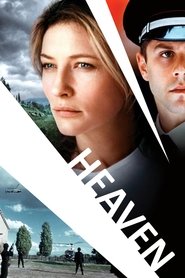
Heaven (2002)
Release Miramax DVD (Buena Vista Home Entertainment, 2003)
Tykwer discusses directing Kieślowski's screenplay, filming in Turin and Tuscany, multilingual performances, restrained sound, and months of editing. He connects these choices to Philippa and Filippo's isolation and relationship. He also explains creating conditions that help actors perform and using suspense and camera movement to develop the film's ideas about love and redemption.
- Duration
- 1h 34m
- Talk coverage
- 98%
- Words
- 12,896
- Speaker
- 1
Commentary density
Highlights
Topics
People mentioned
The film
- Director
- Tom Tykwer
- Cinematographer
- Frank Griebe
- Writer
- Krzysztof Piesiewicz , Krzysztof Kieślowski
- Editor
- Mathilde Bonnefoy
- Runtime
- 96 min
- Also on
- OneSheet ↗
- External
- IMDb ↗ TMDB ↗ Find on Amazon ↗
Transcript
12,896 words
Hello, my name is Tom Tykwer. I'm the director of Heaven, the movie you're about to see. And I will try to guide or lead you a little bit through the making of this film, which has become quite an adventure in my filmmaking career. The screenplay of Heaven reached X Filme, the production company that I'm part of in Berlin, in the year 2000, in early 2000. And it was offered to us as a co-production offer by Miramax, who had obtained the rights, I guess, a couple of years earlier. It was a Polish screenplay written by the late filmmaker, famous filmmaker, Krzysztof Kieślowski and his co-writing partner Krzysztof Piesiewicz. Both of them had written an amazing body of work before that. The famous series called Dekalog, based on the Ten Commandments. The trilogy of three colors, blue, white and red. And among others, a film called The Double Life of Véronique. I had been a great fan of Kieślowski's film work for, let's say, half of my life. And I was really surprised to be connected in this way with a project that still was there, although he wasn't among us anymore because he died surprisingly in 1996, aged only 54. And the screenplay, Heaven, was something like
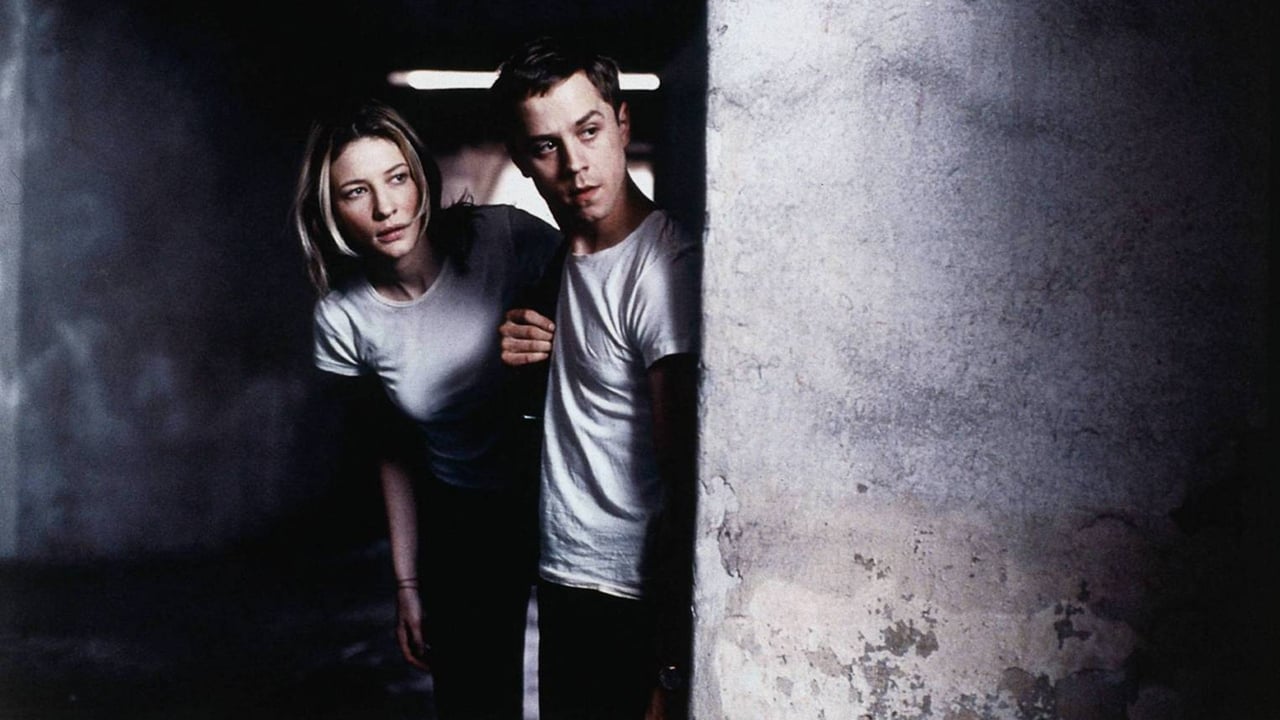
what some people consider his testimony. It was the last screenplay that he had worked on together with Piesiewicz. And even though it wasn't completely clear whether he wanted or intended to direct it, it was definitely the last proof of his genius that was left behind. So when Harvey Weinstein had the idea to give it to me and have me have a look at it, my first instinct reaction was, to say no. Well, I'm really curious to read this, but I'm definitely not the director, the right director for this project because I don't want to mess up the testimony of one of Europe's most amazing filmmaking heroes or legends. So having gotten rid of that pressure, I opened the book and I started to read it. And actually the book, the screenplay started with the scene we're right now seeing. The very first page opened with this woman who looks pretty tense and obviously creates something that we very easily identify as a bomb. There is an atmosphere of danger and also of despair, but more an aggressive tension in the room that immediately
gives an uncertain quality about what kind of film is going to happen now. And I have to admit, I was immediately interested in reading that scene. I was immediately interested in the character because the way she was described, I was imagining her as somebody interesting and beautiful, but also very tense and very introverted. So... The strange effect that reading the screenplay on me had was that I completely got lost in it immediately and that I so quickly identified with not only the characters but also its structure and the way it was conceived that I suddenly forgot about everything that I had thought before that this would be something I could never connect with because it was Kieślowski's work and all that. I immediately stepped into it as if it was my own work, as if it was something that I had written, or to say the more realistic perspective, that I would have loved to be able to write myself, but never managed to. So in a way, it was this kind of thing that comes across that you've always waited for to create for yourself, but never did. And then suddenly someone puts it on your table and there it is. And I felt like,
Okay, I haven't written it, but I would have loved to have written it, but at least I should direct it now, now that it's here, and now that there's no one else who wants to do it right now. In addition to this, it's also important for me to describe that there had been other films and offers and screenplays on our tables that I could not connect with, and I was always wondering what... what is the specific quality that I'm looking for to be able to connect with a screenplay that I haven't written myself. And I wasn't very experienced until then because the four feature films that I had done before Heaven were all written by myself or co-written by myself. So I didn't even know what it means to be not a writer-director, but just a director. And... understanding the qualities of heaven made me also understand my desires towards screenplays and towards what i mean what they have to offer to me and that is a very substantial personal approach and something that i can identify to a degree with that is
Yeah, substantially subjective, actually. I need to feel that there is subjectivity expressed that I can enter to a degree that it feels like it is a story that comes out of my own personal experience. And of course it doesn't mean experience in the concrete actions that people are committing, but more in the... the spiritual and the emotional and that sphere that the people are moving in. And this is a definite project that was traveling on this junction between something like a fantasy and something like not really a realistic, more a fable-like thing. And on the other hand, being very, very connected to the reality of people's behaviors, people's struggles, and people who are really settled in reality, in our daily reality, in the reality that we are surrounded by, and not a fantasy world that is completely irrational and not believable. It was a very believable setting with very unusual outcome.
To say the least, I think most people who were attracted to the project before me and also one of the reasons I guess Miramax wanted to do it and why other producers were involved who were really committed to it is one of the main reasons is the sequence we're just now seeing because it is a setup for a movie that is both so shocking and so involving at the same time that you that you really want to know what will happen next. You really want to find out what this movie can be about because it builds to a... It already has a build-up in this first ten minutes to a degree of suspense and also of moral and structural ambiguity that I think it quiets you down and makes you completely focused on the characters that are going to be presented to you for the future running time. Here we have a woman who obviously is determined to kill somebody and who has a seemingly good plan to do so. And that plan is completely destroyed by this woman who enters the scene and takes away the bomb that Cate Blanchett's character, Philippa, has just put in.
the office of this man whose face we actually have just rarely or barely seen. So something that I feel very interested in is the fact that a very simple and somehow ridiculous twist of fate turns this situation, which is a murderous attack towards one man, into a completely horrifying situation where absolutely and obviously innocent people and even children die. That Kieślowski and Piesiewicz put even children in this elevator was something that is so shocking. Also, even for the reader, the screenplay was so shocking already that you felt like, how are we going to go on in a film where the hero, the female hero, kills these innocent people and how are we going to stay with her and how is she going to survive this in our eyes? Interestingly enough, we had this explosion happening in the elevator, in a skyscraper, and of course we shot that far before the events of September 11th. And also decided not to show any of this from an exterior shot.
a couple of months before this horrible event happened and I'm still surprised that although we did some tests with some special effects tests showing the skyscraper from the exterior and seeing the explosion really like with massive debris flying around and it always gave me this kind of Die Hard feeling this kind of action film iconography that was just not right for the film. That explosion in the end represents an internal wound. Although this destruction is also, of course, very horribly related to the death of human beings, the film will relate to it in specific terms as the wound it rips into the soul of this desperate woman. And so the decision to stay inside the building for that explosion was more or less very logical and consequent. That's just for those people who wonder whether we changed that shot because of September 11th or whether we discussed the whole issue. We never really did because we also never felt that this film was a film that in any way discusses
at least not on the surface, the issues of terrorism in contemporary world. Philippa, Cate Blanchett's character, as we will soon find out, is not at all a terrorist and not a person with any terroristic instincts or interests. It's a very, very private and personal revenge situation that she's in. And that, of course, is a major tension that we can create for the following scenes. We're now in the interrogation room, the room where the second main character of the movie is introduced, which is Filippo, portrayed by Giovanni Ribisi. And what I liked really very much about this scene or about the setting was that the way we could shoot it was kind of creating a balance between all the male actors and giving the audience a feeling of them surrounding this woman and all of them being potential heroes of the film. That, you know, the prosecutor, if you look at him, he's a very attractive and interesting guy, a very good actor also. He also seems to be interested in the truth.
maybe more than this guy, who obviously is also very ruthless and angry about the situation and more determined to get a statement out of this woman, whether it's the truth or not. He already seems to know what the truth is without having even asked her. So, I mean, there's different possibilities where the film can go here, and we all expect it to go alongside one of those male characters. And then suddenly, This guy in the background, who was hardly in focus in the beginning, raises his voice and suddenly he's in the center of attention. So we have this picture here where he suddenly sits down and he's in the middle of, in the focus of our view. And still it's this kind of boyish, innocent-looking young Carabiniere who we still cannot really believe what can his role be in this whole drama. Now, okay, he's the interpreter. Okay, he's an interpreter. What does that mean? He's going to give those people an idea of what this woman tries to express. So in a way, he becomes her voice. That's what an interpreter always does. In this case, it becomes an important thing because in the process of translating, Filippo does recognize something in Filippa that will change his life forever.
And I think it's remarkable, both their performances in that scene, which is such a decisive scene for the film, to see how this one character, which is hers, discovers what she has done right now. This is the moment where she is being told what actually happened. Still, she thinks she's killed this guy, and now she realizes she's killed four completely different and innocent people. And seeing this face so completely change and fall in a way apart, leaving behind all these facets of anger and determination and showing this huge amount of vulnerability and despair and frustration and sadness is to a large degree responsible, I believe, for any believability in the future processes of the film, that Giovanni's character, Filippo, is so moved, especially by this movement, when she looks towards him, but not really at him, but in his direction, like a magnetism, that he feels drawn to her. And the idea, of course, is that Filippo here discovers something in her that touches his own self so deeply that he seems like to have kind of a mirroring experience. Something like he's recognizing something he doesn't understand, but that he feels very, very drawn to. And I guess this key scene had the huge...
pressure we had this huge pressure on that scene that we knew it has to first of all explain that this woman is more complex and more and less drastic but much more ambiguous emotionally and also as a character itself herself as we were maybe thinking she is in the beginning in the beginning also um The second thing that had to happen in that scene is that a connection between two characters who absolutely do not know each other is made to a degree that an amount of determination is growing in a person, namely this guy, Filippo, that will really change the course of this film massively. The, for me, most helpful element about it was that This brilliant idea that he's being the translator, he's the interpreter of Filippa, makes him become her mind, her soul and her voice. He so much lets himself sink into her emotional state, although he doesn't show it with his voice, I think he shows it very much with all these hidden things in his face, that the connection between them is being made before
before anything else. I mean, only in this one moment they get closer than possibly by having had chance to have ten coffees in any bar together. They so immediately jump into a substantial situation with each other that the connection is made. I'm kind of fascinated by these constructions when films put their heroes or their lovers in situations which are somehow bringing them so close to an inescapable degree that they have to connect or that they at least have to find out what's there and what potential is between them and what closeness they can reach with each other. The film that I had done before was called The Princess and the Warrior, a film with Franka Potente where we had this car accident where a woman's lying under a truck, and the guy who's actually just hiding under the truck because he's fleeing from some guys, he more or less accidentally finds her. And because she's about to die and he knows how to save her, he saves her life. And it's funny because it's a similar situation. They don't know each other. They haven't met before.
ever before, but they immediately are so close and they have to lie on top of each other. There's blood, there's tears, there's all these issues. And that encounter changes both their lives completely and forever. And it is the driving force of the future energy of the whole film. And here we have a similar setting in a way, although of course the film is completely different, even a different country, but also different... let's say, a combination of characters. But we have this kind of encounter, and of course we needed some moments where the encounter even gets closer, gets also physical. We didn't, we knew we can't... get that physical in a situation like this because it's a very formal situation. This guy is a policeman. He's a Carabinieri. This woman is accused of murder. So how can they connect? But because she faints, we had this chance to get him closer with this chance to have this connection, this moment, which is this moment right now, where suddenly for something like a split second, they completely seem to forget where they are and what the situation is and what the circumstances are. It's all about...
this encounter, it's about this closeness, it's about this touching each other and whispering to each other. And even in the mix, if you have a good sound system, you realize we took away all the ambiences, we took away everything. We made them enter their tunnel for a couple of seconds. And then when he offers her the truth that he's a Carabinieri and then she comes back to reality. Also the ambience comes back and the noises of the real world come back. But this moment was meant to be something like the decisive situation that for him already sets off this kind of sparkle that makes him so determined to do something about it, to change the situation in a direction that will not leave things the way they are. Some tiny glimpses we see here. We've seen the guy from the office that she was intending to kill. He's next door. What does it mean? There's all this confusion. And of course it's important that Filippo is a witness to that because throughout the film he will have growing doubts that the system that he's started to be part of, the system of the police, the system of Carabinieri, this whole representation of the state and of something that is in order and in...
in a balance, seemingly in a balance, that it goes completely out of balance. He starts to really doubt the system that he's committed himself to, which is even more complicated because his father, obviously, as we see right now here, and Remo Girone, a fantastic actor who plays the father entering the scene, His father is a Carabinieri too, which means it's obviously a traditional thing. He's become part of a tradition that seems to be completely inevitable, his future. To underline the struggle that he's also in, we had to choose between the two different possibilities. go with in Italy because Italy actually has two police institutions. One is the police and the other one is the Carabiniere, which is the one we chose and which is an organization that is much closer related to the military and very much militarily structured and organized and to much more to a degree disciplined and rule-driven that it is even more spectacular and of course also more dramatic and breaking the rules of a degree that is nearly unthinkable that a young Carabinieri goes and falls in love with somebody who's accused of murder and a convict. So for
For me, that decision was even enhancing this idea of somebody who has obviously set his foot in structures and in an ideology that he's been until now obviously determined to follow and that he's slowly now discovering as maybe false or at least as not his path to go. And I think Giovanni did an amazing job in showing this quickly happening, but slowly inside of him even creeping process of letting go of something that has more or less ruled his whole life, or at least the recent years, and that of course also connects him with his father. They have a strong emotional bond, which is visible here in that scene. But they, of course, also are related as father and son in a very traditional way. The son taking over the footsteps of the father, or following the footsteps of the father. And it now already shows in his face that he's starting to doubt whether he will be able to do that. He's obviously involved with this woman.
to a point in the film where we've just started to see that there is a relation between them. He's already told his father that there is a person he's fallen in love with, which of course is very confusing because we've just seen them in these two moments, which of course were very close. But I think... It's a starting point to focus on what the film tries to discover in the process of their encounter, that it's not so much about this kind of idea of falling in love in the typical way, saying I'm in love, but discovering something that touches you inside. in a way that love as a concept opens to you, that love as a life concept or a fulfillment idea for yourself is being offered to you. And that can happen any time, any place. And with persons, you might have never expected you to offer this. And he's seeing this woman who obviously is not on the first sight, even with the age difference,
a perfect match, not to mention the fact that she is obviously a criminal and he is a policeman. They are absolutely, from the scene from the outside and also even in aesthetic ideas, they are absolutely not meant for each other. But he seems to know there is something that connects them on a deeper level that goes beyond all these issues, that goes beyond all these superficial ideas. So what we don't know is that he's already having a plan. He's already determined to save this woman's life and to get her out of here and to try and find out what the connection between those two in fact means. And this scene in the pharmacy is like the first step This is the second step in this plan that will change the course of both their lives dramatically. In between, I have to apologize for some bad English moments, but it's still just my second language. I'm German. I've learned English in school and in movies, so I'm very often lacking words. I'm sometimes very frustrated about it because as a director,
maybe one of the major abilities you have to have is describe or explain things simple and complex at the same time. And I can tell you during the shooting of this film, which was anyhow a multilingual film in terms of the fact that it was a German line production company together with an Italian production company. It was shot in Italy, a lot of Italian actors. but a German director, and the leading actors, both native English speakers, one from Australia, one from the USA, German is Californian. And in this whole mess of languages, which were also added up with French from some co-producers, and of course, the basis of all of it was a Polish screenplay, I always try to remind myself of the way that I know that my direction works best, which is a way of trying to stay as close as possible to the actors, having a very clearly prepared setup for the technical part of the film, which I did to a large degree together with the director of photography, Frank Griebe, the guy I always work with and who's
photographed all the films that I've directed, and Uli Hanisch, the art director and production designer, and I mean all those heads of productions who are responsible for the language of a film, and to be as prepared as possible in advance, and then be ready for a movie that's so much obviously driven by the acting and by emotional impact. as we can see in more or less every moment of these interrogation scenes. It's kind of a theatrical spectacle that always opens new doors to different characters. Now we have the big scene of Maggiore Pini, Mattia Sbragia, the actor, who waits for like a couple of, let's say, hours in the interrogation to give this moment and to put this pressure on this woman and to show his true face. and also representing, of course, the evil side of the police institution we are trying to investigate into in this film, which is, of course, important also for Filippo to discover that this system is obviously also partly rotten that he's belonging to. Very important looks that Giovanni gives here, this one. Really, really important moments where you feel that he's sensing not a distraction, but a...
he's sensing a disintegration of himself inside that room, and that he's somehow not belonging here anymore already, because he's discovering all these dark sides. But I didn't want to lose track. I was talking about the English. The English problem for me was, of course we decided on English being the major language of the film. It is more or less the most spoken language in the film, although there is much Italian in it. But of course on set it was the key language and my strategy of directing basically depends on the fact that I have a way to talk which is a mixture of gesturing and speaking thinking or think speaking which basically means there is this strange period between one take and the next take where you shouldn't say too much, but you should also not say nothing. You should give an actor an idea where the next step is going to. Why are we doing another take? Apart from the fact that probably you feel it has to happen, you always have to express something, and of course you express it usually in language. And I actually needed a couple of movies to...
for myself in German language to find my specific way of expressing those things without overexpressing them, without articulating them too much in detail, what could be done next and what could be done better. So when you say cut, actually, you've got these strange three or four or five seconds to decide whether you will do another take, which you usually have decided while you watch it, and then to give some reasons why. And there's these four or five steps you walk towards the actors and then you say, listen, let's do this or let's try this. Or what I also very often do is ask them what's their position, what's their, where they are now. But of course, the process of itself is, in language terms, very complex because you don't want to deliver an idea of what could be next. You want to create...
a spoken atmosphere of what could be next. You want to give them an image or just a simple glimpse of a thought that could evoke a different reaction or a slightly more intense or whatever emotional way to express something. And on the other hand, you don't want to take anything away from them and you don't want to interrupt the tension that they might be in. So this is already in German quite... tough i have to say and then having to add on this the this translation process that i'm always in even right now while i'm speaking i always first have the german line in mind and very quickly translated into the english that of course is not only distracting it also i always was worried that it lowers the concentration rate that i'm wanting and ready to offer to the to the actor
And of course, because they were native speakers, they sometimes were even, in the words that I was looking for, they were ahead of me. They already felt like they know what I'm trying to express. But of course, trying to say that themselves, it sometimes took away the potential atmosphere I was trying to create. So it sometimes really drove me just crazy. So it was a very complex description of my difficulties of directing a film in English. On the other hand, I had a lot of help. I was surrounded by really helpful hands and minds, apart, of course, from the collaborators I always work with, which go from the production people, of course, specifically the production people that I'm very close with from my company, from X Filme, Maria Köpf and Stefan Arndt and Manuela Stehr, the people from the companies that were part of the production on the international scale, Miramax and Harvey specifically had the idea to bring in Mirage, the company that's owned by Sydney Pollack and Anthony Minghella, and was co-run by their producer William Horberg, to be something like a connection institution between Miramax and X Filme. Something like, let's say, also an interpreter.
because they had had experiences with each other. Anthony had shot The Talented Mr. Ripley with Miramax. They had been working together on The English Patient. They had a lot of experience. And also in terms of the fact that it was a film that had to be shot in Italy most of the time, except the studio, the whole studio part, which we're seeing here now, this is all construction in the studio, that was shot in Germany, in a German studio in West Germany. All the exteriors, of course, are Italy. It's Turin and Tuscany. It was also important to know for Miramax that there is somebody involved like Anthony and Sidney and Bill. All of them had shot big movies in Italy and knew what's the difficulty and what's the advantage to work there. The difficulty is that they have a different system like, for example, the Germans have. It's a much more... I'm always trying to say the Italians, they create creativity out of chaos, while Germans tend to pre-organize films from like three months in advance and they want to know like three months in advance what happens on Tuesday the 22nd at 6 a. m. And I think both systems have some deficiencies.
And the miraculous experience was that after some struggles, we realized that the connection of those two systems is more or less sometimes leading to the optimal results. Because sometimes you have to let loose and you have to be a little bit more wild style in your pre-organization mode. And sometimes it's really good to be as precise as possible. Especially for this film, both methods turned out to combine in a very brilliant way. So, helpful hands and especially helpful minds came of course from William Horberg who was with Maria Köpf, a producer that was very much on set and very often present and gave a very creative and involving input in production possibilities and of course he had a lot of experience, had had a lot of experience doing Ripley and On the other hand I had people like Anthony Minghella and Sydney Pollack. Anthony being very helpful especially in the beginning also when we were rewriting the screenplay because of course we did an intense rewrite. Meaning I took the script which was taken from Polish to French, French to English and then I took it and took it from English to German.
to get my version out of it, to have just this process of writing it and typing it, even though I didn't change that much. But some details had to be changed, some logical things. We added just like very, very tiny things. The opening shot that we've seen in the beginning, the whole situation with the helicopter simulator was an added element that came in much later because I felt like there had to be something that suggests the quality of the film, which um is offering us an idea of an image that turns to be not what it seems to be the idea is of course to represent in the opening shot always to give a representative idea of what the film will be like and the simulator what i like very much about it is um that it shows us seemingly a landscape but then we realize it's not a landscape it's
the simulation of a landscape. It's not what it seemed to be on the first sight, which is like the motto of the film. All the characters, all the situations, every situation implies something different than what it seems to be. There is always a second perspective on everything we encounter in this film, especially in the first, let's say, 30, 40 minutes. And there will be always a second view that we will discover throughout the film. And all these details grew into the script with the help of Anthony, who is a great writer, the writer-director as I am myself, and who, of course, is a native English speaker and helped me a lot in getting the script into the perfect English mode. And, of course, his roots are Italian, so he also was very... familiar with the Italian and on top of that I had a director from Italy called Alessandro Fabrizi who is himself a theatre and film director and who worked with me in all the dialogues endlessly and also of course helped me in working with the actors, the Italian actors, understanding what you can do with language in the Italian and how you can improve
emotional and structural tendencies that the movie has only based on language issues. I think the language and the way language is used in this film is so important in the way that things have, for example, in this case here, a delay in the exposure. There's somebody who speaks English. Nobody understands her apart this one guy, which is Filippo. She's saying something that is absolutely shocking because he thinks now she's spoiling the whole setup. On the other hand, we will later find out that she's giving him the sign that she's ready to go, to go with his plan. But for a split second, his translation becomes something like a suicide command for himself. But he even follows her with that. He's translating what actually he believes will kill them both, only to find out... a split second later that it's the opposite. Again, I guess, the connection that the two of them make here and the determination that Cate again can offer here after the incredible...
vulnerability we've seen on her before, is all adding up to the believability aspect that all these sequences and interrogation were so much needed. We needed those scenes to be strong and emotionally believable, to be able to then take off from this very realistic setting into what the movie then later becomes, which is much more this idea of a fable or a dream or even something like a dark fairy tale. Just to add this idea of those helping hands and minds, even the construction of this room was like a long way to go. Uli Hanisch, the production designer and I, we sat together and we tried to create something that was as narrow and as much giving the idea of thick air as it still should give the actors room to move. And it's always strange when you want to give actors room to move and to search for new positions in the room, it is difficult to still give the room a feeling of closeness and of not much space. So I guess
What really helped was Uli's idea to create the room as one big shelf in a way and that those guys are all locked in one big shelf filled up with paper and bureaucracy garbage, let's say. So this is where we enter a new ticking clock situation. Something like we had in the beginning too, but we know something is about to build up here, something is about to happen. Of course, we've been instructed too by the film, listening to Filippo's plan how to free Filippa. We might not have understood everything, how he wants to do it, but of course, one of the brilliant and I think major qualities of the screenplay and of the writing of is that it's full of surprises and it's full of twists and unexpected turns that raise and heighten the tension of the story. You never feel like really pushed to focus on the intellectual, the moral or the inside issues of the film because so much of the actual events are keeping your attention that
Everything else is coming along with it and that very much represents my idea of good filmmaking or of the films that I am trying to do is that you should have, the film itself should have a driving force that is very much related to the story and to emotional developments and to your interests in the actions themselves. And the The sub-dimension of a film, which of course is something that I very much care for and that I basically, that's the only reason why I want to make films, to carry that along with, should not be pointed at. I don't want people to think about any symbolism, about any subtext while they're watching the film. I want people to be involved, as I am, because I still am an audience myself. I very much consider myself to be a filmmaker coming from the audience perspective. I think I only do films when I really feel this is the one film that I've always wanted to see, but it hasn't been made yet as an audience. I'm longing to see this film, so there's nobody else who's doing it, so let's do it. And this is one of the scenes that prove for me that a suspense and, of course, connected to that, an entertaining aspect
is not only a possibility for an intelligent and complex film, it is in my eyes also the perfect match for an intelligent concept of a film. If you have exciting moments, if you have suspenseful situations, you will be able to even go deeper and more to the core of complex issues than if you throw those issues in the front and just make it become something like a lecture. I really do not like films that come along as a lecture. I really like films that, I love films which are able to grab me and take me into a different world and hijack me into an atmosphere that I haven't been in but that I long for to be in or to become part of and that create their world that I'm absolutely lost in. And then when I'm leaving that world, I realize I'm left behind with a lot of thoughts and a lot of contradictions even or ambiguities or ideas that I will have to reflect upon and that I will have to discuss hopefully with other people. So here we have this first climax or let's say the second climax of the film where
Something we wouldn't have been able to imagine after 10 minutes, that this young policeman is able to get this girl out there, but he doesn't flee completely. They stay in the same building, which is even more confusing and also kind of a challenge for both them and us to understand what are they actually doing? What's the direction they're going to? It's obviously not just fleeing. It's also an idea to confront. So they're fleeing from the situation, but they're not fleeing from the actual place yet. What does that mean? It means there's still something to be done. And subconsciously, obviously, Filippo even has known it. And only to find out now that what this woman wants to do is for sure something he wasn't intending to end up with, having another murder plan. having to have to follow her with this additional murder plan. We've had some really difficult issues here in the editing because there was more material that was shot on the attic. And the way they came closer to each other here, where they are the first time in the movie, they're just with themselves and they're private for a moment.
And the cruelty that intrudes this privacy is coming from her. It's kind of a cruelty that is pretty shocking. We had more situations that continued on that balance and that junction between being attracted and shocked by each other. is maybe more the instinct that he is confronting with, because she's still very much in her determined scheme until that moment when she kills the guy. And I have to say, the process of editing this film has been one of the most demanding, but also most interesting that I've ever been in. It's been a very, very long period. We've been editing this film for more than 10 months on a daily basis. We've been editing for... Well, six days a week, ten hours a day, ten months. Not a real holiday in between. And Mathilde Bonnefoy, the editor who I've been working with since Run Lola Run, who for me is one of the real geniuses behind this work, she really made me...
understand this whole idea of what it means to find the movie in the material and to actually understand that cutting the film means in fact to really not only rewrite it but ultimately to write it for the first, even if it's the second time, over again. So editing is something like a writing situation. you cut things out, you put them back in, you reconsider, you even reimagine dialogues. There's a lot of dialogue that was even written only in the editing process and that was put into the film for like six months after shooting by doing additional sound recordings with the actors. Really tiny things, but also major things that gave the film that put the film in this really, really complex balance that we discovered was, I discovered even more how difficult it was to keep the balance of that film during the editing. The balance that I'm talking about is of course the balance of our emotional state towards the characters, our understanding abilities to what they are doing and why they are doing what they do. And of course the necessity to still, although they do some so,
morally frustrating and destructive things, to still stay interested and even liking those people, loving them in a way, identifying with them on some level. And I can tell you it's really difficult sometimes to judge specific split seconds of close-ups, moments where you see a person looking in a way which destroys your sympathy or raises your sympathy for her or him. Just because of that one second, one line can make you accept 15 minutes of action or one glimpse of a sight, something that you see, a sparkle in the eye of an actor can make you accept There were so many things that this actor or actress does in the following scenes that we had to really scan through the material for everything that Cate and Giovanni specifically, of course, had been able to offer to us. And I can tell you it was a lot that they offered. And it was also a lot, of course, to choose from, and that made it so difficult to really find the exact right moment, the right glimpse that had been offered.
The scene that we're seeing here now, to me, when I read the screenplay, was probably the most unbelievable moment of all. Because I thought, after all she's gone through, even in the interrogation, why is this woman going again and kills? And I think it is one of the most intriguing parts of the film that she does, that she does kill, because it is something we, of course, don't want to happen. We want her, of course, I guess, I do at least, we want her, of course, to change her mind about something like that. And on the other hand, of course, we've understood now why she in the first place wanted to kill this guy and we see that these kind of motivations obviously do not vanish even when you're confronted with the horrible impact of murder itself. And it seems like This is a typical Kieślowskian twist that we have an expectation towards heroes and towards the way heroes develop in films. And that he's giving us a hard time by not having the heroes do what we expect them to do or what we want them to do to keep them as morally clean as possible. He says, not himself, but the screenplay and the film, of course, says people
do not behave, we want them to behave very often and people do not behave the way films very often construct them to do so. They go ways which are heavily irrational and sometimes so drastically driven by emotions and by hurt feelings or by feelings in general that we can't really say there's always a predictable perspective on how human beings react. And this unpredictability of human emotional reactions and their consequences is, I think, one of the major issues this film is investigating and that film is trying to focus on. All the ambivalences we see here. Why is she opening her eyes now? What's going on in her mind? Is she already reflecting on what she has done? And it goes back and forth. And I know that we've been endlessly discussing that. with also Cate and Giovanni, how we express this on and off state of her character being sometimes seemingly opening her eyes towards the inevitable situation she's put herself in. And on the other hand, still sticking to the old idea that was driving her in the very beginning of the film,
fanatical revenge hate system that she had locked herself in. And it comes back and forth and takes over again. And only after she's done it, she's able to let go and she's able to look at this man who's doing these amazing things and who's actually for a while already trying to remind her of other values in life and of other possibilities. And so this is one of the moments which I think is very, very important for them. And of course, because of them also for us as the audience, they look at each other and it seems like she's seeing him for the first time as what he really is, which is confusing to her now. And we see that confusement. There is something like a relief in her. and some strange calmness but also an obvious confusion what's this guy what what and he's still following me what's what's going on and this puzzled moment is you were sleeping beside me a quiet turning point yeah you were sleeping beside me she's saying in it
It means, of course, much more. You're still close. You stayed with me. Why did you do that? We know these questions that she's asking herself, other questions, of course, we're asking ourselves too. And they put her back in the shape of a human being that we are able to understand again. Because the puzzleness of her now shows she's not just the determined killer we've seen like five minutes ago. There's something going on inside of her that is very, very... and that is really struggling her. All these looks are so important. I think the film is basically ruled by looks and by glances and by the exchange people have on a non-verbal level. It is not a language-driven film in these terms, but of course it's very much language that is non-verbal language that makes this film hopefully work emotionally again one of those devices one of those storytelling and suspense devices that i admire about the writing in this script you have this situation where you're thinking about all these issues how are they going to get on with each other how are they going to do and solve this really
really complicated situation and they're still locked in this building, which is the police station. How is this going to be solved? And why are we thinking about this and why are we so much psychologically involved with their relationship before we even can think about pragmatic questions that much? The reality drops in or jumps in or breaks in, in form of those two cleaning women who just represent the threat of the outside world that is going to be closed and that is going to endanger those two characters who behave as if they were in a bubble that is outside of reality and this world. So this is also a reminder for them that at least staying here will not allow them to have enough time to really understand what has happened to both of them and what's their future option. So this would finally lead them to leave this place and will make them understand that if they want to stay in this kind of strange bubble, which is probably also a chance and an opportunity for them,
to find some final understanding for what they've gotten themselves into, they will have to be moving to a place that is more inviting or, let's say, accepting this kind of bubble state. Again, most important in this situation to me is not what they say, what they do to each other in just looking. The way they look, the whole doubt that still is opening towards trust in this one movement that we see in Cate now. And also a strong amount of sadness that is growing into her face. And his hurt but unmoved solidarity and His innocent belief that she has to stay with him and they have to find a way is something that I find mesmerizing about their performances. Here again are we in one of those funnily simple and seemingly naive plot twists or let's say twists of how the action is evolved in this film, that it's such a simple idea to just jump into this milk van and really be able to escape from a prison-like police station. But this is also pointing towards this idea of the film that more and more develops into this fairy tale and kind of
you know, they behave like children in a way, in a children's story, although of course the setting is not at all a children's story, and of course, but there's this idea that they are brought back to a state slowly, progressively, which is related to their substantial and innocent original identity. And so I like that the fact I like the fact that these moments are not constructed as if this was a very serious and ambitious crime story or crime movie. It's just like we want them to get out here now and they find the most simple and convincing way to get out of this building. This is one of my favorite scenes in terms of what how strange can directing be sometimes you meet you have to cast two actors the milk van driver and this woman who enters the car now and when you do the casting you tell them what the scene will be they're going to do and the only thing they do is they meet and they have sex and then they split up again that's all they have to do and still you know they're very ambitious interesting and
beautiful actors who really have to make this become an important moment for the film, because in the script it was very simply described as just, they have sex. And it was pretty roughly written. It was not even in detail described. It was just like a noisy event that it was in the screenplay. And so we wondered, how are we going to do this? And my idea of it was, that it should of course not at all represent an ugly roughness of those people just getting rid of something. Although they do, it should also look like something that's real fun and that's even beautiful, although it's so seemingly rude. But it isn't, of course. They look beautiful the way they do it, although it's very... obvious, also the way we shot it. We didn't do anything to make it look in a way erotic that is not appropriate to the situation. But there is a pureness in this sexuality that is very beautiful, I believe. The way she does it here, the way she closes the coat again and just goes back, this last glance that she throws at him, we see now, it's beautiful.
And casting those actors, you can imagine, is very strange. You tell them, this is what you have to do, and then you ask them, how would you do it? And then you make a little rehearsal of that scene. But nobody has met each other before at all. So it's a very, very strange and confusing situation where I always wonder, what kind of a job have I got myself into that I have to put people into this weird situation? Okay, we have reached a point in the film where I always was aware of that there would be a big transition. And this whole film, of course, is describing the development of two characters, specifically, of course, one character, that of Filippa, from a state of introverted and hard and very... focused but structured and even nearly fanatical thinking and living into something much more open, much more ambivalent but also more ready to accept contradictions and something more fluid. A fluid way of understanding life and things instead of a categorical way. And Frank and I
were determined to express this development also visually and have the whole development of the film represent, I mean the visual development of the film represent the inner state of the protagonists. I very much believe that topography should always, no matter where you shoot and why you shoot a film, you should always think of the topography as a very strong option for you to represent the inner states of your characters. You should never shoot a movie somewhere just because it's nice if it doesn't really connect with the internal state that your characters are in. And the fascinating thing about the setting of Heaven was that shooting the first big part of the film in Turin was offering us a chance to still be in Italy but have a city that is incredibly graphically structured. The way the city is built actually looks like a prison if you look from the top on it. And I'm pretty much obsessed with these top, with these flying shots, with this specific camera system that we've been using, which is called SpaceCam, where you have a very, very steady flowing camera and you can show the graphic elements of places like Turin to a perfect degree.
It is something like a prison, a prison's iron that comes out of the structure, that geometric structure that is very much in right angles. And if you look at the city map of Turin, you could think for a first split second that this is something like New York. And have these people in the beginning being somehow in this very beautiful town, but somehow locked in, in a... geographic and topographic structure that is totally over-organized and have them, when they open up and when they start to discover what's deeply and in fact riding them, have them change into a landscape that is much more fluid and much more open, much more inviting to open your mind and the way you look at things. Then to change to Tuscany, which is only like a couple of just like 200 miles away from Turin. So it's like a short drive but a complete different world. I thought that was one of the big challenges and of course one of the big chances to, opportunities to establish in the movie this contradiction of the landscape. So when we finally entered Tuscany, it was like everybody felt the same. We shot this whole segment, the Tuscany part of the film, we shot that at the very end.
in the last two or three weeks of shooting and also being a bit exhausted from a rather tough and very stressful shoot, also emotionally draining shoot. It was amazing how much that landscape also even did to us, to the whole crew and of course also to the actors and how much it also opened again our minds towards the complexity and the beauty of the screenplay. And of course it all builds towards certain scenes, among them this one, where Filippo, after having heard what she's struggling with, but also having seen that she's seeing her struggle now with different eyes, is ready to offer her what has been his offer all through the film. The offer of love, and as I was saying before, the offer of love more as a concept than the fact of I'm in love with you. To say that love is something you can hold on to, that can probably even rescue you, at least as a spiritual being. There's of course a strong implication of confession in here,
but still to me as i'm considering myself something like a spiritual agnostic this is not a religious movie it is a movie that is heavily influenced by spiritual knowledge that of course recurs to to religion and to theology and of course there's a many theology parallels in the film and in the screenplay that are related to the Bible and to Bible situations, biblical situations, still there are important details. We say they go into a church to enter this kind of spiritual room. They of course take the chance that the confession situation itself offers of really opening up to each other. But they don't go into the confession booth. They don't follow the rituals. They just are inspired by them, which is a small but important difference to me. We've just seen that scene with the shaving of the heads, which is a rather shocking element when you read a screenplay. You know you have an idea of an actress, because I was very early thinking of Cate to play Filippa.
Of course, you know that the actress will say, are you sure? And you might have some discussions about it because, of course, cutting off your hair, you can't really fake it. If you want to show it, you have to do it for real. And luckily enough, Cate is not an actress that even discusses these kind of things. She knew when she had read the script that we had to do it and we had to do it for real. And it was not really a discussion. It's just that the moment you do it, when you see the scene in the film, the one we've just seen, it was, of course, there's only one take because you can't redo that. So we put on two cameras and we hoped that it all would work out. And also in a way you wanted to have a specific look that you dream of. And you can never have a pre-look at this
appearance. You will only find out when you shoot it. Which is kind of amazing because that is something that very much represents anyhow the acting process but to a degree that is a little bit unknown because in the acting of course you wait for the unseen or unexpected moments but still you know you always have the chance if it doesn't work or it doesn't happen you can do it again. This we couldn't do again and we were so lucky that it's really looked so amazing and it so much fulfilled the idea of them getting more and more close to each other. They even seem like Siamese twins already, the way they sit there now. They're connected at the arms and this whole idea of them being something like conjoined beings that come closer and closer to each other and that develop in a way to become one union again, which is of course one of the major ideas that I had during the film, that what's actually driving them is this kind of mirroring idea, which is much more mirroring idea, not so much of man and woman, but also of two flip sides of the same coin of human potential. And there's actually one human being, which is called Filippo Filippa,
that is looking for a reunion. And they are trying to construct an aesthetic surface to, let's say, prefigurate this. And of course it was somehow also understood as an idea for them to just change their looks, not to be seen by the police. It doesn't really make sense that much, as we all know, because if you have two shaved heads, everybody looks at you. It's not very much a hiding, a helping idea for hiding in a situation where police looks out for you. Stefania Rocca plays Regina, the old friend of Filippa. And I think it's a really important moment here in the film, which we all loved. to have at that point where we feel like, to a certain degree, those two characters start to get into distance, to reality, to the world that we, of course, feel part of. We stay with that world. Even at the end of the film, we will stay on Earth when they leave into the sky. And so in some strange way, although we identify with those characters, we are, as human beings ourselves, I mean, we, the audience, I mean,
are part of this marriage ceremony of this party. We're some of the guests of the party rather than one of those two characters. And so having Stefania as Regina enter the scene and expressing some emotional obvious reactions and also showing some of the anger that we've always constantly had also in all our understanding in all our affection we've also had anger towards this woman that stefania i mean regina as a character is is expressing this and representing this for us is a very helpful thing for us to stay with the movie and to stay with it in in a way that you feel like the movie is very much interested also in the pers in the in the perspective that we are having on it and that an audience has on it and that The subjectivity of the film is not only trying to represent those characters, but also, of course, the possible perception of us towards those characters. Another person that has to join that strange
Bobble is the father and here's Filippo already inviting his father, getting his father on the track to meet them. One of the other really fundamental scenes of the film is about to come when they meet the father and when another representative and probably the last, no, obviously the last representative of the so-called world that we are a part of and that they are slowly leaving is meeting them and giving them It's kind of a farewell ceremony. The city that they are here now is called Montepulciano. It's a really beautiful town in Tuscany, which we chose as opposed to what was initially written in the screenplay. That whole sequence was meant to happen in Siena, which is the famous town where there's also this big paleo, which is a race through the town with a lot of people and horses. And it's a very tourist place, beautiful, beautiful place, but it's also very touristic. And I somehow had the tendency and the desire to find those spots of Tuscany which have a similar significance without being that much dressed up for tourist purposes. Another reason was that this church, which is called La Chiesa di San Biagio,
um one of the most impressive and beautiful churches i think in all italy and it is set at the foot of the town of montepulciano which is on a hill in the most beautiful landscape and i felt like these are iconographic places that we have to find for this film which are not that much already have not that much been used in films before to still create an atmosphere of not an artificial world, but a world where actually people live and where not only tourists go to, but where really real people spend their lives. And Montepulciano is still a town where not only tourists spend their holiday and where foreigners have bought houses, but where real Italians live and real Italians make their living. Even those people that we see here hanging around at the at the church of San Biagio. Of course it's all extras, but we really very much cared for the fact that they should look like people coming from the area and not visitors. Another really quiet moment here to come, which gives me the opportunity to
point out the importance of sound in this film. I mean, I'm very, very obsessed with sound generally in filmmaking. And I truly believe it is at least 50% of the experience. But in this specific case of Heaven, I've never had a movie that was more demanding in terms of sound design, sound structures. And that might be surprising to some people, but of course, If you think about it more in detail, creating silence is a really complex issue. And I know that we had really successful responses with Run Lola Run on the sound design and even lots of awards that went for it. And still, I have to say, to do Run Lola Run on the sound level was big fun and also a great challenge. But this film was like... five times more complex because in a way we were kind of investigating in the potential of silence and the differences of silence and what is the quality of quietness and how can quietness actually guide emotions and lead us into different territory of perception and for example the quietness here where there is some
Very beautiful clarity in the sounds that we found actually in front of San Biagio, but of course there was a lot of stuff added, like birds and little things. And there was a dog barking throughout the whole scene, so we had to cut out like a thousand barking sounds and add others and add other things and other elements. And then of course have that ambience. create that ambience and still understand that they again have put themselves in this kind of bubble and the father enters that bubble and they somehow get into this incredibly concentrated moment where specifically here where the father is asking Philippa the one and only question, do you love him? And she gives this remarkable reaction which is not only the word, it's the whole process of what how she i mean the way she processes that word i think is it just represents the whole tension of the film and um i was talking about the quietness but i have to add something here also as you can probably imagine this is one of those scenes if you look deeper into the editing process this is one of the scenes where we we had like at least
three, four, five different versions that gave the movie a radically different perspective. We had a long discussion about whether Philippa in the end is really able already to say, yes, I love him. And in the end, I'm really happy because there's, of course, there has been a cut where she doesn't and where she doesn't give this father an answer. And I was always horrified by the idea this father even doesn't get an answer on this, but he will let them go. And this was one reason. But the other reason was, of course, we had to find a way to cut it that you see that it is not just a simple yes, not to lower the importance of this question and of the idea and the concept of love that we're defending here. The idea that she's saying yes towards something that has been given to her beyond the fact of a boy falling in love with a woman. It is her...
opportunity for redemption and she's saying yes i have found this opportunity and i'm grateful for your son to offer it to me this is what she says when she says yes and we had to find a way to ever not say this line but express it with her face and with her with her yeah with her possibilities of expression and i'm really stunned by how how much the impact of that moment is in this one word if you look at the whole process that she goes through until until she gets to that word which is just a simple yes but again the quietness here we have a different quietness of course but the quietness in that scene of course had a very strong dramatic impact we we were putting um some of the ambiences into different channels and uh the way the the ambiences and the silences of that scene progress and transform themselves throughout the scene is very much, I think, underlining and helping that situation to become so intense and so memorable. Apart from the acting, of course. I mean, the acting is anyhow central in most of the scenes of that film. We see them, the two...
actors now at this window here for me this is the moment where they've actually already become children children just in symbolic terms of course they're like little brothers and sister looking for a place to hide and it is all like a very very sad and serious game they're playing but not in an idea of a game that will be over and then you can come back to reality. It's their final game and they take it very serious. There's a strong sadness but a determination in them that I can only think of when I think of children. Finding this location, the whole farmhouse and the surroundings was one of the most difficult. things to do in this room. This place actually was completely run down. It was like an absolute ruin. And all the green you see in the house, it's all plastic. It's all put there by Uli and his crew to hide the fact that this was actually a complete mess of a building. But the position of it was too beautiful. And also it was connected to this tree.
that I had been looking for endlessly. Not specifically a tree that I had been looking for, but I had been looking for a place that could be the right place for them to go to to finalize the reunion process. In the script, it was something like a little dark forest where they were actually hiding in to reunite and make love. In a way, I didn't feel like they're at all interested in hiding anymore. It's not about hiding at all. It is about coming as close as possible to each other and also, let's say, opening the film towards this idea of them trying to touch the sky and coming closer to heaven, because they're on their way. outside of this world and towards that sky and towards this heaven, which for me is anyhow a projection field for, much more projection field for utopias and because it represents endlessness. And in a way, of course, because of endlessness, it also represents eternity. So here they are, our two strange, weird heroes. getting closer to eternity and of course closer towards their own end but finally doing what this movie was waiting for all the time for their unification. I was so happy to have found this location because it gave me the opportunity to
to do one of those shots that I felt it was such an important scene and I was so determined to find the right spot for it and to find a place where it can have and get the impact that the scene has to have. I was actually in the helicopter that we were shooting this from. This is shot from a helicopter and screaming into a walkie talkie that was put next to the tree while they had to undress. and go from position to position. But this is a typical situation of filmmaking. You have like enormous noise and like the helicopter was really close to the tree. You have all these hysterical organizational problems. You have a screaming director through walkie talkie and two actors have to behave as if they were absolutely alone on the planet and are very tender and close with each other. And of course they also have to behave as if it was the
quietest moment they've ever lived in. I admire that. I admire that about actors, that they are so... I admire their ability of ignorance towards the circumstances they are sometimes put in. It's really painful sometimes to see them put in these absurd situations and they have to ignore so many elements around them and create this strange world between them. And... I think it's one of the beautiful parts of filmmaking to be able to witness that. Okay, we've entered the final scene of the film. A very complex sequence that we had to shoot in I think four or five consecutive days. Having a lot of troubles with the weather conditions. Of course the weather was changing all the time and of course we had to do some sort of ballet having two helicopters in action, one in frame and one camera helicopter. It's just dangerous sometimes when they both fly that the downwash of one helicopter can influence the flying potential and qualities of the other one. So we had to always be careful about that. And then of course there was a lot of choreography with the policemen on the field. I mean, all these connections that had to be made between the protagonists, the hill,
the action on the hill and everything. And still it had to be a quick moment, just something like a glimpse of a second where we see a situation, we see two characters join the situation and take a decision which is absolutely surprising and very, very daring. And Shooting that moment was really fascinating. I remember myself when I saw those two characters, those bald-headed characters in this technical thing, the helicopter, I knew that this was one of the key images that we could leave an audience behind with a film. And as much as the opening scene, as I was describing the opening scene, not the very opening scene, which is of course the simulator, but the second scene of the whole bomb sequence, As much as that might have been one of the major reasons for me to make a film called Heaven, I have to admit that this scene, especially this shot, is exactly the way I imagined it when I first read the script and was maybe the one other big reason I wanted to do the film. I felt like a film that ends with this kind of endless shot of a helicopter leaving.
not only this spot, but leaving Earth, and the characters going to heaven, literally, I thought it was just a really beautiful idea, and I was obsessed with getting this shot together. And it's just one of those hysterical examples of how you suffer until you get there. This was like an endless process to get the helicopter, climb up like that. We had a great pilot who could do this, but of course not to the extent where we did it here. We had to shoot clouds in different spaces and we reshot even clouds in South Africa to get the right movement into the clouds. And we endlessly processed on the way that helicopter vanishes into the blue and becomes just a pixel and that pixel slowly fades away. It is also very much representing my idea of the film to be something like a 180 degree movement from a person
a person's perspective that is completely locked in. Like we see Philippa in the beginning only looking down, we try to follow that idea by only looking down with the camera and having very few shots only that even include sky in the very beginning of the film. And have, with the opening of her character and his character, her showing the opening, have a development in the film that represents that also visually. So we start with a movie that actually basically looks very much down. And throughout those 90 minutes we go through the movie, we have a development of having, with the characters, the camera slowly discover more space, opening the view, and by the end, with the very last shot, looking the absolute opposite direction, which is up into eternity and into an unlimited sky. So thank you for joining me on this trip through the film. I hope you got some fresh information and enjoyed it. And of course I hope you will see the film without my nerve-wracking voice over it all the time again and enjoy it much more without me. Okay, bye-bye.
Keep exploring
Other commentaries on related filmmaking topics
-
6 shared topics
The Way of the Gun (2000)
Christopher McQuarrie, Joe Kraemer
-
7 shared topics
Two-Lane Blacktop (1971)
Monte Hellman, Allison Anders
-
8 shared topics
The Lord of the Rings The Two Towers (2002)
Peter Jackson, Fran Walsh, Philippa Boyens
-
7 shared topics
Red Dragon (2002)
Brett Ratner, Ted Tally
-
6 shared topics
Underworld (1985)
George Pavlou, Stephen Thrower
-
5 shared topics
The Usual Suspects (1995)
Bryan Singer, Christopher McQuarrie