director
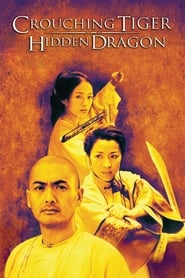
Crouching Tiger, Hidden Dragon (2000)
Release Crouching Tiger, Hidden Dragon DVD (Columbia TriStar Home Entertainment, 2001)
Ang Lee and James Schamus frame Crouching Tiger, Hidden Dragon as a wuxia film in which combat releases repression and each fight advances character rather than merely displaying skill. Their conversation follows the screenplay through translation and cultural negotiation, then moves across Tan Dun and Yo-Yo Ma's music, Peter Pau's cinematography, Yuen Woo-ping's choreography, remote Xinjiang locations, Beijing builds, the bamboo forest, Michelle Yeoh's rehabilitation, and a five-and-a-half-month multilingual shoot. They are candid about genre compromise, financing, editing the film to one hour and 59 minutes, and shaping the ending as liberation instead of defeat.
- Duration
- 1h 57m
- Talk coverage
- 90%
- Words
- 15,049
- Speakers
- 2
Guided collection
Directing motion at epic scale
Mel Gibson and Ang Lee turn landscape, bodies, rhythm, and large-scale production logistics into action that remains tied to character.
Part 2 of 2
- 01 Braveheart 1995
- 02 Crouching Tiger, Hidden Dragon Now reading
Commentary density
Highlights
Featured in
Topics
People mentioned
The film
- Director
- Ang Lee
- Cinematographer
- Peter Pau Tak-Hai
- Writer
- James Schamus , Tsai Kuo-Jung , Wang Huiling
- Editor
- Tim Squyres
- Runtime
- 120 min
- Also on
- OneSheet ↗
- External
- IMDb ↗ TMDB ↗ Find on Amazon ↗
Transcript
15,049 words · 8 flagged as film dialogue
Hi, I'm Ang Lee. I'm the director of this crazy film. And my name is James Schamus. I served as executive producer and as one of the writers on this movie. Which one is this? Crouching Tiger, Hidden Dragon. That's a lot of music for one little title there. I tend to like to make music, the modern music, that shock people. Bang! I like to do those bangs. I told him this is a very sensitive movie, although it's a martial art film, that he could do it once, then end up doing it twice. Everything else is out of his character. It's very mellow, very movie music. It's interesting because Tan Dun being such a great composer in the world of classical music, both Western and Eastern, and he was kind of a scary prospect for some of the people in the production because, well, you could do an imitation of some of his music. It's a lot of...
Well, come on, do a couple of those invitations. I know you've done that before, Ang. There you go. Hey, this is interesting. How to start a classic action movie with a five-minute dialogue sequence with two people sitting in a room talking to each other. That's really, really the classic way to start an action movie, Ang. Before dialogue. Because I have to sell the movie to the Western audience. You have to establish a society. You can't start with the actions. So it's all the Westerners' fault? Yeah, it's all Westerners' fault. Okay. I kind of feel sorry for the Chinese audience. They have to wait for 15 minutes before action takes off. But I personally liked it. It gives reason why they fight, why they exhilarate from all those stoic repression and stuff. The mountain is so peaceful. I was meditating. Okay. That's the reason why they fight? They just were kind of bored sitting around meditating? I guess so.
I think fighting is exhilaration of repression. Sense and sensibility, you know. That's why you need a movie star. Here comes the movie star. I noticed that Xiao has lost a little hair here. Can you talk about that? Yes, I'm all for it. He's the biggest star we have. For a role model warrior in Jianghu society, he's a perfect idol. As if he's a movie star in the film world. But the only thing is he's been a gunman, a very modern, rebellious, kind of hip character. And to transform into, for the first time, a classical, beautiful Chinese man with state manner that carries justice and the whole society on his shoulder, that's a big change, not only for him but for the audience that's been with him for the last 20 years. So he's wearing the Manchu hairstyle. First time he has that ponytail, first time he shaved. We did a computer mimic of him.
how he might look, and actually I was wondering why for the last 20, 30 years people didn't make him do that. I think he'd also look good if he had sunglasses on right now, too. You mentioned that he was a... He's coming of age. He's coming into middle age. I think it's a good transition for him, too. You can't spend your whole life shooting hundreds and hundreds of people every week. Actually, he's afraid of God. An assistant director did some of his movies, John Woo's movies, so they kept I had to keep reminding him not to close his eyes. Well, when you're wearing dark sunglasses, it doesn't matter. That's one of the tricks. It's like Sam Chow Mu acting in this movie. It's one movie that I have to keep shooting down for the next 10 years. You mentioned that in this movie, he's kind of like a movie star himself as a hero of the Jianghu world. Can you explain Jianghu, which is a term that although most Americans use on a daily basis, they probably don't know what it means?
Well, it's abstract. I think Jianghu literally means the warrior, the subculture of that underworld where the warrior going about. It's kind of an abstract society. Not exactly mafia. Are they like samurai? Are they like samurai? Samurai is a class. This is not. This is kind of a very loosely environment with all those characters. They can be bandit. They can be... cops that relate to bandit. It could be warriors like this, stretching out justice and so on and so forth. They could be good guys and the bad guys. It's sort of outside, but then also within the normal society. But these days, as history goes on, we sort of imply that as life itself, the entanglement of relationship, of society, of something mysterious and so on and so forth. In a way, speak to Chinese about Jianghu, everybody knows, but nobody can really pinpoint what that meant. Right. Because there's a lot of sayings, I think, in Chinese. Yes. Jianghu this, Jianghu that. In Jianghu, you must be blah, blah, blah. Right. But there's a real code. We start to apply that in life. Like, I'm in Jianghu because I'm making movie.
Hollywood. In the film society, then that's a Jianghu of itself. Got it. Now here's Beijing as it once was 200 some odd years ago. Well, up to 100 years ago. The next shot takes a long time. Here's the Jianghu shot. Oh, yeah. That's Beijing. Oh, Beijing 300 years ago. The way the guys in San Francisco at Mannix... It's been months and months on this. It's totally fascinating. We were so into the shot that you could hear the music swell, just an appreciation of our one big special effects shot here. Halfway, as they're still making that, we had the music, so I told those guys, you hear the music, you have to live up to that music, to that gong. Now, I recognize that guy. Yes, it's my father figure from my first three movies. Mr. Lang Xiong, the good old Lang Xiong. He's the star of Pushing Hands, of Wedding Banquet, and of Eat, Drink, Man, Woman. And he agreed to the insultingly low-pay offer that you made him to show up for a couple weeks in Beijing and be in this movie.
We talked a lot during the screenwriting of the film of this kind of scene, not the scene in particular, but a little bit in terms of tone. That is to say, here's a, you know, Sir Te is a real aristocrat. How he would find himself addressing, either in traditional Chinese culture or in the representation of that culture in the movies, somebody from the Jianghu world like Michelle Yeoh here. And with the class difference, how would he... as a father figure talking to her about her romance, which 300 years ago, people just don't say that. Yeah, or even two years ago. Yeah, two years ago. This is kind of for the worldwide audience, also to some degree to Chinese audience, the modern audience. In the past, people don't really have conversations like that. Right. This is the big pain shot here, just to show off the set. I sort of regret I did it. Takes so long, takes forever to go around. Now that turning around is actually to reveal that dress. It took four people and two months to embroider that whole landscape on the dress.
And funny, I've never noticed it. But there you have it. Ang Stroheim Lee. My obsession about women's dress. Well, it certainly has paid off better than the obsession with Chow Yun-fat's dress. He looks like he's wearing pajamas. This is by Western standards. I speak only as an ignoramus there. Speaking of which, that design loosened up a little bit. Mm-hmm. including the robe. He's more realistic in the beginning. As you see, when we're going into the later part of the movie, he started wearing gowns. That's not historically correct. This is a martial art film, especially fantasy martial art films. It's a very specific genre. It's very designy, abstract kind of genre. It's more like musical. In some ways, you just don't. Like that gown and a dress Michelle wears, it resembles reality 300 years ago. But I didn't go as far as the English movies I did that accurate on. Absolutely. Because you have to loosen up a little bit. And I don't think this is as accurate either. So people get it detached a little bit from reality that can be more free, associated to the fantasy world. It's a very designing, very mature in its own way, although the majority of it is B-movie.
It's a designing abstract kind of art and entertainment form. Yeah. Well, I was about to say, it still doesn't look as realistic as that Hong Kong movie Storm Riders from a couple years ago where all the women were wearing these kind of Tiffany wedding dresses. That, by my standard, had gone a little bit too far. Okay. My kids loved it. My kids loved that movie. Okay. I noticed a little wobbly woo-woo-woo-woo sound here with the sword. I don't think that was recorded on set. No, no, no. Actually, more than half of the sound wasn't recorded. They're fighting. They can't just use those sounds. But anyway, I came up with this idea that the sword should have a language of his own. So I went to the hardware store with the sound guys here in New York. Home Depot? Not Home Depot. It's kind of local. Well, anyway. We try out each sound you hear, maybe it's a combined of eight or seven or eight kind of sounds. The whoosh was sword. Right. What kind of stuff did you guys use to make? The saw, the whoosh. Yeah. And the wing-wong-wing was the water phone, the Hawaiian water phone. Hawaiian water phone? Yes, it's a phone that would carry the water you saw on it.
Oh, okay. You play with the bow, you start wiggling it, it has that... Yeah, sure. Kind of weird sound. The luau, you got the plane. It was invented by a Hawaiian guy named Water. Oh, I see, okay. It's called waterphone. All right. Now, Michelle looks very, I don't know, wistful here. She noticed something. No, I told the art department you have to find a way that raise the lantern, not like the movie Raise the Red Lantern. Yeah. Raise the orangish glowing lantern. Here you're going to hear more of those sounds. What's the design on the sword? Well, there is green destiny sword. It's a famous sword. They keep twigging it, keep twisting it, and then bang on it, and twisting it, and bang on it, and bake some more. So it's very elastic but hard, very light, slender, elastic, but very light, very thin. That's one famous sword. And they show up as green, sort of glowing with a green color. You don't really bang the swords. You don't really chop like using a knife.
It has this way, a very, very graceful way. They said it's like a phoenix moving when you're waving the sword. You don't bang with any weapons. Right. We'll get a whole lesson. It's the point at the part where you're going to slide open. Chow Yun-Fat's going to give us a whole lesson on that later on, I think, at great length. Sword is probably among the most difficult weapon to put on the screen. Why is that? Because you cannot bang it. It's hard to get. to actors or stuntmen to bang the, to get the rhythm right. Right, so there's no real definition to it. And unless you're training for eight, ten years, it doesn't look like anything. Right. It's very difficult if you want to get it right. And it's elastic. It's hard. Mr. Yuen Woo-ping told me he never, of his career, like 30, 40 years, he never really done sword. It's hard.
So we've been talking for quite a while, and still I have not seen one action sequence yet. It's coming, it's coming. All right. It's coming up. Uh-oh. Okay, it's either Annette Funicello or Cheng Pei-pei. She used to be the missionary when I was in high school, middle school and high school. I think it's a great thing to have three generations of the queen of martial arts. Well, she and, I guess, the current Madame Shufang, Yeah, she's slightly earlier. Maybe just a few. They overlap a great deal. She was in the first King Hu martial art film. The Drunken Master or something. Drunken Master was... Drunken Beggar. All these drunks in these martial arts movies. I mean, Drunken Master was, of course, the great Yuen Woo-ping. Drunken is a big mystery. It's very inspiring when you're drunk. I'm with you. I'm with you. Are you drunk when you write? Who, me? Yeah. No. All too sober. Let's put it this way. I don't write when I'm drunk. Although there are a couple of scenes in here where one can make that argument.
I like the way she pulled off the candle. Looks like she knows some qing gong or stuff. Breath. Another shot that takes months to do. More money thrown on one little effect shot. Whatever, okay. This is in the Summer Palace. Up in Chengde. Up in Chengde, yeah. I was there on the scout. Just a piece of cloth. It was a genius guy, the martial art guy. That was a piece of cloth? Yeah, we had an argument whether she just jumped in from the lower window or upper. Because in the north, in China, only the upper level windows opens. Ah, okay. So the art department wanted to stick to it, and the martial art department, they wanted to just make it easy. It was a long debate. Now, all right, finally, jeez. Ang Lee movies, what you have to sit through in order to get to the good stuff. All right, here she goes. Now, that was quite a little jump there. It's called vault qing gong, enlightened kung fu, that's what they call it. It's a weightless leap like that. It's not flying, it's weightless leap. The two ways of practice is
One is like high jump. You just work on a jumping ability such as what Michelle is going to demonstrate. And the other one is enlighten your body. By enlightenment, you're enlightened. The Jenny Craig approach. So the density of your body differs. You're more like on the moon. The famous Sarah Ferguson vault coming up. I notice, having seen this sequence of far too many times, how you very carefully introduce the weightlessness of your characters. I mean, that first leap, she just kind of goes a little bit extra, a few feet more. And then it goes crazier and crazier. Here, she's not fully in frame. She goes up. Here, she just kind of lands. Here, the first... That did my wire work. No, it's not perfect, of course, but it's... Let me ask the question. She just asked her if she trained at Wudang. Is this... It's soft. It used to be known, but it's not really accurate. But it's a popular belief that Shaolin works on the external strength. Powerful strikes or karate, taekwondo, things like that derived from Shaolin style. Shaolin style, huh? The other is the inner strength type. People are soft. They suck in energy. They emit energy from losing up their tension and direct their...
And that's the Wudang. Yeah, that's the Wudang that direct their power into one direction. So Wudang versus Shaolin. Yeah, it's a soft style, soft internal style versus hard, tough style, such as Michelle. Obviously you've... We built a set for the chasing sequence. Wow. If I had money, I'd do virtual reality kind of shots. Right. Now we just hang the cameraman on the wire and chase them. It's funny. Now you're kind of full throttle in terms of the floating and stuff. How'd you come up with the score? Well, I always fantasize about using the drums, the percussion in the fighting sequence. I tried in the last movie, Ride with the Devil, but it sort of collided with the gunshots. Didn't work out as well as here. Right, because they're not shooting at you. Yeah, they're not shooting, they're not...
colliding any weapons, it's just human voice and the colliding of the elbows, so it's a perfect place. It works, yeah. It's funny, I was back in New York during the shooting of the sequence, and in the editing room we got the dailies, and we got all those close-ups of the feet, and no one knew what the hell was going on, because we didn't know the rest of the scene yet. You started off with the feet stuff, and we had no idea. Oh, that's a great shot from Michelle. Oh, this one, yeah. Okay. You see, that's why we shoot it in sequence. Yeah. You don't know. She's supposed to run all the way down. Just won't work. She keep banging it until like 17th day. I said that we had enough. Okay, so then you came up with the rock thing? Came up with the rock thing and figure out what to do next. Wow. So, I don't understand why in Asia they always give editing award to martial art films.
Because it was edited when you were doing it. It's like here in the academy you always give the business cutting. To me that's easy. To save a performance is harder. The academy award for sound design always goes to any movie that has a ping sound from the submarine. You automatically get an academy award for sound. Oh, did you hear that? This sound is actually hard. It takes a long time to do human sound. Yeah, exactly. The Chops Aki movies I've seen before have had a lot more... They spend like three hours doing it. So this is new, I think, for the Chinese sound men and also for the sound crew here. The density and the variation is a lot higher than the big-budget film they did here. They all say that it's the most difficult film they've ever done. In terms of sound, I agree with that. Yeah, the sound.
I have fond memories of walking into the sound mix room, which looked like a, I'd say a... Numerous, numerous amount of work. It looked like an inoculation lab experiment for, you know, West Nile virus. Like, people just, like, in various stages. Wow, I'm glad I wasn't that person. What was it like at the Cannes Film Festival screening at the end of the scene? A big applause. It was wonderful. We didn't know about people yet. It reminds you why you want to make a movie in the first place. Because you want everybody to really like you and want to have sex with you and you to be the center of attention. It's an excitement. Us directors. I hate the quality of the film. It should be called a movie. It's when you feel it's really a movie. Dang, this is cinema. This is pure cinema. Have you seen Qingmingxian? Yes. I think it has nothing to do with Yu Daren.
Now you have to wait a little bit before the next action scene. Yeah, more Ang Lee stuff. But also more plot. Now, up until this point, of course, the first cut of the movie was about, what, 20 minutes longer? Yeah, about like that. Yeah, something like that. Yeah. It's funny because I seem to remember some disagreements about how long it should be. No, I don't. Well, it gives me the time frame. It has to be under two hours, but nobody said where to cut. Yeah, okay. Well, no, that was our goal. Anybody who pays attention here will notice that this film is one hour and 59 minutes long. And it's funny because it was a very arbitrary goal on the one hand. On the other hand, I think it was important to make a movie that was substantive and that still was not at the level of kind of the big indulgent art house Hollywood movie. No, I think the best thing is that what you left is probably the best thing that's worth to stay. Yeah.
We also stayed, as they say, on story quite a bit more than... Now I look at it, I don't miss anything. Yeah. That doesn't mean that next time... Yeah. I can be sure. Hey, look, it's Ted. Oh, no. We used to have drawings like Hogarth drawing in England. Marketplace, different characters. It's pretty much up to that, and all Beijing photos, drawings. And the usual lousy background action. Sorry. Some things just will always bug me. Those two guys, like, fighting back there. What is that? What were you thinking? This is good stuff, though. I like this. All those plants, the art department. In these days, this guy would be a guy who watched too much Jet Li films. Try to be a hero. Try to live up to those movements. I like that weapon. I chose all the weapons in the movie, except one. The double-handed sword. By choosing, you mean you actually designed and... Well, they're all authentic. I checked it in the weapon dictionaries and watched tapes.
What is she writing here? What calligraphy is she doing? It's specially designed for women to write, women back then. If they're literal educated, they'd be practicing only that type of writing. What is it? Small. Small. To regulate you. So you're righteous, you sit still, good for posture, which I had her do that. She's such a modern woman. modern girls these days, middle class. She grew up in Beijing? Yeah, she was 19 years old. So I had her do calligraphy every day. It was part of the boot camp training. Other than martial arts, she had to sit there for hours and just go through the rigors of sitting and the formality of writing. calligraphy. You must have been a... Actors, they need to be tortured. Yeah, of course. I'm not disagreeing with you. I'm just a little bit in shock. Now she shows her real... Yeah, this is more of a wild style. What is this? It's a wild style. Wild style of calligraphy. I mean, there's so many different styles, and they all signify something different. Wow. You must have been a really mean math teacher in a prior life. Okay.
That's a big mystery. Women can fight pragmatic and brilliant and hidden in such repression and formality. That always fascinates me. This is how investigating seem going through in the Chinese film. And now I'll explain to you the reason for today's plot. Detective story. Why are we fighting each other? Well, because we have this marriage thing. Repression. Ang Lee, repression, blah, blah, blah. Ang Lee, repression. I'm repressed. I'm in an Ang Lee movie. But I'll find freedom. And a sword. That's my idea of a detective story. Like that. Well, it's also she's a great detective because she's empathetic. Because she actually can project her own feelings onto Zhang Ziyi's situation. Cinematic power, photogenic. Both women has that. They carry different things. That actually, I'm sorry to say, has nothing to do with acting. I came from a theatrical background. I used to believe in acting totally. But, no.
as the years go by, as I did professionally, and see how people react on certain people on screen. There's movie magic, cinematic power. Yeah, you need acting and cinema. I'm sorry, movies, please. They just have to be, they have to born certain ways. Well, it's also, I mean, this is something new also for Michelle in terms of her audience. I mean, look how she's holding a close-up throughout this entire Extremely lengthy, extremely verbose. Who wrote this scene anyhow? But anyhow, she's holding it. I mean, she really does. And this is something that from a Michelle Yeoh fan club as the official undersecretary of international affairs, she's never had the chance to do that. Or I would say rarely had the chance. Rarely. Rarely. Some women glue themselves onto her, like I had a similar experience with... women who think they're intelligent, they have semi-affection toward Emma. Emma Thompson. Emma Thompson. I remember how scared I was if I made her doesn't look pretty, they all would kill me. That's right. It wasn't that hard, eh? Oh, that's a miserable day when we shot this. That was horrible. You remember your visiting set? This is out in the Taklamakan Plateau, kind of southwest of the Gobi Desert, just kind of connected.
It's called Flaming Mountain. And here's Flaming Mountain coming up. And it's not really that flaming today. Let's see. Because it's a gloomy day. It's okay. But I guess there was, what was the Monkey King? Yeah, the Monkey King story, flip over that, and that's where he fight the bull, the devil bull. Right. It's a famous, famous story in Chinese culture. You got lost there. Yeah. Oh, did we get lost there? For three hours, the dust sitting down. Yeah, they kept showing locations like, here's one that's about four hours from Beijing. And I said, how about this location, which is like a seven-hour flight, then a 12-hour drive, and then you have to take the donkeys with the equipment up to get there. How about that one? And guess where we shot?
Eating scene. Yeah. But really no establishing close-up of the food. I had. Somehow we didn't use it. Somehow, yeah. I could. You can't have an Ang Lee martial arts movement without the martial use of chopsticks. Well, that's a cliche. There are things I don't know why I had to do it. The cliches I have to deliver. Catching the thing with the chopsticks. I think something I saw many times in childhood, I wish I was doing it. What else besides what we're just about to see? That, you know, fighting in bamboo. Now I do... on top of bamboo. Yeah, we'll get there. That's at the end of the movie, but that's a great one. Yeah, that's the shot. You have to do that in Marshal. I don't know why. It's the waiter, there's a fly in my soup shot. Only when you have a star, you do shots like that.
It's funny because Sonny put that... I wouldn't do that to actors. Only movie stars. It's funny because Sonny put that shot in the trailer, remember? And he kept saying, what's so special about that shot? But it's funny, those little shots, those little presentational shots can sometimes be really great. Now here's one of my big arguments with the art department. Hey, let's have a poster and let's put the exact image of one of our actors right on the poster. Completely giving away the entire plot. I think it's funky. Just a little difference of opinion. If you're going to go that far, why not go with one of those guys who does the caricature portraits in the park, you know? The art department. Now, this kind of conversation is a little new to the Chinese culture. Not audience, because we grew up watching American movies. No, it really was. The process of scripting on this film was really, you know, not being dramatic. A little cross culture even though it's a pure Chinese film. It was a multicultural event and it was tough at times because I was obviously working from an American context, a kind of imperialistic Hollywood, you know, notion of what a genre
piece would be in the sense of scripting, but also adding what people associate now as our shtick, which is the emotional valence of that kind of repression freedom and female character thing, blah, blah, blah, blah, whatever that is. And of course, what I was completely incognizant of or not aware of was was the layering after layering of wuxiapian tradition, the kind of generic tradition. They don't say things like that. They don't talk like this. So it was, I remember after the first draft. I don't know why they don't talk like that, or the writer never wrote it. But when you're facing not only Western audience, but the modern Chinese audience, that's not sufficient, what it used to be. But it's hard. I remember after the first draft, and people would say things like, well, this is great, except he just wouldn't
He just wouldn't talk. And finally I realized the equivalent would be if a Chinese writer wrote some kind of contemporary law and order courtroom drama in which the DA comes into the judges' chambers and bows like nine times before he speaks to them. It's great, but I don't think he'd do that. I wrote basically Martians. So it was really interesting to see the process of the rewrites, both from Hui-Ling Wang and with you and the whole team. working on this in Beijing, and then coming back, of course, what would you... Sometimes we come pretty close, actually. Oh, yeah. Yeah. Sometimes the Chinese-speaking audience would feel a little, eh, look, sound familiar, but didn't quite sound Chinese. Yeah. Few spot, not too many, like, this is totally authentic Chinese. Yeah. It's all cliche. Yeah. Nothing but cliche. I didn't write one word of this, I swear.
I must avenge my mother's death. Come take your death.
Well, it's true. I mean, the amount of dialogue in fight scenes... And this is pure Hong Kong-centric humor. Yeah. But it's true that just dialogue in fight scenes... Western fight scenes, they fight. They don't sit around and, you know... Talk about, like... Yeah. But that's part of the culture. You can't just, you know, bing-bong-bing. That's boring. Yeah. Dialogue must come from it.
This is the first fighting sequence I've done in the movie. I was a novice. I gave Mr. Yuen Woo-ping a lot of difficult times. The big idea is that it's not quite cinematic or doable. But Mr. Yuen Woo-ping has to... ... feel up with me. And this is where the Bond Company start to get nervous. Yeah, the film was bonded. That means there's an insurance company that ensured that we could actually finish it, which was idiotic on their part, but lucky that we actually did. You shot for, what, five and a half months? Yes. In China? In every part of China. This sequence, like this fighting, little supporting role fighting, sidekick, like, have to... 10 days we were having a fight until Chow Yun-fat showed up. The company got really nervous. It took me about two months to pick up the language. The special of the martial arts. It's like 10 days later before Chow Yun-fat shows up. That's right. That's not a cliche, the acupuncture. The acupressure. I don't know how that works, but it's always in the novel, always in the movies. This is the standard. If this were set in New York, it would just be focused on their sinuses.
Take your death. I shall revenge my master's death.
She's got a good comeback. I like that line. We love that line. For a gunman, this is pretty good work from him. Source work. Yeah. That's cliche. That's kind of new. I like that. This, she went to England to learn that Oh, really? That shoe stain. The pointy shoe attack from James Bond movie. Oh, right. He spent almost half an hour talking about whether he should hit the left so he could point from the right or hit the left. From right to left. postures, a lot of that is about postures. No, that's a joke from John Woo's movie. What? Where they always have two guys pointing guns at each other. Right, yeah. I don't know, two swords pointing at each other is not quite like two guns pointing at each other. But anyhow. But here's an introduction of a theme that was nowhere near the first draft of the script, which is so central to the movie and obviously to the tradition, which is, of course, the question he's just about to ask her. Which is coming up.
Who is your master?
Where did you learn that? This whole theme of mastery and disciple... Tradition. Tradition. And this weird, to American ears and to Westerners, I think, worry that you're going to somehow be better than your master. Yes. Actually, she turns out better than her master. Yeah. Now, tell me how a guy who can use chopsticks to get a dot and get shot by a thing. I don't know. I think we should ask the director. Actually, the first time I saw that weapon, that's the shot I had in my mind. Right. Sticking in someone's head. Yeah, sure. Why does his head look so much like a, I don't know, like a pumpkin or something? Yeah, back to the master thing. Yeah. It's utterly very important. I think in the, at least in the martial art film, or in the Jianghu world, When you make a stance before you fight, you show where your master from. Right. Where you learn your skill. It's called men hu, your facade. Right. You see that in a lot of Jet Li movie or whatever the film is. Martial art film, you see people take a stance, do some kind of formality. That just tell you where I came from. Right. Who is my master. Right.
and what kind of rules I have to follow, what kind of guidance I took from him, take that as your honor. But it's also about the level of skill and keeping your skills below those of your master, because if you're better than your master, how do you master? Because the master is always hiding the highest skill to himself or herself. Right. That's why the Chinese get worse and worse from 3,000 years down. Because it's a tradition. Whereas, of course, in the West, those who can't do teach, you see. So the people who are teaching have absolutely no idea what they're talking about, and so it's very easy for their students to be better at it. It's the clash of cultural traditions, and we see it right here on this DVD. But it is true. That was one of the things. The whole thing with the secret book and the training was very, very foreign to the Western part of your team going into the film.
And we really had to learn a lot about how to kind of go with the flow. The story I found you can understand. I remember the manual and the mastery thing. No matter how clearly I explained to you, you just don't... Either you don't get it or you don't want to get it. Right. Let's assume I didn't want to get it. Yes. No, quite frankly, it was difficult to put it into a script form that was palatable to a Western audience that didn't seem risible on the page, didn't seem a little laughable. And I think seeing it go into performance and seeing the way, the kind of gravitas with which the actors and you dealt with it really helped us kind of swallow that pill. I think as you watch more and more, you get the riff. Yeah. If you explain it too much, then it becomes boring. My favorite, this is actually my favorite little bit, I have to say. I love this bit. It's coming up just a little bit. Yeah, it's coming up just a little bit.
But the whole setup, how to do this, because, you know, after a while, this whole cat and mouse thing with her pretending she doesn't know who she is and blah, blah, blah, we're getting a little tired of it. We said to make it a little bit more interesting here. And, of course, the reveal here is that Zhang Ziyi's character finds out that her governess is really as bad as she could ever have imagined. Here we go. Loving it.
Yeah, I like this shot. Yeah, when did you get into that whole reverse dolly thing? Just kind of Hong Kong, my take on the Hong Kong kind of. I think in a tranquil scene like this, a day scene like this, you give a little twist on the temple. A little camera work. It's exciting. I would almost call it cinematic. I think by doing that, it shows the opposite side of repression, I think.
I suspect in the past guys and girls don't meet like that. But you have to get along with it so the story can be kept told. Yeah. No, I don't know. What about in the dream of the Red Pavilion? They have scenes like that, don't they? Well, it's close to the in the back court. Yeah. I mean, you don't introduce each other like this in public. But if you're too sticky into that and... Not much interesting story can be told. Now they end up happily. Yeah. So those heroes, what's the problem with them? Harners, you can do this, you can do that. Now again, another scene that in the process of writing the screenplay, really moved its center of attention to a kind of student-teacher relationship, which you can see is his kind of goal in life. It's kind of ironical. Yeah, very. That's a shot I had in mind since a long time ago. And here the music isn't quite as upbeat as it was the first time, huh? It's kind of romantic, you know? Subdued romanticism.
But it's usually a pupil chase a teacher. Master, can you teach me? So this is the opposite, ironically. So master go, I must teach you. It's kind of a twist in the genre. But this is important. You'll misunderstand what it really means. The Chinese in the secret manual, they always play secret with the words. Only the right teacher knows what exactly means. It's not what's on the surface, there's underneath, meaning they just twist the literal words and get a better essence out of what's being written. Right. It's part of the, I mean, it derives a bit from the kind of the hermeneutics of this Taoist tradition. There's that great... Great lines from Zhuangzi where he says, you know, once you've caught the fish, you don't need the hook. You know, once you've trapped the animal, you don't need the trap. And once you've got the meaning, you don't need the word anymore. Then he says, so I need to go find somebody with no words because I want to have a word with this guy. Twist and turn in the same words. That's the game they love to play.
This is hard to do. We never really get the entire thing. Before she makes a move, he sees through it. He taps on what she's about to do. How are you going to show that? Now, a character that we move by, he could never do this, unveil her. Right. Same as Yu Shu Lien could not unveil her. Right. Problem with nice guys. Yeah. Well, again, what's interesting is there's a fight... That's very important, the face. Somebody's face, you know. He just shaved her head. What's interesting is that here's a movie that's really a sequence of staged fights, and yet in every single fight, each character can't fight as hard as they probably should be. For whatever reason, they're always holding themselves back, which is really different from... Except her. Except her, yeah. Yeah. Yeah. That's the charm of her, because she doesn't give a shit. Right. But even she holds back there on the rock at the end when we get there. Yeah, somewhat. But mostly you can see her full-fledged. Yeah. Only bad guys do that. Yeah. Yeah. And here comes the whole discussion about pure-pure mastery. Pure-pure master relations, yeah.
Why are you still here? You killed a official. You can't stay here anymore. I told you.
They haven't talked yet about the lighting style of the film, and particularly your choice of Peter Pau as a director of photography, and how this relates to some of the world. Seeing like Lizzie go totally artistic, the oil painting, what have you, Bermuda, Hammershaw, But in some of the fighting sequences, it's pretty incredible how quickly he could accommodate the choreographer's need. I mean, it's incredible because of the... Here comes the Jianghu. Oh, yeah, here we go. But it was never translated. This is Jianghu. Scary but exciting, isn't it? Kill or to be killed. And we're just about to see what the student is... Boom, boom, boom, boom, who wins? Whoops, she got there first. But no, it's an interesting mixture for Peter too. Peter Pau has done some of those great, like the great Ronnie Yu film, like Bride with White Hair, which are these fantasy martial arts, really saturated colors, almost psychedelic in terms of the palette.
But he also shoots a lot of these very contemporary Hong Kong romance films that are beautifully done. I mean, actually quite... And with his experience, he could quickly, as I said before, with shooting sequence. It's more guerrilla filmmaking than when I shot my student films. It's very spontaneous in terms of shooting. When you put it together, it's like assembly. Mostly shot in sequence. But then... It's this cameraman's nightmare. He's probably the only cameraman who also works as almost like an AD, assistant director. He's the guy who runs the set. He's so bossy, you know, whatever. He's not going to put up with any gut from anybody. Not Peter. Yeah, but usually they're enemies. It's like contractor and house designer and interior designer. They should be enemies. One wants more time, the other wants to make it on time, but he's doing this...
both thing at the same time. He was spectacular and he has this whole, you know what was interesting too about this film was that each of the department, the key players in each department had almost like, I'd call them teams, not in that kind of happy like we're all a big happy family team here, but like teams in the sense of like rugby teams that accompanied them. I mean Peter had his guys from Hong Kong, Oh, these guys are great, like top of the line. Yuen Woo-ping, of course, had his guys in the martial arts and doing the wire work and the stunt stuff. And Tim Yip in the art department. Everybody had these just incredible, they're like gangs. They actually, they're directors. Mr. Yuen Woo-ping, he directs a lot more movies than I did. That's right. Very successful blockbusters, very, very successful films. Drunken Master. A whole lot.
You name it. Yeah, he's best known, obviously, in the West for The Matrix, of all things. Recently. Which we're not going to say anything bad about the fighting in The Matrix, okay? Because we love that movie. In a weird way, I was gratified to see the number of references in the first pass of press to The Matrix. It's one of the few films that you and I both responded so strongly to. And at the same time, you know, found, you know, that there was a lot, especially in the kind of the use of Eastern, you know, what's called slang, that there was a lot to develop from there and kind of bring back to a Western audience stuff that that had just given a taste test of. Here's a piece of music I really like, the duet. When Tan Dun thought about bringing Yo-Yo Ma, I was hesitated because it has a backboard.
I want the huqin, the Erhu instrument, which is the other instrument playing of cello. That's more of a Chinese sound of like a woman wailing. Emotional wailing I like. But they say, oh, Yo-Yo Ma, he plays that instrument. And the thing that makes him so special is he knows all those instruments. He could play cello like any other instrument. And his music is great. I just want to get this straight. You actually hesitated when Yo-Yo Ma's name was mentioned? Just for the record. Whoa. No, it's great. I mean, I remember the Erhu, the woman who is the top Chinese Erhu player in Shanghai. I couldn't keep up with him. He's much softer than I am. Yeah. It's incredible. Yeah. And it's great, again, in that mixture of genres and cultures to have a cello and an Erhu in a duet like this. Yeah, and play the center line. Yeah. I thought that by giving away the sword, I could... What an idiot. Are you kidding? That just starts the movie. This guy has not seen enough movies. It's MacGuffin, the sword. MacGuffin or MacGuffin? MacGuffin. MacGuffin. Oh, well, we can call it our MacGuffin. MacGuffin. A poor woman. Every time I see this, I think of a poor woman.
Here again, I wish we'd had a couple of extra shots. Wow, that's really an impressive sword move there. Sometimes you just wish you did better. You know better. Go on, keep going. We all wish you did better. Come on, humiliate me. Okay, hey, it's a two-hour movie. No, one-hour, 59-minute movie. Now we're getting into business. This is okay. Okay, we can deal with this. That's how I greet everybody who jumps in my window. This was a bit of a... The first time I remember we talked was whether to use flashback or not. Yeah, that's what I was just about to say. This is a bit of a risk. Here we go, 20-minute flashback. It took creative liberty, I guess, artistic liberty, whatever, entertainment excuses. From the genre itself, which is very loose in construction. And I believe this is another one of your favorite days on set. I just remember how much fun you had out there. Hundreds of men and horses and camels. No walkie-talkies. No, the key to the camera van.
One of the drivers didn't want to show up. We're miles and miles, hours and hours from any civilization. Now, the people back there, they need to be told by giving instruction by the local ADs by at least three languages. So which languages? Kazakh, Uyghur. Uyghur is like Turks. And Tajikistan. Tajikistan. Yeah, this location is near the Kazakhstan border. Right. North of Tibet. Way west. I never knew the Middle East was so big. Yeah. Well, you're not even close to the Middle East yet, but it's amazing that part of China as it kind of moves into... That's the center of your Asian continent. It's huge. For a lot of this, we're based in the town of Urumqi, which is the capital of the autonomous Uyghur region there. Xinjiang. Xinjiang. It's the size of 6th Japan. Yeah.
And in Urumqi they have a museum. I went to one day when, because the drivers got lost, I decided to stay in town. And I went to the museum there and they have these mummies that are three to four thousand years old. And they look Russian. I mean, they're Caucasian. They really are trans-Caucasian peoples who had been preserved in the salt, the dry salt flats out there in the desert for thousands of years. And they're really the best preserved early textiles also. There's a wonderful book called The Mummies of Urumqi, which I discovered after I came back from Urumqi. Oh, yeah, I like the way he's just with the pole sticking out of his tummy there. One fantasy I always have is the horseback north of China chasing. It might be boring to you, but... Well, yeah. Ang is making a veiled reference to the fact that I've always wanted to cut this scene down during press production. It's like, okay, come on, okay, enough is enough. Plus that shot looks so fake. But also the entire crew being completely in love with the Mongolian horsewoman who was the stunt devil for a couple of these shots, who was incredible. We just put them on horse, the actors. Yeah.
They had about 10 lessons. Also, those horses, though, are so cute. They're smaller. They're smaller, yeah, easier than the, let's say, the horse work I had to do with Ride with the Devil. Ride with the Devil. What was that? Was that some movie you worked on? I can't remember. What a bomb. Anyhow, it was great. I liked the movie. They really buried that one. This is a unique location. I don't believe anybody filmed there.
called Colorful City. Oh, the rainbow city. Rainbow city. Rainbow city. Way down. Way out there. All kinds of color you can find. Plus the white guy with the beard in the middle of the group of extras there. I couldn't believe those are Chinese. They all speak Chinese. They're local Chinese. It was great in Urumqi, of course. The street signs were in Chinese and Arabic. It was Arabic alphabet, the Uyghur language. I wish the sun was out there for that shot. I wish he hit the horse there. That horse just freaked out after that shot. Never cooperate for the rest of the shoot. That was terrible. Well, it's better than Sense and Sensibility. Remember when that horse was farting to the whole, that scene with Alan Rickman. We can get any sound out of that. They start to making roads and buildings along this. It's kind of a pity. It's such a great landscape. It's all being developed. There's incredible mineral wealth. And there's actually, especially on the northern part of the plateau, of course, there's an incredible water table. The water table is huge underneath. There's incredible aquifers. It's magical land. So colorful.
Well, it's really magical when you realize that there are footprints behind her. I don't know. How did those get there? It must have been some magical genie who'd been there in a prior take. The camel skeletons. Yes. Originally, I ordered a dinosaur. Right. Dinosaur skeletons. They only came out for the camel. Oh, I love that shot.
So here you have a kind of mixture of Mongolian wrestling. Yeah. Everything goes. Kung fu. World Wrestling Federation. This book for guys who had to roll down from the hill. It looks, looking at there actually rocks. Oh really? I didn't know that. They're almost as hard as rock, they're not. Ouch. They're very, yeah.
one of her first fighting scenes. I got so upset. The sound's going down. This is right after the sandstorm we hit, the two-hour sandstorm. And the previous night, the whole troop, our whole troop get lost in the desert. We didn't find them until seven o'clock in the morning, so we delayed it till two o'clock call time. They went out, couple shots, and there's a sandstorm. Oy.
So these are the stuff they robbed from Silk Road. Right. The Silk Road being the trade route. Came in from Europe. Europe to China. So anything goes. Anything in and between China and Europe exists in this hole.
That's local chicken. It's called guārājī. Guārā means the sound they make. Guārā, guārā, guārā, guārā, guārā. They're green. They're running around, flying all the time around us. And in that location, we have wild horses, wolves, rabbits, and all kinds of deers. Eagles. You're about to see an eagle which doesn't fly. Because the shoot kept getting delayed, so it was molting, right? This is like the only eagle we found that's not molting in the region. So where did that eagle go? Like right into the lap of the trainer who was about three inches off screen. This is the first shot we got, the pretty shot, since we were in the desert. That was like a week into the shoot. I see the whole poultry motif now starting to emerge.
That is so not nice. So that's the Rimbaud CD. Yeah, all right. I remember when everybody in New York got those dailies, and they kept saying, you know, this looks so good, it can't be real. It was like the effects shots coming. This is the Gobi Desert. Pebbles, little pebbles. Raggedy. You're not supposed to be there. Yeah, how'd you get to go there? That was tough. A lot of the stuff was shot the first month of the shoot. We based out of the way west and boy was that difficult for everybody. Oil plants, that's where we're based now. Not even hotels sometimes. Yeah, that was tough. And the heat. And we begin the movie from here. Yeah. Even up to this day, I couldn't tell if it was a good idea or a bad idea. I started five months shooting from this. Yeah. That was good. I mean, you know, it did bring people together. I remember Michelle. It gets you tough. Yeah. Michelle actually came out and stayed with everybody. She has no scenes out there. And she came out. And remember, we were out there in the middle of the desert. And then one of Michelle's friends is there. Turns out it's Lauren Hutton. So we're in the middle of the Taklamakan Plateau.
And there's, like, sandstorms. And then remember that night with the freak, freak rainstorm that hit us on the drive back? You ended up driving your van, right? Yes. And then the sound guy, sound guy, I mean, a great sound recorder, Drew Kunin, who was along for the entire shoot in China, he's done, he did Ride With the Devil With You and Ice Storm, ended up driving our van back over the mountain pass, and the trucks were getting blown over. And then you get back to Urumqi, and it's like, and it's Lauren Hutton! She was great. She was a lot of fun, but it was just surreal. It's not the most elegant way of saying I didn't rape you, but it works. You know, there's a scene where I decide I want to change direction about her part and almost the movie, too. How so? No, in the book, Yu Jiaolong, Jen's character is a tomboy. It's very male-ish, kind of very boyish, aristocrat woman. And I realized shooting in the desert, even if I beat her to death, I couldn't make her that way. And this is the scene I realized she is sexy, very feminine. So it sort of gives you bad ideas. It took you that long to figure it out, huh? Okay.
Yeah, it took me now because I stuck with the character in my mind. I think everybody's chasing that hidden dragon, which is Jen's character. So I did, and the whole crew did. I hope in the future audience did. Audience do. But in filming this sequence, I figured I'd have to change direction of her. and to the movie, because everybody responds to her, we have a little twist if I change directions. And from there you find her strength and photogenic power and stuff, and also her confidence as well. Also, we posed ourselves a very specific problem during the scripting of this, which was how to draw in very, very broad strokes the romantic equation that infuses the film, and very swiftly. in this little backstory, in this flashback, which was hard for us. It was a change of pace because we tend to veer, as is our want traditionally, to the kind of art house subtle. In subtle Russian, this is not exactly subtle. This is part of your whole foot fetish thing. So we're going to do a dissertation on it. So you have these feet shots. Remember Sense and Sensibility?
It's like everybody, they all like... In the past, a woman's foot is very sensitive, it's secretive. We lost that form of art and sensitivity. I haven't missed it, although I'm sure there's a couple of guys who are right now reading the last three pages of The Village Voice, you know, very interested. Okay, so we've had the foot thing, so we know what's coming next. There's no mystery anymore. But also, of course, now Xi makes this distinction here, which again for Westerners might be, might pass this by. She says... She's Qi, she's Manchurian. She's Manchurian, she's not a Han Chinese. Now the Manchus were, of course... It's the race that dominated China, rules China in Qing Dynasty. Yeah. The Manchus were northern Chinese who really came down and... Yeah. Yeah. The Manchurians east of Mongolia and Russian west of Korea. Yeah. Yeah. Yeah.
Now, when my wife does that to me, I go straight to the hospital. And they don't bind women's foot. That's the only society lady that binds. Right. So the bound foot would be. So Michelle Yeoh's character doesn't because she's a working woman. Right. She's lower in class. Right. And she, as aristocrat as she is, society lady as she is, she wear those wooden clog that have her, it's like they're high heel. Right. But she wouldn't bind her foot. That's Manchurian. So this is the raciest scene you've ever filmed. If I recall. I think so. Except for the food shots in Eat, Drink, Man, Woman. You know, I think this is the first time I deal with romantic scenes. There's a lot of emotion, but being romantic, I think, is new to me. That's pretty sexy, too. This is our cheesiest shot. Okay. I admit, arguing to keep this in. Music up. But it's really, to me, this is almost, this is my homage to Hong Kong cinema right here. Forget the martial arts stuff. But it was fun to go full throttle on this kind of thing. As I said, very operatic.
And we took as a model this from the Western tradition, the kind of opera tradition, which is you walk in the room, you open your mouth, and you hit the high C, you're in love, and it works. I think by spirit, martial arts, especially fantasy martial arts films, close to musical. Absolutely. It's not about beating somebody up. It's fantasy. It's where our imagination hides about power, about romance, secret desires, and also moral. Anything goes in broad strokes. You know, Flashback is out of date for 40, what, 30, 40 years? Probably longer than that. But I get to do it. It's like collage or whatever. I just hope it works. It holds together. Yeah. I think it was out of date when David Griffith did it. What was it? Enoch? Arden? I'm just blanking out. Whatever.
So they're wearing is a mixture of any possibility in Silk Road. Like she's wearing a Mongolian dress. He's the mixture of Tibetan and everything else.
This is also another first day of shooting. First day of shooting. We got the dailies back and everybody in the editing room was like, are they on some stage? Is that green screen, Dan? I mean, it looks so fake. Glacier in the background. You know, glaciers, streams, and also the lighting. He's lighting a lot on their faces here. Because it's so baggy, the glacier, so much reflection. But it gives it a very, you know, mystical kind of feel. This was a miserable day, first day. We did the opening ceremony, we prayed to the water, which symbolized money. box office. So you can get away with that. You know, I can't, I'm not supposed to go into like some synagogue or church and go, please, money, please. This is not, I don't know. It's four hours drive from Urumqi to here. It's a 20 hour shoot, so all around it's 22 hour work. And we drove back in a mountain road with no light. It's...
scary and our camera equipment just arrived 10 o'clock the previous night so camera crew was checking equipment until like like two o'clock in the morning and leave the set at four leaving the hotel and that was our first day shooting i thought i was gonna die how was the rest of five months and you know the rest of five months it was pretty much the same thing it didn't really change that much
Here's another thing I found about Zhang Ziyi. This is the first scene we shot when we came back to Beijing from the desert. I found she has no problem doing crying scenes. As a young actress as she is, she gives a lot of affection. Let me have more crying scenes with her.
Oh, sheep shot. Oh, yeah, going back to the traditional sheep fixation.
So I'm here. I can't let you get married. Go back. Xiao Long. Forever and ever. Just like this. Just like this.
Originally, we ran this scene before the flashback, right? Yes. So the whole scene ran continuous, and then you looked at the comb, and then you cut to the comb in the flashback. But we all thought at the end of the day it gave away the whole flashback, right? And also it's a bad way to give one of your main character. It's a weak scene for him. He's coming as a loser. Yeah. He should come in like a bandit, really. Yeah. Now, this is her husband, who is also one of the professional assistants. He was so happy to be on that horse. He's a great guy. And for some reason, this shot really... I thought everybody would let... asked me to take this out. No, for some reason, the shot really gets people. Because again, two months, I'm brought to make this scene. Wow.
the sign says next to the husband. Yeah, what does it say? Be serious. And offspring. A lot of offspring. Right. Offsprings forever. It's been established pretty clearly here that he does not have the qinggong flying power. Yeah. Actually, his encounter with Jen is supposed to be four years ago. Right. Before she knew all the Qigong stuff. So she was more level with him. Right. But then everybody didn't think she looked that much younger. For some reason. Yeah, for some reason. It's hard, you know, if you're 19. People who know his story, how their hairstyle, she wear a hairstyle that would belong to a kid. Ah, I see, okay. The two bums. Oh, right, yeah, okay. Now she's a society lady. Her hair made up. Got it. With a board thing. Mm-hmm. You know, the way Chow Yun-Fat holds himself is quite different from what he used to be. He's a swordsman. I remember how much we worked on his swordsmanship and the way he holds the sword. Keep looking at himself. Imagine he's in close-up. Looking at the mirror, see how that's different from holding a gun. A lot of practice. He worked so hard. Two months prior to the shooting, Michelle worked five months prior to the shooting, started working.
And they both had to work on their language. I mean, they're both Cantonese speakers, and this, of course, takes place. They know Mandarin. It's just that they spoke it with accents. Right. Michelle, of course, Malaysian in nationality, she didn't quite read Chinese either. So she takes a lot more work than Chow Yun-fat. who grew up in Hong Kong. And then you have Chang Chen who grew up in Taiwan. Yeah. And Zhang Ziyi who grew up in Beijing. To deal with Chinese, they all have different accents. But it's also really, I mean, the entire project of the film was a real pan-Chinese, pan-Asian. Pan-Chinese, yeah. Pan-Mandarin speaking. Yeah. Territory. I was hoping the audience here would open up a little bit. How did that work with the reception? I mean, the film's been released in a lot of Asia. Well, most people, they might giggle in the beginning when they start to speak. But then most of them get used to it. Some will pick on them. Because they use more the dubbing. Right. Or local. When the movie was shot for the local market, they have authentic sounds. But when they go to different market, they dub. Right.
To me, dubbing is worse than anything. Yeah. I can endure accent, but dubbing is not really worth it. Now, her hair. Supposedly, she dressed like a girl. Everybody referred to her as he. Right. But then she didn't shave. Couldn't shave her. Yeah. Yeah, that was in the script. It was a whole thing about her taping her breasts down and... So, went along with her, dressed like a boy, but people know she's in a kind of weird situation. Sounds like a lot of dates, you know, people are having right now in New York. So, you don't like dubbing, but I assume this DVD, there's going to be the English language track, right? Wow. Just checking with the guys in the booth here. Now, here's a scene.
You see, again, I think the dialogue is rather nice. Yeah. But not exactly Chinese. Not exactly Chinese. In terms of the situation, we worked really hard on paring this dialogue down, even in the editing, too. Right. A lot of the dialogue derives from cheesy English translations of Lao Tzu and Zhuangzi that I was, you know, So they eventually had to throw them away. Yeah, and then it goes into Chinese, and then it goes back into the English subtitles, back into the cheesy stuff. That was really... I'm glad it's there. I think it helped the later parts of the movie. Well, we really sliced through the scene a lot, too. I mean, I must say, I'm glad the scene is still there, but I'm also glad we cut out a lot of... And we reorganized the whole scene, by the way. A lot of what he says, and then she responds to, and he responds to what she's saying,
is completely edited. In fact, when the scene was originally shot, stuff that she's saying in the second half of the scene, she said in the first half, and he said in the second half, this is the miracle of movies. I care for a lot of what he has to say. He sort of played it off his mouth. Yeah. It's a big job. Somebody's got to do it. Sorry, I'm going to be home late tonight. That kind of thing.
as far as I'm concerned it's the screenwriter's mouthpiece the voice of the screenwriter is coming up in just two seconds here I'll explain now this is the voice of the screenwriter Actually, it sounds funnier in Chinese, those manuals. We worked hard on trying to make a kind of comically complicated meal. This whole scene is a joke. It's an irony, too. It's a collection of cliches. Including the setup. Tavern. It's like tavern fight. I think even before King Hu, there was a tavern fight. Because they have... different floors. A lot of stuff to be smashed. It creates a lot of sound. Plates and chopsticks and railings and floors and tables and everything. Somebody asked me this sign before fighting. Oh, when they put their fist in an open palm? Your right hand is a fist. That's power. That's like fist fight. And left hand, you hold it like a palm. Just to cover your fist means being friendly. So she's being very insensitive to Jianghu rules. .
That was Mr. Yuen Woo-ping's idea. He said, iron fist? That's boring. We should make something out of this iron fist. Let's make a film, a fake one.
That guy took a real leap there. Yeah, it was sent to hospital afterwards. That was one of the few injuries. He's the guy actually who holds the actress in the middle. Yeah. Come back the next day and doing this thing. You know, that table cannot be a breakaway. It'd be too hard if he smashed into nothing. Right. Something totally soft. Yeah. So it's half broke, breakaway, half real. Ah. I like this. The name of this guy is really funny in Chinese. Very long. Redundant. The Chinese always really laugh at the joke. Wow!
You are so impudent! You should have taught me how to get married! Who are you? I... I am... Watch out! There's a sword in his hand! Be careful!
Before I was shooting 30-some takes. I don't know how much to say about this scene... ... since in the script it was written, ''They fight in the tavern.'' I wish I could claim more credit, but, you know. We should give Mr. Yuen Woo-ping some writer's credit. All those fighting scenes. Actually, as you're doing it, you have to come up with the script. Yeah, absolutely. You do some script writing. Yeah. It's really boring to just fight for four minutes. You plot it along the way. Yeah. Throw in additional dialogues. Absolutely. I also think we should share the directing credit, too. You know in Hong Kong they call them action directors instead of choreographers. Right. This is one of my favorite lines in the movie. Now we know. Mr. Yeo has been kept complaining about I keep casting those big guys. They cannot fight. Right, sure. The good fighters, stuntmen, they're smaller than the agile guys. Yeah, but these guys are funny. Now here's a classic convention. Jeez, let's split up for a while so that one of us can be put into mortal danger. What's better than let's go off into the woods and have sex away from all the other campers or something, which would be the Western version.
uh... the bamboo forest bamboo bamboo this bamboo forest is about the size of maybe connecticut yeah and i think we shot just about every part of it that shot you saw of the bamboos blowing in the wind we have about what eight thousand other shots i'm sitting in new york the editors like do we need more bamboo every day there'll be more bamboo since we're there But we were under a lot of pressure to get into that forest before they lost their green color. Yes. That was just a lot of pressure. And then Michelle was in her rehabilitation on her knee. Right. She shot her knee. And we couldn't have her shot in the bamboo, where the bamboo was. That's right. The southern part of China. And we measured the place of the outer court. That's right. And built another set. In Beijing. In Beijing. Yeah. Now here's again something that Western audiences don't follow, that she's lighting incense for her- That place she could not marry for all her life. Right. For the- For her dead husband. Her dead, yeah, fiance. Husband. Husband, fiance. That's the same thing back then. Well, it's starting to be the same thing now.
Oh, the way Michelle's kind of leaning back, not quite. Into her big sister mode, yeah.
You know Luo Xiaohu?
I mean, this is the, coming up, of course, is the fight scene that really epitomizes kind of where you differ from a lot of the tradition. Drama. Extension of characters. And from the very beginning, you wanted a scene that would show off Michelle's use of basically every kind of weapon. Yeah, it's a fantasy. I think that's not something in martial art films. But to fight a sword like that, it's hard to do. It's very hard for Mr. Yuan to choreograph. You have to avoid being chopped up with the weapons. You cannot have too much collision, which shows anger. That's what Mr. Yuan said. Collision is what the audience is for. The four collisions, it gets excitement. Right. If the principal is not to touch that weapon, then there's no excitement. Yeah. But this is the first fight scene in the movie where people actually really angry at each other. Yeah, that's true. It's hard to do martial art film without anger. As far as I'm concerned, this is the only real fight in the movie. I like that tradition of stance. Two stance.
That's a typical Yuen Woo-ping shot. Dolly. Yeah, Dolly. You really hate to be like a waiter who pissed off Michelle at a restaurant. You can imagine getting that look with the bill. I think avoiding hitting, you've got a couple shots like that and you have to... where they bang it. That's my fantasy about that weapon. Splitting knives. One becomes two. How does that work? It's two halves, two half-knives. Use it as one, then you split it, and it becomes two. Right. You turn around and come up with two knives.
Posing, posing. Stop. It's something I learned from shooting martial art films. I think it's very sophisticated in itself. Although it's a guerrilla type of film looking. I learned a lot about cinematic technique, how to set up the shots. How raw cinematic energy they are. And you were shooting a lot of these sequences. Pure excitement, yeah. It's pure film language. It's nothing like that. Yeah. Very expressive. It really inspired me, not only shooting action sequences, but as a filmmaker.
That's how I edit his favorite reason. Just smash. Smash, smash.
of this choreography is that Michelle has to kind of go with the flow or risk having her weapons chopped. Whoops. That's metaphorical. What do you mean metaphorical? What is that sort of... Okay. I thought of those lines like an hour before we shot this section. I thought, oh, after three, four weapons, how can I get Michelle more pissed off? What should she say to make her angrier? I want to do something with rope, and Mr. Yuan says anything soft is hard to do. Let's do a double-hand sword. I really like her backhand.
Give me the money. Take it! Stop!
This is the last thing we shot. This fight. Right. The very last thing we shot. The last two, three weeks. Now you shot that in Beijing. Yeah. Now this is in Anji province here. Yeah. I really like the set. Yeah. And then... This is Anji province. But that was Anhui province that I shot. Right. That's right. And here we are back in the bamboo. There's no... We talked before about tradition. And there's this one, obviously the wonderful, the homage that's being made here is that wonderful sequence in King Hu, I assume in King Hu, Touch of Zen, which had that great, great fight sequence in the bamboo forest. Of course, they were always on the ground in the bamboo forest. In the middle section sometimes. A little bit. Well, he used to use those trampolines. He would position trampolines just outside of frame. And then his actress would bounce through the frame. And use combination of like three frame, three frame added together. Exactly. Yeah. So you just couldn't help yourself, you just had to go up on top. Swords really work with bamboo, the spirit of swords. It's elastic, it's sort of righteous, good disposition.
And also this green thing. The color of green really resembled me of the forbidding emotion. That's kind of a Hong Kong shot there. Cheesy. That's really one of our two or three super cheesy shots. I love this shot. Killed a lot of people to do this. Well, I remember it was after lunch and And Jasmine, Chow Yun-Fat's wife, went to the bathroom. Remember this? I don't know. I never asked you if this was on purpose. But usually one would make the request for stunt work through Jasmine. But somehow you went directly to Chow and said, hey, Chow, would you mind going 75 feet high up on these wires? He was like, sure, I'd love to do that. And I'll never forget when she got back from the bathroom and looked and says, where's Chow? And looked at her and went, no! But he was happy. He was happy. He was singing when they hung him up. He was like, oh, singing, singing, do I look great? Hmm.
I was wondering if the Western audience would get what kind of stuff he gives her. Yeah. Well, it looks kind of sexy. This location is part of Yellow Mountain, one of the most gorgeous mountains in China. That's another... Miserable shot here. Took two days. Plus it was hard for her to... She's a new swimmer. She couldn't dive in. It was hard for her to dive downward, right? Yes. Finally, after two days, I put two pieces of leather on her back. Well, Zhang Ziyi, she went through a lot for this movie. No kidding.
Another secret desire. What secret desire? The needles, the weapon. Poison needles? Poison. I designed that weapon. That stick. I didn't realize how bad I was until I made a martial art film. Yeah. Neither did anybody else.
I'm not going back to the family issues for a little while.
This is actually the first mean role that Cheng Pei-pei has ever done, isn't it? Or is she? Yes, she never played a mean role. Yeah, so this is really like Henry Fonda and... That western. Yeah. What's the point? What's the point? Yeah, that western. What was the point of that western? That one. That's terrible. Where have our minds gone after a year and a half working on this movie? We're lucky to still be talking even semi-coherently.
The poison incense, that's another cliche, things they use a lot in the fiction. She's looking a lot like our producer Bill Kong was looking at this point. Never in the history of cinema has a director tortured a producer quite the way you did Bill, I think. This is an extremely, you know, understatedly say extremely complicated financing situation on this movie. Complicated set, too. Yeah. We originally had – we were going to have one ultra-wealthy investor, right, in Taiwan, who then – That fell apart. Yeah, fell apart. Put us in a bad situation. Creative differences. And we had the international sales company out of New York, a Good Machine, David Linde, was able to do a contrast of the number of distributors. And I said, this is Bill Kong, this is the way he would show up at the office. What, Germany, the Kinowelt, Spain, Antonio Lorenz, in France with Warner Brothers, Sanders in Scandinavia, Beam in Italy. And then we were able to take that interest and then Sony came in. Sony Pictures Classics here in the United States.
Sony Pictures Asia, Barbara Robinson, right, in Hong Kong. And then Tom Bernard and Michael Barker and Marcy Bloom here also got other, convinced the rest of the Sony empire, I think, to take on more. So. This all happened in pre-production, right? It all happened while you were in Beijing, while Bill was in Hong Kong, while Hsu Li-kong, the other producer, was in Taiwan. Presuming we will have the money someday. Yeah, you guys were. Doing this craziest Chinese film ever made. I mean, financially. Yeah. We had a bank put the deal together that was based in Paris, a bond company, Donna Smith, based in Los Angeles, and the bank representative, Bennett Posel, also there. We had Irish rec and jet appellate lawyers in New York. And we had something like, what, 450, 500 pieces of documentation that had to get signed by all these different people before you could start seeing any money. Talking about pressure on the filmmaker. Yeah. I don't know what kind of life you live out there in New York. There's a lot of pressure when I was preparing and shooting it. I think she's dead.
Yeah, I think this is against kind of traditional martial art films. When a villain's killed, you don't feel good. Right. To me, that's the biggest risk. In what way? No, to working on the genre. You know how my film works in the past, I don't know, 10 years? Yeah. They're pop film, blockbuster films in Asia, but our house released for the rest of the world. Because they're subtitles. I sort of have to deliver both. You know that well. So I don't know how the mainstream audience who's used to the genre feels like. Fifteen minutes into the movie, you start a first fight. And the final climatic fight is not the climax of the movie. Yet another 15 minutes to come. And then, above that, I think this is even the worst. When a villain is killed, I kind of feel, ugh, not good. Well, it's a little sloppy, too. But it's also the truth. The fact was, we had these discussions all the way through pre-production, which is, you can't make a movie in which Chow Yun-Fat, the greatest fighter in the world, is killed by a middle-aged woman. And a guy of a very small needle. Yeah.
was very small and bigger is cost. Yeah. There was a lot of speculation that in particular Asian audiences wouldn't go for it. Probably. It worked in Taiwan very well. It was recently released there. Yeah. Oh, don't be so modest. Come on, it's a massive hit there.
I think I learned it the hard way. Two things I learned the hard way by making this martial art film. One is martial art has very little to do with martial art films, the way this kind of film works. It's more like musical, more like dancing, choreography. It's cinema. It's cinematic skills rather than the skill of beating someone up. I think it's not cinema. It's a movie. A movie. Excuse me. Movie magic. All right, that's one. What was number two? What was the other thing you learned? The other is when you have a few fighting sequences that match the Hong Kong standard for the 80s and 90s, you have nothing really left for the drama, for anything else. A good fighting scene can take you way up to Vermont to shoot. It's very time-consuming. It eats up most of your time, creative energy, and budget as well. But I think that was another reason to stick to our guns in terms of this operatic nature of the emotions. We have twice as much money and shooting time. That's the benefit. That's what makes it possible. But still, it's pretty gruesome going through it. This is Yu Jie. Yu Jie told me to come.
Shooting this scene is actually kind of my most miserable. Why? It was a couple months. into the shoot, like three months into the shoot. It's very tired, and we start to allow interviews to happen. We start doing the press thing. And this is a climatic scene. I don't know if it'll work. I was very nervous. Michelle had just came back from rehabilitation. Rehabilitation of her knee. Yeah, she could hardly bend her knee yet. Yeah, it was very painful. She was in incredible pain. She didn't take any job for a year to prepare for this. going through kung fu training, Mandarin training, acting training, everything. It's just very painful to see her throwing her heart out and crying real tears. It's really a gut-wrenching experience for her, for myself, too. For me, it was gut-wrenching to actually write a line like, with my last breath, I want to say, I love you. I mean, I have some self-respect, you know? . .
The thing you're afraid of the most is when you talk to actors about crying scenes and they start to cry. In the real shoot, there's no tears. Right, yeah, exactly. Because they're drained out already. Right, sure. So I was very careful and timing the timing, the shooting timing. And I saved the whole crying sequence after lunch. I did a speaking in the morning. Right. Make sure her energy is well preserved. Because I know she was going to flood it. Yeah, no, that's great. Also, make sure she didn't eat too much. Yeah, with what I saw of lunch there in Beijing, there's plenty to cry over after lunch. And then for the next five hours, she was, like, crying every day until she was totally drained. You are so mean, Ang.
I thought actors liked that. To be tortured that way. I think this was our last second unit shot right here. Shot this, what, two months after principal photography? Yeah, the only reshoot. That was it? Mm-hmm.
She did it for real. She was very nervous. Oh, that shot, that's not a reverse shot? No. Usually you reverse. You pull the sword away. Swing as hard as she can and pause. Jeez. I didn't know that. I actually didn't. She was very nervous. Yeah, well, she'd been a character. I don't mean Zhang Ziyi, I mean Michelle. Yeah. I'm sure Zhang Ziyi was nervous too.
This is the last shot on that day. It's totally drained. Well, she really pulls it off, I have to say. This is the yellow mountain. And this is always a shot that gets people, when you cut from this telephoto shot to where she's actually climbing up. It's impressive. You climbed that during scouting, right? Yeah, up and down, up and down. Got me tendonitis now. Yeah. We had a little discussion about this scene too. Yes. I thought after Li Mu Bai dies, the movie should end quickly. It's just not that nice for people to be having sex, like, literally 60 seconds of screen time after he's dead. But I think you did it very emotionally, and I think it works. Otherwise, it would have been very odd. I remember you were nervous about that in the meeting room. Yep. It's like, where's the sex scene? He had to call up Chang Chen after a month of his rap. Oh, that's right. And he had to put a wig on him, right? He had already had his hair cut. To do that shot. Yeah.
I remember the other thing that was a little nerve-wracking about this was we were recording score in Shanghai, and we got to this last piece with all those glissandos and the percussion that you'll start to hear, it will start to kick in. And it sounded very, by itself it sounded very funky, but I think once you see it against picture, it really works emotionally. Well, I also altered the glissando a little bit. That's right, yeah, in the mix. I think it really helps, so it doesn't sound like... depressing. Yeah. Well, the whole key to this movie, to the liberation. The key to the ending of the movie was how not to make it depressing, how to keep it on a romantic pitch in which this gesture, really this kind of Taoist gesture is not self-sacrifice. Liberation to human entanglement. Yeah, it's really liberation. Rather than free drop. Yeah. The first few passes with the effects coming, it was like, meow. It was like, no, I think we want a little bit more floating than that.
In some ways, she is the real hero character in the movie. Yeah, absolutely, really. And of course, the other important thing about this final shot was that it kept it open for a sequel. That's what everybody asked. It's like, yeah, I can see that. And you went for the old end credits. Yes. To me, end credits sometimes is really the extension of the movie, the ending of the movie. I would like to carry the music as long as it can. Yeah. Well, there's some people over at the label that is actually carrying and selling the CDs. We're upset about how long this last piece of music goes before you move into the incredibly popular pop song sung by CoCo Lee. You're supposed to start, you're supposed to end it, and then you hear that little drum thing that goes, and then, you know, it's the pop song. This just goes on forever. She was great. I mean, that was fortuitous, to have a piece of music that has Tan Dun, Yo-Yo Ma, Coco Lee, and Jorge Calandrelli, who produced it, and co-wrote it, and of course, lyrics that I'm, look, there's a lot of stuff I'm pretty embarrassed about, but
I mean, I wrote these lyrics, and my wife literally said, well, what's the song called? And I said, A Love Before Time. How much more corny you can get. I had a great time, I have to say. And I like those lyrics, okay? Don't make fun of me. What can I say? But really, it was great. The musical journey on this film, which really picked up. You know, it's funny, because you were in China for, what, nine months? Almost straight, right? Right. Yeah. Shooting almost six months. And then you really cut the movie. I mean, you really cut the movie. Essentially what the movie was, the editing process in New York was about seven weeks, which was scary. Yeah, pretty scary. Yeah, yeah. Supposedly, rather. Yeah, yeah, it worked. And then the music kicked in as a whole other kind of journey back to China, which was a nice bookend, I think. I think the music really adds the operatic nature of the piece. Well, certainly the lyrics to the end credit song do a lot for that. Is there any final thoughts that you'd like to share with your worldwide audience, Mr. Li? Well, the last image? We're professionals. Don't try it at home. Thank you and good night.
Thank you.
Keep exploring
Other tracks with shared craft concerns
-
8 shared topics
The Lord of the Rings The Two Towers (2002)
Peter Jackson, Fran Walsh, Philippa Boyens
-
8 shared topics
RoboCop 2 (1990)
Paul M. Sammon
-
8 shared topics
The Lord of the Rings The Fellowship of the Ring (2001)
Peter Jackson, Fran Walsh, Philippa Boyens
-
8 shared topics
Red Dragon (2002)
Brett Ratner, Ted Tally
-
8 shared topics
The Mummy Returns (2001)
Stephen Sommers, Bob Ducsay
-
8 shared topics
Leprechaun (1993)
Mark Jones, Gabe Bartalos