
- Duration
- 1h 14m
- Talk coverage
- 98%
- Words
- 9,824
- Speaker
- 1
Commentary density
Topics
People mentioned
The film
- Director
- Coralie Trinh Thi, Virginie Despentes
- Cinematographer
- Benoît Chamaillard
- Writer
- Coralie Trinh Thi, Virginie Despentes
- Editor
- Aïlo Auguste-Judith, Francine Lemaitre, Véronique Rosa
- Runtime
- 77 min
- Also on
- OneSheet ↗
Transcript
9,824 words
Hello and welcome. My name's Kat Linger and I'm an author, editor and critic. And welcome to my commentary for 2000's Bes Moi, co-directed by Coralie Trin-Thy and the original novelist of the controversial novel published in 1994, Bes Moi, Virginie Dupont. I come here today not just as a film historian, not just as somebody who generally specialises in exploitation film, especially that from the rape revenge genre. I also come here today as a survivor of rape. Bes Moi on that score is a film that is highly personal to me. It says so much, not just about rape, but the womanhood in general and how we treat rape and how it can often define us. Based on DuPont's experience, she was actually raped by three men at gunpoint when she was 17 years old, her and a friend. And so not only do I find it an incredibly cathartic film, but from a feminist point of view, And from a survivor's point of view, I think this film is heavily misunderstood, often written about in a way that misses the point. And then, of course, there's all the controversy as well to consider. Therefore, my process for this track is going to be a lot more personal than the work that I usually do. I could repeat... all the stuff that's already been said, and especially in terms of production info, which is well represented already on this new disc by Kino in the director Q&A and also the making of documentary. I mean, for instance, whenever you see this film written about, the first thing you see is people have a tendency to qualify what the title means. Baisse-moi in French can mean kiss me. But it also has a double slang term that can mean fuck me. And sometimes it was translated as rape me. And I don't honestly know what relevance that has to anything and why people feel the need. And I've just qualified it myself. What I want to do is talk about this film in a very personal way and what I see in it. And what I know is there as well from reading...
DuPont's writing especially her memoir feminist manifesto King Kong Theory when she did a lot of the promotion for this film she I don't think she was really in a place to talk about exactly how personal it was and later on when she published King Kong Theory which came out in France in 2006 although it wasn't translated until 2010 And it's just had a reprint actually in 2020 with a new translation. And for anyone wanting to get more into DuPont's personal world and a manifesto and her thoughts about feminism and rape and sex work, I highly recommend that book because it is just a powerhouse piece of writing. in the feminist canon, and one that's often overlooked, as is Besmois, for reasons I'll discuss. I thought about talking about this film in a more removed way, quoting feminist theory, for example, looking at how it fits into genre, and of course I will do some of that, but it didn't feel real. It didn't feel authentic to do it that way, and Virginie Dupont wouldn't do it that way, and so... Even though I will touch on those aspects, I don't want to do it that way. I want to talk about what this film means to me and what I think it says about the subject of rape, female anger, about class, just all of these things. I think the thing that really persuaded me to take this route was in going back through King Kong Theory, just to look at quotes really for this commentary. talks very candidly about what happens when you're raped and how quite often and this is even after me too we don't define ourselves as being raped we often use other terms and I've done that myself I did it in the wake of me too I had my own me too moment but I kind of skirted around it I did a podcast on it and didn't really name it Because I think once you name it, you no longer own that experience and you suddenly, it's not, she talks about, it's not so much the actual act of rape and I'll go into that. It's how it changes people's perception of you and even your perception of yourself. But how all of a sudden you become a victim and it plays into all these ideas that are unwrapped.
in the process of looking at Bez Mott, because I think the film exposes a lot of that on this very subtextual, subtle level that's almost undetectable unless you know it, unless you've been there. But as soon as you've been raped and you say, I've been raped, all of a sudden you are a victim and these judgments are made about you and what happened to you. Even during Me Too, I was very reluctant to define myself in that way because I never ever wanted people to feel sorry for me or see me as a victim. And I think that's been very much the case of DuPont as well. And I think the thing that is the most powerful thing about her work, especially something like Besma, but also King Kong Theory, is how she expands. the the ways in which we can talk about rape and we can reject how it can define us and we can expose these these bourgeois notions about rape and double standards and all these things in not talking about it is to be complicit in the silence that's always surrounded it And so in reading that and revisiting that quote, I just thought there's no other way I can do this. I have to do this. One of the things that Virginie DuPont says about rape is, you know, it's largely considered as the worst thing that can ever happen to you as a woman. And even to the point where people, there's this kind of unsaid thing that you are expected to fight. when it happens to you. And if you've survived it and not fought back in some way, it's like, and she addresses this in post-rape that happens to Manu, played by Raffaella there, wonderful, wonderful performers in this, all of whom were involved in pornography at some point, and I want to go into that as well.
But Dupont's cultural background is from a very working class background. It's a background I also really feel kinship to and identification with because it's not dissimilar to my own experience. Dupont, as Gen X came out of the punk scene, she grew up in a working class family. She was raped at 17 and went off to Paris, left home, went off to Paris, became a sex worker for a couple of years. was really immersed in this scene, this kind of underbelly. And I think if you've experienced that world, you know, my own background is I was in and out of local authority care. And the poem was actually institutionalized as a teen as well by her parents. But I was in and out of local authority care. By the age of 15, I was on the streets. I was living in squat communities. I was sleeping rough. I never got involved in sex work, but I was around a lot of that and had friends who were. And when you live in a certain sort of deprived community like this, violence is very much part of life. It just is. And I think this film really exposes that through Manu's reaction to how she's raped. She is just happy she survived. She's like, it's just a a dick it's just another dick you know it's not the thing that's going to define her she's alive she survived and so survival becomes very much part of life and these things happen all around you become so commonplace that it it really is i don't want to look like i'm minimizing anything here but i think darren mcgarvey spoke about this really well in his book poverty safari I'm talking about growing up in a very deprived, working-class neighbourhood in Glasgow amidst drug addiction and abuse. How violence in this world is cultural capital. It just is. It's part of life. And so the notion that rape is the worst thing that can ever happen to you, again without minimising it at all, is a very bourgeois notion. And I think the way that we treat... If somebody is considered a quote-unquote good girl... perhaps from a good background, middle-class background, who is assaulted, raped. It's seen as such a terrible thing, such an awful tragedy. And yet this kind of thing happens in these kinds of communities all the time. And there's almost a sense of the commonplace of normality to it, which is why Manu's reaction...
Almost seems like a dismissal. It almost seems inevitable. And it's something that's rarely ever talked about. In saying that rape is the worst thing that can ever happen to you means that if you are raped, the way that you're victimised post-rape is one of the most debilitating things. And it's one of the reasons why rape and domestic violence is well... amongst the working classes, amongst sex workers, amongst people who experience, who don't have a lot of social capital, who experience deprivation, it's rarely talked about. Because in introducing these bourgeois notions of rape, it creates these subliminal categories of deserving and undeserving, almost in a way. Now, we see that... Manu has done pornography. Her friend has comments on it. You've been seen in porn. And so that's again the double standard arises. Manu's reaction to the rape here is so powerful because all she does is she just lies down and that is her resistance. She just complies. It's this nonchalance. And this is nothing to me that puts the rapist off. They want her to fight. They want her to scream. They want the reaction. Because rape is rarely about sex. It's always about power. And her defiance refuses to give them that power. And I just find her a remarkable, inspiring character. And the performance by Raffaella remarkable and amazing. Inspiring, she says in the making of documentary that, you know, a lot of that character is her. She will not allow this to change her. She will not allow this to ruin her. Dupont followed very much, made sense of her own experience through the writings of Camille Paglia, who is like, Camille Paglia to second wave feminism is like enemy number one. because of the way she's talked about rape, is almost an inevitable part of life. And yet women need freedom within that. They don't need this infantilisation. They don't need to be de-sexed. It's a danger, so why not teach about the dangers of that? And Dupont said after her experience, she tried to find...
identification in literature and really could find nothing. And it was only through the writings of Kathy Acker, who I'll talk about in a little bit, that she finds something. And then she was inspired to write Besnoir. That was her outpouring. She said, we talk about so much in literature, like alcoholism, madness, isolation, just all these things. Everything has literature. Everything has a literary base. But rape, no. And for a woman to write about rape is such a brave thing because, again, you're marking yourself out. You're waving a placard to say, hey, I'm that girl. And you cannot control how your narrative is then defined by other people. One of the most interesting things about the reception of the film was its comparison to pornography. And the makers have been quite clear that Besma is not a pornographic film. It just shows unsimulated sex because pornography serves a particular function. I think, I mean, the controversy has been well documented and I don't want to spend too much time on that. It's covered in the making of documentary, for example, but it was outright banned in France after having a week of being certified and then dropped and therefore censored completely because of that. But a lot of it was to do with this idea of porn and the use of unsimulated sex. Obviously, Dupont is a sex-positive feminist, and she made an incredible documentary called Mutants, or Mutants, about sex positivity and pornography. Realise how explosive and political a woman making what are seen as pornographic scenes unsimulated sex on her own terms is. what a powerful political statement that can become. There is this sense of porn always being somehow lesser. And one of the things I love about the character of Nadine, played by Karen McComb, or a.k.a. Karen Back, and it's used in the book much more, is she's a porn junkie.
I know she's not the one who's raped in this, but she's a sex worker. There is a lot in the book about watching pornography and masturbation, which in and of itself, female masturbation done purely for female pleasure, can also be a powerful thing. And so both of the girls, Manu and Nadine, are completely... repentant in their sexuality in their use of masturbation as much as they are sex and so this also becomes a kind of sex positive political statement women aren't supposed to watch pornography we have this crazy conception that it's only men that are visual and this then justifies certain things in our society it justifies the misnomer that men are visual and therefore women who dress a certain way are deliberately provocative and therefore they get what they deserve. That we should somehow deport ourselves because only men are visual. Yeah, everybody is visual. Gay, straight, man, woman, non-binary, you know, everybody is visual. But we've set up this idea that pornography largely belongs to the realm of male. We have that idea. We have this... strange conception that women don't watch porn when they do watch porn and so having the and and and the character of nadine it's not made so much of you know it becomes this like huge thing it's there quietly in the background but it is or at least to me stands out as being incredibly potent Because, again, it's part of that double standard. And DuPont says in King Kong Theory, if you have been raped, if you survive rape, there's all these ideas about how you should act as the victim. You shouldn't be interested in sex anymore. You should hide yourself away. It should be so traumatic. And yet, for Manu... You know, it doesn't change the fact that she then later wants to go out and have sex with men. Not all of it is part of this quote-unquote rape revenge. As DuPont has already said, the book and the film reveal different levels of femininity and things surrounding womanhood. The rape isn't actually the core focus or the only catalyst for this violence to erupt.
And talking of catalysts for violence, we're about to get to this key scene now, the beating of the flatmate by Nadine and obviously Manu with her brother. I wanted to say the thing that has always really stood out for me about Dupont's original novel, but also the film, is this theme of feminine anger. This is such an important thing. for women to see. And I know this is fantasy-based anger here, but some of it is based in reality, like the brothers' reaction to the rape, for example. This is another one of these layers that the director and writer drags out. This idea that if a woman is raped, it causes this aggression and anger from male family members or maybe boyfriends. because it's this thing that the woman is in somehow property that's been tainted. It goes back almost to feudal understanding of women in their function. And so even though that scene is entirely honourable and quite often can crop up in early precursors to rape revenge... Things like Last House on the Left, for example, which was inspired by Bergman's A Virgin Spring. The male family member or the boyfriend or the husband or the father wanting to take back that honour as if it's a family thing. You know, it dresses that. That's what sends Manu over the edge. And then with Nadine, it's the constant criticism. It's the showdown between the flatmate. Now, this is exaggerated. in a way but it is based on a sense of reality and women do get angry the thing is we're socialized not to be angry from a very young age anger and aggression in men in certain contexts can be seen as a positive thing like the business world for example arrogance aggression are seen as characteristics of the alpha male in women women aren't allowed to be angry If you look at the kickback to current feminism on social media, there's always that thing, the angry feminist. It's like this idea, how dare you? How dare you express anger? Always seen as more transgressive and somehow unnatural in a woman, even on lower tiers. So to go back to the businesswoman, the archetype of the female businesswoman is always the bitch.
she's always given these masculine qualities that are somehow unnatural, that it somehow strips her of her womanhood, of her femininity, if she displays aggression. And yet women naturally do feel aggression and anger. It's just we're taught to internalise it, turn it in on ourselves. And so to find a book like Besoir, to me, as a woman, and also given my experiences, just felt like an amazingly cathartic experience. But also, it felt like being seen and understood. One thing that does happen quite often if you've been raped, and this was certainly my experiences, I internalized a lot of the anger that I felt. what had happened to me back in on myself because I had nowhere else to express it. I know a lot of people have problems with the rape-revenge genre as a genre, and I've certainly got into these conversations over the years. How can you watch that? This assumption that I wouldn't understand, like this assumption that... you know, I can't possibly be a survivor. And again, I don't feel like I should have to qualify that to justify watching a film. But I have got into heated debates with people who were offended on behalf of survivors and saying, well, these films, like I Spit on Your Grave, are disgusting. They glorify rape. And it's like, hang on, that's never been my experience of these films. To me... They, it's a fantasy, obviously, but they somehow gave a sense of voice to the anger that I felt and experienced. And obviously, a lot of the main rape revenge films, So I Spit on Your Grave, also Thriller, A Cruel Picture, Miss 45. I mean, some of those early ones, the really influential ones. were commercial films. They were part of a whole big drive that explodes in the 70s to partly, sometimes to channel the sense of the anger that was being generated in feminism in the 70s. That's when we saw late 60s, early 70s, those first consciousness-raising...
meetings in places like new york where women for the very first time actually gathered together and and gave a voice to these experiences actually spoke about rape for the very first time some of the films that came out of that channeled that and championed that and some of them were also a response to the anxiety felt because of the rise in that movement and yet here 50 years on and in the wake of things like Harvey Weinstein and Me Too, we still made very, very little in the way of progress. And I think the reason for that is because of these things under the surface, these assumptions about masculinity and femininity. And I think Bes Moi really shows that and then turns around and does the complete, flips the bird and says, F you. And opens up this catalyst for these women to just have sex, be angry, kill people and have fun doing it. I remember another discussion I had with someone who told me this film couldn't possibly be feminist because they kill indiscriminately and they kill another woman. And it's like, that's not the point. The point is to show women being angry and violent. That is why it's so impactful. That is why it's so important. Within the canon of rape revenge, it obviously, I think it belongs in that genre to a certain extent, but it takes a lot of the notions that we see in rape revenge and it transgresses them or subverts them. And so Manu doesn't go after a rapist. She just, I think both of these women get to a point where they've just had enough. And rape, the rape for Manu is just a tiny part of it. Both of them are sick of being disrespected. They're sick of this existence that they have. And they just switch. A couple of years ago, no, about a year ago, actually, i was writing my own fiction rape revenge fiction and looking for inspiration and i went back and read besma again after a few years and just it really struck me how incredibly angry in in an amazingly empowering way that book is it's rough it's ready
Dupont has her own sort of grammatical way. She doesn't... And she was and still is like a huge lover of fiction. I mean, when she's raped, she says in King Kong theory, the first thing she does is go to literature for some identification, for something to make sense of what's happened to her. But she breaks the literary mould and she just writes this really incredibly angry... thing but it isn't just angry it is also kind of strangely life affirming and she says in the Q&A included in this disc I always thought of Besma as a feel good film and a lot of the journalists look at her like yeah okay not quite getting it but I get it it kind of is it kind of does have that quality about it And whilst I was in this period of looking for inspiration, it really got me to thinking of all the writers to come out of that post-punk generation. So we had, for example, the writers of Splatterpunk and people like Clive Barker, for example, very profane, very visceral writer, wrote about all sorts of violence and perversity. People like Bret Easton Ellis, you know, coming out of this thing. I was thinking, where are the women? And there was basically Kathy Acker, who was a big inspiration on Dupont. A little bit later on, we had Poppy Zed Bright, who now identifies as male and has transitioned, but at the time was writing as a woman and Dupont. And that is it. That is it. And we need angry women. We need this sense of the visceral and the catharsis in literature. To return to that theme of being a feel-good film, obviously, as much as this is about anger, it's also about friendship. And so Manu and Nadine come together and they realise that they are both... They're both lost souls. They're both at breaking point. And so they team up and this wonderful friendship arises through that. And one thing that always interests me is when you look at older interviews with the directors and, say, the cast, a lot of the comparisons are made to Thelma and Louise. Now, obviously...
Thelma and Louise was, it was a huge groundbreaking film for the mainstream. And it kind of opened up the door for these female buddy films on a larger playing field. And there had been a few before that. Smashing Time, one that comes to mind. But largely the buddy film has always existed as a masculine thing. And it goes right back. You see so much of it in the Western, but all the way through, say, like 60s cinema, things like Easy Rider, even in, it occurs a lot in Italian film, things like Il Sopasso by Dino Risi, for example. The road trip movie, the buddy movie, it's always very, very, it's like a masking in thing. And in the 90s, post Thelma and Louisa and we have things like Muriel's Wedding for example and films that featured on or focused on women sort of coming together forming friendships going off on this road trip or this adventure like before that it had been a remarkably masculine thing So it interests me the way that this film is quite often read in those terms. Whereas Dupont was not looking at that to really inform her. What she was looking at was more another masculine, traditionally masculine genre, action genres. So she cites people like De Palma and Scorsese. for example, as inspirations who were working predominantly in very masculine genres with male casts. She was looking at that. She wasn't really looking at Thelma and Louise. I think, and obviously the action genre within exploitation within the 70s, say through rape revenge, but also action exploitation, did start to present these... feminine characters who were aggressive. So you had, and even earlier back, I guess, to Russ Meyer with people like Tora Satana. So you had things like Faster Pussycat Kill Kill, a lot of the stuff that really inspired Quentin Tarantino. You had the Jack Hill films, people like Pam Grier in Coffee and Foxy Brown.
You know, all of that was really outside the mainstream, though. But I think this film owes a greater debt to those earlier films than anything that happened in the mainstream, including Thelma and Louise. Also, looking back to, I guess, exploitation, the other comparison I see is to the films of Jean Rolland. who dealt in supernatural, very decadent vampire films. But throughout his films, he had this fixation on two female characters. So this really, I think, has much more in common with something like Roland's Living Dead Girl or Two Orphan Vampires than it does with something like Thelma and Louise. The only really kind of... comparison it has to Thalma and Louise is this idea of women escaping and then being on a self-destructive spiral that's the only comparison I can see and there's that woman being killed which apparently automatically then cancels this out as being a feminist film and John Rolland was actually a fan of this film as well and not unsurprising given the similarities to some of the things that he some of the main themes that he had in his films where quite often you would see very violent savage women like in fascination for example from 1979 and in fact quite often when i talk about women in violence in cinema fascination is a film that comes up repeatedly I write a lot about vampire genres, including Daughters of Darkness, Fascination, these very subversive films that portrayed the vampire for the very first time as the female vampire, as a creature who kills because she enjoys it. There's something in that that people are just unable to stomach, and especially unable to stomach in a film like Besmoir, because we have essentially... At least one of these women is a victim. Well, Nadine's a sex worker as well, so they have this, or should traditionally have, traits of victimisation, and yet they don't play into that. It's a complete refusal to accept the victim model.
nor is there a sense of righteousness connected to their quote-unquote revenge it's indiscriminate it's at the whole world there's no sense of righteousness there and therefore i guess it denies the viewer any form of fantasy identification that somehow these women are heroic what they do instead is they go out and they cause complete destruction and complete chaos and just totally surrender themselves to these very primal instincts the instincts to have sex the instincts to be violent with the aspect of sex and the fact that you have all this unsimulated sex as well it's really interesting the director's approach to how they decided to frame this because the film was made completely with natural lighting and It's not to say it's an anti-porn film either, although Raffaella and Karen Back had both come out of the industry at this time, and Back in particular was very, very disillusioned. The only reason she came back to this was she just really loved the role, and so the rest she said she just did it. But... the way that the unsimulated sex is framed then is so without lighting and if you think of mainstream pornography it's very artificial usually nowadays and this was certainly a shift in the industry throughout the millennium to these very artificial types of bodies women were made to look very artificial loads of makeup Lots of lighting to bring in this glamour aspect. And Besmoir does almost the opposite of that. Even when the girls are dressed up to be sexy and alluring, there's something about them that is unartificial. Even when they put on their own artifice, they look completely natural. Even with makeup, they're not too made up. The scenes are not heavily lit. and given this sense of glamour. And so I'm not going to say this is a statement against pornography, but maybe a statement against mainstream pornography, which has become, and I'm talking about mainstream pornography, which is largely dominated by desire composed purely for the heterosexual man and a certain type.
So we see very little in the way of female pleasure. And I know DuPont has come out very recently, just after Me Too, to talk about that. You know, her concern that pornography nowadays really just serves this very small demographic and you rarely see female pleasure in those films. And so whilst... I'd say Dupont has, you know, in films like Mutants, for example, documentaries, she really puts forth an argument for the importance of pornography for women and pornography made by women. She does have concerns about mainstream pornography and how that tends to show women's sexuality. In choosing not to light scenes, it gives the film this almost... It's like the antithesis of that very sterile, artificial world that was becoming very, very dominant in porn around this time. And I absolutely love this approach. Because of that, though, and because it's sort of shot on digital, I think there's always this tendency to try and group... the film as some part of some other movement. So one example of that is grouping it in with Dogma 95, which was started by Lars von Trier and putting it into that mold. Although Dogma 95 was an actual intellectual movement, it was a statement. And as much as baisement can be considered a statement in feminist terms and a statement about rape and a statement about female anger, for example, it wasn't part of any kind of intellectual movement. Some of these choices were made aesthetically and some were made because they were working on a very, very small budget of less than two million francs. So some of the decisions that were made were made purely out of budgetary concerns, but it also then has this grungy, very naturalistic look to it that is very much in keeping with the tone of the original novel. I couldn't imagine a version of Besoir made in that really glossy French style.
like kind of action style, a femme Nikita or something. I just couldn't imagine it. I don't think it would take the novel and put it somewhere else, somewhere it just didn't belong. The other label it attracts is that of being part of the new French extremity movement. And again, oh, I have to comment on this, the period blood, because this is a key scene in the book. Nadine, and it's played down a lot in the film, actually has romantic intentions towards Manu and likes to watch her. But Manu, being this deeply subversive character, she's not necessarily interested in Nadine in that way. But she is interested in sex. She's curious about watching her friend. She's also fascinated with her own menstrual blood. Showing that is kind of small in the film, but it's actually a big scene in the book where she talks about how as a young teen she liked to smear her blood on the furniture because she knew it annoyed her mother and it annoyed people that it was considered dirty. And so to even get a period in there is like another poke in the eye to the establishment. And I love the way... that a lot of these things are kind of underplayed in the film. So they can almost slip past the radar if you're not careful. But they're in there, and they're all in and of themselves incredibly powerful. To go back to what I was saying, though, about the new French extremity, this is a film that kind of gets thrown into that movement. And I'm going to have to reject that label. I don't even agree... that new French extremity is even a movement. It was a term coined by James Quant to describe the highly transgressive works that were coming out of France during the 90s and into the early millennium, where we saw, you know, some very, very transgressive filmmakers emerge, like Francois Ozon, for example. Gaspar Noé is probably the king of them. And Gaspar Noé was a big proponent of this film. But I think in giving them this label and describing them almost as a movement is, again, a bit of a misnomer. Besnoir was not part of any intellectual movement. And I think in using the term New French Extremity, it has this sense of, to me, it seeks to intellectualise the visceral.
so that it's no longer merely horror. It elevates it to something else, so academics and intellectuals can enjoy it. Some of these films, like the films of Gaspar Noé, for example, were statements. They do have this intellectual aspect to them. Lars von Trier, another one who I just mentioned, who didn't come out of that, but, you know, with the Dogma 95. This... This thing that film critics and academics have to do where they intellectualise anything that they want to celebrate because they think it's interesting. And so they have to give these terms new French extremity. This film isn't made by intellectuals and nor does it seek to intellectualise its thematic concepts. New French Extremity, in giving that label, it almost makes it sound like it was this coherent movement, and it wasn't. It was just filmmakers were grabbing the opportunities that were being granted to them. And so on one hand, yes, every new transgressive filmmaker kind of paved the way for the next one to come. And the predecessor to this was Catherine Brelatz. Romance X, which came out a year before, which also has unsimulated sex. And I'll return to Romance X in a minute because I've got something else to say about that. But what you had throughout the 80s when the direct-to-video market opened up, so a lot of pornography became more available, for example, and genre film really opened up to be much more transgressive and subversive because... the mode of production was no longer limited to distribution via studios or these kind of established routes. You had a sense of anarchy come out. And so in America, for example, throughout the mid-'80s, you had the SOV movement, the shot-on-video movement, which, again, wasn't really a coherent movement, but very transgressive, very low-budget, very gory horror coming out of America. that could be made very cheaply and replicated and sent out from people's houses. It opens up the door for filmmakers to put things on screen that hadn't really been allowed before because of these modes of distribution. And so Besmois and Dupont and Coralie Trinthy really just grabbed on to the opportunity that the market was opening up.
But I don't agree that it was this solid, coherent thing. I think that is a film critic thing. That is a, we need to intellectualise this. And Besmois is largely made by, I mean, Coralie came out of the porn scene and so did the stars. And Dupont had a history in sex work. I'm going to continue this scene. I just want to comment on this. This is the Travis Bickle scene. obviously, to go back to what DuPont said about her influences coming from this more masculine thing with Scorsese. So, for example, Scorsese's Taxi Driver throughout the 70s, throughout New Hollywood. It was acceptable to make films about violent, isolated men and they would somehow remain sympathetic. Travis Bickle is a very sympathetic character and that archetype still remains look at the success of the joker which i loved by the way but it's acceptable when it's a man and we had throughout 70 cinema throughout the work of people like scorsese this idea of the loner man the damaged man and violence being the sympathetic character Also being glorified in a way as well because, you know, Taxi Driver is a cool film. Robert De Niro is cool as Travis Bickle. As much as Travis Bickle is a bit of an idiot and a loser, he's also cool. And he's also like a pop culture icon. But when it's women doing it, it's like somehow people can't stomach that. It just seems like a step too far. And I think Dupont was commenting on that. Before I get back to the French extremity thing, I also wanted to comment on this scene, which is such an impacting scene for me. And again, very small and can almost be overlooked. And that is the idea that they feel invisible. They're actually shocked that they've been recognised. Because these two women come from a place... where they are invisible. They're invisible to the wider society. And they are invisible within that sphere. They're on the lowest rung. And it doesn't even occur to them that they would need to disguise themselves. It doesn't even... It's Manu's line. We're just two girls, one shorter than the other.
I just find that really affecting that line. I just think it's so profound because it telegraphs this idea of invisibility and powerlessness. So there's this thing that it doesn't even occur to them. They're nobody. They're not important. They're just two girls. Why would anyone recognize them? It's such a wonderful little touch, I think. that speaks so much about the class aspects in this film and how it feels to be working class and from this deprivation and to feel invisible and unimportant. And there's something really real and really human in that and something that is connected to this very real life experience of Virginie Dupont, of Coralie Trinty, of... Everyone involved in this, really. And yet again, it's not presented as this huge, big agenda. It is just, I think, these little authentic qualities to the film. And Dupont based some of Besmois on her diaries from when she was younger as well that just make it such a potent piece of filmmaking. And I keep using that word, but it really is potent. People see it as potent in another way. They link it with pornography. And of course, the makers have always said this is not pornography. Pornography is there to masturbate to. And what they're showing here in the sexual escapades of these girls and the unsimulated sex is not something to masturbate to. The film gets weirdly misinterpreted because of that. And I've also seen it written about is how can Dupont, be talking about these feminist aspects and female empowerment when she degrades the actresses when she shows pornography kind of again missing the point that when a woman makes pornography it's always a political statement in a way it's always a kickback at those like patriarchal forces that control not just the porn industry but sexuality and women's sexuality in general So I think in placing the film within this new French extremity movement that is largely seen as intellectual, it kind of dilutes a lot of the things that are unique about the film. In trying to link it with things like Dogma 95, in trying to link it with the films of Gaspar Noé, for example, it takes away the film's very unique individual tone and it...
tries to make it part of something it really isn't. Dupont came out of punk. To me, and the thing that remains interesting to me is this approach was happening in several places, most notably Asia, where you had, again, like a handful of filmmakers who'd come out of the punk movement. So Sion Sono, Takashi Miike being two big examples of that. who were making just these very, very over-the-top, visceral genre films, which had sort of social aspects, social commentary in them as well. All of them fascinating. And no one, I guess, because they're seen as more action and more genre, nobody's tried to intellectualise those films. But there is a general sense of kinship, I think, between the work of Dupont and someone like Takashi Miike. for example, this bar pushing. But I think this idea of coming from France, it has this whole connotation to it that it is somehow automatically intellectual and automatically art house. I mean, is this an art house film? I don't know. Again, I don't know. It shares so much in common with exploitation film. I... think in the case of virginie dupont she came out of punk she came out of this movement and music if you look at the soundtrack to this for example i think she again some of the aspects of that that are in the book so nadine for example was really obsessed with music and there's even a scene in it where she goes and she kills a shop assistant she goes in to get a walkman and ends up killing him and taking, like, five Walkmans. No, she goes in to buy batteries, sorry. Ends up with all these Walkmans. But soundtrack is, like, really important to Nadine, as it is to Dupont. If you look at her later works, so the film that she directed after this, in her last film, Bye Bye Blondie, from 2012, that is also a very punk film. And it's also in her literary work, so things like Vernon Subutex, which has this big punk aesthetic. And so in that way, I think Virginie Dupont is, as a writer, is somebody who comes out of that post-punk generation, like Irving Welsh, for example, and Trainspotting, and the books he wrote, who grew up in that...
that punk period, or was coming of age in that punk period, and pay homage to that. Certain aspects of that are played down in Besmois, but the music is still there, played down compared to the book. But it is still a really huge part of Virginie Dupont and her work, her writing, and her film work. And then when you understand, and Lydia Lunch actually turns up in a cameo by Blondie as a kind of tribute. I think if you understand that, you can see how anti-establishment she was and how she really, this is a punk rock film. It is punk rock. Growing up within that scene myself, I learned a lot about feminism from the punk movement. from people like vice versa, from the Poison Girls, for example. And I think Dupont was similar in that she, you know, got into that movement where there was a lot of sexual exploration and people didn't generally confine themselves to gender binary. And there was automatically a sense of equality. The only people or men who ever gave me gypsies were normies outside of that scene so starting off in that scene and then seeing the world outside can feel very alienating and strange if you've spent your formative years in a kind of outsider bubble where you aren't really these ideas of femininity are really not enforced on you women in punk from the first wave of punk were angry and they did have these they did kind of covet these traditionally masculine qualities and i don't think you can really understand or appreciate besma without seeing that it's a punk rock statement and i love what coralie said like explaining the film to these bourgeois journalists was like trying to explain the dead Kennedys to people who've only listened to classical music. It is a punk film. You cannot escape the idea of Virginie Dupont without punk rock. And it's still very much part of what she does now. And in that sense, there is an anarchy about it. And I think that's why, outside of the unsimulated sex, why it was considered so dangerous and provocative.
And wrong. And why it tends to annoy certain people. It just really, really triggers certain people. It's somehow being this really kind of deviant thing that it shouldn't be. Is Dupont's kind of upfront punk rock energy and attitude and the way that both Karen Back and Raffaella embody that. punk spirit Dupont said when she was raped you know and was trying to make sense of it the narrative of rape and this is something I certainly identify with has a lot to do with virtue and she says she wasn't interested in restoring her maidenly virtue she was already promiscuous she was out looking for danger but Yet still, you have this big life-changing experience that taints you. And much of that taint isn't to do with sympathy or empathy. It's largely to do with what that means about you as a sexual person. And so therefore, when you are given the victim card, you are, as I mentioned earlier, expected to subscribe. to a certain way of thinking and mode of deporting yourself. And as much as I appreciate the sympathy, I did have people, friends say, you know, do you really want to put your trauma out there? But in doing that, in speaking out, we can't remain silent. We just need to find other ways to talk about it. And the way that Besma talks about it is something I can really... I can really go along with, because why should we be seen as victims? The sexual aspects of the film also play into this, because they go against that idea of woman sexuality and virtue. I think, just as Dupont thinks as a sex-positive feminist, that women will never, ever truly be free. Until we get rid of the dichotomy of the virgin and the whore. Until we get rid of these classifications of good girl, bad girl. And until women can truly own their sexuality. And one of the most subversive things about the film is the characters do really embody their own sexuality. Because it's not played up in this conventional, commercial way. I think...
In certain fields of exploitation film, for example, strong female characters are enjoyed, maybe not enjoyed, tolerated, sometimes enjoyed. As long as they don't go too far in deconstructing the feminine myth. There has to be an aspect about them that still plays into... heterosexual norms there has to be something about them alluring and appealing whereas Manu and Nadine are seen as completely deviant because they refuse to do that and I really love that earlier scene where she throws up while giving that guy a blowjob because that there are little bits of humour in this the other line I really love is when they're talking about how they need witty lines and it's kind of like a almost like a And nudge, nudge, wink, wink to the cool sort of male action hero. And this sly irony about how art often doesn't imitate life because it's not as glamorous when they start doing it. To go into this victim thing, though, this guy, who also has a bigger part in the book, and I should say that that couple, they're actually a brother and sister. in the original novel and it is the sister character who tells them to go I think she's cleaning for him sort of tells them that the money's there but the way he says to Nadine you must have really suffered and he tries to be sympathetic to her now this scene is incredibly powerful because at first glance you think this guy He's nice. He doesn't deserve to die. Nobody really deserves to die in this, and that's part of the point. But you think he's nice, but when you think about it, when he says you must have suffered to come to this, you think, oh, he really feels for them. But he's being patronising, and he is just seeing her as a victim and also trying to talk... them out of killing him as well but he really stands in for these bourgeois leftist sort of social worker ideals of of minimizing people and putting them into the victim boxes and i love the fact that she just turns around and she kills him without any mercy because neither of these two will live
as a victim even if that means they have to die they will not live as a victim and there are so few films that do this i think in a lot of rape revenge and this isn't a criticism because as i've already said i find the genre incredibly cathartic the main protagonists who are raped they lose something they lose this sense of innocence and it's there Retribution almost becomes like a downward spiral. But with Nadine and Manu, they gain a sense of power. They gain something from it because they don't start off as these quivering maiden types. They are women who are suffering and have already suffered. And the way they take back control of that is by refusing to be victimised. And this goes back to what I was saying earlier about the notion of deserving and undeserving victims and the good girl and the bad girl, the dichotomy between the virgin and the whore. A whore has nothing to take and therefore does it really matter? It goes back to that she was asking for it, which we still see that attitude today. And I think... Just talking about that in the context of rape, talking about rape victims not as victims and not as these virtuous, innocent women who have been scarred, but as real women with their own sexuality, their own desires, women in this case who make porn or are engaged in sex work, is such a brave... and subversive thing to do. And I honestly think this is why so many people misunderstand this film and take these characters as somehow unsympathetic or nasty and really respond to the film in a negative way or misunderstand these key messages is because of this refusal to have these characters kind of conform to the idea of a victim. In the case of my own rape, the reason it wasn't reported was I was a single parent with four children by three different fathers. I was working class. I was out drinking in a club on my own. I was dressed a certain way. I had a promiscuous history. And I knew in the case of my perpetrators, who were very well-to-do young men with money,
There is no way I would have been believed. And had it got as far as Paul, my whole life would have been put on the stand. And I think in having these two characters with these backgrounds, Dupont says so much about this, the deserving victim versus the undeserving victim. And it's why these characters are so deeply connected. misunderstood it's the starting point which is the one thing that really sets this work and the novel out in no other crime do victims get put on the stand in such a heinous and degrading way even in the wake of me too this is still an issue somebody's sex life or Romantic life or history should have no bearing on whether they have been a victim of a crime or not. When somebody is burgled, the police don't come round and say, well, you left the curtains open, those curtains are a bit see-through, and were you putting something on display in the window? They don't say that. A lot of it comes from what we think about women and this idea that certain women lie, that, again, biblical thing, hell hath no fury. this default position that the victim may be lying. And, of course, some women do lie, and we can't get rid of due process, obviously, so it's a complex issue. But while we establish ourselves on these traditional lines that support the patriarchy, so much rape will go underreported, even in the wake of MeToo. Because we still think in those terms. And so-called victims are only victims if they comply to a certain thing. And this film is a big F you to all of that. I think because Dupin really, like when she talks about it in King Kong Theory, how... She didn't even consider reporting it. What is the point in reporting it unless you are making an insurance claim? There's literally no point. Nobody wants to go up on a stand to have their entire lives deconstructed. The funny thing is, in the case of robbery and burglary, we do know that a lot of burglaries are faked for insurance reasons, but the default position when somebody is robbed isn't that they might have set it up for an insurance scam.
Yet it is in the case of rape, and the perpetrator is quite often more protected than the supposed victim. And I say supposed victim because I really hate using that word, as you've probably gathered by now. And I think a lot of the backlash to the film was to do with who made it and why they made it. If you look at the idea of the unsimulated sex, romance, sex came before this, and yet that is written about... I mean, Catherine... Brela has her own controversy but that film wasn't shut down by the French establishment the way this one was and it all goes along with this idea of who gets to say who gets their say who gets to put those messages out and in the case of the crew behind this you have people associated with pornography they are automatically somehow lesser I haven't talked about Karen back and she committed suicide in 2005 at the age of 32 and obviously had a very troubled life. She became very outspoken about her time in the porn industry after she left. And ironically, it was a documentary called Exhibition 1999, a John B. Root documentary that came out in 98. which was made, I think, or distributed in collaboration with Canal Plus. So it includes hardcore porn. So funny that you can't actually show it in a film like Besmois, but you can show it in the documentary about porn. But Coralie, Raffaella and Karen were all part of that documentary talking about the French porn industry. And it was at Cannes Film Festival that Virginie Zippon met up especially with Karen Back and started to discuss them. She was looking to cast people in the film for the parts of Manu and Nadine who would be comfortable with doing hardcore. But even Karen Back's story seems like this tragic, oh, well, if you're going to involve yourself in that, then, you know, it has this ring. this weirdly virtuous patronising ring about it sometimes when you read about it, which I think is really disrespectful in a way. But there is this tendency to see, again, women who have consorted in sex work as lesser, as not having the same rights. And that often happens in the case when...
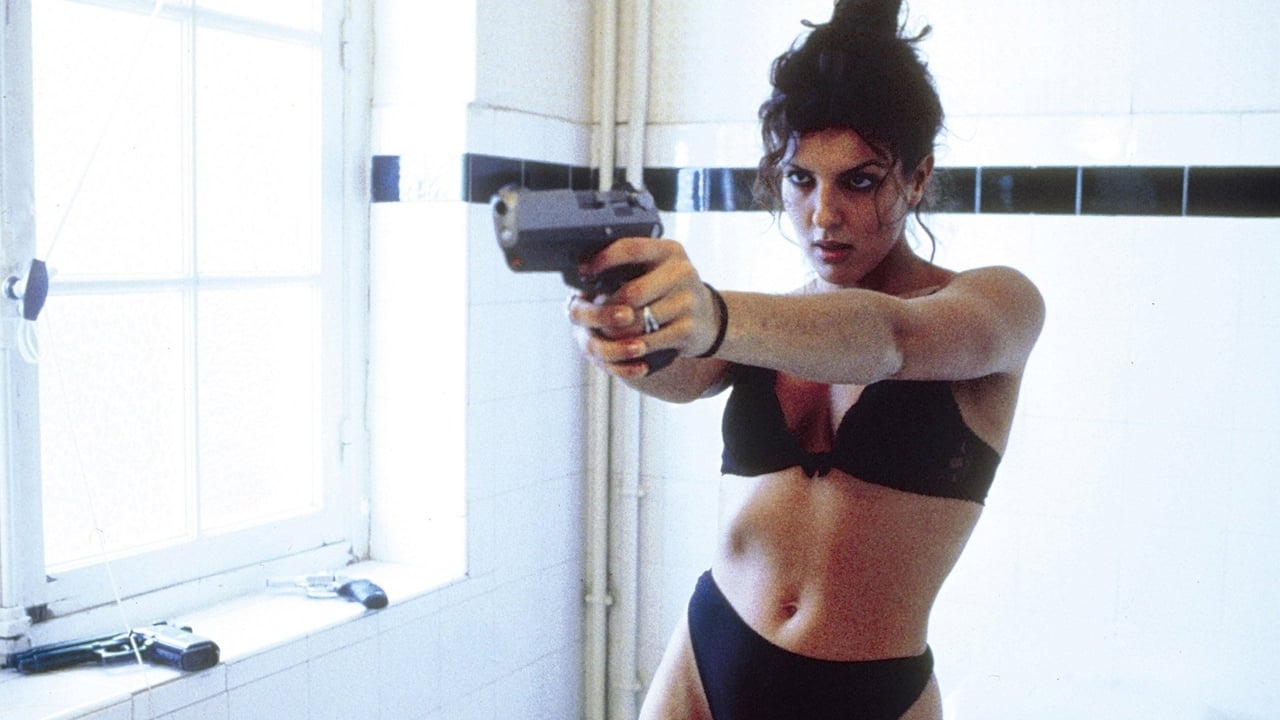
porn performers come out and say they are raped or when sex workers are murdered. It's seen as inevitable. And nobody talks about all of these ideas that run through the core of our Western society that enable that. Nobody says, let's do away with that. Let's do away with the virgin in the hall. Let's do away with the hypocrisy that puts sex everywhere. to sell things, and I love that they brought up in the documentary how Karen Back was put on the front of a magazine half-naked with a gun with sex and violence, and then the message of the film was written in small type. Even though the magazine is trying to take an intellectual perspective on it, they know that the picture of Karen Back half-naked is going to sell coffees. And so there's this real sense of hypocrisy, which is often mistaken for liberation. People say, well, sex is everywhere now. You know, you only need to look at a Beyonce video. But you have to look at whose sex and for what purpose. And sex largely in the public domain is owned by capitalism. It's not owned by women. And I know this is, again, something that Dupont speaks about in a lot of detail in her lectures, in her writing. It's not a men against women thing, it's just that women have been commodified by capitalism. And so I think in light of that, the most powerful aspect of Besmoir is this feel-good, life-affirming thing, even though it ends in total destruction, in that she presents these two characters who are not victimized, and for a little time at least, they have complete and utter freedom from all of this bullshit that surrounds them and it might not be the accepted message when it comes to commercial film and when it comes to the establishment but it is a necessary one an incredibly necessary one even today and that's why this film will always remain so important and powerful to me And all that leaves me to say is if you stayed with me until the end, thank you for listening.