Topics / Studio & business
Test screenings & previews
19 commentaries in the archive discuss this, with 33 total mentions and 31 sampled passages on this page.
Filter commentaries
Filter this topic by the film's decade or the type of commentary.
By decade
Across the archive
ranked by mentions · click any passage for the moment in the transcript
-
multi · 1h 54m 5 mentions
Jean-Pierre Jeunet, Hervé Schneid, Alec Gillis, Tom Woodruff Jr. + 5
-
Sometimes I was worried about the humor. For example, for this shot, I asked me if it works or not. It was a big relief during the first test screening, because everybody laughed. It's too bad that Brad Dourif has to disappear so quickly. I'd have loved to have seen him go on for the rest of the film.
40:53 · jump to transcript →
-
The guy who did this explosion, he made the explosion of Star Wars. He was a specialist of the explosion of miniature. He was so good. He has a book and you can choose the... Choose the color... - Exactly. There is a story about the death of General Perez. At the beginning, it was a big deal. He was sucked by a hole on the spaceship. In fact, I kept the idea for the ending with the newborn, the new alien. I proposed to the studio a very cheap death for General Perez - I love this scene - but the studio didn't like it and they wanted to cut it. I proposed to Tom Rothman, I said: "OK. You have to ask the audience for the next test screening." It was in Las Vegas, if you remember. By luck, the audience loved this scene on the screening, and they saved my life, they saved this scene. We kept it because the audience is right. The shot was quite funny afterwards - we cut it here - afterwards he kept looking at his brain and then fainting in a very very humorous way. That was very nice. - It's a little bit too funny. But I love that. I remember, Sigourney didn't like it. I can't avoid humor, because I love it so much.
45:56 · jump to transcript →
-
It was a bit longer, this scene. - We had an additional hole. Exactly, an additional hole. You can see something strange on the hole, because... You can see something strange, because he's grabbed by the feet by the alien through a hole which doesn't exist here. He had to walk for an additional 10m or something to get there. It was too long. That was one of the remarks we had from the first test screening. They made, if I remember, something like 100 remarks. I remember, sometimes we were defiant, but we were pretty upset. And sometimes we said "They're right." And sometimes we said "They're right." We were very upset at first, but looking at the questions which were asked, we realized that, each time, it was somewhere where... we thought it could go like that. In the time we had for doing it, we thought it was OK. As we could have more time, that was... Most of the notes, we found an answer. We never really followed the propositions we had, but we found the creative answer to the question asked. I think that was what the studio was waiting for us to do. But it was a good lesson for me and for us. Since that time, for each film I'm cutting I'm organizing previews, which is not in the French tradition. For Amélie we did some test screenings. In fact, I copy the answer from Hollywood, but the big difference is: I have the final cut, I can choose. The difference is on the use you do from the answers. Exactly. But we don't have to complain. - I love this idea. This is a simple shot that was hard. That head was long and heavy, and trying to keep it smooth and even and not drag across Michael's face, and make it all the way up to that opening in the chest. You always said that this cut, the final cut, was your cut. We did it with the production notes and... If the studio would ask me to make a director's cut, I would say "That's mine." Yeah, that would be a problem, because we're very happy with what we have.
48:31 · jump to transcript →
-
-
-
Jonathan Lynn
This is the only scene in which we made substantial changes after our first test screening. In the original script, Oz, towards the end of the scene, made a long declaration of love to Cynthia. We had never questioned this, but when we saw it with an audience, we realized that it happened too soon. It was only his second meeting with her.
33:41 · jump to transcript →
-
Jonathan Lynn
It was also not very good structurally because although Oz is in love with Cynthia, she doesn't realize it until much later in the movie when they're in the parking lot on the phone to Jimmy Tedeschi. And we felt in this scene the audience really slipping away from us. So before we did our second test screening, we simply...
34:40 · jump to transcript →
-
Jonathan Lynn
We chopped big pieces out of the scene and recut it and restructured it a little. And the scores in the test screening went up enormously to such an extent that it was clear that the film was going to be a hit. It was very satisfying for us to have seen the problem, diagnosed it correctly, and as always, afterwards you think, why didn't we see it first?
35:07 · jump to transcript →
-
-
director · 2h 43m 3 mentions
Mission Impossible Dead Reckoning Part One (2023)
Christopher McQuarrie, Eddie Hamilton
-
in a negative way, a negativity between characters. It's meant to be them either busting on each other or in tension yelling at one another. It actually has, it's counterintentional. It actually alienates you from the character. And there were about four lines of dialogue and after the first test screening, Tom picked them out. We noticed that Benji wasn't resonating the way he usually does.
43:08 · jump to transcript →
-
Well, we are at the point in the movie where everybody, when they feel the energy stop in the first test screening, they all got up to go pee. Exactly. And that is something we were very conscious of. Yes, exactly. We watch how many people go to the bathroom, when they go to the bathroom. And that tells us that something in the story is, that was a little punch in by Annie Hamilton. Yeah, I love that punch in. But also, this was a scene that was shot quite late in the day when we realized we need to recontextualize the white widow and the fact that, you know,
1:11:12 · jump to transcript →
-
And, uh, and in our first test, one of the guys in the focus group said, what was it that scene? He said, either, either make it longer or cut it out. Yeah. We were, we were again being subtle and we were alluding to things that were going to show up in part two and really what the audience wanted at this point. And what we really, what we really realized we were obligated to do is let's clear all this up. Yeah. And explain what happened with the keys and. Yep. Yeah. And, and of course the journey of the keys is.
2:03:07 · jump to transcript →
-
-
-
MGM were very leery about it. I mean, because this is in a box set with a whole bunch of other MGM horror films of the period, the viewers will be able to notice that all of them have been messed around in pre-production and post-production. They've changed directors, they've cut footage, they've dropped footage, they've previewed it. This was previewed at 80 minutes and released at 60. And I think it basically boils down to...
2:32 · jump to transcript →
-
way of selling the film at that time. And there are snips of scenes in that trailer which you don't see in the finished film. I think we have a sense that when they named the date of this film as 1934, it obviously sat on the shelf for a while before it was released, while they were maybe fiddling around with it. It was previewed at 80 minutes, released at 60. And here's some prime lurking. And here's where...
54:32 · jump to transcript →
-
-
-
Jim Piddock
during the slower mood-setting scenes. Perhaps now I can begin to tell you about the plot of the movie as originally envisaged by the filmmakers. You see, quite a different movie. The filmmakers' cut was previewed for a test audience, but after the preview, the studio insisted on certain changes which were rather ham-handedly implemented. Rather an old story in Hollywood, I'm afraid. So what you see here is, to no small degree, the result of studio bastardization.
25:18 · jump to transcript →
-
Jim Piddock
Lost for the moment, though. Quite infuriating. I was privileged to be at that preview screening 16 years back. Saw the film as it was meant to be seen. I was bowled over, quite frankly. Well, then when I saw the movie again in a commercial cinema, as you see it now, I was stunned. I'd brought several friends, having sung the movie to the skies, and I sat there and watched in horror as the thing played out, completely recut. It was appalling.
56:25 · jump to transcript →
-
-
-
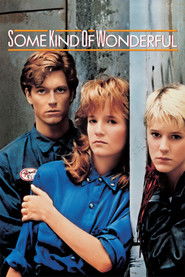
I always thought this was a hard scene for you, Lea, because you had to watch her boyfriend be this obnoxious and not stop him, and at the same time, let us know that you didn't agree with what he was doing. It was a hard part, 'cause it was both... I had to do both things. Remain sympathetic and yet be the bad guy because you're gonna be rooting for Mary Stuart's character. Now, this moment was the first big moment in the test screening, because when he picked the dollar up... You'll see what he's gonna do. He reveals that he took the dipstick, drops it in the can, and that's that. Well, I thought, "Okay." The audience cheered for, like, 30 seconds, and I thought, "Oh, my God. They're with this guy right away." They were already ready with this guy. They liked him immediately. And that's the first clue, you know, that you got a shot.
18:27 · jump to transcript →
-
A big deal in the test screening. I remember people loved that. But this wasn't a reshoot. Eric's hair just looks different to you, but we didn't reshoot this. Bet you a million bucks. How much? - A million.
1:26:12 · jump to transcript →
-
-
-
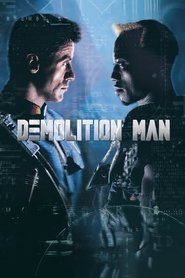
Now, Stallone's got a missing daughter. We can talk about this more, but the missing daughter element never really... I mean, we ended up shooting something where he actually finds his daughter, but we cut it out because it was dragging the movie and with great actress Elizabeth Ruscio. But when you come to the sex scene, everyone in the test audience thought Sandra Bullock was going to be Stallone's daughter. So they're all like pulling their hair out and groaning. So we had to do some ADR to...
35:47 · jump to transcript →
-
which is generated by, let's say, what today would be artificial intelligence to tell them how to react to an emergency. So it's gone through every profession. That glow rod beat where he uses the glow rod on a civilian was always another great moment with a test audience. Like, okay, they're starting to get the movie now.
47:03 · jump to transcript →
-
-
-
had to show this film to a test audience, right? So we never had to... These sequences could actually afford to be bare. Like, you know, Elias walking through the room, the way we're using the overlap of the dialogue. I mean, this was all something... I remember constructing this at a visual level one night in my editing room. Like, the sequence was not quite working.
44:34 · jump to transcript →
-
I think what happened is that while we're... Well, you obviously are very involved in the script. You know, as we said, some of those themes were actually introduced early on because they had to be in the film itself. But there's also this space leading up to the mix where there is no test screening. Ultimately, we're just going with this movie. There's no distraction. There's no moment of panic.
1:30:30 · jump to transcript →
-
-
-
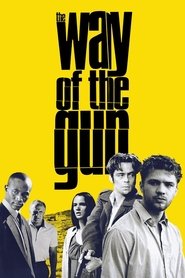
that she must be feeling. The first screening I went to after the film was released, the audience was... It got a big laugh when Parker and Longbaugh go in and we see all the women in the brothel. Oh, people in the test audience, you know how you have them little cards that says, what's your favorite scene? I can't tell you the number of cards that said, when he smacks that whore on the ass. That's a scene to some people. You spend two years working on a movie and that's a scene.
1:28:42 · jump to transcript →
-
It was sticking huge needles into chicken joints. Because my brother had described to me the sound he heard when his wife got her first spinal. And I thought, well, that's gotta be in there. This is a scene that I personally used to get on your case to cut out. I'm glad you left it in. After the first test screening, you won me over. I think you won everyone over. Everyone in the world wanted it out. This scene was not in the script. Geoffrey Lewis... Did he just disappear after they left the brothel?
1:33:06 · jump to transcript →
-
-
-
director · 1h 29m 1 mention
Jeff Kanew, Robert Carradine, Timothy Busfield, Curtis Armstrong
-
multi · 2h 34m 1 mention
James Cameron, Gale Anne Hurd, Stan Winston, Robert Skotak + 8
-
-
-
-
-
-
-
director · 1h 34m 1 mention
Scott Stewart, Jason Blum, Brian Kavanaugh-Jones, Peter Gvozdas



Related topics
Other topics that frequently come up in the same commentaries.