director
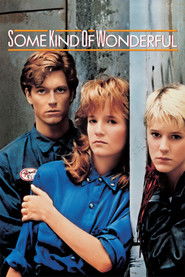
Some Kind of Wonderful (1987)
Release Special Collector's Edition DVD (Paramount Home Entertainment, 2006)
Deutch and Thompson discuss John Hughes's script, Eric Stoltz's reshoots, Mary Stuart Masterson's performance, Jan Kiesser's photography, and the soundtrack. Deutch explains his location choices, using sound without dialogue, and keeping the audience uncertain about the romantic outcome. Their differing memories of continuity and reshoots accompany discussion of class, trust, and teenage independence.
- Duration
- 1h 32m
- Talk coverage
- 45%
- Words
- 8,046
- Speakers
- 2
Commentary density
Highlights
Topics
People mentioned
The film
- Director
- Howard Deutch
- Cinematographer
- Jan Kiesser
- Writer
- John Hughes
- Editor
- M. Scott Smith , Bud S. Smith
- Runtime
- 95 min
- Also on
- OneSheet ↗
- External
- IMDb ↗ TMDB ↗ Find on Amazon ↗
Transcript
8,046 words · 5 flagged as film dialogue
I'm Howie Deutch, the director of Some Kind of Wonderful. Hi, I'm Lea Thompson. I play Amanda Jones in the movie.
I love this opening. I think it's great. - Thank you. I do.
What is this music? It's so cool. This was a piece of music that John Hughes found. At the beginning, we thought we were just gonna use it for the temp track, but it played so well, we kept it.
Just so cool.
Was this in the script like this? - Yes. It was designed like this in the script? I don't remember. Yes. This is called Do Anything. - The music? Do Anything.
But I don't remember. Was it written as a montage like this? Yes. This was written with Eric Stoltz going down the tracks, playing chicken with the train, intercut with Mary Stuart playing the drums.
And Mary Stuart had to work with those drums for a long time, couple of weeks. She wanted to be able to really play them.
Did Eric really do that or was that a stuntman? No, that was Eric. - That makes sense. We almost had a heart attack. - That makes sense.
These titles were designed by a great title designer. I always loved his sense of balance.
And the montage seemed to really work at the opening. I hadn't really seen a montage open a movie before, and that kind of gives you a nutshell of what's happening pretty quick.
I remember poor Eric had to wear all that makeup and dye his hair so he didn't look like a redhead. He didn't like that much.
And this is in San Pedro, and this location was chosen so that at night we'd see the lights from the oil refinery.
Although we never really saw much of that.
This is the first scene I remember where we got up to about 25 takes. Something went wrong. And also reminds me that Eric's hair was shoulder-length when we first shot this scene. We had to go back and reshoot it because Ned Tanen decided after he saw it, rightfully, that he didn't like his hair that long. And I hadn't told anybody that his hair was that long because this was only my second movie and I didn't really know everybody had to know that his hair was that long. I mean, nobody had seen Polaroids of him because I came back to the movie after another director had been replaced by me. So, a lot of things that are normally checked and double-checked weren't happening, and as a result, we had to kind of reshoot about two days after we gave him his haircut, and he wasn't happy about his haircut. You know, you got to remember Eric Stoltz did a movie called Mask where his whole face was covered up, and had a great time doing that. So, here I cut his shoulder-length hair off, which was, you know, a little bit like Samson, I think, to him, and he felt a little naked, understandably. So we got off to a rocky start.
Look how it doesn't even match from those two shots. It's a completely different hairdo.
She was a nice girl. She's a good actress. This is Maddie Corman. I think we found her in New York, originally. But she came in and it was John Hughes loved her, and she just reminded me of my sister and she nailed it.
Just feels like she's not acting. The door, by the way, I love that door, and that design was done by Linda Spheeris who was the set decorator. So here we have the first family scene... Which, by the way, Jan Kiesser, I feel when I look at it now after all these years and see the kind of lighting he did, but as you go... As you look at Some Kind of Wonderful, you can see the kind of camera moves and lighting that I think sets it apart from the usual teen genre movie that someone like Jan Kiesser shot. But I think John Hughes, in having this scene coming off the opening montage, it's a pretty interesting counterpoint where you've seen him out in the world and seen a montage of what he's dealing with and then you go back to this kind of typical family conflict. It kind of is an interesting dichotomy so early in the movie to me, having a look at it now after all this time. Anyway, John Ashton, who we meet here, who, I think, managed to pull off a great performance as Keith's dad, and the conflict and tension that a lot of sons have with their fathers is set up right here.
I'm always surprised I haven't seen this movie too many times, but I've seen it recently. I showed our kids, and it really holds up. The music holds up. Even the outfits hold up, which is kind of weird for a movie that's that old. Well, what holds up is this car, which I always liked, because this MINI is now a big car for BMW. But we had a lot of trouble keeping this thing running. Now this shot, I remember, 30 takes before we could get it right.
Marilyn Vance did a great job on Mary Stuart's look with those red fringe gloves, which John wrote. But, I mean, it all came together when she executed that look. She put me in miniskirts and cowboy boots, which is now back in. Look at the clothes. Now this shot, by the way, if you watch, for that time, starting now is a pretty elaborate dolly shot. At least, it was for this location. We're not on a Steadicam. We just have track going for about a half a mile. Did they even have Steadicam back then? Yeah.
Actually, it wasn't that shot. I'm wrong. Sorry.
That's Scott Coffey, who was in love with Mary Stuart, and I thought was... Made me laugh all the time.
Here's Elias Koteas, who actually plays Skinhead, and auditioned for John Hughes for a different movie. And John called me when we were casting. He said, "You got to see this guy." And the minute he walked in, I knew. Oh, my God. John had, like, found another unique kid. He was great in it, and I thought, grounded in a comedic reality that was a very tough tightrope to walk. Getting laughs and being real at the same time is difficult.
Plus, he was supposed to kind of be the bad guy, and then he turns around, which is another hard thing to do.
And that's what a good actor can add. "Sweetheart." Him doing that with Mary Stuart, that's all stuff that Elias added to that. That's his own improv. That's his own idea. And, you know, John and I always encouraged actors to bring whatever they felt they wanted to try to those kind of moments, and it gives it a life and the behavior becomes something that, you know, is more like what people really behave like, rather than just executing a scene.
And here's Lea Thompson, who turned me down the first time I tried to get her to do the movie, and I went back and begged. After Howard the Duck opened. And Eric seeing her, sketching her because he's so... You know, he's got such a terrible crush and he knows he has no chance with her.
So the conflict is established right here with Craig Sheffer's character and Eric. And I wouldn't have believed this guy had a chance with her, either. And I related to Eric's character 'cause I didn't think I'd have a chance with her, either. So it helped me directorially with Eric 'cause I felt like I was him because, in the end, I ended up marrying Lea. But that was later. I thought it was funny when we were shooting this school because Eric and I were about, I don't know, 24, and the kids in the school, all the extras back there, looked older than us. It was a weird sensation.
It's interesting to me how much people still like this movie and remember this movie when I'm wandering around in the real world. Well, part of it is, I think, it seemed like this is a genre which is about the classic conflict of what your parents want you to do with your life and what you wanna do with your life and what would be the right path to take. And this scene is really intended to lay out the truth of that. And I don't think the stakes can be any higher for a kid, because you gotta make those kind of choices at that age. I mean, we're kind of going through it with our own kid right now.
And for John, that kind of moment was fun for him coming... You know, doing a lot more drama than he gets to do comedy. This was the kind of movie he really enjoyed doing, John Ashton, and he's great at comedy. As he was in Beverly Hills Cop.
And that is an actress named Chynna Phillips, who... This was her first movie. She went on to become a pop star. A very nice girl.
Oh, my gosh. I look so young. It's kind of scary.
Craig was great. Craig Sheffer was really great at playing this bad guy.
He looks so evil.
So, right here, I think 99% of the world is rooting for her to get away from this guy. But, I mean, the idea that John introduces is that sometimes it's not so easy when you feel that you're being helped and taken care of. And the unknown, Eric, is a lot more scary, even though it's eventually, you know, something that works out for her for the better.
It was an amazing thing the way John took teenagers' lives so seriously, you know. It's an amazing thing. And that's why these... I think his stories hold up and endure over time because these characters are real personal to him and they're real. They are not characters he wrote for business, to make a script and make money. He did it because he needs to write them. They live for him. When he writes them, I watched him. He would laugh and cry as he wrote.
This script went through big changes, too. Yeah. From the first time you offered it to me. I remember there were planes, and it was a completely different movie. Remember? There was the planes flying over the restaurant. I mean, the idea was kind of the same about a perfect date. And that love triangle, but... - I always loved this line, by the way. "
Don't go mistaking paradise for a pair of long legs."
Eric has an amazing face, the way he was shot. Looks great. So this scene is important because this lets us know that she really doesn't have a home life, Mary Stuart, and she's alone, on her own, and that she can't accept this Amanda Jones in his life, and she's about to do whatever she has to do, sell him whatever bill of goods she has to to make her go away.
And class conflict also comes into play right away in this scene, which is early in the movie, because she runs with the rich and powerful, like Mary says.
I remember scouting for this gas station, and it took all the time we had to scout to find it. Until finally I said, "I can't find the right one. "I'm not gonna shoot until we find something." And all of a sudden, everybody found it, which was a lesson I learned the hard way, that until you make it clear to everyone as a director that something's not what you need and you gotta... You can't go until you find the right thing, they'll help you find it, meaning, everyone you're working with. But you've got to let them know what the stakes are, and not do it in a way, I don't think, that antagonizes them, but makes it clear you can't just accept something that's a compromise.
You had that painting, that mural. Yeah, we painted that mural on the back. And we had done something like that in Pretty in Pink, too. But it never really had the significance as the one in Pretty in Pink did, 'cause it just served as a background color here.
I always thought this was a hard scene for you, Lea, because you had to watch her boyfriend be this obnoxious and not stop him, and at the same time, let us know that you didn't agree with what he was doing. It was a hard part, 'cause it was both... I had to do both things. Remain sympathetic and yet be the bad guy because you're gonna be rooting for Mary Stuart's character. Now, this moment was the first big moment in the test screening, because when he picked the dollar up... You'll see what he's gonna do. He reveals that he took the dipstick, drops it in the can, and that's that. Well, I thought, "Okay." The audience cheered for, like, 30 seconds, and I thought, "Oh, my God. They're with this guy right away." They were already ready with this guy. They liked him immediately. And that's the first clue, you know, that you got a shot.
And this is a great piece of music right here. A cover of Amanda Jones. You use it twice, right? - Yeah. You use the original Rolling Stones. - We use the Rolling Stones. Yeah. They're in it later.
I never really understood why we did this shot this way. But it seemed to work. That does work.
And just at this point, whenever there was a changeover in the theater, 'cause it was on film, it would warp the music, and it used to drive me crazy right here 'cause of the bass. Not important, but I'm remembering it.
Catch My Fall is the name of this dance mix.
This is always tough for me, you know, this kind of scene where you get these broad characters in detention. But you know what? They were good, all these guys, and Elias Koteas was so much fun to watch in this kind of a moment that it worked.
This is a crazy scene. I always liked the way you grabbed his tie and play with it here. You probably told me to. I think I did. I think it's the first thing or time I had the courage to ask you, to direct you.
I wonder if that was in the script. Yeah, that was in the script. - Was he supposed to be bald? You can remember, I can't. - No. But as I was shooting, I went, "Oh, my God. I cast the wrong guy, 'cause he's bald." And then John said, "It's funnier that way."
Is that the refinery back there? Yeah, that's the refinery. And this set is the value of someone like Jan Kiesser, the DP, because we didn't know where to shoot it, and he just created and kind of manufactured this setting. I remember he spotted the car there and we dressed the back with the hubcaps and kind of created it instantaneously that day because we were stuck. We had lost... We didn't lose the location, but we changed the schedule, and we had to shoot this scene, and... Anyway, not that important. But again, I'm remembering stuff as I'm seeing it, and... The light's beautiful.
I remember this is an important moment.
I mean, "Who have you ever been in love with?" When he asks her, completely evades the answer. But we're all... You know, we know she's in love with him.
I remember, when we were doing this scene, I called John Hughes 'cause I was so nervous without dialogue. And I thought, "How is this thing gonna work?" And I was on a pay phone and then he said to me... I remember this like it was yesterday. He said, "The sounds, the sound of the knife, "the sound of the pencil sketching by Eric, the contrast. "Try it." And he was right. And when we showed it, the audience just loved it. It's great.
I always liked this. So did the editors like this. And... Everybody thinks this is, like, the sexiest thing I've ever done. Yeah, people always posted this on the walls and took frames of the picture and blew them up. I had a lot of clothes on. - You look pretty good to me. So... But Mary Stuart's moment here, of watching you... We spent a long time on this shot. I remember we did a lot of takes up and down. Why? Maybe that's when everybody knew you had a crush on me. I'm not gonna tell you that. Anyway, this moment for Mary was always poignant to me.
This is Laura Leigh Hughes, who I think is an underrated actress. You see her in a lot of stuff now, but at the time, she had not done that much.
And then Mary... At one time, we had her looking at herself even longer in the mirror, but...
Well, she's really cute. That was a hard thing to pull off. Yeah. - She was, you know... Mary, you mean? - Yeah. Yeah. I mean, it's a complicated... This is a piece of music called I Go Crazy by Flesh for Lulu, which I still think should have been a bigger success as a record, but we use it thematically through the movie. And John found it. It was an English group.
I didn't like doing this scene.
I thought Eric was kind of delicious in this scene 'cause he was so helpless. And you just didn't want him to get hurt. And you wanted Amanda to give him a break, even though she's upset.
This is a big, pivotal kind of moment, I think, because then your heart goes out, unless you're, like, completely a thug to Mary Stuart here. And I thought, Lea, you played it great.
It's always weird to play these kind of see-saw characters that you're supposed to like but dislike at the same time. I remember being very jealous of Mary Stuart 'cause that part was... Right. - So stacked. Right. Vulnerability is built into her character, and you're a little bit more of a heavy. But that's why you did such a good job with that moment. This shot, I remember, we had the camera built into the middle of the table, which I had never done. It just went around to each face, and I was doubtful it was gonna work. But now, looking at it, I think it did.
Eric's funny. As we were shooting this scene, I got some faxed pages from John, who decided he wanted to change some of the dialogue. So after shooting a couple hours, we re-did the whole thing. And that's why it was always exciting and always really different to work with John, because at any moment, the scene could change. And if it did, it was always for the better.
And you can hear Maddie Corman's dialogue. You know, which is... Nobody else writes like that. "Human tater tot." "He's a man, for Christ's sake." I mean, that's vintage John.
Not amazingly easy to pull off, either, these kind of lines. He did a great job. No, everybody made it seem like that's how they speak.
I always like pulling away from a scene like this, like this craning away, which isn't easy in a living room with a 10-foot ceiling. I love... This is my favorite line in the whole movie. "This is what my girlfriend would look like without skin." Yeah.
"Double-breasted party machine."
So they're getting friendly now. And you can see how a little bit of foreshadowing of Ferris Bueller, a little even here, as he starts to become a folk hero. Even among, you know, the detention squad.
This is Scott Coffey, who I wish I'd worked with more 'cause I... I think he's a director now. But I think he's funny and unique.
Yeah, he's a wonderful actor. I worked with him a few times.
That was great dialogue.
I always liked this scene because Scott asked him. He says to Mary Stuart, "You know, you could be a girl like that if you wanted to." And, you know, it makes me look at her and think it was smart to dye her hair. I thought the hair coloring for her and this character was a smart decision, because at that time it wasn't that... Didn't seem like you saw that that often. It seemed pretty individual to look at somebody like that.
I guess what I'm saying is, she seemed like she was the real deal. She was a street kid, had a punk look, skater-punk look, and at the time, that was pretty ahead of its time. I know, but people still dress like that, which is what's crazy. Not like that, with the bow in the hair, but...
So this is a good peer pressure scene, you know, which is vintage John, because now Lea's stuck between a rock and a hard place.
I mean, I directed the movie and I still listen to the scene and go, "How does she get out of this?"
What am I thinking? I don't know.
No. The car doesn't work.
Everybody I know can relate to this car not starting.
Or at least, I can relate to it. That's what John does so well, is, like, very simple things in the way he constructs his stories. Right. They seem like they're just simple things, but... It's life and death, the stakes here. - Yeah. Right now, if you're with this kid, which people were in the audience, it's like they're dying for him.
It's funny. When you're doing it, it doesn't... You know, it doesn't feel as... I guess, 'cause we were adults, you know, already. But when you watch it, it gets, you know... I don't know. When you're doing it, it doesn't feel like the stakes are as high as they are. That sounds really stupid. Well, that's how you know the movie's working.
I always had a personal meltdown about that line. Why would he notice the earrings in the back of the Jeep with everything he's going through? And I used to say to John, "Why? What? How?" And John would say, "Would you relax? It's gonna work. It's fine. "He noticed the earrings." And he was right. But these are the kind of things that would make me go crazy. I'd spend, you know, nights up about, "Well, how can I justify that "he'd recognize the earrings in this moment?" It's always like that. There are always little, tiny things... Because the earrings became a very big deal in the movie... ... you obsess about. - ... eventually.
It's funny how those diamond earrings are status symbols now. Still, it's a big deal. So there's the refinery in the background for this location, which we see, like, just about that one time or maybe another time, just to get a sense of, you know, the difference in the neighborhood between where Eric lives and the different class of kids that you hang out with.
This is the first day I shot. I remember I started crying. I was freaking out 'cause Howard the Duck just came out, and I was like, "I can't act." You had to talk me off the ledge... - I don't think this was the first. It was. Look at my hair. It's not the way it's supposed to be. Well, I think it was. So I rescued you from Howard the Duck? Yes, from the opening of Howard the Duck. You've never been grateful for that. I remember how Eric bicycled all the way up Laurel Canyon to give me the script for this.
I would kill my sister if she did that.
This is funny. You can see the colors... Jan Kiesser... Just the way, how rich they are in this... Of that car. I mean, the way he lit this is amazing. That's a great shot. - Looks like a Fellini movie. That's a great shot. It's interesting you got away with her smoking cigarettes. It's hard to get away with that anymore.
That whole painting thing is always a pain.
I think Keith, or Eric, is appropriately suspicious here.
But this is also one of those moments that drove me crazy.
Why did it drive you crazy? - Because I would think, "Why would he go to his house and go to his party? "The guy wants to kill him." - But he didn't know yet.
See, I think what saves this is when John says, "That's why I'm so cautious about your motives."
You mean when Eric says it? - Yeah. I think that makes it okay.
We worked on all of these scenes really hard, I remember. Trying to work through everybody's concerns.
This is The March Violets.
And a great scene from Mary Stuart, 'cause in this we get to not only hear and witness, but we get to experience just how crushed she is. Which again is, I think, a tribute to John, because he understands how to have an audience get vested in a character and then experience their pain with them. Not just be told about it through dialogue, but to live it. And this scene, to me, if I had to pick one scene where I think an audience, and even I, get completely vested in her, and start to be concerned and worried for her, it's this.
Because this is a scene where, pretty much, the gauntlet is thrown down and Mary has to... Or Watts confronts Eric with a truth that... She asks him, "Do you miss me, Keith? Do you miss being around me?" Which still breaks my heart because I feel that her... She's broken. And to even have the courage to say that to him is difficult.
And we all relate to it. We all understand what it's like to be in that position 'cause we've all been in pain at some point. So that's why I think it's a pivotal moment in this movie.
Most important thing to her is her drumming, and she'd bet her hands that Amanda doesn't love him.
And so she's confronting him and saying, "I won't let you do this to me."
It's a hard scene for Eric 'cause he has to not see that she likes him.
So it's done. And in this scene, Mary, I think, was terrific. I remember shooting a lot of takes because she wanted to. And she didn't wanna overdo it, and she was very, very concerned about that. And I think she managed to get the truth of it, and in a way, that was just heartbreaking.
So you can see how the weaving is happening. One of the things John does here is weave. He's weaving this tapestry here, and he's... You know, it's not like a triangular love story that I've seen before, because he's threading the needle. He goes from Mary Stuart and Eric back to Lea and Craig Sheffer's character, but in a way that's not structured so that it's schematic. It's all weaving.
So a guy in the girls' locker room here was pretty shocking back then. When we screened the movie, it had a big reaction. I don't think in this day and age it would have that kind of reaction.
Okay, so now he's got everybody apart. He's got Lea alone, Mary alone, Eric alone. Craig Sheffer's character alone. And back then when I said schematic when John Hughes is weaving a tapestry here, what I meant by it's not schematic, I meant that it's not result-oriented. You get invested in each of these characters, particularly Lea and Mary and Eric, and by experiencing it, not being told how to feel.
So here's another moment that would keep me up at night. That they don't witness Maddie behind them overhearing all this, is awfully convenient. So that kind of drove me crazy, too. Although they see her running away.
But if I had to pick a scene that I could redo, it would be that scene. I think it could be staged better and be more interesting, but it worked.
So now Mary Stuart and his own sister warned him that this is not real.
But that's what's interesting about this character and what John wrote, because now it's the question of, "Do I still believe in myself? "Do I still believe this is possible, even though it's an impossible dream?" And those are the kind of questions that he likes to explore, John, especially in a romance. And that's what makes it special, 'cause romance is not logical or predictable. And we all hope for our own lives the same way. And that's why people go with this story.
But I think you underestimated how many times you could actually see the refinery, now that I'm counting them. Don't start with me. - I see it a lot.
Okay, so, "I'm not giving into them. "
Not for another year. Not for another minute."
And now, for me, as a director, the movie becomes even more complicated and compelling because I'm not sure who to root for. I don't want people to be sure who to root for here, in terms of Lea and Mary Stuart. Because look how he... To her, this is the moment of her life. He's lying down next to her on her bed with her, needing her, confiding in her. She's completely overwhelmed by it and plays it like that. And Lea, we feel, he may even have a shot with her now, because she's apart and separate and away from Hardy. So a triangular love story is a true triangle now. You don't know who is gonna wind up with Eric, because we don't know who we want with him, I don't think. I think, yes, everybody's pulling for the underdog, as Mary Stuart, in the sense that you don't want to see her hurt. But Lea did such a great job and is so vulnerable, especially now when her friends reject her. So again, John's now upped the stakes so that if you're invested in all these characters, what are you feeling? And that's what I wanted. I wanted complete sense of being torn and conflicted as an audience of what's gonna happen.
You even have the bad girls feeling bad, a little bit, for being mean, which is good. Which is why this movie holds up, I think, 'cause you made everything not black and white.
I always liked the way you did that, Lea. You looked at him and ran like that.
I know. There's the oil refinery. I guess it worked. - It was worth driving all that way.
Well, what's important to remember is that, you know, there's a saying that, for guys, usually, "You fall in love in 30 seconds, "and you spend the rest of your life in denial." I don't think that's so strange for some character like Mary Stuart's for Watts. So, kind of the enjoyment I had working with a character like that and watching it unfold is to see somebody that sublimated and kinda repressed about her feelings for Eric, seeing that emerge and seeing that leak, and how to play that and where to let it show and where to sit on it and where to hide it and where you can hide it. And, you know, that's the fun of that character.
Actually, now that I remember, that's the scene that we had to reshoot where Eric's hair was to his shoulders and we had to cut it, and redo this. This was the first scene I shot.
He was very insistent on certain things.
That, and being called his character name, too. Remember that? - Yeah. It got confusing to me 'cause I was in three movies with him, so I wouldn't remember which character name to call him.
This was an additional shot we did. I kind of remember we didn't... We wanted just to emphasize and punctuate how important the earrings were. Oh, this is afterwards? Yeah, 'cause his hair changed. We did the party, too, remember? We reshot part of the party. Yeah, but I mean, this shot of the earrings was something we did later, when we realized we wanted to emphasize that he picked them out. He went on a trip and picked them out with Mary Stuart.
Now, this is one of my favorite pieces of music, and my favorite scene in the movie.
"What if," you know, "she wants you to kiss her?"
And the idea of the scene, teaching him how to kiss the girl that she would like to see not living on the planet Earth, is pretty unique. And John wrote it, I remember... After the script was completed, we were doing rewrites and he said, "You know what? We need another scene. We need a scene." And he just started writing this, and it was done in... I don't know. You know, five minutes, and... It's a great idea. - I read it and went, "Oh, my God. This is so much fun, but also, underneath, so poignant."
Yeah. - Neither. This is hard for Eric.
And so a scene like this, when you're rooting for all three characters, is also something that feeds the conflict to the point where you're thinking... I think that an audience that's, at least for me, is feeling like, "Where is this headed?" Which is what you want. You want them, to the very end, guessing.
Great music cue.
This is Stephen Duffy,
who lived in England at the time, and John knew him, and Stephen Hague, who produced a lot of this music... Great record producer. Was at the dub and the mixing session.
And, "Lesson's done. You're cool" was always a great ending.
It's a really hard scene for Eric. He was great.
Here we go with the Rolling Stones' version of Amanda Jones, which was a great thing to be able to get. It was in the script.
This montage, remember, was one of the first things Seth Flaum, who became an editor that I worked with for the rest of my movies, cut. Bud Smith was the lead editor, a famous editor, who did The Exorcist and a lot of big movies with Billy Friedkin, was the lead editor on this movie, and, you know, just an absolute genius, as far as I'm concerned. Seth was an apprentice or an assistant, and he and I would squirrel away working on things like this montage, and I thought he did such a good job, that I ended up doing the next five, six movies with him after this.
Montages are funny, 'cause when you get them cut together, lots of times, they save your butt. They look like they're designed, but... At least, Seth, my editor, in this case, saved my butt, because it wasn't designed as well as it looks.
This is the Hollywood Bowl.
And so, just looking, you know, at pacing and a sense of momentum, you can feel what John was after. You can feel how this movie's now getting to the point where something's gonna blow, and here it is.
This is pretty much my other favorite scene in the movie, because it's so combustible and it's so relatable for me and most of the guys I know with their fathers. In the sense that at some point in their youth, in order to liberate yourself and go on and be your own, you have a confrontation, regardless of what it's about.
We spent all day shooting this. I remember it was scheduled for just a couple hours and we took the day, and I think it was worth it, in spades. Ashton, I thought, was scary and real and compelling.
And I think Eric pulled it out and did a great job as somebody finally telling his father that he's his own man,
which is thematically, to me, what the movie is really about. "Then I'm 18, then I'm 19. "When does my life belong to me?" Vintage John and a question that everybody has to ask themselves at some point in their life, and if not then, later. Some... It always has to be answered, and for that, I think people embrace the movie.
It's such a strange thing, this earring thing. I remember so many conversations about it, but it ends up working.
And then the scene becomes quiet, because it is about trust.
But they have, you know, kind of forged a new level of a relationship, and that's moving to me, and was in the script, and this is pretty much verbatim what John wrote.
You know, so, the humor... Like John always said to me, "Take your comedy seriously." Yeah, there's a lot of funny moments like that with Maddie where even she's on his side, but underneath, driving the movie are themes and values, like, "When is my life my own?" Trust. Things that are universal and always will be important to people, and that's why as scary as this moment is to me where Mary Stuart's chauffeuring them on their date, which is awfully broad and maybe difficult thing to believe, the movie is believable, because it's really about more core values.
This reminds me a little bit also of, like, an old '30s movie where they're going on this date and they're in the back seat and Mary Stuart wants to do anything she can to sabotage this date. So, there's a lot of, you know, comedy gold to mine here, but it's a tight... It's kind of a fine line to walk, because you gotta be pretty careful. Or I thought I had to be very careful, because it could become jokey, as opposed to a situation you believe and that has some humor to it.
This is about when my nervous breakdown started when I was making the movie, 'cause I thought, "Is this gonna work with this chauffeured car?" And I just wasn't sure.
It was always so strange to me, this antagonistic thing that was supposed to happen between the three of us. It always made it difficult to play three of us not getting along at all.
I kinda like this scene. I think you still don't... You're still, like, uncomfortable with the idea that you guys were fighting in this scene.
I mean, if you got along great, there's no scene.
Those guys were funny.
The intercutting of that with this scene was kind of an editing room decision. It wasn't written that way, but this scene in the restaurant seemed like it was a little bit too much of a chunk. It didn't play as well as it did intercut with that, so we went that way.
You needed a transition to see how you guys would start getting along, and scripted, I think it was... We would just cut to Mary Stuart watching, but the crap game helped.
This car, we looked forever, and finally we were on the freeway and I saw it, and I remember we chased it down on the freeway to find out who owned it.
It didn't work too well, either. I remember. - No. It broke down a lot.
Always got a big laugh.
It was this morning, moron. Of course I remember." "
So now that she's mad, I'm happier."
This is that lipstick thing where you go over a pothole and...
Who didn't want to do this? - Somebody didn't want to do it. I don't remember who it was. - But I wanted to do it. I never argued, did I? - No, not much. I always did what I was supposed to do. This is Flesh for Lulu again. It's like the second or third time we've used it. Must have been Mary that didn't want to do this.
See now, to me, things are cooking and firing on all cylinders. When you kicked her, Eric doesn't know what's going on. There's conflict, there's tension, it's fun, and you want to see what's gonna happen next on this date. At least, I thought.
"You break his heart..." - People love that. People quote that to me all the time. "
You break his heart, I break your face."
Yeah. - Yeah. I still use, "It's a new world order." There's a lot of lines from this movie that have endured.
So, Howie was never happy with the paintings of me. So he had, like, 12 of them painted different, different artists for this scene. Yeah, Paramount was not happy about the budget for the paintings. No, I don't think so.
They're all over all the prop houses in L. A. , portraits of me. I should have taken them all. We only have one of them.
Yeah, so, the idea of these guys helping him on this date was, you know, part of the, I thought, uniqueness of this date. You know, the... I believe this piece of music was written by two guys from Boston I found who were almost uncredited in the movie. I'll have to go back and find their names, but I thought they did a great job. Yeah, this is a beautiful cue.
Where is that painting? - That's not the one we have. Who has that? It's in the prop house somewhere at Paramount. Well, I want that. It's nice. You picked it after 12 paintings. - No, I'm saying... I forgot... Well, anyway, that's... The reason I picked it is, it's great. But the idea of the scene that he takes you to see a painting of yourself that he had done, it's pretty romantic, and I'd never seen it before in any movie.
So, here, yeah, this push-in on Mary Stuart was... Always got me.
And I like this pan down. I always thought, "No, did the film break?" But it was so black when we panned down from the sky, it worked. And I always liked it because you didn't really know where you were. It revealed that whole Hollywood Bowl.
"I'd rather be next to somebody for the wrong reasons "
than alone for the right ones"
was... People quote that. I didn't realize that it wasn't even on me. Well, because it's... Right, because it's a pivotal line. Later, it comes back and you repeat it in a different way. You should have read the script.
Now, this scene was huge. Something like 10 pages, and got the film back the next morning after shooting all night or the next day, and it was scratched. So we had to reshoot this scene. I thought it was just my close-up. - Was it just your close-up? We reshot something, but I didn't like the reshoot as much, and we ended up using the damaged film and cutting around the scratches. I don't know why that would be interesting to anybody, but that's what happened. I wasn't as good the second day? Bummer.
So a scene again, about using each other, role playing. Who's exploiting who is territory that John, you know, covers, but in different ways each time he explores it. But in this one, I think it became kind of central to their relationship.
We waited to cut back to that wide, wide shot. I remember Bud Smith thinking, "Tight, tight, tight, "and then pop back to the widest possible shot you've gotten." That pattern, that editing pattern, something he always loved, to go from extreme tight to very, very wide. And I learned a lot from Bud, especially in a heavy dialogue scene like this, how to keep it interesting.
Boy, you're good in this, Lea.
So shame in not having what her rich friends had. It is not that dissimilar from some of the themes from Pretty in Pink and Molly's character.
And for Amanda, I thought this was the turning point, where she confessed. That confession, to me, was always touching, and the way you did it, Lea, was, I thought, moving.
Pretty theme.
Pretty much into the middle of the third act here. And I'm feeling like Mary Stuart's not getting her guy, which is why, again, I think the movie worked. You just don't know what's gonna happen till the very last moment.
Why did we reshoot this? Do you remember? No, that wasn't a reshoot. They just... I was shooting... I had over... We had a certain amount of time to shoot this and I had gone over. I remember we shot something... Because look at Eric's hair. It changes completely right when I slap Craig. I think it was a reshoot.
Well, it was a long time ago. I think you're thinking of Back to the Future. Watch. No. I'm not thinking of... Watch Eric.
This music's Beat's So Lonely by Keith Forsey. And... Keith Forsey produced it, I mean, who John worked with a lot. See? Look at his hair. It was a reshoot. Okay, Lea's right as usual. But here's the important part. It was Charlie Sexton. I had a lot of trouble scoring this scene. Anyway, clearly, that's not the important thing about the scene. That's when the reshoot happened.
I think the music's great here.
Craig's pretty despicable. - Yeah, he's pretty great. And this was the moment that was...
A big deal in the test screening. I remember people loved that. But this wasn't a reshoot. Eric's hair just looks different to you, but we didn't reshoot this. Bet you a million bucks. How much? - A million.
But I don't remember why. - We didn't. This was just... My hair looks different. His makeup's different. Plus, I remember.
Did we reshoot it because they needed these guys to come in? No. This is not a reshoot. - All right.
I'm gonna dig up the old script. We didn't have enough time or money to reshoot. See? Look. His hair is completely different now. You're obsessed with something that isn't that way. I should have been a hairdresser.
Two slaps was a big deal. I remember everybody loved that. And that look with Eric.
I love that line. He's so great.
This is where I think, Lea... Not to embarrass you, but I think this is where you... This flashback, by the way, was... I still don't know if we did the right thing with it, but we did it.
And this is the moment where, Lea, you made this movie. I thought you made this ending work, 'cause a lot was... I think a lot of it had to do with your acting.
So the decision to be alone and have the courage to face that, and the way you did that, to me, is one of the most moving things in this movie. And then drummer girl gets Eric. This is a great music cue, too.
She's great in this scene.
And then the decision to go out on Can't Help Falling in Love, as opposed to Some Kind of Wonderful or some other song was John's. He asked me and then when we listened and looked at it together, it was just... Seemed like they couldn't have a more perfect feeling for the end of a movie. And that's a love story. It also had that cool drummer thing going on that reminded us of her.
Good job, honey. That's a good movie. I'm very proud of you. Thank you. And you, too. This is Howie Deutch saying goodbye. This is Lea Thompson. Thanks for watching.
Keep exploring
Other commentaries on related filmmaking topics
-
8 shared topics
Mission Impossible Dead Reckoning Part One (2023)
Christopher McQuarrie, Eddie Hamilton
-
8 shared topics
The Mummy Returns (2001)
Stephen Sommers, Bob Ducsay
-
6 shared topics
The Whole Nine Yards (2000)
Jonathan Lynn
-
7 shared topics
The Way of the Gun (2000)
Christopher McQuarrie, Joe Kraemer
-
7 shared topics
Mission: Impossible - Rogue Nation (2015)
Tom Cruise, Christopher McQuarrie
-
6 shared topics
The Lord of the Rings The Return of the King (2003)
Peter Jackson, Fran Walsh, Philippa Boyens