director
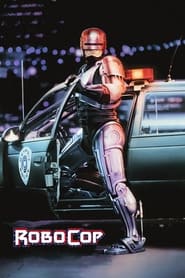
RoboCop (1987)
Release RoboCop Special Edition DVD (MGM Home Entertainment, 2001)
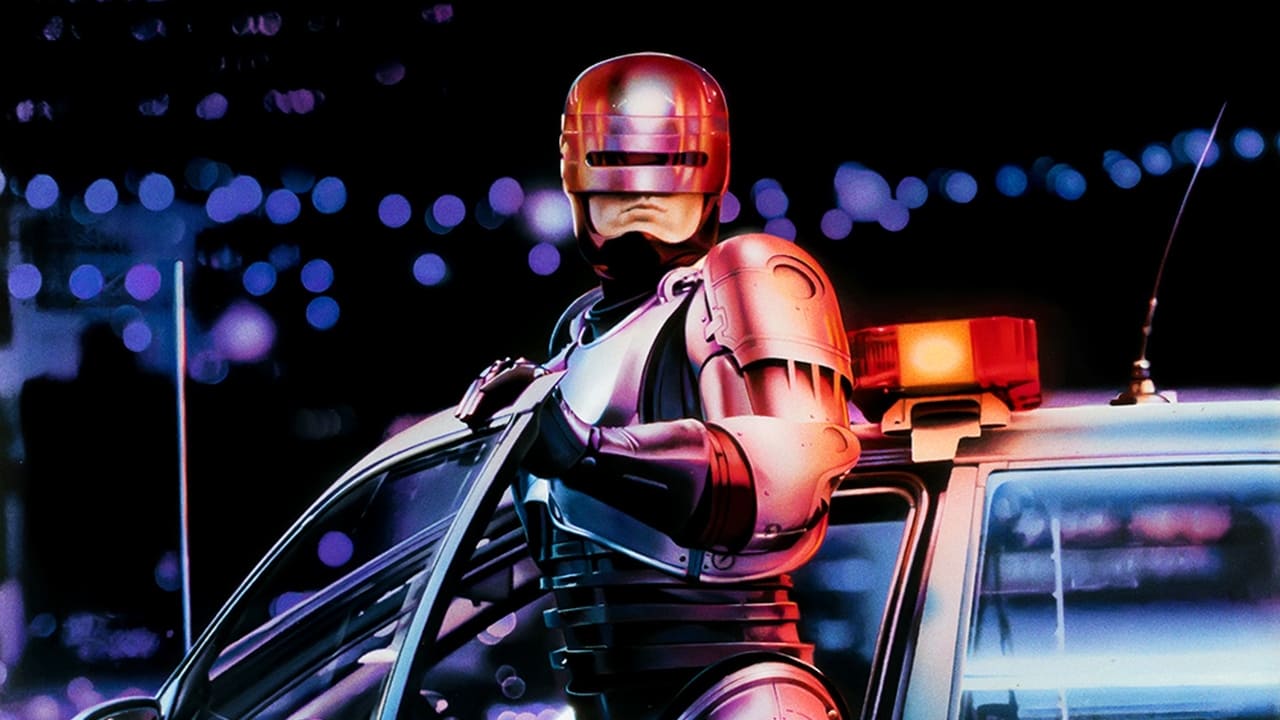
Paul Verhoeven, Jon Davison, and Edward Neumeier discuss locations, Peter Weller's movement training, Rob Bottin's suit, Phil Tippett's ED-209, and Basil Poledouris's score. They explain using previews to judge the balance of gore and comedy. They also connect Murphy's death and return to crucifixion imagery and explain how "You're fired, Dick," resolves the Directive 4 restriction in the climax.
- Duration
- 1h 42m
- Talk coverage
- 93%
- Words
- 18,611
- Speakers
- 3
Guided collection
The RoboCop trilogy commentaries
The original film's director, executive producer, and co-writer discuss RoboCop. Paul Sammon describes the production and effects of RoboCop 2, and Fred Dekker assesses his directing decisions on RoboCop 3. The guide follows the trilogy in release order.
Part 1 of 3
- 01 RoboCop Now reading
- 02 RoboCop 2 1990
- 03 RoboCop 3 1993
Commentary density
Highlights
Topics
People mentioned
The film
- Director
- Paul Verhoeven
- Cinematographer
- Jost Vacano
- Writer
- Michael Miner , Edward Neumeier
- Editor
- Frank J. Urioste
- Runtime
- 102 min
- Also on
- OneSheet ↗ OverBlack ↗
- External
- IMDb ↗ TMDB ↗ Find on Amazon ↗
Transcript
18,611 words · 43 flagged as film dialogue
This is RoboCop. I'm the director, Paul Verhoeven. This is a stock shot, and I'm the producer, Jon Davison. And I didn't write anything on this. My name's Ed Neumeier. I'm the writer, along with Michael Miner, who isn't here, so I'll try to represent him. This shot was asked for by Mike Medavoy because he felt that the film needed a little bit establishing in the beginning, so that we added that shot very, very late. It's not in the script, but Medavoy insisted that there had to be something like that. And this is our media break. And this is the news of the future.
The threat of nuclear confrontation
in South Africa... Now, I always think this dates the film already because, you know, this was just too topical and South Africa finally, you know, embraced democracy and they're not racist anymore and so they don't need a neutron bomb. That was my fault. But if you talk to people that are living in South Africa, everybody tries to get out as soon as possible at the very moment. Now, this is not dated, however, because this is what George Bush is planning to do again 13 years later. And this was something we added right at the end, right before the movie went out. All these sequences were done on video. Newsweek magazine just had an article about a new artificial heart, and the headline was RoboHeart. And they held it out just like this guy does. with this heart here in a second. Watch this shot here that Paul did to make it look completely stupid. And I succeeded, yes. All these scenes, most of the stuff you're seeing was shot in Dallas. We also later used Pittsburgh, but most of the movie was shot in Dallas because I think we got the feeling that that had kind of a futuristic feeling.
I remember the reason you liked Dallas so much is it had this big building that was outlined completely in green neon. So you wanted to shoot the picture there, and when we got there, it was broken. As long as we shot. Yes, when we left, they fixed it. You can't stand the heat. You better stay out of the kitchen. although seriously wounded. This whole situation that you see now was based originally, and Ed can tell something about that, about the scene, a massacre that happened in a donut shop, but that we never shot, that we took out of the script, in fact, at a certain moment. Yeah, in the 80s, you had to start action movies with action scenes, so we wanted to shock everybody and have a really awful scene of terror and viciousness, but in the end, we decided to start on a joke.
But in the scene, you would have seen Officer Fredrickson, who is mentioned later here and was mentioned in the newsreel. And, of course, Clarence Boddicker. Both would be appearing in that scene. One would be the killer and the other one would be the victim or one of the victims. And because the scene was never shot, we introduced these people in the news. Now, this scene here was written by Michael. Scumbag see the judge on Monday morning. It's a great line. And here's the introduction of our hero, Peter, or Murphy. Of course, when we were casting, we were not only looking for a good actor, we were also looking for an actor that had a good jawline. Because that's the only thing that you can see when he puts the mask on later, the robot mask. And we felt that if it would be a weak jawline, that that part of the face that was visible would make him look weak. So it was not only that Peter...
as an actor was a good choice. It was also some physical thing that was very important to us. Yeah, we always thought that you had to have a very good actor and that we were going to have a problem because people were just going to say, oh, it's a suit, who cares? And Peter embraced this role. He even practiced in Central Park with hockey gear and stuff. He did all sorts of stuff to be RoboCop before we even had the suit done. Here you see a girl that is, there you go, half naked. We tried to bring in gender neutrality in the locker room, but of course it passed by so fast that I never felt that the audience picked it up. So I redid it in Starship Troopers, where we have the boys and the girls in the military having showers without anybody looking at the sexual... elements of the other person. We also picked Peter because he was very thin and the suit bulks you up and we wanted someone who was muscular but thin. I remember Medavoy was sort of pushing Arnold Schwarzenegger at some point in time.
We were all afraid that it would look like the Pillsbury Doughboy. I think the Michelin Man was what Rob Bottin said he would look like. I also think that Peter brought to this role a sense of mythic self-pity that really was necessary, and it may just be his kind of elongated features or his face or whatever. I don't think anybody else could have done it as well. The coffin closing shot.
So it's the introduction of Lewis. We always wanted to make her come off just like a guy... ... and not know that she was a girl until she took off her helmet. I don't know if that's completely successful here or even possible... ... but it is a good introduction for a female action hero, I think. You wrote it so when she took off the helmet... long hair cascaded down over her shoulders. That was a big cliche, and by the time we got to Nancy, she looked good in short hair. Well, we asked her to shorten her hair because of RoboCop. We didn't want to have RoboCop in the latter part of the movie. feeling sexual towards the character that Nancy played. So we tried to tone down sexuality as much as possible. So in fact, like the protective thing she has over her... The bulletproof vest. It's also sexual, gender neutral, isn't it? Yeah, and also it is sort of to indicate what is to come later, I think, which is, you know, you have cops that look like this and it's sort of
brings you RoboCop later on. So this is Dallas, basically, what you see here. It's Dallas High School. Yeah, it was an old high school that we changed into a precinct. The scene inside the precinct that you just saw, the basement there in the locker rooms, that is that building. But the precinct itself, we built in another house, in another building, because we needed a bit more space. Again, there is nearly no studio involved in this at all, at mostly all locations. It was unbelievably hot in that basement is all I remember. Just incredible. Yeah, it was a heat wave that summer. Everybody was sweating and naked. But now here we are on the top of a building in Dallas. This was an empty space we found and built the set in the empty space in the office building. And these trans lights you guys hung out the window are really great.
That's a joke. Oh, ha. Well, you have to tell people because it's difficult to see, isn't it? Because it's kind of hazy and white and it could easily have been translights. But in fact, the skyscrapers you see outside are real. Yeah, and there's an I. M. Pei building out there. I mean, it's a really great way to build a set because you don't have to fake half of it. We couldn't afford translights on this picture. This picture was originally budgeted at $10 million. It came in slightly above that, but it was not an expensive film. So we had no money at all to use studio, to go to a stage and build something there. We did it all on location, in fact, always using original buildings. Even like this where we added a lot of stuff. Okay, here we have our executive room. This is Dan O'Herlihy, the actor who once bombed New York City in Fail Safe. And he's a wonderful actor. I don't know how we lucked into him.
We have also the introduction of Miguel Ferrer, Bob Morton, there he is, the young protagonist in the corporate world. You just saw him in Traffic. Absolutely. And at the end of the table next to the boss is Ronnie Cox, who plays Dick Jones, the sort of antagonist in the corporate world. And you will perhaps remember Ronnie Cox also from the next movie I did, which is Total Recall, where he is the dictator on Mars. Previously this, he did movies like Deliverance, where he played very, very different characters. And on television, he was known as, you know, he had almost, was typecast as a really nice guy. I think he delighted in playing a bad guy here for the first time in his career. And he, of course, went on to do it even more so in the next movie. This is sort of a reaction to Ronald Reagan's world when we made this film, the privatization of hospitals and jails and police and all the businesses that OCP is into. Now, this sort of also was, for me, a little bit about Vietnam, because I was sort of obsessed by that, having been too young to participate in it.
And so this is really about the kind of the buildup of the military industrial complex. And in fact, coming up here, we're going to have Dr. McNamara, who is based on Robert McNamara, the Secretary of Defense during Vietnam era. And ED-209 coming up here is based on kind of a Huey gunship idea, although obviously Phil Tippett and Craig Hayes, who designed it, actually made it work. This is still a big prop. So when it moves, it's a Phil Tippett miniature, but when it stands there, we just built it as a big robot that's... So from here on, it's Phil Tippett. Stop motion. Well, actually, Craig Hayes and Paula Lucchesi built the big prop, too, so... But this is pre-CGI. It's real-deal stop-motion, guys, just like King Kong. In front of a rear projection screen, a stop-motion miniature. We shot VistaVision plates for the rear projection. And now you're back to the giant prop, isn't it, here? I always loved that piece of art direction that William Sandell, the production designer, I guess, put in there with that kind of crow sculpture behind him. I always thought that was a really neat thing. So, Paul, how did you get involved with this picture?
Well, I just got a request, I think, first time from Barbara Boyle, who was the assistant second-in-command to Medavoy. I think that's where it all started. She sent it over to me, and I thought it was a piece of shit. Yeah, actually, I heard the story that you read the first page. It said RoboCop, the future of law enforcement, and you said you threw it over your shoulder. Yes. So begin great relationships in creative collaboration. Right. Well, I think a lot of people read the first page and threw it over their shoulders. Yeah, I think so, too. In fact, we were embarrassed about the name of the title once we were even started. People used to come up to us and say, what are you working on? And we'd go, um, RoboCop. And people would laugh. Now, of course, once it became a movie, that was exactly what we wanted, but it was kind of hard to have the courage up front.
I mean, we have to thank really my wife, Martine, who picked up the script from the floor and started to read it and then told me that I was a fucking idiot not to see what was hidden under the surface and what kind of layers were all there that we could use. Actually, I think what she said was, you know, there's a scene where they shoot the guy's arm off and they blow his hand up and Paul immediately got really excited and read the script.
What's fascinating to me about the two versions, if you are lucky enough to see them both, is that in one version, the MPAA unapproved version, there's a huge laugh when Johnson says, someone call a paramedic. But because they cut out the overhead shot where the guy is just made into a hamburger, that you don't get a laugh anymore. Well, you get the laugh, but less so than when we saw it the first time in the preview, when it was still the original version. And I realized that without, I mean, without taking a backseat here, me, that really the gruesome, bloody scene where the guy on the table is killed by a 209 was mostly directed by Jon Davison, who added so much blood to that scene that it is merely disgusting.
I went to 7-Eleven and bought the biggest baggies they sold and filled them with blood. I think Jon was reacting to Paul's claim that he couldn't see it, that there wasn't enough blood, that that's not what a machine gun would do to a human body. Yeah, yeah, yeah. And so I think Jon, you know, sort of took the challenge off there. It's clear that it's much more comic book, in fact, and, in fact, less aggressive in some way because it's so much over the top that you nearly start laughing. And then, as I said, the line of the other guy then suddenly after this massacre saying, somebody call a paramedic... ... and Dick Jones saying, that was just a glitch. I think we were working on a theory that obviously James Bond had done... ... and then later Arnold Schwarzenegger sort of did to death. But the theory being if you create a scene of violence that fills the audience with tension... ... and then you give them a joke, they desperately need to laugh. And the bigger the tension, the bigger the laugh. The shots of the elevator going up and down were shot in reality in a building in Dallas, but of course we added an enormous amount of matte painting there.
by Rocco Gioffre, who was our matte painter on location. And I think we shot that in a very old-fashioned way, in that we couldn't even see it because it had to be developed much later. Right, there are original negative shots. The held negative technique. So, basically, you shoot the shot and then you expose the painting and then develop it. So it's not an optical printer technique. So you develop after the painting is added. Yes. So you're guessing to a large degree, isn't it? Yep. Especially as a director, of course. You have no idea. Anyhow, I had no idea about special effects when I started to do this movie, which was the first one I did, a special effects movie. And I was very lucky to fall in the hands of Jon Davison, who knew all these people, like Rob Bottin and Phil Tippett and Craig Hayes. And Peter Kuran. And Peter Kuran. or Rocco Gioffre, you name it. And helped us, me specifically, to learn about special effects. You know, I had to, I got a crash course in special effects from Jon, in fact. And ultimately, at the end of the movie, I understood it pretty well.
Now, I wanted to say back there when there was all that money and it was all burned. There's a great story one day. I was on the loading dock at a stage in Dallas with nothing to do, and the prop guy gave me a torch and told me to burn a bunch of money. And just at that point, the producer walked up and he said, Jon Davison, and he said, ah, here's the writer, burning money again. So that's my money being burned there. The helmets, these people, the helmets that the police is using are, what are they, rugby helmets or something like that? I think they're motocross helmets. No, they were from plastic, really. Yeah, yeah, yeah. They're high impact. A lot of the stuff that they... I don't know if they're motocross or if they're... I don't know if they're rugby, but they took all these different components and put together. And what's interesting now is if you look at international police forces, they look so similar to this that I think that they probably... We sort of helped to create a new cop aesthetic. Right. Again, this is a little bit on the outside of Dallas where we shot that scene. Now, Kurtwood Smith,
is the nicest man in the world. He is so sweet, he is so respectful, and yet somehow, like many other guys like this, he can play the most vicious bastard killer that you can imagine. Pick him up! I think to a large degree, putting these glasses on, we tried to copy the German head of the SS, Heinrich Himmler. Well, this was before I knew Paul's obsession with Nazi Germany, so I just thought he looked kind of against type with the glasses on. And he had this name, Clarence Boddicker, which is kind of like a Dr. Seuss name or something. So I was trying to go against type, but I do think he does look rather Germanic, doesn't he? Well, we're in Pittsburgh now. At the steel factory near Monessen, Pennsylvania. This was a really amazing place for me because it was like the cliché of the closed steel plant.
And when you got there, there was no one there, but there were like lunch boxes left over. Someone had written on the boilers, these boilers were lit in 1897 and we shut them down today for the first time in 1985. And this was sort of the end of the Rust Belt economy. Yeah, it had just shut down, you know, so all these personal messages were on the wall of all these people that felt terrible that they couldn't work anymore and lost their job there. But it was a great set for us. Mostly based on the fact that the Brazilian steel got so cheap, isn't it? Yep. So that the Americans couldn't compete anymore. Well, of course, you know, we have a labor force by now that won't do things for nothing. Right. You know, we have entitlements and everything. Now, this is an interesting thing here. This is Pittsburgh. But by the time they go downstairs to that bottom area there, we will be in Long Beach in another industrial space where we shot the special effects sequences involving Peter or Murphy's death.
after post after production i think that was just was that shot in the script in the script stopping of the peeing yes because you asked me to put it in i was wondering it seems very much well no actually the thing is michael and i wrote scripts things about people peeing and stuff because we were interested in that and i think you uh came up with that idea that you know she says freeze and then there's a little stop in the urine stream which is you know it's a really nice detail
That is the special effects coordinator going down there, Gary Combs. I mean, the fall is, of course, is Nancy, but the big fall is Gary Combs because the stuntwoman we had couldn't do it. So Gary took on, let's say, took a female part there. Gary Combs I worked with also in Hollow Man and in Showgirls. He was my stunt coordinator on three movies. And he had a broken back, too. which was recently repaired after 20 years. Here's the Bixby Snyder show, a show entitled It's Not My Problem, but that never got into the script. But it's kind of like the future of entertainment here. Don't move.
So this is Long Beach now. This is a little area that we... You have to realize the politics of the movie were very interesting at the time because when we were shooting in Pittsburgh, that was the end of the movie. And we had already shot too long, according to the studio and our own schedule. I had gone over schedule. And Jon said, you know, we have no time to finish the movie this way. And... So we have to satisfy Orion and get out of Pittsburgh. And of course, he realized that there was one scene that could never be omitted by the studio, which was the death of Murphy. So we didn't shoot it. We didn't shoot it. We wrapped the picture. It gave us a couple of extra days for other stuff. And then ultimately, of course, when we came back in L. A. , we said, well, yeah, there's only one scene missing, you know, and it might be difficult not to shoot that.
But Ryan was very nice about it. Yeah, I did. Which is completely crazy. If you think about a studio, the one scene that a studio development process would not want you to put in a movie is a torture-murder sequence like this one. And this is... No, no. I mean, I don't think it was like that. They wanted that, didn't they? Well, it had to because they were forced to have it. It was the whole crux of the picture. But the point is, you have a scene here where people are making jokes about blowing people's arms and hands off, and there's no way you could get this through a studio development process now. Sure you are. I always felt that this scene for me was like describing the ultimate nightmare, isn't it? Oh, yeah.
I mean, it's sort of like you're a fly. No, you're a small animal, and the boys have got you, and they're going to tear you apart. With Paul, lots of things tend to become Christ metaphors, so he would always go to the studio to defend how violent the scene was by saying you have to have the crucifixion so we can have the resurrection of Peter as RoboCop. Here we have a little bit of stigmata coming up right here, you know, just a little bit. Nice Roman centurion here. Getting ready to pound the nail. I mean, a lot of this, of course, is kind of part of the crucifixion, the passion story of Jesus, you know. And I always felt, for me, it was continuously a situation in the background that RoboCop somehow was an American replacement of Jesus. That's why at the end of the movie, as a modern Jesus, an American Jesus, Walking over the water, he is still saying, I'm not going to arrest you anymore, I'm going to kill you, which is, let's say, American Christianity. All right,
all right, look out. Turn around, man.
The arm flying off was never a problem for me because I always thought it looked like a funny wire guy. As I recall, that was how we got our rating finally, is we got the arm flying out, taken out. And here comes Mary to look at his death. She can't get to it. I always liked the idea that you put her so she couldn't get to it but was watching it. I always thought that was a really great move. Right. Again, it was invented, I think, mostly because we had to separate the locations. Yeah. He's still alive.
Does it hurt? Does it hurt?
So there is here one shot that is a puppet shot. We used the puppet shot so that you could see the face from the front and then blow off the brains from the back. Right.
Good night, sweet prince. Hey, wait up.
Now, this was an interesting thing in one of our previews, because when she walks in here, there was a high shot where you could see so much blood on the floor. It was like a butcher shop floor. And ten women would get up at that moment and leave the theater. And when we cut it out, strangely, even though everything else that's happening is horrible here, you didn't have that same reaction. The floor was built up about five or six feet in order for puppeteers to be underneath the floor. operating the hands with the blue off the fingers and operating the puppet. This is a real crash team in Dallas at a hospital. I think it's what, Ballard, what's the name of the hospital? Anyway, it's a real crash team. We got in and they just kind of did what they do.
And it was interesting for me as a writer because I'd written this stuff based on what I'd seen in movies or what I thought things might do. But it wasn't as good as when they just did it, of course. And I mean the dialogue and the procedures. Because all the people you're seeing here, with the exception of Peter Weller, are non-actors. They're all the doctors, the surgeons and nurses of the hospital playing all this. I mean, this is one of the most fascinating scenes of the movie, I think, because it continuously has this kind of strange flashbacking. And it's really, for me, an ultimate expression of leaving life, leaving the earth, basically losing everything that was there. Your wife and your children, his one child. And I always felt it was an extremely tragic scene. This is one of my favorite sequences because... You shot it.
Oh, no, I'm not talking about the stuff on the television. I'm not trying to take away from the director. No, it's one of my favorite sequences because it's so subjective and it eschews the normal narrative rules. It allows you to have all these kind of things. I love the shot here, too, and I love the way that serpentine movement you put on it. Yeah, it's really basically that everything that was there is left behind. Is it like... And probably in death, we all have to assume that happens to us. You can't go back. And in fact, in terms of a classic storytelling, it's like this is the point where he can no longer return to the state he was before. And you really can't. He's dead. So it's really a complete... Yeah, Roboteam built an extra layer here so we can have all this gruesome stuff on the foreground.
All right, it's in. No pulse. All right, let's go ahead and shock a flat line and then let's quit.
Isn't that great? I mean, I couldn't have written that. Let's go ahead and shock a flat line and then we'll quit.
All right, I think that's all we can do.
Sorry, we had a long discussion when the movie was in the final stages how long it should be black. Because we were trying to keep it as long black as possible that people would really get, let's say... suspicious that the movie would be over. Yeah, I got a big argument with the editor, Mr. Frank J. Urioste, who's a great editor, and I just said, look, you gotta go longer. You gotta go 15 seconds and pull the track out. Like, there should be no sound. And he looked at me in horror, like, you can't do that. So they didn't, the chickens. In fact, we chickened out a little bit. We compromised, and I think we should have added five seconds, yes. And taken the track out. Yes. Well, there's no track. I don't think there's track. The idea that the sound would stop and the theater would really... This was all basically... The scenes were written more or less like you see them. But there was a lot of improvisation on the set for the staging. Jost built his camera in a chair so that we would always have this looking up look. What do you think, Jon?
Well, he signed the release forms when he joined the force.
Now, again, the other thing that was fun for me as a writer on this show was this scene and a scene coming up where they're celebrating were scenes we just made up based on props that showed up that day. And I remember, you know, I literally, this was Mary Kay Cosmetics. I ran down the hall. I wrote a scene on a selector typewriter in somebody's office, brought it back, and they shot it. It was the most satisfying thing that's ever happened to me as a writer. Come here, Arthur. So all this was shot just normal 35 millimeter and the video lines were introduced as an overlays, series of overlays of different thicknesses of lines. Interesting thing about the Bob Morton character was when Michael and I had originally conceived him, we thought he was kind of a bad guy and we thought you would enjoy his death, you know, in our sort of nasty world here.
Wonderful improv scene. Watch the way she falls down here. Happy New Year. That was an accident. And anyway, Miguel in the next scene coming up, I saw him the way he was talking to the camera. I remember walking into the set and I just thought, they're going to love this guy because he's the daddy. He's the nice guy. And watch the way he treats him. Watch this. And then the way he cheers him on. I remember watching this sequence in the monitor right here and thinking, oh, my God, you're going to like this guy. And, of course, Miguel is so charming that you do like him. And so suddenly you had a more dimensional character. When he dies, you feel sorry for him. It's not just like, oh, another bad guy, whack. Now, why don't you talk about the reveal of Robo? Well, that was a long discussion because we always felt if we would bring him in bluntly,
that people would start laughing. Like in the script. Well, this was a lot of the suggestions to do it in this way, as you will see here, which is that he's kind of hidden behind this transparent glass, half-transparent glass, that you see there on the right side already, came via suggestions of Rob Bottin, who felt, perhaps better than we, As he had developed the robot suit, of course, he was legitimately afraid that by revealing it in a blunt way, people would start thinking that it would be silly. I mean, we were always afraid that it would be silly. And so he said, can we not reveal it in a more elliptic way that you see it a little bit and a little bit more? So you see it first through the glass, then you see it a little bit, which is deformed, then you see it for a moment, I think, when he turns around here. They say, oh, from the back. But it's still, let's say, showing as little as possible and slowly making the audience aware of what the costume will look like. Of course, remember that in the scenes when he is, the subjective scenes that are before the scene.
You saw him already for a moment on the television. So I think we had to educate the audience that by the time you reveal it straight, like more or less here, although still a lot of shots are done through this, how do you call that? The mesh. Right. And that there was always kind of a distance between. Watch this though. Right here, what you did here, this is so cool. You cut in and out of the mesh. You cut from one side of the mesh to the other without it even bothering you. It's really wonderful. Well, yeah, because it's a bit close up such a big, isn't it? So you take it up and then go back, which normally I think was audacious. I think people do that much more now. But at that time, I felt that I was breaking the rules, you know, that when you're outside, you should stay outside. You know, I remember somebody, I think it was Jon saying, well, look, you know, it cuts together. My goodness. And the whole point was that that came out of the idea that you wanted to stay on the outside of that mesh to obscure RoboCop as long as possible.
I mean, a lot of these shots, basically, where Jost Vacano, my German cameraman that was the DP on this movie, found some really good angles by putting the camera in an extremely low position, so that you get enormous distortion. And here, there is the multiple image stuff here going on, when two things happen at the same time, the playback and what's happening in reality. I think it's preluding nearly on what we're trying to do now, that is have multi-screens, isn't it? Yeah, and it's motivated here by RoboCop. But the idea now is, yeah, you look at every television that comes out with these picture-in-pictures, it looks like that. Here's, of course, the classifieds that will become very important, especially in the latter part of the movie. So we emphasize it a lot. Now, here's a sequence which is near and dear to my heart because I really like guns and props.
And I got one day Jon Davison and handed me, I said, we have a problem. The gun that we got for RoboCop's too small. Gotta make it bigger. And so he handed this problem to me and the armorer, Randy Moore, and we had to dress up a Beretta 93R, to make it look like that. And we did it in one afternoon, just kind of on a piece of paper. And I just think it turned out so nicely. And the way Paul shot the gun here, you know, you wouldn't think a humanist like him would give a damn about a nice piece of aesthetic ordinance. But look at the way he shows this gun. I remember Paul was so sick this day. He had the flu or something. And ED-209 had arrived that day, and I went up to him and I said, Paul, the ED-209's arrived. It looks great. You've got to come see it. And he says... He was so sick, he said, well, I hope the next director likes it. And he just walked away.
Now, the other thing that happened in this thing here was that Paul wanted to make sure that they had some really good shots of the targets getting hit. And Randy Moore, the crazy Texas armorer who had a French machine gun, brought it in and started to show. And Paul said, no, I want to see it hit the target as it comes towards us. So he started shooting and shooting and shooting. And as the target came forward, he had to elevate the barrel. And then he shot the ceiling. And then the track fell down. And I don't think anybody had ever done that before at that shooting range. Sure. Any time. The first thing we shot with RoboCop was that scene in the police station. Yeah, that's right, grabbing the keys. It took 11 hours to get Peter Weller into the costume. And then, of course, because of the rubber glove, the keys just bounced right out.
A nightmare. It was a nightmare for Peter Weller too, you know, because he had been trying to practice with a rugby outfit or something like that. With his mime artist, Moni Yakim. Right, right. But then, of course, when he got the suit and had to arrive on the set at 4 o'clock in the morning to fit it so we could shoot at, say, 10, 11 o'clock. I mean, then, of course, everybody realized that he couldn't move, or certainly he realized that he couldn't move at all like he wanted. And it was a psychological crisis, really. We shut down for a day or two. Well, yeah, it was really hard. And I think it's inevitable now that you look back on it. It's such a big deal. It's your central character, and it's got to be what he looks like. And he literally got about six hours warning before he had to put it on. And I think it was pretty traumatic for everybody when that came in. It was two weeks into production, wasn't it? And it was just like the... It was the moment where everything went wrong, and it was sort of that moment where you go, Oh, God, what do I do now? Jeez. But it worked out. One, two, three, and
you better open that son of a bitch. Come on, come on! I'm gonna blow her brains out.
This is a scene which I always liked. It's sort of the 7-Eleven robbery. And there was a sequence here where we had this stuntman guy who's playing this fella here. And Paul said he wanted to have him say,
fuck me.
And so he said,
fuck me.
I thought he'd say it once. And Paul said, no, say
fuck me
over and over again.
Fuck me, fuck me.
And I love this scene now because this guy is so fucked. And look at what happens here when RoboCop finally comes up to him.
Fuck me!
Nicely done, Mr. Verhoeven. Yeah. I don't know if it was a stuntman. I think it was an actor. No, no, that was one of the stuntmen that... We had a lot of stuntmen who had to have lines in this, and they did really well. Right. Well, we cast 80% of the movie in Dallas, isn't it, Jon? Yes, because we could not take the entire cast from Los Angeles. Because we had no money, isn't it? Right, of course. And it worked out very well, because we were forced to be extremely creative, and the casting women... what's her name, Julie Selzer and Sally Dennison did a great job spending a lot of time in Dallas to go to every let's say theater company or whatever where people would be able to act to a certain degree and And we did pretty well. Now, here's a sequence here where Paul came up with the solve of this one. I originally just had this very serious idea that he would shoot the guy and be really tough. And Paul said, oh, no, maybe he should, like, go, you know,
there's more hair down there.
And I wrote that down because that was a good line. And then he came up with this really great solve here, which I'm not going to give away if you haven't seen the movie, about how the bad guy gets it. That was a separate leg that Rob Bottin built. How is he going to shoot this guy? What's he going to do? How is he going to get her without hurting the girl? Knowing female anatomy, he knows how close he can shoot. And the guy that is shot there, remember, he is the famous pop singer in Showgirls. Oh, I didn't know that. You used that guy again? He's this terrible guy that's just the race. Is that the same actor? Yeah, that's the same actor. I didn't know that.
I mean, he got really good stuff out of this movie, and he's still on a big television show where he has a recurrent role already for five, six, seven years. I didn't know that. That's great. And so basically, when I asked him if he wanted to dare to do this terrible, terrible actor, and I said, do you dare to do that? Because it was raping Molly, which is an innocent and wonderful girl in Showgirls. And he said, you know, I'll do everything for you because you You gave me such a wonderful time as a consequence of this movie. That's right. You started me as a rapist, Paul. I thought I could do that for you. Well, I got to his character because of this. This is a sequence that I grew up in San Francisco. And during the time that I grew up there, Mayor Moscone and another fellow, a councilman, were shot by another city councilman.
It was a big tragedy up in San Francisco. So this was kind of based on that idea. Of course, this has a much more happy ending than the real outcome did. Getting Robo in and out of the car and up the stairs, Paul... Took some time. Well, actually, the truth is, every time he's getting out of the car, he has no pants on. Because he could never get out of the car in the costume. And you could never shoot the costume from behind because the butt wiggled. Right. And walking upstairs was extremely difficult for Peter. Well, to keep it fluid and kind of robotic, that it didn't start to look strange. The captain you see here is again one of the leaders of the guerrilla in Total Recall, of the guerrilla movement that is against Cohagen.
First, don't fuck with me! I'm a desperate man!
And this fellow was also, wasn't he also in, didn't you use him again in Total? Yes, I think he is a barkeeper in Total Recall. Yeah, he's a barkeep in Total Recall.
Okay. And I want a bigger office.
I always thought the light on these windows, the way it was hitting is so beautiful behind him. Yeah, because they make them very visible. You always kick them in a little bit. You give a kick light there. How about the 6,000 SUX? Well, this was my joke about contentious American big cars that were stupid. The 6,000 SUX. And later on, after we had put this scene in, Mr. Davison came up with a way to make a 6000 SUX commercial, which has got a dinosaur in it. Which is pretty cool that we got a dinosaur in the RoboCop movie. That's because Paul and I wanted to make a dinosaur movie and we went to Disney and actually developed it. The original dinosaur, what became dinosaur. What we were doing was not... Not as benevolent. No. No, you guys wanted to do the... And certainly they didn't talk and sing. No, it is going to be Stravinsky and dinosaurs and that's all, right? Well, now, here's the way you wish you could solve all hostage problems. This is a great thing here. Watch not this. Not this. Watch this. Watch the way the body bounces. Boink. That's because he fell on the airbag or something. Right?
Now, this
was a great day when Paul was filming this stuff out with these kids because, you know, when you're making a movie, you're just around a bunch of guys and mean people all the time. And here, suddenly, the director could be around children. And he had so much fun, and the kids had so much fun. I think they were the only people that had fun on this picture. Who, the kids or us? The kids. The kids.
Now, this I have.
Now this. This, I think, could still happen, guys. And
I have
to say, in this game here, you know, I don't know why no one's made it yet. The funniest thing about this was we got sued by a number of people after this movie for, you know, copyright infringements or something we had done to them. And there was a company called Nukem that wanted to sue us because of this commercial. I didn't know that. Is that true? Yeah, I still have a copy of the lawsuit. That's funny.
thereby creating an estimated 1 million much-needed new jobs, despite questions about worker safety in dangerous old Detroit. Robert Morton, Vice President, Security Concepts, OCP.
So now our hero in the corporate world has made his mark. And just like the guy at the beginning, Dick Jones, he's now on TV.
There's a new guy in town. His name's RoboCop. There's a new sheriff in town, you bet.
Okay, now this was a sequence, see I was an executive very briefly for about a year at MCA. back in the end of the Lew Wasserman days. And they had this executive bathroom upstairs on the 11th floor that we could go in. And this was based on this idea now, not to take away from what Paul's done with it, but there's a secret. At the end of it, the guy walks out with a pee stain. And this was something that I always feared doing because there was a secretarial pit right across from the executive bathroom door. And if you walked out with a light gray suit and you had dribbled a little bit, they were all going to look at your crotch, which they did every day. They had like a crotch count. This is something we built very early in Dallas. Yeah, it's the first day. First or second day, yeah. I always like it, yeah, and we got on the set and Paul was upsetting people because he took part of the set apart to get the camera down so low to see Ronnie's legs in the scene.
But it took some time, isn't it? I think you got really upset, Jon, because so much time as Jost took to get the camera there. I was like, well, I just built this thing, and now you're taking it apart? You know, but now this sequence was interesting for me because, you know, Miguel's father, Jose, had been in Lawrence of Arabia. And there's this whole sort of kind of homoerotic sequence with his father and Lawrence. And so we talked about this on the day of the set, and I think it kind of got into what happens here with these guys next.
I used to call the old man funny names. Iron butt. Boner. Once I even called him asshole.
I like the stock kickers over the urinals. I think that's really great. I think the set was nearly built in 24 hours. Yeah, because we were looking everywhere for a bathroom. And this was a big fight because they kept coming to you saying, here's a bathroom. And you would go, I don't like it. And then one day you brought me in and I just said. Well, it doesn't have anything to do with the way the scene is staged. What are you talking about? So, of course, everybody hated me after that, and they had to build this at Las Colinas Studios at the last moment. We were looking for things to shoot. Yeah, a cover set, because we didn't have the suit, right? Actually, the truth about the suit was we originally had some other fellow, nice guy, but not as talented as Rob, I guess, do something, and then we looked at what he had done, and it wasn't really right, and Jon sort of looked a little...
depressed and picked up the phone. He said, okay, I'm going to call Rob Bottin. The suits came in very late, yes. Well, I think we were pretty guilty there too, isn't it? Well, the fact of the matter is, without Rob, we couldn't have done it. Because we interfered so much with his work that ultimately everybody got into a crisis. No, this is the best, some of the best work Rob's ever done, and it was really hard for him to do it, but he did a really great job. I think it's probably some of the work he's most proud of. You just... See, that was the homoerotic thing there. Yeah, Ronnie's really good as a bad guy, isn't he?
So you want to talk about Frankenstein themes or anything like that? The Unholy Monster line was a sort of a not very subtle reference to the Frankenstein theme that we were always kind of aware of here. And also, believe it or not, from the beginning, the kind of the Christ metaphor. Now, luckily, we got involved with a director who understood both and probably knew a little bit more about Christ than I did. And it really, those themes, which are never insistent, nonetheless, you know, you kind of can feel them there and look for them if you want. I mean, we got that more or less by coincidence, that little machine there, isn't it? And it turned out to be, but it worked. I mean, the prop people gave it to us, and perhaps, I don't know if we even asked for it, but it was so, it works as such a, let's say, great tool, isn't it? Prop in the scene. Yeah, because in other words, if you hadn't had that machine with the squiggle lines, you couldn't have cut as easily to the imagery of what he's seeing in his mind. It's true.
And I like this thing. You shot that just like on the, you know, long time before we used it, that shot of Kirtwood in the gun. And it's a pretty simple shot, but it really works pretty well for this sequence. Yeah, we shot it just not even knowing how this... We shot it because it's out of the first scene, isn't it, where Murphy gets killed? But we had not shot that scene, so we had to guess that his position was more or less identical in it. And I think it works great with this kind of... Black lines here, isn't it? That means it's a really strong additional visual element. And the gunshot to end it all, it's really perfect. It's wonderful. Now, here's the thing where his hips squiggle. I always hated that, but I guess nobody else bothers.
I think the scientists are all named after famous American presidents. And the cops are all named after serial killers, if you start looking at it, except for the one named after Jonathan Kaplan, the director, who actually helped me get this to Jon Davison. So we honored him in that way. This is a really nice sequence here that Mr. Verhoeven came up with. It's so personal in the midst of what is essentially a movie about a guy in a plastic suit.
Well, it was written, isn't it? I mean, probably just the way it was shot and nice. Yeah, but watch the way the close-up comes in here. I really like this right here. Bump, that one. And that one. Look at her. She's great. Yeah. Originally, remember, we had cast Stephanie Zimbalist as a role. And a few weeks before principal photography, for whatever reason, she bowed out and we lucked into... to Nancy, but this goes back to this idea that Paul was talking about, which was something I didn't understand, and it's really essential to this. If you had sexualized her, which is what young men often would do with this character, and made her a beautiful blonde with big boobs, you would have... We neutralized it. Yeah, you would have made it a sexual issue about... about RoboCop, which is inappropriate. And so she's the helper. I remember you said to me, you know, I keep seeing this face, this face like the character Annie in the musical Annie. And then when Nancy came aboard, I think everybody was a little like, well, but Paul was saying, no, she's the one I've always wanted. And boy, was he right. Well, of course, yeah.
I had immediately a great connection with Nancy from the very beginning. Even when we tested her in the beginning and we ultimately decided on Stephanie Zimbalist, I always felt that there was something that I could get out of her that had not been used in other movies. And Lewis here, Nancy, is a scene that I think goes on a little long, and it's my fault because I wrote it this way. I couldn't find the great out, and so all I could do was kind of have the sergeant say, well, you know, this guy's an asshole, which isn't that satisfying. But on the other hand, no one's ever complained about it. I just feel like it doesn't have the punch it could have, and it's my fault.
It's classified. It's OCP. You got it, mister?
Yeah, perhaps the pauses are a bit too significant, isn't it? No, I don't think you had anywhere to go for a big bang. The big bang of the scene is already when he comes in and says, he can't have a dream, he's product. And now you've just got to go down and down, and there's no good ending to it. I mean, it's nice because you see the smile between the older man and the younger woman, but it just doesn't go whomp. Anyhow, it goes whomp here, isn't it? Yes, exactly. Well, I would have argued, hey, we need a lull before it goes whomp, but Paul, you would say, not in my movies, no lulls. Hey, wait a moment. I'm an artist, you know. I would see that. Now, this is Paul here, guys, behind the counter. This is Paul's sense of himself as a young man confronting the brutal realities of the world. See, a mathematician with glasses and... Uh-oh. Yeah, I had the feeling that I was going back to my years when I was a student at Leiden University and I would be doing mathematics there.
And so I identified very much with the guy there sitting, working, trying to get his degree in mathematics while he was trying to make some money so that he can survive. Yeah, I remember you liked this line coming up where, you think you're smart, huh? You think you can outsmart a boy? Oh, and the other thing about this sequence was a terrible political thing on the set. Because we had, this gas station was going to blow up. But we had all these other gags, like the gas spraying out and hitting the window, as you'll see, and this stuff. But the special effects guys had only read, the station blows up. And boy, the station blew up, but none of this stuff was ready. And so on the night of, we just had a terrible time trying to get the other gags going. And I remember that night, the stunt guy, because I went over to say, hey, we're going to be able to do this tomorrow. And I think he was going to hit me with an axe handle. He was so mad at me.
What do you say we find out, huh? I'm talking to you! What do you say? Huh? Huh? I'm talking to you!
Great night. Everybody had a good time. Yeah, yeah. But then Jost is the guy... When this thing blows up, the closest shot you get, it's Jost under a blanket with his own camera right as close as he can get to the explosion. Yeah, but then he said it wasn't big enough and the fire... Oh, yeah, but this is also the Dallas Fire Department was so upset because... They tried to shut us down. And it wasn't really that big of an explosion. See here, this little spraying gas thing, this nearly cost me my life. Why was that? Because the stunt guy was so mad at me, he was going to hit me with an axe handle. Not the stunt guy, the special effects guy. He married the production controller and later was killed in an automobile accident, which I'm sorry about.
There's some second unit work in here that was directed by Mark Goldblatt, who's since gone on to edit Mr Verhoeven's... From Show Goes On. Yeah. Who also edited the first Terminator. Mostly this is Mark Goldblatt's work, isn't it, here? Oof. I think this we shot the same evening, isn't it? While it was still burning. Yeah, with fire bars behind it. Well, and some real stuff burning. Well, I guess that's true. I think because now we shot it really in the aftermath of that thing, so we had to shoot it very fast. Anyhow, so what I said that this is what you see burning in the background is still the result, more or less, of the explosion. We had to shoot it very fast after the explosion. I think we rehearsed it even before the explosion so we could rush to this spot with the cameras and shoot it while the building was still burning. And the fire department was trying to get us out of town. Now, this is the CompuLab. And this is a sequence which, you know, normally would be an exposition sequence that would be pretty dull.
But for some reason, people really like this. This is also some crew people here. There's Charles Newirth, the production manager, and Allegra Clegg, the production coordinator. You just passed them. They're standing at the right there. In the background, you see Newirth. He went on to make many, many, many movies. And this thing, which, you know, was done by some fellows named... You might know who did this. This is Peter Kuran at Homer and Associates. Right. And this sequence here is very interesting because you now kind of see when you go and see these things at the cop shops or at the Air Force or wherever you go where they have this kind of technology, it's fairly similar to this. Now, I don't know if that means those guys were prescient or whether they essentially helped develop this stuff. Well, the whole sequence, the television sequence, was designed in it.
very specifically to give the information that normally in a novel you would just describe, isn't it? It's trying to visualize an Agatha Christie explanation scene. But it does it with no dialogue, and no one's bored, I don't think, and everybody's kind of getting it, and it's true. It's very emotional. It gets really emotional at the very end, isn't it? Especially when he gets to realizing his own death, really. And again, listen carefully to the really beautiful music that Basil Poledouris made for this movie. I had worked with Basil on Flesh+Blood, the movie before this. And so I came back to him to do this movie, and I came back to him for Starship Troopers. And his movie is... His music has a very strong, epic quality. He's a big fan of Miklós Rózsa. And you can feel that, but it gives this scene, especially in these scenes, a wonderful paradise-like feeling. This is really expression, I feel, of paradise lost. And I always felt, when I read the script, that's when I got really,
the feeling that this was my movie. When I read the scene and started to understand the scene and what you could do with the scene. And I never storyboarded it because I was so sure that I could shoot it because I felt it so well, you know? It's interesting because there was a point in this where Orion was trying to cut things out to save money. And one of the scenes that was talked about cutting out was this scene because it was like, well, you know, there's no action in it. There's no robots. I mean, what's the point? And it's the scene really when people talk about this movie having a heart. which is one of the things I think makes it different from a lot of the action movies of the 80s. This is the reason it has a heart, this scene.
And here, of course, comes the... The very simple trick stuff there is just shooting it twice and by a little glitching, try to go from one shot to the other, isn't it? Oh, I thought you were talking about TJ Laser, the stuff that I shot. Oh, that's great. Oh, yeah, thank you. Very important, too. Yeah, now watch the gun stuff there, because that's really great. Michael Miner shot that, actually, DP, for me. Again, you know, the music is really emotional and nostalgic and tells about something that was there and that you cannot reach anymore. Paul, you spent a lot of time with Basil on this score. Oh yeah, because in the beginning we could not find the thematic material. We spent weeks and weeks trying to find a tune or a melody that we felt was absolutely mandatory, that needed to be there, something like that. But ultimately, I think the music that we... There is a sort of thematic material, but it is really all the variations on that that make it so emotional, I think.
Again, basically, the trick shots there are very simple. How we go into the pass and out of the pass is done in a very on-the-set way with a little glitching by Peter Kuran to lock shots together. It's past and present. This is an interesting scene here. This is something that Paul added on the day. He had her saying, I love you. I never had that in the script. And it really, again, points out sort of the emotional things that he's lost. I don't think you would have that same idea. And it always has reminded me of the shot at the end of A Place in the Sun where Montgomery Clift is going off to be executed. And the last thing he sees is the vision of Elizabeth Taylor kissing him. And he walks through it. And that's the end of the movie.
And this was a scene that we had a big fight about getting because we had three little sequences to tie this together. And we had gone to this club, which was near our hotel, and we kept saying, oh, we should put Robo in a disco. And we ended up getting it. And I'm not sure if the director ever was sure it was the right thing to do, but it has a wonderful shot coming up here of the director. It's one of the few times I know of him putting himself in a movie. The only time. And there's a shot that should be me, but it isn't, where when the gun goes flying. Oh, there, that should be me, but it isn't. And the real shot of Paul comes up here on the gong sound. That's me, that's me. I mean, I was trying to make everybody dance in a frenetic way, and basically at the end of the shot, I was just still stimulating the crowd.
And then Jost Vacano, who was shooting the crowd, just turned the camera to the left, where I was, and shot me. And then Frank J. Urioste. I tried everything to get it out, but of course, perhaps not everything. Well, I think that Frank always thought that the writer's gag, which was basically a guy trying to kick a robot in the nuts, wasn't funny enough. So he put a gong sound on it, and that wasn't funny enough, so he finally had to use what he had to make it funny, which was a picture of the director. Well, that's very funny. Ooh, horny. Yeah, well, a mind is a... This was a model house, house of the future, right? Right, yeah, but it was just a normal house. But these people were very proud of it, and they were really offended that these girls, these girls were going to come in and sleaze around, and that some of the dialogue was the way it was, and they kept coming up to me going...
couldn't you change this? I mean, why did you have to say this and that? It's also our first night. This was the first time we went to night. And I remember, you know, I'd never... I was sick too. Yeah, you were. I remember moving that carpet around. You were sick a lot. Yeah. I think I was sick a lot because I felt the movie was so different from anything I had done in the past. And I was so insecure. I felt so overwhelmed by the problems. that probably my resistance had diminished. And I got sick several times. Not sick enough to stop, you know? Sick enough to continue to... I could still work and we continued all the time. We never stopped for a day, but it's like throwing up all the time. Rushing back to my trailer and throwing up and going back to the set and try another shot. I mean, it was quite horrible. I always thought this was a tactic of yours because everybody was so unpleasant to you and beating you up that I think it made it harder for them to be mean to you if you were barfing.
Right. And you couldn't sleep at night either, I remember. No, no, no. I had to use Halcion, which ultimately turned out to be giving you hallucinations. Yes, George Bush used to use Halcion when he was president. So I think a lot of these scenes might be made basically under the influence. And basically the white stuff you saw on the table, just to be politically correct, the white stuff you saw on the table is supposed to be cocaine, but I think it's just chalk or something. No, it's milk sugar or something that you can snort up your nose and not get too badly hurt. Don't worry about it, you know. It gives you diarrhea, I think. Oh, there's a prop that didn't work, remember? Saved by Kurtwood Smith?
Oh, no, yo, also the other thing, yeah. The funny thing that happened to me about this was there was originally some prop grenades made based on an idea I had, which was to use Japanese-looking little grenades. And Paul, when the prop guy finally showed them to him, said, well, those are too small. Those are going to work. And so the prop guy looked at me like, see, you fucked up. And he handed me a whole box of these things, which I went home and put in my garage, in my house in Highland Park. And when we moved out of that house, I forgot. And the landlord came back, was going through the garage and found a box of grenades and they called the LAPD bomb squad. And so the LAPD bomb squad now has my Japanese grenades and they can get in the movie. This was a machine for filling some bottles or something like that, isn't it? Some fluid bottles, but we used it for the so-called cocaine lab.
I mean, yeah, it's interesting because this was right at the time when crack cocaine was just coming out on the streets. And so even though we're pushing it here in terms of what was going on at the time, this is really what became of the illegal cocaine operations. I mean, really, at the time, we felt we did something like like hyperbole and pushing it very hard towards, let's say, to make it really like a factory. Not realizing, of course, that within 10 years, that would be the norm, really. Now here's another scene that I learned something about as a writer. As a writer, you're always wanting to do tough guy scenes where everybody's out toughing each other.
And this is the only time where I think I kind of worked the wrong way with an actor. Because he just wanted to say the toughest, toughest lines he could. And I wrote this line that's coming up here. It's so bad. I'm going to shove so much of this factory so far up your whop ass you're going to shit snow till something or other. Which is a terrible line and I'm sorry about it. And yet he did come up with some really good stuff himself here. Like the guns, guns, guns line was something he did on the day of on the set. Well, Clarence Boddicker, the character... Kurtwood Smith was really good in his improvisation. Oh, he was the best of the... You let him improv all the time because he was the best. Yeah, because he had always... This was... Yeah, we went a bit overboard here, but in general, a lot of these little things that he's doing or saying are all Kurtwood, isn't it?
Little additions that he invented all the time. But the problem is this other actor who is a fine actor, but maybe not at Kurtwood Smith's level, also ended up having to invent things too. And I remember you on the day saying, God, they're just going so slow. I can't get them to go fast enough. Well, yeah. But that's a great line there, Guns, Guns, Guns. Now, also,
I have
to tell you that in every script I've ever written for Paul, there's always a reference to the Tigers. I don't know why I'm not into sports at all. Neither am I. I hate sports. I know you do, but there's always the Tigers.
The Tigers are playing tonight
in Detroit, and in Starship later on, the team that Johnny Rico plays on is the Tigers. Right. Now, there's a lot of automatic weapons in this sequence. Would you like to talk about your experience working with them, Paul? Well, I mean, that was a very bad experience because we could not make them work all together. When we had seven guns shooting, which you will see in the next part of the scene, then of course there were only two working. So normally four, five, 50% or more was dysfunctional. Every time you see it cut, it's because in the next scene, some stuntman had a shelf out of the sides of his gun and he was looking at it and banging on it. And so basically this extremely interesting, fast editing by Frank J. Urioste.
It was basically based on the fact that you could not hold any shot longer than two seconds because then the... Now watch this, guys, up here. Paul was really upset because it wasn't blowing up behind him enough. And I remember the stunt guy, I mean, the effects guys brought out primer cord and the whole wall blew up behind him and Paul was like, oh, that blew up. And the effects guys were like, yeah, okay, we'll blow it up for you next time, babe.
And here we have a whole compendium of the trick shots. Look, the up without looking, and pretty soon we're gonna have the famous shooting behind you, right? There we go, boom! Now, I remember in the mix, we went on and on with this, and you were speaking about Basil's music before, and I remember saying, you know, you should just turn the music up here, because the music is so nice, or something like that, and I remember being quite pleased that I came back in, and a lot of the sound effects were down, and it just, the music went. Speaking of sound effects, this picture won an Academy Award for Steve Flick and John Pospisil, who did the sound effects. Yeah. And for example, there's a lot of what you would call normal sound effects, but to get, let's say, interesting sound effects for RoboCop took a long time, especially the steps. You would expect to do something like a piece of metal on the ground, but that never worked. Ultimately, we used kind of like a track...
Yeah, chain track, like a small thing like we use for tanks, isn't it? Oh, you mean a tank tread sound? Yes, and so you could, let's say, put it on the floor. So kinking, that sort of sound. And that ultimately was the main issue, because in other television shows and other things where I've seen RoboCop and other movies, they did it much more in a clunky way, and I felt that it would always bring so much attention to the feet. that basically you would forget about the hat, you know. So we found a sound that is kind of interesting, but it's subtle, and it is not overwhelming. Yeah, I remember seeing in the rough cut, whenever RoboCop walked around and you had real set sound, it sounded like he was walking on two plumber's hovers. This was one, I think, when we were working on the scene here, and Ed was always there, like Jon, in fact, but Ed was always next to me to protect me making mistakes against American culture. But here...
The scene was in two parts. There was one part of the scene where he would throw him through the windows and there was another part where he would read the, how do you call it? The Miranda. The Miranda. And they were separated. But of course, then we started to shoot it. Suddenly we realized that it would be so much fun to have him read the Miranda and at the same time throw him. Like basically a contradiction, isn't it? Like, again, a good advice, nice hyperbole for American, how the cops sometimes work. We had a benefit screening right before we put this movie out for the LAPD, which I was horrified by. I thought these people are going to kill me because I'm making fun of what they do in life and death. They love that Miranda scene so much. They would like that to be the Miranda technique that you can employ with everybody. But it was me probably coming into the United States, just being there for half a year and being quite overwhelmed by the violence on the streets because of
of this multitudes of guns that everybody has available here while in Holland or in Western Europe in general, of course you cannot get a gun, you know, it's forbidden and no citizen will have it. But here I was so blown away nearly by the presence of guns and you were a big gun fan because you brought me to every gun shop in town, you know, and you even convinced my daughter to buy a gun. Yeah, but you know, I don't own a gun. Which you still have. I don't, do you really? Oh, yeah. I don't own a gun personally. My wife owns a gun. I think you bought it basically with me. Well, I'm good at picking out guns. And the whole family went to the gun, to the, how you called it? The family gun show, the range. Right. I never went there, but they all can shoot really good now. I bet. Your wife particularly, I bet she's a dead eye.
That was another Rocco Gioffre matte painting. Right, the one with the long shot before when the car arrives, isn't it? Was that the one? Or was it just... Yeah. Yeah, and this one too. And this one too. The under part is real, isn't it? The little where the car drives, but even the first five, six floors of that building is the building in Dallas. Only the whole three-quarter, the rest going up into the sky, that is a matte painting. And of course, this is a parking lot that has nothing to do with that building. Somewhere else. It's somewhere else, yeah. But... This is a sequence where I think, you know, particularly at the end of the sequence when he's coming back down into the parking lot and they're trying to kill him, I think you get so much sympathy for him out of it. Listen to the music here, how nicely lyrical this makes the whole scene. Ta-da!
Yeah, you're right, because it... I mean, he did such a great job. I was not even aware of it when we were shooting it, because we were so struggling with the melody that to give it a theme like Lawrence of Arabia or something like that... Because in another movie it would have been... It would have been all about get there, get there, get there. And these inserts into the shot is neat that you... like seeing two things at the same time. It was, I think, at that time very progressive, isn't it? Well, still, I don't ever see people using that as well. They will, but it was such an excellent way of doing it with a robot, isn't it? Well, I think it's narrative. I mean, it's something that comes out of the narrative easily. It's not pushed. Again, this was built in the, I think, in the same... Was that... Was that done with translights, this? Was this built in somewhere? Or did we build it also in that building? No, this was on a stage. And those are translights. Because remember, we had to... Yeah. Yeah, that's the only part that we used a stage in it. The only scene.
What's the matter, officer?
That and the bathroom. Yeah, right.
I'll tell you what's the matter.
But there was a stage in Dallas that we used, didn't it? Yes, Las Colinas. Las Colinas.
My little contribution to your psychological profile...
This is a really interesting scene between mechanics and the mind, isn't it? Yeah, and look at the way the distortion is going here. And I love these low angles and the way Ronnie is very strong... ... in the way he's reacting to him. It's really cool. I mean, this scene could have been so stupid... ... because it's like Captain Kirk on Starship acting like he's got, you know... processed yeah exactly and yet it works here um it works also with the intercutting of his point of view being so distorted and and wobbly and all that stuff now this is a this is a great moment here and i love this line coming up here as a little toe line michael myner should be credited for it because he made a mistake
Now it's time to erase that mistake.
And, you know, I remember somebody saying in the development process, well, that line's a little bald, isn't it? And yet, because it pays off later on as the end of the movie, it's very important that you remember that line. Now watch this up here. This is really great, Mr. Verhoeven. Watch the sequence where he looks up at the guy as he's about to shoot him. And the shot in on Robo's eye. It's such a neat moment. Because I think Paul was trying to get the eye. He was trying to find his humanity before we revealed the third act's face. And watch this right here. It's so fucking cool. I think I also have to credit Jost Vacano there in making the shot really work, you know, because... I mean, you need just a little bit of light on the eye because it's hidden behind the mask and would be in the shadow in general. So you have to give it a little highlight just at the eye. Talk about hitting your mark. Also, I think you've got to credit Phil Tippett for doing moving camera shots on rear projection, really pushing the envelope.
Yeah, especially when he steps over the camera. He was never sure that he could do that. The rockets are real. They're all on... What's that? Wires. Wires, yeah. And this, of course, is Phil Tippett with additional flames. But here is the thing that Phil did that is so amazing with this character. There's so many things he did, but watch this. Because this was written in the script as, he can't figure out the stairs and he falls down. Look what Phil does with it. And Paul. Well, we always thought that it should be like a baby, isn't it? Yeah, absolutely. That goes down the staircase for the first time and thinks that he can handle it. And he does and then makes a little glitch.
It's so easy to write, and the robot falls down the stairs. But to get to this... Even what he does here, Phil Tippett, look at that. That's what I mean, to get to this. This kind of crazy, angry child that cannot get his way. Look how he jumps up and down. He's so mad. It's very primal. It's about the child stuff. And now watch this. This is great, too. With the pig sound, however, that Steve Flick put on it. Right, right. It's true. Now, I remember being down in this... Was it a pig? During this location, which was days underground with a bunch of gunfire all the time, and I remember thinking, oh, my God, this is really tragic. And there is a scene, again, with the music, where they are firing at him coming up here, that really you just feel so terrible for RoboCop. It was tragic. We spent so much money on the ammunition for this scene. Right.
I had so many executives calling. I also realized that a lot of this was, again, a lot of the shooting, of course, was second unit. The long shot with Robo and everything, we shot. But then Mark Goldblatt came in and stayed another couple of days to get all the close-ups and all the things that take forever to stage, you know, little close-ups like that. That's all Mark Goldblatt's work. Like this and that, you know. That's all things that were added later. The effects guys by this time let me wire some squibs. If I said that all the ones that didn't go off were the ones I wired. Squibs are the things in the walls that make the bullet hits. Now watch this here as he goes down to his knees. Because I think this is really epic. This shot here. Look at that. Wow. And the music. A data shot.
That was, I think, very quintessential to me, that kind of tragic feeling of RoboCop, really. Yeah. No, no, it's absolutely the inhumanity and the hypocrisy of man. Oh, this is a cool thing that Jost and you came up with. Look at the way he escapes. The way he escapes through the different layers of the parking garage, like this. This was... I remember Jost said... Jost invented this. Yeah, look at this. Isn't that nice? We also wrecked the suit. Yeah, and there were some really heavy falls, you know, because they didn't have any protection, of course, than the suit, in fact. But still, falling a couple of yards with such a heavy suit on the floor is not too much of a pleasure. Okay, get ready for the dinosaur, guys.
The more I see the movie and the more I listen to the music, the more beautiful it gets to me. The more I feel that we were really going against genre and not, like you said, we didn't fill it in with all this kind of bang, bang, bang music, isn't it? I remember when we showed this movie to some critics. and notably the critic of the L. A. Times at that time. Sheila Benson? Yes, Sheila Benson went back to the projection booth because she said, you put on the wrong reel. This is another movie. Actually, somebody then asked Sheila Benson to step down and let somebody else write about the movie. She was totally offended by it. So what they did is they got a man. And he went, well, you know, it's kind of good action. Bush, W. Bush should really look at this scene. It is misfiring of the system. Of the peace platform. Look at it. And the results of that, all other American presidents, like whoever is meant by now, would be there on the floor. Dead. Yeah, it could be dead is dead. Jeez Louise.
I mean, it's still a warning to the government, really, to look at this movie before they really start to install all these missiles, isn't it? I'm sure they'll pay great attention. I'm sure it's classified already. Now, this guy up here is so great.
Except there ain't nothing free, because there's no guarantees, you know? You're on your own. There's a lot of jungle.
Hiya, Barbara. Listen, I'm here to see Dick Jones. But when I'm done, I've got some free time. Maybe you could fit me in. He's expecting you, Mr. Boddicker.
That's Kurtwood Smith's wife. And they're still married. Well, we hope so.
Hey, Dickie boy. How's tricks? That thing is still alive. I don't know what you're talking about. The police officer who arrested you. The one you spilled your guts to. Hey. Take a look at my face, Dick. He was trying to kill me. He's a cyborg, you idiot.
I would like to credit Frances Doel of the Orion Story Department for telling us to link the villains. Initially, these two stories never converged, and it was her idea to link them. Yes, it was a good idea, and it was something that I said, oh, I guess we have to do it. And, of course, later on, it was absolutely the right thing to do. I mean, otherwise it would have been... It would have been fucked. It would have been a good move. And I think it's a nice move that you finally see in this scene these two people coming together, isn't it? Well, it's a third act scene. Actually, this scene violates a little bit the idea of third act exposition. But, you know, you don't mind it so much. And you really do... I didn't know it then because I was a younger writer. You really do want to see the forces against the hero coming together. Well, I guess we're going to be friends after all. Richard. Now this is a oblique joke about Richard Nixon, the poor guy. He gets to be the butt of every joke. But here we go. Now here we go. There's some third act exposition. You're going to need some major firepower.
I'd like to apologize for that prop, Paul, after all these years. I really feel badly about it. I think that that prop works so much better than you would think it was going to work, given what it is. It's so terrible. It's so terrible, but it doesn't matter because it allows you to go, they're here, and then the audience can go right to here. It's so bad. I mean, in combination with the line, we are the military, it's okay, I think. Look at how many missiles basically they shot into Iraq and only 40% worked. Well, thank God. I mean, think of all the people who would have killed.
Look at this beautiful place you found here. It's so mythic-looking. I remember the first time we came there, when we were... I always felt these days in Pittsburgh were nearly mythological because of the size of this steel factory. Especially in the last scene, when we go into this pit where the water is. For me, it was always like Troy. The walls of Troy. I remember coming and finding you looking out over that big area that we shot at the end of the movie. And you said, I think this is one of the most beautiful things I've ever seen.
And it really was. And I said, well, you've got to put the movie in. You've got to put it in the movie. Now, the fact of the matter is we had all these action set pieces designed, but we hadn't been to the location very much. So we really kind of had to put the movie, all the different sequences together, or Paul did, when we were there. In fact, when we were shooting. Yeah, absolutely. No, only in the weekend. We had one day free. So on Sunday, we were immediately running to this facility, into this steel factory, and trying to figure out how to do the scenes. Because it was the big end scene, which you see later,
of course, was situated in the interior, isn't it? Right. It's when we saw this big pit later that we realized, looking there, that it was so sensational and so beautiful that you had to find something. We found this crane above, isn't it, that would drop the steel stuff on RoboCop. But... Here's the Rob Bottin third act face. And we should mention it here because this is a pretty cool thing. Watch. And watch, again, the way it's revealed. First time you see it, it's distorted, which I think is beautiful. And now look at the full work of it. And when you move around to the back, it's almost like an illusion. How is it possible? And that's Bottin. It's really good. Yeah, because he has the face stick out of the metallic part. Right. He built up the face to be larger than it really is. So because the background, let's say the back of his head, the steel, of course, is added to the skull of Peter. But then we had to make the face bigger around the eyes and cheeks so that it would look like it's sticking out of the metal, isn't it?
Yeah, I remember the day you shot this, Paul, it was a real acting challenge, because you said both of the actors wanted to really act, and all you wanted them to do was be as cool as they could. As possible, yeah. And you kept bringing them down, and it reminds me of a tape we did when we were doing the casting, and Armand Assante, who's a brilliant actor, came in, and maybe not the right actor for this kind of a part, and he was reading this moment where the guy sees himself, and he started to scream and tear his hair and fall on the floor, and I always think of that when I see that scene, and thinking... I'm so glad we're not, you know, doing it that way. Yeah, no, I really like that scene. It's a very romantic scene, and it's a really... It's about loss again. Right. And, yeah, this is something different. Well, this is a fun sequence, too, because we got to have a little street in Dallas where they were going to tear it down anyway, and the police or the fire department by then had gotten used to us, and we were going to blow some shops up. And this was to demonstrate...
Oh, here's Bixby Snyder again. This was to demonstrate these new weapons they had that could kill RoboCop. And they'll come up here pretty soon. And I remember Paul coming home from shooting this, and he was really delighted because they'd blown up the street and everybody was having fun. And it was like they all had a good time, and I didn't go out that night. And then there was this, he said, but we almost killed an actor. He didn't really say that. He said, there was one explosion that was really big. And you'll see it coming up here when Paul McCrane, the fellow here, shoots. And it's really a huge explosion. It's fun. I'll tell you, the actors did not think it was fun. They were extremely upset. See, nobody ever tells that. Everybody was a bit upset, I think, because it was so big. We have to go from the understanding that it really was big, but that it was kind of safe. Well, I mean, these aren't real explosions. These are explosions that are done with foam and rubber cement. They can hurt you, but they're not as big. It was real glass. Oh, real glass. That's real glass.
What do you got there, Clarence?
Nothing happened. Okay, watch. Here we go. You wouldn't do it anymore this way? No. We wouldn't have to. Because we would have more money, I hope. These weapons came from South Africa, isn't it? No, they're Barrett 50-caliber sniper rifles. And we added that little wacky thing on top of it. Actually, the weapons guy did. So are they American weapons? They're American-made sniper rifles. They fire a... a . 50 caliber bullet, and they can fire accurately up to 1,000 meters, and the . 50 caliber bullet is a half-inch bullet. Like it! Oh, yeah, I ruined that line. This was a line that the actor really made his own. I just wrote, I like it, and he made that into a line that worked. I always had this idea of the fire hydrant would prove you could shoot RoboCop. I don't know if it ever gets that impression. Now, here's the big explosion coming up, isn't it? Not this one. Oh, no, it's the one with Paul. This one.
Heads up, you guys.
Oh, does he continue to act? Yeah, he didn't freak out, did he? In fact, these are not stunt people. These are the actors all doing it. And a few hours later, when they came out of their trailer... What happened? We continued. They were fighting with you? Was Paul really upset? Me? No, Paul McCrane. He's not in that shot. It's the side shot that was... Oh, you mean the side shot. I see. That was a little close. I always try to think that the scene might also... be something you see the child there, which is baby food. Yeah, I remember you came up to me and you said, why the baby food? Cutting back to her, of course, this is, let's say, what he cannot get anymore. It's the child that he will never be able to get. And basically, I had the feeling that there should be a slight suggestion, basically, of suicide here, that the robo would basically give up. And that's why he walks out of frame here. And the shot you hear is out of frame.
It's amazing how these things work because I just had this baby food idea based on the idea that that's what he would eat. And later when we were on the set, you said, why are the babies? And I said, I don't know. I guess the idea is there's no babies. And you actually made much more of it here. And it's kind of interesting. Well, it is because they are so close together here. This is really a moment that they work together, isn't it? Her arm is on his... It's almost like it's sex or it's a Western archetype. It's all these different things together. It's interesting. And basically the babies that he shoots there are the babies... No babies. No babies. But I mean, what a thing to do, really. That's why the close-ups are there. It's just saying these people are linked together and they might have been... You know what you're saying, actually? You're saying they're linked together and they're going to die. Because there's no children to become, that means they're dead. I mean, in a way it does. In a certain way, yes.
It's interesting that basically a movie that is so close to comic book to a certain degree, isn't it? That you can, in such a marvelous way, can put in emotions. And because the comic book style in some way nearly protects you there. Yeah, you can put in the emotions as counterpoint. Right. And the dialogue can be silly comic book stuff, but the emotions play stronger. Right, yeah. It's almost like if you don't talk about emotion in these kind of movies, you can have emotion. If you start talking about emotion, you're screwing it up. Oh, one of the favorite gags that I like is the toxic waste gag that's coming up. I particularly like it that he goes, he crashes this thing into the cylinder and then it pushes him out the back. And when you see him, he's melting. It's coming up here, I think. Oh, no, no, not yet. Same mirror that he looked at, he throws at them.
Now, Paul, it's interesting, Paul. He always thinks he's not good with the English idiom. Now, that is a line that Paul gave me, and he said something like, well, he should say something like, looking for me? And I thought, well, that's a good line, and I wrote it down. And Paul, I think, was always uncomfortable with that line at first, because he just thought that was like somebody would say who didn't grow up in America. But actually, it's perfect action dialogue, don't you think? I can still not judge it very well. Take it from me, pal. And we had a shot maker here, which I don't think Paul had ever gotten to play with in Europe. And so we had to do a car chase here for probably... Well, you did car chases in Europe, but... No, not really. And later I think you see that you are more comfortable with the car chase form by the time you get the basic instinct. Right. But this is pretty fucking cool here. Now watch.
Here's the toxic waste guy. Okay! Now I gotcha! I like the way he looks back. It's interesting. The other thing I learned here was... It was difficult to... It was a hard time to find him here in this stuff, you know? Yeah, but that kind of makes it nice, doesn't it? Yeah. Uh-oh. Makeup by Roboteam, folks. The Incredible Melting Man. And there's a sequence later on where he runs into his friend and he says, Help me, man! And his friend says, Get away from me! Which I think is kind of a sub-theme of this whole movie. And often people in Hollywood have come to me and said, Oh, that's how I felt when I lost my job at Paramount. At Paramount only, eh? Well, I just didn't want to impugn anybody we haven't worked for yet.
Now, there's a really cool little lucky bit here with the hubcap. Watch this. Yeah, it flies off. Boink! Right over camera. Right. It was a mistake, isn't it? I think you should say you planned that. Ah, yes. Life is so kind. When they previewed this picture, the audience's most favorite thing was... Was coming up here. ... was getting hit by the... The melding man getting hit by the car. Right here. And the MPAA wanted us to cut it out of the picture. And Mike Medavoy and Orion said, there is no way we are going to take out the audience. Favorite moment. Right. I'm glad they made the stand there, isn't it? Yes. Whoa, big stuff. Now you get into this pit that I was talking about before, this kind of, you see it in the wider shots here when she gets out. There it is. See, doesn't that look like the walls of Troy, you know? Uh-oh. Watch out, honey, he's still alive. Bye-bye, baby. Clarence! And he walks on water, folks. Still pity that I didn't make that shot a little bit longer, these two shots of...
You mean the more of a kind of a Leone feeling of the guys coming at each other down the street? Of course you couldn't because it was not the style of the movie. You know, you couldn't slow it down. You had to go for the story continuously. And also, yeah, you really feel like this thing wants to wrap up now pretty quickly. This is a great location. Yeah. Now, you know, we had all this wonderful plan for when the crane cab blows up. that you would see, you would hear the bullet coming through. He would go, where is it coming from? Where is it coming from? And then you would have an outside shot of the windows where they all went red as it blew up inside him, and then it would explode. Well, look what you get. But that's pretty cool that we got that. Well, we invented that basically when we came there, isn't it? They had a crane, didn't they? Something like that, yeah. But the idea of using it, and look at this shot here. This is really a great shot where you really think, my God, Jesus, look what happened to him.
Yeah, there was a puppet, isn't it, standing there? It was a dummy. Now, here's the shot I'm talking about where I had all these ideas of what it should look like, and basically what you get is boom. Hey, they know he's dead. Because Ed, the Bond Company, was with us at this point in time. We loved your idea, but... I'm not sure it would have been... Was there a Bond Company? Yeah. I never remember that. Yeah, they were standing around looking... Now, some of these hits are... Sparks by Phil. No, but real. By Peter Kuran. Oh, Pete. Oh, that's right. Phil Tippett did the thing. And this is kind of, let's say, a vampire thing, isn't it? Basically. Blood. Now, this is really interesting here because we couldn't figure out for the longest time how to kill this guy, Clarence. And we had that data spike, which we had never used except as a data spike. And suddenly it was like, oh, the spike. And so we had our ending, at least in terms of the bad guy ending. Here's a Peter line coming up that's pretty good.
Dorothy, I'm a mess.
My wife loved that line.
They'll fix you. They fixed everything.
And that's Peter. Good line, Peter. These blocks are not metal, as you understand. I mean, these metal beams are made of wood. And now, Peter, what's Peter going to tell the girls when he goes out with them? He always tells them that those are metal.
And expect immediate public support. I've got one downstairs guarding the building now.
Now, this was a little bit of a problem, because we wanted to blow it up. But this was like the Dallas City Hall, and they had all these expensive pieces of glass diagonally hung over the place where we wanted to blow it up. So they wouldn't let us actually blow it up as well as we wanted. And Phil Tippett had to come and do something optically later to make it work a little better. Yeah, so there's additional stuff there, isn't it? Optical stuff to make it work. It's still a little unclear, everything, but... But this is the great part of what Phil did. And this reminds me of the dinosaur toe in King Kong, the original King Kong, at the end, the way it goes. It's the way the dinosaur's tail does at the end when they kill it. So we're back here to the boardroom, which is... a set that we just built in the empty building.
How can we help you, officer? Dick Jones is wanted for murder. This is absurd! That thing
We never, we tried, we worked on this forever, isn't it? Script-wise. Yeah, but the script, the solve of this line is Jon Davison's. And what he came up with was a brilliant thing to get rid of Directive 4. He just said, well, why don't you just say, you know, you're fired, Dick. And I was smart enough to go, oh, that solves all our problems. And it's really a perfect solve for the way this movie ends. I thought it was a joke when I said it. Well, of course. But it was actually really great. We worked a very long time, even during the shooting, I think. We're still trying to find, let's say, a bigger ending. Right. And we didn't realize, basically, how good and how, let's say, how much in style this ending is, isn't it? You're fired. Yeah. Because the audience, I thought it would be unclear that the audience wouldn't grab it. But basically it was the director Thor flashing in the foreground.
Anybody tries to stop me? The old geezer gets it. Dick, you're fired!
What an elegant solution. It's so great. Thank you, Jon. And then we get to kill the bad guy. Now, I remember some people wanted the... One of the producers said the movie, we had to have the big fight with the robot last because that's what everybody wanted to see with ED-209. And not this scene because who cared about it? My sense was everybody needs to go to the real bad guy and get rid of him. And... Yeah. Then this ends up being the end of the movie. Now, we have some stuff after this that we cut out after this line. What's your name? When I saw the movie with an audience for the first time, that was my most wonderful experience in the United States. I was in New York. It was a very ethnic audience, very differentiated. And before the old man says there's something like, what's your name, son? And before RoboCop could answer Murphy, the whole audience, the whole hundreds of people said,
Murphy! Oh, wow. And it was, like, it gave me goosebumps. You know, the biggest high of my life was eight seconds long. It lasted in Westwood. It was the night of the opening in front of people. I said, I don't want to see it. I've seen it too many times. My wife said, you have to. At the end of the movie, when he said Murphy and RoboCop hit the screen, there was this sound in the audience, this male guttural, like... And Laura and I turned, my wife and I turned to each other and went, what is that? And
I have
never had a bigger high in my life. Right, no, me too. It was absolutely marvelous. I snuck out of town the week before it opened. I just couldn't face it. Sorry, man. Well, God knows, after this, you know, your wife, Martine... wrote a little thing on a computer she'd just gotten that said, boy, I hope when this wave has passed us, I hope we come out OK. And I had no idea. I think you guys might have had more sense of what might happen. But for me, it was a little bit, you know, there's this thing in In If by Rudyard Kipling, it says if you can meet with defeat and victory and treat those imposters the same, which is, I misquoted that, but this was as hard for me as anything where it didn't go well. This idea of the success was really difficult to deal with because there was a huge amount of pressure on suddenly. And as you say, you start out with an idea, but by the time you're done with it, you forget it.
I see a lot of names there. Anette Haellmigk, who was the fiancée of Jost Vacano at that time. And later married Rob Bottin. Married Rob Bottin and worked on a lot of my movies, her second unit. She did the second unit on Starship Troopers. And again, she did all the second units as a DP and partially operating on Hollow Man. And on Starship, she did second unit DP on that. She worked a long time with Jost Vacano before they split, but she picked up a lot of good stuff. Yeah, that was the great time with Orion. It really was. Oh, and thanks, Kerkorian. I was glad that Medavoy went to TriStar and that I could work until Starship Troopers with the exception of Showgirls did all the movies with Medavoy in some way. Mr. Medavoy has done both of our good movies, hasn't he? Or both of my good movies. You've made a lot of them.
Well, because he dared to make a lot of movies that probably were not immediately visible as highly commercial. They had the possibilities, but he took a couple of gambles that paid off very, very well. To the old UA days, he would bet on talent. Yeah. And he bet on you. Like he did on Terminator 1, you know.
And you used a lot of these guys over and over again in the next movies. Yeah, I tried, but it has proven much more difficult in the United States than in Holland to use the same people all the time. But somehow it doesn't work that way here. And also you go from casting director to casting director and they all have their favorites. In Holland I always worked with the same casting director for all my movies. So we assembled kind of a group like Ingmar Bergman did, or be it director Howard, Jerome Crabbe. Or John Ford had his stock company, but it's hard to do now. I think that happens when you work with the same casting director, then you can do that. But if you change casting directors, you get new people, and it's difficult. They have always their own favorites, you know. Still, there's a lot of names here that come back in my movies.
So, I mean, I'm kind of loyal. I try to be, you know. And it's anyhow much fun to work with people and go from movie to movie because you trust each other and you can rely so well on each other. You don't have to check each other. And also there is a feeling of a little family, you know. But that's difficult to achieve it here. Well, I think we told our audience as much as we could... Remember. Yeah. And I hope they enjoyed it. And that's it. I think in 10 years we should do another one. Maybe we'll have some more good stories then. Perhaps it's even more prophetic than it is already now. Or it'll be like a fish story and it'll just be better and better about us. Cut. I think that's it. That's the whole movie. And we told you as much as we remembered or as we felt that could be given to the audience. Of course, we left a lot of things out that are so terrible that you cannot mention them. But this was me. This is Paul Verhoeven. And I'm saying goodbye until the next DVD. Jon Davison, thanks for watching. And Ed Neumeier, come back and watch the movie again. Folks, bye.
Keep exploring
Other commentaries on related filmmaking topics
-
8 shared topics
Red Dragon (2002)
Brett Ratner, Ted Tally
-
7 shared topics
The Lord of the Rings The Two Towers (2002)
Peter Jackson, Fran Walsh, Philippa Boyens
-
8 shared topics
The Mummy (1999)
Stephen Sommers, Bob Ducsay
-
8 shared topics
The Lord of the Rings The Return of the King (2003)
Peter Jackson, Fran Walsh, Philippa Boyens
-
8 shared topics
The Godfather (1972)
Francis Ford Coppola
-
7 shared topics
Demolition Man (1993)
Marco Brambilla, Daniel Waters