multi
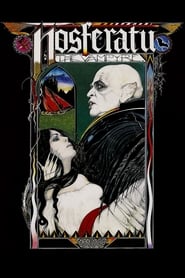
Nosferatu: Phantom der Nacht (1979)
Release Nosferatu: Phantom der Nacht Blu-ray (Studiocanal/Arthaus, 2013)
Straub and Herzog treat Nosferatu as a deliberate variation on Murnau rather than a conventional remake. Their conversation moves from the Guanajuato mummies and a carefully secured Biedermeier world into Delft architecture, candlelight informed by Georges de La Tour, maps, medieval rupture, Wagner, and landscapes that alter the viewer's sense of time. Herzog explains spontaneous beach photography, Kinski's four-hour makeup ritual and commanding physical presence, practical shadow effects, a 50-day shoot, a tiny crew, and the formidable logistics of 11,000 rats. Throughout, craft and biography converge in a theory of cinema built on orientation, emotional images, productive accidents, and moments of visual magic that cannot be fully explained.
- Duration
- 1h 46m
- Talk coverage
- 86%
- Words
- 11,556
- Speakers
- 2
Commentary density
Highlights
Topics
People mentioned
The film
- Director
- Werner Herzog
- Cinematographer
- Jörg Schmidt-Reitwein
- Writer
- Werner Herzog
- Editor
- Beate Mainka-Jellinghaus
- Runtime
- 107 min
- Also on
- OneSheet ↗
- External
- IMDb ↗ TMDB ↗ Find on Amazon ↗
Transcript
11,556 words · 44 flagged as film dialogue
My name is Laurens Straub. I'm sitting here with Werner Herzog, writer, director and producer of the movie "Nosferatu" that you are currently watching. And we now want to talk about that movie. Werner Herzog and I have known each other for about 20 years and have worked together on many different projects. What do we see here? These are actual mummies in the Mexican city of Guanajuato. You have to realize that Guanajuato is located in a gorge. Because of that the cemetery was very narrow and there was no space. So they dug up the bodies every eight years or so, and because of different climatic conditions and the soil, they mummified without human preparation. They leaned them against the walls on both sides in a long underground hall and a hallway. I saw them there many, many years ago in the early 1960s. The story behind this is that I was in the U. S. on a scholarship but I resigned from it a few days in and gave up my legal status in the US because I had to earn some money. Out of desperation I went to Mexico because otherwise they would have returned me to Germany. I went to Central Mexico and Guanajuato and lived there for a while.
I did all kinds of crazy things. For example, at rodeos, the so-called charreadas, I rode on wild bulls. Like a complete idiot because I don't even know how to ride a horse, but with the money I could live one week at a time. And there I saw these mummies. Are they similar to the ones at the volcano Vesuvius and formed from lava? No, those are real dried human beings. They barely weigh anything. They were in display cases so we had to take them out and carry them somewhere else. They weigh very little... 10, 12 pounds maybe. Is this something like a culture of death? No, it's completely normal. Isabelle Adjani. She is great at acting scared. That was a real and very large bat we brought in for this. The bat you saw earlier I could not shoot myself. The footage came out of a science documentary because bat's flapping motions are extremely fast, and this was shot with 500 or 800 frames per second. The bats had to be trained with food for that because it took very strong lighting, and normally they would not move under those conditions and not leave their hideout. Here we see Delft. In the Netherlands. That's my city.
And I know when Jörg Schmidt-Reitwein teaches students cinematography he first introduces them to Flemish and Dutch painters. Why was Delft chosen as an alternative to Wismar where Murnau shot? Yes, but Wismar was not Murnau's location. I believe that was Lübeck. There is one single shot later in the movie where you see a few buildings that Murnau actually used and that are still standing. I used those as well. We chose Delft because the continuity of the architecture was uninterrupted and we only had to make very few changes in order to shoot there. We took down some antennas and moved a few cars. Other than that it was very easy to shoot there. The concept of "Nosferatu" was definitely to do a variation on Murnau's movie, not a remake in the classical sense. A Biedermeier image like this, for example, is unthinkable in a Murnau film. Moreover, this is in color and the movie's character is completely different. We had to show a very secure bourgeois world. We deliberately planned this, especially the furniture. That was done very thoughtfully by Henning von Gierke who is a painter by trade. With the furniture and the lighting, you can tell that a painter was involved. It reminds me of "Kaspar Hauser" which was done by Henning as well.
What era are we in here? That is the Biedermeier era as you can see clearly by the costumes. We researched how to best do the building arrangement and the urban landscapes. Schmidt-Reitwein and I wracked our brains over that. I didn't simply want to recreate paintings. That was never planned. With one exception because we knew we had to work a lot in darkness with nothing but candlelight. Therefore, we studied the painter de La Tour and thought about how to do it if we only had one or a few candles. How do we light that? And Schmidt-Reitwein is exceptionally good at working with light and darkness. This is Roland Topor. - Yes. The famous illustrator, poet, and crazy man. Unfortunately he is already dead, I believe. Yes. - How did you find Roland? I coincidentally saw him in debate on French television. And he laughs in such a mad way. He laughs after every sentence he says. But in such a desperate and strange way that it impressed me deeply. Afterwards I contacted him I told him I was going to shoot a vampire movie and asked if he would play Renfield. Roland Topor immediately agreed. Unfortunately his voice is dubbed in some versions. And it is impossible to fully recreate his laughter.
It was his strangest characteristic. What I love about this... I recently saw an exhibition with English surrealistic works from the 19th century. It reminds me of an old office, the cloth, and this blue. It was very carefully lit, and the costumes had to match. Bruno Ganz. And also the faces we chose. Those are not faces that fit into the 20th century. You have to carefully select actors who match. So Bruno Ganz is a great fit for this. The beautiful paper. - Yes. That was so much work, and it was prepared very, very thoughtfully. A beautiful country. Here I see a recurring theme of yours... maps. I already know that from "Aguirre" and other movies. In "Fitzcarraldo" geography is a crucial dramaturgic element. I'm a map fanatic. Oddly, I'm pretty good at determining locations ahead of time, too, because I understand maps. I know which formations you should find in a certain area. I was rarely wrong. It is always about uncharted territory, the Dorado, or doom. Yes, at home I don't have pictures on the wall. A few photographs every now and then, but generally, I can't stand my walls being covered in pictures. If there is anything on my walls of my home it's maps.
Oh no. - You will be in danger.
This was your first film in English, the first with big stars and a big budget, correct? Well, not really. "Aguirre" is also a big movie with a big star and great effort. But I have to say, we shot "Aguirre" for about 700,000 deutschmark... $360,000. What matters is what you manage to get on screen with the resources you have. To come back to paintings, I like this vase. Yes. Okay. This reminds me of a painting by Seurat. I think the still life-like and emotional atmosphere is phenomenal. But be careful, I always want to show inner landscapes. This was done very quickly, by the way. On that day we happened to have some time and drove to the beach. It was freezing cold, windy. There was foam. We set up the camera in three minutes and sent the two actors, Bruno Ganz and Isabelle Adjani, into the image. We only told them that the music would most likely be slow and solemn. We already had received ideas for the music from Florian Fricke from Popol Vuh. These two, three shots here we did in 15 minutes. We never thought about paintings. It was born out of the situation... - Spontaneously. ... that we found there. Bruno Ganz has tears on his cheek because it was freezing cold.
Lotte Eisner came to visit for a few days. We had to wrap her in 20 blankets because it was so cold. I was so proud that she could be there. She was very important for me and maybe for the new German film in general because she bridged the gap to the expressionistic movies back then that she knew very well. She also knew all the representatives of that time. She was friends with Fritz Lang, Murnau, Pabst. She knew them all. For us she was like a bridge to the generation of our grandfathers. We were a generation of orphans who did not have the generation of our fathers. Here I see your wife. Yes, Martje. Martje Herzog on the left. Essentially everyone who was there is in the movie at some point. Later you see the executive producer, the costume designer, the sound technician, and the gaffer. It was also a matter of how quickly can you get something done with very little money. This is the farewell. Bruno Ganz was actually pretty good at riding horses, which was great for me. Now he travels to Transylvania. The choice of the production company... Was this a Century Fox production? No, I produced it myself. Many people believe that 20th Century Fox produced it.
But 20th Century Fox only bought an advance guarantee to the U. S. rights for very cheap. They only bought the rights for the U. S. A distribution guarantee. I believe this was... - German Romanticism. Well, you have to be careful. There is a hint of that, but I always try not to be connected with Romanticism because I myself have no real connection with that cultural epoch. Usually I refer to eras before that. The Late Middle Ages speak to me much more. They inspire me. This was shot in Eastern Slovakia. I was not allowed to shoot in Romania where I had scouted locations for months in the Carpathian Mountains. But you also have to see the context. That was when Ceausescu had just been awarded the honorary title of the new Vlad Dracula by the parliament. So he was named the new Count Dracula. That was an honorary title because the historic Count Dracul had been an important figure in the defense against the Turks. This is in the High Tatras, just 1,000 feet to the left was the Polish border. Bohemia? No, Slovakia. - Slovakia? Eastern Slovakia. This is a real group of gypsies that I had brought in from the very East of Slovakia. Among them are a few Czech actors.
The gypsies actually speak their own language. Unfortunately I don't remember what it was called. ... my food.
I still have to get to Count Dracula's castle today.
This is a scene that in a very typical way fulfills all the criteria and conditions of a genre movie. This is one of those traditional scenes. He has to go see Count Dracula, and everyone immediately freezes in fear and the maid drops the dishes.
Do you really have to go there?
I wanted to integrate certain general rules of the genre into the movie. From there you can go farther and expand. But this right here is a very typical and traditional scene for this genre. The space has this wonderful of depth in the back. And the bed in the background. The set design was by Henning von Gierke who has a spectacular sense for these things. Yes. Spectacular. Parts of this we also built ourselves. The oven and things like that. It was a former hunting lodge of party functionaries. At that point there were only lumberjacks living there. During the day you only found lumberjacks there. ... were already on the other side. Here you have this sense of foreboding and doom. I liked the gypsies so much. They were very good. Watching this reminds me of Degas' "The Execution of Emperor Maximilian" in Mexico. Yes. Careful. Not too many paintings, otherwise... That's just a sign for how interesting and good this is. This is a wonderful face. I also enjoy the way they speak. Yes, definitely. He says you should... They said the dialogue I wanted but in their language, which I believe was not Romani. They translated it themselves and did it very well.
You can see this was outdoors and at night which was always a problem for me because I'm not a night person. I had to stay awake until very late, and I've always hated night shoots. I had to force myself to stay up with gallons of coffee. This is also a recurring theme in your films... Native Americans, Mexicans, and Gypsies. Something completely foreign. But also the dignity of these people.
What a great nose this man has. He also did a really good job. Obviously none of these people had ever been in front of a camera before. Casting Bruno and Isabelle...? Because of "The Story of Adele H", Isabelle was already a big star, which wasn't true of Bruno... - No, he was a star of the theatre. ... even though he had just done "The American Friend". There were several films that had made him very well known. He wasn't a big international star, but he was already quite important for the European cinema. Did you choose the cast yourself, or was that...? Yes. I decided that myself. And Kinski as we will see. We always knew we would not make the film without Kinski. That makes sense. For Kinski... The strange thing is that even though we haven't seen him yet, you can already feel his presence. The whole film works towards that. You get closer to him. Right, that is the result of the dialogue, images, and the text. We planned how we would work towards that. In total, I believe that Kinski is in the movie for less than 17 minutes runtime. Nevertheless, he dominates it completely. ... in the graves and the undead. That is great dialogue with the undead and...
For this I read a lot of the vampire literature of the 18th and 19th century, and then used parts of it. Neither Bram Stoker nor Murnau have that. You have always been interested in liturgy and things like that, right? Maybe that's the result of a traumatizing religious period when I was younger. When I was 14, I converted to Catholicism. Texts like that, liturgies, or very ritualistic things... The ritual itself. All that resonates somewhere in the background in many of my movies. Along the street... The ritualistic and liturgy necessarily are connected with the film structure and the music. Yes. I also noticed that frequently you use references to the music of the Middle Ages... Yes. Without it being spherical. It confuses me...
Then I'll just have to walk.
It confuses me that you see yourself in connection with the Middle Ages. I see a lot of Biedermeier here. Laurens, this is not the Middle Ages. That would be mistaken. I am fascinated by the Middle Ages where everything that had been valid for centuries... Knightly life, thinking, and behavior... suddenly fell apart and new ways came about. I'm similarly fascinated with the Migration Period where 1,000 years of antiquity were lost. Afterwards, that knowledge was only preserved in monasteries. It was no longer common knowledge. - Ah, I understand. So here we have a Goethe-like person on his way to the monastery. Here you can associate pretty much anything. It has something very gloomy, and it was shot in fast motion. Here we jump... This was built in the Partnachklamm in Garmisch-Partenkirchen. You enter right behind the ski jumps. I absolutely wanted to shoot there because it is such an impressive location. This is also a theme that already appeared in "Aguirre" or with the waterfalls in "Fitzcarraldo". The interesting ritualistic element reminds me of church choirs. Beautifully done by Florian Fricke. This was a so-called choir organ. It wasn't electronic at all. It sounds as if it was half-natural and half-electronic, but it does sound idiosyncratic and weird.
It was not easy to shoot here because it is so very narrow. You can see here that there is barely enough space to let someone pass by. And again Jörg did a great job, I think. Yes. Here we jump to the High Tatras. This is a white water on one of the highest mountains of the High Tatras. These landscapes work seamlessly together. My home, Bavaria, and this landscape have something that makes them look interchangeable. Yes.
If you pay attention, you notice that the film gives this shot a lot of time. Normally you would cut away from this much sooner. Especially nowadays. Especially nowadays. But even back then it was unusual. I always thought that it had to grow out of the music and a certain type of gloominess. This is also the point where the movie changes. One could say this is the mountain pass. A very popular image. - Yes. This is at the height of the mountain pass, the Bârgau Pass. I think now we will hear Wagner. This will continue for a long time, and the way we use time is extraordinary. The passing of time is very atypical here. Our sense of time is rearticulated. This is important for the movie. It is very difficult for me to express why that is the case. But nevertheless, this is a crucial moment. This is the tipping point of the movie, and we enter a new sphere. The land of dreams and the castle. Somewhere completely different. This is one of the very long shots. A question about the historical context. When did Stoker write the novel? Shortly before the turn of the century... To the 20th century? Yes, sorry, to the 20th century.
What is also important is that in his book Bram Stoker often wrote about technical progress. Telephones, the first records... No, not records, but they used cylinders to record messages and send telegrams. He anticipated an era of communication. This is Wagner. When did Wagner write this piece? 1790? No, no, that was approximately in 1860. Yes, of course.
By the way, this was difficult to light. You can see that. Very nice.
A coach. Yes, those are typical themes of the genre. This was a hearse that was still in use. That was in Czechoslovakia. It was still in use? They used it? - Yes, it was. A coach made out of glass that took the bodies to the cemetery. This musical theme was taken from "Rheingold", correct?
The castle we see here is Pernštejn Castle in Moravia. It's a very special castle. I wasn't able to shoot in the Carpathian Mountains where there were also beautiful castles, but we had found an exceptional one. Now the enlightened collides with the unenlightened or unexplained. Or how should we interpret...? I don't think like that, on such a theoretical or abstract level. If I ever have such thoughts, they come later after having seen the movie several times... But 20 years later, we can have this conversation. Just be careful, I don't think like that. Now we will see Kinski. Don't talk so much about art movements. Kinski steps out of the darkness.
I am Count Dracula, and I welcome you to my castle. I have been expecting you. You are Jonathan Harker. Yes.
He truly is impressive. - Yes, wonderful. His deep melancholy. This is fundamentally different than Murnau where the vampire is essentially soulless. He is an insect. He also doesn't speak. Well, it is a silent movie. But even if he would have talked, he probably would have spoken without this deep suffering about his existence.
This was all designed. These were empty entrance halls. The clock on the right was built by a man who I always liked to have with me on shoots... Cornelius Siegel, who was a mathematician and a physicist by trade. He was very good with his hands. Henning von Gierke then took care of the details. But it really worked. He built it in two weeks, and it was a very good clock. I love Kinski here so much. How long did this makeup take? At least four hours every time. He was exceptionally patient with these things. Fingernails, teeth, and ears. The ears had to be molded from latex every day because they broke when they were taken off. He was amazingly disciplined. Who did the makeup? That was a Japanese lady named Reiko Kruk. She was much more than a makeup artist. She was a great artist. Kinski respected her very much. There were never any fights between them. Almost every day Kinski started some scandal or was screaming at the top of his lungs. He broke furniture. Those were daily occurrences. But with the makeup artist, there was always Japanese music playing, and for four hours Kinski was completely quiet and concentrated.
I like him very much in this scene. No one else has a stare like this one. You essentially gave the monster a soul with this, which significantly distinguishes it from Murnau. From Murnau, yes... That's what I wanted to say earlier that in Murnau's film he is a soulless insect. In mine, he can be happy. He suffers. He especially suffers because he can't die. He cannot partake in the basic human experience, love and death. He can't die, which makes him suffer horribly. All of that doesn't exist in Murnau's film.
I also like Bruno Ganz.
This only works because it was done with extreme focus and calmness. Did the audience react differently in different countries? Yes, that is always the case. The DVD we are watching was released in the U. S. three years ago, and it was a huge success. I think 300,000 were sold within a few weeks. It was a surprise that a foreign film which usually doesn't stand a chance in the U. S. was suddenly accepted by the audience, by very young people, too. That was a huge surprise for me. Now we see... Wonderful. - This is the clock. All of this is a mechanism built by Cornelius Siegel. What you hear is the original sound. Now a Grim Reaper comes out, moves the scythe, and disappears again. Well, you can't really see how he moves the scythe. On the right hangs a live bat. The movie was shown in relatively large theaters on big screens? This is a large format, correct? I have to interrupt. This is a vampire movie without blood. This is the only drop of blood in the entire movie. The vampire can't take it. Now you have to watch what Kinski does, how he approaches him. He wants to drink the blood but manages to control himself. Here comes his outburst.
And how dangerous he could become now. Only he could do that.
Absolutely outstanding. But Bruno's performance is also great here. Unbelievable. - They were very good together.
There is no one who is like Kinski, and before there was no one like him either. He also can't be parodied.
Completely unthinkable. Everything is perfect here, the structure, the furniture, the candles. The fireplace we built. The monkey columns were made by Henning von Gierke. Have you ever seen the movie in a sold out theater in Mexico? Was there a murmur when he appears? Yes, there was. - Cries of fear? No, no cries of fear, but silence, absolute silence. Just like us, we also went silent. It makes you be quiet.
It is unusual that he has fangs like a viper. You only see that in Murnau's vampire movie, and he developed that. All the others have canine teeth. Here, Bruno Ganz. Isabelle Adjani. The way she does this is also very beautiful. Wonderful. Yes, an exceptional woman. This was a huge animal. It weighed almost four pounds. A really big and unpleasant animal. A so-called megabat because normal bats are much smaller. Feeding it and having it on the set was always a problem. Again, a first rate still life. Henning von Gierke, yes. Some of these foods he even cooked himself. He always liked to cook for the crew. It also represents the wealth. Things like the monkey or the fireplace. Or the chicken. They were done relatively quickly and with very little money.
The wealth... Was that prepared long in advance? With sketches? Or was it more an intuitive process? - No, no sketches. That happened on location. When he saw the fireplace, we decided that. Really? - Yes, correct. We didn't use production sketches or plans. Or for this, I wanted... Because of this building and because it's so unusual and there were these weird doors, I decided we had to do it without any cuts. We couldn't cut. We had to follow this man and have the feeling that there is no way out. Beautiful construction. You can't build it like that on a stage because ceilings are very hard to recreate. This was even hand-held. Yes, all of that was shot with a hand-held camera.
The sound and the music are used very sparingly here. These sounds are so strange to create a certain atmosphere. Even though this is very carefully designed, you are an opponent of overly designed sets... It does look overly designed, but... No, I don't think so, but I think a normal studio production would have to work on this for weeks. No, it was a great find, and I was quite lucky. You don't find locations like this easily. For example, the hallway in the back. And the wood. The light here is beautiful, too.
When I watch a movie, I like having a sense of orientation. You have to know where the exit is. Are we upstairs? Is there a way to escape through a window?
This was done minimalistically. We only moved one single small cabinet or a table into the room. This is the room that was prepared for Jonathan.
I also like that you see a real landscape outside.
He discovers the bite mark. This, too, is a typical element of the genre.
This was a gypsy boy who could barely play the violin, but sometimes I... A well-known Herzog theme, exactly. In "Fitzcarraldo", there is a similar boy. He plays in front of the prison. The prison guard feels sorry and lets "Fitzcarraldo" go because you just can't resist something like that. You already have the theme of madness in "Signs of Life", if I'm not mistaken. Yes, that's right. There is a situation where four German soldiers are imprisoned as convalescents on a Greek... In a Venetian fort at the end of the World War. Also the sense of confinement and breaking free from it... ... play a big role. That is one of the central themes. Obviously, this was shot in fast motion. But on film with single-frame exposure over a long period of time. In your movies, what makes them go insane? Something inside of them or other occurrences? I don't think that they are really insane. They are the core of what makes us human. I believe it's more that everything around them is insane. But there is always this slight hallucinatory... That's possible, yes. With this image we were also lucky because it was so foggy and strange. We took advantage of that situation. I always had the impression of an inner landscape.
In my work, landscapes are never merely a beautiful and scenic backdrop, like in commercials or many Hollywood movies. This is different. The whole time I've wanted to ask what the importance of this movie for you is. Seeing Bruno here... For Wim "The American Friend" was something like the qualifying exam for the international film culture, to be accepted as a legitimate European filmmaker. You are talking about legitimacy or legitimization of German culture after the war. That took a long time. There was a gap of 25 or 30 years. The connection was lost. What was very important to us, which may be difficult to understand for people outside of Germany or Europe, was to rebuild a legitimate cinematic culture. Lotte Eisner was the person who reconnected us with our grandfathers, Expressionism, and these films. After finishing this movie, I felt that I had rebuilt the connection and reestablished the continuity of the German cinema. Only a few years earlier, Lotte Eisner had been on her death bed. I walked to Paris on foot in the winter to forbid her to die. And she actually did survive. She lived for another eight or nine years, and was very important for us. What we had created was still too fragile, too feeble, and too sensitive.
Lotte Eisner had experienced the entire film culture, beginning with the Lumiere brothers, Méliès, Eisenstein, Pudovkin, Kurosawa. Everybody knew and respected her. It was her who said, "Now we have a legitimate German cinema again." That helped so much and was enormously important. In contrary to the films of the 1920's and 30's, which were quite crude, this is much more delicate. It also already has a universal atmosphere, I think. Possibly, but if you watch Kinski especially in this movie I have to say that he was the last expressionistic movie actor over all.
Now he discovers the picture of Lucy. The amulet.
Here the foreshadowing, of course. Everybody knows what will happen and where he has to go next. I think... - Many people laugh at this point. What I find interesting is the connection between Mephisto/Faust that also plays some role in a strange way. Not for me. I ask myself how the kids in the U. S. saw this when it was re-released there three years ago. They laughed during this scene. They recognized the genre and the rules it follows which makes them laugh. We were so successful with this movie that we won out over the two week number one, "Armageddon". We actually made it to the number one in the U. S. charts. That never happened to me again, and to this day, I can hardly believe it. It doesn't surprise me because in contrary to the setting, this is a serious attempt at authenticity... It is based on culture. Yes, and it is also more full of life, if you like, than many things that were produced during that time. This movie was made in 1978. At that point, the German and the European cinema in general was still reminiscent of 1968. They wanted to make message movies. I stuck out like a sore thumb. This was different. Surprisingly, in hindsight, that's recognized today.
Did the kids get this Bresson-like pace? I hardly know Bresson. So I don't know whether this is a Bresson-like pace. I believe in this specific movie, it results from a necessary type of storytelling. D'accord, yes.
He takes his time. He does some thinking. This scene I also like very much. This odd hallway in Pernštejn Castle. It is very unusual to see black on black in the darkness like this. The networks would not accept something like that anymore. The movie lives through the interaction of light and darkness. For this, the scene by Murnau was recreated identically. For example, the way the vampire holds his hands was copied almost exactly. There are some very clear references to Murnau where I quote him directly. And that is the case here? I don't remember exactly. I would not call this a remake but an homage to Murnau. For me he was much more important than Fritz Lang.
And now the hands. I told Kinski back then that his hands had to become spiders when he reaches for her, and he does it wonderfully. Lucy is sleepwalking. Also beautifully lit. Wonderful. Beautiful. The angel theme.
This was all shot at a canal in Delft. It was not that easy for the actor, Carsten Bodinus, I believe, to carry an unconscious woman. It was very difficult for him. Here is one of my favorite actors, Walter Ladengast. A great man. This is a little bit of cinematic Expressionism. A little...
And now you have to pay attention to Kinski's fingers and what he does.
It's fantastic. I think we only did one single take. He understood immediately what I meant. A sudden fever attack. I also love Ladengast's voice. It's also important in "The Enigma of Kaspar Hauser", an earlier film.
Call for me right away if it becomes necessary. I don't think it's anything serious.
In "Kaspar Hauser" he plays a scientist, right? Yes. He plays a teacher who takes Kaspar in. He takes care of him and teaches him language and writing.
What I... - But... Go ahead. What I enjoy so much about Bruno Ganz is that he can be very physical. He considers himself a theatre actor and speech his strength. But when I see him here, I appreciate him for the way he moves and his physical energy. This was also done without cuts to give the audience a better sense of the lack of orientation and hopelessness. If this was cut, you would know that it's not real, that something is not completely right.
And now he discovers the vampire.
Another one of these classical genre scenes. Very nice, yes, wonderful.
The vampire leaves with the coffins at night. What we just saw was one of the expressionistic shots. The tilted angle and the grey color. - Yes.
Yes, this is the beginning of the unfortunate chain of events. Now there is no going back.
Oh, Lord, he is on his way to Wismar. Lucy! Lucy is in danger!
Bruno Ganz makes a rope out of sheets and lowers himself on it from a very high window. Usually that is only done by stuntmen, but he insisted on doing it himself. Very, very courageous. I'm still impressed by that today. You will see that in a second. Here. That was very high up, and the rope ended 13 to 16 feet above the ground. And now he lets go. Oh my God. - Now. Remarkable. Again the gypsy boy playing the violin, who I love. He does this in such an odd way. He gives this a very unique and surreal atmosphere.
This is also a recurring theme in your movies. The chorale, too. A raft on a river. "Aguirre" and a chorale like this one. I like things like that. I have no idea why it fascinates me so much. People on the road, on a raft... It has something archaic. You are at the mercy of the speed and the flow of the river. Philosophical in a very strange way. Could you...? I keep noticing that I often think that the movie is very close to a silent movie. Interesting is also that the dialogue sometimes sounds like intertitles. Not necessarily, but the observation is weird. I have never heard that before. By the way, on the left here Jacques Dufilho, a great French actor. To the right, Docteur Claude Chiarini, a very close friend of mine. He also took the still photographs. He fought in the Algerian War and switched sides, and he was in the Foreign Legion. Later he became a doctor and worked in an insane asylum. He was an extra for us. That is me, by the way, because none of the extras dared to climb into the box with the rats.
In my movies you can often see my hand that holds a burning rocket as a sign of life, or a foot that is being bit. Stuff like that is always me. Here a ship off the Dutch coast. Later, there was a scene where the mate jumps overboard, which was cut. He didn't dare to jump in the water. I told him I would jump five seconds after him. It was so cold and suddenly a wind gust forced the ship away. For a while we were alone in the water and he started to panic. It was difficult. Yes, sometimes you do weird things. We also built that. Henning von Gierke. Again, an inner landscape. You can't overlook the death theme. You can't overlook it, but it is part of a genre film.
The patient that was brought in yesterday is having an episode. Which one? The one that bit the cow.
- Yes, I...
We put him in isolation. - I'll come with you.
What I see here is the enlightenment or the desire for enlightenment in conflict with what can't be overcome. Like in "Kaspar Hauser".
He refuses to eat our food. He only eats flies. Blood is life. Give it to me. Let go. Help me!
Roland Topor was really nice and good. I always liked him very much. Where was the movie shown at the time? Relatively soon in Germany and in France. It was a French co-production with Gaumont, which worked out quite well. That was a big surprise because, at the time, it was very unusual. The trend was going somewhere entirely different. This is something one would perceive as modern today. Yes, also making a tableau like this. Having them right in front of the camera and almost looking directly at it. And it was a success with the audience in Paris. Can you say that? Yes, it also did well in Italy.
Again no letter. But don't worry, Lucy. The mail service in Transylvania is terrible.
Even the mailman says that.
Something must have happened to Jonathan. Have faith, Lucy. The Lord hears our prayers. In our hour of need, the Lord is so far away.
Such dialogue is very unusual in a vampire movie.
That was shot in Eastern Slovakia. A location that was almost unchanged.
I have to get to Wismar before the black coffins...
But I'm sure you can wait for the doctor, young man... Bruno Ganz also plays the sick or feverish man very well. Great. - He is great at it. You keep insisting that this is a vampire movie. I think that you do add a lot that it would not have if it was a traditional scary movie. Yes, of course, that might also be what makes the film stand on its own. If you try to imitate or outdo Murnau, you can only lose. As far as I'm concerned, Murnau's "Nosferatu" is unsurpassed in the history of German cinema. Nothing compares to him, not even close. Doing this movie and going head-to-head with his was quite audacious. But I wasn't afraid of that. I felt I had to take that leap and make a connection. ... one after another, four sailors and one... How would you describe the difference? I have the impression that this is significantly more grounded than the phantom-like version. It is difficult for me to compare them because I'm too involved. Even now, 20 years later? - Yes, still. Even though it's so much later and 25 years have passed. ... 12 knots. Distancing myself is difficult for me. Even after all this time, I don't understand a lot that worked out back then.
How we did some things, and why we did it a certain way remains inexplicable. The film was shot pretty quickly. ... the mandate to travel to Transylvania. I have not received any news for weeks, and I'm very worried because of that. I want to travel there myself.
Wait, the master is coming. Who is coming?
What I associate with this is being a medium for forces that exist, and there is only one person who can articulate it because... Sure, that touches on the question what to do when you make a movie. Which position do you assume? I still think it's remarkable that I can have this job. I was neither born with it nor can I explain where the desire for it comes from. And in actuality, this is not even a profession, working with a man like Roland Topor... Neither before nor after would I have ever dreamed this could happen. So you believe that chance played a major part? Trying to repeat something like this now would be impossible? Yes, it would be unthinkable. This film is a product of its time. It was a time in my life when I worked intensively and a lot with Kinski. Don't forget that five days after we finished this, I continued shooting. I shot "Woyzeck." Here again the beautiful images of the bats in extreme slow motion. This is the moment when the vampire appears and the mate jumped in the water, and we both almost drowned.
This is pretty close to Murnau. Correct. I was just going to say the same. This is very, very... It's almost a direct quote. This is back in the Netherlands.
I like that the windmills immediately make the connection. That you weren't afraid of clichés but that you used them perfectly. Those are very strange and calm images that I love. A shipped passed in front of the window. You can see the reflection in the window.
Working with ships is always difficult because you can never maneuver them exactly how you want to. Continuity with the water at the horizon is almost impossible. I suffered because of that in "Fitzcarraldo" where we had a large steamboat on the Amazon. It's always tricky. This was obviously shot from a helicopter.
Seeing Adjani, I find it interesting... and in the next film is Claudia Cardinale... In your movies before the women didn't play that much of a role. That is an interesting development. Women are not really central characters in my work. Perhaps simply because the main characters are always very close me. Even if they have characteristics that I don't have, they nevertheless always contain a part of me, put carefully. That's probably the reason why most central characters in my movies are male. It was difficult to shoot because a ship of that size is very cumbersome. With the Titanic, they discovered the iceberg about three miles before the impact. But the weight made turning the ship impossible. ... is here.
This almost resembles expressionistic movies.
Here the ship lands with the dead captain. How was this movie interpreted back then? Or what did the press write? The press reacted well overall. For movies like "Aguirre" and "Kaspar Hauser", they beat me up badly. But those always had elements... Or "Even Dwarfs Started Small". That had to do with the trend at the time. "This is not a movie that postulates world revolution, so he has to be a fascist." That was the perception back then. Meanwhile this has been completely forgotten. The guy on the left who unties him is Uli Bergfelder. He often worked with Henning von Gierke, and he was the set designer in my last movies. Everybody who was part of the crew can be seen in the movie at some point. It was a relatively small crew, too. Don't forget that "Aguirre" was shot with eight people. That was the entire crew. And films like this one we shot with 16 people behind the camera or so. ...
rats everywhere, but we have the logbook.
Only 16 people? Yes, "Fitzcarraldo" was shot with 16 people. Imagine. Or movies like "Even Dwarfs Started Small" were always less than 10 people. But they require enormous logistics with the costumes and makeup... Right. Which we will see when the rats are in action. We had 11,000 rats from Hungary that had to cross all the borders that still existed in Europe. That was an awful ordeal. This theme I also know quite well from Bruges and Geneva when the scientists there... With the early anatomical studies and the human... I love this. The knowledge about science and Enlightenment in this movie and the perplexity at the phenomenon that is the human being, I do think that is a typical theme for you. Yes, and for vampire movies, too. There is always the dichotomy of Enlightenment and the inexplicable and sinister that resides somewhere within us. The genre has played with that since it first appeared in the literature. Since "Frankenstein." Especially since the English Romanticism, Bram Stoker, Murnau, and whoever else. "...
14 knots." " It is getting scarier and scarier on board." "Only the First Mate and I are still alive." "There is something on board." "There are rats everywhere. Could it be the plague?" Please, calmly return to your homes. Lock your windows and doors.
All of this was also shot in Delft. You have to know that this was tricky in Delft at that time. They had had a problem with rats for years and had finally gotten it under control. With difficulty, we obtained a permit to release 11,000 rats. Where you see the water were nets. All manholes, entrances, everything was hermetically sealed. In the back of the frame near a small alley was a wooden wall which was carried out when the rats came to close. Nevertheless, we got into trouble with the population, even though we didn't lose a single rat in Delft. Really? - Yes. Unfortunately, that complicated our lives for a while. This is Lübeck. Murnau also shot a scene right in front of these buildings. Oh, this is Lübeck? - That is Lübeck. I was confused because the structure does not match Delft. Granaries in Lübeck, I believe. They still stand today. In Murnau's film you see some bushes. To the left or the right you see the large old trees they've become.
Love and redemption are very Christian themes. Yes. The music by Wagner is a great match for that. But sometimes it is called into question whether his themes are in fact Christian. In a way, Yes- In "Tannhäuser", for example, is almost a Catholic opera. You have to see Wagner differently. He took a completely different path with his themes. Before this movie, had you already worked with Wagner or did that not happen until later? That came much later. I didn't discover Wagner's music until very late, just before I started shooting this movie. I never really knew who Wagner was and what he did.
The way light and shadows are used here. Those trees you see here were the little bushes in Murnau's film. Those are the historical... - Those are the real ones. Yes. Is that true? - Yes. Yes. He shot the movie in 1922 or 1924. I'm not sure anymore. This is one of the really weird shots. The shot is only so strong because of the location. This was a road through a dam near Gouda in Holland. Do I pronounce that correctly? Gouda. - Gouda. You are Dutch, so you'll correct me. Somehow this is a very strange and a beautiful shot. To this day I have no idea how I did this. But I think it has something magical. Movies have to have that, too. If you don't see the magic of images, movies can't work. In that case, you don't even have to take up this line of work. Considering this movie in the context of the previous two and the movies after this, I do have the impression that there is a conclusiveness to the storyline and a courage to show lushness and things like that. In the earlier movies, you were still more cautious in that regard. Not really, because a movie like... With the exception of "Aguirre", of course.
Stuff like "Kaspar Hauser" is full of life, as I always say. That might be an exaggeration, but they have something that goes beyond intellectuality. Those are movies that are made for their emotional value. Lucy! Bruno, again, very good. Jonathan! Now a moment of his that I like very much. He says, "
Who is this woman?"
He doesn't recognize her.
Who is this woman?
The look on his face.
I like those times when ladies still fainted and gentlemen met at dawn for a duel. This is a reference to such moments that we only know from books, of course.
I suspect that he is suffering from brain fever.
The sun is hurting me.
He can't stand the light because he is slowly turning into a vampire, too.
Dr. Van Helsing, do you think it is possible that we have all lost our minds? And that one day we will all wake up in strait jackets?
That is a key question for him. And I do love Ladengast. He was such a wonderful man. Unfortunately, he died shortly after this. I also like how Kinski appears here. His presence... What did he call that with the camera? This is not a real... I called it the "Kinski screw", but, in actuality, it's more that he steps into the frame in profile. He developed something where he turns himself into the frame from behind the camera like a screw. This is not done in a clean way, but he still does it in a very impressive manner. These are themes that we know from Murnau. A shadow that is much larger than the character itself and more important.
Murnau's film was often interpreted as a foreshadowing of the Nazi regime. Later other films were interpreted in the same way such as "The Cabinet of Dr. Caligari". I am not so sure about that. But I believe that the cinema of that era foreshadowed a vision of something very sinister coming. This is my favorite scene between Isabelle Adjani and Klaus Kinski. The way this was done was exceptionally simple. The vampire coming in through the door doesn't have a reflection in the mirror. You know that vampires don't have reflections but only shadows. This is our special effects guy, Cornelius Siegel, who also built the clock. He had vampire ears and cast a shadow for me. And now there is the step. Kinski stood right next to the camera on the right, outside of the frame. Now the shadow has to disappear. There, and now we see his hand. The way it was done is so simple, it's hard to believe. Kinski is so amazing. I can only thank him on my knees. Do you sometimes see a downside to all this luck? Is it both? Or do you really perceive it as nothing but luck? When I see this... - This is... No doubt.
It doesn't bother me at all that I had to go through awful stuff with him. His screaming and yelling, the scandals, his rampaging, when he destroyed locations... I'm not talking about that as much as the fact that he is dead now. You miss him, right? Not really, because after "Cobra Verde", I knew I would no longer work with him. Yes, of course. That was... - It was clear. That was approximately three years before he died. So I can't say that I miss him. But seeing him in character like this, I do think about what an important part of my life he was and the extraordinary experiences we had together. And in that regard I do miss him. There is an empty space. ...
nothing in the world. Not even God Himself can touch that. Even though Jonathan does not recognize me anymore...
The dialogue is completely different than Murnau would have done it.
Come to me and be my ally. That would save your husband and me.
The way he suffers because he cannot experience love you would not see in a Murnau movie.
The savior can only reside within us. And rest assured...
This is a special moment with Kinski. She now shows him the cross... Yes, this is a wonderful scene. ... that she wears around her neck.
He has learned how to use the camera. He knows how to use his tools. Sometimes I wonder who expresses whom. Do you express Kinski or does Kinski express you? I do have the impression that it is almost symbiotic, complex, and sometimes unsteady. We complemented each other. Some things he did, I could have somehow done, too. "Fitzcarraldo", after everything went down the drain and we lost our first cast because the lead actor, Jason Robards, fell severely ill. I had to ask myself who would play the part. I saw two options. Either Kinski does it, but if he doesn't want to or can't do it because he is booked for two years, then I can only do it myself. You actually considered...? I would have also done it. But I thank God from the bottom of my heart that he came in and did it. We often almost switched person, part, and existence. Together we were a volatile combination. We were always a critical mass. With Kinski there were constantly screaming tantrums and other crazy stuff. But I was able to compensate for that, to discipline him, and make him productive for the camera. "
Nosferatu, the undead." "He drinks the blood of his victims..." "... and turns them into phantoms of the night."
This is also a beautiful piece of work by Henning and Jörg. The green and the blue. - Yes. And the costumes. It is always the combination of many different things. For example, the type of flower bouquet on the table hit the mark exactly. Topor always reminds me a little of Lorre. Yes, if you put it like that, he also reminds me of him. But he was far more eccentric and convoluted. "...
an unnatural creature. He has to obey laws of nature. The sign of the cross compels him."
Yes, this is again completely typical for the genre. "
The sacrament can make it impossible for him..." "... to return to his lair." " If he misses the cock crow because of a woman of pure heart," "... daylight will kill him."
The idea of a woman with a pure heart has played a role in literature for centuries. Yes, his is also such a beautiful scene. Yes, it's wonderful. Almost tableau-like. The way how he pushes him away.
What does my master command?
You can't copy that. I said earlier... - That's the expressionistic... There can also not be any eye contact between them. Almost like Munch. Great. ...
the Black Death are with you.
People also laugh during this scene. They don't laugh at the movie, but they recognize that inside of us there is something stylized and weird. It's difficult to pinpoint what exactly that is.
This is the main square in Delft. A procession. Yes, a procession of coffins.
We had to shut down the entire city center for this. We shot all of this with the original sound.
The plague. The plague! What are you doing here? I have to go to the city council!
In how many days did you shoot this film? I'm not sure, but I know it was less than 50. We also spent so much time with traveling. After all we shot in Bavaria, Slovakia, the High Tatras, Moravia, the Netherlands, the coast of Holland, and on ships. Such location changes always cost a lot of time. An unbelievable accomplishment. This was also nicely done with a hand-held camera.
My dear, these are figments of your imagination. But Dr. Van Helsing, you read Jonathan's diary.
I love this dialogue.
You saw it with your own eyes. Every day there are problems with the rats and the plague. And the book about the vampires...
In order not to lose orientation in this room, we again couldn't cut. Instead, the camera follows her constantly. She forces the camera to do a 360 pan shot. You already had those circular motions earlier in "Signs of Life". For me, personally, as an audience member, it's important to have a sense of orientation. If I lose it because they cut too much and I don't know where I am, I'm not happy- Then I really don't enjoy watching a movie. I apologize for coming back to that, but shooting this in 50 days is an unbelievable accomplishment. I can't even imagine how that could be done nowadays. It was very physically demanding, and we had very good people organizing everything who were able to just push it through. Walter Saxer, for example, who also worked on "Aguirre". On "Even Dwarfs Started Small" he worked with me for the first time. He also worked on "Fitzcarraldo" and many more. He is someone who tears down walls. He would come to me and tell me I had to shoot faster because it was getting too expensive. "And we can't do this or that." He is someone who pushes you.
Then I will vanquish the monster alone.
Ladengast was so very nice. He does this beautifully. Very simple tools, but a great result.
Nurse, I need my medicine.
Bruno Ganz is really great as well. All of that came together wonderfully. We had an excellent team. I always say that a director is barely needed if you have a good script and solid cast. That makes you largely redundant. But there were precise instructions for this, and it was stylized in detail as well. Naturally, everyone had to follow these instructions. I believe that strength plays a role, too. Someone has the strength and that person is the engine for all those wonderful energies. They would not have that without you. I think they have it, but it has to be channeled productively for the screen. Isabelle Adjani is a somewhat insecure person and Kinski a madman who is almost uncontrollable. You can see here that we made him taller. He is one or two inches taller. We gave him very high shoes so he would look more incorporeal. If you watch it on the big screen and you look closely, you can see that his shoes look weird. And here are the rats again. I always say about this topic that directing is like being a tour guide. Not for me, but I understand what you mean and what you want to say.
It is the coordination of individual parts that have to come together at a specific point. And here the rats. Most of the time it was very cold. They just clung together to keep warm. I had to go over and separate them with my hands. On the day we shot this, I was bit 30 times or so. I was constantly being bit by rats. Everybody was kind of afraid of them. I remember we imported the rats to Holland and I had to go to the customs. They opened the trailer of the truck with 6,000 rats in it. The first customs officer passed out right way. For a whole hour we tried to bring him back to life.
This is in Lübeck again? Did I see that right? No, I think... Oh, no, you are right, this was shot in Lübeck. Isabelle Adjani was not afraid of the rats at all. I think she actually...
We debated for a long time whether she should do that or not. She said, "Of course I'll do it. Hopefully they won't bite me." She had seen that I had to suffer. She is sprinkling crushed sacrament around so the vampire can't return to his lair.
The music and the sound that you hear were also done with minimal means. This is my Late Middle Ages scene when the plague reigned. The people who survived celebrated, sung, and danced together.
What is it with you and the Middle Ages? We have neglected that topic a little bit. Oh, well, it's just a period in history that captivates me. As I mention frequently, it fascinates me much more than the 1920s, for example, or Expressionism, or Romanticism. Those eras don't really speak to me. This is a very unusual musical piece. It came from the Georgian... Back then, it was the Georgian Soviet Republic. A choir I found at some point. I thought it had to fit with the image even though it's not music people dance to. The man kneeling here, the monk is a U. S. author, Jonathan Cott. I quickly stuck him in a cowl, and he had to pray and ponder.
Strange how music works that goes completely against the rhythm. On the square we did play music, too, so the people would move with the rhythm.
I think, in a second, we will see Henning von Gierke.
They really did play instruments, violins, horns... Was there ever a crisis during this shoot where you thought you couldn't continue? No, something like that didn't happen. No. We worked on this with great focus. There were problems, but crises... This is Henning von Gierke who is dancing with the buck. He is a painter by training. And now we will see part of the crew. Let's see. We have to wait and see who is sitting at the table.
There were so many rats and the question how to control them was always problematic. How to position them correctly. This is Anja Schmidt-Zäringer who worked on production. Walter Saxer, who had grand battles with Kinski. Ann Poppel, costumes. Michael Edols, an Australian director who came to visit. Gisela Storch, who worked on the costumes. Martin Gerbl, gaffer. And here, Isabelle.
Do you want to drink with us?
I actually like showing the people who were so important for the film. This is almost the whole team. Only the cinematographer and the sound technicians are missing. Other than that, that's pretty much it. Again, a still life. - Yes. Even though this time it is in motion. The definitive ironic interpretation of a still life. Well, I don't get irony. I have no sense for it. In that regard, I'm horribly... But you do have a sense of humor because... Yes, but that is different. I understand jokes and laugh about them, but irony takes everything of one level and relates it to something that is not directly connected. My perspective is too direct, almost verbatim. Florian Fricke called me one day. Without changing his voice, he said he was the minister of the interior. Unfortunately, there was a mistake at the ministry and I should not celebrate because I did not win the German Film Award after all. I said, "What is wrong in your ministry?" "You are responsible for the borders." "The document was signed by three different people." After a lengthy discussion he started laughing out loud. That was the moment when I finally realized that was Florian Fricke, a man who, at that time, I talked to daily. I'm terrible.
This is Martje, my wife back then. She took a beta blocker to look completely lifeless. ...
and without superstition.
Enough. I have had enough of your science. I know now what I have to do.
The speed of her movements was also planned and timed exactly and precisely. Usually, you would not do it like this in a movie. But we stylized it to a high degree and we stuck with that stylization throughout. It comes from the idea of the ritual and the ritualized and it is choreographic in nature. To a large degree, it is what the movie thrives on. That's why the movie touches your heart and your senses and doesn't kill you with cuts. The dynamic manner of how you tell the story is purely choreographic, and in this case, it follows body and soul. But it is very difficult to shoot a movie that way... Murnau again. ... because it always has to live off the substance. It must not have anything weak. It would not work. This is a quote of Murnau. I believe it's even the same window that he used back then. I think so. We would have to compare it. I have to say that I haven't seen Murnau's film in a long time. But I'm pretty sure that it is very close to his version.
This is the only real love scene I ever shot.
The timing is also extraordinary.
Vampire movies and the vampire genre always have an erotic component. There is something deep within us that... Right now I am also silent out of respect for their performances. I find it interesting how fundamentally, forcefully, and consistently you oppose psychoanalytic concepts. Yes, that's correct. I have nothing to do with that because I believe psychoanalysis is one of the big misapprehensions and mistakes of our time. Similarly to the burning of witches back in the day. Or the way bloodletting was a big misapprehension of medicine. The reason is that human beings should not be dissected and analyzed to the extreme. It is our dark corners and unexplained aspects, the ones that remain unexplained. Look at this. Wonderful. - Here, yes. It is in this deep darkness that can never be explained and never has to be explained that we as human beings can live an existence. How can you stand living in the United States then? That's simple. I love the U. S. for the atmosphere of courage and progress and because new projects are tackled. Aside from that, my relationship to it is ambivalent as it is for anyone who takes a closer look, and it has to be this way. But overall, I like living there and I'm okay with it.
Yes, I love these bats. It's beautiful. Now the theme that the cock will crow. Daylight will hit him and he will die. He wants to leave. He resembles a satiated infant who gives in. I think she holds him back in a second.
Yes, she senses that he wants to leave.
The handling of time here is typical for this movie.
And now dawn.
This is one of my great moments with Kinski.
The light coming in from outside was done so simply. A single spotlight that we slowly turned up. The way he holds his hand is so eerie. When the ray of light touches him, he is blinded and loses his eyesight. Only the white of his eyes is left. Normally you sigh outward, but he sighs inward. During the fit that's coming up... Later I found a footprint on the wall at the height of my head. There is the foot. And the way he dies. Kinski had outstanding performances as a dying man in various movies, but this is truly unparalleled.
And here is Dr. Van Helsing. The ending is not exactly optimistic. There is no redemption as we will see in a minute. Yes, everything gets so much worse because her husband Jonathan now becomes a vampire. Any doubts about love and redemption, monsieur?
I have to vanquish this monster for good!
That does not exist in this movie. There are vampire movies where the idea of redemption works, but I don't have that.
Stop! Don't do that.
And now the stake that has to be driven into the heart.
He is trapped because of the sacrament dust.
No. Help!
This is Clemens Scheitz, who I love so much.
Wait, he murdered the count.
He plays one of the main parts in "Kaspar Hauser". Oh, there is blood here, too. So it's not only one drop of blood. I was wrong. I take that back. There is one more scene with blood. Arrest him. Mr. Scheitz is supposed to arrest him now.
Call the police. But all policemen are dead. Then take him to jail. The prison guards are dead, too. Then arrest him anyway. How am I supposed to do that? I have no weapons.
Scheitz was definitely one of my favorite actors. Yes, for me, too. The great scene in "Stroszek" with the bank robbery. In "Kaspar Hauser" he was fantastic, too. Later he played Frederick the Great on stage. Seriously? - Yes. He became very successful.
Why are you still standing here? Go get a broom. Don't you see all the dust?
This is a beautiful moment with Bruno Ganz.
He is still wearing a cross around his neck.
Seal the bedroom for the investigation. And bring me my horse. I have so much to do. Right away.
Now he has also turned into a vampire. I got lucky with this because there was a storm at the Dutch coast. He rides the horse himself. The music is very special. It's from Gounod's St. Cecilia Mass. A few years earlier, my sister gave me this piece of music as a gift. I was so impressed by it that I knew I would use it in a movie. We shot these clouds separately and turned them upside down. I understand. I guess it is a special effect, but, really, it was simply copied twice. We copied it in and then turned clouds upside down that were shot in fast motion. Do you have any closing words? What consequences did this movie have for you, or what do you think about it today? It made me more secure for everything that came afterwards. Before, everything was a careful experiment. I always knew I was probably doing it right, but since this film, I know where I stand. I know where I come from. I know where I am, and I know where I'm going. And where you can go. - Yes. And that is so wonderful about this movie. For me, personally. If others can understand, that is a different issue.
Keep exploring
Other tracks with shared craft concerns
-
8 shared topics
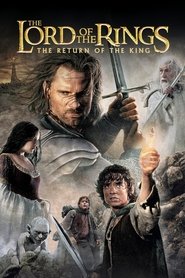
The Lord of the Rings The Return of the King (2003)
Peter Jackson, Fran Walsh, Philippa Boyens
-
8 shared topics
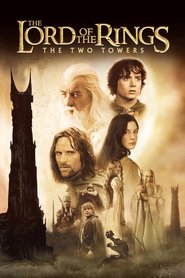
The Lord of the Rings The Two Towers (2002)
Peter Jackson, Fran Walsh, Philippa Boyens
-
8 shared topics
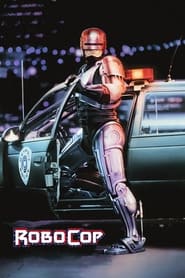
RoboCop (1987)
Paul Verhoeven, Jon Davison, Edward Neumeier
-
8 shared topics
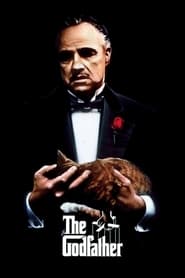
The Godfather (1972)
Francis Ford Coppola
-
8 shared topics
Mission Impossible Dead Reckoning Part One (2023)
Christopher McQuarrie, Eddie Hamilton
-
8 shared topics
The Lord of the Rings The Fellowship of the Ring (2001)
Peter Jackson, Fran Walsh, Philippa Boyens