director
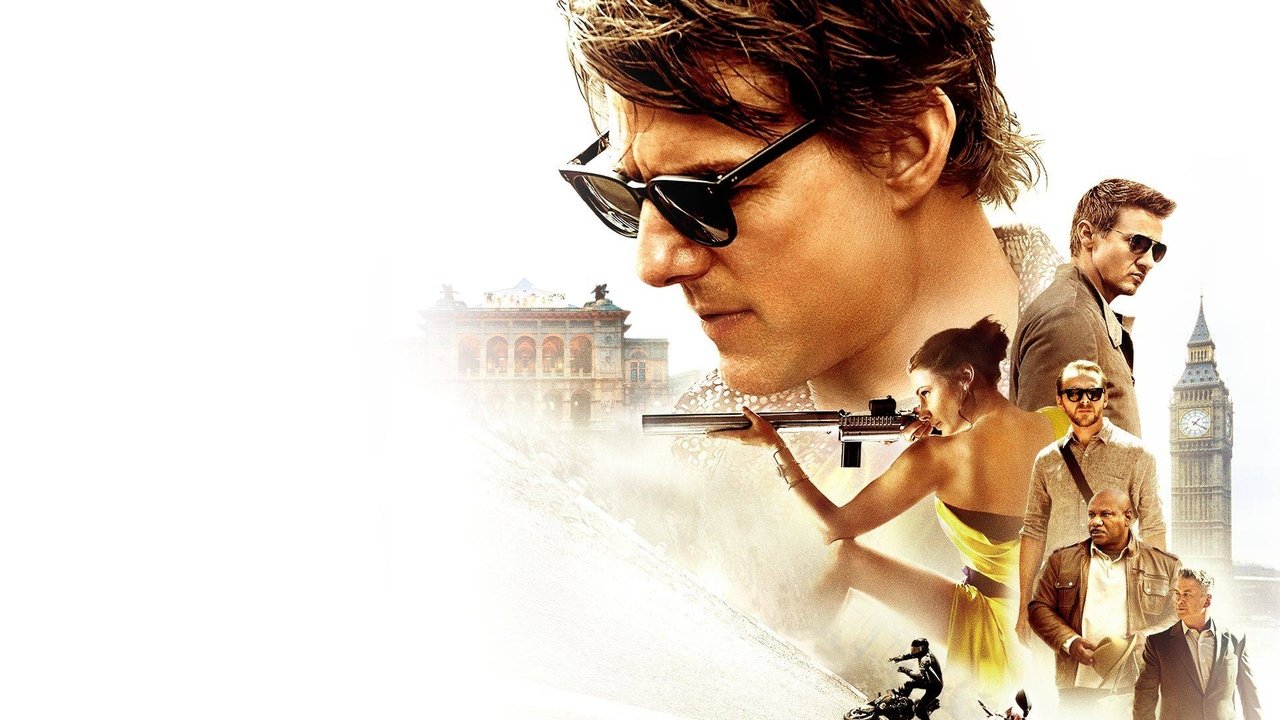
Mission: Impossible - Rogue Nation (2015)
Release Mission: Impossible - Rogue Nation Blu-ray + DVD + Digital HD (Paramount Home Media Distribution, 2015)
Tom Cruise and Christopher McQuarrie discuss the A400 stunt, Vienna opera, Morocco chase, and underwater vault. They explain designing action around available locations, rewriting scenes during production, keeping movement clear in the edit, and removing music when it weakened the audience's connection to Ethan. They also describe how their collaboration affected these decisions.
- Duration
- 2h 10m
- Talk coverage
- 97%
- Words
- 24,694
- Speakers
- 2
Guided collection
The McQuarrie Mission: Impossible commentaries
Tom Cruise and Christopher McQuarrie discuss filming and revising Rogue Nation and Fallout. McQuarrie and Eddie Hamilton then describe production interruptions and editing on Dead Reckoning Part One. The guide follows the three films in release order.
Part 1 of 3
- 01 Rogue Nation Now reading
- 02 Fallout 2018
- 03 Dead Reckoning Part One 2023
Commentary density
Highlights
Topics
People mentioned
The film
- Director
- Christopher McQuarrie
- Cinematographer
- Robert Elswit
- Writer
- Drew Pearce , Christopher McQuarrie
- Editor
- Eddie Hamilton
- Runtime
- 131 min
- Also on
- OneSheet ↗ OverBlack ↗
- External
- IMDb ↗ TMDB ↗ Find on Amazon ↗
Transcript
24,694 words
I am writer-director Christopher McQuarrie. And I am Tom Cruise. He is the producer and the star of the movie, incidentally. I do love this logo. It brings back many great memories as a filmgoer and filmmaker. And also, once again, this is our second time working with Joe Kraemer, laying music over the logos, bringing kind of together a nice... And you've known Joe since you guys were kids. Yes, since we were very young. I think Joe was 16 or 17 when I met him in the woods in upstate New York. That's a long story. You guys are making a film, but that's... Yes. Yeah, we weren't just in the woods. We were just walking in the forest. Yeah, we were in the woods. When I met Joe. We've been in the woods on many films. Yes, and the weeds. In the weeds, we're in the weeds. As a matter of fact, here we are. As a matter of fact, here we are in the weeds. Yes. Uh...
This was Joe's use of the music here, this idea of slowly introducing the theme and sort of sneaking it up on us was something very early on. Remember, we cut a trailer very early on, teaser trailer. This is RAF Wittering, an RAF base in the English countryside. This ghillie suit idea we came up with in a production meeting the night before we went and shot it, basically. Yes. No, we went and drew it. We scouted. We had a few days to figure this out. Yes, well, we knew we had this airplane sequence, and we knew we had this runway, and we saw pictures of the runway and thought, there's nothing there. How do we shoot a sequence? And Tom and I looked at each other and thought, well, this is what you have to work with. Let's make it work, and now let's make this about the space and about the vastness and the void.
And so we went out to look at that space and asked for them to bring some ghillie suits along. And I'm like, what? And you and I put the ghillie suits on. As you were lensing it out, I was at the field and I said, you got to put it out. We walk around the fields in ghillie suits. It's a great picture of the two of us standing out in the middle of a field. And everyone thought we were strange for walking around. And we called Simon and said, you're going to wear a ghillie. He's like, what? We sent him the photo. He thought we were joking. Thought it was a total gag. All of this stuff, incidentally, the stuff with Jeremy is shot in half a day at Leavesden Studios, and Ving was the other half of the day on a staircase connecting a building outside Leavesden Studios. Of course, here's this, the A400. Yes, the Airbus A400. What do you think of this Airbus, man? You want to hang off the side? I was joking when I said it. I didn't think you would take it seriously. I said, that sounds fun. They'll let us do that? They seem to let you do everything.
And people keep asking me about the insurance on this. I really don't know how that works. I have no idea. Mechanicals are locked out. What about the electrical system? Oh, that might work. Some great effects work going on in the background here. All of these hangers don't actually exist. And they were all put in digitally by Double Negative, the effects team. This is a hillside right outside the offices at Leavesden Studios. And Tom and I were walking by that hill one day going, how are we going to get... Ethan onto the wing of the plane. At Christmas. At Christmas. And several months later, we were like, wait a minute. Look at that. We walked past this hill. It was like the Big W in Mad, Mad World. It was sitting in front of us the whole time. It was freezing these days. We were shooting out there in the winter. Bitter cold. Bitter cold. It's the one thing you really can't appreciate when you're watching this on film. So I did this eight times. I wouldn't have done it once.
I remember talking to the test pilot, great pilot. Ed Strongman. Yep, Ed. And I kept saying, remember, we were like, I need to see the runway as we're taking off. I want my feet plastered against the fuselage. And then you wanted to feel your feet slip off the side like you see there. But what was hard is we were going so fast down that runway that it was hard to keep my feet on it. Preparing for this, I really have to... I think the stunt team, they did a great job, and we figured out that I'm wearing lenses. I wanted to wear a suit, kind of our homage to North by Northwest. But it was freezing cold. We did it eight times. We were worried about bird strikes. We were worried about... Yes, that's the thing that's fascinating about these things, is you're looking at a perceived danger of Tom falling off the plane...
And that was the least of our concerns. The real concerns were debris on the runway. Well, it was a bit of a concern. I didn't say it wasn't a concern. That was just the least of our concerns. There were greater concerns, like a pigeon hitting you in the head. The pigeon, the fumes. Yes, the fumes were not just... From the jet engine. That was horrible. When I came out on the runway to talk to you, and of course he had earplugs in and contact lenses, he couldn't see me, he couldn't hear me, but the... The jet exhaust was so horrific, and you had not been telling anybody. No, I didn't want to mention it. Let's just get the shots. By the way, when I came in that door and slammed against that wall, that was really painful. I remember that day, you go, hey, let's try it again. Let's try that again. I was like, did we get it? I was like, did we get it? Yeah, I think we got it. Yeah, OK, good. I don't want to do that again. Even me going off the side and hitting the side of the plane, I remember going, god, I don't want to do this 20 times.
And that whole sequence, by the way, before we move on to the title sequence now, we shot in a total of four days, short winter days. So we really had 24 hours to accomplish all that A400 material, which is pretty great work by the team. This title sequence, these guys who designed the sequence did an absolutely bang-up job. Thank you, guys. Beautiful bit of foreshadowing throughout the entire sequence, and also the Mission: Impossible folder from the original TV series. Bit of an homage. We have tons of homages. Tons of homages in the film. Homagerama. And this is one instance where we used a digital camera for the opening shot. The night establishing shot. This is all shot on film, but these high aerials are all shot on digital to allow for better light. This record store was so convincing that people were walking down the street and trying to go in to shop for vinyl.
while we were shooting it. And I was always hoping that someone will build a store like this. That's what you hope. You make a movie, you go. Yes. Everybody's like, I want people to want to be in this store. There's Sean. Sean Harris hiding in the record booth there. And this is Hermione Corfield. Very talented. Absolutely wonderful, wonderful actress who we cast off of a headshot and came in and just really was, she really clicked with you. It was a really surprising chemistry with you. She was terrific. This was so much fun to shoot this scene. We had a great day. And of course, we ended up shooting pieces of it. You remember months later, we were still not finished getting all the little pieces inside the record booth. In the record booth, you shot in post. That was the last thing you shot. The shot of your foot. Which we finally got it right. Yes, which we'll point out. Yes, exactly. I was looking at the shot of the vent for months and going, the shot bothers me and I don't know why.
And then very late as we were editing the movie, I go, oh, I know what's wrong. The camera's not moving. This I love, this close-up, and sort of withholding your close-up until this moment in the scene. And this nice sort of playing with the idea of the myth of this character and taking Ethan Hunt and recontextualizing him in a more mythic way. This was your idea. Tom, you were saying you wanted to do the analog version version of this movie. It's vinyl. And it turns out that in the first episode of season one of Mission: Impossible, he gets it, yeah. He gets it on an album. Gets it off a vinyl record. ... devastating a major city. The bodies of the air crew were found less than 24 hours after they landed in Damascus. These graphics were an absolute nightmare to get right. Takes a really long time. ... nor the ability to acquire the weapons they were transporting.
This would support your suspicion that a shadow organization is committed to inciting revolution by enabling acts of terror in nations friendly to Western interests. IMF suspects this to be the same shadow organization you have been tracking for the last year, also known as the Syndicate. IMF would be right. Normally, you and your team would be... And again, these pieces in this record booth were actually shot over... the course of the entire production. We kept saving this record booth and going back and shooting little pieces. As the story was developing. Yeah. Your mission, should you choose to accept it, is to face your fate. Pursue us, you will be caught. Resist us. And there's, on the phone, that's from... That's from Mina, right? That's from... We needed more pictures of Tom. We just sent it from the set of the film I was shooting after. That shot was the last day. That was the very last shot. The very last day, like... Two weeks before the film came out. Yeah. And this was our skirting the edge. Sean Harris. Yes, and Sean Harris is... Very talented. Very talented actor who was very reluctant to be in a franchise movie. Really didn't feel like it was his sort of thing. And...
The first thing that he said to me when I convinced him to be in the movie, he said, just promise me you'll kill me so I don't have to come back and do more. I said, Sean, you're the villain. Of course you're going to die. It's Mission: Impossible. Yeah, wait till we get to the end of the movie. Sorry, Sean. There's the smoke, the hand. Yes, and the homage, my credit over the shot of me once again doing something horrible to you. Yes, doing something horrible to me. I love that. I love it. The many ways I could... Between Edge of Tomorrow and Valkyrie, the number of times I've killed you, and I kill you in this movie, actually. Yes, it's nothing personal. I know, I don't take it personal. Okay, good. Great friends. Love working with you. All of these little asides are... Pure Jeremy Renner. These two are so great together. They're so fabulous to work together. And I'm humbly admitting that any time Jeremy gets a laugh in this movie, it's the improvisation of Jeremy Renner. He's a brilliant improvisational actor. And the Kremlin after.
And there's Alec, who's... Alec is just extraordinary. Incredible musical ear. Yep. Really great at sort of honing his dialogue, and he's a real perfectionist. He'll stop and go back and correct himself time and again until he gets it. Yep, perfect. Just a great rhythm, and it's a real pleasure to direct. It was fun. You know, you're great at writing specifically for actors, and I loved, you know, when we're going back and forth on scenes, you know, I love playing the other characters, so I get to read your dialogue. So you get to do your Alec. I get to do my Alec, I get to do my Renner. And you're quite good at doing those guys, too. Less than perfect, absolutely. But without the IMF... There will be order and stability. Without the IMF... This courtroom is beautifully lit by Robert Elswit. Here's a shot inspired by The Parallax View, one of the many movies that we drew from for inspiration for this movie. I'm a huge fan of Gordon Willis and his cinematography.
And when we looked at this courtroom, I said, ooh, I want to get one shot for reference to that movie. ... are indistinguishable from chance. And your results, perfect or not, look suspiciously like... And here we were shooting a sequence. This is actually very early in the film. And later in the film, you'll see a scene with Alec Baldwin at the end of the movie where he's tying up the entire movie. We shot all this in one day, very early in production. And Alec is talking about things that have neither happened yet nor have been written. but it always stood as a baseline building block. We kept going, going. Well, yes, we knew we didn't know the answers, but we asked questions. We liked the question. We just hadn't figured out the answer. Being on the pole here, I have to say, having your arms raised like that. This was horrible to watch. This was really... This took a while shooting this thing. Just every time in between takes, they would undo...
Tom's arms and then you would just, and you could just see the physical pain that was caught. Well, plus you were also starting the sequence by hanging all of your weight. On my feet. And we were also, we were shooting and I was training for the underwater sequence. We'd shot pretty much everything, but the underwater sequence we had. And you were training and it was very physically punishing. Now here's Rebecca Ferguson. The introduction of the fabulous Rebecca Ferguson. And again, withholding her closeup until this moment.
We always talked about this sequence. I love what Joe did with the music there. But this is Boy Meets Girl. Yes. We always said, this is Boy Meets Girl. You were always saying throughout this, you go, this is a date movie. Yeah. This is about, this is Boy Meets Girl, and then the opera is the first date, and then... The breakup. The motorcycle chase is the breakup, and then they get back together again, which I thought was an unusual way of looking at it, but it was a good model. And this was actually, again, this is a set built by Jim Bissell. This was all on a stage at Leavesden Studios. And I think we only had four days to shoot this entire sequence. And that's where the decision to go handheld played into it. Usually I like to shoot in a pretty formal style, but handheld was the one way we could move with real speed to shoot the sequence. And one of the things that's very important to me about handheld is that you don't try to emphasize the...
the use of handheld. It's kind of minimizing the shakiness of the camera. But most of the shots within the sequence are handheld. And that character, Venter, is an actor who came in. There's only going to be one scene. Yeah, he was supposed to die after he hit his head on that pipe. And he did that fantastically. He sent a video. And he really shot it well. He brought props. He was so good, we just kept going, this guy's too good. We can't kill him. Just a total waste. So we ended up adding him to a scene later. His first day on the movie is that scene where he opens the door in the hotel. And then we thought, well, we're committed now. But he's wonderful. And this was lovely. This is, again, this is things that were coming from you in development. The notion of nice shoes. And that what Ethan is doing within this sequence is reading a dynamic in the room and trying to find a toehold where he can start to create a division. Trying to find those chinks. Yeah. That's Wade. That's Wade Eastwood on the right, who is our stunt coordinator. Stunt coordinator. And the rabbit's foot. Yes. Another suggestion of Tom Cruise's and another reference to... MI3. MI3.
We're answering what the rabbit's foot is. It's a key. It's a key, a pair of handcuffs. All that for... All that for a key. My God, it really was a rabbit's foot. It wasn't an anti-God. And, yes, strangely enough, there's no... We did not intentionally use the same bone saw from Jack Reacher, but there it is. Yeah. It was just the most menacing-looking weapon in the drawer. It just works. Yes. There you are, Nick. And... This hurts. This hurts. Oh, God. It doesn't hurt Jens. It hurts Tom's shoulders when he has to list them. And going up the pole. Yes. The bruise on my shoulder's real. I thought I was going to break my collarbone. And this is where I drove Joe Kraemer crazy about the music. We debated for a long time what the music in this sequence would be. It had to have the right rhythm and the right tempo. Yep. And she's never done this before. Never. Never handled weapons. She was trained.
afraid of heights that hurt she had vertigo she had claustrophobia oh yeah that hurt a lot and she trained so well because look when you're doing these films told her we wanted to be able to shoot all of our stuff together yes and what's really interesting about this is you're keeping two fights going at the same time and you have to be able to to do it in such a way that you can intercut the two without losing story, but also without losing energy. And Eddie Hamilton did a great job of keeping all those plates spinning. And that you know where you are and you're following the characters. Because really this scene is, it forces these two characters together. It forces her to help Ethan. Yes. And you remember when we first shot the sequence, it was written in a different order. She came in the room with everybody and the vials and the...
Everything was all in one case. And Robert Elswit asked, what was supposed to happen? And it caused us to blow the scene up and rewrite it all on the morning we shot it. Which became a theme. Yep, with her, yes, it became a theme. But it's important to always challenge the material. And that's something that we are tireless about. This set was specifically designed for this very reason, is to create... an obstacle for you. You remember we were struggling with the scene. And then you came in, you said, look, I wanted the gate, and she locks me out and she's forcing him away. Yes. And then we changed the direction. Remember, you guys were coming around the corner. Yep. Instead of coming straight towards the gate. And it was just, it was much more dynamic. So we kind of rebuilt the set on the day a little bit. Where they're running down the hall was, we were never supposed to use that piece of the set. And the world's worst marksman.
They're short-barrel machine guns. They're very inaccurate. Here we go, another little Easter egg. The three days of the Condor. Nobody's picked up on it yet. And that's our little homage to Condor. And also the dialogue that's happening here is the exact same dialogue from Mission One. Yep, when I'm in the phone booth. When you're talking to Kittredge. This place is down. Request immediate extraction. What happened? This is Great Windmill Street in London. And we actually had to bring extra phone booths. There are three call boxes there. I know. But they weren't balanced right, so we brought our own call boxes. And there's not many of them left. No, there's definitely not. I love that about London, these phone boxes. It really is part of a mission movie is celebrating the culture and architecture of each country we're in. And London is so beautiful, especially tonight. Beautiful. This is a scene in which we shot it twice, you remember? We shot it once on location and then went back and saved the booth, shot it again on the stage.
and altered some of the dialogue as we were designing the story. And one of the things I learned about writing a Mission: Impossible movie is whenever you can, jam as much exposition as you can into small spaces that you can recreate. Yes. You know, when you're doing all the exposition. No, and we were very careful about doing that. Yes. You'll notice there's not a lot of exposition when you're running across the wing of the airplane. No, no. I don't have to go back and reshoot that. I won't stop until I do. This may very well be our last mission, Ethan. And this is, again, this was all shot at Leavesden, and it was just... Jeremy would be on set speaking to you, and you would be on set speaking to Jeremy. There was a real continuity. It's interesting, also, when you were shooting, we shot Jeremy's side first, and you and I were talking, and that's when we came up with the idea. Well, you said, yes, you said I could be shot, and I said, you can't be shot. You'll be walking around for the rest of the movie with a bullet in your... And you said...
Six months later, I was like, oh my God, we can shoot you. And I was so excited that we were gonna shoot it. One more abuse. Yeah, one more, one more. It's fun. One more thing. Can I shoot him in the head? There was a moment here in this scene, which is actually Alec Baldwin's closeups were out of focus. Did you know this? Yeah. Oh yeah, you remember this. And we had to re, so this is actually a reshoot and Jeremy was not there. We did a split screen. And we had Alec come back and reshoot his dialogue, speaking with another actor for the eye line. Yeah. And he was so funny that day. He was torturing this other, this stand-in. Playfully, playfully torturing. Look at this, you can't even tell. No, you can't tell. It's amazing. It is amazing. Again, really great visual effects. See, that's the stuff where it's very helpful to be able to do that. Yes, and to never panic when you have some sort of technical disaster. No.
And how many times did we debate what should come first? I know, whether it's Havana, how the letters should come out, where they should be. Literally, it wasn't decided until a week before the premiere. Oh, yeah. And that establishing shot of the CIA, you're not allowed to film the CIA anymore. So that's all... The last ever establishing shot was taken from... Was it Clear and Present Danger? Yeah. So we had to go in and add leaves on the trees because it's actually wintertime and we... Summing up, here's my brother, Doug. He's one of the guys in this sequence. Doug is a former Navy SEAL, and he's a technical advisor. Works with me all the time. I was shot in Morocco, that piece, and this was shot on stage. I had to do about 1,000 pull-ups. About 1,000. I was like, come on, man. Come on. I was enjoying, you know, you were getting exercise. I was worried about your, you know, you didn't have to train that day. So, yes, this is bouncing back and forth between Morocco.
That's shot in London. There's my brother Doug in the foreground walking towards the camera. Here's your great beard. Yeah. They did a great job. They put that on in the morning. Yeah. It was a lot of fun putting the beard on. That didn't take forever. No. And a strange ad for Nokia in our movie. Thank you, Nokia. And Jeremy is really nice within all of these scenes. Jeremy is the... The pressure that is being put down on the team, it was always having Jeremy to play the anxiety and the stress and then those moments of relief. And he does this fabulous job of sort of carrying the conscience of the team. These headlines, these are again shot with a digital camera so we could get a much better macro lens on these things. We went back and shot those later.
And this... Yeah, I love this. I love this cue here, introducing Simon. Yeah, the music editors put this together for me, and I just fell immediately in love with it. And I love this, him playing with... Yes. And Simon had so much fun with it. I know. And this little bit with the gum was pure Simon. Yeah. And again, a reference to Mission 1. And here's my big cameo in the movie, is... Doing Simon Pegg's... There's my hands doing Simon Pegg's... There he is. That was it. Well done. There you go, that was it. Yeah, I didn't even get paid for that. No. Do what you have to do. Do what you got to do. So this was all in a building in Paddington. We had two days to shoot this entire... All of this stuff, this entire sequence. But it's this great glass building. Yeah, great building. Big vistas. All of this stuff, everything you're seeing is all our people that are brought in and dressing up the building.
We were lucky this one floor was empty. It's a great sort of graphic glass building with the busiest elevators in the entire world. In every shot, there's an elevator flying by. Don't even worry about matching it. No, don't even worry. Tell me what you make of him. I don't know. He's taking up scrapbooking. Look at the photographs done. Here we're going through, we're still... We were working out the story. Kind of had an idea, but the way we work, it's... Seat of the pants, I would say. Seat of the pants, but also just being honest with each other. Things that don't work and really trying to keep each other true. Yes. The story, the structure. And when you're not feeling it, it's just... But we had this thing where it was really interesting. For example, Alec is throwing a stack of papers on the table. There's actually just random things stuffed in those plastic sleeves. We didn't shoot the inserts until later. We knew...
There's going to be something, but we're not quite sure what the headlines are, what the images are. We haven't figured out what the faces look like, and we want it all to tell a very specific story. So just get the big elements and we'll get all the little focus bits. When we know where the story needs to be and then we'll figure it out. And our polygraph operator, Zhang Jingchu, who was actually, originally it was a much larger part, which along with some other things got cut out. She was absolutely fabulous, had a great presence. She had a whole beautiful scene with Simon, and unfortunately it didn't make it into the film. Just a story, unfortunately, when you're working on something, story's king. Yes, and Sean Harris lost a big scene, Alec Baldwin lost a big scene. That is not my hand, that's the real Simon Pegg. And again, just a beautiful surprise that the music editors put into the movie, and you just feel so great when you...
cut to Vienna with this music. Yep, always wanted to shoot in Vienna. Now this, him coming off the subway, originally he was going to be at a hot dog stand. Well, yeah, the dialogue was a scene between the two of you. Yeah, and you and I went to it, and we went. Well, and you remember this, this was actually before, originally when we shot on the subway, it was the night before we officially started shooting. We went and stole these shots of Simon Pegg just walking through the metro. It was just to get him off the train and to the opera house. And then you and I were, we scouted the location. You were like, it would be so much cooler if somebody just like walked up to Benji and I don't know, gave him an envelope. And you know, there was like an earpiece in it. And I was talking to him, you didn't see me. And I was like.
why didn't you tell me this last night when I was on the subway? And so we ran back. We went to the producers and said, we've got to get back on the subway. We're already a day behind after our first pre-shoot. We need to re-shoot the pre-shoot. We haven't even officially started shooting and we're already re-shooting. Shooting our pre-shoot. So do we call that a re-pre-shoot or a pre-re-shoot? And it again set the tone. For the film. But yes, this was all our first days of shooting. And we scrambled and... Yes. And I had... You did a great job. Simon did a great job with this stuff. Oh, he was just one of... The timing of this was doing all this with a steadicam on an active train platform. Because when we went back, we couldn't have the same control of the platform. And this was the very first shot on the movie that I designed. And they're very helpful to just give it to us, like, within hours. City of Vienna was incredible. I tolerated a lot. Look at this shot. That was the first shot of the film I designed. It was standing on there and said...
This is how I want to introduce the opera. Now, this sequence, okay, that's coming up. I remember you played the music for me because I want to do it in an opera house. Yes. And you played the music. I was like, all right, man. Okay. I've never seen this in a mission movie. It's very elegant. You were the one believer. There were many people saying, really? Are you going to do 20 minutes at an opera? It was... And the intention was never, by the way, to make it 20 minutes at an opera. It just kept growing and growing as you and I kept riffing with the material. And just the music. And to say, I'm going to use this music and we're going to cut the whole sequence to it. It was incredibly ambitious. And people were a little bit suspicious of us. Notably concerned. Noted. Noted. Yes. And here we found this and
Yeah, this beautiful, beautiful use of depth and just doing everything that we could to explore as much of the opera house as we could. And again, a shot with, you know, we had control of the streetcars that we lost control of at a certain time of night. And all of this, everything that we're doing is establishing geography. It's just taking all of the information and never once stopping from teaching you the three-dimensional space that you're in. this is a shot that's not even at the opera house. We knew we needed the shot. We ran out of time in Vienna and sort of, this was another little bit of business that got put to another day that didn't exist on the schedule. And that list just kept getting bigger and bigger as the movie went on. Yeah, all of this, the amount of geography and story you've got juggling here, every little piece establishing that. Cause and effect. Cause and effect. I just have to say the thing that
We had a great team with Jim Bissell, Elswit. Amazing. Joanna Johnston, what she did with the dress, color tones, understanding the color tones of the opera house. Yes. And all these little bits that you're looking at, the orchestra pit and these hallways, were all built from leftover scraps of the opera set when we knew we had shots we had to get. And we were finding new and creative ways to bring all these characters together. And this, where Simon is, he's actually under a staircase on the Leavesden stage where we just stuck a bunch of light boxes on the wall and put a gate in. We didn't even have a set. It was really more just all of this gack sort of created that. Okay, look at this shot. We had four hours to shoot inside the opera itself. We had very limited time. And this was one of the shots I was determined to get. And I honestly didn't believe it would end up in the finished film. I'm so glad it...
It is. I mean, it's... I kept waiting for somebody to go, come on, move on. I know, please, I know. Yeah. And Eddie and I were constantly skirting the edge of, you know, we were always worried that we wanted to really take our time so that the pace of this could gradually accelerate, but we were always wondering how much time can you take? Yeah. How long will an audience... Allow it to go on. And during the shooting of this, I was enormously stressed because there was just very little time to prepare. In other sequences, we were able to do animated... Okay, this dress, the color of the dress, the style of the dress, her walking up and what Rebecca does with it. It's fabulous. Yeah, beautiful. Very elegant. And the color of the dress was interesting. It was a process of elimination. Yep.
Maggie Q wore a red dress in three. Paula Patton wore a green dress in Ghost Protocol. We didn't want black or white, and that's how we ended up with yellow. And all of these little pieces, all of these little shots, this is again with just the few hours that we had in the opera house. All of this is making, is familiarizing you with the three-dimensional space. And at the same time, this music that you're listening to was chosen at random by Robert Elswit. when you were walking up the stairs. Yes. It was not music we had originally intended to use in the sequence. He just started playing it. He was just like, start with this piece. And we immediately fell in love with it. And that set in motion sort of the reinvention of the means with which we were going to use music in the sequence. And we ended up using a whole lot more of the opera than we had originally intended. As the sequence grew, and again, also I have to say that
The armor, our props. Simon Atherton. Yeah, he did. Our whole crew. I mean, the crew on this movie, thank you, because these sequences don't get done without that kind of commitment. And you can't take for granted the fact that what's happening in the midst of all of this chaotic sequence, that's a full opera that they have staged. And a separate opera director came in. We cast the entire thing. And all of that had to be... working in the background of the sequence because we were determined to shoot it all as a piece. This is a fantastic idea Wade came up with to get you down there. These were all things that we were working out on the location. And then this shot here, this is one of my favorite shots in the entire film. This moment, Eddie Hamilton found this music and dropped it in from the moment you come out the door. And this just happened to line up with the edit.
It was perfect. And that's when we knew the sequence was gonna work. And that's when Jo said, yes, this is her theme, and Jo began to reference Turandot throughout the film. And the choice of Wolfie here, Wolfie's hair is not actually blonde. We made the decision to make him look as much like Sean Harris as we could, but that obligated us then to add a shot of Sean, because we didn't want the audience thinking that that actually was the guy from the opera house. It's also, I love this close-up. Oh, this is money, as Eddie would say. Proper money. This was shot, what, the last week of filming? This was... All of these little pieces, remember, these pieces, we kept going, we need these. There's so many bits. Yes, well, we kept going. We would shoot them whenever we could, so actually, that close-up is the middle of production, and then the shot of her putting her leg up is the very last shot of production. It was the very last day of her... It was the last shot for her in the movie. It was the very last shot for her in the movie.
And you remember this, if you played the music in continuity, it got very quiet here and you felt the energy drain out. So again, the music editors are manipulating the opera in such a way that keeps the energy up and what you're actually hearing is almost a medley. And you see these shots of tying in both characters. This was the shot you insisted on. Well, you knew it needed to be there too. Oh, of course I did. You and I were like... But when the clock is running down and you're like... And they're trying to give the list. I mean, you look at the amount of... The detail, the lenses, the amount of shots within the sequence. I mean, we had a huge list of shots to get throughout. While we were shooting other things, some of these shots would just follow us around. Yes, and we would run off to another stage, like that close-up of the rifle. You remember, we went back and reshot that until we got it right. And it was great. We had a great splinter unit who were doing incredible work picking up all these shots. This was shot much later. All these little inserts that we just knew we had to grab.
And here's music editing. Yeah, music editing in the mix. Yes. Okay, those guys were... Incredible. And the job that they're doing to actually... And the sound design. Eddie working picture and certain transitions to land dramatically. Once I learned that we could do it, I became obsessive about it. Eddie created a monster. I was like, no, it's two frames too long. Figure it out. And, oh, they were just killing themselves. But again, here's a great... these discordant notes. You remember when I played you this opera? I was like, I don't know what's gonna go there, but it's gonna be awesome. It's gonna be dark and something bad's coming. Ethan, do you copy? Ethan, come in. And what happens now on this trestle where Tom and Wolfie are shooting, just on this piece of trestle, we're using 11 different lenses and you see Looking at Wolfie, I used wider lenses over Wolfie's back and longer lenses over your back, and it created an even greater sense of size difference between the two of you. And you were also bending your knees. You were doing everything you could to push Wolfie up there. I was like, all right, he's big, he's big. Wolfie trained me in the fights in this. He's a great fighter. And...
So much effort went into shooting this, you can't imagine. Just the physical effort that Wolfie and Tom were involved in. Also, you look at how high we are. Okay, so those cameras have to be on scissor lifts above. Okay, this was her last shot in the film. This was one of the first things that... This is the last main unit shot of the entire movie. Yes, that's it, right there. And that was the first thing when we came in and saw her. Do you remember that? Yes. You're right, you know. Yes. Oh, Doug was training her. And she said, well, how would I fire the rifle? And he said, well, you would probably want to do bone on bone. And he said, put your leg up on the table. And Rebecca was just wearing, you know, T-shirt and sweats. And she put her leg up on the table. And you and I looked at each other like, oh, my God. This is going to be great. This is going to be awesome. Called Joanna Johnston. So we brought Joanna down. Designed the dress. Designed the dress around this shot.
And, of course, later on, when we were trying to pare the list down, one of the producers came and said, do you really need that shot? And Tom had not even seen the shot. And he goes, the shot is iconic. We need it. Of course we need it. That was great faith you showed to me. Thank you. I know it. I do crush that one. Oh, my God. You guys were... You have to understand, this fight took about two weeks to shoot. All of it, 60 feet off the deck, all of it with atmosphere... There was a foggy sort of atmosphere up there. And we were in at 6 o'clock in the morning and leaving at 7 o'clock at night, so we never saw the sun. So it's like two-hour warm-up. This flip here, this was hard. Boom. Oh, God. That was every time I hit the deck. And this is Rob, our other assassin, who I think we had to fly him back three or four times to shoot all of his little pieces.
And again, just little things that we went back, for example, that shot. Yes. We couldn't get it on the day because it needed a dolly and it just needed to be more dynamic. We kept honing the sequence and there were certain shots that just didn't have this shot. For story, clarity, that shot. That was originally an insert of just your hand grabbing a bullet. We made it much more dynamic. It was very fortunate that we were able to go back and constantly revise the different shots to give them the most dramatic impact. And I don't know how you don't work that way. You know, within it. Lots and lots and lots of planning and preparation. Yes. And this close-up of Jesus, our caliph, singing the opera, we had ten minutes to shoot his close-ups by the end of the sequence. You remember? Yeah. And it's just the right pieces that we needed. They all lined up perfectly. It was very serendipitous. And this, the dilemma that Ethan has in the sequence,
I have one bullet, two assassins. One, I believe, is this woman I've seen before. What decision to make? That was one of the earliest ideas for the opera sequence. And so even as this sequence became bigger and more complicated, I always knew we had that moment to work towards. And that sort of gave it, that kept it grounded. There were times when it just was overwhelming. And Rebecca's so great here. She just really took to it. As somebody who'd never handled weapons before, she really looks like a pro. Without her kind of commitment and training, Benji really got slammed against Simon. He got punched in the face. Yeah. And the juggling act that's going on here in terms of all the cross-cutting, all the editing, is how long you can cut away from one character without it ever feeling as though that character was waiting for you to cut back. And Eddie was really pushing the envelope in terms of how much time we could spend away keeping all these plates spinning. Keeping it and knowing where you are the whole time. Yeah.
Now, here we are in a hallway set that we have built. And it's the same hallway that you see everybody running up and down. We just kept shooting it at different angles. I have a way out. And this was, again, this was... So, originally, it was written that you guys burst out the back door of the opera house, get in a car and drive away. And you said, this is Mission: Impossible. You can't just walk out a back door. I said, well, how do you want to get out? He said, we're going off the roof. With what? I need a rope. And all of these little pieces became part of telling that story. We just, you and I started riffing back and forth. Yes. With the same theme of first date, you know? Yes, exactly. I mean, just as a kind of a motif. And hence the shoes. And you were saying to me, it's like at the end of a night when a girl's kind of comfortable with the guy and, you know, he's walking her back to her hotel room and, you know, she's carrying her shoes. She's wearing her heels all night.
And so we had to design these shoes, you remember. These are specially designed because shoes don't just slip off like that. And Rebecca, here she is. This is her first day on the movie. Sliding down there. And she's afraid of heights. Afraid of heights and fully committed to playing this role and just did such a fantastic job. These are all shot in London, not Austria. We just needed these little pieces. Remember, we ran out of time. Yep, that rope, we shot it. That was in Austria. And then Joe, again, I drove Joe crazy with the music. On this cue, yep. The cue, getting off the opera and keeping the pace going, and then he brings in the theme like this, and it was really beautiful. And this was, again, just the things that sort of, the moments of humor like this that...
keep it from going too far and you guys were so great. I knew when the two of you met that that chemistry was there and I was just, I was so encouraged. It was gonna be fun too. When she walked in the room, just the sense of the energy you get off of Rebecca and the way you two were together. The Austrian police were very upset about that explosion. Yeah. They were not quite prepared for that. quite prepared. No. They did a great job with it. We like a good explosion on set. Everyone gets pumped up when there's a good explosion. Yes. The whole crew smiles. We all feel like, yeah, that was a good day. Everybody loves it. Now we're making a movie. Yep. All of this is... The streets in London. Yes, they were all shot in London, but this is all done on green screen. Yep. This is all done on a stage at Leavesden. The green screen work is fantastic. Everything has to be kind of... I love that look that she gives you right there. Yep.
I like the weapon she has in there. Yes. And again, this was, I remember you were suggesting, you know, let's have it be hidden in something. Remember, there was going to be stuff on her and you were going to find this disc or whatever and you said, no, let's have it be hidden in something and make it romantic and eventually it became about the lipstick. The lipstick became this device that carried us. But I remember this. We went over and over the scene so many times. So many times. To get the rhythm right and to take out any extraneous dialogue. But also, everything here that's happening in the scene is telling you the truth about who Ilsa is. That was very specific what you said. She doesn't lie. She never lies. She lies once in the movie. She lies when she says he's dead. Yes, that's it. She lies to some grunt. To save him. But then everything else she says is true, both to you and to Lane. Yes. And it's the circumstances that...
make her appear as though she's lying. I never wanted her to be duplicitous in reflection. When the movie was over, you realize she was good. All of this was shot in London later on, right in the city of London, like four in the morning. All the guns were setting off. There's a lot of jewelry stores around there. The guns were setting off everybody's alarms. Yeah, we were, again, very, very patient. And the fabulous, by the way, credit where it's due, Lucy Cork doing that stunt, being thrown out of that car, which was an amazing stunt. Less than 24 hours after we interviewed Benji Dunn about Ethan Hunt, he was on a plane to Vienna with tickets to the opera, and within six hours... And a really nice use, you remember when we put that pre-lap in later, picking specific shots so that when he's saying Benji Dunn, you're looking at Benji Dunn,
All of it is storytelling. All of it's very specifically chosen so that we're marrying these two stories. And this very strange blocking within the scene was so that I was always looking out into the room. I was always looking out into the depth of the room as opposed to looking into walls. I was determined to keep that war room as deep as possible. This is, again, another shot that we got in London, all on the same night that we got those motorcycles and... All that cast, we just picked up these little shots. And you remember, you came to the set and you were like, what are we doing? And I was like, I just, I've got this idea. I just want to feel like a little bit of a, it's almost like a great escape moment. You know, I want to feel like a buddy moment between the two of you. And as soon as you looked at the shot, you were like. I got it. Yeah, you're like, I know what to do. And you two guys just did it. It was so great. I like this idea of the old IMF.
Yes. Well, this was something you were very specific about, which was if Ethan's on the run and he's hiding, he shouldn't be accessing this stuff, you know, like a retinal scanner and everything. He should be kind of like jerry-rigging it. Jerry Little. It's like stuff they haven't picked up yet. And that became the boat. The set. They did a great job building this. Because this wasn't there. They put this together in about two weeks. Oh, yeah. No, all of this stuff had to be put together very quickly because, again, we were coming up with ideas. They were building stuff as fast as we could think about it. And we're foreshadowing the mask machine there. There's actually, we're foreshadowing all the gack in the movie in this scene. You can see it sort of in the background of all these little moments. The truth of your life depends on them believing you, Benji. And this, because this was such a long scene, my idea was to shoot it as several different scenes within one. So this first bit of business, I shot it one way.
And so you'll notice that as the scene goes on, it breaks apart. Now we're in a different scene and we shoot this scene differently. And to always give each movement its own different look so that it never became stale in this room. And again- Which was a real challenge. A real challenge. Because you look at the small space that we had and yet you still needed a visual movement through it. Yes. And all of these images were added later. We had not compiled these images yet. So Simon and Tom are actually interacting with something that was really only a vague description of what it was. And we then had to design these images around what you guys had done interacting with the screen. So it was a little bit of a chicken and the egg situation. Over the Pacific with 236 passengers. And then there's a part of this scene
which we came back and you remember we shot later. Yeah, day pickup. Yes, we shot it later after we figured out what the title of the movie was. Yeah, what the title of the movie was and the full story where we go, this is it. Yeah, and what's really great is when I first started on this project, Tom said to me, what I want is I want the audience to experience what it's like for you and I to make movies. And boy... Is that what happened? We want that emotional, I want them to feel that emotional roller coaster and edge of your seat. What's going to happen next? Yes, exactly. Oh, here, this is the shot that's shot later where you got your Mina hair and we're trying to hide your Mina hair. His hair was longer, he couldn't cut it. And yeah, so a lot of these scenes, when you're seeing the characters discovering things, we too are discovering things. There are moments where we'd say, and you remember, we were like, how do we make
the chancellor, part of the whole movie. And we were thinking there's this whole plot and everything else. And you just on the day just said, killing the chancellor was a statement, a part of a new phase. And I was like, is it really that simple? Yeah, it feels bigger, doesn't it? Yeah. You said, what did you just say? And I said, I don't know. I don't know. I said, forget it. What did he say? Oh, my God. Just write it down. Somebody write it down. And we were like, we had written whole scenes and whole plot lines of why you killed the chancellor. This is going to escalate.
Yeah, and it was like, yes. And the chancellor was a bad guy who was tied into it. It was like, no, it's a statement. We spent weeks talking about it. Oh, my God. And it just, none of it mattered. And it was just, it just needed to be addressed. So it was a great, elegant solution. And that was a lot of times we would really have our backs up against the wall. And we'd go to set knowing we have a big problem to solve. And I don't know how we're going to solve it. And somebody would just blurt a line out. We'd be like, what did you just say? What did you just say? Let's just keep shooting. Yes, just keep shooting. Simon's fantastic in this scene, by the way. He's great in this scene. He is such a great comedic actor, a dramatic actor. I love what he... And a lover of movies, especially spy movies. He really gets it and loves being in it. You remember all the time we spent shooting that little... Here's a shot of Jens. This was his first day on the movie, which meant that he couldn't die.
in his second day on the movie. Yeah, exactly. And he was thrilled. And he opened the door, walked out, and he said, what do you need me to do now? And I said, you can go home. We'll see you in a couple weeks. Look at her doing this. Boom. It's great. That was, again, one of the first things that she did on the movie. Yes. One of her first days. That was her first fight thing she did. And really did a fantastic job. And she and Sean are just great together. They had a really great energy. I have to give credit to Wade for the design of the fights. Oh, yes. And the whole idea of using her legs. Her legs. Yeah. Remember early on, he said that's what he wanted to do with her. Look at Shawn. Yeah. And that's, by the way, that's the thing we didn't talk about when we were talking about the subterranean chamber. That that was a sequence that we had talked about in its basic construction. But then you and Wade would go off.
when I was shooting other stuff and you'd choreograph this stuff and you'd come back to me and go, there's this thing where I land and my head's on her stomach and you'd show me these little bits that you guys were working on. And so it was great for me to be able to just watch it. To just feed you and then you brought your notes in and how you're going to shoot it. And it was like, it was so much. It was a great experience of collaboration and it was a great way to develop that sequence and keep it constantly. I was surprised and... And we were always sort of challenging each other. It was a great way to do it. And it just, with everything else that was going on in the movie, it was a huge load off to know that things like that were progressing. Yeah, and to go through and, I mean, that's kind of my job, deliver inspiration. It kind of goes back and forth. No, your job is to climb the pole. Everything else you're doing is gravy. They're not paying you for that.
It's amazing what I get out of it. It's a huge bargain. I love it. It's going back and forth together like that. Yes, absolutely. Look at this. I love how you shot that. Look at her face, her eyes, and his profile there. Yeah, she played. And I remember this. We went back and reshot it. We saved the set. We had shot the scene, but we had to rush, and we had to do it in one single setup, and it just needed the depth. And fortunately, we had a camera problem. You remember? Yes. There was some film had been damaged. Yes. So we had to go back and shoot in this room. And I was like, great, let's do, let's get this. Morocco. I love this music cue. And shooting in Morocco was wonderful. And by the way, my apologies to all of the wonderful citizens of Casablanca. After this movie came out, people on social media came up to me and they were,
They were actually offended that when we cut to Casablanca, we cut to a shot of a desert. They said, Casablanca is a city. Now, in the reverse, you can see Casablanca, the city, in the background, the far background of that shot. But unwittingly, there were people who felt like we were depicting... Casablanca as a desert. As opposed to we should have said outside of Casablanca? Yeah, exactly. And it was a lesson learned that we should have just said Morocco when we said Casablanca. So this is my official apology to anybody whose feelings were hurt. We certainly meant no harm. We thought we were cutting to a beautiful establishing shot of a desert. It was a great second unit shot. And anyway, some people were upset and we really didn't mean it. Yeah. Wow.
And this location, this was this wonderful location, which was outside of, it was actually outside of Marrakesh, I think. It was like two hours from anywhere. And this guy had built this beautiful little oasis. Was this outside of Marrakesh? Were we? Yeah, I think so. Were we driving from Marrakesh every day out there? Yeah, that was, it wasn't two hours outside of Marrakesh, but it was, I remember when we were scouting, it was like two hours from wherever we were scouting. Yeah.
This is actually, again, another fabulous example of great green screen work. Yeah. This was all shot in a back lot at Leavesden Studios and not in Washington, D. C. In fact, geographically, I think that helipad would have to be on top of a building that doesn't exist. And this was another... Unfortunately, you can't get the shots in D. C. like they did in All the President's Men. No, unfortunately. You know, I mean, that... Yeah. The shots they have in that is crazy when I see that film. Oh, my God, it's extraordinary. Anyway, there's Ving Rhames. I love his entrance. Ving's entrance was great. I love that entrance. Come on. Poor Ving. The wind kept ruining this line. I was trying to get this all as a piece. And Ving was having to take off time and time and time again. And I think he took off in that helicopter like 19 times. And he was starting to feel a little air sick. And Jeremy, the wind started blowing. Jeremy started doing his Michael Jackson impression. He turned around and he was like...
And we were all laughing, and Ving was just looking at him like, you're going to make me get in that helicopter again. I'm going to knock you out. Sorry, man. Get to them first. Are you going to help me? But yeah, watching the two of these guys together. Again, I loved it. As much as the relationship seems to be tense and antagonistic, the off-camera, the humor going back and forth between these guys was just great. And Ving is just such a delight. He just loved this. I know, look at that. I believe you. All right. All right. What do I have to go on? Not much. This was also very early in production. We were at a stage talking about, you know, they were asking me elements of the story, and I was saying to Vic, haven't worked that out yet. We're going to... And this. This. Now, this was all of the exposition piled into this room. We had...
a day to shoot this or something and we hadn't quite figured out the Taurus yet and the system on the Taurus. So you and I were going back like, how do we overshoot this and what's it gonna be? Yes, how do we ensure that the rules of the sequence are clear and cover ourselves because we ourselves still don't quite know the rules of the sequence. We were still trying to figure out the geography of the Taurus itself. And so all of the exposition that went into explaining what the Taurus was, we actually had each of you guys explained it in a different way. And when you watched the first scene cut together, there was no way anyone on earth was not going to be clear. And then it became about pairing it down, pairing it down, which is a lot of stuff we do. We overshoot certain things knowing that we're going to pair it down and go through it. So you have your choice in the ending room. Story is king. And just making sure that people are never confused. Yep.
It's impossible. Oh, I love that. These moments, the little looks between you and Simon, there's just such a great interplay going on between the two of you. And then all of these graphics were not actually there on the day. We had some... Okay, now, I have to say, here comes your idea of doing an analog, an old-school visual effect, okay? No one picked this up. We have to tell them. Okay. So the mask gag. Here comes the, we knew we had to do a mask gag. And what was really important to us, we were looking at, I said, it's been done this way, it's been done that way. I said, I want to do it in camera. I want to do it so there's absolutely no visual effects involved. And so what we ended up doing when we stood on the set is we designed a shot here in the mirror. Okay, those aren't my hands. That's not Tom Cruise on the left. That's Tom, and there's not really a mirror there.
We built two sets. And even the books in the other room are backwards. Everything is a mirror image. The clothes are a mirror image. And there's one little detail in the thing that is not the mirror image, which is the mole on your cheek is the only thing we didn't change. We changed the scar on Sean's eye. We were waiting for people to... But the day we shot this, the crew and everyone, we were all so jazzed. But it was so good. I got confused. You were talking. I was directing your double. You were directing my double. You kept saying, Tom, Tom, your hands. Tom, you're pulling the mask too hard. I was like, I'm pulling the mask too hard? I'm pulling the mask too hard, Chris? He goes, yeah, yeah, you're pulling the mask too hard, Chris. And Simon looks at me and he's like, Chris, Tom's over there. I was like, oh, I guess this gag's going to work. You're looking at it in the monitor. I must be really tired. I know. I've been working a lot of hours.
In the liquid-cooled array. Here, inside. This is actually... We saved a little piece of the set and shot this on green screen. You remember? So we could shoot... So we went back and got it later because we needed to change the graphics. So they told that story. Things were evolving so quickly. And this was you saying, I want this flash forward. Just, we want to... Give the space. We want to show them everything, how it's supposed to go before it all goes wrong. And we had just enough time in the tank. And to get that last shot, that was the very last shot that we did underwater, was the little flash forward. Try and open it from the outside. You'll be hit with 70,000 gallons of pressurized water. Where does the water come from? Ten days in the tank. Yeah. I trained, with everything else, I trained for a month, free diving, learning the technique how to free dive. That was really, for me, the A400 and a lot of, and just opera fight, a lot of difficult physical stunts.
the hardest thing was to watch you going through the underwater training. That was brutal. It was really brutal. Because there was long take after take. Oh, God, yeah. I remember we came up with the idea of the underwater thing when we were doing Edge of Tomorrow underwater. Well, here's what happened. Here's what happened. Jim Bissell showed a picture of the Taurus as, like, just an idea of something to do a sequence in and hung it on this board, and you saw it and said, great, we're doing an underwater sequence. And I was like, no, we're not. We just did one, and it was horrible. It was so miserable. You really want to go back in the tank? And you were like, yeah, we can do it better. We can do it better. Which is typical of working with you, which is, that was miserable. Let's do it more. Let's do it bigger. We'll kick this one in the ass. Yes, we have learned. We have learned. We will improve. Yes. And so, well, we'll get into that sequence when we get there.
He knows her. He trusts her. This, again, remember there was originally this whole long thing of how they eventually tracked her down. And there was all this exposition of the technology that Luther was using to find her. And finally, we just stuck a line and it goes, CCTV picked her up. That's what we're like. One line of dialogue just fixed a whole subplot that we just... Look at that. Found her. And it's just wonderful humor. And it gets a great reaction from a crowd every time. You're always surprised. That's what you can do with A Mission: Impossible. You can jump like that. Yes. And just leap from one country to the other. Yep. The shorthand. And you were the one that was constantly telling me that. You were just like, I would feel like we had to bridge all of those gaps. And you were saying, we can just keep moving. The audience will come with us. They're expecting it. They'll come with just... If everybody knows where we're going and what we're supposed to do when we get there...
They don't really care about how you got from point A to point B. We don't want all the, just take us there. That's right. And this, you remember we had shot this as a completely different idea. That Benji was trying to use this thing to open the gate. And Eddie Hamilton took it and turned the whole thing around and cut it as though he was jamming the gate. And then we added that little bit of dialogue of you saying, Benji, we're in. Yeah. And it coordinated these two. these two moments in a way that they hadn't before. And this was the first gadget we ever came up with. And it was originally how you were going to get into the opera house through the roof. Because you were going to skydive under the roof of the opera house. Yeah, we were like, yes. And they were like, no, let's get rid of the skydivers. And then, oh, we'll get rid of the glass thing. And then it all seemed to come back. Everything we talked about in our first times we started talking about it ended up happening in the movie. And we didn't realize it until the movie's together and we were like,
Didn't we? Oh, my God. We were talking about that a year ago. We talked thematically, and it all kind of found its way in different ways. Yes. Tonally, the relationship. You spoke about also what you wanted to do with the female character right from the beginning. Yes. You know, we were going over that. It was your idea right from the beginning. She's an outsider, and she's keeping you off balance, and we don't know if she's good or bad. She tempts you to come away. But remember, it was originally a thing where she had all this money in the second act of the movie and was like,
Let's get out of here together. You can't win. And our first thing was like a bomb under a table with the villain. It was the first scene of the movie. That was where you first met the villain at the beginning of the movie. And we could never make it work, so we threw it out. And a year later, a week before we shot it, we wrote that scene. And then while we were shooting, we go, wait a minute. Didn't we talk about this at the beginning of the movie? Every little piece kind of found its way in it. Yes. And having a scene at a restaurant. Two spies. Yes. And how it found its way into the train station. Yes, you were like, I want to have a moment where they savor the wine and they have, you know. And what's interesting is they all came back, but they were never, it was never a thing of where they were forced in. No. We created ideas and threw them out. No. And they sort of filtered around in the subconscious and eventually came back. But you were writing McQ in your direction. I mean, honestly, it's like, I just read it and go, oh, you found, it's like. Did I? Yes. Yes.
Oh, purely by accident. We drive to set in the mornings together. Oh, yes. A lot of mornings going through, and it was such a pleasure. Such a pleasure. Oh, thank you. I really... I feel the same way. Oy. Oh, my God, the mask. Let's talk for a moment about the mask. The amount of time that goes into designing. You can't buy that mask at your local scuba store. And getting that mask to not leak was... Here we go. Okay, there we go. Into the water. So now this sequence, I was given ten days to shoot all of the underwater stuff. And the experience that Edge of Tomorrow had taught us was how much time, how time-consuming underwater work is. And so I was uniquely prepared, having worked on that, working with Doug when they were shooting second unit. I was then able to say, okay...
if I have 10 days to shoot this sequence the way the sequence currently designed, I would need a month to shoot it. I know I can get X number of shots a day. And we decided very early on that the best way to do it would be to shoot it in single takes. And we designed the whole thing so we only have to do two setups a day. The caveat being you would then have to hold your breath for an inordinately long period of time. That shot, for example, just to get the piece that we ultimately used, We actually shot you for about three minutes doing that with the camera sort of moving around you in relation to where you were. And this sequence, one of the scarier parts of it is the special effects are so specific. Some of the environment is real. Some of the environment is virtual. Everything Tom touches is real. And Tom is underwater. But this was the last sequence that we were working on right up until the very last day.
We did not finish the sequence until five days before the premiere. And you and I gave our last notes at 1130 at night, and we were not able to see those last notes. And there were shots that were still not quite there. And Dave Vickery, the visual effects supervisor at D-NAG, said, it's going to be great. It's going to be OK. And you and I left, and we went to the premiere, and we did not finish. see the finished movie until the premiere. We didn't see everything put together until the premiere, no. And I remember when you jumped off of that gantry in the movie, you turned to me at the premiere and you went, now we'll see. And everybody else is biting their nails for one reason. Both of us are biting our nails for this. Oh my God, is this shot going to work? All systems normal.
And all of these little intercutty bits that we did. We actually shot a lot more of that, of those guys in the control room. We thought we needed more of that. And we actually ended up needing very little. And the other big piece of this was score. Were we going to have music on this sequence or not? And Joe Kraemer actually wrote a fabulous piece of music for this sequence. And we debated it right up until the end. And what it ultimately came down to was that I noticed the effect of music... over these underwater sequences, suddenly you did not feel like you were underwater with Ethan. You felt as though you were in a room with an orchestra watching a movie. And so the decision was made to take the music out. But each one of these camera moves, each one of these camera shakes, the lens flares, they're all part of a very carefully constructed sequence to hide the places where the visual effects were right on the edge. And it worked beautifully. They did an incredible job.
It's all those things you take for granted when you're watching a sequence like that. Those camera shakes and everything, they're all deliberate. Originally, we had talked about trying to do it, trying to stay inside the tourist the whole time. And when we shot it, even though I would do three-minute takes, you're having to do your breathe up, you take it off, you get into position, and it ended up being... There was ones that were three minutes and 45 seconds. I'd have to do take after take after take. Oh, God, yeah. Oh, well, that was issue one. But the other thing that we looked at when we looked at that sequence... It just lacked... It wasn't a team sequence. No, it wasn't a team. You lacked the tension of seeing Benji come across and the victory of this and the struggle. And it was you were achieving the mission, but you were also saving yourself and not Benji. And so the emotional stakes sort of outweighed the filmmaker's desire to do an ambitious one-er.
And you remember, right the last night of the mix, we went in and I flew in, I was shooting, we flew in, we went through the mix and I put in the... Yeah, we were like, there's something else, you were like, it needs something, what is it? And you said, get a microphone, I got it. And so, yeah, at 11. 30 at night, you were making all these noises in the mic and 15 minutes later, the editor had dropped them in, did an amazing job. Amazing. This guy did an amazing job. I looked at him, great sound editor. And it was so disturbing the first time we heard it. We knew that was going to work. All of these little bubbles, everything you're seeing in the water, all of that is added after the fact because the water is so clear. Yeah.
It actually didn't look like... So we could capture the image. Yeah, and it had to create... All of those bubbles are to create the sense of movement that you wouldn't otherwise feel. You needed to constantly feel this sense of current. This is me just being pulled along. Yeah. And then here is where the score begins again. I like what you did here with that also, bringing her character in. Very heroic. Yes. Well, you remember, we debated that. There was a whole thing about whether or not to see Ilsa jump in. And you articulated it quite nicely. You just said, it relieves me from the sequence. It releases me from the sequence. When I see her jumping in, I know she's coming. And you remember, there's a lot of, we were getting a lot of notes about just like, I'm not going to know where she's coming from. And it's like, of course you're going to know. We saw where she's coming from. We saw where you could do it. Yeah. Yeah.
And again, this was a little thing where we shot. Remember, we went back later and got the close-up of your eyes. Yep. Shooting all these little pieces. And again, this was a set built by Jim Bissell. And we filled it with water, but you can't really see the water. It was a really interesting effect. It was all... I know. We just made this huge, wet set, so you understood. But we really struggled to bring out the water and have the sense of it there. It's, again, a really, some of the beautiful stuff that Simon Pegg does, this really nice, the interplay between him and Rebecca that's all done. You see him realize what has just happened all through the way he looks at her. You okay? How you doing? Hey, buddy. Reggie. Yeah, Reggie.
This was, again, my brother Doug, during his time as a SEAL, had actually drowned. So he was adding some more technical advice. Yeah. You told me the story. You told me the whole story. Oh, yes. When he was, he woke up from a coma and had no short-term memory. So things like this, you sort of, talking to Doug about it, and I love that you brought in the thing of just going like, what are you doing here? This is really... Yeah, we call him twice dead Doug. Because he drowned twice. He drowned twice. And the story, it's... He's fine now, by the way. Yeah, he's fine. But yes, that he... It had formed the whole character. Yes. Of what... And you would tell him something and then five minutes later you'd tell it to him again and he would say, what are you talking about?
So here, this was a simple bit of business. Come outside, get in the car, drive away. And we're shooting Rebecca's bit second. We're shooting you guys first. And you came out the door and you said, this is Mission: Impossible. I can't just cross the street and get in a car. And I was like, well, what are you going to do? And you go, I got it. I got it. I just, I got it. Just try this. And we, and we set up the camera and you, and you didn't tell anybody what you were doing. And you did this face plant across the hood of the car. And of course, when you did it first, you heard everybody go, oh my God. And then everybody started laughing, and we thought, well, we know this is going to work. And that's when the line, I said, what's the line he said to you? What's the line? What did he say? I said, what are you talking about? That's it. I said, that's the line, isn't it? That's what Doug said to you. What are you talking about? I meant, what are you talking about? This was, again, another thing where, remember, it was going to be a fight scene, and you were like,
No, I'd really like her to do something like faster and more propulsive. And this is the moment I just did for Chris. And here's the, what are you talking about? That's Doug. Are you okay to drive? A minute ago, you were dead. What are you talking about? And so here we're diving into the gluttonous for punishment that we are. We had shot a car chase on Jack Reacher and it had so much fun with it. We decided now we're doing Mission: Impossible. We can, let's take everything we learned. And of course, we're gonna take it a step further with motorcycles. And so we brought back a lot of the guys that we had worked with on Jack Reacher to plan that sequence. Here was the staircase in Rabat. I knew when I saw this that I knew exactly what we had to do there. This scene, which is set in Casablanca, is actually moving back and forth. That is Simon in the car with me, by the way, the whole time. Very brave. Throughout the entire thing. Very brave to do that. Yes. He was a very trusting guy. And we had a blast doing it together, too. Yes. There's the motorcycles. Look at these guys. Oh, they can ride. You're awesome.
I was so much fun on those robot steps. And I remember you were saying, damn it, I don't have leathers, otherwise I'd be doing this. I'd like to chase myself. You guys did not want me to do that. No. Well, no, I would have been fine. After the A400, what are you going to do? Now look at this. These are very narrow streets. Okay, this we just came up with on the day. Remember that. You're like, where are they going to meet? And we're like, here's this corner. I'll crash into this. And we'll just look at each other. And then Jeremy, as he was doing his U-turn, Jeremy just... ad-lib this bit and pick up with it. You just had to get the four by four. It's great. It's Jeremy and the riffing between the two of them. And all of this, keeping all of this geography straight, this was one sequence that we had pre-vis'd very carefully.
That was brutal watching that. That's Chris. Thank you, Chris, for doing that. Yeah, that was a hard hit. That was a hard hit. All of those hits are pretty rough. These guys are amazing. A lot of these people that you see there gawking are actually people gawking. And at a certain point, we felt like it felt kind of natural. Yeah, we just, we were running out of time and everybody felt okay. Go, go, go, go, go! Banging, drifting. Yeah. Okay, I'm okay. And all of this was shot in a couple of days. Yeah. In these tiny little narrow streets. The people were incredibly tolerant. Wade did a great job setting it up. Yeah. And Greg Smirs. Amazing job. And the Pursuit guys. Yeah, Pursuit guys. Majewski and company, who have to be driving in front of you with the camera hanging off the back of the car. This was one of the first gags we came up with
for the chase. Great stuff, McQ. Oh, well, thank you. Fun. And the rig for that thing, that spinning rig and all of that to make sure we didn't actually crush somebody was actually quite complicated. No, but still the guys are taking a hard hit there. And this BMW is being fired with a cannon. The BMW is on a rail. Thank you, BMW. Thank you, BMW. Thank you very much for letting us do that. For all of the BMWs, you didn't get back. I know. And so it was on a rail, and we had to fire it with a cannon. And after the third time we fired it, we started to notice that there were some cracks in some of the buildings. And we were asked to not fire the car cannon anymore. And I remember you pitched this to me. Yes. And did it. I laughed. And I laughed every time. I laughed every time. And Eddie, it just did such a great job with all of these little bits. Again. Yeah. And the quietest car in the world sneaks up on him. Yep.
What's interesting is these little pieces that you're seeing back and forth, that was shot... In London. In London, months later, on a cold, grey day. And there's green screen behind Simon. Just these little pieces, little bits and pieces that we, for whatever technical reason or for time, we weren't able to get on the day, we had to create elsewhere. And then you remember this, finding the right frame for the insert of the sunglasses. Yes. That it would tell a story. We spent... And there it is. There's a nice intercutting between sunglasses, knife. Eddie did a really great job. So now we're into... Thank you, Morocco, for giving us this highway, by the way. Forever. Really appreciate it. Yeah. We could not have gotten this sequence without your all's help. Very excited to shoot this. This is high speed driving, no pads, no helmet.
Why they let you do this stuff at the army, I have no idea. Because it's safe. It is safe. It is very safe. Or in some cases, it appears to be safe. Safe enough. Safe enough. So much fun shooting this stuff. This was a lot of fun. The adrenaline going, though, because... And again, what you and I had designed, you remember, was like an eight-minute motorcycle chase. Yeah, we had an eight-minute motorcycle chase, and four weeks before, we had budget challenges. and essentially cut it all, even down to two weeks before. Oh, yeah. You cut the whole thing down. Cut again. Yeah, and you cut it again and you rewrote it and just made it what it is. It's like, let's just make everything as dynamic as possible. And we were aching the whole time thinking, it's not enough, it needs to be bigger, it needs to be this thing. And when we actually screened it the first time, we felt like, oh, this is actually about 30 seconds too long. And we would have cut all that stuff out.
And here's another brilliant piece of editing. It's a very famous road in Morocco, by the way. Go on, look at the editing. I love the windshield. Look at this. Whenever you cut to close-ups, we wanted to bring a close-up in of our bad guy with his helmet. On the knee, a little scrape on the knee. That hurt. Oh, I'm sorry. Yes, no, that was Howie. And by the way, he did that several times to get that shot, right? That's... That's only kind of an accident. Remember I was going to do it in my bare feet at one point? Oh, in shorts. Yeah, I was going to do the motorcycle chase in bare feet. Joanna Johnston, our costume designer, was mortified when you suggested that. And you were like, dude, trust me. Trust me, don't do that. Trust me. I was like, really? You just scraped your pants on the road. You're going to feel it. Okay, so sorry. I was saying, whenever you see the close-up of the guy with the mirrored helmet, we never actually had time to get that. So we actually digitally put a mirrored visor on Rebecca's helmet.
Now, this stunt coming up, McQ did it first. Look at that. He stood in front of that when the camera's coming. At 60 miles an hour. Yep. And I actually stepped over the line. I straddled the line. And I just tucked my elbow in right as the car went by. And I felt the rearview mirror brush my elbow. And so I said to Rebecca... Okay, are you comfortable doing that? And she said, yes. And I go, well, just don't step over the line. You have to stay right, a little further to your right. But she was game. She was really good. And I love that moment. You're like, I wonder, I remember I was saying, her stepping in front, I don't get it, I don't get it. And you were like, but I said, look, let's try it after you did it. I remember what you were saying. You were concerned that we'd lose sympathy for her completely. You were just like, I'm not going to like. But the second. It's that look.
that just that afterwards, the look. But also that shot is so good. Of her stepping out, I turned to her, I was like, this is awesome. This is awesome, thank you, thank you. Thank you. Thank you. Well, that's the thing is that you and I, you know, I remember you came to me with the rooftop in Vienna and you were like, we're going to go off the rooftop. And I'm like, what? And I was like, really? I don't, I just don't get it. We're just going to go out the back door. And you and I constantly have these things where you'll come to me with something and I'll go,
I don't know what the hell you're talking about, but we'll shoot it. Let's go. And then you'll tell me, you'll tell me something. I'm like, I don't get it. Okay, but let's do it. Let's do it. And, and we always end up in a way. Oh, here's a Simon's beard is much longer. This is all a reshoot because he wasn't in this scene originally. That's right. It was a whole other plot scene that we had. That's a fake mustache on Ving. And Simon's beard is like three weeks longer than it was in the movie. Ving showed up with no mustache. We were like racing to reshoot all this stuff. But it was a little bridge that allowed us to cut a 10-minute chunk out of the movie. Scenes that we really loved. And then here's the entrance of Simon McBurney. Simon's character was not in the script until very late. And what happened was, originally you were chasing the villain in the motorcycle chase. And we had the idea it would be so much more interesting if you were chasing Ilsa.
If you came up with that in terms of having... Yeah, and suddenly we were like, well, if she's running from Ethan and she's running from Lane, who is she running to? And originally we had said maybe she's running to Hunley, but it felt too plotty. And it demanded something else. And I called you in the middle of the night and said, I got it. And this scene was born. And this was one of the few scenes that is editorially almost exactly as Eddie cut it the first time. There are very few little tweaks. They were so good together that day. And I remember you and I were being really particular about Rebecca in this scene and finding just the right energy where you, she maintained her strength, but you still felt her vulnerability. And you kept coming up to me and you were just like, it's not, she's still, it feels, it feels angry. And I want to feel, I want to feel hooked into her. And finally I went up and I stood right by the camera. Do you remember? Yeah. And I, instead of calling out to Rebecca, I just started speaking to her and
And the softer I spoke, the more the scene, just the energy in the scene seemed to change, and she found her stride in the scene, and it was really great to watch the two of them. It was great to watch the two of them and watch you direct her, because also with her, the journey she's taking, because we have to get to the train station. You've got to know the pressure, but still maintain the strength that she has, which I feel with this character. That's right. Lane will order you And to regain his trust, you will do it. And this line, Lane will order you, and to regain his trust, you will do it, it's another example of it felt right in the scene, but we didn't know how we were going to pay that off. We were asking a question to which we didn't know the answer. Not till the morning we shot it. No, exactly. Exactly. Exactly. Yes, in the beginning of the day. And we were...
But within that, we knew, God, this just feels right. Remember, we didn't know what was on the disc at this point. But everything was about feeling your way through a scene and saying, that scene feels dramatically right. It's taking us in the right direction. And when we get there, we'll figure it out. And it was constantly kind of feeling it where you go, that works, now we know we have to get there. Yes. That's the story. That's what we have to play. I know, I feel I want to be here in the movie at this point. That's right. And we would trust...
the actor to deliver the line in such a way that however they played it, we knew we're going to build to that level. We're going to earn that moment. What do you mean you can't open it? I mean I can't open it ever. That's a red box. A what? It's a red box. The British government uses them to transport states. This is where we figured it out. We finally decided what the red box was, but not what was on it. No. This was our way of getting through the scene. It's a red box, but we don't know what's on it yet. It's encrypted. We don't know what it's on. Yeah. And what's really interesting is... Jeremy's, I think, fantastic in this scene. Okay, here's another Jeremy line. Only now we are all wanted by the CIA. I'm so proud of us. Thank you, Jeremy. Oh, Jeremy, it was just great. And Joe's music that just sort of... And what's interesting is Joe's music, that cue, he had written different music for this scene. If you notice, that's the exact same piece of music that's playing in the safe house when you guys are talking about the Taurus.
And one of the interesting things that Joe and I have discovered is because I cut without temp music, the movie has its own... Yeah, Chris doesn't cut... He cuts... He finds his own internal rhythm, so he cuts with no music. So when we're watching the film, there's no score. For months, we're watching it without score. And what happens then is that Joe will write a piece for one scene, and you can literally take it and lay it over another scene, and it'll hit all the same cuts. It'll have certain... The movies have sort of a dramatic... The scenes rather have kind of a dramatic rhyme. And we took that scene, that music from that scene and laid it to bridge these two as an experiment. And we realized the thrust that it created that when you cut into this scene. Which I remember hearing it the first time. Oh. I was like, oh. It was just, it was like, oh my God. And it's marrying these two scenes together. The disc is carrying over. All of that again, a happy accident. So the idea that that music ends right before Jeremy's note is pure coincidence.
And we played to it. And this, again, finding these dynamics within that scene, creating sort of the team is sort of pulling apart. There are key elements within this scene that you remember we cut a shorter version of it. Yeah. We cut about 30 seconds out of this scene. And it's a much tighter scene. But the whole film played differently. The whole ending played differently. You no longer believed that Jeremy had any doubts. No. And it took that away. This is another shot that I thought for sure would never end up in the movie, both of these shots, just because they were... I love those shots. They were just taking their time, and I'm so happy they made it there. We had half a day to shoot all of this. You can see it's very low winter sun in London, but it gave us this beautiful cross light.
And I just absolutely love Elswit's photography in this scene. It's really beautiful. And poor Sean. This was yet another scene where it was given to him just a few days before. All of Lane's dialogue seemed to be evolving just right before we went to shoot it. He did such a great job. Oh, he did a fantastic job. They have a great energy together. And it's a much different interplay than between the two of you. I was actually up in those trees with a pair of clippers just cutting away just specific little branches. Yeah, I remember that. You told me, like, little branches. We were looking at it. It's like, I cut that branch. It's like, all right, Chris. Come do my yard later. Exactly. You can't afford it. I only cut the one branch. Yeah, just one. He's very specific. It'll take you forever to do the yard. Yeah, exactly. Are you still working on this one branch?
Dude, you've seen how long it takes me to shoot a scene. You asked me to cut a whole tree. Almost surgical. This, again, really beautiful interplay between the two of them and Eddie doing a fantastic job finding the rhythms within the editing so that there was constant movement. And you remember there was an earlier line in the scene. Yes, that you trimmed right at the end. Yeah, he kind of nails her earlier in the scene. He asks her about Atlee and implies that he knows what's going on. And it demanded that the music start earlier. And when we took that away, it gave so much more impact to the line at the end. It was all these little things that we were exploring and giving ourselves the freedom to do it. And again, this whole idea that the disc was empty, we had to figure out why it was empty. We still didn't know at this point what it was going to be on. That's right. What was going to be on it.
And this was lovely. This is pure improvisation by Sean. Originally, he just touched her with one finger. And each time he touched her, he touched her in a different way. And this one was just so wonderful. This is some of my favorite music by Joe. I know. And I love this transition here. Okay, this... Where do we have, two days to shoot this whole thing? We had four days to shoot all of it. That means, no, the garage, everything. The parking garage and everything. And then we ended up, you remember, we didn't get the parking garage. But the important thing when we say four days, this is four days in London in the winter. This entire set is lit by giant silks in these huge skylights above. So we really only have half a day. Again, the crew did an incredible job pulling this together because, remember, we...
just found this location you wrote this scene yes okay here's the scene that we were talking about one of our conversations where i said i want two spies at dinner remember when i said yes where it was just a hint of just just how much you can get away with in this kind of movie yes you know not not indulgent just a taste of that's right i love how you brought that in also you cut this scene two different ways one without the options yes which well going back further you and I were watching the first assembly of the movie. And we knew that after Morocco, there were all of these dialogue scenes. And we're watching a rough cut of the film. We're at Christmas, we're still shooting. Yes. And whenever you're watching a rough cut of the film, it's always a tough experience because you're not really watching the movie. And it's always a little bit rough. You walk out of the room going, oh, we've got our work cut out for us. And we had watched the first half of the movie and we knew this stuff was coming.
and you paused the movie and you said, let's take a walk, which was sort of code for cut me, Mickey. It's like, I need a break before we go into all this stuff. And we got to this scene, which is almost exactly the same way as Eddie cut it the first time. And she said, come away with me with no music. And you and I looked at each other and we're like, that's like really effective. Like this works. This really works. This is working. I'm not bored. And that's the first thing. Because we're pretty tough. We're honest. It's like we're, you know, we looked at each other. That's when we knew, okay, we're good. The talky bits may actually work. We're good. We don't need a motorcycle chase in the middle of the series. We're good. A gunfight does not have to break out. The story is working. Yes. All we've got to do is figure out what's on the disc. We still have to work that out.
but also that your relationship with her was working. And that the relationship with the team. And there was some pressure for me to make this a much simpler scene and just have everybody sitting at a table. As if that would be easier. It's like, don't do it. Don't do it. Much more fun. But this idea of the three choices also harkens back to Turandot, which is three riddles. The three riddles I propose. And the Three Riddles is a theme running through Turandot. And Joe had the idea here to bring in the Turandot theme. This was the first time in any of his score where he brought it in and began to experiment with it. And he actually had it at a slightly different spot, you remember? Yeah. And we just slid the whole cue just a little bit later, so it lands there. Right now. Oh, boy.
What about Lane? Forget about Lane. And it played so beautifully that we just knew that that was going to become the theme throughout the movie. And on this particular day, I remember we were all looking at Rebecca. There was something so radiant about her. She was really glowing. Another thing I love about Rebecca, which I'll point out, is Rebecca is somebody who wears messy hair better than any woman I've ever worked with in my life. You know, her hair would be beautifully coiffed in the morning. And I'd see her across the room and I would say, Rita! And she would do Rita Hayworth. She'd just flop her hair up. She'd mess her hair up. And just as soon as she did that, she just... It gave her... It just softens her face so beautifully. And it just felt so much more natural. The beginning of the scene, the staging where she walks in and seeing kind of the equal training that they both have together. I mean, that's something we haven't talked about, but you and I...
how you use action and motion to develop and tell character and story so that the right hand knows what the left hand's doing with Ethan and her, and the way that she comes in and discovers the team, and then again, we play that back when Ethan shows up at the cafe, and we play this back again. It supports character. It's just something that the audience doesn't... They don't know why they're getting... feel so connected with these characters, but those are very conscious things that we put in there. Yes. And... That just tell a story about their training, about their lives, about their synchronicity. And it creates a relationship between these two characters without ever... Without ever having to... Yeah. You know, you want the audience to... To feel it. Yep. Rather than be told. Not this. Not this. Okay. Just jumping back for a second. The shot of Rebecca disappearing there. Yeah. It took forever to shoot. That's real. That's not a CGI. That's real. She just vanished there. Yep. This, you were fresh out of the tank.
I was so tired. You had just finished doing 10 days in the tank. And you've been oxygen deprived. Yes. And you were also, you were feeling all this pain in your joints. Yep. There were all the free radicals are floating around in here. And again, these were scenes that we were still figuring out. And you were like, what am I saying? And I was just like, just say this line. It's going to be fine. And there was a point at which you were answering the phone and you just, you couldn't remember to answer the phone. I know. I was froggy bad. I was like, I came up, I said, you're going to have to carry me. But it's the thing to remember about this is that the intense workload that goes into these movies and how long we're working and how hard we're working and how so many of these scenes change and evolve and develop on the day that, you know, it's like shooting a soap opera. I mean, you're shooting pages that are freshly written. And then to compound that with the physical punishment that you had undergone
Keeping that in mind in this scene, it gave the scene a really unique energy at the same time. This is how we meet, Lane. This is how we make everything right. Can you see? Can't you see it? And Jeremy is playing so beautifully off of you in this, like, looking at you like, what's... Ethan's lost it. And here's a scene where we... We got a shot of the iPad, not knowing what was on it. But we knew, we just said, we want Hunley to be, we want to sense that he is beginning to open up to this bigger idea and becoming more introspective. And again, just such a pleasure to shoot Alec the way he played here. And also Renner again in this scene. I love seeing an audience. Yes, because everything he's doing here, he has to be playing sincere. He's not performing for anyone.
And so Jeremy and I spent a lot of time talking about what is the anxiety that Brant is feeling. And all of that business we did at the beginning of the movie, establishing that he's the one who represents the pressure. That he's always, you always sense this thing of he's just worried about his team. He's worried about his friends. Carries over here very naturally. Yeah, so that's structurally when we're saying he should have been gone by now. Yeah. And he's worried about... Yes, so everything's played literally on the surface, but because of the way we're presenting all of it. Everything he says. Yeah. And that was, again, true to the Ilsa rule, that he's just playing everything straightforward, but that the context is manipulating you. And Elswit just shot the hell out of this room. Oh, God, he shot the hell out of this room.
I think Renner's fantastic. And so is Ving. Oh, everybody. You look at Ving. Yeah. And remember, this is another one of those places we had all this business. We had a day to shoot it. Yep. Now, here's a scene that we shot on the very last day of first unit. And we were debating whether it should be in the movie or not. I remember. We were for running time. And there was actually dialogue in the original scene. And we just cut out all the dialogue and made it this moment. Between these two, Benji had actually set a line to instigate Sean's reaction. But it's much better with that look at Sean just... And it keeps Benji in the story. Yep. It really reminds you what the stakes of the movie are. We just felt it. We felt like we needed it. And I was glad we put it back in. And Simon just does such a great job of telling you... You're wondering what the hell that thing is. What is gonna happen. Yeah.
And so here we are at Blenheim Palace. Beautiful. Because again, chose the location not knowing what was going to happen here. We knew there was a confrontation coming. We'd shoot every night, then we'd be... Yeah. And so all of this, we're very lucky. Because remember, it was pouring rain every other night that we were there. And it was pouring rain right up until we started shooting. And right after we stopped, we had so many lucky events like that. And again, the late arrival of the prime minister as a character, we kept talking about him as... He was always somebody sort of in the background. And we had this idea for this prime minister, and we called Tom Hollander. He was available. We did Valkyrie together. Yes. Luckily, he came in and did it. He came in and just crushed it. Crushed it. Absolutely crushed it. And all of this business going on outside and Simon McBurney, this was all stuff that was developed just days before we got there to shoot it. We had the location. We knew. The worst of them being that you still believe you can control any outcome. Stay with him.
This is right before Christmas. Yes, this was our, yes, these were our last days before the Christmas break, so the crew is tired, everybody's looking forward to the Christmas break, and there's a very different energy on the set. You're just trying to keep people going to the finish line, and we had an incredible amount of work to do here on this location, and miraculously, we got it all. Yep. And again, Jeremy, playing that pressure and playing it straight. Yep. This room, Blenheim Palace, by the way, was the birthplace of Winston Churchill. It's this beautiful palace in almost the geographical center of England. We appreciate them letting us shoot there. Oh, it's beautiful. And yes, they were incredibly accommodating. And there were art installations. Remember, there was an art exhibit going on, so all those little rooms that they're walking past, we actually can't look in there because there's all these huge art installations in there.
Under no circumstances is anyone to enter. Yes, sir. And Joe's music. You remember when we first tested the movie... ... that you just felt like this drop in energy... ... and the notes that we were getting from the audience were... ... that it felt like the movie ended multiple times. And that's because we realized the movie was ending. Well, and your note. People were giving notes of how to re-edit the thing... ... and you walked out and you were very clear. You said, it's the music. The only problem is the music. And you said to Joe, you just need to write a piece that unifies this last stretch of the movie so that it feels like one sequence instead of many. And Joe really ran with that. And the next time we tested the movie, the score skyrocketed with almost no editorial differences whatsoever.
We put back the 30 seconds of Jerry. I know, which was great. And then this music. And Tom, so fantastic here. And also the other thing to remember is that Simon McBurney is playing two characters in this scene. He is playing Attlee, but he's really playing Ethan. He's playing me as Attlee, which was fun seeing Simon create that. Yes, really fun. And that he is consciously manipulating information out of prime minister and at the same time he has to incriminate himself yes and it's all on the fly does the name solomon lane ring a bell yes and these shots of jeremy originally that line had belonged to alec because it tied to a different scene that we cut from the movie and so we've actually in key shots here had to cut jeremy out
and replace him with Jeremy. Yes. Saying those lines. Saying those lines. So there's actually a really subtle but a very beautiful use of visual effects. I do have to say, look, you have to understand the kind of writing to get this story across. Keep the characters moving and have wit. That's why it's like your casting choices and the writing of this scene. I love this scene. I love reading this scene and all of us acting it. I mean, it's so much fun. And having an audience... when they're with the movie at this point and enjoying the character laughs, that you'd know that's what you dream about as a filmmaker and also as an audience to be so invested in those characters that you're enjoying. Look at me. I never believed it would get the reaction that it did. I like the speech that you wrote for it. It's so funny. I pitched this to you at the Opera House, remember? Yeah, I did. At the stage when we were shooting backstage. I was like, this is so good. Just great writing. Yeah, it was just on my way to work. I was like, how would I do it?
I describe Ethan Hunt, like how would I sum him up? And you were there that night going, he's gotta move less, he's gotta really focus, he's just to have Alec move just less. And we did it a million times to just get Alec really laser focused on him. And Joe's score here, really wonderful. I like the horns that he has. Oh yeah. Look at this. And all of this, Day before Christmas break, the night, the last day, we're rushing to shoot all of this material and have all of this come together. And when we heard Tom Hollander deliver the speech about the syndicate, we looked at each other and said, is that our movie? That's our movie. Blur out exhaust. It's like this. I think this might work. We've got stuff to work with. Okay, now this we didn't know.
Oh no. We shot all of this. We shot all of this stuff in half an hour at the end of that day. We were losing it. You literally had a half hour left. All those stuff in these days, like half hour. You just set the camera up. You're like, okay, pick up the phone. All right, do this, do this. Move the camera in, out, back and forth. Say the line again. And Ving said, okay, so when I say I got it, what do I got? Yeah. I said, I don't know yet. But it's big. But it's big. Just make it big. And the way Ving said it, we said, well, we better earn that. Yes. Yep. Okay, Hollander's fantastic. Improv. A pure improv moment between the two of them. And Hollander. Yes. And this, I remember this one shot, and it was like, we've got to get this. I know. Have him coming in. And just with the gavel and everything, it just hit me in the moment. And we grabbed it as a tail end. So many of these things. Yeah. If you can keep your head when all about you losing that...
If you can trust yourself when all men doubt you. You got it? I got it. Oh man, do I get it. I'm here to see the Prime Minister. We were told not to let anybody in. By whom? By you, sir. Hanley? What is this? Security!
Chief Hadley, kind of you to accept our invitation. Ah. These were all nice little bits. This dart, for instance, was just there all the time. We would digitally remove the dart and then just let it suddenly appear. Do you know who I am? And this shot, which is one of my favorites, Alec Baldwin's actually not there. Remember, you were there on separate days, so we had, because of scheduling, we had Tom and Jeremy on one day, Alec on another. But we also knew we wanted that. We needed it. It was a shot that begins to unite. The three of them. Yeah. Creates a sense of the beginnings of unity here. And all of these were little pieces that we couldn't shoot at Blenheim because of the nature of the camera angles. And we were able to get them after Christmas. And you remember, you and I were shooting. We were shooting it on the day. And you were like, there's something else. We talked about it before Christmas. Oh, gosh, that's right. Yes. And I forget what it is. We had an idea. Yes. And I said...
that's why you framed her. Yes. And you were like, oh my God, thank you. And you ran back and we shot it one more time because you were like, there was one thing we left unexplained. Yeah, that was it. Yeah. And you walked up to me though and you were like, I had forgotten it. You were like, I remember there was something, but I don't remember what the something was. That's right. And I was like, oh, I remember the something. It's like, thank God we were both here today. But like anything, you've got to keep just chasing your movie, chasing your movie, chasing your story. And here's Joe keeping the music and the rhythm and the pace alive and really creating that sense of unifying all of this as one sequence. This was one of the last days in the film. This was getting closer to the end of the movie. Yes, this is Ascot. This is the garage at Ascot. Yeah, it's not even a garage. It's like a service tunnel. Service tunnel.
We're under the stands for the racetrack. But again, great choice of location because you see when Ilsa leaves that tunnel, it really, when we were shooting that day, it just tells a nice story. And you remember, we got here on the day and we're looking at the scene and setting it up for the glass box and suddenly just said, you know, just start shutting off the lights. Yep, you showed up, you're like, turn the lights off for the second half of this scene. And throughout this scene, we're... foreshadowing all of the pieces of plexiglass, all the tanks, everything, all the bits of the blocks are there. And we actually thought we were kind of pushing it. And now I look at it and I was like, you know, there's a piece of plexiglass around. That was your last shot of the movie. That's it. Doing the drill. That was the very last day. Principal photography, the very last day. Yeah. Again, I mean, we got so lucky with the weather. Oh, my God. And also, again, London, thank you so much because we wanted...
You know, we grew up watching movies of London and this is kind of, we walked the streets and spent Christmas kind of walking the streets and thinking of this. We always knew we wanted to shoot here. We didn't know what was going to happen. We didn't know what was going to happen, but the cobblestones, the fog. That's right. And if you look in certain shots, you can see the wind is blowing. Now this was, okay, so we had four days to shoot this entire sequence, all the dialogue at the table and the gunfight. and we had not figured out the scene. And I remember I came to work on the first night and said, I figured out the scene on the way to work, but I don't have time to write it. So I'll write it tomorrow and we'll shoot it tomorrow night. So tonight we're just gonna get you to the table. And that was the one night when the rain wouldn't stop. And it turned out to be the one night where we couldn't really shoot anything else except you walk into the table. And okay, now can I tell this story?
Oh, yeah, yeah, yeah, yeah. So I come to work the next night, and I have written the scene on my way to work. And all of this dialogue, I've written it, and I hand it to you, and you look at it and you're like, that's it, that's the scene. And I was like, you good? You were like, I'm good. You had one little note, we tweaked the little thing, and then you looked at me and you goes, there's no way I'm gonna learn this dialogue in an hour. There's just no way. So we wrote Tom's dialogue on a tiny little index card, which Simon Pegg held in front of his face. So everything you're seeing Tom doing in the scene, am I telling too many tales? No, no, no. Everything Tom is doing in the scene, he's actually reading off of a card that was written for him about an hour before. Yep. Everything that he's saying. I have to say, Simon moving it up, like he had to do it at the rhythm of the scene. He had to keep it right at eye level. So he had to move it all the way up. Like a human teleprompter. And he was incredibly helpful. And I've never seen Rebecca so relieved.
Do not have any time. She was like, I'm fine. I'm fine. What do I say? Okay. I've got one line. Okay. I'm going to work on it. She was so happy. And Simon is so extraordinary in this scene. Yeah, he's extraordinary. The sympathy that he plays. He's just delivered. Yes. But you do this beautiful thing when you walk up and you put your hand on his shoulder and And it's these little moments that you and Simon were creating between yourselves were really nice. And just the fear in Simon's eyes and the tremble in his voice. You remember, you looked at me the first time he did it. We were on you. And you saw Simon doing it and you were like... I was like, please shoot him. You've got to get this. Shoot him. Shoot him. Don't shoot me. Don't shoot me. Shoot him. Yeah. It was so much fun. I mean, four days we had, we were hauling.
But it's also all of us together and everyone was really, that's what I love about movies too, everyone coming together. Yes. And knowing on the day everything we needed, we created a shot list and it was way too ambitious. The weather was against us and everybody pulled together and they were like, we're going to get this. And we had half a night to shoot the entire gunfight, which is gunfights are difficult only in that creating geography. You have to shoot lots of pieces. And we actually managed to get it off. Like literally just got it. Just got it. And this was using a digital camera. You remember we had this tiny little handheld digital camera to replicate the eye contact lens. Gave us a lot of freedom. And this was the discovery. This was the discovery we made while we were shooting the A400 was this idea.
of memorizing the disc and playing this bluff. And I'll give you $50 million to let Benji go. But we didn't quite know... How or where. And again, this was the first conversation, remember, in the screen room that we had about... You asked, what scenes did you ever want to see? We started talking about the bomb. I want to be at the table with the villain. And he set a bomb. And he set a bomb and we're in a restaurant. And then you made... You created this. And then we created this, and I was like, oh, this was a great idea I had. Oh, wait. Actually. No, but we both, I totally forgot. Oh, no, we both did. We were like. We both did. We were so tired of it going. It was like, great. And then suddenly we see the movie, and we're going, oh, wow, do you remember, like, really everything we wanted to do with the film? And like an idiot, I reminded you. I shouldn't have said anything. I'm just going to keep my mouth shut.
No, but it's you and I riffing it back and forth. Yes, of course. Of course. The only way this ends is you and me. And watching Rebecca in this scene and her watchfulness and this feeling of a connection between the two of you. Yeah, look at her. Yeah, she's just playing such a great level of intensity there. I know. She's looking at Simon, looking over. Oh, it's great. She really just does. She does a beautiful job.
This, all of these little pieces of geography, these were shot on a stage later. We couldn't get them on that day. We shot little pieces of people on green screen just to keep the three-dimensional geography going. We're just holding on by our fingernails to get the setup for the gunfight working. But we had the eyelines. We had you and Rebecca giving the looks that you needed to give. And again, Simon just plainly, subtly... Beautiful moments. For me, it just brings me right into the human drama. He really is the heart of it. Now we get into it. We're at a point here where we literally had half a night left to shoot this. Okay, this piece coming up, I love how you directed it. You were very specific about what you wanted. Oh, yes, the two-shot. The two-shot right here, this. I remember we were shooting it. It's just the timing.
And this, you know, Eddie with the sound design, bringing the sound out, Eddie Hamilton, our editor, and pushing this to its absolute limit, that every time I watch it, I can't quite predict where it's all gonna kick in again. And this kind of gun plays a lot of fun, too, what Wade did with that. It's also, you said, look, I want you blocking her. Yes, you're blocking her, and then she's, and you're training the weapon, and it becomes, again, hand in glove. It's all behavior, and they all, each one knows what the other one is doing. All of this stuff, we were banging through it very quickly, as rapidly as we possibly could. So now we're into the end of the movie, which we had really been struggling with, believing that we needed this big epic ending to go with the movie. And then there came a point where we said, well, why? Who says? The story is working. And we had always wanted to do a foot chase. It was another thing in our... Through the streets of London on cobble.
Which is very punishing, by the way. It was rough on the knees. Incredibly punishing. But all of this, these were all locations that Wade Eastwood went out and found at the mere mention of this foot chase. And we were able to run through here and very quickly pick off these moments. So we were very carefully prepared. So suddenly we're really in our rhythm too. We were sort of post-Christmas. And we were shooting things really fast. really fast, and then... Okay. Okay. Okay. So we did not actually get, on the day, this close-up of these guys. There was that close-up. So it kind of felt like, when you watched it, that Tom had just shot two random strangers. Yeah, because... And you were always saying, well, let's put a baby seat in the back of the car. Let's go, let's spit like tourists. Have a little kid going, Mommy! Now, whenever I watch that scene, that's all I hear is, Mommy! Okay, so this location... Yeah. We're location scouting, and...
Tom Cruise walks past a window and says, hey, it'd be great if we could smash through this window. And now there's a whole bunch of people standing around and Tom is talking about this gag of smashing through this window. Because we needed to separate Ethan and Ilsa. Ethan and Ilsa. And this is a great place to separate them. And while Tom is pitching this idea, we're all looking at the people in the office looking out going, is that Tom Cruise just standing out there talking about the window? And you remember you knocked on the window and they opened it and you went, can we come in and look around? And what was it, the guy who worked at the office? I said, do you mind if we throw some, I said, do you mind if I smash, because we like to smash through this window and I want to throw out the other window. And he goes, I've often wanted to do that. Yeah. This location's great. I love the way Bob
I love this scene. I love the way you directed it. The way Bob lit it. The way they acted it. The way it's choreography. And this was on the night, just figuring out how do we tell the story? How do we get this to happen? And we finally stepped outside of the three-dimensional space. And Elswit's always so great at just giving me the freedom to do what I want and saying, don't worry about the camera and how it's going to work. I'll figure it out. And he just put it on a crane, on a piece of track, and it was really, really something lovely. Again, tough scene to shoot. Very. Two nights to shoot it. Two nights to shoot it. Which was not a lot of time for this, and very little time to prepare for it. Yeah. Because, again, the idea had developed very late. The lovely people at Black Rock Bank. Yep. Thank you very much. Thank you, guys. For letting us smash through the front of your bank. Thank you for letting me go through the window. Yes. Really appreciate it.
And we had originally created a whole lot more business in that bank. There was a lot more glass and a lot more stuff to go through. And we ultimately discovered what it did is it took away the sense that you were drawing Lane in. And so we dialed a lot of that down. And this intercutting, remember we played with all these different ways to intercut these two sequences until we found just the right one. And then of course Joe's music. We were playing with this right up until the very end. Sorry, Jens. You're not coming back. And we will not be seeing Venture in Mission: Impossible 6. He's a wonderful actor. Yes. He's great. But now this geography, interestingly enough, is very close to where you were just running. All this geography doesn't matter because you're following story. So when you smash through the window, you're actually in a completely different piece of geography from where you came in the window. Yeah, we had a whole little cat and mouse before this. Oh, yes. And you remember, on the day, we thought, it needs to be so much more complicated. And we were talking about how much more complicated it needed to be. Then we got there and we thought...
We got to get through this so much faster. Just smash through the window. I got an idea. Just run to the hole. Yes, exactly. That's right. We had a whole thing worked out. And here we are not hiding the glass box. This was our thing of how far can we push it. You could see the box in every one of these shots. Rather than try to hide it, we were actually trying to push how far we could do it. This was again... Really great. You communicating with Joe and saying, this is where you want to start to feel the theme coming in. And also feeling a sense of triumph here. I always look at Rebecca on this. Yeah. And we played with this line forever. We shot all these different varieties of this line. Meet the IMF. And then you wrote that. On the day. Yep. You wrote it. You found it. I love this. Gentlemen. Meet the IMF. Yep.
And that was, again, just very much on the day. We had other lines written, but they just never crossed our mind. Boy, the whole box thing, we were like, is this going to work? Is it going to work? But I remember seeing it for the first time. You said, turn all the lights off. You start seeing that smoke up. I go, okay, this is graphic. This is cool. This is cool. Yeah. We didn't know because we were rushing so much. You just said, get me a box. We're going to fill it with smoke. We're going to gas the guy. We're going to gas the guy. Yeah. And then we saw just the nature of it. It just, with the top light, it just... I love Joe's music here, too.
The horn, you just feel the team. You feel like, yeah. I mean, it's beautiful. And Sean, what's beautiful is these are all things that are so against his instincts as an actor. They're so melodramatic, and they're so villainy and intense. And he does them, and he does them beautifully. Beautifully. And then, of course, realizing at this moment, I'm not going to die, am I? And I told him on the day. That email. Oh, look at this. Oh, yeah. And that's why I like this set so much. Oh, yes. Look at her looking there. I remember you going in and staging that. Yes. And then we talked about the nature of the goodbye. Yes. You know, we'd sort of come full circle. You always had your choreography of it. You know exactly what you wanted with this. Yes. Look at her. I've done my part. Yeah. And that it's really about a relationship between these two people that's one about trust and respect. It's...
Friendship. It's romantic, but it's not a romance. Yes. And we'd sort of come full circle on that. We'd had the ending of Jack Reacher, and then we'd really struggled with Rita and Cage saying goodbye at the end of Edge of Tomorrow, and thought, well, they... In Reacher, we were like, they don't have to kiss. And then we realized they do have to kiss. And then we were back again going, actually, I don't think they have to kiss. It really feels okay. And it just felt so satisfying. But then, of course, you were the one who said this. You know how to find me. Keep it alive. Just keep the hope there that maybe they'll run into each other again. And I love the cue and then her driving away. And you remember, this was minutes left. I know. And we couldn't reset. So we just waited until she said, oh. Now this is what he shot first. Remember, you shot this first. Very early in the movie.
And said to Alec. You didn't even know. He's like, you're directing. He's like, just sit there. And thinking about all the crazy stuff that's happened. Thank you. And Alec said, well, what's happened? I said, I don't know. I don't know, but it's going to be crazy. And he said, this is like, just sit there and just think about everything. And we spent our whole time trying to earn that moment. That's right. With that character. Yes. Of what happened. This bookend right here was sitting there as kind of the cherry on the cake that we hadn't made yet. Yeah. And it was how to work toward it. The IMF was all part of an elaborate scheme to expose... But to know that with a character without this, just sit there and just... Yes. That was... And what's beautiful is you're watching Alec Baldwin. He has to walk such a fine line because he has to convince them. But if he's too convincing, he'll confuse the audience to where they'll be thinking, so was it all a ruse? Was it all a lie? And he skirts it so brilliantly in his delivery. And the thing to watch here, the great...
double act of these two guys. Watch Alec out of focus, reacting to Jeremy's line. It's so beautiful. And the little, this little thing, the little... Swallow. Yeah, just swallow and lick. Yep, sorry. And this, okay, this room was at Pinewood Studios. Yep. And it used to be the commissary, and it is where you had the first ever meeting on the first Mission: Impossible. Yep. It's where I had the first ever meeting. I love these end credits. What you did with it, the design guys. Oh, these guys, their submission to get the job, they said, well, we have two options for you. We have option one and option two. And we looked at both of them and said, well, they're so cool, we're going to use them both. And so they were very happy.
And I love this, as you said, a curtain call. It's just, it's this way of sort of just being able to enjoy the characters that one more time. Yeah, just give me, you know, when I see a good film or, you know, I love the characters in the movie, I want a bump. Give me a bump, man. Well, it's, you know what it is. It's like Great Escape. The Great Escape. That's exactly right. That's what you and I were talking about. It's like, I love, I feel like, ah, I get one more bite at the apple with the characters. That's exactly right. You get this, like, feeling of triumph. Well, this is our... We're in China right now, about to go to the premiere. Yes. And we're doing it here. And this is our fifth film, and thank you, McQ. Thank you, my friend. I really admire you so much. I love making movies with you. Oh, thank you. I feel the same way about you. I have such respect for you, and thank you for this. No, thank you. How I ended up getting this job, for everybody listening to this, we were working on Edge of Tomorrow.
And in the middle of a script meeting, just Tom and I, Tom turned to me and he said, you should direct the next Mission: Impossible. And I thought, okay. And I thought, we'll talk about this later. I said, you want to do it? Would you do it? And you were like, would you do it? And I was like, I guess so. And the whole time I'm thinking, I hope this is not a serious conversation because that's going to be a really intense job. I've seen other people direct these movies and I don't know if I can handle that. And you, I don't know if you remember this, you left the room. You were dialing the phone as you left the room. And I hear you talking in the other room and laughing. You're chatting with somebody. I didn't know at the time that it was Brad Gray, the chairman of Paramount Pictures. And you walk back in the room and you're like, okay, great. All right, Brad, good talking to you. Thanks. You hang up the phone and go, yeah, you're directing Mission: Impossible. Which I thought was kind of a...
That was a big leap of faith, which I got to say, I really appreciate. You took a huge gamble. I don't think it was a gamble. Okay. Great. Let's go to Vegas. Want to play poker later? No, because you crushed it. And it was such a pleasure. And look at what you did, man. Wonderful. I still kind of can't... Look what we did. I mean, this was really... You were so amazing on this movie. You were so supportive. And having made four other of these movies, you had this incredible insight during periods of total insanity. And moments where... the script just seemed to not hang together going from one scene to another. And you would just say with absolute confidence, this is Mission: Impossible, man. You don't need to do that stuff. Just cut to the next scene. They're not going to worry about it. And I would think, all right, we're going to be back reshooting this whole transition a month from now. And you got there and you were like, wow, you just really didn't need all that business. And as we started to see that come together, it really became more and more liberating. And it changes the way
It has changed the way I look not only at how the audience perceives movies, but about how I approach them. And it was really a great learning experience. I thank you. It was a great learning experience for me. Every time you go out and make a movie, and I just have such confidence in you. But just because you're enormously talented. And it's a real privilege working with you. And thank you. Thank you. Real privilege. And also the great crew that we had. You guys were amazing. And every day we were lobbing another grenade at them and coming up with another impossible thing that they had to build or conceive of. And they really rose to the occasion. Yeah, those guys. It was very challenging. Who else haven't we thanked? Our producers, Don Granger, J. J. Abrams, Bryan Burk. Jake. Jake Myers, of course. Got to thank Paramount. Brad, thank you so much for your faith in us, allowing us to make this movie.
Yes. Brad Gray. Brad Gray. Mark Evans. Mark Evans. Rob. Liz Raposo. Rob Moore. Rob Moore. Liz Raposo. And the whole gang. Megan, all you guys. Thank you so much. Everyone at Skydance. David Ellison. Dana Goldberg. Who else are we leaving out? IMAX. IMAX. Everybody at IMAX. Guys, IMAX. We love seeing movies at IMAX and we love making movies for IMAX. Thank you so much. Great partners. And our new friends at Alibaba Pictures and China Movie Channel. Yep. Thank you guys for coming aboard. Thank you. This was great. BMW. Oh, my God. Yes. We crashed so many of their cars. They came by at the end to pick their cars up. And see, poor guy. They were given a pile of metal. He was pointed over there. There was a pile of junk that was there. I was like, what happened? Did you crash every one of them? I'm afraid so. I'm afraid so. I think it was, what was it? It was 12 or 13 cars and 25 motorcycles. Gone.
Gone. Gone. But for a good cause. They will live on forever. Yes, they will live on forever in cinema. They will live for eternity. Thank you very much. But everyone, Gregg Smrz, Wade, the stunt, just the whole gang, thank you all so much. Yes. Robert Elswit, Jim Bissell. Elswit, thank you. Joanna Johnston. Joanna. Yes. Everybody at Double Negative. Toby and Tommy, Double Negative, the gang. All the visual effects guys. There were a lot of visual effects houses working. Those guys worked. They were sleeping on couches at the end. Yes. Yes. And shifts. And shifts. It was like a submarine in there. I know. That was crazy. That was crazy at the ever-going end. It was just... No, they deserve combat. Come on. And thank all of you for listening. Thank you all for listening. And for watching. And for watching. We love doing these things, and it's always a lot of fun. Thanks for being here. Thank you.
Keep exploring
Other commentaries on related filmmaking topics
-
8 shared topics
Mission Impossible Dead Reckoning Part One (2023)
Christopher McQuarrie, Eddie Hamilton
-
8 shared topics
The Lord of the Rings The Fellowship of the Ring (2001)
Peter Jackson, Fran Walsh, Philippa Boyens
-
8 shared topics
Mission: Impossible - Fallout (2018)
Tom Cruise, Christopher McQuarrie
-
8 shared topics
The Lord of the Rings The Return of the King (2003)
Peter Jackson, Fran Walsh, Philippa Boyens
-
8 shared topics
The Lord of the Rings The Two Towers (2002)
Peter Jackson, Fran Walsh, Philippa Boyens
-
8 shared topics
The Mummy Returns (2001)
Stephen Sommers, Bob Ducsay