scholar
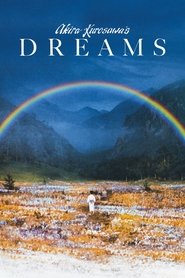
Dreams (1990)
Release Akira Kurosawa's Dreams 4K UHD + Blu-ray (The Criterion Collection)
Prince reads Dreams as the beginning of Kurosawa's final, unusually personal phase: eight nonlinear episodes shaped by childhood memory, Noh structure, mortality, war, nuclear fear, environmental loss, and the artist's approaching old age. His close formal analysis follows long-lens tableau staging, slow motion, sparse sound, saturated production design, ILM composites, and the naturalistic time and space that make these visions unlike conventional screen dreams. Production history connects Spielberg and Lucas's financing intervention, Scorsese's Van Gogh performance, and the difficult location and effects work to a final movement from apocalypse toward the remembered sounds and rituals of a pre-electric village.
- Duration
- 1h 56m
- Talk coverage
- 95%
- Words
- 16,915
- Speaker
- 1
Commentary density
Highlights
Topics
People mentioned
The film
- Director
- Akira Kurosawa
- Cinematographer
- Takao Saitō , Shoji Ueda
- Writer
- Akira Kurosawa
- Editor
- Tome Minami
- Runtime
- 119 min
- Also on
- OneSheet ↗
- External
- IMDb ↗ TMDB ↗ Find on Amazon ↗
Transcript
16,915 words
Hi, I'm Steven Prince. Kurosawa wrote the script for Dreams right after he finished Ron, but he was having trouble getting financing. This had been a problem for some time. He'd made only four films in the past 20 years. But now things were about to turn around. Dreams became the first of three films that he made in quick succession right at the end of his career. Kurosawa's admirers, Steven Spielberg and George Lucas, helped to make Dreams possible. They interceded with Warner Brothers on Kurosawa's behalf. Warner agreed to distribute the film worldwide, and on that basis, Kurosawa Productions was able to get funding for the movie. So Kurosawa was back in the director's chair with his son Hisao as co-producer and with familiar collaborators like cinematographer Takao Saito and art director Yoshiro Muraki. This is the first film entirely scripted by Kurosawa since 1945 when he made The Man Who Tread on the Tiger's Tail. Kurosawa typically worked with at least one other screenwriter, sometimes more. His shift to writing solo correlates with some changes in the films that he made. Dreams and the two that followed, Rhapsody in August and Matadayo, are much more personal and meditative.
He seems less interested in story per se than in examining things that greatly concerned him, like aging, mortality, and the state of the world. He also looked backward, toward the past, especially the world of his childhood, so these films can be understood as a kind of psychobiography rather than as the kind of narrative filmmaking that he had become famous for. He's no longer interested in using irony as a tool of drama and storytelling. He moved away from the kind of suggestion and indirection that irony makes possible. There's very little of that in these last three films. In them, Kurosawa speaks directly with viewers, speaks openly and with sincerity, rather than through the masks that a dramatist wears. Dreams is nonlinear. It's not a narrative. We have eight episodes that Kurosawa tells us are inspired by dreams that he has had since childhood. Actually, this first episode, Sunshine Through the Rain, is based not so much on a dream as on a tale that his mother used to tell him about fox weddings held in the rain. We see the familiar Kurosawa telephoto perspective here, which creates a foreshortened, flattened perspective. This rain is the sort that Kurosawa liked, heavy and steady.
The house is a replica of the one that Kurosawa lived in when his family moved to Tokyo's Koishikawa district when he was in primary school. And the first edit is an axial cut to a closer view on the camera's line of sight established in the previous image. It's a very characteristic kind of Kurosawa edit. In his screenplay, Kurosawa describes this boy as being himself at a young age. And the mother here corresponds with Kurosawa's mother, whom he held in the deepest respect. She was very stoic. He described her as a person of great strength and perseverance and as a typical woman of the Meiji era who focused on providing all that her family needed. So Kurosawa is mapping his own life onto the dream worlds that he presents in the movie. Each episode has a character that is Kurosawa's surrogate, a character we might refer to as Ai, the singular first-person pronoun. The eye character is our guide through the dreams. He is a traveler, appearing in different guises and contexts, and he meets the principal character in each dream, who often relates a story with a theme, such as art or war or pollution, that is the focus of that particular dream.
Although other characters appear in the dreams, what we mostly have is a dyadic structure involving the encounter between I and the other principal character or groupings of characters like the foxes in this dream or the Hina dolls in the next one. The interesting thing about all of this is its bearing on drama in the Noh theater. Noh plays work in this way. The main characters are a traveler known as the Waki, and the warrior, ghost, or demon that the Waki encounters, who has a story to tell and is known as the Shde. Kurosawa has fashioned his dreams to approximate this structure. The I character is a kind of Waki, and those that he meets are the film's Shde. And like Noh plays, many of these dreams have a lesson or a virtue that they are presenting. Kurosawa has always loved the Noh theater, and it's not surprising that it found its way indirectly into this film.
Forests are places of mystery and magic in Kurosawa's films, as they are here. I love the graphic contrast in this scene between the powerful towering trees and the tiny figure of the boy. This first dream is a kind of existential parable about setting out in life, venturing out into the world and going off into the unknown. In this dream, we see him as a child who witnesses a wedding march, while the film's last episode gives us an old man and a funeral march. These two episodes bookending the film offer a rounded view of existence. This is exquisitely lit and staged as the fox procession comes out of the mist, accompanied by music on traditional instruments. There is a very elaborate folklore in Japan about foxes. They can be benevolent spirits if they are messengers of Inari, a kami or deity found in Shinto, Japan's oldest indigenous religion. Inari was associated with agriculture and fertility, and her fox messengers were all white. But foxes might also be mischievous or malevolent, taking possession of human beings. They can be changelings, shapeshifters, which is how Kurosawa shows them here with human bodies and makeup resembling masks that points to their deceptive character as depicted in numerous stories and plays.
Some stories say that foxes can take human form by laying reeds or broad leaves on their heads, and the hats worn by the procession might gesture toward that. The paper lanterns carried by the figures in front are part of the folklore, as fox weddings seen from a distance are said to resemble ghost lights from paper lanterns floating in the air. So it's a very precisely choreographed dance. And Kurosawa spends quite a bit of time with it. He's a great fan of theater, and the performative aspects of theater have always figured very largely in his movies. Got a nice little arcing camera move here around the tree to keep the Fox performers in focus. and hold the boy in the foreground. They sense he's there, perhaps they can smell him, but they don't yet know for sure. There's not a lot of camera movement in Dreams, and what there is tends to be fairly subtle, which is consistent with the evolution of Kurosawa's style in his later films.
As we'll see, many scenes are shot with a camera in a lockdown position, filming from a distance, using long focus lenses, and watching while events pass by. This is very masterful widescreen composition. This is not the anamorphic 2. 35 to 1 aspect ratio that Kurosawa used from the late 50s into the middle 60s. This is the 185 to 1 contemporary widescreen ratio that's shot with spherical lenses. The performers that we see are members of Kikunokai, a dance troupe that was formed in the 1970s by Michio Hata and specializes in traditional kinds of dance performances.
Now the camera pulls back a little bit. And they see him. And off he runs. And so now he's got a point of crisis. His mother's waiting for him. And we have an interesting cut coming up here that crosses the line of action and reverses screen direction. We'll see it in just a moment.
So the positioning of the mother and the son is going to flip on screen. There we are. Kurosawa doesn't often do that. But like the camera, the eye character has transgressed rules. In this case, his mother's injunction to avoid foxes that he might encounter in the forest. So an angry fox has come looking for him. An eye is banished from his home. His mother casts him out. And the gesture coming up here, where she gives him the knife, is striking because she grips it in a ceremonial fashion, the way a warrior would do. She's passing on to him a warrior's ethic, just as Kurosawa did with all of his heroes. And she tells him if the foxes don't accept his apology, he must be ready to die. There's no softness in her demeanor. She's tough and unyielding, although it's clear she cares about him.
Kurosawa's father was a military instructor, but Kurosawa thought that his mother was probably the toughest person in the family. When the Allies were bombing Japan in the last stage of the war, Kurosawa's parents left Tokyo for a safer area in the country. When Kurosawa visited them, nobody knew if it might be the last time. Anybody at that point could be killed in the air raids. He remembered that his father stayed in the road for a long time, watching him walk away. But his mother turned away without hesitation and went into the house. Her response was stoic and unsentimental. He put something of that memory into this scene. The mother here does not linger or hesitate. And as the boy leaves, she doesn't reopen the door for another look at him. So that's it. The door is closed. And she's not going to reopen it. He can't quite tear himself away from the home just yet. He tries to get back in, and he goes to the window, hoping that she'll open that. But he doesn't get any response. So now he knows what he must do. He sets out existentially on a lifetime of journeying. And the magnitude of this event, a lifetime of challenge awaiting with ventures into the unknown,
is memorably evoked by the visual effects provided by Industrial Light and Magic, the company that George Lucas founded in 1975, and which helped lead Hollywood into the digital era. Kurosawa holds the shot there on the replica of the house that he grew up in. These brightly colored flowers that the I character walks through, and then in the reverse angle shot coming up, the rainbow and the mountains, provide an epic context for this iteration of what has always been the essential Kurosawa vision, of the self cast upon a lonely voyage of discovery. It's a very nice shot. Kurosawa uses visual effects very tastefully. The knife that he carries bears suggestions of suicide, lingering here as a possibility. Kurosawa's brother Heigo killed himself with a knife. and Kurosawa attempted suicide with a razor. The mythic aura at the end of this dream is majestic, but it bears the trace of this darker family history.
As we come into this dream, the eye character is preparing a tray of treats to take to his older sister and her friends on the day of the doll festival. The interior is very dim with dark wood, which makes the vase of peach blossoms there pop out with a lot of visual force. As the camera tracks into the boy, the peach blossoms go off screen. But then as he approaches the room and goes inside, Kurosawa will cut to a reverse angle shot. bringing them back into the frame and giving us another glimpse of them. So he establishes this connection between the peach blossoms and the doll festival in the opening moments. And as the action develops, the dolls themselves will become kami, or divine spirits that live in the peach orchard. The blossoms become the dolls. They are kami, and their energy is associated with an important person from Kurosawa's past. The ceremonial dolls are assembled on a tiered altar covered with scarlet felt.
At the top are the emperor and empress, and we see them in a series of five shots that are cut together in rapid succession, a little montage that is different from the slow tempo that Kurosawa uses through the movie. It's the kind of compressed, rapid editing that Kurosawa excelled at using in his earlier films to create tension and pacing. The I character tells the group that one of their members is missing, and they deny this, which creates an intriguing discrepancy.
But now, when the eye character goes back to the sliding door, we see a young girl appearing where the vase of peach blossoms has been. And now in the next instant, she's gone, prompting his sister to ask if he has another fever. We also learn that he's not allowed outside. These details add intriguing elements to the backstory. So he goes to look for her and Kurosawa keeps the vase of peach blossoms in the frame. There it is again. And when he gazes around the corner, there she is, strikingly framed in the open doorway at the center of the screen and brightly lit in comparison to the darkened interior.
The eye character is mesmerized. She runs off and he follows her outside into a bamboo grove where a camera pan reveals that she awaits his arrival. Up it goes. This is very nice visual storytelling, using this camera pan to reveal her presence. We see them at opposite edges of the frame. And then as she runs off, the tinkling of her bell sounds very alluring. and it draws the eye character after her, where she leads him into a strange, hallucinatory encounter with life-size versions of the Hina doll. Who is this mysterious girl? She is not one of the dolls, and she disappears when the boy encounters the life-size dolls of the imperial court. This dream, like the previous one, maps elements of Kurosawa's life onto the action. The setting is March 3, the Day of the Doll Festival, a seasonal festival that aims to promote health and banish misfortune. It's also called the Peach Festival, or Girls' Day, since it provides young girls an opportunity of dressing up, enjoying rice cakes, and making ceremonial offerings to the Hina dolls displayed on a tiered altar, as we have seen in the scene.
And through the symbolism of the peach, it celebrates the culture's perception of traditional feminine qualities. Many families have such altars and they may be decorated with peach blossoms, since the peach is also an emblem of health and longevity. And this period in March is the beginning of the flowering season. As we've seen, Kurosawa drew several connections between the dolls and the peach blossoms. So then who is the mysterious girl that appears to the eye character? She may be a spirit from the peach orchard that, as we learn, the family has cut down. This is very likely since she appeared as a manifestation of the vase of blossoms. But she may carry another resonance as well, the trace of someone from Kurosawa's past whom he loved and whom he lost when she died abruptly of an illness. This was Momoyo.
the youngest of his three sisters. He was very fond of Momoyo and played often with her. His older brother Heigo didn't spend much time with him, so Kurosawa was often with his older sisters, especially Momoyo. He played with her on the day of the doll festival, and the family had an elaborate set of Hina dolls that included the empress and emperor, their attendants and musicians, along with numerous small props such as folding screens, lanterns, braziers, and serving trays. The dolls and their props were arranged on an altar with a red felt covering, as we see in the movie. Kurosawa sat with Momoyo, whom he called Little Big Sister, as she made offerings to the dolls and shared a little sake with Akira. The tiered display in the movie, attended by the I character and his sister, is a transposition of what Kurosawa remembered from his own youth. He remembered Momoyo as being very fragile and delicate,
She died when she was 16, and in later life, Kurosawa retained vivid memories of her. This dream is about the loss of beauty from the world, which the narrative situation ties to the family's decision to cut down the peach trees in the orchard. But in the design of the dream, the loss of this beauty also corresponds with the personal loss that Kurosawa suffered when he was eight years old and Momio died. The spirit that the eye character sees may be a kami from the orchard, and it may also be this beloved sister. Kurosawa gives us quite an elaborate display, and the remainder of the dream plays very strongly as visual spectacle, particularly in the highly saturated colors of the costuming against the deep green of the grassy hillside. There are 60 performers here as the Dals, and they are grouped in four tiers. The imperial couple is at the top with their officials and ministers. Below them are the court ladies, and below them are the male musicians. The bottom tier holds an assembly of helpers and assistants. Although the Dal festival did not become established as a tradition until the Tokugawa era, the Dals portray the imperial court of the Heian era.
which lasted from the 8th to the 12th centuries, a high point of elite culture and civilization when Buddhism spread throughout Japan. The ancient temples at Nara, where the imperial court briefly had its capital prior to the Heian era, were monuments to the flourishing of Buddhist art and religion, and they housed exquisite sculptures, paintings, and scrolls that were part of the artistic excellence of this period. When the court moved to Kyoto, this flourishing of elite culture continued. The tale of Genji, one of the world's first novels, was written during this period. It ended with a Genpei war between two rival clans, the Taira and Minamoto. The Taira were defeated in a naval battle at Danura in 1185, and the victorious Minamoto established the first shogunate, ruled by military authority. The warrior class was in the ascendancy, and emperors became figureheads and shadow rulers. The reign of aristocratic culture was over, and this occasioned nostalgia and melancholy for the old regime, which infuses this segment of Kurosawa's film. It's an odd emotion for him to be showing, since he was such a rebel and smasher of tradition throughout his career.
But in this last phase of his filmmaking, he identifies very strongly with the aged and often doomed characters in his movies. Dersu Uzela, the Takeda clan in Kagamusha, the old warrior Hidetora in Ran, and the protagonists of his next two films, Rhapsody in August and Maradayo. Perhaps as he looked back on his own life in these episodes of dreams, he also looked back on the life of the nation. Doing so, he resuscitates the imperial court in this sequence, and he reassesses the fate of Japan's soldiers in World War II in the upcoming sequence, The Tunnel. Of course, he's always been drawn to artistic traditions. He was quite fond of no theater and of the literary traditions exemplified by Shakespeare and Dostoevsky. This dream climaxes with an embrace of musical tradition. The Hina dolls tell the boy they personify the spirit of the peach trees.
and when he gives them the right answer to their implicit quiz about his feelings regarding the orchard, they consent to let him see it in bloom one more time. To conjure a vision of the orchard for the boy, they perform gagaku, a style of music and dance associated with the imperial court at Kyoto. It's performed on traditional wind, string, and percussion instruments, and the songs and music were associated with court rituals and Shinto ceremonies. One of the really striking things about the sequence is the extreme foreshortening of perspective that Kurosawa achieves by placing his cameras very far away from the action they're filming and using long focus lenses to make distant objects seem closer than they are. This sequence gives us some of the most extreme foreshortening that we see in any of his movies. The hillside looks almost two-dimensional. It looks quite vertical with little evident recession in depth.
So the dolls complete their performance and the appearance of the orchard in full bloom is signaled by a drastic change in music cues. The gagaku music with its tonal systems deriving from Chinese music of the Tang Dynasty is abruptly replaced by an organ and strings playing in a Western tradition. The orchard returns but briefly as a poignant reminder of what has been lost. The eye character sees Momoyo running through the orchard, and he tries to join her, or in terms of Kurosawa's history, to rejoin her. But he cannot enter the vision that the Hina dolls have conjured for him. When he tries, it all dissolves. Momoyo is gone, and he is surrounded by a graveyard of stumps, all that remains of the orchard. The dream within a dream is over, and the desire and wish that fueled it to be reunited with what once was, with people and things that are lost, freezes time itself. This is quite a devastating image, really, this image of loss, ghostly remains of things that once were beloved. He wanders amid this desolate,
teared hillside, bereft of the beauty that was so important. So he goes up to the sprig of peach blossoms there, and he gazes at them and remembers the sound of her bell, which drew him deeply into this dream. Though she's gone, his memories of her remain, and he cannot shed them. He holds on to them, and their ossification, their conversion into fossil and artifact, is registered by the freeze frame with which we exit this dream.
We meet the adult version of the I character for the first time in this dream. Here and in the other episodes, he is played by Akira Terao, who had previously appeared for Kurosawa as one of the bad sons in Ran. Terao has had an unusual career. He worked in film and television, but he also gained notoriety for a rock band in which he was a singer and that produced a hit song. He continued to write and perform songs. His father was Jukichi Uno, a prolific actor who worked with major directors like Kinoshita Kobayashi, Mizuguchi, and Shindo. Akira Torao doesn't project a lot of charisma on screen. He's a solid, workmanlike actor, but your eyes are not riveted to him the way they are with Toshiro Mifune and Tatsuya Nakadai, the two stars that Kurosawa has favored. Torao is a little bit recessive in that he blends in with the background.
He doesn't come forward aggressively demanding your attention, and that's probably what Kurosawa wanted for this film. The I character is a visitor to these dream worlds. His presence does not distract our attention from the themes and the meanings that are enunciated by the other characters that he meets on his travels. This dream, though, is a little bit unusual in that the I character personified by Torao is not a visitor from the outside who makes entrance into the dream. He's already there when we meet him, as a full participant in the action. He is one of the characters who inhabit the strange landscape of this segment, not a visitor to it. This dream then has a different structure than the others, which tend to borrow the dyad of Wacky and Stay from the Noh theater. There's no dyad here, no passages of declamatory dialogue that present a lesson or a moral to the audience.
instead of telling, Kurosawa shows. What he shows us is a condensed, powerful distillation of the existentialism that has defined his core outlook and many of his major films. We don't know who these four characters are. We know only that they have a camp in the mountains, have left late that morning for a trek whose purpose is left undefined, and that the blizzard has been going on for three days. Now they are weary and tired and have lost their way in the storm. As they grow more fatigued, the choice they face becomes more urgent. Give up, surrender to the elements, sink down into the snow and die, or continue to struggle to battle against the storm with the hope and belief that they will find the shelter of their camp. This situation concentrates and distills the essential philosophy that Kurosawa's films offered their audience in the years that followed Japan's defeat in the war. The country was devastated and ruined. Aerial bombing reduced cities to rubble. The infrastructure was wrecked. Diseases were rampant. Food was scarce and people were desperate. What would happen?
Traditions like blind belief in the authority and wisdom of the emperor and military and political leaders had led to catastrophe. In this confusing and desperate time, Kurosawa began making films that portrayed strong heroes breaking with the past and with tradition by making their own choices. Catastrophe and tragedy are inevitable, Kurosawa was saying. What's important is how one responds, how one chooses. No matter how dismal the situation, one faces the necessity of choosing. This is what the heroes in Stray Dog, Seven Samurai, Ikiru, and other films do. Trauma for Kurosawa is the precondition of wisdom and moral knowledge. Trauma produces growth if one has the courage to make the right choices. That's what we see in this dream. The I character insists that the group keep going even though the situation seems hopeless. He exhibits the stubbornness and persistence that have defined Kurosawa's heroes. The difference here is that the blizzard which threatens to extinguish their lives lacks the social and political dimensions of meaning that provided the foundation of the stories in those earlier films, which came out of the post-war situation and that were parables about individual and social recovery from defeat.
The existentialism that we have in this dream is of a more primal kind, in that the choice faced by the characters is one imposed by natural forces rather than human ones. The killing cold in this dream is nature itself, rather than a social pathology that might be corrected. The action that we're seeing was shot on an indoor set, and the snow is a combination of styrofoam, alum, and salt. The sequence took 13 days to shoot, one of the longest in the film. Two of its most striking features are the use of slow motion and the sound design. Kurosawa used three high-speed cameras running at 72 frames per second, three times the normal speed at which film is shot. To get slow motion on film, you have to shoot at a high frame rate. This sequence then consumed a lot of film, which would have run through the cameras very quickly.
The slow motion creates a dreamlike effect. It adds to the harshness of the landscape by making the efforts of the men seem futile and ineffective against the storm, thereby raising the existential stakes faced by the characters and making the eye characters' stubbornness and persistence seem even more striking. Kurosawa was a master at using slow motion. He's one of cinema's great poets in that respect, and his influence on other filmmakers was tremendous. He used slow motion occasionally, but always to very powerful effect. He drops a slow motion insert into the action in his first film, Sanchiro Sugata, and he intercuts slow motion with normal speed in a violent sequence in Seven Samurai. That intercutting set the template for using slow motion in violent action that generations of filmmakers copied, including Sam Peckinpah and Arthur Penn in The Wild Bunch and Bonnie and Clyde. He used slow motion in a more extended fashion in Ran during an epic battle scene that the slow motion, in conjunction with Taro Takamitsu's music, makes into a tragic lament for the foolishness and self-destructive nature of human beings. The sound design in the sequence is very striking. And indeed, the sound throughout the film is superlatively designed. We hear only a few sound effects,
the metallic chinking of the ice axes carried by the men, the wind, and the sound of their labored breathing. Each of these has a crispness and clarity that enables them to stand out as discrete elements, even though the soundtrack is a richly layered blend produced by mixing them together. When Dreams was released in 1990, cinema was making a transition to digital sound. And although the movie in release carried analog Dolby tracks, Kurosawa took advantage of the enhanced signal processing and noise reduction that Dolby had developed as a means of keeping analog sound viable as the digital era was dawning. The audio in Dreams has a much greater dynamic range than the older optical tracks did, and you can hear discrete sounds with a clarity unlike the mush and noise that you had on optical tracks when they carried too much audio information. where the information was too loud. Throughout Dreams, Kurosawa shows us what he can do with sound. A single audio source, like the tinkling of the girl's bell in the Peach Orchard episode, has a precise audio profile that brings it forward in a way that commands our attention. Kurosawa uses her bell as a motif in that episode.
And it makes a good comparison with his movie Redbeard in 1965, which had a multi-channel audio design but was obtained using analog rather than digital sound. The character Onaka in that film is associated with a bell or a chime hanging from plants in their vases. And in a farewell scene where she says goodbye to her lover, Kurosawa plays their sorrow by focusing the soundtrack on the isolated ting of a single small bell hanging from a plant that she carries. The design in The Peach Orchard and this scene in Redbeard are very similar. But in Dreams, Kurosawa creates the sense of an empty sound space in which the isolated effect of the bell carries a stronger charge than he was able to achieve in Redbeard. Kurosawa had always been a filmmaker keenly interested in sound. and he thought that the right sound could exponentially increase the effect and meaning of a scene. He understood that sound can define our sense of an image, and the sensuality of his movies is often a matter of sound. The heavy winds and rain that he favored have a strong audio presence. The opening sequence of The Quiet Duel, which he made in 1949, depicts a surgical hospital in primitive conditions on a battlefront in Southeast Asia.
The surgeon, played by Toshiro Mifune, operates on a wounded soldier during a heavy downpour, and the steady drip of a leaky roof onto a tin basin is given great prominence by being presented in audio close-up. The loud dripping sound creates a lot of tension because it is relentless, and it's a good example of how the right sound redefines the meaning of a sequence.
Some striking audio changes are now occurring in this episode of Dreams. The approach of the Snow Maiden is signaled by the addition of a higher pitched sound, which might be musical or choral, inside the noise of the wind. Then Kurosawa drops the noise of wind completely and replaces it with a soprano solo marking the shift from this very stylized but naturalistic landscape into the realm of the supernatural. The soprano solo was recorded early in production on December 6, 1988, and the sequence itself was not filmed until March 1989. In this case, the sound came before the images, which tells us something about the importance that Kurosawa accorded to this element. The snow maiden is the Yuki-onna, one of Japan's most famous supernatural beings and the subject of numerous folktales. She preys on travelers lost in the snowy mountains, and she can have a beguiling appearance. Her long black hair contrasts with the pale white of her skin, and by touch, she can drain the life energy from a person. Masaki Kobayashi gave us a definitive portrait of this character in his film, Kwaidan. For Japanese viewers, the Yuki Onna is a very well-known character, and they'd understand right off what her intentions are.
She tells the eye character that the snow is warm, and her voice is electronically modified to make it sound like it's coming from another dimension. This blanket is composed of ice crystals, and its loose threads are hair-like, pointing back to the flowing hair that is one of her defining features. The blanket is an extension of her being and is part of the spell that she's woven. in which the snow covering him seems like a warm insulation from the wintry surroundings. She ministers to him in an ostensibly comforting manner, pulling the blanket around him and tucking him in as if he were bound for a pleasant night of sleep. Although the Yuki Onna is a famous figure, her actions here serve to bring the existential dilemma portrayed in this dream into a sharper focus. Suppose death offered a soothing relief from an experience that was harsh and unbearably unpleasant. Would one not choose it if all hope was gone? That question potentially looms before everyone, and Kurosawa's posing of it here suggests that it is one he has been thinking about. Indeed, this film as a whole offers a series of reflections upon mortality. Many of these dream episodes portray various ways in which life might end.
and different attitudes toward its approach. In this instance, the Ai character refuses the seductive appeal of the Snow Maiden. Although things seem hopeless, he's not ready yet to yield to her. And again, in this stubbornness, he resembles the obsessive perseverance of the Kurosawa heroes who populated earlier films. In many stories involving the Ukeona, she kills by touch, so cold is her skin that it freezes the victim. In other stories, she draws the breath from their body and along with it their life energy. In Kurosawa's variation, there's a physical struggle against which the I character must prevail. And the sound design again marks this shift. The beguiling soprano is gone, replaced by the harshness of the wind heard at high volume. As he struggles, she drops all pretense and begins holding him down. And she undergoes several changes in appearance. the transitions blocked by her flowing hair, until she becomes visibly a demon. The character is played by Meiko Harada, who gave an extraordinary performance for Kurosawa as the vengeful Lady Kaida in Ran. The demon face that we see at the end of her appearance in this segment required a makeup session lasting nearly three hours.
It's very characteristic of Kurosawa not to allow the time or difficulty needed to achieve an effect to influence his editing. We only see it for a moment on screen. Listen to the way that the explosive sound of her exit reverberates in the mountainous environment and diminishes until it's gone. But the clarity of that rumbling diminuendo is another example of what the era's enhanced audio tools enabled Kurosawa to achieve. Her ascent into the sky is quite dramatic, and it might show an influence from Kobayashi's film Kwaidan, where the Snow Maiden makes a similar kind of exit from the world of human beings.
So now the I character takes decisive action, rousing his companions, waking them up, and pulling them from the snow. This decisiveness and presence of mind is quite different from the passivity that the character displays in most of the other segments of the film. In this, again, he resembles the heroes of Kurosawa's earlier movies. Their aggressive behavior lingers in a kind of vestigial form in this dream.
It's really quite a nice set that Kurosawa has achieved with his production designer. It may not be fully convincing as a natural landscape, but that's quite all right. Often in movies where you want to strike a slight tone of fantasy or the unreal, it's best not to emulate photographic realism. And so if you build your environment rather than going on some location and shooting, you can often get results that are stylistically very close to hyper-reality. One of these other characters is played by the actor Masayuki Yui, who played Tango, the loyal retainer in Ron. But it's really impossible to pick him out because you just can't tell based on the costuming. These fanfares announce the passage of the storm and offer a promise of hope to the weary characters. These cutaways to snowy vistas obviously are real locations that are intercut with the soundstage sets, and they open things up a bit. After three of the cutaways, another sound appears, a flapping noise that captures the eye character's attention.
It's the flag that marks their encampment. And as the camera pans with the character to reveal the tents, the volume of the flag's noise increases. This is a visual effects shot. The eye character has been matted into footage of the tents and the flag. And the group shot of all five men that we will see is also a similar matte shot. The visual effects create a strange warpage in time and space. The characters and the landscape they inhabit continue to move in slow motion, but the flag and tents billow in the wind at a normal rate of speed. This disjunction between the two zones, the tents and the characters, introduces an ambiguity at the end of the sequence. Are the tents really there? Might they be a mirage, a dream within the dream, conjured by our protagonist as he lies dying? The gusting flag behaves normally, but the characters remain trapped in their slow-motion world. This temporal disjunction separates them. Maybe fate has rewarded the perseverance of the I character by revealing that salvation lies just a few yards away. On the other hand, maybe this is the comfort of an illusion, not unlike what the Yuki Onna brought him as his body shuts down in the cold and darkness. The music is triumphant.
yet they never do reach the tense. Kurosawa gives us a choice about the end and about what we're seeing. We may believe what we prefer to believe. We have a splendid beginning to this dream with the character and the camera moving on converging diagonals. The camera travels across the roadway in front of the eye character and then travels with him using a pan and an arc to fall in behind him. It's a very sensual camera move, a bit of the old Kurosawa, although in earlier films he'd have done it with more verve and aggression. Then we've got an optical point of view shot showing the darkness of the tunnel as he approaches it. This opening is very reminiscent of the beginning of Yojimbo. We meet a traveler on the road. He's greeted by a menacing dog whose behavior promises more violence, and the camera frames him like this here, from behind and at shoulder level. It's one of the few moments in Dreams that resonates in an overt fashion with Kurosawa's earlier work. This was a police dog that they used for the scene, so it was highly trained and used to bristling in a way that would keep miscreants in their place.
behavior that works quite well in context here. They put wax on its face evidently to make it look frothy and more savage. The action took a long time to film and the movie's production journal even includes a whimsical apology to the dog for putting the wax on his face and making him bare his teeth. Kurosawa intends for this animal to represent the dogs of war which are eternal. It carries hand grenades and its barks are the sound of gunfire. It menaces the eye character here and again at the end of the episode. Dogs have occasionally appeared in Kurosawa's movies and never in a sentimental context. The dog in Yojimbo carries a human hand in its mouth, a panting prostrate dog appears at the beginning of Stray Dog over the opening credits, and the title of that movie refers to a veteran of the war who has descended into savagery. The drunken writer who befriends the hero of Ikiru kicks a black dog and makes it cry out.
He regards it as an emissary of Mephistopheles. Dogs do not occupy a place of honor or respect in Kurosawa's movies. Kurosawa spends a fair amount of time showing the character's passage through the tunnel, an interval that is motivated by what the tunnel represents, which for Kurosawa is the dark period of the war. He remarked that the nation rushed headlong into the darkness and that living through the war years was like living inside of a black box which admitted no light. The tunnel is that black box, and the character's rather lengthy passage through it captures something of the duration that the country experienced as the imperial army, which was answerable only to the emperor and not to any political officials or authority, concocted numerous conspiracies to seize control of Manchuria and other areas in Southeast Asia. From 1928 onward, the army used bombings, beatings, and assassinations as provocations for invading Manchuria and seizing territory. And in 1936, in the so-called February 26th incident, radical units of the imperial army staged a mutiny, assassinating political leaders and attempting to occupy the imperial palace.
Kurosawa joined the PCL Film Studio, which subsequently became Toho, immediately following this incident, and he was aware of the timing. He understood the irony. As the country rushed into the darkness, he was on his way to becoming a professional filmmaker. For American viewers of Dreams, the war with Japan's Imperial Army was relatively short-lived and represented one theater, the Pacific Theater, in World War II. For Japanese viewers, the war lasted 15 years, a much longer interval, and led to national devastation unlike anything the United States experienced. The metaphor of a dark tunnel or box that admits no light is a very resonant one for Kurosawa and his Japanese audience. From this point to the end of the scene, Kurosawa is shooting with three cameras running simultaneously. Operating multiple cameras at the same time is an unusual method of shooting, but it's one that Kurosawa had embraced since Seven Samurai in the 1950s. The I character in this dream is a soldier and is dressed accordingly.
The setting is not identified in terms of time or place, but in light of the fact that the I character is not disoriented and does not find himself to be a lingering ghost like Private Noguchi and the rest of the platoon, it seems likely that these events are occurring either during the war or shortly thereafter. Kurosawa, though, presents the action in a metaphorical way that invites extrapolations to the present period, and I'll say a bit more about this in a moment. For now, it's important to note that unlike other prominent film directors, such as Ozu, Masaaki Kobayashi, Keisuke Kinoshita, and Kihachi Okamoto, who served in the military, Kurosawa did not. He escaped service because the officer administering his induction exam knew his father, who had been an army instructor, and exempted Kurosawa from service as a favor to his father. This was in 1930, when Kurosawa turned 20 years old.
He was called up again just before the firebombing of Yokohama in May 1945, but again was lucky to avoid induction. Kurosawa was more than relieved. He'd failed military training in middle school and felt there would be no way that he'd survive the military. Many young men felt as he did, being drafted meant certain death. His fellow directors Okamoto and Kobayashi believed they would not return alive. Underneath the George Romero zombie makeup, Private Noguchi has a familiar face. He's played by Yoshitaka Zushi, who played Chobo, the feral child in Redbeard, and who also played Roku-chan, the simple-minded boy in love with trolleys in Dodeskaden. He also makes small appearances in Ran and Matadayo. As I mentioned, Kurosawa escaped military service, so it's interesting that his I character in this dream is a soldier. one who commanded a platoon and sent men to their deaths. Being a soldier was not a fate or an experience that Kurosawa had, so this is an imaginative speculation, perhaps one that is rooted in his having wondered what life might have been like had he not escaped induction. This is a fine poetic moment. Noguchi stands before that distant light, reminding him of home, his parents, his childhood.
all that pulls him back to this world with such force and desire that he can't understand how it can be that he is dead. This melancholy is intensified by the muted color design, everything in earth tones, browns and greens. That spotlight jumps out at us because of its bright orange coloring. The ghostly faces of the dead are also exceptions to this muted design. The eye character feels empathy for Noguchi and his sad plight. He understands the feelings that weigh heavily on Noguchi. Ghosts of people who do not know they are dead are an enduring archetype found in many stories and films. Sometimes, as in M. Night Shyamalan's The Sixth Sense, the ghost's failure to understand is shared by the audience, at least until the truth of things is revealed. Noguchi is an archetypal character in this regard, but his situation also corresponds with singular aspects of the war and its legacy in Japan.
and this is a core part of the meaning of this episode. Ghosts like Noguchi and the other soldiers in the platoon are likely to haunt the cultural imagination when the meanings of a war are bitterly contested and divisive, and when that war devastated or corroded the society that waged it. In the American experience, the Vietnam War left many ghosts that walked the political landscape for decades afterward. In Japan, destruction and defeat brought by the war led to wrenching cultural and political changes, and the meaning of the war and the many questions surrounding it remained volatile and divisive. People argue about whether it was a war of aggression or defense, about whether atrocities like the Nanking Massacre actually occurred, or occurred on the scale as charged, about whether the emperor knew about and approved of the imperial army's war plans, and about whether the war crimes trials conducted by the allied powers were fair and just, or were an exercise in vengeance by the victors. In The Ghosts of Noguchi and the Platoon, Kurosawa evokes this cultural and political landscape, one haunted by these issues.
but he does not offer a point of view on them and certainly not any kind of political perspective. He never has in his films. Apart from his film The Most Beautiful, a propaganda movie made in 1943 about women working in an optics factory making gun sights, he never made a movie about the war. The closest that he came was the battlefield surgery that opens The Quiet Duel and the depictions of returning war veterans in Stray Dog and The Idiot. In Stray Dog, he depicts a character who turns bad because of unspecified things that he experienced in the war. But otherwise, what Kurosawa showed on film was the aftermath in terms of crime, disease, poverty, and the cultural and psychological confusion that followed upon the nation's defeat and occupation by a foreign power. Perhaps this is because Kurosawa never participated in the war. He wasn't drafted, he wasn't shipped overseas where his experiences might have led him to a different kind of filmmaking. He stayed in Japan where he experienced the privations and the aerial bombings like everyone else. And having lived through these, and then living like everybody else through the chaos of the years following defeat, he was primed to make movies about those things.
Based on what he wrote in his autobiography, he seems not to have had strong feelings about the war or the nation's long slide into it. He described it as a dark time, and for a brief period he affiliated with a left-wing group and its illegal anti-government activities. But his motivations seem not to have been strongly ideological. In comparison, the director Masaaki Kobayashi, who made trenchant anti-war films that included The Human Condition, was a pacifist and intensely opposed to the military and the war. He was drafted, served in Manchuria, experienced the harshness and brutalities of army life, and these things deeply influenced the films that he made. Through the 1950s, many great Japanese directors made outstanding films about the war, which investigated its meanings and experiences. These included Kobayashi's The Human Condition, Ishikawa's Fires on the Plain, and the Burmese Harp. Kurosawa was not among them, and so this episode in Dreams is an unusual venture into subject matter that he generally avoided portraying in his movies. So the ghost platoon has marched out of the tunnel, has presented its arms, and come to attention before the eye character.
Like Noguchi, these soldiers do not know they are dead, and their appearance takes the focus of this episode beyond the plight of a single restless ghost and toward a problem that is more broadly cultural and social. This problem is the failure of a consensus to emerge about what the war meant and about the factors that led to the conflict. Did Japan's soldiers die a noble death in service to the emperor, or were their lives wasted? Kurosawa shows us a platoon that is locked into the military rituals that were part of the machine that seized their lives and destroyed them. The platoon's rigid discipline suggests that the heritage these soldiers served is unyielding and persistent, and it moves the eye character to respond in kind. He returns their salute, and he apologizes for sending these men to their deaths. The meanings here are mixed.
On the one hand, the military machine survives in these zombies and remains an ongoing threat, as personified in the dog of war that returns at the end of the episode. But on the other hand, the I character confesses to them that he is ashamed that he survived the war and that beholding their sacrifice, he cannot look them in the face. He was taken as a prisoner of war and suffered for that. And above all, he wishes that he had died with the platoon. These sentiments are consistent with the official ideologies that operated during the war. Being a prisoner was highly disgraceful, a soldier should die before surrendering or being held captive, and dying with one's comrades for the emperor was the greatest glory of all. The eye character's sense of shame and his belief that he should have made the ultimate sacrifice exemplify the imperial ideology. and take this character very far from the rebellious, subversive, unconventional heroes that Kurosawa made so many films about. They did not behave in the way society expected and demanded. The I character acknowledges that there is a gap between the realities of war and the myths that societies construct about it. He tells the platoon that people call them heroes, but they died like dogs. And yet...
He yearns for convention and wants to behave in a way that is ideologically respected and considered appropriate. He wishes that he were dead with them. And through this response, Kurosawa evades the question about whether their lives were wasted on a wrong cause. Kurosawa pulls back from the larger question of what to do with such ghosts. As a condition of its surrender, Japan agreed to renounce war and to no longer maintain a standing military. This commitment to pacifism was quite real for many people, and it underlies the controversies that surround the Yasukuni Shrine, which honors the war dead who have served the cause of the emperor. More than 1,000 convicted war criminals are enshrined there. These include the seven Class A war criminals executed by the Allied Tribunal in Tokyo. Their spirits reside at Yasukuni as martyrs of the Showa era. What does one do with such ghosts? Kurosawa raises this question not in terms of war crimes or the post-war commitment to pacifism, but through the encounter with this platoon of restless spirits who fail to understand their situation. Kurosawa doesn't help them out much. He refrains from providing the clarity that they lack.
When he was younger, Kurosawa believed that society could be improved. As he grew older, he came to feel that the past cannot be changed. Its ghosts linger and the best that the I character can do is to send them back into the tunnel, into their own dark past where their spirits remain unmoored and restless. He gives them a heartfelt salute before assuming the role of rigid commander and ordering them to march into the darkness. Their actions replicating the fate of the nation in the war years. His love for the no theater is evident in this episode. It bears the imprint of a category of plays that focus on the ghosts of famous warriors. In them, the Waki encounters the restless spirit of a warrior who is not at peace. The soldiers in the platoon are not wearing masks as actors would do in a no play, but their faces were made up in a phosphorescent way that seems to glow in the darkness so that they take on the function of masks. The mask in a no play conceals the individuality of each actor and projects instead the archetypal nature of the character. The faces of the soldiers in the platoon looked very much alike.
and Kurosawa's visual treatment presents them as if they were an ensemble in a play wearing masks. So the episode then is a kind of warrior ghost play, not done in the style of Noh, but influenced by its general template. He salutes their passage and the music score provides some martial notes on the trumpet.
The trumpet was recorded in pre-production in early December 1988, but Kurosawa felt it would sound better if it were recorded on location inside the tunnel when they were filming in February of 1989. This gives the sound a reverberant quality that is ghostly and suited to the action. The tunnel is a real location in Kanagawa Prefecture, southwest of Tokyo.
The return of this demonic dog interrupts the eye character's melancholy reflections, and Kurosawa ends the episode with the two of them locked in a standoff. The dog barks the sound of gunfire and menaces the character. The shot fades out as the dog maintains its threat. And over a dark screen, we continue to hear its growling, which will never cease so long as wars continue.
Kurosawa's reflections in this dream are quite personal and direct. Initially, we see only the painting, and then the eye character steps into the frame. The painting comes first, as indeed that medium did for Kurosawa. The eye character appears to be an ordinary patron in an art gallery. He views Van Gogh's self-portrait, The Starry Night, The Vase with Sunflowers,
and the wheat field with crows. These were all done in the last phase of Van Gogh's life when he was living and working in Arles. A fluid camera move follows him as he strolls through the gallery, and then when he goes to the settee, the camera pulls back to reveal that the eye character, too, is a painter, as was Kurosawa. Long before he became a filmmaker, he intended to be a painter. It was his first love and ambition. So the eye character in this episode is the incarnation of Kurosawa's youthful dream. And the episode is an homage to Van Gogh, as well as an account of why Kurosawa did not follow his original plan in life. This is the Langlois Bridge at Arles with women washing, one of the early masterworks done at Arles in 1888. The I character strolls past it to view Vincent's bedchamber, but then the painting of the bridge pulls him back, and indeed it will pull him in. He stands before it and he puts on the white cap, which is Kurosawa's token, a style of hat that he often wore on the set, and the I character steps into the painting dressed as Kurosawa.
Van Gogh was quite taken with this bridge. He produced four oil paintings, four drawings, and one watercolor of the bridge. And the images show his affection for Japanese woodcut prints, especially Hiroshige's Evening Shower at Itaka and the Great Bridge, part of his 100 Views of Edo series. We come full circle. Van Gogh, influenced by Japanese prints, in turn influences Kurosawa, who steps into Van Gogh's world and his painting through his surrogate self. The production designers have done a splendid job painting this set so that it looks like something in between photography and painting. The music that we hear is a Chopin prelude, the number 15 in D flat, at its calm and peaceful opening. Sets and landscapes are painted to evoke Van Gogh's images of the fields and buildings of Arles, and this use of painted production design is reminiscent of Kurosawa's work in Dodecadene, his first color film. There, buildings and landscapes were painted in vivid, highly saturated colors to create a very stylized world where dreams and fantasies held sway over reality.
Dodescaden portrays the dreams and hallucinations of a group of slum residents who find the realities of their lives unendurable and find alternatives to these in dream worlds that they construct and that Kurosawa vividly evokes. In this respect, Dodescaden is a major precursor of this film. We're about to meet Van Gogh, who is played by director Martin Scorsese in a bit of ultra-weird casting. Kurosawa and Scorsese met in the 1980s when Scorsese was valiantly trying to put the issue of film preservation on the industry's agenda. Kodak's Eastman Color film stocks were fading badly. The dyes were unstable, threatening to destroy the heritage of cinema. Scorsese was very active in trying to rally industry support for a solution to the problem. and he approached Kurosawa in that context. Kurosawa was impressed with his energy and his rapid way of talking, and he thought of Scorsese as the guy to play Van Gogh. Go figure. If you get an offer to act in a Kurosawa film, why would you say no? So we have this odd element in the movie, which is quite dreamlike in the unexpected juxtaposition of a New York director speaking English as a painter inside a Japanese movie.
When Scorsese shot this for Kurosawa, he was coming out of a rough patch in his own career when the Hollywood industry shifted away from the iconoclastic films he and his compatriot filmmakers had been creating in the 1970s. The King of Comedy, After Hours, and The Color of Money were works in a minor key compared with Mean Streets, Taxi Driver, and Raging Bull. Scorsese's passionate nature probably struck Kurosawa as appropriate for Van Gogh. Scorsese's description, as Van Gogh, of devouring the work and being consumed by it corresponds fairly closely to the way he threw himself with great energy into Raging Bull at a time when he thought he'd never make another film. Scorsese, as the painter, speaks of being consumed by his art and says he drives himself like a locomotive, as Kurosawa makes the idea literal by intercutting images of train wheels and pounding pistons. It's a Herculean conception of art, the artist as a Promethean figure, daring the new, defying norms, bursting boundaries of convention. Kurosawa was known as the emperor because of his unyielding demands for perfection and his iron will in chasing after it, defying studio authority when he felt that he needed to do so. Kurosawa found Scorsese's creative energy to be on a level much like his own.
And this probably furnished another link connecting the New York director to Van Gogh, at least as Kurosawa conceived of him. Now listen to this, listen to what Scorsese says here about the ear. This? Yeah. Yesterday I was trying to complete a self-portrait. I just couldn't get the ear right, so I cut it off and threw it away. This aside, about the ear, it's just the kind of black humor that you often find in Scorsese's movies, and it's a fitting nod by Kurosawa to Scorsese's work and its singular features. You can easily imagine De Niro or Joe Pesci tossing that line off in a rambunctious gangster movie. Scorsese tells the eye character that the light compels him to create, and this is true for a filmmaker as well. Cinema and painting are mediums of light. John Alton, who was one of Hollywood's best and most creative cinematographers, described his work as painting in light. When Van Gogh departs, the eye character finds himself inside a series of Van Gogh paintings, whose thick lines, violent forms, and saturated colors are consistent with Kurosawa's own painterly style, which shows the Van Gogh influence.
And this experience of being contained or trapped inside Van Gogh's painted world gets to the core of the anxieties that fuel this dream. Kurosawa said that when he was young and intending to be a painter, he would study Van Gogh's paintings or those of Cezanne and then find that the world looked like their paintings. He would see things the way these artists had seen them. His description sounds as if he were standing inside one of their paintings. Because he was so easily influenced in this way, he came to feel that he had no vision or style as a painter that was his own, and that this furnished a poor basis on which to pursue a career. Clearly, all that he needed was a change of medium because nobody's movies are like those of Kurosawa. As a filmmaker, he had a singular vision as unmistakable as that of Van Gogh. He found his calling in cinema. He continued to paint, but it was no longer his calling.
And so what this dream conveys is what might have been had Kurosawa persisted in his plans to be a painter. The dream suggests that he'd have been a second-rate, unremarkable painter, bound to the style and vision of artists whose work defined the medium and created new approaches. The I character is confined inside the painted landscapes. He can't get free of them. And this might be what Kurosawa had come to recognize would have been his fate had he not chosen cinema. The dream shows us what Harold Bloom called the anxiety of influence. These scenes of the I character inside the paintings were filmed with Akira Terao on blue screen and were shot with a Sony high vision video camera. Van Gogh hurries off to his destiny as the specter of mortality again enters the film. They shot two takes of the crows rising into the sky, using a hundred birds each time. An ILM has rotoscoped additional bird effects into the shot. Wheatfield with Crows was one of Van Gogh's last paintings, and the mournful locomotive appears as a harbinger of Kurosawa's own anxieties about ceasing to exist.
when there were still so many films yet to make. We come out of Van Gogh's world and stand before the painting. The I character admires it, and he takes off his hat, as Kurosawa pays a heartfelt homage to one of the great artists he most admired, whose work helped to define his world.
This action choreography is a Kurosawa trademark, vectors of movement traveling in opposite directions, as the I character pushes against the tumultuous rush of the crowd. Kurosawa often blocked action this way because it's inherently dynamic and striking, and it makes a statement about the individual versus the collective that lay at the thematic core of his work and worldview. There are hundreds of extras here, costumed for the scene, recruited nationwide, and brought in for filming on many buses. It was quite a huge undertaking. This episode illustrates Japan's enduring anxieties about nuclear devastation, and it's also an homage to the work of Kurosawa's very dear friend, Ishiro Honda, who directed the classic monster movies, Godzilla, Rodan, Mothra, and many other creature films. Honda's movies, like this episode, climax with frenzied crowds running from the monsters, clogging the highways in their efforts to get to safety. Honda assisted Kurosawa on Dreams and is credited as directorial consultant. He'd been working with Kurosawa in this role since 1980 in Kagemusha. He did a number of things for Kurosawa on these later films, adding or revising ideas in the script, serving as a second unit director,
or as an assistant director, helping Kurosawa coordinate his use of multiple cameras. Honda's good cheer and affable personality were also things that Kurosawa came to rely on in this late stage of his career. Kurosawa enjoyed having Honda around because they shared a lot of history together. They'd been assistant directors at PCL in the 1930s, and both worked under Kajiro Yamamoto, the established director in his unit they trained. When Yamamoto directed Horse, for example, in 1941, Kurosawa scripted the picture and worked as second unit director and editor, and Honda served as the assistant director. When Kurosawa directed Stray Dog in 1949, Honda was his chief assistant director. It's a striking coincidence that they both made, as directors, a pair of tremendously influential films that were released the same year, in 1954, Seven Samurai and Godzilla. It is probably still true to say that these are among the most famous Japanese films ever made. Both were giant hits for Toho. So this episode works partly as an affectionate nod by Kurosawa toward his friend and the kind of movies that Honda was best known for. But Kurosawa also shared the nation's fears about nuclear bombs and destruction. These were a product, obviously, of Hiroshima and Nagasaki.
And they were stoked by the politely coerced alliance between Japan and the U. S. during the Cold War, which drew Japan into the U. S. nuclear umbrella. Fallout from U. S. nuclear tests in the Pacific poisoned Japanese fishermen and caused radioactive rain to fall on the country. In the midst of the nuclear tests and controversies over Japan's alliance with the U. S. , Kurosawa made a movie about fear of the bomb. Record of a Living Being in 1955 vividly portrays the anxieties about being trapped in a country facing nuclear ruin from which escape is impossible. Kurosawa evokes those feelings again in this episode when the woman with the child laments that Japan is so small there is no escape.
Record of a Living Being was not terribly popular when it came out, whereas Godzilla memorably translated these fears into a format that endured, the monster awakened by radioactivity that goes on a rampage, destroying civilization. So Kurosawa pays homage to Honda's achievement in Godzilla by using his visual rhetoric of spectacular destruction and hysterical mobs of people running from a scale of disaster that is overwhelming. And we get some fine visual effects in the rendition of Mount Fuji, the exploding power plants and the red, ominous atmosphere carrying poison. The effects don't strive to be photographically credible. They're stylized matte shots, composites in which the seams show in the way they often did in B-movies. Indeed, this is B-movie rhetoric, which makes this dream into one that all of cinema has shared. It's an archetypal cinematic dream, this spectacular imagination of disaster. Kurosawa gives us a vision that has been elaborated across the decades by filmmakers conjuring epic pictures of apocalypse. Kurosawa was no stranger to apocalypse. He'd lived through the great Kanto earthquake of 1923 and seen the fires and the mountains of bodies, and he'd lived through the aerial firebombing of Japan during the war. In films like Record of a Living Being and Ron, the sense of apocalypse is very strong.
In his next film, After Dreams, Rhapsody in August, he returned to the themes of nuclear destruction in a story about an elderly woman living in Nagasaki who had witnessed the bombing in 1945. This actor in the suit is Hisashi Igawa, a fine performer who appeared memorably for Kurosawa in Ran as the fierce samurai Kuragani, whose ruthlessness is a badge of honor in service to his lord. He gives another great performance as a corporate executive in Masaaki Kobayashi's late career masterpiece, Kaseki. When the eye character tells him there's still time because radiation works slowly, Igawa says that waiting to die isn't living. This line is a reprise of what the hero says in Record of a Living Being. He wants to leave Japan and move to Australia, where he believes his family will be safe from radiation. He's accused of being afraid of death, and he says, I don't mind dying, but I hate being killed. These proud individuals resent the fate that is forced upon them. Kurosawa uses the ocean here, as he did in Kagamusha, to evoke the edge of things, the outer perimeter of the living world, the end of history. It gives us a cosmic view of how small the human purchase on life is in the universe.
And the litter of belongings that are scattered across the ground is reminiscent of the carnage of horses and men that litters the ground at the climax of Kagamusha, where Kurosawa's depiction of the Battle of Nagashino becomes a harbinger of all the future wars to come. When Kurosawa made Dreams, all of this was totally speculative. Now, though, one can't view this episode but from a post-Fukushima point of view. The meltdown of three nuclear reactors following an earthquake-related tsunami in March 2011 epitomized enduring fears of nuclear accidents. Although nothing apocalyptic happened, the area continues to leak radiation, and the psychological aftermath of such accidents is long-term psychological dysfunction. Kurosawa's ending here is quite grim. The I character futilely tries to push back the tides of poison gas. There is no hope. All is lost. And this pessimism takes us into the next dream, taking place in an earthly hell. The I character wanders through a post-apocalyptic landscape.
The unspecified doom that has occurred connects this dream with the previous one. We see what appears to be a crumpled city with ruined high-rise buildings broken and askew. Apart from this visual effect shot, the opening as Ai wanders the foggy landscape reaches back to Kurosawa's earlier work and connects specifically with Throne of Blood. Even the location is the same. the dark volcanic slopes of Mount Fuji, where in Throne of Blood, art director Yoshiro Muraki constructed the castle headquarters of General Washizu, the film's Macbeth character. Kurosawa returned to Mount Fuji for Ran, where Muraki constructed another castle set and burned this one to the ground. Now here we are again, although without samurai castles. Kurosawa spends a lot of time with this opening action. He stays with it for so long not because it conveys story information, but for its poetic meanings. These derive from his use of the fog. He's always been fond of fog and created memorable scenes using it, part of the extraordinary way he's used weather in general. The master swordsman Kyuzo in Seven Samurai slips off into the fog to capture an enemy gun and then reemerges from the fog dramatically, prize in hand.
There's a brief fog sequence in The Hidden Fortress, where characters become disoriented in the mist. His most impressive fog scenes occur in Throne of Blood, where he achieves a stark contrast between the bleached white of foggy skies and the black ground of Fuji's slopes. He was aiming for the poetic minimalism of the medieval Sumi brush and ink drawings, where portions of the composition are left unfilled. He uses the fog in Throne of Blood to remove detail from portions of the image. When this thick wall of fog engulfs the eye character, Kurosawa cuts to a shot where the character comes slowly toward the camera, and he hangs on this moment for quite a while, studying the way the character looks as he emerges from the mist. Again, it's very like Throne of Blood. where Kurosawa built a lengthy scene from shots of the Macbeth and Banquo characters riding into and out of a fog-bound landscape. They're searching for their lord's castle and have become lost. The scene runs for many minutes and gives us shots of the two samurai riding toward or away from the camera, into and out of the mist. The length of the scene goes well beyond its narrative function. It doesn't add much story information, but that's not Kurosawa's point.
It carries a poetic, metaphorical meaning that required an extended amount of screen time to be effective, and I think we're seeing something very similar here. The fog is a metaphor for the existential confusion at the heart of human life, a condition that Kurosawa visualized again using the forest in Throne of Blood, as he had done with the forest in Rashomon. The fog in Dreams works accordingly. Kurosawa liked the images of characters moving through a translucent location. The shots hold an enduring poetic meaning for him that he has returned to often in his work. The actor playing the demon is very well known to Japanese viewers. Chosuke Ikariya belonged to a five-member comedy group known as the Drifters. Their style was broad, low-brow slapstick. The group formed in 1964 and became hugely successful. In 1966, they opened for a Beatles concert in Japan. In 1969, they launched a primetime television comedy show that ran for 16 years. When it ended, Ikaria ventured into movies and into TV dramas.
His presence as this despairing demon is a little discombobulating because he inevitably brings to the film a long-established comic persona, which Kurosawa does not draw upon. We've got a comic actor as a demon in hell, played straight and not for laughs, in spite of the over-the-top set design with giant flowers, something that a comic actor might do much with.
This encounter with the demon looks back stylistically to a scene in the Bad Sleep Well that Kurosawa filmed on the slopes of Mount Fuji. A corporate executive implicated in murder has gone there to commit suicide. He stands at the edge of the volcano in despair when he is startled to see, emerging from the fog that blankets everything, a ghost. Except that it is not a ghost. It only seems that way to him. This scene in Dreams has a similar tone and appearance. which derive from the setting and the action involving an eerie encounter with an unexpected adversary who emerges from the fog. They gaze about this bleak landscape and we get a little bit of backstory that Kurosawa is going to progressively fill in for us until we get a fairly complete picture of the ruination that has befallen the human race. It's not just pollution, but it's also nuclear bombs that have poisoned the ecosystem. We're planting the seed of a theme that Kurosawa will return to in the next and final episode. We're about to get a spectacular reveal
of some really elaborate and garish production design right here, these large flowers. That cut to the flowers as the mist lifts to reveal their hyper-saturated color works really well because everything that has come before it has been so muted and monochromatic. So we've learned this is a post-nuclear landscape, that the bombs have fallen and the resulting fallout has poisoned the land. making this the film's second episode to deal with nuclear devastation. This points to the degree of importance that Kurosawa attached to the subject. No other theme, save that of mortality, appears in two episodes like this. The characters approach the monstrous flowers as the camera pans to follow them and reveals even more of the huge dandelions. The ever-present fog blows along the top of the ridge line, conveying Kurosawa's metaphor of existential disorientation. It's not just the dandelions that bear evidence of nature's perversion from environmental toxins. The demon shows a rose in which the stem is growing on top of the flower. Although the story in this episode ties these deformities to nuclear poisoning, there's a broader legacy in forming them.
which is the long history of severe illness in Japan caused by industrial pollution. Itai Itai disease caused extreme pain, bone fractures, and deformities in its victims. The disease surfaced in 1912 and was due to cadmium poisoning from drinking water that came from a river basin that had been poisoned. Minamata disease, appearing in the mid-1950s, was caused by heavy metal poisoning and it produced insanity and afflictions of the central nervous system. It resulted from a chemical corporation having dumped mercury into Minamata Bay. The mercury accumulated in fish, which were then eaten by those who became afflicted. Outbreaks of mercury poisoning occurred in two other locations a decade later. Yokaiichi asthma was tied to sulfur dioxide emissions in the atmosphere surrounding petroleum plants. and it afflicted huge swaths of those who lived near the plants. U. S. military bases dumped numerous toxic compounds into the environment. In the period when Kurosawa made dreams, public concern over dioxin, PCBs, and other poisons in the environment was acute. And since then, the Fukushima accident has intensified these fears.
Cancers, human fetal deformities, and elevated levels of radiation in the post-Fukushima marine environment, when coupled with the long history of pollution-related diseases in Japan, produce the psychological context in which this episode of the film unfolds and resonates. There are also, of course, the many deformities that followed in the wake of the atomic bombings of Hiroshima and Nagasaki. So Kurosawa's depiction of an environment perverted through human activity is overdetermined by multiple factors. While the depictions here of the giant flowers might seem somewhat outlandish, the realities that they point toward are extremely tragic and quite pervasive, affecting ultimately everyone. This shot that we're in now runs for close to seven and a half minutes, and it's very typical of Kurosawa's work in this period. He's filming with a long focus lens so the camera is very far away. In a sense, it stands outside and apart from the action, enabling Kurosawa to view things from a distance. When it moves, and this is not very often, it tends to move in a direction that is parallel to the picture plane rather than along an orthogonal into the space of the scene. Because he is building the scene in a single extended shot, Kurosawa does not rely on editing to create dramatic effects.
to analyze the action or to tell the story. Instead of cutting among different camera setups, he presents the action holistically, and the effect is a distancing one, keeping viewers outside of the action. His work evolved in this direction over many years. Throughout the 1940s and into the 1950s, he frequently worked with short focal lengths, staging action in depth, and composing his shots to emphasize depth of field. The short focal lengths enabled him to place action and characters very close to the camera for dramatic effect. When he moved towards shooting with multiple cameras on Seven Samurai, he also began to use longer lenses because their smaller angle of view facilitated the positioning of several cameras so that they didn't see one another. With this change, the optical perspective in his shots became increasingly two-dimensional. a change that was accelerated when he moved to anamorphic widescreen with The Hidden Fortress in 1958. The expansion in widescreen of a horizontal axis for composition pushed Kurosawa toward an intensified, two-dimensional presentation of action. And as the films after Redbeard in 1965 became more contemplative and their scenes more static, with fixed frames filmed by stationary cameras,
his style grew to embrace tableau staging like we have here. The camera views characters from a fixed, distant position. They face toward the camera and project dialogue and gestures toward the viewer. This evolution in Kurosawa's shooting style isn't reducible to any single set of factors, but at a very general level, I think it corresponds to a shift in his outlook, in his worldview, one that accompanied the process of aging. It was a shift from engagement to observation, from irony to sincerity, from process to statement. In the early part of his career, he participated through his work in the broad tasks of national recovery from the war, and he held a set of social ideals and a corresponding belief that moderate social change could occur. As he grew older, his outlook darkened, and he came to feel that the essential flaws in human behavior precluded the possibility of change. As a dramatist, he moved away from using irony to create shades and subtleties of meaning and embraced a declamatory style, like we have here, in which a character directly states the nature of a problem. And his camera observed things from a distance rather than from inside the unfolding action.
So now we get on the move a little bit, and as the camera follows our horned demon and our eye character, we leave behind these brightly colored flowers. And Kurosawa lingers for a moment. And then he cuts to this shot, which is rather like a John Ford shot, characters on a horizon line that is placed high up in the frame rather than in the center of a shot. Kurosawa revered Ford, and it may be true that one reason he began wearing dark glasses was to emulate Ford, who also wore them. Now we see the living hell that these ogres inhabit. Kurosawa's staff hired 52 actors and made them up to portray these creatures in agony, and the scene was shot with two high-speed cameras to produce the slow-motion effects. The blood reflections in the pool are a neat visual effect. They provide an indicator of the creature's anguish. This scene amalgamates various folkloric and religious strands in which demons or ogres are a malevolent force in human affairs and inhabit either a world of the dead, a hell, or a zone between living and dying.
There are horned supernatural beings in folkloric tradition, and Buddhism allocates a demonic place in human life for those who are consumed by lust-greed or by undue attachment to material things or other forms of desire. Being that Japan is very hierarchical in its social outlook and organization, Kurosawa seems to offer a dry joke in the way that the demons are sorted according to the number of horns that they have. lowly vassals like the single-horned ogre that we've met are doomed to be eaten by those with two or more horns. It's dog eat dog, or in this case, demon eat demon, according to the prevailing hierarchy. And in light of Kurosawa's famous battles with film censors and with studio production executives who had been declining to finance his movies, one wonders whether he had some of these people in mind when assembling his cluster of demons. If he did, then the spectacle of their suffering must have had a cathartic effect indeed. It doesn't matter how many horns you have, according to Kurosawa, you're doomed to suffer through eternity, at least so long as you are a demon. The I character seems especially passive in this episode, behaving as a visitor and onlooker to this demonic wasteland of pollutants, perversion of nature, and nuclear fallout.
the waste of industrial and post-industrial civilization. But then he too is threatened when the demon turns on him, asking if he wishes to become one of them. How this might happen remains unclear, but it might involve being eaten or bitten. In movies today, according to popular understanding, that would make him a zombie. And perhaps zombies are not so different from these demons. The ogre's voice becomes lower and is altered via electronic distortion. And Kurosawa films their encounter using high-speed cameras to produce slow motion. For Kurosawa in this period, slow motion came to personify the realm of dreams and nightmares. The episode ends with the eye character's fall from the realm of demons, portrayed in a lengthy slow motion panning shot as he stumbles down the slopes. He doesn't seem to be pursued by the demon, but in his panic, he cannot stop his fall. It is a figurative descent that Kurosawa follows for a long interval, nearly a minute of screen time. He's not moving toward deliverance or safety, since this is a post-apocalyptic world. It is a fall, a descent, primed by fear and self-interest. And Kurosawa chooses to end the episode here.
the descent in moral and spiritual terms that is the dilemma of the human condition. Kurosawa ends the film with this serene episode celebrating the idea of living in harmony with nature and observing the sounds of a pre-electric world.
The sound design works its magic in subtle ways, rendering the sound of the stream and the wind in the trees with crispness and exceptional clarity. The feeling of serenity in the episode results as much from the sound design as from the images. The eye character is a traveler who makes entrance into a pre-electric world that Kurosawa was very nostalgic for. There is an extraordinary passage in his autobiography in which he lists the sounds that surrounded him when he was a child. It's a very long list of sounds. The humming of kite strings, the tinkle of wind chimes, the fire truck bell, the bells of monks chanting sutras, the drum for temple services, the drum of a candy seller or a monkey trainer, the clicks of children playing battledore and shuttlecock. There were no electric sounds in those days, he writes. Everything was a natural sound, and many are now lost forever. Remembering them gave him a feeling of sadness for the lost world of his childhood. By comparison, today we are surrounded by electric sounds. And in this episode of the film, he reaches back to that vanished pre-electric world he experienced as a child and finds in it the basis for leading a virtuous life lived in harmony with nature.
This location is the Deo Wasabi Farm located in Nagano, a very large old farm that has been around since 1915 and has a water mill. Much of what we see in the film is a large set with numerous water mills built along the stream. It's very impressive and Kurosawa uses some fluid camera moves like we've had here and an elevated position to travel through its spaces. He wanted the waters to look as clear as possible, so the filming was coordinated with the cooperation of the farmers working upstream. And he wanted the skies to be bright, which he finally got, although it was difficult in that filming was often interrupted by inclement weather. He gives us an episode in which his genius at handling weather and the natural environment really stands out and makes a strong visual statement about the ways that people are connected to their environment.
This has been a continuing theme in his work. His film Dersu Uzala, for example, sounded the same ecological themes that he offers here. If anything, with climate change upon us, these themes have become more timely now than in the years when Kurosawa was working. In this episode, he gives us an Edenic view of nature before its despoilation, a portrait of the world before the various apocalypses that he portrayed in earlier episodes. But the shadow of where things have gone lies implicitly across all that we see and hear in this episode. We learn from the old man that the village has chosen to do without electricity because it is not needed. It gets in the way of what is truly good. This is Kurosawa's nostalgia speaking through the character, and we ought to note the paradox that's operating here. Kurosawa's artistry depends on electricity. The old man says that...
Villagers don't need electrification for lights. They use candles and linseed oil. And if this makes the nights darker, that's okay because the stars are brighter. Kurosawa didn't have this option. Without electricity, he couldn't have made Dreams or any of his other films. And there'd have been no way for an audience to see them had they been made. If he'd become a painter as he intended, he could have created without electricity. but not as a filmmaker. In this natural world for which he is nostalgic, none of his work would exist, nor would he as a world-renowned figure. The actor playing the old man is a very familiar face. This is Chishu Ryu, a great actor from the golden age of Japanese cinema. He rarely worked with Kurosawa. His only other appearances are small roles in The Bad Sleep Well and Red Beard. He is most closely identified with the films of Yasujiro Ozu, for whom Ryu's plentiful appearances became a signature element of style, as Toshiro Mifune's presence did for Kurosawa. He made 14 films for Ozu, and the first of these was in 1928. He was 84 years old when he worked on Dreams, and his stature commanded attention and respect from the cast and crew.
He delivers a long passage of dialogue lasting over eight minutes. And we're in the middle of it now. And he did this flawlessly. When the take was over, everybody on set gave him an enthusiastic round of applause, and Kurosawa came forward and shook his hand. As the old man tells the I character that clean air and clean water and the trees and grasses that grow from them are the most important things for human beings to have, his observation is so self-evidently true that it might seem like Kurosawa is offering us a homily. And yet our water and air is increasingly laden with toxins, and the world's dependence on fossil fuels is triggering climate changes that threaten human life. Maybe it is a homily, but it doesn't make it less true. Like others in the film, this episode is presented in a very naturalistic way. Even those episodes where ghosts or spirits appeared are filmed in a way that constructs time and space according to the principles that operate in our real-life experience. Kurosawa's way of working in this regard is a little bit unusual because it departs from a long tradition in cinema of relating dreams to the workings of the unconscious mind. Many filmmakers have explored dream worlds.
Indeed, there seems to be an analogous connection between cinema and dreaming, and directors like Luis Buñuel and David Lynch, Alfred Hitchcock too, have returned often to dreams and created landscapes of the mind. The difference is that Kurosawa stays within the boundaries of real-life visual and temporal experience, whereas most other filmmakers exploring dreams have not. They show strange, irrational things abruptly happening. create odd visual transitions, transform characters and objects in unexpected ways, and use composition and editing to undermine the reality of time and space and to emphasize instead the irrational. That style seems to more closely resemble our experience of dreaming, where odd juxtapositions become normal and where time and space are slippery and deceptive. It's curious then that Kurosawa calls these episodes dreams, because for me at least they don't feel very dreamlike. They seem quite rooted in real time and space and don't have the strange subjective qualities that dreams do. What he's really given us, I think, are a set of dramas that explore things that were of great concern to him. He said that these episodes corresponded to dreams he's had since childhood.
If this is true, if these really were things he dreamed about, it's interesting that his presentation is so naturalistic. He's always been interested in dreams. Sometimes his films show them to be fantasies about an alternative life that was better or less painful or happier than the one a character inhabits. That's what he shows in movies like Scandal, One Wonderful Sunday, and The Lower Depths. In them, characters describe dreams they've had, but the dreams themselves remain off screen. And when Kurosawa did visualize dreams on screen, they often appeared more dreamlike than they do here. Drunken Angel from 1948 has a splendid dream sequence in which a character sees himself lying in a coffin. It's shot in slow motion at an improbable seashore location, and when the character is chased by his double, Kurosawa captures a panicky sense of being unable to get away. a classic dream experience, by having the character run in slow motion while being chased by the double moving at accelerated speed. When he shifted to color filmmaking, Kurosawa's attention to dreams became more elaborate and the sequences more fantastical. Kagamusha has a great nightmare sequence with florid color designs and surreal landscapes.
And Dodeska Den includes several dream sequences that are heavily stylized. Dersu Uzala, too, has a short dream sequence. And in all of these later films, color plays a major role in establishing the subjective nature of the dream world. Odd, then, that this film, the one, in fact, called Dreams, gives us the most straightforward renderings of any that Kurosawa made. That old woman, 99 years old, Up until this point, the old man has been a generalized archetypal character, the village elder. But now Kurosawa is going to humanize him with some specific character details. Chishu Ryu tells a genial story about the old woman who has died and how she jilted him when they were young, broke his heart, and left him for another.
And then he gives that laugh. He goes in the house and gets costumed for the festivities. The I character strolls over to glance at the stream, and we've got this vivid imagery of abundance, the trees, the leaves, the flowers. When he comes out, we get to see the distinctive Chishiryu walk. It was always a little stiff and inelegant, but charmingly so. And now with his advanced age, there's more stiffness and more charm to it. Watching this over-80-year-old actor put on a bright orange costume and then lead the funeral procession, dancing with children, is the delightful highlight of the movie.
After the long passages of dialogue in the last few episodes, Kurosawa ends the film with a purely visual sequence in which he shows us rather than tells us about the joys of living and the ethical value of gently accepting, even celebrating, the end of one's life. It's a very touching moment when Chishu Ryu says that being alive even at his advanced age is a very beautiful thing, and yet... He is not resisting the approach of life's end. This outlook is very different from Kurosawa's earlier movies. In Ikiru, the news of his fatal cancer diagnosis plunges the main character into an existential crisis, and he won't accept the fact of his death until he has made a Herculean effort to transform his life. That film is about the supremacy of the ego, of individual willpower. Kurosawa said the film came out of his own inability to imagine what it must be like to cease living. At the end of dreams, there are no titanic struggles of this sort, no epic refusals of mortality. Instead, Kurosawa's empathy is with aged characters like the old man here, like himself, and this will carry over into his next two movies. These characters are at peace with themselves and accept the brevity of life.
This wonderful scene is one of the most beautiful and delightful that Kurosawa ever filmed, and its energy is infectious. It makes a sublime statement about the joyousness and value of life, and it enables Kurosawa to bookend the film with a pair of rituals staged to music. We began with a marriage ceremony and a procession of foxes, and we end with a funeral procession composed of villagers of all ages. Kurosawa always liked this kind of symmetry, and his movies frequently open and close with scenes that reprise one another. In Redbeard, we begin and end outside the hospital clinic gate. In Rashomon, we begin and end at the Rajomon gate, marking the entrance to Kyoto in the Heian era. Throne of Blood opens and closes with the grave marker, the mist, and the chorus. Because Dreams has been so episodic, this way of ending the film provides a satisfying conclusion to the whole.
Streams has been a very personal work throughout, and this last episode is no exception. The village and its stream are based on memories Kurosawa held from a period when he was in middle school and visited the village where his father grew up. Toyokawa Village was in Akita Prefecture, and as Kurosawa describes it, it was rural and remote and had a simple beauty to it. A brook flowed through the center of the village, as we have in this episode. and flowers and grasses were lush and made a lovely display. The village was self-contained. Its inhabitants stayed in the area. The primary school teacher had never been to Tokyo. None of the houses doubled as shops, so there were few goods available for sale.
Kurosawa made two trips to the village and he was impressed by how unchanged it seemed when he arrived the second time. He wrote, the houses, streets, brooks and trees, even the stones, grasses and flowers were so much the same from one trip to the next that I have no means of distinguishing between what should be two separate memories. It was as if time stood still even for the people in that village. They remained completely unchanged, left behind by the world. This is precisely what he shows us in the episode. And the rock that children have been leaving flowers on derives as well from these memories. The village had a large rock near the main roadway and it always had freshly cut flowers laid upon it. The children did this without knowing why. It was a village custom that began long ago to memorialize someone who died at that spot. Kurosawa gives us the memory and the ritual. We see the rock each time the I character passes it. The tone abruptly changes now that the I character is leaving the village. The music is melancholy. It derives from Mikhail Ipalitov Ivanov's Caucasian Sketches Suite No. 1. The shift in tone corresponds with Kurosawa's melancholy at leaving behind the world of memory.
In reality, things had changed in his father's village. When he last saw it, the beauty of the brook, the grasses and flowers was gone, replaced by refuse, beer bottles, tin cans, discarded shoes and clothing. But in his memory, a preferred memory, the village was timeless in its beauty. And that is what he gives us in this final episode. But just as Kurosawa could not live inside his memories, the I character must leave the village. and the melancholy tone with which we end comments upon that. About Toyokawa Village, Kurosawa wrote that what he had seen of the way people lived was surprisingly simple and almost sadly peaceful. As I recall it now, the memories of this place fade into the distance, like a village seen from a train window, growing smaller and hazier. The I character doesn't leave just yet, though. He gazed at the waterfalls, and then he went back to fetch a flower and lay it on the stone.
Then, having satisfied that impulse, the character crosses back over the bridge and exits from the frame. He's been a traveler, an emissary from Kurosawa's imagination, and perhaps he'll continue as such. But Kurosawa's camera stays. It does not follow the character. It remains in the village, by the rock and the flowers and the brook, inside the world of memory and nostalgia that Kurosawa will not abandon. He said that dreams are a wellspring of creativity and that each dreamer is a genius inside their own dreams. Kurosawa has aimed to celebrate this energy, this spark of life, and in doing so to draw closer to the now vanished world of his youth and a Japan that he could remember forever in his mind's eye but could no longer recognize in the world about him. He was 80 years old when he finished this movie. These were the dreams of an aging artist. If they conveyed the frightening outlines of a menacing future drawing ever closer, they also opened a portal to the past at which Kurosawa now gazed with longing and affection.
Keep exploring
Other tracks with shared craft concerns
-
8 shared topics
The Lord of the Rings The Two Towers (2002)
Peter Jackson, Fran Walsh, Philippa Boyens
-
7 shared topics
Mission Impossible Dead Reckoning Part One (2023)
Christopher McQuarrie, Eddie Hamilton
-
8 shared topics
The Lord of the Rings The Return of the King (2003)
Peter Jackson, Fran Walsh, Philippa Boyens
-
8 shared topics
Mission: Impossible - Fallout (2018)
Tom Cruise, Christopher McQuarrie
-
8 shared topics
All Quiet on the Western Front (2022)
Edward Berger
-
8 shared topics
Aliens vs. Predator - Requiem (2007)
Colin Strause, Greg Strause, John Davis