multi
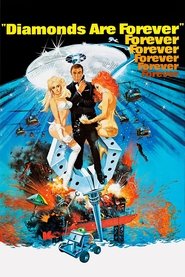
Diamonds Are Forever (1971)
Release Diamonds Are Forever Special Edition DVD (MGM Home Entertainment, 2000)
Bond historian David Naylor moderates an edited oral history built from director Guy Hamilton, screenwriter Tom Mankiewicz, composer John Barry, production designer Ken Adam, performers, and craftspeople recorded nearly three decades after the film. Their recollections show the Bond formula as a practical design problem: find villains who do not look dangerous, place Bond in a seemingly insoluble snake pit, make locations and sets feel uniquely Bondian, and let humor keep spectacle from becoming solemn. The track is especially candid about creative friction, from a wine mistake that became a celebrated line to Hamilton deliberately shooting no coverage so a joke producer Cubby Broccoli wanted removed could not be cut.
- Duration
- 1h 59m
- Talk coverage
- 94%
- Words
- 17,682
- Speakers
- 18
Guided collection
Recalibrating Bond spectacle
Guy Hamilton's edited production history and Roger Moore's retrospective discussion show how Bond spectacle is renewed across two eras through villains, humor, locations, stunt specialization, and a changing threshold for violence.
Part 1 of 2
- 01 Diamonds Are Forever Now reading
- 02 A View to a Kill 1985
Commentary density
Highlights
Topics
People mentioned
The film
- Director
- Guy Hamilton
- Cinematographer
- Ted Moore
- Writer
- Richard Maibaum , Tom Mankiewicz
- Editor
- John W. Holmes , Bert Bates
- Runtime
- 120 min
- Also on
- OneSheet ↗
- External
- IMDb ↗ TMDB ↗ Find on Amazon ↗
Transcript
17,682 words · 26 flagged as film dialogue
Hello, this is David Naylor, and welcome to the audio commentary for Diamonds Are Forever. On this audio commentary, we'll be joined by director Guy Hamilton and many members of the cast and crew. The stories which you're about to hear reflect the personal recollections and opinions of those who provided the interviews. Some comments have been edited for time and clarity. They're not meant to provide the definitive history of the film. Diamonds Are Forever, the seventh James Bond film, marked the return of Sean Connery to the role of 007. The previous film, On Her Majesty's Secret Service, had starred George Lazenby. Co-screenwriter Tom Mankiewicz recalls writing this teaser which reintroduces Connery as Bond. The teaser, which was part of every Bond movie, which is here, this really had to do with the fact that he himself, meaning Sean Connery, was coming back. So we thought in this teaser we would do a series of things where you didn't see 007's face until the end.
In fact, it is stuntman Bob Simmons doubling for Connery in these pre-credits shots. Now, director Guy Hamilton recalls the next sequence which was filmed at Eden Rock Beach in Cap d'Antibes. That was shot in the south of France. The thing that I enjoy about that is how you can remove a lady's brassiere without getting any sensor problems because that was one of the absolute basic things about Bond that you had to have a youth certificate for absolutely everybody. And so we were forever worrying about how to keep it sexy, but at the same time, the kids can go. Charles Gray had appeared in Sean Connery's previous Bond film, You Only Live Twice, as Dicko Henderson. Co-screenwriter Tom Mankiewicz remembers the actor. And then of all the people who played Blofeld, and there have been several, he was a much more kind of fussy Blofeld than the others, but just as evil. Wonderful Shakespearean actor. Blofeld's Plastic Surgeon is played by David de Keyser, who was heard but not seen in On Her Majesty's Secret Service. De Keyser provided the voice of Union course leader Mark And Draco. The patient in the mud bath is played by two different stuntmen. For the insert shot of mud being applied to his face, it is George Leech.
In the upcoming shots, when the patient rises out of the mud, it is Bill Morgan. Director Guy Hamilton recalls shooting the scene. This is all at Pinewood Studios. The stuntman was never very keen on coming out from all that muck, but it's lovely goo. The art department did a lovely job. Tom Mankiewicz recalls the difficulties faced by the stuntman in filming the mud cavern scene. I remember the stuntmen had a terrible time with this mud. It really hurt their eyes and gave them skin rashes and probably had more injuries out of this benign little stunt. Well, what we're trying to set up here is that there are going to be two Blofelds. He is going to make a clone of himself. So we started this, to lay this in for later on in the picture. As Tom Mankiewicz explains, plastic surgery was a topical subject. Everybody was into plastic surgery then. It was really starting to become a huge deal. Most of what's here is not in the book, Diamonds Are Forever. By this point, Cubby and Harry had already started the tradition of taking the title and maybe the spine of the story or the setting
But then basically, as writers, it was up to you to go ahead and do what it was that you wanted. Stuntmen Terry Mountain and George Cooper portray the guards who are overcome by Bond. Doubling for Charles Gray in the sequence is Chris Webb. With Diamonds Are Forever, the producers decided to go back to a Goldfinger-style James Bond film. This included not only bringing back Goldfinger's director, Guy Hamilton, but also bringing back Shirley Bassey to sing the title song. Now Tom Mankiewicz recalls the film's opening titles. And of course there's Blofeld's cat, traditional cat, and we go into what was then the classic opening, which was Shirley Bassey singing a John Barry song. Everybody was back. Mankiewicz was hired after Richard Maibaum had completed a first draft script. Director Guy Hamilton remembers working with the writer. Tom Mankiewicz came out to Universal, and we sat down and we started to write the script, and we had a lot of fun writing it. Here's Tom Mankiewicz's memories of writing the script. When I was hired to rewrite Diamonds Are Forever,
They wanted a young writer. I was only 27 years old. And I had written the book for a Broadway musical of Georgie Girl. And they wanted someone who was American, who could write in the British idiom. And I was signed on a two-week guarantee. And it worked out. So I was thrilled. As I say, being only 27 years old now, I was writing a James Bond movie with Sean Connery, no less. Composer John Barry remembers the first time he played the title song for producers Cubby Broccoli and Harry Saltzman. Cubby was very good about music. He had a good ear. He knew when he heard a song or a melody. He always had very good instincts about that. Harry was absolutely toned up. And after we played Diamonds Forever, and everybody loved it who heard it, and Harry was going, and I said, Harry, it was in my apartment, I remember my apartment, and then Don was there, and there was a pianist and Cubby and myself, and I said, Harry, will you do me one thing? Will you sing me the first two bars of the national anthem, God Save the Queen, okay?
He couldn't. And he said, what the, you know, I can't, I can't. He had a very colorful vocabulary. And he just steamed out of the room in my apartment, just went out, slammed the door and left. And there was the pianist, that, and there was Cubby and Don and I and stuff, and there was this silence. And then Cubby said, have any Jack Daniels? And I said, yeah, yeah. So we all hit the Jack Daniels. And that was, I never heard anything else from Harry. And Cubby said, I think it's terrific. You should do it. Director Guy Hamilton talks about the importance of establishing the context of the film's plot at the beginning of the movie. This is the... standard scene that i believe in a great deal diamonds the pictures about diamonds goldfinger used to be about gold this is uh tell the audience uh what fleming was always very keen on of explaining uh something about diamonds where they come from how they're priced why they're valuable how many there are etc etc etc may i remind you 007 the blue fells dead
Once you've explained that, you then never have to refer to it again, and you can get on with the story and move fast. This is the only serious scene in the picture, so to speak, where you're talking about diamonds. When Tom Mankiewicz first wrote this scene, he had Bond remarking about the vintage of the sherry. It was a mistake that led to a classic line, as Mankiewicz recalls. I wrote this and Cubby's lawyer was on the wine tasting committees and said, please tell young Mankiewicz that there is no year on a sherry bottle. There is no year for sherry 007. So I quickly changed it to 53, I believe. And M says there is no year on a sherry bottle 007. And Sean says, I was referring to the original vintage on which the sherry was based, sir. 1853, unmistakable. Lots of people in Bond trivia books and so on have pointed this scene out and given me tremendous credit for one of the great little sort of sophisticated Bond touches, which really only came about because I was totally unaware that there wasn't a year on a sherry bottle. And if it hadn't been for Cubby's lawyer, I never would have.
No. Lawrence Naismith portrays Sir Donald Munger. Naismith had appeared in two other films produced by Cubby Broccoli, The Black Knight and The Trials of Oscar Wilde. He is best remembered for his portrayals of Merlin the Magician in the 1967 film version of the hit musical Camelot and as Captain Smith in A Night to Remember about the sinking of the Titanic. Careful listeners will notice a repeated line of voiceover in this sequence. Sir Donald's line, which begins, The whole process, from start to finish, operates under an airtight security system, is used twice, first when we see the workers drilling in the mine, and again when the first patient leaves the dentist's office. Though they take place in South Africa, these scenes of the dentist's office and the following scene in the desert were among the first filmed on location in Nevada. Finding the proper villains to oppose Bond is always a challenge, as director Guy Hamilton remembers. It always seemed to me that Bond was as good as his villains, and you couldn't repeat odd job. We had to find something new. I had seen, being a jazz fan, I'd gone to a Thelonious Monk recital in L. A. and had seen the bass player, who fascinated me because he seemed to be a real...
Bondian character, Putter Smith, and who could I match him with? Putter had never acted in his life before. And we found another very good actor, and it seemed to me that they were interesting because they didn't look like villains. You didn't know what they were going to do next. Bond, first time around, wouldn't take them very seriously, but we would make them. be a great danger to Bond. It was an effort to get interesting villains because Bond is as good as his villains.
Would you mind having a look, Doctor?
Co-screenwriter Tom Mankiewicz recalls being on location with Putter Smith. Putter brought his bass fiddle with him everywhere. And a couple of times I was unfortunate enough to be in the room next to him and you'd hear, I mean, starting at 6. 30 in the morning. Never stopped practicing. Diamonds Are Forever was Putter Smith's debut as an actor. As a musician, he had performed with Sonny and Cher and Burt Bacharach and appears on the Righteous Brothers recording of the hit song, You've Lost That Loving Feeling. Smith had more challenges than just remembering his lines, as he recalls. I would duck from lights. I would, even up to the last day of shooting, I would, they would say, no, Putter, don't duck. Don't duck the lights. Guy Hamilton saying, there was huge lights right there. First day of shooting with the helicopter, I had to bend over. I could not possibly stand up straight. They were reassuring me that they were 10 feet in the air and there was no harm, but
I couldn't stop it. I've never been that close to a helicopter since. Diamonds Are Forever marked Sean Connery's final appearance in a James Bond film produced by Eon Productions. After his previous 007 adventure, You Only Live Twice, Connery appeared in the western Shalako with Brigitte Bardot and his former Goldfinger co-star, Honor Blackman, and co-starred with Richard Harris in The Molly Maguires. He won critical praise for his role in The Anderson Tapes, which also featured future Bond villain Christopher Walken. In the upcoming scene, we will see Margaret Lacey as Mrs. Whistler. Lacey's most recognizable roles were in 1967's Far From the Madding Crowd and in 1971's adaptation of Black Beauty. Guy Hamilton remembers Margaret Lacey. I always liked nice old ladies who'd look as if they're absolutely innocent butter wouldn't melt in their mouths, and they'd turn out to be accomplished villainesses. Creating homosexual villains was controversial in 1971, as Tom Mankiewicz explains. It was a very risky kind of deal, the relationship between Mr. Wint and Mr. Kidd. Now, I wanted to, and perhaps certainly today one would not be able to get away with that,
They were clearly two gentlemen who kept company with each other. And even though they're vicious, I think they're funny vicious. Actor Bernard Lee appeared in every James Bond film from 1962's Dr. No until Moonraker. A very busy character actor, Lee appeared in the classic 1949 film The Third Man opposite Joseph Cotten and Orson Welles. Coincidentally, Guy Hamilton also worked on the third man as an assistant director. For the climactic chase through the sewers, Hamilton doubled Orson Welles. When the actor's shadow appears on the walls, it is really Guy Hamilton. Now Tom Mankiewicz recalls this scene which was shot on location in Dover. This fellow here, Mr. Franks, is a stuntman, a British stuntman with whom Sean's going to have a terrific fight. And since we didn't have a scene in M's office, We stuck Moneypenny, Miss Moneypenny in here, and Lois Maxwell, who was just an absolute sweetheart who played in all the films, and it was just unthinkable not to have Miss Moneypenny in the film. And it just worked out that there was not an office scene. And so we made sure that she... And she has a little wistful, bring me back a diamond in a ring. She's always had that crush on 007.
Lois Maxwell's agent negotiated a perk for her in Diamonds Are Forever, that she would be able to keep her wardrobe. Unfortunately for Maxwell, the only time she's seen it's in a customs uniform. Now back to director Guy Hamilton. I wanted to get Moneypenny back into the story, get her out of the office so that I could see her in a uniform. Tom Mankiewicz recalled shooting the hovercraft on location. This is the English Channel. The hovercraft was big news then. The channel wasn't even an idea yet. And this was sort of the fastest, most exciting way to get across the channel. It is one of the oldest bridges in Amsterdam. Producer Harry Saltzman's son, Stephen, had a cameo in this scene as a passenger on a boat in Amsterdam, sitting next to Jill St. John. However, the shots in which he appears were eventually cut from the finished film.
The shots of Mrs. Whistler being pulled from the water involved six actual river police, 25 extras, and for the wide shots, stuntman Malcolm Weaver doubling for Margaret Lacey. Almost all of the exteriors for the Amsterdam scenes were completed over one whirlwind weekend, as director Guy Hamilton recalls. We shot all morning, we left in the afternoon, climbed onto an aeroplane and went to Germany and then jetted on to Amsterdam. where we did those day scenes, and now we've gone to the night scenes. And I thought we will never finish. And I said to the crew that if they, I got seven shots to do, and if they got those shots done, the rest of the evening was theirs. And my goodness, I've never worked with a crew at night so fast in my life. And we caught the plane back the following morning, had Sunday afternoon off, and were back at the set of Pinewood on Monday morning. In this scene, we are introduced to Jill St. John as Tiffany Case. Four years old when she began her career in show business, St. John appeared in more than 1,000 radio broadcasts. When she was 10, she was featured in the first TV movie ever made, an adaptation of A Christmas Carol.
Help yourself to a drink.
Is Mr. Case not at home? There is no Mr. Case. The tea is for Tiffany. At the time of Diamonds Are Forever, Jill St. John had a line of wigs bearing her name on sale in America. Director Guy Hamilton comments on the scene. This was a fun scene to shoot with all the wigs and the changes.
Weren't you a blonde when I came in?
Could be.
I tend to notice little things like that, whether a girl is a blonde or a brunette. And which do you prefer?
Interviewed on a recent photo shoot, Jill St. John recalls working in England. Guy Hamilton was so nice. And, you know, because you were in England filming, you were the out-of-towners, those actors, those of us who didn't live there. And so people would bring us to their homes, and we would have these great... great, wonderful dinners and things that would be so much fun. And then if you were traveling on location, then you might en masse go out to dinner. So it became a family. It was a six-month shoot. You were going to all these wonderful places in the world, and you really got to know people. And some of the people became lasting friends. Among Jill St. John's earliest movie roles was an appearance in 1961's The Roman Spring of Mrs. Stone, which also featured from Russia with Love's Lotta Lenya. In 1965, St. John appeared in The Liquidator, a spy spoof based on the novel by John Gardner, who later wrote several James Bond novels. Director Guy Hamilton. I think it's fun to play with the audience here, you know. We're obviously going to expose Bond as a phony, but he's got a way of having magic fingerprints. Miss Tiffany Case looks very dishy.
Diamonds of Forever's production designer was Ken Adam. His first film for co-producer Cubby Broccoli was 1960s The Trials of Oscar Wilde. Now back to Tom Mankiewicz. I think Ken was the first production designer on Dr. No, and he had been on most of the pictures. He was a tremendously artistic, finicky fellow. Very charming, or still is. A German who had flown for the RAF during the war in England. And he's a brilliant, brilliant production designer.
I don't care much for redheads. Terrible tempers. but somehow it seems to suit you.
It's my home.
But it is in need of some soft lighting,
and I know a little restaurant quite close. I never mix business with pleasure. Well,
neither do I. Good.
Then we can start by saving the cute remarks until after you. Between You Only Live Twice and Diamonds Are Forever, Ken Adam served as production designer on Chitty Chitty Bang Bang, Goodbye Mr. Chips, and The Owl and the Pussycat. Here's Ken Adam. But what I always try to do is to do other films differently. between Bond films, and then again for therapy or whatever you call it, I'd love to do a Bond because I could let myself go. Bond's fake fingerprints are the most subtle of all Q's gadgets. Here's Tom Mankiewicz. Bond has a fake set of fingerprints here that Q has designed for him. Guy really loved the bickering between... And I think Guy really helped to set that up, that irritated relationship. Stuntman Joe Robinson, who portrays Peter Franks, made his film debut as Sam in 1955's A Kid for Two Farthings, which was directed by Carol Reid from a screenplay by Wolf Mankiewicz. It was Wolf Mankiewicz, no relation to Tom Mankiewicz, who introduced Cubby Broccoli to Harry Saltzman.
In 1960, Joe Robinson appeared in the Italian production Tarzan, Roi de la Force Brutale, an unauthorized Tarzan film. After quick action from the copyright holders of the Tarzan character, the film was seized. It was released only when the lead character's name was changed to Thor.
You are English? Yes, I'm English.
I speak English. Guy Hamilton recalls filming the elevator fight scene with Joe Robinson and Sean Connery. I picked essentially Joe Robinson because he was about the same size as Sean, if not bigger, and just as athletic. Now, to have the pair of them swinging away at each other is just like a barroom brawl to me. It's got nothing of interest. There's nothing fresh that you can add to it. But I had a good friend who lived in a whole block of flats in Chelsea. and it had a wonderful old elevator that seemed to work by water pressure and you got into it and it rattled and it went up and it was surrounded by glass panels and things and I suddenly thought about if you had a fight in there it would be totally lunatic because there's no room to swing at each other you'd be breaking the glass you'd be hitting the buttons you'd be it'd be quite dangerous but it would be interesting and
So we discussed this with Ken Adam. We made the elevator smaller than it really was in real life. And Cubby was agreed, but Harry was saying, but it's too small, they can't fight in there. And I said, but that's the whole point of the thing, to watch two large, very tough gentlemen... having a go at each other, but sort of failing miserably because of the space. It becomes a more interesting fight, I think. A rugby player in his youth, as well as a former bronze medalist in a Mr. Universe competition, Sean Connery was well suited to the physical rigors of playing James Bond, as Tom Mankiewicz remembers. There's a wonderful thing about Sean as an actor. When he's involved in physical action of any kind, especially fights, he instinctively grins. He loves it. Roger, who I wrote for and I love dearly, Roger would fight on screen like a man fighting. Sean fights, fought like a man who really enjoyed it and enjoyed getting his licks in. He has that wonderful grin when he's fighting as if he already knows he's going to win. Joe Robinson, an actor and stuntman, had been Sean Connery's judo instructor before being cast as diamond smuggler Peter Franks. Robinson recalls his reaction to filming the elevator fight.
We more or less knew each other and we could trust each other. But it was strange for me anyway, because I'd worked in Barabbas in a huge arena as a gladiator. I worked in a big market square with Stanley Baker in a big fight, in a ring, in a kip of two findings. And we suddenly can see this small lift with Sean Both and I, six foot two and 220 pounds. It was quite something. I thought that's a brilliant idea, you know. God! Though the exteriors of the scene were shot on location in Amsterdam, the hallway and Tiffany Case's apartment were built at Pinewood Studios. Production designer Ken Adam recalls constructing the elevator for the scene. That was, I think, in a house in Amsterdam supposedly. And we built it as a set at Pinewood. And, you know, I had an elevator expert come in who worked out the mechanics. And it had to be small. And it was, if I remember, like an open cage, as so many of the old-fashioned French and German and Dutch elevators were. And the fight was quite brilliantly staged and designed. And it was quite dangerous because you had very little room to shoot at him.
We were inseparable, you know. Please, Mr. Franks.
Actor Bruce Glover, father of Crispin Glover, comments on the humor of Diamonds Are Forever. I think that Diamonds Are Forever is the funniest of the Bond films, partly because of me and Putter and Jill St. John and Connery, of course, and Guy. But Guy, I feel very fortunate to have... met and worked with this man and have been the beneficiary of his fine direction. In the novels of Ian Fleming, Bond's CIA friend Felix Leiter was a Texan. Tom Mankiewicz recalls the approach to casting Norman Burton as Leiter in Diamonds Are Forever. Now, here we meet Felix Leiter. There had been several Felix Leiters. Guy tried in the whole style of this movie, when he had a fussier Blofeld, less of a thuggish Blofeld, he tried to find a Felix Leiter. who was more a button-down sort of fellow. Now here, the diamonds are hidden in the quartz. That was my first fight with Cubby. Felix says, I give up the diamonds. I know the diamonds are in there, but where are they? And Bond says, alimentary, my dear lighter. And Cubby said to me, and what the hell does that mean? I said, Cubby, it's the alimentary canal.
Cubby said, no one will get that. I said, oh, Cubby, please let me. He said, no one's going to get that. Guy interceded on my behalf and said, Cubby, please let him say Alimentary. So Cubby said, OK. When the picture opened, Cubby and I were standing in the back of Grauman's Chinese then, now Mann's Chinese. And Sean said, Alimentary, my dear lighter. And a couple of people in front, it was a packed house, laughed like crazy. And Cubby looked at me and he said, big deal, two doctors. These scenes at Los Angeles International Airport were filmed after shooting was completed in Las Vegas. The film unit then shot the climax on an oil rig off the coast of California before returning to Pinewood, where the scene of Bond confronting Blofeld inside Willard Whyte's penthouse was first on the schedule. The attendants who take Bond for a ride are played by Marc Lawrence, about whom we'll hear more later, Sid Haig, and Mike Valenti. The scenes were shot on a single day.
Monday, May 24th, 1971. Part of the Bond formula is the 007 must always be seen to be impeccably dressed. Guy Hamilton comments on Sean Connery's attire in this scene. I always think Sean looks so elegant in black with a white shirt. That's why he looks good in a dinner jacket. Ken Adam was born in Berlin in 1921. He fled Germany prior to World War II and became a pilot for the RAF. Adam began his career as a junior draftsman at Riverside Studios in the late 1940s. Ten years later, he was one of the most sought-after production designers in British cinema. Tom Mankiewicz recalls Ken Adam's set for Slumber Mortuary. This is a wonderful set that Ken Adam designed. I mean, again, it is so tacky and just perfect for a Vegas kind of mortuary and Morton Slumber. It's just a wonderful performance this guy gives.
Morton Slumber is played by David Bauer, an American actor who appeared in many British films and television series. He had an uncredited role in You Only Live Twice as an American diplomat. Tom Mankiewicz. For this time in Bond, everything always had to have lots of buttons on it. It wasn't enough to have just to press a button and the thing opened. You always had to have a console. Every element in a Bond film required a special look. Production designer Ken Adam comments on the influences that inspired his design for Slumber Mortuary. I had passed through my location scout through Las Vegas and saw these incredible mortuaries. I couldn't believe places like that existed, like people getting married or something like that. So I decided to go one step And though the sort of, I remember the sort of secular window at the back was almost diamond-shaped, but with a cross in the center, the furniture and the office and all, I kept liberty as Art Nouveau. To give it a certain panache, I mean,
you wouldn't find Art Nouveau style in an actual mortuary. But, you know, I had the Tiffany lamps and particular form of palm trees and Art Nouveau chairs and Art Nouveau settee and that, and I thought that was my tongue-in-the-cheek approach to the mortuary.
I hope you'll find everything in order.
In creating the storyline for James Bond film, certain formula elements are used. Director Guy Hamilton comments on one of them. This is what I call the snake pit situation. Tom and I always wanted to... We would spend hours trying to think of snake pit situations. In other words, put Bond in mortal peril and give the audience 20 seconds to figure out how he's going to... get out of the snake pit situation. Come on audience, how's he going to get out of this? And they, by a marvelous Bondian trick, Bond gets out of the snake pit and everybody cheers. The point being that we give the audience 20 seconds to figure out how it's going to happen. And we have probably spent three months beating our brains out, trying to think of the answer. Tom and I used to have terrific snake pit situations, but would never find a satisfactory way of the night watchman passing. No, not good enough. It's got to be really ingenious. And we like this one because here is Bond in a coffin being incinerated. Now, come on, children.
Who's got the answer? How's he going to get out of this one? The flames are burning. You've got another five seconds. Come on, who can think of the answer? And bang, we deliver it, and we hope that it's satisfactory. It satisfied us. These shots of Bond inside the coffin were completed on Sean Connery's last day of filming Diamonds Are Forever in August 1971. Appropriately, the date was Friday the 13th.
Soon, we will see Shady Tree, played by comedian Leonard Barr. Born Leonard Barry in 1903, Barr was the uncle of Dino Crocetti, who gained fame as Dean Martin. After his appearance in Diamonds Are Forever, Barr played a similar role in 1973's The Sting. Guy Hamilton remembers the comedian. You dirty, double-crossing, limey finkos. Goddamn diamonds are phonies. This was a wonderful face. He was a warm-up comedian. in one of the casinos. We had tremendous cooperation from Las Vegas because Cubby had very good connections and knowledgeable friends in Vegas, and they said, right, you've got to convince us that if we have a film unit there, it's good for Vegas. And that wasn't too difficult to do. And once they'd been convinced, then the town absolutely opened up for us. With a little help from the special effects crew, the Las Vegas Hilton was transformed into the hotel headquarters of Willard Whyte, as co-screenwriter Tom Mankiewicz recalls. Now, this is a match shot of the Hilton turned into the White House. And...
Howard Hughes, of course, was a very famous recluse at the time. Cubby had worked for him. Diamonds Are Forever, Ian Fleming's fourth James Bond novel, was published in 1956. Many of the novel's characters were used in the film, including Tiffany Case, Peter Franks, Wint and Kidd, and Shady Tree. But the novel's principal villains, brothers Jack and Seraphimo Spang, who ran an American syndicate called the Spangled Mob, were left out. In the Richard Maibaum script, the primary villain was to be Goldfinger's twin brother, back for revenge. When Tom Mankiewicz came on board, the storyline changed, influenced by a dream of Cubby Broccoli's. Broccoli dreamt that he'd gone to visit his old friend Howard Hughes, but when he called out Hughes's name, the man who turned around was a total stranger. Using that idea as a launching point, the producers decided to bring back Bond's arch-nemesis, Ernst Stavro Blofeld, who is impersonating a Howard Hughes-type industrialist.
Look carefully at Shady Tree's acorns, and you'll see that the one on the left is actress Valerie Perrine in one of her very first film appearances. Perrine went on to star opposite Dustin Hoffman in Lenny, for which she was nominated for an Academy Award, and made a memorable impression in Superman the movie. Jill St. John recalls shooting in Las Vegas. Because wherever we went, it was comped. You know, those are the days in Las Vegas where everything was free. if you were a celebrity, and we were making the film, and everyone was staying at the Riviera Hotel, but if we went to see Elvis Presley, or we went to see Diana Ross, or we went to see whatever great entertainer was playing, they would just hand me the check and ask for me to sign, and I'd be with all my friends, and Tom, obviously, was one of them, and he said, you ought to have that hand insured by Lloyds of London. Shady Tree's demise at the hands of Wint and Kidd was filmed, but left on the cutting room floor.
co-screenwriter Tom Mankiewicz recalls shooting in Las Vegas. We shot at several Vegas hotels. We lived at the Riviera. And we shot there. To shoot in a casino in the Riviera, you had to shoot between 3 and 6 in the morning. It was the only way they would let us shoot. On a week morning, a weekday morning. Because, of course, in Vegas it goes 24 hours a day, seven days a week. Shooting in the gambling capital provided temptations too enticing to overcome for some of the crew members. Tom Mankiewicz recalls spending time at the casino tables where an actual casino employee was used in the film. Was there some problem? His name was Tiny, the stick man. I remember distinctly his name was Tiny. I played at his table a lot, and I lost... Oh, I was probably behind four-week salary at the end of the week. It was a wonderful lesson to learn about gambling. But I would go to Milton Feldman and say, can I have next week's salary, please? And he would say, you mean four weeks from today? And I would go, oh, my God, is it that bad?
Named after your father, perhaps?
Cubby loved to play back, Gavin. Cubby didn't find it fun to play anything unless you played for money. And Milton Feldman said, Cubby, I got to sit down. and play you some backgammon. And Cubby said, you know, Milton, it wouldn't look right. Producer of this movie taking money from the production manager. But I'll back my daughter Barbara against you. You just name the price. And Barbara played Milton and beat him. Tom Mankiewicz recalls actor Bruce Cabot. Now, there's Bruce Cabot. He was an old friend of Cubby's. He was an old friend of John Wayne's. He was in a lot of John Wayne westerns. Bruce Cabot. was the fellow who found King Khan in the, that's how far back Bruce Cabot goes. He'd been in 150 movies, Bruce Cabot. Actress Lana Wood, who plays Plenty O'Toole, made her film debut in the classic 1956 John Wayne Western, The Searchers, when she was just nine years old. She got the role after her sister, Natalie Wood, was cast in the film, when the filmmakers needed an actress who could play the character at a younger age. Lana Wood remembers shooting in Las Vegas.
1971 Las Vegas. Probably not quite as wild and crazy as it is now. People didn't really bother you while you were filming. We were in the casino. There were people mulling about, but they all seemed to be rather well-behaved. I did a lot of shopping while I was filming there. If I wasn't on the set shooting, I was in the stores and the shopping was great. Lana Wood was no stranger to James Bond. An avid reader, she had been a lifelong fan of the Ian Fleming novels, as she recalls here. I always adored all of the Ian Fleming, James Bond books. It was absolutely, the genre was absolutely perfect for my personality and what I enjoyed with reading. I'm an avid reader and I do read everything. But the spy novel, I've always had a particular fondness for the spy novel. Just give me one second. Marc Lawrence, a veteran of over 150 movies, appears in this scene as a gangster, a role of which he's made a career. Lawrence talks about working with Guy Hamilton. Guy and Karima, his wife,
Kareem and I were on the contract with Dino De Laurentiis in Rome in the 50s. So that's how we got the me guy. Guy's a very English, very English, very reserved, but a very sweet man. Born in 1910, Marc Lawrence made his first film appearance in 1932, but left America after being blacklisted during the communist witch hunt of the 1950s. Here, Lawrence recalls his early film career when he worked with a young writer named Richard Maibaum. Another friend was Richard Baybaum. I did his first play on Broadway, The Tree. Oh, a thousand years ago. A thousand years ago, a million. And Dick and I were old friends. Originally, the producers had planned to shoot the entire film in America at Universal Studios. John Gavin was signed to play James Bond, and Gilson John was signed to a supporting role. Those plans later changed, as Tom Mankiewicz recalls.
Jill St. John, who plays the lead in the movie, Tiffany Case, she was supposed to play Plenty O'Toole, a smaller part which is played by Lana Wood. And the minute Sean came back, Jill had met with Guy, Guy said Jill would be a wonderful Tiffany Case. Director Guy Hamilton also recalls the switching of roles. I was very, very happy with Jill St. John in the part. I thought that she'd make an absolutely marvellous Tiffany Case. And I think that was the case. She looked great. She had, you know, tough enough. And a very, very professional actress.
So far, so good. Keep going.
And if not, then with whom?
So you can inform your superiors and
acquire the diamonds. Peter, I'm very impressed.
There's a lot more to you than I had expected.
Jill St. John recalls playing Tiffany Case. Here I was playing a character that was larger than life. Real women don't exist like that, but what fun to try to play one. And working with Sean Connery, going to all these great locations, having some pretty snappy lines to say, not too much wrong with that. I loved it. Now let's hear her reminisce about acting opposite Sean Connery. He's a very good pal to have as your... leading man, you know. To be his co-star is to feel almost protected. He's a real stand-up guy. He was definitely James Bond. Don Black, who had previously written the lyrics for Thunderball, wrote the lyrics to the title song of Diamonds Are Forever. Although he won an Academy Award for his title song for Born Free, his Bond work remains memorable, as he explains here. I was with Andrew Lloyd Webber
at the at his home in the Trump Tower in New York a few years ago and Steven Spielberg was there and Andrew introduced me to him because I'd never met Spielberg and just as I was gonna say why God what a great thing he said are you the Don Black so it really threw me this I mean I couldn't believe I said what do you mean the Don Black he said you wrote my favorite title song Diamonds Are Forever and then he went on and explained to me how the words luster hit that translucent diamond and the shape of it he knew every frame of that opening title sequence it's quite amazing really threw me so i guess i am the don black yeah when was the last time you visited a circus co-screenwriter tom mankiewicz recalls filming at this location now this is circus circus which is a casino in in vegas
then was the first of its kind, a casino that had circus acts, forever, while all the gambling's going on underneath. And I remember the trapeze artists in the script, I called them the flying broccolis. And Cabi said, not on your life, and we're not even fighting about this one. So I said, okay, okay, it's out, it's out. I thought we were gonna slip it through, but we didn't. Director Guy Hamilton also remembers shooting these scenes. Circus Circus was one of the casinos we decided to use for this sequence, which is very simply passing some diamonds from A to B. But don't do it on a street corner. Use Circus Circus. How do we use Circus Circus? Which is great fun because everybody's gambling down below and nobody's paying the slightest attention to these first-rate acts that are going on overhead.
Give Maxwell his cue.
The cinematographer of Diamonds Are Forever was Ted Moore. Moore shot seven of the first nine James Bond films. His association with Cubby Broccoli began when he photographed the Warwick film A Prize of Gold. Moore shot several other Warwick pictures before beginning work on Dr. No. Tom Mankiewicz recalls working with Ted Moore. He had shot Man for All Seasons with Fred Zinnemann. He's a wonderful cameraman. He did several. Bonds, Guy liked him very much. He was a lovely fellow, Ted. And I remember when we were in Vegas, he used to win at slot machines. Wherever we would go, Ted would stick a nickel in or a quarter in, and he would win. It was just amazing. Moore's luck extended to more than just slot machines. In 1967, he won an Academy Award for his breathtaking work on A Man for All Seasons. Now, Tom Mankiewicz remembers his accommodations while filming in Las Vegas. Cubby and I were sitting with Milton Feldman, who was the production manager.
And Cubby said to me, how do you like your suite? And I was being paid $1,500 a week. And I said, well, I don't have a suite, Cubby, but that's all right. I have a very nice room. And Cubby turned to Milton and said, why doesn't he have a suite? And Milton said, well, come on, Cubby, for Christ's sake. A suite's going to cost more than we're actually paying him a week. It's going to cost us more to give him a suite. And Cubby said, Milton? I didn't ask you how much it costs. He's the writer of the movie, Get Him a Suite. A company who just never stopped doing favors for everybody on the picture. And he always had a little bit in his budget for what he used to call morale. A native of New Brunswick, Canada, Harry Saltzman, the co-producer of Diamonds Are Forever, traveled to Paris at a young age and became manager of a circus. During World War II, by some accounts, he was an interpreter for Allied commanders.
At war's end, he remained in Europe and became a theatrical and vaudeville booker. Director Guy Hamilton recalls Harry Saltzman's reaction to filming on location at Circus Circus. I think Harry was very happy with the Circus Circus, using it as background, because before the war, he'd worked for an agent in France who, amongst other things, handled circuses when they were out on the road. And Harry was forever being sent to bail them out because the circus had run out of cash and the police were doing this, that, and the other thing. And if ever the elephants were seized because they couldn't pay the fee bill, that was the absolute end of the circus. You can wrap it up. And when Harry came to make pictures, that's largely his attitude. It was circus. Let's have it big, large, larger than life. Elephants are good. If there was something bigger than an elephant, Bond's got to have it. Circus Circus was opened to the public on October 18th, 1968. At that time, it consisted of a casino, circus arena, carnival midway, and restaurants under a permanent big top, but no hotel rooms. The hotel, a 15-story tower with 400 guest rooms, was added in 1972,
after the completion of filming Diamonds Are Forever. Director Guy Hamilton remembers how one of the roles in this scene was cast. Surprisingly enough, the man who owns Circus Circus was a Bond fan and said, right, you can use Circus Circus, but I've got to be in the picture. Well, what do you want to do? And he said, well, I'll do the mad scientist at the gorilla into woman thing. I said, fine, you do that. and that's how we had the freedom of Circus Circus. Tom Mankiewicz, whose father, Joseph L. Mankiewicz, directed such classic films as All About Eve and Cleopatra, was just starting out in the film industry when he was hired to write Diamonds Are Forever. The assignment put him under a certain amount of pressure, as he recalls here. The casting of the film was interesting in the sense that people were not sure cubby and harry were not sure that sean was coming back and he had in fact rejected the first script that was written uh john gavin had been hired to play bond in case we couldn't get sean and he had a deal where if he played bond he would get so-and-so and if sean came back he would be paid a certain fee um
When I went on, I went on the script on a two-week guarantee. I was supposed to do the first 40 pages in two weeks and send them to Sean Connery. I worked with Guy and I did them, and Sean said yes, he would come back based on those 40 pages. Since Diamonds Are Forever, Tom Mankiewicz has served as a creative consultant on Superman the movie, directed episodes of Heart to Heart, produced 1976's Mother, Jugs and Speed, and was executive producer of 1987's Hot Pursuit. Now let's return to Lana Wood, who talks about the next scene. They put a rope across this midsection of a pool, and they had two guys hanging onto the rope. They really did have my ankles tied loosely with a scarf to a block of cement. I could hear the underwater camera. I had myself submerged, and before I heard the underwater camera go, I would grab the rope, pull my face free, take a breath of air, and then go back underwater. And this worked for quite some time. I would just grab the rope, clear my nose and mouth, and breathe. But what didn't dawn on anybody is pools.
slanted at the bottom so that you have a deep end and slowly as we're filming the block kept moving a little deeper and a little bit deeper to the point where at a certain time I could no longer clear my my nose and mouth to take a breath it was it was slipping so they had some guys jump in and quickly untie me and I was fine. I was a scuba diver. I was a certified scuba diver and I'm real comfortable in the water so I didn't really panic but it wasn't the most comfortable feeling in the world where all of a sudden you discover that you really can't take a breath of air. These scenes were filmed at the Palm Springs home of Kirk Douglas. The next scene was shot at Las Vegas' McCarran International Airport as director Guy Hamilton recalls. This is Vegas Airport.
where as you step off the plane, there are already slot machines whilst waiting for your luggage. In Ian Fleming's novel, Bond arrives at the Las Vegas airport, plays a few of the slot machines, takes a hit of pure oxygen from a vending machine, and then enters a cab driven by Ernest Curio. The name is derived from Ernst Cuneo, an American Fleming met during World War II who became a lifelong friend. In November 1954, Fleming traveled with Cuneo from Manhattan to Los Angeles, and then on to Las Vegas, where Fleming did his research for the novel Diamonds Are Forever. Now, co-screenwriter Tom Mankiewicz talks about the Mustang driven by Tiffany Case. Now, the famous red Mustang here, this was one of the... Of course, that's a matte shot. You see the White House there. That's really based on the Hilton. Of course, they matted out all the other buildings, so it stands alone. The Ford Motor Company was introducing that Mustang, that model of Mustang. And we had the damnedest car chase where about 40 or 50 cars were going to be destroyed, at least because with all the different takes and the cars running into each other. And Ford said, if
james bond sean connery would drive that red mustang they would give us all the cars as many cars as we wanted to for the demolition derby so ford supplied all the police cars all the smashed cars all the villains cars every car and there must be 80 cars that get it in this movie between all the chases they're all ford it was just a huge budget item And in return for that, we said Sean would drive the red Mustang in the car chase. Filming of this scene, shot at the Shell gas station opposite the International Hotel, was not entirely without incident, as director Guy Hamilton recalls. Whilst we were shooting this scene, in the highway opposite, cars were slowing down to look, and my God, there's Sean Connery. Ooh, look, the sensor.
and we suddenly heard we had to cut the scene because suddenly bang, bang, and there was a woman in an open Cadillac coupe who'd been rammed up the bottom by the car behind them. They were both driving past, looking at the filming and not where they were going. One early draft of a script for Diamonds Are Forever featured Bond encouraging the yachts on Lake Mead to join the chase for the villain. A later draft had an ending in which Bond ties a weather balloon to Blofeld's Bathurst sub as the villain is about to make his getaway. Blofeld arrives in Mexico only to see Bond suspended from the balloon above his sub. A chase ensues with Bond pursuing Blofeld into a salt mine. Director Guy Hamilton recalls some of these early ideas. None of these things were ever shot. And I remember one of the hotels, I can't remember which, had a Chinese junk. And some of these were luxurious yachts. They were all shapes and sizes.
Tom and I did fly around the concept of all these boats chasing somebody, this sort of Vegas Navy of junks of this, that, and the other, because obviously we could get them all, and we could never quite work out what they would do. We didn't pursue it, and that's probably how that thing started. I was around that time intrigued because I'd seen a few stills of a huge salt thing in Baja California or the Mexican end. Miles and miles of white mountains and I rather fancied Sean in black running around on these white mountains and presumably there'd be big machinery that would suck the stuff in. We couldn't get permission to go there. So that more or less killed that. Soon we will see Ed Bishop as Klaus Hergesheimer. Bishop made a brief appearance in the opening shots of You Only Live Twice as a radio operator. The name Hergesheimer is an inside joke, as co-screenwriter Tom Mankiewicz explains.
Guy Hamilton's name for whatchamacallit was Hergesheimer. So he would say, so when the clerk comes in, Hergesheimer. So I thought I'd call somebody Hergesheimer. In 1971, the pass card lock was an exotic device which most ordinary people had never seen, as director Guy Hamilton recalls. Obviously, that is a code lock, which was fairly new in those days. You put an American Express card in of some sort. Now, how does the door close is restricted. It's obviously very difficult for Bond to get in. How is he going to get in? And I'd like to watch Bond do it with a certain amount of intelligence. And those are the sort of little snippets of a scene that Sean does so well. He thinks it out and plays it very well. Peter Lamont, who was a set decorator on Diamonds Are Forever and helped coordinate the functions of the art departments in Las Vegas and at Pinewood Studios, remembers the challenge of finding materials for Ken Adam' unique laboratory set. We built it on East Stage at Pinewood and we actually got a lot of all the kind of the windows around as we wanted glass. We bought
kind of patio windows. They came from a big manufacturer before they really got into vogue. And we bought all these units which was built into the set. And the interior of the set, you know, is well lit. But we wanted this kind of rostrum where the actual diamond satellite was being erected in the center. And I remember we wanted like a scaffold that was something different. And we went to a company in Uxbridge who used to do a lot of specialist work. They were, it was called Valley Tools. And they were precision engineers. So I went down and saw Bill and I said, look, do you reckon you could cut these great slabs of aluminum out for me and polish them? He said, well, I'll cut them out. But he said, I can't polish them, but there's somebody across the road who can. So we took all this kind of scaffolding down, which was all, it was in effect just... zinc-plated. And they polished it all up for us. It looked a million dollars. It didn't look like just kind of normal industrial scaffolding. We needed something, you know, to look a bit different.
I've seen everything I need to see. Thank you very much. Hi. Sorry to bother you. I'm Klaus Hergersheimer.
G-section. In these scenes, Joseph Fürst portrays Dr. Metz, First had appeared as Iago in a 1953 television production of Shakespeare's Othello that starred Lorne Greene in the title role and Patrick Macnee as Cassio. He later went on to appear in the films 55 Days at Peking and Brides of Fu Manchu. Now Ken Adam talks about constructing the moon buggy. What I used where, and that really ended in disaster, I used the wheels or the wheel design of the NASA moon buggy. And then loosely based it on the actual moon buggy. And then Guy, who was the director, said it wasn't grotesque enough. And he kept telling me, it's got to be more grotesque, and those mechanical arms have to flail around more. And so that's how it became what it was. And what happened when we shot in the desert near Las Vegas, the actual moon buggy wheels, which were sort of conical fiberglass, it collapsed. And we couldn't shoot the scene. And though I had replacements, they were never strong enough to carry the weight of that.
So finally we had to use balloon tires, I think, from Honda, which Honda supplied, and after losing quite a lot of shooting time. And that nearly was my Waterloo. The exterior shots of Whyte Techtronics with the principal actors were filmed at the beginning of May 1971 at the John Mansfield gypsum plant. The chase was filmed a week later. in the desert surrounding the plant, and second-unit pickup shots of the car chases were filmed in mid-May. According to Tom Mankiewicz, director Guy Hamilton had a prejudice against American automobiles and delighted in showing them crashing and breaking down. Mankiewicz remembers filming the chase scene. Now, those little ATVs were new, too. They were just about a year old, those little three-wheelers. I guess they're still very popular. much more difficult to drive than they look. You turn over on them very easily. The desert car chase in Diamonds Are Forever and the upcoming car chase on the streets of Las Vegas were among the biggest chases that had been seen on the screen up to that time. The scenes provided work for many stuntmen, some of whom let their enthusiasm get the better of them, as Guy Hamilton recalls. One of the dune buggies was meant to jump
And the stuntman lined up the boxes endlessly and, right, it's safe for the stuntman to do it. And we heard the buggy coming along and it was going much too fast. And it sailed over the boxes and landed about 40 feet further on. A very surprised stuntman got up. Nobody was hurt, thank goodness. Director Guy Hamilton had anticipated filming lots of action in and around Las Vegas, but despite Cubby Broccoli's connections with Howard Hughes, was wary of the ability of the local authorities to secure the kind of cooperation necessary to pull it off, as he remembers here. This, when we had permission to shoot in Vegas, Cubby sent me down to Vegas to see the chief of police. And he said, what do you want? And I had no idea at that time of what to use. I knew Vegas quite well. And I thought, let's say we want to shoot in downtown Vegas for four nights or five nights because there's all that free lighting, which is terrific. And we do a car chase. Let's do what you couldn't do it in Piccadilly Circus. Let's do what you can't do in Piccadilly Circus. Let's do it in Vegas.
and it had to close, close downtown Vegas for five nights, which was very tough because we were going to run cars up on the pavement, our shops had to be closed. I had to go to a meeting with the mayor of the Downtown Shopkeepers Association, and they were as good as they would, and we were able to shoot a sequence in downtown Vegas, which I don't think you could do now. In the Las Vegas chase scene, the sheriff is played by Leroy Hollis, who just happened to be the production's Teamster captain. Hollis again worked for the Bond producers when they filmed Live and Let Die in New Orleans.
The nighttime chase along the Las Vegas strip was a huge hit with audiences, as co-screenwriter Tom Mankiewicz remembers. We thought the oil rig, the destruction of the oil rig at the end of the picture was going to be far and away the biggest action sequence. This turned out to be the biggest, and the most celebrated, and unfortunately it's in the middle of the picture. You're breaking a real writer's rule here, which is you're supposed to build You know, or if anything, start off the movie the way Bond starts today with something fantastic and then get into the story. But this turned out to be right in the middle of the picture, which is really not the way it's supposed to be. As cameraman Ted Moore discovered, one of the advantages of shooting at night along the Las Vegas strip is that no additional lighting was needed. This confused Harry Saltzman, as Peter Lamont recalls. Harry said to Ted Moore, you haven't got any lights down here. So he got his meter out and he said, no, it's F8.
This was with kind of the ambient lighting. He said, you know, we don't really need any. And of course, when you look around down in that place when they were doing the car chase, there's still crowds of people watching. There's nothing you could really do about it. The part of the chase scene that takes place in the parking lot was filmed at Universal Studios in Hollywood. Director Guy Hamilton remembers the inspiration for the parking lot sequence. Once again, if you're going to do a car chase, it's got to have sort of some unique proposition. And I had been in California when there was chaos on a car park at May Company. And then I imagined doing a car chase in a car park and the amount of damage that you would cause to all the cars. And I began to think about That's rather than just racing up streets, which is so ordinary, that the only way you can do a car chase is this is something fresh and new. So let's try one in a car park. And we had little models, little dinky toy cars, and laid out what the chase would look like. And off we went from there, and knowing that the climax, what the climax would be.
Come in, Larry. Larry?
Larry? One particular stunt in the car chase required special driving talent, so the producers brought in stunt driver Joey Chitwood. Chitwood would later contribute to the car and boat chase in Live and Let Die. Tom Mankiewicz remembers filming this stunt. When Joey Chitwood goes in, he goes in the wrong way. The car goes out the other way, and there is no way for a car to do that. Joey Chitwood flew in, did it first shot out of the box. Went straight in, everybody cheered. Lean over. And, well, here we go. And so I designed a thing where Shawn says to her, lean this way, and the whole car tilts. That was a physical impossibility, if you watch this. I mean, when Cubby found out about it, Guy found out about it, we were back in England. And the editor said...
There's something wrong here. And no, I cannot flop the film. It's not going to work that way because there's stuff that's going to read the wrong way. So I decided that was the only thing, is quick, lean this way. Here's director Guy Hamilton to comment on this exotic piece of set dressing. It was somewhere around this period that there was a... We were in California and there was a passion for waterbeds. And I thought, you know, how boring. And I said, well... Let's have a transparent one and put fish in it. Yes, that's how you use a waterbed. I'm surprised nobody's ever tried to commercialize it. The cast and crew of Diamonds Are Forever were kept very busy during the seven weeks of shooting in Las Vegas, but still found some time for recreation, as Tom Mankiewicz recalls. During the filming of this, Tom Jones, who was the equivalent on stage in Vegas of what Sean was to the movie world, the biggest star there was,
He gave a party, it was the time of the Oscars, and he gave a party for all the British nominees, and there were lots of them that year. And he had them all flown up. And Sean and Jill and I were going to go together. And as a gag, there was this little hokey gift store at the Riviera where you could buy diamond rings that were huge for $4. I mean, they were just shameless pieces of glass. So the diamonds are forever and so on. And I was going to take Jill, and we were going to meet Sean there, and I bought this enormous piece of glass for $4. I gave it to her, and she put it on. And she was looking like a million bucks, and we went to this party, and everybody thought it was real because it was on her finger.
Nobody looked that close, she would just flash this thing, and they went, oh my God, and several people were looking at it, and it just goes to show you, it's not the ring itself, it's who's wearing it. When James Bond steps out onto the ledge of the White House, we're at Pinewood Studios, but the wide shots of the elevator ascending were filmed on location at the Landmark Hotel in Las Vegas, with stuntman Dick Butler doubling for Sean Connery. One of the passengers inside the elevator is the film's associate producer, Stanley Sapel. Director Guy Hamilton recalls filming the scene. It was the first time that we'd seen these exterior elevators. Got to use it, so off we go. Sean wasn't too keen on this, and I don't blame him, because when you get to the top there, it then suddenly became rather windy. Sean was very, very good. He'd always... I'd never ask him to do anything that I wouldn't do myself. But he would always be very cooperative, because for some actors, what I consider not really a stunt, you might be uncomfortable doing it, but he's got no fear of heights, which is a great thing.
And thank God he's not one of those stars that says, and I did all my own stunts, you know, which is such a load of cobblers. Because it stands to perfect reason that, I mean, even if he just jumps off a chair and sprains his ankle, you now have an actor limping around and you can't use him for a week or a month. So of course you don't ask him to jump off a table. because you could twist your ankle. Tom Mankiewicz recalls the reaction to the piton gun. Two things are interesting. You'll notice that this thing fires pitons, but the way they're fired, when it swings out over Vegas, they would have come out and it would have dropped 40 floors, but we did the best we could. The thing that was amazing was we got letters from mountain climbing societies all over the world. Where is this piton gun? Is this real? I mean...
I guess especially from lazy mountain climbers who were tired of hammering them in as they went. This, you've got big gasps in the movie theater when he's hanging on there. The Las Vegas skyline behind Bond is a backing created by Peter and Michael Lamont. Guy Hamilton recalls the scene. That is Pinewood. Because I would not like on about 25 floors to be suspending Sean Connery, however safe it is to say that he's wired up, no. Creating credible gadgets for 007 is always a challenge, as Tom Mankiewicz recalls. The gimmicks for Bond, and some of them have gotten a little outrageous, and I've written some that are a little outrageous. The closer they are to a kind of reality, the better they are, where you say, you know what, that could happen, or that could exist. Just nobody ever thought of it. When Bond drops down off the roof, he finds himself in Willard Whyte's bathroom, another exotically extravagant set created by production designer Ken Adam. I thought, again, it was funny to have Sean do this terrifying climb up the facade on the elevator shaft and then ending up on the roof and landing straight on the toilet. So it was a tongue-in-the-cheek approach.
You know, when we talk about these things, that was half the secret of all those bonds, to come up with a tongue-in-the-cheek and at the same time believable approach to situations and designs.
You are a pleasant fella. Why don't you just come on in, son? Relax, make yourself comfortable. That's good. Right on over there.
Diamonds Are Forever features many striking sets, of which this is the highlight, Willard Whyte's Penthouse. Here's Tom Mankiewicz again. Now this was a beautiful set that Ken designed, the Penthouse. Now here, it's a long time in coming, is the payoff for the plastic surgery in the beginning. Guy Hamilton remembers working with Charles Gray. It was the first time I'd had a Blofeld, so there seemed to be so many Blofelds beforehand that I just enjoyed working with Charles Gray. Rather scarce. When writing a script, writers will sometimes spend half a page conveying in words what a fine actor can convey with a gesture. Tom Mankiewicz remembers this scene with Charles Gray. I had said to Charles, because I had a... an explanation for when he talked in Willard Whyte's voice. Sean says, that's a neat trick. And then I had written
a voice box, Mr. Bond.
And then I went into, I don't know, half a page of describing the middle of the bars go to the . And Charles, being a very bright actor, and I being a very young writer, he said, why do I have to do this? He said, this is a Bond movie. Why don't I just say, and he does,
a voice box, Mr. Bond, science was never my strong suit,
but the principle's simple enough. It was a good lesson for Bond. You don't have to explain too much. Just do it. People will accept it in a month. Since Willard Whyte was based on Howard Hughes, production designer Ken Adam let his imagination have full reign in creating the Penthouse set, as he remembers here. I wanted to give... the feeling of a penthouse belonging to one of the wealthiest man in the world, as well as a man who had been a brilliant designer and brilliant engineer. So I thought the white walls were appropriate and then used a lot of stainless steel. I had, was it all his operation in the floor covered in perspex. some of the latest space technology in model form, and so on, and came up with this futuristic design. And I used the latest sort of lighting fittings, which had just come on the market. I think they were Swedish or that. These suspended balls, you know, stainless steel balls. Ah!
Locating the appropriate furniture to fill up Ken Adam' imaginative sets was always a challenge, as set dresser Peter Lamont remembers. Ken always liked to mix a kind of modern and antique, you know, and I remember Ronnie Quilcher was to buy and looking for this kind of reflectory table. And we found this huge reflectory table down in Broadway. A man called Keel, he had all this wonderful kind of furniture. They used to do wonderful decorative pieces, and they had this huge iron-bound kind of chest. It was more of a kind of semi-wardrobe. It was so big, but it was tremendously heavy. And we rented it. Ronnie, again, has got very good kind of liaison with this fellow in German Street. They had these great pieces, and we had it down in the studios. I remember we had to get the damn thing into the set with a crane. You know, it was one of those things you'd never, ever move.
The word lobby begins with L.
Director Guy Hamilton remembers this scene with Mr Wint and Mr Kidd. Bond always ends up like a cat with nine lives, you know, it's always take him away, I hate the sight of blood myself so you've got to hand over the job to somebody else and it's during the handing over that you have to be ingenious and try and find original or interesting ways for Mr Bond to live to tell the tale. The tunnel which Wint and Kidd drive through was inspired by a real location, as Guy Hamilton recalls. Yes, Hoover Dam. It was a tunnel at Hoover Dam which I had a look at. Obviously, that was a possible Bondian set that we never found anything interesting to do with Hoover Dam, but we used that, then built a little bit of set here just to release them back into the desert.
Putter Smith's first name is Patrick, but when he came to be cast in Diamonds Are Forever, he found that there was already a Patrick Smith and a Pat Smith registered with the Screen Actors Guild. So he was billed by his nickname as he remembers here. I've been called Putter since I was a child. And since I used to be called Putt-Putt when I was six. And then when I was in the fifth grade, a friend of mine, Jim O'Sullivan, called me, started calling me putter. And he was very proud of having done that, created that name for me. And all my friends and family have called me putter since early age. You know, there's an occasional pat here. When someone calls on the phone and they say, hi Pat, how you doing? I know it's some jive salesman.
For these scenes of James Bond's burial in the desert, filmed near Lake Mead Boulevard, director Guy Hamilton had to settle for second best, as he recalls. The ones that I wanted were absolutely enormous. They were the machines that carry the rockets to Cape Canaveral. They have about five or six stories high and move relentlessly. We couldn't get one of those at Vegas, so we had to make do with some smaller machinery. The scenes of Bond inside the pipe were completed back at Pinewood Studios. After seven weeks of filming exterior scenes and location shots, the crew returned to Pinewood to film interiors on Ken Adam' sets. These shots of Bond inside the pipe are reminiscent of the climax of Connery's first James Bond film, Doctor No, in which 007 escapes from his cell by crawling through an air vent shaft. Guy Hamilton recalls shooting this scene. It's matching now back to Vegas. We had seen, I'd seen when they were, the Howard Hughes plant in the desert, I'd seen them laying pipes and this enormous machinery in it. You always get interested in machinery. How can you use it in a Bondian way?
talking to some of the men I discovered about this machine that goes down checking the welds are supposing we buried bond in the deserts and obviously the welding machine would be the way that we would rescue him
Co-producer Albert Cubby Broccoli, who had made many contacts in Hollywood before going to England to produce films in the 1950s, called on many people to facilitate production of Diamonds Are Forever. His most famous American connection was Howard Hughes, but he also contacted Sidney Korshak, a Los Angeles attorney. It was Korshak who initially suggested Jill St. John to the producers, and who later helped them secure locations in Palm Springs, as Ken Adam remembers. the connections that Cubby had that allowed us to do some very interesting filming. The same, not through How I Choose, but through the other connection, which was somebody called Sidney Korshak. And I wanted to look at exotic-looking places in Palm Springs. And so I had lunch with Sidney at the bistro in Beverly Hills and he rang somebody up in Chicago and he said this young designer from England, production designer, has done several of the Bond films and he wants to look at some very interesting houses in Palm Springs. He could look at Sinatra's house, he could look at Sinatra's house. And the next day I flew to Vegas and was met by a big black limo
and was shown any house I wanted to look at. And I arrived at this place, and it was absolutely right for the film. It was a reinforced concrete structure, very modern, and fabulous. And I said, you know, this is as though I designed it. I don't have to do that. And the gentleman who I talked to was not all that helpful, you know. Who says I want to allow a Bond picture to be shot here? And so on and so on and so on. And I said, I'm very sorry, but I understood, you know, that everything had been arranged and so on. I said, no way. And so I said, I'm very sorry. I think your house is very beautiful and I would like to use it. Well, it's got to be negotiated. So I immediately called out the phone. and within half an hour we had the house. Well, I mean, that can only happen in America, you know, these sort of connections.
Tell Maxwell to stand by to hit the penthouse.
John's encounter with Bambi and Thumper was filmed at a house in Palm Springs. Jill St. John recalls the location. There's an architect named John Lautner, very famous architect, done some incredible buildings, and he built that house. And I found it very impressive, and I don't like modern architecture at all, but that was a beautiful, very interesting house. Well, hi there. For many years, books have credited stuntwoman Donna Garrett with playing the role of Bambi. In fact, gymnast Lola Larson portrayed the athletic bodyguard. Guy Hamilton remembers filming the fight scene with Bambi and Thumper. And once more, a fight, but you can't have it with a couple of thugs, a couple of fellows. We've done all that. How's about some lady athletes? And I'd seen... again on television, seeing ideas and turning them around the wrong way. They were practicing for the Olympics, and I thought, you know, one of those girls spinning away, I wouldn't like to meet her in a dark night, let alone a brightly lit set like this. Let's get two of them, and let's give Bond a hard time, and I'm sure we can devise
routine, choreograph it that we can do something quite interesting. That was the only thing that we had to add, a mobile that became a trapeze. Bond's fight with Bambi and Thumper was choreographed by veteran stunt coordinator Bob Simmons. Simmons was an innovative stuntman. who, like many of the James Bond crew, had begun his association with Cubby Broccoli during the days when Cubby was involved with Warwick Pictures. Trina Parks recalls working with Bob Simmons. Okay, when we first, when I first got on the set, I think it was Bob, the choreographer, stunt person. He said, we're going to start here, like in the front area, and then we have to go over to the side and do the flips here and behind the couch, whatever. And then we're going to go to this area here, and then we're going to end up in a pool. OK. So I said, fine. So he said, show me something. It was wonderful. It was very open to different ideas, you know, things.
Parks, a dancer and singer whose father was lead saxophone player with Cab Calloway's band, remembers the reaction when she first saw Diamonds Are Forever with an audience. It was really strange to me, but I had such an exuberant feeling when I was in the theater with people because they really were rooting, you know. And I went to theater, and people, of course, didn't know I was sitting there. And people were saying, go get him, Thumper, go get him. And I almost laughed out loud, but it was exhilarating. In a way, I couldn't believe it. I said, that's me up there doing that? Ooh, I look terrible. Oh, goodness. But I felt good about it. I just hadn't... realize it was going to be such a big scene as it did come out to be. I'm glad it did. It stayed a long time and still is lasting. People still remember it. Playing the role of Bert Saxby in Diamonds Are Forever is Bruce Cabot, whose real name was Jacques-Étienne Pellissier de Beaujac.
Cabot's grandfather had been the French ambassador to the United States. After making his screen debut in 1931, Cabot was featured in many B-picture roles before landing a part in the 1933 classic King Kong. He went on to appear in many Westerns with John Wayne. During World War II, he served as an intelligence officer in Africa, Sicily, and Italy. His final film appearance was in Diamonds Are Forever. Co-screenwriter Tom Mankiewicz remembers Bruce Cabot. I remember Cubby intentionally making sure that Bruce got a shot in every location that we were at so that they could extend his deal by six weeks so that he'd get paid for six more weeks. And he would say, for what we're paying him, what's the difference on this budget? And it means a lot to him. And unless you scheduled him an old pro like Bruce would know you were giving him charity and would have resented it. But, you know, Cubby said, you know, we need you in that sequence there. Guy Hamilton remembers rigging the slot machines for this scene with Q. Of course, had to bring Q to Vegas, slot machines, and he's got to have a little gizmo that comes up with the jackpot every time.
which wasn't very difficult to do because we got one of the jackpot mechanics to come and fix the machine, and sure enough, the jackpot comes up every time. The mechanic is quite interested because he works very hard. On weekends, he has to tighten them all up, and on Mondays, which is the slack day, the ones outside by the door loosen them up so that people pull and say, oh, this is my lucky place, and come inside. Shane Rimmer made his first appearance in a James Bond film in You Only Live Twice as a radio operator. In this film, he appears as one of Willard Whyte's employees. He would gain a much more substantial role in 1977's The Spy Who Loved Me as the submarine captain. Shane Rimmer recalls working with Jimmy Dean. Jimmy Dean was a country and western singer in the States, and a good one. He was very popular. And nobody really...
had any idea that he had this sort of acting talent. And he was very good at this sort of reclusive type. I mean, he comes on like that. I don't think he actually is, but I mean, he's got this slightly fae quality and he's, so he could have been locked up in an apartment for some time and didn't have too much communication with the outside world. But it worked again, good casting. Very good casting. Jimmy Dean is a country and western singer best remembered for his 1961 recording of Big Bad John, which he wrote while on a plane trip between Dallas and New York. Although he was a singer, the producers of Diamonds Are Forever did not expect Dean to sing in the film, as he remembers here. I had no desire to add any music, and I told them that I didn't want to sing anything.
When they approached me about it, I said, I'm not going to sing. They said, well, you weren't supposed to. So which proves that I was right and they've got taste, right? In the 1960s, Jimmy Dean hosted a variety hour on the ABC network that featured a puppet dog named Rowlf, operated by Jim Henson. Henson, of course, later created the Muppets. Jimmy Dean recalls working with Sean Connery. The truth is that James Bond and Sean Connery Two different people all together. I happen to think that Sean Connery, he's the consummate actor. He's a great actor, and he has the ability to turn it off and turn it on, and he does what he's supposed to do when he's supposed to do it, and he does it very, very well. In February 1971, before Diamonds Are Forever went into production, Apollo 14 landed on the moon. By August of that year, Apollo 15 astronauts had driven a moon buggy on the lunar surface. Co-screenwriter Tom Mankiewicz. Now, of course, the whole world, and the United States especially, was rocket crazy at this time, satellite crazy, moonwalking crazy. I mean, when...
I saw Neil Armstrong step onto the moon, and the whole world did. It was just something where you thought you were in the middle of a science fiction movie. And rockets and satellites and anything like that was the future, and every little American kid and other kids wanted to grow up to be an astronaut then. I mean, that's sort of, now they want to own, you know, jamesbond. com. Since the world that Bond operates in is a very special one, the filmmakers must put a lot of thought into where they're going to take 007 and what sort of situations he'll become involved in. Guy Hamilton talks about the importance of finding the right setting. One of the nicest things about Bond was going to the places. I mean, you had a rough idea of what the plot was. And then going off, looking for locations, It couldn't be the Caribbean because Dr. No had been there. It couldn't be you can't go to Marseilles because you don't meet the sort of girls that Bond should have dealings with. You've got to go to Monte Carlo. You've got to go where Mr. Big would have a private island or a yacht or something like that. So we, having decided the geographical area,
You then recce it, look for things that could be Bondian, and then find some ideas and come to the writer and say, I've seen this fantastic place. We've got to somehow incorporate it, twiddle it. And you sit down and figure out ways of getting these things into the picture. Is this your herd? Working closely with the director of the film is the continuity supervisor. Elaine Schreyeck was in charge of continuity on several Bond films, beginning with Diamonds Are Forever. Her other film credits include Sleuth, The Omen, Superman the Movie, and Ladyhawke, as well as the James Bond films Live and Let Die, The Man with the Golden Gun, Moonraker, For Your Eyes Only, and Octopussy. Elaine Schreyeck remembers her visit to the American location of Diamonds Are Forever. On Diamonds... I was not allowed to work in the States at that time. I have since, of course. But Guy Hamilton wanted me to go out to observe certain things which were going to be connected with the interiors at Pinewood. So I went out to Los Angeles, and they have a very funny way of numbering with the clapperboards. I don't know if you've come across it. They use the C numbers for the slate numbers, and then...
They add A, B, C, D, and all the rest of it. So it takes you half an hour to put the clapperboard in before you start the scene, which is a bit difficult. The first thing that Sean said to me when I arrived, because he said, oh, my goodness, he said, are we going to be able to use the English with this clapperboard? I said, well, not at the moment, not until we get back to England. That's my first recollection of Sean. The final scenes shot by the Diamonds Are Forever crew in America were filmed off the coast of California over the course of 10 days, beginning May 27, 1971. Dick Butler again doubled for Sean Connery in the action scenes, and Donna Garrett doubled for Tiffany Case. To get to the location, the crew had to travel either by boat or by helicopter, as co-screenwriter Tom Mankiewicz recalls.
This was off Oceanside, California. It was a shell oil rig and we built this on it. It was not occupied at the time. And I remember that we were flown out every day by the Marines from, I think it's Camp Pendleton that's nearby. And in these Vietnam gunships with no doors on them, I was always, I never liked helicopters in the first place, but there weren't any doors. You did have a seatbelt and you just flew over the ocean and there was this little X where you landed on this pad on the oil rig. And Jill had flown a helicopter once, but the first day we were flying out, she was next to the pilot, this Marine, who was just thrilled to have her sitting next to him. And she started talking to him about when she was flying Bell helicopter or whatever the thing. Of course, this was a gunship. And he said, really, so you know how to fly these things? And I said, oh my God, I was so scared to be in the first. I could see what was coming up. We get near the oil rig and you look down
And there are a few thousand feet below you is that little X. And he said to her, do you think you could land this thing? And she said, I'm sure I can. And he said, yeah, well, maybe in somebody else's chopper, lady. I said, oh, thank you so much.
Sir, there's a single plane approaching. Range?
The ending of the film varies from the climax of Ian Fleming's novel, in which James Bond is captured by a Serafimo Spang and taken to Spectreville, a ghost town near Las Vegas, which the Spangled Mob had purchased. Here he is brutally beaten by Wint and Kidd, but escapes with the help of Tiffany Case. After derailing Spang's train, Bond sets sail with Tiffany on the Queen Elizabeth, unaware that Wint and Kidd are on board. The killers kidnap Tiffany, but Bond rescues her. Finally, Bond encounters Jack Spang in French Guinea and shoots the villain's helicopter out of the sky with an artillery gun. Here's Guy Hamilton. I'd seen again on television one of those silly things of a gentleman who had an enormous inflatable balloon and was inside it and was paddling across, I think, the serpentine. And that was his latest invention and he intended to, I think, try and cross the channel in it. It stuck in my mind. And when we came to the situation where Bond has to arrive on the oil rig,
Yes, we could have sent an airplane and he could have jumped out in a parachute and landed somewhere near the oil rig, but everybody's seen parachuting. And I thought, well, supposing he jumps out and there's this crazy mad balloon and he rolls up, that'd be more interesting than jumping in a parachute.
The close-up of Connery emerging from the balloon was shot on a soundstage at Pinewood, yet it matches perfectly with the location shots. Getting permission to film on the oil rig was not easy, as director Guy Hamilton recalls. And the thought of having a film crew aboard was an absolute no-no, not because they didn't like film crews, but because of arcs and lights and sparks and smoking. But the oil industry was going down a little bit, and oil rigs were quite cheap to hire. So we plonked our own oil rig off San Diego, which is a convenient place, and the unit ran out in little boats every day, or if you were lucky, you got a ride on the helicopter.
The interiors, of course, were not shot on the oil rig, but were filmed back at Pinewood Studios. Again harkening back to Goldfinger, a woman initially allied with a villain has now sided with Bond. For this confrontation between Blofeld and Bond, co-screenwriter Tom Mankiewicz wrote a line of dialogue that became a source of controversy between himself and co-producer Cubby Broccoli, as Mankiewicz recalls. I'm so sorry to... Now here we get to the famous La Rochefoucauld, which Bond says to Blofeld, well, it looks like you've got us or something. And I had Charles Gray say, as La Rochefoucauld once observed, Mr. Bond,
humility is the worst form of conceit.
I do hold a winning hand. I remember that because this was the biggest fight in the whole movie. Cubby said, who the hell is La, what? I said, La Rochefoucauld is a French philosopher, 17th century, Maxims. Cubby said, get it out. Nobody's heard of him. I said, oh, please, Cubby. It's just a wonderfully prissy kind of elegant thing for Blofeld to say. No, I don't want it. Then, oh, look at Joe. Doesn't she look beautiful? Then Guy said, oh, Cubby, please let it be in. Cubby said, no, out. So all these different versions of the script keep coming in, and Cubby, who couldn't remember La Rochefoucauld's name and started calling him Michaelmas, I remember, he said, I see Michaelmas is still in the script. I'm telling you I want Michaelmas out of the script. Well, we got to shooting the scene, and Guy shot it. And we're watching rushes, and Cubby just was furious. He said, I don't want Michaelmas in this movie. He said, so we're gonna cut him out.
Well, Guy shot it intentionally with no coverage. So you had to keep it in the movie. So Cubby was just steaming. And after the movie came out, and it was a huge hit, Guy said to Cubby one day, we're about to start Live and Let Die. And he said, you know, I was in Paris. I saw Diamonds Are Forever in Paris. And La Rochefoucauld got a big laugh. And Cubby said, Paris is the only place we didn't make any money. He always had a comeback for you. And then he said, all right, you go ahead and do Live and Let Die, he said to me, but no Michaelmas this time. I said, no Michaelmas, Cubby. He was a great guy. The scenes inside Blofeld's office on the oil rig were among the first shot when the crew returned to England, two weeks after shooting Wrapped in California. Keeping continuity between the interiors and exteriors
proved a challenge for Elaine Schreyeck as she remembers here. We used to go out each day either by helicopter or I have been out by sea and then got lifted up on that crane thing and dumped on the oil rig. It was fascinating. I had to sort of keep out of the way but the thing was that every time they were on the oil rig it was there but every time they went through a door it was going to be at Pinewood. So of course I was making them quite mad. Obviously I would see the film when I got back to England But it was a great experience. I thought, my goodness, fancy having being out here all the time. But I did enjoy it. During the filming of Goldfinger, Sean Connery learned how to play golf. Golf soon became a passion for the actor, as it was for Diamonds Are Forever's director, Guy Hamilton, as he remembers here. This was our last day in California on the oil rig. And Sean and I and the cameraman
We asked Cubby if we could take the chopper to La Costa, which is a great championship golf course. Yeah, when you're finished, if you're finished shooting. My God, Sean and I, we did about 12 setups in an hour and a half when we were away on the chopper. And we arrived with our golf clubs and landed at La Costa, which was a very pleasing exercise.
Though the close-up shots of Willard Whyte in the helicopter were filmed while the aircraft was on the ground, Jimmy Dean was invited to fly to the oil rig by one of the helicopter pilots. It was an experience he remembers very well. Well, there were two things that would cover it. One of them was extremely exhilarating, and the other would have to be frightening as hell, because they came close to that tower. But there was no doubt about them knowing what they were doing. They were the best stunt pilots that they had in California. With Diamonds Are Forever, a largely American production, the special effects on the film were executed by American effectsmen Leslie Hillman and Whitney McMahon, with visual effects courtesy of the legendary Al Whitlock and Wally Veevers of Britain. Veevers had previously worked on Lawrence of Arabia and 2001, A Space Odyssey, among other films.
Whitlock, who began his career in the 1940s, worked on the Hitchcock films, The Birds and Marnie, as well as Catch-22 and The Andromeda Strain. The American effects men were carrying on a 007 tradition pioneered by such British effects artists as John Stears, who is just one of the many talented special effects men director Guy Hamilton has worked with in his career. Hamilton recalls the strengths of the British effects wizards. Bond had been lucky to... use the best of the special effects men in britain because there's been a tendency in the past to have a chief of special effects who does everything and he has a talent for one thing but is no good for another and so you get John Stears who's tremendous for mechanical things cliff richardson is the king of explosive work They used the best of their ability and not just one person doing everything. When Ian Fleming's James Bond novels were published in the 1950s, many reviewers picked up on the sardonic humor inherent in the stories. When the Bond films were produced, this humor was made more explicit, as Tom Mankiewicz explains. I always thought that Bond was as much as anything, or should be,
a humorous movie. Because the early ones, Terrence Young especially, Doctor No, when Bond just kills that guy in cold blood, when he says, that's a Smith and Wesson and you've had your sex, it's a funny line. Now, it may be a cold-blooded line, and we couldn't have done it at the time I was doing Bond. We had to make sure Bond stopped smoking. Bond wasn't too much of a thug. We got into all the political correctness with Bond. But they were very humorous. The villains were humorous in the early ones. And even when the tarantula was crawling on him and he started pounding the tarantula, the score went with the pounding. I mean, it was done with a tongue in cheek. And I found that they got very serious after a while. And Sean, as it turned out in Diamonds Are Forever, there was a lot of humor in that, and he was so thankful for it.
He said that this should be a humorous film. George Leech, who had been a stunt coordinator for the previous Bond film on Her Majesty's Secret Service, was one of the many stuntmen who participated in the climactic oil rig attack on Diamonds Are Forever. Leach recalls working with explosions. The important thing is that these explosions don't hurt anybody. They're governed so much by the special effects department that you know just how close you can get to them. But of course, You've got to react to the explosions. It's rather like reacting to a punch. It's no good throwing a punch and the chap doesn't react to it because you know it has no reaction or no sound effect. With the explosions, you have to react. And as soon as the explosion goes, you know just how near you can get to it. You cooperate with the special effects just where you can be and when it's going off so that you actually throw yourself in the right direction so that it makes the explosion look genuine without killing anyone.
You surrender! This is not the madness!
One more word, Metz, and I'll have you shot. Get back to your post. Prepare my bathosub immediately.
Blofeld's bathosub was designed by Ken Adam and built at a cost of $30,000. The non-working vehicle was constructed of fiberglass, Its controls are mere moldings. Oscar-winning special effects man Bob Short, a longtime Bond fan, bought the sub from Dean Jeffries' auto styling shop in Los Angeles in 1972. It was put on display at the Hollywood Car Museum until the museum closed. In 1980, Short put the sub up for auction, where it was bought by Ed Mundy. And in 1991, Mundy donated the sub to the Ian Fleming Foundation. Ken Adam recalls the bathhouse sub and shooting on the oil rig. The oil rig, we found an actual oil rig off the coast of California. And we were very lucky, I mean, it was not in use, but to be able to stage explosions and God knows what on that. I then reproduced, or rather, I designed the interior of Blofeld's control room and office set up in the studio at Pinewood. The one thing that had to work on the actual oil rig was my little mini submarine, again one of those submarines which we then used as a battering ram, you know. A second bath of sub filled with concrete was used to ram the control room.
This second sub was destroyed by Dean Jeffries sometime in the late 1980s. Working near the explosions was risky for the actors, as Jill St. John remembers. They didn't want anybody that didn't need to be there to be there. I was there for the explosions where I was actually on screen, and there would be explosions behind me. And you just have to have faith that they know what they're doing. And you know you're on a Bond film, they do know what they're doing. Performing on a James Bond film requires a talent for physical action, as well as a talent for acting. In Diamonds Are Forever, Jill St. John became a participant in the mayhem at the film's climax, as she recalls. The only stunt I had to do was with the machine guns on the oil rig. But it's nice when the leading lady doesn't have to do any stunts. I fell onto a mattress. I only fell about five feet. A group of mattresses, actually.
But it's interesting in your bikini and your high heels and your machine gun. Except for the pre-credits of For Your Eyes Only, Diamonds Are Forever marked the final appearance of Ernst Stavro Blofeld in the James Bond film series. Although Blofeld and Spectre figure in six of the first seven Bond films, they only appear in three of Ian Fleming's novels, Thunderball, On Her Majesty's Secret Service, and You Only Live Twice. Now director Guy Hamilton remembers Bond's dive off the oil rig. Sean is a good swimmer, but he wasn't prepared to dive off the oil rig about 80 feet or so. And we got a very impressive diver who in one take off he went. When the shots of Bond and Tiffany aboard the ship were filmed on July 15th, 1971, 150 extras were required. Though the scene takes place at the docks of Los Angeles, it was actually filmed in England, as Guy Hamilton remembers. This was the Canberra, which we went down to Southampton on a turnaround, and they let us play there. I think we had two hours, because it was sailing about a few hours later, and they had to clean up all this mess.
stuff that we'd thrown around. I'll tell you, the Canberra has no suite as elegant as that. Oh? Here's Ken Adam to tell us about the suite he designed for James Bond and Tiffany Case. It was an elegant sort of suite. And with the deck en suite, you know, so it was all the same set. And I think we had to build it on a platform to accommodate him being shoved overboard. And I think for the background, I put a lot of crinkly material on the backings to give it the sea effect. We didn't use plates or anything like that. And it's a very funny scene. Very, very funny scene. Shashlik. Tidbits. As a much-in-demand bass player in Los Angeles, Putter Smith often plays for touring performers. He recalls one particularly memorable evening. I did later work with Shirley Bassey. I did some concerts with her at the Greek Theatre. And it was kind of funny to...
to be playing that music and of course she didn't know who I was. I guess the type of person I am that you've got a secret, I've got a secret, you know, and the fact that I never let anybody know that I was the actor in that movie and didn't let her know or anybody and so she would begin to sing it and it was just sort of a humorous inside joke to me. What a great entertainer she is. In this scene, Mr. Kidd ends up being set ablaze by James Bond with the help of some Mouton Rothschild. In reality, setting Putter Smith ablaze and doing it safely required a bit of special effects magic, as he remembers. I didn't know they were going to put me on fire. And actually, when Jill St. John found out about it, she said, he deserves hazard pay, you know. They put this...
these electrodes in my arms, put airplane dope all over my arms, and explained to me what to do. They were very, very careful about it. They said, when we say cut, don't put your hands straight out. Don't put them up in the air. Don't do this. And then they rehearsed it through one time. And they did it, ignited it, and did that. And it was fine. I just had a lot of faith through the whole thing that everything was all right.
certainly left with his tails between his legs. I'd like to thank all the actors and crew of Diamonds Are Forever who were heard on this audio commentary. Guy Hamilton, Tom Mankiewicz, Jill St. John, Jimmy Dean, Bruce Glover, Putter Smith, Lana Wood, Marc Lawrence, Trina Parks, Shane Rimmer, Joe Robinson, John Barry, Don Black, Ken Adam, Peter Lamont, and Elaine Schreyeck. I'd also like to pay tribute to all those who assisted in gathering the material for this commentary, especially Mark Cowan, Lee Pfeiffer, Mark Cerulli, Paul Scrabo, George Ann Muller, Steve Wax, Ned Hards, John Watton, Doug Smith, Antonia Watson, Dave Worrell, Derek Miller, and the archives of the Ian Fleming Foundation. This audio commentary was compiled by Bruce Scivally and produced by John Cork, Bruce Scivally, and David Naylor. This is David Naylor, and thank you for listening to the audio commentary of Diamonds Are Forever. James Bond will return in the special edition of Live and Let Die. Diamonds are forever, forever
Keep exploring
Other tracks with shared craft concerns
-
8 shared topics
The Lord of the Rings The Two Towers (2002)
Peter Jackson, Fran Walsh, Philippa Boyens
-
8 shared topics
The Lord of the Rings The Return of the King (2003)
Peter Jackson, Fran Walsh, Philippa Boyens
-
8 shared topics
Demolition Man (1993)
Marco Brambilla, Daniel Waters
-
7 shared topics
The Mummy (1999)
Stephen Sommers, Bob Ducsay
-
7 shared topics
Red Sparrow (2018)
Francis Lawrence
-
8 shared topics
The Usual Suspects (1995)
Bryan Singer, Christopher McQuarrie