director
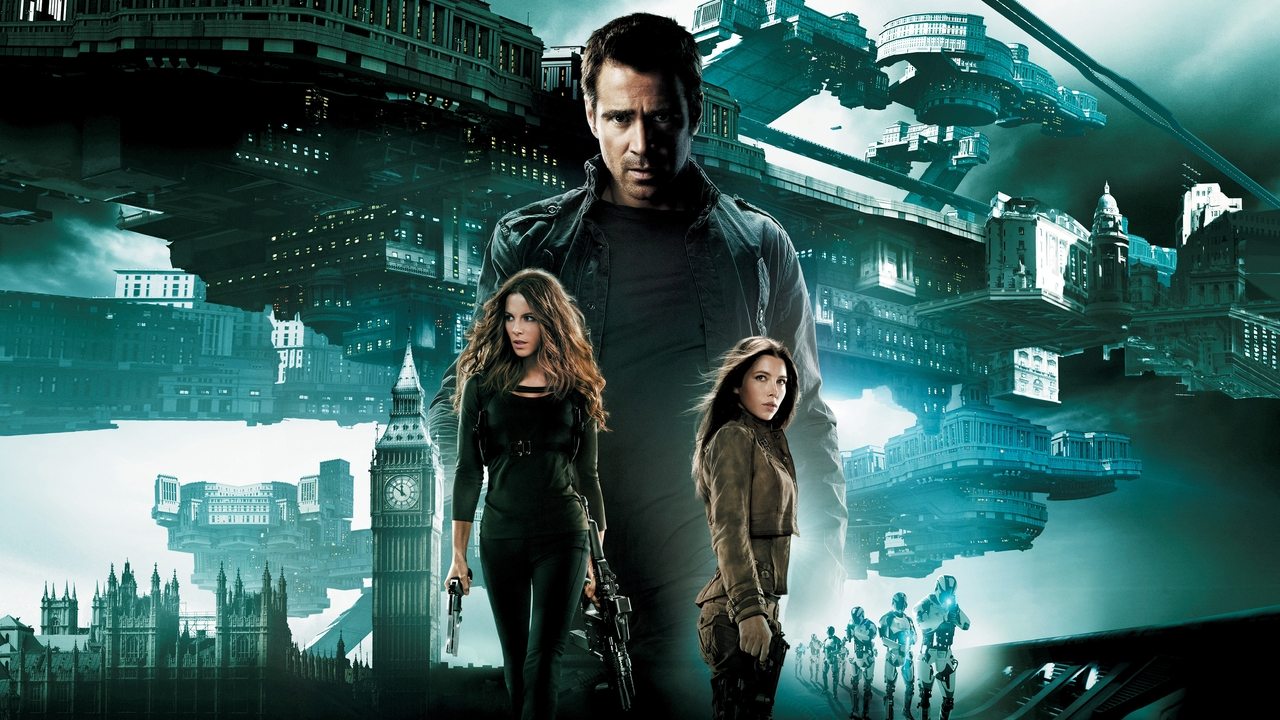
Total Recall (2012)
Wiseman discusses changes to pacing and the identity plot in the director's cut, including an abandoned idea that Quaid's face had been replaced. He explains redressing sets, extending practical prosthetics and troops with digital effects, wire work, and rotating camera rigs. He also recalls dialogue recorded on an iPhone that remained in the final mix.
- Duration
- 1h 51m
- Talk coverage
- 69%
- Words
- 10,771
- Speaker
- 1
Commentary density
Highlights
Topics
People mentioned
The film
- Director
- Len Wiseman
- Cinematographer
- Paul Cameron
- Writer
- Mark Bomback , Kurt Wimmer
- Editor
- Christian Wagner
- Runtime
- 118 min
- Also on
- OneSheet ↗
- External
- IMDb ↗ TMDB ↗ Find on Amazon ↗
Transcript
10,771 words
Hello, I'm Len Wiseman, director of Total Recall, and we are watching the director's cut, which I'm very excited about. I'm really happy with the theatrical cut. There's just things that, as a filmmaker, that you put a lot of time into that you really start to miss from the original cut, and so it's great for me to be able to work together with Sony. They were very supportive of putting out a director's cut. and be able to just have that still be alive in some form. When I was growing up, DVD commentaries and such were kind of their own form of film school, really, and get to see why things were cut out and why certain choices were made. And often scenes that are cut out and choices that are made along the way with just the process, often it comes down to two things. It comes down to, to pacing and clarity, which comes up a lot. And that said, I think there's also those who actually enjoy either a slower pace or actually more ambiguity within the story, having to play a little bit more detective work within the plot. And I'm hoping that those of you who are watching, just the nature of checking out a director's cut
part of that group. So I'll try to inform why certain things were chosen and without babbling on about just the story in general. That's something that always bugged me of going and just talking through and explaining exactly what you're saying. So I'll try not to do that. But one of the main things that I talk about, whether it's clarity and pacing, one of the main differences with this cut, there was an entire layer there of Colin Farrell's character. the Quaid character that not only had his mind altered and turned into a different identity, but his face as well was also changed. And so the combination of the mind being replaced and the face being replaced and the timeline of it, it was very complex. Again, something that some people like to work a little bit harder to try and figure out what it is. You know, I do think there's a, in storytelling, In many forms, I think there's a difference between bad confusion and good confusion.
I've never heard of a director, when I listen to these and, you know, since, God, since high school and going through and I'd watch all the Aliens or Blade Runner or going through and looking at different commentaries that it's very rare that the director's cut is a shorter cut. And I think that's just the nature of it. You spend so much time with a story and being able to expand on certain ideas and, you know, and oftentimes that hits like a, It's a pacing issue that every film deals with. So there's moments within this scene here that is just bits and pieces that unfold a little bit longer. And it's funny that doing a lot of action films, I actually enjoy a slower pace. I actually don't mind it. Maybe it's just the product of 80s action films on my brain. But I love the balance of a slightly slower pace within the drama. you're alone you can't get away is it us do i make you feel trapped no i know this isn't exactly what we had in mind when we were younger but this castle who gets everything they fantasize about right this here was um i'm gonna jump back and forth a little bit from
the director's cut aspect of it and what's there, but also just the production of it as well. This was Kate's first day. She had just come off of Underworld, kind of just put her on a plane and flew over. She had about two days in between the two and threw these guys in together. We did this scene and then right after this scene started the fight scene within the same set, which was quite a tall order to come right in from another production, just no rehearsal, no practice. Luckily, she'd been doing a lot of training on Underworld as it is. And Colin, I hope he's okay with me mentioning this, but he was, like, fantastic with this character. He really wanted to just get into the idea of Quaid and his headspace. And when that set was completed, this house apartment that we made for him, he spent a night in this set. So we kind of cleared it down, locked it down on stage. And, you know, once the construction crew was completely done and painted and everything and had all the, you know, he wanted to have all the props and...
you know, and everything. There's so much detail in, you know, just even the books that are around and the kind of, you know, just little things he's tinkering on in the corner in his little workshop area and such. And so he spent a whole evening getting familiar with that and spent the night in there, which I thought was fantastic.
We are being told rescue teams are still searching for survivors. The death toll is at 144 and still rising. This marks the fourth attack in United Federation of Britain in as many months. And all signs point to terrorist leader Matthias and his resistance movement. The UFB exploits us. The workers of the colony deserve equality. The fall enslaves us all. So here you'll see Ethan Hawke, he pops up as a known traitor, a known criminal that used to work for Cohagen and now is a traitor that is ambiguous about exactly where or how he's involved.
You . you know, . You know, are
I and the you know there's
go through when you get closer to the core, you hit zero gravity and at some point everybody has to change over and all the passageways and the doors and everything. If you kind of go back and look at this and look at the design, everything is built as a mirror. So when they're even traveling through the atrium, the main part of this before they get into the passenger bay, you'll see doors above the doors that are upside down. The signs, the exit signs are all flipped. Approaching core. Please prepare for gravity reversal. You know, once they actually turn around, which is happening now, this whole thing turns. Now, we didn't turn the set, actually. We just turned those big ribs that you see moving right now. Those are the only things that moved. The actors stayed in the same place. So just to give the illusion that it's moving, we set our camera on a rotator that the camera...
swiveled in the same time as those ribs. So in essence, it looks like the ribs are staying still and the camera's staying still and it looks like the people are moving when really it's the exact opposite. This was a convention center that we took over in Toronto. And at the time I wanted to, I really hated carpet. It sounds like a silly thing and I wanted to, it was like a beige carpet that I had to go through in time to It was very friendly-looking, almost kind of pink-beige, just the thing that pops up every time I see this thing. Anyway, we got rid of it. Hey, what do you know about recall? So this was more of just a pacing thing, but I thought it set up a little bit of a kind of friendship between these guys and just fucking around a little bit between each other. ... recall for his bachelor's party. Wanted to be king of Mars or some shit. I'd like to go to Mars.
Got himself lobotomized. You believe those stories? About Rico? Yeah, I do. Come on. You never thought about it? Just a little bit? I don't need to think about it. Don't mess with your mind, man. Ain't worth it. All right, all right, listen up. Coming up here, director's cut, there's just an extended moment with the introduction of the foreman and these little bits that just... And so you add up a whole movie and, you know, you do your first cut and then it's just about going in and just being a little bit more strict with the timing. Now, which one of you fine upstanding assholes wants to train the new guy?
You know, are
I and the you know there's
that was cut out of the original. And this was, it was a moment that, you know, it was to establish that this was the first time that Colin's character, as Hauser actually, it was the first time that he had confessed or revealed that he loved Melina. And that kind of informs also why this is the memory that he holds onto, why after everything this is the memory that sticks because it has the, you know, the importance of that moment of, you know, it has this that's going on here, which is pretty dramatic, and of course you remember that, but as well it had the... .
You . are
back in the director's cut, if you gotta pay for them anyway, that are not in the theater. And that's one of the reasons, too. Tell me to ask for Mac. It's right inside. Thanks. This was the first scene we actually shot was this set. First actual moment that we shot was that fight that Colin does, because we had to kind of build this massive, like, truss and camera system within the set. that we had to kind of tear apart. So we started with that fight, and then we tore that down, and then we were able to patch up and build the rest of the set. Welcome. Hey. You're a friend of Merrick's? Yes. Yeah, we, uh, we work together. Is that it? And John Cho was really on board with letting me dye his hair. It feels like real life.
That was my idea from the beginning. I just want to really change up his look. And I do this with a lot of the actors. I'll do a Photoshop mock-up first and send it to them about what I'm planning on doing. And it's something that I just keep doing from when I was doing production art and production work. I have to kind of do it myself to convince myself that I like it. So I'll work a lot on Photoshop. And I put this look together and sent it to him. I believe his, quote Immediate response, email back was, I love it. So he was in. You got some talk, some longing for something more. We're going to give you that thing. Is that right? Could be something you could never afford to do. Something secret you've always wanted to try, but you would never, ever dare. What do you mean secret? And he's like, any time that you want to screw around my look, change me up, make me look different, anything, I'm such a fan of I'm there. Do whatever, you know.
I think it would be fun. Well, I've seen this in the theater. Whatever John Cho pops up, it's a little bit of like... You can hear people whispering and laughing a little bit. And I was like, oh, shit. Did I make a huge mistake by dyeing his hair? I realized it has nothing to do with that. It's the fact that he's got such a massive fan base with Harold and Kumar that... It's those fans of his that are seeing him in that role. A lot of guys come in here, they want the secret mistress strip when they already have one, a real one, on the side. You can't do that. This was actually a much longer scene. Even in the director's cut, it was one of the scenes I didn't miss. This was a very long scene, just talking about...
you know, just analyzing his whole trip and what he was going to go through. And I felt it was also so much like the original. It wasn't the same dialogue, but it was just kind of the same idea of here's what you're going to do on your mission. You're going to, you know, X, Y, Z. You're going to save the girl. You're going to do this. And it kind of maps out what is going to happen. I just was never really into even in the script. I shot it. We're there. You know, it's a great thing about dialogue is that it's unlike, I guess, action set pieces where... you know you're there and you can shoot it and see how it works and it's not not at great cost to shoot another page or so but i thought it was i thought it dragged and also just felt awkward to set up exactly what's going to happen even though in theory it makes sense because he's paying for this adventure tell me all about it when you get wait what what is it what's wrong yank that needle up before it takes
The ones I love, there's the black-clad, futurized SWAT troop has just been done to death. So I immediately thought, I'll just do the opposite. I want to go with something completely different. Let's go with these white troopers. And it's so hard to create something that you haven't seen with comic books or video games or what.
but I really liked the look of them in the end. It's funny, after you put them together, then you get a lot of response. I was at Comic-Con, and people say, wow, they're just like a video game, I believe, that I'd never even heard of. That happens all the time. And they say, oh, they're just like such and such. And you go look them up and go, oh, yeah, kind of, maybe. I don't know. Sometimes people also like to describe things by other things that they've seen. I do that too, I guess.
Team one, have you secured the suspect? Team one, advise, let me know what's going on in there. This is a scene, I will admit, that I completely stole from myself. This whole idea of being trapped in a room and then these shrapnel cameras that get released into the room. I wrote it into a script that I was developing about four years ago. Similar moment. I thought it would work great in Total Recall as well, to see if he's alone or... And I just love this idea of these shrapnel cameras. And coming up with those things, that technically would make sense. You know, you'd send in these shrapnel cameras. It's not just a camera feed that SWAT people do where you see a certain angle, throw it in there, explode it, get every single angle possible. We had 35 of these GoPro cameras that we set up in places where the shrapnel cameras would have stuck to and then chose some of those frames to build out that hologram. And I've been wanting to bring this to life for a while.
But this whole scene, him taking the bombs, this whole thing, it's so weird because I watch this and I go, that's... I've been living with this scene for close to seven years now. And I also thought it makes sense, too. I love being able to develop technology. I'm such a sci-fi fan. I do love science fiction a bit more than fantasy. I do love something that's the extension of science. what could be. Science fiction has definitely a what-if scenario to it that fantasy doesn't necessarily have to adhere to. And I like that. I like a grounded kind of fantasy experience, and that at least is my distinction between sci-fi and fantasy.
was such a, I don't know why, but it became one of the toughest things to pull off about how it was going to work and how it was going to animate. Do you see stone behind it? I was trying to develop something that was a little bit different than what we'd seen before and didn't want it just to be a plasma. And this idea that it has all these little pinhole pricks within the cement. When the screens move, it just kind of traces as if you see each point down there is a hologram that's emitting this screen. And it was a great, great just to try to create something that was a little bit different. You don't understand. What? Oh, my God. Doug, are you okay? I'm all right. It wasn't the Resistance who killed those sentries. Again, there's the two sides of this conversation for... for Laurie, for Kate's character, that obviously she's playing the wife, but at the same time trying to get some, she's got the detective, you know, kind of interrogation going on within the sweetness of the concerned wife. And it's really interesting having these conversations with all the actors about, you know, how good are they, really? It sounds like a funny question, but how well of an...
actor am i in this fake role like you know bokeem said how how much do i come across like the friend and how much do i do you want to see through that i'm pretending to be the friend in that scenario and they both really have to add up and i killed him listen you didn't kill anyone trust me i killed everyone oh sweetheart don't you see whatever you think you did it had nothing to do with any of this Those assholes screwed with your mind and now you're having some kind of a paranoid delusion. This place is really dangerous. Whatever it is that happened, we're gonna get through it. Come here. Come on.
You know, are
I give good wife. Come on. Deep down, did you really believe someone like me would marry someone like you, live in this shit hole? This is one of my favorite moments in the film, too. This whole thing, this conversation between them, it's really exciting, I think. How would I know? I just work here. Speculating. I had to guess. When she turns on him and Colin's mind's just completely blown, he did such a great job of being, like, you know, aggressive with it, but at the same time completely lost as, you know, what the hell is going on? It's actually a shame that there's kind of the iconic moment that you, you know, people are familiar with the original film, that knowing that Laurie's character is going to change. But it's amazing that the people who've seen it that have seen the other film, it's still one of their favorite moments and exciting moments of the film.
And it was also just fun to see, like, you know, Kate just comes across so kind of crazy and lethal in this, which was fun to see her do something so different. Like I said, these guys were so great to do. I mean, doing the bulk of their stuff. Alicia doing Kate's stunt work and Gabe, they're both extremely talented and just, you know, were amazing.
So I don't want to take away from them at all. Whenever you get them on the wire or doing something very dangerous. But the actors really did a hell of a lot. And it's always exciting when you get a group of actors together that are like, put me in there, put me in there. Put me in the harness and do whatever. It's fun having to trick things. God, we kept running back and forth on this set. It's the same set over and over and over that I redressed. There's one balcony in this whole entire thing. They're running over the same balcony here. And this is, of course, a massive visual effects shot down below, but where they're running is a section that we built out. And it's the same section. Boom, he's landing in it again. That's the same balcony that he comes out of with his cup of coffee. This is the same balcony where he comes out of with his cup of coffee in the beginning.
and now he jumps in and crashes down into his own apartment that we redressed and she's going up in the back of her own apartment above her own kitchen and you just uh it's great i do this all the time of like putting things together and then you redress and i've been doing it since underworld of just trying to just get as much you can
since I was in high school. But then getting to the point where you're doing Underworld, I thought, man, because Underworld was $18 million. And I thought, if somebody could just give me $30 million, I could really do so much with $30 million. And never thought that I would ever be doing a $100 million movie at that time. And you have to extend to put something like this together. Shit. So I really just try to make that money stretch as much as possible. And so part of that is putting a lot of work into your practical sets so you can shoot from every angle. Again, all of these sets are reuses of others. That's the balcony where he had his cup of coffee. So you just put different set pieces and things and plan well with your schedule and things. And again, this is a set where he came out and saw the bus. He's actually right above the recall center right now. He's jumping off the recall balcony.
and and then every time you just you know you look out into green screen of course you can create a different set like right here that's an entirely different city for that one snapshot uh even though again this is all the same set but i don't know why that's something i just i really love to i get excited about being able to make something look like something else i just feel like it's free which is silly because it's extremely expensive but you You know, you build it once and you go, wow, we can change this into this. And you're not having to build a set over. And so it feels like it's free. My line producer would completely disagree. There's nothing free about it because it's having to redress it and put all these different things in it. But it's not nearly as expensive as building two sets, of course. I had loved the idea of an implant cell phone that just pops up and he has no idea that it's implanted in his hand.
something I wanted to do practically. I didn't want to do the CG version of it. I wanted to go old school, prosthetic, build a wire, put it in his hand. And a lot of people thought that this was silly. There were a few things in this movie that, you know, when you're coming up with new ideas, you're like, oh, so he's just going to talk into his hand? Yeah, that's going to be a bit ridiculous. And I thought, but it's not unlike a secret agent, you know, when he's pushing.
You . This is in the red light district. This is the same set where he's crossing by the club. That's why it's got a lot of lights and things, and we put different doors up and such. That was the nightclub where he just talked to the three-breasted prostitute. This, again, was a prosthetic piece real hand, but just, you know, putting another layer of skin and putting that LCD underneath. Pulling that nasty piece out there. This was also, you know, for those of you who have seen the original, I don't think it's that hard to make the connection of this as a bit of a twist on, you know, an homage to the pulling that device out of Arnold's nose. That always creeped me out when I was, what, 15?
So this is where a bit of this came from, too, is the combination of one loving that idea of a secret agent who doesn't realize there's something implanted in his hand, and then it lent itself to having a kind of fun moment of a throwback of, like, dig that thing out of his own body, like in the original. Just have fun with it. You'll notice here, maybe not notice, that I replayed the Total Recall advertisement in this scene. that he saw on the bus that just another thing to throw in there just little little hints and things that would he in a dream be dreaming about also having that advertisement for recall as well in his dream yes you probably you know that technically could happen but does that lean a little bit more towards the fact that this is really happening
He made you look like a fool. He'd had major tactical training, sir. I wasn't made aware... I've had a lot of people... Philip K. Dick's story as well as its strongest, you know, idea is fantasy versus reality and the question. And I've always loved, you know, Philip K. Dick. He often, you know, he'll raise these really big questions and rarely answers them. And I love that. Again, it goes into the just ambiguity and, you know, confusion in a good way. I really like, especially within science fiction, you know, I'm just a fan of. That said, do I have a definite perspective on which one it is? I do. And I simply just don't think it's something I want to reveal. I'd love to hear from everybody else, too. I love hearing what people think about where it actually really falls out. Because I believe that if you watch the movie in great detail, that I have slanted it in one direction, whether it be real or whether it be a dream.
Hopefully, if I've put enough in there, that people will think like I do about it. Or not. When you've got your breath back, you're going to tell me everything that man said to you, starting from the beginning. Who are you? I'm his wife.
Yeah, I have a safety deposit box here. It's 10549. Here we have, within the director's cut, is another scene that was cut out. This was... .
You . you know, . You know, are
I and the you know there's played in really well for him escaping out of a new form of plastic surgery. So his face had just been changed, and in the timeline, he is actually Ethan Hawke underneath that face, and he has had his face replaced. And again, that was something that, I think it was just, it was possibly one layer too much in the fact that he's also trying to figure out but it would be, you know, you guys are more the judge. I'm too, you know, I'm so close to it that, of course, it all makes perfect sense to me. So I'm going to have to ask you to step through the scanner again, please. This was a definite homage to the original. I wanted to switch it up and, you know, lead it up and tee it up as the red-headed lady that we're a bit familiar with and do a switch on that idea. How long is your stay? Three days.
What's your business in the U. S. B.? Thank you. Excuse me? Three days. Yes. Thank you. And you'll see in there, even in that face, you see a bit of that, it's the Henry Reid character is one of his aliases, is one of those faces that pops up, is that blonde man. And you've seen him on the I. D. , and he will eventually make, that's Henry Reid right there, too, that just popped up on Colin's face. This right here, I was location scouting, and this idea of just, boom, boom. I remember just coming up with it on the day of, we hadn't discovered exactly how he was going to escape here. And I thought, you know, you always see in all these movies and airports and things when people are being chased, and, you know, the police, everybody down, and boom, a gunshot goes off. Everybody drops, and it leaves the suspect standing. And then they locate him and find him. I thought, why doesn't the suspect ever just drop down?
with everybody else. It would be the smartest thing to do and get his bearings for a second. And so it's fun to be able to, it's something I've always, every movie I see when that happens and they clear a room and like, oh, the gunshots go off and for some reason the bad guy stays standing. Kind of an idiotic move in my opinion. So that's how that made itself in there.
This here coming up was this massive car chase to pull off because, again, trying to do as much practically as possible. All of the 90% of the cars that the actors are having a chase with are practical. And then D-Neg, Double Negative, did a really fantastic job. I mean, they had to fill out such a world for this. And also, we didn't shoot green screen because you can't if you're actually shooting a car chase on the run. So they had to roto out all of these cars, which roto is just to trace out. very painstakingly just trace out all of these cars and paint out the the chassis that are underneath because we built all these hover cars on these um these race car chassis and so the actors were in the actual cars that we would drive around and smash them and we just shot it you know they're going a good like 40 or 50 miles an hour and shot it like a car chase i wanted to do it you know again practically and have the visual effects be a slave to the
to the practical photography rather than the reverse, which always kind of just drives me insane. Hold on. You really don't remember me. No. I've seen you before, but it's... It's okay. It's okay. I can explain everything.
Some of the most difficult comps or visual effects sometimes are just traveling inside cars and just doing the green screen outside, like here. I don't know why, but you'll see it in many movies where all of a sudden when they're talking and they're on the road, it just looks so fake. I think one of the reasons is because we're so familiar with it that we know what it looks like that it draws our attention. So I put a lot of layers in there of putting reflections that are continuing to go by and again, shooting that practically so that the reflections and everything that are happening, even though there is green screen outside their windows, still shoot it on the run and going through real reflections and real turns and real things so it doesn't feel so staged. And things like here, like, those are practical cars in the bottom there, but then, of course, everything else is CG around.
It was such a massive world to pull off in all of its detail. And CG, in my opinion, only looks well with all the little details and all of the things that you can put into it, all the different layers of detail. And, you know, one of the things that I wanted... You see that the streets are very wet, which is all... It's CG wetness as well. And part of the reason why I wanted this to be a wet-down city is because I just think, honestly, I think CG worlds and CG itself tends to look just too perfect and often sort of flat. And like a regular set, it's no different. You know, part of the reason why I like to wet down a set is because it picks up all the highlights, the glints, the metal. It just has more of a reflective quality, of course, because it's water. So same thing applies to...
a CG set that would apply to a normal set. It just helps to bring it to life. And so I made a point of continuing to just... It's such a big part of wetting down the CG set as well. And it just picks up a lot of the reflection and makes it, in my view, more realistic-looking. AV-81 is headed eastbound on Wellington. I want you there before he is. Do you copy? Copy that, 905. All vehicle and air support proceed to Wellington. Establish a barricade in zone 217. There's so many of set pieces within this science fiction film that I had written that worked so well within this world. When I found out this world of Total Recall was multilayered as part of the plot. You know, they're having to expand out and space is one of the fading resources. It kind of developed and formed why this
why the world would be structured this way, why traffic would have to travel to different layers of the world. And so that created the use of having these multi-layered freeways, and it worked really well with, you know, I wanted to bring to life the hover car aspect of, you know, in the original Philip K. Dick story, there's mention of hover cars in that world, which wasn't realized in the Verhoeven version, and I really wanted to bring it to life here.
They've got a lock on the vehicle. Are they clear to engage? You are clear to engage. Got it? Got it? Yes! Shit! Welcome. Operating systems activated.
this combination of real cars, and then we put a CG casing over them to futurize them. Again, always starting from a practical base, the way the cars move, the way the cars flip and get destroyed, and all that is all practical on these air ramps and such to flip them, but then putting a CG casing on them to take away the modern front grille and all that kind of stuff. And so it always helps.
All the city shots, except for this one, most of the city aerials are actually from actual helicopter plates as well. . the appalled henry reed doesn't know exactly why so he is actually in this version he has gone and tracked down henry reed's apartment this is a reshoot that i did later on i just i wanted to have just because eyes open and kind of fade out so that in the first cut of it we didn't have that she her eyes didn't open and i felt it's just too weird that one, is she dead? You know, it's like, even though he checks the pulse, it's kind of hard to, or it wasn't really clear that that came across. So there's just little things that along the way and process you go, be creative. She opened up her eyes. So at least you get a sense that she's just fading in and out of consciousness rather than, is she okay?
This was not a set. This was a location that we just altered. Came in, there's a lot of wood in here. So we put up like that fireplace and other things to make it a little bit more of a kind of a neoclassic design within. .
Yeah, it's a lot to take. As things actually develop, there are other sides of it that are, that become problematic. And I wondered about it with even in the script phase and when we were shooting it, that will people be able to, will it be too distracting that Jessica Biel's character is, you know, is becoming drawn to and attracted to Colin Farrell, who essentially thinks he's Quaid right here, but really that that is Ethan Hawke underneath. And whether or not that is odd, because the person that she's getting really close to, if the audience is thinking, wait a minute, but the person that she's really in love with looks like Ethan Hawke, doesn't look like Colin Farrell, is that a problem? It is something that... In a script, it doesn't even concern you. You don't even think about it because it's just somebody's called Houser and somebody's called Quaid. And then all of a sudden, when you really get invested in Colin Farrell and his quest and his personality and everything that he has in this role, and then stop halfway through and say, well, wait a minute, but that's not really who he is. He is, it's actually that other guy that looks like Ethan Hawke.
that she's actually in love with. And it's an odd one. Even myself, I go through, and when she's kissing Colin, is it, well, but is it, is she waiting for, then will he replace his face? Because we all like Colin in this movie. So we don't want him to have to change himself. And it really was something of debate. just with myself and the riders. You try everything and see what's the strongest.
This coming up here, too, this was the reason I did the movie, was this chess game, this scene I loved, which is no surprise that my first...
You know, are .
I and the you know there's
that was cut out of the original. And this was, it was a moment that, you know, it was to establish that this was the first time that Colin's character, as Houser actually, it was the first time that he had confessed or revealed that he loved Melina. Once the replacement of the face was no longer part of the plot, it had to switch a little bit more emphasis on the fact that Houser was... a secret agent that they all knew about and heard about that was a legend, but no one had ever seen, and nobody realized what he looked like. That's it, I'm ending this bitch. Shit, I'm out.
I'll get back into the set pieces. This is a set that we had constructed as a long hallway. I don't know, it was maybe, God, it was like two of these sections that we put together and just ran the guys back and forth through the same hallway, changed some of the lighting, changed some of the things, and then the CG would fill in to put in the elevators between them. But this is practical on its, like, the wall and the elevator that the actors are acting against. This is practical. And, you know, we build out wherever the actor touches. and interacts with is real. And then D-Neg blew it out into the massive scale that it is. But again, it's just using everything where you can, where you can get away with. I'd spent about seven years in various prop departments or set dressing and things. And I've been on many very big movies that I just saw so much waste of
of just construction and things that we'd build out one massive set, be on it for a second, then go to another section of a similar type of set, but it's an entirely new construction of something. And saying, wow, it's like you blast past these scenes. They're so expensive because I'd be involved in purchasing a lot of the stuff for them and just go work with the vendors, know what things cost. And it was just amazing to me, I guess. And so that's never gone away. When you have that knowledge of how much things actually do cost. And then you're making your own film. You can't help but think, wow, well, if we create this and we create this elevator, I know that if we create another one, it's going to cost X amount. And yet I'm going to see it for about, you know, about 12 seconds on camera. .
two weeks working with these vendors on building a sculpture that was gonna go into the Men in Black headquarters. And I would go visit with them every day, go back and forth, and work on building this thing together. It was like $34,000, right? For a movie like that, it's not a big thing at all, but it's still $34,000. And then take all that time with it, show it up, put it on set We shoot in that set for a few days. Cameras are completely on the other side. Never see that sculpture once in the movie. It just doesn't exist. And nor do I know if the director has any idea how much it is. I don't know. Probably not. I mean, as I go now, you don't realize everything that's spent. But I don't know. That always sticks in my mind, that long story. It's just embedded in there.
This is one of our biggest CG shots within the elevator sequence, where when we're in this shaft area, where we had to create a lot of it in CG. And this was practical, them jumping out. They did a good 20-foot jump right there. That's really Kate. That's really them. So it's all them. I think Alicia did the actual... .
You get to see why it's their favorite shots. I don't really know how to pick them. A lot of these things are kind of last-moment things, and you put, like, some of those just standing against green screen looking out are always the most problematic. They look the most like kind of rear-screen projection to me. And then other ones like this, like, that's all CG in there. It's fantastic. This is something that we shot. This is a Toronto. Again, this is when I talk about, like, the city shots. That was shot with a helicopter looking down. We kept some of the real buildings of Toronto, and then we built our CG around it. So you get the real scale. You always have something to relate to.
This here is a full CG shot here. This was added very late in the game too. I just wanted to... I felt it was getting too claustrophobic and I wanted to see that there was a larger snapshot of the world and how crowded it was and just a setup for this news report here that you get the idea that it's a larger world listening to it. I tried everything I could possibly do to not do the Jumbotron speaking head that I had seen. It's such a staple of sci-fi. that you've seen ever since 1984 and sometimes you just can't get around it. I've got to get you to Matthias. How the hell do we find him? There's a way. Come on. This, I thought, worked out really well. Again, using practical. That's, I don't know, 50% practical, 50% all, you know, the CG add-ons. And then coming down to, I really wanted this future city, I wanted to be able to come down into an area where It still has remnants of what we remember.
You . are
I and the you know there's
that was cut out of the original. And this was, it was a moment that, you know, it was to establish that this was the first time that Colin's character, as Hauser actually, it was the first time that he had confessed or revealed that he loved Melina. And that kind of informs also why this is the memory that he holds on to, why after everything, this is the memory that I think you know, 20 minutes to shoot this whole interior thing, which is just not, it's not any time to light, block, but I guess we had to do it in one shot, one shot, two cameras. This was a school that we, it's actually, I think it's a, I think I'm correct, it's a monastery that has now been turned into a college in Toronto.
Mr. Houser. What is it you want? And we took it over for two days. We had to shoot this scene. Bill Nye here, who's a genius and also a very, very dear man. He's incredibly cool and incredibly nice, and I love working with him. It's funny. People ask me, like, oh, you work with your wife a lot. And I do because I love what she does, and you always know. You keep working with people that you really trust and really know can pull things off for you as a director. I've actually worked with Bill Nye even more. He's just somebody that I'll continue to work with. It's great when you find those people along the way. It's like when you're working with certain crew members, you work with a certain production designer. You know how you're going to be taken care of. So yeah, this set was a college that we had taken over and
I had two days to do all this, I believe, and very tense because two days for an extremely long scene, and we had an action scene in it as well. We also couldn't, you know, you couldn't build in there because you can't drill into walls. You know, it's funny, when you location scout and you're deciding, do we build a set or do we find a location? I always try to build a set if I can because you can, of course, do anything to it. When you get into a location, even though it's cheaper, then you find it's such a pain in the ass Try to build anything on a location, especially something that's like a monastery like this. You can't even put tape on the walls. .
I and the you know there's
that was cut out of the original. And this was, it was a moment that, you know, it was to establish that this was the first time that Colin's character, as Hauser actually, it was the first time that he had confessed or revealed that he loved Melina. And that kind of informs also why this is the memory that he holds on to, why after everything this is the memory that sticks because it has the, you know, the importance of that moment of, you know, it has this that's going on here, which is pretty dramatic, and, of course, you remember that, but, as well, it had the emotional impact of the first time that he, you know, revealed that he loved her and that that's why it held through and a theme that I was really wanting to put into here that you can replace a memory You can, you know, replace visuals, replace anything, but you can't replace a feeling. And that ultimately, as corny as it may sound, that, you know, that love conquers all. And that, you know, that that's too powerful to overwrite. .
that hits . .
You know, are . shoot a on an iPhone first to put it into a cut. iPhones are getting so good that there are 18 lines of ADR that are just additional audio recording of the actors that's done on an iPhone. And I did it on this pilot for Hawaii Five-0 and it was such a condensed post that as a temp I just had a lot of the actors do their ADR on an iPhone. I'd send them the scene and they'd just record it on the iPhone and email it to me. and it's such a good quality that I used it. And I thought, oh, okay, I can only get away for it because it's broadcast and television, it's never gonna hold up in a feature. And I did it for a temp, had everybody, Colin, Jessica, Kate, Bryan Cranston, Ethan Hawke, John Cho, everybody has iPhone lines that I would just write, they'd email them to me, I'd listen to them, say, can you change this, can you do that, or whatever. And there are about 18 iPhone lines that remained in this final film. Sounds like I should do an iPhone ad. We'll be right back.
I have a lot of visual effects companies crazy because I just, I always get nervous. I think these look fantastic. I think they're really good. But when it's full CG, I don't know. I just, I'm such a product of coming from a practical shooting that I do get more concerned when it's a full CG shot and there's nothing to base it off of. It's just what's ingrained in my head. So I take more time. analyzing the ones that are fully constructed in CG. Now this here in the, just even the idea of these bombs, there was some, this again goes to a clarity issue. I'm happy with how it turned out as well, but I wanted to give people an idea of what I was doing initially, and that is keeping the element of the bomb a surprise.
It's amazing how just seeing a countdown on a bomb versus not seeing a countdown makes a difference in knowing what's actually happening. There's two sides of it. There is the, you know, seeing the countdown start has an element of a ticking clock, of course, that works very well that you're anticipating that something's going to happen. When it's going to happen, you know, it's like, oh, God, oh, God, you've got to get out of there before... the countdown and then the other which is the surprise of the of the explosion surprise of his plan so in this one you'll see here boom he sets these and then just pulls
really was tricking her. He would never rescue her. So possibly it's not needed because just the actions of him saving her are enough. And ultimately that's what the feature is, which again, it's great. I do really like how it unfolds in the future as well because there's also a ticking clock. Would he take the time to have this discussion with her when he realizes this whole thing is going to explode and he's aware because he said it. So there's no time to be talking when... He's got to get out of there. I really liked the scene. I thought they both did a great job with it. I'm really glad that it's alive here. This here was one of the most complicated things to shoot. Again, trying to do something practically not against green screen and actually have them in the set. And to create this zero gravity effect, we had so many ways of possibly doing this. At one point, we were going to go up in what they call the vomit comet of the space shuttle.
you know, where they practice. And ultimately that just was insane. And just everybody would throw up as, you know, appropriately named. So we didn't want to do that. And so we hung everybody on these wires and shot the whole thing upside down so that you really can't get the sense that it looks like people are hanging on wires. And it was the most challenging because my cameras were all upside down and they were hanging like from their, you know, they were kind of laying down like they're like on the wires. It sounds even confusing to describe it, but what it looked like on set versus what it would look like when I went back to Video Village and looked like on camera. It's okay. They're in stasis. Okay. Like, right here, imagine, flip this completely upside down. They're hanging. Wires are actually coming from their, like, stomachs up. You know, she's hanging upside down right now.
he's hanging upside down and the cameras are upside down. So once you put it all together, your reference is off. You know, I think if you shot it with them just hanging and with the camera straight, it would just look like people on wires are just being, they're floating through kind of like Peter Pan. But it's amazing how if you just flip the camera upside down, flip the whole thing, even though you're planning on putting it all right side up again, it just looks weird. And then I also shot it all on 48 frames or 40 frames to give a sense of a slower motion within it, even though I used their audio in real time. Sounds immensely confusing, but I thought it would... I was very happy with it in the end. It was something I was very concerned about, how real it would look. Take this.
And then we did Melina's, Jessica's ponytail is the only part that's CG so that her ponytail would float around as if it was in zero gravity. And then Colin's gun is also CG if you go back through there and it's flopping around in CG so that, you know, just have those few elements that are floating that bring it to life. And this one we shot Kate, just a little information here. It was a screw up and they put the prosthetic on the wrong hand. And so this whole shot, this whole sequence is flopped so that her hand actually stays the same. It's like she came to set and it took like two hours to put the prosthetic so it lights up correctly and everything. And I go, it's great, it's fantastic. It's in the wrong hand. I don't know how that happened. This set piece here is one of our largest sets this whole
rooftop of the fall. And getting the scale of it and the motion that's going to be moving was pretty complicated with just the atmosphere. You can't just have it rain. You have to have it rain with an immense amount of wind to spread it out to where it looks like it has the velocity and has a very, very noisy set.
Secure him. These coming up here, like, these are full CG. This is full CG. And then these ones that come up here, I think this next big wide shot, things like, like Right after this one. This here, this is CG, but it's based off of a helicopter shot. That's actually Toronto underneath all of that. So we use a city scale, and actually where that China fall is, it's actually one of the largest buildings in Toronto, and then we use it and map over it. These are all practical troops. I think a lot of people think they're CG. They're not. We built all of these troops. It's like they, these synthetic, you know, the robot characters, they're 90% practical suits.
Brian and Colin didn't have much time to rehearse their fights either, and Brian came into it, and we had a stuntman set up to do it, just in case, and he was just so into it. I was very impressed with him. He did the majority of that. So that right there, you'll see that when that... That's the first time we see the watch. And so that's, you know, just a little bit more of a hidden reveal that that's the first time that we see the countdown in the director's cut version, whereas the theatrical, it's something that we know is part of his plan from the beginning when he sets the bombs. These were all practical explosions. They're real explosions. They were comped in.
Pretty much that's all them. God, it was so, it seems like it's not that big of a deal with the water and all that, but just like over the course of, you know, a few days of just being in that pool of water and I think Brian got, you know, a bit sick. There was just a, you know, because the water gets dirty and such and it gets in your eyes and he had a full red, just a completely bloodshot red eye from some of the, like the water just gets infected and dirty and everything there.
You know, in actually the original very first cut that I didn't put into the director's cut because I wasn't too happy with it, the original staging here was that Colin, at this moment here, he runs and gets in the helicopter. He starts the helicopter up and then takes off and they start to fly away. As they're flying away, boom, right here, it gets hit out of the sky. And it just seemed like such a, it was such a weird beat. And it just, one, it was just kind of long and it just felt like it was just too much action going on. And as well, it just seemed a bit silly. He takes all his time, gets in the helicopter, about to take off, and then boom, he just lifts up and then gets shot right back down. It just seemed a bit silly. So there was some reshoots that I had done to have him actually stay out of the helicopter. And it gets taken out, and he runs over and just bypassed that whole moment.
just to talk about, I mean, with all the different versions here, there's also another thing that I didn't think worked too well, but we had shot, I just wanted to try it and see, because I was there and had the time to do it. Right in this moment here, Cohagen pops back up, and he's, in his last few moments, he's bloody and straggling, he pops up with the gun, he gets a gun off the ground, and he shoots Collin. He shoots Collin in the side, right as Collin is jumping off of the fall, and it Gets him, like, right in the ribs. It was just, it worked to a certain extent. I liked it for a bit. It just, uh, was just blaring as the, just the kind of typical moment of, of course, the bad guy's not dead. He pops up again. It felt very, like, Lethal Weapon 2 to me. And I just thought, oh, it's just, um, kind of anticipating that. And then when it comes true, it just seemed a little bit too much. So I ultimately took it out. I just, I was never, uh, I was never fully sold on it.
But what I ended up doing is that I needed Colin to have enough wounds and such that he shows up right here in this scene to where he just took all of his energy just to survive, and then he's dead, or possibly dead. So right here, that's a pickup shot that Colin has been bleeding out. And so to do that, that's why I have Kohegan in the beginning of the fight comes in and he stabs Colin in the side first. a reshoot that I had done, so that he still has enough of the wounds and just making it to the end, just enough to save them. There's a couple different versions of this one, too, that I shot. I always try different things while you're shooting. You never know what you're gonna exactly need in the edit room, and there's a version of this, which we first did, where I pull away from this, and then we come back, and he wakes up right there. He gasps and wakes up, and ultimately decided it was more effective this way. Tell us your fantasy.
We'll give you the memory. What's with your mind, man? It ain't worth it. Secret agent. That's you, right? You know, I tried a couple of things here, too, as well, that I... I just, I love the... Like I said, the reason I did this movie is because of the fantasy versus reality. I love the question. I was, you know, so hooked on it with the Philip K. Dick short story and the film as well that... That's the most fun of this. So I wanted to try different things and see what worked the best. And I did a version of this scene where Colin wakes up and it's a paramedic that looks a little bit like Laurie. And it was cool. It was kind of fun, but it wasn't very dramatic. I thought, well, if I'm going to do that, let's take it all the way and really play into what this movie is about. What's the core fun of this movie? And that is what's real and what's not.
and the switching and twisting it up and keep twisting it up and adding something to it. And so that's where this idea came from here. It takes off the collar in the terminal that you see Lori go and pick it up and walk away. And that's a completely fabricated shot that I did. I stole her shot from something else. It's actually when she's getting up from zero gravity in the fall. I stole that shot, repeated it again, put the background. and made it look like she picked up the collar so that it would actually plant that she has that collar on her. That's right. I think Kate has an amazingly convincing killed face, dead face that's a bit, like, spooky look on the dead eyes there. You okay, sir? Yeah. Sure. Got a medic down in here. I haven't talked much about music. I've been focused on the director's cut side of it, but Harry Gregson-William had done the score for this, and I really love the combination of the technical side.
That right there, just to go back, I don't know how many people catch that. He checks her hand again. He just checked. It was just a detail. Actually, that was Colin's idea that I thought was genius. You know, when he finally meets up with Melina, he's just like, just let me check the hand just to see that this is really the person. There's just too many twists and turns going on that he just wants to make sure. And some people catch it, some people don't. But Harry Gregson Williams did the score that the combination of having this, you know, kind of very kind of crunchy electronic sound with a very epic orchestral sound that I really wanted to combine. . it's just not there. There's also the, so it's this constant, like we had so many arguments about it, fun arguments with the writers about, well, what does that mean if the tattoo is there or is not there? And it's part of the fun. It is what the question is. You can, you know, immediately people think, well, if that's the minute you see the tattoo is gone, that means it's a dream. But it doesn't, all it takes is another
you know, three minutes into the conversation and somebody will bring up, yeah, but you can, you know, that could easily wash off, right? I mean, that's, it's just like a little stamp that you do at a tattoo. Exactly. It is. So it also plays into that part too. And I want to make sure that everything could survive in its own argument with the two realities. So, so there you go. That is the director's cut. And I hope that you enjoyed going through these. I, like I said, when I was, you know getting into and just hoping to God that I would be able to direct movies at some point I would watch so many of these and was was really you know interested in just seeing why certain decisions were made and and just just loved the whole process of it so hopefully there are still some of you out there and the you know 15 of you that have maybe watched this have enjoyed as well so I appreciate if you check this out and hope you enjoyed it thank you
Keep exploring
Other commentaries on related filmmaking topics
-
8 shared topics
The Lord of the Rings The Return of the King (2003)
Peter Jackson, Fran Walsh, Philippa Boyens
-
8 shared topics
The Lord of the Rings The Two Towers (2002)
Peter Jackson, Fran Walsh, Philippa Boyens
-
8 shared topics
Alien ³ The Legacy Cut (1992)
Oliver Harper, Rob Hill
-
8 shared topics
The Lord of the Rings The Fellowship of the Ring (2001)
Peter Jackson, Fran Walsh, Philippa Boyens
-
7 shared topics
All Quiet on the Western Front (2022)
Edward Berger
-
8 shared topics
Underworld (2003)
Len Wiseman, Kate Beckinsale, Scott Speedman