director
The Usual Suspects (1995)
Release The Usual Suspects Special Edition DVD (MGM Home Entertainment, 2002)
Bryan Singer and Christopher McQuarrie discuss developing the story from a title, lineup image, and poster. They cover the 35-day shoot, reused locations, actors' contributions, Benicio del Toro's Fenster, and John Ottman's editing and music. They also explain casting and withholding information to support the false account, then reusing images and sounds to change its meaning at the end.
- Duration
- 1h 45m
- Talk coverage
- 88%
- Words
- 16,536
- Speakers
- 2
Guided collection
Controlling information in ensemble mysteries
Bryan Singer and Christopher McQuarrie discuss misdirection in The Usual Suspects. The L.A. Confidential cast and crew explain organizing its three leads and withholding information. Both tracks examine how casting, performance, sound, and editing help audiences follow a complicated story without revealing its outcome.
Part 1 of 2
- 01 The Usual Suspects Now reading
- 02 L.A. Confidential 1997
Commentary density
Highlights
Topics
People mentioned
The film
- Director
- Bryan Singer
- Cinematographer
- Newton Thomas Sigel
- Writer
- Christopher McQuarrie
- Editor
- Peter S. Elliot , John Ottman
- Runtime
- 106 min
- Also on
- OneSheet ↗ OverBlack ↗
- External
- IMDb ↗ TMDB ↗ Find on Amazon ↗
Transcript
16,536 words · 112 flagged as film dialogue
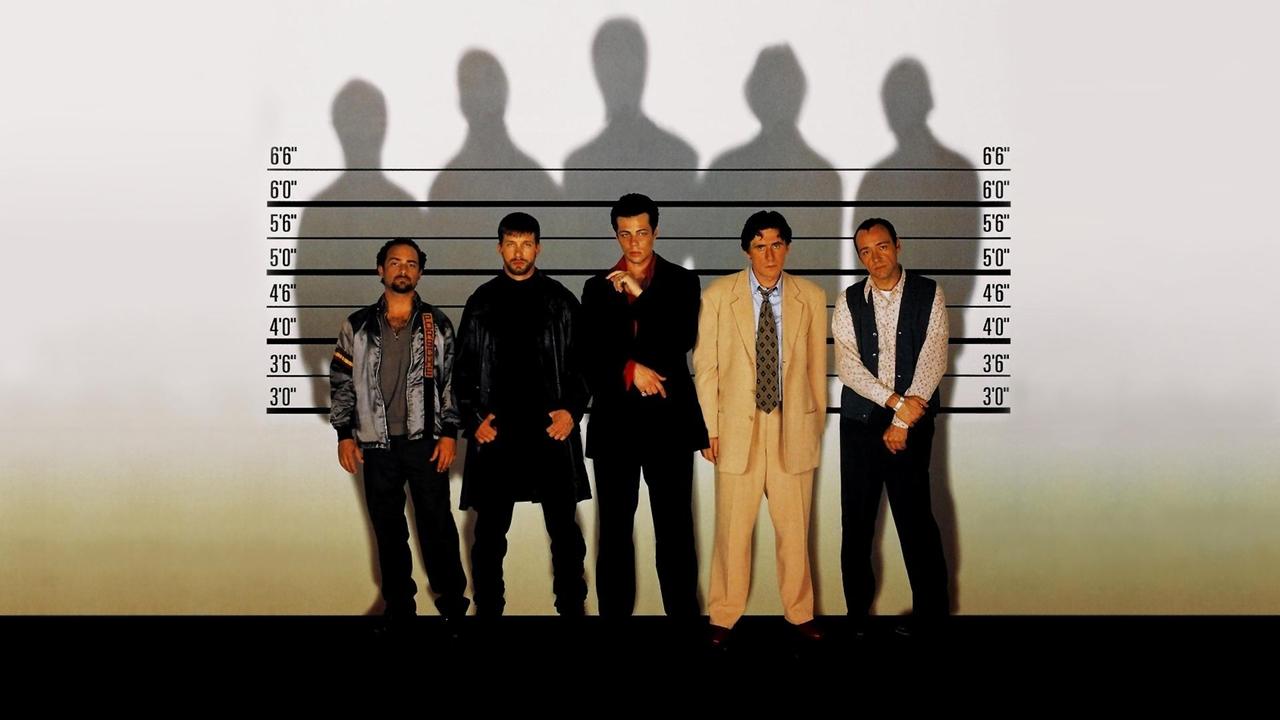
My name is Bryan Singer. And I'm Christopher McQuarrie, the writer. I'm the director. And this is the usual suspects. These are the credits. That's my production company, Bad Hat Harry, named after a line in Jaws. And this is Bryan Singer's film, as you might have noticed there. That was Chris's idea. The impetus of this film, the original idea behind The Usual Suspects, came from a discussion with a friend of mine, an actor named Dylan Kussman, in the lobby of a movie theater. And he asked me what our next film was after our first film. And I said that I had read an article... Our first film being Public Access. Probably not seen. Yes. And he asked me what the next film was going to be, and I said that I had been reading a magazine, and the title of the article in this magazine was called The Usual Suspects, and I thought that would be an interesting title for a movie. And from there, it became sort of the natural progression. When he asked me what the film would be about, I said, well, naturally, I assume it's about five criminals who are usually arrested for the same crime, and they're put in a lineup together. And...
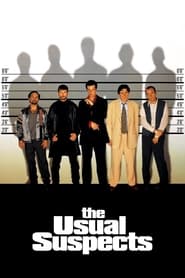
From that, we built the poster, and the poster was much like the one that you see that came with the film, with the tagline, all of you can go to hell. And this is something that I presented to Bryan, and Bryan liked it very much, and to make a long story very short, he told me to proceed writing The Usual Suspects, which we started writing in or around February of 1993. And there's Kenneth Kokin's credit. Yes, our co-producer. We have a neat little group. Kenneth Kokin, our co-producer. Chris and John Ottman, editor and composer. And myself. And we've known each other for a long time. Chris and I went to high school together. And I know Ken and John from film school at USC. San Pedro last night. The idea for the titles... We debated that one forever, as to exactly how to do that.
It's to keep the audience grounded. Initially, on earlier drafts, you didn't know sort of where you were, and it was a bit confusing, but we thought it helped, at least for the first three establishments, this being the first. This is... This is our favorite scene in the entire film. Yeah. Chris and I will... The idea, I think, was better on the page in terms of, like, the idea of the flame... being put out by the urination. I could have done without the whole flame urination bit, but it's, you know, it's stuff I like, though.
This scene was written about a year before there was even an idea. That's right. You wrote this scene for another movie idea. It was just a cool opening scene. I wrote this and sort of lost it in the computer. We switched the dialogue a bit, I remember, because in the initial... Gabriel was hit by a swinging crane in the earlier draft, and we changed the line, and it was, I think, my spine is... I'd have to say my spine was broken.
I can't feel my legs.
But we changed it to this line,
I can't feel my legs,
Keyser, because now it's a bullet wound. Yeah, we were... Spent about an hour talking just about the nature of his injury. And the interesting thing is, Spacey, when he first did this, I remember he was... He developed a... He wanted his right arm screwed up and his left leg, and he found out that people with cerebral palsy It all affects one side of your body, so he had to flip-flop, and then the lighter, which was a right-handed lighter, he had to learn how to operate with his left hand once his hand was to unfold. I'm assuming you've seen the movie already, so I'm not spoiling anything for you with this narration. I'd say if you're listening to this track now, having seen the film for the first time, then we haven't done our job keeping your interest. And what you're going to see now...
the foreboding porthole music, is, okay, this was shot in my backyard, not this. This, that's John Ottman's hand and my foot. And we built that little bit in my backyard. Not the ropes, but those two shots. Yeah, and Verbal's supposed to be hiding behind the ropes. That's the idea of the ropes. Some people seem to be confused by that. These ropes are to replace the base of the crane, which is cut out of the script. Originally, the crane was sort of a central piece to this whole thing. And the notion of ropes entangled, we thought, very interesting for the story. And this was sort of a... This was supposed to be done over black, but we thought this would be more interesting. Well, we removed the scene. Chris wrote a fantastic deposition piece, which it was a bit too long for, but that sort of encapsulated the idea.
Gave you an image to go back to with him making his statement. There's my voice. That's Chris's voice as the arresting officer. The tattoos are here. And a paint can, one of the few shots from the original visual concept. A beloved paint can. Yeah. And this is Kevin Pollak. In his very pink garage. Yes. Which I tried to time as much pink out of as I could, but it was... And, uh... That was cool. Are you
sure you brought enough guys?
My favorite of the arrests, Benicio del Toro. Yeah, with the little steel drum in there. I was actually adamantly against the casting of Benicio in this film. And if you ever read the script and see the changes that we made because of the character that he created completely from thin air, you'll see that I was totally wrong in my instincts. No, but, uh... We did a little dialogue swapping, but I really... Benicio, when he came to me and said how he was going to approach the role, he said... We both felt the character needed more... It was written more of a Harry Dean Stanton sidekick sort of character, and Benicio said, I'm going to come in, I'm going to bring you a character. If you like it, we'll do it. If you don't like it, we'll throw it away. And I said, you know, that's what I need, and you're the look and the whole thing. And then...
He did that, and I thought, yeah, this is great. My only thing with Benicio was that I had wanted a much older character to play opposite McManus. Which I like. I actually like that concept. It's just I couldn't find the right person. And then having seen what Benicio did on the set, I realized he was certainly the guy for the job. Benicio is a true artist. Very conservative with that word. Very special actor as well. Very bold. choice to not be heard. Yes. Very few actors would take that kind of risk. And to shave his hair. And to shave his eyebrows. When you're approaching 30 and you're shaving your hairline, that's a pretty ambitious... Benicio told me about the creation of his character, that his eyebrows looked Chinese, he had a Jewish last name, and basically he came to me and he said, basically with the character you've given me, I'm going to try and create a black Chinese Puerto Rican Jew.
And that's where the dialogue came from. We shot this restaurant, we built this restaurant out of the lobby of the Herald Examiner building. And it used to be a little longer scene with Edie and Keaton, but we brought it down so I didn't get to see it. It was probably one of the prettiest sets. My folks are in the background. My dad actually and his wife. But you can't see them. You do see them at the end of the movie. They're out of focus. This was... The shot, almost exactly the way I envisioned it when I wrote it. Now, to the left is... To the left is you, and to the right is David Duncan, who's a dear friend of ours from New Jersey. Who was cast five minutes before the scene. Before the scene, and he's the one speaking. He's actually doing the talking. Yeah. And it was interesting, because I said, are you nervous? Because he knew all the actors from their work, and all of a sudden they parade in front of him, and I said, are you nervous? And he said...
No, not at all, but his hands were shaking. His hands were shaking, he was sweating, and I told him that every minute that ran through the camera was a trip to Europe for his first take. This is a funny scene. Originally, we had shot the lock-up scene the day before, and it was very tense. And then this morning, the day we shot this was the next day, and just the principal actors and myself had sort of a bonding lunch to try to see what, you know, was the difficulty. And we got sort of, it became like a love fest, and we got all giddy, and this giddiness carried over into the scene because none of the actors could stop laughing. That shot really plays it there. You could see that there was a lot of laughing on the set that day. It was hard to get anybody to be serious. I was not able to get one take...
clean of the whole of the scene as constructed so but ultimately knowing in the end that the laughter would play into a way to bond the characters yeah originally played as a very serious scene uh in the script it was written as a very the the dialogue made this seem funny but the the guys were carrying themselves very seriously and uh it it failed in bonding them now here's one of my favorite actors chris mcquarrie as the interrogating the stomach of chris mcquarrie appearing And you could see me cheating my ring out so that my mother would know who it was. I did everything I could to get the ring into the camera. I noticed also the ashtray, but no one's allowed to smoke. This was actually for me the strangest day, was working with four radically different actors. You have Stephen Baldwin and Gabriel Byrne.
you know, primarily film actors at this point. And then you had Benicio, who was from Mars, and Kevin Pollak, who was a stand-up comedian, who completely destroyed me in improvisations. Yeah, the outtakes of that are rather amazing, of you and Kevin Pollak. But Benicio... Benicio was great because Benicio said, at some point during your interrogation, Chris, I might jump you. Or maybe not. Or maybe not. And I know Chris is thinking, what does he mean by that? Well, okay. Chris, you were a great trooper during the scene. Because he did jump me. He did jump you in one scene, whatever that was. Yeah, this is, but you also, I mean, with all these actors, I mean, it was just really, it was great. I mean, the outtakes, I mean, although they didn't necessarily serve the whole film, if you can get a hold of them sometime, they're really, it's like an hour of just really great improvised material. But most of the stuff you see in this was the script. And especially Pollock here, completely making fun of my weight and making fun of my family. Yeah, you were trying to get under him and he just... Yeah, he was really...
He had incredible focus that day. Even during the conversations, Kevin was never looking for a joke.
It was your mistake, not mine.
And of course, here at my hero, Gabriel Byrne, I do everything I can to get in the frame with Gabriel.
Yeah, what's that, the restaurant business?
And there's the side of your face, Chris. There we go. Before you had your... The hand with the ring. The hand with the ring. He was... He didn't blink during this, and I couldn't... You can't see my eye out of the frame there. I'm continuously blinking, because I was trying so hard not to blink when I looked at Gabriel, and my eyes were going like... Ow, Gabriel. Yeah. And this is the scene we had shot the day before. That was a very tough scene because we shot the scene actually in the medical ward of a wayside prison. And when you go in and you go out and you're surrounded by this prison environment and the prisoners are really everywhere, especially when I scouted the location. It was very creepy. And I think that whole notion of this... And it's a transitionary prison, so there's no clicks, there's no energy. This is all... McManus' dialogue in the script, by the way, and it was all changed over with Benicio. The entire shape of the scene was changed around. Yeah. Which also made it... Notice Kevin Pollak's lying down, because only if you're guilty, you never...
You never... You arrest three men, you put them in jail overnight. And one lying down as you're mad. But the prison environment, I think, really led to the sort of stress and tension of this day. This was also a day when... Prior, the actors had come to me, and they were led by Gabriel, and they're like, we don't mean to mess with his process, you know, but we can't understand what Benicio is saying. I mean, is this what you're looking for? And I said, yeah, if you can't understand what he's saying in a scene, ask him, you know? And so Pollock in this scene asks him. Which became sort of the principal direction for the first half of the film. To everyone, if you can't understand Benicio, neither can we. And it's okay. It's okay. So Benicio actually and I, in the questioning, Benicio and I went into an entire routine about, what are you saying? What are you? And we went into a whole search of Fenster's... ethnic past was still on that search when the picture was finished. So how was that strip search? It was the feds. I took a lot of guns to get snagged.
Customs comes down on top of NYPD looking for answers. They come up with us. They're clutching at straws. I had a guy's finger
in my asshole tonight.
Is it Friday already?
Yeah, I love her, boy.
You want a piece? Jump in.
I love you.
So who in the goddamn piss hell stole that fucking truck? What did you say? Who stole the fucking truck? I don't want to know. Who asked you, working man?
Benicio's strip search line. back there was a line that he had a great deal of trouble with because Fenster was played as a much weaker character in the script and he had come and made him a much stronger character. And he called me at one in the morning one evening during production and said, can you come over? And I went over to his house and we sat there trying to figure out a way to keep that line in the script and he badly wanted to cut the line. He didn't want his character to be that kind of victim. And he... I think he sort of knew how important the line was to me in that scene. And he, without any sort of insistence on my part, Benicio ended up working the line into his character.
Me and Fenster heard about a little job. Why don't you just calm down? What do you care what he has to say?
I've never understood why he's telling him to calm down. I cast Gabriel in my head off the line. Just in my head always, you're making me tired all over. That was Gabriel. That's his whole... I like the reveal of Spacey that you don't see him. By the way, there's plenty I don't like. I'm just trying not to get into it. Which is track two on this disc. Try to find it. Anyway. it's actually tracks two through seven this uh some moment where baldwin uh told me later about how how creepy gabriel was looking down at gabriel and seeing gabriel sort of shuddering during this scene yeah he was going to kill him yeah gabriel gabriel this is is is The most effortlessly complex actor. That's probably the most perfect description I've ever heard of Gabriel. Gabriel is also the most popular man on the set whenever Bryan would yell cut, hair, makeup, you name any sort of woman on the set that was working in any capacity would flock around Gabriel with Baldwin standing ten feet away going, when you're done with Mr. Byrne, I'm here.
This transition is kind of interesting because it plays with the notion of Keaton. Who is that bird from Keaton's face here? Yeah. Implying the existence of Keyser Söze. And here is Keaton and then all of a sudden you have this. And is this Keaton later or not? And that's something perhaps... Or earlier. Or earlier. Being completely confused by the time jumps in this film as we are. This was a tough scene because we were racing against light. I remember that. So everyone looks very pretty, but there was a big... A lot of dialogue went that day.
One guy's in county hospital, but he's in a coma.
The DA has a second guy. Yeah, it was a complex... Giancarlo as the world's most casual FBI agent. What's the line we cut? Spooky stuff. Spooky stuff. We cut this line, but we love this line. Spooky stuff.
Yeah, the FBI agent with the goatee and the... What kind of hat is that? I still to this day don't know. And now the big... That was actually Giancarlo. Giancarlo has a very... My impression of Giancarlo is somebody who's got a real great love of the 40s and a much more nostalgic sort of sense of who this FBI guy was. When Bryan brought that to me and said, this is what we're going to do with the FBI guy, it really just seemed sort of natural. I like the way Giancarlo carries it very much. Why can't I see you? Dave, I told you. Again, the Herald Examiner building built into a police station, quite finely by Howard Cummings. The brilliant... This is the ever wonderful Dan Hedaya. I'm thinking about this scene. This is hard because it was just a long, long shot. This was originally three scenes cut down to two pages. The script had timed far too long, and while I was...
Finally finished and away on vacation, Bryan called me and said, we've got to cut out 12 more pages. And this was the scene that basically amalgamated two characters into one. That's right. There was a Captain Leo character as well as the Rabin character. And we ended up fusing those characters into the one Rabin character. Dan was originally cast as Captain Leo, and we hadn't cast Rabin yet. So that this is the character that came out of this, which I think is a much better character. The sort of stock, angry police captain was really the most embarrassing part of the script. I quit.
This won't be an interrogation. Just a friendly chat to kill some time. He will not go into the interrogation.
Then someplace else? Where? No, no, no, no, no, no.
If this was a dope deal, where's the dope?
I was very happy that Tom Sigel, the cinematographer, gave me the confidence to open up those blinds and have that kind of background constantly, because I was afraid that that would pose too much of a gaffing. It wasn't just him and James Deck, the AD, to create movement back there and all that, and I was afraid that would be just a pain in the butt every time you go back and show that angle, but it really opens up a dimension of that office and makes it less claustrophobic to have those windows open, so glad we went for it on that. Seems trivial, but it's... And it is a pretty damn claustrophobic office. Yeah. And we had the walls could move a lot, but we didn't really move. I kept them pretty tightly shut to keep that sense of claustrophobia. Only a few times we pulled the walls out so I could move the camera back for a sort of ambitious movement or something. This is one of the scenes we shot later, almost towards the end of the picture. My mom was there. This is the first time my mom visited the set, I remember. And the most fun I think you had. Yes. Giancarlo and I, for some reason,
could not stop laughing the whole day. It was just, it became, because it wasn't a heavy day like some of the other days. We had shot most of the picture already and we just had a great, great time. Not so much in here, but it was more during that one dolly shot that was before. This was again more confined because it's a real hospital room. This is an old hospital downtown. Here's a guy who's burned and I still can't understand why his entire body is burned and yet he still managed to keep his eyebrows through the fire. Yes. Oh, really? Yeah. First close-up, you'll see his eyebrow peeking out from under his dressing. There it is. Oh, that's interesting. Now, later, it's kind of hidden. Oh, yeah. Well, you know, fires are funny things. Yeah. That's a line that continuously gets a laugh, and I still, to this day, don't understand why. Well, he originally pronounced it, he originally pronounced it, Keyser Söze.
I guess the Hungarian way it's really pronounced. And then it sounded like him going, no shit. Söze, by the way, is Turkish for verbal. There was a different name in the script. Some of the characters in this script are named after people that I knew, people that I worked with. Dave Kujan, for instance, is a friend of mine. And we had to change the name of Keyser's character. the last name, and Söze became the winning name. This is the setup shots of the cigarette box and the... And Kevin Spacey, for whom the script was written from the very beginning. That was sort of the intention of Bryan and mine, hopefully to get Kevin, too. Kevin had seen our first movie, Public Access, and said he wanted to work with us, so... Yeah, we were.
Nice to meet you.
Originally, we saw this shot before Chazz straightens his tie. The microphone for the recording device in the next room was intended to be inside his tie, but people more now suppose it's in the cigarette box, which is just as pliable, I guess. Your guess is as good as ours. Yeah, there's a microphone in there somewhere. Well, I'm sure if you look closely, you'll see one boom down into the frame. No, I'm kidding, actually. Very good sound on this.
That guy is tense. Tension is a killer.
So this was Chazz, had to bear the brunt of a lot of the really, really, really intense dialogue, a lot of monologues. Chazz is the bearer of all the exposition in this film. A lot of work to do, and we shot, all this interrogation stuff was done in five days, as I recall. And every time, it was so hot, every time, we had that big tube running, that air conditioning tube, unit in and i remember that between every take between every take it was like area on on and here comes oh and this is my housemate paul nelson there he is ladies and gentlemen with his new haircut the cops wouldn't let him go legit dean keaton who also records the song oh yes he has a song in the background of one of the scenes he's a singer-songwriter
are you trying to get a rise out of me
agent guillaume i just want to hear your story it's all there
may i have a cigarette
Okay, there's the scene with the lighter that everybody panics about. I never quite understood why, but just the notion of verbal with a lighter was always a panic. This is one of the things that I watched the film the first time and I could just feel the audience getting it all around me. Kevin did some interesting things with the cerebral palsy visiting the center to learn more about it. He also, I remember, the bottoms of his shoes, he filed them so that when he walked, you know, as they would be filed down by walking for months and months, you know, with a palsy. He also... He also brought in some interesting photographs of prosthetic hands that looked like they'd been through meat grinders and napalm accidents. Yeah, we decided not to go with that, but we instead put a piece of appliance... We actually...
glued his fingers together. Yeah. So he would be able to not have to, you know... For continuity's sake. Yeah, not just continuity, because when a person with palsy is not forcing their hand to be in that position, it's there quite naturally. And by actually gluing it... Gave him one thing less to concentrate on. Yeah, it's more real. And of course, at the end of every day, watching Kevin flex his hand and hearing all the superglue ripping his skin off... Testament to his passion to this.
Let me get right to the point.
That and how much everybody smokes in this movie. And Kevin, when he first came in with that haircut, I remember, to a fitting, and he sat down sort of shyly during this fitting. That was the moment that I realized, wow, you know, that this was right on. Yeah. No, when he passed me in the hall that day and I said, my God, there's Verbal Kent. This is the scene where he looks up.
I was picking beans in Guatemala.
Oh, no, no way. No, no. Not yet. Coming. It was still this extreme angle that a lot of people commented on after seeing the film, thinking when they were first watching it, what the hell was this guy doing? See, there... There he is when he looks called by Yashi. This is a shot at the base of the... City Hall. Los Angeles City Hall. And I want you to watch Gabriel Byrne's cigarette during this entire scene. And watch the smoke coming out of his mouth. This is the magic cigarette and the dragon exhale from Gabriel Byrne. Now it's not lit. Now he's exhaling. Well, let's talk about something else while we watch this sort of continuity this sort of again howard did a great job making this for 20 minutes um no howard did a fantastic job of this especially with the subway across the street and dressing up the uh this um
Cars going by. We shot this. It was funny because down the street from us, they were shooting Strange Days. And then another few blocks away, they were shooting Don Juan DeMarco. And we all ran over during our break to the Don Juan set because we heard there was going to be 200 naked women by a pool or something. And when we got there, they were sort of on their way out.
I love you. They ruined me in there tonight. I love you. Do you hear me?
There's the lost dog. We have them sort of all over the movie, but that's the one that really showed up. What is with the lost dog thing? It's a Howard Cummings piece of... Howard must be very attached to his dog.
one of my favorite moments in that. Yeah, it was a hard one to execute. It was written so much like this idea. Oh, that's the fake subway. So if you kept walking, you wouldn't go down, so Kevin would, like, pretend to, like, crouch down as he would go further into the subway, but it wasn't a real hole. Fensterman McManus had a cagey proposition.
A fast jump, high risk, long...
This voiceover was actually written standing on the set of... Standing on the set, standing on the... Disney lot, when I got a call from John Ottman saying that we needed a new voiceover... ... and I was on a cellular phone trying to make it make sense. There's another scene in the apartment here, which wasn't really necessary... ... and I shot a bit of with Edie, but... It came just prior to this. Yeah, but I removed it and went for the voiceover instead. It seemed more punctual this way. But I like it's played in one take, and I like the hourglass sort of configuration. There are two faces in the space between. Yes, because their noses are so similar, as you can see. Gabriel's got, like, all the right flaws to make a face incredibly beautiful. This actually builds up to my favorite Gabriel moment in the film.
We shot the scene when he opens the door, and there was a guy standing outside who lived in the apartment near where we shot this, because we shot this in an empty apartment that we furnished and dressed in that bizarre way. And there was a guy standing, so instead of Gabriel Byrne, he picks up and goes, what do you want? He just looks out and goes, what do you two want? Kevin's like, hello? This is a very Mamet-inspired dialogue here.
I'll be all right.
Whoa. Now, this apartment, which you may recognize from Buck Rogers... It's built to resemble my own, actually. No, the furniture is actually quite real and quite... Expensive. Expensive, yeah. I don't recall the name of the designer, but it's furniture from the 50s, early 60s, I think.
That single look sort of negated the need for the rest of the scene, the earlier part of the scene. And I shot this in a master without doing any close-ups or pick-ups, which was kind of scary. And the shit bloodline, which we fought over, and I firmly convinced Bryan that it was going to be a funny line, and it got into the movie, and no one ever laughs at it. I disagree with that. I think that I was told some people laugh. Some people in Iceland laughed at that joke. No, no. Old myth. It's an uncomfortable kind of humor. Yes. Especially at that Lincoln Center screening. Where the old man at the end of the film yelled, Baloney! Got up and walked out before the credits rolled. Epic moment. And right here, this is truly, this is my favorite Gabriel moment, the frustration of this.
Not if we do it
anyway. This is really where I love the rapport between these two guys. And here is... Now let's watch a... Keep your eyes on the engines of the 747. And... Look, they drop them so that they could land safely. A 767. Have a... Here is Paul Bartel, the absolutely wonderful Paul Bartel. One of my favorite directors in one of my favorite outfits. I gave him that outfit after we shot this scene. And you didn't miss it. To give him, that's the Verrazano Bridge. And I think they're going into Queens. They're going somewhere, which doesn't really make sense. They're going into Queens. But in theory, they should be coming from Queens if they were on their way back from LaGuardia. Or was it JFK? I forgot which airport. Complete confusion as to where... We actually shot this in New York. We double a lot of this. This was New York. I shot two days in New York. This is Los Angeles right here. This is L. A. , yeah.
Will this get me to Staten Island?
Are you kidding me? This will get you to Cape Cod.
McManus came to us with the job. Fenster got the vans. Hockney supplied the hardware.
I came through with... Those are the two guys in Amongst Friends. Frank and Lou, who we love.
A little fuck you from the five of us to the NYPD.
And this scene was originally written at night, and Bryan called me up and said, we have to shoot this in a day, because the whole damn movie takes place here. Yeah. It's fun in a day, too. You get more perspective, and you get the notion that there might be people in the neighborhood, like, around watching, but since the action is so boxed in by these vans, maybe they don't see it. And now see the palm tree? Oh, you can't. Little ADR there. This was also a scene that I had envisioned several years ago when it was time to finally write the scene. Oh, there's Baldwin in his pork chop edition. Loves that word. Bartel makes this scene, though. Watch. You'll see. You'll see his expressions. Ooh. Intense. Look at Paul. You idiots. I especially love that the, uh... The cigarette through the mouth, or that was that, too. And there's Officer Strauss, another name borrowed from the law firm where I worked. Here's Paul. Sniffed. What's that smell? What's that? Oh, we shot that little shot in New York, then went back to... There's one shot in here which I got in New York. This is all L. A. , L. A. The van. All this is L. A. , this one shot.
I'll show you. That was shot in New York. Just that one pickup right there. Just to make this work. But all part of our schedule. Shot the whole movie, 35 days. And these are my two friends, Bryant and Frederick. We'll see them in a moment. There's Bryant to the right and Frederick. They're the only two Caucasians, except the cameramen standing there. What were these two young boys doing in that neighborhood? We'll never know. Dizzying heights. We shot that entire heist in one day, by the way. We shot the whole movie in 35 days, 33 days in Los Angeles and San Pedro, and two days in New York City. A real $2 million in emeralds, which were provided for us by Tony DiBona Ventura? Yes, our... Yes. Our man who had everything.
Yes, verbal. In California, Fenster and I... Wait, wait, wait. Hold the fucking phone. You and Fenster? No, no, no, no,
no.
You fucking kidding me? Okay, so, then who's gonna go? We all go. What's your fucking problem, man? My fucking problem, man, is that you and Fenster are off honeymooning in California while the rest of us are sitting here holding our dicks. Hey, the job's over.
Yeah, we had to keep the emeralds guarded, I remember, and only took them out for the shooting or for showing them off to people when we were... You take a look at my emeralds. And Gabriel in his Bogart moment. And there's of course the little love scene between Stephen Baldwin and Kevin Pollak. Stephen's great.
I would like to propose a toast. There you go.
Stephen's philosophy, always make violence and the intent of violence into something sexual.
Money shot for Tony's Emeralds. The Flatiron Building. I used to walk past this building every day when I used to live at the YMCA on 34th Street. I would walk past the Flatiron Building whenever I would be going to the School of Visual Arts on 23rd Street. So I thought, why not put in a movie? And it also seemed to be a building that would mimic this kind of odd perspective you have in this... In this law office, you know, the balcony, the notion where Gabriel walks up these stairs only to look down at Edie, it's kind of... Yeah. It's odd and angular, like the building, so... This scene is what I particularly like because of sort of the ghost-like quality of Gabriel in this scene where he's hovering above Edie. I'm
gonna miss the plane.
She'll understand. I remember, uh... The sunglasses was an issue. He was going to save those sunglasses for the scenes in Los Angeles, but I thought it was a nice precursor. Because initially Gabriel wore them to the set and Kevin didn't, so I made them switch.
That's heartwarming. Really.
I'm waiting. Try to maximize the frame here. Boy, did you. We used a diopter filter, keeping both faces in the focus at the same time. Here comes Chazz's epic exposition. Yeah.
Bullshit. Keaton was using her. He loved her. Sure.
And that was a scene that originally actually zoomed in on the... on the bow... on the tie. Remember? Yes. And that's why I went to the radar, but then I just, I liked it better. I thought that angle was more interesting. Plus, it was like, why are we zooming in on Chazz's throat in this scene? What's going on in there?
The guy I know was a cold-blooded bastard.
The scene that follows this, the scene with Giancarlo in the hospital, was originally at the end of this entire... tide of exposition between the two of these characters, and Bryan quite wisely stuck it in the middle to sort of break up this very long and very heavy scene. Yeah, initially it was... Chazz, we tried it with him being very aggressive, you know, but there's so much of that level that we thought to have him sit down and make it more of a conversational, you know, playing good cop, bad cop. But what I like about it is Chazz, he's always, you'll see when Giancarlo comes later, he sort of smiles and laughs about everything because this is, even though he has a personal vested interest in Dean Keaton, he's still simply just doing his job. It's his job. And I like that. He never lets it get the better of him. Yeah, exactly. And I think
I very much like the idea of not playing the cops as the idiots. I like a movie where everybody is, you know, everybody's doing what they believe is right and that everybody seems to be as smart as the other. It doesn't, to me, it detracts from the victor when the person they're beating is a dummy. Exactly, yeah. And Chazz plays this very smart. Enter Ron Gilbert as Dan Metzheiser, named after a high school chum. And enter Michelle Clooney as Sketch Artist. And now we've hidden the eyebrow. Have we hidden the eyebrow? It's still a bit bright. This video is a bit brighter than it was on the screen. That's Morgan. Morgan is actually Hungarian and is the most wonderful guy. And if you speak Hungarian and listen to this scene, it makes absolutely no sense whatsoever. No, that's not true. It's not true. We had a secretary in the production office who was
Hungarian, and she spoke Hungarian, and we actually do, the Hungarian dialogue is actually cut to realism. I mean, if you, she speaks the language, and she actually, you know, it worked. Really? Yeah, it was a big hassle. Yeah, all the Hungarian works. Oh, poor John. Well, if you, the film is gonna play in Hungary, and you're gonna piss people off, unless you don't take that kind of care, but it was difficult. It was a, it was a... Keyser Scherze, Latam, Uvodland. He's in the heart rate. Killing many men. Get a little chilled. He saw his face.
Tell him to tell her what he looks like.
Describe him. The idea of the sketch came in in later drafts of the script, which eventually led up to the vax machine. The idea of cutting away and going to this building of a composite. Well, the idea is one more element. It's just nice to have all these elements so that you're trying to convince the audience of something at the end and you throw more at them.
And then he had lunch.
And this is one where I had to move the wall back to get the whole... the whole dolly in.
I think you're covering his ass and he's still out there somewhere. I think he's behind that whole circus at the harbor. My bet is he's using you because you're stupid and you think he's your friend. You tell me he's dead, so be it.
No, I'm not stupid. Very good, Kevin. Can I recite the original monologue? Are you embarrassed? Oh, no, please. This will be a nice track. Okay, I'm going to tell you what Chris's original monologue was when Chazz says, there is no immunity for me. It's right here. I better start it earlier because it's long. Right now. There is no immunity from me. You atone with me or the world you live in becomes the hell you fear in the back of your tiny mind. Every criminal I've put in prison, every cop who owes me a favor, every creeping
scumbag that walks the street for a living
will know the name of Verbal Kent. He'll be the lowest form of rat, the prince of snitches, the loudest cooing stool pigeon to ever grab his ankles for the man.
Now you talk to me
or that precious immunity that you've seen so fit to grant you won't be worth the paper the contract put on your life is printed on. Very nicely done. Thank you. Nicely done. I have no script in front of me. There you go. Now when Chazz sees this, he's going to kick your ass. Chazz actually did... What are you doing upstaging me, singer? Oh, stretch the words. Stretch the words. He got angry at me one day because Kevin Spacey had three lines in a scene and he had about four pages of dialogue. And I came up and he goes, and then Singer comes up and he steps over me. He goes up to Kevin and he says to Kevin, stretch the words. Three words, stretch the words. But no, that was the original monologue, which Chazz said quite successfully, but we ellipsed a bit, took it out a bit. Quite necessary. And here is the terrifying Peter Green, who's actually a sweetheart. He is the darling. And there's the four-leaf clover on the back of Baldwin's neck. Steven's neck. Benicio's even getting laughs when he's in the background. He's gonna love that move.
And I never understood why two million dollars in emeralds, which fit in Paul Bartel's pocket, now fill a backpack. I guess they just... I guess they brought him a snack. What is that? And the usual food, I guess. For one of our... No need to look at it. Yeah, I don't need to look at it, right? Turkey?
Not like you guys. What's the job?
This is a
jeweler out of Texas named Saul. He rents a suite in some downtown hotel.
He does reappraisals for people.
Sometimes he buys, sometimes he doesn't. Anyway, the word is, he carries around a lot of cash. So I figure I keep the merchandise.
The idea of these jewelers is actually based on jewelers that I used to work for as a bodyguard. So it's rehearsing for my own death when the two bodyguards get shot later on. And the two bodyguards were sort of based on you. Me? As you can see in the first scene where my stomach is prominently displayed. No, I thought, I think you look... Here's Gabriel. This expression on his face is priceless.
The way I hear it, you did time with old Spook. Good man, wasn't he?
Right here. Yeah, well... Gabriel also has the remarkable talent for immediately wrinkling any article of clothing that he puts on. The character of Redfoot in the script originally was written as a guy who rode a motorcycle and was followed around by this Cadillac with all the windows tinted out and you could never see what was inside. He wore, as it's described, an almost comical array of leather and silver. He was more or less a mockery of L. A. fashion when these New York criminals arrived to Los Angeles and he wears one red boot and one black boot. Got a little science fiction-y, I thought. Yeah, it became a little strange, and Peter came in and completely dropped the hammer on it and made it the most realistic character, I think. Yeah, more so than... They get to L. A. and everything suddenly gets real.
Actually, that's why the Korean Friendship Bell here and also a lot of the other odd locations were meant to be very real locations, but also a little fantastical, sort of like a fantastical romp through L. A. People ask me, like, what do you compare the movie to, like other movies, and I would say The Wizard of Oz. That's my favorite because New York is like Kansas, and L. A. is sort of like the land of Oz, very colorful, even in this... garage with the green light and the costumes, everything's... Carl Bressler. Now remember the joke that they're telling. The joke gets followed up with later. Yes, that's right. The joke does get followed up. Carl Bressler, this guy's an actor friend of ours, but his main occupation is a below-the-line agent and a good friend of ours. So there's a lot of laughs in L. A. when he's shot in the head.
A lot of people appreciate that. Or when they see him get into a $150,000 Mercedes. I remember it was the first time, you know, Gabriel put a gun on top of the Mercedes and I went up and I said, could you take that off? And he's like, what? I'm like, the car is a significant amount of our budget. Gabriel also hated wearing that mask, didn't he? Yes, he didn't like the mask idea, but yeah. Now here's my favorite. Carl Bressler drops a Sig Sauer 228 on the ground and gets... And then Stephen Baldwin picks up, what, a Browning high-five? A Browning high-power. And this whole scene, we shot this entire thing one night, which was a very bad night. I remember we shot this until it was a 19-hour day. Our location manager quit. It was a very rough night.
And Carl made me take one of these bullets in the head, which is basically a pellet, a red pellet that's blown through a blowgun at your head. He made me take one in front of him before doing it himself. And then Chris Farley showed up on the set to visit us that night. And I go up to him with a bullet hole in my head. I'm like, hi, I'm a big fan. He's like, good for you. You might want to wash yourself there. The shot of Spacey holding the gun. I've heard a lot of people say, well, I knew it was, I knew Spacey was Keyser when he shot the jeweler in the garage. And I said, why? And he goes, well, he was holding the gun sideways like he was in the beginning and holding it with his left hand. But he's not. Which is interesting because he's not. I've heard many people say that. I mean, hindsight is 20-20, I guess. Or maybe not.
Guy the other night. I saw the film twice. The first time I saw it, I thought Kevin Spacey was... But then the second time I saw it, I was like... You're in the wrong theater, pal. The second time I saw it, I thought it was Pollock. Yeah, very weird. Strange. Anyway... This scene, again, rewritten in pre-production. It was originally Keaton that was very angry.
What am I supposed to do with that?
The casting of Stephen Baldwin called for a lot of... a different temper to the entire scene. And Peter Green, in one of the takes, hit Kevin Spacey directly in the crotch with that bag of cocaine. And Kevin had to carry the rest of the scene completely in utter pain until we were able to cut. And the upcoming... Peter flicks the cigarette constantly at Baldwin's chest But in one take, he flicks the cigarette right into Baldwin's eye while it's flaming. And he freaked out and jumped at him and sort of shut the scene off. But I had a B camera on Benicio, so I was able to use the take where Baldwin gets hit in the eye. Right there. So that's real. There's no stunt involved in that cigarette hitting him in the eye. Yeah. Baldwin's a real trooper. Baldwin keeps saying, keep going, keep going, don't stop. Stephen did all his own stunts, and some of which, especially the one where he, at the end of the picture, where he falls face first onto the metal deck of the boat. Oh, five times? Five times, and... Smashing his face every time. Yeah. He's nearly fully recovered from the reconstructive surgery. Again, the split-focus diopter.
Came from Redfoot. Right.
Why leave this out when you talk to the DA? Here's what I mean. When Chas, right here, he's serious and he's tough and he's on this sort of track, but when he comes out to meet his old friend from the FBI... Hey! Hey! Which, of course, is a big, giant piece of fiction in itself because it's my understanding that the FBI and customs are... Not the most cooperative. I've been in L. A.
County talking to a guy they pulled out of a
drain pipe
in San Pedro yesterday after the shootout.
I came to this morning, he started talking. This is the first time when I saw this in dailies, I thought, oh, this looks like a real movie. It's quite familiar. Yeah, it's got the police, it's got all those people moving around in the background.
Our man says no way on the dope. This Hungarian tells me the whole bunch was pulling stumps for turkey the next day. They had no time to negotiate that kind of product.
And was it a real movie? Well, that's up to you, Mark. We have Mark Wolf, our polygram video supervisor, in the outer room. He's telling us we're making too much noise. They mention here in this scene San Pedro as the location of the shootout where the boat was, originally in the script that it was Marina del Rey. Can you imagine them having a... Fuck! a gun battle next to the Cheesecake Factory. Over in the... This is the Hollywood Athletic Club. Yeah, we had our wrap party in this very room, actually, which is, again, a very colorful, flowery, sort of imaginary location. And a difficult day, too. Yeah, this was a tough day. A lot to cover. Gabriel's kids came on that day, and they did the... They called action and cut a couple of times. They were probably... A lot more effective than me.
Mr. Fenster, I recognize from his mug shots, as well as Mr. McManus, I can only assume that you are Mr. Kint, the gentleman who disposed of Saul Berg. My employer sends his gratitude, a most unexpected benefit.
Yeah, the idea. He's a British actor famous for playing an Irishman with an Italian last name playing a Pakistani with a Japanese last name. Yeah. We thought that could be more strange and more Los Angeles than that. Those of you who do will have 91 million lawyers
to divide between you in any way you see fit.
Who's your boss? I work for Keyser Söze. Ooh. There was originally a much bigger exchange between the two of them with Gabriel sort of pulling teeth out of Kobayashi to get him to say who he worked for. Yeah, and he also said... I was looking at the script this morning because Roger was... You don't work with me if I work with you without knowing who I'm working for. Yeah, I kept asking you what that meant, and it made sense, but... No, it didn't. It sounded good. It made no sense. I don't usually sit with an audience to watch the movie, but in the first early screenings, we poke my head in sort of around this scene to see if the audience responded to his accusations about Hockney. And if they did, then I knew the audience was following the picture. Right. If they didn't, I knew. This scene is a litmus test. Yeah. Just been here.
What do you want
from me? Guilty. Pete, by the way, delivering all this dialogue was... Quite a trooper. Quite a trooper. We were out very, very, very late the night before with Pete. I wasn't. All right, I was. I was out very late the night before with Pete. I think he got three hours of sleep before this scene. And he beat me to the set. There's a... There's some funny bloopers in the gag room here. Because they got so tired. Everybody got so tired.
was a little too effective in expediting his release. Holding the rest of you became a moot point. What about Redfoot? Mr. Redfoot knew nothing.
Mr. Söze rarely worked... Now, originally in the script, they kill Redfoot immediately following this scene. There's a cut of the mysterious Cadillac that follows him around with his legs sticking out of a hole in the windshield and the Cadillac is filled with bullet holes and you see one red boot and one black boot. I shot that, actually. And you did shoot that. I enjoyed shooting that because it was during the twilight, during the time we shot the night, the day and the night of the... There's the sideways gun again. Sideways gun. To try to distract you from... Which will be a trademark of the early 90s when you look back at film later on. Kevin, oink, with the finger. Um... Yeah, it was a nice, beautiful crane piece coming down from the Friendship Bell onto the car, all wrecked up and twisted, and we filled it full of holes, but I cut it. I think ultimately we didn't like the idea that these suspects would hunt someone down and kill them in cold blood, even if they were... Me, I like that. He likes that. Mr. Sauzet. would like you to stop the deal.
If you choose, you may wait until after the buy. Whatever money changes hands is yours.
Mr. Sauzet
would like you to get to the boat and destroy the cocaine on board.
And then
you will be free of your obligations
to Mr. Sauzet. The briefcase. When there was a lot of arguments over opening the briefcase and who opens the briefcase and wouldn't they check the briefcase? Wouldn't they? Oh, God. What a dumb issue. There was a lot of... In the mix, I kind of made fun of that. because I push the sound up all the way. All the way on the briefcase. So when the briefcase opens, it's like, here! There was a certain question, and he sort of found it strange that this guy just goes, he says, well, why don't I just kill you? And then he says, here's a briefcase, and then is allowed to walk out of the room. I think the threat was always a bit semi-idle, on the part of Gabriel, at least. And the briefcase, you know, would ultimately have the answers that by killing this man, they might not get anything.
Have you seen the videos for the Academy members? No. They get a box, the red usual suspects box, and it's in an envelope with the names on it or something. It's kind of clever. And Kint has checked off. Yeah, why is that? Whose idea was that? Spacey's. Photographs, I love these pictures. These pictures are great, yeah. I think that's got to be... Is that in Santa Monica? I have no idea. I didn't take them.
This isn't right. I don't know.
Who's that guy who used to talk about the soldiers? No, this was... Oh, see, Benicio got so into his character, he sometimes got caught in it. Fucked up, fucked up, fucked up. There's a great outtake of Benicio going, Fucked up, fucked up. Fucked up, butcher. I don't know. Or when he's, like, in the lockup, there's another out to him, and he's like, was it? Wait, wait, wait. He couldn't say who stole the truck. Yeah. Yeah, he's fantastic. Oh, this one, this one. There is no Cesar Cose. Hello. Who is Cesar Cose?
He's supposed to be Turkish. Some say his father was German.
Oh, this was...
That scene in the script that I handed over to Bryan and said, this is your problem. You try and shoot this flashback without putting Kevin Spacey in it. I don't care how you get it done. This line here was from Baudelaire, the French poet. Oh, yeah, I knew that. Did you? No. This came from a party at my house one evening, and everybody was exchanging famous quotes, and someone at the party said that, and I was like, ooh, I think I'll use that. The only reason I know is because I was speaking at a French film school in Paris, and one of the students said, this line from Baudelaire. I was like, yeah, that's well, you know. Yeah, Baudelaire. We're scholars. This was shot with a six-frame step printing process, so it's actually shot this way on the set. You shoot six frames a second. In the post-production, you print each frame four times, and then you get this effect.
He comes home to find his wife raped and children screaming.
The Hungarians in Yosose
was tough not to be trifled with.
Let them know they meant business. This shot was an issue, which we thought might get us a ratings problem, but was very sweet. We actually sent the film to the MPA to rate it, and they sent it back saying, we give you the R that you've asked for, and we also want to tell you you have a hell of a film. Congratulations. Very cool. That was a neat moment for us. This location was actually a Turkish mosque that was taken from the World's Fair. decades and decades ago... ... and brought as an extension from this person's home. Oh, and the stuntman who was the lead Hungarian... ... was the double for the one who cuts the kid's throat... ... was the double for all of the Pink Panther movies for Peter Sellers. He was doing all the fight scenes with Kato. So he's the one who was getting beat up by Kato. That's him. That's funny. I wish I'd known that. This was actually one of the PAs on our film. Yeah. And like that. He was an intern, actually. And he, yeah.
Nobody's ever seen him since. He becomes a myth. A spook story that criminals tell their kids at night. Rat on your pop and Keyser
Söze will get you.
And no one ever really believes. Do you believe in him, Verbal?
I love the look of this scene very much.
I don't believe in God.
Yeah, the texture was good in the film. Some days our film was better than other days. Here's the line that they printed on all the matchbooks that they were handing out. Oh, in Cannes, at the Cannes Film Festival, yeah. This is the one pop culture reference in our script that I still regret.
A lot of guys equate him to that reporter on The Incredible Hulk.
I like The Incredible Hulk. It's not just a TV show. It's also a famous comic strip. I think it's perfectly acceptable. There's Tulsi coming in there. Somebody working for a guy, worked for a guy,
got some money from Keyser, you know, shit like that.
It could be an old guy who's now a hex sign. I think he's smoking his thumb in the shot. His cigar is so short. He takes the shortest bursts.
Yeah, I'll run it up
to flagpole. A little whistle. Portuguese. This is interesting. The dialogue in this scene was actually... Verbal's voice is from another take, and I put it over this take. I remember that. I did that a few times in the picture with a few people. Not because it just works for me better in certain ways. That was one that I don't remember. I hate ADR.
Where's your head, Agent Kujan?
But we had such a good time writing all the ADR for... For the television and airline version, yeah. Give me the keys, you fairy godmother. And Baldwin's line is, give me the frigging keys, you fairy godmother brother bugger. Yeah, we were trying to avoid the use of the word frigging as much as we could. But when you have a movie with a word with its counterparts so oftly displayed. I saw this film with my grandmother. and was never more aware of the language in the film. You're never more aware of the language in the film. Oh, when you see it with one of your relatives or family, yeah. And my grandmother sort of selectively, I guess, blocked out a lot of it because I called my mother and I said, you know, you've got to apologize again to Grandma for the language in the film. And she said, oh, no, she thought it was fine. In fact, she took her church group to see it. Oh. And it was only later that I said, and I said, well, Mom, you know, I'm...
You've got to tell Grandma I'm sorry about that. My grandmother came back and said, you know, I watched the film a second time and there was a lot of bad language in that. I said, well, you've got to apologize to Grandma for me. Oh, no, a lot of them are going to see it again. Oh, you've got to love it. I wish they were the Board of Governors. This is the transition which... In the script, you kept asking me, change this transition. In one scene, Fenster's there, and in the next scene, he's dead. And through every rewrite, I left this transition in until one day and you didn't say anything. I was thinking about, because Chris and I have a tradition, we bring our films home to our town to show them in a theater. The first one, Public Access, talk about like our old school teacher showing up for that movie and, oh, yikes. And this one I think was more digestible. This is a scene I'm kind of, I'm pretty proud of Tom's work here because you've got very dark actors, especially on the screen, it looks a little brighter here in the video, but the dark, so you have dark actors over dark backgrounds, so they're really composed of a silhouette.
Yeah. And it's kind of, it is actually a challenge to try to light with no light. It's an interesting effect. It's not that easy. We shot this in Malibu in a cave, which is probably the site of a dozen or so Star Trek episodes. Steven had rabies this evening. We did more jobs. Oh, yeah. We saw more money than you can ever count. So fuck hell! Because
now it's payback. It's not payback.
It's precaution. You want payback, you want to run, I don't care. I'm not doing this for Finster. This was actually in the script. This was a scene that... The one scene that I really felt like had some other elements going on. That I missed. HNTL saying, and I still haven't figured out what you mean by that. Because I... And to defend this transition, by the way, it is not a contrived transition to a coffee mug. It's the whole point of the picture. Whoever said? Oh, there are people that are like, oh, it's the slick director coffee mug thing. And I'm like, I'm sorry. It's the whole point of the thing. The whole story, immersed, the coffee, it's part of the whole thing. As I drink some more coffee. I remember the dropping of the coffee mug later at the end of the film and how many takes we did of the smashing coffee mug. Yeah. And then I used them all. And I got slammed for it in The New Yorker. And Dan Hedaya accused you of mugging. Of mugging. School of mugging. Mugs. Mug shots.
Set their minds to whacking Kobayashi.
They're coming up.
As soon as we're gone. This sequence originally, when it was written... ... there was a whole other element to the sequence for an old man. He's in the elevator with him. McManus had to get rid of him, so in an effort to do that... ... he literally reaches over with two fingers... pushes every single button on the elevator and completely pisses this guy off, and the guy gets off on the next floor, which we probably cut quite efficiently. But now that... Then the glass elevator made this scene more attractive, I think, or less attractive, depending on how ridiculous these stains of blood look. Well, to this day, I wonder why there's nothing on... Pete's jacket. Yeah. Arced right over him. That actually is not in the elevator. That was shot in the parking lot outside of the office. Yeah. The shot of Steven on the roof. And this building is actually another building. We used another building, but that building couldn't be used because it was in the background of the other shot. A whole big mess. And John and I were in the studio. John Ottman and I were in the studio the day that we were...
tracking the music in for this, and Bryan was on the telephone, and John and I love that music cue, so we kept telling the guy, turn it up, turn it up, and Bryan was on the phone, totally caught up in some other conversation, and Bryan kept yelling, turn the music down, I can't hear what's... So that's why that cue is so loud. And
we know that you can get to
watch... Scott Sakamoto's... I'm not a big fan of Steadicam, and I use it very, very rarely, especially in place of a dolly, but sometimes it's to weave in certain areas in certain locations and to create certain effects you need to, but I usually have a zoom on all the time because I'm always switching lenses. That was a little... There's another scene where Stephen leapt across the room, beamed from one side of the room to the other. Now, if you look, the building... Well, now that was the old building we used. It's in the background for this building, so we had to use the other building. No, no, no. In one of the scenes, the building in the background is the building where I was working when I came up with the story. Oh, I didn't know. To commemorate the... This is one of my favorite Baldwin moments. Watch him on the far left side of the screen just before when Gabriel gives him the signal to come around. Watch Baldwin. He licks his lips. Yes, he gives this little sexual quiver. It's very real.
and very determined, we'll say. Right here. So boyish excitement. The building directly behind Pete's head was where I was on the 38th floor working in a copy room, and I had a few days to come up with the story for the movie to pitch to Bryan. It's the old Security Pacific building on Hope Street. I was sitting in the break room and I looked up at the bulletin board, which was made by Quartet in Skokie, Illinois. And that was essentially the birth of this movie. Well, the second birth, the first birth being the poster. Yes. And again, another location, sort of a... flowery kind of this techno blue metallic kind of world. And I love Pollock coming around the corner with the cigarette in his mouth. It's just very fluid. Pete's delivery of that line, by the way, was, Am I? Oh, yeah. It's fantastic. This sequence in general, starting with the elevator and ending with the window, is probably... To me, my favorite overall sequence in the film. This is just where everything feels right on. Whenever I watch this scene, I feel like I'm in somebody else's movie. I don't feel like I'm watching something that we worked on.
Before she dies, as indeed will your father, Mr. Hockney.
Not to imply that the rest of it. Yeah, I'm sitting here thinking, okay, okay. Mr. McManus' nephew, David. No, it's a very rich scene, too, because the music is very rich, and the set and the design, and it's shifting locations and set pieces a lot, and it's a big, fancy office building. How could, you know, wow, real movie. Real movie, wow. Again, the barriers between Edie and Keaton, in this case, it's this semi-reflective glass... And the music takes an odd turn. I like these. Sean did these. These sort of whale song. This is what I did by sticking a light underneath Gabriel, sort of. And then I had my left hand on the fader of the light and my right hand on the zoom. And poor Tom Sigel trying to zoom in on a window and focus on an object that he couldn't see until the end of the shot. Actually, he has a focus puller and a big piece of tape. Sorry.
I seem to remember there was something there was a pro no There's a problem because he was behind the glass and you couldn't get the tape all the way over the glass I had to do estimates. Yeah, right. No you Just sound technically more aware just trying to make the crew sound like they actually did some work Did you hear what he just said I'm going in I want actually this is one of my I mean even though fudged a bit with the dial I this is one of my favorite moments it's just because we shot this in the morning it was very funny because I saw this young boy this like seven to eight year old boy like sort of watching us it was like seven in the morning outside his house so I gave him a set of headphones so he could listen to all that was going on in the car but every time we broke the scene the guys in the car I mean these are four grown male actors in a car and they're like
there very raunchy sense of humor which I wasn't paying attention to because I'd be you know working but of course the kid was listening to everything yeah and I started looking at the kid and he's laughing and he's laughing and I'm like what's he listening to and I looked at the car and I was like Ken get those headphones away from the kid here's another one of our little giveaways Which we spent about an hour about on the set shooting alternates to this because... Hungarian? What are they speaking? Turkish? Chinese? What? Now, the joke in the garage that Hockney is telling about the naked woman in the car and whatever is now... What these guys are talking about. These guys are talking about in Hungarian. Actually, these guys are the guys. No, these guys are the characters in the joke.
It's really funny because all the Hungarian, of course, is done with our loop group. And so all the actors and the stunt people and all the people involved in the sequence spoke English. And then, you know, we laid the Hungarian over their voice. That quote, you see, belonged to Gary Jensen, our stunt coordinator. He gave it to us with his sole expressive purpose of blowing up. A whole lot has to be done. I've made one of them. Were you there? You were there the night of the explosion, yeah? Oh, yeah, of course I was. Along with about 200 other people. Yeah, we had an audience. There were people who were there who called me recently, some girls who I know kind of, who called me up and said, like, yeah, were you there that night? I guess there was a big audience on the hills that you see in the background. There were literally about 200 people that came down to the set that night hearing that we were going to blow something up. They probably came the night before, too, because we thought we were going to blow it up, and then we didn't. Yeah, yeah.
The Coast Guard shut us down one night when we were here because the people on the boat had dumped oil into the water or something like that, or they were accused of smuggling guns, which I don't know what that was about. Gee, I don't know. Guns? Well, I mean, the reality of that. This whole boat heist was shot about six short summer nights.
So it was real tough. And Ken Kokin did a lot of really good second unit stuff inside the boat, which we incorporated in the scene. It was tough because the boat, again, was much larger than we anticipated, so it filled our whole location, so we ended up literally lighting the entire harbor, which was great for depth, and Tom did a great job. And if you notice, you can see signs all the way across the harbor and read them perfectly clearly.
McManus, he's on his way. I'm there.
That's Gary Jensen's son. Gary's son, Ethan. Ethan Jensen, who was our coach. Who does not speak Hungarian. But here he is, speaking Hungarian. His voice is also much lower. We don't want anybody to think that Ethan has not passed through puberty yet. And this was, again, Steadicam on the dock, as the dock's a floating dock, and it, like, bobbed back and forth. And now the now-famous line. Infamous line. Infamous line.
Oswald was a fag.
I actually never expected that line to make it past the first draft, and draft after draft it kept getting by, and... I loved it.
How you doing?
Because I think that's the only thing... If you called Oswald anything else, he might not be as offended, but for some reason... I just thought if you called him that, that might have set him off or something. Gabriel Byrne. Speaking Spanish? Speaking Spanish. The about-to-be-poor unfortunate man in the suit. Yes. This entire sequence was shot with the group of stuntmen that you see there on the deck. Yeah, some of these stuntmen get killed about four or five times during the movie. I say films are supposed to be a magic sort of process, but we're sort of blowing that here, I think. Yeah, I think so. Hoping you've come for these details. Yeah. That is Kevin, and now is Kevin's identical twin. That guy is the father of one of the, that stuntman is the father of one of the kids who gets killed. Oh, that's, well, the family that slays together, I guess. Lays together. And this is Kevin's double, which. This is, yeah, I thought he, I think he looks great. Yeah. Like, he looks, he's exactly like, I actually trimmed his goatee
I kid you not, I was there. He was much better. The boat explosion was really interesting because the boat is made of very heavy fiberglass, so you'll notice it goes up part of the way. But I remember the explosion blew the chairs out of the boat, the seats inside the boat, out of the boat 400 feet to the air, and they landed right smack in front of me, Kevin Pollak, and Steven, who were standing closest to the explosion. With the exception of the stunt guy. There was really no preparation for the size of that explosion. Yeah, you don't know these things.
Elvis has left the building.
Originally a line, scream. Which I like much better. The moon in the background, I'm very thankful for. I think it makes that very cool. And this is Steven the lunatic about to do the jumping. Now this man running who gets shot in the back, boom. He's about 80 years old. He's a stuntman. He falls, clunk, clunk. onto that deck five times, and then the real hit with two full charges in his chest. Can you believe it? And ran more times in one night than I ever could have done it. In my lifetime. In my lifetime. That's Stephen, by the way, doing all his own little aerobatics. But yeah, and he had worked with John Huston. I mean, this guy, these stunt people are really extraordinary stories, and they're all incredibly excited to try anything and everything.
Boom. Ouch. It's amazing what a sound effect can do to an otherwise terrible, like, little, what was that, a cap inside that gun. This is, uh, don't shoot, don't shoot. Ha ha. I think the lens got sprayed or something. I love the little look. Sorry, kid.
This was a little idea of the notion of how would you feel if all your blood got cut off from the drama. Probably the last things you heard would probably amplify and resound in your head a lot. And now the leaking gasoline, which was really, again, when the first scene was written, there was really no thought as to the location, why anything was there. And the challenge of the story became, how the hell did we get here? And that literally helped drive the story. When things got too confusing, I was able to distract myself with trying to figure out just how the first scene came into being. Now, I cut a moment out here where Baldwin kills two people. And if you look, you can see the body of one of them. There he is. But now I'll show you something interesting. See this? This door banging is actually the sound of Keyser Söze's gunshot. Not really a door. Listen. Or Dan Hedaya shooting himself in the foot as he enters the room. This is where things get a little confusing. Yes.
We actually shot a scene with Michael McDonnell's son. Yes, where he finds the body. We didn't use it, but it was sweet. His name was Brando. Remember Brando McDonnell? We said we could always tell people we got Brando. Look at Dan here. Dan always jokes that he was looking off for his dialogue. He's like, okay. It
was a rat. Yeah, a big fucking rat.
Arturo was very opposed to returning to prison. So much so...
that he named close to 50 people. Guess who he named in the finale?
Now, here's the part where point of view switches in the picture. Yes. And we now enter Chazz Palminteri's cerebral cortex. Which was a big union problem. Yes. These memories. And then does he get meal penalties?
There was no dope on that boat.
Now, Chris will point out to you quite evidently that bullets do not really make sparks. But that's a little trick my brother used to do to me when we were kids, by the way. See that? He knows the hat and the cloak. See that? There's your hat and coat, which Keyser borrows for his final scene. And two-gun Gabriel Byrne creeping through the boat. Yeah.
His eyes. Is it the interior of a boat? Or is it a disc? Stay quiet. This is my voice, by the way. This guy. You shut up.
I know he's here.
That's him. I'm telling you. Which I didn't know until about the seventh time I saw this movie.
I know he's here.
He'll go up here. That's him. Shut up! Now you know it sounds really bleh. Yeah, we didn't have very good sound on him, so I had to dub him myself. This was Gabriel. Why am I doing this shot with red light on my face? What am I looking for? What is that? Now this is this... John had a... used a piano wire effect... Yes. ... to create this sort of... which is sort of the presence of Söze on the bow, which I very much like. It's a very eerie notion. This boat was like a world unto itself. This boat was huge. It had all kinds of places. And everyone still asks, does the dog die? He can't. Oh, that's right. Did the dog get killed in the fire? No, the dog lived. Yeah, the dog definitely lived. The dog lives. Now let me look in the cupboard where $91 million worth of cocaine... Is it in here? No.
And the original thing, it was a smaller boat, so there was only one hold in the boat, and they met in the hold. But then here, the boat was so much larger, so we had to make sort of this search. And then... And the engine room. This is a funny scene, too, because when we're shooting it, there's no sound, of course, so you've got the actors yelling, you know... over nothing, just because you know you're going to add this in. But when all the units were built in on this, it really was a good theater. It rocks the theater. Now, Baldwin, an avid gun collector, is not one for gun safety in this scene. Yeah, exactly. Watch as he grabs Gabriel by the lapel. I remember that and shooting it, too. I thought it was cool. Oh, I love it. I'm going to shoot your arm off.
There is no fucking way.
You can see the daylight coming up. You can see the daylight coming up. The sound, the limp was just, I remember the... That scene became all about the dragging, and I was like, all right.
that sort of Friday the 13th perspective cinematography. Um... He's really great. Yeah. Bit of bad acne. I don't know if you'll notice, this is, uh, this is my shadow. Creeping across.
I told them nothing.
This is, um... I originally conceived this scene to Tchaikovsky's first piano concerto, but... I remember that. ... knew ultimately that we would go with the score, once the theme, once I found a theme for Keyser. I did everything. Pretty much, that was a hard push. This scene was also drastically rewritten for the location once we got to the location it was written for a location that just I had more or less thought up in my mind and the elements of Spacey getting in the van and the keys not being there and going back and trying to find the keys Keyser being up on top instead of being on the deck of the boat but it was always a pipe in the back of Baldwin's neck and here's where he takes his famous face plant Boom. Time and again. That hurt. That was real and it hurt. And it hurt five or six times that night. That is not real. I like that because it's a double death reveal. First we lose two suspects in a span of 20 seconds. Rather depressing. And again you see daylight coming up, which is frustrating.
Even in the timing sessions, I couldn't bring it down any further. It's the light blue part of the boat. That's true. That's what I said. And... And that's Gabriel. Boom. That's not. But... That's very convincing. I never knew that. Did you know that? That's a stunt guy. No. Now, this is Chazz's... Double. Double. Playing Keyser. Well, Keyser, the perspective, it switches. It's like, I think... At one point, Kevin, and another point, Gabriel, and another point, Chazz's double. Chazz's double, and then you, and then John. So five people, essentially. Five people, yeah, have played Keyser in this movie.
You know what I'm getting at.
Get out of my face.
You know what I'm getting at.
I've got immunity. I don't have to take that shit.
You know what I'm getting at,
Verbal. Yes, you do.
I don't know what you're talking about. The truth. Try to tell me you saw someone kill Keaton.
I did. You're lying to me. You've known this whole fucking time.
I don't know what you're saying. I did see Keaton get shot, I swear to you. Then why didn't you help him?
All this overlapping dialogue became a nightmare. Yeah, it's a nightmare to edit, but John and I have come to the conclusion that in the future, you know, not to worry about breakpoints and to let dialogue overlap, always. Because you ultimately always get the better performance when you... when you let actors completely run with it against each other, because the best part of acting is reacting, and you can't do that if you're worried about stopping what you're saying and letting the other guy have a break point for, you know, for overlap.
What if you miss? All right, let's get back to the pier.
Now, this is interesting. I'll show you this little... If you'll notice when they... We show Kevin Spacey going behind the ropes. If you really watch, he never actually makes it behind the ropes. He sort of stops before the camera. Yeah, right about here. Ooh. He really is the devil. Here's an example of Tom's If you can see that southwest marine, that's a good quarter of a mile away. Yeah. That's cool about the scene in the theater is more because the boat is rocking during this. There's that sideways gun again. Yes. And there's a later take where it's not. And again, my feet, boom. And Ken, oh, and Ken Kokin drops the cigarette. We had to put rubber cement. John Abbott drops the cigarette. No, no. John Ottman's hands dropped the cigarette, but Ken Kokin actually physically drops it by my feet. And the cigarette in it had a rubber cement in it to keep it flame going. Because cigarettes don't like gasoline. It's very hard. We're sorry. We apologize. And there are those sirens. If everybody asks, where the hell are the police? Yeah, why weren't the police? The police are coming.
Yeah, people think that, you know, like... There's the gold watch. These flashbacks in this sequence were not in the script. This was the work of Bryan and John. Well, they were in the script. They just weren't in this particular spot. And that's not the gang of Hungarians. I think that's the gang of... That's the gang of stuntmen coming for their checks. I love this this is to this day I have trouble keeping track of all the information that's been crammed down your throat Keyser Söze watch the lips move on Söze and then watch verbal certain death yeah That's a $4,000 dummy. It is one shot. It is one shot.
Why did he give you the money to run? He could have used you on the boat. He wanted me to live. A one-time dirty cop without a loyalty in the world
who fights
it in his heart to save a worthless rat
crippled. And now he's holding a cigarette in a completely different way. I don't buy that reformed story for a minute.
Even if I did, I certainly don't believe he would send you to protect her.
So why?
Because he was my friend. No, Verbal. He wasn't your friend. Keaton didn't have friends.
What are you doing? What are you two doing?
He saved you because he wanted
you that way.
It was his will. Keaton was Keyser
Söze. No. The kind of man who corrects the wills of men like... This is the great thing about Gabriel's face. Gabriel's face is truly... Effortlessly complex. There's Gabriel. And when I shot that scene, it was not planned or anything to have Gabriel put on that hat and coat. And I remember he was like, Bryan, why are you dressing me up like this? I'm not Keyser Söze.
What are you doing?
And I said, well, Gabriel, I'm a big Miller's Crossing fan. Which got him to do it. Yeah. The thing I love about... Gabriel's face. It's like those old experiments where you show the same picture of someone's face intercut with different images. Was it Vertov? God, I hope we're right. God, I don't want to sound like a... But it really is the kind of thing where Gabriel... Dziga Vertov? Who did those experiments? Yeah, where you put an apple and then show someone's face, then put a dead rabbit and then show the same face. That's what Gabriel Byrne can do with his face. Yeah, that's what the whole scene's sort of about in terms of construction. It's showing you the same text from the movie, but showing you, like here, under a different light. Now, all of a sudden, Gabriel's a plotter. And he was programming. Yeah, like, ooh, I want to get in there. When the moment to go, he was thinking about his love. Ha! Why not Fenster, McManus, or Hockney?
Why me? I'm stupid. I'm a cripple. Why me?
The very Frank Kujan.
Because you're stupid. Because you're weaker than them.
I was saying, you did it all
because you're stupid.
God. He really just didn't mince words. A little testament to Chris. Chas, being a very accomplished writer, demanded that the dialogue, his character's dialogue, be left intact. And he's very, very... Very flattering. Very flattering of him to... And then Bryan, of course, cut it all out. We didn't cut it all out. We just rearranged a little. You want to recite that monologue again? Yeah. Why do I like to recite that monologue? What thrill do I get? I once got yelled at for reciting Chazz's monologues and Chazz's voice by Chazz. Bryan! Cut it out. He never liked my version.
But I know Keaton. And someone is out there pulling strings for you. Stay here and let us protect you. No way. I'm not bait. I post today. You posted 20 minutes ago. Captain Leo wants you out of here ASAP.
There's a mention of Captain Leo. The character that no longer exists now. But I like that. I like the dimension, because there probably is a Captain Leo. You might never see trial. Maybe so.
But I'm not a rat, Agent Kujan.
What have the last two hours been about, then? If you're not a rat. No, it's easy.
I'm not a rat.
Fuck it. Well, that was said with conviction. Get it? Conviction. Thank you. And here is my mother. Grace. Hey, Mom. And that's Bert Williams from Public Access. This is the crotchety ex-mayor. Giving away the ending of the movie before it's over. If you listen to anything he's saying. And here was the playing out of the bulletin board. Basically our intention from the beginning. Structured. largely around that bulletin board was to play with, or at least from my point of view, was to play with the idea of an audience's perception of watching a film. So with casting Kevin Spacey, for instance, it was not the last character you suspect as much as it was the last actor that you suspect.
It won't make sense when you look at it, right? You gotta, like, stand back from it, you know? You want to see a real horror show? See my garage.
It's also from a directorial and editorial standpoint. It was a very exciting filmmaking opportunity to reach into the text and convince and bring up images and sounds to convince the audience of one thing. And then five minutes later, you reach back into the same text and bring out a new set of elements and show them in a different light, like this one here. and convince the audience of something completely different. Yeah, the two challenges for me were to write a script, at least, that in the opening scene, I show you something that happened and spend the next two hours trying to convince you that you didn't actually see what you saw, and in the end, convince you yet again that you actually did see it. And the other challenge was to try and sustain the narrative... ... literally until the last minute of the film... ... which is really where the coffee cup, the fax, the bulletin board... ... and Kobayashi himself pulling up in the car at the end... ... were all elements to distract you from what you were more or less being told... ... over this entire sequence, which is... There's Kevin as Keyser.
So that's the truth we imagine, or we assume. That's what we're trying to sell to you. Also, I always found the notion of, for instance, here's the broken coffee mug, the notion that Rabin, the cop, and Kujan, the customs agent, and Baer, the FBI guy, they all have a piece of the puzzle, you know, a broken mug, a fax. you know, a witness in the hospital, but none of them have a whole picture. And even the end, you know, and that always, I always liked that. They were like the big three. And they were all after, you know, after what happened for different reasons. Yeah.
The cripple, did you see him?
In the original draft, Kujan was looking for Keyser Söze, and it was only after we went back and read it that we started to get the feeling it was a bit too ridiculous. It made Kujan a little less believable that he believed in this story, and that the more unbelievable the story became and the fewer people that believed it, the more believable the story became as a whole. And that's really, really Keyser's greatest defense is essentially convincing the world that he doesn't exist. And here, if you notice, if you listen to all the voices, the montage of voices and things, they're all placed in very specific areas of visual, like right here.
I'm sure Keaton is dead. I can't feel my legs. Keyser. First thing I learned on the job, you know what it was? How to spot a murderer. How to spot a murderer.
You got the cripple there from New York. He mentioned Keyser. So, you know, to create this whole transformation without having to physically, you know, doctor him up or change anything. And the idea to me of Kobayashi being in the car is to show that in every lie there is some truth.
The greatest trick the devil ever pulled was convincing the world he didn't exist. And like that,
he's gone.
A lot of people ask us what we consider to be real and not real in the film. I don't know, what's your take on that, Chris? I've always argued for the fact that a lot of people, I guess the biggest question that everybody has asked has been what is real and what isn't real, what happened and what didn't, who is Keyser Söze, essentially. My belief, I guess, from the creation of this, that it was all fiction, the fictional capacity of this movie, like what happened, what didn't happen. And I've always... I've always been of the opinion, perhaps as a filmmaker, perhaps as someone who loves to tell a story for the sake of telling a story, that it's up to the audience, the person who's receiving the information, to really make those judgments. How new and how refreshing people found this to be. Really? Yeah. No, I mean, certainly there are certain classic elements that I think we, classic moods more than classic elements. Really? Yeah. Like moods? Okay, moods. Not as much as lines. Yeah.
Yeah, lines, like... Like what lines? Like every line. Like, you rip off every line in the script from, like, every movie I've seen since I saw Burghuis. Name a line. Pick a line. Well, Baudelaire, for instance. That was not really involved. Would you say that? I'm quoting. And brought them there and then somehow had them killed or killed them or was involved and then suddenly just got caught at a particular place. I mean, that's what I've always... Yeah, my feeling was always the idea of the long con. It's such a mythic con. And then such a mythic character. by Keyser Söze. See, I don't... How can you begin to believe? No, no. See, I don't necessarily believe the characters that... What we had to do here just to sort of mask that, you know, the contrivance... Oh, what are you saying? The parking garage, okay. Okay, no. The parking garage. Okay, the cops, the lingo, Redfoot is an Indian, and being a police officer, a law enforcement person with this focused attitude and this unidirectional attitude, he lacks the imagination that I think an audience has. Right. And that Verbal's character probably has to tell a story. Oh,
Oh, they were your casting concepts. Many of them were my casting concepts. You had nothing to do with a few of them, that's true. A few of the more innovative ones in terms of masking what was otherwise contrived. So what are you saying? Character comes from casting more than writing? I could say the character evolves. No, I disagree. I don't think you have to know that at all. I completely think you do. No, because if you know, then what's the mystery and fun in that? No, I'm just saying that, you know, if some elements of the writing are all redundant, or repetitive or boring, then if you can make it effective, if you can make an effective experience, and this film is about an experience. This is not, I mean, this is not, you know, an Agatha Christie mystery. It's like an imaginary experience. As far as I'm concerned, you know, it's up to the audience. I think you're a hack.
Keep exploring
Other commentaries on related filmmaking topics
-
8 shared topics
The Lord of the Rings The Two Towers (2002)
Peter Jackson, Fran Walsh, Philippa Boyens
-
8 shared topics
Mission Impossible Dead Reckoning Part One (2023)
Christopher McQuarrie, Eddie Hamilton
-
8 shared topics
The Lord of the Rings The Return of the King (2003)
Peter Jackson, Fran Walsh, Philippa Boyens
-
8 shared topics
The Way of the Gun (2000)
Christopher McQuarrie, Joe Kraemer
-
8 shared topics
Red Dragon (2002)
Brett Ratner, Ted Tally
-
8 shared topics
RoboCop (1987)
Paul Verhoeven, Jon Davison, Edward Neumeier