writer
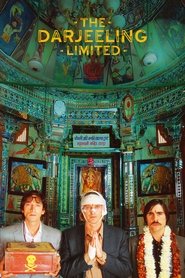
The Darjeeling Limited (2007)
Anderson with co-writers Roman Coppola and Jason Schwartzman on writing the script in a Paris hotel room before a single frame was shot, filming on a real Indian Railways train that never stopped moving, key grip Sanjay Sami's improvised "rickshaw dolly," and the emotional recalibration of the third act once Anjelica Huston joined the production. Also: how the film's three brothers absorbed three writers' actual relationships.
- Duration
- 1h 31m
- Talk coverage
- 40%
- Words
- 12,957
- Speakers
- 3
Commentary density
Highlights
Topics
The film
- Director
- Wes Anderson
- Cinematographer
- Robert D. Yeoman
- Writer
- Wes Anderson , Jason Schwartzman , Roman Coppola
- Editor
- Andrew Weisblum
- Runtime
- 92 min
- Also on
- OneSheet ↗
- External
- IMDb ↗ TMDB ↗ Find on Amazon ↗
Transcript
12,957 words · 19 flagged as film dialogue
All the Criterion Collection commentary tracks, even since the days of the laser discs, I think, begin with the standard setup. So we'll do-- We should probably do that, the welcome. Jason, do you wanna start it? Hello.
My name is Jason Schwartzman. I thought you were gonna do "And welcome to the Criterion Collection DVD commentary." - Oh! I thought we were gonna go all around. Oh, well, this is--
I'm Wes Anderson.
And I'm Roman Coppola. And welcome to the Criterion Collection edition... Although now we've kind of already given that away. Yeah. ... of Darjeeling Limited.
By the way, the driver is a Sikh driver from Mumbai who we brought in to be the stunt driver. But, in fact, this is-- I consider this to be stunt driving except for the fact that all he's doing is driving fast around Jodhpur. There's no blocked streets or any planned stunts of any kind. There's a degree to which driving in India is stunt driving just by virtue of getting in a car.
In this moment, we used something that our key grip, Sanjay Sami, called a "rickshaw dolly," but Bill Murray's character-- We turned the camera around backwards so the dolly grip and the actor are the same person. So Bill Murray's just running freely with his-- With the dolly, which is made to look like suitcase handles. Yeah, that was very clever, that his arms reaching down, that appear to be holding the handles of the suitcase, are in fact the arms of the dolly itself. Yeah. That's one of those things where we are just spoiling the illusion for people.
I remember, Roman, while we were writing it, we-- You always described it as being... That our writing process was that we were in a forest... Well, how did you--? How would you--? What did you say exactly? It was something to the effect that we were in a forest, and we had-- We were going someplace that we'd been to before, but we didn't have a map, yet we knew, when we had various signposts along the way or features, that was correct. It's like, "Oh, yeah, there's a stream, that's right. That's-- We're getting closer." So it was just a sensation of rediscovering something that we already knew-- You know, that already kind of existed. We were just finding it again. And you used to say-- Like, when we'd come up with something that felt right, you'd say, "Yeah, that's in the forest." - "It's in the forest." Yes, yes. We knew those woods. It seems like often when people are writing, they will-- They-- People describe this sort of metaphorical thing of, it's as if the thing already exists and you know it's right when it's-- That seems like the thing that was preordained to go there when you come up with that. But I guess it's not ever truly the case.
I mean, it-- But it really is-- That is the sensation so often. - Yeah. When the thing really feels right, you say, "Gosh--" And often there's this thing that happens where there's something that you've written and sort of set it aside, some fragment of a scene or some idea for something that keeps getting rejected and not working out, and then all of a sudden, you say, "Oh, you know what? It's this." Hmm. - "It fits in here." Then you really do think there is some overarching structure that we're not totally aware of. Anyway, something subconscious is sometimes at work, it seems like, with making stories. Wake up, Jack.
I remember when we were writing that sometimes... We realized whenever Jason would say, "I have a really dumb idea. I could tell you what they'd on TV..." ... then he'd usually say something that was kind of what maybe they'd do on TV or in a corny movie, but it would usually be, the thing he'd say, that would work. - Huh. I always felt Jason had good ideas when he would compare them to TV shows. You know, like, for me, that was a real fun thing to do, was whenever we would be stuck and couldn't find the next place in the movie as we were writing, we would say, "Now, let's go do the totally broad comedy version of this." You know, "Now let's go do the-- What's the Robert Altman version of this? What's the Adam Sandler version of this? What's the Jack Nicholson ver--? You know, just kind of like playing games and doing... not parodies, but, you know, just taking on a new skin for a second just to kind of free up our rust. Yes. This shot of the down angle looking at the tray, I remember we shot in the middle of the desert in a totally different circumstance than being on a train. Yes.
At the same time you did the funeral scene in one area, we were shooting inserts in a whole other area. I think that's one of the most peculiar movie sets that I've ever experienced, which is, we have this whole train that we've gone to tremendous lengths to get ahold of and be able to film in every day of our shoot, and after having finished all our train work, we owe a couple of insert shots. And I remember, while we were shooting something else, walking over to where-- Roman, where you were working, and there was a piece of carpet from the train laid on the sand in the middle of the wide-open Rajasthan desert. We're in the middle of absolutely nowhere, with the whole crew, with a camera pointed straight at the ground. And... Yeah, here, this shot there of the itinerary... Oh, yeah. ... that tracking shot in the middle of the desert. But it appears to feel like it's on the train. ... and expedite hotels and transportation and everything. How's he going do that? - I had him bring a printer... I'm noticing all the elephants painted on the side of the wall. And that's-- I think that was something pretty remarkable about our circumstance shooting in India.
Do you wanna describe where those came from? Well, the-- One thing that I loved about working in India is that that's a place where it's actually more practical to have the thing you want custom-made by hand than it is to have anything machine-made. There are always people who are craftsmen who can make the thing for you. And signage and things is almo-- You know, is so often made by hand. I mean, the-- I suppose this is changing more and more, but still, so much is done by hand in India. And we actually had dozens, maybe a hundred guys who were just painting on our train, and they were all-- You know, there's some patterns on the walls of the compartment, for instance, and those are just-- You know, we saw them on the walls of a building and we said, "Who did this?" We found out who did this, and there are guys who just paint these patterns. And so there were many people who were doing that. And there are guys who paint signage, and we had guys who were just painting elephants for us. So there are elephants all over the train, and each one's a bit different. And was there some--? Was there more about that, Roman?
No, it was just that very fact that every single one of those elephants was hand-painted, including the dishes and the plates and whatnot in the train. And it lent a quality when you walked onto the set that was so... you know, unique and distinctive. Yeah. I also think it's worth mentioning for anyone who doesn't know that it is a real train that would depart every morning from a train station in Jodhpur. We would get on it, and off we would go into the desert until the sun went down. So that's-- What you see in the background is the real Indian desert, and it's not being repeated, like we would shoot and go a hundred feet and then back it up and just go up and down the same track, you know, over and over again. That was constantly changing, and we were really on an adventure and a real trajectory every day. You want to read a short story I wrote in France? How long is it? - What? How long is it? - How long is it? Never mind. Forget it. Well, should we talk about our...? Yeah, that's the short story Jason wrote. Should we talk about our cast or should we talk about our writing process? What do you think? Both.
Well, let's introduce the cast, maybe, and then we can segue into the writing. Okay. We have Owen Wilson, who plays Francis Whitman. But maybe-- You know what? It says that on the box of the DVD, even. I mean, I don't know, it's a-- What do we wanna say about the guys? I bet that's delicious. And, Peter, the lamb? A chicken, a fish and a lamb? Well, we could say that it was a real-- Adrien Brody was an actor who you had never worked with before. And you had worked with Owen and myself but never together. So this was really a fun new experience for all of us 'cause this was the first time these three people had been together. And it was really fun to play brothers because... I don't know, I just admire their work. It was fun to play their brothers. Yeah.
Well, one thing we can say is that as we were writing, we each sort of took on a role as we were trying out dialogue and experimenting. So I was the Peter character, of course, Jason was his character, and Wes was Francis. And that was kind of a fun thing, to, you know, have your guy that you were kind of watching out for and, in the little improvs we would do, you know, to assume that character, and I enjoyed that. Yeah, it was nice because we could write scenes and then play them out, you know, that day or that night or the next day. And we each had our character that we were working on, and as we wrote, the years that it took to write, we were constantly acting out these scenes. So we became rather familiar with portraying these characters. Yeah. You know, I also-- We wrote quite a bit of the script abroad. And we went on a trip together ourselves in India while we were writing. In fact, we were traveling with a printer, which got destroyed. But I think there was something about traveling together, both with the mission of our movie that we're planning to make and with the characters that we actually are meant to sort of...
be I don't know if exactly representing, but we each had our role we were playing. So I felt like we were kind of traveling in character to some degree. And that was very... That-- I really enjoyed doing that. It was almost like the writing process was a little work of theater without-- That we were the only audience for. Although we occasionally had some other people with us. Yeah, no, it's true that the writing of this, or the making of this movie, is less the experience of sitting at a typewriter or computer writing and really experiencing the movie throughout the whole period. So it at once-- Initially, we were just traveling around, observing things, and then we started to flesh ideas out, and before you knew it, we were scouting and then shooting. And it was all one big experience entering into the movie, as opposed to broken up to conceive it, to write it, to prepare it, to shoot it. It was all one big experience that was, you know, a big... Well, very meaningful to me. Yeah. Yeah. I remember early on, we sort of made this decision that we were going to try to make the movie-- That we wanted the movie to be very personal to us.
Which, I don't even know what it means in the end, but it was something that, you know, that I always felt. It always felt like it was that-- I felt that we were very close to the movie as we went along, in whatever ways. And it-- Rarely have I ever felt something-- You know, people sometimes will describe that they've made some artwork in order to get through something in their life or to help them with something in their life. Or-- And for me, it's-- It rarely feels that way. Usually it feels like I-- You know, you-- For me, I've always wanted to do it because I wanna make a movie and I have something I'm interested in doing. With this, it did feel like we were kind of working through something together. Yeah. Absolutely. - I guess. I don't know about his face, but I think his brain might be pretty traumatized. Damn it! Come down to this spot over here. Call her again right now and keep calling every ten minutes until you get through. Okay. - This is urgent. We're almost there. Okay. - Once again, so we're explicitly clear, I don't want you to mention this or discuss it with anyone. In other words, it's a surprise. - Okay.
Did you find me a power adapter? - Not yet. I'm noticing the little candle here. And that sort of indicates to me some of the details, often from your life, Wes, that you recall or some little texture or detail and how it's woven in. And that was something, I think-- Was it Alice's mom made those little pots or...? Alice made the pots in the movie. But in fact, the pots are made by Hugo... Okay. - ... by my friend Hugo, who has gotten out of the pottery business over the years, but he used to be a potter. I point it out only because there's so many little details that are kind of charged with some other experience or relevance somehow. Here I think we find Jack, who's-- There's something a bit solitary about-- Or he's referred to by one of the brothers as the lone wolf of the family. And I think, in this moment, he's kind of looking for his next short story. This girl, I think he will write about her eventually.
So this scene is a... Here the conflict is brewing among the brothers, the suspicions and the questioning. And I remember we decided that-- I thought there was something nice about working in the compartment and not having cuts. And sort of-- You know it's a real space, and we'd also get this building kind of tension that's happening here. So anyway, to shoot this, I remember we built a mock-up of this compartment on the... At our art department, which was actually at the-- Which was actually, like, on train tracks. It was some kind of train-- At the train station. Yeah, it was like a train station. We built a train station in it, in fact. And I remember we rehearsed that shot-- It's one of the few times I remember actually rehearsing an entire shot with a dolly and the camera and everything on a completely different location. You know, in a-- You rarely rehearse with a crew present before you start a movie. But that one, we wanted to make sure we'd be able to do it, because the space was so compact, just because it's a real train rolling along.
The other thing we could mention is, a lot of the stuff in the corridors, in the corridor of the train, we did with a camera that we had attached to a rail that moved along the ceiling. We eventually figured out that was our best bet for moving up and down the corridors, which we did a lot, because it's just-- It's hard to keep things steady and move around properly in these-- On a moving train. That was-- Our grip had devised a very clever system. He had, like, an I-beam that he's put up there. And it was a very inexpensive and clever way to give us all that flexibility. Yeah, that's Sanjay Sami. He-- In fact, interesting because Sanjay Sami is a wonderful grip and also used to be a professional-- I believe professional cricket player. Or rugby player, actually. But some of the grip equipment we used in this movie were things I'd never heard of. Air Italiano? What the fuck is this? I'm keeping his passport. In fact, give me yours too. I want to keep all the passports so nothing happens to them. I'm keeping mine. - No. I want to keep them all together.
So now back with Jack and Rita. I think-- We never learned too much about her, but I think she has some things in common with the girl in the Hotel Chevalier short. She has her own dramas that we never really are allowed into, but we get some glimpses of it. I think we made a choice to write this character of Rita... She's not exactly specific to the region. She's the kind of person that the three of us knew something about and that related to what these brothers are going through, and maybe the kind of personality that's helped to lead them to this place where they are.
This scene, something interesting happened, I remember, which is... You know, we'd worked together. Jason and Roman and I had played these scenes together many times as we wrote the script. Adrien had come early and worked with us, and then Owen had come, and we'd rehearsed the whole movie a number of times together, and we'd practiced the blocking in India. But this scene, on the night that we were shooting it, it wasn't quite clicking. And I remember an odd thing happened... which is the power went off. You know, this-- The first part of it here, watching, that was all going fine. And that somehow-- We just made that up on the spot, this sort of telling-- In fact, we cut out another scene with Waris, the chief steward on the train because we felt like it was communicated just with an image of him and Rita. But this scene when they're talking in the compartment wasn't working, and the electricity went out, as it often would, and we ended up-- You know, the operation was shut down for a little while, and we were all in the train together in the dark. And Jason and Adrien and Owen and I went into another compartment. And, Roman, did you come with us? I don't recall.
I don't think I was present, but I don't recall. We went in another room and rehearsed this scene for about 45 minutes in the pitch-black darkness. We actually couldn't see each other at all. And then the lights came back up, and we had it all figured out and we went back in and completely changed what we were planning to do. And the scene was-- Had been all sorted out. I think it's an unusual circumstance, for me, to have a scene that kind of solved itself in the dark. But it probably doesn't reflect well on me. Give me a little light. Okay, here we go. Train stops first thing tomorrow morning... This is also an example of a scene where, like, we're acting all this out and I didn't know what was out that window. I wasn't aware there was a cow right there. So that's a pleasant surprise when I watched the movie for the first time. I was like, "There was a cow there?" There was an elephant out there. I think we cut before we got to it. - I know. Well, I remember these people, as we pass by there, those people in the temple there, the man with the baby and the woman... Yeah. - ...
that was the man who was the caretaker of that temple, who lived in the room up above it. Remember him? - Mm-hm. And this is also the first thing we ever shot. First day-- This is day one, shot one. Yeah, you're right, it is. Kind of a complicated... Robert Altman style. Or at least, that's what-- I think of it that way. Maybe that's-- - Yeah. Maybe I'm flattering the movie. But the long take with the zoom...
I really liked this temple. We went many times to this temple in the center of Jodhpur. I think we brought the cows ourselves. Okay. Spray in face. - Spray in face. This was shot much later, as I recall, actually at the location where we had the final convent, if I remember correctly. Yeah. - Yeah, outside of Udaipur. I remember when we were scouting, there was a day when it looked like this. It was all women. And I don't remember what the occasion was, but we recreated what we saw there. We invited back all the people who had been there on this day that we had scouted at the location and this ceremony was happening. This is a scene I remember we rehearsed in the temple itself and really kind of found the scene, the three of us sort of improvising it and acting it out. And we had a little text we were reading from, but sort of, you know, realizing it just the three of us. Yeah. When we were writing the script and we went to India on our reconnaissance mission, it was like a writing session and it ended up being a location session. And we found this temple and went back and shot there many months later.
But as Roman said, this is-- We were walking around, we found this, we went in, we took our little micro scripts out, we rehearsed the scene to see if it was working and saw what worked and what didn't. And then we actually became so attached to this place that we went back and shot the real scene there.
People always ask us, "Was there a lot that was improvised?" And I always say that there wasn't much improvisation, if any, with the dialogue, but, you know, because, you know, it was India and you really can't control the streets there and the environment, and we were on a real moving train and we were walking around, you know, streets where it was just the three actors, a camera, Wes, soundman, and then everyone else were just going about their day. It was really fun because each scene, even though the dialogue was the same, each take was completely different because you never-- You know, one take, a cow walks through the shot, another take, you know, someone throws a rock at a piece of glass. You know what I mean? It was always different, and you had to always be reacting to the environment around you. It was really fun 'cause you never knew what could happen. You had something you would say when people asked you about not wearing shoes, and that kind of relates to that thing a little bit. What did I say? Something to the effect that you're kind of feeling that the ground is not smooth in a place like India. You know, there's all sorts of...
things that you step on, and in a way, it-- Oh, yeah. It makes you consider each step. Exactly. Let's get into it! - You told him? It's okay. These streets are in the old market section of Jodhpur. And we spent a lot of time around here. We stayed in a-- We all stayed together in a house not far from the middle of Jodhpur. And we would often walk around in this area. And you can travel on these streets in auto rickshaws. The streets are too narrow for bigger cars, really. And we really loved it around there. And the... I remember there's a cricket field that comes up in a few minutes, which we found-- We were looking through a telescope and we saw it from the top of the fort above Jodhpur. And this man who just walked in, by the way, was-- I remember him heading into the shot, and I was about to signal him to stop, but he kept walking and never looked back, never did anything. He was the most natural extra. It was one of those-- Part of what we enjoyed about working here. You never knew-- You know, people are gonna come in and out of the shot. But he did the right thing. ...
cricket with a tennis ball.
I remember doing this scene was-- That driver? No, I don't remember the driver. Because he was-- That was a driver with henna hair who we always would see at the place where all the auto-rick drivers wait there. We would always see that same driver. He was our stunt driver for this shot. I remember this sequence, with the dialogue scene with the short story... Yeah. - ... we found a little hill so we could roll the rickshaw down the hill without having the motor on ruining the sound. Yes, that's right. We rumbled down the hill. And what's the name of that--? Of the boy on the bicycle? He was a... - Spot boy? He was a spot boy for us. He brought tea, chai, onto the set, and he was very bright. I'm trying to think of his name. One thing about Brendan's character, I just wanna-- Would just mention just as an homage is his hat-- There's a logo on his hat for Francis Whitman Industries, which is actually my father's business. I mean, he's retired now, but it was-- His business was called Mel Anderson Communications. That symbol was his-- It's his-- It's based on his logo. In this part of the train, we have Brendan's living quarters. I think this is the non-a.
c. section. These cars on the Indian trains usually don't have windows. The engine, as you can see there, is-- The paint job on it is based on the Tata trucks that you see on the roads in India, hand-painted by the drivers.
You know, when we made The Life Aquatic in Italy, and, Roman, you were over there, and you know that it was very challenging. And working at sea, we really struggled. - Yeah. And in fact, I remember, the first time we actually worked together was on The Life Aquatic, and you had called and said, "If you need any help on anything, you know, I'm happy to come over and help you with something." And I could never think of what I needed help with, except at a certain point you called and I realized I... Not-- I needed-- I desperately needed help. I just couldn't really-- I just had no idea what to ask for. And you said, "Well, I'm just-- I'm gonna come over." And you then-- The day you arrived, you arrived at like 5:00 in the morning. And I remember when you got there, you said, "I'm here." And I said, "Okay, how would you feel about going to an island called Ponza in about two hours and filming this ship being towed into the harbor?" And I think you were literally-- You got there at 5:00 in the morning, and, you know, a few hours later, you were on another seaplane to Ponza, filming these giant ships.
And the sort of massive struggle of getting that movie done, it-- I really-- It had quite an effect on me, so that when we went to do this, a movie, in another place that has its own special unpredictability and a place that's a bit uncontrollable like the weather, I remember that we had this conversation: "Whatever it brings us, we're gonna go with that. We're not going to-- We're gonna just sort of let the circumstances guide us, and whatever sort of happens, we're just gonna say, 'Well, that's part of the-- That's gonna become part of the movie."' Mm-hm. - And that approach, you know, to whatever degree we actually implemented that, which was I think quite a significant degree, that really made it a pleasure to make the movie. I felt like we were just always discovering something that wanted to be in the movie. And it was nice to just say, "Please, come right in." No, I remember even talking about it and how-- Saying, you know, if we ask for a car and we get a pickup truck or, you know, whatever might come our way, which often happens in a place like India, where things-- There's a lot of improvisation in that culture, that we would just embrace it.
And I think it definitely comes across in the movie. Yeah. I almost died. Give me a second. The snake, I remember... Roman, you described the feeling of somebody traveling around the world and buying things as they travel. A certain kind of person that we have experienced that can-- That will really find things wherever he's going that are kind of exotic objects. - Mm-hm. And the snake came from that, a guy who's-- You know, the same guy who's gonna have the special belt custom-made is also gonna say, "And also, you know, I think I should have a small cobra, but have the poison removed, the... But it's probably a good thing for me to have back home. I mean, that'll be great to have." - Yeah. This is another scene that I remember playing, the three of us, and going there and acting it out and wearing the headscarf. Yeah, you had to wear the headscarf to go into this building. I remember that we modeled the way we each wore-- Each-- Adrien, Owen and myself all wear these headscarves based on how the three of us really did on that day. Remember? Yes. Well, remember, that was... That was in... Was that in Delhi? Yeah. Was that the night with Waris in Old Delhi?
Was it? And Alice, isn't that right? Didn't we go out late at night and we ended up in the Sikh temple... - Oh, yes, yes, yes. ... in Old Delhi? And is that the one you're thinking of, or you're thinking of the other Sikh temple? I think that's the one I'm thinking of, actually. The larger one. - I'm thinking of that one.
Here we see Francis looking through the father's lenses. And I guess he's got a lot on his mind.
Correct me if I'm wrong, but wasn't this a set, this little thing? Yes. Remember, sometimes we were-- It's not easy to stop the train on the tracks for any extended period of time. These were working tracks. So when we shot this scene, we actually built a little set to shoot out the window while our train was away because we only had so much time to shoot this main shot, which is this longer take here of the outside of it. So we built a little set for the inside just looking out to do this one. Yeah. And those are the camels, in the background, that later were used to carry all the camera gear up to the top of that mountain. Yes, yes, we used them on-camera and off-. That's crazy. - How far off course are we? Nobody knows. We haven't located us yet. What'd you just say? There's Kumar in the background, who-- Remember, Kumar's character-- And also Bhawani, right? Is that...? - Oh, yeah. Bhawani, who worked at the Balsamand, is one of the guys back there. Kumar doesn't really have an elaborately well-developed character, I would say, in this one, he's-- We didn't quite come up with a full role for him.
But in our minds, he was a-- He was the minister of trains. Remember? He was a government minister. - Yes. Or maybe a secretary, you know, an assistant minister of trains or something. They're practicing this religious ceremony, which is based on a-- What is it? What is the--? What Native American tribe? The... It was the... It was in Arizona at the Grand Canyon. It was the... I'll think of it in a second. I'm drawing a blank right now. - Feather ceremony. The feather ceremony was something that Jason and I and another person close to us actually performed this real ceremony. Yes. This is sort of a, I think, slightly distorted version of that, but also distorted because they can never seem to remember exactly how it's supposed to go anyway, even though it has been laminated. It was the Havasu Tribe, was the-- Just came back to me. American Indians. - Oh, yeah. In the vortex of some sort of power zone in Arizona. Isn't it like a strong place? - Near Sedona. Near Sedona. I'm scared too. She's obviously suffered some kind of mental collapse and we've got to get her...
I was gonna say that my character doesn't say a lot in this scene, and in a lot of scenes, he's very quiet and stoic. And I remember this movie was a very big lesson for me, which was that when we were writing it, there were lots of scenes that-- And story lines that didn't end up totally making it into the film. And, you know, Owen's character talks a lot, and Adrien's character is very vocal about how he's feeling, and my character is very thoughtful and, you know, is a writer and is very much in his own head. And I was having trouble in the rehearsals just thinking about how to do it. And then I remember having this kind of a miniature breakthrough for myself just in terms of how to act it, which was: Just because it's not in the script, doesn't mean it's not in the movie in my character. Mm-hm. - Just because we cut some of those scenes, doesn't mean that, you know, it's not still part of the history of my character. And so up on that hill, I remember, just when Owen was talking and I'm not saying very much, I'm just thinking about all the other scenes that got cut that are meaningful to my character.
Not literally thinking about the scenes that got cut, but you know what I mean. Yeah.
Here Jack has gone to Rita's compartment, which is not really where she wants him. I think... they're each-- They each have their own story they're inventing, and... they're not lining up at this point. Actually, I just broke up with him. Or I'm about to. I really need someone to talk to right now, and I feel like you might be very important to me in my life.
All right.
Amara is actually-- She's from England, but she's-- Her family is from Sri Lanka. And Waris, who grew up in Brooklyn, is from Amritsar in Punjab. What's happening? - What do you mean? I rang the bell. - I'll be right there. Remember this? - This was fun. This was a memorable shot that we did at our headquarters, which was at a train station, and the train was parked there. And we decided to do it in sort of an old-fashioned, slightly theatrical way in which we moved the lighting, and actually, the post that goes by, in fact, that was slid by on a little platform. And I was pleased 'cause I personally held some little cardboard cutouts of kind of blurry tree shapes that I moved past the lens to enhance the illusion that we are traveling. So that was a fun shot to do. Can I tell you about doing this one? Do you remember I was standing in a corner shaving and I had to be in this very specific spot? And every time, like, the camera would move away, they would push me into the corner. And then every time... Like, right there, I was pull-- I was pushed into that by an off-camera person. With the dolly.
- Yeah, and right here, they're pushing me back in. Like the whole time, they're like-- Every time the camera has to be where I'm standing, they would just grab me by the back of the coat and yank me. Well, I remember that you were often having to lean to be seen in the reflection. - Yeah. And here's where Adrien and Owen-- The fight begins. This is where it all becomes-- Suddenly it's all physicalized.
Now, the pepper-spray canister system, I remember, was... Both the pepper spray and the stolen shoe come from the experiences of Richard Zanuck, who is a friend and who was busy on other movies when we were making this but who was always a supporter of this movie. And somehow, I feel like Dick is a bit like-- Could have been one of these brothers, you know. I mean, he's older, but somehow, I really relate him to these guys and a bit to the story of them and their father and various things involved in it. But the-- One of his shoes was stolen. I think it happened in Africa, though, and in the same way that Francis's is. And he used to have a pepper-spray can that he had from Mexico that you had to load with a cartridge. I remember it kind of looked like a pen. I know he told me he was in a board meeting at Fox, and one of the canisters exploded in his pocket and he maced the boardroom and himself, and they had to quickly evacuate the area.
Your fake tooth's gone. Fuck. What did you say? Shame on you! Now, Amara, when Amara auditioned, she played this scene in the window of the train. And that was the reason why we cast her, I think, was because she knew just how to play this moment. And sometimes it's a thing. When somebody does something so well when they audition, often you'd say they were good but never as good as they did in the audition. Well, she, I felt like, was just as-- She equaled herself... - Yeah. ... when we did the real scene, and, yeah, she brought quite a lot to this character, I thought.
You're welcome.
Goodbye, Rita. So long, Sweet Lime!
The rock throwing, I think, always seemed a very clear expression of the evolution of these characters. They're three people who are capable, in the wrong moment, of throwing rocks at the train that just asked them to leave. - Yeah. They're not really quite there yet as men. I just remember how hard it was to keep up with Owen and Adrien shoeless. Yes. ... travel plans in a document sent to me from a man named Brendan. Unfortunately, I cannot receive you now. A neighboring village requires our urgent assistance due to an emergency... Do you hear Arrow snoring? Yeah, I do. Now, remember, this scene, we shot in a mine. A kind of vast mine. And I remember we shot it with no lights, just fire. Yeah. So we shot that wide shot before the sun went down. After the sun had gone down but before dark. And then the rest of it, we just shot with these torches, which Sandy Hamilton, our prop master, was in charge of. And Bob Yeoman, our director of photography, just kind of kept moving these fires around. It was very hot, wasn't it? Yeah, I mean, the closer it got to your face, especially. Yes. And often you had to hold them rather close. Yeah.
- But it was nice to be-- One thing I remember is the set was dark. There were no work lights or anything. It was just fire. - Yeah. I remember this being one of my favorite, favorite nights of shooting. It was somebody's birthday. Maybe Sandy's birthday. - Yeah. Because I remember we launched some fireworks in this mine after we finished the scene. That's actually one of my favorite moments of the three of your characters together. Mine too. Maybe this is how it's supposed to happen. It could all be part of it. Maybe this is where the spiritual journey ends.
Also, Adrien's parents were visiting this time. Yes, we had-- Both Adrien and Owen's mothers are well-known photographers. So we got some very good on-set photography... Yeah. - ... from the parents' visits. I'm gonna go over here. - Yeah. That's good. Get on the rock, yeah. Peter, you got-- Yeah. - Yeah, okay. Everybody ready? - Yeah. Ah! Oh! - Zsa-loh!
Okay, that's it. - That's it? Okay. I remember that we had some negative damage... Oh, yeah. - ... from the wide shot. And our editor, Andy Weisblum, managed to take the first moments-- Essentially, the action of it was not damaged. It was all around it. But there were a few moments of it that were okay and-- He's very good with digital stuff because he-- Before being an editor, he was a visual-effects supervisor. And it-- You know, it was salvaged in a way that you just couldn't do ten years ago. You couldn't even think-- You'd never dream of it ten years ago. That would have been unusable. But it was a very simple fix. Hmm. You know, just thinking about all three of these actors in this scene, I really enjoyed working with the three of them. Obviously, you know, Owen is really not like any other actor that ever lived, as far as I can tell. And he brings something completely unique. And he's one of the funniest guys I've ever met. And Jason has a completely different kind of brightness and a real sparkle to his personality. And Adrien had-- And Adrien is really one of the most talented actors I've ever met. He's very natural and automatic and quick to get everything.
This is obviously-- Well, this is-- This scene is kind of the turning point in the story, what happens here. And I remember we wrote this on Rue de l'Abbaye. Hmm. - Yeah. En urgence. Urgence. Urgence, oui. Go! I remember that shot with them running. Bob Yeoman and I took turns doing takes running with it. Yeah, I think your shot was steadier and the one that was used. I don't think so. I think it was-- Mine was too shaky. And Bob's-- I think we used Bob's in the end. I think at the time we felt that mine had an energy. But when we really studied them, Bob's seemed like the work of a professional cameraman and mine seemed like a crazy nut running with the camera. I remember being in this water. We had special suits built. All of our clothes were built two sizes bigger, and then they put swim-- Wetsuits underneath our suits because the water was so cold.
He's all bloody!
He's dead, he's dead. - He's dead? The rocks killed him. - You're bleeding like crazy. And these boys were all brothers, isn't that right? They were Ramesh, Mukesh and Dinesh, who we-- Remember, we met them because we were... in the desert, location scouting a Bishnoi village. And a man drove past us on a motorcycle with his son sitting on the motorcycle with him. And I liked his face. And I thought we should have him-- That he might be able to play the role-- You know, one of the parts in the story. And we stopped and we paused. He wasn't sure what was going on. This is Irrfan Khan who appears now, who is a great, great actor. The-- Anyway, the man didn't ultimately wanna be in the movie, but he-- But before he decided, we met him again, and he turned out to have three sons of the exact age that we needed. And so we ended up casting his sons, and who became-- Who were not just in the movie but, you know, came to visit a lot and sort of just became part of the production. Yeah.
It's hard not to see this scene and think of the first time we visited this particular village and the welcoming ceremony that was offered to us. In Dhandoli village, yeah. Well, yes, the traditional welcoming ceremony is that you share opium tea. And I remember that man playing the doctor is a Bishnoi that we saw when we visited another village not far away. And he looked exactly like that and had the greatest face that just-- His character is just-- And also, there's one we always called Sean Connery, the tall one. But the-- I remember that we-- Remember, when you take the opium tea, you drink it from someone's hand. And you have to take three sips. Or you can-- I think you can take one or you can take three. And we all took three, as I recall. And it was about like the feeling of half a Xanax or something like that.
Remember him? Sriharsh. Yes. He was a pro. - Yeah. He was a pro. - We flew him in from Bombay. From Delhi. Yeah. Didn't he sing a Green Day song to you, Wes? We're gonna include Sriharsh's audition because he auditioned on tape and... We didn't really have a role for him, but we-- I just remember-- - He was just so good. He was so funny in it that we just brought him in and kind of made him a part of the operation. He's the De Niro of... Of India.
Well, remember when he came to--? When we actually met him, he-- We did this sort of improvised 45 minutes together that was really more like we were-- We just acted like other children and played for 45 minutes... Yeah. - ... pretending to be goat herders or something? Remember that? - Yeah. We went for a walk around the Balsamand pretending to herd goats and deal with some different problem. Maybe the monkeys there surrounded us. He had a very vivid imagination. He was just totally in the moment in the scene, I remember. Yeah.
And of course, this was the priest from the Jain temple, the gentleman in the back of the bus. Yes. I don't remember his name. Om Prakash. Is that his name? - That sounds right. I'm not certain.
You know, it's-- By the way, some of the inspiration for the movie, one was Jean Renoir's film The River, which The Film Foundation had restored, and Martin Scorsese, it was one of his favorite movies. For some reason, he thought I would like it, and he actually screened it to me. And that was sort of what cemented my wish to make a movie in India. But before that, I had also been inspired especially by Satyajit Ray's films. And in fact, we use quite a lot of music from his movies, most of which he scored himself. He was the composer of the movies as well as the writer, director and producer. And some of the ones we use, one called Teen Kanya, which is a wonderful sort of omnibus-type movie. And we use music from World of Apu, the last of the Apu Trilogy, and Charulata, one of his greatest films, that we-- That music plays in some of the scenes with Rita. And we also used music from The Music Room and... And other Ray music also. And along with that, we also use music from the Merchant Ivory films, like The Householder, which is a Ray-like film and which Ray was involved with the soundtrack for.
We use the music from the soundtrack of the first Merchant Ivory movie, The Householder, and as well as Bombay Talkie and one called The Guru, which I've actually not even seen, because it's not possible to see it. And along with The River and Louis Malle's documentaries about India... anyway, the Ray movies were really a part of the inspiration for making a movie in India in the first place for me. I can't believe you just said that. Why not? It's the truth. - He didn't really mean it. And there was an element to this, to the film and to the writing, which related to short stories. And of course, you had written the Hotel Chevalier short film that had a spirit of a short story. And we decided that Jason's character would be a writer of short stories. And then this little episode is kind of in the spirit of that as well. I don't-- It wasn't something we really thought about too much consciously, but it's just part of the DNA of this. Yeah. Yeah, exactly. That-- It's-- And I think we related it a bit to Raise High the Roof Beams-- The Roof Beam, Carpenters. - Yeah. I remember this scene evolved out of our assignments that we were given.
And I was in Tunisia at the time. And the little sketch that I composed, I asked you to read it, Wes. And coming from your voice, it all-- It took on the flavor of the movie and seemed right somehow. Yes. Well, I-- And Roman is describing how-- Often while we were writing this script, we would end up-- We would work together somewhere, but then sometimes we were-- Then we'd separate, and we hadn't finished the movie, and we'd schedule our appointments, and sometimes we'd come to the appointments with homework assignments. And in the case of this, we knew we had this missing part of the story that was gonna relate to their father's funeral, but we just didn't know what happened. And we each wrote something and came in with it. And we built it on what you wrote, Roman. Your homework assignment was the only one that was actually accepted. Yeah, it was pretty amazing. I don't think you did the homework that day, Wes. I did-- I did not. Jason did the homework, and he had like a 30-page whole play unto itself. And I think you said, "I didn't do the homework this time." Ah. Yes, yes. - As I recall. I could be wrong. Yeah. Well, you got the homework right.
Barbet Schroeder. Yes, we got Barbet to be in the movie. He said-- You know, Barbet Schroeder is-- You know, we have this German car dealership, and Barbet has always-- You know, I always thought he was German because he looks like he's-- He could have been in the SS or something. He has this kind of face and everything, even though he has such a-- He's very warm and extremely intelligent, and he's the opposite of that in every single possible imaginable respect. But in fact, I had always heard that he was Swiss and part Brazilian or something like... Well, after we shot this, he actually found out he was German. He'd never known that. - Really? But he got some news about the history of his family, and it turned out he actually is German, if I understand it properly. ... tell them to go fuck themselves. Hold the line. Who is the car repairman? Are those the guys who worked in this shop? They were-- Those were real mechanics from this shop. And it was very difficult to get them to stay. And we had to pay the mechanic wages to have them stand in the background, as I recall. It was incredibly cold this day as well. Wes, did we have to do another--?
Did we have to do a reshoot of this again? We picked up some shots. - We did, right? Yes. Roman was saying how cold it was when we shot this. Well, we'd been shooting in the desert in Rajasthan. And, you know, it was certainly over 100 degrees often. And then about, oh, you know, 48 hours later, we were in New York. We wrapped the movie and immediately traveled to New York to shoot this flashback scene, the last scene of the movie, and it was so cold. It was an absolutely freezing day in New York. And it was so cold, in fact, that the-- A thing I've never seen happen, which is the camera froze in the middle of a take, remember? Yeah. It just stopped-- It stopped spinning. Wes, what was the actual last shot we were shooting and then Owen got out of the car and just went to the airport? Did we miss that? We were shooting in the-- I know-- I remember we were-- After all the-- After shooting the movie, we were in Harlem shooting the shot of Jason, Adrien and Owen in the car, and we got it. And I said, "Good. I-- We got it."
And that was the moment where we would look to each other to say, "We've finished it." Very emotional moment. And I remember just as that moment was occurring, Owen said, "You know, I think I'm gonna try to make the 5:15." And he said, "Can you stop right here?" And the car stopped, and Owen jumped out of the car still wearing his wireless microphone and said, "I'm gonna call you guys when I get back. I'm headed to L. A." And he ran across the street and hailed a taxi... Yeah. - ... and he was gone. And it was funny. And it was kind of... not exactly touching, but there actually was something kind of moving about it, even though it doesn't really sound like it.
Watching this scene that's on the screen, the funeral, makes me think of the funeral that we observed... - Yeah. ... which was pretty... Just something I'd never seen before quite in that way. Yeah. That was near Rishikesh, right? Somewhere in the northern part of the Ganges.
Well, I remember that the funeral, the cremation that we watched, there was a very-- There was a lot of debate about the procedure during it. I think the people who were having the funeral were poor, and they didn't have sandalwood and they didn't have the-- They were using lighter fluid instead of ghee, which you're supposed to use, you know. I think ghee is like butter or some concentrated-- - Clarified butter. Clarified butter, exactly. And the...
Yeah, I mean, I-- That was-- One thing that was interesting about it was that nobody was quite sure what they were meant to be doing. They'd all seen it done many times before, but there was debate. There's the Sean Connery guy. - Mm-hm. Yes.
Also, the gentleman on the right-hand side with the red turban, he was the guy who offered us the opium at the welcoming ceremony. Oh, yeah. He was one of the elders of the Dhandoli village.
Hang on one second. Hello? Oh, you know, can I call him back? Because we're just recording something right now. Okay, thank you. Bye.
Sorry.
At the end of this shot, we have our last glimpse of Sriharsh, waving his handkerchief here. And then this bus ride, I remember, you know, there's no dialogue, and everyone on the bus was silent. It was the end of a very long day. And it was a very peaceful bus ride for about 20 minutes with-- There was no one saying a word, no-- All the people on the bus.
And here's a red Ambassador at the airport in Udaipur. These cars are-- I mean, they used-- These used to be ubiquitous, and they're very-- I think it's an English design, isn't it? The Ambassador? The Ambassador. Yeah.
This, of course-- You know, in our travels in India, we had so many occasions to be in little airports. And this makes me think of all those times and particularly that one airport that was kind of like a military base was bombed out and there are people with weapons and... - Mm-hm. Shimla. - Yes. Yes, where we actually... Well, remember, we flew in that-- We went in that small airplane. I just remember we'd had a few flights that were-- Where we felt not that comfortable on them, and we decide-- We had had one bumpy flight that was very-- That was a bit unnerving. And I remember we had decided, Roman, Jason, me and also Alice, our friend Alice, who was traveling with us, and Waris, that if we ended up on a flight we weren't comfortable with it, if any one of us was not comfortable with it, we'd just go another way. We'd have another way to travel. We were getting ready to fly to near Dharamshala. Remember? - Mm-hm. And we'd heard the plane only held like 15 people and it was gonna be a smaller plane, and we just weren't quite sure.
So we went on the plane, and it looked like it was maybe built in the '50s, I'd say, and had-- You know, it was the kind of plane where you can see all the rivets on it. And we went on it. It was tattered, and I remember one of the-- I leaned against one of the seats, and it collapsed. And Alice and Jason and I looked at each other, and we were like... ..." No, I don't think so." "No, I don't think..." "I definitely don't think so." And then we turned to Roman, who said, "Well, look, you know, we can take a train or we can drive. It would take longer, but it's fine, and I'm happy to do it, but just so you all-- Just so you know what I think, this-- It's a fairly old aircraft. It looks like it's been well maintained to me, quite well maintained. The interior hasn't been renovated in quite a long time, but I think that it's very safe, and I feel very safe on this plane. I've flown on planes that I felt much less safe than this. So, to me, it seems very safe." At which point we said, "Let's go"... - Yeah. ... and it was actually a nice flight.
- It was a great flight. Yeah. - The kind of flight where you never really get that high off the ground anyway. We flew into some strange valley. But then we took the helicopter. Yeah. Yeah, tell about the helicopter. Well, we finished writing the script. Or had we finished writing the script? We finished it at an altitude of 5000 meters. What would that be, like a 17,000-foot elevation or something? I don't know what it is. We finished it at this hotel in the Himalayas. Shimla. - In Shimla. In Shimla. - And I remember the morning waking up there and looking out of our hotel room, and we were very, very-- Not only was the hotel at a high elevation, but our room was very high up for some reason and looked over this incredible valley, and when we woke up, don't you remember, there were just hundreds of butterflies flying around our hotel room outside? And then we took-- Anyway, we did the math. Above the trees, remember? - Well above the trees. There were-- Yeah. - Yellow butterflies. Thousands. - Thousands. And we did the math, and it would take like almost an entire day in kind of dangerous terrain to get off of the hill we were on.
Or we could just take this helicopter. And, I mean, it wasn't a crazy-fancy helicopter or anything, but we sourced it out, got this helicopter, and I remember we took off right off of this military... like, army-base-style airport, a broken-- I mean, not broken, but not a-- It didn't seem like a functioning airport, if I'm right. You know what I mean. We were the only people there. There were no other flights going in or out of it, and it had been-- It looked like it'd been bombed. I don't know how that's possible. I think it was being renovated. It was like a military airport... - Yeah. ... being renovated, but the impression was pretty-- Like, the buildings had been knocked-- Like they were-- They had begun the demolition and abandoned the works... - Yeah, right. ... is what it felt like. - And I remember we took off in this helicopter, and I was really scared. And, you know, I've gone in and out of having different fears of flying. And I was at-- I was in a phase where I was very afraid of flying. And I had never really been in a helicopter like that.
And I was scared, but I had remembered that there was, like-- I had read something somewhere that the mind will follow the body sometimes. And so if you're feeling down or whatever, just smile, and, you know, if you just force smiling, at a certain point, maybe your brain-- You'll just start to feel happy. So I tried to just smile the entire helicopter ride and, you know, hope that my mind and my nervous system would follow my smiling. And it did. Yeah. I remember what was great about the way we took off in that is-- Sometimes when you go in a helicopter, you lift up and then you go down a sort of runway pattern, anyway. This one, we took off and it went down the runway, but the runway ended on a cliff and with a drop that was just thousands and thousands of feet. So it was-- You went very slow. We went very slowly down the runway, and suddenly the ground was gone. - Yeah. And it was a kind of incredible way to leave this place after we finished our script. Here we are outside of Udaipur, which is sort of-- We're meant to be shooting that for the foothills of the Himalayas, where we had originally planned to shoot.
We had found a location near a place called Mussoorie. In fact, it was a... It was the former house of Sir George Everest, who had surveyed Mount Everest and had originally determined that it was the highest mountain in the world. I'm also recalling-- I don't know how much we wanna put it on the commentary, but some of the wrong turns or the episodes that we wrote, like the train-wreck sequence... Yes. Gosh. And there were other kind of sidetracks that we knew weren't right or didn't feel right, but, you know, kind of occupied us for a couple weeks or stretches of time. And it's interesting, that sensation of kind of having something and working through something and then knowing that something was wrong and... Yeah. - You know, how much that would-- What was the uncle's name? - The which? The gay uncle? We had a gay uncle. Earl? - Huh? Earl? - Was it Earl? Roman, do you remember? I vaguely remember, but now I can't place it. I just remember, you know, the scene where the train wrecked. And also the fight in the bathroom. We had the sort of, you know-- Scraping below the bottom of the barrel. Exactly. And-- I remember because we had-- - What did we have?
In the airport scene, we had had them-- A scene that I think we would have made a good scene of, in fact, but we had them getting into a fight with a-- The cricket team. - Oh, yeah, yeah. In a way-- They ran into a group of Australian cricket players who were drunk and a bit out of control. And in some way, they were a bit not wildly dissimilar from how the brothers are when we first meet them. And they're coming from a totally different point of view now, with what they've experienced, and they clashed. And I think our inspiration was that scene in The Last Detail when they get in the fight in the train station. But I remember we showed it to Scott Rudin, and he said we're "scraping below the bottom of the barrel with this one." He hated the scene. And then I remember our response was we used that in our dialogue. We had Francis say, "We're scraping below the bottom of the barrel here. We've got to turn this around." It seemed very appropriate to our character.
And might I add here, I'm just thinking of something, which is that we shot this movie not like totally chronologically, like scene after scene after scene, but didn't we shoot it for the most part like train first, then off the train, then Anjelica Huston. You know what I mean? Didn't we shoot it, like, sequentially... - Yeah. ... chronologically? - Uh-huh. I remember by the time Anjelica had come to join us on this movie, we had really been on this journey, and we were all very-- You know, we'd started off the movie, I didn't really know Owen and Adrien that well. And it felt like by the time Anjelica got to the project, we were much closer, you know? We had been through something. I agree. - Yeah. Also, I remember in the-- Initially, when we first started talking about what this story might be, that, you know, Wes showed us the opening with the businessman character missing the train, and then there was also the notion that these three brothers had a mother who was in a convent in India. I think that was always part of the very, very beginning. And so, in a way, there was a sort of inevitability that we're gonna get to the mother one way or another.
That was sort of comforting, to know where we were headed, or it was just a fact. But it's over, isn't it? Not for us.
I told you not to come here.
This is a scene where I remember Roman sug-- This was Roman's suggestion. We were trying to write this big scene between the mother and her children and, you know, where they're really getting things off of their chest. And we were struggling to write it. And Roman said, "You know, there is this acting exercise where you don't say anything. You just say the lines with your eyes." And we tried to do that. We, like, tried to just act out the scene with our eyes, and then we said, "Why don't we just put that in the script?" And that's how that scene got in the script and in the movie. That's right.
And that goes straight into this scene with-- This scene where we visit all our characters in the story while we're on this moving train, which, we built this set on the train. That's a door, actually, that you can see out. So this is actually where you are now, Jason. This is based on my apartment in New York. And, anyway, these-- - Yeah. All these rooms are built on this train with this dolly track in it.
And Natalie Portman came to India for this one day of shooting. She'd been in our short, but she wasn't there. And Bill Murray had to come back also. There was also a-- It's a little-known factoid, but he works with the travelers exchange. Yes, yes. Something we know, but it's not expressed in the film. In fact, his character is meant to work for something like the way they used to have the American Express offices for foreigners abroad. He worked for-- His character's kind of modeled on Karl Malden in those American Express commercials in the '70s. Can we agree to that? Sure. - Okay.
To be continued.
One of my-- The feeling I like the most in this story, one of the ones, is this scene after they wake up. You know, when they wake up the next morning and then they decide to go to the ceremony. I like the... Somehow that moment of them getting ready to eat their corn flakes and then going up the hill, which is in Narlai, remember? Mm-hm. Shot during Christmas, or the day before Christmas, right? Yeah, I think-- Didn't we shoot on Christmas Day or Christmas Eve? We shot on Christmas Day, I think.
Or am I wrong? It was either one or the other. I know that we... We didn't have it-- We didn't have time in our schedule to go to this location. But then we decided all the people who were staying in India for Christmas, the members of the crew who were foreigners but who were staying on, would stay-- And also some people who lived in Mumbai and places like that, Delhi and Mumbai, who didn't wanna go home, we thought we'd all stay in this place, Rawla Narlai, and we'd... That way we'd be able to do this scene on that location. So we had a sort of little skeleton crew, kind of documentary-type crew and... These steps really were as long as we're led on to think that they are in this movie. I mean, they went up the entire side of this mountain. Yeah. It's a great rock. This really was mesmerizing, to stand on top of this rock. Yeah. To me, it felt like, you know when you see photos of Los Angeles in the '20s or any city before it totally becomes modern and built? It looked like that. You know, looking out, it just looked like this empty land that was, you know... Yeah. Well, there's many, many temples in this area, remember?
There was like the highest concentration of temples in this part of India.
This was another scene that we acted out in our kind of preparation process, the three of us, and with Bob Yeoman. And it pretty much was rephotographed very much in the way that we, you know, planned it months before. As long as we're on that one--
What's that noise? That's the chair I'm sitting on. Oh, I know that chair. That's one of the noisiest chairs there is. Here Jason is reading his new short story, which is actually The Hotel Chevalier. And the brothers are not... deeply impressed with it, but I think they appreciate that he's a developing talent. "He nodded. 'I don't care.' He would not be going to Italy." This was Jason's line at the end. This was one that-- Yes, well, anyway. I like how mean you are. Well, the characters are all... "Thanks." Thanks. So here we are for the last scene of the film. The last sort of-- I have a feeling-- We give it plenty of endings. For some reason, I'm always comfortable with that. My only regret with this scene is that people often refer to the fact that they're throwing away their emotional baggage. And for us, it was really more about them just getting rid of all this luggage. And I think they take the emotional baggage with them, but they leave behind the father's luggage. We also-- Noticed a shot that just went by where Adrien was using the rickshaw camera, which we described earlier. And you see his two hands as if he's holding the luggage, but in fact he's...
- Operating the rickshaw dolly. Exactly. - Yeah. And remember there was that boy. The day before this, when we were here prepping, we'd seen this kid in the background who was spinning one of these wheels, rolling a wheel like that, so we asked him to come back the next day and reprise what he was doing.
And this was a smaller-gauge train. I can't remember the exact details, but it was not as wide as a regular train, and it was kind of a novel gauge. Yeah, there was one they called the "meter gauge" and... A "meter broad gauge" and "meter..." Something like that. The mountain trains were smaller.
Welcome aboard. - Thank you. Thank you. Sweet lime? So that's Satyajit Ray on the wall there.
This was the last day of shooting in India, before we went back to New York and then did the short story with the Porsche shop. Yeah. And I think of them, when they get on this train and they come-- There's something nice when you-- If you-- You know, if you've gotten to know a new place and you love the place, and you begin to sort of, you know, just barely begin to learn the ropes a bit, and, you know, they're on another tourist train or something, and they sort of know a bit more about what to do and what's gonna happen. Right. - That's a thing-- I always feel like when you get to know a city or a country a little bit, it's always sort of something kind of moving.
This is a smaller train for the mountains. And we decided this one, the Bengal Lancer, was going to have a tiger theme. So all the guys who had painted our elephants on the Darjeeling Limited train started painting tigers on the Bengal Lancer for us. And remember, while we were shooting this, I think we... The camera was mounted on the side of the train, and we crashed it into a railing. You remember that? Yeah. - And we got stuck. And we actually had to go back. You know, we had to go back and reshoot the shot, in fact. That was the-- One of the few things in the movie that we finished behind schedule. We actually had to do an extra day of work because we crashed into the side of a bridge.
And I don't think that we have really said to the watchers at home how we are doing this, but I'm in New York City, Wes is in Paris, and Roman is in Los Angeles, and we're on Skype. And we're all looking at each other on a Skype conference call. Little visuals of each other. You're getting a call, Wes, from New Mexico. New Mexico? Ah, try it. Jason is in my apartment in New York. Hello? Call from New Mexico. This is not American Productions. It's American Empirical. We make movies, not sitcoms. Can I actually put you on speakerphone so my partners can hear this? You're gonna love this one. Hello, sir? Go for it. I have an idea that will attract viewers from probably the ages of 10, 1 1, 12 years old all the way up to 70 and beyond.
It's a movie that's-- Or a sitcom that should have been out about three months ago, four months ago. As we know, during the early-afternoon to evening hours, the TV spots, there is nothing on that is gonna make you remember life like the idea that I'm about to give you. Sort of going back to maybe... things that, like, will give you the morals of Andy Griffith, that will make you think about the politics of...
All in the Family. And-- I don't have this written down. I'm just saying-- I don't wanna go sci-fi. I don't wanna go-- I wanna make it as realistic-- Wait, can I ask you a question? Can I interrupt? What's your name? My name is Greg. Well, Greg, we-- I think we've gotta continue the meeting we were in the middle of. But how can we--? I'll tell you two things. One, if you like, you can leave your number for us so we can reach you back, and the other thing is, we don't really produce, you know. I don't think we'll be a very good resource for you, ultimately, because we don't produce any material like that. We don't really produce sitcoms or movies that are submitted. But, yeah, but if you do wanna leave your number, we can-- And we'll get back to you. But what would be the reasoning for you to get back? I'm interested in that part. I think we can make money. I think I have an ideal-- And as well-- And as far as my wife would do probably more of the talking, but what would make you wanna get back? Because you would be interested in something real that is out there that hasn't been out there since...?
There's nothing rememberable on TV and sitcoms. That's why everybody has bought cable and is into cable. And you can go through the cable stations at night, nobody wants to watch anything. Because there's nothing on. And I have what you guys are looking for. - Well-- Well, we're-- - It's not a sitcom or a movie. Well, we're-- We might not be the right people for you. But, you know, if we have any ideas for you, also, we'll see if we come up with anything, okay? Thanks, Greg. - Kick it around. I appreciate it. Okay, bye. - Thank you. Thanks, Greg. Bye. That was unusual. I've never gotten a call like that. He has an impassioned feeling about this project. Yeah, he does. Which we ha-- We don't know anything about it yet. We've got a lot of projects going. We're doing commentary, we're developing some television material. This is good. We're productive. We're in a swing. Right, we're right in the middle of it.
Keep exploring
Other tracks with shared craft concerns
-
8 shared topics
Mission Impossible Dead Reckoning Part One (2023)
Christopher McQuarrie, Eddie Hamilton
-
8 shared topics
The Lord of the Rings The Return of the King (2003)
Peter Jackson, Fran Walsh, Philippa Boyens
-
8 shared topics
The Mummy Returns (2001)
Stephen Sommers, Bob Ducsay
-
8 shared topics
Mission: Impossible - Fallout (2018)
Tom Cruise, Christopher McQuarrie
-
7 shared topics
Dark Skies (2013)
Scott Stewart, Jason Blum, Brian Kavanaugh-Jones
-
7 shared topics
Mission: Impossible - Rogue Nation (2015)
Tom Cruise, Christopher McQuarrie