technical
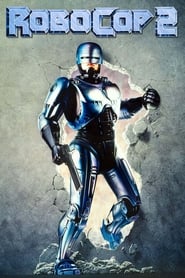
RoboCop 2 (1990)
Sammon uses his multiple on-set roles to reconstruct RoboCop 2 as an impossible delivery problem: Orion locked a release date before there was a script, director, or crew, leaving Irvin Kershner, Frank Miller, Phil Tippett, and the effects teams to build the film while it was already moving. He is candid about where the sequel's satire and emotion fall short, but his eyewitness stories make a persuasive case for its craft, from Amiga-generated monitor graphics and laser-scanned facial animation to eight stop-motion puppets animated by eight crews.
- Duration
- 1h 56m
- Talk coverage
- 97%
- Words
- 17,906
- Speaker
- 1
Guided collection
The RoboCop trilogy commentaries
Three distinct vantage points follow the original trilogy from its firsthand production story through an effects chronicle and a candid sequel postmortem.
Part 2 of 3
- 01 RoboCop 1987
- 02 RoboCop 2 Now reading
- 03 RoboCop 3 1993
Commentary density
Highlights
Topics
People mentioned
The film
- Director
- Irvin Kershner
- Cinematographer
- Mark Irwin
- Writer
- Walon Green , Frank Miller
- Editor
- Armen Minasian , Deborah Zeitman , Lee Smith
- Runtime
- 117 min
- Also on
- OneSheet ↗
- External
- IMDb ↗ TMDB ↗ Find on Amazon ↗
Transcript
17,906 words
Hi everybody, this is Paul M. Salmon, author of Future Noir, the making of Blade Runner, and a person who has worked on many motion pictures, including this one for Orion in 1989-1990 called Robocop 2, for which I was the computer graphics supervisor, the publicist, and a lot of other jobs. Just like the first film, we open up with a commercial that is satirizing the future that Robocop takes place in. This is called the Magnavolt commercial. And as you'll see, in this futuristic Detroit, it's not a good idea to jack a car. RoboCop 2 was written by Frank Miller. It was his first produced script. And here we have a little taste of the ultraviolence that Frank had done in his very famous mid-'80s comic book, Batman, The Dark Knight Returns. And here we have John Glover, a wonderful character actor, who throughout the 80s had just a really great run. One of my favorite pictures that he did was a thing called 52 Pickup for John Frankenheimer, when he plays one of the sleaziest criminals you could ever think of. And now we have a media break. Now, media breaks carry over from the first film. And, of course, this is supposed to be essentially the news, the Twinkies, the happy news that comes in
talking about what's going on in OCP. Here we have Ed 209 from the first film, the guy who's actually backing up the truck there and putting his arms up. That's a guest appearance by Phil Tippett. Phil Tippett was the stop-motion supervisor who did the puppet animation on the first film and did the stop-motion animation on the second. These nuke containers are very funny. Actually, what they really were were 1980s versions of contact lens fluid holders. And they were converted by the prop department and then just filled with little plastic tubes filled with colored water. But they were actually off-the-shelf contact lens holders. That... Matt painting that you saw earlier of the nuclear plant going up, by the way, was by Rocco Gioffri, a really wonderful matte painter. And here we have Tommy Noonan, who has really carved out a niche for himself for kind of bizarre and unique villains. Although he was really good in a film called Wolfen, where he played kind of a doofus. But then, of course, his career was set by Manhunter.
which was a film I actually worked on for DEG back in the 80s, and basically was the first film to introduce Hannibal Lecter. Now we're in downtown Houston. Houston is the city where RoboCop 2 was filmed in primarily. The first one was filmed in Dallas, but when we got to Robo 2, the city of Dallas did not want to have a whole bunch of explosions and car crashes at night, and Houston was much more amenable, so that's why we wound up there. Robo 2 really was much more expensive than the first one. It was about $35 million to produce. And what you're seeing now is a tracking shot that kind of introduces you to the wildness of downtown, supposedly Detroit. This really is downtown Houston about three in the morning. We shot downtown for weeks, just blowing up everything. And of course, locking over bag ladies at cans. Now, as this progresses, you'll see Frank Miller kind of making a commentary about the destructiveness and corruption of this particular society. I love those Dayglo graffiti things in the background. I get flashbacks of all that badass that I took in 1973 at all those concerts. All right, now, here we have the Violin Hookers. Anyone who knows anything about Frank Miller's oeuvre
knows that he loves vicious streetwalkers. And Sin City, of course, which he's famous for, is filled with them. And here's really the first appearance on screen of that particular prototype. Now, Robo II was directed by Irv Kirshner. And when we have a second, I'm going to tell you how Kirshner got there because it's a convoluted process. But let's follow these working girls down the street. Once again, we're in downtown Houston, middle of the night. This is all dressed out. All this makes me nostalgic. An actual porno theater. Don't see those anymore. And then this gun shop, which we really blew up. Now, of course, this is all cut and re-edited so that things look a little differently. But when this gang goes in to get the weapons out of this gun shop, most of them are real. There were so many different types of guns on Robo II, we lost count. There were automatic weapons, there were military-grade sniper rifles, there were bazookas, and just hundreds and thousands of rounds of ammunition, blanks, of course. And I clearly remember doing the final sequence down in Wortham Plaza, which you'll see when Robo and Robo II duke it out at the climax.
I spent a whole night with the ammunition crew just loading cartridges into clips. And it was hours. The most boring thing I ever did. Really something crazy. Now here we get an idea of kind of like a combination of the real and the unreal. The gun is real. As is the violence. Now, what I find a little disturbing about RoboCop 2 is that Robo 1, with Paul Verhoeven and Ed Neumeier and Michael Miner, who wrote the script, and John Davison, who was the producer of both Robo 1 and Robo 2, had a much sharper take on their satire of then-contemporary society. Robo 2 is a little sloppier in that respect, but again, it was a rushed production. Now, this is an actual Taurus cruiser that... had a thing like a telephone pole underneath it that an explosion would hit the ground and flip the car. And that's a real driver inside, a stuntman. This was shot on Halloween. I remember it was Halloween night. We were all down there. And we actually had a robo-pumpkin that the art department spray-painted. And the robo-pumpkin kept moving around. And here's another explosion. And nobody in at that time except the dummy.
All of these hits you see on the side of the car are, of course, squibs, which are little explosive charges. And then we set off a gasoline explosion. But the sparks you're seeing are really great. They're called zerk hits. And they're basically suppositories filled with a zinc compound that are shot from an air gun. When they hit metal, they spark. And speaking of metal, here comes Robocop. Now watch the film. You never actually see him get in or out of a car. He's always halfway through. The reason why, it was too complicated. Here comes the RoboGun, which was based on a Beretta. I think it's an A93R. And what was interesting about it was it had a three shot capability and a one shot capability. Now RoboVision here, when you see those lines, Those are the contribution of one of the special effects guys on this film named Peter Curran. And basically those are hand-drawn acetate plates with India ink that were composited over the footage and then degraded. People always wonder, why is Robocop purple? I asked the same question when I first came down on location. I was in location on this film for at least nine months down in Houston with a wonderful crew.
But the idea was that robo after robo one got an upgrade from OCP and was given a new paint job. So he's like the top of the line model. Personally, I don't really care for it. I find it distracting. But the other thing was there was a technical reason behind this. It was easier to shoot. It read better on camera. Have you noticed nothing but the homeless people? Remember, this is 1989. It's still Reagan's America. And Reagan's America was supposed to be not this. But this is social commentary that was real. All throughout Houston, there were encampments of homeless people. Now they're common. In the late 80s, they were not. In fact, I remember I grew up in the Philippines on military bases in the 1950s and 60s around third world poverty. And I remember looking at downtown Houston and seeing these encampments and thinking, oh, my God, the third world has come to America. Little did I know.
Okay, here's a drinking game you can play. This guy you're gonna see on the other side of this door who is guarding the nuke lab is actually one of the crew members of Robo 2. Every time you see a crew member in Robo 2, you could actually take a drink. I wouldn't recommend it because halfway through the film, you'd be unconscious. This guy was one of the grits. Handsome, handsome man. Of course, that's a fake door. and a fake arm. And here we go into the new facility. This was an actual location. A lot of places in Houston we used real places. There was a studio, Houston Studios, where we built sets. But this was a, if I recall, it was an abandoned chemical plant. And here, of course, you see all of the Asians working there. And this is sort of a... Commentary on the fact that there was a big influx of Vietnamese after the Vietnam War. And they, if you'll notice, are really slave labor. The nuke is nothing but colored water. Oh, and here's a couple of Kane's gang, including Gabriel Damon, who plays Hob, the little kid, who is about 12 to 13 years old. And, of course, Tommy Noonan looking totally spaced out. Now watch this baby.
The baby was sort of a contentious thing among the crew because there was going to be all the shooting and effects. And you don't want to put a baby in the middle of all this. Well, if you'll notice, a real baby is not in the shots of shooting. There's a rubber baby. Keep your eyes open. All right, here we go with the Zerk hits. Here we go with the thousands of rounds of ammunition. And here we go with the fact that people just don't seem to realize that you can't kill a cyborg automatic weapons. Robo, by the way, is a cyborg. He's not a robot. A cyborg is part human and part machine. And you still hear that baby crying. There's someone who didn't get it. More death and destruction. And again, that's an MP5, I think, which is an automatic weapon that's used by European police.
Now, Tommy Noonan goes through a lot of changes in this film's costumes, and interestingly enough, they didn't develop this in the final shooting script, but the idea was that he was not only a very powerful drug dealer, but he was a religious figure. In fact, that first shot you saw him sitting in the dark surrounded by the wall, the actual scripted version had him in a priest costume in an auditorium with 2,000 followers who were on their knees singing hallelujah. So he had a whole religious cult behind him as well, but that was dropped. And here we're introduced to Lewis, of course, Nancy Allen, who is, despite the character she plays in Carrie and some of the other films, a wonderful, sweet person and a real professional.
Kirsch was a wonderful guy and a wonderful director. Not only the director who directed Empire Strikes Back, of course, on which he worked with Phil Tippett on the Snow Walkers, the giant mechanical elephants. I love this where Robo pauses to shoot a kid. Bad decision. And finally, one of them thinks, oh, shoot him in the face. And that's what you're seeing here. What you're seeing here is yet another Peter Koran effect from Visual Concepts Engineering, flipping Robo's memory back to his own child. And all this is is a video that's been treated in post-production with, again, the scan lines of India Inc. and a little bit of an animated effect on it. Get back to Lewis. Nancy Allen in the script that was originally written for Robo II by Frank Miller, when Tim Hunter was going to direct it, had a much larger role, and the story was quite different. There are bits and pieces of it, but Robo II went through a very tortured pre-production history. Here comes the rubber baby, and this is kind of nice. The ricochet, yep, rubber baby.
Okay? So don't worry mothers, or fathers, or children lovers. Maybe latex lovers should worry. To go back to the history of the film, what happened very briefly was that Orion made so much money unexpectedly on the first RoboCop. They made approximately $50 million in 1987. They immediately wanted to go into production for a sequel, particularly because they were in financial trouble at that point. They started to develop another film with Paul Verhoeven, Ed Neumeier, and Michael Miner. And let me introduce Robocop's wife, who is in all three of the films. She's one of the few people who actually keeps showing up. And it's kind of a nice one that she's the through line.
And what's coming up is a very nice little moment where Robocop, for the only time in the film, you actually get to see Murphy as he was. And this, of course, he's flashing back to his human side. And when he gets to the shower, you will see a moment where Peter Weller actually is Peter Weller and is Murphy, Alex Murphy. This is the only time in the film you see him as he was as a human. And that's kind of a nice little moment. It's almost as if he's... forecasting what's going to happen to him. He's looking at himself in the mirror and thinking, who am I? This was all shot, incidentally, in the River Oaks area, which was a nice part of Houston. Houston at that time was a very depressed city. So we were able to do a lot of things. This is the wonderful makeup by Stéphane Dupuis, the face of RoboCop unmasked. The idea was supposed to be that Robo, when he was first created, actually had his face skinned off.
like a mask, and his eyes and his lips were attached to a mechanism underneath. So that's why the skin goes over on the sides of the helmet. And Stephane Dupuy did this marvelous blending job, a Canadian makeup artist. And there on the left, you will see one of the first aspects of what one of my jobs was on the film. I was the CG supervisor. And basically what I did after reading the script and being hired, first as a unit publicist and a couple of other things, John Davidson and I, the producer, had worked before on the first Robocop. I went to him and said, look. you've got all of this set dressings with monitor readouts throughout the film, and I know how you guys are going to do this. You're going to wait till post. You're going to cut away to stuff that's close-ups of things that other people have done, and or you're going to mat these things in. I said, why do it that way? I said, let me try to get some kind of deal from a local...
home computer outfit. I was very familiar with home computers. I started with a Timex Sinclair, Apple II, Amiga 1000, Amiga 2000, and we literally did all of the readouts on an Amiga 2000, which is an off-the-shelf home computer with a software package called Deluxe Paint 2. Now, Then I had a three-man team, a guy named Mike Ripple, who was wonderful. He was the artist. I was the supervisor. And then we had another guy on set who would feed the things into the monitor's live time. Basically, we would dump all our computer graphics that we did there in the office, production often in Houston, onto a three-quarter cassette, run down to the set, throw it into the recorder, onto the monitor, and there you go. Now, Patricia Charbonneau, who you see right there, was a well-known actor at the time. And she had done some very good work, a good performer. There's another one of our little monitor readouts that we did very cheaply and quickly. Patricia is not credited in the film. All I can say that it was a personal decision, perhaps involving a relationship. But she herself wanted to...
not be credited in this film. I think she does a great job. Now also, this is one of Murphy's wonderful moments of humanity. Peter Weller actually sells this scene quite well with his wife. And he does it through his eyes and his voice. Of course, he also has that unmistakable cupid bow of a mouth, which is another reason why he was hired originally. When he has that visor on, he's got the world's most beautiful mouth. But I love this sequence. This is the moment when he essentially rejects his family and his past for legal reasons so that they won't be hurt. And this is eerie. Watch how he doesn't blink. This is a very moving scene. When I first saw it, I thought it was a bit over the top. But now, in retrospect, and with a little bit of time that's gone by, I find it to be actually one of the few genuinely emotional moments in the film. And again, this is being sold through Irv Kirshner's direction and Peter Weller's performance.
I don't know you. The robo-suit, by the way, was all fiberglass. It was redesigned by Rob Bottin, who of course did all the effects for The Thing and also did the robo-suit for the first film. This time it was made out of fiberglass. The first one was made out of latex and fiberglass and took a long time to put on. Poor Peter Weller. This one was done very quickly. In fact, there was what was called the robo-team. And the robo team were a group of people who were on location the entire time who would suit up Peter Weller. Peter would lean in a leotard up against a slant board, and they would just pull on his pants, his robo pants, put on the center part, put on his shoulders, the back, the head, and you were done. This is my least favorite of the commercials. It is a little techno retro. Look at all these old phones.
But this one pushes the envelope a little too much. This is another little quibble I have with Robo II. I find that a lot of the brutality is more ugly and off-putting than perceptive. But that's just me. Here we have a wonderful matte painting by Rocco Gioffri. Rocco Gioffri worked on such films as Blade Runner. But what you're seeing, everything above that sign, Omniconsumer Products, is all a matte painting. This is an actual location at an unused office building in Houston. Houston was so depressed in 1989, the economy was so bad, that executives were literally committing suicide by jumping out of the buildings in downtown. Two of those happened during production. Interestingly, Jerry, whose last name I've unfortunately forgotten, but the fellow that's holding the briefcase, was a puppet operator for the Muppets. and Jim Henson, and also a character actor. Quite good. And of course, here we're introduced to Dan O'Herlihy, the old man, and Felton Perry, who had a long history, Felton Perry being on the right, being in such movies as Walking Tall. But Dan O'Herlihy was one of the wonderful moments of my life, being able to speak to a performer who had such an incredible career.
and it worked with everyone from Louis Bunuel in Robinson Crusoe to John Huston in The Dead, and also in Halloween III, which is probably the most reviled of the Halloween films, but I actually rather like, where he played the crazy Irish toy maker. And here we have the mayor, of course, who I never really liked the... Writing and the performance here, I thought it was way over the top. It's kind of one note. And the actor had actually previously been in The Color Purple and done some other good work. But the whole point of the scene, of course, is that OCP, this very powerful corporation, is privatizing an entire city. Which would be funny if the Republican Party, as of 2017, hasn't announced that it wants to privatize Medicare. I'm just saying this may not happen. But there are things that you sometimes see in the past that predict the future. I love the way how Felton and Dan here have their arms crossed. And Felton is kind of the ultimate yes man.
And here we have Belinda Bower as Dr. Fax, just a woman with great sensuality, who had also been in a movie called Time Rider with Fred Ward about a motorcyclist who finds himself in the Old West. Now, these are the failed RoboCop 2 experiments. What they're trying to do is upgrade Robo to a whole different level. And it doesn't work. And these are all basically stop-motion animated puppets. that were designed by Craig Hayes, who also designed the RoboCop 2 you'll see later on. And when this opens up, that's actually Craig Hayes himself. That's a little cameo role. And it goes wrong, very wrong, which is why you see this tech with his arm in a sling of time. I love this shot. And then the lights go on, the wig-wag lights. But there's a certain grotesquery and darkness to these scenes, which actually mirror Phil Tippett's own predilections. Anyone who has seen Starship Troopers 2, which Phil Tippett directed, or Mad God, which is a film he's doing on YouTube, that's grotesque, what we just saw there. Phil loves dark horror of the Eastern European nightmarish quality.
And that comes across, I think, in some of the effects. Now, this was, again, an empty office building in downtown Houston. And all of these machines you see in the background, this is supposed to be sort of the militarized showroom for all of the product that Omniconsumers are selling to the military. And there's Ed 209 back there. and of course a Robocop suit. And that is the Robocop suit that was used in the film. Now here's where Dr. Fax or Belinda Bauer comes in and convinces them that she should be in charge of the program because basically what's happening is that the wrong brains are in the cybernetic mechanism. And she's going to do it. By the way, Felton is wearing a very 80s pair of glasses there. Those big frames were very in. And the big hair everywhere on the men and the women, you'll keep seeing that. Belinda actually looks quite good. Belinda wound up actually absorbing much of Nancy Allen's lines and part, and this was one of the things that was a bit of friction during the film. But again, I have to tell you that Robocop 2, and I have worked probably on close to 100 films, including Conan the Barbarian, Blue Velvet, Round for Blade Runner,
FX, Starship Troopers, I'm in Starship Troopers. I'm the guy that pushes the cow into the room and the arachnid jumps on it and it says censored. Robo II for all its exhaustive qualities was one of the most enjoyable things I have ever worked on. This is downtown Houston. Now this is the police department and that is a complete facade. Mark Ralston is the actor who is screaming right here. He's a Canadian actor who has had quite a career. Of course, he was in Aliens playing Drake, the badass marine. But he was also in Martin Scorsese's The Departed. And Mark is a great guy. I had dinner with him a number of times. This little police station was actually based in an unused elementary school in downtown Houston. And so again, lots of locations. Now here we have Duffy the corrupt cop who is on nuke.
And sort of like the Informer, four cane. And everything you see here with this decay, this is the way the school was. And interestingly enough, Robo 2 was shot mostly in the fall and early winter of 89 and 90, from say September to January. And we had a lot of weird weather. It got cold, it snowed once, it was raining. And it was raining during the shot, and you can't hear it on the roof. But they didn't take it out. Another interesting thing, look at the militarization of the police uniforms. This is something that, of course, now the police have been militarized to a point of ridiculousness, but this was something that Robo II kind of predicted. This location, also real, was one of the most bizarre malls I ever saw. It was an enclosed, how to say it, block. That little road you just saw was inside the mall.
And it looked like you would walk down a street and then go up into an apartment or a condo complex for all these different stores. But it was completely deserted at the time. So again, we were able to go in here and shoot. A lot of these are now classic video games. This is before people sat at home and put duct tape on their bedroom windows and only communicated through Skype or Facebook or Twitter. But there used to be these social gathering places. You see the Nuke logo everywhere. That was one of the crew T-shirts, by the way. There were a lot of crew T-shirts on this film. And here we have Gabriel Damon as the awful 12-year-old monster kid. Now, there was a lot of controversy at the time when Roboto was released that they had a child playing this role. And all I could think of is, where have people been for the last 20 years?
Does no one remember The Bad Seed, 1956, where Patty McCormick was a psychotic murderer and a little girl? Does no one remember Children of the Damned with the alien kids who could mind-make you commit suicide? Does no one remember Damien from The Omen, 1976, The Devil's Spawn? I mean, there had been many, many instances of evil children before this, but for some reason this hit a chord. And I think it's because there's not that much of a fantasy buffer between the character of Hob, Gabriel Daven, the little kid, and the just awful little criminal he plays. Now, this was kind of a fun place to shoot. These were all extras. These were all kids, local kids. And this was fun. Kirshner said, throw popcorn. And they did. Then, of course, we have Robo picking up Duffy and tossing him around and finding out some information from him, which, by the way, is a complete, in my mind, ripoff of the scene in Robo 1, where the same thing happens where Kirkwood Smith is thrown through windows by Robo. Here we have Hobb being rescued by one of Kane's gang. They take off, and if you'll notice, Hobb is carrying something. That was supposed to be a boombox.
like a portable stereo, but it converted it into a nine millimeter automatic weapon, and it is a real weapon. That was not a prop. Okay, and now we have the fight, the obligatory fight, which incidentally, again, I find a little bit of fault with. I think the choreography of it is just a bit weak. Normally, you know, fight scenes are fight scenes, but I just, this one is a little... And you see this, and when the child comes and starts to strangler, it just doesn't work for me. There's a certain lack of inventiveness. And here we go with the kind of torture scene to get information out. You look a little out of breath, bitch. Yes, and if you'll notice that every time Hob talks, he's got a kind of a vulgarity in his mouth. Incidentally, while Robo 2 was being shot, I was actually also producing a Japanese television show in Tokyo called Hello Movies, which we ran for four years on a TV Asahi network for over 200 episodes. And I asked John Davison, since I was producing that show long distance via the telephone, if it would be possible for me to tape all the behind-the-scenes action of the entire film.
which I did on VHS-C cassettes. So every time you're seeing these shots, I'm usually just out of the frame with my little camera shooting the setups, shooting the direction, shooting everything else. And I remember doing this particular scene in the video arcade. It was very late, and Irv Kirshner, who at that time was seven years old, fell asleep in his chair. And I've got a shot of him sleeping and snoring. And I was very quiet, didn't show it to anyone. And then at the wrap party, we showed some outtakes and things, and I showed that and everyone cracked up. And Irv never fell asleep. Okay, here you can see downtown Houston in the background. This is a very poor neighborhood called the Fourth Ward. And again, hitting home the idea of a community ravaged by drugs and by homelessness. For tourists, by the way, that he's driving. This was a abandoned power plant
that was in Houston and was used for multiple locations. Something very interesting coming up here. Kirshner was very well respected within the filmmaking community. It's a very tight community in Hollywood of people who are directors and producers. A lot of people know a lot of people. Kirshner had had a long career beginning in the 1950s and in fact, he and I immediately hit it off because I had seen his movies like The Hoodlum Priest, The Flim Flam Man, Loving, up the sandbox, some wonderful films that he had done. In any event, this was one of those moments when I saw Kirshner's worth as a director. Now, you're going to see Robo go in. This car's going to blow up. And when it blew up, the camera crew, which was protected by a big piece of plexiglass, but off camera, ran up and started to put the car out. And Kirshner immediately said, let it burn. Don't put it out.
And that was just one of those moments when you see the experience because he was getting more material. And he stopped the crew. Now, what you're going to see when this car blows up is real. This car exploded like you would not believe. I was right at that angle. And if you'll see the stuff coming out, one of the car doors went 50 yards and was embedded in the side of the metal wall of this complex. So it was a hell of an explosion. And I'm glad I wasn't down there. Originally, I was going to try to shoot closer and Kirshner chased me off, which was probably a lifesaver. Oh, by the way, drinking game. Those two guys in the background, crew members. Even more horrible was while we were shooting here, one afternoon, we heard a tremendous thud. And we walked out. We were right on the Gulf of Mexico here. And across the Gulf, another factory which was working had exploded. And over 200 people were killed. And that happened right while we were filming. And so this film was rife with incidents.
Okay, now this is where, of course, Kane's gang supposedly gets the drop on Robo, and it's a combination of effects film shots. There's the Zerk hits again. Robo's hand and gun, you'll see it get knocked off, but that's a close-up, and it's a whole different, it's not part of him. It's a, this is one of my favorites. Mother Teresa, Jesus Christ, Elvis Presley, The skeleton of Elvis Presley, the body of Elvis Presley, this is Cane Sanctum Sanctorum. And you can see he has this messiah complex and also a weird pop culture thing. And also you will see the guitar, you'll see the crystals, which shows the New Age influence. And one of the really funny ones, that's Oliver North with his hand up in the background. Of course, the infamous architect behind the Nicaraguan guns for hostages, excuse me, Salvador thing during the Reagan era. So that was our own little political comment. Now, you'll see the movements that Robo is making. Peter Weller based these on Bird, actually. And if you'll notice, he's always doing things very, very mechanically. Boy, that was intelligent.
But in any event, this was something that Weller had worked out with a mime coach in the first film called Yoni Makim. Okay, you saw that. There's a close-up. Okay, so that's a separate piece. All right, and here we have something that's basically just pyro. All right, and this is another close-up. All of that electricity animated by Peter Coran in post-production. I love that line.
He really believes it. This is like a holdover from the religious messiah original concept. Tom Noonan is a wonderful actor and also a great director. And Anomalisa, which recently came out from Charlie Kaufman, the puppet film, he did all the voices except for two. However, for some reason, although I got along famously with everyone on this film, Tom Noonan and I did not, and I don't know why. But I do know that I went up to him and he asked me what kind of rig we were going to use, and I told him Amiga 2000. He said, oh, I'm into computers, and I started to rattle on, and maybe he thought I was being arrogant, which is very possible because at that time in my life, my own insecurities as a person would come out as ego, when in reality I was scared inside because what the hell am I doing? I had so many jobs on this film. This, of course, is a dummy, and it's attached to the electromagnet by strings, really, and other things. And again, here we have, now we cut to Peter Weller. Now, all this RoboVision stuff, again, is videotape with an overlay of...
acetate hand-drawn Indian ink lines and when you see the sparks and you see things like the material falling into his face, Peter Weller actually had a piece of plexiglass between him and the camera so that he was protected. The whole idea of nuke It went through various changes in the original scripts. Let me give you quickly an idea of what happened with the evolution of Robo. As I said earlier, it started with Paul Verhoeven, Michael Miner, Ed Neumeier. Orion was in trouble. It wanted to film out quickly. They didn't feel that Neumeier and Paul Verhoeven were working quickly enough. So Neumeier and Miner bailed to do the project. And then there was a writer's strike. so they couldn't use anybody from the usual suspects. By the way, what you're seeing here, of course, are just sections of the RoboCop suit that were made particularly for this scene, and they're operated by cable control, okay? That's basically like bicycle cables. There's a crew offscreen that's just moving things back and forth.
I'll get to the rest of Robo's history in a second. This is a hard one. All right, this is interesting. Here we see Robo, you know, being stripped. All right, here we're in Houston, all right? But here, we're actually back in Los Angeles in February of 2000, excuse me, of 1990. Outside Houston, and here is a matching shot. inside a warehouse, and this is the only time Rob Bottin was on set supervising the torso. This is one of my favorite scenes coming up because I meant it. Let's not get carried away here. We're talking about a piece of equipment. Don't tell me he can't suffer. Just look at it. It's electrical. See the guy there with the mustache and the glasses who just got covered up by the lawyer? That's yours truly, Paul Salmon. back when I had hair, back when I had a mustache. Every single person you see in the background is a crew member. So if you're drinking, it's your turn again. This construct was really interesting to see in the flesh. It's basically all of the cables you see hanging from it were the actual control mechanisms. And again, there are people off camera doing this.
There I am again, right in the center. Kirsch liked me. He said, hey, go on up. The guy who is tall behind me with the big hair, with the nice hair, is the first AD, the first assistant director. And here's Robert Doquy, who, of course, was in the first film as the guy who's joining the police station. And Robert had a wonderful resume as well. He had worked many, many times. And when you hear us all yelling, this is us really yelling. This is real sound. I can hear my voice in there. So there I go. All right, now we're at an abandoned hospital in downtown Houston. You have to remember that Houston was like a ghost town. Now it is completely different. I was just there last year in 2015. It is one of the fastest growing cities in the United States and mainly tech and medical industries. The gas and natural oil and that kind of thing that used to support Houston.
now only account for thirty to forty percent of its economy. It has become a tech haven and a medical research haven and a lot of hipsters and a lot of young people and a lot of gentrification. Here was another sequence that got some flack because again it's got a nasty, sadistic edge to it. You're going to see a hack doctor essentially open up this rogue policeman Duffy. And, of course, it's all done with prosthetics. There was blood bags underneath the sheet, and all they had to do was cut through them, and you would get a line of fake stage blood. This actually has got some of the better dialogue that I think is in the film. Here's a very scary hack doctor. And there's the giggly saw. But this is kind of a nice dialogue exchange here with Kane. Now, first, the crew thinks that he's just going to be frightened. They don't realize that Kane has decided to kill him. And Tommy Noonan, this is great, starting here.
This is another one of the more affecting dramatic moments. I'll let you just listen. And here we go. I love the tap. Okay, cutting into the prosthetic underneath. The gang, oh, crew members again. if you're still drinking. You said you were just going to scare him! Doesn't he look scared? Nice line. And then also, of course, when Kane pulls the child and makes him look. Interesting. It's a very strange dynamic here. Now we come to another really funny part. This is where Fax is trying to figure out who to put into RoboCop 2. Criminals and Maniacs. These pictures were taken by me with a Polaroid camera, and it is all the major crew members. And I'll show you who the Maniacs and the Criminals are. That's Irv Kirshner. That's Mike Ribble, the guy who did the... That's me. One of the Grips. Another one of the Grips, and that's a real hairdo. One of the people who worked on... John Davison, the producer.
That's Frank, who was our makeup head, another one of our local Texas guys, one of the guys who worked in the art department. The way I did this was Kirshner, the more he saw what I was able to produce with a very small crew, the more excited he got. And he actually had Frank Miller changing the script to put more of these things in. So he told me the day before this was going to shoot, we need mug shots of people. So I ran around the set, and I would literally grab who was ever there, throw them up against a wall, take a Polaroid on full facial, and then turn them on a profile, run that up, scan them in our incredibly primitive scanner, and then have Mike Ribble put a layer of... graphics on top of it. And so that was our in-joke. All those criminals and murderers are actually some of the chief creative people on the film. This, of course, is a set. This Japanese bonsai, weird, kind of like volcanic hot tub. And it was done in the Houston studios that we used. So this is one of the few moments when there was an actual set built.
Now let me continue very quickly with the history of the film. So we have Verhoeven, Miner, Neumeier, online and then gone. Then we have Tim Hunter, who is the director of River's Edge, who John Davison had a nice relationship and hired to do it. And Frank Miller, who by that time had been hired to do the script because he was not part of the Writers Guild and there was a Writers Guild strike. John Davison, who is an incredibly good producer, did Airplane, did Robocop, did Starship Troopers, has done a number of other films, and a nice guy and a fan and a former head of the Philadelphia Science Fiction Society, knew comic books, and he called Alan Moore of Watchmen, and Alan Moore had two words to say, absolutely not, I will not do your script. This system failure thing, by the way, was built by Rob Bottin, and that is not one of our crew's computer graphics bit. That was actually Rob's crew that built this. And, of course, this is the moment when Robo suddenly comes back online. So, in any event, Tim Hunter and Frank Miller start working on a completely different story that opens up with a sort of a talk show with a really abusive host.
and has a much larger role for Nancy Allen. And then Tim Hunter left the picture, at which point there were literally only a few weeks left before production. Now, Kirsch, as everyone called him, was an incredibly talented craftsperson. And in fact, looking at Robo 2 now, I think of it as, despite what you think of its content or its work as a science fiction film or as a... sequel is, I think, a monument to the true beauty of behind the scenes Hollywood craft. Kirsch came in with very few weeks, no prep, did this entire film on the fly. Frank Miller was rewriting the script on a daily basis. And by the way, there is a rumor that he was off the film. He was not. He was there. He was enthusiastic. He was right across from my office. I was right next to John Davison's office, right next to Kirsch's office, right next to Miller's office. Frank was literally writing every single day and running dialogue down and scenes down to the set. So this was a film that was written as it went along, which is never a good idea.
The whole problem with RoboCop 2 in terms of quality is the fact that it had a locked-in release date. When John Davison finally agreed to Orion to say, okay, I'll do RoboCop 2 because they were in trouble and he didn't want to be the person that killed Orion, he was given a release date. And essentially he had nine months from the moment he said yes to when the film had to come out. That's without a script, without a director, without a crew. And really an amazing job by everyone. It's no good. Now, these directives have got little jokes in them. Peter Cran, who did the BCE effects on these, on these and some of the other ones, there are things like avoid Orion meetings. Here we have, of course, sort of an echo of the moment in Robo 1 when he's fighting E-209 and his visor gets shattered and you see his eyes. There's some more of our graphics that we did for the CG work. Basically, I called ourselves cybernetic set dressers because we were just putting little touches of set dressing in the background on these monitors, for the most part.
And this is, of course, where Belinda Bauer is reprogramming him and turning him basically into something that is much more public-friendly and corporate amenable. I think Belinda's quite good in this. She was also someone that was around. She would hang out with the crew, and she was quite friendly. I was talking about the good time we all had on this. Kersh was so good at being able to walk onto a bare stage that had not yet been designed because of time. And I watched him one day say, I want the computers over here. I want the readouts over here. Here's where the table is. And he was doing this all mentally to the first AD. And by the next day, it was done. So he literally, on the fly, on his feet, this set that you're seeing was all out of Kershner's head within a matter of minutes. And so
I watched that with awe, frankly. And I was talking about the respect of the craft for Hollywood that we don't hear a lot about. That was one of those moments where I thought, wow, I really am so glad I am part of this profession. A couple of other things I did on this film. I, of course, brought a lot of correspondents on set as the publicists. I brought Time Magazine. I brought the novelist Martin Amis, who wrote a story for Premier Magazine. And Martin and I got along so well, in fact, that he put me in one of his novels called Time's Arrow. And I'm a character called Salmon, who's an ambulance driver. Okay, here we are back into the abandoned elementary school that was used as the set for the police station. And lots of crew people, once again, in the background. And if any of you are conscious now, you should probably switch to coffee. And this is kind of funny. It's a little broad, but this is where RoboCop, of course, starts going off and really acting in a very silly, very silly way. And there she is again, you know, having dialogue and never even gets a chance to get her...
her name on. If you'll notice, a lot of Nancy Allen is just hanging around and showing up for a moment and then shooting and then disappearing. Ah, here we go again. The Little League Kids. I kind of like this one. Again, there was some backlash in the critics' response to this film saying that, hey, you know, Little Leaguers. Oh, the background film right there is from Queen of Blood. by Curtis Harrington, which was a Roger Corman special, where Roger Corman took a Soviet science fiction film, filmed American scenes with Basil Rathbone, and the guy on the left is Forrest J. Ackerman, editor and publisher of Famous Monsters of Filmland. John Davison, the producer of this film, got his start with Roger Corman at New World Pictures. In fact, he was his publicity department. And John's first film was Hollywood Boulevard with Joe Dante. John also did Piranha.
for Roger Corman, and John is a, John loves Roger Corman. He learned everything he could. So that was a little homage to John Davison's background on that monitor. Let me clear my throat. Okay, now I don't sound like I've got five bullfrogs. Yeah, so this shootout here, again in downtown Houston with the Little League team was very much a Frank Miller kind of thing. And it's very funny because this is RoboCop not being violent. trying to be more... I think we should talk. I think we should talk. Acting like a therapist. And, of course, Lewis is saying, what is wrong with you? And the Little League kids are very funny, I think, in this. And what's also interesting, if you look around in this electronics store, you see old CRT monitors, analog monitors. The kids were stealing Walkmans and VCRs. And you can see all the videotaped stacks in the back, and boy, do I get nostalgic for a past that was more analog. Although, hey, believe me, I love digital just as well. And, of course, this is where Robo starts to interrogate a corpse. Now, this is actually a holdover from Frank Miller's second draft, which was done in April of 89 when Tim Hunter was still on. The Tim Hunter...
Frank Miller Robocop was quite different from the one that you see now. It had Robocop falling basically almost in love with Nancy Allen, with the Lewis character, who had a much expanded part. And she was being chased by a maniac killer, and the relationship was deepening between the two of them. So unfortunately, by the time Kirshner came on and there was the unfortunate diminution of Lewis's character, all of that got lost. So a lot of the human element that was in the second draft of Frank Miller's for Tim Hunter totally changed when Irv Kirshner came on. But again, that was not because of anything aesthetic. It was just time. They had to really basically write the script around the story. So if you've been following throughout this, you have three steps. You have the Verhoeven, Neumar, Miner Robocop. You have the Tim Hunter, Frank Miller Robocop. And then you have the Urban Kirschner. Everyone called him Kirsch, Frank Miller Robocop. And all in a very short period of time. Your hair looks lovely that way. Yeah, there's, you know, sometimes this I find the comedy a bit forced, actually. And I think, again, that's a byproduct of this incredibly, ridiculously short time to get this movie out in the theater.
Now, this is in what they call the fourth ward. The fourth and the fifth ward in Houston, again, were the poorest parts of the city. High crime. And in fact, when we were shooting downtown at night during particularly the sequence of Robo's car being blown up at the beginning. And the big fight between Robo 1 and Robo 2 at the end, it was an all-night shoot. And it was called the Wertham Center, which is a complex of different theaters, including the Alvin Alley Dance Company, one of the most famous in the world, who were having performances while we were blowing up armored personnel carriers and thousands of people. And we had to work out an arrangement with Alvin Alley that when they had a performance, we couldn't blow anything up. We could shoot. but not blow anything up. And occasionally those overlapped and they were not happy with us. This is always funny. Talk about an overreaction. On the other hand, people really here in America will know that there's been a huge...
anti-smoking campaign. So I guess this is one way of doing it. Whenever you see the, this is one of the one that says avoid Orion meetings. Whenever you see a close-up of Robo putting his gun back in his leg, that is a separate construct of cable control that is not connected to any part of the Robo costume. That's why you always see it in close-up.
Here's a funny joke coming up. Now, this little lead that's supposed to be feeding information into Robo's head, when we first shot this, you'll see in a second that Robo becomes more independent, and he will pull this thing out of his head. What the crew did is they glued it for the first shot, and he couldn't do it. And he couldn't do it and kept trying, and then he goes, all right, you guys, and he started to laugh, and the whole crew busted up. There were more crew people in the back. That's Dennis Pollack. with the glasses, who was the head of the Robo team, the guy who helped suit up Robo every day, Mark Ralston again, and the facade. But that was very funny. Poor Peter Weller. Okay, now this scene, again, on location, and this is supposed to be where Robo taps into a generator and wipes out all the bad programming. And what you're really seeing, of course, is a post-production effect
of animated work done by Peter Cran. Now, I've talked about Peter Cran a lot on this, but I have to tell you that RoboCop had one of the greatest analog science fiction special effects crews in the world. And to a certain extent, they were very responsible for giving this film the gloss and the impact that it has, particularly Phil Tippett. We'll get to Phil Tippett in a bit. But Phil Tippett did a job that is just beyond amazing on this film. And Kirshner and John Davison and Pat Crowley, by the way, who was one of the other producers and a wonderful producer, a guy a bit more quiet and a bit more focused. No, not focused. A bit more serious than John Davison. John Davison is so much fun to work with because... He has a great attitude. He's always up. Everything is funny. He knows how to take care of things and put out fires. But at the same time, he promotes a really genial atmosphere. And it's just wonderful to work with him. I've worked on four pictures with him. I've known him for 30 years.
He's one of my best friends. We come from the same part of the world, the same backgrounds, and we go to the movies together. In fact, in a couple of days, John and his wife and I are going to see Elle together. And so we go to see movies all the time. John's just a wonderful guy. I cannot say enough about him. We will expand from city to city. The rich and the poor alike will know a paradise for every moment of their lives. Okay, now we're in a nuke mobile lab, and now we have yet another crew. Oh, you see the little readout? We were proud of that. That's actually a piece of tinfoil that we crumbled up and then laid a layer of a couple of graphics over. It's just tinfoil, but it looks pretty cool. Everything you see there is mostly our stuff. And here, Frank, this is Frank Miller. This is the man who wrote the script. Frank was so enthusiastic on this picture. There were a couple of times when he got very frustrated. I remember one...
evening coming in, I was always working. We were all working like 18, 20 hour days. And Frank was in his office in a rage, kicking the desk and destroying everything. And I walked in and I said, what's wrong? And he just went through his thing. And I will not boast, but with my background, my dad was in military intelligence and I saw quite a bit of violence and anger when I was a child. And I know the best thing to do when you find yourself in a situation like that is to stay calm and let people run their course. And I asked Frank what was the matter. I found out, and everything was cool. This guy with the hot dog was a real hot dog vendor. They're going to kick somebody's ass. That's the way he really talked. That's why he was cast. He was a local that everybody loved. And so he's an actual person. OK, all these four tawarsas, this is a Budweiser plant. This is a beer plant outside of Houston.
And when you get inside, you will see all these cylinders and it's the fermenting beer. So the crew really had to behave themselves on this shot. But I have to tell you that as exhausting as RoboCop 2 was to make, and it was an exhausting film because it was a large production and something that had to be done very quickly and then put together and put out into the world, It was really a tightly knit and non-contentious crew. For the most part, everyone really got along. This is the cool part. Yeah, I always liked that. Talk about Amy. Peter Weller and I once had a little discussion. I was very close to Peter throughout this because as the publicist, I, of course, was handling him through the press and I was with him all the time. And Peter was, and is, a very intelligent man. And in fact, David Cronenberg called me after this film and asked me if he thought Peter would be a good William Burroughs for Naked Lunch. Now, I had worked with David Cronenberg on Scanners and had known David quite well for 10 years. And so I'm one of the ones that recommended Peter actually play William Burroughs. I'm sure I was not the only one.
But Peter could also be a method actor. And when he was in the suit, he always wanted to be called Robo, which I thought was kind of silly. But, you know, there you go. Method is method, and each performer has their different way. But, oh, by the way, this man just getting shot, that's Russell Towery. That is Robo stand-in. Any of the stunts. that you see going on with Robo rolling around or doing some physical things was Rusty Tower. He was a local Texan. Now, here we go, the boombox, you can really see it. This is a genuine weapon, by the way. In any event, Peter Weller and I were talking about the moves of Robocop, and I said, you know, and I just pulled this out of the air, I really like those samurai moves you do, Peter. He goes, what is that? And I said, well, you know, when Robo's looking in one direction and he moves the gun at a 90-degree angle and nails somebody out of the corner of his eye.
I made a big mistake because Weller went right over to Kirchner and said, I want more samurai moves. And I thought, oh, shit, keep the mouth shut. But in any event, this, oh, here we go. Now, here's another story. Now, this is the mobile lab that was in a local warehouse in Houston. And, of course, Frank Miller is in here. And what's going to happen is you're going to see an explosion because Kane has left behind bombs to make sure that all the evidence is destroyed. And there goes Frank. See you later, Frank. Sin City is coming. Get down!
This is interesting. We've just gone from Houston to downtown Los Angeles. All these shots of cane right here, this is called the industrial area of downtown L. A. Now, you know, it looks like, you know, it looks like a complete terrible place. By the way, this is a real empty building that they drove this truck through, and they dressed it up to look like a bar, but they actually went through a real building. And right here, this is Rusty Towery being scraped up against the wall. in some of the shots, that's actually him. Now he's not, they've got it just so that he's just barely touching the wall and behind him there was a mechanism for sparks. But this area now has been completely gentrified. Downtown L. A. is now filled with hipsters with pork pie hats and ironic beards and a lot of craft beer places and it's just a hoot to think that this area now has become something different. Now when you see this motorcycle get grabbed,
This was a Texas stunt guy. The way they stopped that motorcycle is they had a hidden cable on it, and he went over the bars. Now again, we're still in LA, down in the industrial area. This place has been shot so many times for so many films, it does not look like this now.
Interestingly enough, I mentioned that I was shooting a lot of behind-the-scenes material with my video camera, and of course I was going to shoot this. I and the wonderful still photographer, Dena Newcomb, who was a Texas-based unit still photographer on this, didn't like being on the street level for what's about to come. So we climbed up on a building and were up on a tin roof shooting down on an angle when little moment of collision happens. By the way, Peter Weller is not riding the motorcycle. He's on a platform that's being towed by a car. And the way this is cut, you'll see that you never really see a person go through. When this thing flips over, they had the camera right in front and they had it so it would stop. I came down from the roof and showed Kirsch the footage I had shot from the high angle and he stared at me and he said, why didn't I do it your way? And I thought he was kidding me, but he wasn't.
Kirshner was very kind and generous. That was a moment. Actually felt like I had done some second unit stuff. Okay, here we go again with one of the silly, you know, commercials. This one about Sunblock 500. Which, again, is, you know, gets its point across. But does it have any of the bite of the commercials in Robo 1? I think not. And, again, I ascribe that to haste. Although the actress here is certainly pleasing to the eye. And this pool is one of the exclusive hotels that are in Los Angeles overlooking Hollywood. The green cracks me up. And then, of course, the warning, frequent use will cause skin cancer. It's supposed to not. Okay, here's another one of our CG effects that Mike Wibble and I did to put in. And by the way, Belinda Bauer always saw me with a recorder, tape recorder, when I wasn't shooting film because I was writing a lot about this film. As some of you may know, I did a lot of journalism for magazines like Cinefix, Cinefantastique, American Cinematographer, and so on. And she actually asked to borrow my tape recorder. So that's my tape recorder, my audio tape recorder right there that she's using. And here we are in L. A. again. And...
One of the things that was the constant pressure as we go on to this long dialogue about you don't get permission, our boss is gone, I need my drugs, etc. One of the pressures of this film was, of course, the release date being locked in. Now, the way that... And really the only way that a film like this could have been made was to shoot all of the complicated action sequences and stop-motion plates, plate being a background environment onto which later... will be projected on a small miniature stage and the stop motion puppets will be moved and manipulated in front of it. The only way that could happen in this very limited time frame was to do all of that up front. So the material you're going to see at the end with a huge shootout and the fight between Robo 1 and Robo 2 were actually the very first things we did on production. And I have to give full marks to Phil Tippett and his crew.
Phil Tippett was one of the saviors of RoboCop 2, and I'm sure Kirsch said it, John Davison said it, everyone who was close to the production core knew it. Phil was literally directing all night long the second unit because he had to get these plates in, and then during the daytime he was working with Kirsch. So he was doing 72-hour days. He was getting so little sleep, it was unbelievable. It was a Herculean effort. But it was done with finesse. It was done with a lot of experience. And it was done with a lot of effect. So I would like to just be one of the people who puts on the record, everyone on this film worked hard. And it was a very, very pleasant shoot. But I really have to single out Phil Tippett and Rob Bottin's crew for, and of course, Kirshner. and Frank Miller for all stepping up and John Davison to do an impossible task and make it possible. Here, of course, we get an idea of how cruel and cold Fax is. She is like the ultimate careerist. And Tommy Newton gets a chance to do something other than just, you know, be scary. Interesting man. Interesting man. There is more to him than meets the eye.
You're going to see it in a second. Okay, now, this was actually, once again, shot in an original location. We all, we being the crew, one of the things that I would like to reiterate is that for many of these shots, I am actually just out of the frame with my video camera, taking pictures, taking stills. showing people from, again, Time Magazine or, you know, Entertainment Tonight and Access Hollywood and Good Morning America. I was dealing with all those people, bringing them to the set, including a wonderful Texas author named Joe Lansdale, who years later I bought a story called Bubba Hotep for an anthology I edited called The King is Dead. Bubba Hotep would not... It wasn't bought by anyone. I bought it, and it turned into a film 20 years later that's quite a good movie. Anyway, I invited Joe Lansdale. There's some more of our graphics on the back. Now, if you'll notice during this brain surgery, this is mostly done with sound effects. And what you've got here is a cap. It was a fake cap on top of Tommy that they pulled off, right? And nice and gory. Again, there's a lot of gore in this film.
And then what you're seeing is close-ups of prosthetics and that kind of thing. You never really see anything. It's mostly sound effects. I did want to say once again that this was a genuine operating theater and an abandoned hospital. And, of course, all of the machinery we're seeing here is, at that time, state-of-the-art. Now, this is a prop, and it's an interesting one because anyone who has seen aliens will remember the facehuggers that were in the glass containers. I can't help but to think that this was something that was influenced by that. However, this was done by Rob Oteen's crew. And what's really unusual is the water that they used was a very particular, this is a grotesque shot. Hey, how do you like your head? By the way, my brains are looking at this. Oh, look at this. To me, that's gratuitous. But, you know, again, hey, don't get me wrong. I love horror. Horror is my favorite genre.
and particularly what they call the French extreme movies like Inside and Martyrs. I've seen them all. I literally have seen them all. But I like grotesqueness that has a point. Anyway, that water was so pure that they had to go to someplace, I think in France, to find it. Otherwise, it would degrade the model inside. Now, this silly guy with the violin, he was a real contortionist. And he's not playing the violin. He's mimicking it, but he is for real. And this whole thing, this silliness with having this fundraiser for the city of Detroit, I get it, but the lines are open. But as far as I'm concerned, except for the violinists, this is a bit of dead air. Okay, and now we are in the hideout, excuse me, with the remaining people. who are left of Kane's crew. Now, this particular area, once again, was part of the complex of that abandoned factory. And by the way, you can tell it's been smoked. There are a lot of off-screen things that are smoking the atmosphere to make it look this hazy. Your Honor, I have some very good news for you. I think...
The city is saved. Now, you listen very carefully. Another one of our little graphics there. And Dan O'Harely, he's probably enjoying himself because he's getting to sit. One of the first directors I really got to know well was a guy, Hamilton, when I was working on Remo Williams. And I said, what's the number one thing a director should learn to do? And he said... to sit down as often as possible. So I'm sure Dan's enjoying this right now. Okay, here's, of course, the moment when all of the problems that have been going on with the politics and the city come together. We shifted 80% of our liquid resources to the urban pacification plan. If we can't foreclose, public confidence and OCP will plummet, so will our stock. Sir, if I may? There's another option. We certainly have the surveillance capabilities to follow the mayor. And this is, of course, when they really cross the line and they decide to put Robocop 2 to service as an assassination device. And the cynicism here, of course, is just rampant. You'll notice that there's a picture there of Dan with Ronald Reagan, another little joke. Dan O'Hareller, he never met Ronald Reagan.
Surprisingly enough, oh, a very great story. I was having a drink with Frank Miller at the hotel we were all staying at in downtown Houston, which was the Hyatt Regency, and while we were there together, on the big screen behind us, the Berlin Wall fell down. And we were there at the moment the Berlin Wall went down. This is a computer graphic that I had nothing to do with. But, however, I was aware of the company. It was called DeGraff Warman. And what you are seeing is actually a moment of cutting-edge, leaping-forward technology. This, of course, is the nuke. And his brain is supposed to be inside this thing. Now, what they did, DeGraff Warman... This, by the way, this is only a section of the Robocop 2 puppet, and they had off-screen operators doing this. And if you see any stills, by the way, of this shot, I took them. The still photographer was not there at the time, and I'm also a member of the local 600 ICG still.
And so they asked me to take the stills for the sequence. But to get back to the quick explanation of de Graaf Warman and why it was so important, de Graaf Warman actually took Tommy Noonan in post-production, put him in a chair where he was immobilized, and took a laser scan of his head, where they would run a laser down the front of his face, the side, and all this type of thing, and they had him make expressions and faces. And then they digitized that and put it into a computer and then started to manipulate it. And that was one of the very first what we would now call motion capture type of moments in cinema. And it really was cutting edge. The cartoonish look, by the way, was intentional with all the different colored lights. And incidentally, in the original script of RoboCop 2, there was a character very similar to Dr. Fax called Love. And Kane was called Kong. And there were two brains put into RoboCop 2. And they were always fighting with each other. But eventually that just got winnowed down to Kane himself. So DeGraff Warman deserves a big thumbs up for taking a step forward in the history of special effects.
Okay, now here we are where the city bureaucrats go try to make a deal with the big drug dealer, which probably, oh, not probably, but in reality is happening every day, both on the local, national, and federal level. But then again, I'm not cynical. Well, we need all the help we can get, young man. Tell you what, put me down for 50 just to make sure. 50 cents, $50. That's cute. Don't be a queer. 50 million. This is bullshit. Let's get out of here. Jerry, the guy with the cigar there, in fact, had to take three days off because he was in this scene that we're seeing, and he suddenly had an attack where his throat closed up, and he had an allergic reaction, and he fell over unconscious, and he was hospitalized for three days. But he came back. And as a trooper he was, he shot off the rest of his scenes. And he went on to a longer career. I think if I recall correctly, he didn't pass until about 2014, or it might be 2004. But he kept working. And this, of course, is the moment when money wins out. But what we're going to see now is the beginnings of the stop-motion work of Phil Tippett and his crew.
for the RoboCop 2 creature. Now, the RoboCop 2 creature went through a lot of different design ideas, but it was ultimately designed by Craig Hayes, who was working with the Phil Tippett Company and designed ED-209. Craig designed Robo2 to be vaguely anthropomorphic, about nine feet tall, and being able to move up, down, have four to six arms, and have a built-in Gatling gun. What you're seeing here is a combination of a live-action plate and a rear-projected plate with a little tiny sliver of stop-motion animation. Now, interestingly enough, the look of RoboCop 2, which is vaguely, again, human but not, and with all the steel and whatnot, actually came from Tim Hunter during his work with Frank Miller, and it carried over into the Kirshner RoboCop, Frank Miller. And as you're about to see, there's going to be quite a massacre going on. And this was very difficult for Phil Tippett because, again, they were under this enormous strain. Now what you're seeing is a combination of a stop-motion puppet in front of a plate that has also put an animated shadow on it. And when you see the puppet open up the door, that's a miniature set.
And you will see lamps pop on on the puppet. And those are actually miniature halogen lamps that were put into that particular puppet. Now, what people don't know is that there were actually eight RoboCop 2 puppets built, varying sizes, varying capabilities, mostly about a foot to two feet tall. And there were eight different animation crews working simultaneously to get these things done. So much had to be done in the stop-motion area for Robo 2 that they not only were working killer hours during production, but post-production they never stopped as well, and they had to just work, work, work, and work. Now here we go. All right, now that's mostly a rear-projected set. and Robo II. And as you can see, you only get a glimpse of it. And you can see this, by the way, this Gatling gun was an actual rotating prop that was put on one of the puppets just for that shot. And it had little lights involved in it that when it rotated, the lights would go off. And then they added in post-production animated gunshots. There's Russell again, Rusty Towery.
the stuntman who played Robo's stunt double. If you keep looking, you'll see a lot of stunt guys get killed, the same people over and over again. Again, lots of gunfire, lots of squids. There's a nice shot. You can see the thing is vaguely human-like, but is capable of moving and expanding and contracting and very scary-looking. And this shot here, where Jerry, the lawyer, is killed, not him, but the next guy, this was cut into two parts. This was part of it when he, prior to being sick, and then after him out of the hospital, they finished the rest of it. Again, this is all a combination of live action, photography, and then special effects photography. Here we have yet another moment of callousness where the mayor silences the guy by suffocating him. Lots of squibs. So many squibs. And of course the mayor escapes by going down a sewer line, which you will see.
which is kind of a heavy-handed joke, but there you go. By the way, the stunt person that you'll see coming out of a pipe in a second into the river, that river was so polluted with industrial waste, it was amazing. All right, Phil Tippett had a lot of trouble visualizing how to do some of these shots. In fact, Phil Tippett and I have known each other since the 1970s. And in fact, for RoboCop 1, I did two making-of featurettes where I went up to Berkeley and I watched him animate in his way of animating Ed 209. And he and I worked a lot of films together to know each other personally. But Robo 2 was the only time we actually had an argument. And it was because he was so stressed out. And it was this scene. He was trying to figure out how to stage this because it was dark.
And it was kind of like very difficult in terms of angles, what am I going to do. And I made some suggestion, and I guess it was silly, and he told me it was. And then I realized that he was under stress, and I let it go, and we were friends again. But Phil has a wonderful saying. He says, true friends argue. And then they make their point and they remain friends. And so that's a wonderful thing. I have a lot of friends in the film industry. It is not a nest of vipers completely, as many people think. But people like John Davison, Phil Tippett, Joanna Cassidy from Blade Runner, Ridley Scott, Paul Verhoeven. I would say in many respects, they are all my friends. And I've been very fortunate to work with some fine people. So here we have something that's a combination of live action, where Galen George here, with her very 80s female hair, she looks like something out of a Van Halen video, is going to touch a full-scale prop, and it's supposed to be the hand of Cain. Now remember, she is zonked on nuke, so if you think she's acting a little strangely, don't forget she's high. And so she's not really thinking things through.
And so what you're seeing here is an actual full-scale prop that they had on set. But in a moment, you're going to see her neck broken as Robo II takes offense to something she says. And when the neck is broken, it's actually a foot-tall puppet, stop-motion puppet, that the Tippett crew made and dressed exactly like Galen and then had her puppet suffer. This is the plate. And I love this where he screams and the head flips backwards. And then he kills. All right, that is a puppet right there when you see that. That is all stop motion. Tough kind is interesting. That, of course, is the actress. But in front of her, once again, is the stop motion. So every time you see these things in the foreground, those are the stop motion puppets. And in the background, it's a photographic plate. All of the plates, incidentally, were shot in VistaVision, which is a 65-millimeter process. There's Russell Towery again. Yes, the third time he's been killed. That is, again, Robo's stunt double who was in the suit a lot.
the plates, the background plates for Robo II were shot in VistaVision, which is a special camera that was designed and used in the Ten Commandments by Cecil B. DeMille in the 1950s and were still in use and some are still in use today. And what happens is that instead of running a 35mm frame through the gate vertically, it is run through horizontally and you get a 65mm frame with a five millimeter, here goes the poor stuntman into this incredibly polluted river. He had to get a lot of shots after that, as I recall. And part of this is a mat, by the way, by Rocco Geoffrey, and part of it is the actual plant that we were staying at. The VistaVision plates give a great deal of clarity, and they hold up. photographically at close range. So they made a decision to do this and over a hundred separate 65 millimeter VistaVision plates were used for the final shootout at Wortham Center, which is coming up.
Now here's an iconic shot. This still has been seen everywhere. Dena Newcomb, who was also the still photographer on Robo One, is the person who's responsible for the one sheet where you see Robo getting out of his Robo Cruiser in the first film. That was actually a still that she shot that the publicity department, of which I was working at Orion at the time, treated and turned into a one sheet. And so Dina Newcomb is really responsible for, at least in the textual sense of seeing it online and or seeing it in magazines of the time of doing some just really wonderful publicity stills. Again, just a great crew, Robo II being a wonderful tribute to the craft of Hollywood. This scene rings so false to me, it is almost impossible for me to watch. It's like the obligatory sentiment. I once heard a wonderful definition of sentimental. Sentimental is unearned emotion. And if there was ever a moment in RoboCop 2 that makes absolutely no sense, here we have this psychotic kid who has done everything he can to kill RoboCop, has shot many people, is a drug dealer, and has shown no other aspect of a personality other than a sociopath. Suddenly RoboCop decides that maybe we should be soft.
and kind, and treat him as a child. And I don't believe a word of it. Sorry, guys. But, you know, you have to leaven, I suppose, the different emotional moments in the film. But I could have done without this one completely. I love Peter Weller's mouth. It's amazing how much acting he can do with his body and his lower lips. I mean, look at that. There's a character there, and all you see is a mouth. Peter was a very great choice to play Robocop in the first two films, as was, you know, Mr. Burke in Robo 3, who's also a fine actor. And talk about sentimental. I mean, oy. Oh, well, I would have taken the money, but that's just me. Robo Thief. In any event, oh, an interesting thing. You'll notice that there are very few shots of Robocop from the back where you see his buttocks. It's because everyone always felt that they didn't look right. So there was a real attempt on the part of the filmmaking crew to never show Robocop walking from the back.
And by the way, this is Houston City Hall, the real city hall that they're using for this press conference. And again, you're seeing a bit of the degradation that Peter Koran used by refilming stuff on videotape and slightly treating it to make it look like you're actually watching it during one of the media breaks. This is a complete map painting. on top of the matte painting. This was done by a wonderful matte artist named Mark Sullivan. And in the background, even most of what you're seeing on the sides is a matte painting. And if you see the searchlight, that is a optical effect added after the fact. And that is really one of those moments that matte paintings really can sell you. Okay, now we are slowly working our way up to the great climax of this film, which was incredibly complicated. Loads of people. Loads of people. And here we go. A lot of crew members again. And here we have Dan O'Herlihy coming out and running the gauntlet. And there's Lisa Gibbons who is on the media breaks. And Lisa Gibbons actually was a known commodity at this time. I think it was Entertainment Tonight. And she was a real trooper. Really, really good to work with.
No problems, came prepared, really liked her. But again, unfortunately, 80s hair. Now this is the Civic Auditorium inside the Wortham Center. And again, a lot of the people you see sitting there are a combination of crew members and local extras. And we were all just thrilled to be on this location because it was comfortable. In fact, the crew photo, there's a tradition on every motion picture at the end of the film to get the entire crew together and to take a group shot that will be distributed to everyone. And this is where we did make that shot. But we love this place because it was air conditioned and you had nice seats and people were literally sleeping in the aisles. And this shot is a combination of motion control and stop motion. What you're seeing is
is a motion control rig where they had a model on a computer. And this thing coming up was actually a miniature that was controlled by miniature motors and a computer so that it would come up in the right way every time. And you will see it split apart and then Robo II rise in the center of it. And it's all models. The full scale thing back there, as you can see, is about 45 feet high. But it was incorporated with a lot of miniature effects.
One of the things that is interesting about RoboCop 2 in terms of the old man, the Dan O'Herlihy character, is that he seems to be much more sympathetic in RoboCop 1. However, and in RoboCop 2, he's obviously villainous. However, Paul Verhoeven always told me that he thought the greatest villain in RoboCop 1 was the old man, the head of the corporation, because he was the person who was responsible for everything. and yet he projected this avuncular, in-control character. But it was really all him. And this is one of the reasons I have a little bit of problems with Robo II. It makes obvious what was subtle before. The Civic Centrum, which is what this particular set was called, we were here for about four or five days. And mostly it's talk and presentations, but there are some action scenes coming up as well.
Then here's Dan being evil. Again, I do have a problem with the presentation of the mayor. I think he's a bit over the top. There was a search for a fanfare for the music when RoboCop 2 comes up through here, through the center of the city. John Davison asked me, he says, where's the fanfare? Fanfare, of course, a bit of classical music, and you're hearing it right now. Kind of announcing. Da-da-da-da-da, da-da-da-da-da. And we finally found a piece I cannot remember where. By the way, the music on RoboCop 2, people have asked, why did not Basil Polidorus do the music for RoboCop 2 when he did such a great score for Robo 1? The answer is quite simple. Because the film came together so quickly, Kirshner really did not have a lot of choices as to the crew members. John Davison was the one who was primarily responsible for putting a lot of the package together.
And Kirshner actually wanted Leonard Rosenman because he had worked with him and he was friends with him. And Rosenman was a very respected composer who had done things like East of Eden and Rebel Without a Cause. So basically what happened was that Leonard was John's concession to Kirsch to allow him to have a creative element of his own. So that's why it wasn't anything against Basil Polidorus. Now, of course, here again you have a combination of live action, a plate, and a composite. And this is kind of cool when you've got a drug-addicted robot. That was a first. I will give it to him, the writer Frank in Kirsch. And, of course, what you're seeing here is, again, a combination of live action and animation. Now, when you see facts go up with the controller, And it gets ripped out of her hand. When it was done on set, actually what they had was an invisible fishing line that the crew just pulled out of her hand. And that was then replaced with an animated layer to make it look like Robo 2 got it. And here we go.
but really it was pulled in real life on location by fishing line. Okay, now begins the giant, giant, incredibly impressive stop motion showdown between Robo 1 and Robo 2. The weapon that Robo was holding there is an actual 50 caliber sniper rifle. There were a number of amazing weapons, amazing being at least in the sense of The fact that they were real. And what you're seeing here again are, I love the cannon that comes up. That behave yourselves line was used in the trailer over and over and over. This is a combination of Peter Weller in the suit and Russell Towery in the suit. And this is rather nice where he zeroes in and like he shot the fellow who had the telescopic rifle, he now takes the cannon off. Okay, and here again, you have plates that were shot on location and then using the actual live action. Now, as this moves outside, I always like that. This was a set, by the way. So we've moved from an actual location to a small set where a rest of Tauri was thrown through a wall. All right, now we come to the big,
This was shot within the first two or three weeks of production and shot all night long with a huge crew and incorporated with, once again, stop motion work. Now this is a set. This is a miniature set. And what will happen when Robo gets to the elevator and cuts the cable with Robo 2 inside of it, this is all a miniature. When they go up, That's a miniature and that actually, the shaft, the elevator shaft is not vertical. It was set at a horizontal angle and they had a camera on a track moving with it. The sparks there are animated. This is all like some really wonderfully complex stop motion puppet animation. Don't forget, puppet animation is one frame at a time. You make a movement, you take a shot. This is scary. I always love the way he comes shooting out. When the two of them go out, that's a miniature skylight. And what they actually did was they had the puppets on a spring and the spring was under tension and they just let the spring go and it actually shot the puppets out. Now here, that is a stop motion shot.
And when it was originally shot, the background plates, Kirshner did not think it looked far enough away. So what Phil Tippett did was shrink it down, all those buildings, to make it look like they're far, far up than they were. Okay, and they actually dropped some puppets from a height. and then put in a combination of live action and animation. Now, that overpass that they go through was really at the centrum, so that's a real overpass that was then composited in by a miniature. Okay, we're back on a set. And incidentally, this little sequence here where he moves the arm, you'll see Robo for a second get... close to Robitu's arm, was the last shot that was done during production in Houston. And at that point, there was a skeleton crew left, and I remember everyone applauded loudly. Kirsch and his wife then took off and took a drive across country by car to decompress for a couple of weeks, and then we immediately started to shoot in L. A. for pickup shots, and the
chase with Kane. Now, anyone who has seen Iron Man 1, does this look familiar? When Iron Man 1 and I came out, John Davison and I saw it, and if you recall the fight between Robert Downey Jr. and Jeff Bridges as the two cyborgs, well, not a cyborg, but you know what I'm talking about. There are so many quotes from RoboCop 2 in this sequence. I would be really interested in hearing what's the real story behind that. Okay, once again, this is a live action shot. I was right next to that car when they blew it. And very funny thing, they were supposed to make it land on its hood. It went up in the air after the explosion went off, did a 360 and came right back down on the ground. And they were upset about that, but they said, oh, well. Okay, now don't forget, we've got hundreds of extras. It's 2 o'clock, 3 o'clock in the morning. You've got a whole city listening to all kinds of explosions. And all of this is being orchestrated mostly... Okay, this is another one of our producers, the woman who was just interviewing... doing the interview. And so if you're still conscious, maybe it's time to hit the coffee again.
And you'll notice that one of the wonderful things about this sequence, wonderful in the sense of being completely exaggerated and astonishing, is the body count. Look at this. By the way, I think the Detroit Police Department really needs to rethink their body armor. I mean, so many policemen get shot through these vests. Really silly. Of course, the media gets killed, women get killed. This is quite a brutal and massive catastrophe. This is a massacre of great proportions, and there's a great line coming in here. This could look bad for OCP, Johnson. Scramble the best spin team we have.
There's something that has not changed in 25, 26 years. People still put a spin, as they say, on reality. In any event, there's Robo getting his nuke and going out to do the final face-off. Now, during this phase of the production, there was lots and lots of separate shots of cars being shot, policemen being shot. explosions going off. Here's Nancy Allen again, where she's been. Where has she been? She's back. This is the Wortham Center again in downtown Houston. And what you're seeing is, once again, the amazing work done by Phil Tippett and his crew. Phil Tippett is doing all of this stuff in the middle of the night and then working all the next day. And if you start to count the shots in this, you really get to understand how much work is involved. I love the Gatling gun on Robo II. It really is impressive. And also the sheer force of this thing. And maybe Frank Miller had something about the media, because a lot of media people get shot here.
And okay, here's Nancy Allen who actually gets a moment in this film later on that is a significant one for her character. I lost count of all the cars that were being blown up. But it's kind of cool to be there and watch this massive chaos going on. Okay, here we have an armored personnel carrier. I got to ride in it. And it is a genuine APC. And they had this thing, and it was supposed to, of course, go in Ram Robo 2. What you will see is a cut between the real thing and then the model that was built by Phil Tippett, a miniature, to Ram. You can see the arms extend there. You see he has four arms and two legs. So he's actually a six-limbed creature. So what you just saw was a miniature, and now we cut back to the live action. And everything was cool.
But of course it's not. And this is the point where things finally start to come to a head. Now, this right here, which looks so real, is actually a model, is a miniature. And you will soon see the miniature APC be moved away as Robo 2 comes back to life and continues with the final fight. Now, here we go. Here's a miniature, very nicely shot, frame by frame. hand-carved, probably about maybe two feet long, and all on a miniature stage. Incidentally, the basement set, the miniature set that Robo 2 and Robo 1 were fighting in on all the pipes was actually eight by ten feet long, so it was a large miniature stage. Okay, and now Robo 2 says, all right, I'm tired of messing around. It's time for the final showdown. And if you'll notice, look at the interactive lighting. It's all these little touches that are just so amazing. And it really sells the reality of this. This, again, is Phil Tippett and his fantastic crew. That's a miniature. Now, when you're seeing the actual interaction of the actors with full-size, this is completely miniature. But you will see, again, miniature.
But you will see moments when the actors are interacting with a full-scale Robo II. That thing was nine feet tall, weighed 800 pounds, and was actually puppeteered by offstage people who were completely covered in black and had black poles moving the varying limbs. You'll see this in a second when Peter Weller jumps on the back of Robo II. And, of course, Peter is there about ready to make the jump, but then Rusty Towery, Russell Towery, is the one who actually does it. But it's a real jump. Okay, now you cut from something that was live action, and all of this is, for the most part, stop motion. Now, interestingly enough, there are close-up shots where you will see Robo on the back of Robo 2, where it's obviously right here. What they actually had done was they made a half-size robo-tube that they put on a rocker mechanism, and between Peter Weller and the stuntman who was on the back, right here you're seeing part of it, they could shake this thing like crazy. And it was a horrible experience for both the stunt people and for Peter Weller, because they were actually being shaken all over the place. Here's another wonderful example of a foreground...
reality and one of the most grisly touches in the film, I'll pull your brain out. And this one I've always found to kind of be extremely effective. It's not enough that he smashes the brain on the street. You would think that would do it, right? Nah, let's just hammer it a couple of times. And what you're seeing, of course, is DeGraff Warman manipulating the 3D scan that they did of Tommy Noonan. And then lights out. And the miniature Robo II finally gives up the mechanical ghost. Really a fantastic example of stop motion animation. Almost a lost art. It was not long after this film that Phil Tippett was assigned to work on Jurassic Park. And the original plan was to use the stop-motion puppets for the dinosaurs, but Steven Spielberg very early on said, no, I want to do digital dinosaurs. And so Phil Tippett did the CG digital dinosaurs of Jurassic Park and came up with a very interesting way of doing it that bridged the old stop-motion animation with the new digital way. What he did was he basically took puppets
of the dinosaurs and slaved them to computers so that when they moved the puppet, instead of putting it on a stage with a rear projection, it was actually being put into a wireframe representation of a dinosaur in the computer. And so that way they were able to get really lifelike movements. And that, of course, has been finessed since then. Phil has done all of the Twilight Saga effects with the werewolves and everything else. I'm still working. Dan O'Harely unfortunately has passed, but left us with an amazing legacy. Felton Perry is still around. I just saw him a couple of days ago. He is still the great professional and the wonderful man he was. We used to party a lot on RoboCop 2 because we were in a part of Houston that had an amazing local music scene, roadhouses with 80-year-old bluesmen. where you would walk in and you'd meet one of the guys from The Beards. I've forgotten the name of the band now, but a very famous Texas blues band. And you would also have southern barbecue in places that were just like holes in the wall, and just incredible food, incredible culture, incredible music, and a great feeling of camaraderie among the cast and crew.
And once again, I have to say that working on RoboCop 2, although it was exhausting and though I had multiple jobs, once again, I don't think I've ever had as much fun on a film as I did on this. Patience, Lewis. We're only human. And yes, we only are. And there's Kirsch. wonderful director, Frank Miller and Waylon Green. Waylon Green was one of the authors of The Wild Bunch, and he would occasionally send pages in by fax, but mostly it's Frank Miller. Patrick Crowley was the producer I was mentioning earlier. John Davison, one of the people that is most responsible for this film, getting in time and delivering it, and somebody who's been an unsung producer for many years, well worth his own documentary, actually. RoboCop 2. Don't know if I should say this, but RoboCop 2 had its premiere in Houston, and it was an all-star premiere, and people who were on the crew as they were leaving were not thrilled. They had given 110%, as crews always do, but there were mutterings of RoboFlop. And I was not one of those people, but I had a...
I have to admit that, you know, basically it just, of course, does not hold up to the first one. However, the first one is a completely different kettle of fish, not done under the extreme pressure and circumstances of this particular film. And considering everything that happened on this movie, I think that it has aged fairly well. I'm amazed that the new Mark Irwin, by the way, the director of photography, a guy who worked with David Cronenberg all the way up to The Fly, which was his last film that he shot for Cronenberg, Leonard Rosenman, who I talked about, and I was actually fortunate enough to sit and listen to the scoring sessions, and I remember when they started to go, da-da-da-da-dum-dum, da-da-da-da-dum-dum, and then all of a sudden this choir went, Robocop! And I remember putting my hand I just put my hands over my face and I thought, oh my God, a choir? A heavenly choir? But what can I say? One of the things that I wasn't happy with, although the score does work occasionally. Jane Bartleby, who you just saw, by the way, was the reporter at the very end.
who came up and talked to the person where I said, that's another producer. There you have your matte paintings, Rocco, Moniakim. The crew, Conrad Palmisano, who was kind of the stunt coordinator. The prop masters, wonderful. Weapons master, Randy Moore. He took me out one Sunday with a armored personnel carrier mounted with a . 50 caliber machine gun. And we went out into the area surrounding Houston and just shot the hell out of that thing. I've never shot a . 50 cal before. That was fun. A lot of local people, Liz was one of them, the locations caster. But again, Paula Spang was one of the women who were in the shots of the murderers and the criminals that they were looking at put the brain into Robo II. And there's the stop-motion animators. Wonderful. Great job, guys. The model makers, miniature set construction, also Peter Coran, Rocco Giaffari, and again, I know I'm repeating myself, but when I think about this film, even I can think about moments, for instance, like hanging out with Martin Amis or just hearing some of the best blues I've ever heard or having some of the great
dinners that I had and watching Irv Kirschner, Kirsch Direct, who was a marvelous, had a marvelous onset atmosphere. Chris Whaless, who also was involved in this and involved in Gremlins. I, in retrospect, I still consider this to be one of the most effective and true testimonies to Hollywood craft. Sound effects by Stephen Hunter Flick. Steve Flick did the sound effects for the first RoboCop for Paul Verhoeven and in Starship Troopers 2, little known fact, Steve Flick and Paul Verhoeven came up with a language for every alien insect in the film and they worked on it for months and it If you listen to it closely, Starship Troopers number one, and listen to, there's Sherry Sire Salmon, second unit assistant coordinator. My wife worked with me on this film. We are still married, and it's the only time we ever worked on a film together. Unfortunately, she was with a second unit who was shooting at night, and I was working all day long and all day night. So even though we were in the same building, except when we went to our hotel room at night, we hardly ever saw each other.
Although I'll never forget one night when we were lying in bed and we were way up on the top of the Hyatt Regency and we were hit by a hurricane. Force One, off the Gulf, and we lay in bed and we watched the windows sway. And it was just, it was a moment. So I look back on this film with fondness. I look back on this film as a learning experience. Somewhere in here I think will be a... Well, there was. The computers we gave the local company that I got the computer material from a credit as part of the deal. So in any event, here we go. Tobor picture, by the way. Tobor is robot spelled backwards. And, of course, Tobor the Great was a very low-budget film in the 1950s that John Davison loved and has upgraded with Robo and RoboCop 2. This is Paul Salmon signing out.
Keep exploring
Other tracks with shared craft concerns
-
8 shared topics
The Mummy Returns (2001)
Stephen Sommers, Bob Ducsay
-
8 shared topics
Underworld Evolution (2006)
Len Wiseman, Patrick Tatopoulos, Brad Martin
-
7 shared topics
The Lord of the Rings The Two Towers (2002)
Peter Jackson, Fran Walsh, Philippa Boyens
-
8 shared topics
The Mummy (1999)
Stephen Sommers, Bob Ducsay
-
7 shared topics
The Usual Suspects (1995)
Bryan Singer, Christopher McQuarrie
-
7 shared topics
Mission Impossible Dead Reckoning Part One (2023)
Christopher McQuarrie, Eddie Hamilton