scholar
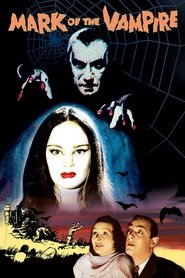
Mark of the Vampire (1935)
Release Hollywood Legends of Horror Collection DVD (Warner Home Video, 2006)
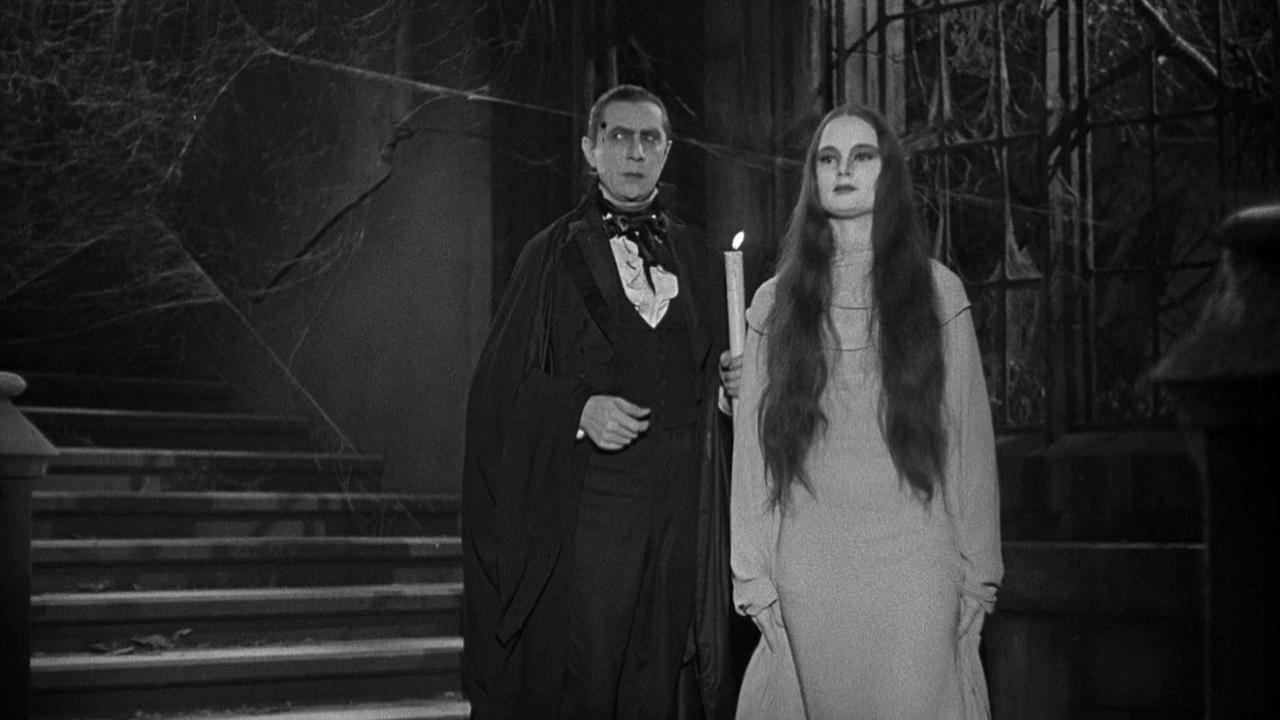
Newman and Jones treat Mark of the Vampire as a revealing collision between Tod Browning's silent-era grotesquerie and MGM's uneasy investment in horror. They connect the film to the lost London After Midnight, Irving Thalberg and Louis B. Mayer's opposing instincts, Universal's genre cycle, James Wong Howe's photography, and a deep company of British character actors. Their scene-by-scene wit keeps returning to the elaborate vampire con, the unexplained second vampire, Carroll Borland's indelible image, and Bela Lugosi's ideal role as an actor playing an actor playing Dracula. They also defend the rational reveal historically: in 1935, an unmasked fraud was the expected ending, while Dracula's insistence that the supernatural was real had been the genuine shock.
- Duration
- 1h 0m
- Talk coverage
- 97%
- Words
- 11,233
- Speakers
- 2
Commentary density
Highlights
Topics
People mentioned
The film
- Director
- Tod Browning
- Cinematographer
- James Wong Howe
- Writer
- Bernard Schubert , John L. Balderston , Guy Endore
- Editor
- Ben Lewis
- Runtime
- 60 min
- Also on
- OneSheet ↗
- External
- IMDb ↗ TMDB ↗ Find on Amazon ↗
Transcript
11,233 words · 9 flagged as film dialogue
And welcome to the commentary track for Metro-Goldwyn-Mayer's Mark of the Vampire. I'm novelist and critic Kim Newman, and with me is... Editor and writer Stephen Jones, and this is the first time we've done one of these commentary tracks in Los Angeles, rather than our native London. And we start with big billing for Lionel Barrymore, obviously the major star in... This remake of Tod Browning's 1927 London After Midnight, which is a lost film, so this is all you're gonna get if you want to see this story. Although one assumes at the time it wasn't a lost film, when this film was made. Officially, it didn't disappear until a fire sometime, I think, in the 70s, although it seems not to have been seen since 1935 presumably they dug it out of the vaults to have a look at it while they were making this so they could copy bits but i've always thought it's very unusual especially with um you know a lost film like that that nothing exists for it not even a trailer well yeah it may well be a case where they'd made this sound remake so it was in their interests to lose
The original. I mean, that did happen quite a lot. Usually, MGM, when they did Dr. Jekyll and Mr. Hyde in 1941, bought up the Fredric March earlier version and essentially buried it for a couple of decades. Here, they didn't even have to buy up the earlier version. Okay, so Metro-Goldwyn-Mayer made London After Midnight anyway, so they already owned the rights. And there's no sense... In 1935, silent movies must have seemed so old that there would be no commercial value in them ever. So there was no particular need to look after it. Well, I think one of the interesting things when you say that, I mean, we remember Tod Browning obviously for Dracula in 1931. This film was only made four years later, and it's light years ahead in production value compared to Dracula. Oh, yeah, it's an MGM film rather than a Universal film, and I think that really does pay off. There are other things about it being an MGM film rather than a Universal film.
that perhaps make it more problematic than Dracula. Certainly, I think this scene is very obviously a film with a troubled scripting and production history in that it's all over the place. But don't you get the sense, Kim, that with MGM, they weren't really that interested in making horror films anyway. They're not unlike Universal, who were making a career out of it. Obviously, somebody at MGM and probably Columbia went, oh, you know what, we really should be getting in on this horror film thing. When Dracula Frankenstein came out, every studio in town started developing its horror properties. MGM were very leery about it. I mean, because this is in a box set with a whole bunch of other MGM horror films of the period, the viewers will be able to notice that all of them have been messed around in pre-production and post-production. They've changed directors, they've cut footage, they've dropped footage, they've previewed it. This was previewed at 80 minutes and released at 60. And I think it basically boils down to...
A schism within MGM. I mean, it's possible that the entire history of the studio, indeed the history of Hollywood, boils down to an argument between Irving Thalberg, who is credited by F. Scott Fitzgerald as the one man who held the whole equation of moving pictures in his mind, and Louis B. Mayer. who was the man who had his name in the company. And Thalberg, although seen as the ambitious, the artistic, the man who wanted movies to be taken seriously, had a really dark streak. I mean, I think Tod Browning's career in Hollywood probably wouldn't have lasted without the protection of Thalberg. Absolutely, yeah. Who had a kind of perverse interest. I mean, Thalberg loved the unknown. Thalberg put freaks into production. But Louis B. Mayer, his idea of a good film was Love Finds Andy Hardy. Exactly. What he wanted was to be accepted by America. And...
Thalberg wanted to make interesting movies. I think we have to remember that these films form a very, very small part of MGM's output in the mid-1930s. As far as the studio was concerned, they are pretty much B-movies compared to the musicals and the other big-budget films they were making. It's only because we as horror fans see them now as, as you say, this group of half a dozen really classy horror movies from this period. None of which were particularly successful at the time. And... We have to say, I think the main reason that they weren't huge hits is that the studio didn't get behind them. I mean, when you've got an 80-minute film, you cut down to 60 minutes on release. You've got no confidence in it. Yeah, there's a sense that, oh, well.
We've got, yeah, we're up there. Universal can have Bride of Frankenstein out this year, and it's going to bury us. There's no way around that. Yeah, I think you're right. There's definitely a lack of confidence in all the films, Mask of Fu Manchu, The Devil-Doll. These films were made, but then basically discarded by the studio very quickly onto double bills and things. But they have lasted. I mean, there are plenty of A pictures from the time that we don't care about. And I think there are obvious footnotes to history reason. that this has lasted. One is, of course, it's a remake of a fabulous lost treasure. Well, we hope. We hope, yeah, well, yeah. But no, I mean, the fact that London After Midnight is lost makes it a fabulous treasure. If we ever found it, we probably wouldn't like it that much. Well, obviously, there's ways of finding that out. We know about the reconstruction that was done a few years ago on TCM, which I think only gives half the story at all. But I mean, there is still the photo play novelization by Marie Coolidge-Rask, which appeared in 1928. So you can
You can actually read basically the film in book form if you can afford a copy nowadays. We have a sense of it, but we'll never know. Exactly, unless somebody finds it. That's right, which isn't impossible. Strange things have happened. I actually think that London After Midnight's reputation as the great missing jewel of silent horror is a bit exaggerated. I'm much more excited about finding F. W. Murnau's Der Januskopf, The Jekyll and Hyde with Conrad Veidt and Bela Lugosi, because that, everyone, you know, it was the work he made... Before Nosferatu. I mean, that must be a bigger thing than what everybody said. London After Midnight, at the time, was not thought of as one of the better Browning-Chaney films. Although it was the biggest hit. Well, I mean, there's been rumours of its rediscovery over the years and various rules, and obviously they've all come to nothing. But my sense is that the reason that survives is because of the stills that were left behind. And Chaney's make-up is pretty remarkable of all his creations. Yeah, and...
And something which, interestingly, they didn't follow through into this remake in the 1930s. Well, I think that's because by the time of Mark of the Vampire, if you ask people what a vampire looked like, they said Bela Lugosi. Because that was what was in the public's mind from Dracula. It had such an effect. And so in this case, we have Bela Lugosi. I mean, he's got a bit of a blotch on his temple, but he's got the same cloak, yeah, the same gestures. Oh, ostensibly he's playing Dracula, yes. He's doing the Dracula act. But... I do think that we have to remember that between Dracula and this, there aren't that many other vampire films. It's only Condemned to Live. And then Dracula's Daughter followed this into screens. And it may well be, again, once Universal saw this and said, you know, other studios are starting to intrude upon our territory. That's our vampire act. Let's get Dracula's Daughter out there pretty fast. And of course, Lugosi was meant to be in that as well and never actually ended up in the final film.
So, I mean, I think it's interesting how they're almost like leapfrogging each other at this point. Yeah, and this is obviously MGM's shot at Dracula. I mean, it's... In all but name. In all but name. I mean, they try and get as many things back. I mean, there are elements from Dracula just tipped back in. But it may be that London After Midnight was originally conceived as an attempt to basically do Dracula without buying the rights to the stage play from Hamilton Deane. So there are elements from the play that are in... London After Midnight, Mark of the Vampire, and the two versions of Dracula Universal did. So by this time, they're getting a bit shopworn. Well, I mean, the interesting thing also, as you know, is that in the original London After Midnight, of course, Chaney played the dual role of both the police inspector and the vampire haunting the Moors. Whereas when it came to this version, the role was split into three, between three actors, between Lionel Barrymore, Lionel Atwill and Bela Lugosi. So it's almost like it took three actors to step into Lon Chaney's senior's shoes, as it were. Yeah, it is even actually, it's even more complicated than that because there is a mystery second actor who in
London After Midnight, sometimes dresses up as the vampire while the police inspector is somewhere else. To throw the audience and the characters off track, as it were. And so there's an unexplained extra vampire in Mark of the Vampire who is basically that role. He has nothing to do, but he's still here. He's still left in. He's never introduced. He's never explained. He just wanders around behind everybody else. And in London After Midnight, Chaney plays... the police inspector in the first reel where the murder is committed, and then when the story picks up some years later, he's got a bit older, so he's become the Van Helsing look character. So he does basically play the three roles. One is supposed to be the same character of different ages, and one is the outrageous vampire look. But here we get them all. It does take three solid character types to...
to do the Chaney act. To do the Chaney act, yeah. The man of a thousand faces, yeah. The man of a thousand saved salaries for MGM. It's interesting, on the credits of this, I noticed when the film opened, that Lugosi is billed above Lionel Atwill, who at the time was a much more important actor, I suspect, at MGM than Lugosi was. And his role in this film is certainly much more major than Lugosi's. Yeah, I think that's because Atwill was perceived as a supporting actor, whereas Lugosi, when he wasn't a star, which he was on Poverty Row, was a guest star actor. Right, he was the 'and' credit nowadays. An 'and with', yeah. Or little box round the name on the poster, if he'd had a better agent who could get that kind of stuff. If Lugosi had had a better agent, it would have been Lionel Barrymore and Bela Lugosi in Mark of the Vampire. But he didn't. And one assumes that it was Lugosi's marquee value why people went to see this film. I'm not entirely sure. I think Lugosi is in this film in the way he's in Island of Lost Souls. It's because it's a horror film. If you haven't got Karloff or Lugosi, it's not a proper horror film.
It's almost like that skeleton hanging up in the back there. It's just a signifier of horror film. In that wave of structuralist film criticism in the 70s, they're called tropes. It's the things that you put in films to tell audiences what kind of films they are. In the way that there are certain actors... I mean, if you put Jack Elam in the back of a bar, it's a Western. If you put Lugosi lurking in the shadows, it's a horror film. You know where you are. And also this village full of peasants as well, all of whom speak with different accents. Yeah, I've... This film is set... It was originally called Vampires Over Prague, although it's not set in Prague, but it is set in what is now the Czech Republic and was then Czechoslovakia. But actually, no, it's set in that notional middle Europe that a lot of universal horror films are. They involve a lot of... I mean, these, you know, thigh-slapping German peasants here. Unusually, this film... Names that, because there's an inquest in it, has to give a date, and it is a contemporary setting. This is the mid-30s rather than 1890s or whatever. But these happy, slapping lederhosen types, I mean...
Czechoslovakia in 1934 had some problems. It was part of the 20th century. No-one here is worried about that Hitler guy who's been making claims on this bit of the world here because they're all too busy solving that murder of the guy who was found bled to death last year. I've seen this film numberless times. I've never been able to work out the plot. I think the motor of it seems to be... the villain wants to cop off with the girl rather than wants the cash. I think so. I think basically, yeah, the villain is after the girl and wants everybody else out of the way. And I think that might be one of the reasons that London After Midnight was perceived as...
a disappointing Chaney film because the Chaney formula is he is the guy who wants to cop off with the girl and never gets her. That's true of all his films. That's something that is his shtick. I mean, it's Quasimodo, The Phantom of the Opera. The Unknown. It's all the guy who... I mean, it's the part he played was basically the ugly guy who didn't get the girl. Whereas in London After Midnight, it's the murderer is the guy who's obsessed with the girl and doesn't get her. He has the emotional through-line. Whereas... The Chaney, although we suspect he gives brilliant pantomime performances, doesn't actually have a role to play. He doesn't have any emotional investment. Critics at the time said this, that it was disappointing because they didn't get to see Chaney. In the way that they liked seeing Clark Gable slap women around or James Cagney with a gun, people liked seeing Lon Chaney suffering in silence in the background as the girl waltzed off with...
with the useless young male entrepreneur. And this guy here is particularly useless. Henry Wadsworth, yes. I mean, it's interesting as you say that because obviously Jean Hersholt, an actor of great range, is now the sort of the unlikely suitor in this case. And although obviously he has nothing compared to this guy in looks, he's certainly a far more interesting character in this film. And the... The thing that is maybe unusual is that Elizabeth Allan, who plays the leading role, is very strong. Traditionally, this is another bland part. And so the mismatch between the hero and the heroine is particularly obvious. Well, I think the interesting thing is that she's in on the whole plot and he isn't. Yeah. And, I mean, you think it's the other way around until it's revealed towards the end, but she's the one who's actually been playing along with all this. And this poor foe is just, like, wandering around, assuming that, you know, there are vampires loose...
Yeah. Another thing that strikes me on the casting is it's entirely possible that when they first thought of doing this, they intended to go with a London setting because it's full of British actors doing British voices. Now, this scene here, which is the first time we see, you know, Bela Lugosi and his possible daughter. We're not quite sure about that. It's such a leap from when Browning tried the same scene in Dracula only four years earlier. I mean, it really shows you... It's the same shtick. And that's actually a real bat. Those are real bats, yes. Most of them are of the cardboard bobbing on strings variety. Supposedly imported from South America, apparently, for this movie. But most of them are on strings. And they've done exactly the same shtick of the walking through the cobwebs that was done in Dracula. But if these guys are actors, how did they do that? Yeah, and why did they do that? There's nobody here to see except us. And here's that strange bit of wildlife hiding behind the crypt, also a lift from Dracula. Possums. I think there's a lot of possums in Czechoslovakia.
It's odd because this scene has no narrative purpose at all. It is just atmosphere. As you say, there's nobody watching it at all. They don't need to do this if they really were actors. Maybe they're method actors. It's like rehearsal, yeah. In fact, in the recent Shadow of the Vampire, they explain the director tries to pass off the real vampire he's hired by saying, oh, he's worked with Stanislavski, he always is in character. Of course, there's a little bit too much of this already in the film. Yes, the comedy maid. Not, I think, anybody's particular thing. Leila Bennett, who plays the comedy maid, was also the comedy maid in Doctor X. And I think her best performance was as Daffy Dolly in a version of A Study in Scarlet, which came out about this time.
I mean, she's just basically irritating in this. And maybe a lot of the material that was excised was more comedy relief. There was a lot of the comedy maid in the silent version. Comedy maids were a convention, actually, of stage thrillers. You see it a lot in Tod Slaughter's movies or whatever. I think it was, I suppose, all the way back to Shakespeare, The Funny Servant. And again, this is a scene copied directly from London After Midnight, although it's a Chaney vampire that's standing outside when they drive past. And that's actually a very early example of the thing that Val Lewton was supposed to have invented. The bus. The scare that's a complete arbitrary cheat. The black cat jumping out of the cupboard or the ironing board falling down. It's the twig that snaps.
This is avuncular, pipe-smoking Jean Hersholt, whose name is immortal because it's read out at the Academy Awards every year. They give a Jean Hersholt Humanitarian Award for somebody in Beverly Hills who's given a lot of time and effort to charitable works as well as the usual backstabbing and crawling that gets you awards in Hollywood. And this is an unusual role for him in this film. He normally played the nice guys in movies. Well, he started out as kind of baddies. He was the Karloff role in the first version of The Climax, which by everybody's reckoning, is Karloff's least interesting villain role. He was, I don't even remember, in the early talkie version of The Cat and the Canary, The Cat Creeps, he plays the Caligari-looking doctor. Then he had lots of bit parts in things like Grand Hotel and Dinner at Eight. Well, most people remember him from Grand Hotel. But then he did this run of films that were almost never seen about a character called Dr. Christian, who was your basically folksy older Dr. Christian. And that character,
cemented his role. But why he's got an award named after him is he really helped found the Motion Picture Relief Fund for down-and-out old actors. He's also Leslie Nielsen's uncle for trivia fans. I mean, for me, the first time I really noticed him was, of course, in the other MGM horror film, The Mask of Fu Manchu, where he's in that room that's slowly closing in on you with a spike. Well, that's a famous reshoot, isn't it? Because they decided that it would be scarier if a chubby bloke were trapped in a spike instead of thin Lewis Stone. Now, this is another scene that's very similar to one that's in the original Dracula as well with her out on the balcony. Yeah, I mean, it's a classic. I mean, I suppose this is also one of the first kind of instances of girl-on-girl vampire action. There is a sense here of sort of a little bit of lesbian subtext, I think. Yeah, but that's, I mean, Dracula's daughter a year later also... Took it a little bit further, absolutely. And I think that that is something that at least...
on one level that the people who made this film were definitely aware of. It's not so much that it's specifically a lesbian subtext, it's a perverse subtext. But again, they didn't really need to do that scene of her biting her on the neck because there was nobody there to watch it. Yeah, I've always thought it would be interesting to do a remake of this story done like Mission Impossible, where you saw how the plotters did it. How they set it up. Where you see them giggling behind the curtain as Jean Hersholt scratches his head. But most, if you did that with Les Diaboliques or or all those other it's-all-a-plot plots, they'd all kind of fall apart. This is kind of odd because Lionel Barrymore gets introduced into this film like nearly 20 minutes in without any preamble. It's almost like we've met him before in one version and he's now missing. Yeah, well, Lionel Atwill got his introduction in the earlier scenes. In the earlier scenes, exactly. They've stuck so closely. I mean, he does...
It reminds me slightly of Karloff's introduction in Frankenstein where you see the back first. And so your lead guy is sort of given a bit of mystery. Do you think it was done on purpose like that? My sense is that there was another scene which we've never caught up with. That's also possible. And Barrymore, one of the things he does is he... You can see why he got his star billing because he walks in, he takes over this film. He, in fact, changes the pace of the film. Watching it again for the first time recently... There's a lot of controversy, of course, among horror fans about the fact that it's all a scam, that in the end they're not real vampires, it's a plot to catch a killer. But I think that adds a level to Barrymore's performance, which is interesting, in that he is putting it on. He is slightly camping it up. He is making...
He knows that he's fooling somebody, and so he's basically overdoing the Van Helsing act. He's certainly more interesting to watch than Edward Van Sloan was in Dracula, who just plods through the movie. That's right. If you look at this as a slightly comic performance, I think it gives a different tone to the film. I mean, there is almost a point that, as Bride of Frankenstein is essentially a parody of Frankenstein done as a sequel, this is almost a parody of Dracula. Of Dracula. And because the official comedy relief is so poor, you don't notice the lovely byplay here. Here we have three absolutely masterly comic actors in a room sort of tossing the dialogue back and forth between each other, doing the ominous looks. And, you know... There's a major scene stealing there with the looks darted either way. And Donald Meek, of course, was an expert. The little guy here, which we all remember as the timid man afraid of Indians in John Ford's Stagecoach, which I've always thought about. And it's like dozens of other films. Hundreds, probably. And he's a genuine comic relief in this and very good. Yeah, and the maid is handling the feeble comic relief.
And notice Elizabeth Allan stroking her neck all the time. To draw attention to that wound. I think Browning was actually a really good director of actors. I think that's the reason he was Chaney's favourite director. Not because he put the camera in the right place. Not a technical director. But he was a very sensitive guy when it comes to drawing the best out of... Obviously he did that Hitchcock thing of if he was... stuck with a stiff he just let them go yeah but that's the great thing about this film is that he's now backed up with the mgm set department so these sets look lavish they look they look a picture's quality and the photography the cinematography the camera moves around the actors yeah and you suspect that you know all he was interested in was getting this you know these performances out of these guys in front of the camera but look you know a lovely tracking shot bring him across the room but i mean
James Wong Howe, the cameraman on this, he's obviously one of the greats of Hollywood. I mean, again, selected credits start with Laugh, Clown, Laugh with Chaney, Criminal Code with Karloff for Howard Hawks' film, Chandu the Magician with Lugosi, and then he kind of goes into overdrive into A-pictures. Around the time of this is Viva Villa, The Thin Man. Prisoner of Zenda, Hangmen Also Die! , Body and Soul. And in late career, masterpieces, Sweet Smell of Success, Bell, Book and Candle, Hud, Seconds. It's the continuity between, let's say, Mark of the Vampire and Seconds in this kind of genre. 40, 50 years of a career in Hollywood is amazing. But also, when he was doing this, he was young. Yeah, he's young and inventive. And trying to maybe make his mark, as it were, on the mark of the vampire. One of the small aside here, something that's in all early vampire movies for some reason is... this strange reluctance to use the traditional garlic to see off vampires. In London After Midnight, it's tube roses. Here it's bat thorn in, I think it's wolf's bane in Dracula. And there are a couple of other things. Is it because, you know, Hollywood thought American audiences would laugh?
It was suggested that garlic would seal vampires. I think it's one of those things where basically they were still feeling their way in the mythology. As we know, the vampires from the 30s and 40s didn't have fangs. I mean, somehow they sucked the blood without revealing their fangs. And I think the genre was still finding its feet very much at this time. We don't see the man into bat transformations in this, but we actually see them flying like bats. Yeah. So I think that basically, as with all made-up mythologies, Hollywood was still adding to the mix at this time. And of course, they couldn't use Wolfsbane because Universal already used it, and they would probably get sued for it. So they had to come up with two words that fitted together that was kind of like Wolfsbane. I'm not entirely sure what Batthorn is. No, and in fact, I don't think we ever see it during the course of the movie, unless it's all these twigs that they put in the windows. It's possible, of course, that the inspector has just made it up. On the spur of the moment. But it doesn't have this little story that if you
it the windows that they can't get in or there's a little rhyme like in the wolfman yeah which is what this kind of thing is here's more high quality lurking isn't it but again beautiful with the drifting fog and everything it's lovely um and If we look at this film again as being entirely about making a fool of Jean Hersholt, yeah, and imagine all the other characters are giggling a bit when he gets more and more scared. Exactly. It makes sense. It's like when they say you should watch backwards. Yes, yeah. From the climax and watch it backwards and see actually how clever it is as a piece of construction. Fritz Lang's The Woman in the Window, which has the notionally disappointing, it's all a dream ending, works better like that as well. Once you know what the twist is, it suddenly all falls together and makes sense. And there's an explanation for why these people are being overly melodramatic.
i still think the bats and the wolves walking around behind them is a bit odd and and there's a wonderfully unmotivated eerie shot of two people who are never even noticed watching looking evil and again they don't make him notice them so there's no no connection between the two characters but yeah i mean i think what this is doing as you say is playing on the conventions of the genre already even though those conventions weren't established yet and it's having fun with the audience as well as having fun um with the characters within the movie And she's certainly a much better actress than Helen Chandler is in Dracula. Yeah, I really like Helen Chandler's performance. I think she's rather underrated. But Elizabeth Allan is a proper actress. She was a British actress who'd started out... She'd done a couple of British horror films. The Shadow, which I highly recommend, is a very underrated creepy picture. And she was in the sound remake of The Lodger in the ingenue role.
That's a story in which the leading woman role is really interesting and really strong. And she did a couple of these things. She was in The Mystery of Mr. X, which is the policeman murdering film. Then at MGM, she got, I suppose, what British actresses often got, supporting roles to Greta Garbo in Camille and wearing pretty frocks in the background of A Tale of Two Cities. But during the war, she went back to Britain and she's... Very good in Went the Day Well, which is another one of those astonishing minor classics that, you know, always looks good. After that, she slowed down a bit. Her last film was Grip of the Strangler with Boris Karloff or The Haunted Strangler, as it's also known. And then she went on and did panel games on British television. Oddly enough, in... Grip of the Strangler. She looks essentially as she does here. She was always a distinguished, fine-looking, sensitive actress. Probably ought to have done better than she did. I mean, her filmography is really impressive, but she's not...
I mean, Carroll Borland, who never did anything else except a couple of very minor quickies later in life, sort of made a whole career of giving interviews about being involved with this film and her relationship with Bela Lugosi and her fascination with the genre for basically wandering around in the background in the mists... whereas Elizabeth Allan has no lasting cult, despite a lifetime of solid service. And yes, she's barely remembered today, but for somebody who actually began her career working with Bela Lugosi and ended it working with Boris Karloff, you'd think that the horror fans would actually give her a little bit more credit than that. But perhaps she was a little bit embarrassed by those films. When you look at the rest of her credits, I mean, she does have some important credits on there. Yeah, well, that I think is something that, British actors tend not to be embarrassed by anything they've done because they like working. They're working actors, yes. Only American actors do that thing where they huff and puff about having... That said...
Lionel Barrymore, who obviously, for him, this is a very minor role in one of the most distinguished film careers in Hollywood. He's giving it his all. Oh, yeah. And he actually had a streak of macabre work in this. I mean, The Devil-Doll, also for Browning. He directed a... Yeah, a kind of old dark house creepy picture. So he must have had some interest in this. Interest in the genre, yeah. I'm not quite sure this bat has got the smoke pouring out of it. Well, this is the... I guess that's the transformation scene. Yeah, but it's also a bracketed flashback, isn't it? It's, we are being told this, and it's being depicted. And this is great, because this is pre-Count Yorga vampire. Yes, that's right. The vampire running straight towards the camera. Yeah, yeah. But it was in that... I'm not entirely sure what this is supposed to be because the person they're fooling isn't here. So have they fooled the servants as well? They're just confusing themselves at this point. Or do we feel that the...
as it were, the two credited writers and the three uncredited writers, and the three writers who worked on London After Midnight have kind of lost the plot between them. Let's talk a little about the writers, because, of course, this is co-written by Guy Endore, the respected novelist of Werewolf of Paris. And I think he was MGM's go-to guy for horror in the 30s, because he worked on Mad Love... Which preceded this film, of course. .. and The Devil-Doll... He allegedly did some uncredited rewrite work on The Raven, which was one of the great Bela Lugosi vehicles. And it may well be that the fact that The Werewolf of Paris was a hit novel. kind of tarred him with this because his other work is all over the show. I mean, there's an Astaire Rogers musical, Carefree, Story of G. I. Joe, Song of Russia, really important wartime films, Johnny Allegro, a film noir. But obviously by the 1950s, his career was a bit on the wane there. Well, he did some odd things. There was a Whirlpool, which is based on a novel of his, an Otto Preminger film with José Ferrer as a strange hypnotist character. Actually, I suppose it would have made more sense
This is a Lon Chaney film in the 1920s with that plot, but it really works. He also did his duty. He was a front for Dalton Trumbo. So his name is on a bunch of Dalton Trumbo scripts that were sold while Trumbo was blacklisted. And oddly enough, one of the other writers on this picture was a blacklist survivor. Sam Ornitz was one of the Hollywood ten. But we remember... basically Guy Endore now because of the Hammer adaptation of his movie. Curse of the Werewolf. Although for years people have said they ought to do The Werewolf of Paris. Which is very different. Which would be one of the most expensive horror films ever made if it ever gets done. But I'd certainly buy that for a dollar.
Now, let's talk about also the uncredited contributing writers, because obviously there's one very interesting credit in there, which is John L. Balderston. Yeah, allegedly a rewrite man on this. He was Dracula, Frankenstein, The Mummy, Bride of Frankenstein, Mad Love. It may well have been that it didn't count as a horror script in 1935 unless John L. Balderston had shoved it through his typewriter. But we know that he was a dialogue man very much, and so maybe he came in to fix some of this dialogue. That's possible. Because obviously the script already existed as London After Midnight, anyway. Because Endor's credited collaborator, Bernard Schubert, this is his first horror credit, but his later horror films, although we love them, are not what you would call masterpieces. We're talking Jungle Woman, The Mummy's Curse and The Frozen Ghost. The kind of stuff we watch over and over again, but we would have to admit... could do with a dialogue polish. And here's that mystery second vampire. Certainly, yeah. Again, one of my favourite actors of this period, Holmes Herbert, who's playing Sir Carol. I mean, you know, a credit list as long as your arm. And he seemed to work for all the studios and turned up in a ton of movies. But he had...
Again, even really devoted horror fans probably couldn't put a name to the face, but the face is in everything. In everything, and again, brought a distinguished performance to almost everything he did, whether it was all those Sherlock Holmes movies in the 40s with Basil Rathbone and Nigel Bruce for Universal, or a major film like this. Yeah, he's a run-through. You've seen him in The Terror, The Thirteenth Chair, Daughter of the Dragon as Dr Petrie, Fu Manchu's second most hated enemy, the Fredric March... Jekyll and Hyde playing Jekyll's sidekick, Mystery of the Wax Museum, The Invisible Man, Captain Blood, Charlie Chan films, Mr. Moto films, Mr. Wong films, Sherlock Holmes films, Tower of London, British intelligence, a foreign correspondent. In the war, if you had a British accent, you could get a bunch of these distinguished elder statesman or butler roles, which is one of the reasons why I suspect there might have originally been an idea of doing this set in Britain. But the only...
sort of middle European face and voice in here is Michael Vissaroff playing the innkeeper, which is exactly the same role he played in Dracula. And again, he was in Freaks and was in The Rue Morgue and a bunch of those movies. So one of those great character actor faces. And supposedly Lionel Belmore was in this at some point. Yeah, and Doris Lloyd, who's another person who's in every single horror film of the time. This version has some bits put back in that haven't been seen for a while. So maybe one or two of these long forgotten actors will show up. Now, obviously, we just saw Carroll Borland in her flying sequence, which is the one scene that everybody remembers from this film. But when they were doing it originally, they had somebody else standing as a double, which didn't work, apparently.
So she basically had to do the role, which was a very brief shot, I have to say. I mean, supposedly it took three weeks of work to put it together. And that sounds to me like a publicity... Yeah, I would imagine so. Also, I think the fact that it's brief makes it work better. If it were a five-minute shot with those paper wings, it might look silly, but it's one of those... You see it, it's over, you're on to something else. Was that really as strange as it looked? And I don't think anybody's ever really tried to replicate that in another vampire film. No, it's not something you see often, the people with bat wings. It's more a kind of Ray Harryhausen harpy look, isn't it? I suppose some of the more recent films that we don't like much, like Van Helsing, have had vampires which have sprouted bat-type wings. Yeah, but...
And again, let's talk a bit about Carroll Borland. I actually had the pleasure of meeting her towards the end of her life at one of these conventions. And she still wore that hairstyle. She still had the same hairstyle. She still had the dark makeup. It was the year before she died in, I think it was 1994. And she had some interesting stories to tell. I mean, God knows where her career went after this film. It is, because... Even if you think, oh, well, she doesn't speak, she has one line of dialogue at the end and it's a wild track from off screen, so it's probably not her voice. It's a strong enough visual to think, well, there are plenty of Maria Montes-type films that could use an exotic-looking woman standing in the background. She certainly is a striking-looking woman at this point. She's allegedly in Flash Gordon as one of Ming's handmaidens, and that's her only other...
sort of important-ish credit at the time. For another 30 or 40 years. Maybe Lugosi never had the power to get her any more work. Although you would have thought that if he'd said, well, I'm making all these films at Monogram, couldn't use this girl as the wife in the coffin, the voodoo man. The Elizabeth Russell roles in all those movies. She certainly has that distinctive look that she could have got away with a whole bunch of those kind of films. Yeah, but it's odd that she didn't. She used to go that route. Maybe having been at MGM, everything afterwards is a disappointment, although she did play in scalps later in her life and biohazard. Well, in that point, she only had one L in Carol rather than two L's as she's credited here. And supposedly she also wrote a sequel to Dracula, I believe. Yeah, which did eventually get published. I suppose it's a very early example of what's now called fan fiction, as she wrote a sequel and sent it to Bela to impress him, which evidently did, although...
Lugosi's actual English at the time probably might not have been good maybe someone explained it to him but it came out from a small press towards the end of her life I have to admit I've not read it and I've read quite a lot of sequels to Dracula I'm sure if it was any good it would have been produced a long time before then
I saw her just as she was on the terrace I fought to keep my eyes open but they closed I felt again that deadly cold breath. The horror of it. It made me feel faint. There, there, my child.
Now, the interesting thing to me about this film is that only four or five years before, Lugosi had turned down Frankenstein because it was a non-speaking role. Yet in this film, here we have pretty much a non-speaking role all the way through. I've never been convinced with that Lugosi turns down Frankenstein story because it would require Lugosi to have turned something down, which there seems to be no other record of him ever doing. Also, it was 1931. He'd been a silent film actor for... for much longer than he'd be the talkie actor. I admit, I mean, he was a great dialogue guy, but Lugosi could have played a version of the Frankenstein monster, not Karloff's version, but he was a skilled enough silent movie actor... But Robert Florey's version, obviously, yes. .. to do a great job. No, I think James Whale didn't want him. I think Whale wanted to go with Karloff, wanted to create his own monster, which is essentially what he did, and thought...
I'm not working with that old Hungarian. Well, of course, obviously, Lugosi's problem was he really never learned to speak English properly. Or it's one of his charms. Yeah, that's right. I mean, notably, he never did work with James Whale. I believe he was briefly up for Dr Pretorius and... shuffled aside. So if Whale had even tolerated Lugosi's style, he probably would have found room for him, because Universal did find room for Lugosi, even in butler roles or humiliating roles. As soon as Whale leaves the Frankenstein series, Lugosi's back. But yeah, I think... Yeah, by now, Lugosi, yeah. If an offer came in from MGM to play Andy Hardy's girlfriend, Lugosi would have done it. But, yeah, I mean, in this film, he has genuine screen presence as the vampire, which you don't see in a lot of his other films, unfortunately. He almost walks through the role. But there is a sense here that he's distinguished, he's creepy...
You know, he's giving the performance we all wanted to see in Dracula. Yeah, as I said, he was a great silent film actor. I mean, it's possible if Talkies had held off for another five or ten years, Lugosi would have had a very different career. Although, yeah, everybody still does the voice. When you do the voice, you can't help doing the hands as well. And I think the whole of... silent horror cinema is a question of hands. Remember Lon Chaney's hands in The Phantom of the Opera or Conrad Veidt's hands in Hands of Orlac or the clutching hand. It has to be those wide, broad gestures to convey to the audience what the character is thinking. They couldn't use the dialogue to put plot points over. There's that line in Ed Wood where Lugosi says, Wood says, how do you do that effect? And Lugosi says, you have to be double jointed and Hungarian. And I think that That's his acting style. And again, because here it's supposed to be a con, it's supposed to be a game, that kind of broad gesture is appropriate. Very much so. He's not actually playing a vampire. He's playing an actor playing a vampire. And that's ideal for Lugosi. That's almost like the perfect role for him.
I mean, it is a shame that we don't get a bit more, I think, of after the unmasked. I think that his comedy bit at the end is quite good. It's a fun scene. And to me, it does soften that twist that you just said earlier. A lot of horror fans get very upset about this. It was all a dream. It was all a con. The thing is, at the time, it was the default ending. I mean, say, this is only four years after Dracula. Dracula is actually almost the first... American horror film to have, oh, there really is a vampire. If you look at The Cat and the Canary, all those other pictures, at the end, the mask comes off and it's the nice young man who hopes to inherit. Yeah, there's some kind of rational explanation there. Very few of the Chaney films have any supernatural mechanism at all. There's a lot of grotesquery. And so...
This was almost the ending that people would have expected at the time. The shock is the ending of Dracula. The shock is Van Helsing coming out and saying, such things do exist. There is the supernatural. Although, of course, there is a story, possibly apocryphal, that all the actors went through this movie believing it to be a real... film, a real horror film, and did not know about the twist ending. I think that's a press release thing. Apart from everything else, it's a remake of a film, isn't it? You think they would just go and watch that or even read the script. He's that guy again. We don't know who he is laying down. Yes, he is the sidekick. He's got a good creepy look. One of the things I love about this film is the detail these guys went into to actually convince this other guy that they are all vampires. It must have cost a fortune to set this con up. Yeah, I suppose it reminds me a great deal of Mission Impossible, isn't it? It is the sliding doors, the animals brought in, whatever that thing is, the horrible spider. It's some kind of crab spidery thing, yeah. And again, just...
Yeah, appreciate the acting in this. I mean, or the reacting. No one bristles a moustache like Lionel Atwill. Yeah, he does that pompous police inspector. Yeah, and he's the only one who's got that moustache. I mean, the thing was, again, another man who was a leading actor a few years before in Mystery of the Wax Museum and Dr X. And almost by this point, he's starting to get into those character roles now and pretty much where his career will stay for the rest of his life. I actually think... Atwill is one of the most underrated of our great horror stars. You see it particularly when he's playing with Barrymore here or Basil Rathbone in Son of Frankenstein. They respect each other, don't they? He is great.
It's not just respect, it's one-upmanship. Oh, you're trying to play off each other. The little fiddling moments, the scene-stealing. I mean, since they're basically playing one person's role, they're a de facto double act, aren't they? Well, again, because of their stage background. Again, I think a lot of that comes from that, that they were trained as stage actors before they became film actors. So they know how to not have to give those... Well, they could give those huge performances and then bring it back for the camera So you do get that sense that they are playing to the back row all the time. Yes. And again, you know, nice creepy moments of wandering around here. This is a very Dracula-like crypt, isn't it? Yeah, even better. I mean, Universal could never afford a crypt like this. I mean, Universal tended to have bigger sets. Yeah, bigger. But MGM had more art direction.
I sometimes wonder how often Lugosi was on the set of this. Yeah, because quite a lot of his role is inserts, like that shot there. He could have come in and shot a week or something. And that would have been it, and got paid probably less than anybody else on the set. Yeah, that does seem to have been Lugosi's role in life, doesn't it, to take the small paycheck and say, well, you haven't got any dialogue, you don't have to learn anything. Yeah, once again, Carroll Borland looking, I think, just amazing in this film. I remember very early on when I became involved in horror in the 60s, this was a very rare film to find. I read about it in Famous Monsters of Filmland magazine and other places, but you just couldn't find it. Of course, nowadays it turns up on TCM and other channels all the time. But it had a sense of being quite rare for horror fans.
And it's only recently, I guess, relatively recently, that we can now see it and enjoy it. And obviously with this set, we can actually enjoy it even more. Yes. And here's some high-quality wandering. It's been said that Charles Addams was slightly influenced by the look of Luna in creating Morticia. And that wouldn't surprise me at all. Yeah, I think that... Edna Tichenor, or Tichenor, however it's pronounced, in London After Midnight, is equally striking as a presence from stills. It'll be interesting to know whether Carroll Borland looked at that performance before doing this. Yes, that's an interesting, slightly sent-up moment from Elizabeth Allan there. It's interesting to see this film in retrospect and then realise what's been going on and how we as an audience has been fooled. I think a few moments of pause of silence to remember the career of Henry Wadsworth, which never really amounted to anything, although he's in some really important films. He's in It Happened One Night, but I don't know anyone who's ever spotted him. Probably his... A more typical and apt role for him is in The Thin Man. He's kind of like the weedy, sponging son who's one of a bunch of suspects but doesn't turn out to have done it. Here he is.
Yeah, the plank that we expect. Here, he's basically the heroine. Yes, that's right, yeah. He takes the heroine's role. It's almost like they've swapped roles, these two. Yes, that's right. There are ruder expressions for what he's doing in this film, but that's exactly it. He is the shrinking, fainting. And often, actually, that might well be a holdover from the silent film, because often in... Lon Chaney's movies, there was a sense that the guys who got the girl Chaney was interested in, like Norman Carey in Phantom of the Opera, were rather unmanly. And always there was these sort of bright, cheerful, arrow-collar fellows that the girl preferred. But we in the audience knew she was wrong. She'd be better off with that mutilated circus clown. Well, he is definitely channeling...
you know, the hero of Dracula, David Manners, you know, and it's pretty much the same performance. I mean, again, I'm surprised you didn't get David Manners to come in and do it. Yeah, he may well have felt he'd done that too many times because he was in The Black Cat and The Mummy as well. And The Mummy as well, playing basically the same character again. Yeah, and it is the dud role. I mean, to this day, the hero in horror films is the boring part.
almost looks as though Lugosi's going to have some dialogue there. And possibly did. Yeah, and possibly did, yeah. But for a scene that basically involves people not saying anything and just standing around looking sinister. It's a great scene again, because basically she's supposedly the only living person in this room. Yeah. And again, there's something going on there with the looks between the women. Which obviously Lugosi's enjoying. Yes, he wouldn't walk out of frame like that unless he had something pretty exciting to walk towards. Although I think that probably the motivation for a lot of the skulking and walking and lurking is very much Tod Browning's just told him to do it. Just wander around and look mysterious.
But it's great. I mean, again, by this point in the film, we're now building towards the climax. We're only into the end of the second act. We've pretty much got all the other stuff out the way now. Yeah, and the climax then goes off in a completely different direction. Absolutely. We've spent all this time and money setting up this vampire scam to get the guy, but they do something else. You know, it's the old... And this, I think, is one of the creepiest moments in it. Well, particularly because they should know that it's not true between the two of them. Yes, that's right. They're acting. I mean, yeah. But it's nicely framed. Through the window, yes. The scary vampire hiss, which I think is a first. We see it all like Barbara Shelley in Dracula, Prince of Darkness. And again, the Count Yorga movies. Many later vampire films go for that scary hiss, but that may well be the origin of it. It's great that all the stuff is going on upstairs and the guy they're trying to fool is sitting downstairs having a chat on the stairs. It's almost like they're just playing with it, yeah.
And this is almost like, well, that vampire thing didn't work, so let's just hypnotise him. And why didn't he do that in the first place? It would save a lot of time and money. Or indeed, why not use the traditional Middle European police methods of taking him to the back room of the police station and giving him the third degree? I mean, he seems to be a quivering jelly of a person anyway. I'm sure he would come over. Although, actually, I find this... Again, when you know what's happening here... It's actually rather a moving moment that she knows it's not her father, but she can't believe somehow on some level it isn't. And it basically tips the hand to the audience at this point. It says, OK, we're now going to bring you in and give away... Frame-broken,
I can't go through with this.
Yeah.
I guess for a contemporary audience, this was quite like, wow. Yeah, for those of them who hadn't seen London After Midnight. Exactly. Which is, yeah, but London After Midnight wasn't that old in 1935. Well, it seems it was still available, as I said earlier, and in reruns, so it would be within most people's memory. It's about as old as Titanic is now. Yeah. I know.
We all thought our vampire scheme was so simple, so subtle.
Of course it wasn't simple. It was the most complicated thing I've ever seen. It's like Mission Impossible 4. But again, I think if we look at this as on some level an intentional comedy, that line is supposed to get a laugh. Well, it's an interesting way of looking at the whole film that maybe Browning decided that the reason to redo this is to make something that was a bit more lightweight. Yeah, because the devil doll is kind of jaunty and funny at the same time. And, in fact, Barrymore gets away with it at the end of the devil doll, which is very surprising for a 30s film. And even Miracles for Sale. One of my favourites, his last film. And I wonder if, again, he was looking at what James Whale was doing and thinking that that light touch was a way of... Legitimising. Yeah, finding his audience for this material. And the comic aspects of Chaney's work are often underrated. The sly looks and the grins. I remember that Forrest J. Ackerman, a great expert who had seen London After Midnight, said that if it were ever rediscovered, it would be a disappointment because people would look at it and laugh because...
Chaney does a walk a bit like Groucho Marx and people find that funny. Maybe it was supposed to be funny. Yeah. You think about it. The genre it is in is the genre of the cat and the canary or the gorilla. The old dark house movies, yes. They're all supposed to be slightly funny. They're scary, they're creepy, but they've got jokes. Well, for 1930s audiences, this material was pretty grim anyway. Obviously, people were still living through the Depression. They wanted to be entertained. They didn't want to be scared or horrified. So they had to bring a certain levity to these films. And it may well be that a lot of the material that's missing from this is there was too much levity and it was no longer a horror film. Also, I think there is the MGM really didn't know what they were doing. but they were also the most high-handed autocratic of studios when it came to messing around with what they'd created.
It is very interesting how the whole film now becomes inversed and we've got a whole different plot going on at this point. Ivan Simpson as the butler who had another string of credits as long as his arm. Yes, often as butlers. Also as butlers, yeah. We'll give you a run. You've seen him in bits in 1932 Sherlock Holmes, 1933 Monkey's Paw. Charlie Chan's greatest case, Mutiny on the Bounty, Captain Blood, Trouble for Two, Adventures of Robin Hood, Tower of London, The Invisible Man Returns, Jane Eyre in 1944, and The Uninvited. Again, an amazing run, but still... Not when you remember today by anybody, yes. That's right, yeah. Yes, all those people who have Carroll Borland and photographs still don't know who this guy is. Well, again, I think E. E. Clive basically cornered the role in Butlers, certainly in the Universal films. So that's the one all the horror fans remember. Yeah, there was a great rush of British actors to Hollywood in the early 1930s because they knew how to speak when talkies came in. And that's also, yeah, all these drawing room melodramas.
Oh, and here's this strange thing where they're reenacting the night of the murder in that cheerful manner. Although nobody was there to actually see it except the murderer, so I don't know how they got the lines and the movements in. But I think it's worth remembering that this was actually based on a treatment that Browning did called The Hypnotist, and the film is called that in England. So, really, they give away the ending and the plot of the film in the title. And hypnotists were big in silent films, you know, Caligari, Karloff in The Bells. Well, at that time, it was almost like a new science. Yeah. Svengali. Even Dracula is a kind of hypnotist. Yes, he certainly uses his hand gestures. We don't in this film actually get many close-ups of Bela Lugosi's glowing eyes, which is a key image of the genre at the time. And I think one of the great things about this is anybody who sees the trailer, which will be on this set, is actually a trailer shot especially for this movie, where Lugosi actually has probably more dialogue in the trailer than he has in the movie. And he addresses the audience directly, which is a very innovative...
way of selling the film at that time. And there are snips of scenes in that trailer which you don't see in the finished film. I think we have a sense that when they named the date of this film as 1934, it obviously sat on the shelf for a while before it was released, while they were maybe fiddling around with it. It was previewed at 80 minutes, released at 60. And here's some prime lurking. And here's where... Jean Hersholt goes from bumbling nice guy uncle to lecherous murderer. That creepy Peter Lorre moment where you always think that the face turns at this point.
And you would have said no? You've spoiled her since the day she was born. Jan, help me here.
In many ways, one of the most interesting characters in this film is the guy pretending to be the heroine's father. We never know who he really is. He's an actor who looks a bit like him. But he's doing a fine job of fooling everybody. I mean, as I say, I don't understand how they knew what he said and how he behaved. At this point, I think this is great because they already know what he's done. They let it keep going. Yeah, that's right. He drinks the poison drink.
I've been keeping you from your work long enough. No, no, I'm done. You came over. Good night. Good night.
And isn't there that thing that you can't be hypnotised against your will? Yes, yeah. I think all that is about... Whether all this would stand up in court is another question. It's like taking a lie detector test.
Quick, get through one of those rooms and watch the window on the terrace. Well? He thinks he's drugged your wife. I know, I saw him. Jan, come here. Tell me. Did Sir Carol drink the wine before he did?
He could have poisoned the wine. It might not just be a drug. It was a murder plot. He would have poisoned it, surely. So go and drink that wine that's been doctored by a murderer just in case it's only a drug.
Put these pipes in my room, Jan. I don't think I'll be wanting anything more tonight. Very good, sir. Good night, sir. Good night.
Yes, he actually drinks. The poison chalice. The poison chalice, yeah. It's very odd. And that's not even getting into the next bit. Not even getting into how the exsanguination goes. Yes, because again, the body is found with no blood in it. He's never explained how he got it all out in that little tube. That is eight pints. Yeah, it's a lot of blood. And then what he did with it as well. Well, presumably he watered the roses. Again, a very complicated murder plot for what could have been just a very simple killing. Yeah, this room seems to be full of blunt instruments. Yeah, I would think rifling the desk, stealing some of those valuables and blaming it on passing gypsies, which would seem to be the usual middle European way of doing things, would perhaps have worked better.
It seems to me that even with five scriptwriters, this film probably could do with another run through the typewriter at this point. Yeah, or it is one of those things where the end of The Cat and the Canary is rather similar. If you go back and think about it, yes. The plot is so absurd as a way of... And convoluted. You just think, why would they even bother with that? So apparently, for a film that was supposedly set in Czechoslovakia, again, this was banned in Poland, apparently. Uh-huh. Which seems, you know, odd to me. Well, I guess obviously at the time it came out, there were other more important things going on in Europe. Whereas in Hungary, it was actually supposedly censored. So things like more screams, shots of bats and other scenes were cut out. Whereas as far as I'm aware in England, which had probably the toughest censorship going... It was shown complete. Presumably because it's not a real horror film. It's all a scam. It's all a scam. They're all making it up. And that negated all these other gruesome scenes. You have all that other stuff, but in the end, by saying it didn't happen really, you know, the kids could go home reassured.
Here's a nice directorial touch. The big cutaway for the butler to have the reaction shot. I think everybody gets a good piece of screen time in this. The nice thing about Browning is he's interested in all the actors. There's no such thing as a secondary role in this film. And now the great scene of the realisation of what he's done. It's a fair cop, Governor. Well, yeah, I think these days... I'd like to talk to my lawyer. And not only am I denying everything I just did, I'm suing you. Yes, you abused my human rights by hypnotising me. Now, do you think, Kim, this is a film that could be remade yet again now in a different way, or is it a period of its time? I would hesitate to tackle this one again.
simply because the record of doing this kind of thing again is so poor. However, maybe on one level, I'd like to see more films in this style. I think there are ways of doing this style of horror again, or even this style of horror humour again, but I don't particularly think this is a property that needs to be done. Luna the Batwoman. Yes. We have to wonder what their act is like. Is she actually credited as Luna in the credits, or is she just the Batwoman or whatever? Yes. But this is the great reveal, and obviously Lugosi finally gets to spout his couple of lines. Yes. And send himself up. Yes. And Jay obviously sent himself up as Dracula. And he was thought of as a man who couldn't do that. And there's that guy we never knew who he was. Yes. No, again, as always, a very enjoyable film. And it's goodbye from us. Yeah, goodbye, and thank you once again for listening to us.
Keep exploring
Other tracks with shared craft concerns
-
8 shared topics
Demolition Man (1993)
Marco Brambilla, Daniel Waters
-
7 shared topics
The Way of the Gun (2000)
Christopher McQuarrie, Joe Kraemer
-
7 shared topics
Mission Impossible Dead Reckoning Part One (2023)
Christopher McQuarrie, Eddie Hamilton
-
7 shared topics
Exotica (1994)
Atom Egoyan, Mychael Danna
-
8 shared topics
Alien 4 (1997)
Jean-Pierre Jeunet, Hervé Schneid, Alec Gillis
-
8 shared topics
Aliens (1986)
James Cameron, Gale Anne Hurd, Stan Winston