scholar
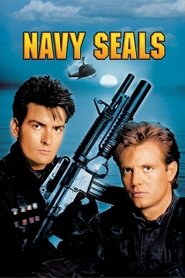
Navy Seals (1990)
Release Navy Seals 4K UHD + Blu-ray (Vinegar Syndrome Ultra)
Hemphill and Goodner trace Navy Seals from Chuck Pfarrer's script and Brenda Feigen's involvement through Orion financing and changes of writers and directors. They discuss military detail, commercial expectations, and character material reduced for action. Accounts of the actors and crew explain how performances, stunts, sound, and on-set revisions contributed to the production.
- Duration
- 1h 51m
- Talk coverage
- 99%
- Words
- 20,013
- Speakers
- 2
Commentary density
Highlights
Topics
People mentioned
- Lewis Teague 23
- Bill Paxton 11
- Alfred Hitchcock 9
- Gary Goldman 6
- Tom Cruise 6
- John A. Alonzo 5
- Michael Biehn 5
- Oliver Stone 5
- Quentin Tarantino 4
- William Morris 4
- Dan Zimmerman 3
- Martin Scorsese 3
- Francis Coppola
- Ridley Scott
- Stanley Cortez
- Walter Hill
- Bruce Willis
- Dan Aykroyd
- David Mamet
- Don Zimmerman
The film
- Director
- Lewis Teague
- Cinematographer
- John A. Alonzo
- Writer
- Gary Goldman , Chuck Pfarrer
- Editor
- Don Zimmerman
- Runtime
- 113 min
- Also on
- OneSheet ↗
- External
- IMDb ↗ TMDB ↗ Find on Amazon ↗
Transcript
20,013 words
Hi, this is Jim Hemphill. I'm a filmmaker and film historian, and I am here with... Kelly Goodner, screenwriter and author, and we have the honor of talking to you about Navy Seals. This movie was released on July 20th, 1990 by Orion Pictures, one of the great production and distribution companies of its era. Just to give everybody a little bit of context for what the movie-going climate was like in July of 1990, The other wide release on July 20th was Andrew Bergman's comedy The Freshman with Marlon Brando and Matthew Broderick. And the following week, the big new movies were Presumed Innocent and Problem Child. Presumed Innocent was actually one of three really huge hits to come out that month. The other two were Die Hard 2 and Ghost. So that was kind of what was going on in the summer of 1990. You saw the first...
title card that popped up for this movie, I think, was a Brenda Feigen production. So Brenda Feigen was one of the two producers of this movie and really is the person who kind of made it happen. She was really instrumental and it was her idea to make the film because the writer of this movie, Chuck Farr, was her client. She was an agent at William Morris and she's the one who encouraged him to write it. But it's funny, her reputation, she's not really that well known these days as a producer. This was actually the only theatrical feature that she produced. She's really known more for her credentials as a feminist activist, which are quite impressive. She went to Harvard Law School in the late 60s, and this was at a time when that school had very few women students, and the ones that were there were very kind of discriminated against. The professors really didn't even want women there. And Feigen's experiences really fired her up politically,
and turned her into this activist. In the early 70s, she was a vice president at NOW, the National Organization for Women. And as part of her duties there, she played a really key role in fighting for the Equal Rights Amendment. She was kind of tight with Gloria Steinem in those days. And in 1972, they co-founded a nonprofit called the Women's Action Alliance with Catherine Samuels. And that was an organization that was created to provide resources for women to fight sexism and discrimination in the workplace. But its real legacy is that the newsletter that Steinem created for that group ultimately evolved into Ms. Magazine. So Brenda Feigen, the producer of this movie, was kind of, you know, key part of the foundation of Ms. Magazine. Though she, in terms of the division of labor, she sort of focused on the day-to-day business of that nonprofit. And Steinem obviously really took over the magazine and sort of
used it for outreach for the organization, and then it kind of evolved into something even bigger. You know, Steinem's not the only person who is noteworthy of that era who Feigen was affiliated with. In 1972, she actually left that Women's Action Alliance to work on the American Civil Liberties Union's Women's Rights Project, and she was the co-director of that with Ruth Bader Ginsburg. That's pretty impressive. Yeah, and you can actually see... Brenda Feigen is actually in that documentary that came out a few years ago on Ginsburg, RGB. And she talks a lot about that period and their association. And so she worked on that for a couple of years. And then she went into private practice. And along the way, she had this kind of foray into electoral politics and ran for New York State Senate in 1978. She only had $38,000 to spend on her campaign. And her opponent had $600,000.
But she still nearly beat him. She lost by just 3%. But she ultimately said that losing that election was a really good thing because if she had won, she would never have gotten into show business and we would never have Navy SEALs. Yeah, we would not have the scene of Charlie Sheen in a Hawaiian shirt waking up soaked on a beach, which is a great way to start a film. Correct. Yeah, I mean, I do feel like this movie is really kind of... I know you'll talk about Charlie Sheen a lot throughout this commentary, but you really do get to kind of see Charlie Sheen in his glory. This was the height of it. Yeah, as a screen presence. I mean, he's got, he just had so much charisma and it is a great, this movie I feel like has, they almost give him several great openings. Oh, yeah. You get multiple terrific introductions to this Charlie Sheen character. But yeah, I mean, so Brenda Feigen, just to sort of,
finish off her background and get into how this movie came about, she kind of grew disillusioned with her private law practice that she was in. And after she lost that state Senate election, she was really looking for a change. And she was friends with Jane Alexander, the actress, because she was also very involved in feminist politics at the time. And so the two of them talked about starting a production company together and actually went into the initial steps of it. But before they could really get it off the ground, Brenda Feigen got this offer for a job at the William Morris Agency to work as a business affairs lawyer. This was around 1982. And, you know, Feigen basically, she felt bad about kind of leaving Jane Alexander in the lurch, but she also felt like, you know, an independent production company is a pretty risky speculative venture, to say the least. And, you know, William Morris Agency, that's a pretty steady paycheck. So she took that job. and ultimately grew into a role there as an agent and represented Jane Alexander, she represented other actors like Karen Allen, and she represented producers and writers. And again, one of her clients as a writer was Chuck Farr, who ultimately would write Navy Seals.
And right here we also have another just great scene. All this stuff of them hanging out is really what makes this movie great. I mean, the fact that he's about to do this right now, jumping off of a bridge. Yeah, this is kind of what I meant about how he gets these multiple great introductions to this character. And I do, I agree. I think this movie, you know, it's an action movie. But I feel like its strengths are really kind of as a hangout movie. Yeah, and I love a hangout movie. Yeah, I do too. And I think this is a great hangout movie. And I think a lot of that comes from Chuck Farr and his knowledge of the way these guys, you know, interact and everything like that. I mean, I think, you know, although ultimately there were other...
writers who came on board and as we'll talk about later, the actors kind of contributed and everything like that. Farr did stay on throughout the whole movie in a kind of consulting capacity. And I do think like really one of the things he brought to it was just that he knew how these guys interacted, how they talk, how they get along. And it is a great kind of movie about this group of guys. Now, this wedding scene is funny because it kind of provides a parallel to situations that Chuck Farr would often find himself in in his early days as a screenwriter. Because for a while, his day job was still being a Navy SEAL. He was a Navy SEAL and remained so until he had gotten, you know, sold a couple scripts because he couldn't afford to quit his job. So as a Navy SEAL, he was constantly missing meetings with agents and producers because he would get called away on a mission. To save the country or something. Exactly. No excuse. So he would get called away on these missions.
But he couldn't reveal the reason behind his absence, which would kind of understandably annoy people. They thought he was just like blowing off meetings or whatever. Because, you know, there's a thing in this movie. There's a line, I think, that, you know, Michael Biehn has about how, you know, you don't have to thank them because they don't exist. Right. And that was kind of the case with the Navy SEALs at this time. Like they were in the 80s, you know, they were this very secretive organization and often like other branches would get credit for what they did and stuff like that. So he couldn't tell people. what he was doing. And, you know, Feigen would get kind of annoyed with him as his agent that he was missing these meetings. But then he started to tell her these stories about the Navy SEALs. Like, he was kind of quiet and secretive at first, but ultimately she got him to open up a little bit and she just thought these stories he told her were great. And so she really encouraged him to write a script about it. Write what you know. Exactly. And she said...
If you write this script, like she thought it was such a great idea for a movie, you know, and this was, of course... Top Gun era. It was like when Die Hard was made and everyone wanted the next Die Hard. After Top Gun, everyone wanted the next Top Gun. Exactly. And this made perfect sense. Exactly. So she thought it was such a great idea. She said to Farr, you know, if you write this, I will basically leave being an agent to produce it and we will get this movie made. And that is essentially... what happened. I mean, she didn't leave the agency right away, but she initially tried to get the script made with independent money so that she could have more control over the production, and she was looking for $15 million, which is, I think, around $10 million less than what they ended up making the movie for. I think a Hollywood reporter said it was $20 million. Who knows if that's accurate, but that's what they said. Well, she was trying to make it for $15 million, and...
thought that they could do it for that um by getting cooperation from the navy the way the top gun did and all that and she found this billionaire investor who agreed to put up the 15 million dollars but then the u. s tax laws changed and suddenly the prospective investor had to restructure his assets and couldn't finance the movie so well and also with the navy you know, it's different than Top Gun because Navy SEALs are secret. Exactly. So in terms of cooperation, they can't really tell you anything. They can't, you know, it was very tight-lipped. Yeah, exactly. So Feigen ultimately, after that independent financing fell through, she decided, okay, I'm not going to chase random rich people. She decided to change her plan and go after studio financing. And that's how she ended up at Orion, where she had had sort of, you know, a previous relationship from her agency dealings.
And she kind of acknowledged at the time that this was a strange debut film for her as a producer, given her feminist background and leanings to do this guy movie. But A, she thought that maybe if it was a big commercial hit, it would open doors that she could walk through later to make all the feminist movies she wanted. And what she said in the press at the time, you know, because the LA Times and places like that were noting how odd it was that this woman who was known for her associations with Gloria Steinem and Ruth Bader Ginsburg was making this kind of movie. And what she told the LA Times was, she said, I think it is feminist, humanist to hate terrorism. It is natural and logical. I had no problem making a movie about the guys who go after these people. I may be a feminist, but I don't want to be blown up by a terrorist's bomb any more than anyone else. Yeah. Charlie Sheen said something similar, just in that that was very much the sentiment of the time. That they really thought guys going after terrorists, like the audience would be there for that.
But then at some point they started bringing on other writers, because it was the 80s when they did that all the time as just a matter of course. Right. And that came about sort of, the next writer came about sort of through the first director that they had. I mean, initially, actually, the first director who the studio approached was Roger Donaldson, who was coming off of a couple of big hits. He had done No Way Out, which was another Orion movie. And the Tom Cruise vehicle cocktail. And so Donaldson's the guy they first went to, but he turned it down. And then Feigen zeroed in on Ridley Scott as her first choice to direct. And he actually flirted with it for a while. They had several weeks of discussions with him. And he kind of wanted to do it. But for whatever reason, Orion wasn't able to make his deal. So they moved on to a director named Richard Marquand. You know, really excellent British director who had made Eye of the Needle and Return of the Jedi and Jagged Edge.
Um, and as you were saying in those days, it was kind of a common thing to like throw a lot of writers in a movie and it was common for directors to bring on their own writers. And so when Marquand came on, he wanted to bring on his own writer to work on it. And his choice was a guy named Gary Goldman, who I know you love. I know you're an admirer of his. So yes, I discovered that his birthday is the day before mine actually in researching this. Um, yeah, Gary Goldman, uh, he's, Basically, the reason he's known is because he wrote Big Trouble in Little China and Total Recall and this all in pretty short succession. And strangely, not much else that he's credited with until that Nicolas Cage movie Next in 2007. Odd. I'm sure he did a ton of script doctoring and things like that. But where he came from was he was born in New Orleans and he went to Brandeis and then studied film at NYU and UCLA and
And his first job was as assistant to Louis Malle on Pretty Baby. And he was actually only interested in art films. Like he was interested in art in general and figured that film was kind of the mass art of our time. And so he wanted to go into art film. And his only way really into the industry, he didn't have interest in studio system, but his father had a contact with Lawrence Gordon. producer and that was his only industry contact and so he ended up getting hired by Lawrence Gordon and he ended up becoming an executive at Paramount Gary Goldman and so he was kind of writing in his spare time but also while learning the whole industry and he even directed a short film Degas in New Orleans which showed at Cannes so he was very much you know the artsy guy but
He's very complimentary about this movie and about Chuck Farr. And he said that actually all of these guys were based on real guys initially, were inspired by real guys that Chuck Farr knew. And he actually got to meet them and hang out with them at least one night. But something that happened with all the guys in this movie is they were hanging out with Navy SEALs all the time. So whether it was those original guys Or they got them like eight Navy SEALs to each person got a Navy SEAL assigned to them so they could turn to them with any question, even though the answer was often, I can't tell you. So they would ask about this mission or this thing that happened. They were like, I'd have to kill you if I told you that. Yeah.
Anyway, so everyone always wanted to keep up with the Navy SEALs and show that they were tough guys, too, and trying to get into character and stuff. But they couldn't really keep up with Navy SEALs. And Gary Goldman, his one night out with them, he just went to a bar and was trying to get stories from them. And then in the morning, he realized he couldn't remember any of them. But nevertheless, he got the vibe of it. And was very complimentary about the whole thing. But then he was, as you said, Marquand's... I almost said Ross Marquand because that is his nephew who's on Walking Dead. Right. But anyway, he fell out when Marquand fell out, right? Yeah. So Marquand... Actually, I guess that's a way of getting into talking a little bit about Louis Teague, who ended up directing the movie. And...
The way he first came up as a candidate to direct this movie is kind of interesting because it actually... Teague's name came up while Marquand was still technically assigned to the movie. What happened was Brenda Feigen was visiting her brother on the set of Oliver Stone's Wall Street. Now, this was obviously a couple years before Charlie Sheen, one of the stars of that film, was cast in Navy Seals. But Brenda Feigen's brother... was friends with Michael Douglas. So he was kind of hanging out on the set with Michael Douglas and Brenda Feigen went to visit the set. And when she was on the set, Oliver Stone saw her and he knew her kind of socially a little bit from being a William Morris agent or whatever. And Oliver Stone asked Brenda Feigen to be an extra in the scene they were shooting. And so she said, sure. And she spent this long day on the set of Wall Street and there were a bunch of breaks.
And during one of those breaks, she got to chatting with Michael Douglas. And she told him that she was producing a movie about Navy SEALs. And Michael Douglas said that she should think about Louis Teague as a director. Because Douglas had just worked with Teague a couple years earlier on Jewel of the Nile, the Romancing the Stone sequel. And he really liked him. Now, of course, at this time, Richard Marquand was still set to direct. So Brenda Feigen basically thanked Michael Douglas for the... you know, suggestion, but put the idea out of her head. Then Richard Marquand has a major stroke at the age of 49. Oh my gosh. And he died a few days later, basically. And so when Marquand died, you know, Feigen, I mean, aside from being upset that this person she knew was dead, she also got worried that Orion might pull the plug on Navy SEALs because the director was kind of the all-important thing at Orion. And so now they didn't have one.
But Mike Medavoy, who was one of the execs at Orion, said to Feigen that he had an idea. And his idea was Louis Teague, the same guy who Michael Douglas had recommended. Because evidently Teague had some other project he was going to do at Orion. And they weren't going to make that movie, but they liked Teague. He was already approved. Yeah, he was already approved. Teague wanted to do it. So he became the official director of Navy SEALs. And then, of course, again, in the whole... cycle we're talking about with these writers and them getting uh you know uh you know new writers coming on of course then uh you know lewis teague had his own writer he wanted on which he was not credited on here but basically lewis teague wanted uh kevin jar who uh wrote tombstone and some other things uh he wanted him to come on and so he kind of was the next writer and as you say then gary goldman was kind of out although chuck farr
stayed on throughout even if check far wasn't technically doing writing he was on as a consultant right he was here from beginning to end well and i think they also had um sheen complimented the writer john bishop who i guess maybe he had come in as a script doctor at some point because he was there with them in virginia but you know sometimes with script doctors it's you're contracted for just a certain number of weeks or something and so he didn't get to last either so at a certain point the actors They got involved because of all these writer changes, none of whom were fired. Right. It was just contracts ran up, the person who had hired them left, whatever. The actors started getting involved in coming up with their own scenes or their own character bits or their own lines or whatever. And...
So there are a lot of things in this movie that actually made it that the actors came up with. Like Charlie Sheen's don't talk about mom line. That was a Charlie Sheen real line that he came up with. We'll get into some other things as they come up. But it was actually a really, Charlie Sheen said, a really grueling shoot too. I think partially because he had done a number of films. I'll get into that later too. But their schedule was... basically they would shoot for 12 hours then they would work on scenes just that or sorry then they would work out after a 12 hour shoot of action and whatnot then they would work out and then they would work on script stuff um until like four in the morning and then their call time was 7 a. m so there wasn't actually misbehavior they were working but it was a it was a grueling schedule
I guess we should mention one other writer who was involved with this, who is not credited, but in between Kevin Jarre and, I guess, John Bishop, was a guy named Angelo Pizzo, who wrote Hoosiers. And he was brought in kind of late in the game with the thought of kind of fleshing out the Joanne Wall Kilmer story, I think, and basically some of the character stuff, give it a little bit more emotion, because that's what he was known for, obviously. Yeah, Gary Goldman had said what he wanted to embellish was the personal life stuff. Because he was really interested in that wedding scene, which I guess was there before him. But he liked that stuff and showing how grueling the job is and the toll it takes on the personal lives. But I think ultimately, probably in the edit at some point, they were like, it's about action. It's not about the serious drama of this job. It's kind of a little more Top Gun. Well, as you've pointed out, the... this movie has a lot of actors who are kind of
big or became big, like Bill Paxton and Rick Rosovich and people like that, who don't necessarily have a ton of dialogue and, you know, or a ton of character stuff and, you know, we've both kind of theorized, like, did they have more stuff that didn't make it into the final cut? And I'm not sure, but it's certainly possible. I would sort of assume that they did. I mean, when I hear the stories about them shooting, it's always about the whole group of guys and Rick Rosovich did this and Bill Paxton did this and, you know, like, they were all equally involved and I guess just, you know, with all of the action and the romantic plot, subplot, two romantic subplots, really, with Haysbert's story, eventually you just got to cut down, you know? Also, I wanted to point out, too, that, I don't think I said this before, that initially Curran was the lead character. I mean, Chuck Farr, he was...
the inspiration for the lead character of current who is Michael bean, but he has kind of a light funny side and he has the more serious all business side. And so they ended up splitting those into two characters, which is how we get the two leads or that's supposedly the story. Um, but, uh, and then I don't know if we should talk about, uh, Wally Kilmer now. Oh, is she, uh, is she coming up? uh i think so okay well here and i'll just say before she comes on i'll just mention you know just wrap up a little bit of chuck far stuff um just mention that this yeah here we go she's about to come all right i'll hold it for later no just uh i mean the main thing is just she was a british actress and she um had been in singing detective and in my uh one of my favorite movies willow as sorsha which is where she met
Val Kilmer, who became her husband. And Val Kilmer starred with Rick Rosovich in Top Gun. And they became like brothers, supposedly. And then Rick Rosovich was also in... He was in a couple of things with Charlie Sheen's fiancé at the time that they were shooting this, Kelly Preston. He was in Spellbinder with her and in an episode of Tales from the Crypt directed by Arnold Schwarzenegger. So Rick Rosovich... And a lot of these guys tie into each other. And then Tom Cruise, who is not even in this movie, ties into a ton of the stories and circles and was attached to projects and different things too. His name just comes up again and again. Yeah, and that's true even of crew people as well, as I'll talk about a little bit later. A lot of the heads of department on this have kind of weird crisscrosses over the years. It's probably worth mentioning, as long as we're talking about Joanne Weller Kilmer,
that her clothes in this movie were by Giorgio Armani, the famous Italian fashion designer. You know, Armani was always very interested in cinema. He saw it both as kind of a good marketing tool for his fashion. Yeah, in this period, I feel like there was a lot of Armani. And he also saw it as a way of stimulating his own creativity when he liked designing for movies. I mean, probably his most famous contribution to cinema is... as the costume designer for Paul Schrader's American Gigolo. He created all of Richard Gere's suits for that movie, which was hugely influential on both other films and American culture in general in the 1980s. Another one of Armani's most important films was Brian De Palma's The Untouchables, which has extraordinary period costumes. But he designed for a ton of movies. For a specific actor, as he did here for Joanne Wally Kilmer. You know, for Inglourious Bastards, for example, he designed Brad Pitt's evening wear. And then he also contributed wardrobe to Streets of Fire, which Rick Rosovich was in. And Bill Paxton in like a small role. That came up too. Oh, okay. And yeah, and he did Christian Bale's non-Batman clothes in The Dark Knight, Schrader's Comfort of Strangers, you know, among other stuff.
I think what we're about to come up on is the reason this movie is famous. I think it's about to happen, which is the golfing sequence. And apparently one of the things that the actors decided about the script was in the trying to be Top Gun-esque, there was a scene that was too on the nose for them, which was a beach football scene, which was too similar to the beach volleyball scene in... Top Gun and they were like no no no they unanimously said no we're not doing that we gotta come up with something else so Bill Paxton actually came up with the idea for the golfing sequence and the only mischief on this movie was in the golfing sequence Because the concept is they're goofing around, you know. And the guys pretty quickly figured out how to take apart a golf cart so that they could turn off the speed regulator. You know how golf carts don't go that fast? Well, they made golf carts go fast. And at some point, Rick Rosovich drove one, I don't know if it was totally intentional or an accident, into the pond.
And briefly, Louis Teague was mad, and so was Cyril O'Reilly, who was the actor who was in the golf cart with him. But then they realized that probably is something that Navy SEALs would do, and it was great production value, and so they left it in the movie. But that was... Oh, and also, you'll like this tidbit. This is not, as I suspected, it is not the Thin Lizzy original version of Boys Are Back in Town. It is a cover by Bon Jovi. Yeah, this movie has actually quite a great soundtrack, or I guess great, it depends on your criteria, but my criteria as a guy who liked 80s and 90s hair metal, it's a really good soundtrack. And it's also got a great score. You know, the score for this movie is composed by a guy named Sylvester LeVay, who began his career as a songwriter. He wrote the Elton John song, Victim of Love, and the Donna Summer song, The Wanderer, among others. But his big claim to fame in the 70s
was writing the disco hit Fly Robin Fly, which you can hear in, you know, my favorite movie of all time, Boogie Nights. It's in Carlito's Way, a lot of other movies. And that song has the distinction of being a number one song in the Billboard charts that has only six words in the lyrics. It just keeps repeating Fly Robin Fly and Up Up to the Sky. That is not the last Carlitos Way reference you'll hear in this commentary, by the way. The original, I mean, you're going to hear more about Fly Robin Fly here than you ever wanted to know, but the original working title of the song I find interesting was Run Rabbit Run. I don't know if that was some kind of John Updike reference or what, but they changed it. Anyway, in the 80s, Sylvester LaVey moved from Europe to Hollywood to focus on film composing. And he scored a number of interesting films and TV shows, including Cobra, Mannequin, and the Wes Craven TV movie Invitation to Hell, which I know you are a fan of, as am I. He also worked as a conductor and arranger on some big movies like Paul Schrader's Cat People, De Palma's Scarface, and Adrienne Lyon's Flashdance. I wanted to say here about this actress...
People have probably seen her in a million things. Esa-Patha Merkerson. And I know her best as Miles Dyson's wife in Terminator 2. I mean, it's such a brief role and yet seared into my brain. I mean, it feels like huge, like it lasted forever. No, absolutely. It was so good. But she and she continues to work today. She's in Poker Face this season. She was also in Spielberg's Lincoln, Black Snake Moan, Radio with Cuba Gooding Jr. , Adrian Lyne's Jacob's Ladder, Bob Clark's Loose Cannons with Gene Hackman and Dan Aykroyd, and her first role was Spike Lee's She's Gotta Have It. Oh, wow. And also, she's been in 168 episodes of Chicago Med and 391 episodes of Law & Order, which also made her be a voice in the video game of Law & Order. And I knew her as a child...
because she was a regular on Pee-Wee's Playhouse as Reba the Mail Lady. Right. And she won an Emmy and Golden Globe for Lackawanna Blues and is Broadway and off-Broadway stage actress as well. And this song here, I believe this is the Strikes Like Lightning song, it was written by Giorgio Moroder, who I always find interesting. Another American Gigolo connection. Exactly. He did two songs on the soundtrack. He also did one, I think, called Shadows. and both of them are performed by Mr. Big. Oh, interesting. Oh, yeah, I guess one fact I should mention that I forgot to about Sylvester LeVay, the composer for this, is a year after Navy Seals, he would actually score another Charlie Sheen movie, Hot Shots. Oh, okay. Gosh, Charlie Sheen was really cranking them out in this period. Yeah, it's unbelievable how many things he had coming out. Now it might be...
a time to talk about Louis Teague in general. Yeah, I mean, I'll give a little bit of background on him. I mean, I've always been a huge Louis Teague fan. I think he's, you know, kind of a great unsung action director and just action director in general. He actually was in the military, which is one of the reasons that this film appealed to him. He dropped out of high school to enlist in the army when he was 17 and spent a few years stationed in Germany. When he got out of the Army, he ended up at NYU after taking whatever high school equivalency tests he needed to. And that's where he really got interested in movies. It was the film school at NYU. And he started making some student films. And I guess they were quite good and well-received. I've never seen any of them. But in 1963, his student films got him this scholarship that also got him the attention of –
somebody at the alfred hitchcock hour which was a big tv show at the time he was hired to direct an episode of the alfred hitchcock hour in 1964 when he was still pretty young guy in his 20s and he got to work with martin landau frank gorshin and uh john marley the great actor who was later in cassavetes faces and love story and the famous horses head scene in the godfather um You know, I mean, it's interesting because Alfred Hitchcock Presents and the Alfred Hitchcock Hour, those shows were actually like real hotbeds of young talent in that era. Like Hitchcock gave a lot of early breaks to writers and directors who would go on to big things. Those anthology shows seem to be like that. Yeah. I mean, this one, if you watch it, like you watch Alfred Hitchcock Presents now, I mean, you see these names like Robert Altman, William Friedkin, Sidney Pollack, Arthur Hiller, all those guys directed for Alfred Hitchcock Presents and Alfred Hitchcock Hour.
before they were known. Well, so Michael Biehn, I wanted to get into a little bit, too. And he is speaking of being spotted early. He was sort of scouted by the drama, the dean of the drama department at the University of Arizona, who just saw him in a speech tournament and gave him like a scholarship. to the drama department. So, uh, I guess he took to it in a way, um, because he left in two years to pursue acting for real in Los Angeles. Uh, and he was an uncredited athlete in Greece. You know, I'm guessing that John Travolta, you know, that's so funny. Um, and he was in that John Carpenter scripted TV movie, Zuma beach. Oh, I think uncredited. Um, and, uh, his breakout was in The Fan. Yes, great performance. Yeah, that's kind of his thing. It's like tough but very vulnerable. Yeah. It's kind of the Michael Biehn signature. Best known, obviously, for Terminator and Aliens. And he was kind of, him and Charlie Sheen around this period were both sort of considered for all the big leading man roles. And so here it's like they kind of take turns who's the leading man, even in this movie.
But Michael Biehn, best known for Terminator and Aliens, he was Demi Moore's husband in The Seventh Sign. He was in William Friedkin's Rampage and The Abyss right before this. Which, in The Abyss, he's pretty scary. Yeah. And he also plays a Navy SEAL, right? I think he's maybe a Marine. No, maybe he is a Navy SEAL in that one. He's played a Marine a couple times. Yeah. A Marine in Aliens. Yes, exactly. He's been in all the armed forces. And he's a Marine in The Rock. Yes, yes. I believe also. Yeah. After Navy Seals, he was in Tombstone, also with Bill Paxton. Jade, The Rock, as I said. Cherry Falls, which I think is kind of an underrated teen horror movie. Yeah, it's a very clever premise. It is. I liked it. He was also in Planet Terror, the Robert Rodriguez section of Grindhouse. And he was in the fake trailer for Eli Roth's Thanksgiving. Oh, wow. Supposedly. I don't remember, but that came up in my research. Huh.
Fascinating. Yeah. So he's, you know, obviously still working. He's on The Walking Dead or has been on The Walking Dead. You know, he's always still out there doing things. But this was really his moment. I mean, Terminator and Aliens and even The Abyss. Yeah. And then this. Like, that's a lot of big stuff right in a row. Yeah. And then... We have Charlie Sheen. Are we ready for Charlie Sheen? It's up to you. I mean, I have I do want to at some point kind of get back around to Louis Teague. Oh, yeah. No, go ahead. You sure? I don't want to, you know, I definitely want to make sure we have enough Charlie Sheen time. But yeah, Teague, it's kind of he had kind of a funny career early on because, you know, he did that Alfred Hitchcock hour.
And you would think, okay, you do something like that, you're going to kind of get into this circuit of directing episodic TV or whatever. But he didn't really direct anything, again, for a while. After he did that Hitchcock episode in the 60s, he kind of knocked around for a while. He ran an independent movie theater in L. A. that showed, like, underground films. And he worked at, you know, I mean, much like Gary Goldman, he was really into, like, art cinema. Like, he, you know, he... loved Godard and, you know, people like that. He worked as a production manager on the classic rock documentary Woodstock in 1970. Can you imagine being production manager? Yeah, I cannot. It's quite a tough job, I would imagine. And that same year, he was a production assistant on Irvin Kershner's Loving and a cinematographer on a movie called Bongo Wolf's Revenge, which I have never been able to see. But so he was, you know, doing all these kind of...
different jobs all around the film industry. And then in 1974, so like 10 years after he did the Alfred Hitchcock episode, he made his feature film directorial debut with an exploitation movie called Dirty O'Neill, which he co-directed. But really, I think, you know, the path of his career as we know it really began in earnest, not even so much with that movie. But it did begin that same year in 1974 when he hooked up with Roger Corman to work as an editor. I'm sure, you know, as probably a lot of people listening to this commentary know, I mean, Roger Corman in the 70s, you know, had this company, New World, that was just a, you know, I was saying that the Alfred Hitchcock show was a hotbed of talent. Corman...
you know, everybody you love practically who came out of that era, whether it's Francis Coppola, Jack Nicholson, Martin Scorsese, Jonathan Demme, Ron Howard, you know, whoever the list goes. And then sort of second tier, less famous, but also great directors like George Armitage, Jonathan Kaplan. And of course, uh, you know, Louis Teague, all these guys came out of this Corman school where Corman, you know, he just kind of would feed these, you know, he'd always output deals and would feed drive-ins and television networks. And, uh, make all of these exploitation movies where he would give his director, he'd give his filmmakers like a fair amount of freedom. Basically, as long as they stayed on budget and delivered whatever the necessary genre elements were, they could kind of do what they wanted. And like the best directors to come out of that, like Demi and Scorsese, like really knew how to sort of kind of harness those genres to their own ends. But anyway, Corman saw in Teague, you know,
a resource to be plundered because Corman loved somebody who could do multiple jobs. You know, he loved, so somebody like Teague who had all that background of jumping around, that was perfect for Corman. Um, and, and Teague was actually recommended to Corman by Martin Scorsese, who, as I said, had made boxcar Bertha for Corman. And, um, I'm guessing he knew Teague. possibly through Woodstock, because Marty was an editor on Woodstock, one of many editors on that movie. So he may have known him from that, or he may have even known him from NYU, because they were both at NYU at around the same time in the early 60s. In any case, Marty recommended Louis Teague to Corman, and Teague's main gig there for a while was he edited a bunch of movies for Roger Corman, including Monty Hellman's Cockfighter and Jonathan Demme's Crazy Mama, which is a great movie.
And then, again, in that typical Roger Corman practice, Teague started doing other jobs from second unit director on Death Race 2000 to, oh, and he did some, I guess he directed some sequence in Avalanche, and then he was an actor in Joe Dante and Alan Arkish's Hollywood Boulevard. Kind of jumping around, movie, movie, movie, until Corman gave Teague his shot at directing in 1979. with The Lady in Red, which was a gangster movie scripted by John Sayles, who would become a very important collaborator of Teague's. He also wrote Alligator for Louis Teague, and then Teague would direct episodes of John Sayles' TV series, Shannon's Deal, in the kind of late 80s and early 90s. Lady in Red, by the way, it's a movie that's really well worth seeking out if people haven't seen it. Quentin Tarantino called it the most ambitious film ever made at Corman's New World Pictures and also said that Sales' script was the best script ever written for an exploitation movie. Which is kind of funny because ironically Teague and Sales were both somewhat critical of the movie. But I think that just has to do more with their frustrations over their ambitions outstripping their resources than anything else. I think that's why Teague and Sales were kind of...
disappointed. But before I move on from that, you know, kind of a fun bit of trivia is that in Tarantino's novelization of Once Upon a Time in Hollywood, he includes himself as a character. And in this alternate history, Tarantino ends up directing a remake of The Lady in Red in 1999. That's hilarious. And one other noteworthy fact about The Lady in Red is that it was the first movie to have a score by James Horner, who would go on to be obviously one of the all-time great Hollywood composers, did the score for Aliens, which we talked about, Titanic, 48 Hours, Field Dreams, many, many other now classics are on his resume. Also, speaking of sales, Charlie Sheen had worked with sales in Eight Men Out also. Right now, they're in Washington, but they're about to go to Virginia Beach. I guess that's where Camp Pendleton is and the Naval Air Station, Oceana. That was why they were there.
And they did this movie had it was a 16 week production and they did half of it there in Virginia, including their two weeks of training and like, you know, Navy SEALs type training. And then they did the other eight weeks in Spain. So we're about to go to, you know. I don't know if I'm guessing this is exactly where, you know, the real courses. I don't know what they were allowed to show, but it's supposed to approximate it, I guess. This is, like, kind of one of my favorite things in the movie, actually, is the telling you, like, where Bean talks about how incredibly brutal the training is. You know, it's... Yeah, actually, in the production notes for this, they say dropout rates are 90%. And they describe, basically, that their workouts were... the inspiration for like the modern triathlon, that that was just, you know, a 10 mile run followed by a 10 mile swim, you know, followed whatever that went on and on and on. Like it's there's so few people who can do it. And then also the
training includes academics. I was going to say that's something else that I know Farr talks about in the notes is, you know, he says you have to learn like hyperbaric medicine, cartography, demolitions, communications. You have to learn about foreign weapons. There's like all this crazy stuff. So it's really, yeah, quite an incredible thing to become a Navy SEAL. And I love that little, that little sense of detail in this sequence is one of the things I love about the movie I feel like is what you get from that kind of write what you know aspect of Chuck Farr being involved. Even the stuff, you know, even if it's not spoon feeding it to you, you still kind of gather it. Like this is apparently a huge part of it, which is the underwater demolitions part of it. The buds training is kind of what I guess people think of most. And then I always think of kind of the GI Jane, you know, that one goes through like where it's focused mostly on the training. Will you become a seal? And apparently that's what Goldman said, um,
the script was more about that or the concept was more about that initially. And he was kind of, he says instrumental in making it like, let's make it about the actual missions because he just didn't know if there was enough in, in the becoming a seal part. And especially when you have it written by someone who's already become one, you know? But yeah, pretty, pretty amazing stuff. Nothing I would want to do. This may seem kind of obvious, but I feel like this shot is a sign of why Lewis Teague is a great director. That shot of them where he's shooting from the side, and he gives even kind of a standard dialogue scene, like all this dynamism by creating this angle where you're seeing so much stuff whizzing by in the background and everything. He actually, you know, I was, just to go back to him for a minute, in Teague's kind of history,
After he did Lady in Red, he ended up kind of coming... Again, he's got this funny circuitous career because he did end up going back for a little bit of episodic television work after doing it once in 1964. Then he comes back to it again in the early 80s because the star of Lady in Red was this guy, Robert Conrad, who was really impressed with Teague and hired him to direct an episode of this TV show he was on at the time, A Man Called Sloan. And that got Teague a couple of other episodic gigs. on shows like Vegas and Barnaby Jones. Although he wouldn't, I guess after 1981, he doesn't really return to TV again until he reunites with sales for Shannon's Deal at the end of the decade. Because for most of the 80s, he ended up working pretty steadily in features. Yeah, I mean, Haysbert, he's another example. I'm sure a lot of these guys are, who are the actors who started in TV, then had a hardy film career, and then now...
are mostly in TV and have done huge things in TV since, um, even Charlie Sheen, you know, who was like major movie star and then became the top TV star as well. Um, Charlie's about to come on being his most Charlie. So I'll talk about him, you know, so in the nineties, in 1990, I was at the height of my Charlie Sheen obsession and, but yet I have, you know, I was 10 years old, nine years old, something like that. So I didn't have access to every magazine article about it. So it was kind of fun to do this research and see, you know, I basically, I knew when things came out at the video store, what he had been doing. I wasn't following the press about it or anything else to know how many things he was doing or any stories about his personal life. So it was actually kind of fun, um,
to learn like where he came from, how he got into the industry. Cause it was a little surprising actually. I just figured, well, your dad's big movie star. Yeah. You'll be a movie star too, you know? And, um, actually, so Martin Sheen, Charlie Sheen decided he decidedly did not want to be a movie star when he was a kid because, um, Martin Sheen would take the family on all the location shoots that he was on. Like there's such a close family, super close family. And, um, So he wanted them all with him. So Emilio and Charlie, they were on the set of Apocalypse Now for eight months as kids. Charlie was like 10 years old. And... So it was exciting on the one hand to see Coppola making this classic and seeing Brando, Robert DeVault, Dennis Hopper, seeing all of these guys, these great actors. But he also saw his dad have a heart attack. And Coppola's getting sick. It was too intense. And he decided there are better ways to make a living. And so he kind of became the athlete of the family. And he was always good at numerous sports. But at the same time, his brother and his...
I'm assuming neighbors, but close friends, the Lowe brothers, Rob and Chad, and the Penn brothers, Chris and Sean, they hung out together all the time, like basically family also. And they made over 200 short films together as kids, which Charlie Sheen claims is still some of the best work Sean Penn's ever done. We'd have to see to know. But he had it. you know, as a kid, that it was clear he was the standout. And Charlie viewed himself as more the DP. You know, he still was like, I'm not the actor, I'm the behind-the-scenes guy. But apparently Terrence Malick saw these movies, some of them, and he thought they were amazing. So, I mean, if you make 200 of them, and, you know, the Penns have Leo Penn as their father, who's a director, you know, they know a bit. So I would love to see those films. I wish they would...
digitize them and release them because that would be pretty amazing but anyway so Charlie he had been a background role in Badlands and he had been like a tiny role in his dad's movie The Execution of Private Slovik but that was it that was just like as a kid because he was there you know he got put in that but so his plan was he had a baseball scholarship his plan was okay I'll go do that But toward the end of high school, he was still hanging out with all these guys, who were now pursuing their own acting careers. Plus, they had new actor friends, like Tom Cruise and Judd Nelson, who were also in the group. So that's who Charlie's surrounded by all the time. And they're all careerist, ambition, getting somewhere. And they'd turn to him and be like, so what are you up to, Charlie? What are you going to do with your life? And he was kind of like, I don't know. How long does baseball last? Or whatever. So he's kind of like...
a little stir-crazy about it. And he kind of was feeling adrift and getting into a little trouble, you know, in high school. And he was asked to leave his high school because his attendance was 33%. And they were like, you're not here anyway. You should just go. And his parents were like, you need to shape up and just get your attendance up and go back to school. And he said, I've got another idea, which is you give me a month to try to make it as an actor. And if I don't make it in a month, I'll... Go back to school. I'll do the college route. I'll stick to the plan. And he booked his first audition, which was Grizzly 2, which wasn't released for many years. Right, think about until like 2020 or something. Even though it had George Clooney in it and Laura Dern, Deborah Foreman, Louise Fletcher, John Rhys-Davies. I don't know why it wasn't released exactly. But anyway, the fact that it wasn't released, it kind of spooked him. Like he felt encouraged that he booked the job, but he was kind of spooked and...
asked his dad if he should enroll in acting classes and martin sheen said no he was like you can get trapped in that and overthinking and he felt like acting was um an instinctual thing and best learned on the job so charlie didn't study but again he had made 200 films and watched brando and watched all these people and watched his dad so yeah he said that he had previously been quoted as that he wouldn't listen to anyone but his dad about acting and he said but that was also before he worked with like Clint Eastwood and you know some other people who did know a thing or two and so then he picked like he's very complimentary about the people he's worked with and how much he's learning from everybody especially Clint Eastwood at the time because he was during promotions for Navy Seals he was shooting The Rookie yeah which is a great movie I'm a huge fan of Clint Eastwood's The Rookie I think it's a very underrated like really kind of
great Eastwood action movie and Sheen is great in it yeah Clint has some of those that are like you know he has so many classics that some aren't considered that level I feel like that one has kind of fallen through the cracks but he made it you know Eastwood made it right it was the movie he made right before Unforgiven I mean he was really kind of at the height of his powers well look at Sheen right now and he does not look to me like a 24 year old but that is how old he is in this Well, actually, during the publicity for this. So he may have even been a little younger during this. But he always seemed mature. Yeah. You know, he, like...
he would be the wild guy in Ferris Bueller or something like that. But he always had, even in Ferris Bueller, he was like giving wisdom, you know? Well, it also feels, it just feels like he ought to have been older at this point just because he had done so many things. He had such an incredible resume. You assume when people are playing a high schooler that they're actually at least 25, you know, he was actually 18 when he was playing an 18 year old. Um, so he started at basically 18 and he, In six years, which brings us to this movie, he had been in 25 films in six years, including Red Dawn, The Boys Next Door, which is very underrated. Yeah, that's a great movie. We watched not that long ago. Really fantastic with Maxwell Caulfield. Ferris Bueller's Day Off, Lucas, Platoon, Wall Street, Major League, Young Guns, and Eight Men Out. Wow.
In six years. And so just to give you an idea. And then the same year, don't the Rookie and Men at Work both come out the same year after this? Yeah, and in their, I mean, that's probably one of the 25, but Men at Work and Cadence were both independent movies that his brother and his father directed. And so those kept having financing fall through and whatever. they happen to both in while he's on this streak of never a day off, they suddenly like he has a break in his schedule. And instead of taking that day off, it's like, well, I'm like the biggest star in the world practically next to Tom Cruise or somebody. And so I'm going to go be in my brother's movie and be at my dad's movie. So he crams those in as well at the same time, because they were done remarkably fast. Um, So also in that period of time, these are the auteurs he had worked with. John Milius, John Hughes, Oliver Stone twice, Dennis Hopper, because that was a cameo he did, John Sayles and Clint Eastwood. Wow.
In just those six years. And to give you an idea, Timothee Chalamet, who's maybe in that position right now of like art film and blockbusters, he's 28 now. And he hasn't made that many films as Charlie Sheen. So, I mean, it's really hard to wrap your head around how big he was and how fast it happened. It was kind of like once he was on the scene, everyone wanted him. And they described even on shooting this that it was kind of like Beatlemania. That... you know as he's shooting these any of the outdoor scenes there were tons of people around screaming for charlie well i don't know if it's possible for people to understand now who weren't there the seismic impact the platoon had when it came out which is really the thing that kind of made him a star and i mean that movie was like you know it's hard to imagine now anyway because every once in a while now you'll have something like you know barbenheimer you'll have like some phenomenon where for a minute a movie or a couple in that case two movies
become the center of the cultural conversation. But when Platoon came out in 1986, you know, and you didn't have streaming and you didn't have social media and you didn't have so many of the entertainment and leisure options that you have now, movies were so much more central to the cultural conversation. And Platoon was, you know, I mean, it's hard, again, hard to imagine like a serious auteur driven movie like that in a way that, that was, I was watching it and I was like an eight-year-old girl. It was promoted on MTV. Yeah, it was huge. It was a serious, awkward, driven movie, but because it had all these cute guys in it. Right. And Young Guns was like that too in terms of the bunch of guys in one movie. It became this blockbuster because it was like it had the serious adult audience, but it also appealed to teenagers.
Again, I remember the VJs on MTV promoting that movie. And Sheen was, he instantly became a megastar because of that. Yeah, and apparently he, you know, he said like he knew his father was famous growing up. At first he didn't know it and he would go to the grocery store with his dad and be like, oh man, you have so many friends. Because people would come up to him all the time and he's like, I don't know these people, son. And he saw Emilio go through it and he was, it's still... did not prepare him for when it happened to him. He was still very taken aback by it. And I think didn't have a ton of time to get used to it because it was just one movie after the other. So he rarely had any downtime. And when he did, he couldn't go to a regular bar anymore without people coming up to him all the time. Also regarding Platoon, Emilio had been offered that
role previously when it had different financing, which fell through. So Charlie was already familiar with it from Emilio. Um, and then when, um, he took it, he was flown back to the Philippines, the same exact place he had been with his dad doing apocalypse now. And he almost died there too. Just like his dad, not from a heart attack, but he, um, fell out of a helicopter, started to, and was saved by actor Keith David. who they ended up putting in Men at Work, I guess, as a thanks for saving my life. And then Emilio almost died. I mean, they say saved his life. I assume that means he almost died on Apocalypse Now in quicksand and was saved by Lawrence Fishburne. Yeah, I've always wondered if Oliver Stone partly cast Charlie Sheen and platoon as a kind of echo because it does carry these associations with it. Charlie, you know, he does seem so much kind of like a young Martin Sheen and it gives it this kind of nice little parallel. Yeah. Well, and it's funny too, because, um, you know, he's, he's playing the action hero and the military hero here. And then he's about to do hot shots, which is, you know, usually the parody of something comes quite quickly.
later down the road. And it was like right on the heels that he was doing hot shots, but he really liked airplane and he liked those kinds of movies and had shown it to his parents and like he, they liked it a lot. And so he felt okay about it, but he was a little nervous about doing comedy, which is ironic cause he ends up on TV being, you know, this huge comedy star. But, um, one thing that was fun that I found in the promotional materials was it just said, you know, something about hot shots coming up, starring, Charlie Sheen, Carrie Elwes, and George C. Scott, who, as we know, was not in Hot Shots. But I'm guessing he was attached to probably the Lloyd Bridges role. Yeah, yeah. Which would have, you know... I mean, I guess it would have been a little Dr. Strangelove-esque. Mm-hmm. You know? You don't think of him as a funny guy, but he was funny in that. Oh, yeah, absolutely. Hilarious. Other things Sheen was working on at the same time that he was promoting Navy SEALs that were not even movies was he was setting up a production company...
with Howard Kazanjian. Uh-huh, yeah. We're sort of the Jedi producer, right? Right, right. And Charlie's like a huge Star Wars fan. And so one of their projects they were gonna do was The Firm. Oh, wow. So at that point in time, they had the rights to The Firm, which ended up starring Tom Cruise. Yeah, Sidney Pollack and Tom Cruise. Yeah. And he was also compiling a reel and planning to direct, because of course his brother had just directed, his father had just directed. And so he had... He had those 200 films they made, but also a music video. And he had done a documentary on the homeless called One Family. And he was also trying to get a publisher for his book of poetry called A Piece of My Mind with illustrations by director Adam Rifkin. Who did the chase with him later. Yeah, exactly. And so he said it was turned down by every publisher that existed. And so he had kind of watered it down to make it more acceptable.
I don't really know what happened with it, but in 2011, he had made a statement that it was 20 years ahead of its time, so he felt like it should be ready now. So I don't know where it is now, but I would like to hear it. And he was also doing voiceovers for commercials, which was pretty early. I mean, again, usually that's for somebody who's like a statesman. His father was doing them. Charlie, out of the gate, was like, no, I'm doing those. And... His dad turned him on to that as great money that wasn't going to put him through the wringer like all of these movies were, you know, that he could do in an afternoon and not for, you know, 16 weeks in Spain. Right. So that's... I have a lot of other fun facts about Charlie, but we don't need to talk about them now. Okay.
Well, I guess, you know, I kind of can go back a little bit. I know I've got a lot of, much like you have a lot of Charlie Sheen material, I've got a lot of Louis Teague material to kind of jump back and forth with. Just to give people, again, a little more context for Teague and his career. He, you know, so I mentioned that he basically in the 80s pretty steadily worked in film. His second movie was Alligator in 1980, which, as I mentioned, another terrific John Sayles script and fantastic lead performance by robert forster that serves as a kind of companion piece to his later turn in tarantino's jackie brown um but again in keeping with this whole thing of teagues where he would kind of kind of have this variety filled career the same year he directed alligator he was also a second unit director for sam fuller's great world war ii epic the big red one
Was that just because he was a huge fan of Sam Fuller? I don't know. I actually don't know how that came about. With Teague, it's hard to tell. It's hard to know. I don't know how that came about or if he... I don't know. I really don't know how he ended up on that job. But after that, after Big Red One, he had a string of really solid genre movies for a few years where I think you can see his corpsman training kind of kicking in and being applied. to these slightly bigger movies. He was always really good at maximizing his resources and creating these movies with attention, just like mounts and mounts. In 1982, he directed this vigilante film with Tom Skerritt called Fighting Back. It's really good. And then the year after that, he helmed the Stephen King adaptation Cujo, which is probably one of the movies he's best known for. Teague was actually a last minute replacement on Cujo. It was begun by Peter Medak, the director of The Changeling and The Ruling Class, among many other movies.
But there were creative differences, I guess, and Medak left Cujo two days into shooting, taking his cinematographer, Anthony Richman, with him. So Teague stepped in, along with cinematographer Jan de Bont, who at that point was very early in his American... I didn't realize he did Cujo. Yeah, it was very early in his American career. It was kind of after he had done this series of Dutch films with Paul Verhoeven. And so de Bont and Teague did Cujo together, made a really terrific horror movie. It's, you know... relentless and grueling thriller that i think has what in my opinion is d wallace's best performance and she was coming off of the howling in et so that's you know really saying something um you know cujo did pretty well when it came out um but it had a really important fan
in Stephen King, who thought that it was one of the best movies. Who did not even approve of Kubrick. No, exactly. King didn't like The Shining. But he did like Cujo. He thought it was one of the better adaptations of one of his novels to that point. And so Teague, because off of that, got hired to direct another Stephen King film, Cat's Eye, which was this anthology movie that King wrote adapting some of his short stories. Cat's Eye came out in the spring of 1985. And by the end of the year, Teague had another film in theaters, Jewel of the Nile, the movie I mentioned before, which was the Romancing Stone sequel. That movie gave Teague a massive hit on his biggest budget to that point, somewhere around $25 million. And so that really was kind of a big, big, big movie. Technically, on his resume, this is his next movie, Navy Seals. But he actually made a movie in between them.
He directed this Jay Leno, Pat Morita action comedy. Collision Course. Yeah, Collision Course. But that movie, even though he shot it in like 88 or something, it didn't come out until 1992. It was kind of a notoriously troubled production that ran out of money and was never properly finished. And so it didn't come out until 1992 when Paramount just kind of sent it straight to VHS. But Teague, again, around the time of Navy SEALs, He went back to television and John Sayles for Shannon's Deal, which was a great legal drama on NBC that only lasted a couple seasons, but, you know, was about as good as you would assume a legal drama written by John Sayles would be, which was great. Where do we find that? Yeah, I don't know if it's available anywhere, but it's really, really good. And Teague directed, I think, a few episodes of that along with his old Roger Corman colleague, Alan Arkish. So that's definitely something that's...
worth checking out if you can find it anywhere. We're about to get to Dennis Haysbert's death, which might be a good time to talk about Dennis Haysbert, who, speaking of the voiceover work, usually being from elder statesmen, we hear him practically every day as the spokesman for all state insurance. You hear his such a recognizable voice. But he was born in California, the son of a sheriff. and studied at the Pasadena branch of the American Academy of Dramatic Arts and fell into a ton of TV work. I mean, he was on everything. Laverne and Shirley, the Lou Grant show, I mean, Buck Rogers, everything you can imagine in that period. And around the time of Navy Seals, he had a recurring role on what was probably at that time my favorite TV show, Just the Ten of Us, which was a spin-off of The Growing Pains. Yeah.
And he had also, his first big role in a movie, because mostly it had been TV, maybe some TV movies, but his first big role in a movie was with Charlie Sheen in Major League. He was Pedro Serrano, the Cuban player who was into voodoo. Yeah, yeah, yeah. And so that was a really funny role. And then, of course, he's in the sequel also. But that film role came 11 years after his first TV credit. And then... during promotions for Navy SEALs, he was filming Love Field as Michelle Pfeiffer's love interest, which at that period in time, to be Michelle Pfeiffer's love interest, you were big time. Yeah, great movie. And that movie, that's a great movie directed by Jonathan Kaplan, another Roger Corman alum. Of course. And also a late movie from that incarnation of Orion Pictures. Dennis Haysbert, I mean, he's been in a million things, but among them, Heat, Waiting to Exhale, Love and Basketball,
Absolute Power, Far From Heaven, Jarhead, Dear White People, and recently Flamin' Hot, which we just saw. He was also in the major miniseries Queen with Halle Berry, which I talk about a lot. I watched that a lot as a kid. And Return to Lonesome Dove. And then he, like Charlie, was in a couple, and as Epitha Merkerson, he was a recurring character, or a regular on TV series The Unit. Yeah, that's a good show. And also, he was the president of the United States on 24. Also a good show. Which I think is really probably what made him... Yeah. Everybody was aware of who he was once you play the president. It's such a popular show. The unit was a David Mamet show. Yeah, yeah. So anyway, terrible that we're having to lose him here. But... then I guess I should maybe talk about some of these other Navy SEALs that we've got, which my first thought when I rewatched this movie was...
like you were saying, did they get cut out? Because to me, Rick Rosovich and Bill Paxton are so huge. I think I might be the biggest Rick Rosovich fan in the world. I was going to say, I am as well a Rick Rosovich fan, but I do think, yeah, at this time, certainly, obviously, Bean and Sheen were the big stars. I don't know that Rick Rosovich and Bill Paxton were that well-known to the general public. They weren't. When I did the research, I realized, okay, you know, first of all, it wasn't the time where people could watch things a million times, as much as they can now. Mm-hmm. in terms of re-watching The Terminator and other things that Rosovich had been in. But Top Gun, I think people were watching that volleyball scene with Rick Rosovich quite a bit in this period. But interesting thing about him, well, the first interesting thing I learned was that his brother was a movie star.
Two, Tim Rosovich, who, because I'm not a football person or a sports person, I was completely unaware of this, but it's his older brother by 11 years, and he was ranked 20th on the greatest high school defensive football players of all time. Played college at USC, then he played in the NFL for a number of teams. He was selected third in the draft for the World Football League, so I assume that means you're pretty good. And then he fell into movies. And so he played Detective Noodles in Cheech and Chong's Nice Dreams. He played Shelley Long's boyfriend in Night Shift. I know you're a fan of that one. He was also in Avenging Angel, Johnny B. Goode, The Ninth Configuration, and Long Riders. And a ton of TV episodes from 1978 to 1991. I guess Walter Hill must have liked him because he was in Streets of Fire, too. Yeah, yeah, yeah. So...
I assumed that Rick Rosovich would have gotten into the business. I'm sorry, Rick Rosovich. I got confused a second about the Rosoviches. Well, you would think they would both be in Long Riders, but I guess Rick hadn't quite come up yet. But as far as I know, he's not in there. Maybe he's in there uncredited. But anyway, I would have thought like his brother helped him get into it. But actually, Rick had planned to become an art director. So he went to art school. He was an art major at Sacramento State College. And then he moved to Hollywood. And his first week here, he auditioned for a non-union karate film that paid $90 a week. So it wasn't like he wasn't getting a SAG card. He wasn't getting a lot of money. But it led him to work with drama coach Vincent Chase, which kind of makes me wonder if that Entourage character is named after him. But Vincent Chase's other students were Michael Biehn and Bill Paxton. So again, we're back in the same circles.
Rick's credits include Lords of Discipline, which also had Bean and Paxton. And they were both also in The Terminator. Right. Together. So those three, you know, I guess you get a bundle deal. Yeah, I'm sure as maybe you're going to talk about, Paxton also had sort of a background in art direction and production design. Yeah, so I'm not sure if that's, you know, part of how they got to know each other. But Rick was also in Losing It. And Top Gun, both with Tom Cruise, who comes up again and again here. And he was the love interest in Roxanne. I mean, that was a pretty huge movie. He was also in The Morning After. Great movie. As I mentioned, he was in a couple of things with Kelly Preston. And I had totally forgotten that he was the lead on that show Pacific Blue. It was pitched as Baywatch on bikes. Yeah, yeah, yeah. And he was in the first season of ER. And in three episodes of Fantasy Island as three separate characters. Wow. Yeah.
And then the other character who makes it out at the end of this is Ramos. And that is played by Paul Sanchez, who he was also also an athlete who got an athletic scholarship to the University of Hawaii. And he also got a full scholarship to the Stella Adler Conservatory in New York. So who's like a lot of these guys is kind of doing both athletics and acting at the same time. And his first role was in Platoon with Charlie Sheen. So he also did the training on Platoon, did the training on this, I'm assuming. Yeah, Platoon was kind of infamous in terms of the training Oliver Stone made everybody go through. He made them go through this really grueling boot camp with Dale Dye so they would know what it was like to be an infantryman. Yeah, Charlie Sheen said that was much harder than this. Yeah, I mean, that one is sort of famously arduous. And then after that, it became the norm for movies that if you wanted to be...
legit you had to kind of put your actors through that but i don't think i don't think anybody put him through as hard of a situation as stone did like stone really yeah i mean in that case he had been through it yeah in real life so i don't imagine he had a lot of sympathy but um paul sanchez was also in oliver stone's born on the fourth of july and he was also in zemeckis's castaway and a lot of tv uh one of the other guys on the team is cyril o'reilly um who was he he does not make it out to the end, I don't believe, in this movie. But he was in Airplane, Bloody Birthday, Porky's, Porky's 2, Baja, Oklahoma, Cat Shea's Dance of the Damned, and Across the Tracks, that early Brad Pitt movie with Ricky Schroeder, and a ton of television, of course. So I think, yeah, here we have all of them. But again, these scenes, when I was a kid...
I was not interested in the actual missions. I was only interested in these kind of scenes where they were just hanging out. Yeah, no, I mean, this stuff is great. And it's great because you've got such a great ensemble of actors. Yeah, who were, again, spending all their time together and were genuine friends. So I think that that helped quite a bit. Yeah. I mean, looking at Paxton in this scene and talking about his background in art direction and production design, I actually... learned recently that Paxton, you know, he worked in the art department. I don't know if he was credited, but he worked, according to Jack Fisk, the production designer, Paxton worked in the art department on De Palma's Carrie. I mean, he worked on some, like, big movies as a kind of art department PA. Yeah, which might be a good time to talk about Paxton. Yeah, no, what do you know? I mean, I don't actually know that much about his background aside from that, that he had that kind of... Well, he's Texan, so he's raised in Texas, but his dad was...
kind of a part-time actor. So that was not his main job or anything, but he was kind of interested in acting, did acting on the side. So I'm guessing that's where the interest came from. And then he was a foreign exchange student to London's Richmond College where he bought camera equipment and started making his own short films. And he directed and starred in a short film called Fish Heads, which was shown on SNL. You know how they would show like the Albert Brooks movies? Yeah, I remember seeing, I saw that movie. Yeah, and so it was kind of a cult classic. But he was again, I assume he was more interested in behind the scenes. Maybe he was interested in both. So his first actual role was in Stripes with Bill Murray. And then right after were those horror movies that we've seen, Butcher, Baker, Nightmare Maker, and Mortuary. Yeah, Mortuary is really good. Yeah, but he had it. He's one of those guys where you think, why did it take so long? Because it was so clear that you had it from the start. He also studied under Stella Adler at NYU. But yeah, so before this, when he was not considered a star, really, he had already been in classic movies.
roles really like in the Terminator he's the blue haired punk that gets his clothes stolen in Weird Science he's the bully brother Chet Chet yeah in Aliens he's Hudson who is you know has all the best moments practically in Aliens all the laughs at least in Catherine Bigelow's Near Dark but it wasn't until 1991 in Carl Franklin's One False Move with Billy Bob Thornton that he broke out yeah I don't understand it. I can't make any sense of it. No, I don't know. And then the year after that, he was in one of my very, very all-time favorite movies, Walter Hill's Trespass, which he's great in and obviously went on to be working on with James Cameron and True Lies. He was also in Commando, which I do not remember. Next of Kin. The Patrick Swayze movie? Yeah, True Lies, of course. Apollo 13, Twister, Titanic.
A Simple Plan, Nightcrawler, which is one of the greatest. Great movie. Edge of Tomorrow, Tom Cruise movie. But here are some crazy facts about Bill Paxton. He was in the crowd when JFK was shot. And you can see pictures of him. Wow. He was sitting on someone's shoulders because he was just a kid. A guy said, you know, because he couldn't see because he was short and a kid. A guy put him on his shoulders. So he's in pictures of that day. Wow. He is also, in movies, been killed by a Terminator, an alien, and a predator. Which are franchises that Lance Henriksen is also in. This is a weird fact. He learned to speak German for a role in Pat Benatar's Shadows of the Night music video. That seems like a lot of... Yeah, it's a lot of work for a music video. Yeah, an actor prepares. Yeah. Here are some interesting roles that he might have had. He turned on the lead in The Da Vinci Code.
which Tom Hanks took, because he had already signed up for Big Love. He was close to being cast as Darkman, the Rocketeer. Darkman, by the way, was written by Chuck Farr. It came out the same year as this. This was his first produced screenplay, but right after it, Darkman, Sam Raimi movie came out. Yeah, it's amazing how much all these guys are in the conversation on anything being made at the time. But again, we didn't have as many channels. We didn't have as many... you know, studios and smaller studios and, you know, not as much content, period. He almost played Jeff Goldblum's role in Jurassic Park. He was offered the parking attendant in Ferris Bueller, Stay Off. Eric Stoltz's role in Pulp Fiction. I'm not sure if these were considered for or offered. But Steve Guttenberg's role in Cocoon. Tom Hulse's role in Parenthood.
Matthew McConaughey's role in A Time to Kill, Kurt Russell's role in Tango and Cash, Rowdy Roddy Piper's role in They Live, and the role of Proctor in Police Academy movies. Which I can imagine, because he was kind of like the wild guy and the funny guy. I can see how, but also a burgeoning lead actor. It's kind of interesting how all those things were circulating at the same time. And he's been in five movies with Michael Biehn. Lords of Discipline, The Terminator, Aliens, Tombstone, and Navy Seals. And also, for years, I thought the actress Sarah Paxton was his daughter. And I was told, no, they're not related at all. But then when I did my research, I found out they're seventh cousins. So you were sort of right. I was sort of right. I was distantly right about that. So now we're starting to get into the climax, the climactic mission.
here going back in and that was actually previously some beautiful work by John Alonzo oh yeah well John Alonzo yeah I should talk a little bit about him the cinematographer of this movie because he's one of the great directors of photography of his generation you know he's got several flat-out classics on his resume including Harold Maude Chinatown the Bad News Bears and Brian DePaul Scarface which is Probably his best movie, in my opinion. Like Louis Teague, he did some early work for Roger Corman. His first director of photography credit is on the 1970 film Bloody Mama, which Corman directed. John Alonzo, kind of a reverse situation of like Bill Paxton or Charlie Sheen. He actually began as an actor. Oh, interesting. He began in front of the camera. He was from Dallas, Texas. And in Dallas, Texas, as a puppeteer, he created a character for a local kids TV show called Senior Turtle.
And Alonzo actually, his dream was to bring Senior Turtle to a wider audience. And he came out to LA and tried to launch the character on TV here, but it didn't really take. In the 1960s, John Alonzo kind of kicked around in small movie and TV roles, including the most famous film he was in was The Magnificent Seven. He was in that. But he also had guest spots on shows like Twilight Zone, 77 Sunset Strip, and again, The Alfred Hitchcock Hour. In fact, the episode of The Alfred Hitchcock Hour that John Alonzo was on was written by James Bridges, who would go on to direct Paper Chase, China Syndrome, Urban Cowboy, Bright Lights, Big City, a lot of great movies. But Alonzo, during this period, he was really mostly supporting himself with still photography. He had a skill for that, and so in between acting jobs, he was getting work as a photographer, and ultimately he decided that he was going to study the great cinematographers and try to follow in their footsteps. So his big break as a camera operator came working for cinematographer James Wong Howe on Frankenheimer's 1966 thriller Seconds, which is a really incredible movie and obviously some of the best cinematography ever. So Alonzo was the camera operator on that.
And then he also worked as a documentary filmmaker a little bit in the late 60s. He did some documentaries for National Geographic and places like that. And I think the documentary background kind of prepared him for that run-and-gun style that Corman favored, made him an ideal person for him. But he got out of that Corman world and into the mainstream pretty fast. Sometimes DPs do. They can really skyrocket quick. Yeah, I mean, excuse me. After he shot Bloody Mama, he did the cult classic Vanishing Point. But then that was followed by Harold and Maude. Harold and Maude within a year or two after Bloody Mama. Which is still, people say, I mean, one of the most influential films on current filmmakers. Yeah. New, young filmmakers. 100%. Absolutely. It's many, many people's favorite movie or one of them. And he followed Harold and Maude after that. He also did Brian De Palma's Get to Know Your Rabbit.
which was De Palma's first attempt at studio filmmaking and wasn't really successful, but obviously it established the relationship that would bear fruit in the masterpiece Scarface a little over 10 years later. Another one of Alonzo's key creative partnerships was with the director Martin Ritt. He shot Sounder for Ritt in 1972, and they would go on to collaborate on several films throughout the 70s and early 80s, including Casey Shadow and Norma Rae. Alonzo got the job on Chinatown, which scored him an Oscar nomination when director Roman Polanski fired his original DP, Stanley Cortez, over Cortez's refusal to shoot Faye Dunaway without diffusion. Anyway, that's the Hollywood lore, is that Cortez came from the old Hollywood tradition. I guess Polanski's ideas were a little too newfangled for him. So Alonzo got that job and was nominated for an Oscar for it. Some of Alonzo's other noteworthy 70s films include Lady Sings the Blues with Diana Ross and John Frankenheimer's political thriller Black Sunday. He was also one of many cinematographers who worked in some capacity on Spielberg's Close Encounters of the Third Kind.
He made his directorial debut in 1978 with a comedy I'm a really huge fan of, FM, which is set in a radio station and has this great rock and roll soundtrack. It's often wrongly attributed with inspiring the TV series WKRP in Cincinnati. But in fact, I learned while researching Alonzo for this that that TV show, which was created by the guy who directed, Hugh Wilson, the guy who directed Police Academy and a bunch of other movies. Oh, wow. that TV show was already in the works before FM came out. So they have a lot of similarities, but actually not related. Um, Lonzo also directed a number of TV movies in the late seventies and early eighties, which he also shot as a DP. He had a reputation for being extremely efficient. You know, I don't think he ever left that background from Corman and documentaries behind. And he was known as a guy who didn't use a lot of extraneous equipment, but could still get really stunning visuals. Um,
Well, I mean, look at this right now. Just having the fire back there backlighting them. Yeah. He was often a DP who first-time directors would rely on to help them out on the visual side of things. I guess the most notable example being Richard Pryor on Jojo Dancer, Your Life is Calling, which is a really stunningly photographed film. Alonzo got repeat business from directors Michael Crichton and Gary Marshall. He shot both Nothing in Common and Overboard for Marshall in the 80s. And the same year that Navy Seals was released, 1990, Alonzo had two other films in theaters, the Mike Figgis noir, Internal Affairs, and William Friedkin's horror film, The Guardian. Internal Affairs is a particularly incredible-looking movie. The Guardian kind of is, too. It's got that sort of ethereal tree magic stuff going on. Yeah, no, it's a really good-looking movie. His other important credits include Blue Thunder, Steel Magnolias, and Stephen Freer's live TV remake of Failsafe.
in 2000 that starred George Clooney. Alonzo actually won an Emmy for that. He was kind of an innovator in television cinematography. In 1994, he shot a miniseries called World War II When Lions Roared that was the first TV movie to be shot in HD. Although at that time, it wasn't broadcast in HD because no one had HD TVs yet. They were all still NTSC standard definition. But anyway, he died in 2001 and left behind a pretty remarkable legacy. That kind of makes me think of the producer, the other producer, Bernard Williams, who he's kind of like a Teague who did a bunch of different jobs before he fell into being a producer. He started in the film industry at age 15 in England as a production assistant, then advanced to assistant director, to location manager, to production manager by age 27. And during that time did Billy Budd, Chitty Chitty Bang Bang, Cartoon, and Alfie. And so that's by age 27. Then he was production supervisor on that show The Prisoner, which is very well thought of. And he spent four years with Stanley Kubrick and his associate producer on A Clockwork Orange and Barry Lyndon. And after that, going out on his own as producer...
He did Flash Gordon, Ragtime, Manhunter, Who's That Girl, and Wisdom, directed by Emilio Estevez. And Dirty Rotten Scoundrels was around this time. And he had worked with directors Fred Zinnemann, David Lean, Milos Forman, Robert Wise, Irvin Kershner, Richard Donner, and Michael Mann. So he was pretty prolific. I mean, maybe not as many as John Alonso, but he had been in some quality stuff. And... produced some quality stuff and worked on it. And after this one, Navy Seals, he did What About Bob, House Sitters, So I Married an Axe Murderer, Star Trek Generations, Blood and Wine, Bowfinger, The Score, Daredevil, and a 2006 version of Charlotte's Web. So he's no slouch. I guess, you know, looking at all this action, I should also talk about the stunt coordinator, Bud Davis, because he's
like i mean you got a lot of the people in this movie are really like top tier yeah people in their fields um bud davis began as a stunt man in the 60s he he had originally worked in finance but he hated wearing a suit and tie so he quit his job after six months and started working as a bartender wow and he was a bartender in a bar that was across the street from warner brothers from the war brothers lot wow and so he met all these stunt guys who would come in drinking after they would be shooting during the day and he really got drawn to that world and became friends with these stunt guys And one day when they needed an extra body one day, he jumped in and did a stunt. And then he just kept on doing it after that. He did stunts on some great cult movies in the 70s, like Race with the Devil and Hollywood Man. And he was the stunt coordinator on the original Town that Dreaded Sundown, which he also played the killer in. Oh, wow. Some of his major credits... He's the guy with the sack on his head? He's the guy with the sack on his head in Town that Dreaded Sundown. And...
Some of his major credits as stunt coordinator include Michael Mann's Manhunter, which you just mentioned, the original Child's Play, Forrest Gump, and Tarantino's Inglourious Bastards. He worked with Charlie Sheen again right after Navy Seals as the stunt coordinator for Minute Work that Emilio Estevez directed. And he also sometimes uses stunt coordinator, but he was also a stunt man still around this time in movies like Tango and Cash and Dan Aykroyd's Nothing But Trouble. Oh, wow. As of this recording, he's still alive and well and retired in Durango, Colorado. That makes me think also about Charlie Sheen's stunt double in this. Eddie Braun, who had also doubled for Emilio on Wisdom. And he has nothing but raves for the entire Sheen family and says they're, you know, one in a million or however many they are in a million. And said that after a...
stunt day they would always call the next day to check on him make sure he was okay and that that's you know not the norm so um also he uh you know he was kind of instrumental in deciding what Charlie would do and what he wouldn't on this movie and um Charlie and I assume the other guys did get certified for scuba diving for this movie but they realized that like In The Abyss, for instance, the masks, you could see the actors' whole faces so they could act, you know? And real Navy SEAL masks, you can't see their faces. You can see their eye color, maybe, but nothing else. So they were like, we're not putting the actors through that. There's no point. We're using stunt people. So actually, the underwater stuff here is not any of the actors, even though they did train for that kind of thing. And Charlie Sheen, even though he's lived in Malibu his entire life, he said he's been to the ocean, like,
12 times. And he likes fishing on the ocean. But he's afraid of sharks. He's like, I don't trust it. I don't trust what's in there. Doesn't want to be in the water so much. Well, didn't he... Now, am I correct? Did he turn down Point Break because he didn't want to be in the water? Or was that just... I don't remember if it was turned down or was just considered for. I think he turned it down. Because, yeah, he's not going to be in... He's not into it. He's not going to do that much being in the water. But that's actually... Some of the funner things that I have here are, like with Bill Paxton, some of the things that Charlie Sheen was considered for or turned down. He had considered the role that Johnny Depp took in A Nightmare on Elm Street. He had really wanted it, but they didn't have the money for him because it was a low-budget thing. He turned down Ralph Macchio's role in The Karate Kid. He was considered for Tim Robbins' roles in Bull Durham and Shawshank Redemption.
interestingly, quite a big number of years in between those. He was considered for the Michael J. Fox role in Back to the Future. Sean Penn's role, here it is, in Carlito's Way, coming back around. Emilio's role in Mighty Ducks. And him and Michael Biehn were both considered for Michael Keaton's role in Batman. Because, again, these were just the top guys of the time. And he was considered for both of... Keanu Reeves' roles in Point Break and Bram Stoker's Dracula. Tom Cruise's role in The Firm and Cocktail. William Ragsdale's role in Fright Night. C. Thomas Howell's roles in The Hitcher. And Gary Oldman's role as Lee Harvey Oswald in JFK. And Andy Garcia's role in The Godfather Part III. And turned down Goodfellas, the Ray Liotta role. Wow. Also turned down Guy Pearce's role in Memento.
Russell Crowe's role in A Beautiful Mind and Woody Harrelson's roles in White Men Can't Jump and Indecent Proposal and Jeffrey Dean Morgan's role as Negan on The Walking Dead, which would have been really interesting. I mean, I love Jeffrey Dean Morgan in that, but Charlie Sheen in that would be pretty interesting. And supposedly he auditioned for but did not get John C. Reilly's role in Chicago, which would have been crazy because he's singing and everything. And Andrew McCarthy's role in Pretty in Pink. Interesting. So, yeah, I... so often wish that I could see both versions, you know, or all the versions. Yeah, absolutely. I should talk a little bit about the guy who was in charge of putting this all together, which was editor Don Zimmerman. Like John Alonzo, he started out working with Hal Ashby as one of his early collaborators. Zimmerman began as a music editor. He had actually studied to become a veterinarian. And then he,
went to Vietnam, he was a Vietnam veteran, and he switched gears professionally when he got back to the States to work as a music editor. And he worked on some pretty important movies as a music editor, most notably Arthur Penn's western Little Big Man and The First Godfather. He went to work for Ashby as an editorial assistant on Ashby's directorial debut Landlord. Ashby had started out as an editor himself, of course, and had won an Oscar for editing. for Norman Jewison's In the Heat of the Night. And he clearly had a lot of respect for Zimmerman's talent because Zimmerman would ultimately work on six films for Hal Ashby, including Harold Maud, Shampoo, and Being There. He was nominated for an Oscar for editing Ashby's Coming Home, which was his first film in the lead editor position. Another filmmaker who really liked working with Don Zimmerman was Sylvester Stallone. He hired him on Rocky 2, 3, and 4, Staying Alive, Cobra, and Over the Top. And
Of course, on Cobra, he was working with the music of Sylvester LeVay, the same composer who made this film. A year after Navy Seals, Zimmerman cut one of my favorites, Barbra Streisand's The Prince of Tides. And he eventually became known largely for comedies. He edited Ace Ventura Pet Detective, a couple of comedies for Michael Ritchie, Diggstown and The Scout, Galaxy Quest, and a couple of Night at the Museum movies, among others. He's the patriarch of a kind of filmmaking dynasty. All of his kids... are in the film business. His sons, Dean, Danny, and David are all editors. Wow. His daughter, Debbie, is a costumer, and his daughter, Dana, works in post-production. I wonder where all those Ds came from. You know, on this, I imagine, not that he hadn't done big jobs before, but this movie supposedly had seven units as opposed to just first and second. Yeah, I mean, almost like most action movies have multiple units, but yeah, this one had, like you say, up to seven at different times, going at different times. There were...
know there are all these different units used to capture all the different kinds of action required for the film so in addition to the standard second unit you've got you know um an aerial unit an underwater unit right and so on and i mean you know the movie did have limited cooperation and assistance from the u. s navy it was a little tricky because like you were saying the nature of the seal's work was so classified Um, but the Navy did allow the film to shoot some key scenes and restricted areas on the Norfolk, Virginia base and training grounds. Um, but then I think you were mentioning they ended up in Spain. Yeah, this was Spain, um, subbing for Lebanon, but they, this is Cartagena or they did, they used a few different cities, but mostly it was Cartagena and they, it was an ancient city and they had a lot of rubble and they let them blow it up. And so, um, but the Spanish Navy also gave them a lot of resources. So, um,
You know, whereas the American Navy couldn't, the Spanish Navy was, like, fine. Well, in the Spanish Navy, a lot of their, you know, hardware had been bought from the Americans. Right, yeah, I'm sure. It's like the, you know, planes and ships and stuff actually resembled ours. So it was a convincing doubling. Also, apparently... this area was a real melting pot for people. So they had not just Spanish, but they had African and Arab and different kinds of people. So any kind of extra they wanted, they could have for whatever kind of scene they needed. And yeah, so they had actually considerable resources over there. The production designers who were kind of responsible for making all these locations work, there's actually two credited production designers in this movie. A guy named Guy J... comtois i hope i'm pronouncing that right i don't know if it's comtois or comtois c-o-m-t-o-i-s and veronica hadfield um who they had actually worked together 10 years earlier on roger spottiswood's directorial debut the jamie lee curtis horror movie terror train um on that film guy was the production designer and veronica was the costume designer um she was actually credited on that film as penny hadfield though penny rather than veronica you know but anyway um
A year after that, she worked on another classic slasher film, My Bloody Valentine, as the art director. And she then spent most of the 80s working as an art director and production designer in television. She designed a TV movie that we are both fans of, The Cartier Affair, with John Collins and David Hasselhoff. And she continued to do a lot of television after Navy SEAL. She didn't really do too many movies. Guy Comtois had worked with Louis Teague before on Cujo. And he also did some television. In fact, he worked with Veronica Adfield on this TV miniseries, Sadat, with Louis Gossett Jr. in 1983. He was also a production designer on War and Remembrance, a very popular miniseries written and directed by Dan Curtis. He was nominated for an Emmy for that. His other movies include Quest for Fire, Clan of the Cave Bear, and the Richard Grieco vehicle, If Looks Could Kill. His final credit was on Joel Schumacher's Dying Young with Julia Roberts, which came out a year after Navy Seals. I don't know what
Happened to him after that. He's kind of a hard guy to find any biographical information on. Well, it's interesting since you mentioned Quest for Fire. The bad guy here that they can't leave behind, that they have to kill in the end, is played by Nicholas Caddy. Katie Caddy. And he is the son of a Middle Eastern career diplomat, but he moved to the U. S. as a kid. And then he went on to study acting at Juilliard and mime in Paris. So I guess that was probably useful in Quest for Fire. Right. So, yeah, he was in Quest for Fire and also Beginners and Protocol and a lot of stage work is where he came from. Makes me want to rewatch Quest for Fire and Clan of the Cave Bear Freak. Well, yeah. No, I actually revisited that not long ago. It's still a really interesting movie.
I feel like quest for fire is kind of one of those movies that was like big in its moment. That is, hasn't really, it was, yeah. You know, it's not as often talked about or revived or anything now, but, uh, Everett McGill, right? I don't remember. I think so. Sounds right. Um, you know, another, another key person I want to talk about here just as, you know, again, to sort of illustrate how top tier the behind the scenes people were on this movie, as well as the cast, um, Something else people will notice about this movie, if they're watching it on a good sound system, is it has a really strong mix. And that's thanks to the fact that the re-recording mixer on this movie was Michael Minkler, who is really one of the all-time greats. He's done most of Quentin Tarantino's movies, beginning with Jackie Brown and up to and including Once Upon a Time in Hollywood. And he's mixed dozens, if not hundreds, of the best-sounding movies of the last 45 years or so. Aside from Tarantino...
Other directors who've worked with him multiple times include Francis Coppola, Walter Hill, Oliver Stone, Paul Verhoeven, Ridley Scott, and Joe Dante. He's particularly good as an action sound designer. He worked on Cliffhanger and James Cameron's True Lies. He did multiple movies for John McTiernan in the 1990s. Interestingly, Michael Mikler was also the re-recording mixer on The Freshman, the other big movie that was released on the same day as Maybe Seals. Wow. I'm always amazed by those sound guys. Because, you know, for actors, it's like, oh, you know, you've worked with these six auteurs. And the sound guys, I mean, it's like everything at the Oscars, practically. It's... they have a lot of the same guys working on them. It's insane how many great people they work with and how many classic films. Yeah, I mean, speaking of like award kind of movies, as we record this, some of Maycore's most recent credits include Baz Luhrmann's Elvis, which was a big Oscar contender, you know, a year or two ago. He also did a non-Oscar contender, Rob Zombie's Three from Hell, but I have mentioned that because being such a Rob Zombie fan. But you know, too, when you're a sound mixer,
you don't age in the same way, or rather age doesn't knock you out like it would an actor or even a director who has, or somebody who's on the shooting crew who has to be there and work those kind of hours in those kind of conditions. It's like, I mean, you can have a long career in that. Yeah, no, absolutely. And I feel like it's actually a career where, I mean, this should be the case with everything, but it's not, where age and experience actually is a benefit. I mean, I know... I know from my conversations with Tarantino, he likes the old pros working with him. A lot of times with directors and actors, it's like, who's fresh, who's new? And that is not the case with a lot of those craftsmen. Yeah. Which is why they're the most impressive people working, really. Yeah. I don't know. What else? What have we not covered here? You know, I guess, I don't know if I really ever...
wrapped up talking i mean i guess i'll just sort of wrap up a little bit about brenda feigen the producer i mentioned at the very beginning of this because you know again she had hoped to use navy seals as a springboard for other films but uh didn't end up happening she ended up producing any other major features i mean she actually you know i think the funny thing is she felt like uh in a weird way you know she wanted again her idea what this movie is i'm gonna do a big hit And then I'll be able to do like the kind of feminist dramas I want. Like she wanted to do things like, you know, I don't know, you know, movies with Jane Fonda that were, you know, whatever. And I think she felt like, I don't know if this is true, but she felt like in a weird way, you know, making Navy Seals meant that instead of establishing herself as the kind of producer she wanted to be, she was establishing herself doing like male action movies, which is what she didn't really want to do, you know, whatever. Right.
Um, I don't know, but she, she didn't, whatever reason she ended up producing any other major features. I think she may have done a documentary. Um, and she ended up focusing on law again. And in addition to her activism as a feminist, she became an instrumental fighter for gay rights. And she fought a lot of legal battles for gay marriage, um, in the courtroom and elsewhere. And it was kind of, you know, like really kind of a key figure in gay marriage becoming, you know, a thing when it did. Um, Her history as a feminist activist in the 70s was dramatized in a 2020 Hulu miniseries called Mrs. America. People saw that. She was one of several important figures of the women's movement that was portrayed in that. So she's a big deal. Holy cow. Oh, I wanted to point out, too, we're about to have the Charlie fighting the bad guy scene. And here we go.
And this came up in the promotional materials for this movie had a lot of the SEAL terminology. And the knife that he uses here at the end, they call Rusty and Trusty. Like that's their diving knife that they always have with them. I assume that. Yeah. So it's interesting how some of these things worked their way in, even if they don't use the terminology correctly. in the movie, you know? You can tell that they had like advisors, like what would I have on me, and you know. Yeah, it's, and you know, going back to Chuck Farr again, just thinking about advisors and writing this movie, you know, so I mentioned that he did Darkman, the same year as this. Just to mention a couple other things he ended up doing later on, he did the John Woo's first American movie, Hard Target, he was a writer on that.
which I think came about through his association with Sam Raimi on Darkman because Raimi was a producer on Hard Target. Raimi was kind of one of the guys who brought John Woo over and sort of sponsored him to try to make him a Hollywood director, which obviously worked out pretty well for him and for everybody who likes action movies. And Farr also wrote the Day of the Jackal remake, The Jackal, with Richard Gere and Bruce Willis, which is very good. So this also reminds me about a fun fact about Charlie Sheen is him and Emilio at this time were. They were competing for how many people they had killed on screen. And so, like, they joked because they had done young guns. And, you know, like, Billy the Kid was shooting a lot of people. And it was the 80s. So it was big action movies all the time. And Emilio was lamenting that he only had 16 or 17. And Charlie by Navy SEALs had 32. Yeah. And he was nervous he'd never catch up, which I doubt he did. Yeah, if you do a war movie, it helps. He's done a couple, yeah, war movies. It helps, which, you know.
And even, I guess, hot shots. He probably kills a lot of people, and I don't know. I don't remember. Yeah, well, not realistically, but yeah. Another interesting, a couple interesting other facts about Charlie Sheen. He's scared of public speaking. Surprising. Which leads into the fact that he is a self-described juggalo, which is an insane clown posse fan, and hosted their 12th annual gathering of juggalos. So he did the hosting duties despite his fear of public speaking. And he claims that he is the one who suggested Winona Ryder change her last name from Horowitz to Ryder with a Y. And he says nobody believes him, but he swears it's true. Yes. So I'll give it to him. I've never heard another story of how it came about. Well, I guess as we get towards the end of the movie here, I wanted to make sure I talked just a few minutes about Orion, the studio that released this movie. You know, this movie came toward the end of Orion's initial reign as one of the truly great production and distribution companies in Hollywood history. You know, it was formed in 1978 by five executives who left United Artists to start their own company.
And they initially just produced films and distributed them through Warner Brothers. But in 1982, they bought this company Filmways and used its apparatus to become their own distributor. And these guys from Orion, these executives, had incredible taste. I mean, if you look at the movies they made and released... Everything I watched a million times back when I was a kid was Orion. Yeah, I mean, again, it's sort of like the platoon thing. I think it's hard to get across to people... The Pavlovian response that the Orion logo could induce in a young filmmaker growing up in the 80s. Because you almost always knew you were going to get something good. I mean, here's just some of the movies. This is a few highlights, okay? Blake Edwards 10, Amadeus, Platoon, Caddyshack, Hannah and Her Sisters, Bull Durham, Something Wild, Desperately Seeking Susan, Robocop.
You know, I'm forgetting a bunch. Well, what's interesting about those also is that they weren't all just like the safe bets. No, not at all. Of people who had already had hits. Not at all. Well, look, they... Those were kind of giving people their shots. Absolutely. No, and they gave a lot of autonomy to their filmmakers, which was, you know, something that I think yielded a lot of great movies. But yeah, no, I mean, Ron Shelton got turned down by every studio in town with Bull Durham. No one else wanted to make that movie until Orion... started his career with it and you know again oliver stone he had he wrote the platoon script 10 years before he got it made and it was because orion was willing to take that shot um and they also find it you know they they ended up they went bankrupt in late 1991 um but even in their last couple years when they were kind of uh running out of money
They still had a couple of huge hits. They did Dances with Wolves, Kevin Costner's directorial debut. And of course, Jonathan Demme's Silence of the Lambs. Both movies that were huge artistic triumphs as well as commercial triumphs. I mean, they were really at their best. Orion just really were great at that sweet spot of movies that were mass appeal successes that were also like great auteur driven success. Works of art. Eventually, MGM bought the studio and there have kind of been some attempts to resurrect the label in recent years. And in fact, as we record this in 2024, we're recording this a couple of weeks before the Oscars. And one of the best picture nominees, American Fiction, is an Orion movie. The new incarnation of Orion released American Fiction. So maybe they're going to come back. I did not realize that. That's interesting. Maybe they're going to come back. But they were really...
Orion, you cannot beat Orion in the 80s. Well, and I liked American fiction. Yeah, there you go. There you go. They're still making good stuff. And it was the same thing of giving someone their shot. Exactly, Court Jefferson's directorial debut. Crowd pleaser and award material. Completely. Amazing. All right, so anything else you want to say before we wrap things up here? I think we pretty much covered it. Yeah, I really enjoyed, you know, Seeing this through the eyes of an adult as opposed to the way I used to watch it when it first came out and really knew nothing about how it was made or anyone in it except the other things they had done. So, yeah, it was really a lot of fun. Yeah. Well, thanks for doing this with me. It was great. Yeah, thank you. And thanks everybody out there for listening.
Keep exploring
Other commentaries on related filmmaking topics
-
8 shared topics
RoboCop 2 (1990)
Paul M. Sammon
-
8 shared topics
The Mummy Returns (2001)
Stephen Sommers, Bob Ducsay
-
8 shared topics
Aliens (1986)
James Cameron, Gale Anne Hurd, Stan Winston
-
7 shared topics
The Lord of the Rings The Two Towers (2002)
Peter Jackson, Fran Walsh, Philippa Boyens
-
7 shared topics
The Way of the Gun (2000)
Christopher McQuarrie, Joe Kraemer
-
7 shared topics
Dr. No (1962)
John Cork, Ursula Andress, Eunice Gayson